
Aluminium Ingot Export Documentation Checklist
By Saurabh Mittal, Founder, Altus Exports
Pre-shipment documentation checklist for aluminium ingot exports from India — IEC, EEPC RCMC, commercial invoice, packing list, lot MTC, certificate of origin, HS 7601 filing, and buyer-side compliance gates.
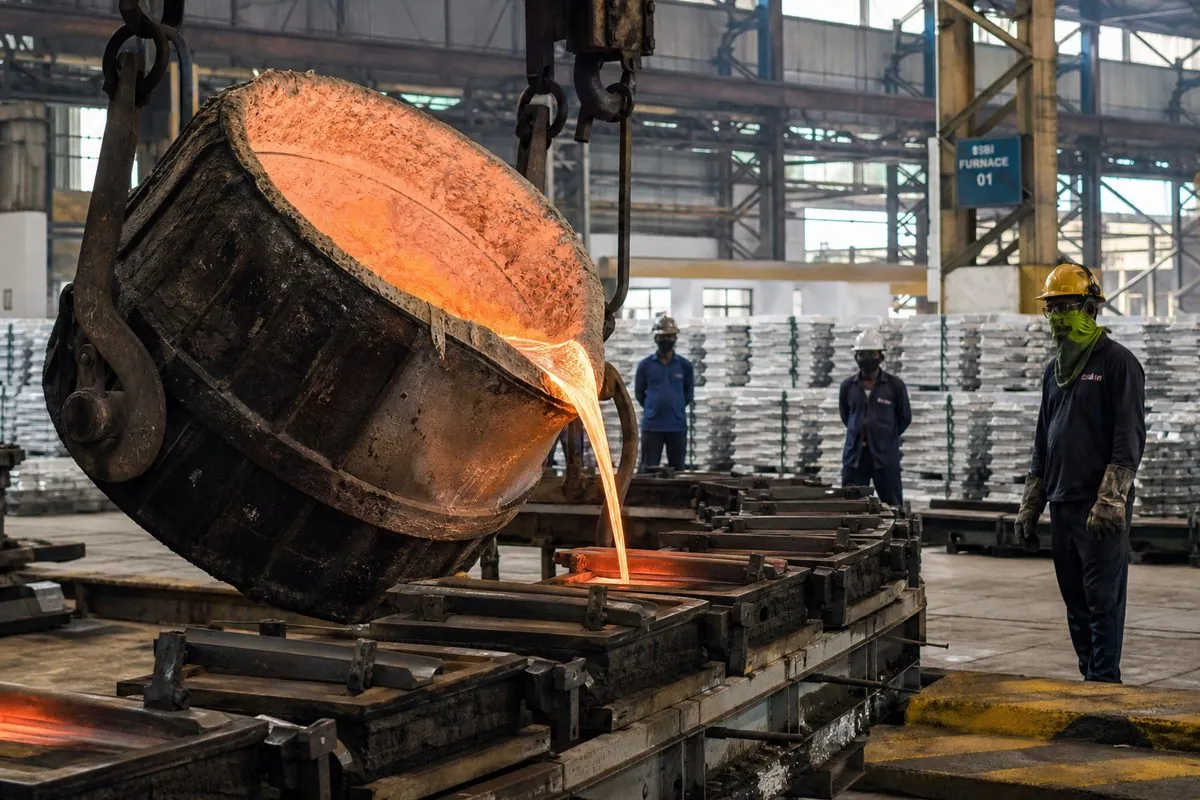
Documentation is the compliance gate that determines whether an aluminium ingot shipment clears customs smoothly or stalls at destination — and in this category, documentation failures are almost always preventable. IEC proof, EEPC RCMC, commercial invoice, packing list, lot MTC, shipping bill, bill of lading, and certificate of origin must cross-reference consistently to the same order, grade, and HS 7601 classification.
This checklist walks through every document an Indian aluminium ingot exporter should prepare before filing a shipping bill, and every document an international buyer should request before releasing payment on a first or repeat order. Misaligned invoice and packing-list quantities, MTC parameters that do not match the shipped lot, and incorrect HS subheading filing (not-alloyed 76011010 vs alloy 76012010 vs adjacent billet / wire-bar / wire-rod forms) remain the three most common documentation failures in aluminium ingot export — all avoidable with the pre-shipment gate in this guide. India not-alloyed aluminium exports (HS 760110, WITS 2024) run at ~US$3.50B / ~1.41 Mt, so every document field carries real programme value.
For the complete export process that documentation supports, see How to Export Aluminium Ingots from India. For EEPC registration context, see EEPC Registration Benefits for Aluminium Ingot Exporters. Altus Exports maintains documentation discipline across every aluminium ingot shipment as part of its export products from India service.
Key Takeaways
Summary Box
Executive Summary
Summary Box
- Build invoice, packing list, MTC, and shipping bill in parallel.
- Heat/cast identity must match bundles ↔ packing list ↔ MTC.
- File 76011010 / 76012010 from chemistry — never scrap 7602 as unwrought.
- Lock certificate of origin after HS and value fields are final.
- Run a 15-minute pre-seal document cross-check before stuffing completes.
Aluminium ingot export documentation must cross-reference the same HS 7601 subheading, grade description, lot ID, and quantity across invoice, packing list, MTC, shipping bill, and bill of lading.
Misaligned MTC lot marks and unsubstantiated LME-brand or foundry-OEM claims remain the top preventable customs and payment delays.
This checklist is the pre-shipment gate exporters and buyers use before CHA filing and destination clearance.
Market Size & Industry Overview
Key Statistics
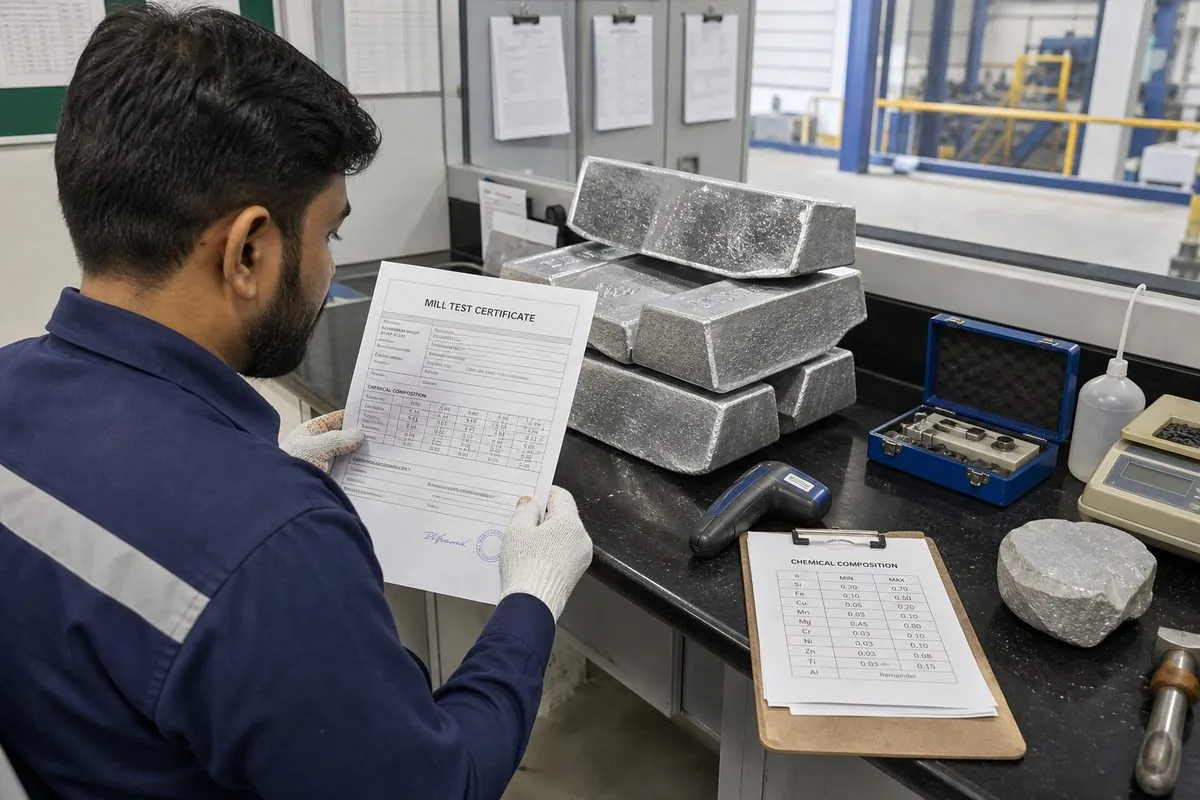
- Document stacks inherit manufacturing identity — heat/cast starts at the casting floor.
- Cluster of origin should be reconcilable with invoice and MTC producer fields.
- Remelt vs primary origin must stay consistent across packing list and COO.
- CHA filings fail when manufacturing story and HS line disagree.
Documentation is the operational spine of every Indian aluminium ingot export shipment, cross-referencing IEC, EEPC RCMC, MTC, and HS 7601 shipping-bill filings.
The Odisha–Chhattisgarh primary smelting spine plus Gujarat/Maharashtra merchant consolidation flows through Mundra, Paradip, Visakhapatnam, Nhava Sheva, Kandla, or Krishnapatnam — each port with its own broker and cutoff discipline.
This overview frames the document-level detail in this guide.
The Aluminium Export Document Stack
Every aluminium ingot export shipment requires a consistent document pack. The table below lists each document, what it must contain, and the most common failure mode — use it as a pre-shipment gate before your CHA files the shipping bill under HS 7601.
Aluminium ingot export documentation requirements
Swipe →
Data table — swipe horizontally on small screens
| Document | Must contain | Common failure |
|---|---|---|
| Commercial invoice | Exporter, buyer, HS 7601 subheading, grade, qty MT, unit value | Grade or HS subheading missing or vague |
| Packing list | Bundle count, MT total, net/gross weight, heat/cast numbers | Qty mismatch vs invoice |
| Lot MTC | Al purity plus Fe, Si, Cu, Mn, Mg, Zn, Ti ceilings per lot | MTC references wrong lot or grade |
| Shipping bill | HS 76011010 / 76012010 / adjacent cast-form lines, FOB value, port of loading | Wrong eight-digit subheading |
| Bill of lading | Consignee, notify party, container/seal numbers | Consignee mismatch vs invoice |
| Certificate of origin | Country of manufacture, HS line, exporter identity; FTA form where applicable | Expired or wrong template |
| EEPC RCMC copy | Current membership proof | Lapsed membership mid-season |
| LME brand or foundry-OEM approval evidence | LME brand-list confirmation or OEM PPAP-style pack (where claimed) | Claim made without documentation |
| ISPM-15 wood packaging certificate | Fumigation mark on wood pallets where used | Missing certificate causes destination hold |
HS Classification & Trade Notes
Compliance Notes
HS classification must match across invoice, MTC description, and shipping bill — not-alloyed 76011010, alloy 76012010, or adjacent 76011020/30/40/90 and 76012020/30/40/90 for billets, wire bars, wire rods, and other cast forms; CHA signs off before vessel cutoff.
HS classification reference for Indian aluminium ingot exports
Swipe →
Data table — swipe horizontally on small screens
| HS Heading | Scope | Filing Note |
|---|---|---|
| 7601.10 (international) | Aluminium, not alloyed | Primary not-alloyed planning line |
| 76011010 (India) | Not-alloyed primary aluminium ingots | Primary eight-digit line for P1020 / EC-grade — confirm with CHA |
| 76011020 (India) | Not-alloyed aluminium billets | Adjacent cast form under 7601.10 |
| 76011030 (India) | Not-alloyed aluminium wire bars | Adjacent cast form under 7601.10 |
| 76011040 (India) | Not-alloyed aluminium wire rods | Adjacent cast form under 7601.10 |
| 76011090 (India) | Other not-alloyed aluminium unwrought | Residual line under 7601.10 |
| 7601.20 (international) | Aluminium alloys, unwrought | Alloy planning line |
| 76012010 (India) | Alloy aluminium ingots | Primary eight-digit line for ADC12 / A380-family / other alloy ingots |
| 76012020 / 76012030 / 76012040 / 76012090 | Alloy billets, wire bars, wire rods, other | Adjacent alloy cast forms under 7601.20 |
| 7602 / 76020010 / 76020090 | Aluminium waste and scrap | Contrast line — not primary for unwrought ingots; recycling feedstock only |
Certifications
Compliance Notes
Certification copies must match invoice lot lines — expired LME brand evidence or lapsed RCMC fail buyer audit.
Certifications and documents relevant to aluminium ingot export
Swipe →
Data table — swipe horizontally on small screens
| Certification / Document | Purpose | Relevant For |
|---|---|---|
| Mill Test Certificate (MTC) | Lot-specific Al purity and chemistry (Fe, Si, Cu, Mn, Mg, Zn, Ti) | All commercial shipments — baseline buyer requirement |
| EEPC RCMC + IEC | Baseline export registration and council membership for Chapter 76 | All commercial aluminium ingot export shipments from India |
| ISO 9001 (producer / exporter) | Quality-system credibility at smelting and export site | Foundry-OEM and multinational trader buyers |
| LME brand registration evidence | Proof of live LME-approved primary aluminium brand | LME-brand primary aluminium export programmes only |
| Third-party assay (SGS / Bureau Veritas / Intertek) | Independent lot chemistry and weight verification | Brand-sensitive, foundry-OEM, or LC-backed programmes |
| Foundry-OEM quality pack (PPAP-style) | OEM approval of chemistry, packaging, and traceability | Direct die-casting / foundry manufacturer programmes |
| Certificate of Origin | Country of manufacture; FTA claims where applicable | Destination customs and FTA duty programmes |
| Destination metal standard compliance | Conformance to destination aluminium standards (e.g., GB/T, EN, ASTM/AA designations) | Buyers requiring formal standard cross-reference |
Shipping Methods
Export Tip
- Samples: air/express 7–14 days for sealed assay lots
- Trial: FCL 2–4 weeks post-production, depending on producer allocation
- FCL: 3–6 weeks door-to-port by corridor
- Incoterms: EXW, FOB, CFR/CIF; DDP selective for foundry-OEM programmes
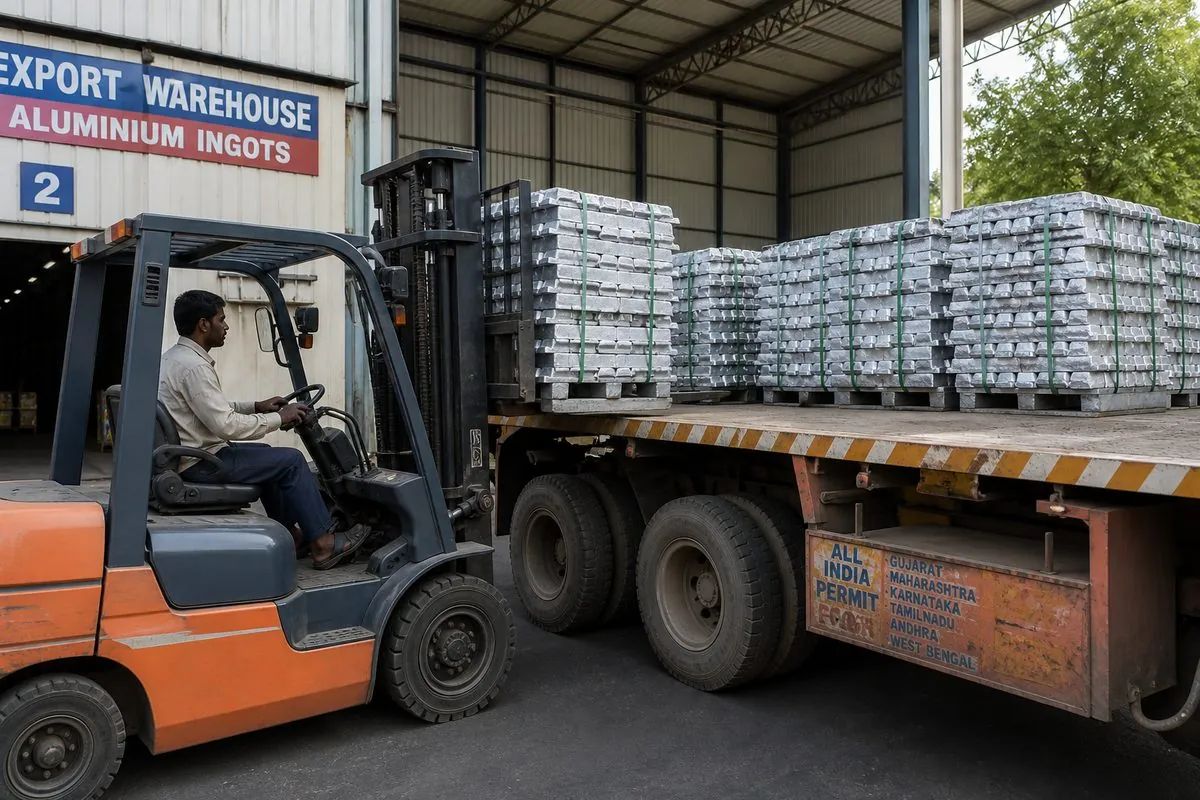
Shipping-document alignment starts with named-port FOB on the invoice — Mundra, Paradip, Visakhapatnam, Nhava Sheva, Kandla, or Krishnapatnam — matching the bill of lading load port and the shipping-bill export port exactly.
Manufacturing Overview
Export Tip
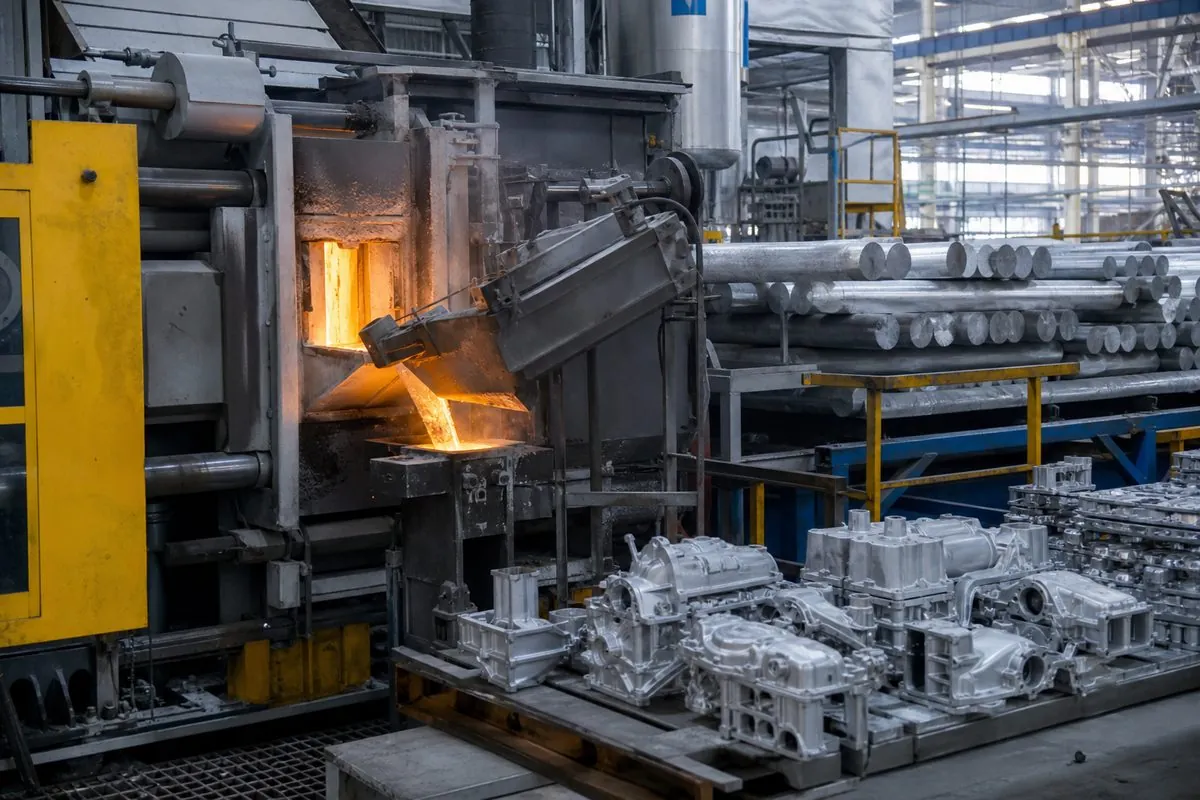
Documentation packs must reflect how producers batch and bundle aluminium ingots — lot ID on MTC originates at casting and bundling, not at the forwarder.
Exporters who reconcile production batch marks before invoice finalisation avoid the most common destination customs holds.
Manufacturing traceability supports every document in the checklist — invoice, packing list, and MTC must tell one lot story.
Saurabh Mittal, our Founder, has a rule he repeats every time we sign a new export programme. The MTC starts at the casting floor, not at the forwarder's desk. If the lot ID on the ingot bundle does not match the number on the paper, the whole document stack falls apart at destination customs, and no amount of last-minute paperwork can fix it after the container is sealed.
Saurabh also tells our documentation team that the pre-shipment cross-check is the cheapest insurance in this business. Fifteen minutes comparing invoice, packing list, and MTC line by line the day before the container seals saves weeks of destination-customs pain and awkward buyer calls that no one wants to make.
Product Categories / Variants
Summary Box
- Document packs differ by grade — primary vs alloy invoice lines stay split.
- MTC templates should embed the grade name used on the packing list.
- Adjacent billet/wire forms need their own HS lines on the shipping bill.
- Never let remelt travel under a P1020 document identity.
Grade description on invoice and MTC must match the export declaration — P1020 primary, EC-grade, ADC12, A380-family, and remelt secondary pig have different HS subheadings and require distinct chemistry packs.
Primary aluminium ingot product types exported from India
Swipe →
Data table — swipe horizontally on small screens
| Product Type | Typical Chemistry / Spec | HS (India) | Primary Channel |
|---|---|---|---|
| P1020 primary aluminium ingot | Al ≥99.7% (P1020A / A7 designation); LME primary aluminium brand baseline | 76011010 | LME-brand traders, extruders, rolling mills |
| Higher-purity primary (99.8%+) | Al ≥99.8%, tighter Fe/Si impurity ceilings | 76011010 | Electrical/EC-grade converters, specialty foundries |
| EC/electrical grade ingot | Al ~99.5–99.7% with controlled Fe/Si for conductivity | 76011010 | Wire rod and conductor producers, cable manufacturers |
| Foundry alloy ADC12 | Al-Si-Cu die-casting alloy; Si ~9.6–12.0%, Cu ~1.5–3.5% | 76012010 | Automotive and appliance die-casters |
| Foundry alloy A380-family | Al-Si-Cu die-casting alloy; Si ~7.5–9.5%, Cu ~3.0–4.0% | 76012010 | Automotive die-casters and foundries (US/Mexico corridor) |
| Remelt secondary pig | Chemistry per buyer spec; recycled/secondary aluminium output | 76011010 or 76012010 per assay | Cost-led foundries, extruders, traders |
| Billets / wire bars / wire rods (adjacent forms) | Cast/extrusion feedstock forms; adjacent to core ingot scope | 76011020 / 76011030 / 76011040 / 76011090 or 76012020 / 76012030 / 76012040 / 76012090 | Extrusion mills, wire and cable producers |
MOQ Analysis
Buyer Tip
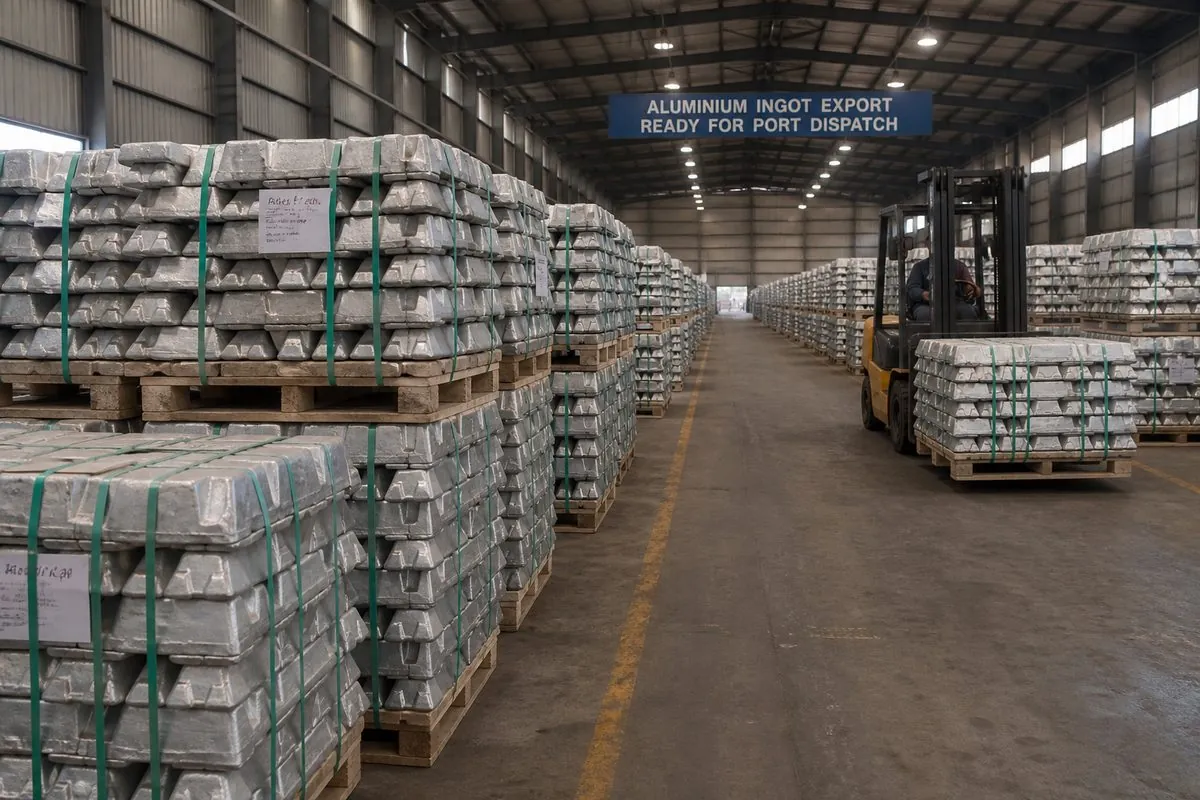
MOQ on the invoice must match packing list and MTC lot totals — trial-tonnage mismatches are a common documentation failure.
Directional MOQ tiers by transaction stage
Swipe →
Data table — swipe horizontally on small screens
| Stage | Typical MOQ | Purpose |
|---|---|---|
| Trial order | 5–25 MT | Buyer grade evaluation, MTC verification, and inspection protocol test |
| Standard FCL | 20–25 MT (20ft FCL) | First commercial shipment; verify ingot stow and payload with CHA |
| Industrial contract | Monthly MT contracts | Extruder, foundry, and trader repeat programmes |
Packaging Standards
Export Tip
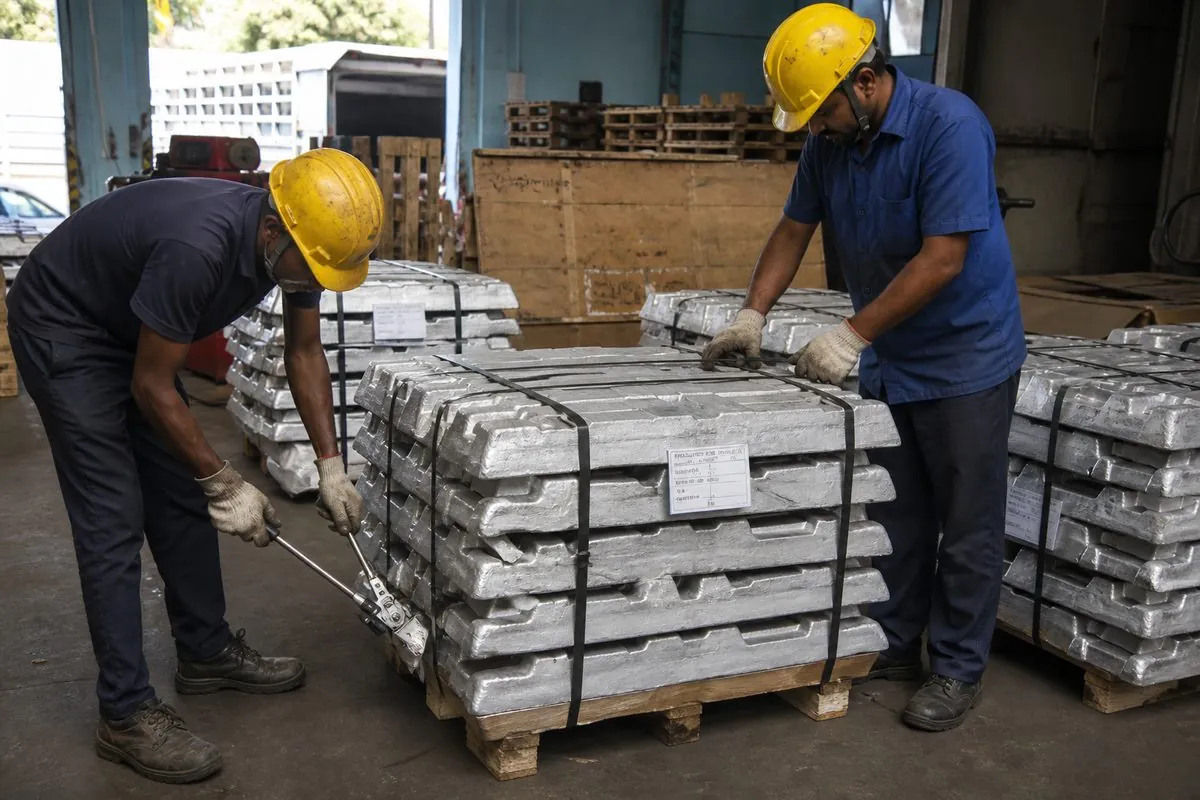
Packing list lines must reconcile bundle count, net/gross weight, and heat/cast marks with MTC — packaging documentation errors are among the top shipping-bill hold triggers.
ISPM-15 fumigation applies when wood pallets are used — note certificate on packing list when destination requires it.
Aluminium ingot packaging formats — commercial practice and LME Special Contract Rules
Swipe →
Data table — swipe horizontally on small screens
| Format | Typical Configuration | Use Case | Key Requirement |
|---|---|---|---|
| Cast ingots — commercial | ~20–25 kg class cast ingots in typical Indian commercial programmes; confirm mill cast form | All primary and alloy commercial export programmes | Lot/heat/cast marking legible for buyer QC |
| Cast ingots — LME High Grade Primary warrant | Ingots not less than 9 kg and not more than 26 kg; T-bars/sows not more than 788 kg (LME Special Contract Rules for High Grade Primary Aluminium) | LME-brand primary aluminium warrant-eligible lots only | Ingot 9–26 kg (or approved T-bar/sow form); approved brand indelibly marked |
| Cast ingots — LME Aluminium Alloy warrant | Ingots not less than 4 kg and not more than 25 kg, max 800mm length (LME Special Contract Rules for Aluminium Alloy — separate from primary) | LME aluminium-alloy warrant programmes only — not primary P1020 | Do not apply alloy shape rules to High Grade Primary warrants |
| Strapped bundles — commercial | ~1 MT class strapped bundles on pallets or mill strapping for standard FCL | Standard FCL loading for primary and alloy ingots | Bundle integrity in ocean transit; identity tags per bundle |
| Strapped bundles — LME High Grade Primary warrant | Bundles not exceeding 2.0 tonnes, securely strapped; warrant lot 25 t (2% more or less) | LME warrant-eligible High Grade Primary aluminium delivery | Bundle ≤2.0 t; brand and cast reference per LME Part 6 primary rules |
| Strapped bundles — LME Aluminium Alloy warrant | Bundles 500–1,000 kg of equal weight and dimension per lot (Aluminium Alloy contract) | LME aluminium-alloy warrant programmes only | Equal weight/dimension per lot; alloy contract rules — not primary |
| LME brand marking | Brand name and production cast reference marked on each ingot; durable plasticised label where used | LME-brand primary aluminium programmes only | Brand must be on live LME approved primary aluminium brands list |
| Weather / oxidation protection | Dry warehouse staging; wrapping where specified | All ocean shipments — foundry and electrical grade especially | Prevent surface oxidation/contamination before receipt at destination plant |
Container Loading Details
Export Tip
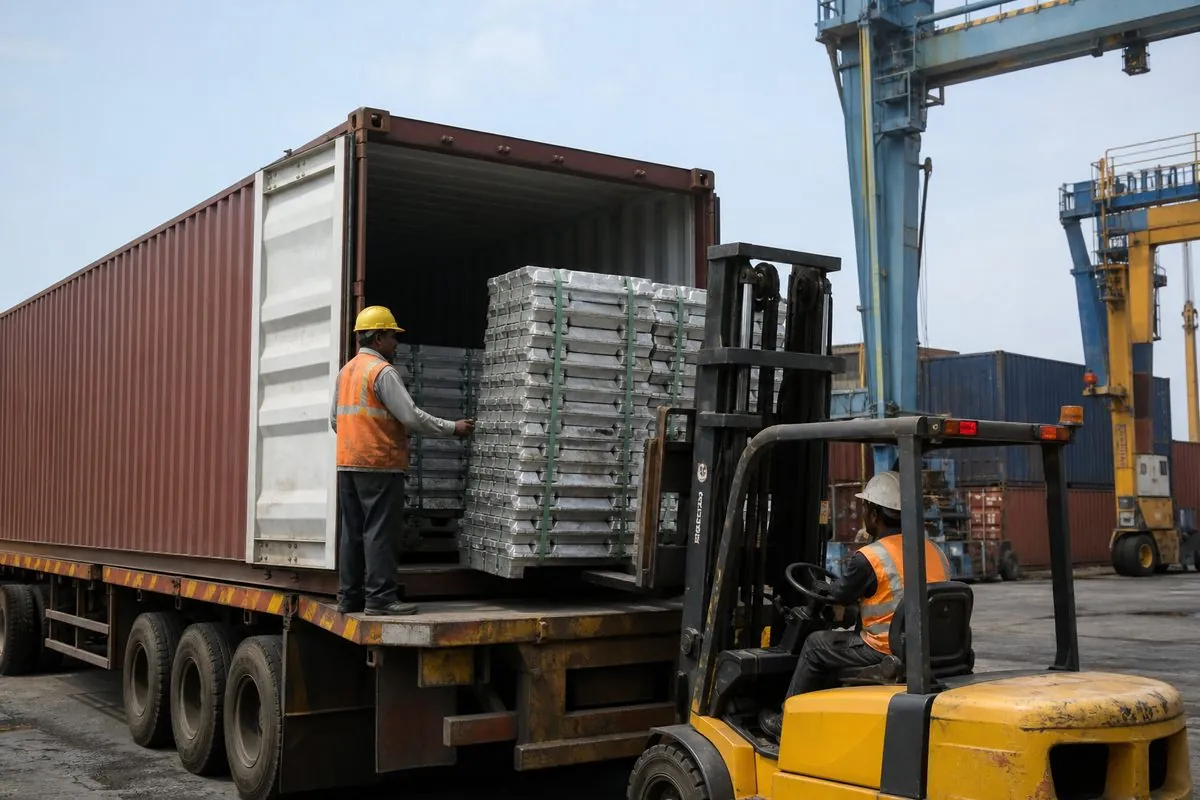
Container number and seal ID on the bill of lading must match stuffing photos and packing list — document reconciliation includes logistics identifiers, not only MTC chemistry.
Directional container loading guidance for aluminium ingots
Swipe →
Data table — swipe horizontally on small screens
| Container Type | Loading Consideration | Typical Use |
|---|---|---|
| 20-foot FCL | 20–25 MT payload in ~1 MT strapped bundles; verify stow with forwarder | Trial and standard commercial shipments |
| 40-foot FCL / 40-foot HC | Higher payload with dense ingot stacking; check max payload limits | Established foundry and extruder programmes |
| Bulk / break-bulk | Large industrial P1020 programmes beyond standard FCL cadence | Mega primary aluminium contracts and industrial offtake |
| Palletisation | Recommended for consistent handling and discharge speed | Buyers with forklift handling at destination plant |
Pricing Analysis
Buyer Tip
- Invoice unit price language should match the dated LME ± premium offer.
- Do not let packing-list values drift from the commercial invoice metal basis.
- Document the LME reference date in offer archives for claim defense.
- CHA files need Incoterm clarity before freight is added on CFR/CIF.
Pricing on commercial invoice must match proforma and MTC grade — document disputes often trace to FOB quoted on one chemistry band and shipped on another.
Directional FOB pricing structure by aluminium ingot grade (LME Aluminium ± premium)
Swipe →
Data table — swipe horizontally on small screens
| Grade / Programme | Pricing Structure | Notes |
|---|---|---|
| P1020 primary (Al ≥99.7%) | LME Aluminium cash or 3M + primary premium, FOB | LME-brand programmes command tightest premiums; document brand status |
| Higher-purity primary (99.8%+) | LME Aluminium + high-purity premium, FOB | Buyer-specific Fe/Si impurity ceilings drive premium tier |
| EC/electrical grade | LME Aluminium + EC premium, FOB | Conductivity spec and Fe/Si ceilings drive premium, not Al percentage alone |
| Foundry alloy ADC12 / A380-family (HS 76012010) | LME Aluminium + alloy/foundry premium, FOB | Si and Cu chemistry band and die-casting spec drive premium |
| Remelt secondary pig | LME Aluminium ± secondary discount / premium, FOB | Chemistry variability priced into offer; MTC per lot |
Import Statistics
Key Statistics
Import demand profiles explain why destination brokers scrutinise MTC on HS 7601 arrivals — Korean rolling mills, Turkish foundries, Mexican die-casters, and Japanese electrical processors each apply different acceptance criteria on the same eight-digit line.
Directional import demand profile by destination market
Swipe →
Data table — swipe horizontally on small screens
| Market | Directional Demand Profile | Primary Buyer Type |
|---|---|---|
| South Korea | Extrusion, rolling mill, and foundry offtake for primary and EC-grade aluminium | Extruders, rolling mills, cable/conductor producers |
| Malaysia | Trader and extrusion-hub liquidity for primary aluminium across Southeast Asia | Extruders, traders, regional distributors |
| Turkey | Foundry die-casting and extrusion demand spanning primary and alloy ingots | Foundries, die-casters, extruders |
| China | High-volume domestic processing and re-export demand for not-alloyed primary | Processors, trading houses, re-export distributors |
| Japan | Quality-driven primary and EC-grade demand for electrical and automotive processing | OEM-linked processors, cable manufacturers, trading houses |
| Mexico | Automotive die-casting demand for foundry alloy ingots under USMCA-linked supply chains | Die-casters, automotive component foundries |
| Brazil | Foundry and automotive component demand for alloy ingots | Foundries, die-casters, industrial buyers |
| Vietnam | Expanding extrusion and foundry capacity sourcing primary and alloy aluminium | Extruders, foundries, trading houses |
Export Statistics
Key Statistics
Shipping bills for aluminium ingots should declare India 76011010 (not-alloyed primary), 76012010 (alloy), or the adjacent 76011020/30/40/90 and 76012020/30/40/90 lines matching the MTC chemistry and cast form — statistics and documentation must use the same eight-digit code and grade description.
WITS / UN Comtrade 2024 anchors: ~US$3.50B / ~1.41 Mt on not-alloyed HS 760110 and ~US$1.25B / ~0.60 Mt on alloy HS 760120 — useful reference when reconciling invoice value to statistical expectations.
India unwrought aluminium trade profile (WITS 2024, HS 760110 not-alloyed / HS 760120 alloy)
Swipe →
Data table — swipe horizontally on small screens
| Metric | Directional Estimate | Notes |
|---|---|---|
| Primary smelting corridors | Odisha (NALCO Angul, Vedanta Jharsuguda), Chhattisgarh (BALCO) | Large-scale primary aluminium smelting capacity anchoring export supply |
| Supporting clusters | Hindalco/Aditya Birla value-added programmes; Gujarat, Maharashtra merchant consolidation; secondary remelt corridors | Downstream processing, trading consolidation, and remelt/secondary capacity |
| Applicable HS headings | Document stack must show consistent India eight-digit: 76011010 not-alloyed primary ingots, 76012010 alloy ingots, or 76011020 / 76011030 / 76011040 / 76011090 and 76012020 / 76012030 / 76012040 / 76012090 adjacent forms | Confirm eight-digit line with CHA before shipping-bill filing |
| Governing trade council | EEPC India (Engineering Export Promotion Council) | RCMC alongside IEC for Chapter 76 export credibility |
| 2024 India not-alloyed aluminium exports (WITS HS 760110) | ~US$3.50B / ~1.41 Mt | US$3,503,308.31K / 1,409,040,000 kg — WITS / UN Comtrade 2024; primary not-alloyed line anchor |
| 2024 India not-alloyed aluminium imports (WITS HS 760110) | ~US$225.4M | US$225,428.14K — WITS / UN Comtrade 2024; top origins Oman, Russia, Qatar, UAE, Bahrain |
| 2024 India alloy aluminium exports (WITS HS 760120) | ~US$1.25B / ~0.60 Mt | US$1,250,017.72K / 604,281,000 kg — WITS / UN Comtrade 2024; alloy ingot line anchor |
| 2024 India alloy aluminium imports (WITS HS 760120) | ~US$833.8M / ~0.32 Mt | US$833,810.58K / 322,392,000 kg — WITS / UN Comtrade 2024; top origins Malaysia, Qatar, Bahrain, UAE, Russia |
| 2024 combined HS 7601 unwrought aluminium family | ~US$4.75B / ~2.01 Mt | Sum of not-alloyed (760110) and alloy (760120) unwrought aluminium export lines |
| 2024 India aluminium scrap trade (WITS HS 7602) | Separate line — contrast only | Do not conflate 7602 scrap with 7601 unwrought aluminium ingots |
| Leading not-alloyed destinations by value (WITS 760110) | Korea Rep. ~US$592.0M, Malaysia ~US$494.8M, Turkey ~US$421.6M, China ~US$266.0M, Japan ~US$253.6M | Greece, Vietnam, Mexico, Netherlands, Italy round out the top-ten set |
| Leading alloy destinations by value (WITS 760120) | Mexico ~US$154.7M, Brazil ~US$122.2M, Korea Rep. ~US$85.1M, United States ~US$78.2M, Turkey ~US$75.7M | Japan, Spain, Taiwan (Other Asia nes), Canada, Italy round out the top-ten set |
| Dominant export grades | P1020 primary + EC/electrical grade + foundry alloys (ADC12/A380-family) + remelt secondary pig | Chemistry and cast form determine buyer channel fit |
Buyer Requirements
Buyer Requirements
- Buyer document lists must match the HS line on the shipping bill.
- Require heat/cast reconciliation rules in the purchase contract.
- Certificate of origin wording follows corridor FTA claims — confirm early.
- Inspection certificates (if any) named before stuffing.
- Rejection and claim windows stated beside Incoterm on the PO.
Buyers in docs programmes request samples, written Al purity and alloy chemistry spec, lot MTC, LME-linked FOB pricing, and EEPC/IEC proof — foundry OEMs add LME brand or PPAP-style approval where applicable.
Country-wise Opportunities
Market Snapshot
Documentation requirements shift per destination row — Certificate of origin depth for USMCA-linked Mexican alloy flows, FTA-aware paperwork for ASEAN and Turkey, LME brand evidence for Korean and Japanese trader flows. Cross-check with corridor guidance before locking your paperwork template.
Directional country opportunity profile for Indian aluminium ingot exporters
Swipe →
Data table — swipe horizontally on small screens
| Country | Demand Profile | Key Requirement Focus | Opportunity Note |
|---|---|---|---|
| South Korea | Extrusion, rolling mill, and foundry offtake for primary and EC-grade | Chemistry-locked MTC, PPAP-style packs | Top WITS 2024 HS 760110 partner (~US$592.0M) plus HS 760120 (~US$85.1M) — priority corridor |
| Malaysia | Extruder and trader demand for primary and remelt aluminium | LME-eligible primary + MTC + brand evidence | Second WITS 2024 HS 760110 partner (~US$494.8M) — strong extrusion-hub demand |
| Turkey | Foundry and extrusion demand across primary and alloy grades | Foundry alloy chemistry (ADC12/A380), FTA-aware paperwork | WITS ~US$421.6M (760110) plus ~US$75.7M (760120) — dual-line corridor |
| China | Large-volume primary demand for domestic processing and re-export | Consistent MTC, competitive FOB, brand-neutral programmes | WITS ~US$266.0M (760110) — high-volume, price-sensitive corridor |
| Japan | Primary and EC-grade demand for electrical and automotive processing | Tight impurity ceilings, conductivity spec | WITS ~US$253.6M (760110) — quality-driven, OEM-linked buyers |
| Mexico | Foundry alloy demand for automotive die-casting under USMCA-linked chains | ADC12/A380-family chemistry, die-casting spec | Top WITS 2024 HS 760120 partner (~US$154.7M) — alloy-ingot priority market |
| Brazil | Foundry and automotive component demand for alloy ingots | Alloy chemistry consistency, FOB competitiveness | Second WITS 2024 HS 760120 partner (~US$122.2M) |
| Vietnam | Growing extrusion and foundry capacity pulling primary and alloy grades | Consistent MTC, competitive FOB, expanding brand requirements | Present across both 760110 and 760120 top-partner lists — expanding corridor |
Expert Insight: Corridor Discipline
Expert Insight Box
Country customs behaviour on HS 7601 varies materially — Korean broker discipline differs from Mexican USMCA-linked practice. Build corridor-specific document sub-checklists inside the master checklist so your CHA delivers cleanly per destination.
On documentation programmes, Saurabh Mittal connects corridor discipline to the shipping bill. File HS 76011010 or 76012010 for the chemistry the destination actually ordered, and make sure invoice, packing list, and MTC tell the same corridor story. Document mismatches usually start as corridor mismatches.
He tells docs teams to refresh destination checklist packs when corridors shift — US Section 232 overlays, TARIC notes, FTA certificates — every quarter alongside HS partner data. Paperwork that matches last year's corridor is how holds begin at the pier.
Sourcing Checklist
Checklist
Buyer Checklist
Compliance Checklist
Checklist
Compliance Notes
Common Buyer Mistakes
Common Mistakes Box
Future Market Trends
Key Statistics
Customs digitisation increases pre-arrival document scrutiny — exporters who QC invoice/MTC/packing list alignment before cutoff avoid demurrage trends seen at busy ports.
Buyer audit portals now archive MTC copies per lot — document expiry management becomes ongoing, not shipment-only.
Exporter Checklist
Checklist
Sources
- WITS / UN Comtrade — India exports HS 760110 by partner, 2024
- WITS / UN Comtrade — India imports HS 760110 by partner, 2024
- WITS / UN Comtrade — India exports HS 760120 by partner, 2024
- WITS / UN Comtrade — India imports HS 760120 by partner, 2024
- WITS / UN Comtrade — Aluminium waste and scrap trade, HS 7602
- Federal Register — Section 232 aluminium / steel / copper proclamations (verify live)
- White House — Further Adjusting Tariff Regimes for Aluminum, Steel, and Copper (Jun 2026)
- UN Comtrade Database
- ITC Trade Map
- India Ministry of Commerce — TRADESTAT / MEIDB
- DGFT (India) — IEC / trade portal
- ICEGATE — Indian Customs EDI
- India CBIC — Customs Tariff
- EEPC India
- London Metal Exchange — Aluminium
- LME — Special Contract Rules, Part 6 (Primary Aluminium)
- LME — Chemical composition (Aluminium PDF)
- LME Primary Aluminium brand listing guidance
- USITC Harmonized Tariff Schedule (search 7601)
- European Commission TARIC
- ISO 9001 overview
- Altus Exports — Engineering Goods
All sources accessed 2026-07-31 during the Aluminium Ingots factual audit. Prefer primary government, exchange, and multilateral trade databases (WITS/UN Comtrade, TRADESTAT, CBIC, USITC, LME, EEPC) when citing figures in contracts or buyer presentations.
Document field requirements vary by destination — reconcile this checklist with buyer LC terms and CHA filing rules per consignment.
Conclusion
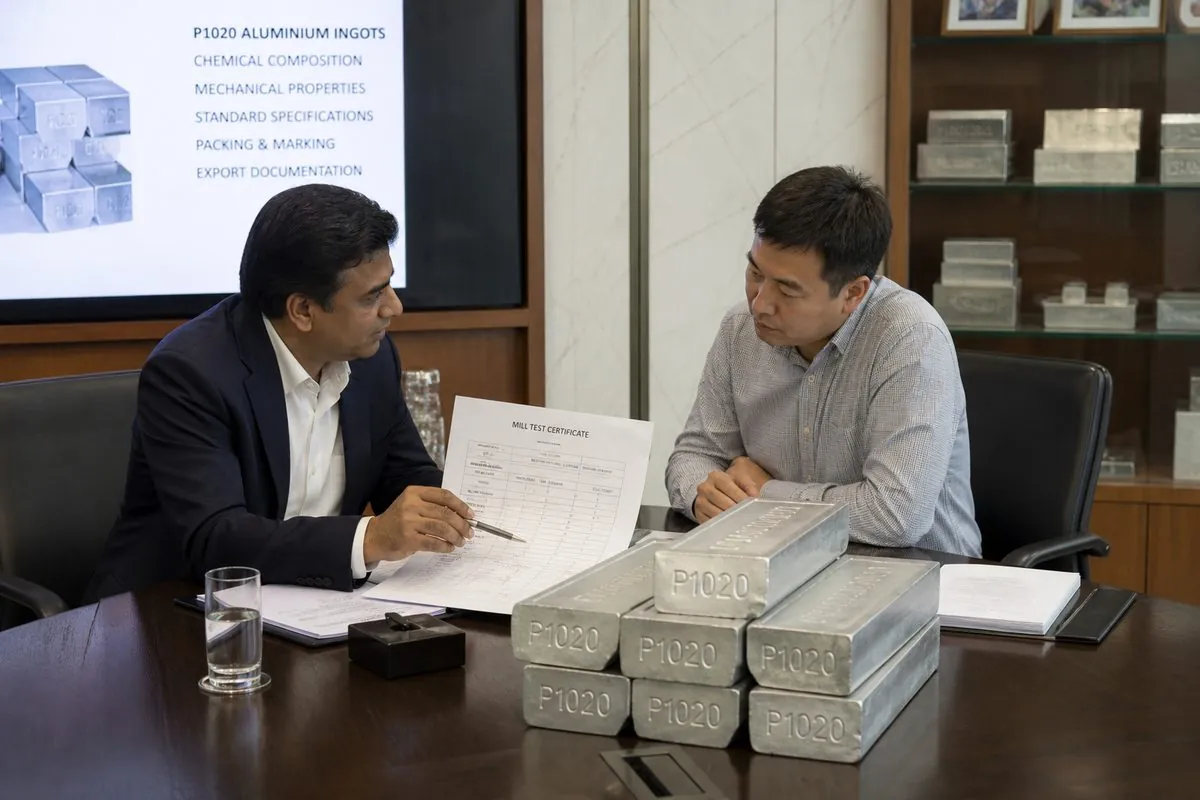
Documentation QC before vessel cutoff prevents destination holds — invoice, packing list, MTC, shipping bill, and BL must tell one lot story under HS 7601.
Altus Exports assembles export document sets for aluminium ingot FCL programmes — export products from India with EEPC-aligned packs.
Start exporters on How To Export Aluminium Ingots From India; buyers on Source Aluminium Ingots Directly From India.