
How to Export Lead Ingots from India: Complete Process Guide
By Saurabh Mittal, Founder, Altus Exports
A complete operational guide on how to export lead ingots from India — registrations, sourcing from Rajasthan, Gujarat, and Tamil Nadu secondary smelters, refined and antimonial grades, LME Lead-linked FOB quoting, packaging, FCL loading, and buyer development, with expert insight from Altus Exports.
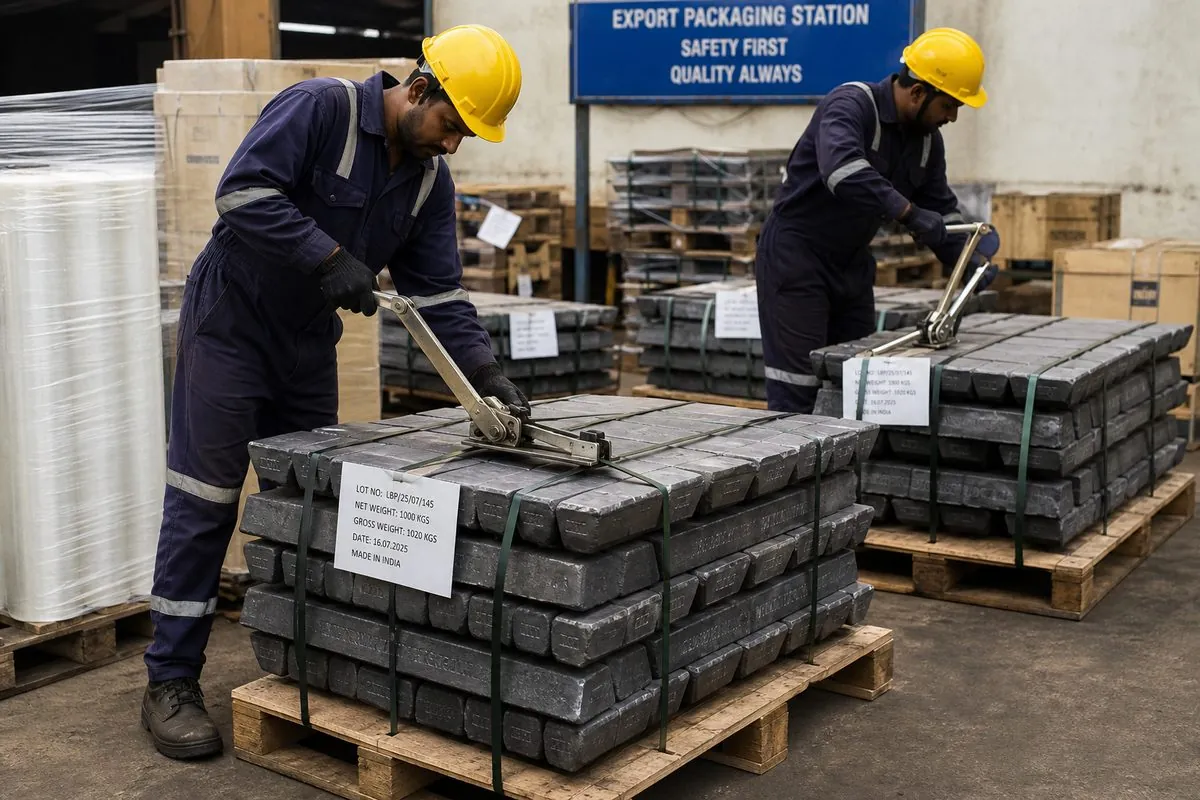
India has become a structurally important sourcing origin for refined and secondary lead — built on decades of used lead-acid battery recycling capacity concentrated in Rajasthan, Gujarat, and Tamil Nadu smelting corridors, with Maharashtra and West Bengal supporting merchant consolidation and east-coast programmes. Buyers searching for how to export lead ingots from India, or how to import them reliably, are really asking a supply-chain question: how do you connect verified secondary smelters and refined-lead capacity to an MTC-backed, EEPC-documented, LME-linked FCL shipment that clears customs and arrives within chemistry spec? This guide answers that question end to end. For the grade-level catalogue, see Top Lead Ingot Products Exported from India; for market selection, see Best Countries for Indian Lead Ingot Exports.
Lead ingot exporting sits under India's broader non-ferrous / engineering export basket, tracked under Harmonized System heading 7801 — India tariff 78011000 for refined lead, 78019100 for antimonial lead, and 78019910 (pig), 78019920 (unrefined), 78019930 (unrefined lead alloys), and 78019990 (other) for other unwrought lead including calcium alloys and remelted secondary pig. EEPC India — the Engineering Export Promotion Council — is the relevant government-recognised trade body, and its RCMC sits alongside the Import Export Code (IEC) as the credential buyers expect before committing volume. Beyond registrations, the real operational work is grade-specific: refined soft lead, antimonial alloys, calcium-lead grid programmes, and remelted secondary pig are different casting and QC disciplines with different chemistry windows, cost structures, and buyer segments. If you would rather work through a verified supplier network than build these relationships from scratch, see Source Lead Ingots Directly from India and consider a merchant exporter in India to compress the learning curve.
This guide walks through the complete operational sequence — registrations, sourcing from Indian secondary smelting corridors, MTC chemistry and assay discipline, LME Lead ± regional premium FOB pricing logic, cast pig and strapped bundle packaging, 20ft FCL loading from Mundra, Kandla, Nhava Sheva, Chennai, or Tuticorin, documentation, and buyer development — that Indian lead ingot exporters and international battery makers, alloy houses, and traders should follow. WITS / UN Comtrade 2024 reports India's refined lead exports (HS 780110) at US$651,584.84K and 306,095,000 kg (~US$651.6M / ~306.1 kt); top refined-line partners by value are Singapore (~US$291.4M), Korea Rep. (~US$174.7M), Bangladesh (~US$44.4M), Vietnam (~US$42.3M), and Thailand (~US$28.2M) — treat as directional context, re-verify against WITS / UN Comtrade / DGCI&S / TRADESTAT before contract citations. For registration depth, see EEPC Registration Benefits for Lead Ingot Exporters, and for the pre-shipment paperwork gate, see Lead Ingot Export Documentation Checklist.
Key Takeaways
Summary Box
Executive Summary
Summary Box
Exporting lead ingots from India is a five-part operating system: IEC and EEPC India RCMC registration, sourcing from Rajasthan, Gujarat, and Tamil Nadu secondary smelting corridors, grade-matched production (refined soft, battery-grade, antimonial, calcium alloy, or remelted secondary pig), MTC-backed chemistry QC, and FCL logistics from Mundra, Kandla, Nhava Sheva, Chennai, or Tuticorin.
WITS / UN Comtrade 2024 shows India's refined lead exports (HS 780110) at ~US$651.6M / ~306.1 kt vs refined imports of ~US$297.8M / ~132.4 kt — India is a net exporter on refined lead specifically. The broader OEC HS4 7801 family aggregate (refined + antimonial + other unwrought) is roughly balanced at ~US$911M exports / ~US$966M imports because it includes lines beyond refined. Separately, India lead scrap imports (HS 780200) run at ~US$283.3M / ~153.5 kt — the recycling feedstock line, recorded under scrap 7802, not unwrought 7801. Export success therefore depends on chemistry integrity and corridor fit, not on out-competing supply origins on volume alone.
This pillar guide walks registrations through buyer development — the operational sequence Indian export houses and international battery makers, alloy houses, and traders should follow before first FCL.
Market Size & Industry Overview
Key Statistics
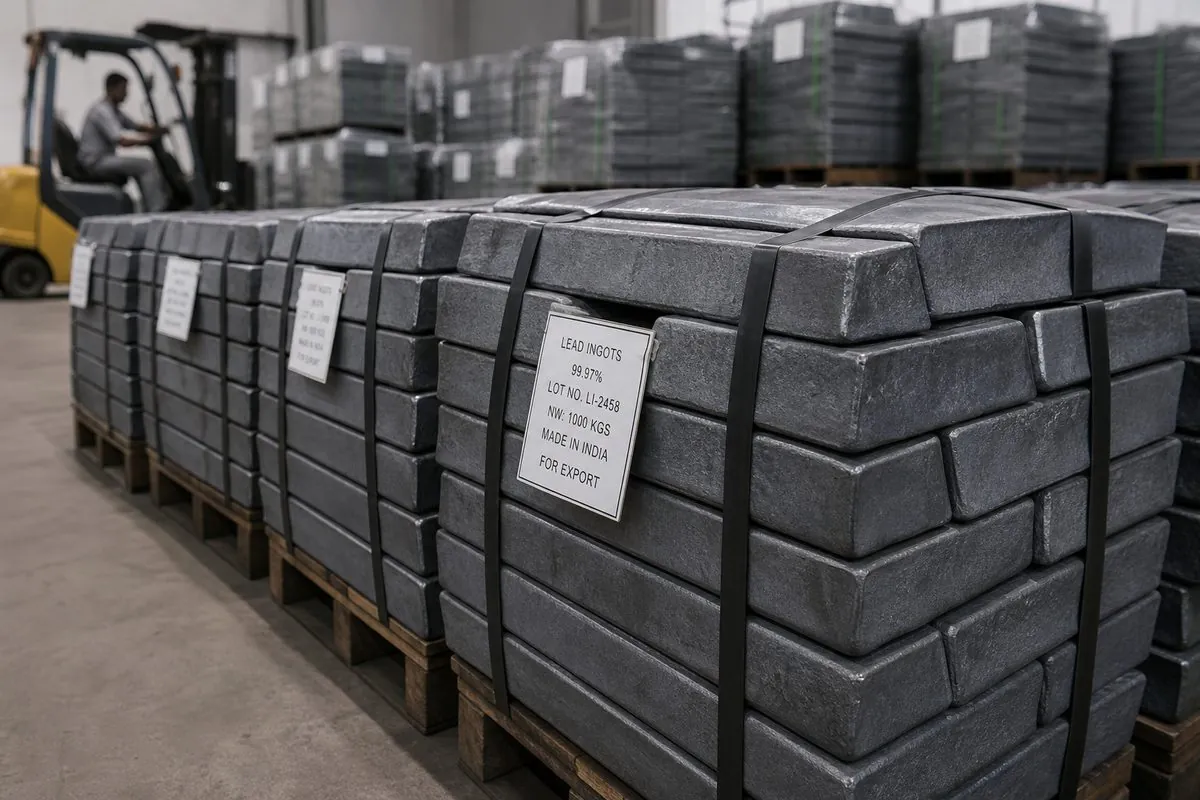
India's lead ingot export spine sits in Rajasthan, Gujarat, and Tamil Nadu secondary smelting corridors — driven structurally by used lead-acid battery recycling capacity — with Maharashtra and West Bengal supporting merchant consolidation and additional smelting. Industrial feedstock for battery plants and alloy houses, not consumer product.
Buyers purchase Pb purity bands, impurity ceilings, brand status where applicable, and delivery reliability under EEPC India's Chapter 78 lens.
Most new exporters enter on refined soft or remelted secondary pig FOB coastal ports, then add battery-grade OEM or antimonial alloy programmes once MTC rhythm is proven.
Export Statistics
Key Statistics
Start export planning with HS-line discipline: India 78011000 covers refined lead; 78019100 covers antimonial lead alloy; 78019910 / 78019920 / 78019930 / 78019990 cover other unwrought lead including pig, unrefined, unrefined lead alloys, and other — confirm the eight-digit line with your CHA before the first shipping bill.
WITS / UN Comtrade 2024 anchors India's refined lead exports (HS 780110) at ~US$651.6M / ~306.1 kt (US$651,584.84K / 306,095,000 kg); leading refined-line destinations by value include Singapore (~US$291.4M), Korea Rep. (~US$174.7M), Bangladesh (~US$44.4M), Vietnam (~US$42.3M), and Thailand (~US$28.2M) — the broader OEC HS4 7801 family sits at ~US$911M because it also includes antimonial and other unwrought lines.
Re-verify against WITS / UN Comtrade / DGCI&S / TRADESTAT annually — the table below summarises directional cluster metrics for board and buyer presentations.
India refined lead trade profile (WITS 2024, HS 780110; OEC HS4 7801 context)
Swipe →
Data table — swipe horizontally on small screens
| Metric | Directional Estimate | Notes |
|---|---|---|
| Primary secondary smelting corridors | Rajasthan, Gujarat, Tamil Nadu | Battery-recycling driven refined and remelted secondary lead capacity |
| Supporting clusters | Maharashtra, West Bengal | Merchant consolidation, east-coast programmes, and additional smelting |
| Applicable HS headings | Filing lines: India 78011000 refined, 78019100 antimonial, 78019910 pig, 78019920 unrefined, 78019930 unrefined alloys, 78019990 other — pick per lot chemistry | Confirm eight-digit line with CHA before shipping-bill filing |
| Governing trade council | EEPC India (Engineering Export Promotion Council) | RCMC alongside IEC for Chapter 78 export credibility |
| 2024 India refined lead exports (WITS HS 780110) | ~US$651.6M / ~306.1 kt | US$651,584.84K / 306,095,000 kg — WITS / UN Comtrade 2024; primary refined-line anchor |
| 2024 India refined lead imports (WITS HS 780110) | ~US$297.8M / ~132.4 kt | US$297,836.23K / 132,421,000 kg — Korea Rep., Malaysia, UAE lead origins |
| 2024 broader HS4 7801 family (OEC directional) | ~US$911M exports / ~US$966M imports | Includes refined + antimonial + other unwrought; not HS 7802 scrap |
| 2024 India lead scrap imports (WITS HS 780200) | ~US$283.3M / ~153.5 kt | Separate line — do not conflate 7802 scrap with 7801 unwrought lead |
| Leading refined destinations by value (WITS 780110) | Singapore ~US$291.4M, Korea ~US$174.7M, Bangladesh ~US$44.4M, Vietnam ~US$42.3M, Thailand ~US$28.2M | Other Asia nes ~US$24.8M, Malaysia ~US$15.4M, UAE ~US$15.2M round out the priority set |
| Dominant export grades | Refined soft lead + antimonial + remelted secondary pig | Calcium-alloy and battery-grade programmes for OEM offtake |
Import Statistics
Key Statistics
India is a two-way market on unwrought lead: WITS / UN Comtrade 2024 shows India refined lead imports (HS 780110) at ~US$297.8M / ~132.4 kt (US$297,836.23K / 132,421,000 kg), led by Korea Rep. (~US$199.6M), Malaysia (~US$28.0M), and UAE (~US$25.5M). Separately, India lead scrap imports (HS 780200) run at ~US$283.3M / ~153.5 kt — the recycling feedstock line that funds much of the secondary smelting spine, but recorded under scrap 7802, not unwrought 7801.
Net trade context does not block export programmes — it clarifies that chemistry integrity and corridor logistics determine repeat orders.
Directional import demand profile by destination market
Swipe →
Data table — swipe horizontally on small screens
| Market | Directional Demand Profile | Primary Buyer Type |
|---|---|---|
| Singapore | Trader and warehouse liquidity for refined and secondary lead across Asia | Trading houses, LME warrant desks, regional wholesalers |
| South Korea | Battery-industry offtake for refined and battery-grade programmes | Lead-acid battery OEMs, alloy houses, chemistry-locked buyers |
| Bangladesh | Short-sea corridor demand across refined and remelted secondary pig | Battery assemblers, industrial buyers, trading houses |
| Vietnam | Growing lead-acid battery capacity sourcing Indian refined and antimonial lead | Battery OEMs, contract manufacturers, alloy houses |
| Thailand | Established battery-industry demand for refined and alloyed lead | Battery plants, industrial buyers, regional distributors |
| Malaysia | Battery and industrial pull with FTA duty context | Battery OEMs, metals traders, regional distributors |
| Indonesia | Battery and industrial demand with variable secondary programme mix | Battery makers, trading houses, industrial buyers |
| UAE | Gulf re-export and local industrial demand for refined and secondary lead | Wholesale distributors, Gulf industrial buyers, re-export traders |
Product Categories / Variants
Summary Box
- Refined soft lead — LME-brand traders, battery OEMs, alloy houses
- Battery-grade soft lead — chemistry-locked OEM programmes
- Antimonial lead — battery grid and hard-lead applications
- Calcium-lead alloys — maintenance-free battery grid programmes
- Remelted secondary pig — cost-led battery assemblers and traders
Exporters must quote grade explicitly on proforma and MTC — refined soft, battery-grade OEM, antimonial, calcium alloy, and remelted secondary pig sit across HS 7801 subheadings and require distinct chemistry packs.
Primary lead ingot product types exported from India
Swipe →
Data table — swipe horizontally on small screens
| Product Type | Typical Chemistry / Spec | HS (India) | Primary Channel |
|---|---|---|---|
| Refined soft lead | Pb ≥99.97% (LME refined lead minimum); tight Bi/Ag/Cu limits | 78011000 | LME-brand traders, battery OEMs, alloy houses |
| Battery-grade soft lead | Refined soft plus OEM impurity ceilings (Bi, Ag, Cu, Sb, As, Sn, Ni) | 78011000 | Lead-acid battery OEMs with chemistry-locked programmes |
| Antimonial lead | Pb-Sb alloy; Sb content per buyer spec (typical bands) | 78019100 | Battery grid, hard-lead applications, alloy houses |
| Calcium-lead alloys | Pb-Ca alloys for maintenance-free battery grid programmes | 78019930 (unrefined lead alloys) or 78019910 / 78019920 / 78019990 per assay | Battery OEMs with maintenance-free product lines |
| Remelted secondary lead pig | Chemistry per buyer spec; battery-recycling output | 78019910 (pig lead) or 78019920 / 78019930 / 78019990 per assay | Cost-led battery assemblers, alloy houses, traders |
| Custom low-antimony / Sn / Se alloys | Buyer-specified terminal and grid casting chemistry | 78019100 / 78019910 / 78019920 / 78019930 / 78019990 (map from assay) | Battery OEMs with specialty grid or terminal casts |
Manufacturing Overview
Export Tip
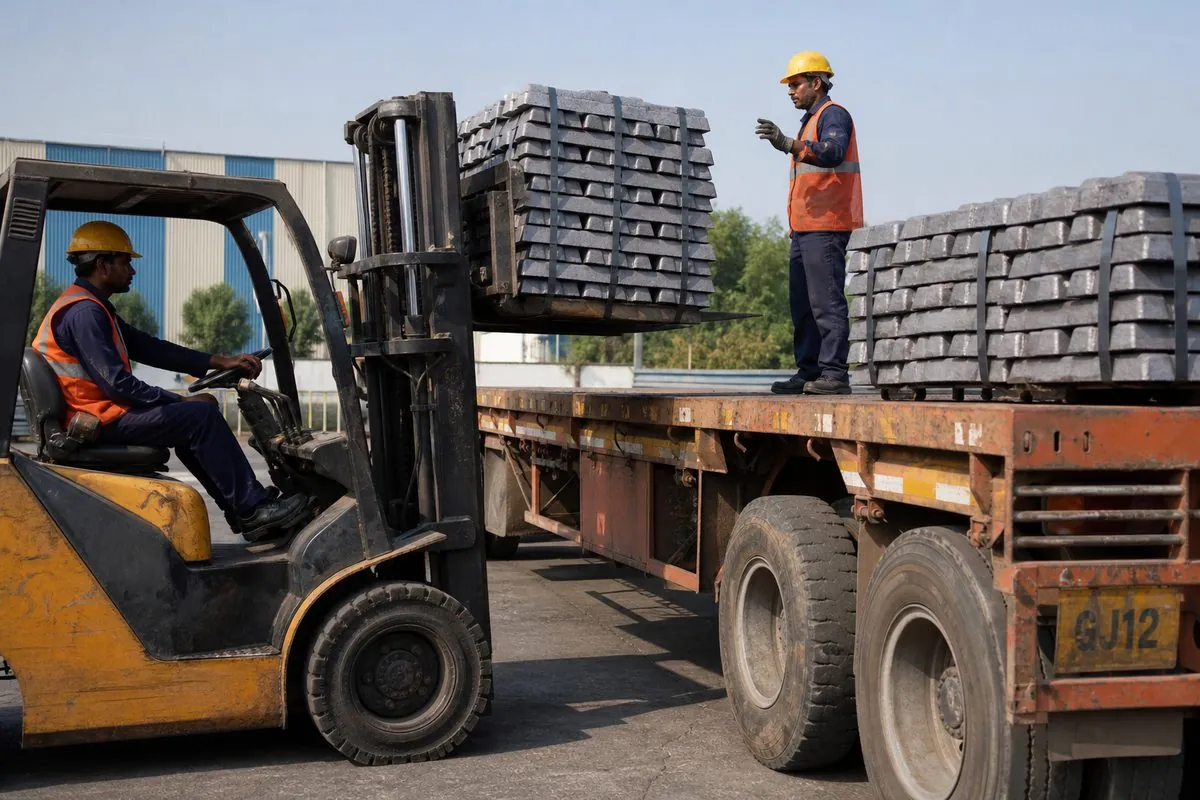
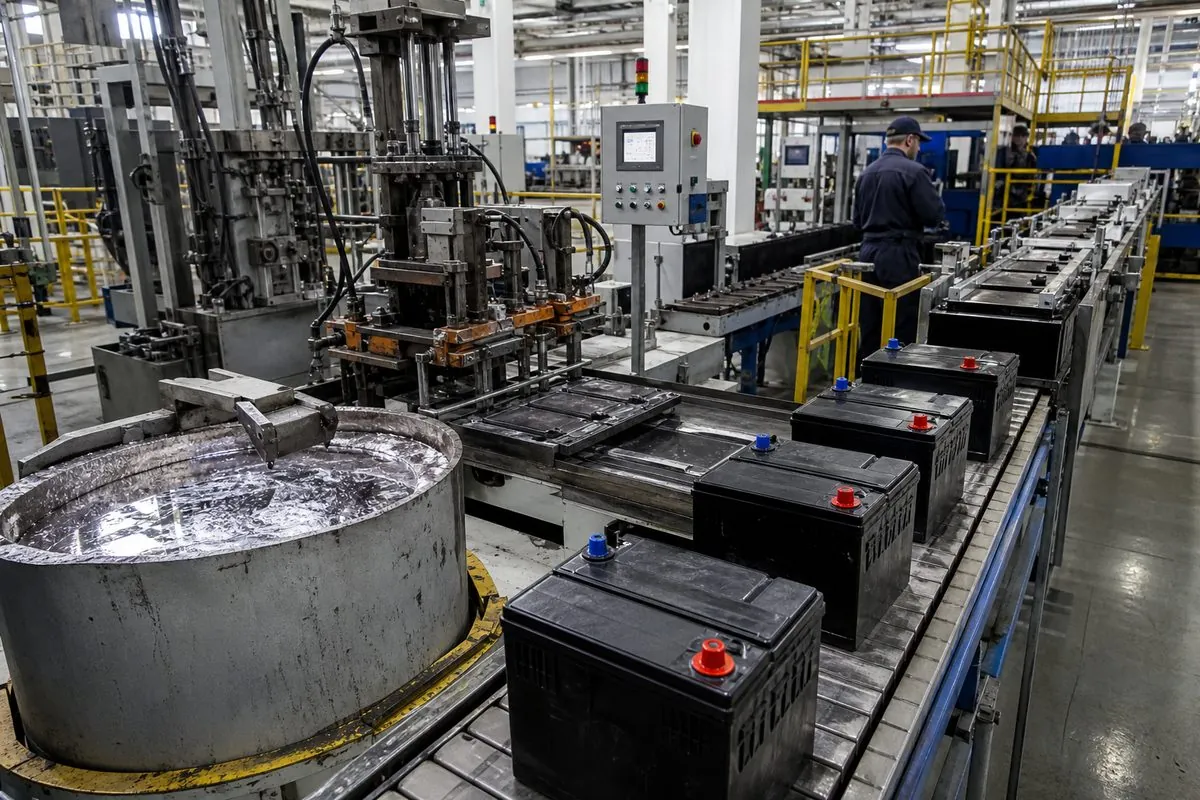
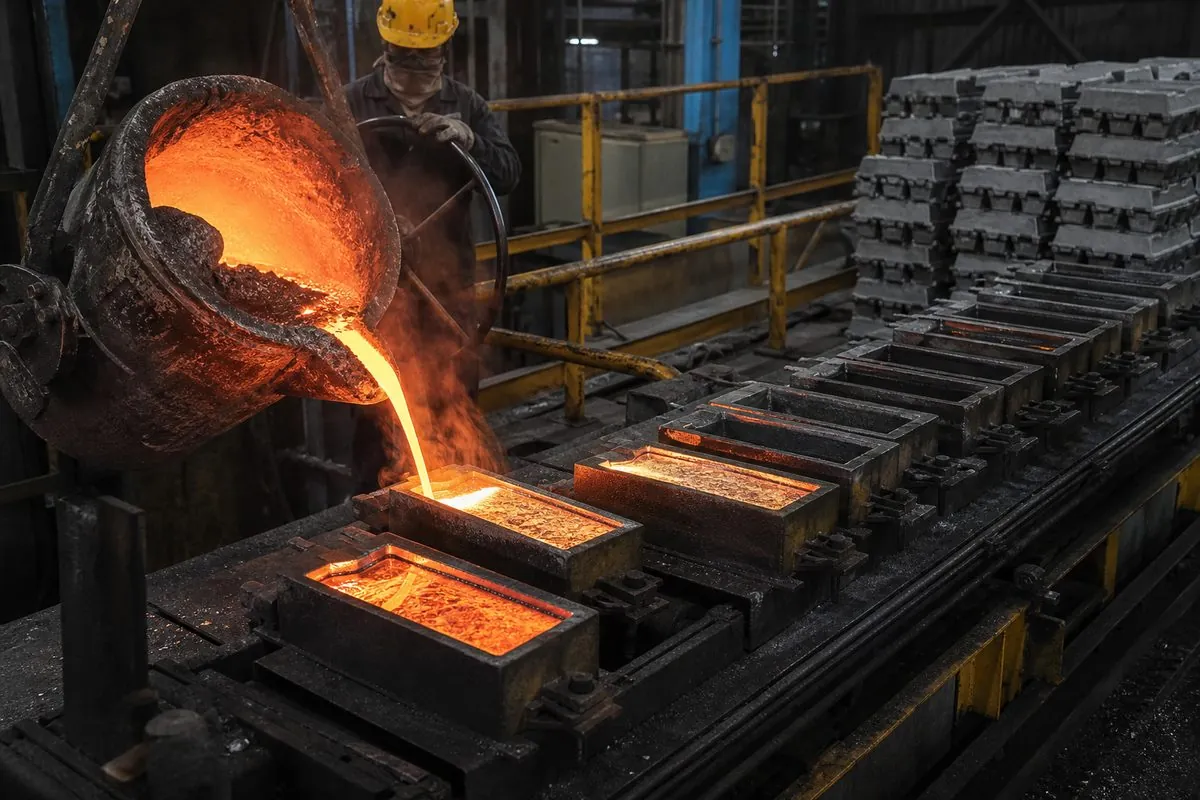
Lead ingot manufacturing in India starts with used lead-acid battery scrap feedstock — through secondary smelting, refining, and casting into uniform pigs.
The Rajasthan–Gujarat–Tamil Nadu belt concentrates secondary smelting capacity; refined 99.97% Pb lines face tighter chemistry bands than remelted secondary programmes.
Exporters coordinate smelter allocation, MTC identity, and stuffing discipline per order.
Export Process: Step-by-Step
Export Tip
The following sequence is the complete operational path from a standing start to a shipped, documented lead ingot consignment. Follow the steps in order — registrations, sample MTC approval, and quality gates exist precisely because skipping them creates customs holds, rejected lots at the battery plant, or damaged buyer trust.
Step 1: Obtain an Import Export Code (IEC) from DGFT
An IEC is the baseline legal requirement for any commercial export from India, including lead ingots. Apply online through the DGFT portal with PAN, current bank account details, and address proof consistent with your GST registration. Clean applications are typically processed within a few working days.
Step 2: Register with EEPC India and secure your RCMC
Lead ingots fall under EEPC India's notified product scope for Chapter 78. Registration with an active RCMC is a practical necessity for trade-fair access and buyer credibility. See Eepc Registration Benefits For Lead Ingot Exporters for deeper detail.
Step 3: Source from verified Rajasthan, Gujarat, or Tamil Nadu smelters
Map supply to specific secondary smelters and refined-lead casters, with Maharashtra and West Bengal for consolidation. See Source Lead Ingots Directly From India for buyer-side verification checkpoints.
Step 4: Match chemistry to buyer application
Align refined soft, battery-grade OEM, antimonial, calcium alloy, or remelted secondary grade to the buyer's chemistry sheet and price point before production. Battery-OEM buyers rarely accept commodity secondary specs, and trader hubs rarely pay premium for OEM-tight chemistry they will not use.
Step 5: Approve samples and run pre-shipment MTC review
Approve physical samples and lab MTC across exact Pb purity plus Bi, Ag, Cu, Sb, As, Sn, Ni ceilings before bulk production. Sign off against a written specification — never let bulk drift from approved sample lots.
Step 6: Commission testing appropriate to buyer tier
Commodity secondary grades need lot MTC against written specs. LME-brand and battery-OEM programmes need brand-list evidence, chemistry-locked lots, and PPAP-style packs where required. See Lme Registered Refined Battery Grade Lead Export Opportunities.
Step 7: Select packaging and plan FCL loading
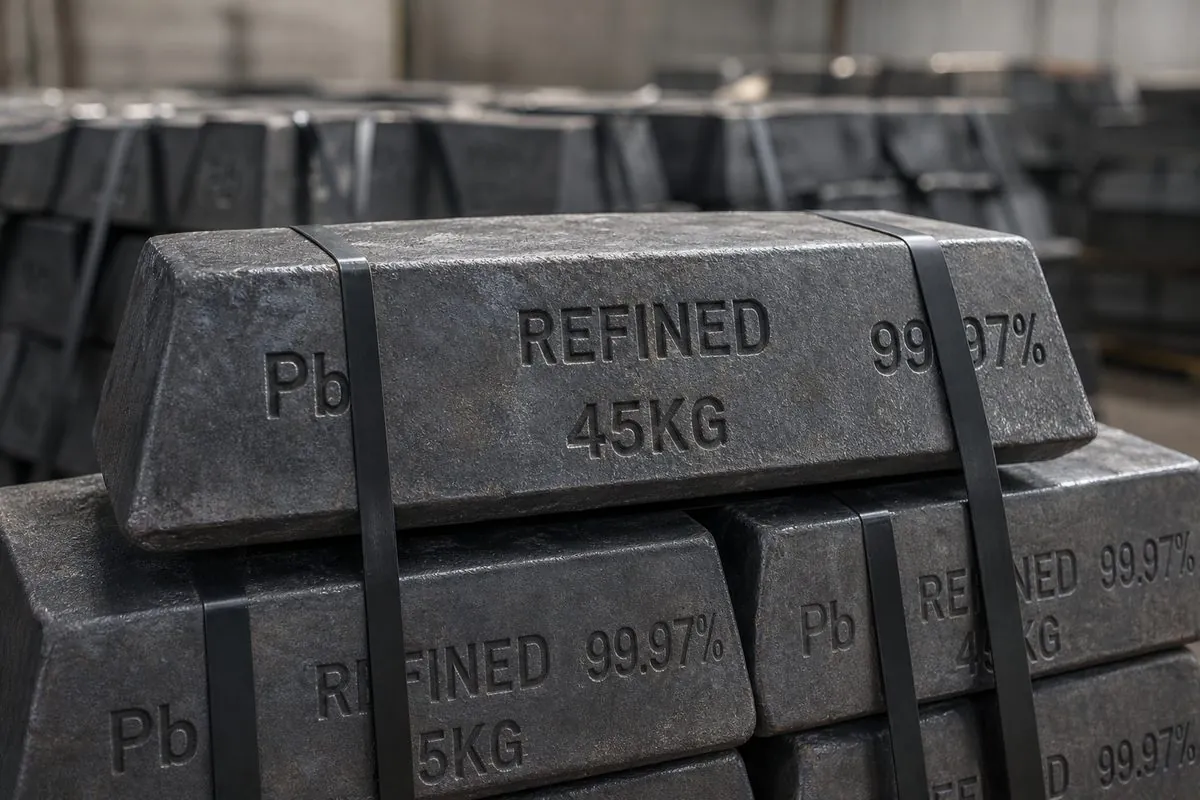
Ship as ~25–50 kg cast pigs strapped into ~1 MT bundles with moisture protection. Target 20–25 MT payload in a 20-foot FCL — confirm stow plan with your forwarder before booking.
Step 8: Build export pricing and confirm Incoterms
Construct LME Lead ± regional premium FOB from cash or 3M reference, refined or alloy premium, testing, packaging, inland haulage to Mundra / Kandla / Nhava Sheva / Chennai / Tuticorin, and margin. Quote EXW, FOB, or CFR/CIF based on buyer preference.
Step 9: Prepare documentation and coordinate with your CHA
Core docs: commercial invoice, packing list, lot MTC, SDS, shipping bill, BL, certificate of origin, LME brand or OEM approval evidence where applicable. Confirm HS 7801 subheading with your CHA. See Lead Ingot Export Documentation Checklist.
Step 10: Book shipping via Mundra, Kandla, Nhava Sheva, Chennai, or Tuticorin
Ocean FCL is standard for commercial volumes. Mundra and Nhava Sheva handle the majority of west-coast non-ferrous exports; Chennai and Tuticorin serve South India programmes. Air freight for urgent sealed sample lots only.
Step 11: Develop and maintain international buyers
Combine trade-data prospecting, LME Week / EEPC fair meetings, battery-industry expos, and buyer outreach. See Find International Buyers For Lead Ingots and Trade Shows B2B Marketplaces For Lead Ingot Exporters.
HS Classification & Trade Notes
Compliance Notes
File refined lead under 7801.10 / India 78011000; antimonial under 7801.91 / India 78019100; other unwrought (pig, unrefined, unrefined lead alloys, other) under 7801.99 / India 78019910 / 78019920 / 78019930 / 78019990. Confirm eight-digit line with CHA before first shipping bill; 7802 is scrap contrast only.
HS classification reference for Indian lead ingot exports
Swipe →
Data table — swipe horizontally on small screens
| HS Heading | Scope | Filing Note |
|---|---|---|
| 7801.10 (international) | Refined lead | Primary refined-lead planning line |
| 78011000 (India) | Refined lead | Primary eight-digit line — confirm with CHA |
| 7801.91 / 78019100 | Unwrought lead alloy — antimony as principal other element | Antimonial lead alloys |
| 78019910 (India) | Pig lead | Under 7801.99 other unwrought |
| 78019920 (India) | Unrefined lead | Under 7801.99 other unwrought |
| 78019930 (India) | Unrefined lead alloys | Under 7801.99 — used for calcium-lead and other unrefined alloy chemistries |
| 78019990 (India) | Other unwrought lead | Under 7801.99 residual line |
| 7802 / 78020010 / 78020090 | Lead waste and scrap | Contrast line — not primary for refined ingots; recycling feedstock only |
Pricing Analysis
Buyer Tip
Process exporters should model FOB as LME Lead cash or 3M plus regional premium — static price lists fail when LME moves between quote acceptance and vessel cutoff.
Directional FOB pricing structure by lead ingot grade (LME Lead ± premium)
Swipe →
Data table — swipe horizontally on small screens
| Grade / Programme | Pricing Structure | Notes |
|---|---|---|
| Refined soft lead (≥99.97% Pb) | LME Lead cash or 3M + refined premium, FOB | LME-brand programmes command tightest premiums; document brand status |
| Battery-grade soft lead (OEM chemistry) | LME Lead + refined premium + OEM chemistry premium, FOB | Bi, Ag, Cu, Sb, As, Sn, Ni ceilings drive premium tier |
| Antimonial lead (HS 78019100) | LME Lead + antimony index / alloy premium, FOB | Sb content and end-use spec (battery grid vs hard-lead) drive premium |
| Calcium-lead alloys (HS 78019910/20/90) | LME Lead + calcium alloy premium, FOB | Maintenance-free battery grid programmes; MTC chemistry critical |
| Remelted secondary pig | LME Lead ± secondary discount / premium, FOB | Battery-recycling output; chemistry variability priced into offer |
MOQ Analysis
Buyer Tip
MOQ discipline is part of the process — trial 5–25 MT → standard 20–25 MT FCL → monthly MT contracts once assay protocol and payment terms are proven.
Directional MOQ tiers by transaction stage
Swipe →
Data table — swipe horizontally on small screens
| Stage | Typical MOQ | Purpose |
|---|---|---|
| Trial order | 5–25 MT | Buyer grade evaluation, MTC verification, and inspection protocol test |
| Standard FCL | 20–25 MT (20ft FCL) | First commercial shipment; verify pig stow and payload with CHA |
| Programme contract | Monthly MT contracts | Battery-OEM, alloy house, and trader repeat programmes |
Packaging Standards
Export Tip
For process programmes, standard export packs remain ~25–50 kg cast pigs strapped into ~1 MT bundles — lot marks must match MTC and packing list before CHA filing.
Lead ingot packaging formats — commercial practice and LME Special Contract Rules
Swipe →
Data table — swipe horizontally on small screens
| Format | Typical Configuration | Use Case | Key Requirement |
|---|---|---|---|
| Cast pigs / ingots — commercial | ~25–50 kg per piece in typical Indian commercial programmes; confirm mill cast form | All refined and secondary commercial export programmes | Lot/heat/cast marking legible for buyer QC |
| Cast pigs / ingots — LME warrant | Ingots not more than 55 kg each (LME Lead Special Contract Rules) | LME-brand refined lead warrant-eligible lots only | Ingot ≤55 kg, approved brand indelibly marked on each ingot |
| Strapped bundles — commercial | ~1 MT class strapped bundles on pallets or mill strapping for standard FCL | Standard FCL loading for refined and secondary lead | Bundle integrity in ocean transit; identity tags per bundle |
| Strapped bundles — LME warrant | Bundles ≤1.5 t, securely strapped; warrant lot ~25 t (2% more or less) | LME warrant-eligible refined lead delivery | Bundle ≤1.5 t; brand and cast reference per LME rules |
| LME brand marking | Brand name indelibly marked on each ingot; cast reference on ingot or durable label | LME-brand refined lead programmes | Brand must be on live LME approved brands list; ingot ≤55 kg / bundle ≤1.5 t |
| Moisture / oxidation protection | Dry warehouse staging; wrapping where specified | All ocean shipments — battery-grade especially | Prevent white lead-oxide bloom before receipt at battery plant |
Container Loading Details
Export Tip
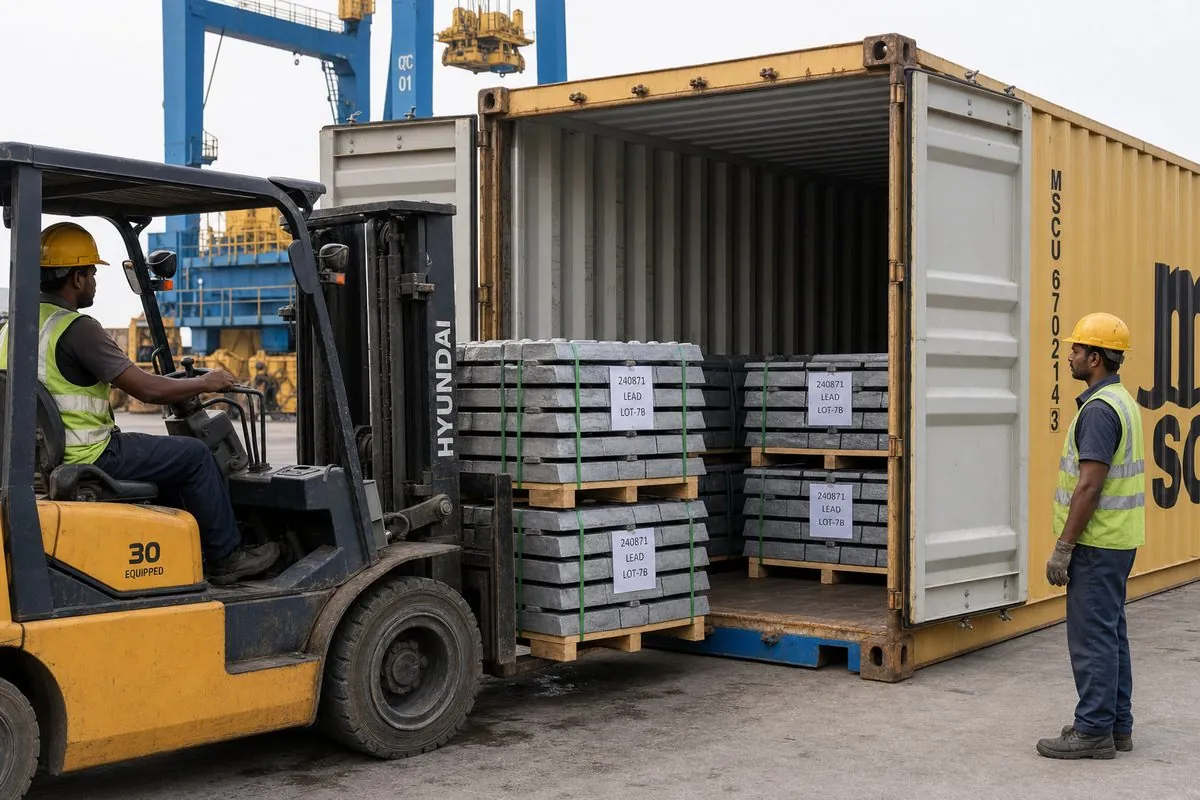
Dense lead cargo in process programmes typically targets 20–25 MT per 20ft FCL — forwarder stow verification required before buyer MT commitment.
Directional container loading guidance for lead ingots
Swipe →
Data table — swipe horizontally on small screens
| Container Type | Loading Consideration | Typical Use |
|---|---|---|
| 20-foot FCL | 20–25 MT payload in ~1 MT strapped bundles; verify stow with forwarder | Trial and standard commercial shipments |
| 40-foot FCL / 40-foot HC | Higher payload with dense pig stacking; check max payload limits | Established battery-OEM and trader programmes |
| LCL (less than container load) | Rare for lead; sealed sample lots only when needed | Sample/assay parcels below FCL threshold |
| Palletisation | Recommended for consistent handling and discharge speed | Buyers with forklift handling at destination plant |
Shipping Methods
Export Tip
- Samples: air/express 7–14 days for sealed assay lots
- Trial: FCL 2–4 weeks post-production, depending on smelter allocation
- FCL: 3–6 weeks door-to-port by corridor
- Incoterms: EXW, FOB, CFR/CIF; DDP selective for battery-OEM programmes
First-time exporters ship trial lead lots as ocean FCL from Mundra or Nhava Sheva; smaller sealed assay samples move by air-express to accelerate the buyer approval window before bulk stuffing.
Certifications
Compliance Notes
IEC and EEPC RCMC are baseline; lot MTC universal; LME brand / battery-OEM by segment.
Certifications and documents relevant to lead ingot export
Swipe →
Data table — swipe horizontally on small screens
| Certification / Document | Purpose | Relevant For |
|---|---|---|
| Mill Test Certificate (MTC) | Lot-specific Pb purity and impurity chemistry (Bi, Ag, Cu, Sb, As, Sn, Ni) | All commercial shipments — baseline buyer requirement |
| EEPC RCMC + IEC | Baseline export registration and council membership for Chapter 78 | All commercial lead ingot export shipments from India |
| ISO 9001 (producer / exporter) | Quality-system credibility at smelting and export site | Battery OEM and multinational trader buyers |
| LME brand registration evidence | Proof of live LME-approved brand for refined lead programmes | LME-brand refined lead export programmes only |
| Third-party assay (SGS / Bureau Veritas / Intertek) | Independent lot chemistry and weight verification | Brand-sensitive, battery-OEM, or LC-backed programmes |
| Battery-OEM quality pack (PPAP-style) | OEM approval of chemistry, packaging, and traceability | Direct battery manufacturer programmes |
| Safety Data Sheet (SDS) | Lead handling, transport, and REACH-relevant declarations | All shipments; EU/US importers require current SDS |
| Certificate of Origin | Country of manufacture; FTA claims where applicable | Destination customs and FTA duty programmes |
Buyer Requirements
Buyer Requirements
Buyers in process programmes request samples, written Pb purity and impurity spec, lot MTC, SDS, LME-linked FOB pricing, and EEPC/IEC proof — battery OEMs add brand or OEM approval where applicable.
Country-wise Opportunities
Market Snapshot
First-time exporters should shortlist two or three corridors from the matrix below before scaling; sequencing corridor entry protects cash flow. Cross-check with the corridor guide for freight and duty context.
Directional country opportunity profile for Indian lead ingot exporters
Swipe →
Data table — swipe horizontally on small screens
| Country | Demand Profile | Key Requirement Focus | Opportunity Note |
|---|---|---|---|
| Singapore | Trader hub with warehouse and LME warrant depth | LME-eligible refined + MTC + brand evidence | Top WITS 2024 HS 780110 partner (~US$291.4M) — priority corridor |
| South Korea | Battery-industry offtake with chemistry-locked programmes | Refined 99.97%+, OEM impurity ceilings, PPAP-style packs | Second WITS 2024 refined partner (~US$174.7M) — margin discipline critical |
| Bangladesh | Short-sea corridor demand across refined and secondary | Consistent MTC, reliable pig weight bands, SAFTA-aware paperwork | WITS ~US$44.4M refined — steady short-sea repeat volumes |
| Vietnam | Growing battery capacity plus industrial pull | Refined and antimonial chemistry; FTA duty verification | WITS ~US$42.3M refined — expanding battery-grade programmes |
| Thailand | Established battery-industry demand | Battery-grade chemistry; timely inland haulage | WITS ~US$28.2M refined — ASEAN FTA context |
| Malaysia | Battery + trader mix with FTA context | Refined + antimonial; verify FTA landed cost | WITS ~US$15.4M refined — chemistry-locked buyer opportunity |
| Indonesia | Battery and industrial demand across grades | Consistent MTC and packaging; competitive FOB | Smaller refined line share — good fit for secondary + refined mix |
| UAE | Gulf re-export hub plus local industrial buyers | Refined + secondary with clear brand/lot identity | WITS ~US$15.2M refined — Gulf industrial + re-export gateway |
Expert Insight: Corridor Discipline
Expert Insight Box
The exporters who convert destination corridor knowledge into consistent monthly FCL programmes are the ones who treat each country as a chemistry conversation, not a freight conversation. Singaporean traders want brand and MTC depth; Korean OEMs want chemistry-locked lots; Bangladeshi buyers want reliable pig weight and short-sea discipline. Sequence corridors deliberately and the process pays for itself.
Sourcing Checklist
Checklist
Buyer Checklist
Common Buyer Mistakes
Common Mistakes Box
Future Market Trends
Key Statistics
Battery-industry growth in East and Southeast Asia supports refined and battery-grade demand; LME brand and OEM programmes move toward standard in audited buyer chains.
LME Lead volatility keeps FOB index-linked — exporters and buyers who contract transparent index references reduce dispute risk.
Challenges & Solutions
- Challenge: LME volatility — Solution: index-linked FOB with dated reference
- Challenge: MTC drift — Solution: smelter QC gates and retained samples
- Challenge: HS errors — Solution: CHA-confirmed 78011000 / 78019100 / 78019910–90
- Challenge: moisture/oxidation — Solution: bundle spec and pallet SOP
Scaling process lead ingot export involves LME volatility, documentation, and chemistry discipline.
Exporter Checklist
Checklist
Compliance Checklist
Checklist
Compliance Notes
Sources
- WITS / UN Comtrade — India exports HS 780110 by partner, 2024
- WITS / UN Comtrade — India imports HS 780110 by partner, 2024
- WITS / UN Comtrade — Lead waste and scrap imports by country, 2024 (HS 780200)
- UN Comtrade Database
- ITC Trade Map
- OEC — India raw lead (HS 7801) trade profile
- India Ministry of Commerce — TRADESTAT / MEIDB
- DGFT (India) — IEC / trade portal
- ICEGATE — Indian Customs EDI
- India CBIC — Customs Tariff
- EEPC India
- London Metal Exchange — Lead
- LME — Chemical composition (Lead PDF)
- LME Lead brand listing guidance
- USITC Harmonized Tariff Schedule (search 7801.10.00)
- European Commission TARIC
- MoEFCC India — hazardous waste / scrap import framework
- ISO 9001 overview
- Altus Exports — Engineering Goods
All sources accessed 2026-07-27 during the Lead Ingots factual audit. Prefer primary government, exchange, and multilateral trade databases (WITS/UN Comtrade, TRADESTAT, CBIC, USITC, LME, EEPC) when citing figures in contracts or buyer presentations.
Process and registration steps in this guide should be cross-checked against current DGFT, EEPC India, and CBIC tariff entries for Chapter 78 before first shipment.
Conclusion
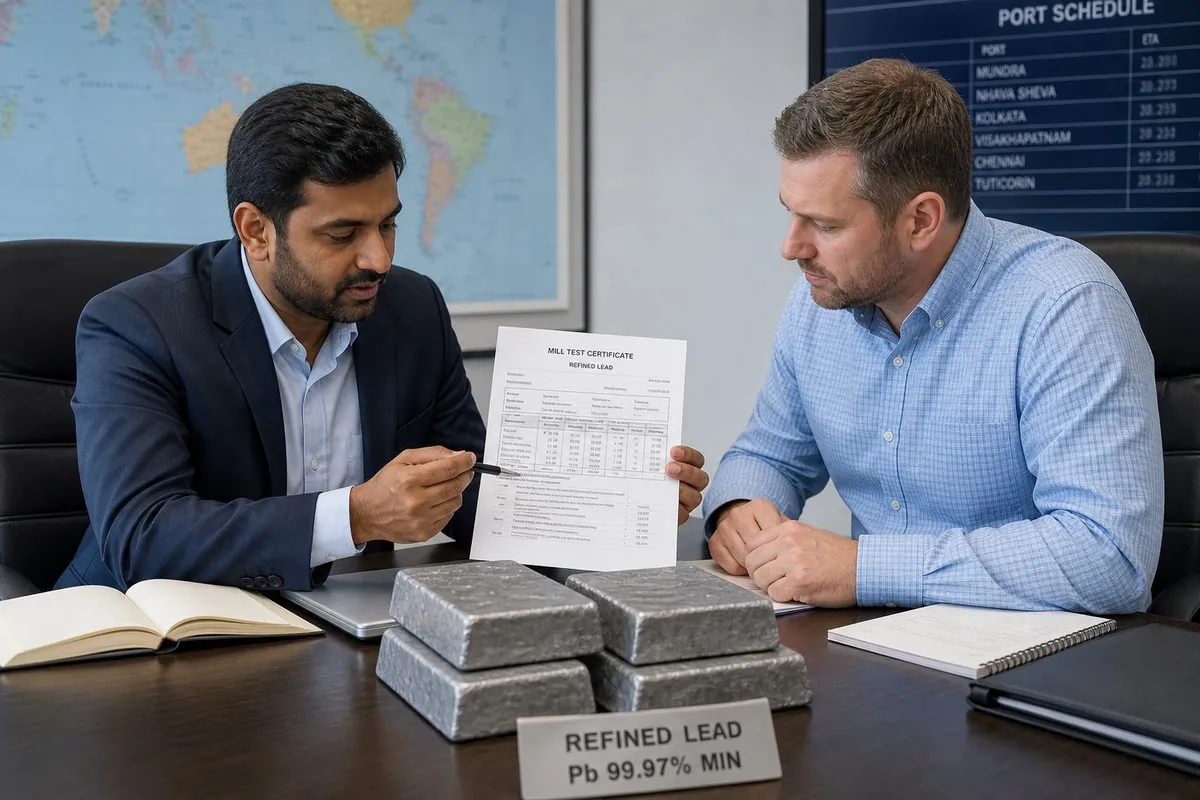
Exporting lead ingots from India succeeds when IEC, EEPC India RCMC, smelter MTC discipline, LME Lead ± premium quoting, bundled FCL stuffing, and document reconciliation operate as one system.
Altus Exports supports Indian smelters and international battery makers as a merchant exporter in India and global sourcing partner — contact us for your first or next FCL.
Next reads: Top Lead Ingot Products Exported From India, Lead Ingot Export Documentation Checklist, Best Countries For Indian Lead Ingot Exports.