
How to Export Sports Wear and Sports Uniforms from India: Complete Process Guide
By Saurabh Mittal, Founder, Altus Exports
A complete operational guide on how to export sports wear and sports uniforms from India — registrations, sourcing from Ludhiana, Jalandhar, Meerut, Agra, Tirupur, and Delhi NCR clusters, track suits, training tees, team kits, sublimation jerseys, Incoterms, pricing, container loading, ports, lead times, and buyer development.
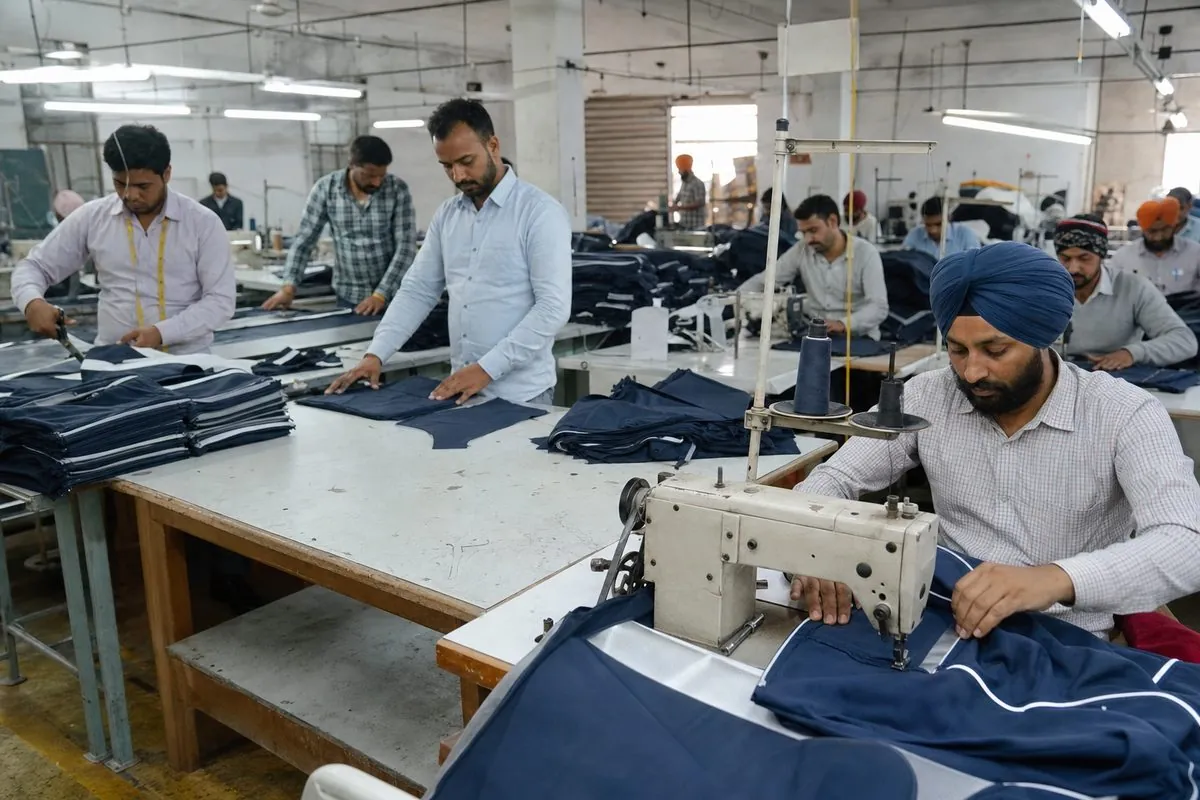
India has become a dependable sourcing origin for sports wear and sports uniforms — built on decades of knitwear, cut-and-sew, and sublimation expertise concentrated in Ludhiana and Jalandhar, with Tirupur, Meerut, Agra, and Delhi NCR supporting overflow capacity and specific material niches. Buyers searching for how to export sports wear and sports uniforms from India, or how to import them reliably, are really asking a supply-chain question: how do you connect a fragmented base of cutting tables, stitching lines, and sublimation heat-press units to a compliant, well-documented, competitively priced shipment that clears customs and lands in usable condition? This guide answers that question end to end. For the product-level catalogue of materials, sizes, and SKUs, see Top Sports Wear and Sports Uniform Products Exported from India; for market selection, see Best Countries for Indian Sports Wear and Sports Uniform Exports.
Sports wear and sports uniform exporting sits under India's broader sportswear and team uniforms trade, tracked internationally under Harmonized System heading 6112 for knitted track suits internationally, with India using ITC-HS 6112/6211.20 (and related apparel lines) for knitted track suits, training tees, and team uniform kit pieces; training tees, jerseys, and woven kit pieces may file under 6109, 6110, 6203, 6204, or 6211.20 instead. The Sports Goods Export Promotion Council (SGEPC) is the relevant government-recognised trade body for this category, and its RCMC (Registration-cum-Membership Certificate) sits alongside the baseline Import Export Code (IEC) as the credential buyers should expect to see before committing volume. Beyond registrations, the real operational work is material-specific: poly training tees, knitted track suits, and sublimation team kits sports wear and sports uniforms are different manufacturing disciplines with different cost structures, lead times, and buyer segments. If you would rather work through a verified supplier network than build these relationships from a standing start, see Source Sports Wear Directly from India and consider a merchant exporter in India to compress the learning curve.
This guide walks through the complete operational sequence — registrations, sourcing from Ludhiana, Jalandhar, Meerut, Agra, Tirupur, and Delhi NCR, material and quality management, pricing logic, packaging and poly-bagged container loading, ports and lead times, documentation, and buyer development — that Indian sports wear and sports uniform exporters and the international buyers who work with them should follow. Trade figures for FY 2024-25 show approximately ~₹177.03 crore in ITC-HS 6112 exports and ~₹75.15 crore in imports (TradeStat EIDB, FY 2024-25) — with related training-tee volume under 6109 at ~₹20,113 crore for Chapter 61 context (TradeStat EIDB, directional). For registration-specific depth, see SGEPC Registration Benefits for Sports Wear Exporters, and for your pre-shipment paperwork gate, see Sports Wear Export Documentation Checklist.
Key Takeaways
Summary Box
Executive Summary
Summary Box
Exporting sports wear and sports uniforms from India is a five-part operating system: IEC and SGEPC RCMC registration, cluster sourcing in Ludhiana and Jalandhar with Meerut, Agra, Tirupur, and Delhi NCR support, material-matched production (track suits, training tees, sublimation jerseys, textile), QC against written specs, and poly-bagged export logistics under ITC-HS 6112 or material-alternate headings confirmed with your CHA.
The category spans promotional basic poly training tees at one end and OEKO-TEX-certified sublimation jerseys studio lines at the other. TradeStat EIDB (FY 2024-25) shows ~₹177.03 crore exports against ~₹75.15 crore imports under ITC-HS 6112 — a surplus of ~₹101.88 crore where documentation discipline and material honesty drive repeat orders.
This pillar guide serves Indian manufacturers planning first shipments and international importers evaluating India. Both need registrations, material standards, pricing, packaging, and documentation from opposite sides of the same transaction. Altus Exports coordinates supplier verification, QC, and shipment execution.
Market Size & Industry Overview
Key Statistics
- Fabric mills and CAD cutting units feed stitching, overlock, and sublimation print shops in tight regional clusters.
- Packing houses manage poly-bagging, size labelling, and master-carton consolidation before port movement.
- Specialist workshops — not single vertically integrated factories — supply most export programmes.
India's sportswear manufacturing base spans Ludhiana and Jalandhar for knitted track suits and training apparel, Meerut and Agra for woven kit pieces, Tirupur for performance knits and dri-fit fabrics, and Delhi NCR for export houses coordinating sublimation and cut-and-sew programmes.
Tirupur and Bangalore provide supporting capacity for dri-fit performance knits and export-grade polyester interlock — a second-source option when northern clusters are fully booked ahead of club and school procurement windows.
Export Statistics
Key Statistics
- Primary anchor: ITC-HS 6112 — knitted track suits, ski suits, and swimwear.
- Reference context: 6109 knitted T-shirts (~₹20,113 crore exports FY 2024-25).
- Re-verify figures annually on TradeStat EIDB.
TradeStat EIDB publishes line-specific export and import values under ITC-HS 6112 (knitted track suits). Training tees, jerseys, and woven kit pieces file under 6109, 6110, 6203, 6204, or 6211.20 — query those lines separately before investment decisions.
TradeStat profile of Indian knitted track-suit exports (ITC-HS 6112) with related apparel reference lines
Swipe →
Data table — swipe horizontally on small screens
| Metric | Directional Estimate | Notes |
|---|---|---|
| Primary manufacturing clusters | Ludhiana, Jalandhar (Punjab) | Knitted track suits, training apparel, sublimation jerseys |
| Supporting clusters | Meerut, Agra (UP); Tirupur (TN); Delhi NCR; Bangalore/Gurgaon | Woven kits, PE sets, performance dri-fit lines |
| Applicable HS headings | 6112, 6211.20, 6109, 6110, 6203, 6204 | Confirm exact 8-digit ITC-HS on shipping bill with your CHA |
| FY 2024-25 export value (TradeStat, ITC-HS 6112) | ~₹177.03 crore | TradeStat EIDB FY 2024-25 (+28.95% YoY) — knitted track suits line |
| FY 2024-25 import value (TradeStat, ITC-HS 6112) | ~₹75.15 crore | TradeStat EIDB FY 2024-25 (−6.30% YoY) — query related lines separately |
| FY 2024-25 trade surplus (ITC-HS 6112) | ~₹101.88 crore | TradeStat EIDB FY 2024-25 — re-verify annually |
| Reference line (6109 tees) | ~₹20,113 crore exports FY 2024-25 | TradeStat context — training tees often file under 6109, not 6112 |
| Governing trade councils | SGEPC + AEPC (apparel adjacency) | RCMC with IEC; AEPC for woven/knit apparel; confirm council scope per product line |
| Leading destination regions | Americas, Europe, Middle East, Africa | USA, UK, Germany, UAE, Australia strongest directional volumes |
| Dominant export construction | Track suits + training tees + sublimation kits | School PE sets and dri-fit performance lines growing share |
Import Statistics
Key Statistics
From the buyer side, sports wear enters destination markets through sporting-goods distributors, retail chains, club procurement, school PE tenders, and private-label programmes.
FY 2024-25 import value under ITC-HS 6112 was approximately ~₹75.15 crore (TradeStat EIDB), signalling active import competition alongside export opportunity.
Directional import demand profile by destination market
Swipe →
Data table — swipe horizontally on small screens
| Market | Directional Demand Profile | Primary Buyer Type |
|---|---|---|
| USA | Club team kits, dri-fit training, school PE sets | Sporting-goods retailers, club suppliers, private-label brands |
| UK | Football and cricket sublimation kits, track suits | Club suppliers, academy procurement, retail chains |
| Germany | Performance apparel with REACH/OEKO-TEX packs | Sports retailers, club programmes, distributors |
| UAE | Wholesale track suits and training apparel | Wholesale distributors, school and club re-export |
| Australia | Academy kits and training wear | Retail chains, cricket/football suppliers |
| France | Club and retail sportswear volume | Distributors, retail chains, OEM programmes |
| Netherlands | Club uniforms and training lines | Retail, wholesale distributors, club suppliers |
| Canada | School PE and club procurement | Institutional buyers, sporting-goods distributors |
| South Africa | Club and school uniforms | Distributors, municipal and school tenders |
| Saudi Arabia | Football kits and institutional PE sets | Club suppliers, school procurement, wholesalers |
Product Categories & Materials Overview
Summary Box
- Poly training tee — budget retail and academy training programmes
- Dri-fit jersey — moisture-wicking club and performance retail lines
- Sublimation team kit — custom print for football, cricket, basketball, rugby, and volleyball clubs
- Promotional/branded — logo-led high-volume poly training tee programmes
- School PE set — age-grade tee and short or track for institutional procurement
Sports Wear move through export channels across poly training tees, knitted track suits, and sublimation team kits materials — each targeting different buyer segments and price points. Standard formats are size-run S–XXL across track suits, tees, shorts, and sublimation jerseys. For SKU-level depth, see Top Sports Wear Sports Uniform Products Exported From India.
Primary sports wear and sports uniform product types exported from India
Swipe →
Data table — swipe horizontally on small screens
| Product Type | Typical Construction | Size / Format | Primary Channel |
|---|---|---|---|
| Knitted track suit set | Polyester interlock jacket + lower | Adult and youth size-runs | Wholesale, school, club warm-up |
| Training tee / polo | Poly or dri-fit knit | S–XXL; men's/women's cuts | Retail chains, academies, PE programmes |
| Training short | Poly mesh or interlock | S–XXL | Club training, school PE, retail |
| Sublimation jersey + short | Polyester interlock, all-over print | 100–500 sets/design MOQ | Football, cricket, basketball, rugby, volleyball clubs |
| Cricket team kit | Poly jersey, woven trouser, optional vest | Custom team sizing | Clubs, academies, regional associations |
| School PE set | Poly tee + short or track | Age-grade size-runs | Institutional procurement, tenders |
| Performance dri-fit jersey | Moisture-wicking knit | Club and match specs | Academies, performance retail |
Manufacturing Overview
Export Tip
Sportswear manufacturing begins with fabric sourcing — polyester interlock, mesh, and dri-fit knits from Tirupur and Ludhiana mills — followed by CAD marker making, cutting, stitching, and finishing. Sublimation jerseys pass through digital print, heat-press transfer, and colour-fastness QC. Track suits combine knitted or woven jacket and lower pieces with matched size-run packing. School PE sets and club kits add numbering, crest embroidery, or heat-transfer logos before poly-bagging and master-carton consolidation.
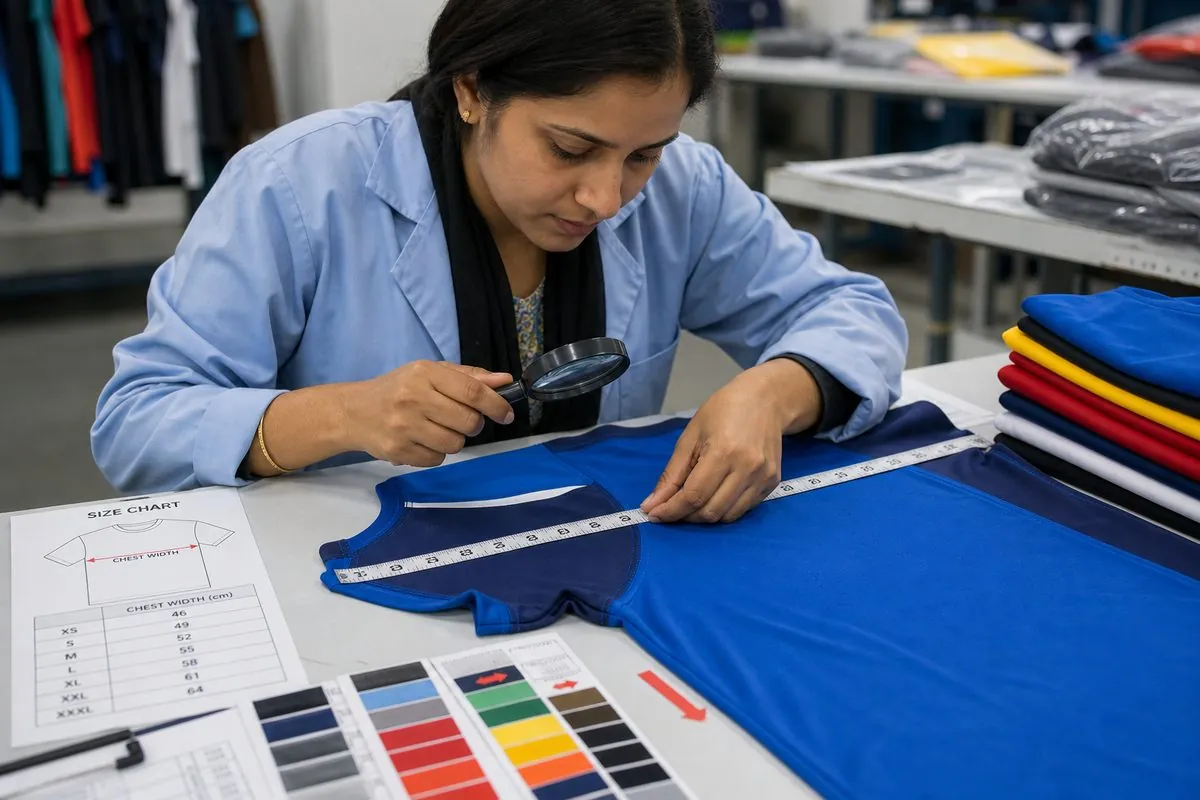
After cutting, fabric panels move to stitching or sublimation lines, then QC checks size-run accuracy, seam strength, colour-fastness, and print registration against the approved size chart and strike-off. Premium team kits face materially more rigorous testing than commodity training stock.
Because Delhi NCR's ecosystem is organised around specialist units rather than one vertically integrated factory for every material type, exporters coordinate a network of production partners per order — which is where an experienced merchant exporter earns its margin.
Export Process: Step-by-Step
Export Tip
The following sequence is the complete operational path from a standing start to a shipped, documented sports wear consignment. Follow the steps in order — registrations, sample approval, and quality gates exist precisely because skipping them creates customs holds, rejected lots, or damaged buyer trust.
Step 1: Obtain an Import Export Code (IEC) from DGFT
An IEC is the baseline legal requirement for any commercial export from India, including sports wear and sports uniforms. Apply online through the DGFT portal with PAN, current bank account details, and address proof consistent with your GST registration. Clean applications are typically processed within a few working days.
Step 2: Register with SGEPC and secure your RCMC
Sports Wear fall under SGEPC's notified product scope. Registration with an active RCMC is a practical necessity for trade-fair access and buyer credibility. See Sgepc Registration Benefits For Sports Wear Sports Uniform Exporters for deeper detail.
Step 3: Source from verified Ludhiana, Jalandhar, Meerut, Agra, Tirupur, and Delhi NCR manufacturers
Map supply to specific cutting tables, overlock lines, and sublimation heat-press units in Ludhiana and Jalandhar, with Tirupur and Delhi NCR for dri-fit and woven kit overflow. See Source Sports Wear Sports Uniforms Directly From India for buyer-side verification checkpoints.
Step 4: Match material to buyer specification
Align basic poly, dri-fit interlock, or sublimation premium fabric tier to the buyer's price point and end use before production. Promotional buyers rarely need OEKO-TEX-certified premium construction.
Step 5: Approve samples and run pre-production QC
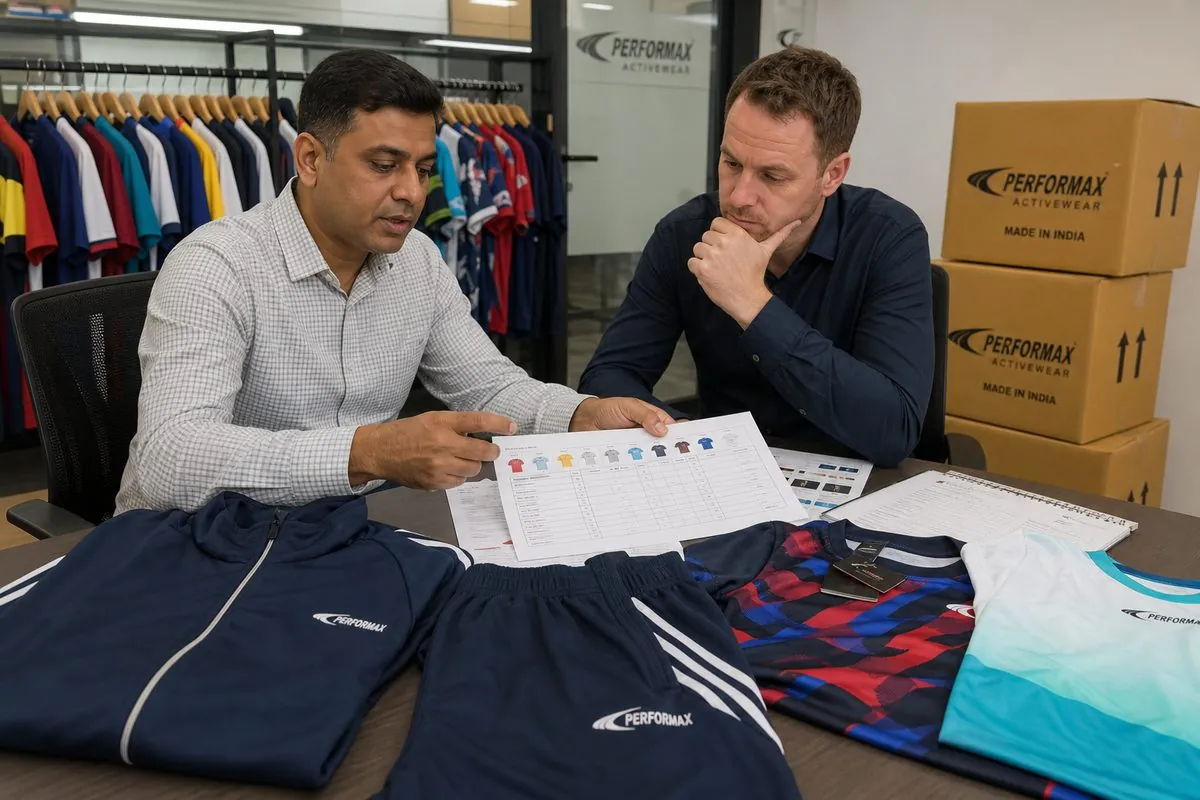
Approve physical samples across exact material, cover, and branding before bulk production. Sign off against a written specification — never let bulk drift from approved samples.
Step 6: Commission testing appropriate to certification pathway
Commodity training wear needs GSM, stitch count, and colour-fastness testing against written specs. Premium sublimation lines need OEKO-TEX Standard 100 protocols. See {link('custom-team-sports-uniform-sublimation-jersey-export-opportunities')}.
Step 7: Select packaging and plan poly-bagged shipping
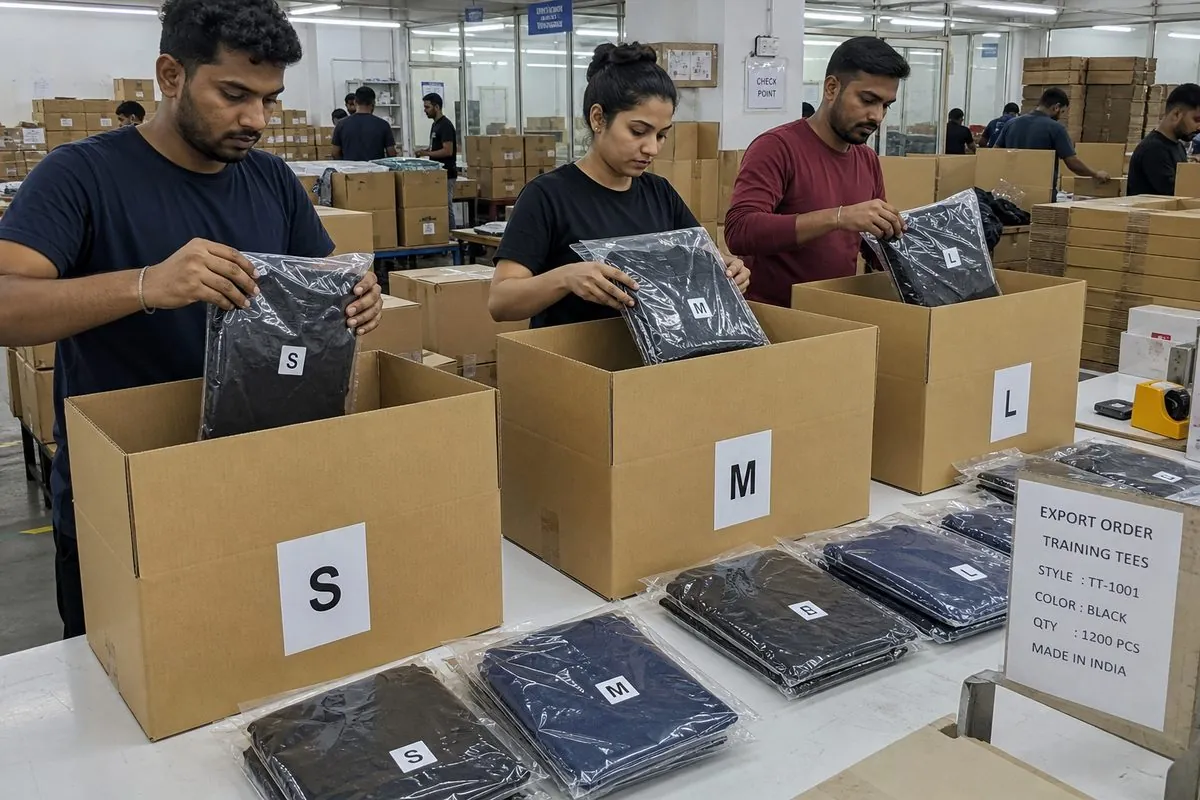
Ship poly-bagged garments in master cartons (20–50 pcs typical). Retail boxes for premium SKUs. Cartonised shipping is the single biggest container-economics lever in this category.
Step 8: Build export pricing and confirm Incoterms
Construct FOB from material, polyester interlock or dri-fit fabric, labor, testing, packaging, inland haulage, and margin. Quote EXW, FOB, or CFR/CIF based on buyer preference.
Step 9: Prepare documentation and coordinate with your CHA
Core docs: commercial invoice, packing list, shipping bill, BL/AWB, certificate of origin, and OEKO-TEX documentation where applicable. Confirm ITC-HS 6112, 6211.20, 6109, 6110, 6203, or 6204 with your CHA. See Sports Wear Sports Uniform Export Documentation Checklist.
Step 10: Book shipping via Nhava Sheva, Mundra, or Chennai port
Ocean FCL/LCL is standard. Nhava Sheva, Mundra, and Chennai are primary sea gateways; ICD Ludhiana consolidate northern cargo. Air freight for urgent samples and trade-show kits only.
Step 11: Develop and maintain international buyers
Combine trade-data prospecting, trade shows, B2B marketplaces, and distributor outreach. See Find International Buyers For Sports Wear Sports Uniforms and Trade Shows B2B Marketplaces For Sports Wear Sports Uniform Exporters.
Trade Statistics & HS Classification Analysis
Key Statistics
Compliance Notes
Sportswear trade analysis starts with clean HS classification: ITC-HS 6112 for knitted track suits, 6211.20 for woven track suits, 6109 for knitted tees, 6110 for jerseys, and 6203/6204 for woven kit pieces — confirm the exact 8-digit line with your CHA before filing. Confirm the exact 8-digit line with your CHA before filing.
HS classification reference for Indian sports wear and sports uniform exports
Swipe →
Data table — swipe horizontally on small screens
| HS Heading | Scope | Filing Note |
|---|---|---|
| 6112 (international) | Track suits, ski suits and swimwear, knitted or crocheted | Confirm 6-digit subheading (6112.11 cotton / 6112.12 synthetic) with import broker |
| 6109 (India related) | Knitted T-shirts — largest Chapter 61 export line (~₹20,113 Cr FY 2024-25) | Training tees and polos often file here — confirm 8-digit line |
| 6112 (India primary) | Knitted track suits, ski suits, swimwear | Primary TradeStat anchor (~₹177.03 Cr exports FY 2024-25) |
Pricing Analysis
Buyer Tip
Sportswear pricing is driven primarily by fabric tier, construction, and print complexity. Treat figures below as directional FOB bands; confirm against fresh quotations.
Directional FOB USD pricing bands by product type (confirm live quotes)
Swipe →
Data table — swipe horizontally on small screens
| Product / Grade | Directional FOB USD | Notes |
|---|---|---|
| Basic poly training tee | $2–5/pc | Entry training and school PE programmes |
| Track suit set (knitted/woven) | $8–18/set | Jacket + lower; cluster-dependent construction |
| Sublimation jersey + short set | $6–15/set | Custom design MOQ typically 100–500 sets/design |
| Dri-fit performance jersey | $8–20/pc | Moisture-wicking knit; club and academy programmes |
| Full cricket kit (jersey, trouser, optional vest) | $15–40/set | Woven + knit mix; size-run dependent |
| School PE set (tee + short/track) | $5–12/set | Volume institutional procurement |
MOQ Analysis
Buyer Tip
Minimum order quantities scale from sample-size lots through full-container wholesale.
Directional MOQ tiers by transaction stage
Swipe →
Data table — swipe horizontally on small screens
| Stage | Typical MOQ | Purpose |
|---|---|---|
| Sample | 10–50 pcs/style | Buyer fabric, fit, and print evaluation |
| Trial order | 500–2,000 pcs | Channel testing, club pilot, retail pilot runs |
| Wholesale / bulk | 3,000–10,000+ pcs | Established buyer repeat programmes and FCL orders |
| Custom sublimation | 100–500 sets/design | Team kits with unique artwork per design |
Packaging Standards
Export Tip
Sportswear packaging uses one poly bag per garment with size stickers and master cartons of 20–50 pieces — retail-box programmes add branded shelf-ready cartons.
Packaging formats and specifications for sports wear export
Swipe →
Data table — swipe horizontally on small screens
| Format | Typical Configuration | Use Case | Key Requirement |
|---|---|---|---|
| Individual poly bag | 1 garment per bag | All export shipments | Size sticker on bag; scuff protection |
| Master carton | 20–50 pcs per carton | Bulk wholesale, club programmes | Corrugated, stackable, SKU and size marks |
| Branded retail boxes | 1 pc or set per box | Chain retail and private-label | Shelf-ready barcode and destination labelling |
| Set packing | Jersey + short in one bag | Team kit and school PE sets | Matching size labels across pieces |
Container Loading Details
Export Tip
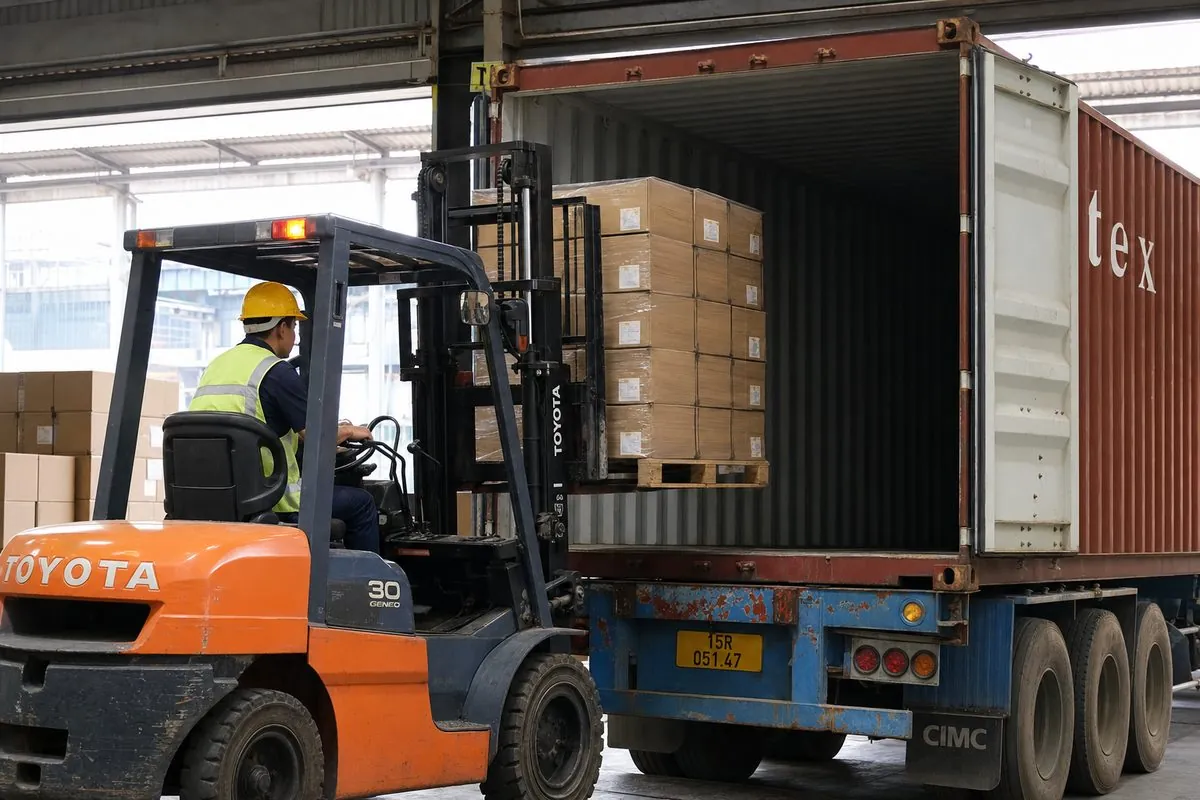
Cartonised sports wear and sports uniforms are low-density; container plans are volume-optimised rather than weight-constrained.
Directional container loading guidance for sports wear (master-carton packed)
Swipe →
Data table — swipe horizontally on small screens
| Container Type | Loading Consideration | Typical Use |
|---|---|---|
| 20-foot FCL | Apparel cartons are volume-optimised; lighter than weight limits | Trial and mid-size wholesale shipments |
| 40-foot HC | Volume-limited for cartonised apparel; unit count varies by GSM, packing density, and SKU mix — confirm CBM with forwarder | Established wholesale and distributor programmes |
| LCL | Suitable for sample and small trial shipments | New buyer relationships, market testing |
| Palletisation | Recommended for retail-boxed premium SKUs | Retail and private-label chain shipments |
Shipping Methods
Export Tip
- Samples: air freight or express courier, 7–14 days typical
- Bulk/wholesale: ocean FCL/LCL from Nhava Sheva, Mundra, or Chennai, 2–4 weeks
- Custom private-label: ocean freight, 4–8 weeks for branding approval
- Incoterms: EXW, FOB, CFR/CIF common; DDP selectively
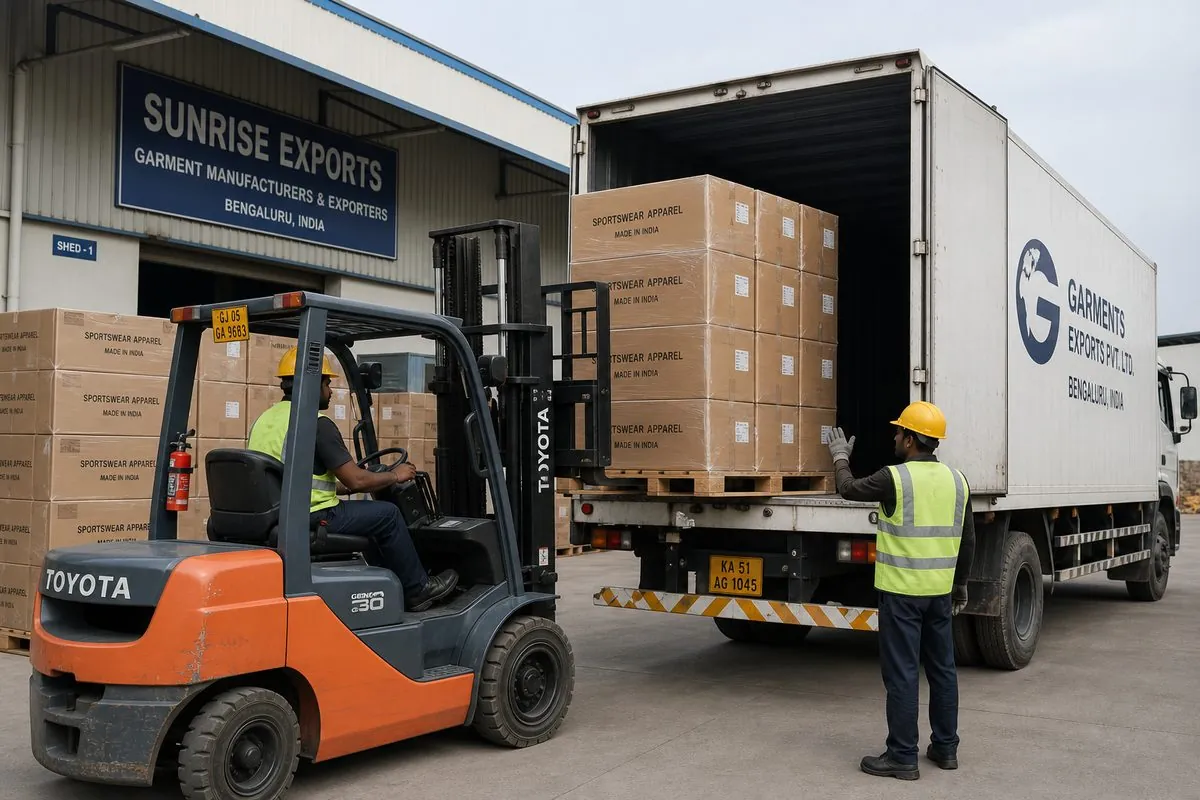
Ocean freight under FCL or LCL is standard for commercial sports wear volumes. Nhava Sheva, Mundra, and Chennai are primary sea gateways; ICD Ludhiana consolidate northern cargo. Air freight for urgent samples and trade-show kits only.
Certifications
Compliance Notes
Certification requirements scale with buyer segment. Baseline IEC and SGEPC RCMC are non-negotiable; OEKO-TEX Standard 100 applies to eco-certified premium claims only.
Certifications relevant to sports wear and sports uniform export
Swipe →
Data table — swipe horizontally on small screens
| Certification | Purpose | Relevant For |
|---|---|---|
| SGEPC RCMC + IEC | Baseline export registration and council membership | All commercial sportswear export shipments from India |
| OEKO-TEX Standard 100 | Chemical safety testing for fabrics and prints | EU retail and club programmes requiring compliance docs |
| REACH compliance | EU chemical safety for dyes and finishes | Exports destined for the European Union |
| Azo-free dyes | Restricted aromatic amines in dyes | Children's and school PE programmes globally |
| GOTS | Organic cotton traceability | Organic cotton training lines where claimed |
Buyer Requirements
Buyer Requirements
International buyers typically request: physical samples, written specification sheet (fabric GSM, size-run, seam specs, colour-fastness, and print placement), clear FOB pricing by material and volume, packaging specification, and IEC/SGEPC registration proof. Retail buyers add branding review; sporting-goods retail buyers add OEKO-TEX Standard 100 documentation.
Country-wise Opportunities
Market Snapshot
Each primary destination has a distinct buyer profile. See Best Countries For Indian Sports Wear Sports Uniform Exports and Most Demanded Indian Sports Wear Sports Uniforms By Country for deeper country analysis.
Directional country opportunity profile for Indian sportswear exporters
Swipe →
Data table — swipe horizontally on small screens
| Country | Demand Profile | Key Requirement Focus | Opportunity Note |
|---|---|---|---|
| USA | Club team kits, dri-fit training, school PE | Private-label branding, CPSIA awareness on children's lines | Strong for sublimation football and basketball kits |
| UK | Club uniforms, academy training wear | Competitive FOB, consistent size-run QC | Good fit for cricket and football sublimation programmes |
| Germany | Performance apparel, club retail | REACH/OEKO-TEX documentation where required | Premium dri-fit and certified fabric lines |
| UAE | Wholesale track suits, re-export hub | Bulk pricing, consistent QC documentation | Gateway to broader Gulf club and school demand |
| Australia | Academy kits, training apparel | Sun-safe fabrics, compliance documentation | Cricket and football kit opportunities |
| France | Club and retail sportswear | EU labelling and REACH packs | Track suits and training tee volume |
| Netherlands | Club and distributor programmes | OEKO-TEX or REACH where required | Sublimation team kits and training lines |
| Canada | School PE and club programmes | Bilingual labelling where required | Track suits and poly training tees |
| South Africa | Club and school procurement | Competitive MOQ and durable construction | Football and rugby kit demand |
| Saudi Arabia | Institutional and club uniforms | Modest design options, bulk MOQ | Football and school PE set volume |
Sourcing Checklist
Checklist
Buyer Checklist
Exporter Checklist
Common Buyer Mistakes
Common Mistakes Box
Future Market Trends
Key Statistics
Sports wear export is likely to keep growing as club football, cricket, basketball, and school PE programmes expand globally and private-label retail programmes gain share.
Buyers increasingly want fabric transparency and OEKO-TEX certification proof rather than treating track suits, tees, and sublimation kits as undifferentiated commodities.
Sustainability questions around synthetic materials and packaging are surfacing with some European buyers — exporters who speak credibly to material sourcing and packaging efficiency will be better positioned as scrutiny increases.
Expert Insights
Expert Insight Box
Successful sportswear export programmes treat fabric and size-run discipline as the product — not the logo on the chest. Buyers reorder when GSM, stitch quality, print registration, and packing stay consistent from sample through bulk.
Whether you are an Indian manufacturer formalising export or an international buyer evaluating Ludhiana suppliers, document fabric tier honestly, query TradeStat for ITC-HS 6112 direction, and never skip the paid-sample gate.
Challenges & Solutions
- Challenge: fragmented supply base — Solution: merchant exporter managing multi-supplier consistency
- Challenge: buyers confusing fabric tiers — Solution: written specification sheet before quoting
- Challenge: size-run mismatches in team kits — Solution: roster spreadsheet and size sticker QC gate
- Challenge: HS classification ambiguity — Solution: active CHA relationship for ITC-HS 6112/6211.20 (and related apparel lines) and material alternates
- Challenge: verifying OEKO-TEX/GOTS claims from distance — Solution: request underlying certificate
- Challenge: crowded promotional segment — Solution: consistent QC and documentation as differentiators
Exporting sports wear at scale involves operational challenges tied to fragmented cut-and-sew supply, sublimation colour consistency, and wide SKU range within a single team-kit order.
Compliance Checklist
Checklist
Compliance Notes
Sources and References
Compliance Notes
- TradeStat EIDB — Ministry of Commerce & Industry
- Indian ITC-HS 6112 — Knitted track suits (TradeStat FY 2024-25)
- Indian ITC-HS 6109 — Knitted T-shirts (TradeStat FY 2024-25)
- Indian ITC-HS 6211.20 — Woven track suits
- DGFT — Directorate General of Foreign Trade
- SGEPC — Sports Goods Export Promotion Council
- AEPC — Apparel Export Promotion Council
- TEXPROCIL — Cotton Textiles Export Promotion Council
- DGCIS — Directorate General of Commercial Intelligence and Statistics
- ICEGATE — Indian Customs EDI Gateway
- CBIC — Central Board of Indirect Taxes and Customs
- USITC Harmonized Tariff Schedule (HTSUS)
- European Commission TARIC — EU customs tariff
- ITC Trade Map — bilateral trade flows
- OEKO-TEX Standard 100
- GOTS — Global Organic Textile Standard
- REACH — EU chemical regulation
- World Customs Organization — Harmonized System
Trade values cited for ITC-HS 6112 are from TradeStat EIDB (FY 2024-25: exports ~₹177.03 crore (+28.95% YoY), imports ~₹75.15 crore, surplus ~₹101.88 crore). Training tees, jerseys, and woven kit pieces may file under 6109, 6110, 6203, 6204, or 6211.20 — query TradeStat separately and confirm the 8-digit line with your CHA. US duty cited at ~14.9% MFN under HTS 6112.11 (cotton track suits) and ~28.2% under 6112.12 (synthetic track suits); EU ~12% is a directional MFN anchor via TARIC — verify preferential programmes before quoting landed cost. FOB pricing bands, MOQ tiers, and country demand profiles are commercial planning aids — confirm with suppliers and customs brokers.
This process guide leans on DGFT IEC guidance, SGEPC and AEPC RCMC requirements, and TradeStat EIDB export flows for ITC-HS 6112 when sequencing first shipments from Ludhiana, Jalandhar, Meerut, and Tirupur clusters.
Conclusion
- Next step for manufacturers: complete IEC and SGEPC registration, audit material consistency across suppliers
- Next step for buyers: share target material, size, certification needs, and volume for supplier matching
- Multi-category sportswear export programme? See product sourcing company India
- Need help with registrations or shipment logistics? See export products from India
Exporting sports wear and sports uniforms from India at scale is achievable when registrations, sourcing, material QC, and documentation are treated as one integrated system rather than disconnected tasks.
If you are an Indian manufacturer ready to formalise export, complete registrations and build a written specification sheet before approaching international buyers. If you are an international buyer evaluating India, use the checklists here to structure due diligence from the first sample request. Altus Exports coordinates both sides as a merchant exporter in India — reach out via our contact page.
This guide is part of our sports wear and sports uniform content cluster. See Top Sports Wear Sports Uniform Products Exported From India, Best Countries For Indian Sports Wear Sports Uniform Exports, Source Sports Wear Sports Uniforms Directly From India, Sgepc Registration Benefits For Sports Wear Sports Uniform Exporters, Most Demanded Indian Sports Wear Sports Uniforms By Country, Find International Buyers For Sports Wear Sports Uniforms, Custom Team Sports Uniform Sublimation Jersey Export Opportunities, Sports Wear Sports Uniform Export Documentation Checklist, and Trade Shows B2B Marketplaces For Sports Wear Sports Uniform Exporters.