
Source Auto Components Directly from India: Importer Playbook
By Saurabh Mittal, Founder, Altus Exports
International importer playbook for sourcing automotive components directly from India — Pune, Chennai, and Gurugram factory verification, sample and PPAP protocols, dimensional/material QC, and shipment execution with lower first-order quality risk.
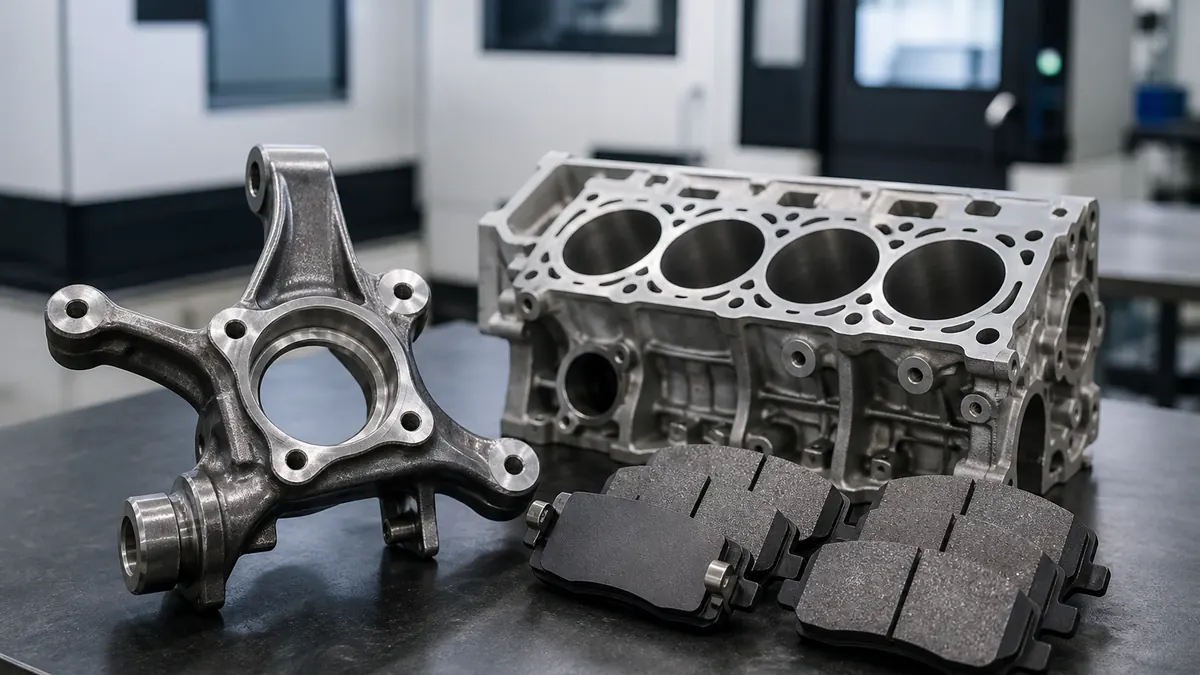
Direct Indian auto component sourcing rewards structured verification over price shopping. Pune, Chennai, Gurugram, and Bengaluru corridors mix IATF-certified OEM suppliers, aftermarket specialists, and merchants — capabilities are not uniform.
Buyers who evaluate drawings, material grades, dimensional capability, pack standards, and export docs extract better value than marketplace-only shopping.
This playbook covers: write the spec → verify factories → sample/PPAP gates → lot QC → FCL under the correct HS family. Parallel export process: How to Export Auto Components from India. Products: Top Auto Component Products Exported from India.
Trial MOQ often 1–5 MT mixed IAM or 500–5,000 pcs machined SKUs before full container scale. Whether you use a product sourcing company in India or engage factories directly, checkpoints stay drawing- and destination-specific. Also see ACMA and EEPC Benefits and Documentation Checklist.
Key Takeaways
Summary Box
Executive Summary
Summary Box
- Focus: sourcing ownership inside the auto components cluster.
- Stats: ACMA FY25 ~USD 80.2B industry · ~USD 22.9B exports · ~USD 22.4B imports — directional.
- HS: 8708 · 8409 · 8483 · 8511 · 4016 (confirm with CHA).
- Clusters: Pune · Chennai · Gurugram–Manesar · Bengaluru.
Indian auto component programmes succeed when importer verification sits on clear operating rules: IEC plus ACMA/EEPC credentials, verified capacity in Pune–Chakan, Chennai–Oragadam, Gurugram–Manesar, and Bengaluru, and honest channel labels for OEM, OES, and IAM.
Use ACMA FY25 directional context of roughly USD 22.9 billion exports inside an USD 80.2 billion industry, with USA near 27 percent of exports and North America, Europe, and Asia near 32, 29.5, and 26 percent — always labelled directional and re-verified via ACMA, WITS, DGCI&S, or TradeStat before contracts.
This article focuses on drawing-controlled RFQs so teams do not confuse Pune/Chennai audits with unrelated engineering-goods playbooks.
Read with the cluster pillar and sister guides; every table below is automotive-parts specific under HS 8708, 8409, 8483, 8511, and 4016.
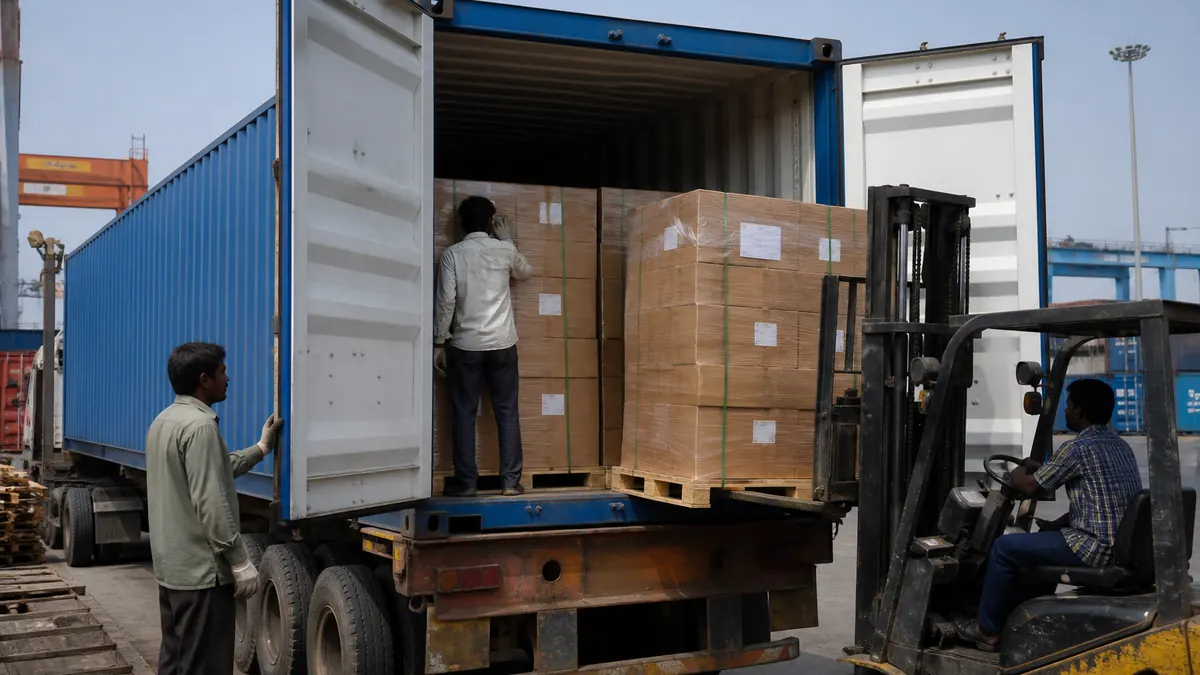
Market Size & Industry Overview
Key Statistics
- Channels: OEM · OES · IAM.
- Regions: North America ~32% · Europe ~29.5% · Asia ~26% (directional).
- Lead families: transmission/steering · engine · suspension/braking · body/chassis · electrical.
India's automotive component spine runs through Pune–Chakan, Chennai–Oragadam, Gurugram–Manesar, and Bengaluru, plus Aurangabad/Sanand, Coimbatore, Jamshedpur, and NCR ancillary belts supplying vehicle plants and aftermarket warehouses worldwide.
Verification checklists should open with what the buyer actually purchases — controlled drawings versus catalogue friction — before anyone schedules a plant lunch.
ACMA FY25 directional context of roughly USD 22.9 billion exports inside an USD 80.2 billion industry shows India is both a major exporter and importer of parts, so surplus talking points must stay modest and dated.
RFQ triage for importers starts by naming the family under audit: a steering forge and a brake press are different verification days even inside one cluster.
India auto component trade profile — ACMA FY25 directional planning references
Swipe →
Data table — swipe horizontally on small screens
| Metric | Directional Estimate | Notes |
|---|---|---|
| Industry turnover (ACMA FY25) | ~USD 80.2 billion | Re-verify annually via ACMA releases before contracts |
| Exports (ACMA FY25) | ~USD 22.9 billion (+8% YoY) | Verify factory prior filings at eight-digit HS — not industry headline alone |
| Imports (ACMA FY25) | ~USD 22.4 billion (+7.3% YoY) | Asia supplies ~two-thirds of imports (ACMA FY25) — India remains both exporter and importer |
| Trade surplus (ACMA FY25) | ~USD 453 million | Narrow surplus — re-verify before surplus claims in pitches |
| USA share of exports | ~27% (directional) | Largest single-country corridor — aftermarket + OEM mix |
| Regional export share | North America ~32% · Europe ~29.5% · Asia ~26% | ACMA FY25 directional regional split |
| Dominant export segments | Drive transmission & steering · engine · suspension/braking · body/chassis · electrical | Rank SKUs inside these families for RFQs |
| Primary HS planning families | 8708 · 8409 · 8483 · 8511 · 4016 (+ 8714 two-wheeler) | Confirm eight-digit line with CHA at shipping-bill time |
| Governing associations | ACMA (industry) · EEPC India RCMC (engineering export credential) | Pair with IEC via DGFT for commercial shipments |
| Primary clusters | Pune–Chakan · Chennai–Oragadam · Gurugram–Manesar · Bengaluru · Aurangabad/Sanand | OEM-adjacent and aftermarket capacity |
| Data as-of context | 2026-08-10 | Directional figures only — re-verify via ACMA/WITS/DGCI&S/TradeStat |
Factory Verification Playbook for Importers
- Owns: Factory Verification Playbook for Importers
- Does not replace sister cluster guides with different boundaries.
- Always label trade stats directional.
This section owns importer verification in depth — the boundary that keeps this guide from overlapping sister auto-component articles.
Operationally, teams should institutionalise drawing-controlled RFQs with checklists, owners, and system fields rather than heroics.
Connect Pune/Chennai audits to real part numbers and destinations; abstract strategy decks do not stuff containers.
Measure success with landed-cost gates metrics: trial conversion, document first-pass yield, and reorder cadence.
Importers avoid theatre by verifying one capable plant deeply instead of collecting samples from every cluster brochure.
Sourcing disputes end faster when RFQs state revision, HS family, channel, and FOB port before factories quote.
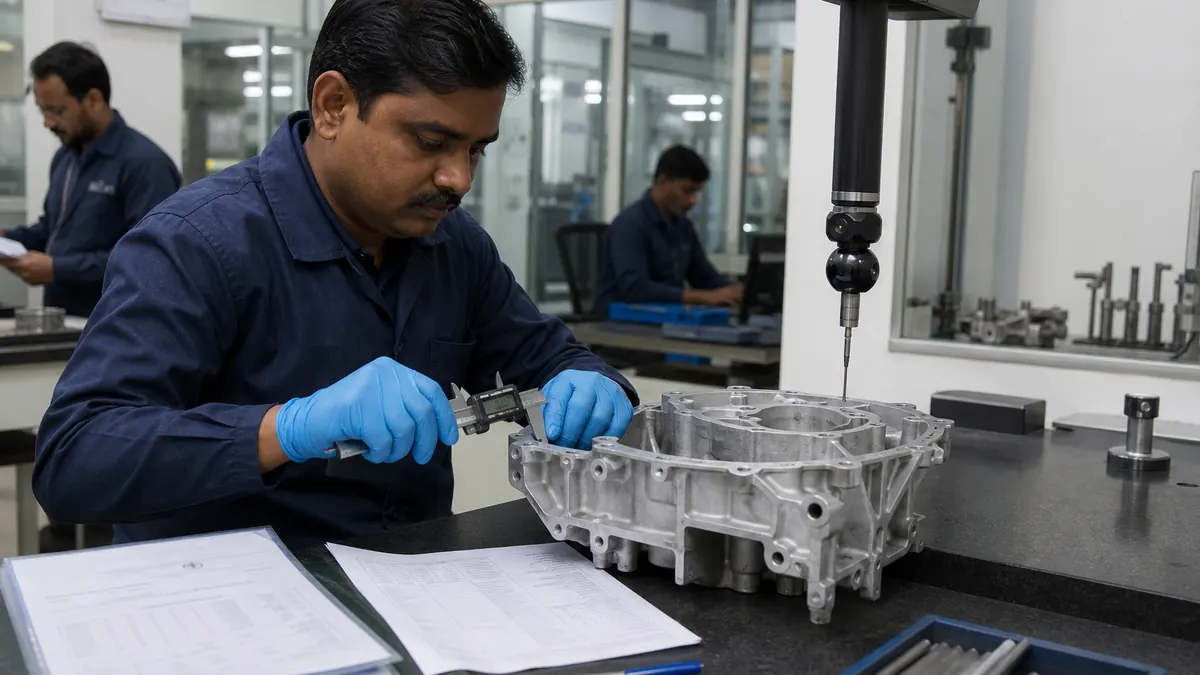
Verify the manufacturing site named on IATF or ISO certificates matches the site that will ship the lot — multi-plant groups often fail first audits on scope mismatch.
Ask for prior eight-digit shipping-bill examples for the same article family; industry ACMA totals are not proof a factory can file 8409 vs 8708 correctly.
Trial lots should freeze drawing revision, material grade, and pack photos before deposits move for first FCL volume.
International auto component buyer channels — qualification lens
Swipe →
Data table — swipe horizontally on small screens
| Channel | Typical Entry Gate | Proof They Expect | Outreach Angle |
|---|---|---|---|
| IAM distributor | 1–5 MT or 20′ trial | Fitment data, pack photos, COA | SKU-specific aftermarket sheet |
| Retail chain | Barcode/inner pack readiness | Labeling, QC summary | Retail pack photos upfront |
| OES / dealer network | Brand-aligned specs | Dimensional match, packaging | OES revision control |
| OEM / tier-1 | IATF + PPAP Level 3 | PSW, APQP evidence, capacity | Process capability story |
| Regional re-exporter (UAE/Turkey) | Mixed FCL discipline | Cubing plan, competitive FOB | Assortment + re-export pack |
Expert Insight: Specification Before Price
Expert Insight Box
Expert perspective for sourcing programmes: specification clarity beats opening discounts in automotive parts trade.
Saurabh Mittal emphasises drawing revision, channel tier, and HS family before freight debates.
Importers should treat the insight below as the audit mantra before paying for another unverified sample lot.
Manufacturing Overview
Export Tip
- Routes: forge · cast · machine · mould · assemble.
- Audit the certificate site, not the city name alone.
- Traceability lot IDs on metal and rubber programmes.
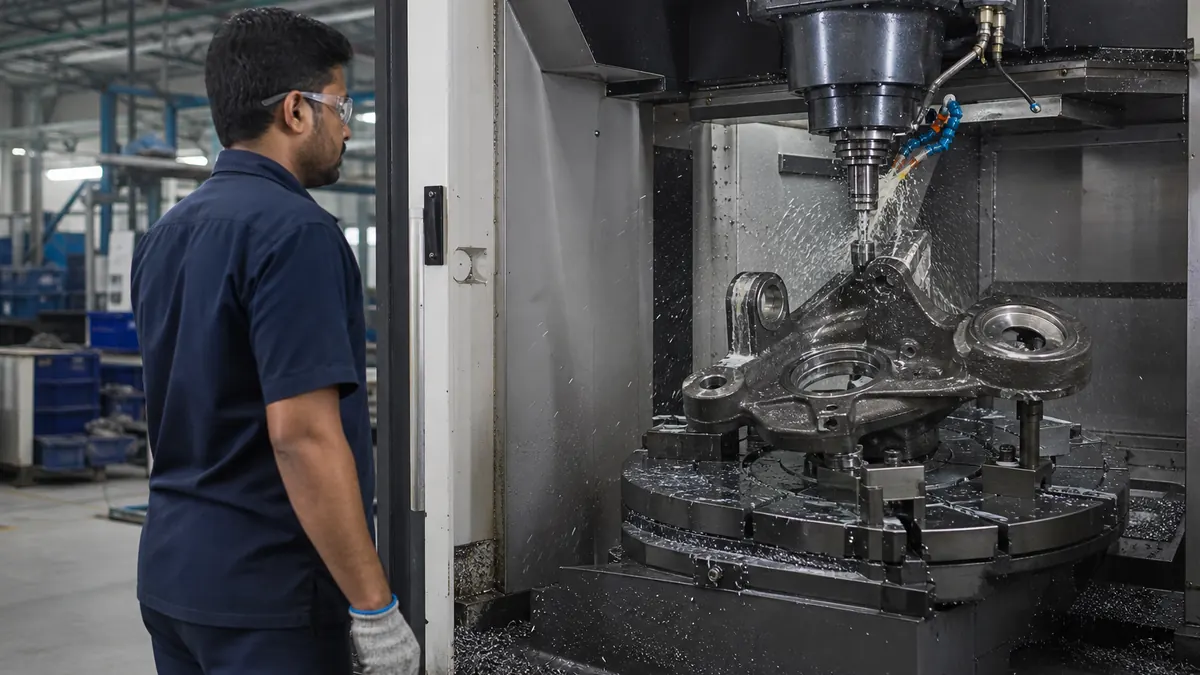
Walk the exact route during verification: heat-treat charts, moulding parameter logs, and assembly torque records beat a lobby video.
Importer audits fail when they photograph a campus gate but never the named process — demand the IATF scope page and the IAM control plan separately.
Pune–Chakan, Chennai–Oragadam, Gurugram–Manesar, and Bengaluru each specialise differently; match tours to the families in your drawing-controlled RFQs.
Tooling ownership, gauge calibration, and lot traceability are manufacturing facts buyers will test during landed-cost gates.
Directional lead times for Indian auto component programmes
Swipe →
Data table — swipe horizontally on small screens
| Stage | Typical Duration | Notes |
|---|---|---|
| Samples | 2–6 weeks | Faster for catalogue IAM; slower for custom machine parts |
| Aftermarket production | 4–10 weeks | Depends on tooling readiness and SKU mix |
| OEM tooling + PPAP | 12–36 weeks | APQP calendar owns the clock |
| First commercial FCL (new programme) | 8–20 weeks | After sample/PPAP gate |
| Repeat FCL (stable IAM) | Often 4–8 weeks | Inventory + production slot dependent |
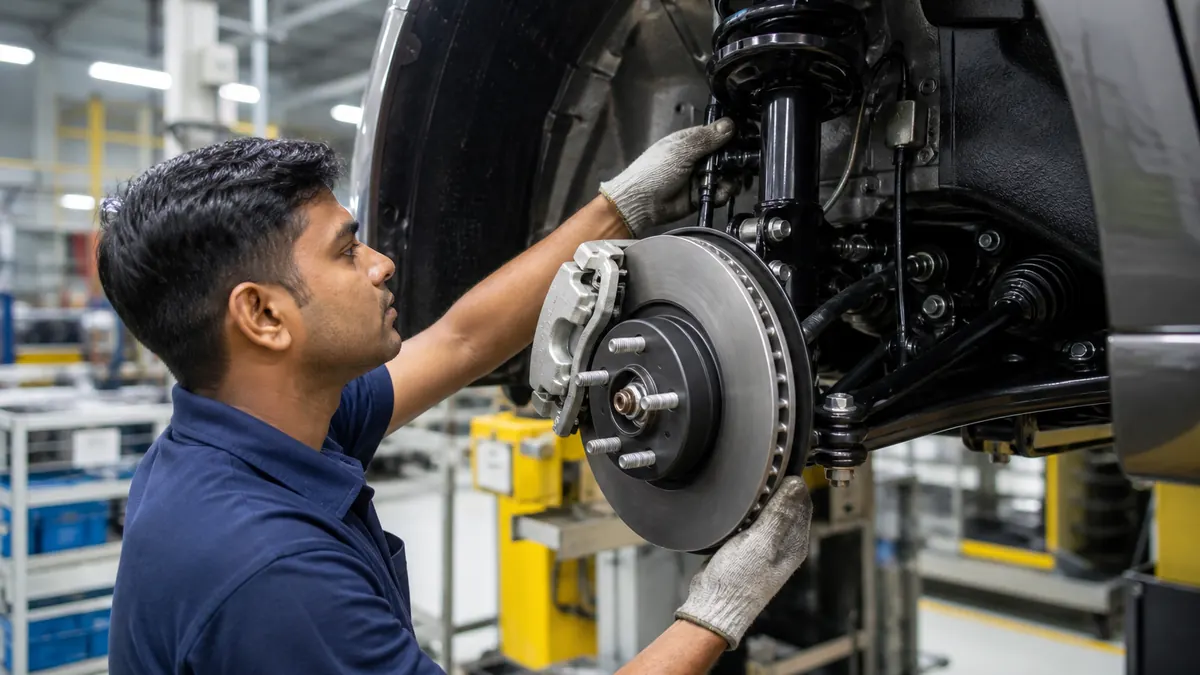
Product Categories / Variants
Summary Box
- Seven families on separate SKU cards.
- Tier label on every card: OEM / OES / IAM.
- Pack notes: VCI · partitioned · moisture barrier · returnable.
Factory shortlists are family-specific: a rubber moulder is not a substitute audit for a steering forge even if both sit in Pune.
Map each family to HS 8708, 8409, 8483, 8511, and 4016 with CHA confirmation; nickname filing creates customs friction later.
OEM, OES, and IAM pack notes belong on every SKU card used in drawing-controlled RFQs.
Factory audits for auto components should reject fastener-brochure samples unless the PO literally mixes hardware; keep drawing-controlled parts on their own evidence trail.
Primary auto component product families exported from India
Swipe →
Data table — swipe horizontally on small screens
| Product Family | Typical Spec Focus | HS Planning | Primary Channel |
|---|---|---|---|
| Engine components | Pistons, valves, pumps, machined housings | 8409 / related 8708 | OEM, OES, IAM |
| Drive transmission & steering | Gears, shafts, steering knuckles, housings | 8483 / 8708 | OEM tier, IAM |
| Suspension & braking | Arms, pads, rotors, caliper parts | 8708 | IAM distributors, retail |
| Electrical & ignition | Ignition coils, starters, alternators, spark plugs (typical) | 8511 (ignition/starting); other sensors/wiring may be 8536/8544/8512 — confirm with CHA | OEM, IAM |
| Body / chassis | Stampings, brackets, structural parts | 8708 | OEM, aftermarket |
| Rubber & polymer | Mounts, seals, gaskets, hoses | 4016 / 8708 | IAM, OEM |
| Castings & forgings | Rough/machined blanks for vehicle use | 8708 / related | Tier suppliers, OEM |
Export Statistics
Key Statistics
- USA ~27% directional export share — re-verify annually.
- Quote dated FOB Nhava Sheva / Mundra / Chennai.
- Separate IAM trials from OEM release schedules.
Export planning for importer verification should cite ACMA industry and export headlines only as directional context, then isolate the relevant HS 8708, 8409, 8483, 8511, and 4016 family for the SKU on the proforma.
USA concentration near 27 percent means many first programmes feel American aftermarket or tier pressure even when the factory sits in Chennai or Pune.
Supplier scorecards should tag capacity by segment (steering/engine/brakes/body/electrical) so audit calendars match the RFQ, not a generic plant tour.
Re-verify partner tables before promising share claims in landed-cost gates; stale slides are a common credibility failure with professional buyers.
HS family planning map for Indian auto component exports (confirm with CHA)
Swipe →
Data table — swipe horizontally on small screens
| HS Family | Typical Articles | Common Pitfall |
|---|---|---|
| 8708 | Parts & accessories of motor vehicles of 8701–8705 (brakes, suspension, body, many assemblies) | Section XVII Note 2 excludes many parts that have their own headings (e.g. 8409, 8483, 8511, 4016) — confirm with CHA |
| 8409 | Parts suitable for engines | Calling every metal part 8708 |
| 8483 | Transmission shafts, gears, bearing housings | Missing gear/shaft specificity |
| 8511 | HS 8511 electrical ignition/starting equipment (spark plugs, ignition coils, starters/generators for engines) | Do not force sensors/lighting/wiring into 8511 — those often file under 8512/8536/8544 |
| 4016 | Vulcanised rubber articles for auto | Rubber filed as generic plastic |
| 8714 | Two-wheeler parts where applicable | Mixing 8708 passenger-car logic onto 8714 lines |
Import Statistics
Key Statistics
- USA IAM vs Germany OEM inspection depth differs.
- Turkey/UAE often act as hub corridors.
- Mexico adds USMCA origin questions.
Importer demand signals should dictate which Indian clusters you tour — Chennai electrical capacity is the wrong week if the pull is Pune forging for steering.
Each corridor's primary buyer type changes inspection depth — distributors care about fitment and pack; OEM desks care about PPAP and capability.
Use import profiles to design sample kits for drawing-controlled RFQs, not to invent precise tonnage contracts.
When modelling Pune/Chennai audits, convert destination demand into SKU shortlists before freight negotiations begin.
Directional import demand profile for Indian auto components by destination
Swipe →
Data table — swipe horizontally on small screens
| Market | Directional Demand Profile | Primary Buyer Type |
|---|---|---|
| United States | Aftermarket brake/suspension, steering, filters, rubber mounts; selective OEM tier supply | IAM distributors, retail chains, tier-2/3 suppliers |
| Germany | OEM engine/transmission specs, precision machined parts, documented IATF packs | OEM procurement, tier-1, industrial auto distributors |
| Turkey | Transmission/steering, castings, aftermarket assortments for regional re-export | Wholesalers, OEM-adjacent traders |
| Brazil | Suspension/braking, engine parts for local vehicle parc and assembly | Distributors, local OEM supply chains |
| United Kingdom | IAM assortments, REACH-aware materials, retail-ready packs | Aftermarket distributors, retail platforms |
| Mexico | USMCA-corridor parts, steering/braking, wiring-related components | OEM plants, tier suppliers, border distributors |
| UAE | Mixed aftermarket for GCC re-export, rubber/polymer and brake kits | Regional distributors, re-export desks |
| Italy | Precision machined and OEM-quality components | Specialty distributors, tier suppliers |
| Bangladesh / Thailand | Value aftermarket and two-wheeler-adjacent lines where applicable | Wholesalers, regional importers |
Trade Classification and Process Controls
Compliance Notes
- CHA confirms eight-digit lines at shipping-bill time.
- Incoterms: FOB common; CIF selective; DAP/DDP rare.
- Keep OEM PPAP separate from IAM carton trials.
Trade classification for sourcing work hinges on matching the article to HS 8708, 8409, 8483, 8511, 4016, or 8714 with CHA confirmation.
Process controls include sample or PPAP gates, lot identity, and Incoterm clarity on every proforma.
Sourcing checklists can reference engineering hubs, yet factory proof required here is automotive-component specific.
See also internal cluster links relevant to sourcing ownership when expanding beyond this section.
Incoterms commonly used for Indian auto component exports
Swipe →
Data table — swipe horizontally on small screens
| Incoterm | When Used | Risk Note |
|---|---|---|
| FOB Nhava Sheva / Mundra / Chennai | Default commercial quotes | Buyer controls main freight and insurance |
| CIF named destination | Distributor accounts wanting freight bundled | Model ocean + insurance; still not duty |
| CFR | Freight prepaid without insurance | Clarify insurance separately |
| EXW factory/cluster | Rare for export beginners | Buyer must handle Indian logistics |
| DAP / DDP | Rare; duty-risk sensitive | Price destination duty risk explicitly |
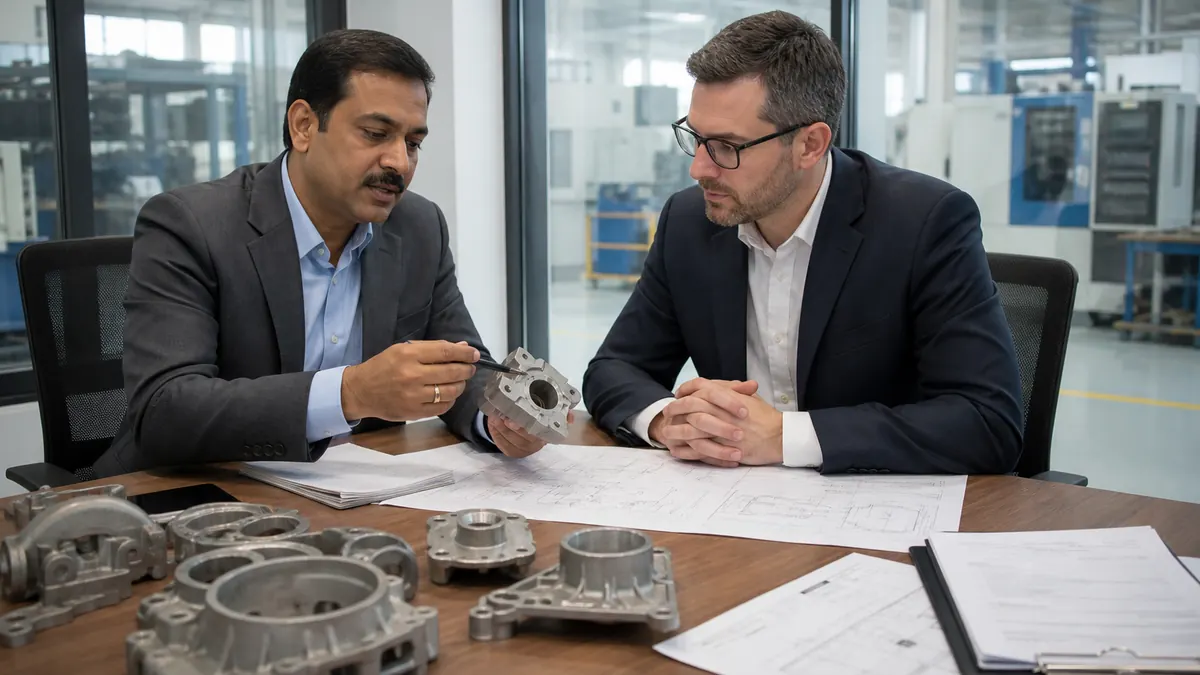
Pricing Analysis
Buyer Tip
Importers should reject unsigned teaser sheets and insist on dated FOB with process assumptions written beside the piece price.
IAM brake programmes, machined aluminium/steel parts, and OEM PPAP parts need separate commercial logic even when stuffed in the same sailing week.
Inspection, PPAP support, and returnable packaging can be material cost lines in drawing-controlled RFQs.
Refresh offers when indices move; stale prices destroy trust faster than a firm but higher number.
Directional FOB India pricing structure by auto component family
Swipe →
Data table — swipe horizontally on small screens
| SKU / Programme | Pricing Structure | Notes |
|---|---|---|
| Commodity aftermarket brake pads/shoes | Programme FOB + friction material index where used | Never undated teaser USD — quote dated and SKU-specific |
| Machined steel/aluminium engine parts | Metal index + machining conversion + tooling amortisation, FOB | Tooling amortisation must be stated separately |
| Forged transmission / steering parts | Forging blank + machining + heat-treat premium, FOB | Weight-limited FCL; quote per piece and per kg where useful |
| Suspension arms / knuckles | Casting/forging + machining conversion, FOB | Dimensional CMM evidence often priced as inspection add-on |
| Electrical / ignition (HS 8511 family) | BOM electronics + assembly conversion, FOB | RoHS/REACH declarations affect EU/UK landed acceptance |
| Rubber mounts / seals (HS 4016) | Compound + moulding conversion, FOB | Moisture-barrier pack cost in landed model |
| OEM / OES PPAP programmes | Piece price + PPAP/audit premium + release cadence | Kanban/release schedules — not carton MOQ pricing |
MOQ Analysis
Buyer Tip
Importers should negotiate trial MOQs separately from annual volume fantasies and keep air PPAP pieces off the commercial MOQ line.
Promising carton MOQ language to an OEM plant signals channel confusion during drawing-controlled RFQs.
Air-freight PPAP samples are not commercial MOQ — keep them on a separate sample PO.
Write trial and scale quantities into the contract before Pune/Chennai audits begins.
Directional MOQ tiers by auto component transaction stage
Swipe →
Data table — swipe horizontally on small screens
| Stage | Typical MOQ | Purpose |
|---|---|---|
| Aftermarket mixed trial | 1–5 MT or 1×20′ mixed SKU trial | Distributor evaluation, pack/label check, inbound QC |
| Forged / machined parts | 500–5,000 pcs per SKU | Dimensional and material gate before volume |
| Rubber mounts / seals | 5,000–50,000 pcs | Moulding economics and compound approval |
| OEM / OES programme | Release schedules / kanban — not carton MOQ | PPAP Level 3 and ongoing process capability |
| First commercial FCL (new programme) | Often 8–20 weeks lead into first full container | Tooling + PPAP + production stabilisation |
| Practice note | Bands are commercial practice — not statutory MOQs | Align MOQ language to channel (IAM vs OEM) before quoting; sourcing |
Packaging Standards
Export Tip
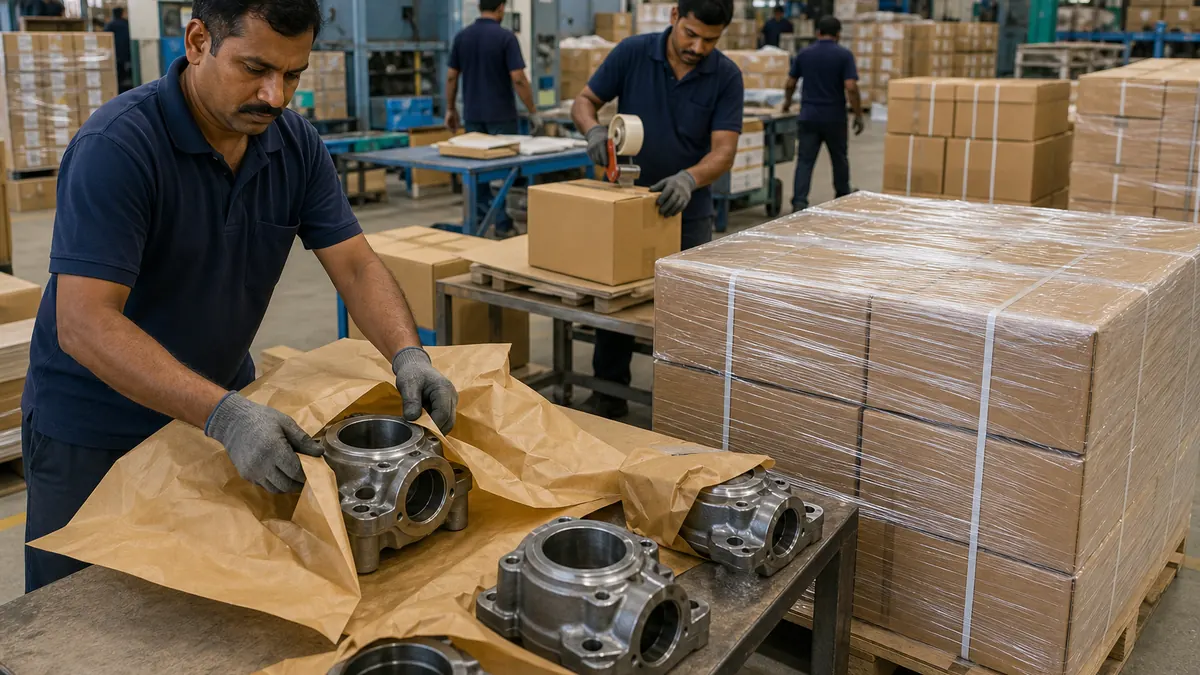
During audits, photograph the real pack station and retain a packed-pallet reference — brochure pack claims are not evidence.
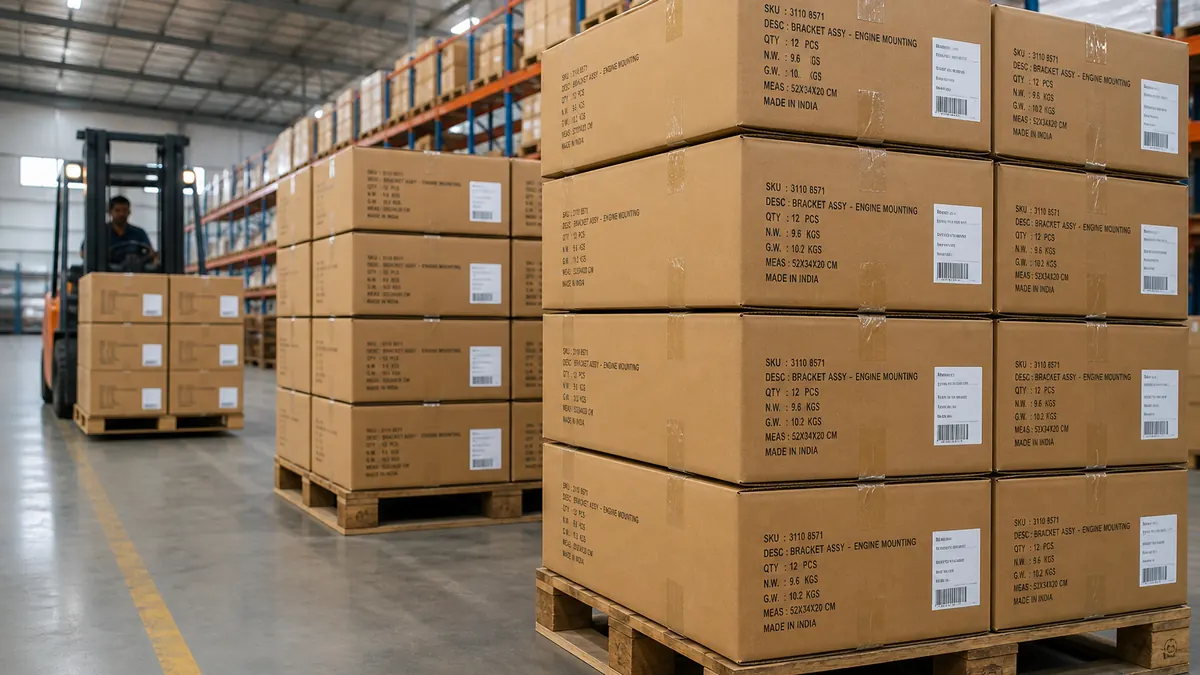
Marks must reconcile to packing lists — a recurring failure point when landed-cost gates accelerates.
Hot-climate corridors such as UAE need extra moisture discipline on rubber and friction materials.
Photograph packed pallets before gate-in as claim defense for drawing-controlled RFQs.
Auto component packaging formats — export practice
Swipe →
Data table — swipe horizontally on small screens
| Format | Typical Configuration | Use Case | Key Requirement |
|---|---|---|---|
| VCI / rust-preventive wrap | Oil/VCI paper on machined metal faces | Engine, transmission, steering metal parts | Document protection method on packing list |
| Partitioned cartons | Cell dividers for sensors/electronics | Electrical and ignition components | ESD/handling notes where buyer requires |
| Returnable OEM packaging | Buyer-specified totes/racks | OEM/OES release programmes | Return logistics and damage liability clauses |
| Stretch-wrap pallets | ISPM-15 wood or plastic pallets | Aftermarket FCL consolidation | SKU labels reconcile to packing list |
| Moisture barrier for rubber | Sealed bags + desiccant | Mounts, seals, hoses | Prevent humidity bloom on long ocean legs |
| Mixed aftermarket cubing | SKU-cubed cartons on mixed pallets | IAM distributor FCL | Cubing plan before stuffing — avoid crush |
Container Loading Details
Export Tip
Importers should request a draft load plan with kg and CBM before approving a mixed trial; verbal 'it will fit' is not a plan.
20-foot trials suit dense metal; 40-foot high-cube suits assortment-heavy aftermarket.
ICD Pune and Tughlakabad stuffing can reduce inland chaos for cluster-adjacent Pune/Chennai audits.
Never stuff fragile electrical above unprotected heavy knuckles without dunnage discipline.
Directional container loading guidance for auto component exports
Swipe →
Data table — swipe horizontally on small screens
| Container / Mode | Loading Consideration | Typical Use |
|---|---|---|
| 20′ FCL | HS 8708/8483 castings & forgings often weight-limit 20′ payload — commercial practice, not a fixed legal capacity; confirm with forwarder | Dense metal parts trials and standard commercial lots |
| 40′ HC | Volume-limited for bulky body/chassis panels and mixed IAM | Aftermarket assortments and panel programmes |
| LCL | Samples and small reorders | First qualification before FCL commitment |
| Air freight | PPAP samples and urgent spares | OEM gate samples — cost vs schedule trade-off |
| ICD Pune / Tughlakabad | Cluster-adjacent stuffing then rail/road to gateway | Pune and NCR programmes |
| Mixed aftermarket stow | SKU cubing plan; heavy bottom / fragile top | Prevent carton collapse on brake/kit mixes |
Shipping Methods
Export Tip
- FCL default · LCL samples · air for PPAP/spares.
- FOB first · CIF selective · DAP/DDP rare.
- Cubing plan for mixed aftermarket.
Shipping methods for importer verification centre on FCL ocean from Nhava Sheva, Mundra, and Chennai, LCL for small reorders, and air for PPAP samples or urgent spares.
Importer comparisons stay honest on FOB factory-side quotes; request CIF only when you already trust the freight math.
Transit modelling for drawing-controlled RFQs should include inland ICD legs, not only ocean days.
Name liner windows cautiously until the factory's pack-out rhythm is proven.
Certifications
Compliance Notes
Certifications for importer verification span IATF 16949 for OEM, ISO 9001/14001 baselines, PPAP/PSW packs, material MTC/COA, REACH/RoHS where needed, plus ACMA and EEPC credentials for KYC.
Association membership is not a PPAP substitute — keep the layers distinct in drawing-controlled RFQs.
Third-party inspection appears on LC and audit-heavy corridors.
Certificate scope pages matter; logo-only claims fail OEM questionnaires.
Certifications and documents for auto component export
Swipe →
Data table — swipe horizontally on small screens
| Certification / Document | Purpose | Relevant For |
|---|---|---|
| IATF 16949 | Automotive quality management system | OEM/OES and premium tier programmes |
| ISO 9001 / ISO 14001 | Quality and environmental systems | Distributor and OEM vendor files |
| PPAP Level 3 / PSW | Part approval and process evidence | OEM launch and engineering changes |
| Material MTC / COA | Chemistry and mechanical evidence per lot | Metal and rubber programmes |
| ACMA membership + EEPC RCMC + IEC | Industry and export credentials | Buyer KYC and fair access |
| REACH / RoHS declarations | Substance compliance | EU/UK electrical and coated parts |
| Third-party inspection | Dimensional/material verification | LC and audit-heavy corridors |
Buyer Requirements
Buyer Requirements
Buyer requirements for importer verification differ by channel: IAM wants fitment data and pack photos; OES wants brand pack rules; OEM wants IATF, PPAP, and release reliability.
Payment instruments escalate with trust — advances/LC early, open account later.
During drawing-controlled RFQs, capture requirements in CRM within seventy-two hours of first contact.
Reject vague RFQs that omit drawing revision or destination compliance needs.
International auto component buyer channels — qualification lens
Swipe →
Data table — swipe horizontally on small screens
| Channel | Typical Entry Gate | Proof They Expect | Outreach Angle |
|---|---|---|---|
| IAM distributor | 1–5 MT or 20′ trial | Fitment data, pack photos, COA | SKU-specific aftermarket sheet |
| Retail chain | Barcode/inner pack readiness | Labeling, QC summary | Retail pack photos upfront |
| OES / dealer network | Brand-aligned specs | Dimensional match, packaging | OES revision control |
| OEM / tier-1 | IATF + PPAP Level 3 | PSW, APQP evidence, capacity | Process capability story |
| Regional re-exporter (UAE/Turkey) | Mixed FCL discipline | Cubing plan, competitive FOB | Assortment + re-export pack |
Country-wise Opportunities
Market Snapshot
Importers should name the destination country before factory shortlists: a Mexico USMCA-aware release audit is not a UAE hub assortment audit.
Score duty, freight, IATF load, and channel fit rather than chasing every flag.
Pune/chennai audits should sequence two corridors before global sprawl.
Keep country notes operational — preferred SKUs, pack, inspection — not tourist copy.
Directional country opportunity profile for Indian auto component exporters
Swipe →
Data table — swipe horizontally on small screens
| Country | Demand Profile | Key Requirement Focus | Opportunity Note |
|---|---|---|---|
| United States | IAM brakes/suspension/steering; selective OEM (~27% of India auto-component exports, ACMA FY25) | Fitment data + live USITC/CBP duty model incl. Section 232 Proclamation 10908 (25% on many annex-listed auto parts from 3 May 2025) and any reciprocal overlays | Largest corridor — re-verify HTS Chapter 99 overlays before CIF/landed quotes |
| Germany | OEM engine/transmission precision | IATF, PPAP, dimensional CMM | Audit-heavy Europe corridor |
| Turkey | Transmission/steering + regional re-export | Competitive FOB + pack discipline | Bridge to Europe/MENA assortments |
| Brazil | Local parc aftermarket + assembly support | Portuguese docs where required; duty model | Latin America volume opportunity |
| United Kingdom | IAM + REACH-aware materials | Labeling and substance declarations | Retail and distributor platforms |
| Mexico | USMCA plant and border distribution | Origin rules and release cadence | North America supply-chain adjacency |
| UAE | GCC aftermarket re-export hub | Hot-climate pack and mixed SKU cubing | Regional distributor consolidation |
| Italy | Precision machined OEM-quality | IATF evidence and inspection depth | Specialty Europe |
| Bangladesh / Thailand | Value IAM and two-wheeler-adjacent | Landed-cost honesty | Asia secondary corridors |
Sourcing Checklist
Checklist
Use this sourcing checklist when sourcing work moves from reading to execution.
Importers should walk the buyer, exporter, and compliance callouts below during every factory shortlist review.
Combine with factory audits in Pune, Chennai, or Gurugram and with document gates before stuffing.
Common Buyer Mistakes
Common Mistakes Box
- FOB-only shopping without duty/freight.
- OEM language on IAM-only factories.
- No sealed sample retention.
- Undated teaser prices accepted.
- HS family guessed without CHA.
Importer verification fails when auditors shop price first, never open the HS family, accept campus tours as PPAP proof, or air samples without KYC.
Importers should refuse to fund large air samples until the supplier's IEC entity and the buyer's KYC both clear — broker traps are common.
Documentation mismatches — marks versus packing list versus COA lot — create avoidable holds during landed-cost gates.
Fix mistakes with written gates: RFQ completeness, sample sign-off, and pre-seal document checks.
Future Market Trends
Key Statistics
- OEM dual-sourcing and portal vendor management.
- Aftermarket premiumisation and fitment data quality.
- Substance and traceability data as sales tools.
- EV-adjacent components alongside ICE parc demand.
Verification trends point to deeper traceability asks and digital PPAP portals; factories without lot discipline will fall off shortlists.
Importers comparing nearshore options still shortlist India when audit evidence and conversion economics beat proximity alone.
Digital PPAP and portal-based vendor management will keep expanding in drawing-controlled RFQs.
Exporters who invest in traceability and substance data will outrun brochure-only competitors.
Challenges and Solutions
- Challenge: PPAP cash/time → Solution: staged APQP gates.
- Challenge: mixed FCL crush → Solution: cubing plans.
- Challenge: duty surprises → Solution: live HTS/TARIC checks.
- Challenge: credential gaps → Solution: ACMA/EEPC/IEC hygiene.
Challenges in importer verification include tooling cash cycles, PPAP delays, container cubing complexity, and destination duty volatility.
Sourcing remedies are staged plant trials, locked Incoterms, cluster-fit shortlists, and refusal of undated teaser sheets.
Working-capital strain eases when IAM cash programmes help fund OEM compliance stacks — a sequencing choice inside drawing-controlled RFQs.
Use merchant-exporter coordination when multi-factory consolidation beats single-plant logistics for Pune/Chennai audits.
Compliance Notes for International Programmes
Importer audits should collect the supplier's classification opinion, substance declarations, origin evidence, and OEM CSR acknowledgements before PO release.
USMCA-aware Mexico flows and USA HTS checks belong in landed models for North America.
Keep counsel/CHA advice above blog generalisations when landed-cost gates turns contractual.
Re-verify ACMA/WITS/DGCI&S figures and live tariffs before every major programme launch.
For USA programmes, treat Proclamation 10908 Section 232 auto-parts tariffs (additional 25% on many annex-listed passenger-vehicle and light-truck parts from 3 May 2025) and any reciprocal Chapter 99 overlays as live landed-cost inputs — confirm the exact HTS lines with USITC/CBP before quoting CIF or DDP.
Importer RFQs into EU/UK should demand the supplier's substance declarations alongside the TARIC/UK line the broker will file.
Destination duty and compliance notes for Indian auto component exports (verify live)
Swipe →
Data table — swipe horizontally on small screens
| Market | Duty / regulation note | Verify with |
|---|---|---|
| United States | Certain passenger-vehicle and light-truck parts (annex-listed engines/powertrain/electrical and related lines) face Section 232 Proclamation 10908 additional 25% ad valorem from 3 May 2025 (on top of other applicable duties); some lines may also face reciprocal Chapter 99 overlays — model live HTS | USITC HTS, CBP CSMS, Federal Register / Proclamation 10908 annex |
| European Union | HS 8708/8409/8483/8511/4016 under Common Customs Tariff (TARIC) by 8/10-digit line; REACH for substances/coatings; RoHS for applicable electrical articles — not a single flat auto-parts rate | EU TARIC, ECHA REACH, buyer compliance pack |
| United Kingdom | UK tariff + UK REACH / substance rules for materials and electrical articles | UK tariff tool, buyer broker |
| Mexico | USMCA origin and plant-release rules for HS 8708/8409 OEM corridors; MFN applies when preference not claimed | Mexican tariff schedule, USMCA rules of origin counsel |
| Brazil / Turkey / UAE | Destination MFN / preferential regimes for HS 8708/8409/8483 lines vary by COO — never quote a single 'auto parts duty' | Local broker + ITC Market Access Map / national tariff |
| India export side | IEC + EEPC RCMC for engineering lines; ACMA is industry association (not a customs duty instrument) | DGFT, EEPC India, ACMA |
Expert Insight: Evidence Wins Reorders
Expert Insight Box
Second expert insight for sourcing: lot evidence and document discipline create reorder cycles.
COA identity, PPAP status, and pack marks are commercial assets, not clerical afterthoughts.
Use this guidance alongside Altus merchant-export execution when scaling beyond trials.
Sources
- ACMA — Automotive Component Manufacturers Association of India
- ACMA FY25 Industry Performance Press Release (PDF)
- ACMA FY25 Industry Presentation (PDF)
- ACMA — Shaping the future of India’s auto component industry (Sep 2025 PDF)
- EEPC India — Engineering Export Promotion Council
- DGFT — Directorate General of Foreign Trade (IEC)
- DGCI&S / TradeStat — Indian trade statistics
- ICEGATE — Indian Customs EDI Gateway
- WITS — World Integrated Trade Solution (World Bank)
- UN Comtrade Database
- ITC Trade Map
- IATF Global Oversight — IATF 16949
- AIAG — Automotive Industry Action Group (PPAP/APQP)
- USITC Harmonized Tariff Schedule
- Proclamation 10908 — Section 232 Automobiles and Automobile Parts (GovInfo PDF)
- CBP CSMS guidance — import duties on certain automobile parts
- CRS — Section 232 Automotive Tariffs overview
- EU TARIC — customs tariff database
- ECHA — REACH regulation
- ICC — Incoterms rules
- CNBC-TV18 — ACMA FY25 industry coverage
- Economic Times — India–US auto parts tariff impact
Directional ACMA, trade, tariff, and compliance notes in this auto components guide (source-auto-components-directly-from-india) should be re-verified against primary sources before quoting buyers or filing export documents. Figures labelled ACMA FY25 refer to India’s fiscal year 2024-25 industry performance review (released July 2025).
Use the links below for government, standards, and trade-data verification. Confirm eight-digit HS lines with a licensed CHA at shipping-bill time, and model destination duties live (USITC HTS / CBP for the USA; TARIC for the EU).
Conclusion
- Merchant Exporter India
- Export Products from India
- Global Sourcing Partner India
- Product Sourcing Company India
- Contact Altus Exports
- Engineering Goods
Direct sourcing from India works when verification is boringly complete: IEC entity, certificate scope, named process, sealed samples, and a plant that matches the drawing.
Skip campus-gate tourism; spend the audit day on gauges, heat-treat records, and the pack station that will face your first FCL.
Altus Exports supports importers who want a global sourcing partner to run factory shortlists, trial POs, and consolidation without losing traceability.
Pair this playbook with the documentation checklist and IATF guides when your shortlist moves from visit notes to release language.