
Trade Shows and B2B Marketplaces for Cricket Protective Gear Exporters
By Saurabh Mittal, Founder, Altus Exports
A fair-by-fair and marketplace playbook for Indian cricket protective gear exporters — SGEPC's India Sporting Goods Fair, regional sports goods expos, cricket equipment exhibitions, Alibaba and IndiaMART pad/glove/helmet listings, LinkedIn prospecting, booth ROI measurement, and a 72-hour CRM and inquiry qualification framework. Not a full export-process or pricing guide; those live in linked posts.
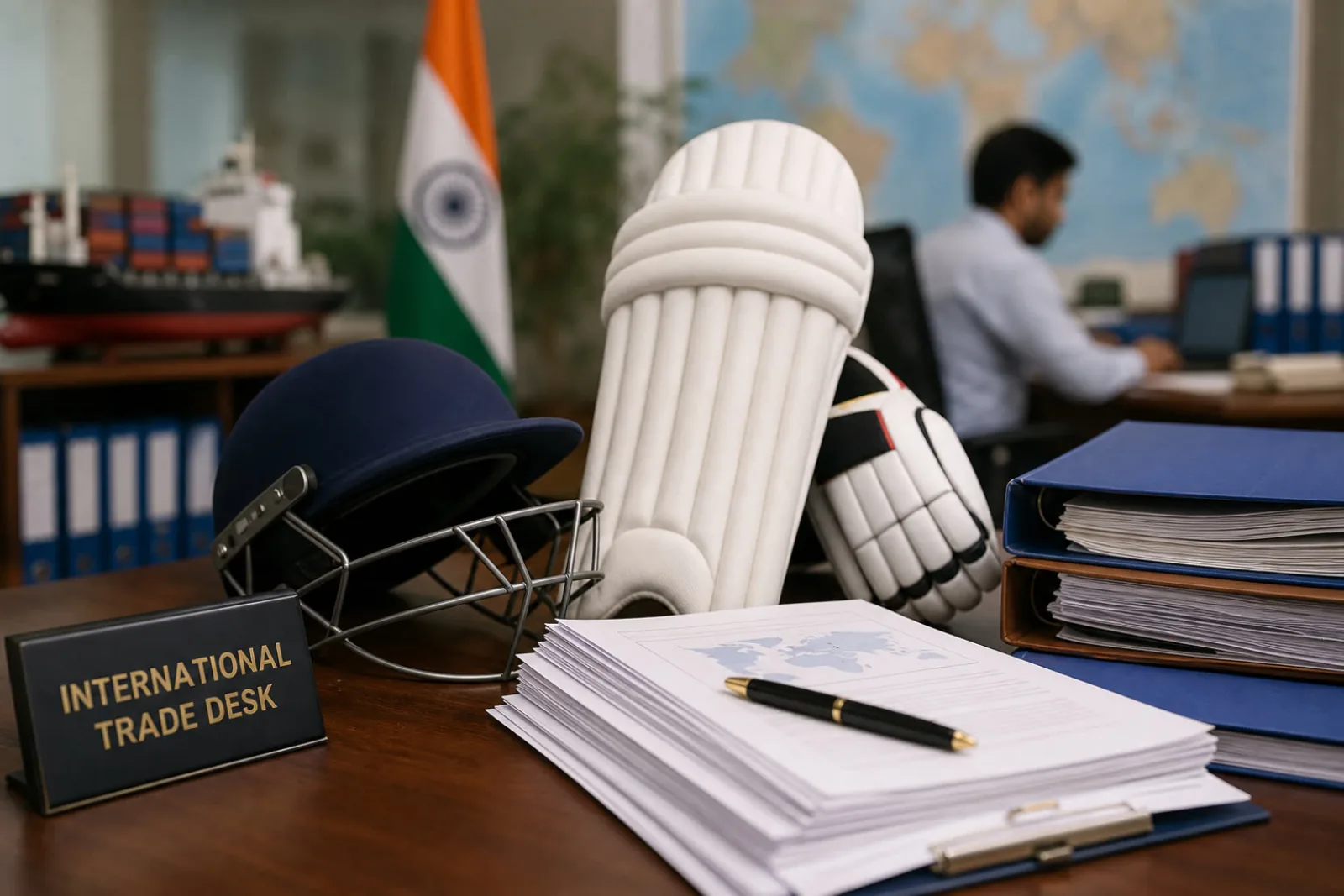
SGEPC's India Sporting Goods Fair and regional cricket equipment expos compress cricket protective gear buyer discovery time for Meerut and Ghaziabad manufacturers — but only if hero batting pads, wicket-keeping gloves, and BS 7928-oriented helmets sit on the table with size-run cards, HS 95069920 and 650610 references, and honest helmet compliance status ready, and the fair is one input to a year-round CRM rather than the entire sales plan.
Where to show: SGEPC's India Sporting Goods Fair (domestic anchor for Indian cricket protective gear exhibitors) · regional sports goods and cricket equipment expos · cricket-specific trade events in cricket-playing nations — supplemented by Alibaba and IndiaMART pad, glove, and helmet listings and disciplined LinkedIn prospecting for year-round discovery.
Scope note: this is the fair and marketplace playbook, not the full export process or a pricing catalogue. For process, see How to Export Cricket Protective Gear from India; for category-level pricing and MOQ depth, see Top Cricket Protective Gear Products Exported from India; for paperwork, see Cricket Protective Gear Export Documentation Checklist.
Altus turns fair and marketplace cricket protective gear leads into sailed orders via merchant exporter and global sourcing partner coverage across Meerut and Ghaziabad capacity.
Key Takeaways
Summary Box
Executive Summary
Summary Box
- Pre-fair: production-ready pad, glove, and helmet samples across 2–3 hero size runs · one-page product sheet with HS 95069920 / 650610 references and fit notes · SGEPC credential visible · BS 7928 claim status stated honestly.
- On-floor: qualify serious wholesale, club-supply, and retail buyers versus casual browsers before promising custom size runs, exclusive private-label programmes, or helmet compliance you have not yet tested for.
- 72-hour CRM: most fair ROI dies in week one without a defined follow-up cadence, including LinkedIn touches for contacts who did not leave a business card.
- Benchmark: dozens of real conversations per fair; track sample requests within 30 days — conversion varies by booth readiness and follow-up discipline, not a fixed industry rate.
- Year-round: one CRM pipeline across fairs, Alibaba/IndiaMART, and LinkedIn — not a fairs-only plan.
Convert attendance into shipped cricket protective gear orders with one repeatable sequence — preparation beats booth size, and follow-up beats brochure volume. India's broader sports/toys basket (HS Chapter 95) reached ~US$570.95 million (FY 2024-25, DGCIS). That scale means fair and marketplace strategy matters — every qualified buyer conversation is worth pursuing with size-run-clear samples and honest BS 7928 helmet status.
Market Size & Industry Overview
Key Statistics
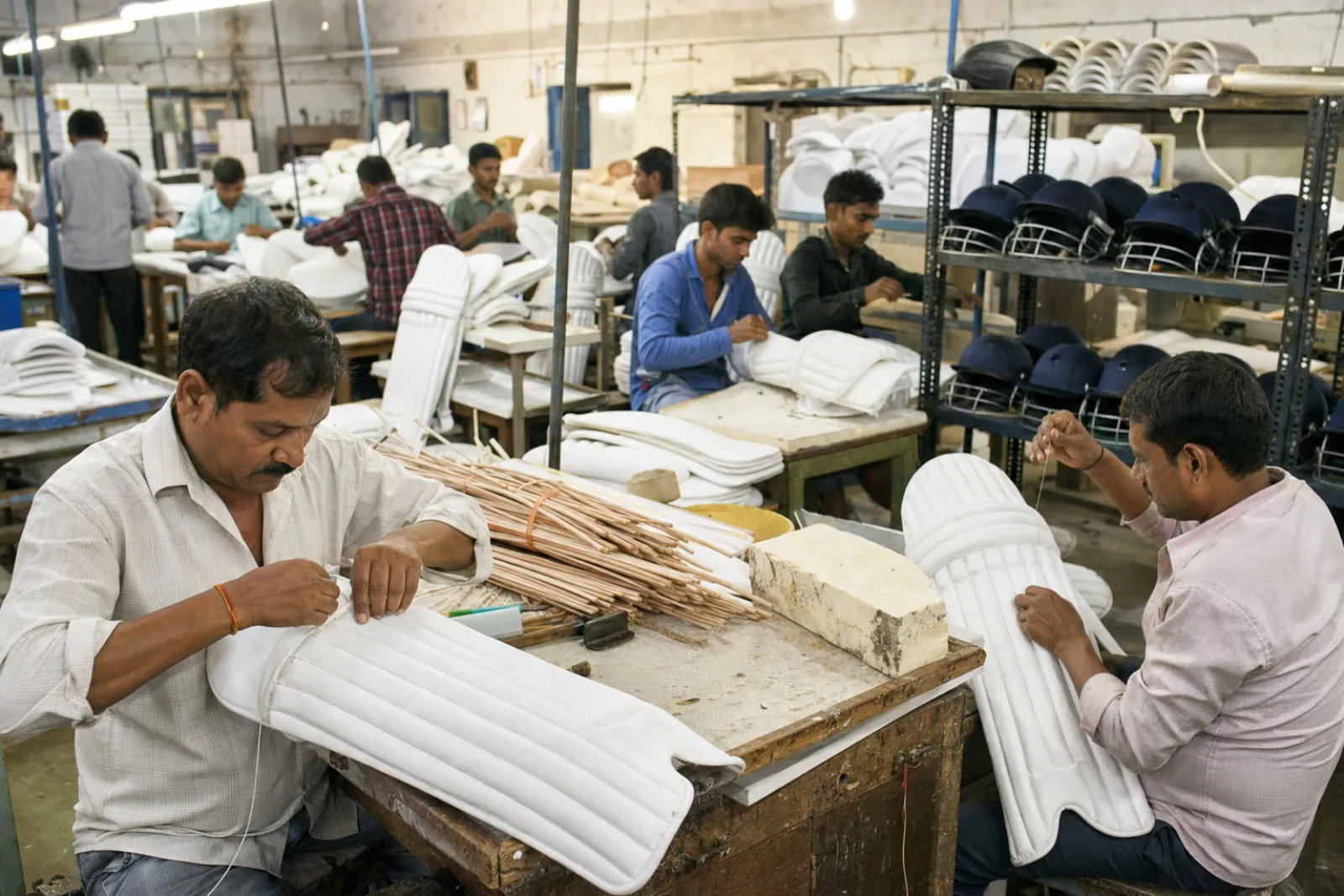
India's sports goods and toys sector (HS Chapter 95) reached ~US$570.95 million (FY 2024-25, DGCIS). Cricket protective gear — batting pads, gloves, wicket-keeping gear, guards, and helmets — sits inside that Chapter 95 basket across multiple ITC-HS lines rather than a single headline export figure. Meerut and Ghaziabad (Uttar Pradesh) are the dominant protective gear manufacturing hubs. Buyers at every fair in this guide ask about pad size run, glove leather grade, helmet BS 7928 status, and kit pack composition early — bring answers on a one-page sheet, not only in verbal booth talk.
Cricket protective gear ships under HS lines including 95069920 for pads and 650610 for helmets. India competes on cane-and-foam pad craft, glove leather and PU construction, private-label flexibility, and SGEPC-backed buyer facilitation — which is why booth preparation and BS 7928 honesty matter more than brochure volume at the fairs covered here.
Cricket Protective Gear Fair and Marketplace Landscape (Indicative)
Swipe →
Data table — swipe horizontally on small screens
| Channel | Location / Type | Primary Value to Protective Gear Exporters |
|---|---|---|
| SGEPC India Sporting Goods Fair | New Delhi / India — SGEPC-organised | Domestic anchor; concentrated cricket protective gear and sports goods buyer traffic |
| Regional sports goods expos (Meerut / Ghaziabad) | Uttar Pradesh | Local B2B platform connecting pad, glove, and helmet manufacturers with buyers |
| Cricket equipment exhibitions | UK, Australia, South Africa, UAE | Club, county, wholesale, and retail buyers with BS 7928 scrutiny |
| IndiaMART / Alibaba | Online B2B marketplaces | Year-round inbound RFQs for cricket pads, gloves, and helmets |
| LinkedIn prospecting | Professional network | Between-fair outreach to distributors, club suppliers, and retail buyers |
Export Statistics
Key Statistics
Fair selection should follow destination priority: the United Kingdom, Australia, South Africa, the UAE, and Bangladesh are consistently among cricket's largest equipment import corridors for Indian-origin protective gear. SGEPC's domestic fair and Meerut regional expos reach mixed international delegations — including Gulf trading houses and South Asian buyers — at a fraction of the travel cost of overseas cricket equipment shows.
Exporters who measure fair ROI by business cards collected underperform exporters who measure sample requests within 30 days and first trial shipments within 90–150 days. Helmet programmes often convert on BS 7928 and size-run clarity; pad and glove assortments convert when MOQ tiers and price points are already clear at the booth.
A Meerut workshop shipping two to four FCL programmes per year can justify a dedicated SGEPC fair stand; a unit still building its first export buyer base should prioritise regional expos and marketplace qualification before scaling fair spend.
Fair Relevance by Target Export Destination
Swipe →
Data table — swipe horizontally on small screens
| Target Destination | Most Relevant Channel(s) | Buyer Profile at That Channel |
|---|---|---|
| United Kingdom | Cricket equipment expos, SGEPC fair delegations, IndiaMART/Alibaba | Club, county, and wholesale buyers with BS 7928 scrutiny |
| Australia / South Africa | Cricket equipment expos, marketplace RFQs | Club supply, retail chains, and distributors with technical scrutiny |
| UAE / Gulf | SGEPC domestic fair, marketplace RFQs | Trading houses, retail groups, academy supply programmes |
| Bangladesh / Sri Lanka | SGEPC fair, regional expos, marketplace RFQs | Wholesale and club supply buyers |
| Domestic + all destinations | SGEPC India Sporting Goods Fair, Meerut/Ghaziabad expos | Mixed international delegation; efficient single-location protective gear coverage |
Import Statistics
Key Statistics
Fair organisers publish attendee profiles that reveal buyer company type and country mix. Reviewing this data before committing booth budget is better than assuming a general sporting goods fair reputation guarantees cricket protective gear buyer traffic — some fairs skew heavily toward fitness equipment or apparel, so confirm cricket equipment buyer density before booking a stand.
Cross-checking attendee lists against HS 95069920 and 650610 import history through trade databases helps confirm whether listed buyers have documented cricket protective gear import history. This is attendee validation, not a substitute for a dedicated buyer-prospecting workflow — see How to Find International Buyers for Cricket Protective Gear for that pipeline.
Pre-Fair Attendee Research Checklist
Swipe →
Data table — swipe horizontally on small screens
| Research Step | What It Reveals | When to Do This |
|---|---|---|
| Review published exhibitor/attendee list | Buyer company type and country mix | 6–8 weeks before the fair |
| Cross-check against HS 95069920 / 650610 import data | Documented cricket protective gear import history | 4–6 weeks before the fair |
| Search attendee company names on LinkedIn | Procurement contact roles and prior sourcing activity | 3–5 weeks before the fair |
| Segment booth samples to fair buyer profile | Whether hero pad/glove/helmet SKUs match dominant buyer type | 4–6 weeks before the fair |
Product Categories
Summary Box
Booth sample selection should mirror the fair's dominant buyer profile, not an exporter's full catalogue. Cricket equipment expos reward BS 7928-honest helmet presentation — adult and youth sizes with grille fixation evidence ready. SGEPC's domestic fair and Meerut regional expos reward the widest mix, since international delegations arrive with varied sourcing briefs spanning retail, club supply, and academy programmes.
For full category depth and grade-level pricing, see Top Cricket Protective Gear Products Exported from India; this guide covers only what to bring to the booth and why.
Matching Booth Samples to Fair Buyer Profile
Swipe →
Data table — swipe horizontally on small screens
| Fair / Channel | Recommended Hero Categories | Buyer Priority |
|---|---|---|
| Cricket equipment expos (UK/AU/SA) | Match-grade pads, BS 7928 helmets, keeping gloves | Size-run clarity, BS 7928 honesty, wholesale reliability |
| SGEPC India Sporting Goods Fair | Broad mix: pads, batting/keeping gloves, helmets, junior kits | Efficient discovery across mixed international delegation |
| Meerut / Ghaziabad regional expos | MSME-scale hero SKUs, private-label-ready lines | Local capacity, first export exposure, MOQ realism |
| IndiaMART / Alibaba | 8–12 hero listings with accurate MOQ, HS codes, and size-run notes | Specification clarity before price discussion |
| LinkedIn outreach | Curated one-page sheet linked in messages, not full catalogue | Credibility signal and fast qualification |
Manufacturing Overview
Export Tip
Booth samples must reflect bulk-capable construction. Buyers who order from fair samples expect the same pad strap geometry, glove leather grade, and helmet grille security in production. Workshops in Meerut and Ghaziabad should lock size-run and construction specifications before the fair so sample and trial lead times can be stated confidently on the booth floor.
BS 7928 helmet claims are the silent booth risk for cricket protective gear exhibitors. If a buyer asks about helmet compliance, quote grille fixation and impact-protection log status honestly rather than implying BS 7928 readiness the factory has not actually verified for that specific size run — a verbal claim without a compliance log on hand damages credibility faster than simply stating the actual status.
Export Process: Where Fairs Fit
Export Tip
- Pre-fair: lock 2–3 hero pad/glove/helmet size runs, print a one-page sheet with HS 95069920/650610, MOQ, and BS 7928 status, confirm SGEPC credential is visible.
- On-floor: qualify buyer type and destination before quoting; log every serious conversation the same day.
- Within 72 hours: send a formal quotation referencing the size run, glove grade, and BS 7928 status actually discussed.
- Days 4–45: dispatch samples, follow up on LinkedIn for contacts who did not leave direct contact details, and move qualified leads toward a trial order.
Fairs and marketplaces are a discovery and qualification layer sitting on top of the full export process, not a replacement for it. For the complete sourcing-to-shipment sequence, see How to Export Cricket Protective Gear from India; for documentation, see Cricket Protective Gear Export Documentation Checklist. What belongs here is only the fair-specific sequence: pre-fair sample and sheet preparation, on-floor qualification, and post-fair conversion into a sampled, documented order.
Pricing Analysis
Buyer Tip
This guide intentionally keeps pricing light — full category-level FOB tables live in Top Cricket Protective Gear Products Exported from India. For booth conversations, anchor on ranges only, quoted with Incoterm and load port (Nhava Sheva, Mundra, Delhi ICD / ICD Ludhiana) stated on the leave-behind sheet so buyers can model landed cost without waiting a week for a follow-up email. Match-grade helmet and private-label premiums belong as footnotes, not as improvised aisle discounts.
What Belongs on a Booth Price Sheet
Swipe →
Data table — swipe horizontally on small screens
| Line Item | Why Buyers Ask | Common Booth Error |
|---|---|---|
| FOB range by pad/glove/helmet category | Internal buyer cost model | One vague 'from US$X' for every protective gear SKU |
| MOQ per size run / category | Assortment planning | MOQ that changes after the fair |
| Lead time (sample / trial / bulk) | Club or retail calendar fit | Ignoring BS 7928 testing and compliance lead time for helmets |
| HS code | Duty and broker prep | Vague 'sports equipment' instead of 95069920 / 650610 |
| BS 7928 helmet status | Match-grade programme screening | Implying helmet compliance without a QC log |
MOQ Analysis
Buyer Tip
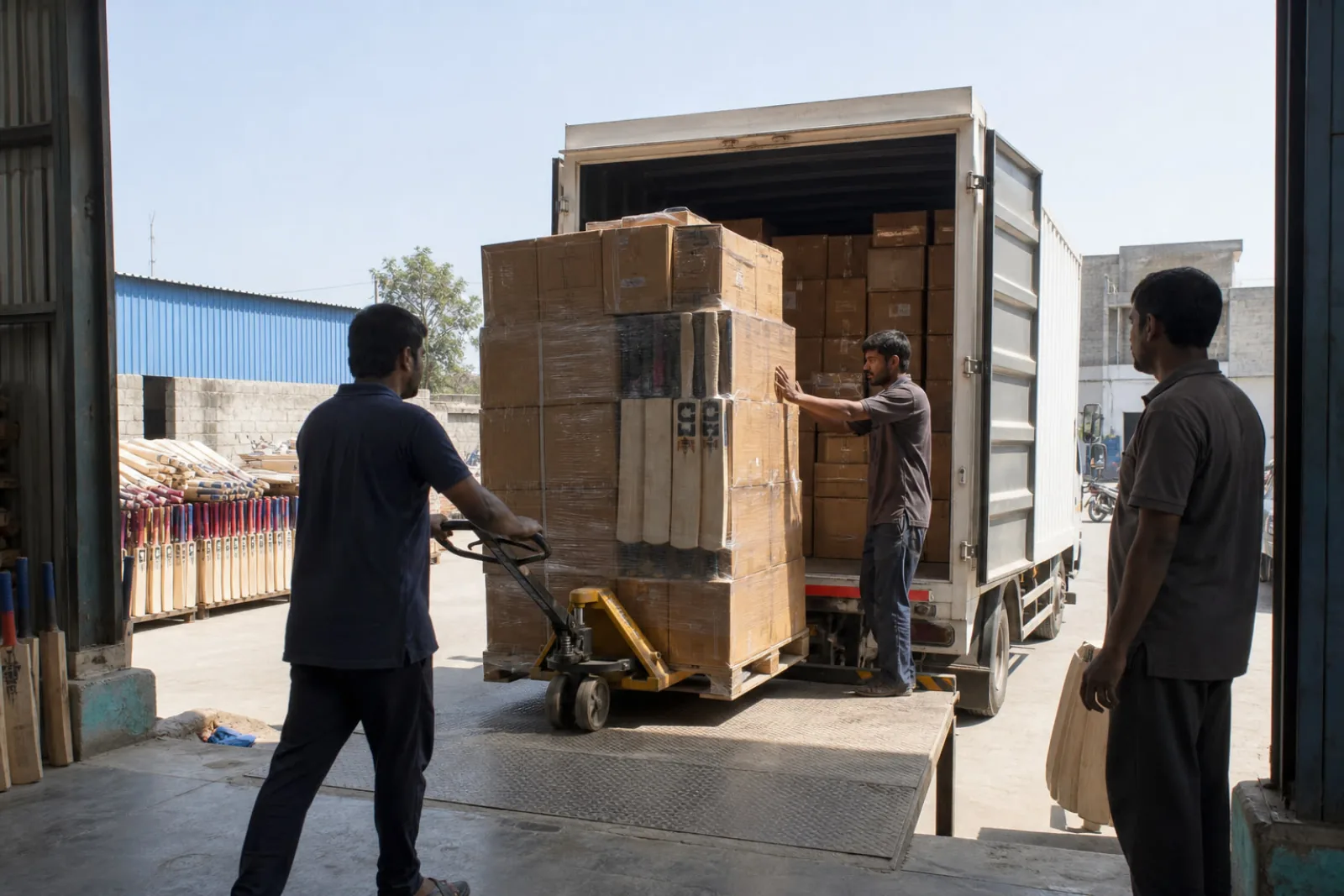
MOQ detail is covered fully in the pricing and product guide linked above; here, the focus is booth messaging. State MOQs the workshop can actually honour after the fair. Cricket equipment expo wholesale buyers often push for denser MOQs across a tighter size-run range, while Meerut regional expo and marketplace buyers may accept lower trial MOQs at higher unit prices for first orders.
The recurring protective-gear-specific trap is quoting a single MOQ across an entire booth range when hand-finished match pads and BS 7928 helmets do not scale down as evenly as entry-level glove lines. Keep separate SKU cards for pad, glove, and helmet families — each with its own MOQ and lead-time line — so booth staff never quote a glove MOQ against a helmet inquiry.
MOQ Messaging by Channel
Swipe →
Data table — swipe horizontally on small screens
| Channel | Typical MOQ Conversation | How to Respond |
|---|---|---|
| Cricket equipment expos | Wholesale density across pad/glove/helmet range | Offer clear trial vs. programme tiers |
| SGEPC India Sporting Goods Fair | Mixed international delegation density | Segment by buyer type before quoting |
| Meerut regional expos | Lower first-order MOQ asks from smaller buyers | Quote realistic trial MOQ with lead-time caveats |
| IndiaMART / Alibaba | Often unrealistically low MOQ asks | Qualify destination and volume before custom quotes |
| BS 7928 helmet lines | Buyer expects a glove-level MOQ on helmets | Quote the higher helmet MOQ tier and explain the compliance driver |
Packaging
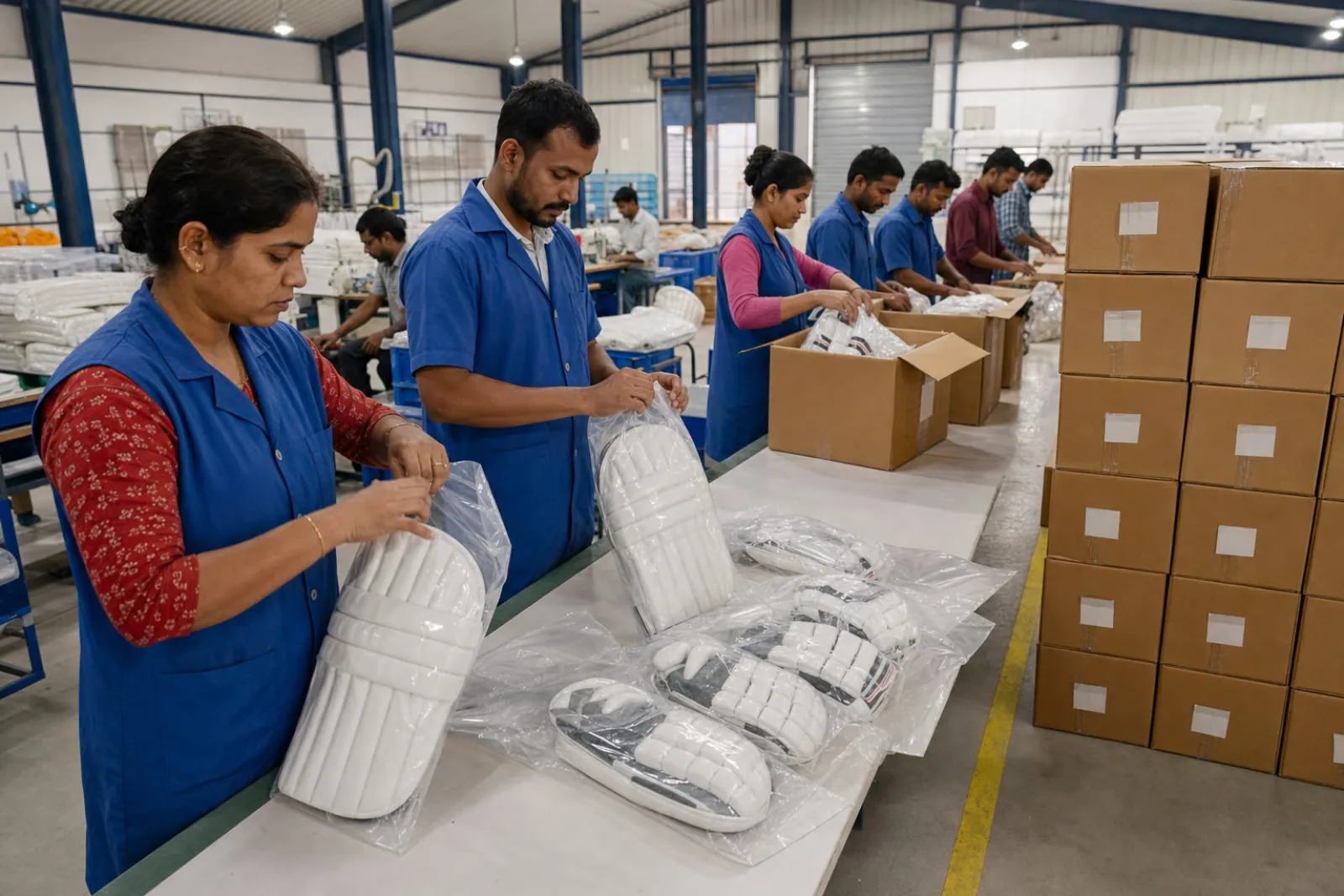
Fair leave-behinds should preview export packaging, not just a bare pad or glove on the table. Helmet samples travel best in individual retail boxes with a BS 7928 spec card attached, matching the intended retail or trade-pack story. Buyers increasingly photograph packaging at the booth, so inconsistent hangtags — a 'BS 7928 compliant' claim on the sample but missing from the product sheet — create post-fair email friction. Full packaging and container detail lives in Cricket Protective Gear Export Documentation Checklist and the product guides.
Booth Packaging Checklist for Cricket Protective Gear Exhibitors
Swipe →
Data table — swipe horizontally on small screens
| Item | Booth Standard | Why It Matters |
|---|---|---|
| Sample pack | Individual bag/box + size-run / BS 7928 spec card | Buyer leave-behind matches retail or trade-pack story |
| Product sheet | MOQ, FOB range, HS 95069920/650610, lead time, SGEPC reference | Internal buyer approval after the fair |
| BS 7928 summary | Compliance status stated honestly per helmet size | Club, county, and match-programme buyers filter booths on day one |
| Private-label sample | Artwork placement clearly marked as sample, not final approval | Prevents buyers assuming artwork sign-off has already happened |
Container Loading
Export Tip
Serious wholesale buyers ask container maths at the booth. Be ready with indicative ranges rather than an invented absolute number — cricket protective gear carton dimensions vary by pad size run, glove box configuration, and whether helmets ship in retail or bulk trade packs, so a single figure is not credible across a full catalogue.
Container Talking Points for Fair Conversations
Swipe →
Data table — swipe horizontally on small screens
| Buyer Question | Ready Answer Should Cover | Avoid |
|---|---|---|
| How many pad/glove/helmet sets fit in a 20ft/40ft? | Carton-dependent range + box/packing assumption per SKU | A single absolute number with no packing note |
| Can pads, gloves, and helmets share an FCL? | Yes, with segregated carton blocks and separate HS references | Promising one blended description for simplicity |
| Which load ports? | Nhava Sheva, Mundra, Delhi ICD / ICD Ludhiana | Naming a port the workshop never actually uses |
Shipping
Post-fair samples usually move by air courier with accurate commercial invoices and size-run notes, packed to prevent pad foam compression or helmet shell damage in transit. Helmets are particularly sensitive to crush damage during courier transit — individual retail boxes with protective wrapping reduce the risk of a sample arriving with a cracked shell that undermines an otherwise strong booth conversation. Trial and programme orders move by sea, commonly under FOB from Nhava Sheva, Mundra, Delhi ICD / ICD Ludhiana via inland container depots serving the Meerut and Ghaziabad clusters.
State sample courier timelines and bulk vessel windows on the product sheet so buyers can map club or retail calendars during the booth conversation. Meerut-origin cargo typically routes through Delhi ICD before reaching Nhava Sheva or Mundra — mention this inland leg on the product sheet so European and Australian buyers do not assume factory-gate FOB without understanding the haul timeline.
Exporters who promise unrealistic global door-to-door timelines at cricket equipment expos or in marketplace chats create disputes that damage otherwise strong buyer relationships. For the full document set behind sample and bulk shipments, see Cricket Protective Gear Export Documentation Checklist.
Certifications
Compliance Notes
SGEPC RCMC should be visible on booth graphics and product sheets — it is one of the first credentials serious buyers check during vendor diligence. Match-programme and club-supply buyers will ask about BS 7928 helmet compliance; state grille fixation and impact-protection log status honestly per size run rather than implying compliance readiness across the full range. Full certification and compliance detail lives in Cricket Protective Gear Export Documentation Checklist — this section covers only what to say at the booth.
Fair-Ready Certification Snapshot
Swipe →
Data table — swipe horizontally on small screens
| Credential / Report | Booth Use | Buyer Expectation |
|---|---|---|
| Sports Goods Export Promotion Council (SGEPC) RCMC | Display membership / quote on sheet | First diligence check for serious buyers |
| Pad fit / glove leather grade note | Summarise on product sheet | Buyers cross-check against the sample they took away |
| BS 7928 helmet compliance status | One-line status per size on the sheet | Match and club-supply buyers ask early |
| ISPM-15 packaging note | Applicable if wood packaging used for bulk samples | Australia and select markets filter suppliers who cannot answer confidently |
Buyer Requirements
Buyer Requirements
- Production-ready samples matching intended bulk pad size run, glove grade, and helmet finish.
- One-page sheet with FOB ranges, MOQs, lead times, and HS 95069920/650610 reference.
- Visible SGEPC registration and IEC readiness.
- BS 7928 status stated clearly and honestly per helmet size, not blanket-claimed.
- Written follow-up commitment — quotation within 72 hours of a qualified meeting.
Buyers walking cricket equipment and sports goods aisles filter exhibitors quickly. They look for production-ready samples matching intended bulk size run, clear MOQs, an accurate HS reference, and staff who can answer BS 7928 and pad fit questions without calling the factory for every detail.
Country-wise Opportunities
Market Snapshot
For strategic country selection, see Best Countries for Indian Cricket Protective Gear Exports and Most Demanded Indian Cricket Protective Gear by Country — this section covers only the fair-to-country mapping.
Fair-to-Country Mapping Summary
Swipe →
Data table — swipe horizontally on small screens
| Country / Region | Primary Fair Route | Supplement |
|---|---|---|
| United Kingdom | Cricket equipment expos, SGEPC fair | IndiaMART/Alibaba + LinkedIn |
| Australia / South Africa | Cricket equipment expos | Marketplace RFQs + ISPM-15 readiness |
| UAE / Gulf | SGEPC India Sporting Goods Fair | Marketplace RFQs |
| Bangladesh / Sri Lanka | SGEPC fair, regional expos | Marketplace RFQs + direct factory visits |
| India (domestic) | Meerut / Ghaziabad regional expos | SGEPC fair + direct factory visits |
United Kingdom
Cricket equipment expos and SGEPC fair delegations are the most efficient channels for UK club, county, and wholesale buyers, with strong appetite for documented BS 7928 helmet compliance and pad size-run transparency.
Australia and South Africa
Cricket equipment expos and disciplined Alibaba/IndiaMART outreach reach Australian and South African distributors and club suppliers with technical scrutiny; bring BS 7928 transparency and, for Australia-bound cargo, ISPM-15 packaging readiness.
UAE and Gulf
SGEPC's India Sporting Goods Fair and marketplace RFQs reach Gulf trading houses and retail groups efficiently without requiring a dedicated Gulf-only show for most Indian cricket protective gear exporters.
India (Domestic Anchor) and South Asia
SGEPC's India Sporting Goods Fair and Meerut regional expos are the most cost-efficient channels, combining domestic networking with international delegation access — including Bangladesh and Sri Lankan buyers — in one location, ideal for Meerut workshops building their first export buyer base.
Sourcing Checklist: 72-Hour Post-Fair CRM Follow-Up
Checklist
Export Tip
Most fair investment is lost between closing day and the following Friday. A 72-hour CRM cadence — extended with LinkedIn touches for contacts who did not leave complete details — is the difference between a sample request and a forgotten business card.
For cricket protective gear exhibitors, the single most common reason a quotation stalls is not price — it is a missing size-run detail, BS 7928 status line, or honest glove-grade note that forces the buyer's merchandising or technical desk to send the email back with questions instead of a PO. Build that line into the quotation template before the fair rather than reconstructing it from memory once a buyer chases you.
72-Hour Post-Fair CRM Cadence
Swipe →
Data table — swipe horizontally on small screens
| Window | Action | Owner |
|---|---|---|
| Same day (fair evening) | Log every serious conversation: buyer, SKUs discussed, size run asked about, MOQ, destination, next step | Booth lead |
| Within 24 hours | Send thank-you + product sheet PDF + promised sample list; connect on LinkedIn where no direct email was exchanged | Sales / CRM owner |
| Within 72 hours | Formal quotation with MOQ, FOB, lead time, HS 95069920/650610, size-run/BS 7928 note — the line most quotes leave blank | Export sales |
| Days 4–14 | Dispatch samples packed to prevent pad foam or helmet shell damage; confirm courier tracking; schedule follow-up call | Sample desk + sales |
| Days 15–45 | Two to four touches across email and LinkedIn; move qualified leads to trial PO discussion | Sales + merchant exporter partner |
Inquiry Qualification: Booth ROI Framework
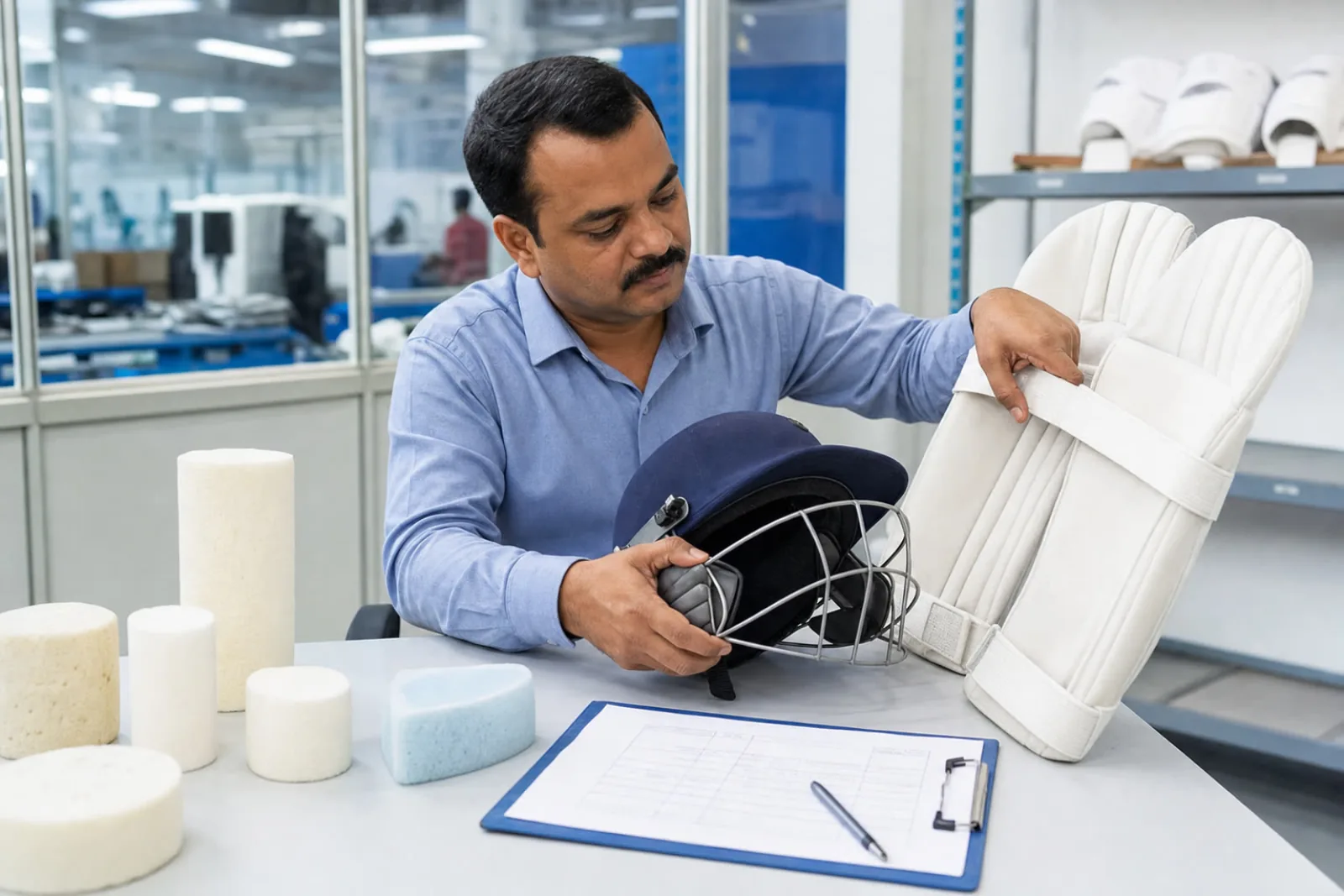
Booth ROI is not measured by foot traffic alone. Track qualified conversations, sample requests within 30 days, and trial POs within 90–150 days against booth cost, travel, and sample budget. A smaller stand with tight inquiry qualification outperforms a large booth that collects undifferentiated business cards.
Apply the same qualification filter to Alibaba and IndiaMART RFQs: confirm buyer company type, destination market, realistic MOQ, size-run requirements, and documented import history before dispatching custom samples or exclusive private-label artwork.
Inquiry Qualification Scorecard (Fair and Marketplace)
Swipe →
Data table — swipe horizontally on small screens
| Qualification Signal | Green Light | Red Flag |
|---|---|---|
| Buyer company type | Wholesale distributor, club supplier, retail chain procurement | Anonymous RFQ with no company profile |
| Destination market | Named country with cricket equipment import history | Vague 'worldwide' or undisclosed destination |
| MOQ realism | Volume aligned with your trial/programme tiers | Requests for 50 helmets at training-glove pricing |
| BS 7928 requirement | Buyer asks for QC log evidence, not just a claim | Demands compliance claim on invoice without testing budget |
| Import history | Documented HS 95069920 / 650610 imports | No traceable sourcing or import activity |
Common Buyer Mistakes
Common Mistakes Box
Future Market Trends
Key Statistics
Hybrid fair formats — in-person booths plus organiser digital buyer-matching — are becoming standard at major sports goods and cricket equipment shows, making pre-booked cricket protective gear meetings easier before doors open. Marketplaces are adding verification tools that reduce, but do not eliminate, low-quality RFQs, and LinkedIn is increasingly where serious buyers do vendor diligence before ever visiting a booth.
Buyers increasingly expect booths to show pad size-run clarity and BS 7928 helmet readiness — grille fixation evidence, youth sizing options — as part of the first conversation, not a follow-up email. For helmet compliance depth, see ICC and BS-Compliant Cricket Helmet Export Opportunities.
Fair and Marketplace Trend Signals
Swipe →
Data table — swipe horizontally on small screens
| Trend | Exporter Response |
|---|---|
| Hybrid digital buyer-matching at major fairs | Pre-book meetings before doors open where organisers allow |
| Marketplace verification tools expanding | Keep pad/glove/helmet listings accurate to benefit from better-qualified matching |
| LinkedIn becoming a pre-fair diligence channel | Keep company and product pages current before fair season starts |
| BS 7928 storytelling scrutiny rising | Back claims with QC logs, not just booth signage |
Expert Insights
Expert Insight Box
High-performing cricket protective gear exporters dump fair cards, marketplace RFQs, and LinkedIn contacts into one CRM with the same verify → paid sample → quote path. That single pipeline is what turns aisle chats into documented sailings from Meerut and Ghaziabad.
The exporters who underperform at fairs almost always share one trait: they treat each channel as a separate sales motion with different qualification standards. A lead from Alibaba gets a price quote within hours but no size-run confirmation; a fair lead gets a sample dispatched but no follow-up quotation within 72 hours. Unifying both into one CRM with mandatory fields for pad size run, BS 7928 status, destination, and MOQ realism eliminates the channel-specific shortcuts that waste sample budget and stall conversion.
For buyers evaluating Indian cricket protective gear suppliers met at a fair or through a marketplace, the fastest credibility check is not the booth design — it is whether the exporter sends a complete product sheet and sample document pack within 72 hours of a qualified conversation. Exporters who cannot produce that pack quickly rarely manage a clean multi-HS shipping bill pack at cutoff either.
Challenges & Solutions
Recurring fair and marketplace challenges for cricket protective gear exporters are predictable, and so are the fixes.
Fair and Marketplace Challenges and Solutions
Swipe →
Data table — swipe horizontally on small screens
| Challenge | Solution |
|---|---|
| Booth catalogue too broad, diluting buyer attention | Edit to 2–3 hero pad/glove/helmet size runs matched to the fair's buyer profile |
| Fair leads go cold after the show | Enforce a documented 72-hour CRM cadence with named owners, including LinkedIn touches |
| Marketplace RFQs waste sample budget | Qualify destination, MOQ, size run, and import history before sampling |
| Sample size run differs from bulk production | Lock pad/glove/helmet specs before the fair, not after buyer interest arrives |
| BS 7928 claims outrun actual compliance evidence | State helmet compliance status honestly per size; never blanket-claim across the range |
| International fair costs feel unjustifiable for small workshops | Start with the SGEPC fair, Meerut expos, and marketplaces; add overseas cricket expos once conversion data supports it |
Buyer, Exporter, and Compliance Checklists
Checklist
Compliance Notes
Sources and References
Compliance Notes
- TradeStat EIDB — Ministry of Commerce & Industry, India — commodity-wise export and import statistics (query ITC-HS 95069920, 95069980, 95069990, 65061090)
- DGCIS brief — India's exports of toys, games and sports requisites (HS Chapter 95) — FY 2024-25 sector totals including 95069990
- DGFT — Directorate General of Foreign Trade — IEC and export policy
- Sports Goods Export Promotion Council (SGEPC) — RCMC and sports-goods export promotion
- Indian ITC-HS 95069920 — leg pads and bats for cricket — tariff line description (confirm 8-digit with CHA)
- USITC Harmonized Tariff Schedule — HTS 9506.99.6080 (other sports articles) and 6506.10 (safety headgear)
- U.S. CBP ruling NY N321806 — protective sports articles classified under HTS 9506.99.6080 at 4% MFN
- European Commission TARIC — EU/UK destination duty lookup for CN 9506.99 and 6506.10
- ICC — Helmets and head protectors — BS 7928:2013+A1:2019 requirement for international cricket
- BSI — BS 7928:2013 Specification for head protectors for cricketers — British Standard text and scope
- ECHA — REACH Regulation (EU) — chemical compliance for leather and foam components in EU markets
- UK HSE — UK REACH — post-Brexit chemical compliance for UK imports
- U.S. CPSC — CPSIA — youth product safety framework referenced by USA buyers (confirm applicability per SKU)
- ITC Trade Map — bilateral trade flows and destination-market research
Trade statistics, HS classifications, duty references, and compliance frameworks cited in this guide were checked against the sources below (July 2026). Rates, schedules, and tariff lines change — always confirm current values with your customs house agent (CHA) or destination-country broker before filing or quoting landed cost.
Conclusion
- Full export process: How to Export Cricket Protective Gear from India.
- Category-level pricing and MOQ depth: Top Cricket Protective Gear Products Exported from India.
- Documentation for fast post-fair samples: Cricket Protective Gear Export Documentation Checklist.
- Registration: SGEPC Registration Benefits for Cricket Protective Gear Exporters.
- Market focus: Best Countries for Indian Cricket Protective Gear Exports and Most Demanded Indian Cricket Protective Gear by Country.
- Direct sourcing: Source Cricket Protective Gear Directly from India and helmet compliance depth in ICC and BS-Compliant Cricket Helmet Export Opportunities.
- Buyer prospecting: How to Find International Buyers for Cricket Protective Gear.
Trade shows and B2B marketplaces work for Indian cricket protective gear exporters when preparation, on-floor qualification, and 72-hour CRM follow-up — including LinkedIn touches — are treated as one system. With cricket protective gear inside a ~US$570.95 million (FY 2024-25, DGCIS) HS-95 basket, SGEPC's India Sporting Goods Fair, Meerut regional expos, cricket equipment exhibitions, and Alibaba/IndiaMART each reach a distinct buyer profile — none replaces documentation readiness or a coherent sample strategy.
Altus Exports staffs fair and international-show follow-up for Meerut and Ghaziabad cricket protective gear lines, then closes the same leads under a merchant exporter in India and global sourcing partner mandate. Continue via export products from India or product sourcing company in India when you need verified protective gear capacity — or contact us for a booth-to-order plan.