
Best Countries for Indian Shatavari Exports: Market Guide
By Saurabh Mittal, Founder, Altus Exports
A market-selection guide for Indian shatavari suppliers, comparing demand, buyer expectations, saponin assay tiers, and route planning across major import markets.
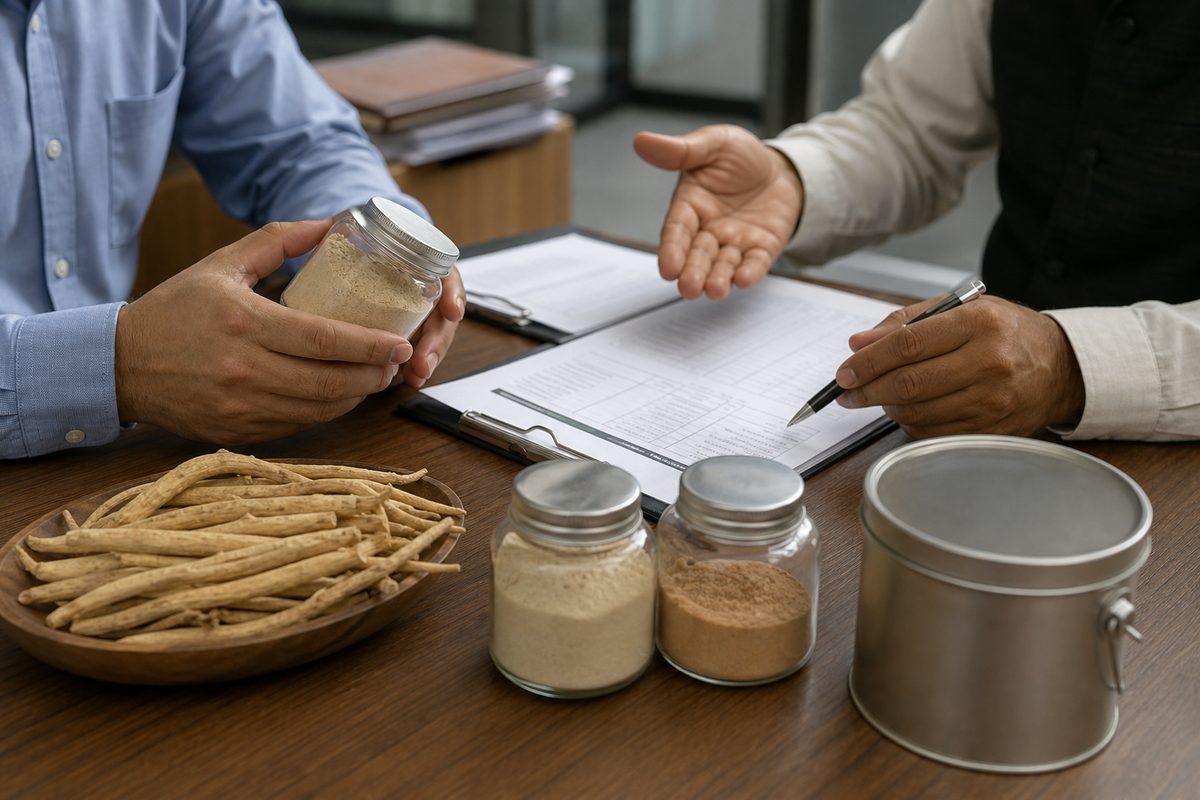
For churna, cut-root, and extract SKUs, Indian shatavari demand is spread across the USA, EU and UK, UAE and GCC, Australia, Canada, Japan, South Korea, and SE Asia. These markets are not interchangeable: an organic retail programme in Europe calls for different evidence than a bulk distributor programme inside the Gulf. Use the country demand map to select products prior to approaching buyers.
Inside a merchant-exporter shatavari file, private-label, and wellness formats; EU and UK buyers commonly value traceability and certified organic pathways. UAE/GCC buyers can combine local demand with regional distribution. Canada suits many premium natural-product programmes. Australia requires a separate food versus complementary-medicine pathway check with counsel before quoting. Japan and South Korea often require disciplined technical specifications. SE Asia offers distributor-led opportunities for practical bulk formats.
When HPLC shatavarin or total-saponin evidence matters, trade numbers need careful wording. India HS 130219 exports were about USD 539.8 million / 18,857,300 kg in CY2024 per WITS on a directional basis, but it is a multi-botanical parent category and is required to never be represented as shatavari-only trade. Altus supports buyer-market qualification and shipping plans; see how to find shatavari buyers for a targeted outreach model.
Key Takeaways
Summary Box
Executive Summary
Summary Box
When HPLC shatavarin or total-saponin evidence matters, market selection for Indian shatavari should start with importer readiness and lawful use pathway, not alongside the loudest Ayurvedic demand headline. Pack powder in 20/25 kg bags and extracts in 25 kg HDPE drums unless the buyer dictates otherwise.
For Mundra or Nhava Sheva named-port handovers, corridor planners are expected to separate USA ingredient programmes, EU organic root-powder channels, GCC Halal-ready bulk, Canada premium natural-product lanes, and Australia complementary-medicine versus food pathways. Cite HS 130219 ≈ USD 539.8M / 18,857,300 kg CY2024 (WITS) only as a multi-botanical parent.
In organic-custody root powder trials, rank destinations on landed-cost feasibility and document burden, then pilot one channel with a defined SKU prior to expanding geography. Confirm ITC-HS 1211.90 vs 1302.19 with CHA for the finished article.
Market Size & Industry Overview
Key Statistics
When HPLC shatavarin or total-saponin evidence matters, globally, shatavari demand clusters around Ayurvedic ingredient, organic retail, GCC distribution, and technically specified Asian formulation channels across USA, EU/UK, UAE, Canada, Japan, Korea, Australia, and SE Asia. Pack powder in 20/25 kg bags and extracts in 25 kg HDPE drums unless the buyer dictates otherwise.
For Mundra or Nhava Sheva named-port handovers, corridor attractiveness changes wherever supplement rules tighten residue panels, or when saponins claims need method disclosure after heat processing. Cite HS 130219 ≈ USD 539.8M / 18,857,300 kg CY2024 (WITS) only as a multi-botanical parent.
In organic-custody root powder trials, build market maps from importer capability first and trade totals second — never cite HS 130219 as shatavari-only. Confirm ITC-HS 1211.90 vs 1302.19 with CHA for the finished article.
Export Statistics
Key Statistics
- For Mundra or Nhava Sheva named-port handovers, cite India HS 130219 ≈ USD 539.8M / 18,857,300 kg CY2024 (WITS) only as a multi-botanical parent — not shatavari-only. Cite HS 130219 ≈ USD 539.8M / 18,857,300 kg CY2024 (WITS) only as a multi-botanical parent.
- In organic-custody root powder trials, verify the applicable India ITC-HS and destination HTS/TARIC for the exact finished SKU with CHA + importer broker. Confirm ITC-HS 1211.90 vs 1302.19 with CHA for the finished article.
- For private-label women's-wellness bulk, re-check TradeStat/WITS/Comtrade before quoting figures to a buyer. Retain a sealed reference sample against destination retests.
When HPLC shatavarin or total-saponin evidence matters, corridor rankings should never lean on HS 130219 parent dollars as if they measured shatavari root alone. Pack powder in 20/25 kg bags and extracts in 25 kg HDPE drums unless the buyer dictates otherwise.
For Mundra or Nhava Sheva named-port handovers, market analysts can use directional partner trade under botanical headings as a prospecting hint; afterward, verify actual shatavari importers. Cite HS 130219 ≈ USD 539.8M / 18,857,300 kg CY2024 (WITS) only as a multi-botanical parent.
In organic-custody root powder trials, update market decks alongside the multi-botanical caution every time CY figures change. Confirm ITC-HS 1211.90 vs 1302.19 with CHA for the finished article.
India shatavari trade/HS context — directional; not a shatavari-only national tally; verify on quote date.
Swipe →
Data table — swipe horizontally on small screens
| Metric | Directional position | Buyer note |
|---|---|---|
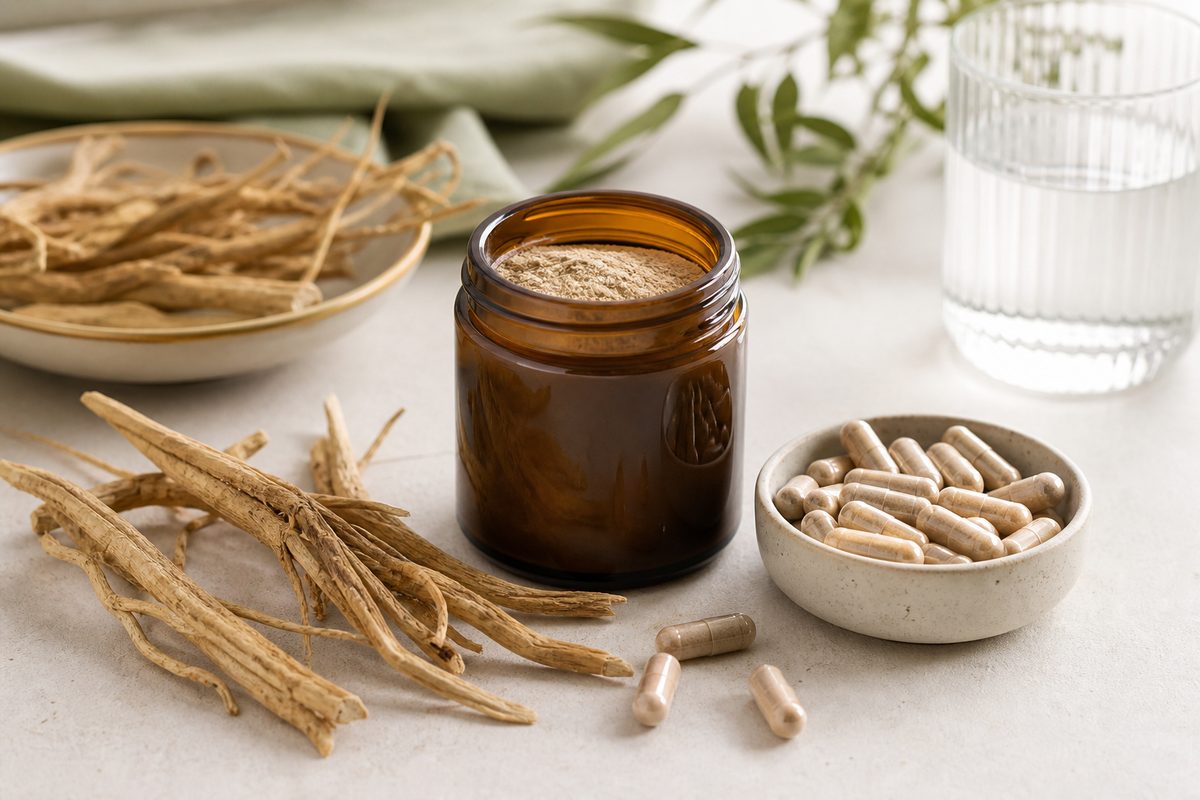
| Core product | Dried whole/sliced root, shatavari root powder (churna/mesh), ratio extract powder, and ratio or HPLC-standardized extracts. | Specify botanical identity, root plant part, mesh or extract ratio in every RFQ. |
| Production base | Neemuch/Madhya Pradesh primary corridor (MP medicinal-root trading corridor); Madhya Pradesh/Rajasthan; Gujarat/Maharashtra extraction; Gujarat and Hyderabad extract finishing support. | Verify actual processing site per lot — origin affects harvest calendar, consolidation, and freight. |
| Dried root and powder (India export cue) | ITC-HS 1211.90 family — trade-practice cues often 12119029 / 12119090 / 12119099 (residual “other” lines, not a shatavari-dedicated statutory split). | Confirm eight-digit ITC-HS with CHA; some forms also appear under other headings (e.g. 1404.90 / 0811.90 families). |
| Extract classification (India export cue) | HS 1302.19; India lines often 13021919–13021990 | Confirm solvent/ratio and finished form with CHA prior to shipping bill; assay % is a COA field, not an HS nickname. |
| Trade-data caution | India HS 130219 exports ≈ USD 539.8M / 18,857,300 kg in CY2024 (WITS) — multi-botanical parent, not shatavari-only. | Never present the parent heading as a shatavari-only tally; validate SKU demand via RFQs/shipment intelligence. |
| Export gateways | Mundra, Nhava Sheva; ICD from MP/Rajasthan; air for samples. | Select the named port after factory location and sailing schedule are fixed. |
Import Statistics
Key Statistics
- Segment destinations by buyer type and product form.
- Confirm the importer’s local route before shipping.
- Re-verify current partner data.
When HPLC shatavarin or total-saponin evidence matters, uSA, EU/UK, UAE/GCC, Canada, Japan, Korea, Australia, and SE Asia show distinct shatavari import profiles — score them separately. Pack powder in 20/25 kg bags and extracts in 25 kg HDPE drums unless the buyer dictates otherwise.
For Mundra or Nhava Sheva named-port handovers, landed-cost and residue panels often matter more than headline import interest. Cite HS 130219 ≈ USD 539.8M / 18,857,300 kg CY2024 (WITS) only as a multi-botanical parent.
In organic-custody root powder trials, pilot the highest-fit importer prior to allocating multi-market inventory. Confirm ITC-HS 1211.90 vs 1302.19 with CHA for the finished article.
Shatavari import demand by destination — directional
Swipe →
Data table — swipe horizontally on small screens
| Market | Demand profile | Typical buyer |
|---|---|---|
| USA | Root powder, organic powder, saponins–aware ingredients, and extracts. | Ingredient importers, brand owners, private-label packers |
| EU / UK | Traceable root powder and organic programmes; extracts need pathway confirmation. | Organic distributors, food brands; extract buyers need pathway confirmation. |
| UAE / GCC | Bulk powder and retail-ready programmes with food-safety and Halal documentation. | Distributors, re-export traders, retail chains |
| Australia / Canada | Canada: premium powder interest; Australia: food vs complementary-medicine pathway with counsel. | Canada natural-product distributors; AU: confirm lawful product route before quoting. |
| Japan / South Korea | Consistent fine powders and tightly specified HPLC extracts. | Ingredient distributors and formulation companies |
| SE Asia | Accessible bulk powder and dried-root programmes | Wholesalers, distributors, and regional packers |
How to Rank Destination Markets for Indian Shatavari
In organic-custody root powder trials, score each destination on importer readiness, intended product route, document requirements, testing burden, freight, payment terms, and realistic annual volume. Weight the score differently for powder distributors, finished-goods brands, and extract formulators given that they buy and qualify differently. Confirm ITC-HS 1211.90 vs 1302.19 with CHA for the finished article.
For private-label women's-wellness bulk, pilot the highest-fit markets through qualified buyers with a defined use case. A market is attractive wherever the buyer can state its specification and route to sale, not simply when its search volume or trade total looks large. Retain a sealed reference sample against destination retests.
Across USA, EU/UK, and GCC shatavari corridors, use the country-by-form demand guide to connect destination research to a sample plan and a prospect list. Keep plant part stated as root on every release record.
Country-wise Opportunities
Market Snapshot
When HPLC shatavarin or total-saponin evidence matters, market ranking belongs here — landed cost, residue burden, payment norms, and importer density. Pack powder in 20/25 kg bags and extracts in 25 kg HDPE drums unless the buyer dictates otherwise.
For Mundra or Nhava Sheva named-port handovers, australia needs counsel-led pathway checks; Canada often suits premium natural-product powder. Cite HS 130219 ≈ USD 539.8M / 18,857,300 kg CY2024 (WITS) only as a multi-botanical parent.
Re-score annually as rules and freight changeFor Mundra or Nhava Sheva named-port handovers, Use the destination-market guide alongside the country table for a testable shortlist. Treat saponin/HPLC method honesty as a commercial gate.
Country opportunity profile for Indian shatavari — directional.
Swipe →
Data table — swipe horizontally on small screens
| Market | Product fit | Requirement focus | Opportunity |
|---|---|---|---|
| USA | Organic root powder, saponin-standardized lots, ratio/HPLC extracts | Supplier controls, lot COA, product and label review | Large ingredient and private-label base |
| EU / UK | Organic powder, dried root; extracts only with pathway check. | MRLs, contaminants, organic records; pathway for extracts as applicable. | Root/powder demand strong; do not assume extract authorisation. |
| UAE / GCC | Bulk powder, dried root, retail programmes | Food-safety file, Halal where needed, suitable labels, reliable delivery. | Regional distribution and re-export |
| Australia / Canada | Canada: organic/premium powder; AU: confirm food vs complementary-medicine route. | Canada: organic + label review; Australia: counsel before retail-food assumptions. | Premium natural-product and counsel-led AU programmes |
| Japan / South Korea | Fine mesh powder and HPLC extracts | Specification consistency and detailed technical documents | Quality-led ingredient channels |
| SE Asia | Value-oriented bulk root powder and dried root | Practical pack sizes and import-document alignment | Distributor-led regional expansion |
Product Categories / Variants
Summary Box
- Conventional and certified organic root powder.
- Declared mesh and industrial packing options.
- Declared extract formats with transparent analytical basis.
- No unsupported health or therapeutic claims.
When HPLC shatavarin or total-saponin evidence matters, corridor buyers pick forms differently — USA organic powder, EU traceable root powder, GCC bulk, Japan fine mesh, Korea HPLC extracts. Pack powder in 20/25 kg bags and extracts in 25 kg HDPE drums unless the buyer dictates otherwise.
For Mundra or Nhava Sheva named-port handovers, market teams is expected to shortlist SKUs per destination before sampling. Cite HS 130219 ≈ USD 539.8M / 18,857,300 kg CY2024 (WITS) only as a multi-botanical parent.
In organic-custody root powder trials, a single global catalogue absent corridor notes creates mismatched expectations. Confirm ITC-HS 1211.90 vs 1302.19 with CHA for the finished articleIn organic-custody root powder trials, . Compare forms via the Indian shatavari product guide. Confirm ITC-HS 1211.90 vs 1302.19 with CHA for the finished article.
Indian shatavari (Asparagus racemosus) product catalogue
Swipe →
Data table — swipe horizontally on small screens
| Product | Specification variables | Primary buyer channel |
|---|---|---|
| Dried whole root | Root integrity, moisture, cleaning level | Ayurvedic, food-ingredient, distributors |
| Dried cut root | Cut size, colour, moisture, foreign matter | Ingredient packers and blends |
| Shatavari root powder (churna/mesh) | Mesh grade, colour, moisture, micro profile | Food, wellness, ingredient distributors |
| Shatavari ratio extract powder | Process description, moisture, saponin method where claimed | Nutraceutical and women's-wellness buyers |
| Saponin / shatavarin–profiled | Method, heat-history note, acceptance band | Premium brands and formulators |
| 4:1 / 10:1 extract | Ratio, solvent, carrier, assay, solubility | Nutraceutical and formulation buyers |
| Saponin / shatavarin HPLC | Marker, HPLC method, acceptance band | Ingredient and formulation buyers |
| Steam-sterilized or organic powder | Treatment record or certification scope | Premium brands and retail programmes |
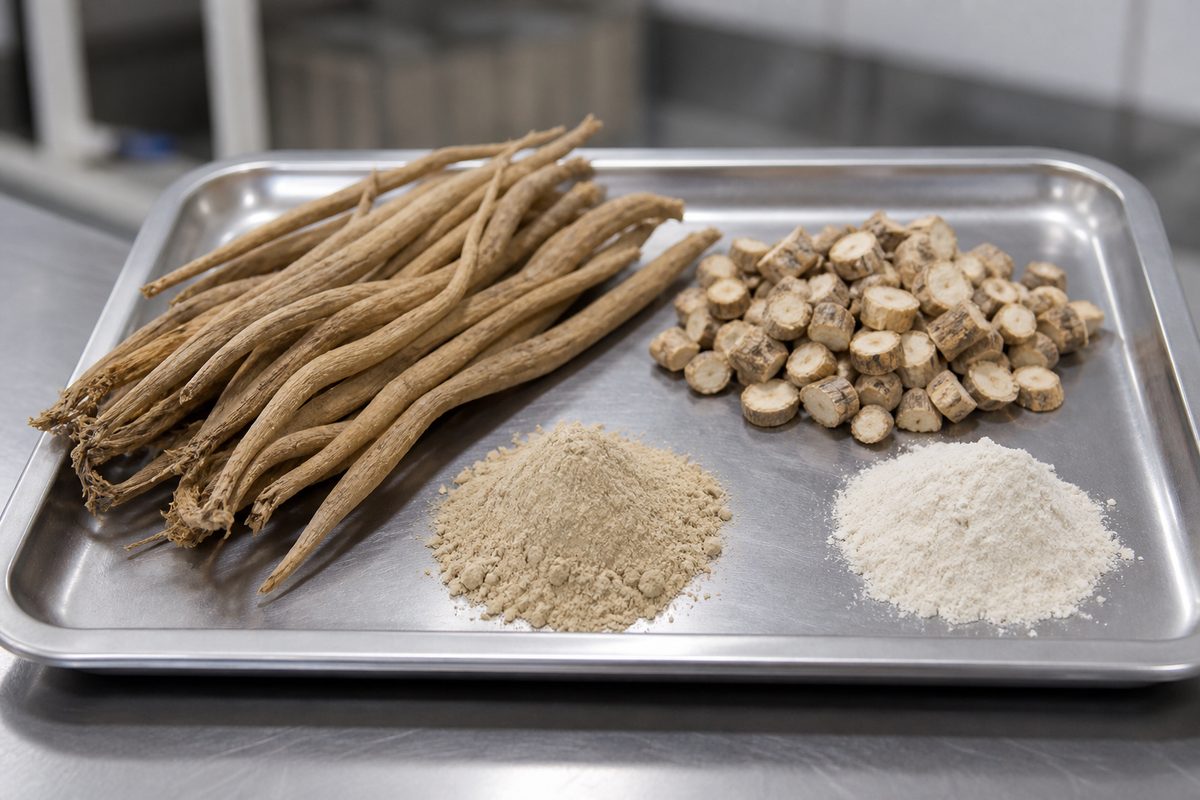
Quality Specification Reference
- For private-label women's-wellness bulk, write acceptance limits prior to the first sample leaves India. Close with FOB Mundra or Nhava Sheva discipline, not vague port talk.
- Across USA, EU/UK, and GCC shatavari corridors, match COA parameters into the finished lot — not only the approved sample. Stage MOQs as 100 g–2 kg samples, 100–500 kg powder, 25–100 kg extract.
- During sample-to-FCL qualification, extracts need residual-solvent and carrier disclosure where applicable. Pack powder in 20/25 kg bags and extracts in 25 kg HDPE drums unless the buyer dictates otherwise.
- For lot-true root identity control, retain a sealed reference sample for destination retest disputes. Cite HS 130219 ≈ USD 539.8M / 18,857,300 kg CY2024 (WITS) only as a multi-botanical parent.
When HPLC shatavarin or total-saponin evidence matters, corridor buyers may tighten micro or residue panels — confirm destination methods prior to locking the matrix. Pack powder in 20/25 kg bags and extracts in 25 kg HDPE drums unless the buyer dictates otherwise.
For Mundra or Nhava Sheva named-port handovers, do not ship a generic “export quality” label into markets with explicit MRL or supplement-pathway questions for extracts. Cite HS 130219 ≈ USD 539.8M / 18,857,300 kg CY2024 (WITS) only as a multi-botanical parent.
In organic-custody root powder trials, quality specs are market-entry tools as much as factory tools. Confirm ITC-HS 1211.90 vs 1302.19 with CHA for the finished article.
Shatavari quality specification checklist — agree before sampling.
Swipe →
Data table — swipe horizontally on small screens
| Parameter | Dried root / cut root | Shatavari powder | Extract |
|---|---|---|---|
| Identity | Asparagus racemosus root | Asparagus racemosus root | Asparagus racemosus; root or agreed plant part |
| Physical specification | Cut size, colour, moisture, foreign matter | Mesh grade, colour, moisture, flow | Ratio, solubility, carrier, appearance |
| Saponins / markers | Where claimed — method and heat note | Where claimed — method and heat note | Shatavarin/steroidal saponin/saponin HPLC where contracted |
| Food-safety testing | Agreed microbiology and contaminants | Agreed microbiology and contaminants | Agreed microbiology, contaminants, residual solvents |
| Contaminants | Heavy metals, pesticides/EtO as agreed | Heavy metals, pesticides/EtO as agreed | Heavy metals, pesticides/EtO, residual solvents |
| Traceability | Farm or collection and batch records | Input-to-batch records | Input, extraction, and batch records |
| Organic status | Certificate where sold as organic | Certificate where sold as organic | Certificate scope and carrier review |
| Lot release | COA matched to packing list | COA matched to packing list | COA matched to drum labels |
Trade Classification and Product Description
Compliance Notes
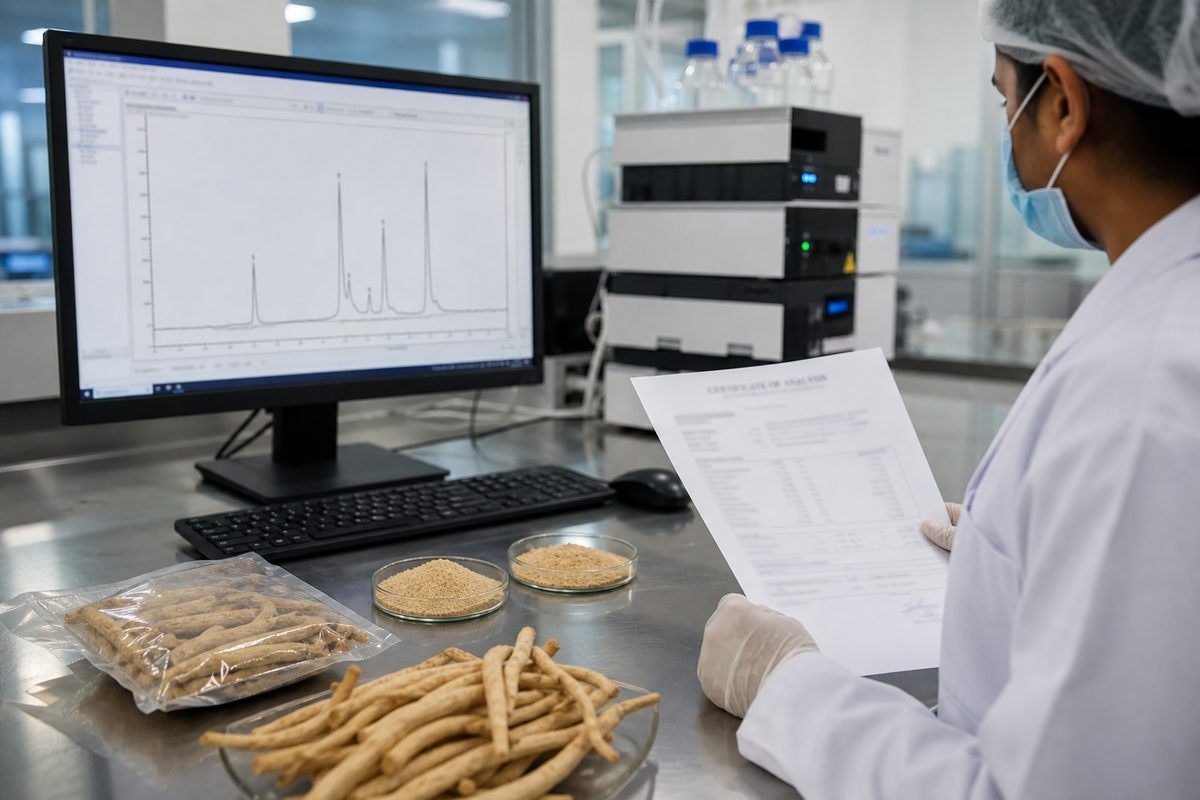
- For churna, cut-root, and extract SKUs, india powder/dried root cue: ITC-HS 1211.90 family (trade-practice often 12119029 / 12119090 / 12119099 — residual “other,” not shatavari-dedicated). Close with FOB Mundra or Nhava Sheva discipline, not vague port talk.
- Inside a merchant-exporter shatavari file, india extract cue: HS 1302.19 / often 13021919–13021990 (assay % is COA, not HS). Stage MOQs as 100 g–2 kg samples, 100–500 kg powder, 25–100 kg extract.
- When HPLC shatavarin or total-saponin evidence matters, alternate form cues (frozen / vegetable products) can appear under other headings — CHA confirms. Pack powder in 20/25 kg bags and extracts in 25 kg HDPE drums unless the buyer dictates otherwise.
- For Mundra or Nhava Sheva named-port handovers, destination HTS/TARIC can differ — confirm with the importer's broker; never invent MFN %. Cite HS 130219 ≈ USD 539.8M / 18,857,300 kg CY2024 (WITS) only as a multi-botanical parent.
- In organic-custody root powder trials, reconcile HS language across invoice, packing list, and shipping bill. Confirm ITC-HS 1211.90 vs 1302.19 with CHA for the finished article.
When HPLC shatavarin or total-saponin evidence matters, market entry files should pair HS language with duty research per corridor. Pack powder in 20/25 kg bags and extracts in 25 kg HDPE drums unless the buyer dictates otherwise.
Do not quote duty from memory.
Keep Access2Markets/USITC checks dated.
Manufacturing Overview
Export Tip
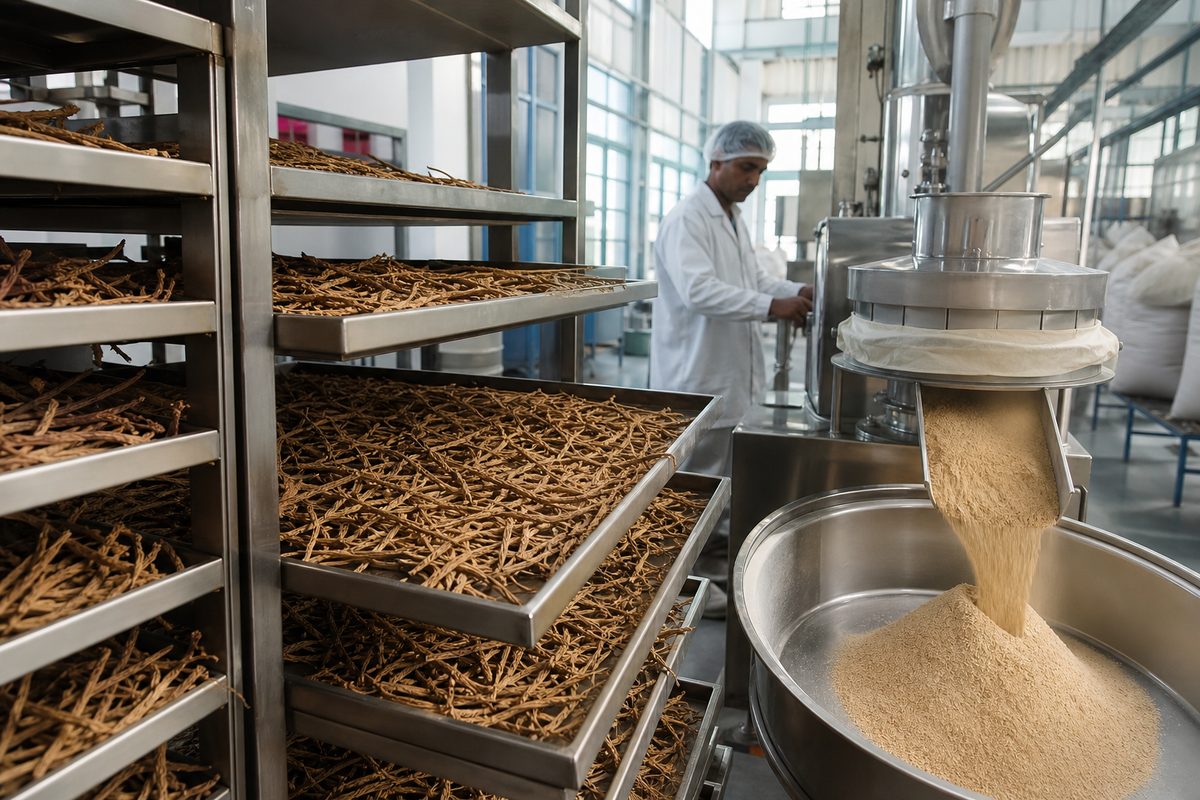
When HPLC shatavarin or total-saponin evidence matters, destination expectations influence manufacturing tightness — EU residue panels and Japan consistency demands change in-process controls. Pack powder in 20/25 kg bags and extracts in 25 kg HDPE drums unless the buyer dictates otherwise.
For Mundra or Nhava Sheva named-port handovers, do not run a casual bulk process for a market that will retest metals and pesticides. Cite HS 130219 ≈ USD 539.8M / 18,857,300 kg CY2024 (WITS) only as a multi-botanical parent.
In organic-custody root powder trials, align manufacturing CAPA language to the corridor’s likely audit questions. Confirm ITC-HS 1211.90 vs 1302.19 with CHA for the finished articleDuring sample-to-FCL qualification, See the shatavari export process guide for release-to-booking handoff. Do not reuse unrelated berry-powder templates for this botanical.
Pricing Analysis
Buyer Tip
When HPLC shatavarin or total-saponin evidence matters, landed-cost comparisons across USA, EU, GCC, and Asia should include freight, duty research, and compliance testing — not only Indian FOB. Pack powder in 20/25 kg bags and extracts in 25 kg HDPE drums unless the buyer dictates otherwise.
For Mundra or Nhava Sheva named-port handovers, market selection fails wherever cheap FOB hides expensive residue panels. Cite HS 130219 ≈ USD 539.8M / 18,857,300 kg CY2024 (WITS) only as a multi-botanical parent.
Re-quote when destination test scopes expand.
Directional FOB USD/kg bands — verify harvest, specification, and quote date.
Swipe →
Data table — swipe horizontally on small screens
| Product | Directional FOB band | Commercial driver |
|---|---|---|
| Conventional shatavari powder | Low-to-mid single digits to low teens | Mesh, microbial controls, colour, packing, and lot size. |
| Organic shatavari powder | Mid-teens to mid-twenties+ | Valid certification, segregation, traceability, and demand timing |
| Dried whole / cut root | Quote by cut size and moisture specification | Visual grade and foreign-matter control |
| Ratio extract powder / saponin-standardized | Premium to standard powder | Declared saponin method and assay-method honesty |
| 4:1 or 10:1 / HPLC extract | Tens of USD/kg | Ratio, solvent system, carrier, shatavarin/saponin assay, and plant certification. |
| Private-label bulk | Quote after pack and artwork scope | Packaging conversion and approval lead time |
Shipping Methods
Export Tip
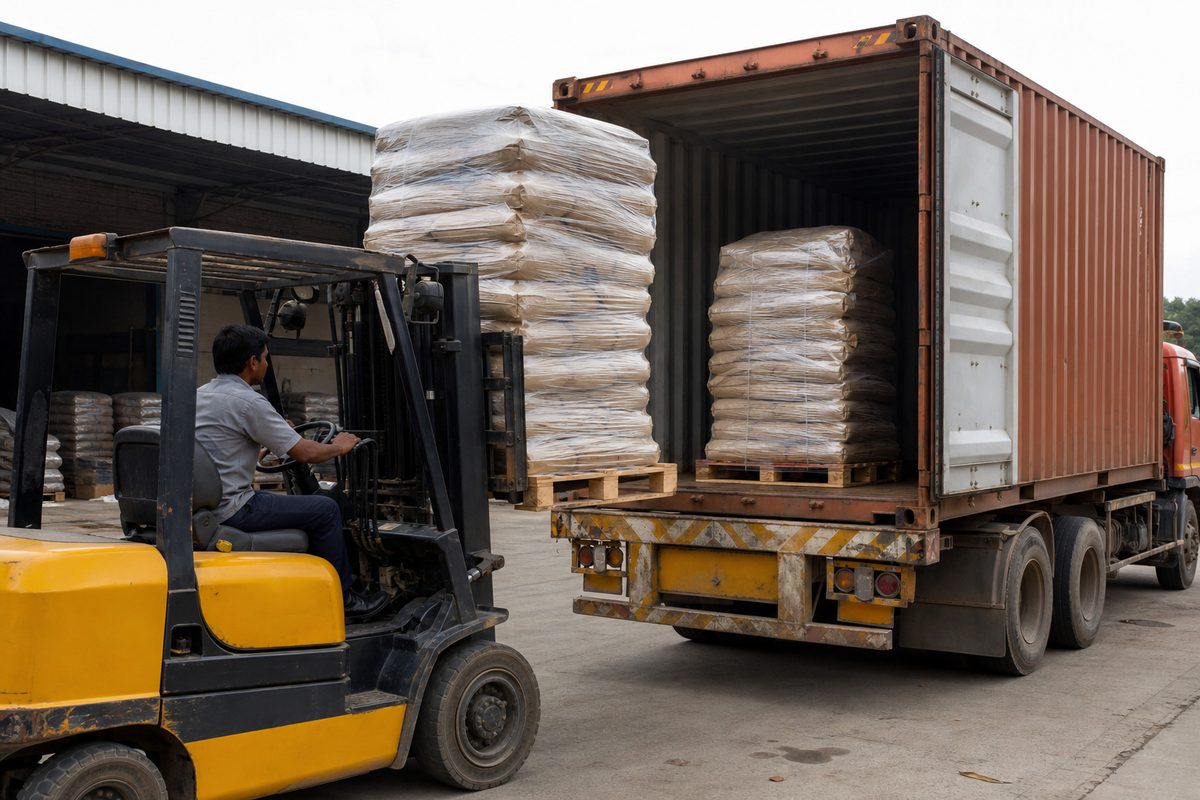
- For churna, cut-root, and extract SKUs, match freight to quantity, shelf-life, humidity risk, and receiving plan. Retain a sealed reference sample against destination retests.
- Inside a merchant-exporter shatavari file, inspect and photograph the empty container prior to stuffing. Keep plant part stated as root on every release record.
- When HPLC shatavarin or total-saponin evidence matters, keep container, seal, and lot identifiers consistent across documents. Do not reuse unrelated berry-powder templates for this botanical.
- For Mundra or Nhava Sheva named-port handovers, confirm who files destination entry prior to offering DAP/DDP. Treat saponin/HPLC method honesty as a commercial gate.
When HPLC shatavarin or total-saponin evidence matters, corridor service and transit times change landed economics and shelf-life risk. Pack powder in 20/25 kg bags and extracts in 25 kg HDPE drums unless the buyer dictates otherwise.
For Mundra or Nhava Sheva named-port handovers, rank USA, EU, GCC, Canada, Japan/Korea, Australia, and SE Asia lanes with real sailing data. Cite HS 130219 ≈ USD 539.8M / 18,857,300 kg CY2024 (WITS) only as a multi-botanical parent.
Re-validate freight before quoting DAP/DDP.
Certifications
Compliance Notes
When HPLC shatavarin or total-saponin evidence matters, corridor buyers weight certs differently — GCC Halal, EU organic, USA supplier controls, Japan technical depth. Pack powder in 20/25 kg bags and extracts in 25 kg HDPE drums unless the buyer dictates otherwise.
Market packs should attach only relevant certificates.
In organic-custody root powder trials, australia pathway counsel may request additional manufacturing evidence. Confirm ITC-HS 1211.90 vs 1302.19 with CHA for the finished article.
Shatavari certifications and supplier documents
Swipe →
Data table — swipe horizontally on small screens
| Item | Purpose | Most relevant for |
|---|---|---|
| IEC and AYUSH adjacency | Indian export readiness; Ayurvedic framing where applicable | Exporter supplier file |
| FSSAI licence | Food-business compliance in India | Food and nutraceutical handling |
| AYUSH adjacency | Dried-root / horticulture programme participation where eligible | Dried root and selected powder programmes |
| Certificate of Analysis | Lot-specific identity, mesh or ratio, moisture, saponin/HPLC where claimed, microbiology, and agreed tests. | Every commercial shipment |
| NPOP / USDA / EU organic | Organic chain-of-custody and market claim support | Organic programmes |
| ISO 22000 / HACCP / BRCGS | Food-safety system evidence | Retail, distributor, and processor approval |
| WHO-GMP | Preferred manufacturing signal for extract plants | Extract and formulation buyers |
| Halal / Kosher | Channel-specific compliance | GCC and selected specialist markets |
| Certificate of origin | Origin declaration | When buyer, bank, or destination requests it |
Buyer Requirements
Buyer Requirements
- For lot-true root identity control, state form, mesh/ratio, destination, quantity, pack, and Incoterm in the RFQ. Cite HS 130219 ≈ USD 539.8M / 18,857,300 kg CY2024 (WITS) only as a multi-botanical parent.
- When extract drums and powder bags share one PO season, list required certs and analytical limits prior to asking for FOB. Confirm ITC-HS 1211.90 vs 1302.19 with CHA for the finished article.
- In buyer KYC for Ayurvedic-context root ingredients, agree lab methods and dispute process before the trial ships. Retain a sealed reference sample against destination retests.
- For Asparagus racemosus root programmes, approve labels and document wording prior to production starts. Keep plant part stated as root on every release record.
When HPLC shatavarin or total-saponin evidence matters, destination requirements differ — do not accept a USA RFQ template for an EU organic programme absent edits. Pack powder in 20/25 kg bags and extracts in 25 kg HDPE drums unless the buyer dictates otherwise.
Confirm label language and claim limitations early.
Duty research belongs with the importer’s broker.
MOQ Analysis
Buyer Tip
When HPLC shatavarin or total-saponin evidence matters, corridor MOQ expectations differ — distributors may want larger bag programmes than specialist formulators. Pack powder in 20/25 kg bags and extracts in 25 kg HDPE drums unless the buyer dictates otherwise.
For Mundra or Nhava Sheva named-port handovers, do not force SE Asia trial buyers into premature FCL commitments. Cite HS 130219 ≈ USD 539.8M / 18,857,300 kg CY2024 (WITS) only as a multi-botanical parent.
Match MOQ to warehouse and cash-cycle reality.
Shatavari export MOQ ladder — commercial practice bands (not statutory); agree in writing.
Swipe →
Data table — swipe horizontally on small screens
| Stage | Typical quantity | Purpose |
|---|---|---|
| Sample | 100 g–2 kg | Sensory review, lab testing, and formulation work |
| Powder trial | 100–500 kg | First commercial quality and packing validation |
| Extract trial | 25–100 kg | Formula compatibility and buyer approval |
| Powder wholesale | 1–5 MT+ | Distributor, processor, and recurring bulk demand |
| Extract wholesale | 200 kg–1 MT+ | Established ingredient programmes |
Packaging Standards
Export Tip
When HPLC shatavarin or total-saponin evidence matters, corridor climate matters — GCC heat and humid SE Asia routes need stronger moisture barriers. Pack powder in 20/25 kg bags and extracts in 25 kg HDPE drums unless the buyer dictates otherwise.
For Mundra or Nhava Sheva named-port handovers, market teams is expected to confirm pallet and label language by destination. Cite HS 130219 ≈ USD 539.8M / 18,857,300 kg CY2024 (WITS) only as a multi-botanical parent.
In organic-custody root powder trials, extract drums for Japan/Korea often need tighter mark discipline. Confirm ITC-HS 1211.90 vs 1302.19 with CHA for the finished article.
Shatavari packing formats for export
Swipe →
Data table — swipe horizontally on small screens
| Format | Configuration | Use case | Control point |
|---|---|---|---|
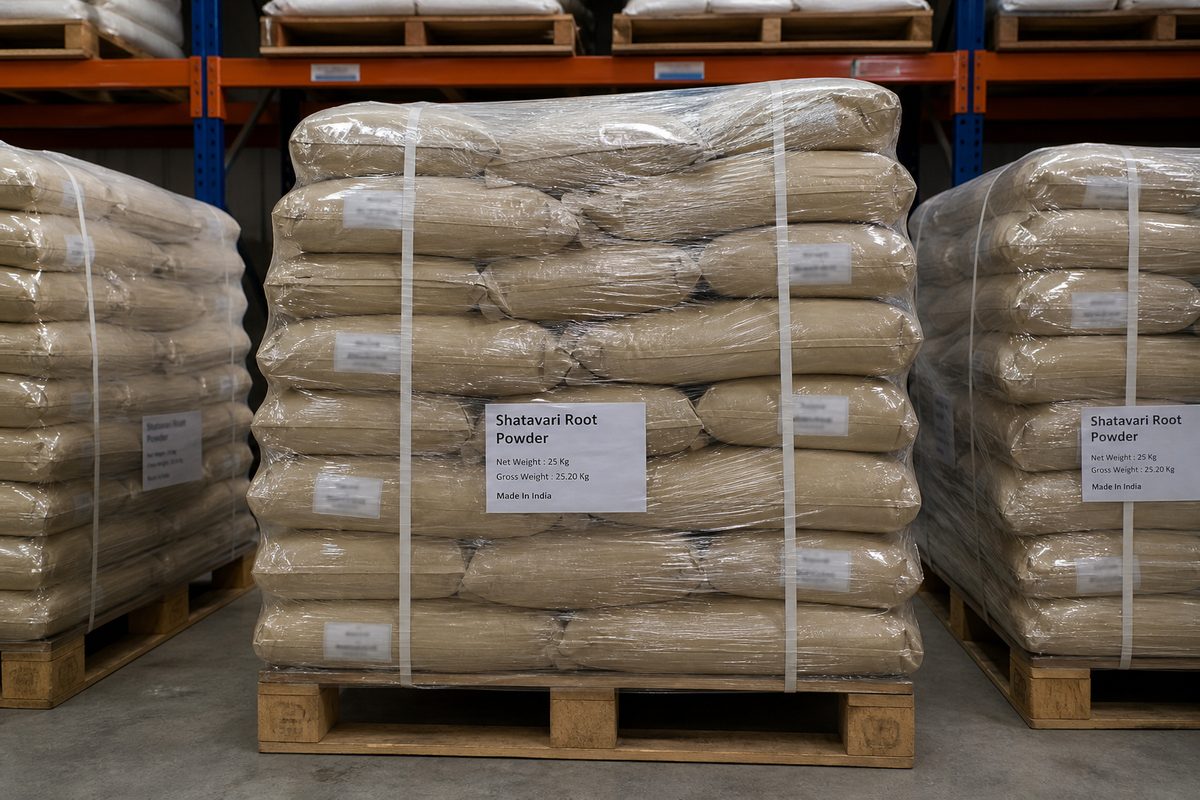
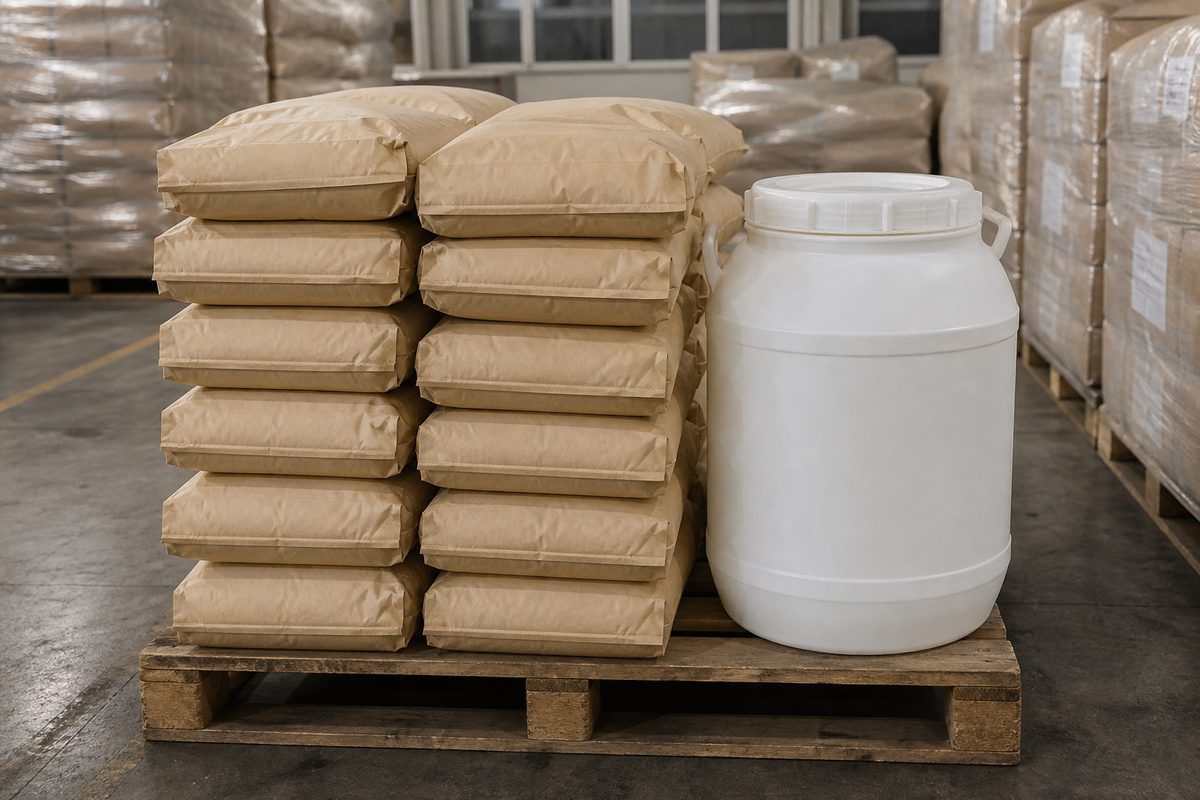
| Shatavari powder | 20/25 kg food-grade bag with liner or fiber drum | Bulk food and ingredient buyers | Lot code, moisture/heat/light barrier, clean outer pack |
| Dried root / cut root | 20/25 kg food-grade bag with liner | Ayurvedic, tea-blend, and repacking channels | Protect root integrity and prevent moisture pickup |
| Extract | 25 kg HDPE drum with double liner | Nutraceutical and ingredient supply | Seal integrity, drum label, and batch traceability |
| Private label | Buyer-approved pouches, jars, or cartons | Retail programmes | Artwork, destination labels, and master-carton plan |
Container Loading Details
Export Tip
When HPLC shatavarin or total-saponin evidence matters, corridor transit times affect desiccant and heat-protection choices. Pack powder in 20/25 kg bags and extracts in 25 kg HDPE drums unless the buyer dictates otherwise.
For Mundra or Nhava Sheva named-port handovers, uSA and EU long voyages need stuffing photos for claim defense. Cite HS 130219 ≈ USD 539.8M / 18,857,300 kg CY2024 (WITS) only as a multi-botanical parent.
In organic-custody root powder trials, gCC summer sailings need extra heat awareness for saponins–sensitive lots. Confirm ITC-HS 1211.90 vs 1302.19 with CHA for the finished article.
Container and dispatch guidance — indicative; density-dependent (no fixed MT claims).
Swipe →
Data table — swipe horizontally on small screens
| Mode | Use | Planning point |
|---|---|---|
| Courier / air | Samples and urgent approvals | Protect against heat and moisture; saponin markers is moisture and assay sensitive; confirm destination import rules. |
| LCL | Trials below container scale | Use palletisation or secure cartons where appropriate |
| 20-foot FCL | Bulk powder or dried-root programmes | Confirm payload after actual pack dimensions and port limits — do not invent fixed MT. |
| 40-foot HC FCL | High-volume powder programmes | Cube with forwarder; use stuffing plan and moisture/heat protection. |
| Drum shipment | Extract orders | Verify drum count, gross weight, and hazardous-status declaration if applicable. |
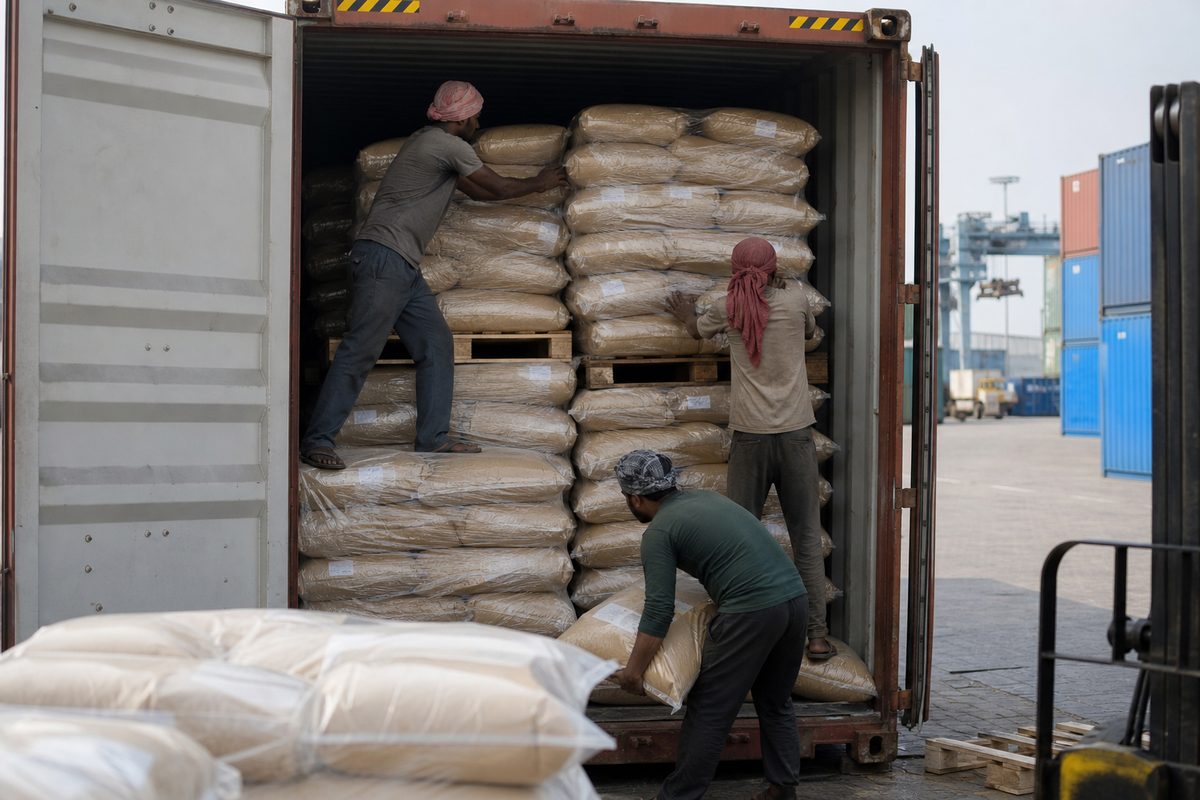
Sourcing Checklist
Checklist
When HPLC shatavarin or total-saponin evidence matters, market-specific sourcing checks add destination panels — MRLs, Halal, organic equivalence, prior notice. Pack powder in 20/25 kg bags and extracts in 25 kg HDPE drums unless the buyer dictates otherwise.
For Mundra or Nhava Sheva named-port handovers, do not approve a supplier for all corridors on one EU success story. Cite HS 130219 ≈ USD 539.8M / 18,857,300 kg CY2024 (WITS) only as a multi-botanical parent.
Record corridor clearances in the supplier scorecard.
Common Buyer Mistakes
Common Mistakes Box
- For Mundra or Nhava Sheva named-port handovers, do not treat root powder and extract as interchangeable commodities. Cite HS 130219 ≈ USD 539.8M / 18,857,300 kg CY2024 (WITS) only as a multi-botanical parent.
- In organic-custody root powder trials, do not approve samples absent a written lot-release method (include saponin/HPLC where claimed). Confirm ITC-HS 1211.90 vs 1302.19 with CHA for the finished article.
- For private-label women's-wellness bulk, do not add destination requirements after cargo is already produced. Retain a sealed reference sample against destination retests.
- Across USA, EU/UK, and GCC shatavari corridors, do not jump to FCL prior to a sealed sample and trial succeed. Keep plant part stated as root on every release record.
When HPLC shatavarin or total-saponin evidence matters, market mistakes include chasing every geography at once and treating Australia like an automatic retail-food lane. Pack powder in 20/25 kg bags and extracts in 25 kg HDPE drums unless the buyer dictates otherwise.
Ignoring landed-cost and residue burden mis-ranks corridors.
Pilot one pathway with a defined importer first.
Future Market Trends
Key Statistics
When HPLC shatavarin or total-saponin evidence matters, market trends reward corridor specialization and honest multi-botanical trade footnotes. Pack powder in 20/25 kg bags and extracts in 25 kg HDPE drums unless the buyer dictates otherwise.
For Mundra or Nhava Sheva named-port handovers, gCC re-export and SE Asia distributor growth sit beside USA/EU premium channels. Cite HS 130219 ≈ USD 539.8M / 18,857,300 kg CY2024 (WITS) only as a multi-botanical parent.
Australia remains counsel-led for pathway selection.
Challenges & Solutions
When HPLC shatavarin or total-saponin evidence matters, challenge: multi-market distraction — solve with scored corridor pilots. Pack powder in 20/25 kg bags and extracts in 25 kg HDPE drums unless the buyer dictates otherwise.
For Mundra or Nhava Sheva named-port handovers, challenge: residue panel surprises — solve by freezing destination methods early. Cite HS 130219 ≈ USD 539.8M / 18,857,300 kg CY2024 (WITS) only as a multi-botanical parent.
In organic-custody root powder trials, challenge: freight spikes — solve with dated Incoterm quotes. Confirm ITC-HS 1211.90 vs 1302.19 with CHA for the finished article.
Compliance Checklist
Checklist
Compliance Notes
When HPLC shatavarin or total-saponin evidence matters, market compliance differs by corridor — MRLs, supplement rules, Halal, prior notice, and counsel-led AU pathways. Pack powder in 20/25 kg bags and extracts in 25 kg HDPE drums unless the buyer dictates otherwise.
Do not ship one global compliance assumption.
Update matrices when rules change.
Sources
- WITS — India HS 130219 exports by country, 2024
- UN Comtrade Database
- DGCI&S / TradeStat — Indian trade statistics
- DGFT — Directorate General of Foreign Trade (IEC)
- ICEGATE — Indian Customs EDI Gateway
- Ministry of AYUSH
- FSSAI — Food Safety and Standards Authority of India
- AYUSH
- UP ODOP — Neemuch (Ashatavari / food processing)
- EximGuru — ITC HS Chapter 1211 plant parts
- USITC Harmonized Tariff Schedule
- CBP CROSS Rulings
- FDA — Dietary Supplements (USA)
- FDA Prior Notice (USA food imports)
- EU Novel Food status Catalogue
- EU TARIC — customs tariff database
- Access2Markets (EU)
- EU Pesticides Database — MRLs
- TGA — Therapeutic Goods Administration (Australia)
- ITC Trade Map
- ICC — Incoterms rules
For churna, cut-root, and extract SKUs, corridor rankings expire; re-pull trade and regulatory sources prior to committing inventory to a destination. Close with FOB Mundra or Nhava Sheva discipline, not vague port talk.
Inside a merchant-exporter shatavari file, pay special attention to live tariff tools and food-authority pages linked below. Stage MOQs as 100 g–2 kg samples, 100–500 kg powder, 25–100 kg extract.
Inside a merchant-exporter shatavari file, duties, Novel Food/food-supplement pathways, and lot documents on the quote and shipping-bill dates. Parent HS 130219 ≈ USD 539.8M / 18,857,300 kg CY2024 (WITS) is multi-botanical — not shatavari-only. Keep plant part stated as root on every release record.
When HPLC shatavarin or total-saponin evidence matters, clickable government, intergovernmental, and recognised market-intelligence references used for this shatavari cluster:. Do not reuse unrelated berry-powder templates for this botanical.
Conclusion
When HPLC shatavarin or total-saponin evidence matters, corridor selection should follow pathway fit and landed economics across USA, EU/UK, UAE/GCC, Canada, Japan, Korea, Australia, and SE Asia. Pack powder in 20/25 kg bags and extracts in 25 kg HDPE drums unless the buyer dictates otherwise.
For Mundra or Nhava Sheva named-port handovers, altus supports market sequencing and qualified outreach without misusing multi-botanical trade totals. Cite HS 130219 ≈ USD 539.8M / 18,857,300 kg CY2024 (WITS) only as a multi-botanical parent. Start with our Shatavari sourcing resources for SKU context.
Pilot one channel with a defined SKU and importer Contact Altus Exports with form, quantity, destination, application, certificates, and analytical needs to proceed.