
India Sourcing for Small and Medium-Sized International Businesses
By Saurabh Mittal, Founder, Altus Exports
India sourcing can work for SMEs without a local office when the business starts with a defined product brief, realistic cash-flow and MOQ assumptions, supplier verification, sample and quality gates, and a clear communication process. A sourcing partner can provide local…

India can be a useful sourcing market for small and medium-sized international businesses, but opportunity alone is not a procurement plan. An SME often has fewer buyers, less buffer stock, smaller initial order quantities, limited travel budget, and no local office. A late shipment, unclear specification, unsuitable supplier, or avoidable quality error can therefore have a larger effect than it would in a large procurement organization.
The right question is not, “Can a smaller business source from India?” Many can. The better question is whether the business has enough clarity, working capital, and operating control to run a first program responsibly. If it does not, a focused sourcing partner can close practical gaps: identifying and checking suppliers, translating a brief into comparable quotes, coordinating samples, following production, arranging agreed quality checks, and helping organize export documentation and logistics communication.
Altus Exports works as an India-based sourcing and procurement partner for international buyers that need local coordination without immediately building a local team. For an SME, that support should reduce avoidable management load and improve decision quality—not replace the buyer’s responsibility to define what it is buying and approve material commitments.
Executive answer: start small, but control the whole order
India sourcing for SMEs is most viable when the buyer begins with a narrow, controlled program rather than an unstructured search for the cheapest supplier. Select a small number of priority SKUs, create a usable product and packaging brief, set a realistic landed-cost and cash-flow range, compare verified suppliers on the same basis, approve samples before production, and plan inspection, documents, and logistics before goods are complete.
Outsource local coordination when the team cannot consistently verify suppliers, follow production, interpret competing offers, or respond quickly to issues from a distance. Manage directly when the product and supplier relationship are simple, the team has relevant category knowledge and enough capacity, and the financial impact of a slow learning cycle is acceptable. In either case, use evidence, written approvals, and staged commitments.

The SME realities that change sourcing decisions
Large importers can spread sourcing work among specialists. They may have dedicated product developers, quality teams, freight staff, compliance personnel, and buyers who visit factories. An SME may have one owner, operations manager, or buyer doing all of those jobs alongside sales and customer service.
That does not make India unsuitable. It means the sourcing approach needs to reflect real limits.
Limited staff time
Supplier communication creates work beyond receiving a quotation. Someone must clarify materials, dimensions, labels, pack configuration, target delivery, sample comments, inspection findings, invoices, and shipping instructions. With three factories, that is three sets of versions and deadlines. If no one owns the process, a small issue can wait until it becomes a costly decision.
A partner can consolidate routine local follow-up and present a buyer with a decision-ready update. The buyer still needs to answer product and commercial questions promptly. Outsourcing coordination is not effective if the buyer delays approval of samples, artwork, or substitutions.
Smaller MOQs and less purchasing leverage
Factories have practical minimums because of material procurement, machine setup, labor, packaging runs, and production planning. A buyer’s desired quantity may be below an efficient run. An SME should not assume that every supplier will accept a small order at the unit price offered for a much larger volume.
Smaller orders can still be viable where stock materials, standard constructions, shared production runs, flexible packaging, or an initial development relationship allow it. The buyer must separate a realistic commercial compromise from a promise that cannot be delivered profitably or consistently.
Cash-flow exposure
The purchase cost is not the only cash requirement. Consider samples, deposits, balance payments, inspection, freight, duties and taxes where applicable, insurance, warehousing, local delivery, and the time between payment and customer sales. Smaller buyers may feel this cycle more sharply because one container or one delayed launch can represent a significant share of working capital.
Cash-flow planning should happen before supplier selection, not after the deposit is requested. Ask what payment milestones apply, what evidence supports each milestone, when goods become cargo-ready, and how much contingency is available if a shipment is delayed or requires rework.
Uneven category knowledge
An SME may know its customer well but not know which Indian regions, processes, materials, testing needs, or packing choices are relevant to a product category. That knowledge can be developed, but it should not be replaced by accepting the first confident supplier statement.
The buyer should document requirements and ask a partner or supplier to identify assumptions and feasibility questions. For example, a target price without a material specification is not enough to compare factories. A product photo may be helpful, but it may not define construction, dimensions, performance, labeling, or acceptable variation.
No India travel budget
Travel can be valuable, particularly for strategic suppliers or complex products, but an SME does not need to visit every potential factory before making progress. It does need a credible local evidence process. That can include supplier identity and capability checks, agreed factory assessments where appropriate, sample controls, production evidence, inspections, and clear escalation of gaps.
This is one reason an India sourcing partner can be practical for a smaller business. It gives the buyer a local coordination point while preserving the ability to approve suppliers, samples, price, and shipment release remotely.
The SME India Sourcing Readiness Checklist
Checklist
The SME India Sourcing Readiness Checklist helps a buyer decide whether to begin now, begin with partner support, or pause until basic inputs are ready. It is not a score that guarantees success. It is a way to expose missing decisions before money is committed.
1. Product readiness
- product description, reference photos or drawings, dimensions, materials, finish, and performance needs;
- order quantity range, preferred MOQ range, and expected repeat pattern;
- packaging, labels, barcodes, carton marks, and destination-market requirements;
- acceptable quality level, known defects to avoid, and approved reference where available;
- target timing and the reason the date matters;
- target price range as a commercial input, not as a substitute for specification.
Can the business provide enough detail for suppliers to quote and sample the correct product? The brief should normally cover:
If the product is still a concept, begin with a development stage rather than requesting a production quotation that appears precise but rests on assumptions.
2. Financial readiness
Before asking suppliers to quote, identify the total cash envelope and commercial constraints. Include sample costs, development or tooling if applicable, product cost, freight, duties and taxes, inspection, storage, and contingency. The buyer should know its maximum acceptable landed cost and the cash timing it can support.
Do not make a supplier selection based only on unit price. A lower unit price may require an MOQ that ties up too much cash, a longer production cycle, more costly freight, or terms that create an unmanageable deposit exposure.
3. Team and decision readiness
Name one buyer-side program owner and at least one backup contact. Establish how quickly the business can approve a sample, artwork, commercial change, inspection disposition, or shipment exception. A supplier or partner cannot safely resolve an undefined decision simply because the buyer is busy.
An SME should also decide whether it wants direct supplier communication, partner-led communication, or a combination. The important requirement is that final decisions are written and visible to the right parties.
4. Risk and quality readiness
Identify what failure would be most damaging: delivery delay, inconsistent materials, incorrect labels, regulatory nonconformity, product safety, cash exposure, or customer dissatisfaction. Then match controls to the risk. A simple standard product may need a lighter process than a customized, regulated, or high-value item, but every first order needs clear sample, production, quality, and release expectations.
5. Logistics and market readiness
Know the destination market, likely Incoterm, required arrival window, preferred freight method, importer responsibilities, and document needs. Specific import rules vary by product and destination. A sourcing partner can coordinate supplier-side documents and logistics information, but it should not be expected to make unverified destination compliance decisions for the buyer.
When most of these areas are defined, the SME can start a controlled sourcing program. If several are missing, use a discovery phase or pause until the buyer can answer fundamental questions.

Decision tree: outsource, DIY, or wait?
- No: refine the product, packaging, quantity, and destination requirements before approaching suppliers.
- Yes: continue.
- No: use a sourcing partner for local coordination or reduce the scope of the first program.
- Yes: continue.
- No or unsure: use a partner for supplier identification, verification, and technical follow-up; retain buyer approval of product and commercial choices.
- Yes: continue.
- No: lower the exposure with a smaller trial, standardize the product, negotiate staged commitments, or wait until cash reserves improve.
- Yes: continue.
- No: build those controls first.
- Yes: a direct or partner-supported pilot is reasonable.
Use this practical decision tree before opening a supplier search.
Step 1: Is the product brief sufficient to obtain comparable quotes and samples?
Step 2: Can someone on the buyer’s team spend time each week managing supplier questions, revisions, production updates, and documents?
Step 3: Does the team understand the category well enough to assess supplier claims, quality risks, and quote differences?
Step 4: Is the first order financially tolerable if it needs additional time, inspection, rework, or split shipment?
Step 5: Is there a clear process for sample approval, inspection result review, and shipment release?
The output need not be binary. Many SMEs use a hybrid model: they retain direct supplier relationships and commercial approval while Altus Exports manages local verification, sample movement, production follow-up, QC coordination, and consolidated buyer reporting.

When DIY India sourcing works—and when it fails
- the buyer is evaluating unfamiliar product categories;
- product customizations, artwork, packaging, or technical requirements increase;
- the order involves multiple factories or a combined shipment;
- a team member is trying to manage sourcing alongside urgent sales or operations work;
- supplier updates are accepted without evidence or common milestones;
- the buyer has no local process for factory verification, quality follow-up, or issue escalation;
- commercial pressure leads to acceptance of unclear terms, unsuitable MOQs, or unrealistic delivery promises.
DIY sourcing can work for an SME when the product is relatively standard, the buyer has clear specifications, the supplier has an established track record, communications are manageable, and the buyer has time to follow the order actively. It can also be a sensible way to learn, provided the first order is not so large that mistakes become existential.
It starts to fail when one or more conditions change:
The cost of errors is rarely limited to the faulty goods. It can include staff time, missed seasonal sales, expedited freight, write-offs, replacement orders, chargebacks, customer trust, and cash unavailable for better-selling inventory. A sourcing partner has a cost too, so the right comparison is not “free DIY versus paid help.” It is the cost of appropriate local control versus the expected cost of preventable errors and management time.
Avoid treating a partner as a guarantee. The partner should provide evidence, follow agreed controls, and escalate exceptions. The buyer must make timely approvals and preserve realistic commercial expectations. Learn more about selecting that support in how to choose an India sourcing partner.
MOQ negotiation strategies for smaller buyers
MOQ negotiation is not simply asking a factory to accept less. It is identifying the cost driver behind the minimum and changing the program where possible without creating a product or quality problem.
Try these approaches:
Use standard materials and components
Custom colors, branded packaging, unique hardware, and nonstandard materials often create higher supplier or upstream-material minimums. For a first order, use proven, available inputs where they meet the product need. Customization can be introduced after demand is demonstrated.
Offer a staged volume plan
Explain the planned first order and realistic repeat potential without presenting forecasts as commitments. A supplier may accept a smaller initial quantity if the buyer provides a credible staged plan, pays agreed development costs, or maintains a reasonable production calendar. Put any commercial agreement in writing.
Combine compatible SKUs
Several variants may share a material, base construction, carton, or process. A factory may be able to achieve a practical production run across a compatible group even if each individual SKU is below the usual minimum. Confirm that the shared process does not create an unacceptable quality or inventory risk.
Adjust packaging before changing the product
Sometimes the MOQ comes from printed cartons, labels, inserts, or other pack components rather than the product itself. Ask suppliers to break out these constraints. A temporary standard outer carton or label approach may allow a lower first commitment, subject to brand and market requirements.
Pay transparent development or setup costs when justified
A low-volume custom order may require a setup, tooling, or development charge. It can be better to pay a transparent, agreed cost than to force it into an unclear unit price or accept a quality compromise. Confirm ownership, repeat-use conditions, and timing before paying.
Do not negotiate a promise the supplier cannot keep
An unrealistically low MOQ can lead to delayed material purchases, rushed production, substitutions, or weak attention to the order. A candid “not viable at this quantity” is useful information. A sourcing partner can compare alternatives, but the buyer should decide whether to change the quantity, product, timing, or supplier strategy.
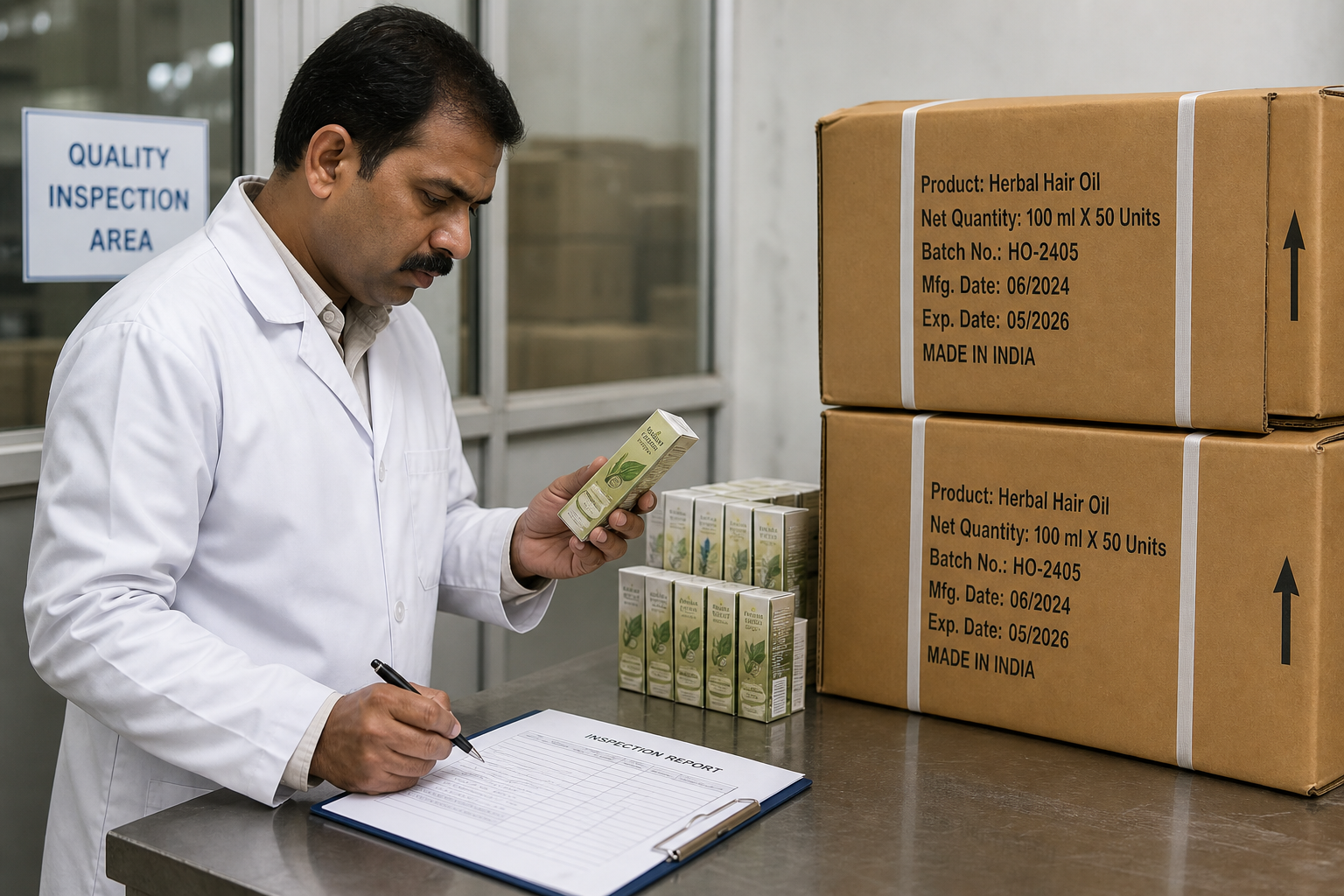
Use phased category entry instead of a broad first launch
An SME rarely needs to source a whole catalog from India at once. A phased approach reduces learning cost and creates evidence for the next decision.
Phase 1: Validate. Choose one product family or a small group of related SKUs. Confirm supplier capability, sample outcome, MOQ, landed-cost range, lead time, and quality controls.
Phase 2: Pilot. Place a manageable order with agreed production and inspection gates. Treat it as a commercial order, not a casual experiment: control specifications, payments, documents, and shipment release.
Phase 3: Review. Measure actual lead time, quality result, responsiveness, landed cost, document accuracy, and internal workload. Record what needs changing before repeat production.
Phase 4: Expand selectively. Add variants, volume, or a second category only when the buyer can maintain the same control standard. A proven supplier for one product may not be automatically approved for another process.
For a detailed first-order approach, see how to start sourcing from India with a small trial order. For a broader overview of the process, see how to source products from India.
Communication load: keep it measurable and controlled
- use one controlled product brief and version naming convention;
- keep a decision log for price, sample, specification, and shipment changes;
- request supplier updates against agreed milestones, not vague status language;
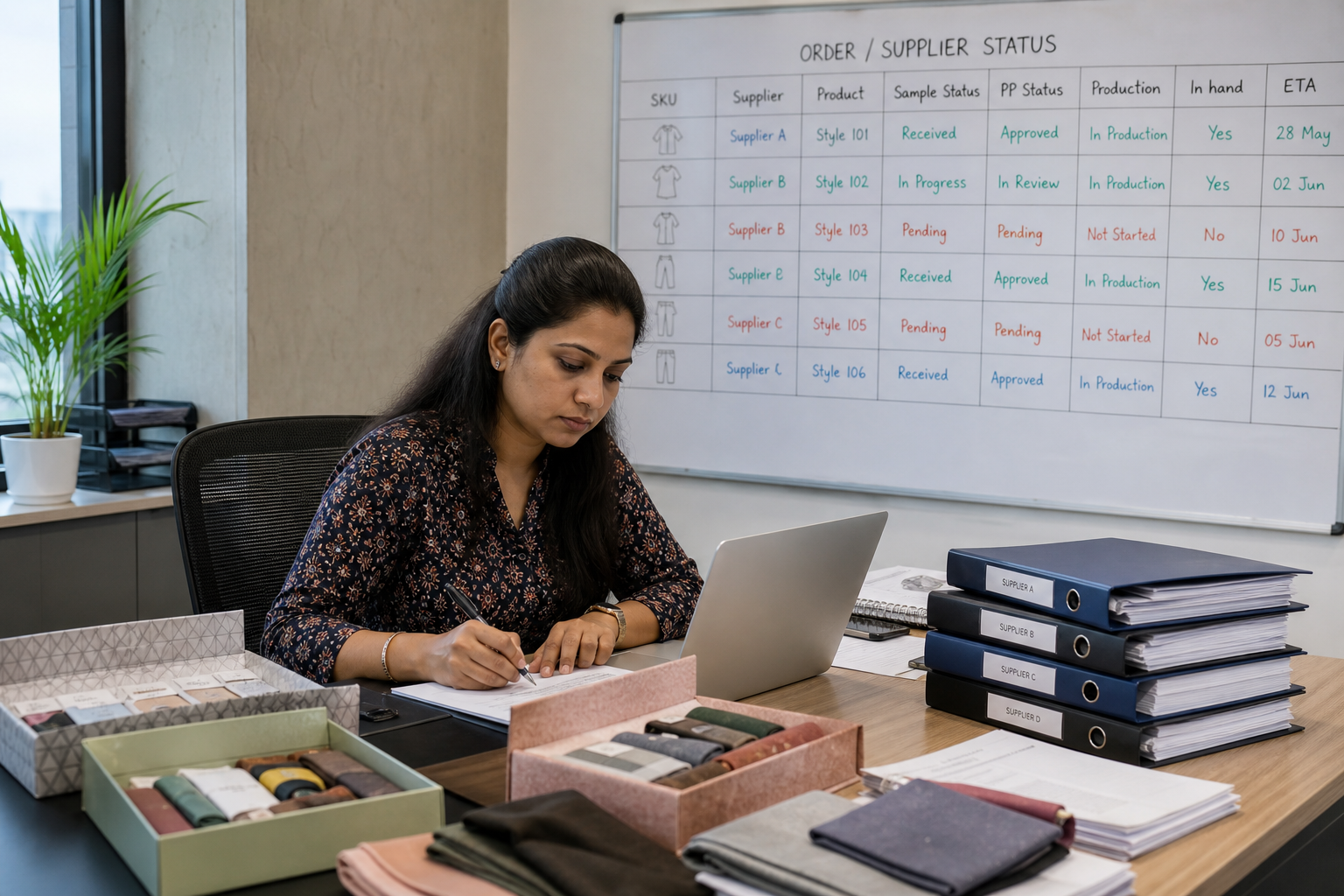
- have the partner issue a consolidated status report where several suppliers are involved;
- record action owner, due date, and escalation point for every exception;
- keep final approvals in writing and share them with affected parties.
Small buyers often underestimate the operational load created by international sourcing. One question about a product can generate several decisions: Is the photo current? Which sample revision applies? Is the label wording approved? Does the carton count match the packing list? Will a delayed component affect the ship date?
Create a simple communication protocol:
A weekly update is often sufficient for active production, provided material exceptions are raised immediately. The objective is not to generate reporting volume. It is to prevent an unresolved issue from being hidden among routine emails.
If the program grows into several suppliers, use a deliberate coordination model rather than multiplying direct chasers. Managing multiple Indian suppliers through one partner explains the role, dashboard, cadence, and escalation structure that supports this transition.

Payment terms and cash discipline for smaller buyers
- what deposit is required and what work or materials it enables;
- when balance payment becomes due and what inspection or shipment evidence is available then;
- how sample, tooling, packaging, or testing charges are treated;
- what happens if agreed specifications change or a quality issue is found;
- whether payment currency and bank charges are clear;
- which party has authority to approve payment or shipment release.
Payment terms depend on supplier, product, order history, commercial risk, and the parties’ agreement. An SME should focus on clarity and evidence rather than assume a particular structure will be available.
Before accepting terms, ask:
Do not confuse a smaller deposit with lower overall risk. If the specification is unclear, a deposit can still fund the wrong product. If cash is tight, reduce complexity and exposure: use a trial order, fewer variants, stock inputs, phased quantities, or a longer preparation period. Do not commit money needed for ordinary operations without a realistic schedule and contingency.
Common mistakes SMEs make when sourcing from India
Common Mistakes Box
- Starting with too many products. Focus on one controllable product family before adding categories.
- Sending only a target price and image. Create a usable specification and packaging brief.
- Treating MOQ as a negotiating contest. Identify the cost driver and change the program sensibly.
- Choosing on unit price alone. Compare lead time, quality controls, payment terms, packing, and total landed-cost implications.
- Approving samples informally. Record the approved sample, revision, linked specification, and allowable variations.
- Waiting until goods are finished to discuss inspection and documents. Plan release controls at order confirmation.
- Assuming a partner owns buyer decisions. Retain approval of suppliers, specifications, major commercial changes, and shipment release.
- Scaling after one acceptable order without a review. Assess actual delivery, quality, cost, and workload before adding volume.
When an SME should wait before sourcing from India
Waiting can be a good procurement decision, not a missed opportunity. Postpone a program when the product is not sufficiently defined, working capital cannot absorb a reasonable delay or problem, destination-market obligations are unknown, the customer deadline has no buffer, or the business has no one available to make timely decisions.
Use the time to improve the brief, confirm demand, build a cash-flow plan, consolidate variants, identify a realistic first quantity, and determine whether the business needs partner support. The objective is not to delay indefinitely; it is to start with a program that can be controlled.
When the basics are ready, a sourcing partner can make a first program more manageable without requiring a local office. Altus Exports can help SMEs identify and compare suppliers, coordinate samples and quality controls, follow active production, and bring supplier-side documentation and logistics information into a single working process.

Conclusion
India sourcing for SMEs becomes practical when the program matches the business’s actual capacity. A clear product brief, realistic MOQ and cash assumptions, verification, staged approvals, and disciplined communication can make a small first order a valuable foundation rather than a costly gamble. Partner support is most valuable when it fills a defined local coordination gap while the buyer keeps decision authority.
If you are evaluating a first or expanding India sourcing program, request an SME-friendly first programme scoping session with Altus Exports. It can help you define a suitable pilot scope, readiness gaps, supplier-evaluation approach, and the controls needed before committing to production.