India Sourcing Partner vs Direct Manufacturer: Which Buying Model Works in India?
By Saurabh Mittal, Founder, Altus Exports
Buying direct from an Indian manufacturer works best when you have stable, high-volume demand, proven factory capability, and internal resources to manage quality, logistics, and communication. An India sourcing partner is usually the better fit for multi-SKU programs, new…
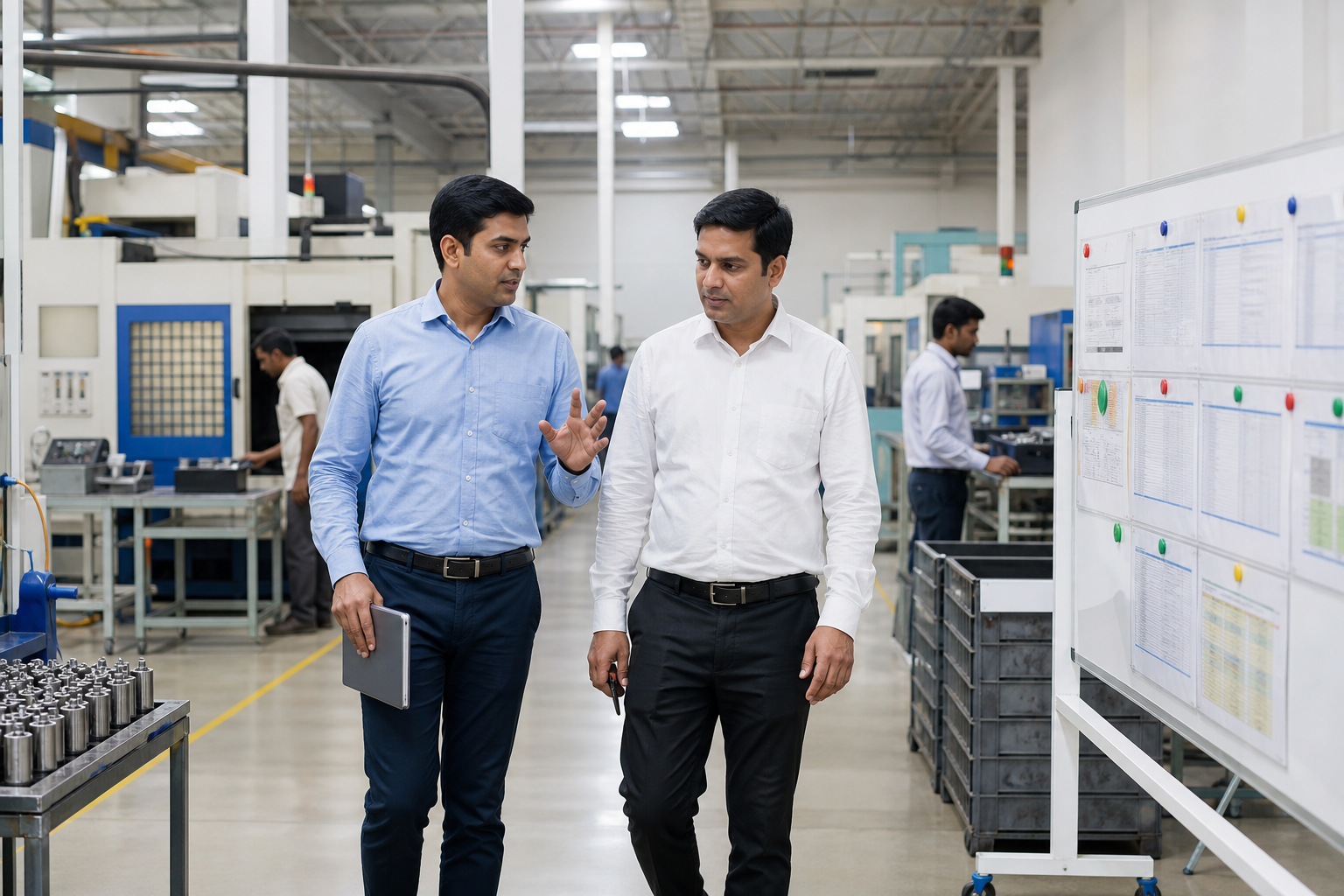
Choosing between an India sourcing partner and a direct manufacturer is not a question of whether one route is always cheaper. It is a decision about who carries the work and risk between a purchase order and goods that are ready to ship.
International buyers often begin with a straightforward assumption: buying straight from the factory removes an intermediary, so it must deliver the best outcome. That can be true for an established, single-product program with a capable factory and a buyer team that can manage the relationship. It is less reliable when a program spans several suppliers, includes a new product category, requires close quality follow-up, or has limited room for shipment delays.
An India sourcing partner operates as the buyer's on-ground procurement layer. The partner can identify and assess manufacturers, coordinate samples and production, manage inspections, consolidate supplier information, and help prepare the commercial and export workflow. The factory still makes the product. The difference is that the buyer does not need to independently coordinate every operational handoff from another country.
This guide compares the two operating models. It is deliberately different from merchant exporter vs manufacturer exporter, which concerns exporter and legal business models. Here, the question is operational: should your buying program be managed through a local India sourcing partner, or should your team build and run the factory relationship directly?
Direct answer: which path should you take?
- You have already validated the factory's capability, compliance, capacity, and financial reliability.
- Your order volume is sufficient to justify a dedicated commercial and technical relationship.
- The product is technically defined and does not require frequent cross-supplier coordination.
- You have staff or a trusted representative able to manage sampling, production follow-up, quality, shipping, and exceptions.
- You are comfortable handling factory-by-factory communication and documentation.
- You are entering India or a new Indian production region for the first time.
- You need a shortlist rather than a single factory lead.
- Your order includes many SKUs, materials, components, or manufacturers.
- You need independent supplier checks and quality coordination before goods leave India.
- You are beginning with a pilot order and want to control exposure.
- Your buyer team needs one accountable India-side contact for progress, documents, and escalations.
Buy direct from an Indian manufacturer when all or most of the following are true:
Work with an India sourcing partner when you need support across suppliers, categories, or stages of the buying cycle:
The strongest answer is often a hybrid model. Use a sourcing partner to find, validate, and launch factories; then maintain direct commercial relationships with strategic manufacturers once the program is mature. The partner can remain responsible for periodic quality checks, alternate-source development, or multi-supplier coordination.

The operating-model difference, not the legal-model difference
A direct manufacturer relationship puts the buyer in direct contact with the entity producing the goods. The buyer negotiates specifications, prices, payment terms, production milestones, corrective actions, and usually shipment arrangements with that factory. This can create a close working relationship and clearer technical communication when the factory is the only supplier involved.
An India sourcing partner is a buyer-side coordinator. Depending on the agreed model, the partner may work on a service fee, manage the purchase and export transaction, or support selected stages such as supplier qualification and quality control. The important point is not the label on an invoice. It is whether there is a defined local team with authority, process, and responsibility for moving the program forward.
Do not confuse either arrangement with a legal classification. A manufacturer may export directly, use an exporter, or sell domestically to another export entity. A sourcing partner can introduce a factory, manage procurement on the buyer's behalf, or arrange an export transaction. Ask who owns each operational task rather than relying on a company title.
For background on the roles a local procurement team can cover, see what an India sourcing company does. If you are instead comparing a commission agent with a structured intermediary, read India sourcing agent vs sourcing company.
Direct Manufacturer vs India Sourcing Partner Decision Matrix
The matrix is a starting point, not a scorecard that chooses for you. A small buyer with a simple product can succeed direct. A large buyer with a category launch can benefit from a partner. The relevant question is: where would an unplanned supplier issue land, and does your team have the local capacity to resolve it quickly?
Comparison table
Swipe →
Data table — swipe horizontally on small screens
| Decision factor | Direct manufacturer relationship | India sourcing partner | Practical buyer implication |
|---|---|---|---|
| Best program shape | Stable, repeat, factory-specific buying | New, multi-SKU, multi-factory, or evolving buying | Match the model to operational complexity, not only unit volume. |
| Supplier discovery | Buyer researches and verifies factories | Partner builds, screens, and presents a shortlist | A shortlist gives you alternatives before you invest in samples. |
| Price visibility | Direct factory quotation | Requires a clear quote and fee/markup structure | Direct is not automatically more transparent; request an itemized comparison. |
| Technical communication | Direct buyer-to-factory access | Partner translates requirements into factory action and can include the buyer | Keep factory access open for technical decisions. |
| MOQ negotiation | Buyer negotiates with one factory | Partner can compare options or organize grouped requirements | A partner cannot eliminate an economically necessary MOQ, but may find a better fit. |
| Quality control | Buyer manages or hires inspection separately | Partner coordinates pre-production and inspection activity | Define inspection criteria and decision rights in either model. |
| Documents and export readiness | Buyer manages factory documents and logistics handoffs | Partner coordinates document collection and shipment handoffs | This becomes significant when several suppliers ship together. |
| Accountability | Factory is accountable for its own scope | Partner is accountable for coordination; factory for manufacture | Make both scopes explicit in writing. |
| Supplier concentration | High if only one factory is used | Can maintain alternatives and category coverage | Alternate sources reduce disruption risk. |
| Internal time required | High, especially during launch | Lower for the buyer, with active oversight still needed | Outsourcing coordination does not remove buyer governance. |
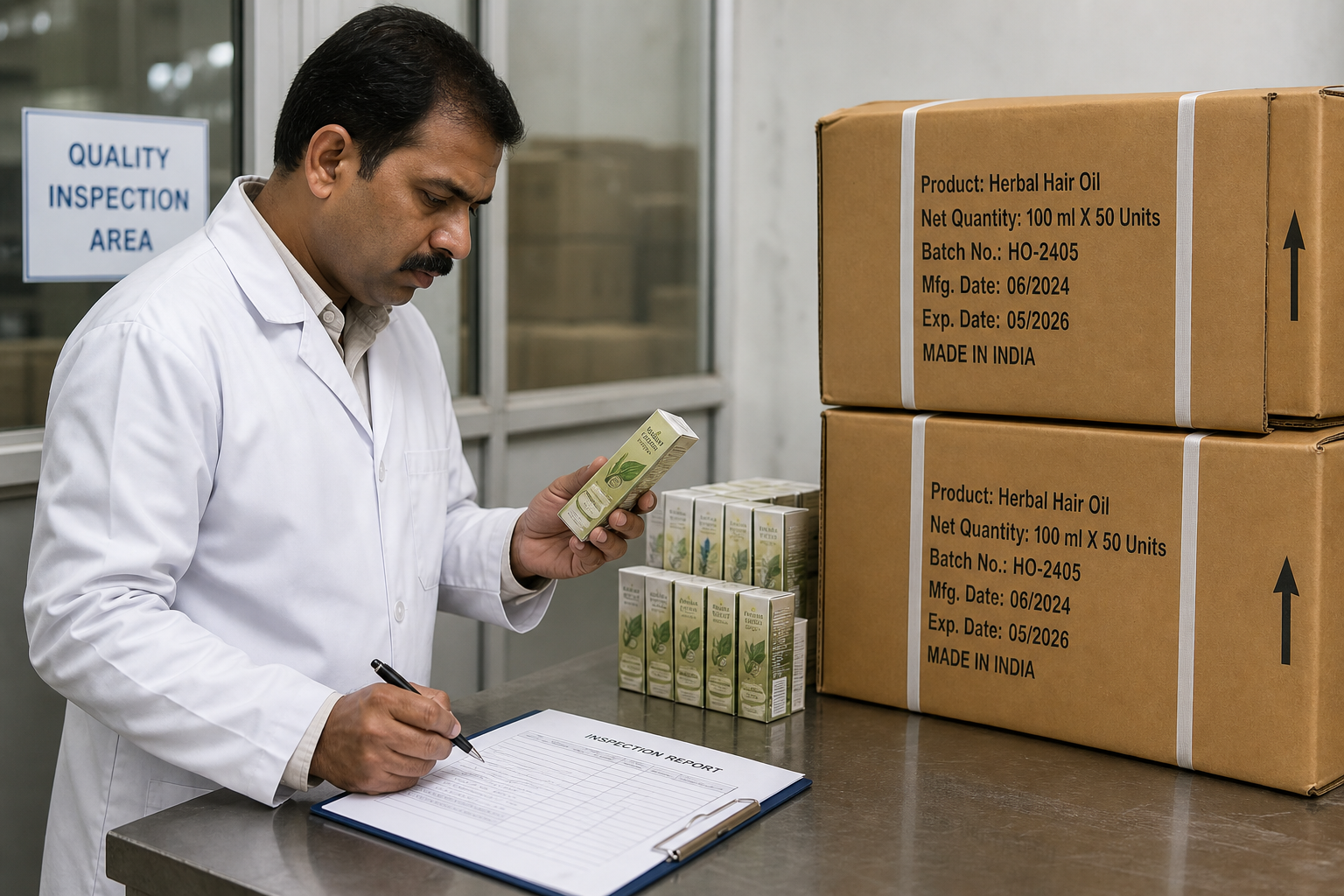
Cost: compare total procurement cost, not the headline unit price
- Service fee. The buyer pays an agreed fee for sourcing, supplier management, quality coordination, or a defined project scope.
- Commission. Compensation is linked to order value or supplier sales. The buyer should know the rate, payer, scope, and any potential conflict.
- Embedded trading or export margin. The buyer receives a consolidated selling price. This can simplify administration but requires sufficient quote detail to evaluate value.
- Hybrid arrangement. A fixed discovery fee, then a program management fee or transaction-based charge.
The factory's ex-works or FOB price is easy to compare. The cost of operating the buying program is more dispersed. It includes time spent finding factories, sample rounds, travel or local representation, inspection, rework follow-up, documentation, freight coordination, delayed launches, and the cost of unusable or late stock.
Direct buying can reduce visible intermediary charges. It can also introduce hidden cost if the buyer must repeatedly intervene because specifications were incomplete, samples were not locked, cartons were wrong, or several factories were not ready for consolidation. None of these outcomes is unique to India; they are normal procurement risks wherever supply chains are remote and supplier capability varies.
A sourcing partner should be able to explain its commercial model plainly. Common structures include:
Transparency is not achieved by insisting on one model. It comes from knowing what is included: supplier discovery, sample coordination, factory visits, third-party testing, inspections, claims support, consolidation, export documents, and post-shipment follow-up. Ask which costs are pass-through, which require prior approval, and whether the factory is free to quote directly for comparison.
When comparing offers, normalize the basis. Are prices ex-works, FOB, CFR, or DDP? Are testing, packaging changes, inspection, inland movement, and bank charges included? Are shipment dates based on goods readiness or vessel departure? A lower number with an unclear scope is not a lower landed procurement cost.
Accountability: one contact is useful only when responsibility is defined
- Product specification, tolerances, approved sample, artwork, packaging, labeling, and test requirements.
- Named factory and approved subcontracting policy.
- Production calendar with sample, material, inline, final inspection, and readiness milestones.
- Who may accept a deviation, authorize rework, or approve shipment.
- Who pays for reinspection or correction if the agreed standard is missed.
- Required commercial, shipping, origin, and compliance documents.
- Escalation contacts and response timing.
A direct factory should be accountable for the product it produces: conforming to approved specifications, meeting agreed production dates, maintaining traceability where required, and correcting defects within the agreed process. The buyer remains responsible for clear requirements, timely approvals, and commercial decisions.
With a sourcing partner, accountability has two layers. The manufacturer remains responsible for making compliant goods. The partner is responsible for the sourcing and management scope it accepted, such as validating supplier claims, escalating production risks, organizing inspections, checking document completeness, and communicating a consolidated status.
This structure avoids a common failure mode: everyone says they are “supporting” the order, but no one has ownership when a problem appears. Before issuing a purchase order, document:
A good sourcing partner does not promise that a factory will never make an error. It creates visibility early enough to decide whether to correct, contain, or reschedule it. That is a more credible form of accountability than a broad assurance.
MOQ: direct buying may be efficient, but it may not fit your launch
Factories set MOQs for valid reasons: material procurement, machine setup, labor planning, printing or mold costs, carton quantities, and production efficiency. Direct contact gives you a chance to negotiate the MOQ, but it does not remove those economics.
A sourcing partner can help in three practical ways. First, it can identify factories whose production scale fits your volume. Second, it can compare alternatives when a factory's MOQ is fixed. Third, it can separate what must be ordered at factory MOQ from what can be varied by SKU, color, packaging, or delivery schedule.
Be cautious of a supplier who accepts an impractically small order without explaining the commercial consequences. The result may be a higher unit price, use of substitute materials, a deprioritized production slot, or a request for changes later. A better approach is to run a controlled first order with an agreed specification and inspection plan. See how to start sourcing from India with a small trial order for a structured way to do that.
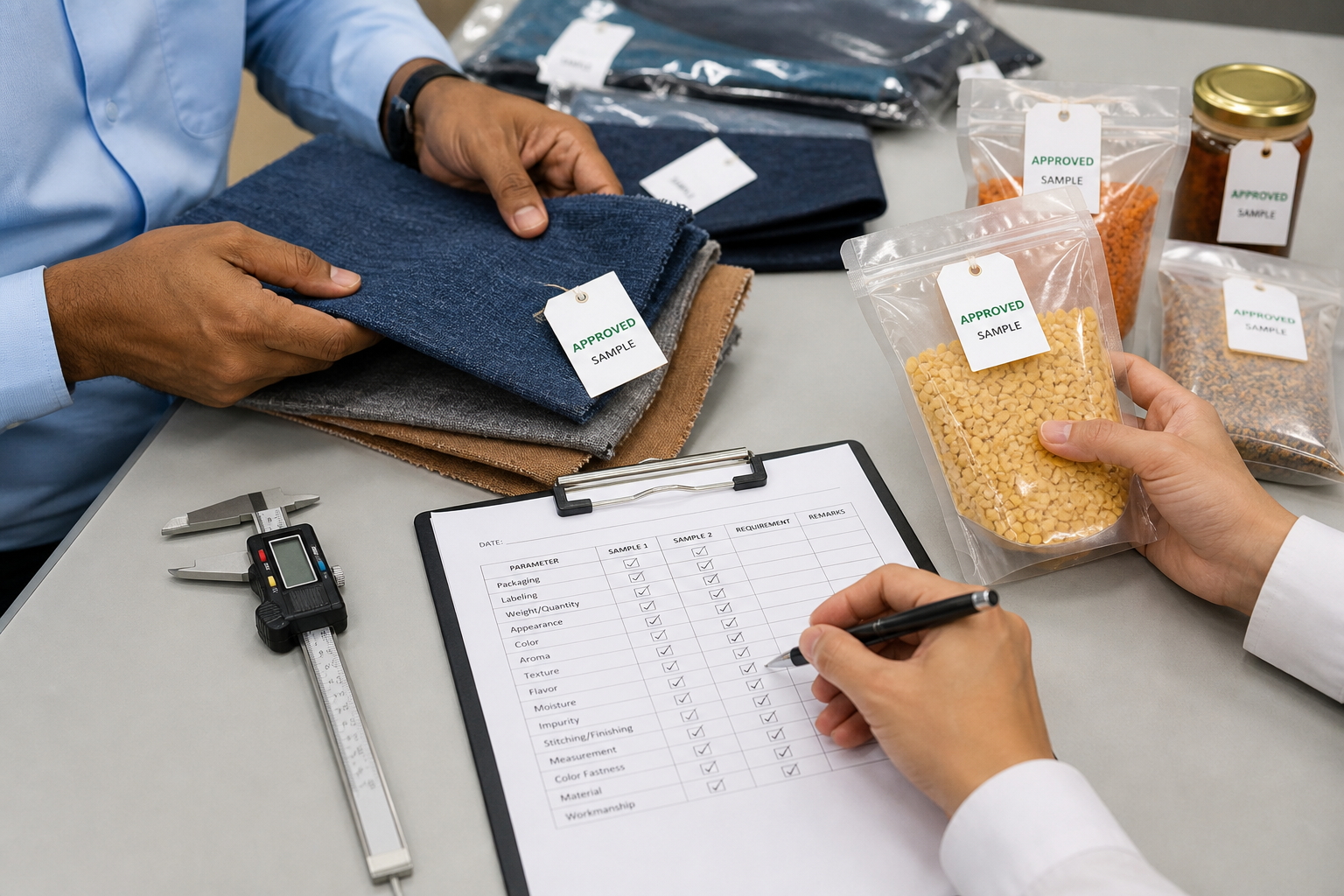
Quality control: direct access does not equal independent verification
- Review of the approved golden sample and specification before production.
- Pre-production confirmation of raw material, construction, color, dimensions, and packaging.
- Inline checks at a stated production stage, where appropriate.
- Final random inspection against a defined sampling plan and acceptable quality level.
- Photos, measurements, defect categorization, and a shipment recommendation.
- Follow-up on corrective actions and reinspection where needed.
When buying direct, the factory's quality team is the first line of control. That is necessary, but it is not the same as buyer-side verification. The buyer can manage factory quality directly, appoint a third-party inspector, deploy its own team, or use a sourcing partner to coordinate and report against an agreed inspection plan.
For a partner-managed program, quality support should be specific. Ask whether it includes:
Quality authority matters as much as quality activity. If an inspection finds a major issue, can the partner place a shipment hold? Can the buyer require correction? Does the partner merely report the issue, or have authority to seek root-cause and rework evidence? Agree these points before production starts.
For a broader risk-control framework, use how international buyers can reduce India sourcing risk. It covers due diligence, specifications, and staged verification that should apply whether you buy direct or through a partner.
Communication: retain factory access while creating a single operating rhythm
Direct factory communication can be fast when the buyer and factory have compatible technical language, time zones, and decision paths. It becomes slower when the factory is responding to several departments, or when urgent issues must move from production to quality to commercial teams.
A sourcing partner can consolidate messages, translate a requirement into a factory checklist, and visit or call locally during Indian business hours. That does not mean the partner should block access to the manufacturer. For strategic products, the buyer should be able to speak with the factory's commercial and technical team, join milestone reviews, and verify capability first-hand.
The practical model is “direct visibility, managed coordination.” Use a shared action log that records issue, owner, due date, status, evidence, and decision. Hold a regular review during sample development and production. Use written confirmation for changes to materials, drawings, packing, delivery date, or price. This discipline avoids disputes caused by verbal assumptions.

Multi-SKU and multi-supplier programs change the calculation
The operational advantage of a sourcing partner grows when the purchase order crosses factory boundaries. A homewares program may involve a ceramic producer, a textile supplier, a metal component maker, and a packaging vendor. A buyer can contact each factory directly, but the program still needs one view of sample approval, production readiness, inspection, labeling, delivery to a consolidation point, and document collection.
Without coordinated management, one late supplier can delay the whole shipment. Partial shipments can create freight inefficiency and inconsistent inventory arrivals. Packaging details can diverge between factories. A partner can create one critical path and flag which supplier is driving the shipment date.
This is also where alternate-source development has value. A partner with category and regional coverage can maintain a qualified backup option rather than beginning a new search after a disruption. The buyer should still approve any factory change; continuity should never mean silent substitution.
If your immediate requirement is a vetted set of supplier options, Altus Exports can help buyers find manufacturers in India. For ongoing cross-supplier procurement support, see the global sourcing partner in India service.
Risk: choose the model that gives you workable control
Direct buying has a clear benefit: you can build a close relationship with the people making your product. It also concentrates the buyer's exposure in the supplier selection and operating capability of its own team. If an issue occurs, your team must know who to call, what evidence to request, and how to prevent a repeat.
Partner-managed sourcing distributes coordination risk but creates a new diligence requirement: assess the partner. Ask about its team location, category experience, factory assessment process, inspection capability, reporting format, contracts, insurance where relevant, and how it handles conflicts between buyer and supplier interests.
Neither route removes risk. The goal is to make risk observable and assigned. Use staged commitments: supplier qualification before full development, approved samples before production, milestone visibility before final payment, and documented inspection before shipment release.

When direct manufacturer sourcing makes the most sense
- You are replenishing a proven product from a factory that has consistently met your requirements.
- The factory has unique technical capability, proprietary tooling, or material expertise that requires direct engineering collaboration.
- Your volumes are large enough that dedicated production planning and commercial negotiations justify a direct account team.
- You have a local office, experienced sourcing staff, or an established inspection and logistics network.
- The order is single-factory and the delivery flow is simple.
Direct is usually worth prioritizing when:
Even here, do not treat “direct” as “hands-off.” Schedule capability review, sample approval, quality controls, and periodic supplier performance review. Consider occasional independent audits or inspections, especially if the product is safety-sensitive or the factory expands quickly.
When an India sourcing partner is the stronger choice
- You need to evaluate several factories before selecting one.
- You are buying across Indian regions with different supplier clusters.
- You need multiple products consolidated under one program.
- Your team is lean and cannot continuously chase samples, production status, and export documents.
- You need an India-side escalation point for quality or delivery issues.
- You are testing India as a sourcing market and want a controlled first phase.
- You need local market knowledge but want to keep buyer approval over product, supplier, and shipment decisions.
A partner is generally the more practical route when:
Altus Exports works in this on-ground role: helping international buyers turn a requirement into a viable supplier shortlist, a managed production process, and export-ready shipment coordination. The appropriate scope should be designed around the buyer's existing capabilities, not packaged as a generic middleman service.
The hybrid model: often the best long-term answer
- Discovery: define requirements and create a screened manufacturer shortlist.
- Qualification: compare samples, capacity, commercial fit, compliance evidence, and communication quality.
- Launch: use local coordination for pre-production, quality checks, packaging, and export documentation.
- Maturity: build a direct technical and commercial relationship with the selected factory while retaining partner support for inspections, alternate sourcing, or multi-supplier orders.
Many successful programs do not select one model permanently. They use a partner in stages:
This gives the buyer factory visibility and relationship continuity without abandoning local control when the program is most fragile. It is especially useful when one strategic supplier is stable but the broader assortment continues to change.

Common mistakes buyers make
Common Mistakes Box
Treating factory price as the entire business case
The lowest unit price may not include inspection, documentation, packaging control, consolidation, or the management time required to make the purchase order work. Compare the full scope and potential cost of a failed shipment.
Assuming a sourcing partner should hide the factory
For a buyer-side partner arrangement, factory visibility is normally healthy. You should know who produces your goods, review capability, and understand approved subcontracting. Lack of transparency can make quality and continuity harder to manage.
Paying for “QC” without an inspection plan
Ask when checks occur, what standard applies, what sample size is used, what evidence is reported, and what happens if goods fail. A label alone does not create control.
Starting with too many unproven SKUs
A broad first order increases sampling, packaging, and readiness risk. Start with a focused assortment and use the results to improve the next cycle.
Leaving shipment documents until goods are ready
Document requirements affect labels, invoices, packing lists, certificates, origin evidence, and customs clearance. Confirm them before production, particularly when several factories contribute to one shipment.
Treating a partner as a substitute for buyer decisions
The buyer should still approve supplier selection, sample, price, material changes, quality deviations, and shipment release rules. A partner coordinates and advises; governance remains with the buyer.
Conclusion: select the operating capacity you need
The India sourcing partner vs manufacturer decision is not a vote for distance or control. Direct factory buying gives you the closest possible production relationship, which is valuable when the supplier is proven and your team can manage the work around it. A local sourcing partner gives you operating capacity in India: supplier comparison, coordinated follow-up, quality visibility, and one point of escalation across a program.
Choose direct when your relationship, product, and internal systems are ready for it. Choose partner-managed sourcing when the cost of coordinating suppliers or resolving a remote issue exceeds the cost of local support. For many buyers, begin with a partner-supported launch and move toward a hybrid relationship as the supplier base becomes proven.