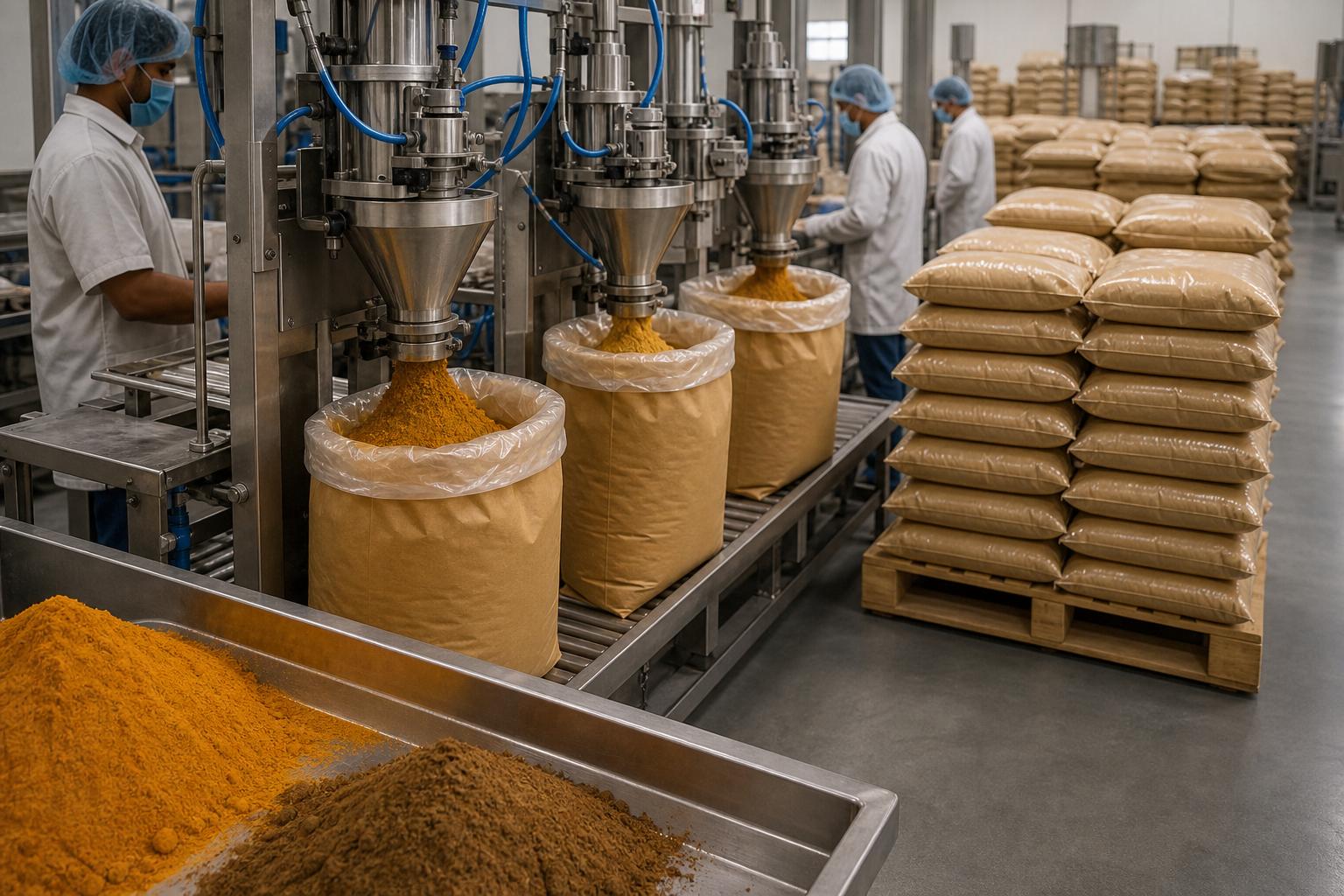
Most Demanded Indian Spice Blends by Country: Masala Preferences for Export Buyers
By Saurabh Mittal, Founder, Altus Exports
A country-by-country market guide to which Indian masala blends importers ask for, why preferences differ, and how exporters should build blend programs.
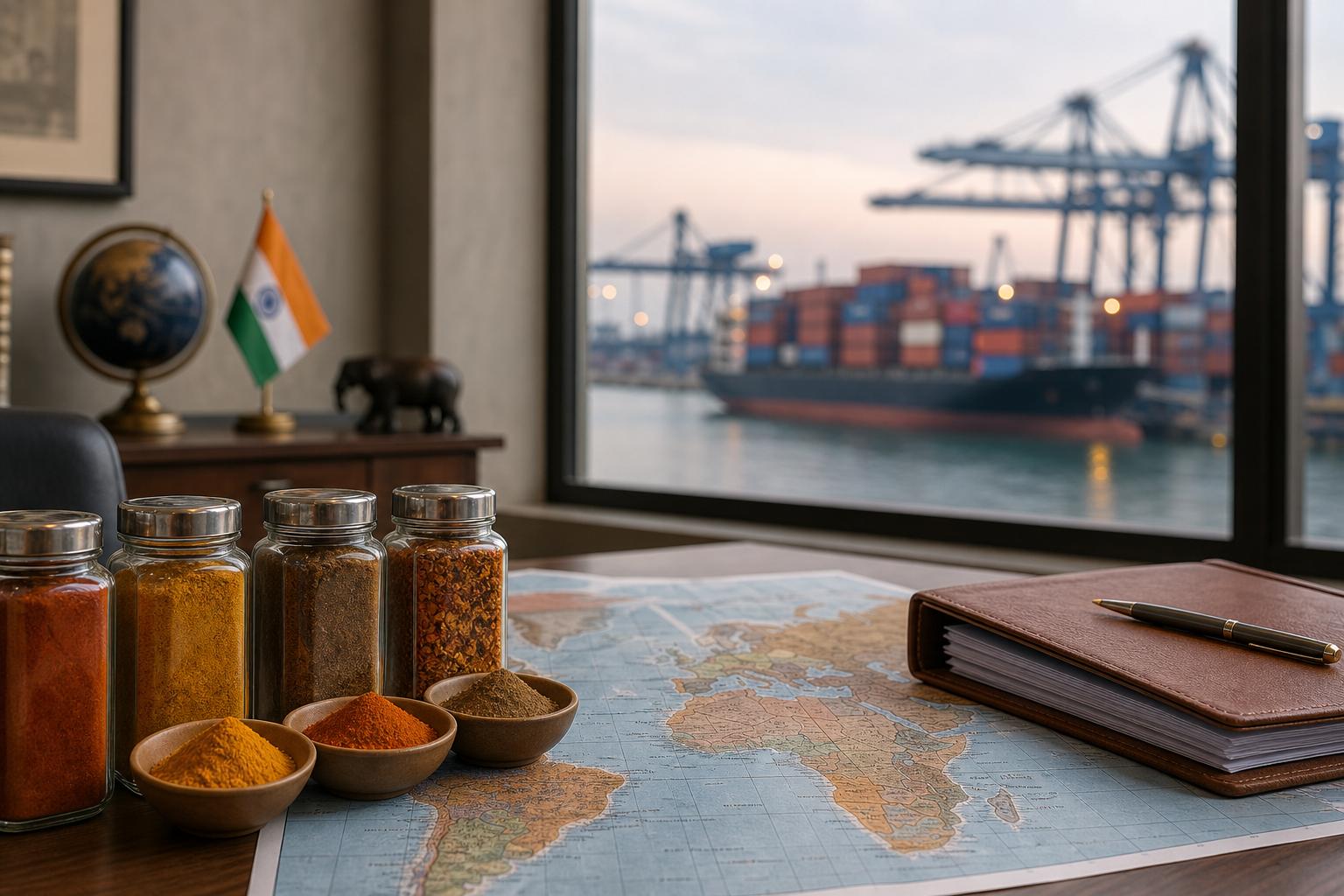
Demand for Indian spice blends is country-specific: US ethnic retail leans garam masala and curry powder, Gulf buyers prioritise biryani and tandoori with Halal, and EU programmes filter hard on steam treatment and residues.
This article is written only for spice blends: curry powder, garam masala, biryani masala, sambar powder, rasam powder, tandoori masala, chaat masala, meat masala, and private-label masala formulas. It intentionally excludes unrelated food and non-food categories so the guidance stays useful for buyers and exporters in this exact cluster.
Use the guide as a working playbook for commercial decisions: market choice, buyer qualification, sample approval, pricing, MOQ, packaging, documentation, certifications, and shipping. Where classification, duty, organic claims, or label rules affect entry, confirm details with the destination broker before cargo moves.
Key Takeaways
Summary Box
- Map blend type × treatment × certification × pack format by destination.
- USA: curry powder, garam masala, chai, chaat; organic in natural retail.
- Gulf: biryani, tandoori, meat masalas with Halal.
- EU: steam-treated, MRL-tight, often clean-label/organic.
- UK: curry powders and tikka/balti-style seasonings for ethnic retail.
- South Indian sambar/rasam serve diaspora niches, not always bulk commodity lanes.
- Avoid one global recipe for every market.
Executive Summary
Summary Box
This guide maps the most demanded Indian spice blends by country so buyers and exporters can avoid the central mistake in masala trade: assuming one formula can satisfy every market. Demand is shaped by diaspora cooking habits, restaurant usage, retailer claim culture, food safety expectations, and local taste for heat, aroma, and color.
The same HS 0910.91 category can contain very different commercial products. A mild organic curry powder for Germany, a biryani masala for Saudi Arabia, and a garam masala for Canadian ethnic grocery may all leave India as spice mixtures, but they need different sourcing clusters, samples, labels, and buyer conversations.
Market Size & Industry Overview
Key Statistics
- Global HS 0910.91 mixtures trade
- About USD 630 million in 2024 for mixtures of spices covered by HS 0910.91 / 09109100.
- India export value
- About USD 123 million in 2024, with India positioned as a major origin for curry powder, garam masala, biryani masala, and regional blends.
- Top importer signals
- The United States, Germany, and Saudi Arabia remain high-priority demand centers for Indian-origin spice mixtures.
- Regulatory base
- Spices Board of India and FSSAI credentials should be verified before any commercial sampling or trial order.
For most demanded indian spice blends by country, the market size & industry overview decision must stay specific to Indian spice blends: curry powder, garam masala, biryani masala, sambar powder, rasam powder, tandoori masala, chaat masala, and private-label masala formulas. Buyers are not sourcing a generic agricultural commodity; they are approving a formula that must taste right, declare correctly, and clear customs under the right documentation.
The commercial facts remain consistent across this demand-by-country blend preferences lens: HS 0910.91 / 09109100 is the working classification for many spice mixtures, global mixtures trade was about USD 630M in 2024, India exported about USD 123M, and the United States, Germany, and Saudi Arabia show strong importer signals. Those numbers are useful only when translated into buyer-ready SKUs with treatment, packaging, MOQ, and label decisions resolved.
Indian sourcing clusters such as Unjha, Delhi NCR, Mumbai and Thane, Indore, Coimbatore, Erode, Hyderabad, and Guntur-linked chili belts give buyers access to different formula strengths. The exporter’s job is to match the cluster and processor to the blend program instead of forcing every order through the lowest quote.
Altus Exports works as a merchant exporter and global sourcing partner, coordinating verified processors, samples, lab evidence, packaging, documentation, and shipment support so international buyers receive one accountable export workflow rather than fragmented supplier conversations.
Comparison table
Swipe →
Data table — swipe horizontally on small screens
| Metric | 2024 signal | Export implication |
|---|---|---|
| Global mixtures trade | USD 630M | Use HS 0910.91 demand as a directional sizing base for spice mixture programs. |
| India exports | USD 123M | India has scale, formula depth, and established processor clusters. |
| Top importers | USA, Germany, Saudi Arabia | Prioritize market-specific blends rather than generic masala catalogs. |
| India spice sector context | USD 4.72B all spices and spice products FY24-25 | Blend exports sit inside a broader origin ecosystem with raw-material depth. |
Country Preference Matrix
Country demand is the central strategic variable for spice blends. Use this matrix before quoting so samples, labels, and documents match the buyer’s actual market.
Comparison table
Swipe →
Data table — swipe horizontally on small screens
| Country | Most demanded blends | Buyer channel | Execution note |
|---|---|---|---|
| United States | Curry powder, tikka masala base, garam masala, chaat masala | Ethnic grocery, meal kits, food service, private label | Needs FDA-ready labels, allergen clarity, lot COAs, and broker review of HS 0910.91.00 MFN duty around 1.9%. |
| Germany | Organic curry powder, mild garam masala, clean-label blends | Organic retail, spice brands, industrial seasoning | Prioritizes residue control, steam treatment, EU labeling, and supplier traceability. |
| Saudi Arabia | Biryani masala, kabsa-adjacent Indian blends, curry powder | Food service, wholesalers, expatriate retail | Values aroma strength, halal-compatible processing declarations, Arabic label support, and stable carton presentation. |
| United Kingdom | Madras curry powder, tikka blends, garam masala | Curry houses, supermarkets, wholesale cash-and-carry | Buys familiar curry profiles but scrutinizes allergens, nutrition panels, and pack consistency. |
| UAE | Biryani masala, meat masala, chaat masala, curry powder | Re-export hubs, HoReCa, ethnic retail | Needs fast assortment building, mixed-SKU consolidation, and Arabic/English labeling. |
| Canada | Garam masala, curry powder, tandoori masala | South Asian retail, mainstream grocery | Requires bilingual considerations, food safety documents, and consistent repeat-lot sensory profile. |
Export Statistics
Key Statistics
For most demanded indian spice blends by country, the export statistics decision must stay specific to Indian spice blends: curry powder, garam masala, biryani masala, sambar powder, rasam powder, tandoori masala, chaat masala, and private-label masala formulas. Buyers are not sourcing a generic agricultural commodity; they are approving a formula that must taste right, declare correctly, and clear customs under the right documentation.
The commercial facts remain consistent across this demand-by-country blend preferences lens: HS 0910.91 / 09109100 is the working classification for many spice mixtures, global mixtures trade was about USD 630M in 2024, India exported about USD 123M, and the United States, Germany, and Saudi Arabia show strong importer signals. Those numbers are useful only when translated into buyer-ready SKUs with treatment, packaging, MOQ, and label decisions resolved.
Indian sourcing clusters such as Unjha, Delhi NCR, Mumbai and Thane, Indore, Coimbatore, Erode, Hyderabad, and Guntur-linked chili belts give buyers access to different formula strengths. The exporter’s job is to match the cluster and processor to the blend program instead of forcing every order through the lowest quote.
Altus Exports works as a merchant exporter and global sourcing partner, coordinating verified processors, samples, lab evidence, packaging, documentation, and shipment support so international buyers receive one accountable export workflow rather than fragmented supplier conversations.
Comparison table
Swipe →
Data table — swipe horizontally on small screens
| Export fact | Meaning for spice blends | Buyer action |
|---|---|---|
| HS 0910.91 / 09109100 | Mixtures of products under headings 09.04 to 09.10 | Confirm blend composition and invoice wording before shipment. |
| India export value USD 123M | India is a proven origin for masala and curry powder | Ask for export document samples and lot COAs. |
| Ports Mundra, JNPT, Cochin, Chennai | Multiple routing options by cluster | Select port based on factory geography and sailing schedule. |
| Steam sterilization available | Supports stricter microbial specs | Include treatment in the RFQ, not after price negotiation. |
Import Statistics
Key Statistics
For most demanded indian spice blends by country, the import statistics decision must stay specific to Indian spice blends: curry powder, garam masala, biryani masala, sambar powder, rasam powder, tandoori masala, chaat masala, and private-label masala formulas. Buyers are not sourcing a generic agricultural commodity; they are approving a formula that must taste right, declare correctly, and clear customs under the right documentation.
The commercial facts remain consistent across this demand-by-country blend preferences lens: HS 0910.91 / 09109100 is the working classification for many spice mixtures, global mixtures trade was about USD 630M in 2024, India exported about USD 123M, and the United States, Germany, and Saudi Arabia show strong importer signals. Those numbers are useful only when translated into buyer-ready SKUs with treatment, packaging, MOQ, and label decisions resolved.
Indian sourcing clusters such as Unjha, Delhi NCR, Mumbai and Thane, Indore, Coimbatore, Erode, Hyderabad, and Guntur-linked chili belts give buyers access to different formula strengths. The exporter’s job is to match the cluster and processor to the blend program instead of forcing every order through the lowest quote.
Altus Exports works as a merchant exporter and global sourcing partner, coordinating verified processors, samples, lab evidence, packaging, documentation, and shipment support so international buyers receive one accountable export workflow rather than fragmented supplier conversations.
Comparison table
Swipe →
Data table — swipe horizontally on small screens
| Importer | 2024 import value signal | Blend opportunity |
|---|---|---|
| United States | About USD 74.1M | Ethnic retail, meal kits, food service, and private-label curry profiles. |
| Germany | About USD 52.3M | Organic, clean-label, steam-treated, low-residue blends. |
| Saudi Arabia | About USD 42.8M | Biryani, meat, curry, and expatriate retail demand. |
| UAE / GCC hubs | Regional distribution role | Assortment building, Arabic/English labels, and re-export packs. |
Product Categories/Variants
Summary Box
For most demanded indian spice blends by country, the product categories/variants decision must stay specific to Indian spice blends: curry powder, garam masala, biryani masala, sambar powder, rasam powder, tandoori masala, chaat masala, and private-label masala formulas. Buyers are not sourcing a generic agricultural commodity; they are approving a formula that must taste right, declare correctly, and clear customs under the right documentation.
The commercial facts remain consistent across this demand-by-country blend preferences lens: HS 0910.91 / 09109100 is the working classification for many spice mixtures, global mixtures trade was about USD 630M in 2024, India exported about USD 123M, and the United States, Germany, and Saudi Arabia show strong importer signals. Those numbers are useful only when translated into buyer-ready SKUs with treatment, packaging, MOQ, and label decisions resolved.
Indian sourcing clusters such as Unjha, Delhi NCR, Mumbai and Thane, Indore, Coimbatore, Erode, Hyderabad, and Guntur-linked chili belts give buyers access to different formula strengths. The exporter’s job is to match the cluster and processor to the blend program instead of forcing every order through the lowest quote.
Altus Exports works as a merchant exporter and global sourcing partner, coordinating verified processors, samples, lab evidence, packaging, documentation, and shipment support so international buyers receive one accountable export workflow rather than fragmented supplier conversations.
Comparison table
Swipe →
Data table — swipe horizontally on small screens
| Blend type | Typical buyer | Specification focus |
|---|---|---|
| Curry powder | Retail, food service, ingredient users | Heat, color, coriander-cumin base, turmeric level, mesh size. |
| Garam masala | Ethnic retail and premium brands | Aroma retention, whole-spice ratio, roasted notes, volatile quality. |
| Biryani masala | GCC, UK, North America, restaurants | Aromatic intensity, chili balance, batch consistency. |
| Sambar / rasam powder | South Indian diaspora and specialty retailers | Tamarind-adjacent profile, chili level, lentil-free or lentil-declared formula as required. |
| Chaat / tandoori / tikka blends | Snacking, restaurants, meal kits | Salt policy, acidity, color declarations, allergen controls. |
Manufacturing Overview
Export Tip
For most demanded indian spice blends by country, the manufacturing overview decision must stay specific to Indian spice blends: curry powder, garam masala, biryani masala, sambar powder, rasam powder, tandoori masala, chaat masala, and private-label masala formulas. Buyers are not sourcing a generic agricultural commodity; they are approving a formula that must taste right, declare correctly, and clear customs under the right documentation.
The commercial facts remain consistent across this demand-by-country blend preferences lens: HS 0910.91 / 09109100 is the working classification for many spice mixtures, global mixtures trade was about USD 630M in 2024, India exported about USD 123M, and the United States, Germany, and Saudi Arabia show strong importer signals. Those numbers are useful only when translated into buyer-ready SKUs with treatment, packaging, MOQ, and label decisions resolved.
Indian sourcing clusters such as Unjha, Delhi NCR, Mumbai and Thane, Indore, Coimbatore, Erode, Hyderabad, and Guntur-linked chili belts give buyers access to different formula strengths. The exporter’s job is to match the cluster and processor to the blend program instead of forcing every order through the lowest quote.
Altus Exports works as a merchant exporter and global sourcing partner, coordinating verified processors, samples, lab evidence, packaging, documentation, and shipment support so international buyers receive one accountable export workflow rather than fragmented supplier conversations.
Comparison table
Swipe →
Data table — swipe horizontally on small screens
| Step | Control point | Exporter check |
|---|---|---|
| Raw material selection | Cumin, coriander, turmeric, chili, pepper, cloves, cinnamon, cardamom | Verify grade, origin, moisture, and contamination controls. |
| Cleaning and sorting | Foreign matter removal and magnet checks | Ask for physical purity process details. |
| Grinding and sieving | Mesh size, heat control, aroma retention | Avoid overheated grinding that flattens flavor. |
| Blending | Formula accuracy and batch records | Require lot-coded recipe control and retention samples. |
| Treatment and packing | Steam treatment, inner liners, sealing | Match microbial target and shelf-life expectations. |
H3: Specification discipline
Write the blend name, formula tolerance, heat target, color expectation, mesh size, permitted additives, treatment requirement, pack format, and destination label obligations before quoting. Spice blends are formula products; a one-word product name is not a specification.
H4: Broker and buyer review
Send draft invoice descriptions, HS code assumptions, ingredient declarations, and certificate examples to the destination broker before production. Early review is cheaper than relabeling or amending documents after sailing.
Pricing Analysis
Buyer Tip
- Curry powder FOB India
- Indicative USD 2.50-6.00/kg depending on formula, chili ratio, treatment, pack, and volume.
- Garam masala FOB India
- Indicative USD 4.00-9.00/kg because whole-spice content and aromatic volatile retention drive cost.
- Organic premium
- Often 30-60% above conventional when certification, residue panels, and segregated handling are genuine.
- MOQ trial logic
- 200-500 kg is a practical first trial for many importers; full-container economics improve after specifications are locked.
For most demanded indian spice blends by country, the pricing analysis decision must stay specific to Indian spice blends: curry powder, garam masala, biryani masala, sambar powder, rasam powder, tandoori masala, chaat masala, and private-label masala formulas. Buyers are not sourcing a generic agricultural commodity; they are approving a formula that must taste right, declare correctly, and clear customs under the right documentation.
The commercial facts remain consistent across this demand-by-country blend preferences lens: HS 0910.91 / 09109100 is the working classification for many spice mixtures, global mixtures trade was about USD 630M in 2024, India exported about USD 123M, and the United States, Germany, and Saudi Arabia show strong importer signals. Those numbers are useful only when translated into buyer-ready SKUs with treatment, packaging, MOQ, and label decisions resolved.
Indian sourcing clusters such as Unjha, Delhi NCR, Mumbai and Thane, Indore, Coimbatore, Erode, Hyderabad, and Guntur-linked chili belts give buyers access to different formula strengths. The exporter’s job is to match the cluster and processor to the blend program instead of forcing every order through the lowest quote.
Altus Exports works as a merchant exporter and global sourcing partner, coordinating verified processors, samples, lab evidence, packaging, documentation, and shipment support so international buyers receive one accountable export workflow rather than fragmented supplier conversations.
Comparison table
Swipe →
Data table — swipe horizontally on small screens
| Item | Indicative FOB India | What changes price |
|---|---|---|
| Curry powder | USD 2.50-6.00/kg | Formula, chili ratio, turmeric quality, treatment, pack, and order size. |
| Garam masala | USD 4.00-9.00/kg | Aromatic whole-spice content, roasting, volatile retention, premium ingredients. |
| Organic blends | Conventional plus 30-60% | Certified inputs, segregation, residue testing, and transaction documentation. |
| Private-label retail packs | Quote specific | Film, cartons, label compliance, artwork changes, and SKU count. |
MOQ Analysis
Buyer Tip
For most demanded indian spice blends by country, the moq analysis decision must stay specific to Indian spice blends: curry powder, garam masala, biryani masala, sambar powder, rasam powder, tandoori masala, chaat masala, and private-label masala formulas. Buyers are not sourcing a generic agricultural commodity; they are approving a formula that must taste right, declare correctly, and clear customs under the right documentation.
The commercial facts remain consistent across this demand-by-country blend preferences lens: HS 0910.91 / 09109100 is the working classification for many spice mixtures, global mixtures trade was about USD 630M in 2024, India exported about USD 123M, and the United States, Germany, and Saudi Arabia show strong importer signals. Those numbers are useful only when translated into buyer-ready SKUs with treatment, packaging, MOQ, and label decisions resolved.
Indian sourcing clusters such as Unjha, Delhi NCR, Mumbai and Thane, Indore, Coimbatore, Erode, Hyderabad, and Guntur-linked chili belts give buyers access to different formula strengths. The exporter’s job is to match the cluster and processor to the blend program instead of forcing every order through the lowest quote.
Altus Exports works as a merchant exporter and global sourcing partner, coordinating verified processors, samples, lab evidence, packaging, documentation, and shipment support so international buyers receive one accountable export workflow rather than fragmented supplier conversations.
Comparison table
Swipe →
Data table — swipe horizontally on small screens
| Order stage | Typical quantity | Commercial purpose |
|---|---|---|
| Lab sample | 100 g to 1 kg per SKU | Sensory evaluation and early formula fit. |
| Pilot sample lot | 25-100 kg | Internal buyer panels, label checks, and food-service trials. |
| Trial commercial order | 200-500 kg | First paid order to validate processing, documents, and logistics. |
| LCL scale-up | 1-5 MT | Build repeat demand before full-container commitment. |
| FCL program | 16-22 MT in 20 ft | Lowest freight cost per kg when formula and demand are stable. |
Packaging Standards
Export Tip
- Ports
- Mundra, Nhava Sheva (JNPT), Cochin, and Chennai are common load ports for Indian spice blend exports.
- Bulk packaging
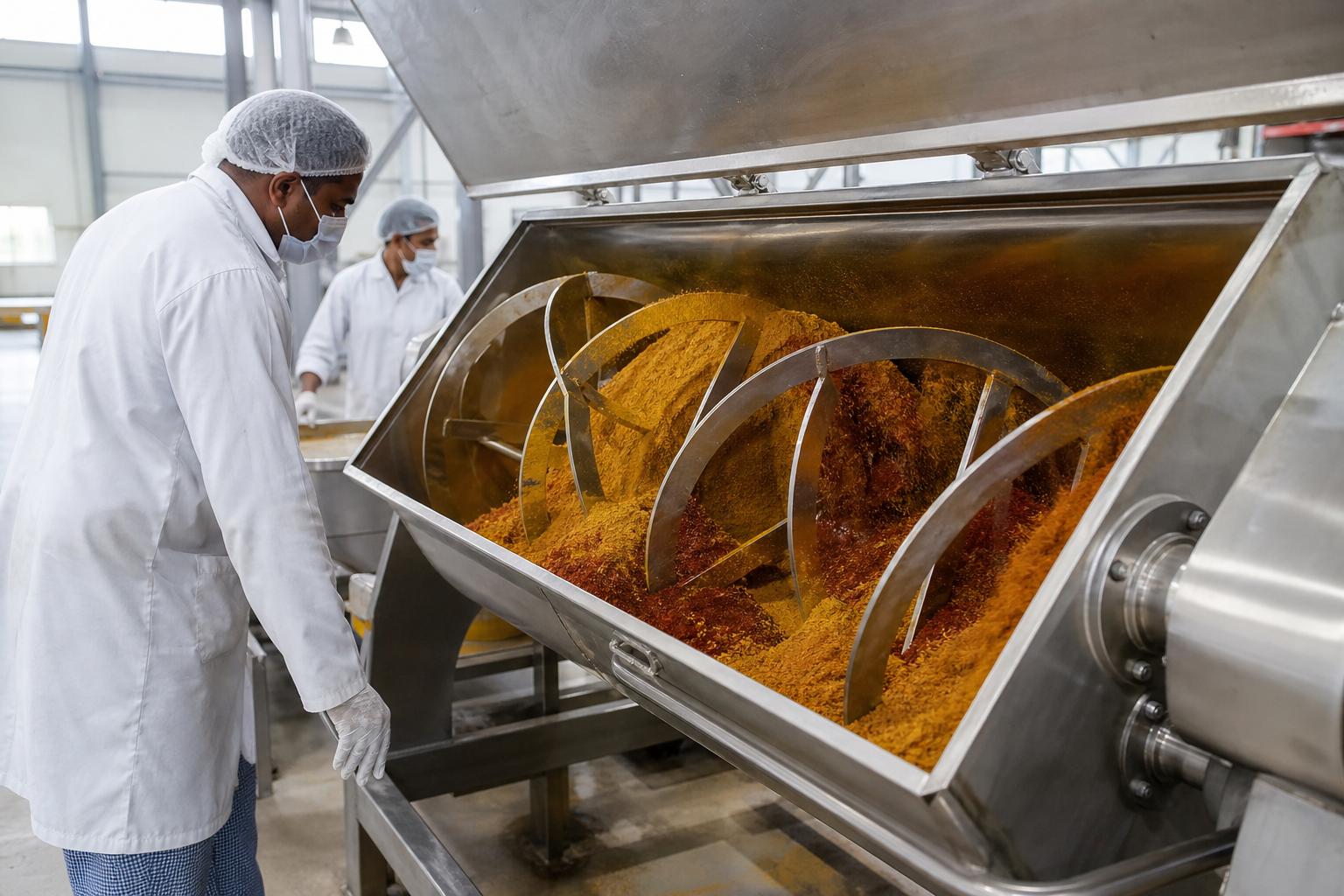
- 10-25 kg kraft bags with inner PE liners are standard for food service, repackers, and industrial buyers.
- 20-foot container
- Usually 16-22 MT depending on blend density, palletization, and buyer packaging requirements.
- Classification caution
- Confirm HS 0910.91 / 09109100; brokers should review edge cases between 0910.99.10 curry and 2103 seasonings.
For most demanded indian spice blends by country, the packaging standards decision must stay specific to Indian spice blends: curry powder, garam masala, biryani masala, sambar powder, rasam powder, tandoori masala, chaat masala, and private-label masala formulas. Buyers are not sourcing a generic agricultural commodity; they are approving a formula that must taste right, declare correctly, and clear customs under the right documentation.
The commercial facts remain consistent across this demand-by-country blend preferences lens: HS 0910.91 / 09109100 is the working classification for many spice mixtures, global mixtures trade was about USD 630M in 2024, India exported about USD 123M, and the United States, Germany, and Saudi Arabia show strong importer signals. Those numbers are useful only when translated into buyer-ready SKUs with treatment, packaging, MOQ, and label decisions resolved.
Indian sourcing clusters such as Unjha, Delhi NCR, Mumbai and Thane, Indore, Coimbatore, Erode, Hyderabad, and Guntur-linked chili belts give buyers access to different formula strengths. The exporter’s job is to match the cluster and processor to the blend program instead of forcing every order through the lowest quote.
Altus Exports works as a merchant exporter and global sourcing partner, coordinating verified processors, samples, lab evidence, packaging, documentation, and shipment support so international buyers receive one accountable export workflow rather than fragmented supplier conversations.
Comparison table
Swipe →
Data table — swipe horizontally on small screens
| Pack format | Best use | Technical notes |
|---|---|---|
| 10 kg kraft + PE liner | Premium repackers and food service | Lower handling weight and cleaner warehouse issue control. |
| 25 kg kraft + PE liner | Industrial and wholesale buyers | Efficient for FCL but needs strong sealing and pallet plan. |
| Retail pouches | Private-label grocery | Requires label compliance, artwork proofing, and shelf-life validation. |
| Food-service jars or bags | Restaurants and distributors | Balance convenience with freight cube and breakage risk. |
Container Loading
Export Tip
- Ports
- Mundra, Nhava Sheva (JNPT), Cochin, and Chennai are common load ports for Indian spice blend exports.
- Bulk packaging
- 10-25 kg kraft bags with inner PE liners are standard for food service, repackers, and industrial buyers.
- 20-foot container
- Usually 16-22 MT depending on blend density, palletization, and buyer packaging requirements.
- Classification caution
- Confirm HS 0910.91 / 09109100; brokers should review edge cases between 0910.99.10 curry and 2103 seasonings.
For most demanded indian spice blends by country, the container loading decision must stay specific to Indian spice blends: curry powder, garam masala, biryani masala, sambar powder, rasam powder, tandoori masala, chaat masala, and private-label masala formulas. Buyers are not sourcing a generic agricultural commodity; they are approving a formula that must taste right, declare correctly, and clear customs under the right documentation.
The commercial facts remain consistent across this demand-by-country blend preferences lens: HS 0910.91 / 09109100 is the working classification for many spice mixtures, global mixtures trade was about USD 630M in 2024, India exported about USD 123M, and the United States, Germany, and Saudi Arabia show strong importer signals. Those numbers are useful only when translated into buyer-ready SKUs with treatment, packaging, MOQ, and label decisions resolved.
Indian sourcing clusters such as Unjha, Delhi NCR, Mumbai and Thane, Indore, Coimbatore, Erode, Hyderabad, and Guntur-linked chili belts give buyers access to different formula strengths. The exporter’s job is to match the cluster and processor to the blend program instead of forcing every order through the lowest quote.
Altus Exports works as a merchant exporter and global sourcing partner, coordinating verified processors, samples, lab evidence, packaging, documentation, and shipment support so international buyers receive one accountable export workflow rather than fragmented supplier conversations.
Comparison table
Swipe →
Data table — swipe horizontally on small screens
| Mode | Typical load | Planning note |
|---|---|---|
| 20 ft loose loaded | 16-22 MT | Depends on density, bag size, and destination handling preference. |
| 20 ft palletized | Lower than loose load | Better handling and lower damage risk for premium packs. |
| 40 ft container | Use only when cube and buyer economics fit | Spice blend weight often makes 20 ft more practical. |
| LCL shipment | Small trial consignments | Protect against odor transfer and moisture in consolidation warehouses. |
Shipping Methods
Export Tip
- Ports
- Mundra, Nhava Sheva (JNPT), Cochin, and Chennai are common load ports for Indian spice blend exports.
- Bulk packaging
- 10-25 kg kraft bags with inner PE liners are standard for food service, repackers, and industrial buyers.
- 20-foot container
- Usually 16-22 MT depending on blend density, palletization, and buyer packaging requirements.
- Classification caution
- Confirm HS 0910.91 / 09109100; brokers should review edge cases between 0910.99.10 curry and 2103 seasonings.
For most demanded indian spice blends by country, the shipping methods decision must stay specific to Indian spice blends: curry powder, garam masala, biryani masala, sambar powder, rasam powder, tandoori masala, chaat masala, and private-label masala formulas. Buyers are not sourcing a generic agricultural commodity; they are approving a formula that must taste right, declare correctly, and clear customs under the right documentation.
The commercial facts remain consistent across this demand-by-country blend preferences lens: HS 0910.91 / 09109100 is the working classification for many spice mixtures, global mixtures trade was about USD 630M in 2024, India exported about USD 123M, and the United States, Germany, and Saudi Arabia show strong importer signals. Those numbers are useful only when translated into buyer-ready SKUs with treatment, packaging, MOQ, and label decisions resolved.
Indian sourcing clusters such as Unjha, Delhi NCR, Mumbai and Thane, Indore, Coimbatore, Erode, Hyderabad, and Guntur-linked chili belts give buyers access to different formula strengths. The exporter’s job is to match the cluster and processor to the blend program instead of forcing every order through the lowest quote.
Altus Exports works as a merchant exporter and global sourcing partner, coordinating verified processors, samples, lab evidence, packaging, documentation, and shipment support so international buyers receive one accountable export workflow rather than fragmented supplier conversations.
Comparison table
Swipe →
Data table — swipe horizontally on small screens
| Method | Use case | Risk control |
|---|---|---|
| FOB sea freight | Most repeat B2B orders | Buyer controls main freight while exporter handles origin delivery. |
| CIF sea freight | Buyers wanting freight included | Confirm insurance and destination charges carefully. |
| Air freight | Urgent samples or launch shortage | Expensive but useful for buyer approvals. |
| Courier samples | Pre-commercial sensory evaluation | Use sealed packs and correct food sample paperwork. |
Certifications
Compliance Notes
For most demanded indian spice blends by country, the certifications decision must stay specific to Indian spice blends: curry powder, garam masala, biryani masala, sambar powder, rasam powder, tandoori masala, chaat masala, and private-label masala formulas. Buyers are not sourcing a generic agricultural commodity; they are approving a formula that must taste right, declare correctly, and clear customs under the right documentation.
The commercial facts remain consistent across this demand-by-country blend preferences lens: HS 0910.91 / 09109100 is the working classification for many spice mixtures, global mixtures trade was about USD 630M in 2024, India exported about USD 123M, and the United States, Germany, and Saudi Arabia show strong importer signals. Those numbers are useful only when translated into buyer-ready SKUs with treatment, packaging, MOQ, and label decisions resolved.
Indian sourcing clusters such as Unjha, Delhi NCR, Mumbai and Thane, Indore, Coimbatore, Erode, Hyderabad, and Guntur-linked chili belts give buyers access to different formula strengths. The exporter’s job is to match the cluster and processor to the blend program instead of forcing every order through the lowest quote.
Altus Exports works as a merchant exporter and global sourcing partner, coordinating verified processors, samples, lab evidence, packaging, documentation, and shipment support so international buyers receive one accountable export workflow rather than fragmented supplier conversations.
Comparison table
Swipe →
Data table — swipe horizontally on small screens
| Credential | Why it matters | Who checks it |
|---|---|---|
| FSSAI | Food business legality and hygiene foundation | Exporter, processor, buyer, and import broker. |
| Spices Board | Spice export ecosystem and certificate support | Exporter and buyer compliance team. |
| COA / lab reports | Batch evidence for moisture, microbes, and contaminants | Buyer QA and destination authorities. |
| Organic certification | Required for organic claims | Certifier, buyer, and customs where applicable. |
| Steam treatment evidence | Microbial risk reduction | Food safety buyers in stricter channels. |
Buyer Requirements
Buyer Requirements
Buyers asking for country-fit blends expect sensory consistency first, then evidence. They want to know the formula will taste the same after six months of repeat orders and that the documentation will satisfy the broker in their market.
A country-wise program should record the target consumer, preferred heat level, pack language, claim policy, and acceptable price band before supplier selection begins.
H3: Specification discipline
Write the blend name, formula tolerance, heat target, color expectation, mesh size, permitted additives, treatment requirement, pack format, and destination label obligations before quoting. Spice blends are formula products; a one-word product name is not a specification.
H4: Broker and buyer review
Send draft invoice descriptions, HS code assumptions, ingredient declarations, and certificate examples to the destination broker before production. Early review is cheaper than relabeling or amending documents after sailing.
Country-wise Opportunities
Market Snapshot
Country-wise opportunities should be built SKU by SKU. The United States rewards broad assortment and FDA-aware labels; Germany rewards organic and residue control; Saudi Arabia rewards aromatic biryani and curry profiles; the UK rewards familiar curry-house flavor; the UAE rewards mixed-SKU consolidation.
Altus Exports uses these market differences to match buyers with Indian processors that can produce the right blend instead of forcing every inquiry into a generic masala list.
Comparison table
Swipe →
Data table — swipe horizontally on small screens
| Country / channel | Blend demand | Opportunity | Execution note |
|---|---|---|---|
| United States | Curry powder, tikka masala base, garam masala, chaat masala | Ethnic grocery, meal kits, food service, private label | Needs FDA-ready labels, allergen clarity, lot COAs, and broker review of HS 0910.91.00 MFN duty around 1.9%. |
| Germany | Organic curry powder, mild garam masala, clean-label blends | Organic retail, spice brands, industrial seasoning | Prioritizes residue control, steam treatment, EU labeling, and supplier traceability. |
| Saudi Arabia | Biryani masala, kabsa-adjacent Indian blends, curry powder | Food service, wholesalers, expatriate retail | Values aroma strength, halal-compatible processing declarations, Arabic label support, and stable carton presentation. |
| United Kingdom | Madras curry powder, tikka blends, garam masala | Curry houses, supermarkets, wholesale cash-and-carry | Buys familiar curry profiles but scrutinizes allergens, nutrition panels, and pack consistency. |
| UAE | Biryani masala, meat masala, chaat masala, curry powder | Re-export hubs, HoReCa, ethnic retail | Needs fast assortment building, mixed-SKU consolidation, and Arabic/English labeling. |
| Canada | Garam masala, curry powder, tandoori masala | South Asian retail, mainstream grocery | Requires bilingual considerations, food safety documents, and consistent repeat-lot sensory profile. |
Sourcing Checklist
Checklist
- Define the destination country and channel before selecting the blend formula.
- Request written specifications for heat, color, aroma, mesh, permitted additives, and treatment.
- Verify FSSAI, Spices Board, processor capability, export history, and lab relationships.
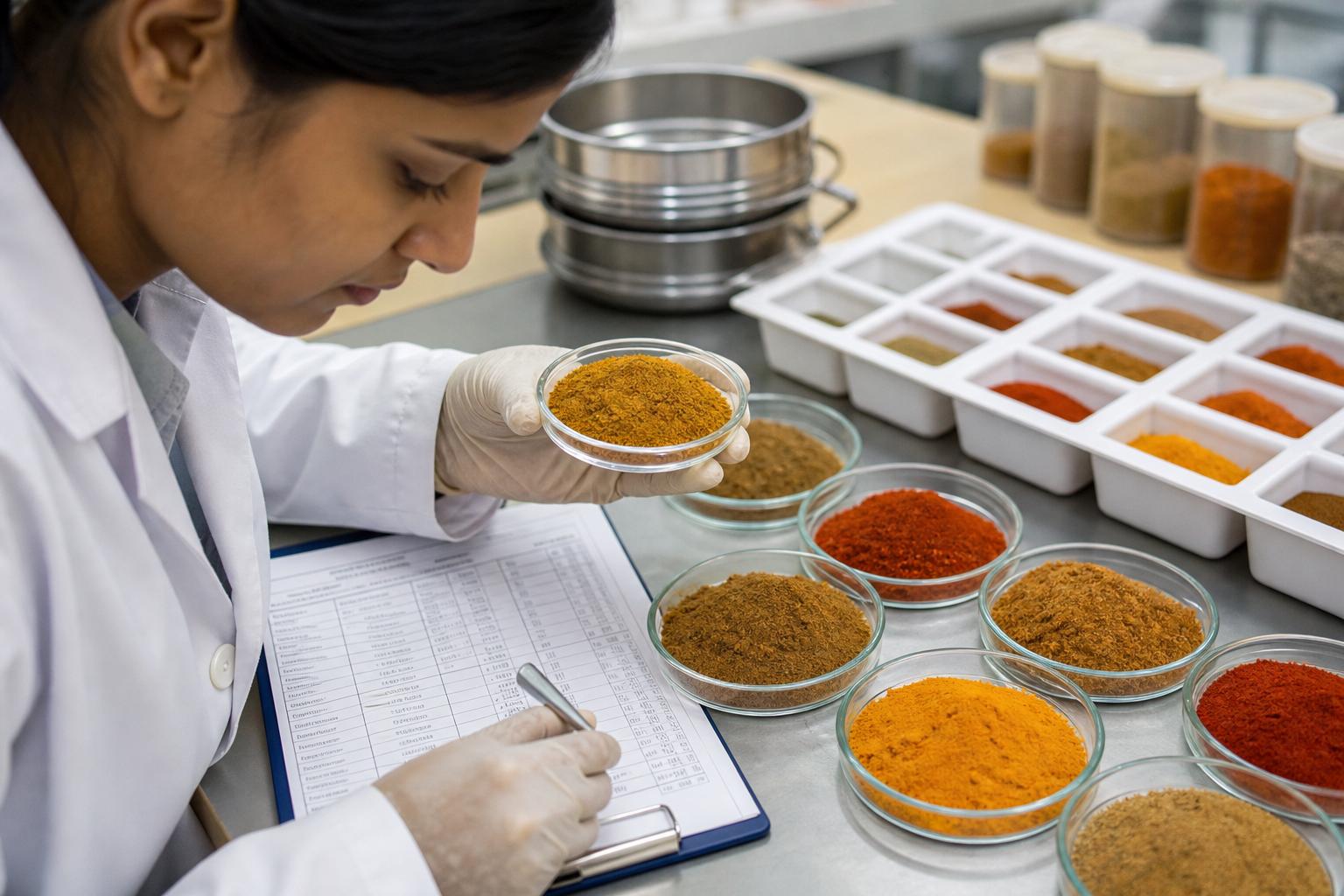
- Approve samples against a signed specification and retain reference samples at origin and destination.
- Confirm pack size, inner liner, carton strength, label language, and shelf-life requirement before bulk production.
For most demanded indian spice blends by country, the sourcing checklist decision must stay specific to Indian spice blends: curry powder, garam masala, biryani masala, sambar powder, rasam powder, tandoori masala, chaat masala, and private-label masala formulas. Buyers are not sourcing a generic agricultural commodity; they are approving a formula that must taste right, declare correctly, and clear customs under the right documentation.
The commercial facts remain consistent across this demand-by-country blend preferences lens: HS 0910.91 / 09109100 is the working classification for many spice mixtures, global mixtures trade was about USD 630M in 2024, India exported about USD 123M, and the United States, Germany, and Saudi Arabia show strong importer signals. Those numbers are useful only when translated into buyer-ready SKUs with treatment, packaging, MOQ, and label decisions resolved.
Indian sourcing clusters such as Unjha, Delhi NCR, Mumbai and Thane, Indore, Coimbatore, Erode, Hyderabad, and Guntur-linked chili belts give buyers access to different formula strengths. The exporter’s job is to match the cluster and processor to the blend program instead of forcing every order through the lowest quote.
Altus Exports works as a merchant exporter and global sourcing partner, coordinating verified processors, samples, lab evidence, packaging, documentation, and shipment support so international buyers receive one accountable export workflow rather than fragmented supplier conversations.
Buyer Checklist
Checklist
- Share target market, channel, annual forecast, trial quantity, and preferred incoterm in the first brief.
- Ask for COA, steam treatment evidence, ingredient declaration, and draft invoice description with HS code.
- Check whether the formula contains salt, anti-caking agent, allergens, or ingredients that change classification or labeling.
- Have the destination broker review HS 0910.91 / 09109100 assumptions before shipment.
- Start with 200-500 kg commercial trials when supplier and formula are new.
For most demanded indian spice blends by country, the buyer checklist decision must stay specific to Indian spice blends: curry powder, garam masala, biryani masala, sambar powder, rasam powder, tandoori masala, chaat masala, and private-label masala formulas. Buyers are not sourcing a generic agricultural commodity; they are approving a formula that must taste right, declare correctly, and clear customs under the right documentation.
The commercial facts remain consistent across this demand-by-country blend preferences lens: HS 0910.91 / 09109100 is the working classification for many spice mixtures, global mixtures trade was about USD 630M in 2024, India exported about USD 123M, and the United States, Germany, and Saudi Arabia show strong importer signals. Those numbers are useful only when translated into buyer-ready SKUs with treatment, packaging, MOQ, and label decisions resolved.
Indian sourcing clusters such as Unjha, Delhi NCR, Mumbai and Thane, Indore, Coimbatore, Erode, Hyderabad, and Guntur-linked chili belts give buyers access to different formula strengths. The exporter’s job is to match the cluster and processor to the blend program instead of forcing every order through the lowest quote.
Altus Exports works as a merchant exporter and global sourcing partner, coordinating verified processors, samples, lab evidence, packaging, documentation, and shipment support so international buyers receive one accountable export workflow rather than fragmented supplier conversations.
Exporter Checklist
Checklist
- Keep batch records, formula approvals, raw material intake logs, and retention samples.
- Prepare invoice, packing list, COA, treatment certificate, and certificate of origin as a single aligned pack.
- Quote FOB ranges transparently with packaging, treatment, lab tests, and private-label costs separated.
- Use Mundra, JNPT, Cochin, or Chennai according to cluster location and sailing availability.
- Confirm container loading, palletization, fumigation for wood packaging if used, and cargo insurance responsibilities.
For most demanded indian spice blends by country, the exporter checklist decision must stay specific to Indian spice blends: curry powder, garam masala, biryani masala, sambar powder, rasam powder, tandoori masala, chaat masala, and private-label masala formulas. Buyers are not sourcing a generic agricultural commodity; they are approving a formula that must taste right, declare correctly, and clear customs under the right documentation.
The commercial facts remain consistent across this demand-by-country blend preferences lens: HS 0910.91 / 09109100 is the working classification for many spice mixtures, global mixtures trade was about USD 630M in 2024, India exported about USD 123M, and the United States, Germany, and Saudi Arabia show strong importer signals. Those numbers are useful only when translated into buyer-ready SKUs with treatment, packaging, MOQ, and label decisions resolved.
Indian sourcing clusters such as Unjha, Delhi NCR, Mumbai and Thane, Indore, Coimbatore, Erode, Hyderabad, and Guntur-linked chili belts give buyers access to different formula strengths. The exporter’s job is to match the cluster and processor to the blend program instead of forcing every order through the lowest quote.
Altus Exports works as a merchant exporter and global sourcing partner, coordinating verified processors, samples, lab evidence, packaging, documentation, and shipment support so international buyers receive one accountable export workflow rather than fragmented supplier conversations.
Compliance Checklist
Checklist
Compliance Notes
- Confirm HS classification with the customs broker, especially for curry versus seasoning preparations.
- Ensure labels show ingredients, allergens, net weight, origin, lot code, best-before date, and importer details where required.
- Match batch numbers on COA, treatment certificate, packing list, and carton markings.
- Validate organic, halal, kosher, or clean-label claims before printing packs.
- Share draft documents before vessel departure so corrections remain practical.
For most demanded indian spice blends by country, the compliance checklist decision must stay specific to Indian spice blends: curry powder, garam masala, biryani masala, sambar powder, rasam powder, tandoori masala, chaat masala, and private-label masala formulas. Buyers are not sourcing a generic agricultural commodity; they are approving a formula that must taste right, declare correctly, and clear customs under the right documentation.
The commercial facts remain consistent across this demand-by-country blend preferences lens: HS 0910.91 / 09109100 is the working classification for many spice mixtures, global mixtures trade was about USD 630M in 2024, India exported about USD 123M, and the United States, Germany, and Saudi Arabia show strong importer signals. Those numbers are useful only when translated into buyer-ready SKUs with treatment, packaging, MOQ, and label decisions resolved.
Indian sourcing clusters such as Unjha, Delhi NCR, Mumbai and Thane, Indore, Coimbatore, Erode, Hyderabad, and Guntur-linked chili belts give buyers access to different formula strengths. The exporter’s job is to match the cluster and processor to the blend program instead of forcing every order through the lowest quote.
Altus Exports works as a merchant exporter and global sourcing partner, coordinating verified processors, samples, lab evidence, packaging, documentation, and shipment support so international buyers receive one accountable export workflow rather than fragmented supplier conversations.
H3: Specification discipline
Write the blend name, formula tolerance, heat target, color expectation, mesh size, permitted additives, treatment requirement, pack format, and destination label obligations before quoting. Spice blends are formula products; a one-word product name is not a specification.
H4: Broker and buyer review
Send draft invoice descriptions, HS code assumptions, ingredient declarations, and certificate examples to the destination broker before production. Early review is cheaper than relabeling or amending documents after sailing.
Common Buyer Mistakes
Common Mistakes Box
- Buying a generic masala sample without defining destination taste and label requirements.
- Comparing FOB prices without formula, treatment, pack, and lab scope held constant.
- Assuming organic or clean-label claims can be added after production.
- Ignoring broker classification review until cargo arrives.
- Skipping trial orders and moving directly to full-container private-label production.
For most demanded indian spice blends by country, the common buyer mistakes decision must stay specific to Indian spice blends: curry powder, garam masala, biryani masala, sambar powder, rasam powder, tandoori masala, chaat masala, and private-label masala formulas. Buyers are not sourcing a generic agricultural commodity; they are approving a formula that must taste right, declare correctly, and clear customs under the right documentation.
The commercial facts remain consistent across this demand-by-country blend preferences lens: HS 0910.91 / 09109100 is the working classification for many spice mixtures, global mixtures trade was about USD 630M in 2024, India exported about USD 123M, and the United States, Germany, and Saudi Arabia show strong importer signals. Those numbers are useful only when translated into buyer-ready SKUs with treatment, packaging, MOQ, and label decisions resolved.
Indian sourcing clusters such as Unjha, Delhi NCR, Mumbai and Thane, Indore, Coimbatore, Erode, Hyderabad, and Guntur-linked chili belts give buyers access to different formula strengths. The exporter’s job is to match the cluster and processor to the blend program instead of forcing every order through the lowest quote.
Altus Exports works as a merchant exporter and global sourcing partner, coordinating verified processors, samples, lab evidence, packaging, documentation, and shipment support so international buyers receive one accountable export workflow rather than fragmented supplier conversations.
Future Market Trends
Key Statistics
- More buyers will ask for steam-treated blends with documented low microbial counts.
- Private-label masala assortments will grow in ethnic and mainstream retail.
- Organic and clean-label blends will command premiums only when residue and traceability evidence is strong.
- Food-service buyers will request larger packs with consistent heat profile and faster repeat replenishment.
- Digital lead generation using trade data and LinkedIn will increasingly support fair-based selling.
For most demanded indian spice blends by country, the future market trends decision must stay specific to Indian spice blends: curry powder, garam masala, biryani masala, sambar powder, rasam powder, tandoori masala, chaat masala, and private-label masala formulas. Buyers are not sourcing a generic agricultural commodity; they are approving a formula that must taste right, declare correctly, and clear customs under the right documentation.
The commercial facts remain consistent across this demand-by-country blend preferences lens: HS 0910.91 / 09109100 is the working classification for many spice mixtures, global mixtures trade was about USD 630M in 2024, India exported about USD 123M, and the United States, Germany, and Saudi Arabia show strong importer signals. Those numbers are useful only when translated into buyer-ready SKUs with treatment, packaging, MOQ, and label decisions resolved.
Indian sourcing clusters such as Unjha, Delhi NCR, Mumbai and Thane, Indore, Coimbatore, Erode, Hyderabad, and Guntur-linked chili belts give buyers access to different formula strengths. The exporter’s job is to match the cluster and processor to the blend program instead of forcing every order through the lowest quote.
Altus Exports works as a merchant exporter and global sourcing partner, coordinating verified processors, samples, lab evidence, packaging, documentation, and shipment support so international buyers receive one accountable export workflow rather than fragmented supplier conversations.
Country Demand Scoring Model
- Country demand evidence
- Retail or food-service channel fit
- Heat and aroma profile clarity
- Label and certification workload
- Repeat-order potential
Use this scorecard before approving country-specific masala samples. It forces the buyer and exporter to discuss demand proof, channel fit, sensory target, compliance effort, and repeat-order economics before a formula is locked.
Altus Exports uses this type of scorecard to keep spice blend conversations practical: every attractive opportunity still has to become an approved sample, a compliant label, a realistic MOQ, and a shipment document pack that the buyer's broker can clear.
Comparison table
Swipe →
Data table — swipe horizontally on small screens
| Score area | Evidence to collect | Why it matters |
|---|---|---|
| Demand evidence | Importer records, shelf audits, distributor feedback | Avoids building a blend for a market that only looks attractive in theory |
| Channel fit | Ethnic retail, mainstream grocery, restaurant supply, ingredient use | Changes pack size, formula intensity, and price tolerance |
| Sensory target | Mild, medium, hot, roasted, aromatic, color-forward | Prevents one generic curry powder being quoted across countries |
| Compliance load | Broker review, label language, treatment, COA scope | Protects the buyer from customs and retail onboarding delays |
| Scale potential | Trial MOQ, LCL plan, FCL forecast | Connects samples to realistic procurement economics |
H3: How to use the scorecard
Score each area before money is spent on bulk production, private-label printing, or exhibition follow-up. Weak scores do not always kill a program, but they identify where Altus, the buyer, the processor, and the broker need to close gaps before shipment.
H4: When to pause
Pause the order if the formula is not approved, the label is not reviewed, the HS code is still uncertain, or the supplier cannot tie batch evidence to the proposed shipment. Those are fixable issues before dispatch and expensive issues after arrival.
Expert Insights from Saurabh Mittal
Expert Insight Box
For most demanded indian spice blends by country, the expert insights from saurabh mittal decision must stay specific to Indian spice blends: curry powder, garam masala, biryani masala, sambar powder, rasam powder, tandoori masala, chaat masala, and private-label masala formulas. Buyers are not sourcing a generic agricultural commodity; they are approving a formula that must taste right, declare correctly, and clear customs under the right documentation.
The commercial facts remain consistent across this demand-by-country blend preferences lens: HS 0910.91 / 09109100 is the working classification for many spice mixtures, global mixtures trade was about USD 630M in 2024, India exported about USD 123M, and the United States, Germany, and Saudi Arabia show strong importer signals. Those numbers are useful only when translated into buyer-ready SKUs with treatment, packaging, MOQ, and label decisions resolved.
Indian sourcing clusters such as Unjha, Delhi NCR, Mumbai and Thane, Indore, Coimbatore, Erode, Hyderabad, and Guntur-linked chili belts give buyers access to different formula strengths. The exporter’s job is to match the cluster and processor to the blend program instead of forcing every order through the lowest quote.
Altus Exports works as a merchant exporter and global sourcing partner, coordinating verified processors, samples, lab evidence, packaging, documentation, and shipment support so international buyers receive one accountable export workflow rather than fragmented supplier conversations.
Second expert quote
- Use the quote as an operating principle during specifications, sampling, and buyer follow-up.
The strongest masala exporters build a country map, not a catalog. They know which market wants mild color, which wants roasted aroma, and which wants food-service heat.
Conclusion and Calls to Action
Most Demanded Indian Spice Blends by Country: Masala Preferences for Export Buyers comes down to execution: define the blend, verify the processor, approve the sample, check the label and HS code, prepare documents early, and ship through a partner who understands spice blend exports rather than generic commodity trading.
Altus Exports supports international buyers with spice blend sourcing, supplier verification, private-label coordination, quality checks, documentation, and shipment support from India. For the rest of the cluster, continue with find international buyers for spice blends, organic spice blend export opportunities from India, and trade shows for spice blend exporters.
Share your target country, blend list, pack size, certification requirement, and trial quantity with Altus Exports to receive a practical sourcing plan for Indian spice blends.