
Most Demanded Indian Steel Pipes by Country
By Saurabh Mittal, Founder, Altus Exports
Country-by-country demand map for Indian steel pipe exports — which pipe families (ERW, seamless, GI galvanized, MS black, SHS/RHS, API 5L line pipe), OD/wall bands, MTC depth expectations, and bundle packaging formats buyers in USA, UAE, UK, Bangladesh, Nepal, Iraq, Saudi Arabia, Nigeria, Kenya, Sri Lanka, Oman, and Qatar actually order.
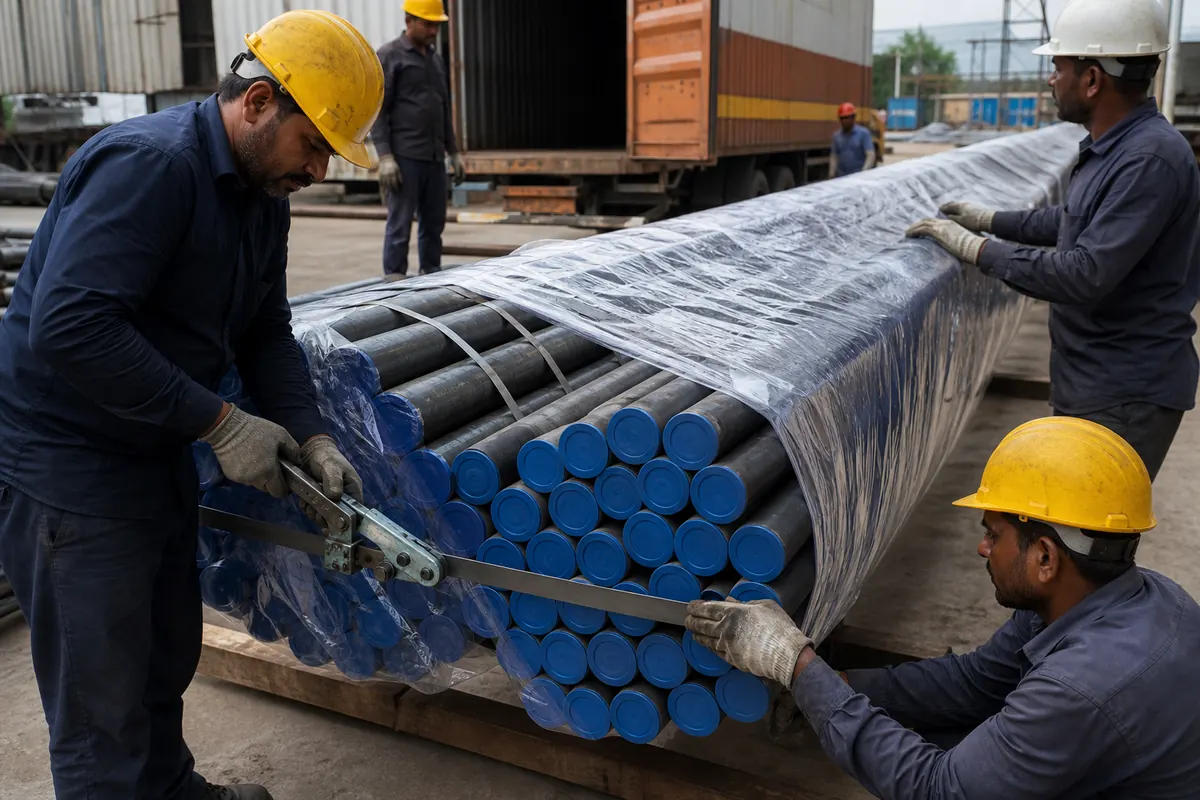
Country demand for Indian steel pipes is not uniform — treating all corridors as uniform stalls many first programmes after one trial. USA wants ASTM/API 5L with hydrostatic depth; UAE pulls GI/ERW for re-export; Bangladesh needs MS black and GI for construction; Nepal wants short-haul ERW with SAFTA paperwork; Iraq and Saudi Arabia demand API 5L PSL1/PSL2 with monogram where applicable.
USA, Bangladesh, and Nepal each order distinct OD/wall and pipe-type mixes. This guide maps what buyers actually order — not a generic catalogue wishlist.
Directional India steel tube/pipe exports ~0.9–1.1 Mt (CY2023 UN Comtrade/WITS aggregate for major HS 7304–7306 lines) under HS 7304–7306. Corridors: USA, UAE, UK, Bangladesh, Nepal, Iraq, Saudi Arabia, Nigeria, Kenya, Sri Lanka, Oman, Qatar. Pipe type + MTC honesty beats pure FOB undercutting — off-spec bundles reject regardless of price.
Market selection: Best Countries for Indian Steel Pipe Exports. Product catalogue: Top Steel Pipe Products Exported from India. Altus builds country-specific pipe plans for traders, EPC contractors, and oilfield distributors.
Key Takeaways
Summary Box
Executive Summary
Summary Box
Country demand for Indian steel pipes varies by pipe type, OD/wall, coating condition, and MTC tier — USA ASTM/API 5L flows differ from Bangladesh MS black/GI programmes, UAE re-export GI/ERW, Nepal short-haul ERW, and Iraq/Saudi API 5L oilfield demand.
India's directional steel tube/pipe export basket at roughly 0.9–1.1 Mt under HS 7304–7306 — pipe-weighted corridors (USA, UAE, UK, Bangladesh, Nepal, Iraq, Saudi Arabia, Nigeria, Kenya, Sri Lanka, Oman, Qatar) each have distinct pipe-type preferences and documentation expectations.
This demand map helps steel pipe exporters and buyers align sample kits, MTC templates, hydrostatic test reports, and packaging orientation to what each destination actually orders.
Market Size & Industry Overview
Key Statistics
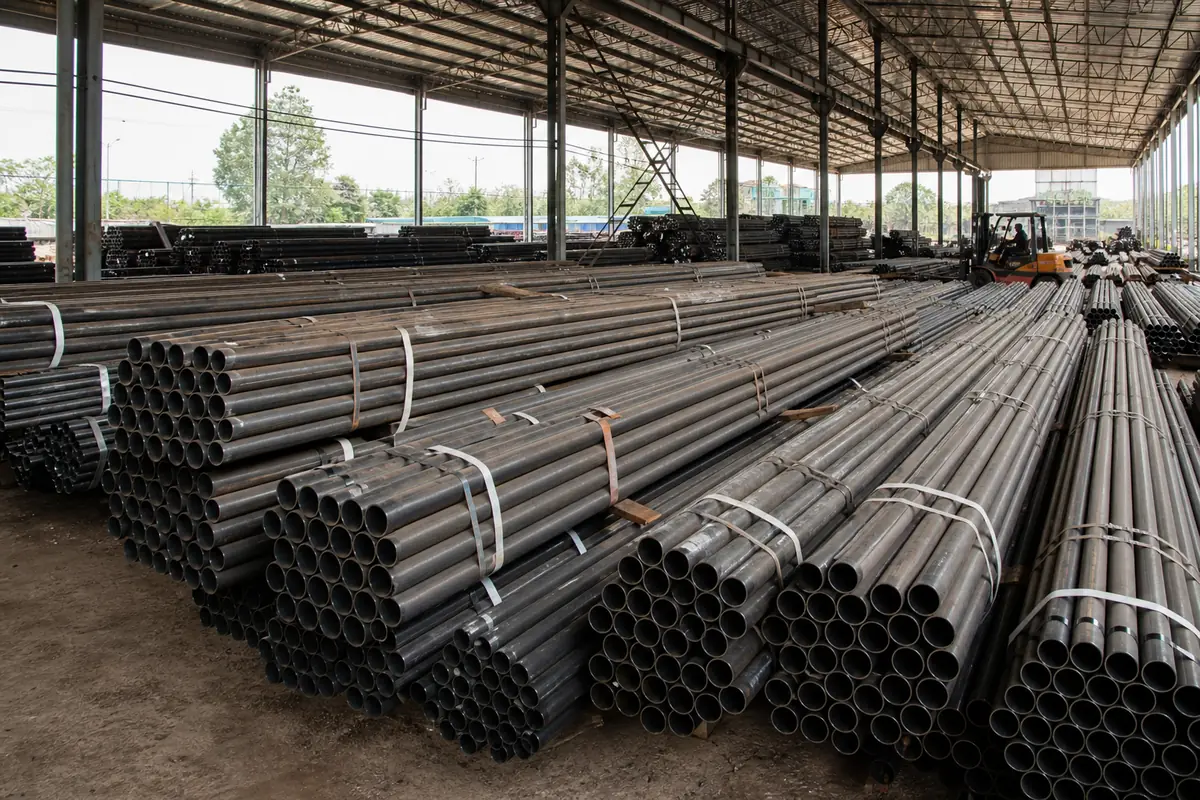
Country demand for Indian steel pipes concentrates in South Asia and the Middle East, ASEAN, Middle East, Iraq, and SAFTA short-haul, with distinct grade preferences per corridor: USA traders and EPC contractors structural and commercial mixes, Bangladesh construction contractor commercial and structural, UAE structural and API 5L PSL1, Sri Lankan structural with SAFTA certificate-of-origin discipline, Nepal and Bangladesh short-haul commercial and structural, Gulf duty-preference-aware steel traders and stockholders.
Country demand mapping matters because sample kits must change per destination — one grade per market rarely converts.
This overview frames the destination-specific detail in this guide.
Country Steel Pipe Demand Profiles: What Buyers Actually Order
Steel pipe demand profiles below reflect directional ordering patterns from Indian steel pipe export programmes — pipe type, OD/wall bands, coating condition, standard, and MTC-tier expectations by destination. Validate against your buyer's specific trader, EPC contractor, fabricator, or oilfield distributor specification before building assortment plans.
Directional pipe-type demand by steel pipe destination market
Swipe →
Data table — swipe horizontally on small screens
| Country | Top Pipe Mix | Specification Focus | Certification Tier |
|---|---|---|---|
| USA | ASTM A53/A106, API 5L, SHS/RHS | Hydrostatic test, US antidumping duty order on certain welded carbon steel standard pipes and tubes from India (HTS 7306.30.x — Federal Register 2024-00397), EN 10204 3.1/3.2 MTC | MTC + hydrostatic test report per standard |
| UAE | GI/ERW re-export, API 5L for Gulf projects | IS 1239/BS 1387 declarations, clean heat/bundle identity | MTC per EN 10204 3.1 + Gulf industrial documentation |
| UK | BS 1387 GI, EN 10219 hollow sections, seamless/ERW | EN 10204 MTC, post-Brexit tariff alignment | MTC + COO baseline |
| Bangladesh | MS black ERW + GI galvanized | Consistent chemistry, construction formability | EN 10204 3.1 MTC + SAFTA COO where applicable |
| Nepal | Short-haul ERW and GI construction pipe | Consistent OD/wall and MTC baseline | EN 10204 3.1 MTC + SAFTA COO |
| Iraq / Saudi Arabia | API 5L line pipe, large-diameter welded | Monogram where applicable, hydrostatic test, PSL1/PSL2 grade | EN 10204 3.2 MTC + hydrostatic test report |
| Nigeria / Kenya | ERW, GI, MS black for infrastructure | MTC, EAC/COMESA duty context | EN 10204 3.1 MTC baseline |
| Sri Lanka / Oman / Qatar | Short-sea GI and ERW construction pipe | EN 10204 MTC, SAFTA or bilateral COO where applicable | MTC + corridor-specific COO |
Manufacturing Overview
Export Tip
Country demand profiles tie to how mills roll commercial vs structural vs API 5L PSL2 / LSAW/SSAW vs API 5L PSL1 bundles — Nepalese steel traders and stockholders reject MS black ERW sold as structural even when bundles look similar at the strap.
Demand mapping without manufacturing context produces wrong sample kits — align grade and mechanicals to destination before fair or outreach samples ship.
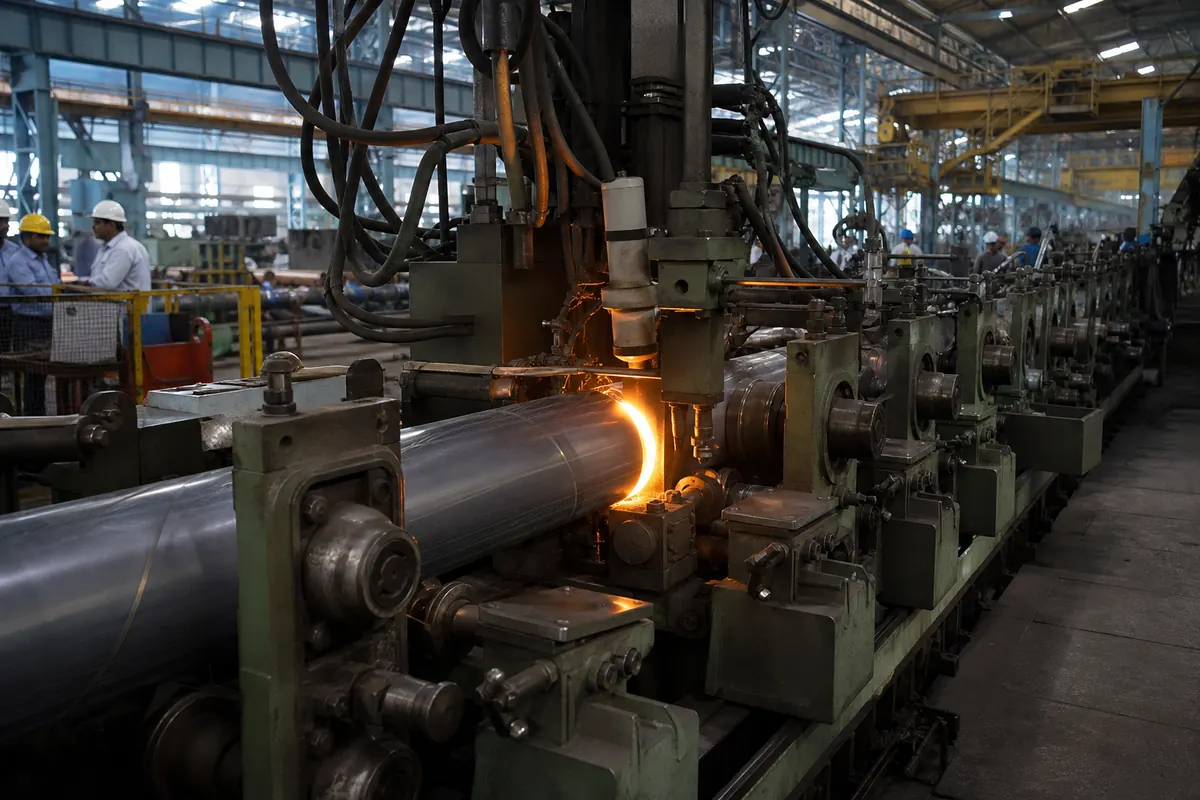
Maharashtra, Gujarat, Punjab/Haryana, and Odisha/Jharkhand mill capacity supports multiple grade programmes simultaneously when bundle segregation is disciplined.
Country-wise Opportunities
Market Snapshot
Use the matrix as a sample-kit planning tool — each destination row implies different grade, thickness, surface, and MTC-tier defaults for outreach.
Directional country opportunity profile for Indian steel pipe exporters
Swipe →
Data table — swipe horizontally on small screens
| Country | Demand Profile | Key Requirement Focus | Opportunity Note |
|---|---|---|---|
| USA | ASTM A53/A106, API 5L, structural hollow sections | EN 10204 MTC, hydrostatic test, US antidumping duty order on certain welded carbon steel standard pipes and tubes from India (HTS 7306.30.x — Federal Register 2024-00397) | Major HS 7304–7306 corridor — verify live duty and safeguard treatment |
| UAE | GI/ERW re-export and Gulf construction | MTC, IS 1239/BS 1387 declarations per buyer spec | Sea freight from Mundra/Nhava Sheva; Gulf tariff treatment |
| UK | BS 1387, EN 10219 hollow sections, seamless and ERW | EN 10204 MTC, BS 1387 / UK product-rule alignment where applicable | Verify post-Brexit UK Global Tariff and BS/EN product-rule alignment |
| Bangladesh | MS black and GI ERW for construction | SAFTA COO where applicable, Chattogram or overland delivery | Major HS 7306 corridor — verify NBR preferential tariff live |
| Nepal | Land-border ERW and GI construction demand | EN 10204 MTC, SAFTA certificate of origin | Priority SAFTA short-haul corridor — overland via Raxaul–Birgunj and similar gates |
| Iraq / Saudi Arabia | API 5L line pipe and large-diameter welded for oil & gas | API 5L monogram, hydrostatic test, EN 10204 3.2 MTC | Premium oilfield corridor — verify buyer qualification and end-use |
| Nigeria / Kenya | ERW, GI, MS black for infrastructure | MTC, EAC/COMESA duty context | Not SAFTA — verify regional tariff and any PVoC rules |
| Sri Lanka / Oman / Qatar | Short-sea and Gulf construction pipe | EN 10204 MTC, SAFTA or bilateral COO where applicable | Short-sea corridor from Indian ports |
Expert Insight: Corridor Discipline
Expert Insight Box
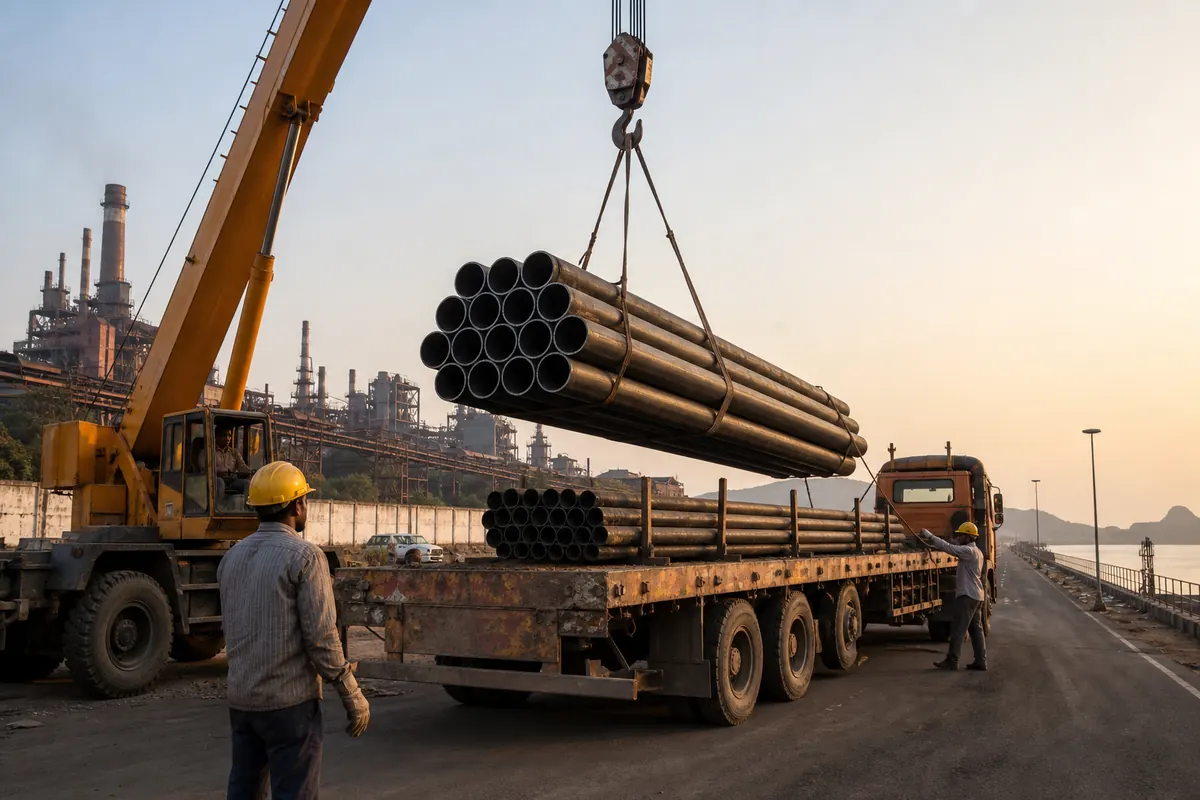
Country demand shifts faster than most steel pipes exporters update sample kits. Every quarter, revisit which grade you send to Nepal vs Bangladesh vs UAE — steel trader and stockholder and pipe fabricator investment cycles move buyer specification expectations in ways broad steel tube/pipe snapshots do not capture.
Product Categories / Variants
Summary Box
- Nepal/Bangladesh: API 5L PSL1 dominant on oil-and-gas and water-infrastructure demand
- Bangladesh/Sri Lanka: commercial + structural mix for fabricators
- Kenya/Iraq: structural GI galvanized/API 5L PSL2 where duty allows
Country demand profiles in this guide imply grade defaults — steel trader and stockholder-heavy Nepal and Bangladesh differ from pipe fabricator-heavy Bangladesh and short-haul Nepal or Bangladesh construction flows.
For the complete grade matrix see Top Steel Pipe Products Exported from India.
Core steel pipe export types (summary)
Swipe →
Data table — swipe horizontally on small screens
| Product family | Typical use | HS (India) |
|---|---|---|
| MS black ERW / GI galvanized | General construction, irrigation, fabrication | 730630 (primary); 730690 other |
| Seamless / API 5L line pipe | Oil & gas, high-pressure, industrial | 730431/730439 (carbon seamless); 730419 (stainless) |
| LSAW/SSAW large-diameter welded | Water transmission, oil & gas trunk lines | 730511/730512 |
| SHS/RHS hollow sections | Structural fabrication, infrastructure | 730661/730690 |
OD, Wall Thickness & Standard Specification Reference
Country demand drives pipe-type selection — use this matrix to translate destination buyer requirements into OD/wall and standard windows the mill MTC must confirm per bundle.
Directional specification reference bands for Indian steel pipe exports
Swipe →
Data table — swipe horizontally on small screens
| Standard / Grade | Typical OD Range | Wall Thickness | Notes |
|---|---|---|---|
| IS 1239 (MS/GI ERW) | 15–150 mm (light/medium/heavy) | 1.8–5.4 mm | Dominant construction and irrigation export grade |
| IS 3589 (large welded) | 168–610 mm+ | 5.0–12.7 mm+ | Water transmission and large infrastructure |
| IS 1161 (structural hollow) | 20–400 mm (SHS/RHS) | 1.6–12.5 mm | Fabrication and infrastructure hollow sections |
| ASTM A53 (ERW/seamless) | 10–610 mm | Schedule 10–XXS | USA and international construction corridor |
| ASTM A106 (seamless) | 10–610 mm | Schedule 10–XXS | High-temperature and pressure service |
| API 5L PSL1 (Grade B–X52) | 60–610 mm+ | 5.0–25.4 mm+ | Midstream and upstream line pipe baseline |
| API 5L PSL2 (Grade X42–X80) | 60–610 mm+ | 5.0–25.4 mm+ | Premium oilfield with impact and hardness testing |
| EN 10219 (hollow sections) | 20–400 mm (SHS/RHS) | 1.5–12.5 mm | European structural fabrication corridor |
| BS 1387 (GI pipe) | 15–150 mm | 1.8–5.4 mm | UK and Commonwealth construction demand |
Export Statistics
Key Statistics
- Directional India steel tube/pipe exports ~0.9–1.1 Mt under HS 7304–7306
- Top destinations: USA, UAE, UK, Bangladesh, Nepal, Iraq, Saudi Arabia, Nigeria, Kenya, Sri Lanka, Oman, Qatar
- Re-verify HS 7304–7306 via DGCI&S / WITS / paid extracts
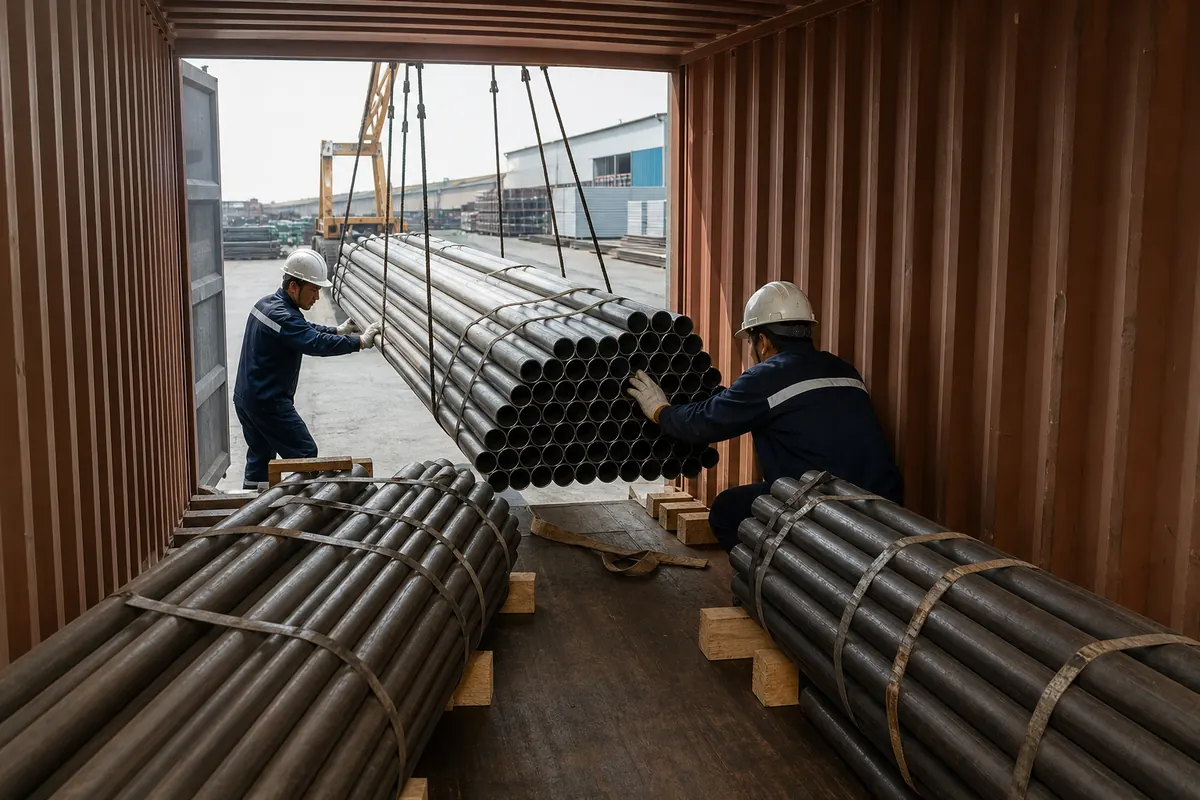
India's steel tube/pipe exports (directional DGCI&S/WITS) at ~0.9–1.1 Mt with steel pipes (HS 7304–7306) as a major tube and pipe line — use directional corridor guidance to validate which destinations align with your grade plan.
Top directional steel pipes-weighted destinations: USA, UAE, UK, Bangladesh, Nepal, Iraq, Saudi Arabia, Nigeria, Kenya, Sri Lanka, Oman, Qatar, plus Nepal, Bangladesh, Iraq — demand profiles in this guide interpret ordering patterns beyond raw steel tube/pipe aggregates.
Match country demand tiles to the export table — never cite steel tube/pipe totals as HS 7304–7306-only.
India steel pipe (HS 7304–7306) trade profile — directional planning references
Swipe →
Data table — swipe horizontally on small screens
| Metric | Directional Estimate | Notes |
|---|---|---|
| Primary production clusters | Maharashtra (Mumbai/Pune belt), Gujarat (Ahmedabad/Rajkot/Morbi), Punjab/Haryana, Odisha/Jharkhand integrated mills, Tamil Nadu | ERW, seamless, GI, and large welded pipe capacity anchoring tube export supply |
| Supporting mill corridors | Gujarat, Maharashtra, Punjab/Haryana, eastern integrated belt | Tube mills, merchant consolidation, and coating/GI lines |
| Applicable HS headings | HS 7304 seamless; HS 7305 large welded (>406.4 mm OD); HS 7306 ERW/GI/MS black/other welded; HS 7307 fittings (cross-link only) | Filing lines: India 730431/730439 (carbon seamless); 730419 (stainless seamless — verify material), 730511/730512 (large welded >406.4 mm OD), 730630 (ERW/GI circular welded), 730661/730669 (SHS/RHS), 730690 (other welded) — confirm per SKU with CHA |
| India 8-digit filing lines | 730431/730439 (carbon seamless); 730419 (stainless seamless — verify material); 730511/730512 (large welded); 730630 (ERW/GI circular welded), 730661/730669 (SHS/RHS), 730690 (other welded) | Confirm India 8-digit line with CHA per SKU before shipping-bill filing |
| Governing trade council | EEPC India (Engineering Export Promotion Council) | RCMC alongside IEC via DGFT for HS 7304–7306 tube and pipe export credibility |
| Directional India steel tube/pipe exports (HS 7304–7306, CY2023 UN Comtrade/WITS aggregate) | ~0.9–1.1 Mt (CY2023 UN Comtrade/WITS aggregate for major HS 7304–7306 lines — re-verify annually via DGCI&S/TRADESTAT) | Steel tube/pipe (HS 7304–7306) forms a large share of this basket — country demand splits by 8-digit SKU, not headline |
| Top steel pipe destinations by volume (directional WITS/TRADESTAT CY2023 — disaggregate by HS line) | 730630: Australia, USA, UAE, Canada, UK; 730511: Saudi Arabia, Indonesia, UAE, Bangladesh, Iraq; 730690: USA, Belgium, UK, UAE | Demand tiles sit under tube/pipe destination volumes — pipe mix is the steel-pipe-specific layer |
| Leading import origins into India (CY2023 WITS, HS 730630 example) | South Korea, China, Nepal, Thailand, Japan — re-verify full HS 7304–7306 heading on TRADESTAT | Country demand maps use tube/pipe context without equating it to HS 7304–7306-only demand |
| Typical export OD range | 15 mm–610 mm+ depending on pipe type and standard | Demand by country skews OD/wall bands; large-diameter welded pipe often ships under 730511/730512 |
| Common export surface conditions | Black (MS), galvanized (GI), bare seamless, coated API 5L line pipe | GI and API 5L coated lines add separate premium tiers over MS black ERW |
| Primary port gateways | Mundra, Kandla, Nhava Sheva, Paradip, Vizag, Chennai, Haldia | West-coast for Gujarat and Maharashtra belt; east-coast for Odisha/Jharkhand and eastern mills |
Import Statistics
Key Statistics
- CY2023 HS 730630 imports ~28 kt (UN Comtrade/WITS — verify full HS 7304–7306 heading)
- Two-way HS 7304–7306 trade — disaggregate export and import lines before net-position claims
- Contrast lines: CRC 7307 · coated 7307 · scrap 7307
Country demand for Indian steel pipes exists alongside imports from Japanese, Korean, Chinese, and Turkish mills into the same EU, ASEAN, and Middle Eastern corridors — Indian exporters position on grade fit, MTC discipline, and freight cadence rather than out-competing all origins on volume.
Country demand maps must acknowledge multi-origin competition inside the same HS 7304–7306 family.
Directional import demand profile by steel pipe destination market
Swipe →
Data table — swipe horizontally on small screens
| Market | Directional Demand Profile | Primary Buyer Type |
|---|---|---|
| USA | ASTM A53/A106, API 5L line pipe, structural hollow sections for infrastructure and energy | Traders, EPC contractors, oilfield distributors, stockholders |
| UAE | GI/ERW re-export distribution, API 5L for regional oilfield projects | Traders, contractors, regional distributors |
| UK | BS 1387, EN 10219 hollow sections, seamless and ERW for construction and industrial | Traders, fabricators, stockholders |
| Bangladesh | MS black and GI ERW for construction and infrastructure programmes | Contractors, fabricators, traders, development projects |
| Nepal | Land-border ERW and GI demand for construction and infrastructure | Steel traders, fabricators, contractors |
| Iraq / Saudi Arabia | API 5L line pipe and large-diameter welded for oil & gas infrastructure | National oil companies, EPC contractors, oilfield traders |
| Nigeria / Kenya | ERW, GI, and MS black for infrastructure and commercial construction | Contractors, developers, regional traders |
| Sri Lanka / Oman / Qatar | Short-sea and Gulf construction pipe demand; GI and ERW dominant | Traders, contractors, stockholders |
Pricing Analysis
Buyer Tip
- Base: dated regional steel pipes index on quote date
- Add grade / thickness / width / API 5L PSL1 grade premiums separately
- Add packing, inspection, named-port inland haulage
- Never paste an undated absolute USD/MT screenshot
Country demand tiers influence acceptable pricing structure — premium EU and infrastructure project buyer destinations tolerate higher grade premiums; short-haul corridors prioritise MS black ERW value.
Country demand tiles change premiums — Nepal SAFTA duty maths are not Bangladesh SAFTA maths; US AD duty (HTS 7306.30.x) applies only on US-bound welded pipe parcels.
Directional FOB pricing structure by steel pipe product family (regional pipe index ± premium)
Swipe →
Data table — swipe horizontally on small screens
| Product / Programme | Pricing Structure | Notes |
|---|---|---|
| MS black ERW pipe (IS 1239 / ASTM A53) | Regional pipe index reference + baseline ERW premium, FOB | Widest volume tier; premium reflects OD/wall mix and mill |
| GI galvanized pipe (IS 1239 / BS 1387) | Regional index + galvanizing premium, FOB | Zinc coating weight and spangle finish on MTC |
| Seamless pipe (ASTM A106 / API 5L) | Regional index + seamless mechanical premium, FOB | Yield, tensile, elongation, and hydrostatic guarantees on MTC |
| Structural hollow sections SHS/RHS (IS 1161 / EN 10219) | Regional index + hollow-section premium, FOB | Dimensional tolerance and weld quality per standard |
| API 5L PSL1/PSL2 line pipe | Regional index + API 5L grade and test premium, FOB | Hydrostatic test, impact test, and monogram where applicable |
| Third-party inspected lots (EN 10204 3.2) | Index + inspection and 3.2 MTC premium, FOB | SGS/BV/Intertek where buyer contract requires |
MOQ Analysis
Buyer Tip
- Trial: 5-25 MT (or 1-2 bundles) after MTC protocol
- First FCL: ~18-25 MT practical payload / 20ft
- Industrial: monthly MT or break-bulk vessel parcels
Country demand influences MOQ discipline — USA traders and EPC contractors may push straight to break-bulk parcel thresholds; Bangladesh construction contractors and stockholders accept FCL trial before scaling.
Destination handling equipment can force square-nested pipe bundle stacking trials at different bundle weights.
Directional MOQ tiers by steel pipe transaction stage
Swipe →
Data table — swipe horizontally on small screens
| Stage | Typical MOQ | Purpose |
|---|---|---|
| Trial parcel | 5-25 MT trial; standard 20ft FCL ~18-25 MT | Buyer grade evaluation, MTC verification, and dimensional/hydrostatic inspection |
| Standard FCL | Country FCL assumptions: ~18-25 MT practical 20ft payload; heavy wall pipe may force break-bulk instead | First commercial shipment; verify bundle stow and payload with CHA and forwarder |
| 40-foot FCL / HC | ~22-28 MT depending on OD/wall and route limits | Established trader and EPC contractor repeat programmes |
| Programme contract | Monthly MT contracts or vessel parcels | Trader, EPC contractor, and oilfield distributor repeat programmes |
Packaging Standards
Export Tip
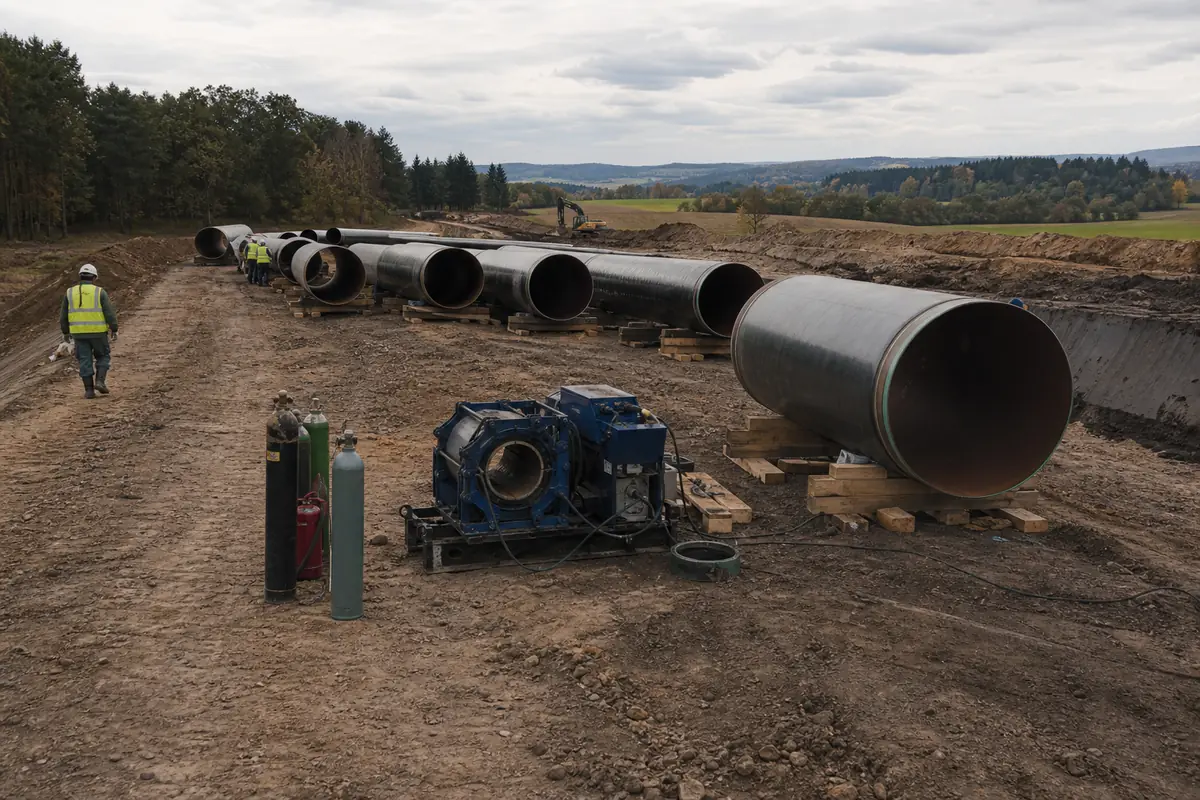
- Orientation: end-capped bundles with steel strapping per equipment
- Strapping: steel bands + edge protectors; photo before seal
- Wrap: waterproof outer + VCI for API 5L PSL1 / long ocean legs
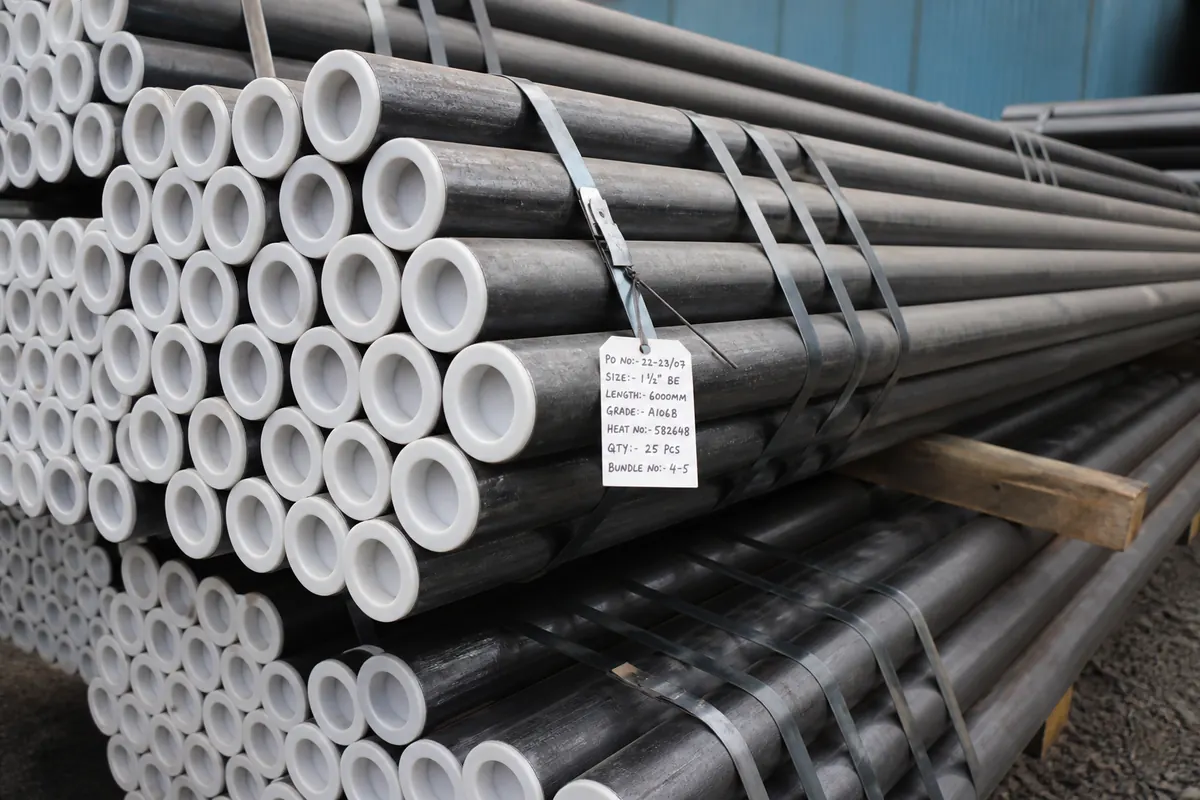
- Marks: heat/bundle tag must match packing list and MTC
Country demand drives packaging depth — SAFTA short-haul may accept baseline wrap; USA and API 5L programmes need VCI, end caps, and photographic pre-stuffing records.
Match packaging to destination handling equipment before scaling FCL cadence.
Steel pipe bundle packaging formats and export-practice standards
Swipe →
Data table — swipe horizontally on small screens
| Format | Typical Configuration | Use Case | Key Requirement |
|---|---|---|---|
| End caps | Plastic or steel caps on pipe ends | All export pipe bundles under HS 7304–7306 | Prevent edge damage and moisture ingress during transit |
| Steel strapping | Circumferential straps with edge protectors | All export bundles | Strap tension sufficient to prevent bundle slip in transit |
| Bundle tags | Heat number, grade, OD, wall, net weight on tag | All export bundles reconciled to MTC | Tag legibility after transit critical for customs |
| VCI wrap | Volatile corrosion inhibitor film over pipe body | Sea-freight parcels to humid or long-transit corridors | Prevent rust bloom on multi-week ocean legs |
| Waterproof paper | Kraft or HDPE paper interleaved between pipe layers | GI and bare seamless pipe to coastal destinations | Protect coating and surface finish during ocean transit |
| Wooden/steel skids | Marked skids under bundle tiers for forklift handling | Heavy wall and large-diameter pipe parcels | Confirm destination biosecurity rules for wooden skids (ISPM-15 where required) |
| Container dunnage | Wood or air bags between bundle tiers | FCL stuffing of dense pipe cargo | Prevent pipe ends piercing wrap during road and sea transit |
Container Loading Details
Export Tip
- ~18-25 MT practical / 20ft — confirm liner and road limits
- Lock bundle tag and OD/wall and orientation before booking
- Photograph stow + seal numbers for claim defence
- Break-bulk for larger single-mill programmes
Country demand influences container and parcel choice — European steel traders and stockholders often absorb break-bulk parcels of several hundred MT, while short-haul corridors like Nepal or Bangladesh accept smaller FCL cadence.
Directional container and break-bulk loading guidance for steel pipes
Swipe →
Data table — swipe horizontally on small screens
| Container / Mode | Loading Consideration | Typical Use |
|---|---|---|
| 20-foot FCL | Demand-side FCL: ~18-25 MT practical 20ft payload; heavy wall API 5L pipe often prefers break-bulk | Trial and standard commercial steel pipe shipments |
| 40-foot FCL / HC | ~22-28 MT depending on OD/wall; check axle load and payload limits | Established trader and EPC contractor programmes |
| Flat-rack containers | Over-length or over-diameter pipe bundles where standard FCL cannot accommodate pipe length or OD mix | Speciality dimensions beyond standard box internal clearance |
| Break-bulk vessel parcel | Pipe stowed in vessel hold with lashing, dunnage, and weather protection | Large-diameter welded and API 5L line pipe programmes to USA, UAE, Iraq, Saudi Arabia, and other volume corridors |
| Open-top containers | Used for oversized pipe lengths requiring crane loading | Large-diameter welded and project cargo pipe programmes |
Shipping Methods
Export Tip
- Samples: air-express 5-10 days for sealed pipe end-cut samples with MTC page
- Trial: FCL 2-4 weeks post-production for stock commercial and structural grades
- FCL / break-bulk: 3-6 weeks door-to-port by corridor and vessel string
- Incoterms: EXW, FOB, CFR/CIF; DDP selective for large industrial steel pipes programmes
Destination demand cadence shapes shipping mode — USA traders and EPC contractors programmes often reward monthly break-bulk parcels; Bangladesh construction contractors and stockholders accept FCL and break-bulk mixes; short-haul Nepal and Bangladesh corridors move smaller, more frequent FCL parcels at trial MOQ levels.
Certifications
Compliance Notes
Demand-tier certification maps by destination — European steel traders and stockholders and infrastructure project buyers demand ISO 9001, EN 10204 3.2, and EU CBAM readiness; USA-bound buyers require US AD duty compliance (HTS 7306.30.x); short-haul SAFTA buyers accept MTC per EN 10204 3.1 with IEC/RCMC.
Certifications and documents relevant to steel pipe export
Swipe →
Data table — swipe horizontally on small screens
| Certification / Document | Purpose | Relevant For |
|---|---|---|
| Mill Test Certificate (MTC) per EN 10204 3.1 | Chemistry and mechanical properties per heat and bundle | All steel pipe shipments — baseline requirement |
| Mill Test Certificate (MTC) per EN 10204 3.2 | Independent inspector countersignature | API 5L, oilfield, and LC-backed programmes |
| EEPC RCMC + IEC | Export registration and council membership for HS 7304–7306 | All commercial steel pipe exports from India |
| API 5L monogram (where applicable) | Licensed mill production under API Spec 5L | Oil & gas line pipe buyers requiring monogram material |
| Hydrostatic test report | Proof of pressure testing per standard/API 5L | All line pipe and pressure-service pipe shipments |
| ISO 9001 (mill) | Quality management system at producing mill | Buyers auditing mill systems |
| Third-party inspection (SGS / BV / Intertek) | Independent verification of chemistry, mechanicals, and dimensions | High-value or inspection-heavy contracts |
| Certificate of Origin | Country of manufacture; non-preferential baseline | All export shipments |
| SAFTA preferential Certificate of Origin | Duty preference among SAARC members subject to rules of origin | Nepal, Bangladesh, Sri Lanka parcels |
Buyer Requirements
Buyer Requirements
- Nepal/Bangladesh: API 5L PSL1 with SAFTA COO and hydrostatic test guarantees
- Sri Lanka/UAE: trader-grade mixed-OD/wall and clean documentation
- Kenya/Tanzania: structural GI galvanized with EAC duty modelling
- Iraq: structural/API 5L PSL2 where safeguard licence allows
- EU industrial: API 5L PSL1/API 5L PSL2 with CBAM reporting — separate from SAFTA fields
- Do not ship one generic grade card to every destination tile
Country-demand RFQs must map grade to end-use — API 5L PSL1 for oil-and-gas and water-infrastructure Nepal/Bangladesh corridors differs from mixed-OD/wall UAE trader parcels and API 5L PSL2/LSAW/SSAW infrastructure lots.
Country demand changes which extras appear — SAFTA certificate-of-origin for South Asia vs USA anti-dumping for USA/UK vs Gulf industrial documentation.
Sourcing Checklist
Checklist
Buyer Checklist
Common Buyer Mistakes
Common Mistakes Box
Future Market Trends
Key Statistics
Country demand shifts toward specification-locked structural, API 5L PSL2 / LSAW/SSAW, and API 5L PSL1 steel pipe programmes in USA traders and EPC contractors and Bangladesh construction contractors and stockholders — demand maps must update when steel traders and stockholders publish new vendor audit rules.
MS black ERW demand remains steady in price-sensitive corridors — do not assume every destination migrates to ISO 9001-approved infrastructure or premium structural simultaneously.
Exporter Checklist
Checklist
Compliance Checklist
Checklist
Compliance Notes
Sources
- DGCI&S — Directorate General of Commercial Intelligence and Statistics
- Ministry of Commerce — TRADESTAT / MEIDB
- Ministry of Steel, Government of India
- WITS — India exports HS 730630
- WITS — India exports HS 730511
- WITS — India exports HS 730690
- WITS — India exports HS 730439 seamless
- WITS — India imports HS 730630
- UN Comtrade Database
- ITC Trade Map
- India CBIC — Customs Tariff Chapter 73
- DGFT — IEC and export portal
- BIS — Bureau of Indian Standards (IS 1239, IS 3589, IS 1161)
- Ministry of Commerce — SAFTA agreement text
- EEPC India
- API — API 5L Specification
- ISO — EN 10204 inspection documents
- US Federal Register — AD order continuation India pipes 2024-00397
- USITC — Harmonized Tariff Schedule
- European Commission TARIC
- Altus Exports — Engineering Goods
- Altus Exports — Industrial Raw Materials
All sources accessed 2026-07-28 during the Steel Pipes factual audit (remediated same day). Prefer primary government and multilateral sources (DGCI&S, TRADESTAT, CBIC, BIS, WITS/UN Comtrade, SAFTA, EEPC, US Federal Register/USITC for US AD orders) when citing figures in contracts. CY2023 UN Comtrade examples (~302 kt HS 730630, ~567 kt HS 730511, ~63 kt HS 730690 exports) are line-specific — never cite ~0.9–1.1 Mt as a single-SKU figure without 8-digit isolation.
Country demand profiles reflect commercial ordering patterns — validate OD, wall, coating, and standard fit with destination buyers before scaling sample kits.
Conclusion
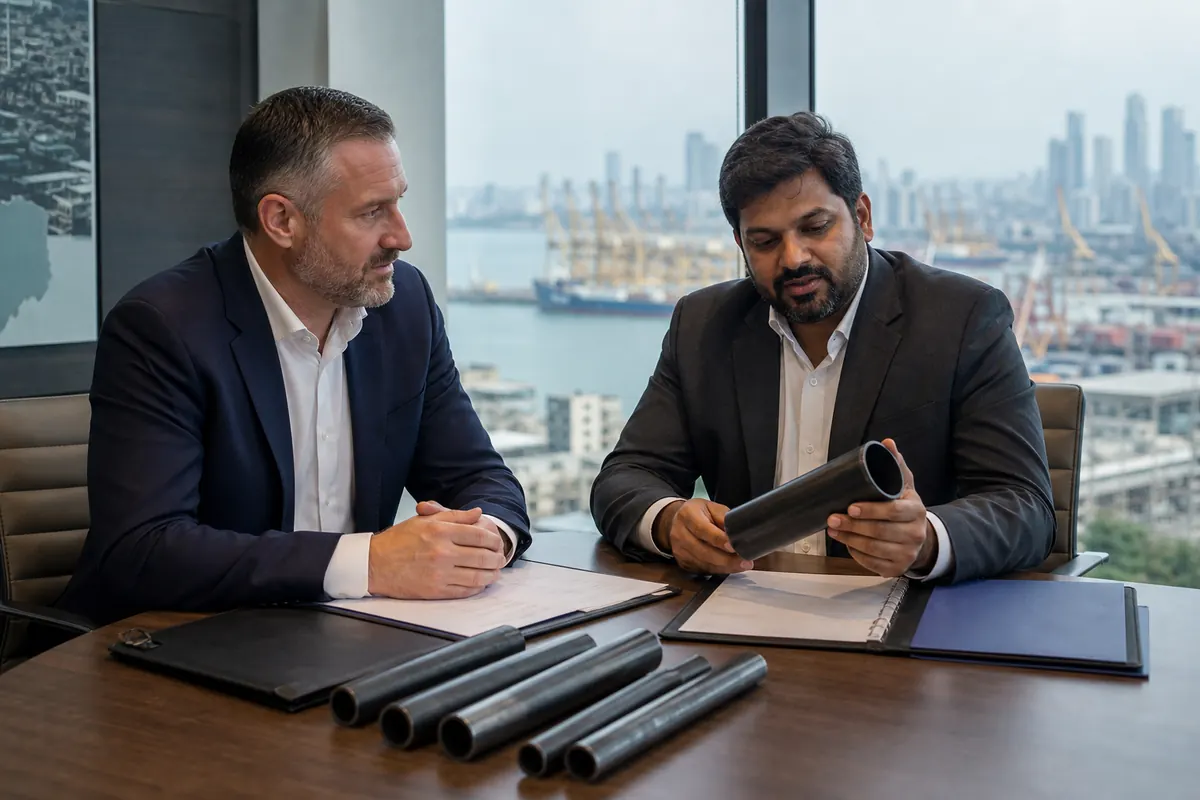
Country demand intelligence only works when sample kits change per destination — Nepalese steel traders and stockholders kits differ from Bangladesh construction contractor programmes and Nepalese short-haul flows.
Altus Exports builds destination-specific grade plans for steel traders and stockholders, EPC contractors and fabricators, pipe fabricators and stockholders, and oilfield distributors and EPC contractors — global sourcing partner from inquiry to shipment.
Cross-read Best Countries For Indian Steel Pipe Exports and Top Steel Pipe Products Exported From India.