
Organic, Saponin-Standardized Shikakai & Reetha Export Opportunities
By Saurabh Mittal, Founder, Altus Exports
A B2B guide to Indian shikakai pods and powder, reetha soapnuts and pericarp powder, hair-wash blends and saponin-rich extracts.
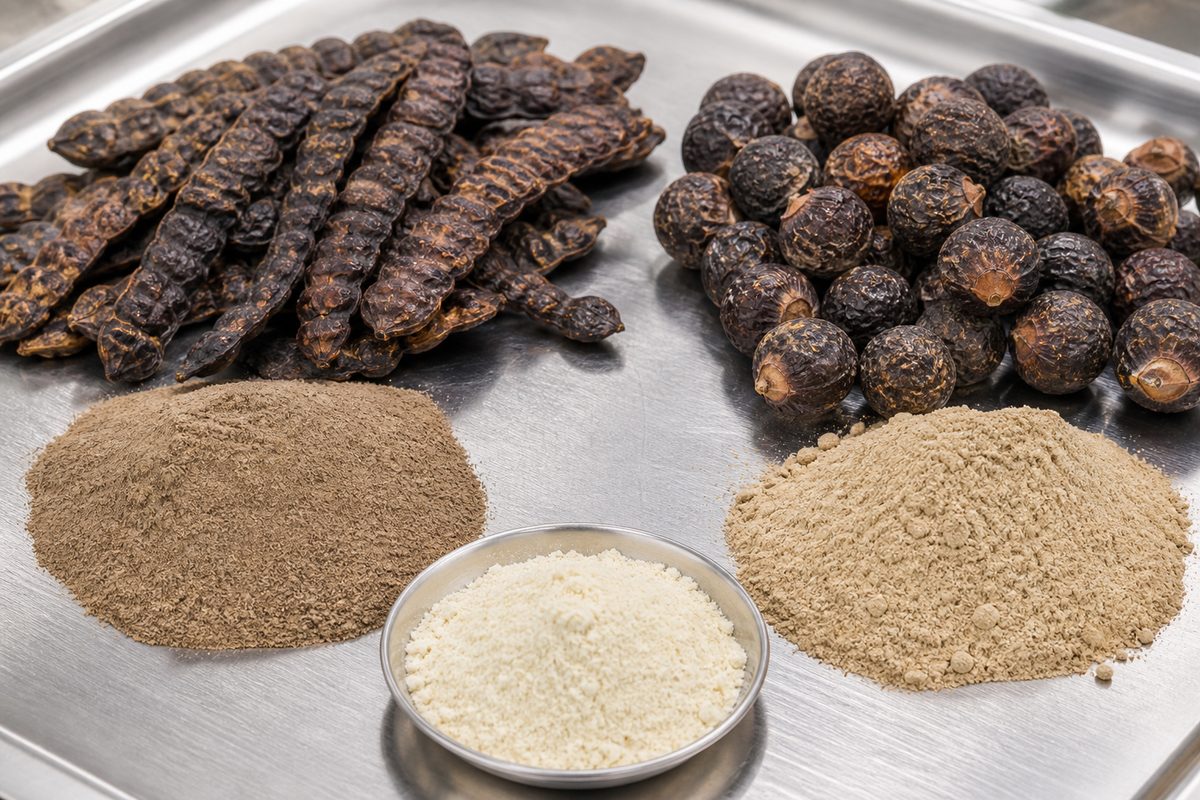
Premium Indian shikakai and reetha programmes are built on proof, not adjectives. Organic NPOP/USDA/EU pericarp or pod powder requires an intact certified chain of custody. Saponin-standardized powder or extract requires an agreed method and honest process notes. Steam-sterilized pericarp needs a treatment record, and 4:1, 10:1, or HPLC extracts need clear ratio, solvent, carrier, and marker disclosure for shikakai and reetha lots. The product catalogue shows where each premium offer belongs.
Organic pericarp powder often earns a premium over conventional shikakai and reetha powder; saponin extracts trade in mid-teens to tens of USD/kg depending on ratio, process, carrier, assay, and order scale. Buyers should verify the quote date because collection season shifts in MP or HP, certification capacity, and freight all move pricing. Premium products should not be quoted against basic commodity powder without stating the documentation, foam-profile evidence, and processing differences.
Premium demand for shikakai and reetha is strongest where brands need a defensible ingredient story: USA, EU/UK, and Canada are common starting points, with Japan and Korea for saponin HPLC. Australia requires a separate legal route check. Extract plants with WHO-GMP are preferred for sophisticated projects. Review market selection and required documents before promising a claim or delivery date.
Key Takeaways
Summary Box
Executive Summary
Summary Box
Premium shikakai and reetha value is built from disclosed evidence: organic chain of custody, declared saponin assay method, steam-treatment records, honest pericarp-to-seed ratio for reetha, and consistent foam behaviour across lots.
Brand buyers should price organic and saponin-standardized SKUs against their own documentation stack, not against commodity conventional powder that carries no method disclosure or segregation record.
Premium programmes fail on the second audit if organic segregation, saponin method, or COSMOS-aligned handling was never actually implemented at the shikakai mill or reetha pericarp line.
Organic and Saponin-Standardized Pathways
Product Categories / Variants
Summary Box
- Separate shikakai fruit-powder cards from reetha pericarp powder and whole-nut cards.
- Use shikakai-reetha-amla only as a named hair-wash triad blend — not as an amla feature.
- Do not make unsupported cosmetic or therapeutic claims on shikakai or reetha SKUs.
- Publish only SKUs the MP mill, HP aggregator, or Gujarat blend line can reproduce with lot-linked evidence.
- Version-stamp SKU cards so sales, procurement, and quality reference the same edition.
Premium shikakai and reetha catalogues elevate organic pericarp powder, saponin-standardized extracts, steam-treated hair-wash blends, and COSMOS-aligned SKUs with explicit evidence fields on every card.
Premium cards must disclose foam-profile expectations, saponin method, and organic transaction-certificate discipline; adjectives are not a substitute for a lab-supported acceptance band.
Remove premium badges when segregation, method, or foam-profile evidence is missing; leaving a premium tag on an unsupported card damages the whole catalogue's credibility.
Scan: SKU catalogue
Swipe →
Data table — swipe horizontally on small screens
| Product | Specification variables | Channel |
|---|---|---|
| Dried shikakai pods | Acacia concinna / Senegalia rugata, dried fruit, cleaning | Hair-wash and Ayurvedic retail |
| Shikakai powder | Mesh, moisture, micro | Hair-care brands and CMs |
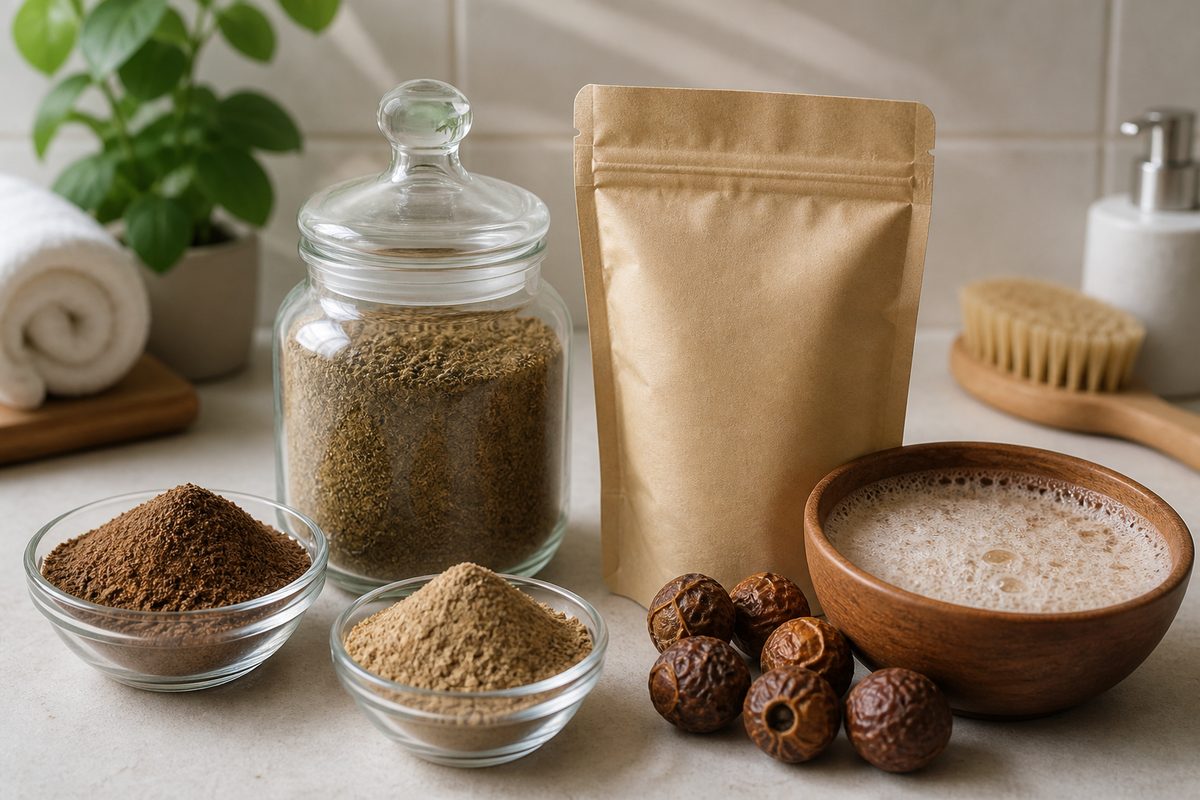
| Whole soapnuts | Sapindus mukorossi, whole fruit/pericarp | Eco-laundry and natural cleanser |
| Reetha pericarp / powder | Species, seed content, mesh, foam profile | Clean-beauty and wash powders |
| Saponin-rich grade | Declared method and acceptance band | Ingredient formulators |
| Ratio extract | Ratio, solvent, carrier, solubility | Natural-cosmetics formulators |
| Saponin HPLC extract | Marker method, residual solvents | Technical ingredient buyers |
| Organic / steam-sterilized | Certificate or treatment record | Premium brands |
| Shikakai-reetha blend | Ratio and lot traceability | Hair-wash powder |
| Shikakai-reetha-amla triad | Blend ratio and botanical labels | Hair-wash powder programmes |
| Private-label bulk | Pack and artwork scope | Retail programmes |
Quality Specification Reference
- Lock Latin name (*Acacia concinna* / *Senegalia rugata* or *Sapindus mukorossi*) and fruit/pericarp plant part.
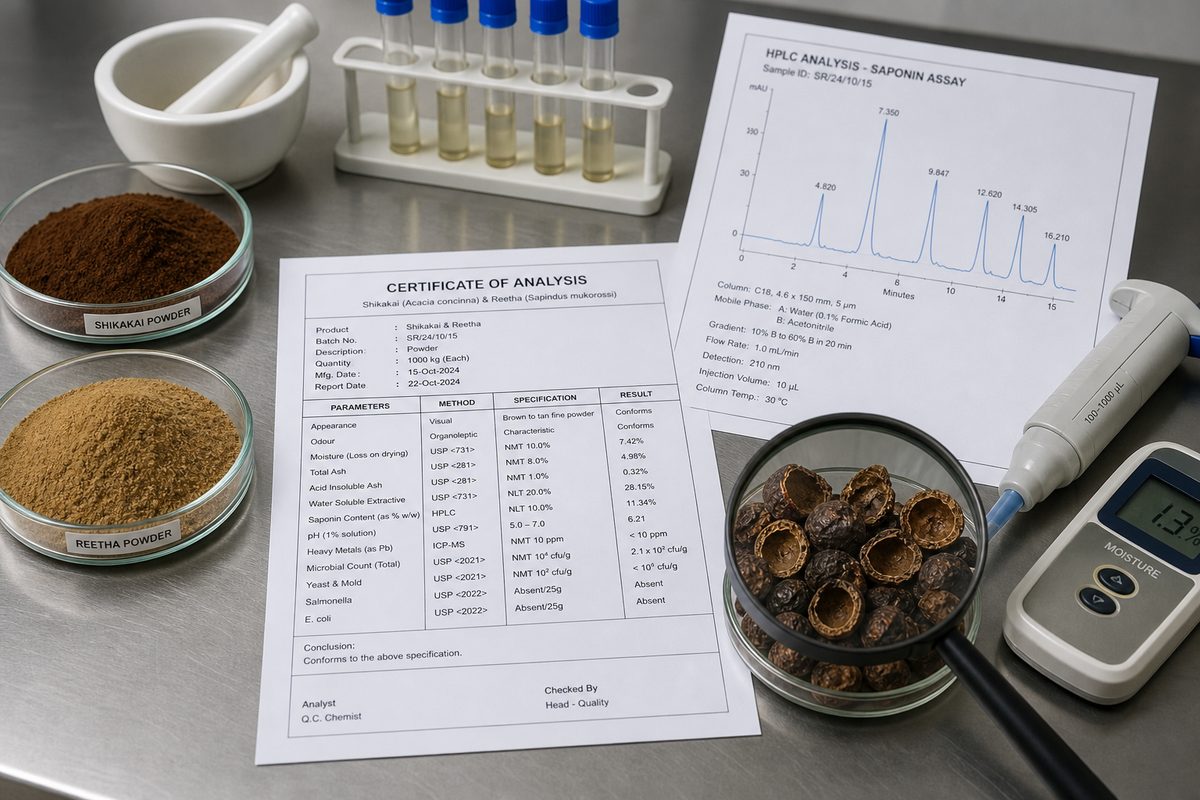
- Specify saponin only with a stated analytical method (HPLC, gravimetric, or contracted equivalent).
- Extracts need residual-solvent disclosure where applicable — treat missing data as a release blocker.
- Add a foam-profile expectation for pericarp powder and hair-wash blend SKUs.
- Retain a sealed reference sample per commercial lot ID for destination retest disputes.
Premium shikakai and reetha SKUs add saponin assay methods, organic identity, steam-treatment records, and consistent foam-profile records to the core matrix — that is where the premium price actually sits.
If the premium field cannot be evidenced on the lot COA, remove the premium claim from the card and from the invoice; a false premium destroys trust faster than any freight delay.
Assay and foam-profile disputes destroy premiums faster than shipping issues do; the lab paper and the physical sample together are the premium, not the pack graphic.
Scan: quality checklist
Swipe →
Data table — swipe horizontally on small screens
| Parameter | Pods / whole nuts | Powder | Extract |
|---|---|---|---|
| Identity | Latin name and fruit/pericarp | Latin name, plant part, mesh | Latin name, plant part, process |
| Physical | Cleaning, moisture, foreign matter | Mesh, color, moisture, flow | Ratio, carrier, solubility |
| Saponin | Method only where contracted | Method and agreed band | Saponin by stated HPLC/assay method |
| Food-safety | Agreed micro and contaminants | Agreed micro and contaminants | Micro, contaminants, residual solvents |
| Traceability | Collection and lot records | Input-to-batch records | Input and extraction records |
| Organic | Certificate where sold organic | Certificate and transaction evidence | Scope and carrier review |
| Release | COA matches lot marks | COA matches bags | COA matches drum labels |
Certifications
Compliance Notes
Premium shikakai and reetha claims collapse without organic transaction certificates, saponin method proof, or verifiable COSMOS-adjacent handling.
Charge premiums only when both certificates and analytics exist for the shipped lot, not for a similar-sounding sibling batch that stayed in India.
Segregation failures void organic cert value; a premium programme audit that finds mixed handling is a very expensive lesson.
Scan: credentials and documents
Swipe →
Data table — swipe horizontally on small screens
| Item | Purpose | Relevant programme |
|---|---|---|
| IEC | Indian export readiness | Exporter file |
| AYUSH / FSSAI as applicable | India-side KYC and appropriate framing | Ayurvedic or food-adjacent programmes |
| COA | Identity, saponin where contracted, moisture, micro, contaminants | Every commercial lot |
| NPOP / USDA / EU organic | Organic custody | Organic SKUs |
| ISO / HACCP / GMP | System evidence | Processors and packers |
| WHO-GMP | Controlled extract manufacturing signal | Extract buyers |
| COSMOS adjacency | Natural-cosmetics buyer documentation | Clean-beauty programmes |
| Halal / Kosher | Channel request | GCC and specialist buyers |
Market Size & Industry Overview
Key Statistics
Premium segments grow where brands need defensible organic and saponin-standardized stories for retail or formulation claims governance — particularly in COSMOS-linked, clean-beauty, and specialty hair-care programmes.
That premium growth does not lift undifferentiated conventional shikakai or reetha powder equally; commodity bulk still competes on freight cube and pack economics rather than on documentation depth.
Track premium share by transaction certificate volume, saponin method disclosure, and repeat-audit outcomes — not by adjective density on a supplier website that photographs a lot of pods and none of the release process.
Manufacturing Overview
Export Tip
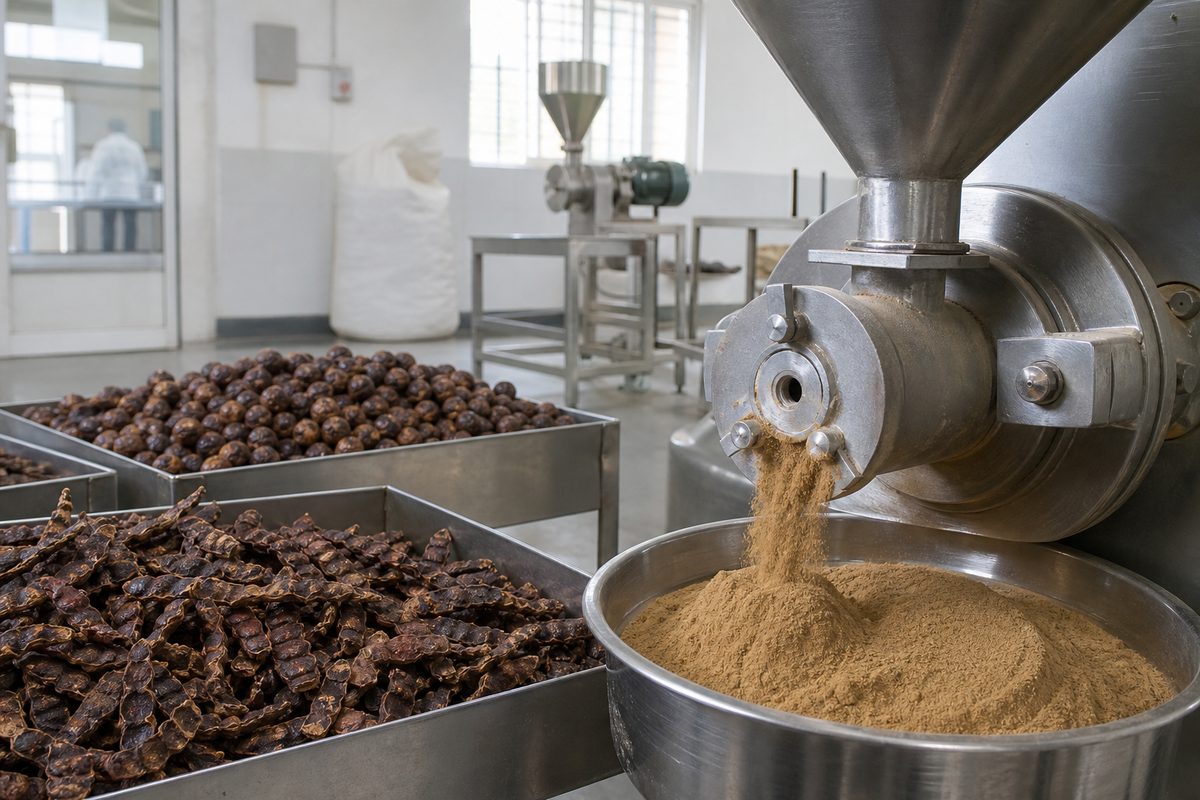
Premium shikakai and reetha manufacturing requires validated segregation, calibrated saponin methods, and honest foam-profile reporting on pericarp powders after drying and milling.
Steam sterilization of pericarp or blend material must be recorded as a process step with post-treatment micro results — not glossed as an ambient claim on a brochure.
Saponin standardization needs method SOPs, retained references, and lab identity — not brochure percentages that shift between quotes and lots.
Export Statistics
Key Statistics
- India HS 130219 exports ≈ USD 539.8M / 18,857,300 kg CY2024 (WITS) — multi-botanical parent, not shikakai/reetha-only.
- Confirm each finished SKU (pod, powder, whole nut, pericarp, blend, extract) with CHA and destination broker.
- Re-check current trade data on the quote and shipping-bill date before customer conversations.
- Verified India soapnut lines: 14049021 (powder) and 14049029 (other) — never file reetha powder under 1211.90 by habit.
- Archive the classification note beside every export-stat slide used with buyers.
Premium dossiers should separate organic and saponin-standardized commercial evidence from parent HS trade headlines; a COSMOS-linked buyer wants proof of segregation, not a bar chart of botanical exports.
A saponin-standardized extract programme is not validated by multi-botanical export totals; it is validated by an assay method, a lab identity, and a repeatable acceptance band.
Keep premium pricing justification in methods, transaction certificates, and lot-level foam-profile records — not in WITS screenshots that any competitor can screenshot for the same client tomorrow.
Scan: trade & HS context (directional — verify on quote date)
Swipe →
Data table — swipe horizontally on small screens
| Metric | Position | Buyer note |
|---|---|---|
| Core products | Dried shikakai pods/powder; whole reetha soapnuts/pericarp/powder; blends and saponin extracts | Lock Latin name, plant part and form |
| Origins | MP, Chhattisgarh and Maharashtra shikakai; HP and Uttarakhand Sapindus mukorossi; Gujarat packing/blends | Verify processing site per lot |
| Shikakai pods/powder cue | ITC-HS 1211.90 family (no dedicated audited shikakai national line) | CHA confirms live eight-digit line |
| Reetha soapnut powder (verified) | India 14049021 — Soap-nuts: Powder | Do not file reetha powder under 1211.90 by habit |
| Whole / other soapnuts (verified) | India 14049029 — Soap-nuts: Other | CHA confirms finished article vs powder |
| Extract cue | HS 1302.19 / India 13021919–13021990 cues | Saponin % is a COA field, not an HS nickname |
| Parent extract trade context | India HS 130219 ≈ USD 539.8M / 18,857,300 kg CY2024 (WITS) | Multi-botanical parent, not shikakai/reetha-only |
| Ports | Mundra, Nhava Sheva, Chennai, Tuticorin | Choose after route and sailing review |
Import Statistics
Key Statistics
- Segment destinations by hair-care, clean-beauty, wash-powder, or eco-laundry channel.
- Confirm importer's cosmetics or wash-powder route before shipment scheduling.
- Match SKU (pod, powder, whole nut, pericarp, blend, extract) to importer capability, not just to country.
- Refresh partner data and prior-notice needs for USA and EU shikakai and reetha entries per trial.
- Track repeat RFQs from the same importer as the honest pull-through signal.
Premium import channels scrutinize organic transaction certificates, saponin method disclosure, and pericarp-integrity records more than commodity importers do; the paperwork bar is genuinely higher.
Australia routes for hair-care and cosmetic-adjacent shikakai and reetha ingredients need counsel-led pathway checks before retail-format assumptions are quoted; a certified organic pericarp powder is not the same as a listed therapeutic ingredient.
Premium import success tracks evidence completeness — TC, COA, method, pack integrity — not brochure adjectives applied to a Gujarat-packed private-label bag.
Scan: destination demand by channel
Swipe →
Data table — swipe horizontally on small screens
| Market | Likely fit | Buyer type |
|---|---|---|
| USA | Natural hair-care powders and extracts | Brands, CMs, ingredient importers |
| EU / UK | Traceable organic powders and clean-beauty inputs | Cosmetics distributors and brands |
| UAE / GCC | Bulk hair-wash and Halal-ready programmes | Distributors and re-exporters |
| Canada / Australia | Premium natural cleanser programmes | Specialist brands; confirm pathway |
| Japan / Korea | Fine powders and tightly specified extracts | Formulators and distributors |
| SE Asia | Bulk soapnut and hair-care formats | Regional wholesalers |
Pricing Analysis
Buyer Tip
Premium shikakai and reetha pricing is evidence pricing: organic transaction certificates, saponin method disclosure, steam-treatment records, and consistent foam-profile reports across the last three lots.
If the evidence stack is incomplete, do not charge premium bands; a Gujarat-packed premium pouch with weak paperwork underneath is a bad deal for everyone.
Defend premiums with COA fields, method SOPs, and TC numbers — not with adjectives about how natural or wild the source belt is.
Scan: FOB USD/kg bands (directional — verify quote date)
Swipe →
Data table — swipe horizontally on small screens
| Product | FOB position | Driver |
|---|---|---|
| Commodity shikakai/reetha powder | Low-to-mid single digits | Mesh, cleaning, micro, lot size |
| Whole soapnuts | Often lower USD/kg; CBM-sensitive | Pericarp quality, dryness, freight cube |
| Organic powder | Mid single digits to mid-teens+ | Certification custody and segregation |
| Shikakai-reetha blend | Above single-botanical commodity bulk | Ratio, packing, private label |
| Ratio extract | Mid-teens upward | Solvent, carrier, ratio, documentation |
| Saponin-standardized extract | Mid-teens to tens+ | Assay method, grade and volume |
MOQ Analysis
Buyer Tip
Premium shikakai and reetha MOQs must cover segregation, saponin method release, and TC administration costs without pretending commodity minimums still apply to organic or standardized SKUs.
Saponin HPLC extract trials at 25–100 kg are often enough to prove fit for a COSMOS-linked brand before wholesale commitment.
Do not discount premium evidence to win unsafe volume; a premium lot forced through at commodity price loses the entire margin story.
Scan: MOQ ladder (commercial practice — not statutory; agree in writing)
Swipe →
Data table — swipe horizontally on small screens
| Stage | Typical quantity | Purpose |
|---|---|---|
| Sample | 100 g–2 kg | Identity, foam and formulation review |
| Powder trial | 100–500 kg | Lot and packing validation |
| Extract trial | 25–100 kg | Assay and formulation work |
| Powder wholesale | 1–5 MT+ | Recurring bulk programme |
| Extract wholesale | 200 kg–1 MT+ | Established specification |
Packaging Standards
Export Tip
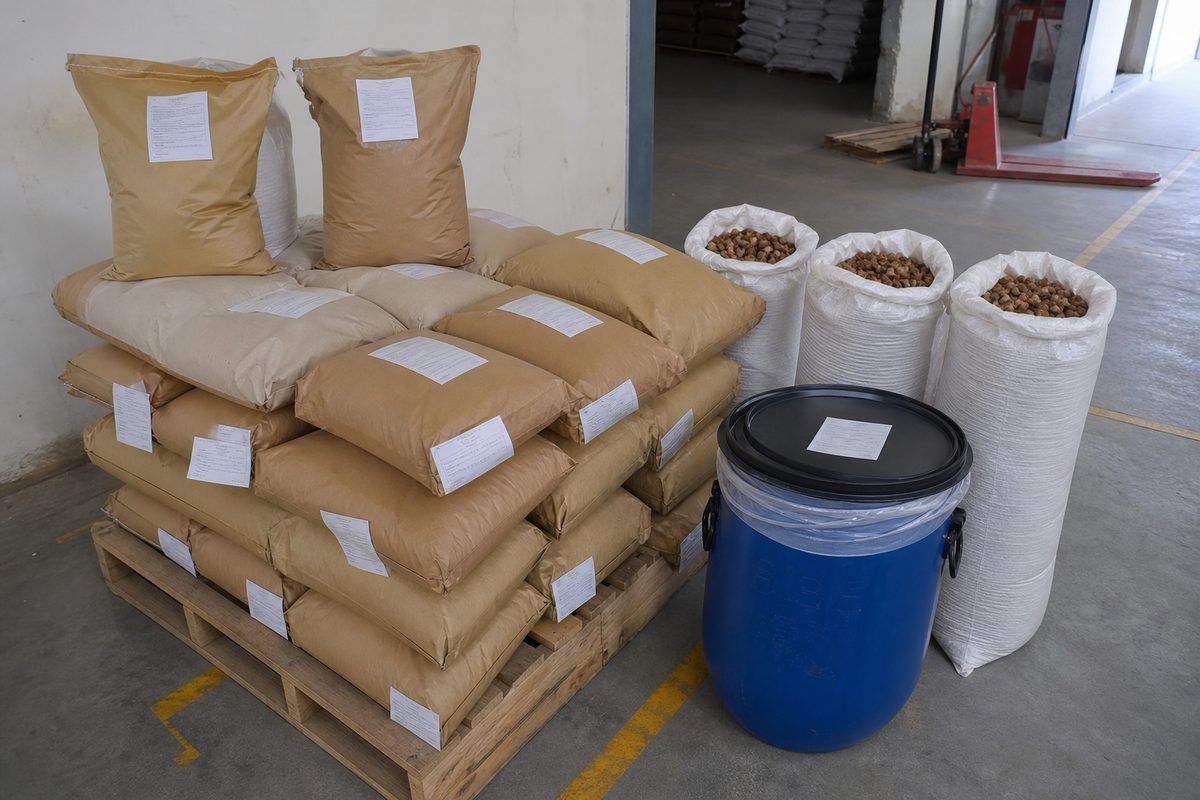
Premium packs often justify fiber drums and stricter lot tagging for shikakai and reetha pericarp powders, saponin extracts, and organic hair-wash blends.
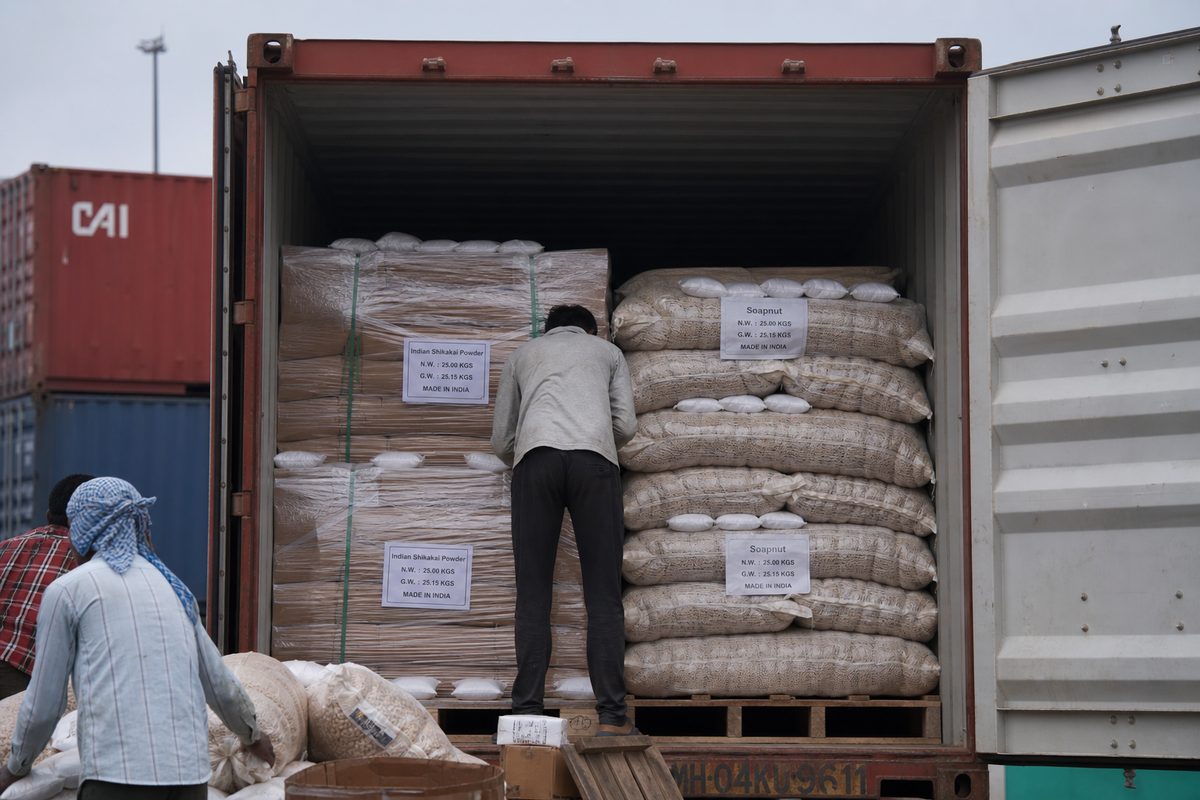
Organic packs need segregation marks through the warehouse, on the truck, and into the container so the transaction certificate story remains provable.
Saponin-standardized lots need explicit storage cues on the outer pack so downstream handling doesn't quietly compromise the assay.
Scan: export packing formats
Swipe →
Data table — swipe horizontally on small screens
| Format | Configuration | Control |
|---|---|---|
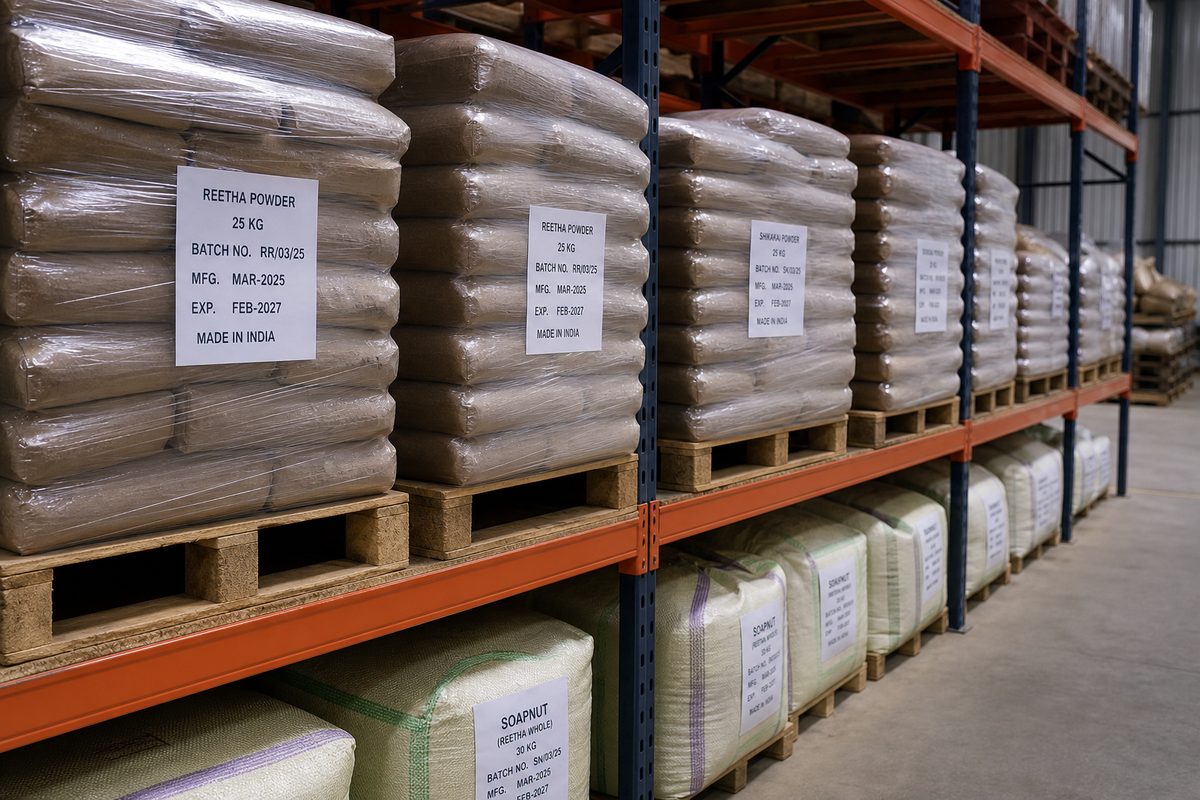
| Powder | 20/25 kg lined kraft or PP bags; fiber drums | Lot tags and moisture barrier |
| Whole soapnuts | Woven PP, jute, or cartons as contracted | Protect pericarp and prevent moisture |
| Extract | 25 kg HDPE drums with double liner | Seal, label and traceability |
| Blends | Lot-segregated lined bags | Show botanical ratio on label |
| Private label | Buyer-approved pouches or cartons | Artwork and destination review |
Container Loading Details
Export Tip
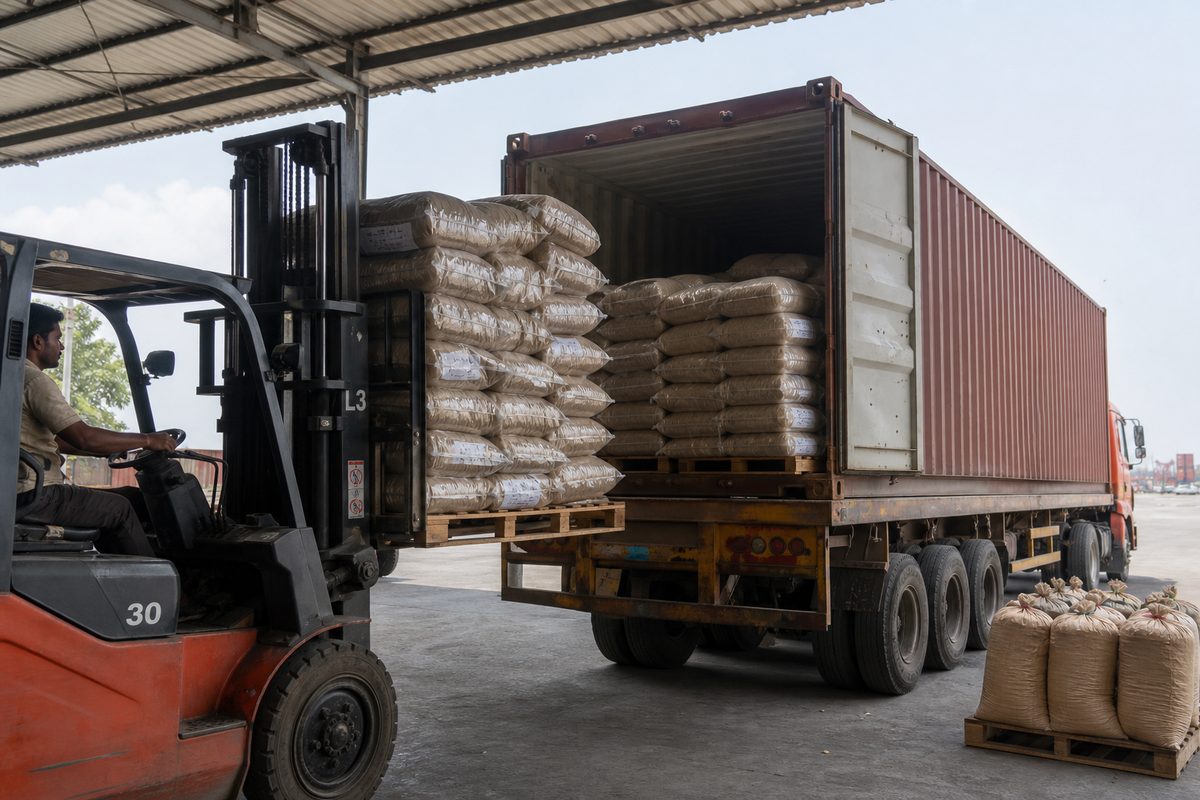
Premium shikakai and reetha lots may warrant lower stack heights, extra liners, and desiccant packs — price the protection into the offer honestly.
Document desiccants, humidity indicators, and any heat-shield materials in the packing list remarks when used for organic or saponin-standardized cargo.
Never compromise premium evidence with careless stuffing; a pallet drop or a burst liner can void an organic transaction certificate's real-world credibility.
Scan: dispatch modes (density-dependent — do not invent fixed MT)
Swipe →
Data table — swipe horizontally on small screens
| Mode | Use | Planning point |
|---|---|---|
| Courier / air | Samples and urgent trials | Protect against humidity and odor |
| LCL | Trials below container scale | Palletize and segregate mixed loads |
| 20-foot FCL | Bulk powder or nuts | Confirm actual density and payload |
| 40-foot HC | High-volume powder | Cube with forwarder |
| Drum shipment | Extract orders | Confirm gross weight and storage conditions |
Shipping Methods
Export Tip
- Air or courier for shikakai and reetha samples; LCL for trials; FCL for validated wholesale.
- Use Mundra, Nhava Sheva, Chennai, or Tuticorin after route, sailing, and consolidation review.
- Do not offer DAP or DDP until destination duty and cosmetics or wash-powder pathway liability are understood.
- Inspect and photograph the empty container before stuffing at the packing site or CFS.
- Keep container, seal, and lot IDs consistent across BL draft, packing list, and shipping bill.
Premium shikakai and reetha shipments may justify special handling, monitoring, and low-stack pallet layouts — allocate cost transparently on the quotation.
Organic pericarp powder and saponin extract lots need continuity of custody through the port terminal, not just at the plant gate.
Share tracking and document-handover SLAs with premium accounts so a repeat programme has a predictable rhythm.
Buyer Requirements
Buyer Requirements
- RFQ: Latin name, plant part, form, mesh or ratio, destination, quantity, pack, Incoterm.
- Methods: agree saponin analytical method and foam-profile expectation before sample dispatch.
- Tests: confirm micro, heavy-metal, and pesticide-residue expectations against destination MRLs.
- Labels: approve artwork and outer-mark wording before production; artwork drift is a launch-date risk.
- Pathway: confirm cosmetics, wash-powder, or eco-laundry route with importer's broker before DAP/DDP.
Premium shikakai and reetha buyers often require organic scope, saponin methods, or COSMOS-adjacent handling written into the RFQ itself.
If a premium buyer cannot state methods, help them draft — then freeze — the specification so both sides have a shared reference.
Premium requirements justify premium lead times; a certified organic pericarp powder programme is not a two-week response.
Country-wise Opportunities
Market Snapshot
Premium shikakai and reetha country programmes need evidence-ready files before outreach — organic TCs, saponin methods, foam-profile records, COSMOS-adjacent handling notes.
Do not lead with premium claims in corridors that will not pay for them; a bulk-first market is not going to fund your saponin HPLC extract.
Align organic pericarp and saponin-standardized offers to USA, EU/UK, and Canada first in most plans before extending to premium-thin corridors.
Scan: country fit map
Swipe →
Data table — swipe horizontally on small screens
| Market | Product fit | Requirement focus | Opportunity |
|---|---|---|---|
| USA | Powder, blends, extracts | Supplier file; route confirmed by importer | Natural hair-care and CM base |
| EU / UK | Organic powder and documented extracts | Cosmetics pathway and contaminants | Clean-beauty distributors |
| UAE / GCC | Bulk powder and private-label packs | Halal where needed; heat-safe logistics | Regional distribution |
| Canada / Australia | Premium natural-cleanser inputs | Confirm local product route | Specialist programmes |
| Japan / Korea | Fine mesh and saponin extracts | Tight technical file | Quality-led formulators |
| SE Asia | Soapnut and powder bulk | Practical pack and import alignment | Distributor expansion |
Sourcing Checklist
Checklist
- Confirm the exact packing site in MP, Chhattisgarh, Maharashtra, HP, Uttarakhand, or Gujarat matches the file.
- Verify retained-sample policy, corrective-action behaviour, and subcontracting disclosure before deposits.
- Stage samples (100 g–2 kg) then trials (100–500 kg powder or 25–100 kg extract) before wholesale.
- Match legal names and addresses across IEC, FSSAI, AYUSH, and shipping documents.
- Require anonymized COA and foam-profile examples per SKU under review.
Premium sourcing checklists add organic segregation records, saponin method SOPs, steam-treatment logs, and foam-profile references for shikakai and reetha.
Walk segregation lines physically when claiming organic pericarp powder or a COSMOS-adjacent hair-wash blend; paperwork alone is not proof.
Reject absolute saponin promises without a stated method; a percentage in a brochure is a marketing sentence, not a specification.
Common Buyer Mistakes
Common Mistakes Box
- Form mix-up: do not treat whole reetha soapnuts, pericarp powder, shikakai pod powder, and extracts as interchangeable.
- Method gap: do not accept a saponin percentage without a stated analytical method on the COA.
- Scale jump: do not jump from courier sample to FCL without a completed trial and prior-shipment review.
- Stat misuse: do not present parent HS 130219 (≈ USD 539.8M / 18,857,300 kg CY2024) as shikakai/reetha-only trade.
- Claim overreach: avoid unsupported cosmetic or therapeutic claims on pod, powder, blend, or extract cards.
Premium mistakes: charging organic prices without transaction certificates, promising undegraded saponin after harsh drying, and using COSMOS-adjacent language without the handling to back it up.
Segregation failures are fatal on the second audit; a premium tier without segregation evidence is a marketing claim, not a product.
Evidence first, premium second — the price defends only what the paperwork can prove.
Future Market Trends
Key Statistics
Premium trends center on organic custody, honest saponin methods, and COSMOS-adjacent handling that survives a retailer audit.
Brands pay for defensibility under retailer audits; a shikakai and reetha lot without lot-linked evidence is priced out of that conversation.
Commodity powder does not automatically ride premium growth; the two tiers are drifting further apart in evidence and in price.
Challenges & Solutions
Challenge: premium price pushback on organic pericarp powder or saponin extract — solve by showing evidence stacks side by side with commodity COAs.
Challenge: saponin method disputes with a downstream lab — solve with pre-agreed methods, lab identity, and acceptance bands.
Challenge: launch calendar slips on private-label hair-wash blends — solve with realistic 4–8 week planning and freeze dates.
Compliance Checklist
Checklist
Compliance Notes
Premium compliance fails when segregation or saponin methods are missing on organic pericarp powder, hair-wash triad blends, or saponin extracts — disclose or do not sell.
Retailer audits will test organic custody and saponin method files; a premium programme that cannot present both loses the account.
Keep claim committees aligned with COA fields so marketing does not outrun what the lab paper can actually defend.
Trade Classification and Product Description
Compliance Notes
- Shikakai pods/powder: ITC-HS 1211.90 family (no dedicated audited shikakai national line) — CHA confirms.
- Reetha soapnut powder: verified India 14049021; whole/other soapnuts: 14049029 — CHA confirms finished article.
- Saponin extracts: HS 1302.19 / India 13021919–13021990 cues; assay % is a COA field, not an HS nickname.
- Destination HTS or TARIC may differ — confirm with the importer's broker; never invent MFN rates from memory.
- Reconcile HS language across invoice, packing list, and shipping bill for every shikakai and reetha lot.
Premium saponin extracts of shikakai and reetha still file under extract cues when concentrated — do not force powder codes onto extract lots to save a rate.
Carrier and solvent details help brokers classify saponin extracts correctly; disclose them upfront on the classification note.
Document the classification decision in the premium dossier so a repeat audit can retrace the reasoning.
Sources
- WITS — India HS 130219 exports CY2024
- UN Comtrade Database
- DGCI&S / TradeStat — Indian trade statistics
- DGFT — Directorate General of Foreign Trade (IEC)
- ICEGATE — Indian Customs EDI Gateway
- EximGuru — India HS 14049021 Soap-nuts: Powder
- EximGuru — India HS 14049029 Soap-nuts: Other
- EximGuru — Chapter 1404 vegetable products
- EximGuru — Chapter 1211 medicinal / perfumery plants
- Ministry of AYUSH
- FSSAI — Food Safety and Standards Authority of India
- APEDA — NPOP organic
- USDA Organic
- COSMOS / COSMetic Organic and Natural Standard
- FDA — cosmetics
- CBP CROSS ruling NY N235288 — soap nuts from India
- USITC Harmonized Tariff Schedule
- EU Access2Markets
- EU TARIC — customs tariff database
- EU Pesticides Database — MRLs
- TGA Australia
- ITC Trade Map
- ICC — Incoterms rules
Premium dossiers for organic shikakai pericarp, saponin-standardized extract, or COSMOS-adjacent blend should attach organic and pathway references where relevant.
Do not let marketing outrun the primary sources linked below; a premium claim needs a primary reference to defend it.
Re-verify classification, duties, destination cosmetics or wash-powder pathway, and lot records on the quote date. Parent HS 130219 (≈ USD 539.8M / 18,857,300 kg CY2024, WITS) is multi-botanical context, not shikakai/reetha-only trade data.
Clickable government, intergovernmental, and market-intelligence references used across the shikakai and reetha cluster:
Conclusion
Premium shikakai and reetha programmes earn their bands through organic custody, saponin method honesty, and COSMOS-adjacent handling discipline.
Altus coordinates premium trials with documentation discipline from India — TC continuity, method SOPs, foam-profile records — rather than adjective-heavy pitches. Compare formats in the shikakai and reetha product guide.
Map launch calendars and methods before promising retail dates so a private-label programme can actually meet the buyer's shelf reset Contact Altus Exports with product form, destination, quantity, pack, certificates, and analytical requirements for a structured trial.