
Source Christmas Ornaments Directly from India: Importer Playbook
By Saurabh Mittal, Founder, Altus Exports
A practical buyer playbook for sourcing Christmas ornaments directly from India — RFQ specification, multi-cluster workshop audits across Firozabad glass, Saharanpur wood, Moradabad metal, Kashmir papier-mache, Khurja ceramic, and Delhi-NCR consolidation, motif and paint sampling, breakage QC, MOQ discipline, payment structuring, seasonal packing calendars, and landed-cost calculation for importers in the USA, Germany, UK, Netherlands, Sweden, Denmark, Canada, Australia, France, UAE, and Japan, with expert insight from Altus Exports.
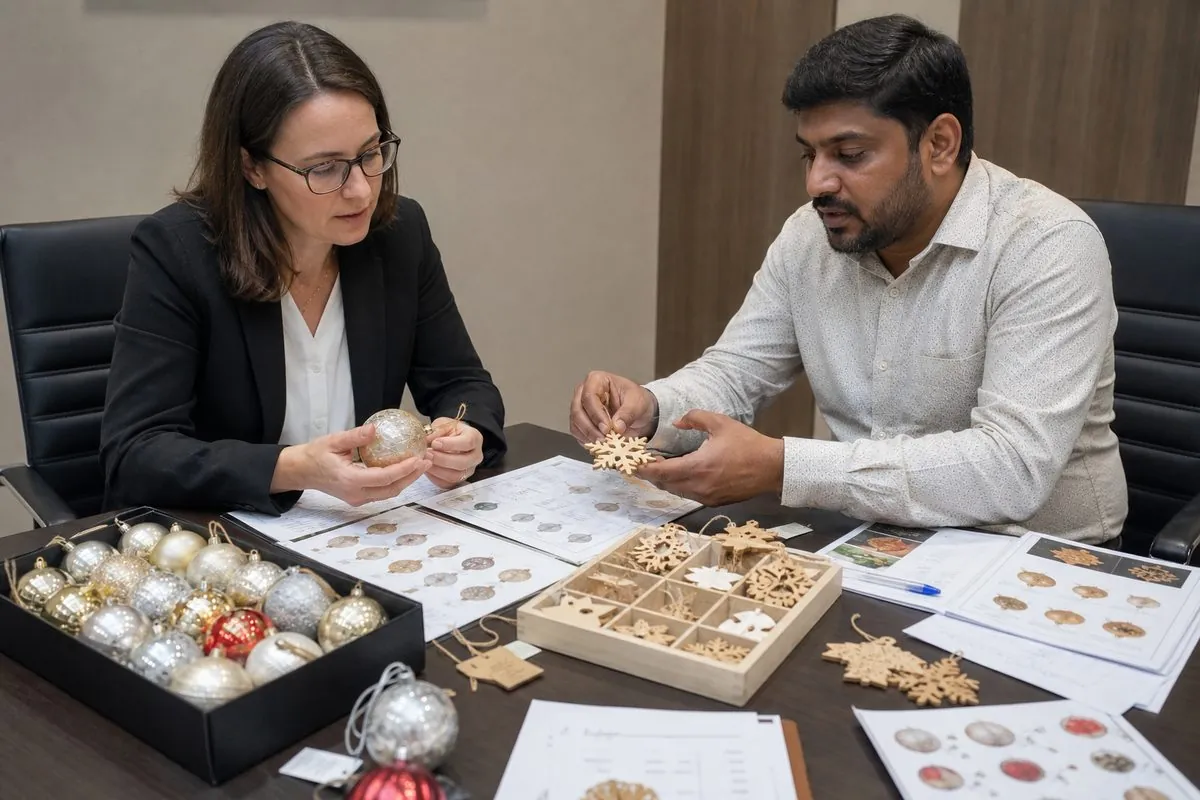
India's Christmas ornament sector — hanging baubles, blown-glass ornaments, wooden tree ornaments, metal and brass festive hangers, papier-mache lacquer Christmas ornaments, ceramic and terracotta festive figurines, fabric and felt ornaments, resin and mixed-media Christmas figures, tree toppers, ornament gift sets, and retail private-label assortments — gives international buyers a distinctive sourcing proposition: deep forming and finishing capacity across Firozabad (glass), Saharanpur and selective Jodhpur (wood), Moradabad (metal), Srinagar and the Kashmir Valley (papier-mache), Khurja and ceramic belts (ceramic/terracotta), textile soft hubs (fabric/felt), and merchant consolidation through Delhi-NCR export houses. Directionally, WITS/Comtrade 2024 shows India exported about US$117.31 million (10,330,600 kg) under HS 950510 (articles for Christmas festivities). Broader EPCH handicrafts excluding carpets reached roughly Rs 33,122.79 crore / US$3,917.89 million in FY 2024–25 — sector context only, never a Christmas-only total.
Buyers who try to source Christmas ornaments directly from India without a structured process hit predictable problems: fair-shelf glass samples followed by bulk-lot paint flaking or hang-loop pull failures, shattered baubles from soft cartons and over-stacked containers, Prop 65 or REACH paint gaps that surface only after goods reach California or Hamburg retail, motif drift between approved gold-red references and production lots, missing or unverifiable IEC and EPCH RCMC documentation, and programmes booked too late for Christmas retail cut-offs. None of these failures are inherent to Indian Christmas manufacturing — they are the result of skipping verification steps under seasonal launch-date pressure.
This guide is written for importers, holiday specialty buyers, mass-retail private-label teams, department-store gift buyers, e-commerce assortment managers, and wholesale distributors in the USA, Germany, UK, Netherlands, Sweden, Denmark, Canada, Australia, France, UAE, and Japan who want to source Christmas ornaments directly from India with a repeatable, lower-risk process. It owns the buyer-side operational playbook — how to write an RFQ, how to audit multi-cluster workshops, how to sample and approve motifs with paint evidence, how to size MOQ and structure payment, how to run breakage and crush QC, and how to decide landed cost against a seasonal calendar. Market-selection questions live in Best Countries for Indian Christmas Ornament Exports; end-to-end export registration and process depth live in How to Export Christmas Ornaments from India; SKU taxonomy lives in Top Christmas Ornament Products Exported from India; private-label and lead-safe depth lives in Private Label, Lead-Safe & Sustainable Christmas Ornament Export Opportunities. This post does not own full IEC/EPCH registration how-to or trade-show calendars — those live in the pillar and trade-shows guides.
Key Takeaways
Summary Box
Executive Summary
Summary Box
This guide sets out a structured buyer playbook for sourcing Christmas ornaments directly from India: define specifications and motif references, identify and audit cluster workshops across Firozabad, Saharanpur, Moradabad, Kashmir, Khurja, soft hubs, and Delhi-NCR consolidators, request samples with production lot references and paint evidence, evaluate hang-loop strength, paint adhesion, colour match, and packing crush protection, negotiate on a landed-cost basis, place a trial order with written terms, run pre-shipment inspection on breakage risk and packing integrity, and manage logistics through Nhava Sheva, Mundra, or ICD Delhi / Dadri to arrival at destination — timed against Christmas retail cut-offs.
Because India's Christmas ornament supply chain runs from village glass-blowing and carving units through mid-sized metal and ceramic lines, Kashmir papier-mache ateliers, and Delhi-NCR merchant exporters at highly variable formalisation levels, the highest-leverage buyer action is independent verification — of IEC and EPCH RCMC status, of paint and coating documentation for Prop 65 and REACH destinations, of hang-loop and breakage discipline, of motif fidelity between approved references and bulk lots, and of export packing with tissue/foam separators for a category where shatter in ocean transit is the operational killer. Buyers who build this discipline into their first order convert faster into stable repeat-programme relationships than buyers who source on sample photos and FOB price alone.
Market Size & Industry Overview
Key Statistics
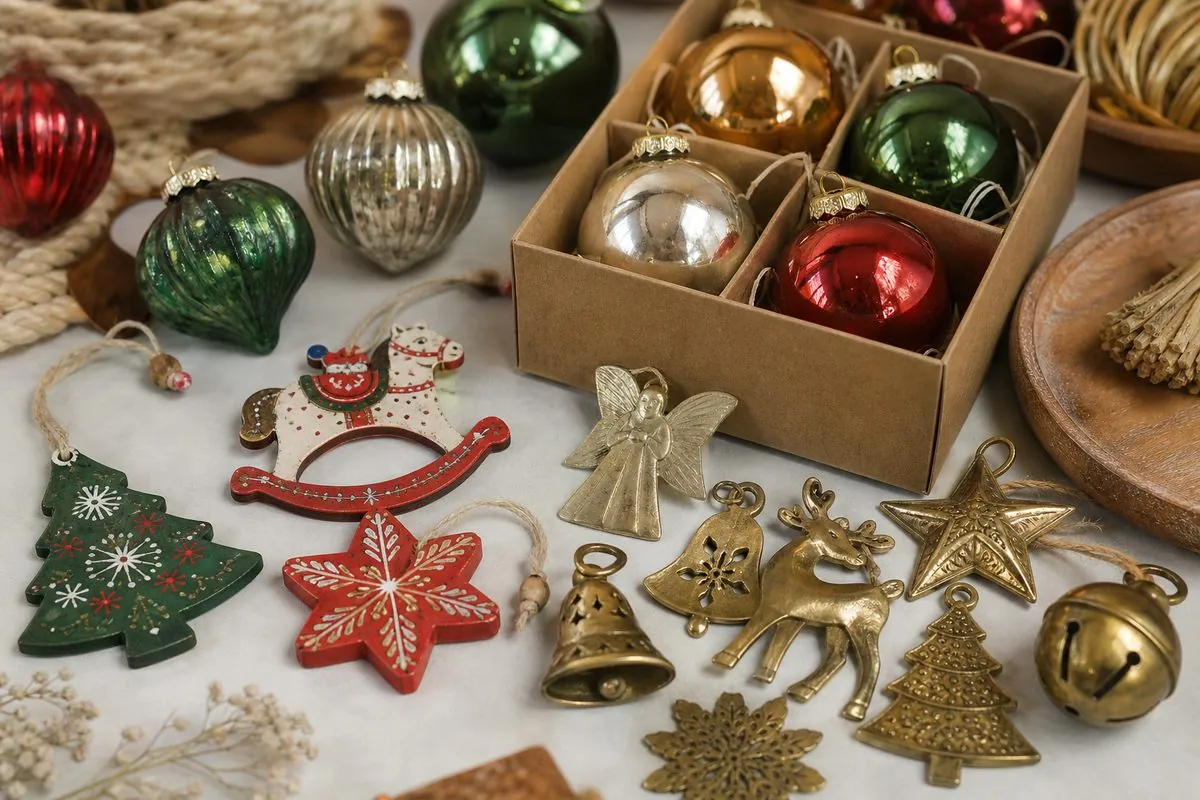
India's Christmas ornament export economy is regulated at the export level by IEC from DGFT and, in practice, EPCH RCMC registration for most organised festive handicraft exporters. Manufacturing depth sits in Firozabad for glass and blown baubles; Saharanpur and selective Jodhpur for wooden Christmas ornaments; Moradabad for metal, brass, and iron festive hangers; Srinagar and the Kashmir Valley for papier-mache lacquer Christmas ornaments (often consolidated via Delhi-NCR); Khurja and ceramic belts for ceramic and terracotta festive figurines; textile soft hubs for fabric and felt ornaments; and Delhi-NCR for merchant consolidation, private-label finishing, and mixed-material FCL packing. Directionally, cite HS 950510 / 95051000 for Christmas articles trade planning — not total EPCH handicraft figures (Rs 33,122.79 crore / US$3,917.89 million for handicrafts excluding carpets in FY 2024–25 is sector context only).
Cluster workshops range from family glass and carving units finishing dozens of ornaments per day to mid-sized metal and ceramic lines running continuous Christmas programmes; Delhi-NCR exporters consolidate multi-material assortments under single IEC relationships. Buyers who understand this structure make better counterparty decisions: a Firozabad glass unit with excellent mirroring but no direct IEC is not disqualifying — but it means you are contractually buying through a merchant exporter or aggregator, and you should verify who holds export registration before paying a deposit.
Christmas ornament supply chain structure and buyer implications
Swipe →
Data table — swipe horizontally on small screens
| Supply Chain Node | Role | Buyer Implication |
|---|---|---|
| Firozabad glass belt | Blowing, mirroring, finishing baubles | Best fit for glass programmes — audit paint, hang-loop, crush packing |
| Saharanpur / Jodhpur wood | Carving, painting, finishing wooden ornaments | Timber legality + paint QC; Lacey/EUDR awareness for wood SKUs |
| Moradabad metal | Casting, brass/iron finishing, festive hangers | Inspect finish consistency and sharp-edge QC |
| Srinagar / Kashmir papier-mache | Forming, lacquer paint, gift-set finishing | Cure/dry discipline; often Delhi-NCR consolidation |
| Khurja / ceramic belts | Ceramic forming, glaze, paint | Breakage-sensitive packing; glaze adhesion checks |
| Textile / soft hubs | Fabric and felt ornament stitching | Colourfastness and stuffing consistency |
| Delhi-NCR merchant exporters | Consolidation, private-label packing, documentation | Strong fit for multi-material Christmas FCL programmes |
| EPCH-registered export houses | Direct export under own IEC/RCMC | Verify registration independently on EPCH portal |
| CHA / customs brokers | HS classification, shipping bill filing | Confirm 95051000 vs material contrast lines before production |
| Merchant exporters (e.g. Altus Exports) | Accountable multi-cluster programmes | Reduces fragmentation risk for international buyers |
Export Statistics
Key Statistics
For a buyer programme, export statistics matter as a supply-base reality check: India has commercial depth in Christmas baubles, wooden ornaments, metal hangers, papier-mache lacquer ornaments, ceramic figurines, and private-label assortments, but production is fragmented across material clusters and Delhi-NCR consolidators rather than a handful of factory SKUs. Directional WITS/Comtrade 2024 data shows India exported approximately US$117.31 million under HS 950510, totaling about 10,330,600 kg. Practically, start your first PO on proven forms — mid-size glass baubles, painted wooden ornaments, or Moradabad metal hangers — before scaling into complex multi-material private-label ladders. Full exporter-side statistics framing lives in How to Export Christmas Ornaments from India.
Directional export snapshot relevant to buyer sourcing decisions (HS 950510)
Swipe →
Data table — swipe horizontally on small screens
| Metric | 2024 / Programme Position | Buyer Relevance |
|---|---|---|
| Primary Christmas HS | 95051000 — articles for Christmas festivities | Confirm with destination broker before locking RFQ |
| India HS 950510 exports (2024) | ~US$117.31 million / 10,330,600 kg | Supply-base depth check — not a SKU forecast |
| Top partner — USA | US$69.83 million / ~6.03 million kg | Prop 65 paint readiness on first PO |
| Top partner — Germany | US$10.13 million / ~1.28 million kg | REACH/SVHC + wood legality where applicable |
| Top partners — UK / Netherlands / Sweden | US$6.64M / US$6.48M / US$4.03M | Align finish QC and motif restraint to channel |
| Sample lead time | 10–21 days | Air common for motif and paint approval |
| Custom private-label lead time | 6–12 weeks | Christmas programmes need 6–9 months forward planning |
| Council baseline | EPCH RCMC for handicraft/festive character | Verify before sampling fees or deposits |
Import Statistics
Key Statistics
Import-side data helps buyers calibrate expectations on competition and compliance intensity. Directionally, the USA and Germany rank among the largest importers of Indian Christmas articles under HS 950510; the UK, Netherlands, Sweden, and Denmark form the next value tier; Canada and Australia outrank France on WITS 2024 partner value; UAE (~US$0.24M) and Japan (~US$0.31M) are small partners useful for hospitality speed and finish-bar niches — not top-value markets. EU markets collectively impose the strictest paint and coating scrutiny; USA programmes add Prop 65 paint/coating readiness for California-facing retail; UAE often offers the fastest validation cycle with lighter formal paint burden. Use import statistics to prioritize outreach after your RFQ and audit framework are ready — not as a substitute for supplier verification.
US HTSUS 9505.10 Christmas articles commonly show Column 1 MFN Free on major ornament lines (e.g. 9505.10.10 glass, 9505.10.15 wood, 9505.10.25 other, 9505.10.30 nativity — verify current HTS). Rates are still line- and suffix-specific; Chapter 99 / origin measures can change landed cost. Do not invent a single blended duty percentage across materials. Confirm the exact 10-digit HTS line and applicable measures with a licensed US customs broker before quoting landed cost. EU CN 9505 10 Christmas article lines are TARIC-line-specific — many face low or free MFN treatment, but exact duty, preference, and India origin proof requirements must be confirmed with an EU customs broker before quoting landed cost. Never invent a single EU duty percentage for all Christmas ornament materials.
Import market signals relevant to direct Christmas ornament sourcing
Swipe →
Data table — swipe horizontally on small screens
| Destination | Buyer Profile | Sourcing Priority |
|---|---|---|
| USA | Mass retail private label, specialty holiday, e-commerce | Prop 65 paint + breakage packing validation |
| Germany | Eco wood, lead-safe painted ornaments, wholesale | REACH/SVHC + timber legality for wood SKUs |
| UK | Wholesale showrooms, department stores, specialty | UK REACH alignment; honest handmade claims |
| Netherlands | EU hub importers and re-export | Hub-grade REACH docs from order one |
| Sweden | Design-led Nordic retail and gift | Finish precision; motif restraint |
| France | Design retail and curated gift assortments | Craft provenance; packing standards |
| Canada | Similar to USA at smaller scale | Paint and labeling aligned with North America |
| Australia | Specialty holiday and gift retail | Breakage-sensitive ocean transit; finish QC |
| UAE | Hospitality festive gifts, Gulf wholesale | Fast trial cycle; presentation QC |
| Japan | Specialty interior and gift retail | Finish precision; refined packing |
Product Categories / Variants
Summary Box
Buyers should understand the main Christmas ornament material families before writing an RFQ — glass baubles, wooden ornaments, metal/brass hangers, papier-mache lacquer ornaments, ceramic figurines, fabric/felt soft ornaments, resin mixed-media figures, tree toppers, and gift-set assortments. Full SKU taxonomy by material lives in Top Christmas Ornament Products Exported from India; country-specific demand lives in Most Demanded Indian Christmas Ornaments by Country. This section frames what to specify in your RFQ, not which SKU sells where.
RFQ-relevant product families for Christmas ornaments
Swipe →
Data table — swipe horizontally on small screens
| Material Family | Key RFQ Fields | Primary QC Focus |
|---|---|---|
| Glass / blown baubles | Diameter, finish (matte/mirrored), motif, hang-loop type | Paint adhesion, loop pull, crush packing |
| Wooden tree ornaments | Species/grade, motif, paint system, finish grade | Timber legality docs; colour match; hang hardware |
| Metal / brass hangers | Alloy/finish, size, motif, sharp-edge spec | Finish consistency; plating/paint adhesion |
| Papier-mache lacquer | Form size, lacquer colours, cure standard | Soft-lacquer risk; cure/dry evidence |
| Ceramic / terracotta | Form, glaze, paint, hang method | Glaze adhesion; breakage packing |
| Fabric / felt | Textile type, stuffing, stitch, motif | Colourfastness; stuffing consistency |
| Private-label assortments | Mix ratio, gift box, hangtag, barcode | Motif fidelity across materials; set packing |
Manufacturing Overview
Export Tip
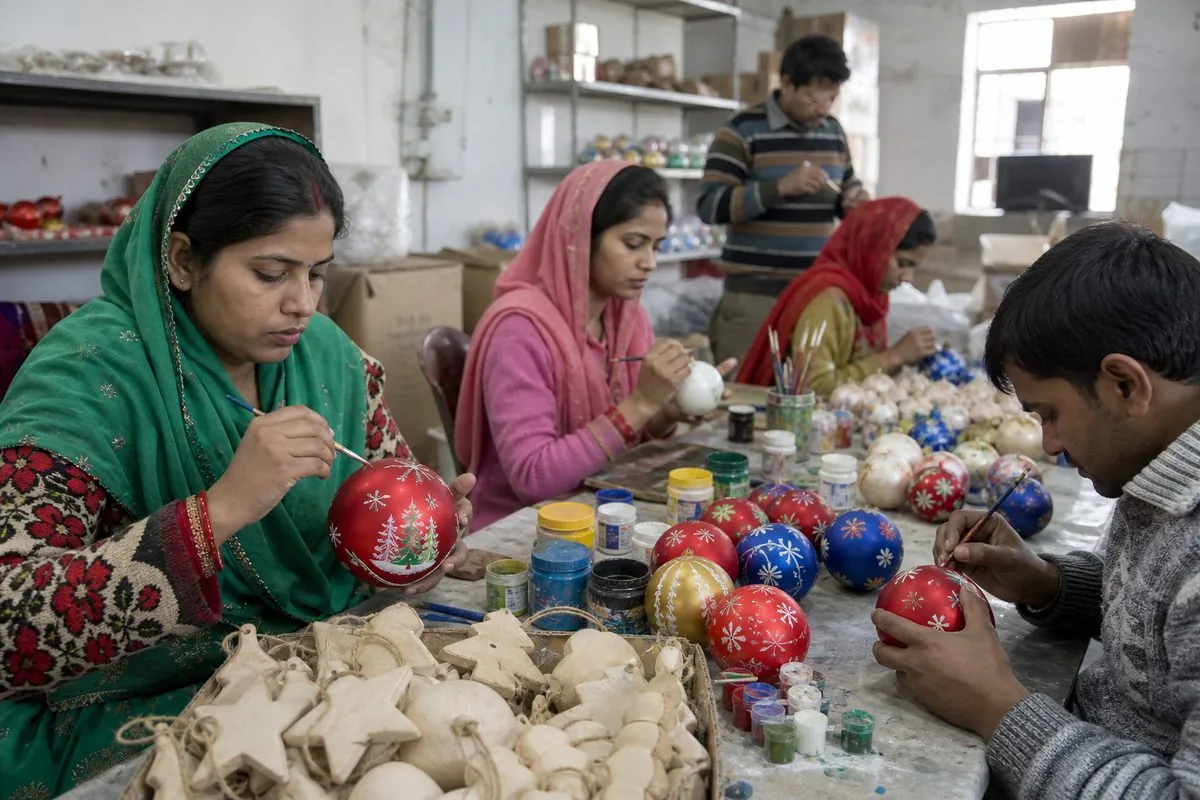
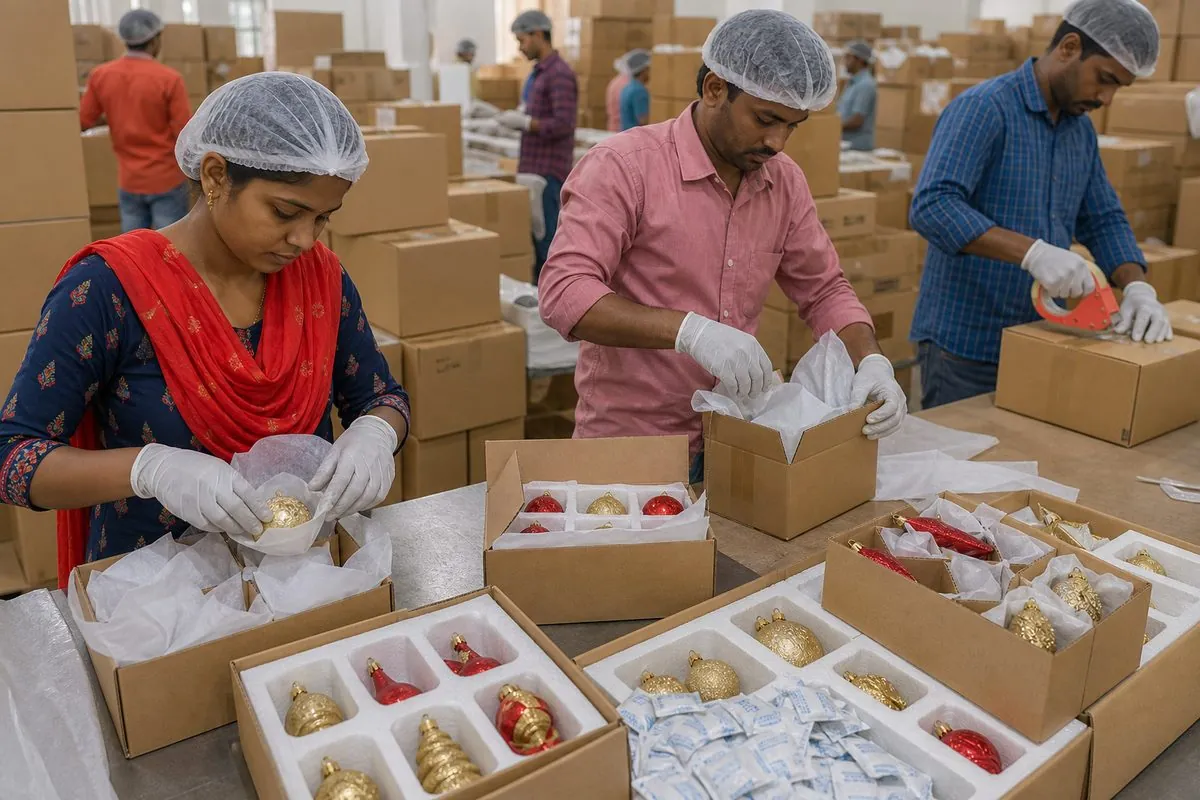
Christmas ornament production follows a material-dependent sequence: material prep → forming (blow, carve, cast, mold, or stitch) → paint and finish → cure and dry → QC → hang-loop and hardware attachment → export packing. Buyers auditing cluster workshops should observe each stage — especially whether paint batches are logged, whether hang-loops are pull-tested on in-production units, whether cure times are respected for lacquer and ceramic glaze, and whether finished goods enter crush-protected cartons with separators before stuffing.
For sourcing purposes, the critical manufacturing gates are: motif and colour fidelity to approved references; paint adhesion and coating chemistry documentation; hang-loop pull strength; breakage and crush protection in packing; cure/dry discipline on papier-mache and ceramic; and honest cluster labelling. Detailed exporter-side process guidance lives in How to Export Christmas Ornaments from India. The steps below own the importer playbook sequence from RFQ through trial order.
Step 1: Write a Complete RFQ
Document material family, finished dimensions, motif and colour references (Pantone or physical swatches where possible), hang-loop or hardware type, paint or coating expectations (including Prop 65 / REACH destination needs), packing specification (tissue/foam separators, carton grade, desiccants), HS intent (95051000 when Christmas commercial identity applies), destination market, required declarations, target FOB or landed price band, and retail calendar cut-off. Attach approved artwork or prior-season references. Vague RFQs produce incomparable quotes and motif drift on production lots.
Step 2: Shortlist Multi-Cluster Workshops and EPCH Exporters
Use EPCH member directories, IHGF Delhi Fair exhibitor lists, and verified referrals to build a shortlist of three to five counterparties. Prioritize exporters with active IEC and EPCH RCMC, cluster geography matching your material story (Firozabad for glass, Saharanpur for wood, Moradabad for metal, Kashmir for papier-mache, Khurja for ceramic), and experience shipping to your destination market. Cross-check marketplace listings against EPCH registration independently — a polished Alibaba storefront does not prove export readiness or Christmas packing discipline.
Step 3: Audit Firozabad Glass Workshops
On-site or structured video audit should cover: blowing and finishing consistency; mirroring or paint application; hang-loop attachment method; in-process QC checks; tissue/foam separator packing; and staged export cartons with stack-height limits. Request hang-loop pull demonstration on in-production baubles, not pre-selected fair samples. Confirm who holds IEC if the glass unit does not export directly.
Step 4: Audit Saharanpur Wood, Moradabad Metal, Kashmir Papier-Mache, and Khurja Ceramic
For wood: inspect carving finish, paint system, hang hardware, and timber-origin documentation readiness for Lacey Act / EUDR-aware destinations. For metal: inspect casting or forming consistency, plating or paint adhesion, and sharp-edge QC. For papier-mache: inspect lacquer cure times, soft-lacquer risk, and dry storage before packing. For ceramic: inspect glaze adhesion, form consistency, and breakage packing. Soft fabric/felt hubs need colourfastness and stuffing checks. Reject suppliers who cannot explain corrective actions for paint flaking or breakage claims.
Step 5: Audit Delhi-NCR Consolidation and Private-Label Packing
Multi-material Christmas programmes often consolidate through Delhi-NCR. Audit how glass, wood, metal, and soft ornaments are segregated in packing; whether gift boxes and hangtags match approved private-label artwork; whether packing lists reconcile mixed HS or SKU lines; and whether container stuffing plans respect crush-sensitive cartons. Confirm the invoice entity matches the IEC holder responsible for the shipment.
Step 6: Verify IEC, EPCH RCMC, and Invoice Entity Match
Independently verify IEC on the DGFT portal and EPCH RCMC on the EPCH website — company name must match the pro-forma invoice entity. Mismatch between invoice entity and shipping bill exporter creates payment and customs risk. Full registration mechanics for exporters live in EPCH Registration Benefits for Christmas Ornament Exporters and the process pillar — this playbook requires verification, not a how-to registration walkthrough.
Step 7: Request Samples with Motif Approval and Paint Evidence
Request 5–20 pcs/SKU or 1–2 assortment concepts with written production lot reference, motif/colour sign-off sheet, paint or coating batch identification where available, and hang-loop specification. Compare paint adhesion, colour match, loop pull, dimensions, and packing presentation against signed reference. Reject shelf-picked fair samples that misrepresent bulk-line behaviour. Air freight samples for motif approval when ocean trial is weeks away.
Step 8: Run Paint Compliance and Destination Verification
For USA programmes, request Prop 65 supplier awareness statements for decorative paints and coatings — do not claim lead-safe without formulation review or lab evidence tied to SKU and lot. For EU/UK programmes, request REACH/SVHC paint supplier declarations. Apply CPSC/ASTM F963 or EN 71 only if ornaments are marketed as toys or children's products. For wood ornaments, request timber legality documentation pathways. Full document pack: Christmas Ornament Export Documentation Checklist.
Step 9: Calculate and Negotiate on a Landed-Cost Basis
Model FOB plus ocean freight (cube- and fragility-driven — do not over-stuff glass cartons), marine insurance, destination duty on confirmed HS line, inland delivery, paint-compliance documentation overhead, and a breakage claims allowance. Compare suppliers on landed cost per sellable unit — a higher FOB exporter with superior crush packing and paint documentation often wins on net margin. Incoterms: EXW, FOB Nhava Sheva/Mundra, CFR/CIF; DDP is selective for first fragile seasonal trials.
Step 10: Structure Payment and Place a Trial Order
Standard payment structure: 30% advance against signed pro-forma and approved reference sample, 70% against shipping documents (bill of lading, commercial invoice, packing list). Letter of Credit suits larger first transactions. Avoid 100% advance to unverified workshops. Trial MOQ directionally mixed LCL or 200–1,000 pcs/hero SKU. PO must specify: approved reference sample attachment, motif and colour tolerances, hang-loop pull minimum, paint adhesion acceptance criteria, packing spec with separators and stack limits, inspection rights, and quality clauses for breakage or paint flaking exceeding agreed AQL. Never skip trial before Christmas retail FCL programmes.
Pricing Analysis
Buyer Tip
Negotiate with full visibility on cost drivers: material family, paint complexity, hand-finish labour, hang-loop hardware, certification and declaration premiums, packing grade, and order quantity. Indicative FOB bands (commercial estimates — confirm quote date; not published indices): commodity baubles/fabric ~US$0.40–2.50/pc; mid glass/wood/metal ~US$1.50–8/pc; premium hand-painted/private-label ~US$4–25+/pc or set. Confirm against dated quotations and model landed cost before supplier selection.
Directional FOB pricing and landed-cost components
Swipe →
Data table — swipe horizontally on small screens
| Cost Layer | Typical Range | Buyer Action |
|---|---|---|
| Commodity bauble / fabric FOB | ~US$0.40–2.50/pc | Benchmark 3 quotes; confirm diameter and finish match |
| Mid glass / wood / metal FOB | ~US$1.50–8/pc | Include paint system and hang-loop spec in comparison |
| Premium / private-label FOB | ~US$4–25+/pc or set | Separate gift-box and hangtag costs in RFQ |
| Ocean freight (ornaments) | Cube + fragility driven; LCL premium on trials | Get forwarder quote on carton CBM before PO |
| Destination duty | HS-specific; confirm 9505.10 / CN 9505 10 line | Broker confirmation before negotiation finalization |
| Compliance overhead | Prop 65 / REACH paint documentation | Amortize across programme volume in unit economics |
| Breakage claims allowance | Category-risk buffer on fragile glass/ceramic | Tie packing SOP to allowance assumptions |
MOQ Analysis
Buyer Tip
MOQ should increase only after trial validation — samples prove motif aesthetics and paint chemistry; trial lots prove production consistency and transit breakage performance; FCL programmes align with Christmas retail calendars.
Phased MOQ framework for Christmas ornament buyers
Swipe →
Data table — swipe horizontally on small screens
| Phase | Quantity | Validation Goal |
|---|---|---|
| Sample approval | 5–20 pcs/SKU or 1–2 assortment concepts | Motif, paint adhesion, hang-loop pull, packing presentation |
| Trial order | mixed LCL or 200–1,000 pcs/hero SKU | Bulk-lot paint consistency, breakage packing, transit performance |
| Wholesale repeat | by carton / colourway / motif family | Replenishment against proven QC baseline |
| Christmas programme FCL | 20GP / 40HC against Christmas retail cut-offs | Retail cut-off or major holiday assortment campaign |
Packaging Standards
Export Tip
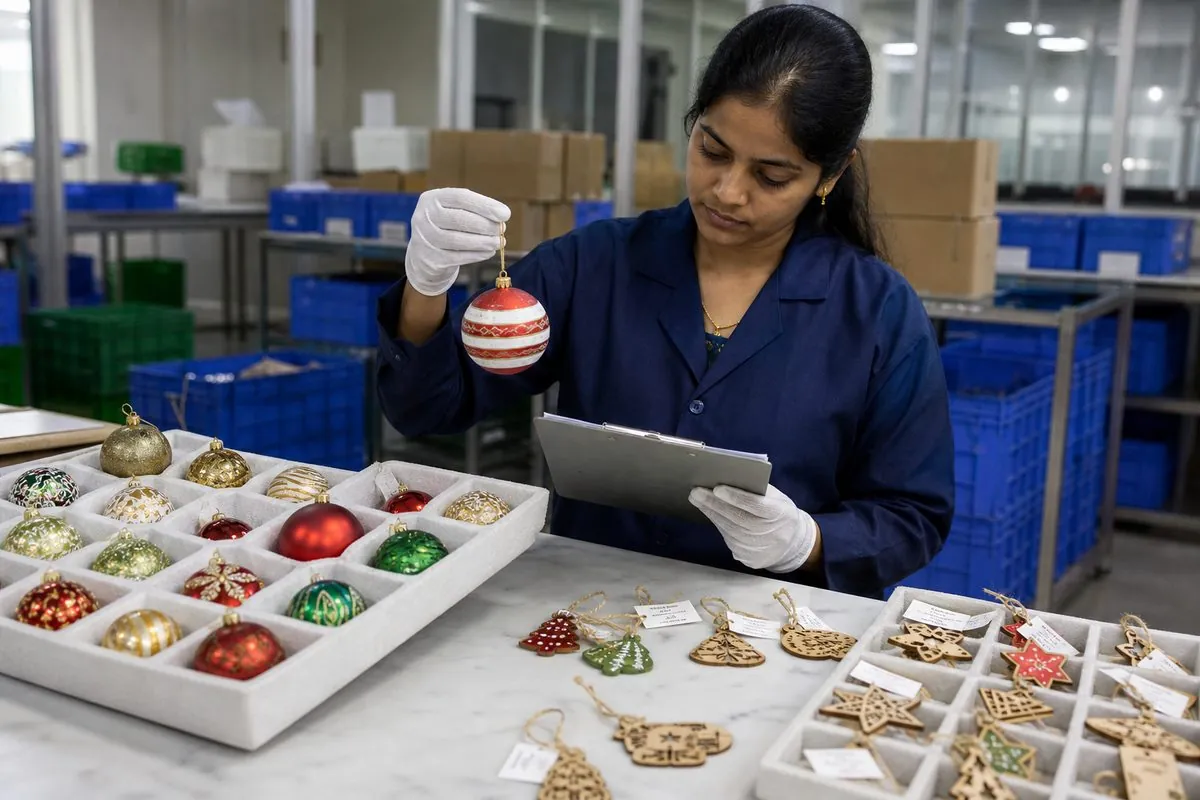
Specify export packing in the RFQ and PO — not as an afterthought. Require individual tissue or foam separators for glass, ceramic, and fragile papier-mache; rigid double-wall export cartons; desiccants for wood, metal, and papier-mache ocean freight; retail gift boxes and hangtags for private-label programmes; barcode inserts where required. Do not over-compress glass or ceramic cartons to maximize container cube. Request photos or video from the packing table during trial order production.
Buyer-specified packing requirements for Christmas ornament trials
Swipe →
Data table — swipe horizontally on small screens
| Element | Specification | Verification Method |
|---|---|---|
| Breakage control | Tissue/foam separators; no crush nesting unless designed | Open random cartons at pre-shipment inspection |
| Carton strength | Double-wall rigid cartons; max stack height marked | Photo of container stuffing plan |
| Moisture control | Desiccants for wood, metal, papier-mache | Random carton opening; dry-goods check |
| Retail presentation | Gift box / hangtag pre-attached for private label | Compare to approved reference sample |
| Marking | SKU, PO, motif, destination, fragile handling icons | Packing list reconciliation at inspection |
Container Loading Details
Export Tip
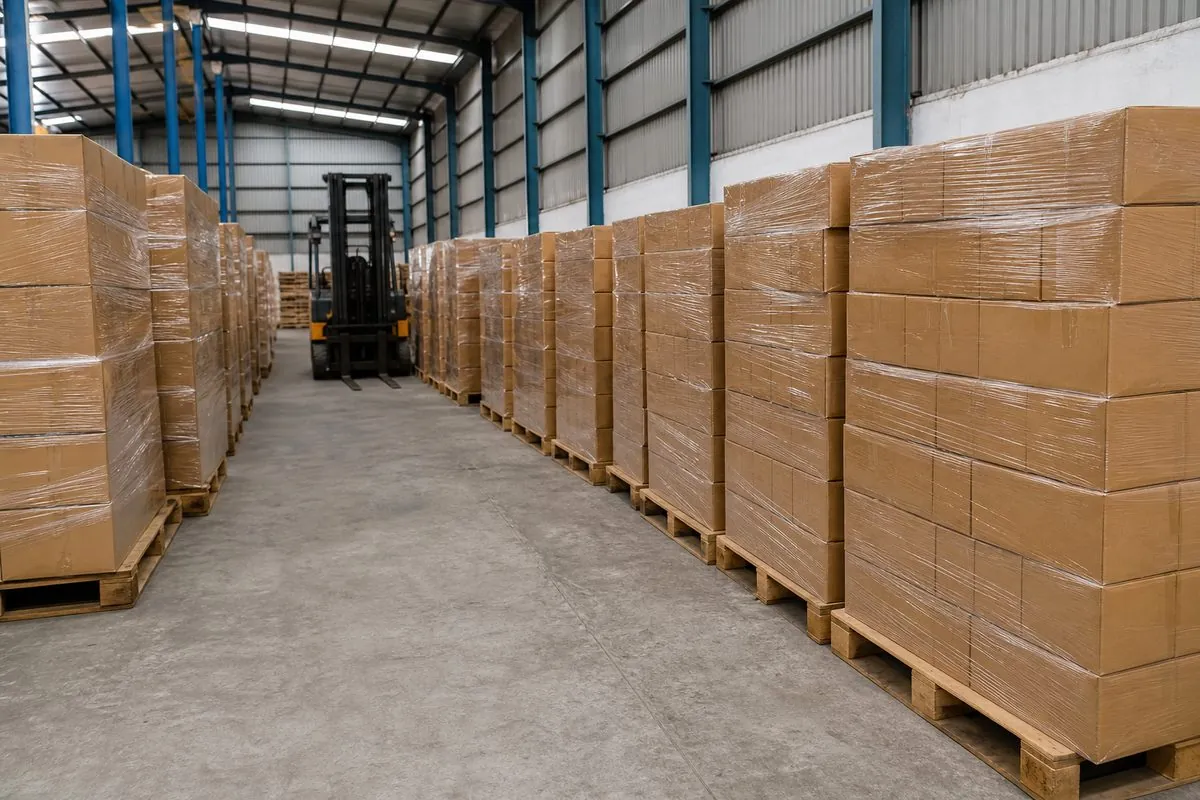
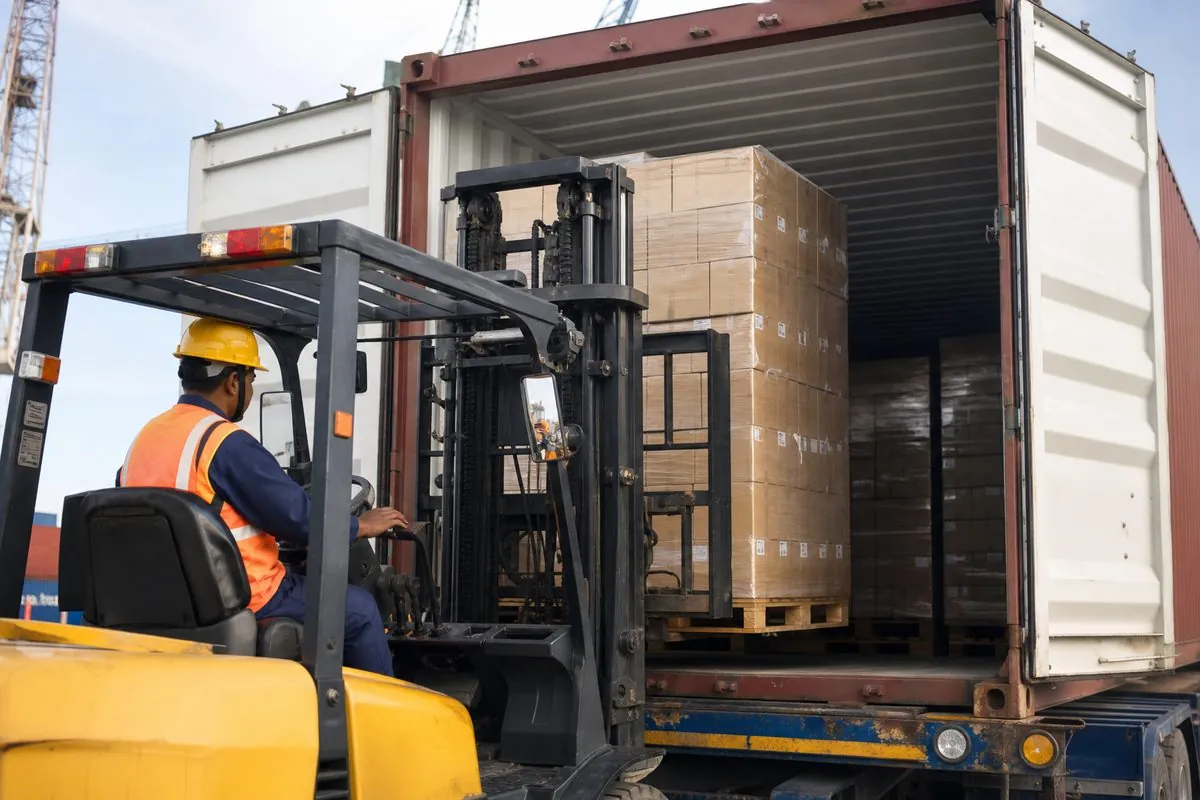
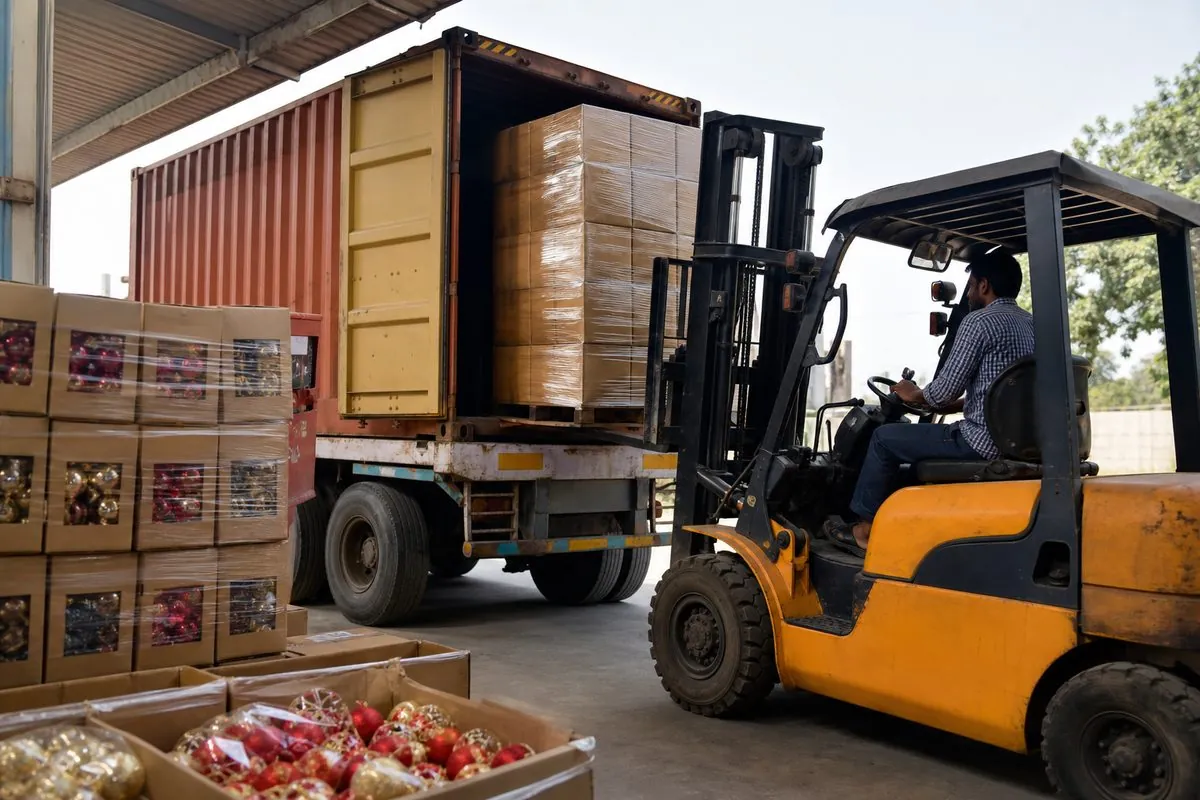
Christmas ornaments do not compress like soft bags — over-stuffing crushes glass and ceramic. Trial LCL validates freight economics and breakage rates before FCL commitment. Mixed-material containers require strict packing-list discipline and segregation of crush-sensitive cartons from denser metal or wood loads. Plan stack height before stuffing approval; never sacrifice packing integrity for cube utilization on glass-heavy programmes.
Container planning for Christmas ornament trial and programme orders
Swipe →
Data table — swipe horizontally on small screens
| Shipment Type | Best For | Buyer Note |
|---|---|---|
| LCL trial | First 200–1,000 pc or mixed assortment validation | Higher per-unit freight acceptable for breakage proof |
| 20GP FCL | Single-material or focused hero SKU programme | Confirm stack height before stuffing approval |
| 40HC FCL | Multi-material private-label Christmas assortment | Maximize cube without crushing glass/ceramic cartons |
| Air sample | Late motif or paint approval | Not economical for bulk ornament volume |
Shipping Methods
Export Tip
North Indian clusters typically consolidate through ICD Delhi / Dadri and load ocean from Nhava Sheva or Mundra. Confirm Incoterm and named port in pro-forma — FOB Nhava Sheva versus EXW Firozabad materially changes buyer inland cost. Lead times: samples 10–21 days; stock 4–7 weeks; custom private-label 6–12 weeks; Christmas programmes 6–9 months ahead of peak retail. Book sailings against retail cut-offs with breakage risk in mind — suppliers who rush carton sealing under seasonal pressure cause preventable shatter claims. Ocean transit is roughly 25–40 days to the USA and 25–35 days to the EU or UK. Trade-fair calendars and marketplace outreach live in Trade Shows and B2B Marketplaces for Christmas Ornament Exporters — this playbook owns seasonal booking discipline, not fair itineraries.
Certifications
Compliance Notes
Treat every compliance claim as evidence with scope — Prop 65 readiness requires paint/coating substance awareness for California-facing USA programmes; REACH/SVHC requires paint supplier declarations for EU/UK; EPCH RCMC confirms exporter registration for handicraft/festive character; timber legality documentation supports wood ornament programmes. Toy standards (ASTM F963 / EN 71) apply only when ornaments are marketed as toys or children's products. Do not accept hangtag logos or lead-safe marketing language without formulation review or lot-linked evidence.
Certification and declaration verification for Christmas ornament buyers
Swipe →
Data table — swipe horizontally on small screens
| Claim | Evidence Required | Reject If |
|---|---|---|
| Prop 65 readiness (USA) | Paint/coating supplier declarations; lab evidence if claimed | Lead-safe slogan without formulation review |
| REACH / SVHC (EU/UK) | Paint supplier declarations matching SKU family | Generic REACH letter with no paint linkage |
| Toy safety (ASTM F963 / EN 71) | Valid test reports only if toy-marketed | Toy claims on decorative-only ornaments without tests |
| Timber legality (wood SKUs) | Origin and due-diligence pathway docs | Vague wood origin claims without documentation |
| EPCH RCMC | Active RCMC matching invoice exporter | Name mismatch with IEC entity |
| Handmade / cluster origin | Production geography evidence | Firozabad-made hangtag with no glass-unit audit trail |
Buyer Requirements
Buyer Requirements
Importers sourcing directly must reconcile buyer-side requirements with Indian supplier capability before PO: destination paint labelling and declaration rules, Prop 65 or REACH documentation for coatings, barcode and hangtag formats, breakage packing specs, inspection rights, payment milestones, and Christmas retail cut-off dates. Mass-retail private-label programmes add artwork approval workflows, carton marking standards, and social-compliance questionnaires. Specialty holiday distributors prioritize motif fidelity, hang-loop reliability, and on-time delivery against immovable seasonal ship dates.
Align destination requirements using Best Countries for Indian Christmas Ornament Exports for market-tier compliance intensity and Christmas Ornament Export Documentation Checklist for the full document pack. Private-label and lead-safe programme depth lives in Private Label, Lead-Safe & Sustainable Christmas Ornament Export Opportunities.
Country-wise Opportunities
Market Snapshot
Direct sourcing success varies by destination compliance tier — build your audit and documentation depth to match the market where your first PO will land, not the market you hope to enter in year three. Country×SKU demand detail lives in Most Demanded Indian Christmas Ornaments by Country.
USA and Canada
Prioritize breakage packing validation on trial orders — USA DC handling exposes soft cartons quickly. Require Prop 65 supplier awareness for decorative paints and coatings and accurate commercial identity for HS 9505.10 lines. Mass retail private-label programmes tolerate longer approval cycles than specialty holiday distributors; plan 6–9 months ahead of peak retail.
Germany, Netherlands, France, UK, and Sweden
Build REACH/SVHC paint documentation into RFQ before sampling. Verify timber legality pathways for wooden ornaments. UK and EU retail reject vague handmade claims without production geography evidence. Netherlands hub importers may resell across EU — documentation must be hub-grade from order one. Sweden and France reward finish precision and motif restraint over lowest FOB.
UAE and Gulf
Fastest proof-of-concept market for new finishes and gift-set presentations — prioritize presentation QC and shatter-free arrival over formal Prop 65 packets on first orders. Hospitality festive programmes value consistent hang-loop presentation and clean individual wrapping.
Australia and Japan
Premium finish niches — paint fidelity, hang-loop reliability, and refined packing matter more than lowest FOB. Japan buyers expect precise motif execution and clean carton presentation; Australia programmes are breakage-sensitive on long ocean legs.
Sourcing Checklist
Checklist
Buyer Checklist
Exporter Checklist
Common Buyer Mistakes
Common Mistakes Box
First-time Christmas ornament buyers repeat predictable errors — below are the patterns that most often destroy first-container economics on seasonal programmes.
Common sourcing mistakes and how to avoid them
Swipe →
Data table — swipe horizontally on small screens
| Mistake | Consequence | How to Avoid It |
|---|---|---|
| Approving fair samples without production lot documentation | Paint variance and hang-loop claims at destination | Require lot reference and in-process inspection rights in PO |
| Paying 100% advance to unverified cluster workshop | Recovery difficult if shipment fails QC | Milestone payment tied to documents |
| Accepting lead-safe hangtags without paint evidence | USA retail audit failure; Prop 65 exposure | Formulation review or lot-linked lab evidence |
| Over-stuffing glass cartons to cut freight | Shatter claims erase container margin | Stack-height and separator SOP in PO |
| Comparing FOB only across suppliers | Hidden breakage and compliance cost erodes margin | Model full landed cost with duty, freight, and claims allowance |
| Skipping trial order for Christmas FCL programme | Breakage or paint failure destroys seasonal listing | Prove packing on 200–1,000 pc trial before FCL |
| Booking production too late for retail cut-offs | Missed Christmas season; air freight panic | Start 6–9 months ahead for programme FCL |
| Assuming Delhi exporter equals Firozabad glass production | Origin misrepresentation damages brand | Audit production geography explicitly per material |
Future Market Trends
Key Statistics
Buyers should expect tighter retail scrutiny on paint chemistry in the EU (REACH/SVHC) and California-facing USA chains (Prop 65) — suppliers who maintain paint supplier files and honest lead-safe language now will win repeat programmes; those who treat compliance as a destination-side surprise will lose listings. Private-label Christmas assortments consolidating glass, wood, and metal through Delhi-NCR are directionally growing as importers seek one accountable counterpart for mixed-material holiday ladders — but only suppliers with proven breakage packing and motif QC capture that demand sustainably.
Design-led Nordic and specialty EU channels directionally reward restrained motifs and finish precision over novelty overload. Multi-SKU programmes managed through one accountable merchant exporter will outcompete fragmented workshop-by-workshop coordination as assortments broaden across glass, wood, metal, papier-mache, and soft ornaments. Sustainable wood and lead-safe paint narratives will matter more — with documentation, not slogans — as covered in the private-label specialty guide.
Challenges & Solutions
Direct sourcing of Christmas ornaments involves challenges distinct from soft-goods or industrial categories — paint chemistry, hang-loop reliability, breakage in transit, motif drift, and seasonal calendar compression dominate the buyer risk register.
Sourcing challenges and buyer-side mitigation
Swipe →
Data table — swipe horizontally on small screens
| Challenge | Typical Impact | Mitigation Strategy |
|---|---|---|
| Breakage / crush in ocean transit | Retail rejection; claims erase margin | Separators; rigid cartons; stack limits; pre-shipment carton opening |
| Paint adhesion / flaking | Returns; Prop 65 / REACH findings | Lot-linked paint evidence; adhesion checks on trial lot |
| Hang-loop pull failure | Product liability and shelf failures | Minimum pull force in PO; random pre-shipment testing |
| Motif / colour drift on bulk line | Private-label rejection | Signed reference; in-process motif check |
| False lead-safe or handmade claims | Retail audit failure | Independent evidence verification |
| HS misclassification 95051000 vs material lines | Customs delay, duty surprise | Broker confirmation before production |
| Fragmented multi-cluster supply base | Batch inconsistency across materials | Merchant exporter with consolidated QC |
| Christmas lead-time compression | Missed retail cut-offs | Start 6–9 months ahead for FCL programmes |
Compliance Checklist
Checklist
Compliance Notes
How Altus Exports Helps
Altus Exports supports international buyers as a product sourcing company in India and global sourcing partner — coordinating Firozabad glass, Saharanpur wood, Moradabad metal, Kashmir papier-mache, Khurja ceramic, soft-hub fabric ornaments, and Delhi-NCR private-label packing, motif and paint QC, hang-loop and breakage inspection, HS triage under 95051000, and ocean logistics through Nhava Sheva, Mundra, and ICD Delhi / Dadri under one accountable merchant-export relationship.
Altus Exports supports Christmas ornament manufacturers and international buyers as a merchant exporter from India, global sourcing partner, and export consulting expert across handicrafts & lifestyle products. Share your hero SKU, destination market, and retail calendar for a programme assessment — contact Altus Exports.
Expert Insights
Expert Insight Box
Successful Christmas ornament sourcing is less about finding the lowest FOB and more about finding the counterparty who treats paint chemistry, hang-loop discipline, and crush-protected packing as non-negotiable production steps — then proving it on a trial lot before you scale to Christmas retail FCL or multi-country wholesale.
Sources
- WITS / World Bank — India exports HS 950510 by country, 2024 — Articles for Christmas festivities ~US$117.31 million / 10.33 million kg; use partner table for USA/Germany/UK/Netherlands/Sweden/Denmark and smaller partners.
- EPCH Annual Report 2024–25 — handicrafts excl. carpets Rs 33,122.79 crore / US$3,917.89 million (FY 2024–25) sector context only — not a Christmas-only total.
- EPCH export statistics pages — category and country tables for Indian handicrafts.
- DGFT — IEC profile management — Import Export Code registration.
- DGCI&S Kolkata — official Indian foreign trade statistics; validate latest HS 950510 releases against WITS mirrors.
- ITC Trade Map — HS-line export/import matrices for buyer and market validation.
- USITC HTS search — 9505.10 — verify US HTS 9505.10 10-digit lines and Column 1 MFN rates; broker confirmation required.
- USITC Harmonized Tariff Schedule — full HTS browse and Chapter 99 measures.
- EU TARIC — verify CN 9505 10 duty and preferences per TARIC line.
- California OEHHA — Proposition 65 — US listed-substance framework for decorative coatings where applicable.
- ECHA — REACH — EU chemical compliance for paints and coatings.
- CPSC — children's product / toy safety — apply only when ornaments are marketed as toys or children's products.
- ASTM F963 / EN 71 — toy safety standards when toy identity applies.
- ICC — Incoterms® rules — EXW, FOB, CFR, CIF, DDP definitions.
- Economic Times — Christmas goods orders / West Asia disruption context (use carefully) — qualitative order/freight context; FY Christmas-themed figures may differ from calendar-year WITS HS 950510 — do not mix series without labelling.
- Altus Exports — Handicrafts & lifestyle products — merchant exporter / sourcing context.
Trade figures below are cited from WITS/Comtrade mirrors, government councils, and reputable trade portals. HS classification and destination duties must be confirmed with a licensed Customs House Agent (India) and a destination customs broker before quoting landed cost — never invent a single US or EU duty percentage across materials. Commercial FOB, MOQ, lead-time, port, and container examples elsewhere in this guide are indicative programme estimates, not published price indices or universal piece counts. All sources accessed 2026-07-26.
Conclusion
- Action: Complete RFQ and verify IEC/EPCH before paying any sample fee or deposit.
- Read How to Export Christmas Ornaments from India for the exporter-side process pillar.
- Read Best Countries for Indian Christmas Ornament Exports to align sourcing with destination compliance tier.
- Review Top Christmas Ornament Products Exported from India for SKU specification language.
- See Most Demanded Indian Christmas Ornaments by Country for destination preferences.
- Prepare documents with Christmas Ornament Export Documentation Checklist.
- Verify private-label and lead-safe readiness in Private Label, Lead-Safe & Sustainable Christmas Ornament Export Opportunities.
- Confirm EPCH credentials via EPCH Registration Benefits for Christmas Ornament Exporters.
- Buyer prospecting context: How to Find International Buyers for Christmas Ornaments.
- Fair and marketplace calendars: Trade Shows and B2B Marketplaces for Christmas Ornament Exporters.
- Engage product sourcing company India, merchant exporter India, or contact Altus Exports to run verification and trial orders.
Sourcing Christmas ornaments directly from India rewards buyers who treat verification as part of procurement: complete RFQs, multi-cluster workshop audits, samples with motif and paint evidence, milestone payments, trial orders before seasonal FCL, pre-shipment QC on breakage and paint quality, and landed-cost models that include duty, freight, paint-compliance overhead, and breakage claims allowance — timed 6–9 months ahead of peak retail.
The suppliers worth a multi-year Christmas programme are those who answer paint, hang-loop, and packing questions confidently on the first call, back cluster origin claims with production geography evidence, and ship trial cartons that arrive unbroken with intact hang-loops and honest hangtags. Start there — market selection and SKU depth can scale once container one proves the relationship.