
Source Fuller's Earth (Multani Mitti) Directly from India: Buyer Playbook
By Saurabh Mittal, Founder, Altus Exports
A buyer-side playbook for sourcing Fuller's earth (Multani mitti) directly from India — how to identify verified Rajasthan and Gujarat processors, request samples, lab-test lots, negotiate MOQ, structure payment, and ship first FCL with confidence.
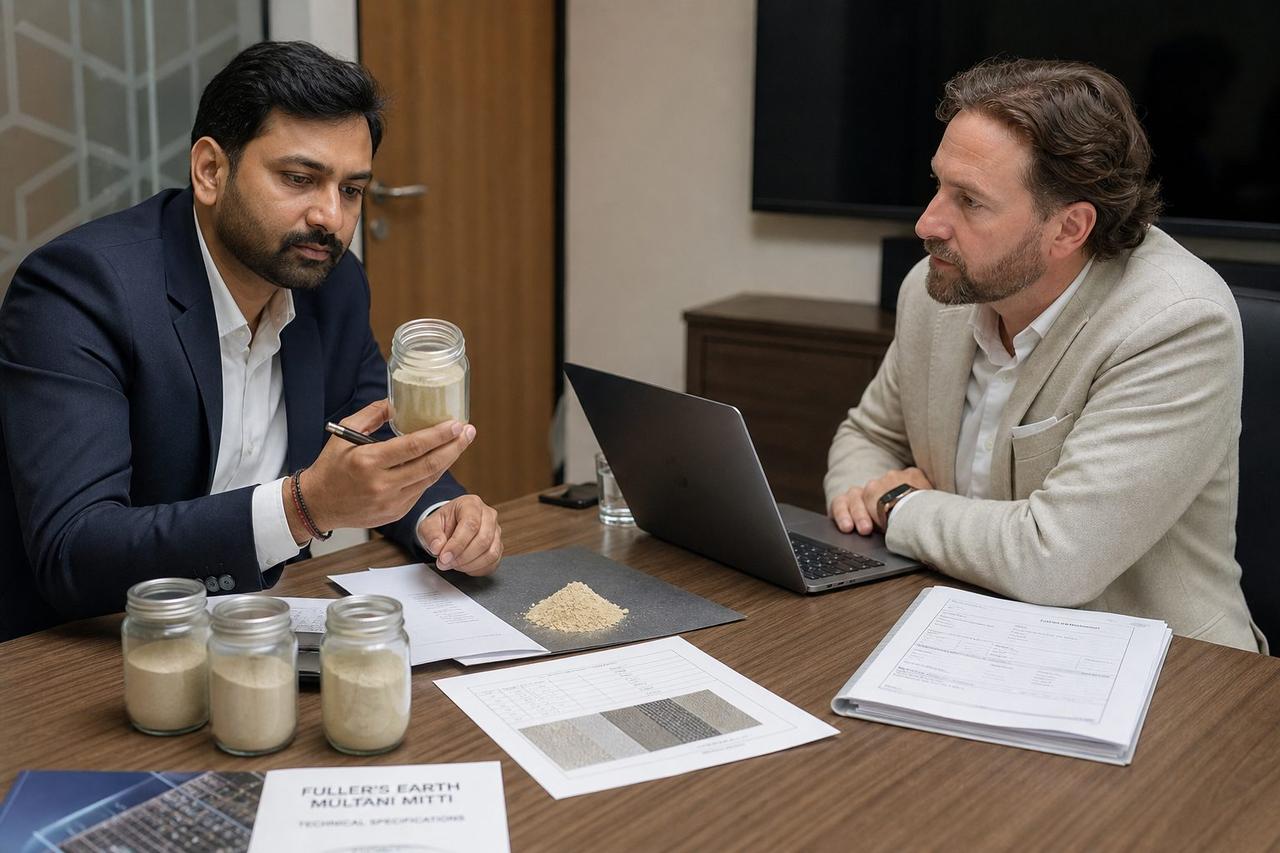
Sourcing Fuller's earth (Multani mitti) directly from India is a buyer discipline problem, not a supplier discovery problem. The clay deposits are in Barmer (Rajasthan), Jaisalmer (Rajasthan), Bikaner (Rajasthan), the processing depth sits in Bhavnagar (Gujarat) and Jalgaon (Maharashtra), and the ports (Mundra, Kandla / Deendayal, Nhava Sheva (JNPT)) are efficient. What separates a good first shipment from a bad one is not which processor you picked — it is how you verified them, specified the SKU, tested samples, structured payment, and coordinated documentation.
This playbook is written for international buyers, distributors, retail chains, and procurement teams that want to bypass unverified traders and build a direct pipe to Indian processors. It covers supplier verification, spec writing, sampling, lab discipline, MOQ negotiation (1–5 MT trial and 16–24 MT (20ft) / 22–28 MT (40ft) — verify stow FCL target), pricing (0.30–0.70 for standard cosmetic to 0.55–1.20 for fine-mesh), Incoterms, and documentation from the buyer's perspective.
For the exporter-side operational process, see How to Export Fuller's Earth (Multani Mitti) from India. For SKU comparison, see Top Fuller's Earth Products Exported from India. For market fit, see Best Countries for Indian Fuller's Earth Exports. For buyer discovery, see Find International Buyers for Fuller's Earth.
Altus Exports operates as a product sourcing company in India and global sourcing partner for Multani mitti buyers who want India supply without building a local office. This guide is written for buyers first — the same discipline that protects buyer working capital also produces cleaner reorders for exporters.
Key Takeaways
Summary Box
Executive Summary
Summary Box
Direct-sourcing Multani mitti from India is a five-phase buyer programme: (1) specification and channel design; (2) supplier verification and shortlisting; (3) sampling and laboratory approval; (4) commercial negotiation and trial lot; (5) documentation, FCL, and post-shipment scoring. Each phase carries a specific failure mode. Buyers who skip phases save days upfront and lose weeks or months later.
The buyer's leverage in direct sourcing comes from disciplined evidence collection. Before the first purchase order is signed, a serious buyer should have on file: exporter registration copies, a mill visit report (physical or virtual), a signed reference sample, a written specification sheet, a packing bill of materials, a lot COA template, and a HS classification confirmed by their customs broker. Without those artifacts, 'direct' is a marketing word rather than a supply-chain reality.
This guide is buyer-side. It complements the exporter-side process pillar and is designed to be read alongside the top products, best countries, and documentation posts.
Market Size & Industry Overview
Key Statistics
The global Fuller's earth and Multani mitti market spans industrial, cosmetic, and consumer channels. India competes on cost-to-spec balance for cosmetic mesh and on tonnage economics for industrial coarse. For a direct-sourcing buyer, the market picture matters because it shapes the negotiating landscape. Cosmetic buyers negotiating in premium markets often win better terms because processors compete for value share; industrial buyers competing in cost-driven markets face less latitude.
Direct sourcing from India also has structural benefits — shorter margin chains, better SKU customisation, and cleaner documentation than intermediary-driven trades. The trade-off is that buyers absorb more supplier-verification and QC responsibility upfront, which is exactly why this playbook exists.
Direct Sourcing Landscape by Buyer Type
Swipe →
Data table — swipe horizontally on small screens
| Buyer Type | Direct Sourcing Value | Complexity Absorbed |
|---|---|---|
| Cosmetic brand | Better SKU + margin | COA + packing discipline |
| Herbal distributor | Consistent supply | Spec management |
| Retail private label | Artwork + landed control | Cartonisation + language panels |
| Industrial buyer | Tonnage economics | Moisture + logistics |
| Formulator | Custom mesh possible | Lab validation cycles |
Export Statistics
Key Statistics
Indian Multani mitti exports concentrate at west-coast ports — Mundra, Kandla, and Nhava Sheva — with directional destinations across USA, Canada, UAE, UK, Germany, Australia, Malaysia, Iraq, France, and Italy. Aggregate figures under HS 25084090 include broader clay flows; verify with DGCI&S and ITC Trade Map before publishing.
For a direct-sourcing buyer, the interesting statistic is not headline volume but the mix of processors and grades that reach the buyer's destination. Screening by port, HS, and destination narrows the shortlist to processors with proven experience in the buyer's lane.
Export Statistics for Direct-Sourcing Screening
Swipe →
Data table — swipe horizontally on small screens
| Screen | How to Use It |
|---|---|
| HS 25084090 filter | Isolate Fuller's earth from other clays |
| Destination filter | Focus on processors shipping to your market |
| Port filter | Identify cluster origin and freight lane |
| Consignee analysis | Identify existing category buyers in your market |
| Volume trend | Distinguish steady exporters from opportunistic |
Import Statistics
Key Statistics
Import-side data helps buyers benchmark landed cost, understand what competing brands are paying, and identify high-frequency destination distributors. Top markets to reference: United States, Canada, United Arab Emirates, United Kingdom, Germany, Australia, Malaysia, Iraq. Combine your national import feed with processor-side export data for a complete direct-sourcing view.
Import Statistics Uses for Direct Buyers
Swipe →
Data table — swipe horizontally on small screens
| Data Use | Direct-Sourcing Action |
|---|---|
| Landed cost benchmarking | Compare against your target FOB |
| Distributor mapping | Identify potential channel partners |
| Duty and preferential origin | Validate landed-cost model |
| Competing brand behaviour | Adjust SKU positioning |
| Volume trend | Time your programme launch |
Product Categories / Variants
Summary Box
Direct sourcing forces buyers to be specific about which SKU family they want. Vague 'ayurvedic grade Multani mitti' RFQs return vague quotes. Concrete 'Fuller's earth cosmetic powder, 200 mesh, moisture ≤ 8%, heavy metals within cosmetic norms, packed 25 kg kraft + PE, FOB Mundra' RFQs return concrete quotes.
SKU Menu for Direct-Sourcing Buyers
Swipe →
Data table — swipe horizontally on small screens
| SKU | Sample Spec Line | Approx FOB USD/kg |
|---|---|---|
| Industrial coarse | Lumps/coarse, moisture ≤ 12% | 0.15–0.35 |
| Bleaching earth | Activated, oil-absorption spec | 0.25–0.55 |
| Standard cosmetic | 100–200 mesh, moisture ≤ 8% | 0.30–0.70 |
| Fine-mesh cosmetic | 200–325 mesh, cosmetic COA | 0.55–1.20 |
| Retail private label | Pouch/jar with artwork | 1.50–6.00+ |
SKU Families to Choose Between
- Industrial lumps / coarse powder — tonnage-driven
- Bleaching earth — activation-focused
- Standard cosmetic Multani mitti powder — 100–200 mesh
- Fine-mesh facial-grade powder — 200–325 mesh
- Retail private-label packs — pouch, jar, or sachet with artwork
SKU-to-HS Reference
- Bulk clay: HS 2508.40 / 25084090
- Cosmetic preparations: HS 33049990
- Bentonite (separate): HS 2508.10
- Soap-formulated clay: HS 34011941
Manufacturing Overview
Export Tip
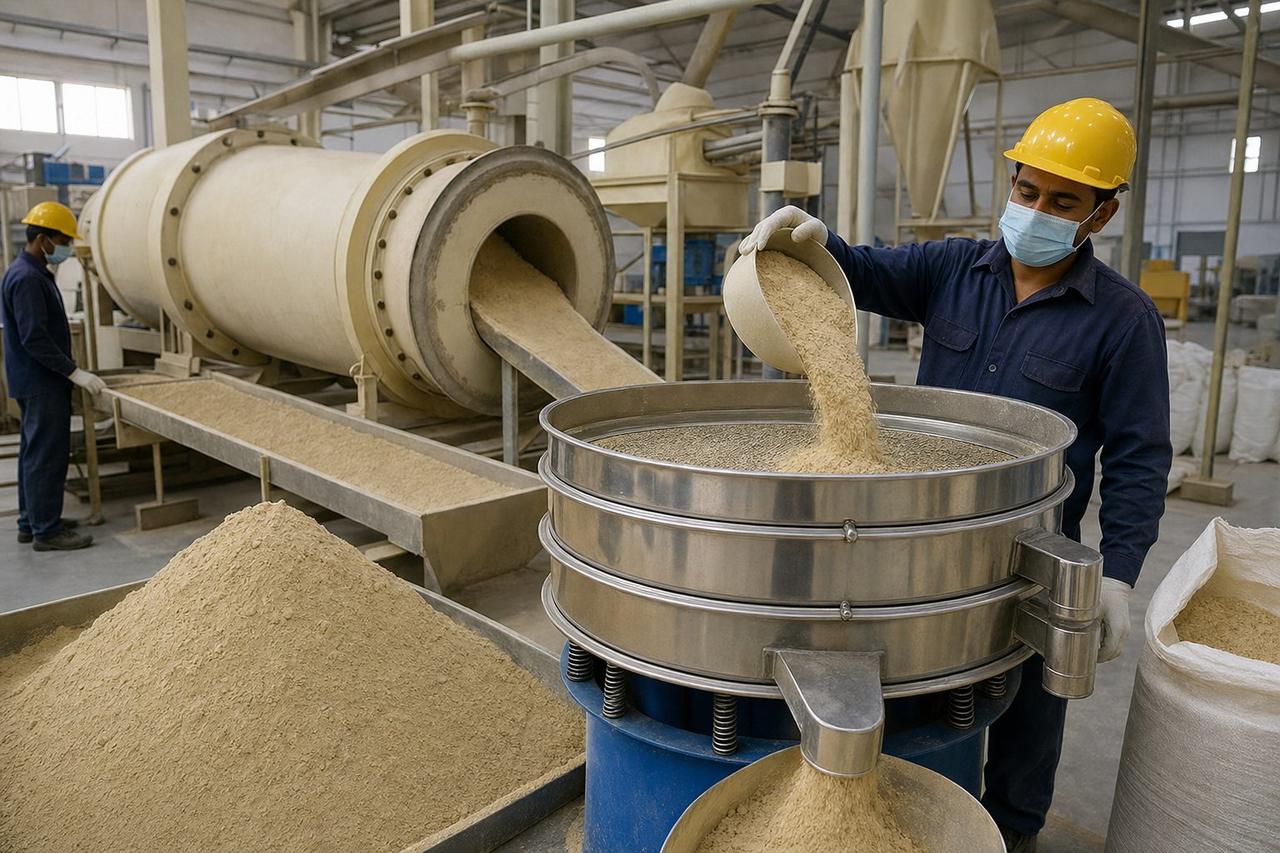
Direct-sourcing buyers benefit from understanding how Multani mitti is manufactured before writing specs. Mining happens in Rajasthan (Barmer (Rajasthan), Jaisalmer (Rajasthan), Bikaner (Rajasthan)). Primary processing (crushing, drying, milling, sieving) sits both in Rajasthan and Gujarat; cosmetic packing depth is stronger at Bhavnagar (Gujarat) and Jalgaon (Maharashtra). Retail private-label programmes typically use Gujarat/Maharashtra packing lines closer to the west-coast ports.
Ask about drying methods (sun vs mechanical), milling equipment, sieve capacity, moisture control during packing, and clean-room protocols for cosmetic SKUs. Ask for photos or video of the actual line the buyer's lot will run on — not archival pictures of an unrelated mill.
Supplier Verification Steps
- Ask for IEC, GST, PAN, and CAPEXIL RCMC copies
- Ask for prior export invoices and shipping bills (redacted if needed)
- Ask for factory address, layout, and equipment inventory
- Ask for retention-sample logs and lot COA archive samples
- Request a virtual audit or third-party inspection before first PO
- Cross-check on LinkedIn, trade-data references, and trade-council delegations
Sampling and Lab Discipline
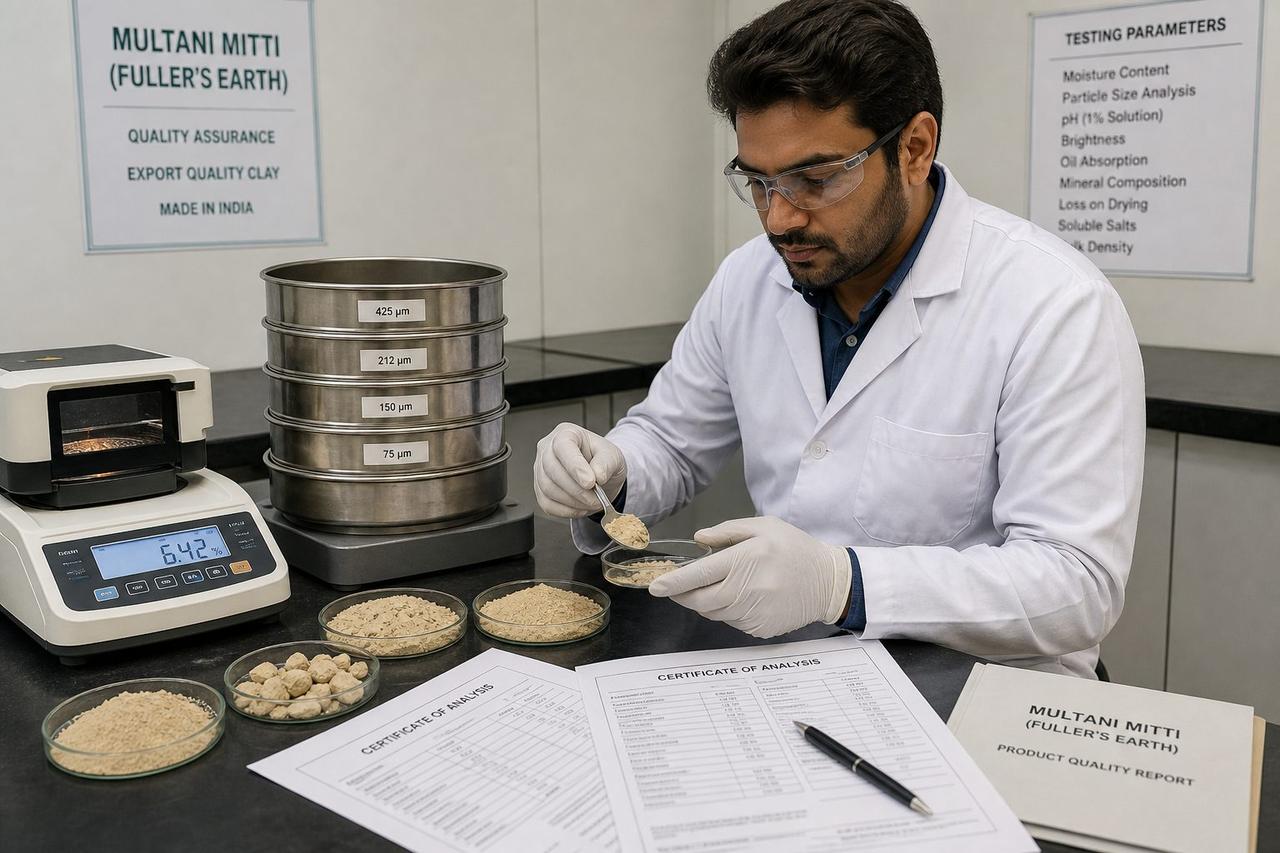
Sample cycle for stock grades is around 7–14 days; custom mesh or private-label samples take longer. Approve samples in writing against the specification sheet — not against a phone call. Retain one sample at origin and one at destination for future reference. Lot COA panels should cover: Lot COA (mesh, moisture, pH, brightness / whiteness where specified); Heavy metals panel (Pb, As, Cd, Hg) for cosmetic buyers; Microbiology (TPC, yeast & mold; pathogens as specified); MSDS / SDS; ISO 9001 (processor).
Third-party lab testing at destination is a valuable back-check for cosmetic and retail SKUs. Budget for it. A destination-lab COA that confirms origin-lab COA builds a durable trust bridge.
Pricing Analysis
Buyer Tip
Direct-sourcing pricing conversations should never be reduced to a single 'best price' number. Ask for lot-specific quotes tied to mesh, moisture, packing, and Incoterm. Indicative FOB planning bands USD/kg: industrial 0.15–0.35; bleaching earth 0.25–0.55; standard cosmetic powder 0.30–0.70; fine-mesh cosmetic 0.55–1.20; retail packed 1.50–6.00+.
Landed-cost modelling for direct-sourcing buyers must include origin haul, port charges, ocean freight, insurance, destination handling, duty, retesting reserve, and packaging waste. A cheaper FOB with lighter packing can lose more on rejection and rework than an incrementally higher FOB with proven barrier film.
Pricing Framework for Direct Buyers
Swipe →
Data table — swipe horizontally on small screens
| Layer | What to Model | Direct-Sourcing Note |
|---|---|---|
| FOB per SKU | Mesh, moisture, packing | Lock in the sales contract |
| Origin haul | Cluster to port | Cluster choice matters |
| Ocean freight | FCL vs LCL | Vessel and lane cycles |
| Insurance | Cargo value | Voyage-specific |
| Destination handling | Port + broker fees | Confirm with local broker |
| Duty | Per SKU per country | Confirm HS treatment |
| Retest reserve | Buffer for QC discrepancy | Optional but wise |
MOQ Analysis
Buyer Tip
Direct buyers negotiate MOQ against real cash and warehouse constraints. Indicative planning: trial 1–5 MT; standard FCL 16–24 MT (20ft) / 22–28 MT (40ft) — verify stow; retail private-label first PO 500–2,000 units typical first PO. Serious processors will typically accept a trial lot with signed spec and deposit; buyers who insist on FCL from lot one, without any sample and COA gate, create the disputes they hoped scale would prevent.
Direct-Buyer MOQ Strategy
Swipe →
Data table — swipe horizontally on small screens
| Programme | Trial | First FCL | Repeat Cadence |
|---|---|---|---|
| Industrial coarse | 1–5 MT | 16–24 MT (20ft) | Monthly to quarterly |
| Bleaching earth | 1–5 MT | 16–24 MT (20ft) | Quarterly |
| Standard cosmetic | 1–5 MT | 16–24 MT (20ft) | Monthly to quarterly |
| Fine-mesh cosmetic | 500 kg–2 MT | 16–24 MT (20ft) | Quarterly |
| Retail private label | Sample kit | 20ft cartonised | Quarterly to biannual |
Packaging Standards
Export Tip
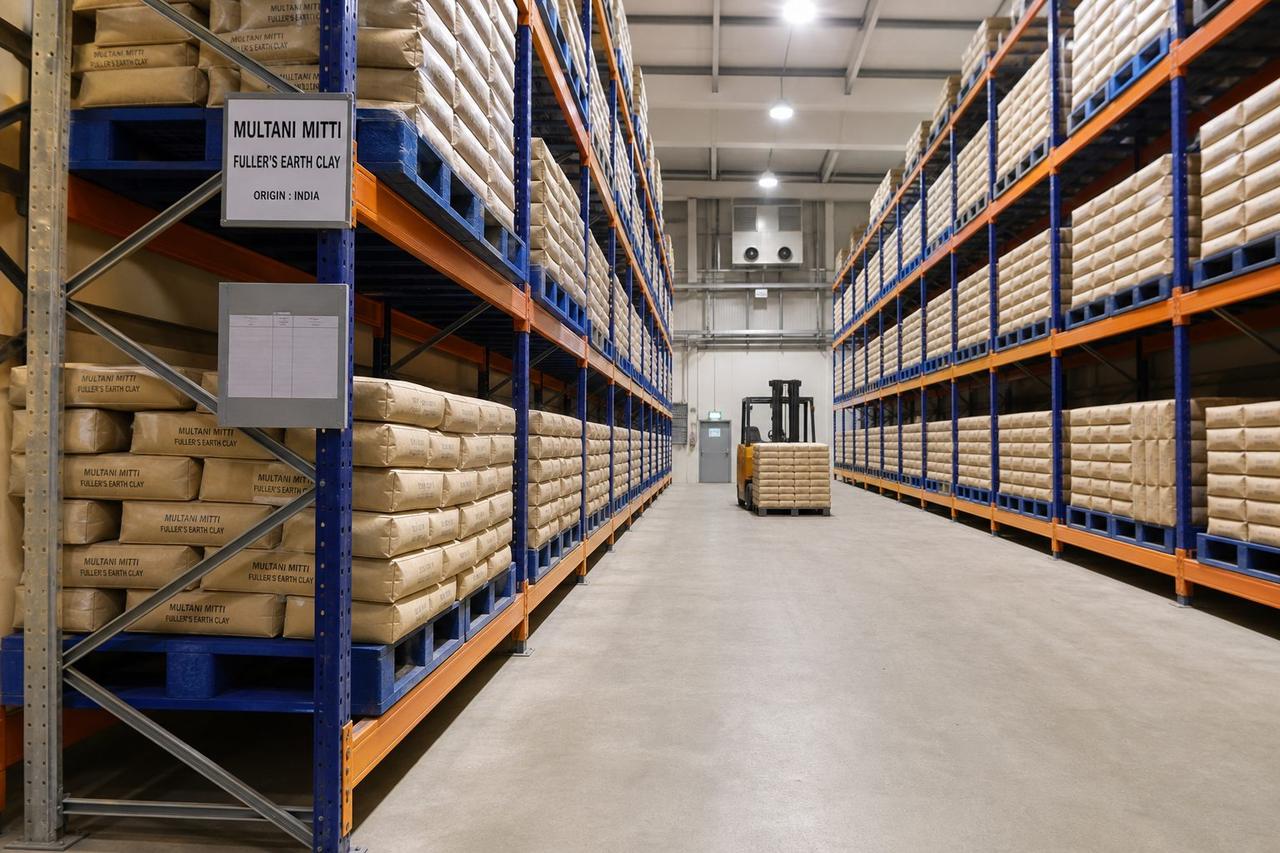
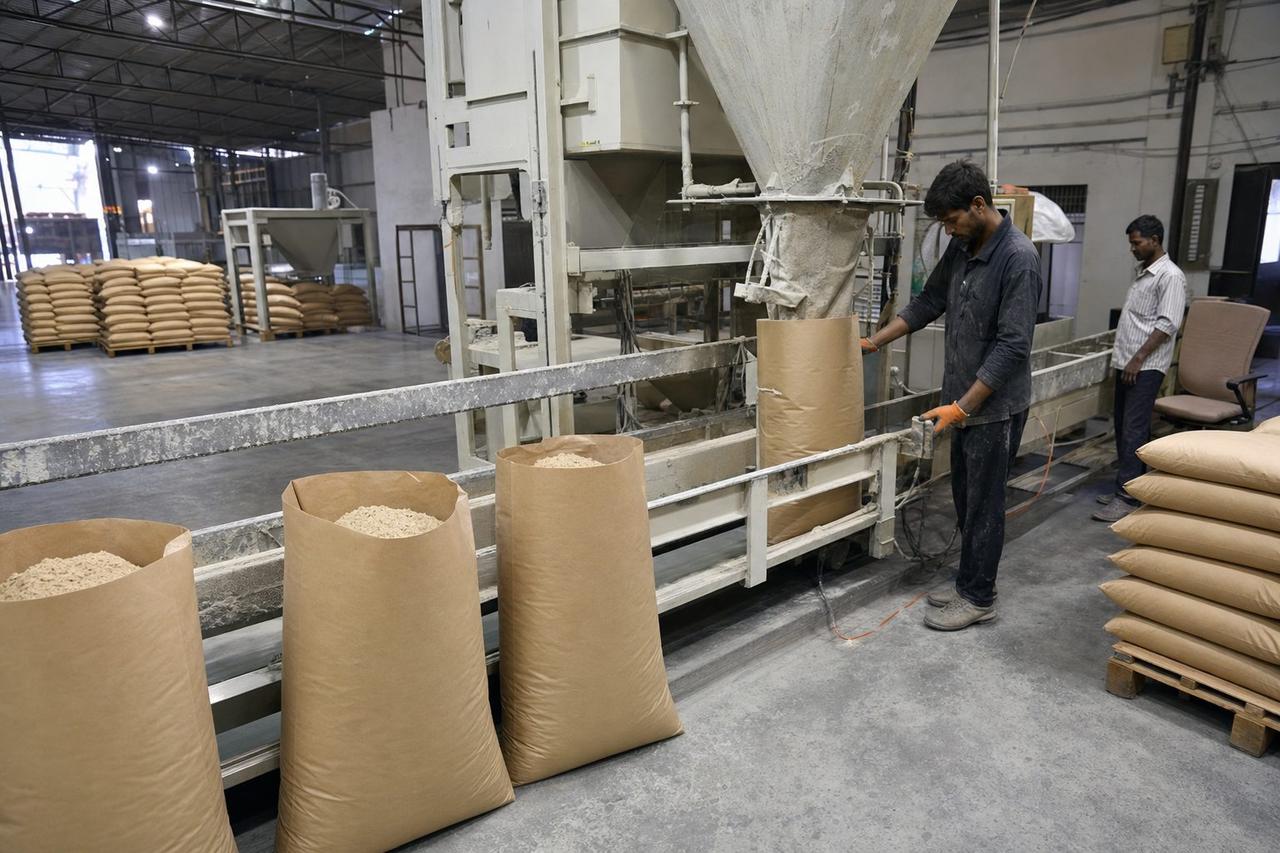
Direct-sourcing buyers should insist on a written packing bill of materials — not a WhatsApp photo. Bulk defaults: 25 kg multiwall kraft + PE liner; jumbo bags 500–1,000 kg. Retail: laminated pouches, jars, or sachets with moisture barrier. Industrial: PP woven bags or jumbo bags; moisture protection critical. Marking must include lot number, mesh grade, net weight, HS reference where required, and destination-appropriate labelling. Retail SKUs add barcode, language panels, and ingredient/claims copy.
Packing Verification Checklist
Swipe →
Data table — swipe horizontally on small screens
| Element | Buyer Ask | Why It Matters |
|---|---|---|
| Film / sack material | GSM, structure, barrier rating | Moisture and abrasion resistance |
| Liner | PE type and gauge | Moisture protection |
| Seal | Width and integrity test | Prevent seal leaks |
| Print / artwork | Revision number, colour proof | Retail compliance |
| Master carton | GSM and stacking rating | Transit protection |
| Palletisation | Pallet type, wrap, dimensions | Warehouse handling |
Container Loading Details
Export Tip
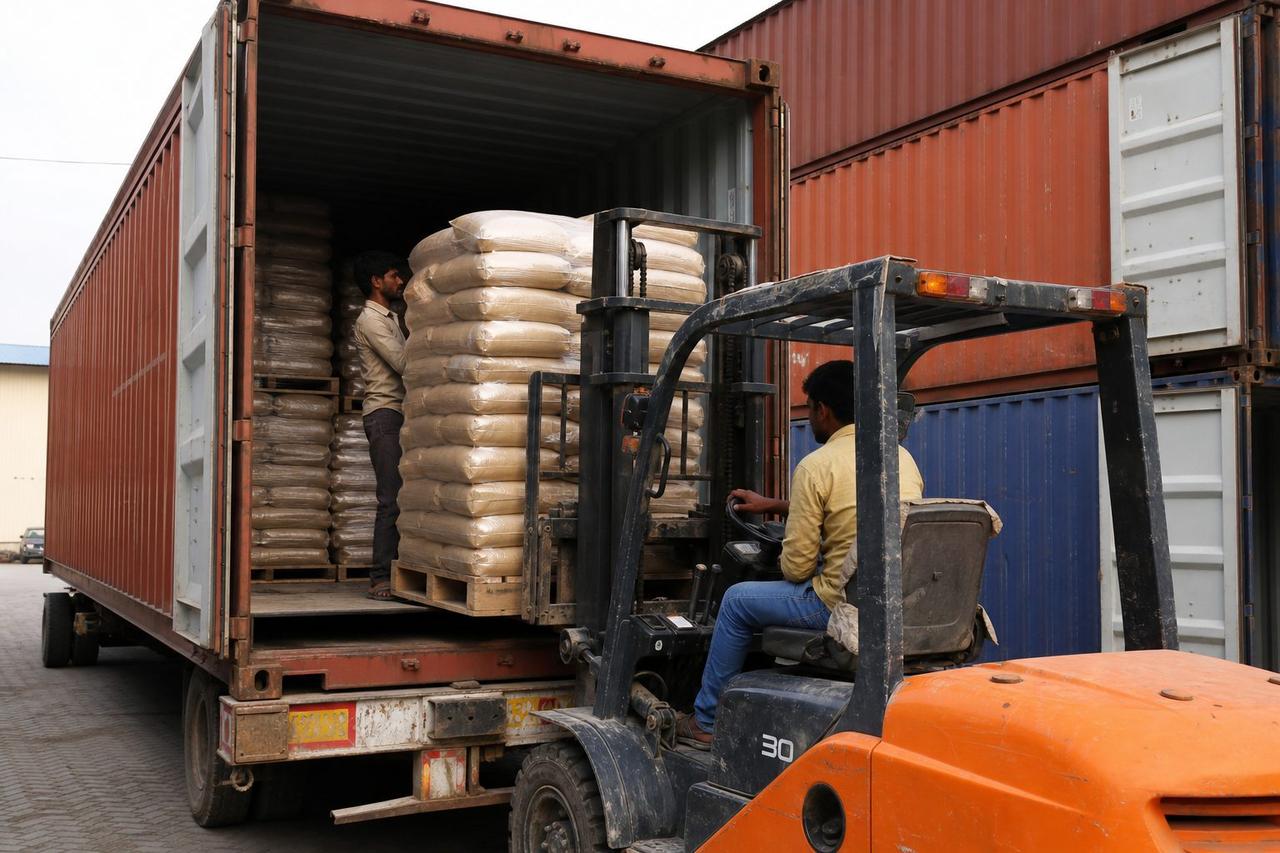
FCL targets remain 16–24 MT (20ft) / 22–28 MT (40ft) — verify stow with verification. Direct buyers should ask for pre-stow photos, seal numbers, and lot-to-bag traceability. LCL programmes carry higher moisture and contamination risk — mitigate with barrier packing and confirmed clean container assignment.
Container Loading Verification
Swipe →
Data table — swipe horizontally on small screens
| Item | Direct-Buyer Verification |
|---|---|
| Payload | Verify against bag dimensions and weight |
| Container condition | Ask for pre-stow inspection photos |
| Seal number | Record and share with destination broker |
| Palletisation | Confirm pallet type and wrap |
| Lot traceability | Match bag labels to packing list |
Shipping Methods
Export Tip
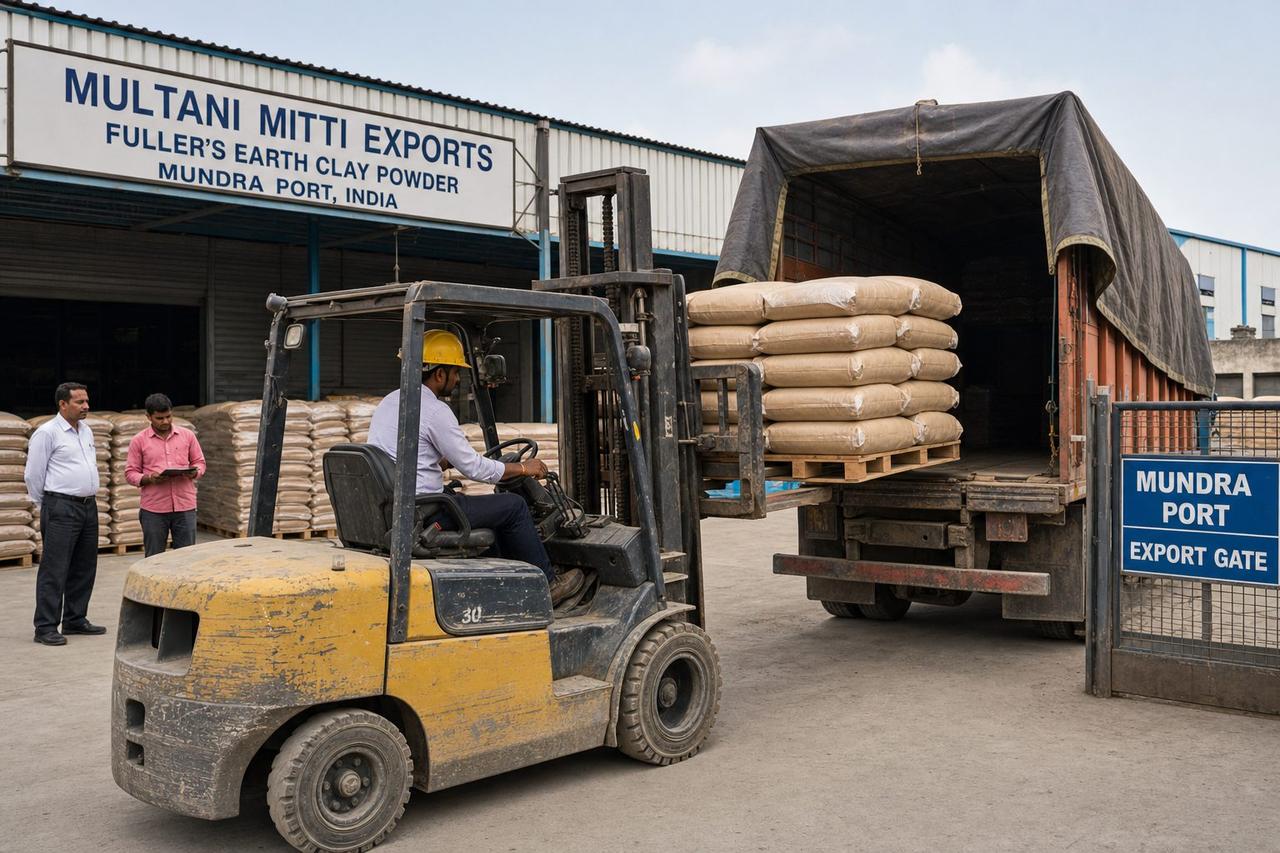
Sea FCL from Mundra, Kandla / Deendayal, Nhava Sheva (JNPT) is the default. LCL is a bridge for early trials. Air is for samples only. Incoterms: EXW, FOB Mundra / Kandla / Nhava Sheva, CFR / CIF major ports, DDP (selected programmes only). FOB Mundra or Kandla is common for buyers who want freight control; CFR / CIF simplify budgeting when the exporter books ocean freight.
Shipping Method Choice
Swipe →
Data table — swipe horizontally on small screens
| Mode | When to Use (Buyer) | Watch-outs |
|---|---|---|
| Sea FCL | Repeat programmes | Confirm stow and payload |
| Sea LCL | Early trials or small retail | Moisture, contamination |
| Air | Samples only | Uneconomic for bulk |
Certifications
Compliance Notes
Cert layer for direct-sourcing programmes should be defined by SKU and destination before the first RFQ.
Ask for live copies of processor ISO 9001 or ISO 22716 certificates, not brochure claims. Require a lot COA that names mesh, moisture, and — for cosmetic Multani mitti — heavy metals and microbiology.
Keep SDS aligned to the COA values. CAPEXIL RCMC and IEC prove export eligibility; they do not replace lot quality evidence.
Cert Verification Checklist
Swipe →
Data table — swipe horizontally on small screens
| Certificate | Buyer Verification |
|---|---|
| Lot COA | Confirm sign-off, lab reference, date |
| SDS | Match to SKU and revision |
| ISO 9001 | Certificate copy + validity date |
| ISO 22716 / GMP | Certificate copy + scope |
| Halal / Kosher | Registrar name + validity |
| CAPEXIL RCMC | Copy + validity |
Buyer Requirements
Buyer Requirements
Buyer requirements in direct sourcing centre on written evidence: signed specification, packing bill of materials, HS confirmation, lot COA, SDS, retention sample, and shipping documents that match invoice detail. Any gap in this evidence pack shows up as a customs hold, a receiving lab discrepancy, or a stalled reorder conversation.
Buyer Requirement Matrix
Swipe →
Data table — swipe horizontally on small screens
| Requirement | Owner | Format |
|---|---|---|
| Specification sheet | Buyer + Exporter (signed) | One page per SKU |
| Packing bill of materials | Exporter (approved by buyer) | PDF with film / sack specs |
| Lot COA | Exporter lab | Per lot per SKU |
| SDS / MSDS | Exporter | Per SKU |
| HS confirmation | Buyer's broker | Broker letter |
| Retention sample | Both parties | Labelled + dated |
| Shipping documents | Exporter + CHA | Invoice, PL, BL, COO |
Country-wise Opportunities
Market Snapshot
Direct-sourcing opportunity varies by buyer destination. Read this map with your national import profile in mind.
Direct-Sourcing Opportunity by Destination
Swipe →
Data table — swipe horizontally on small screens
| Country | Best-Fit SKU | Direct Sourcing Edge |
|---|---|---|
| USA | Fine-mesh cosmetic + retail | Value share and margin |
| Canada | Standard cosmetic + retail | Bilingual retail control |
| UAE | Retail + industrial coarse | MOQ flexibility |
| UK | Cosmetic + retail | REACH + claims |
| Germany | Industrial + cosmetic | Mesh consistency |
| Australia | Retail + fine-mesh | Barrier packing discipline |
| Malaysia | Standard cosmetic + industrial | Cost competitiveness |
United States
US direct buyers benefit most on premium cosmetic and retail Multani mitti SKUs, where processor-side value competition is strongest. Expect deeper documentation and GMP-aligned packing before the first PO.
Model landed cost with a broker: bulk Fuller's earth often clears under HTS 2508.40.01.20 (typically Free — verify live HTSUS). Keep mesh, heavy metals, and barrier packing locked before you negotiate FOB.
Distribution routes commonly transit LA/LB, New York/New Jersey, or Savannah. Run a 1–5 MT trial with lot COA before committing an FCL.
Canada
Canadian direct buyers reward documentation depth. Bilingual retail labelling is required for consumer-facing units. Transit via Vancouver or Montreal.
United Arab Emirates
UAE direct buyers benefit from MOQ flexibility and regional redistribution. Halal alignment strengthens retail credibility. Transit via Jebel Ali.
United Kingdom
UK direct buyers pull cosmetic and retail SKUs with claims-heavy positioning. REACH-aware handling is expected.
Germany and EU
German and wider EU direct buyers reward mesh consistency and REACH-aware documentation. Industrial and cosmetic mix common.
Australia
Australian direct buyers focus on wellness retail with long-lane moisture-barrier packing and AICIS/BICON checks and ISPM-15 wood-pack paperwork.
Malaysia and ASEAN
Malaysian direct buyers pull standard cosmetic and industrial absorbent with Halal alignment. Cost-competitive tone.

Sourcing Checklist
Checklist
- Write a one-page specification for each SKU family
- Shortlist at least three processors verified on IEC, GST, RCMC, and prior export docs
- Sample and lab-test against the written specification with signed approval
- Retain reference samples at origin and destination
- Negotiate MOQ, price, Incoterm, and payment structure in writing
- Confirm HS classification with a licensed customs broker
- Approve packing bill of materials before milling begins
- Coordinate documentation with the merchant exporter and CHA in parallel with production
- Book vessel space against confirmed production calendar
- Score first shipment on spec match, moisture on receipt, and document accuracy
A buyer-side sourcing checklist keeps direct programmes honest. Use this list as a project plan for every new India Multani mitti programme.
Common Buyer Mistakes
Common Mistakes Box
Direct-sourcing mistakes tend to cluster around impatience and false economy. Common patterns: skipping supplier verification because 'the price is right'; accepting a verbal spec on WhatsApp; approving a photo of finished bags without a packing bill of materials; paying full deposit before sample approval; and mixing SKU families on a first PO to save freight without buyer QC bandwidth.
The antidote is a merchant exporter or sourcing partner who provides accountable process ownership — spec management, QC coordination, and document orchestration — instead of parallel WhatsApp threads with unverified counterparties.
Future Market Trends
Key Statistics
Direct-sourcing trends over the next few years will reward buyers who invest in documentation and compliance. Cosmetic buyers will face tighter heavy-metal ceilings and more sustainability positioning demands. Retail private-label buyers will benefit from smaller-MOQ launch formats (500–2,000 units) that reduce first-order risk. Industrial buyers will demand chain-of-custody clarity even on tonnage lots.
Digital verification tools — video mill audits, blockchain-anchored lot COA, electronic bills of lading — will progressively speed direct sourcing but will not replace on-the-ground discipline.
Direct-Sourcing Trend Signals
Swipe →
Data table — swipe horizontally on small screens
| Trend | Buyer Response |
|---|---|
| Tighter cosmetic metals | Insist on cosmetic-COA with heavy metals per lot |
| Smaller retail launches | Negotiate cartonised MOQ formats |
| Chain-of-custody demand | Ask for lot origin and processor traceability |
| Digital audit tools | Use video and shared drives for evidence |
Conclusion
Sourcing Fuller's earth (Multani mitti) directly from India is a discipline programme, not a supplier search. Verify processors on registrations, prior exports, and mill visits. Write a one-page specification per SKU. Sample and lab-approve in writing. Structure MOQ and payment against sample gates. Confirm HS with a broker. Approve packing bill of materials. Coordinate documentation in parallel with production. Score first shipment on evidence, not on gut feel.
Use HS 2508.40/25084090 for bulk clay and 33049990 for cosmetic preparations; keep bentonite (2508.10) distinct. Plan MOQ around 1–5 MT trials and 16–24 MT (20ft) / 22–28 MT (40ft) — verify stow FCL targets. Price with the indicative bands, then verify lot quotes.
Work with Altus Exports as your merchant exporter and global sourcing partner for Fuller's earth (Multani mitti) — verified Rajasthan–Gujarat supply, COA-backed lots, export documentation, and FCL coordination from inquiry to shipment. Contact Altus Exports to structure your India direct-sourcing programme with accountable QC and documentation coordination. Continue with Find International Buyers for Fuller's Earth for the exporter counterpart or Fuller's Earth Export Documentation Checklist for document depth.