
Top Moringa Products Exported from India: Buyer Catalogue
By Saurabh Mittal, Founder, Altus Exports
A B2B catalogue of Indian Moringa oleifera formats, from dried leaf and mesh-grade powder to 4:1 and 10:1 extracts, organic lots, and private-label bulk supply.
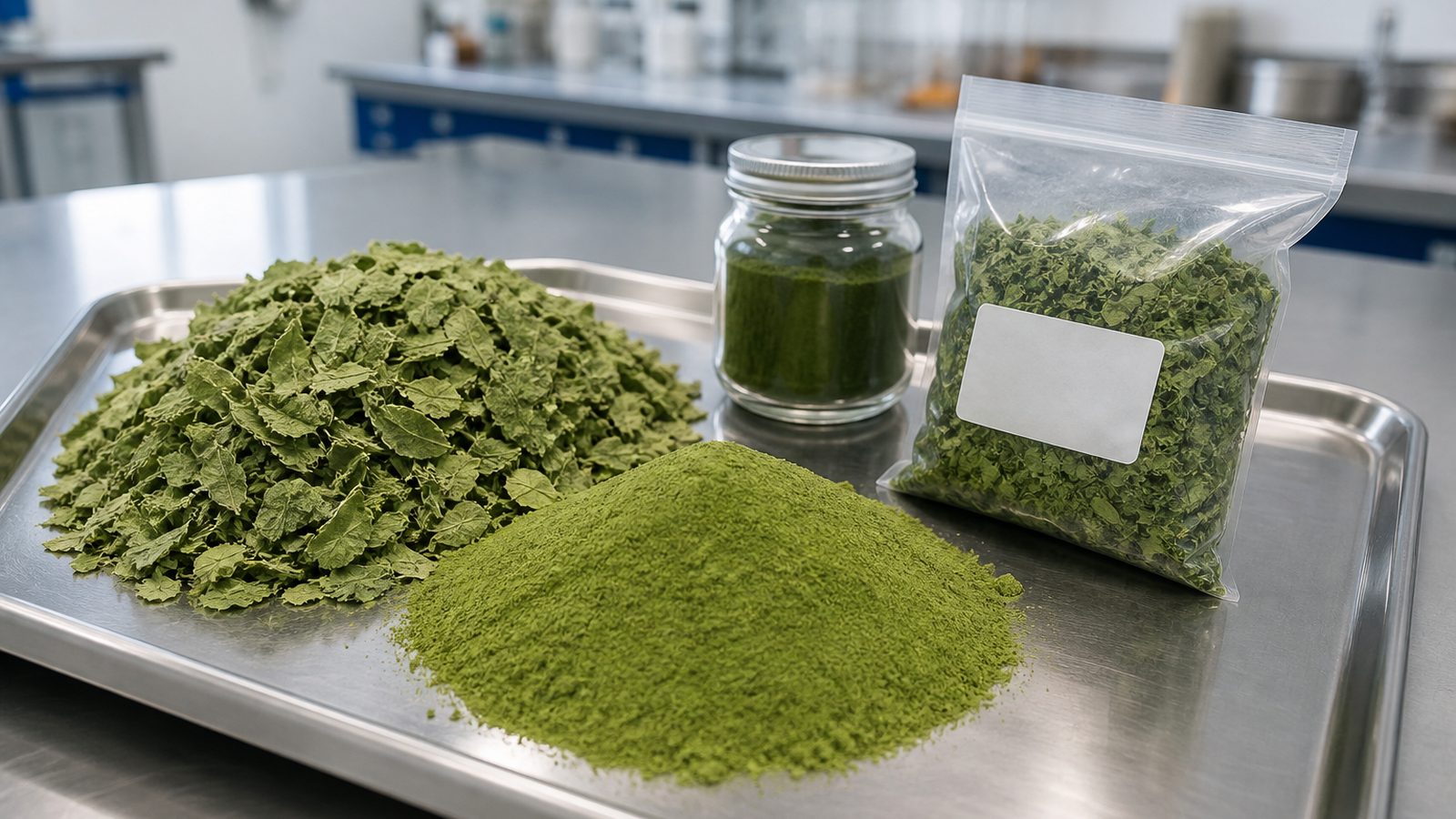
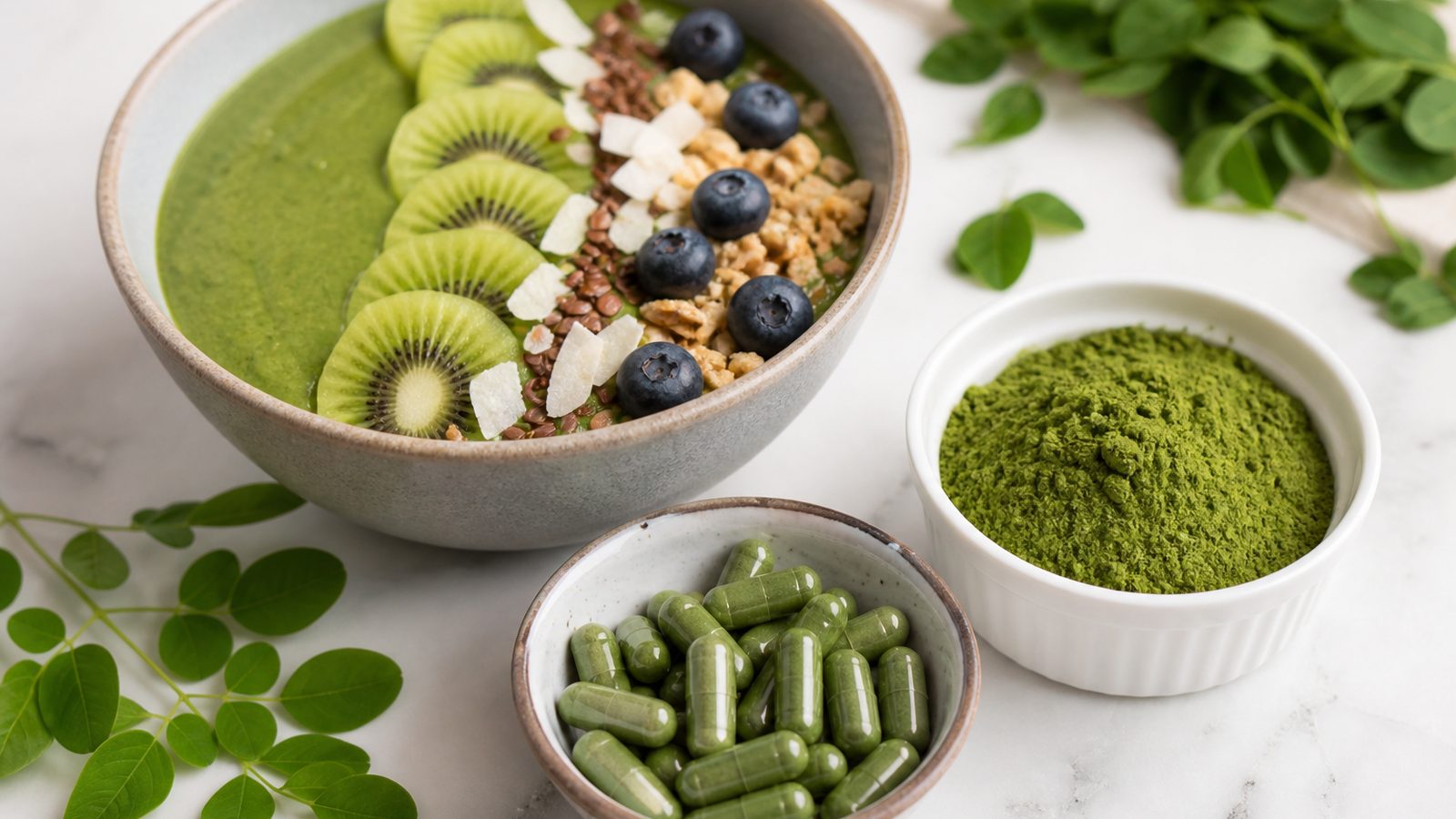
Indian *Moringa oleifera* is not a single SKU. International buyers can source dried leaf, leaf flakes, several leaf-powder mesh grades, protein-rich powder, niche seed powder, 4:1 or 10:1 ratio extracts, and aqueous or ethanolic extracts. Each format has different handling, quality, and commercial uses. The export process guide explains how that choice shapes sampling, documents, and freight.
Leaf powder is normally quoted by mesh, colour, moisture target, microbiological specification, treatment status, certification tier, and pack size. Extract buyers need the plant part, ratio, extraction medium, carrier, solubility, and agreed testing method written into the RFQ. A clear specification prevents a nutraceutical buyer from receiving a food-grade powder that cannot support the intended formulation.
Organic NPOP/USDA/EU supply, steam-sterilized powder, protein-rich powder, and private-label bulk are premium routes, but only where documentation supports the claim. Buyers can compare their market and application requirements in the premium Moringa opportunity guide and use the direct sourcing playbook to set a sample protocol.
Key Takeaways
Summary Box
Executive Summary
Summary Box
Moringa is a catalogue problem before it is a freight problem. Dried leaf, flakes, mesh powders, protein-rich lots, and ratio extracts are separate commercial products.
Catalogue buyers should demand a one-page SKU card covering plant part, mesh or ratio, solvent where relevant, micro limits, pack, and certification scope before comparing price lists.
A visual “green powder” sample cannot substitute for lot-linked analytical evidence when the channel is food, nutrition, or formulation.
Product Categories / Variants
Summary Box
- Conventional and certified organic leaf powder.
- Declared mesh and industrial packing options.
- Declared extract formats with transparent analytical basis.
- No unsupported health or therapeutic claims.
The catalogue deep-dive separates dried leaf, flakes, conventional and organic powders, protein-rich powder, steam-sterilized lots, and 4:1/10:1 extracts.
Each card states variables buyers must fill: mesh, moisture, micro, solvent, carrier, pack, MOQ.
If two offers share a name but not a card, they are not comparable products. Use the export process guide to connect SKUs to shipment gates.
Indian Moringa oleifera product catalogue
Swipe →
Data table — swipe horizontally on small screens
| Product | Specification variables | Primary buyer channel |
|---|---|---|
| Dried leaf | Leaf integrity, moisture, cleaning level | Tea, food, distributors |
| Leaf flakes | Cut size, colour, moisture, foreign matter | Food packers and blends |
| Leaf powder | Mesh grade, colour, moisture, micro profile | Food, wellness, ingredient distributors |
| Protein-rich leaf powder | Protein basis, mesh, micro profile | Nutrition and functional-food buyers |
| Seed powder | Niche format; botanical-part verification | Specialist formulators |
| 4:1 / 10:1 extract | Ratio, solvent, carrier, assay, solubility | Nutraceutical and formulation buyers |
| Aqueous / ethanolic extract | Extraction medium, ratio, residual solvent controls | Ingredient and formulation buyers |
| Steam-sterilized or organic powder | Treatment record or certification scope | Premium brands and retail programmes |
Quality Specification Reference
- Write acceptance limits before the first sample leaves India.
- Match COA parameters to the finished lot — not only the approved sample.
- Extracts need residual-solvent and carrier disclosure where applicable.
- Retain a sealed reference sample for destination retest disputes.
Each catalogue SKU needs its own acceptance sheet; powder mesh limits are not extract residual-solvent limits.
Publish method expectations beside each card so buyers do not invent assays after PO.
Release only when the finished lot COA matches the SKU card that was sold.
Moringa quality specification checklist — agree before sampling
Swipe →
Data table — swipe horizontally on small screens
| Parameter | Leaf / flakes | Leaf powder | Extract |
|---|---|---|---|
| Identity | Moringa oleifera leaf | Moringa oleifera leaf | Moringa oleifera; leaf or agreed plant part |
| Physical specification | Cut size, colour, moisture, foreign matter | Mesh grade, colour, moisture, flow | Ratio, solubility, carrier, appearance |
| Food-safety testing | Agreed microbiology and contaminants | Agreed microbiology and contaminants | Agreed microbiology and contaminants |
| Traceability | Farm or collection and batch records | Input-to-batch records | Input, extraction, and batch records |
| Organic status | Certificate where sold as organic | Certificate where sold as organic | Certificate scope and carrier review |
| Lot release | COA matched to packing list | COA matched to packing list | COA matched to drum labels |
Market Size & Industry Overview
Key Statistics
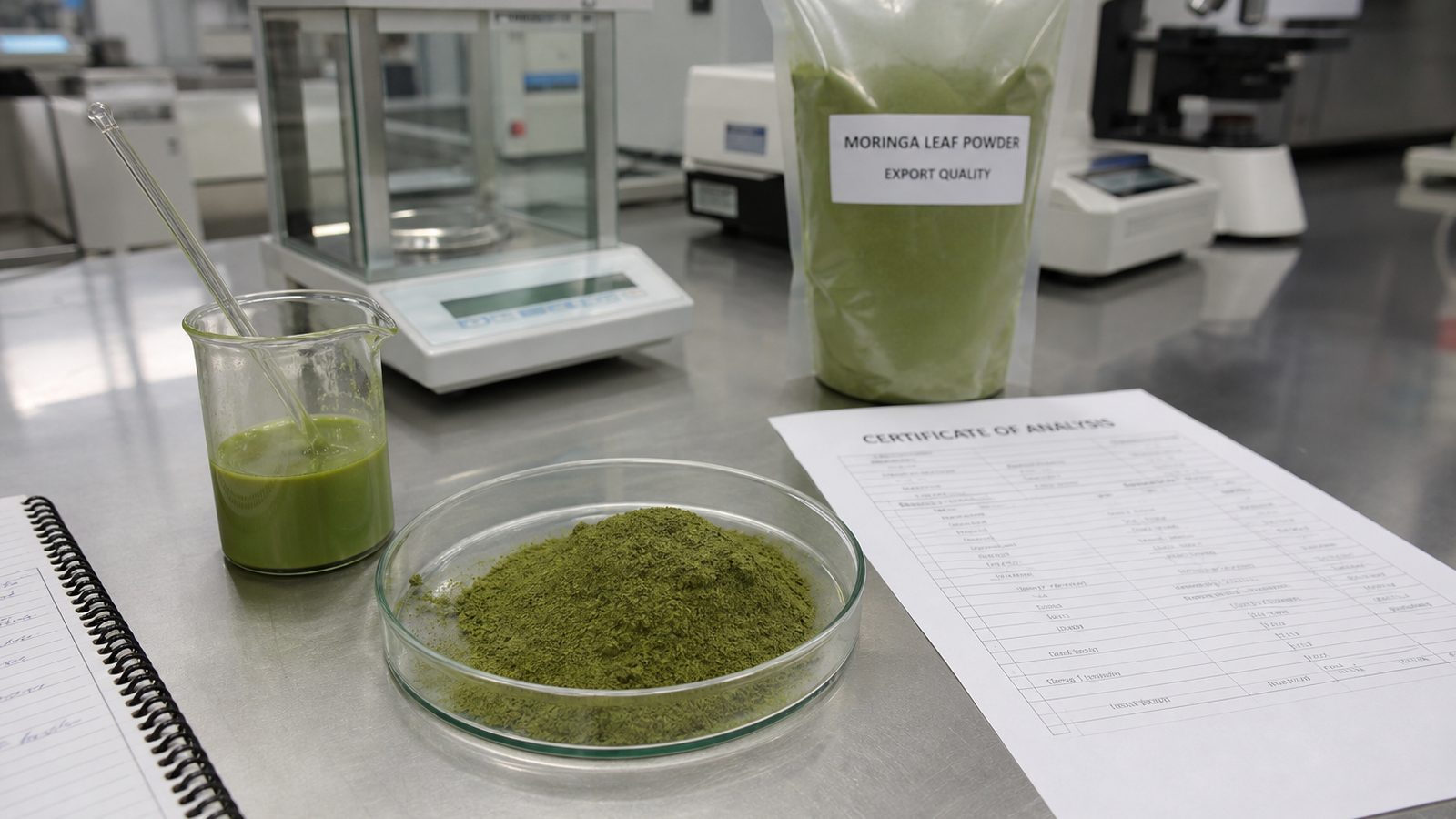
Product structure — not national acreage — defines usable supply. Mesh bands, organic status, and extract ratios create different available pools.
Industrial distributors and formulation buyers rarely share one acceptable grade, even when both say “leaf powder.”
Catalogue architecture should mirror those pools so buyers can self-select without rewriting the RFQ mid-negotiation.
Manufacturing Overview
Export Tip
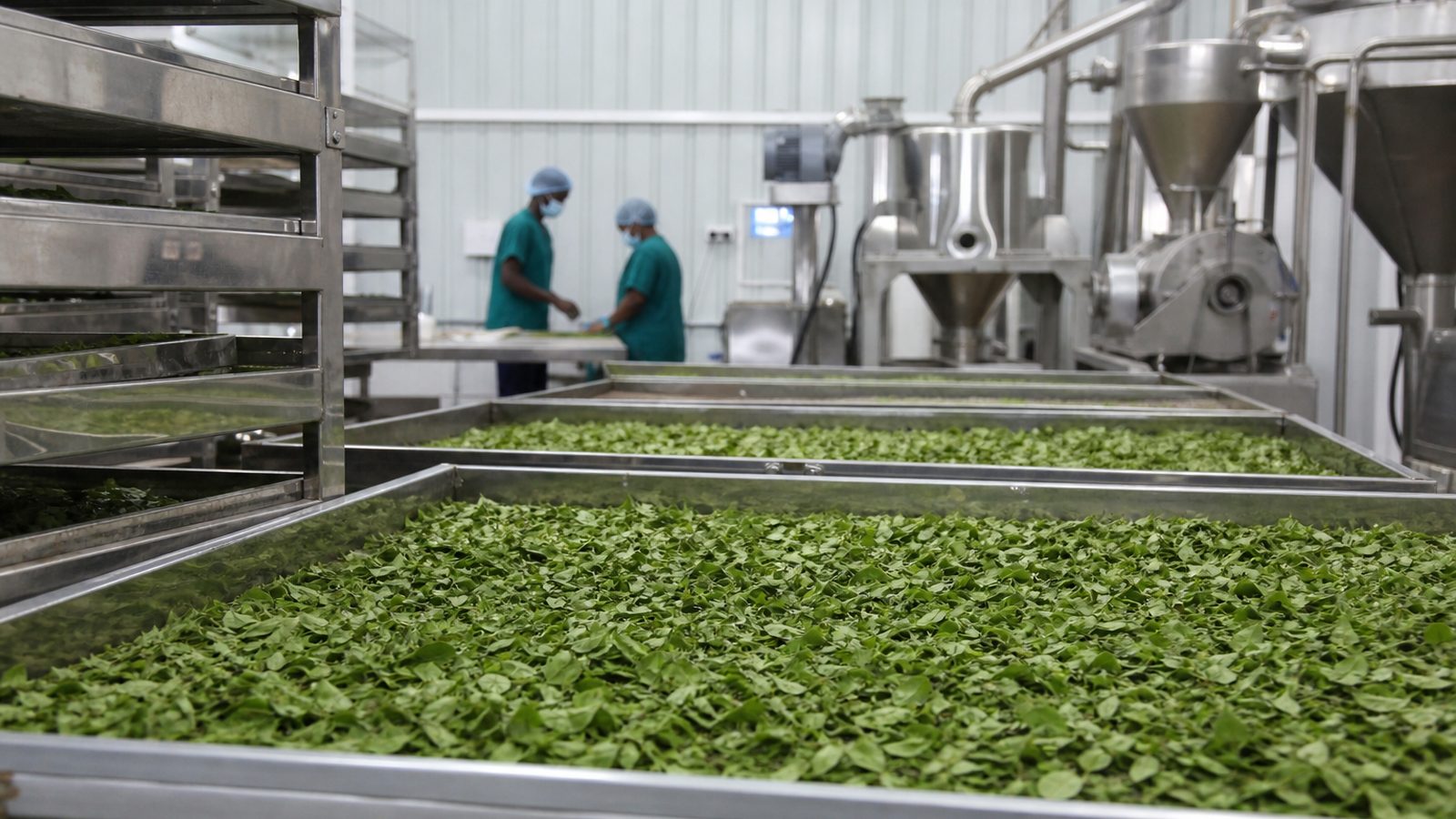
Different SKUs stress different unit operations — flake integrity versus fine milling versus extract concentration.
Catalogue claims must match equipment and validated process windows.
If the plant cannot hold a mesh band, remove that SKU from the card See the Moringa export process guide for release-to-booking handoff.
Moringa SKU Catalogue Depth for Export Buyers
Build a catalogue with one card per commercial SKU. Leaf-powder cards should show botanical identity, plant part, processing description, mesh, sensory description, analytical limits, pack options, storage, shelf life, certifications, and application limitations. Extract cards should additionally declare extraction approach, ratio or marker basis where substantiated, carrier, solubility, and required disclosure.
Do not turn broad nutritional interest into an unsupported product claim. The buyer should select the form based on its permitted local application and its own formulation work, while the exporter provides accurate identity, process, and quality evidence.
Use the premium-pathways guide when the request includes organic or standardized formats, then approve the exact SKU rather than a generic sample family.
Pricing Analysis
Buyer Tip
Each SKU card needs its own FOB logic — mesh, organic, and extract ratios do not share one ladder.
Publish directional bands with quote-date warnings, not eternal price lists.
Catalogue integrity beats racing to the bottom on undefined powder.
Directional FOB USD/kg bands — verify harvest, specification, and quote date
Swipe →
Data table — swipe horizontally on small screens
| Product | Directional FOB band | Commercial driver |
|---|---|---|
| Conventional leaf powder | Low-to-mid single digits to low teens | Mesh, microbial controls, colour, packing, and lot size |
| Organic leaf powder | Mid-teens to mid-twenties+ | Valid certification, segregation, traceability, and demand timing |
| Dried leaf / leaf flakes | Quote by cut size and moisture specification | Visual grade and foreign-matter control |
| Protein-rich leaf powder | Premium to standard powder | Declared protein method and buyer specification |
| 4:1 or 10:1 extract | Tens of USD/kg | Ratio, solvent system, carrier, assay, and plant certification |
| Private-label bulk | Quote after pack and artwork scope | Packaging conversion and approval lead time |
MOQ Analysis
Buyer Tip
MOQ differs by SKU: extracts and organic segregation often need higher minima than stock conventional powder.
Print MOQ on each catalogue card.
Custom mesh or private-label packs change the ladder.
Moringa export MOQ ladder
Swipe →
Data table — swipe horizontally on small screens
| Stage | Typical quantity | Purpose |
|---|---|---|
| Sample | 100 g–2 kg | Sensory review, lab testing, and formulation work |
| Powder trial | 100–500 kg | First commercial quality and packing validation |
| Extract trial | 25–100 kg | Formula compatibility and buyer approval |
| Powder wholesale | 1–5 MT+ | Distributor, processor, and recurring bulk demand |
| Extract wholesale | 200 kg–1 MT+ | Established ingredient programmes |
Packaging Standards
Export Tip
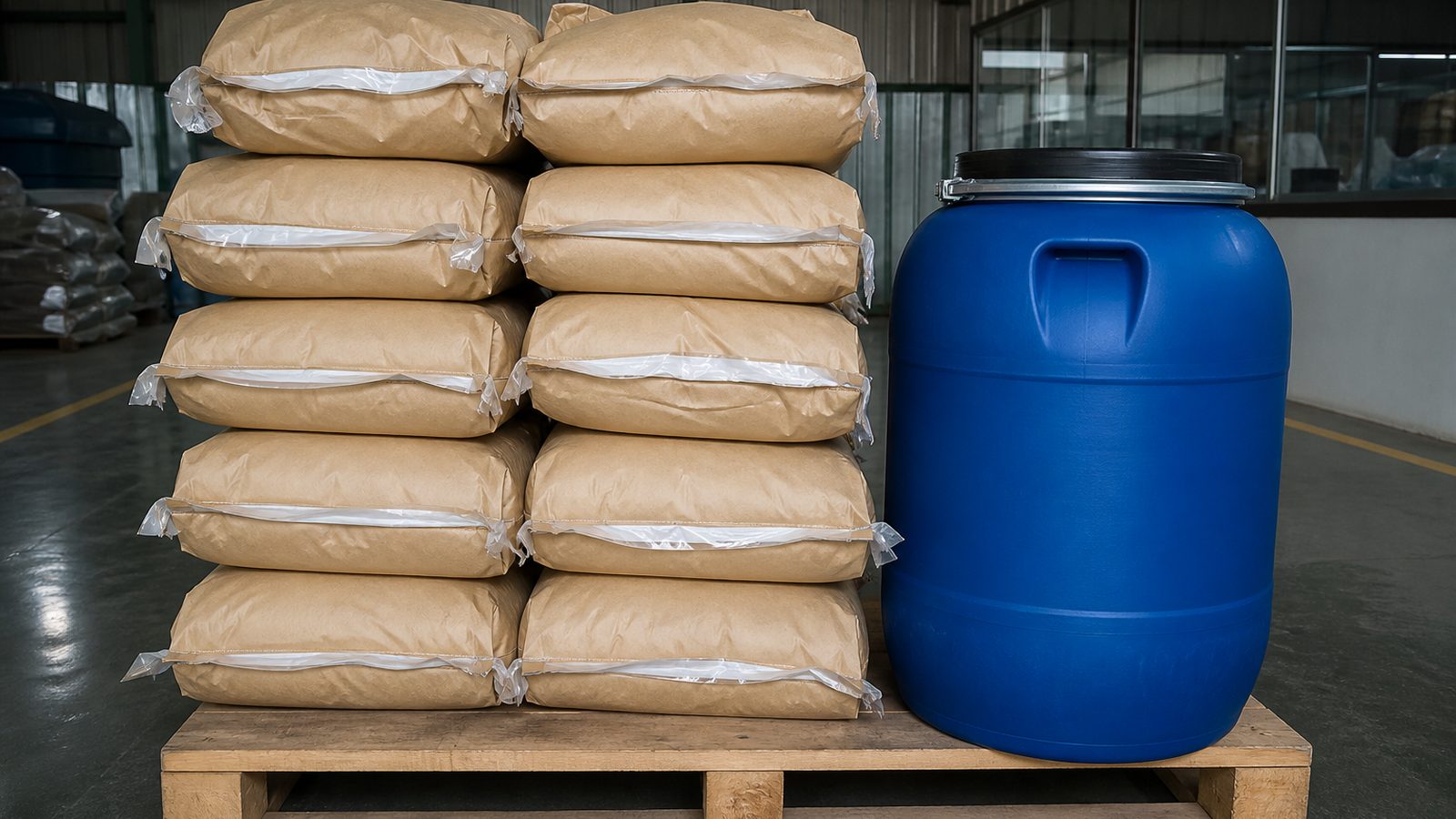
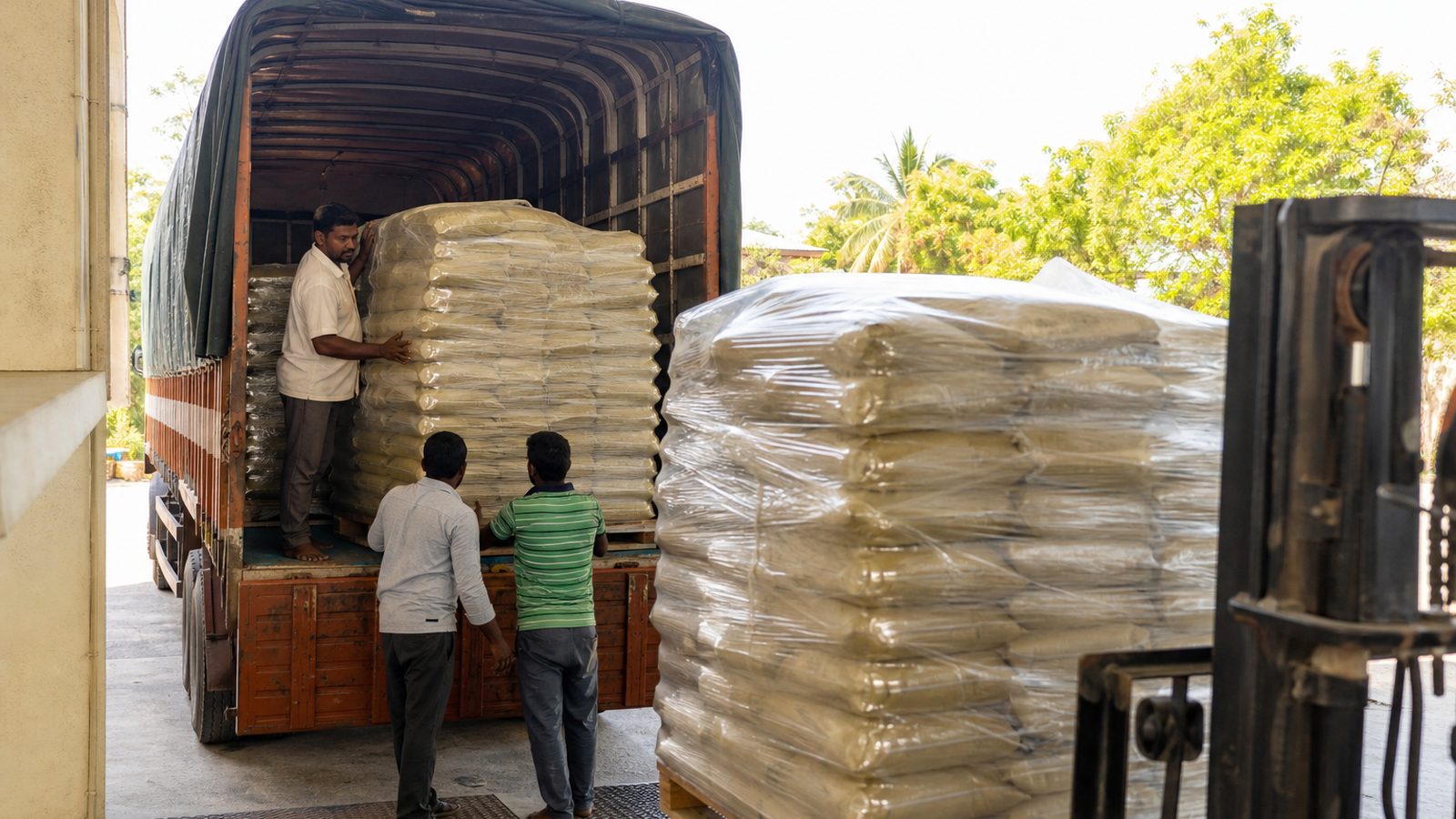
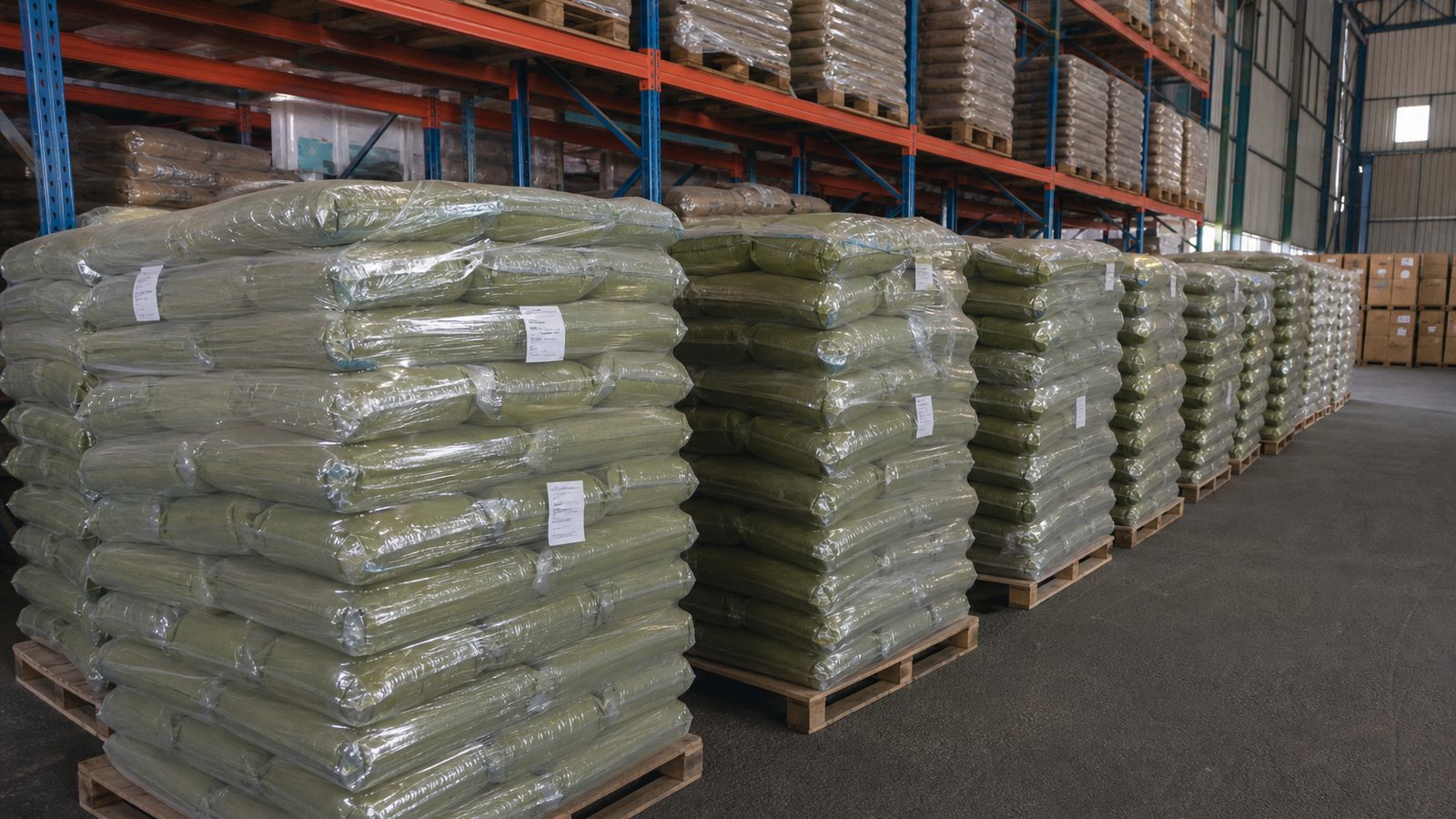
Catalogue photos must match shippable packs, including liner and label fields.
Retail-ready private label is a different SKU family from industrial bags.
Publish pack options beside each form.
Moringa packing formats for export
Swipe →
Data table — swipe horizontally on small screens
| Format | Configuration | Use case | Control point |
|---|---|---|---|
| Leaf powder | 20/25 kg food-grade bag with liner | Bulk food and ingredient buyers | Lot code, moisture barrier, clean outer pack |
| Dried leaf / flakes | 20/25 kg food-grade bag with liner | Tea, food, and repacking channels | Protect leaf integrity and prevent moisture pickup |
| Extract | 25 kg HDPE drum with double liner | Nutraceutical and ingredient supply | Seal integrity, drum label, and batch traceability |
| Private label | Buyer-approved pouches, jars, or cartons | Retail programmes | Artwork, destination labels, and master-carton plan |
Export Statistics
Key Statistics
- Cite India HS 130219 ~USD 539.8M CY2024 (WITS/UN Comtrade) only as a multi-botanical parent — not Moringa-only.
- Verify the applicable India ITC-HS and destination HTS/TARIC for the exact finished SKU.
- Re-check TradeStat/WITS/Comtrade before quoting figures to a buyer.
SKU managers should remember that parent extract-heading dollars do not equal leaf-powder tonnes. Catalogue slides must say so explicitly.
If a product card quotes trade data, pair it with the HS family that matches that SKU — 1211.90 cues for leaf/powder, 1302.19 for concentrates.
Mis-labelled stats are a credibility defect on a technical catalogue.
India Moringa oleifera export profile — directional; verify on quote date
Swipe →
Data table — swipe horizontally on small screens
| Metric | Directional position | Buyer note |
|---|---|---|
| Core product | Dried leaf, flakes, leaf powder, niche seed powder, and aqueous or ethanolic ratio extracts | Specify botanical part, mesh or extract ratio in every RFQ |
| Production base | Tamil Nadu: Theni, Madurai, Dindigul, Erode; Andhra Pradesh/Telangana and Karnataka; supporting Rajasthan, Maharashtra, Odisha | Origin affects harvest calendar, consolidation, and freight route |
| Dried leaf and powder (India export cue) | ITC-HS 12119029 most commonly cited; also 12119099; some lots filed under 07129090 | Confirm eight-digit ITC-HS with CHA; destination HTS/TARIC may differ from India export code |
| Extract classification (India export cue) | HS 1302.19; India lines often 13021919–13021990 | Confirm solvent/ratio and finished form with CHA before shipping bill |
| Trade-data caution | India HS 130219 exports ~USD 539.8M in CY2024 (WITS/UN Comtrade) — multi-botanical parent, not Moringa-only | It is a multi-botanical parent heading, not a Moringa-only tally |
| Export gateways | Chennai, Tuticorin, Mundra, and Nhava Sheva | Select the named port after factory location and sailing schedule are fixed |
Import Statistics
Key Statistics
- Segment destinations by buyer type and product form.
- Confirm the importer’s local route before shipping.
- Re-verify current partner data.
Import stats rarely disclose mesh or extract ratio. Product managers must still ask.
Segment inbound interest into powder, organic powder, and extract before allocating catalogue slots.
A top partner country can still be wrong for a 10:1 ethanolic SKU.
Moringa import demand by destination — directional
Swipe →
Data table — swipe horizontally on small screens
| Market | Demand profile | Typical buyer |
|---|---|---|
| USA | Leaf powder, organic powder, supplements ingredients, and extracts | Ingredient importers, brand owners, private-label packers |
| EU / UK | Leaf/powder commonly not novel; extracts/seed oil may need Novel Food review | Organic distributors, food brands; extract buyers need pathway confirmation |
| UAE / GCC | Bulk powder and retail-ready programmes with food-safety documentation | Distributors, re-export traders, retail chains |
| Australia / Canada | Canada: premium powder interest; Australia: M. oleifera not permitted as retail food after FSANZ A1294 rejection (Nov 2025) | Canada natural-product distributors; AU: TGA therapeutic pathway / counsel — do not assume food import |
| Japan / South Korea | Consistent fine powders and tightly specified extracts | Ingredient distributors and formulation companies |
| Philippines / selected African markets | Accessible bulk powder and dried-leaf programmes | Wholesalers, distributors, and regional packers |
Container Loading Details
Export Tip
Cube-sensitive powders and drum extracts need different stow sketches on the catalogue’s logistics page.
Do not publish fantasy MT loads.
Product density changes payload — say so.
Container and dispatch guidance — indicative
Swipe →
Data table — swipe horizontally on small screens
| Mode | Use | Planning point |
|---|---|---|
| Courier / air | Samples and urgent approvals | Protect against heat and moisture; confirm destination import rules |
| LCL | Trials below container scale | Use palletisation or secure cartons where appropriate |
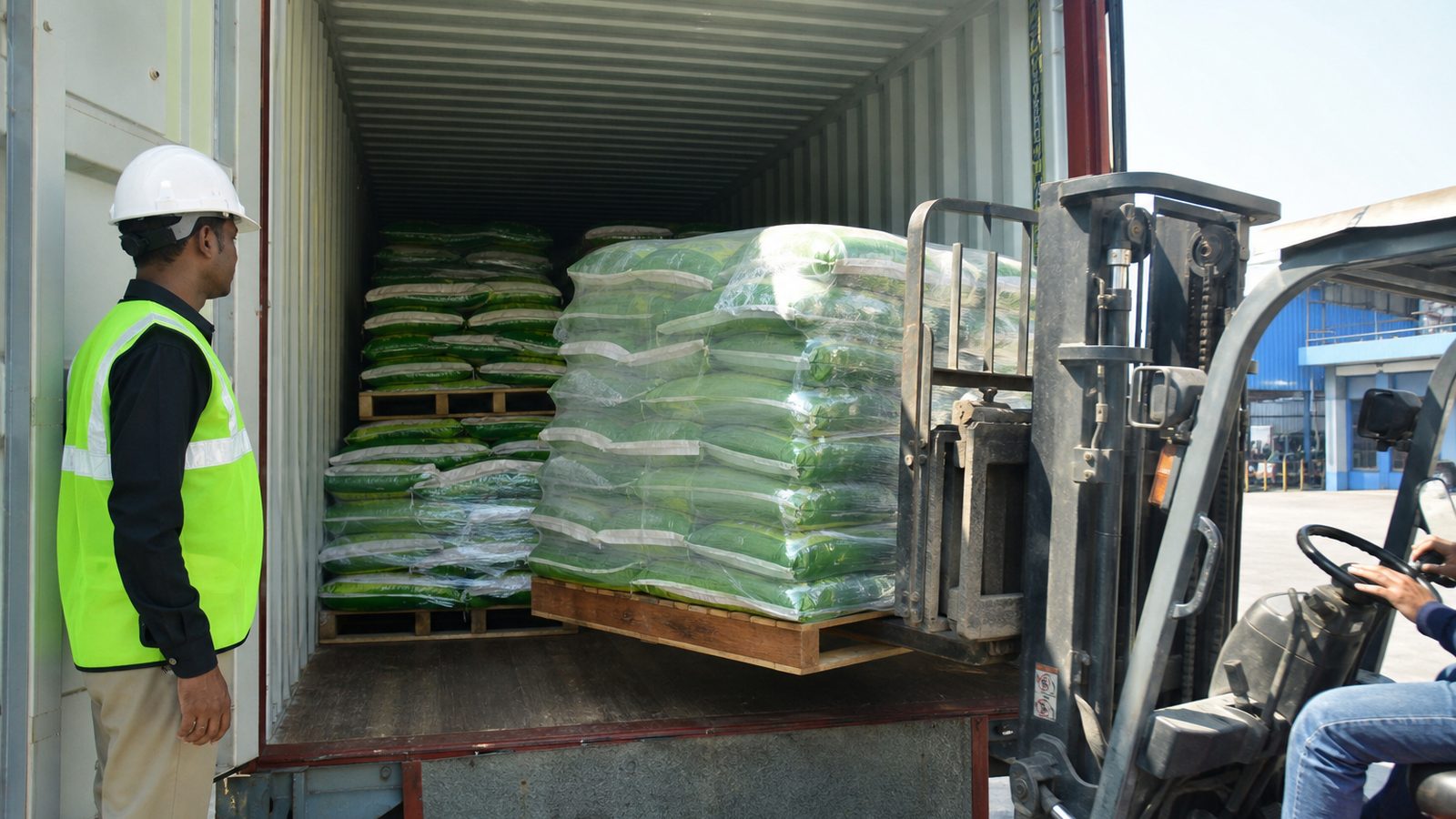
| 20-foot FCL | Bulk powder or leaf programmes | Confirm payload after actual pack dimensions and port limits |
| 40-foot HC FCL | High-volume powder programmes | Use a stuffing plan and moisture protection |
| Drum shipment | Extract orders | Verify drum count, gross weight, and hazardous-status declaration if applicable |
Shipping Methods
Export Tip
- Match freight to quantity, shelf-life, humidity risk, and receiving plan.
- Inspect and photograph the empty container before stuffing.
- Keep container, seal, and lot identifiers consistent across documents.
- Confirm who files destination entry before offering DAP/DDP.
Extract drums and fine powders may need different handling notes on the booking.
State those notes on the SKU logistics line.
Wrong handling instructions are product defects in transit form.
Certifications
Compliance Notes
Map certificates to SKUs — organic leaf powder is not covered by an unrelated extract scope.
Print cert applicability on catalogue cards.
Wrong-scope certificates are worse than none.
Moringa certifications and supplier documents
Swipe →
Data table — swipe horizontally on small screens
| Item | Purpose | Most relevant for |
|---|---|---|
| IEC and APEDA RCMC | Indian export readiness and agri/horticulture programme participation | Exporter supplier file |
| FSSAI licence | Food-business compliance in India | Food and nutraceutical handling |
| Certificate of Analysis | Lot-specific identity, mesh or ratio, moisture, microbiology, and agreed tests | Every commercial shipment |
| NPOP / USDA / EU organic | Organic chain-of-custody and market claim support | Organic programmes |
| ISO 22000 / HACCP / BRCGS | Food-safety system evidence | Retail, distributor, and processor approval |
| WHO-GMP | Preferred manufacturing signal for extract plants | Extract and formulation buyers |
| Halal / Kosher | Channel-specific compliance | GCC and selected specialist markets |
| Certificate of origin | Origin declaration | When buyer, bank, or destination requests it |
Buyer Requirements
Buyer Requirements
- State form, mesh/ratio, destination, quantity, pack, and Incoterm in the RFQ.
- List required certs and analytical limits before asking for FOB.
- Agree lab methods and dispute process before the trial ships.
- Approve labels and document wording before production starts.
Buyer requirements should map onto a SKU card field-by-field.
If a requirement has no field, the catalogue is incomplete.
Update cards when repeat buyers ask the same missing question.
Country-wise Opportunities
Market Snapshot
Recommend forms by country in the catalogue’s market notes.
Do not push extracts into pathways that need Novel Food review without disclosure.
Product-country fit is a catalogue responsibility Use the destination-market guide with the country table for a testable shortlist.
Country opportunity profile for Indian Moringa — directional
Swipe →
Data table — swipe horizontally on small screens
| Market | Product fit | Requirement focus | Opportunity |
|---|---|---|---|
| USA | Organic leaf powder, protein-rich powder, ratio extracts | Supplier controls, lot COA, product and label review | Large ingredient and private-label base |
| EU / UK | Organic powder, dried leaf; extracts only with pathway check | MRLs, contaminants, organic records; Novel Food for extracts/seed oil as applicable | Leaf/powder demand strong; do not assume extract authorisation |
| UAE / GCC | Bulk powder, dried leaf, retail programmes | Food-safety file, suitable labels, and reliable delivery | Regional distribution and re-export |
| Australia / Canada | Canada: organic/premium powder; AU food retail blocked pending future permission | Canada: organic + label review; Australia: FSANZ A1294 rejected — not permitted as food/ingredient for retail sale | AU: verify TGA complementary-medicine route separately; never ship AU food retail without counsel |
| Japan / South Korea | Fine mesh powder and extracts | Specification consistency and detailed technical documents | Quality-led ingredient channels |
| Philippines / Africa | Value-oriented bulk leaf powder and leaf | Practical pack sizes and import-document alignment | Distributor-led regional expansion |

Sourcing Checklist
Checklist
Checklist each SKU separately when capabilities differ.
A plant approved for powder is not auto-approved for extracts.
SKU-level sourcing prevents catalogue lies.
Common Buyer Mistakes
Common Mistakes Box
- Do not treat powder and extract as interchangeable commodities.
- Do not approve samples without a written lot-release method.
- Do not add destination requirements after cargo is already produced.
- Do not jump to FCL before a sealed sample and trial succeed.
Mistake: one catalogue name for multiple meshes and extract ratios.
Mistake: implying therapeutic outcomes on a food-ingredient card.
Correction: SKU cards and claim hygiene.
Future Market Trends
Key Statistics
Trend: SKU proliferation with tighter specs rather than one bulk grade.
Catalogues that explain differences without overclaiming gain trust.
Vague greens lose shelf space in professional procurement.
Challenges & Solutions
Challenge: customers requesting hybrid specs the plant cannot hold.
Solution: redesign the SKU or decline; do not quietly fail mesh or ratio.
Honest catalogue limits prevent claims.
Compliance Checklist
Checklist
Compliance Notes
Compliance statements on catalogue cards must match what can be evidenced for that SKU.
Remove claims that lack pathway support.
Catalogue compliance is claim compliance.
Sources and Re-verification
Compliance Notes
- APEDA — Agricultural and Processed Food Products Export Development Authority
- DGFT — Directorate General of Foreign Trade (IEC, FTP)
- DGCI&S / TradeStat — India export-import statistics
- ICEGATE — Indian Customs EDI / tariff references
- FSSAI — Food Safety and Standards Authority of India
- WITS (World Bank) — trade statistics by HS
- UN Comtrade — international trade data
- ITC Trade Map — partner and product trade flows
- USITC HTS Search — U.S. Harmonized Tariff Schedule
- CBP CROSS — U.S. Customs rulings (e.g. N333360 moringa leaf powder)
- European Commission — Novel Food status Catalogue
- EUR-Lex — Regulation (EU) 2015/2283 on novel foods
- EU Pesticides Database — MRLs (verify current residue codes)
- CBI (Netherlands) — Entering the European moringa market
- CBI — European market potential for moringa
- FSANZ — Application A1294 Moringa oleifera as a novel food
- FSANZ — Moringa oleifera as a novel food (status note)
- TGA — Therapeutic Goods Administration (Australia complementary medicines)
- Access2Markets (EU) — duties and import formalities
- ICC — Incoterms rules
Catalogue claims should be footnoted to live sources for HS families and market pathway notes.
Re-check the links below whenever you refresh a SKU card or price sheet.
Clickable references used for the factual framing in this Moringa cluster (government, intergovernmental, and recognised market-intelligence sources):
Conclusion
Choose the SKU card first; everything else follows.
Altus helps buyers match Indian leaf, powder, and extract formats to real applications without catalogue fog. Start with our Moringa sourcing resources for SKU context.
Send your target form and limits to begin a comparable quote set Contact Altus Exports with form, quantity, destination, application, certificates, and analytical needs to proceed.