
Trade Shows and B2B Marketplaces for Private-Label Food Ingredient Exporters
By Saurabh Mittal, Founder, Altus Exports
Trade-show and B2B marketplace guide for private-label food ingredient exporters — PLMA, Gulfood, Anuga, SIAL, and Food Ingredients Europe pavilions, plus Alibaba and IndiaMART channels, sample-kit preparation, and follow-up tactics that convert meetings into repeat FCL programmes.
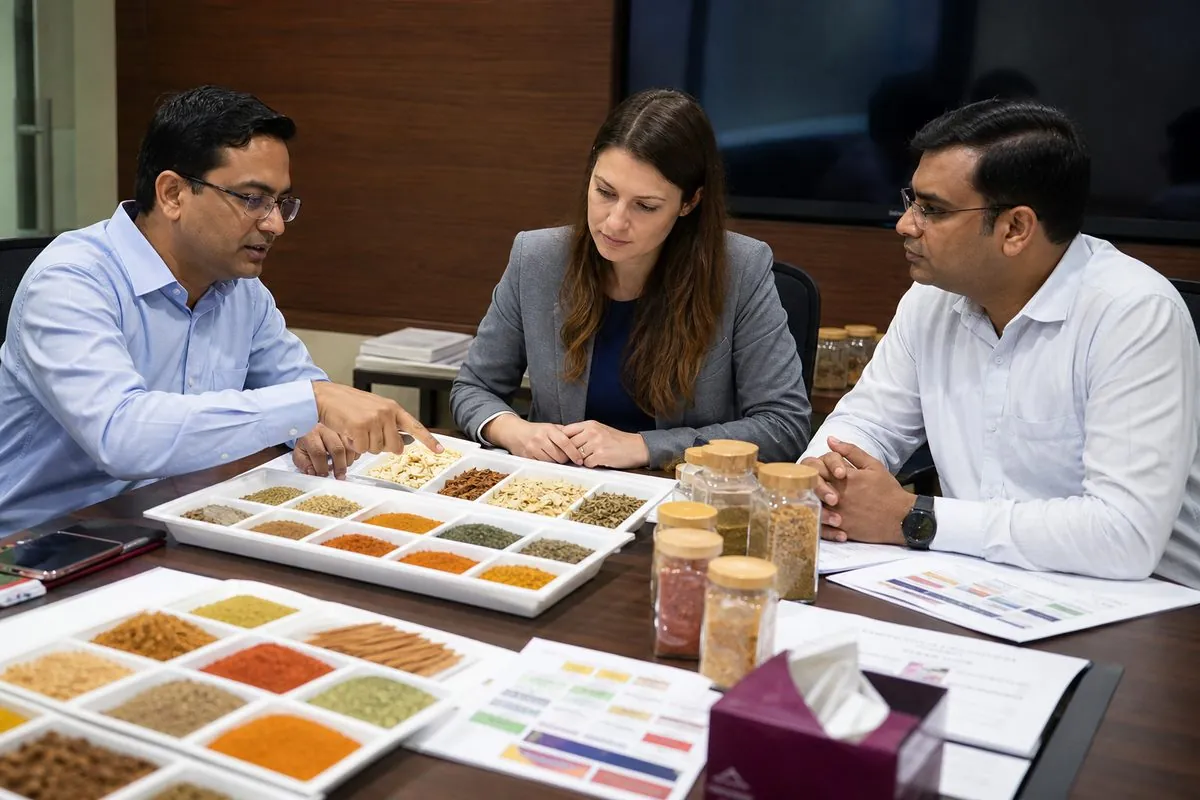
Trade shows and B2B marketplaces remain among the most effective channels for Indian private-label food-ingredient exporters to meet qualified international buyers — but only when approached with category-specific sample kits, clean COA templates, artwork mockups, and realistic MOQ positioning rather than a generic multi-category catalogue drop. PLMA's World of Private Label events, Gulfood, Anuga, SIAL, and Food Ingredients Europe each attract different buyer segments, and targeted B2B listings on Alibaba and IndiaMART serve inbound prospecting for this multi-category cluster.
This guide maps the trade-show and marketplace landscape for private-label food-ingredient exporters: which events attract retail-brand private-label buyers versus food processors and distributors, how to prepare sample kits that demonstrate category range without diluting formulation depth, and how to follow up exhibition meetings with the COA and artwork discipline that converts interest into trial FCL orders. One well-prepared trade-show season can establish buyer relationships that sustain export growth across an entire private-label portfolio for years.
For structured buyer-development tactics beyond events, see How to Find International Buyers for Private-Label Food Ingredients. For the export process behind every trade-show commitment, see How to Export Private-Label Food Ingredients from India. Altus Exports participates in leading private-label and food-ingredient trade fairs and supports manufacturers with buyer follow-up and FCL shipment execution.
Key Takeaways
Summary Box
Executive Summary
Summary Box
- Multi-HS OEM / private-label programme — buyer brand, Indian manufacture
- Councils: APEDA and/or Spices Board by SKU + FSSAI always
- HS family: Ch.09 · 0712 · 0713 · Ch.11 · Ch.15 · Ch.21 · oleoresins 1301.90/3301.90
- Stage: sample COA → bulk trial → retail-ready artwork → FCL
- Quote FOB per ingredient family with a quote date — never one blended cluster price
Trade shows and B2B marketplaces accelerate private-label food-ingredient buyer meetings — PLMA, Gulfood, Anuga, SIAL, Food Ingredients Europe, Alibaba, and IndiaMART each serve different segments and conversion timelines.
ROI is measured in trial volume booked and FCL converted within 90 days, not booth traffic — category-specific COA-backed sample kits and fast follow-up drive outcomes.
Trade Shows and B2B Marketplaces: Channel Guide
Indian private-label food-ingredient exporters should maintain presence across three channel types: PLMA's World of Private Label events (US and Europe), major food-ingredient trade fairs (Gulfood, Anuga, SIAL, Food Ingredients Europe), and B2B marketplaces (Alibaba, IndiaMART). Each serves different buyer segments and requires different sample-kit preparation.
Trade shows and marketplaces for private-label food-ingredient exporters
Swipe →
Data table — swipe horizontally on small screens
| Event/Platform | Buyer segment | Preparation requirement |
|---|---|---|
| PLMA World of Private Label | Retail-brand private-label buyers (US and Europe) | Category-range sample kit + artwork mockups + COA printouts |
| Gulfood | GCC retail chains and food-service distributors | Halal documentation + seasoning/snack-base samples |
| Anuga / SIAL | European retail and food-processor buyers | Clean-label and functional-blend samples + EU compliance notes |
| Food Ingredients Europe (Fi Europe) | Formulation-focused food processors and flavour houses | Oleoresin/extract and functional-blend technical data sheets |
| Alibaba / IndiaMART | Inbound wholesale and distributor enquiries | Verified profile, category-correct listings, fast sample dispatch |
Buyer Requirements
Buyer Requirements
- Written formulation / gold-sample reference
- Pack format: bulk vs white label vs exclusive private label
- Destination cert stack (BRC / IFS / FSSC / Halal / organic as needed)
- Trial MOQ + target Incoterm + artwork timeline
- Lot COA parameters matched to the category being shipped
Buyers in tradeshows programmes request samples, a written category-specific specification, lot COA, artwork proof for retail-ready SKUs, FOB pricing, and APEDA/Spices Board/FSSAI proof — retail brands add BRC/IFS/FSSC and Halal/organic where applicable.
Export Statistics
Key Statistics
- No single Comtrade line for 'private-label food ingredients'
- Cite Spices Board / APEDA / WITS at the underlying commodity level
- Prospect and file on the same HS family you will ship
Fair prospects often ask for India's export scale in this category — the honest answer is that private-label food ingredients span multiple commodity chapters with no single aggregate figure, so quote category-specific context instead.
Quote the correct underlying HS heading on spec sheets handed at booths — a blanket 'private label' description confuses buyers during post-fair document review.
Directional profile of Indian private-label food-ingredient export programmes (multi-HS)
Swipe →
Data table — swipe horizontally on small screens
| Metric | Directional Profile | Notes |
|---|---|---|
| Programme category | Buyer-branded bulk and retail-ready food ingredients | Not a single HS line — quote and declare by SKU family |
| Primary HS families | Ch.09 spices; 0712 dehydrates; 0713 dried pulses; Ch.11 flours/meals; Ch.15 oils; Ch.21 preparations; oleoresins 1301.90/3301.90 | CHA confirms the eight-digit line per SKU — never invent a PL aggregate HS |
| Governing councils | APEDA and/or Spices Board of India (by SKU) plus FSSAI (always) | BRC/IFS/FSSC 22000 typical add-on for retail-PL packing sites |
| Primary cluster | Gujarat: Unjha–Ahmedabad–Mahuva–Mundra corridor | Spice cleaning, dehydration, steam sterilization, merchant consolidation, PL packing |
| Supporting clusters | Maharashtra (Nashik–Mumbai); Rajasthan/Madhya Pradesh; South India specialty belt; Bihar (makhana adjacency) | Dehydrates, flours, oleoresins, and snack-ingredient PL support |
| Spices Board FY2024-25 (underlying spices) | 17.99 lakh MT / US$4,722.65M | Official Spices Board TIS — spices & spice products, not a PL-ingredient aggregate |
| APEDA Processed Vegetables FY2024-25 | 614,979.19 MT / US$897.13M | Broader processed-veg basket; dest. USA, UK, Philippines, UAE, Indonesia |
| WITS India HS 071290 (2024) | US$58.626M / 45,547.7 MT | Dried vegetables nes — partners include USA, Indonesia, Nepal, Germany, Malaysia |
| Global finished PL F&B retail (2025 cue) | ~US$517B (EDC / industry analysis) | Finished retail private-label sales — NOT Indian OEM ingredient export value |
| Leading destination clusters | USA, UK, UAE, Germany/Netherlands, Canada, Australia, Saudi Arabia, Singapore | Mix shifts heavily by ingredient family — verify HS-specific trade data before quoting buyers |
Manufacturing Overview
Export Tip
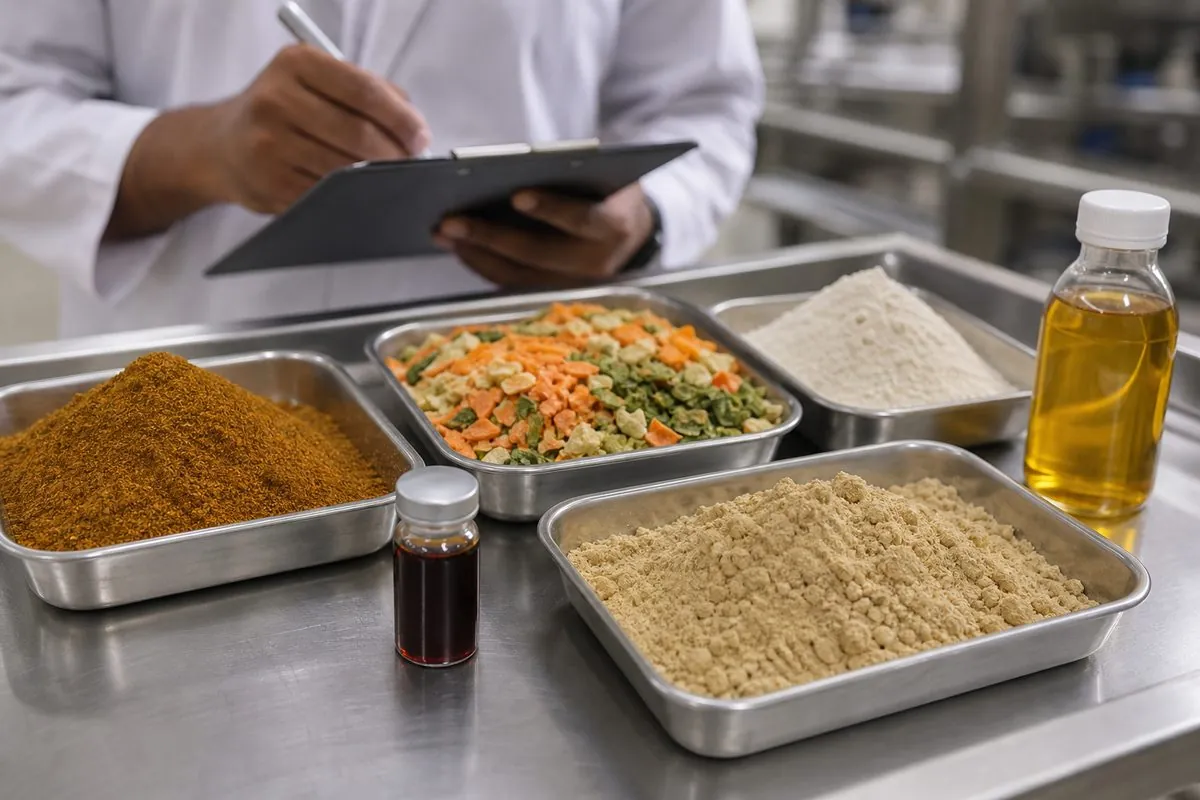
Fair conversations improve when exhibitors can explain their manufacturing base by category — sample kits aligned to production reality beat generic multi-category claims.
Buyers ask which Gujarat or Maharashtra facility supplies your samples; honest manufacturer mapping after the fair sustains trial orders.
Manufacturing literacy at the booth separates serious private-label exporters from catalogue distributors.
Country-wise Opportunities
Market Snapshot
Match fair geography to destination rows — PLMA draws US and European retail buyers; Gulfood skews GCC; Anuga and SIAL skew wider EU retail and food-processor segments.
Directional country opportunity profile for Indian private-label food-ingredient exporters
Swipe →
Data table — swipe horizontally on small screens
| Country | Demand Profile | Key Requirement Focus | Opportunity Note |
|---|---|---|---|
| United States | Large retail-PL and food-service ingredient demand | FDA prior notice, FSVP, BRC/IFS/FSSC site audit | Strong for audited spice, dehydrate, and functional-blend programmes |
| United Kingdom | Mature retail-PL culture with clean-label expectations | BRCGS site audit, UK labelling compliance | Good fit for retail-ready spice and dehydrate SKUs |
| United Arab Emirates | Halal-documented demand plus GCC re-export hub role | Halal certification, Arabic labelling artwork | Gateway to broader Gulf private-label re-export |
| Germany | EU retail-PL repack and distribution hub demand | TARIC duty, IFS/BRCGS retailer audit, pesticide MRLs | Strong for spice, dehydrate, and functional-blend assortments |
| Netherlands | European re-distribution hub for retail-PL programmes | EU organic and MRL compliance, retailer audit | Good entry point for wider EU retail-PL distribution |
| Canada | Growing retail-PL and food-processor demand | CFIA licensing for the importer/repacker of record | Solid fit for bulk and retail-ready flour, spice, and protein SKUs |
| Australia | Retail-PL and food-service demand with biosecurity controls | BICON import conditions for plant-derived SKUs | Opportunity for audited dehydrate and spice-blend programmes |
| Saudi Arabia | Halal-certified private-label and food-service demand | SASO/SFDA conformity, Halal certification, Arabic artwork | Strong for seasoning blends and snack-base private-label lines |
| Singapore | Low-duty re-export and repacking hub for Southeast Asia | SFA import licensing per SKU | Efficient entry point for wider ASEAN private-label distribution |
Pricing Analysis
Buyer Tip
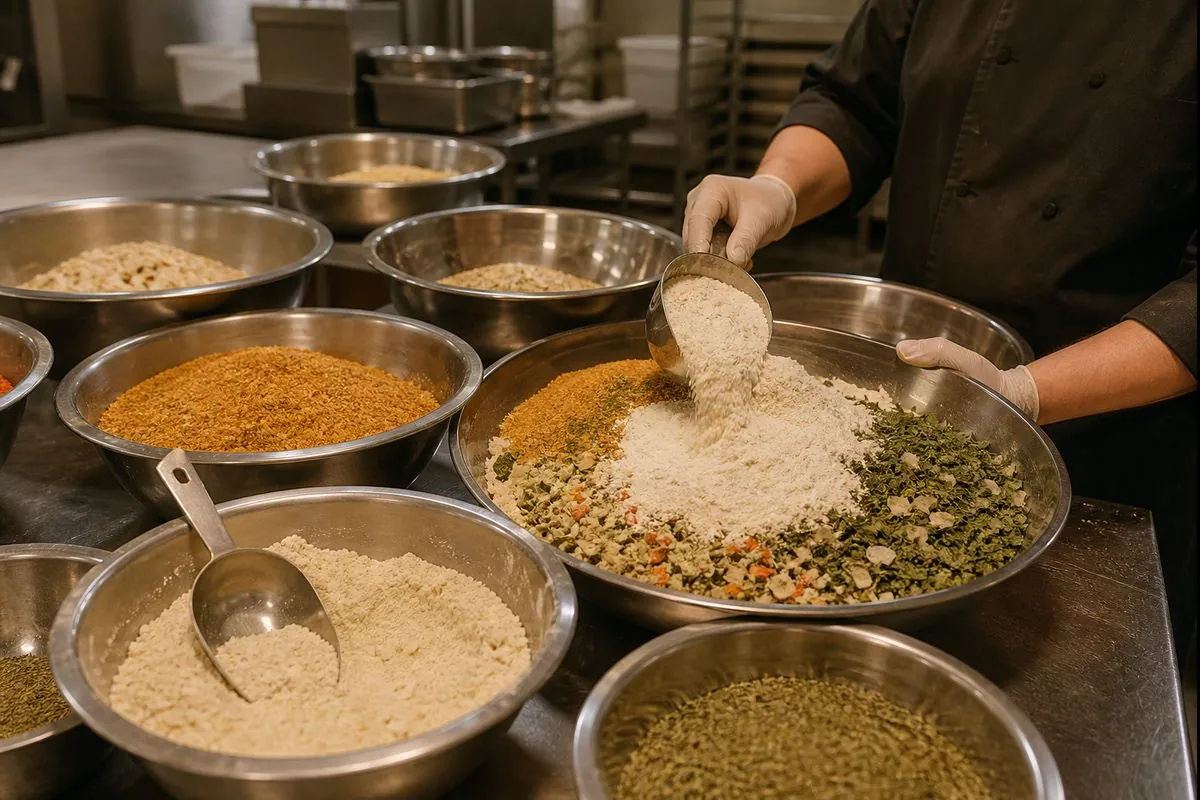
Fair quotes should state validity date and category scope — prospects compare multiple origins and categories; an undated blended quote undermines post-show follow-up.
Directional FOB pricing bands by ingredient family (verify on quote date)
Swipe →
Data table — swipe horizontally on small screens
| Ingredient Family | Directional FOB Band | Notes |
|---|---|---|
| Spices & seasoning blends | ~USD 2–14/kg | Mid-single-digit to low-teens for commodity bulk; blends and steam-sterilized grades price higher |
| Dehydrated vegetables & alliums | ~USD 2–9/kg | Onion/garlic powder and flakes at the lower end; specialty cuts and low-moisture grades higher |
| Flours & starches | ~USD 0.6–2.5/kg | Commonly quoted per MT for bulk; premium functional starches price above commodity flour |
| Oleoresins & natural extracts | ~USD 20–150+/kg | Highly formulation- and potency-dependent; quote per kg, never per MT |
| Pulse & plant proteins | ~USD 1.5–6/kg | Isolates and concentrates price above basic pulse flour |
| Selective edible oils | ~USD 1–3/kg | Feedstock-indexed; quote per MT for bulk, per kg for retail-ready packs |
| Natural colors & functional blends | ~USD 8–60/kg | Colour strength and functional claim drive most of the spread |
| Snack & ready-mix bases | ~USD 1.5–5/kg | Formulation complexity and retail-ready packaging add premium over bulk mix |
| Retail-ready private-label pack premium | Add ~15–40% over bulk | Artwork/plate tooling, smaller runs, and audit compliance drive the premium — quote as a separate line item |
MOQ Analysis
Buyer Tip
Post-fair trial MOQ in the 100–500 kg range converts meetings to shipments — exhibitors who require a full retail-ready production run upfront lose qualified smaller buyer leads.
Directional MOQ tiers by transaction stage
Swipe →
Data table — swipe horizontally on small screens
| Stage | Typical MOQ | Purpose |
|---|---|---|
| Sample | 0.5–5 kg per SKU (or 50–200 retail units for packed PL) | Formulation and quality evaluation before any commercial commitment |
| Bulk trial | 100–500 kg or 1–5 MT per hero SKU | Confirms formulation consistency and documentation flow before scaling |
| Retail-ready private-label first run | Often 1–5 MT equivalent per SKU/pack size | Amortises artwork, plate, and packaging-format tooling costs |
| Wholesale / programme | 5–20+ MT or 1×20ft / 1×40ft FCL by density | Established multi-SKU private-label and OEM supply programmes |
| Retail call-off | By seasonal forecast against a standing programme contract | Ongoing replenishment once formulation and audit trail are proven |
Packaging Standards
Export Tip
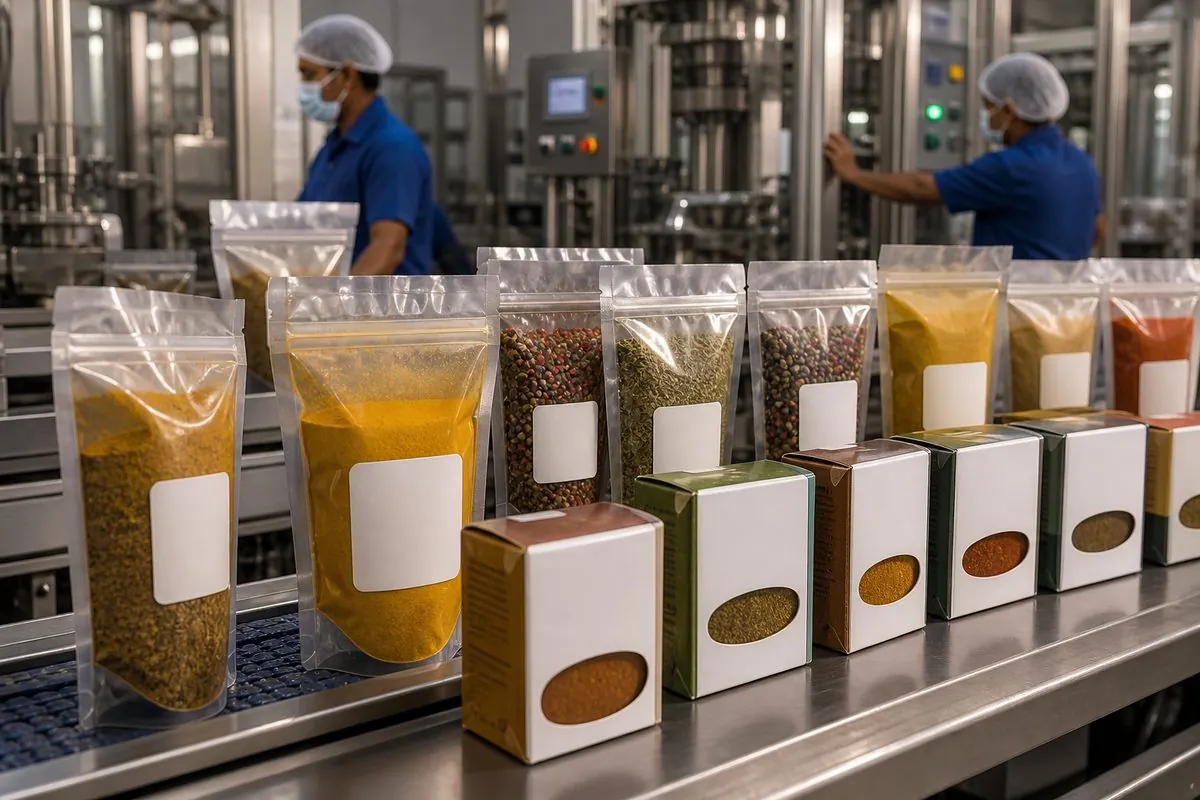
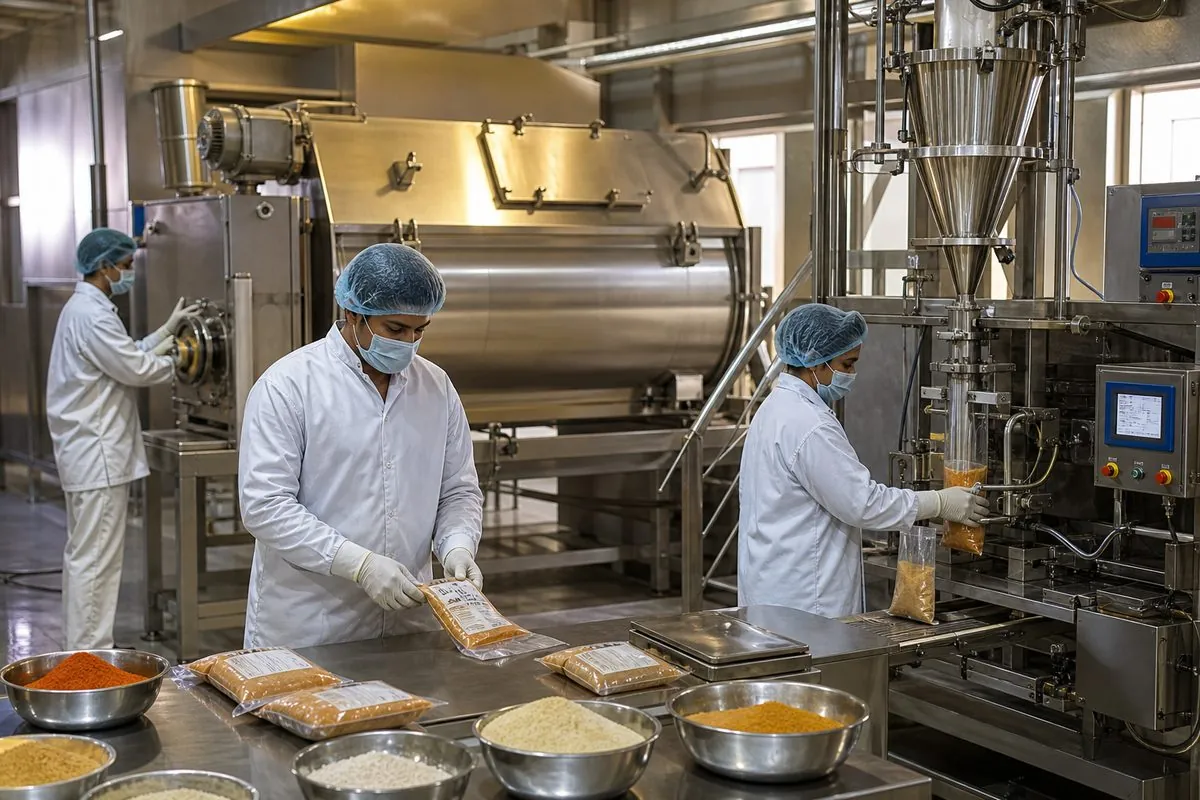
Booth sample kits should show actual pack formats buyers will see on a real shipment — include bulk bag and retail-ready pouch/jar samples if you offer both, with real artwork mockups for the retail-ready option.
Fair conversations stall when exhibitors promise retail-ready private-label capability but bring only bulk commodity samples with no artwork proof to show.
Packaging formats and specifications for private-label food-ingredient export
Swipe →
Data table — swipe horizontally on small screens
| Format | Typical Configuration | Use Case | Key Requirement |
|---|---|---|---|
| 10/20/25 kg industrial bags | Food-grade PP/HDPE-lined bags with moisture barrier | Standard bulk export for spices, dehydrates, flours, proteins | Lot/batch ID, net weight, origin marking, FSSAI licence reference |
| 50 kg bags / jumbo (FIBC) bags | 500 kg or 1,000 kg flexible intermediate bulk containers | High-volume flour, starch, and dehydrate programmes | Moisture barrier, lifting loops, fumigation certificate where required |
| Drums / flexitanks | Commonly ~180–220 kg drums or 20ft flexitanks (~20–24 MT by density) | Edible oils and some liquid extract formats | Food-grade lining; confirm tank rating and density with forwarder |
| Retail-ready pouches, jars, sachets | 50 g–1 kg formats with buyer artwork | Private-label retail programmes under the buyer's own brand | Buyer artwork sign-off, barcode, nutrition and allergen panels |
| N2 flush / vacuum pack | Nitrogen flush or vacuum-sealed premium powders | Oleoresins, functional blends, and premium spice powders | Oxygen-barrier film and shelf-life validation per SKU |
| Scent segregation | Dedicated staging for pungent SKUs (onion/garlic) vs. mild spices | Mixed-assortment private-label programmes | Separate storage and stuffing sequence unless a mixed aromatic order is confirmed |
Container Loading Details
Export Tip
After a fair meeting, convert interest into a trial that fits LCL or partial FCL reality — promising a full retail-ready 20ft before artwork sign-off is how post-show quotes stall.
Directional container loading guidance for multi-SKU private-label programmes
Swipe →
Data table — swipe horizontally on small screens
| Container Type | Loading Consideration | Typical Use |
|---|---|---|
| 20-foot FCL | ~10–20 MT payload depending on SKU density and pack format; verify stow plan with forwarder | Bulk trial and standard commercial shipments |
| 40-foot FCL / 40-foot HC | ~18–27 MT payload; higher cube for lightweight retail-ready pouches and cartons | Established multi-SKU private-label and OEM programmes |
| LCL (less than container load) | Suitable for mixed-SKU trial lots below FCL threshold | New buyer relationships and multi-category sample assortments |
| Reefer / temperature-controlled | Recommended for heat-sensitive oleoresins and some functional blends | Premium extract and functional-blend programmes in warm transit corridors |
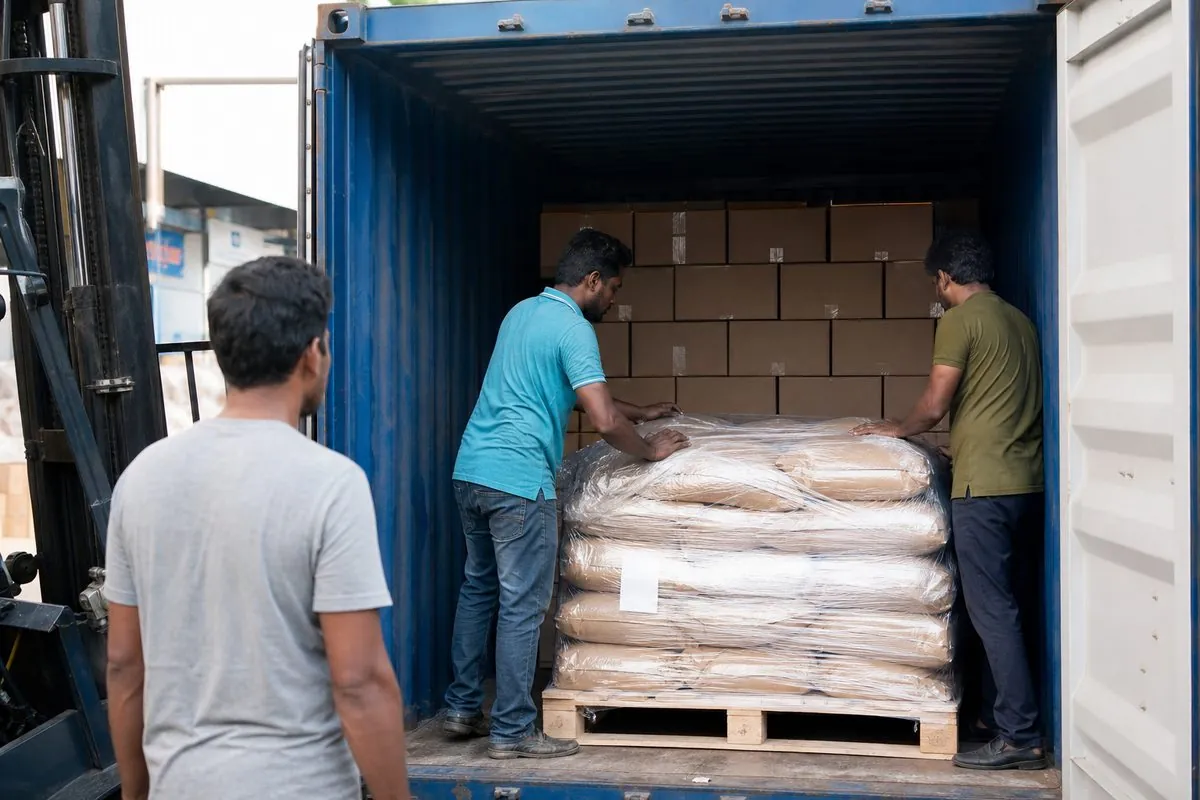
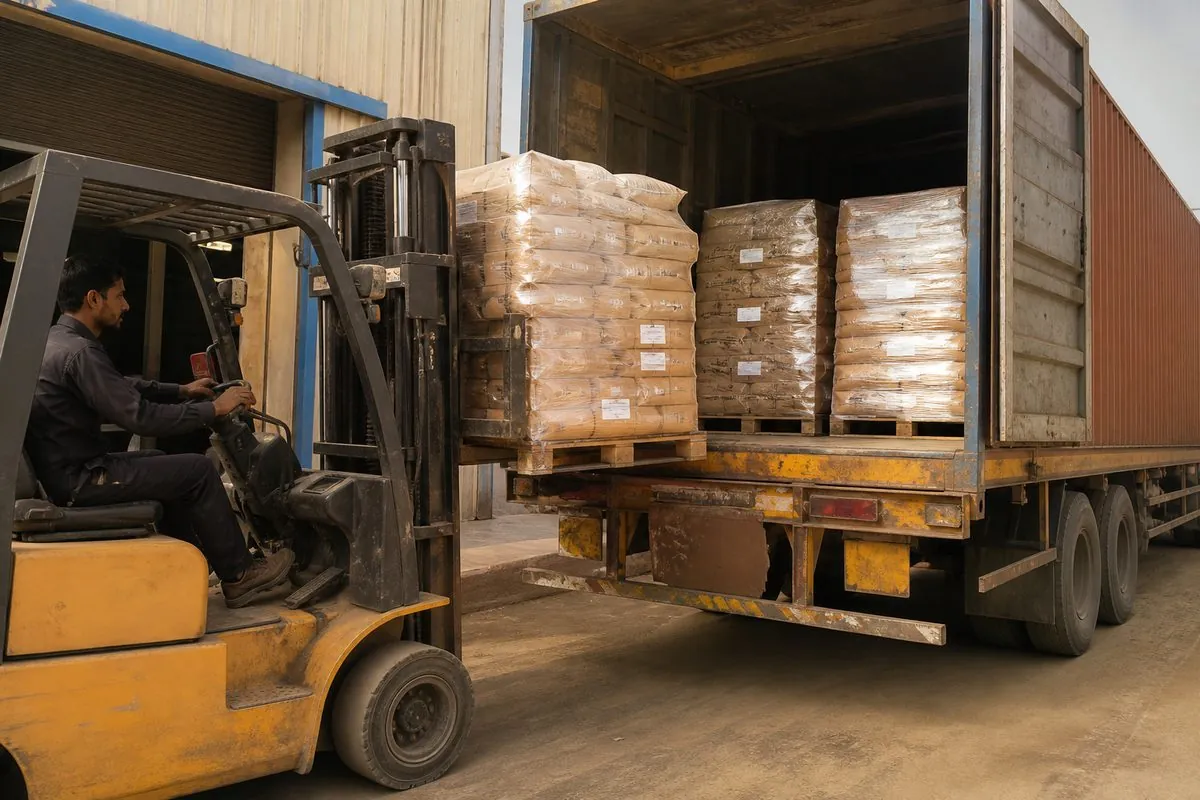
| Palletisation | Recommended for bagged and retail-ready cartons to speed discharge | Buyers with forklift handling at destination distribution centres |
Import Statistics
Key Statistics
- USA / UK / EU hubs: BRC / IFS / FSSC retail-PL programmes
- UAE / Saudi: Halal + Arabic artwork readiness
- Canada / Australia: CFIA / BICON-aligned import controls
- Singapore: low-duty re-export and repack hub
Prospects at fairs often import across multiple categories from different origins — acknowledge that reality, then differentiate with Indian formulation consistency, artwork-execution speed, and council-backed credentials.
Country-specific import patterns vary by category — tailor booth conversation and sample kits to the buyer's stated category interest rather than a generic multi-category pitch.
Directional destination demand profile for private-label food-ingredient buyers
Swipe →
Data table — swipe horizontally on small screens
| Market | Directional Demand Profile | Primary Buyer Type |
|---|---|---|
| United States | Large retail private-label and food-service ingredient demand across spices, dehydrates, and functional blends | Retail chains, co-packers, food-service distributors |
| United Kingdom | Established retail-PL culture; clean-label and BRCGS-audited dehydrate and spice demand | Retail chains, ingredient distributors, food manufacturers |
| United Arab Emirates | Halal-documented private-label demand plus re-export role for wider GCC | Wholesale distributors, Gulf retail chains, re-export traders |
| Germany / Netherlands | EU retail-PL repack and distribution hub demand for spices, dehydrates, and blends | EU retail chains, importers, repackers |
| Canada | Growing retail-PL and food-processor demand under CFIA-aligned import rules | Retail chains, food processors, importers of record |
| Australia | Retail-PL and food-service demand subject to biosecurity (BICON) import conditions | Retail chains, food manufacturers, importers |
| Saudi Arabia | Halal-certified private-label demand across spices, blends, and snack bases | Retail chains, food-service distributors, GCC wholesalers |
| Singapore | Low-duty re-export and repacking hub for Southeast Asian private-label demand | Repackers, distributors, regional trading houses |

Shipping Methods
Export Tip
- Samples: air/express 7–14 days
- Bulk trial: LCL or partial FCL 2–4 weeks post-production
- Retail-ready private-label: 4–8 weeks including artwork approval and production
- Incoterms: EXW, FOB, CFR/CIF; DDP selective for mature retail programmes
Ocean FCL/LCL from Mundra or Nhava Sheva is standard; air freight is reserved for urgent lab samples or artwork proofs only.
Common Buyer Mistakes
Common Mistakes Box
Compliance Checklist
Checklist
Compliance Notes
Future Market Trends
Key Statistics
Hybrid fairs blend in-person samples with virtual follow-up — exporters who digitise COA and artwork mockups within 48 hours post-event win more trials.
Private-label-specific shows like PLMA are drawing more Indian ingredient exhibitors as retail-PL penetration grows — booth kits increasingly include artwork mockups alongside COA sheets.
Sources
- APEDA — official site
- APEDA — Processed Vegetables (FY2024-25 export table)
- APEDA Annual Administrative Report 2024-25 (PDF)
- Spices Board of India — official site
- Spices Board — Major Itemwise Export / FY2024-25 review
- Spices Board — Trade Classification (ITC HS) codes
- FSSAI — Food Safety and Standards Authority of India
- DGFT (India) — IEC and trade portal
- ICEGATE — Indian Customs EDI Gateway
- CBIC — Central Board of Indirect Taxes and Customs
- DGCI&S — Directorate General of Commercial Intelligence and Statistics
- WITS — India HS 071290 exports 2024
- UN Comtrade Plus
- World Bank WITS
- ITC Trade Map
- EDC — Global private label markets for agri-food (2025 retail sales cue)
- USITC Harmonized Tariff Schedule
- US FDA — Prior Notice of Imported Foods
- US FDA — Foreign Supplier Verification Programs (FSVP)
- European Commission TARIC
- EU Regulation (EC) 396/2005 — Pesticide MRLs
- EU Regulation (EU) 2018/848 — Organic production and labelling
- DAFF Australia — BICON biosecurity import conditions
- Codex Alimentarius — food standards
- BRCGS — Global Standards
- IFS — International Featured Standards
- FSSC 22000
- USDA NOP — National Organic Program
- ICC Incoterms
- Altus Exports — Contact
All sources accessed 2026-08-09 for this factual audit. Prefer primary government, council (APEDA / Spices Board / FSSAI), and multilateral trade databases when citing figures in contracts or buyer presentations. Because this cluster spans multiple HS chapters, always re-verify the specific underlying commodity line and duty/regulatory position on the quote date.
Pavilion dates and marketplace policies change seasonally — confirm exhibitor registration deadlines and sample-shipment rules before booth commitment.
Conclusion
Trade-show ROI comes from category-specific COA-backed samples and fast follow-up — booth size does not replace formulation and artwork discipline across this multi-category cluster.
Altus Exports supports fair follow-up and FCL execution after qualified meetings — contact us to convert leads into trial shipments.
Combine with Find International Buyers For Private Label Food Ingredients and Apeda Fssai Benefits For Private Label Food Ingredient Exporters.