
How to Export Dehydrated Onion from India: Complete Guide for Beginners
By Saurabh Mittal, Founder, Altus Exports
A complete beginner's guide on how to export dehydrated onion from India — covering IEC and APEDA registration, FSSAI compliance, Gujarat's Mahuva–Bhavnagar–Sihor dehydration cluster, mandatory Certificate of Analysis testing, moisture-safe packaging, container loading benchmarks, export pricing, and finding international buyers in the USA, Brazil, Germany, Indonesia, and beyond. Includes a step-by-step export process, checklists, and expert insights from Altus Exports.
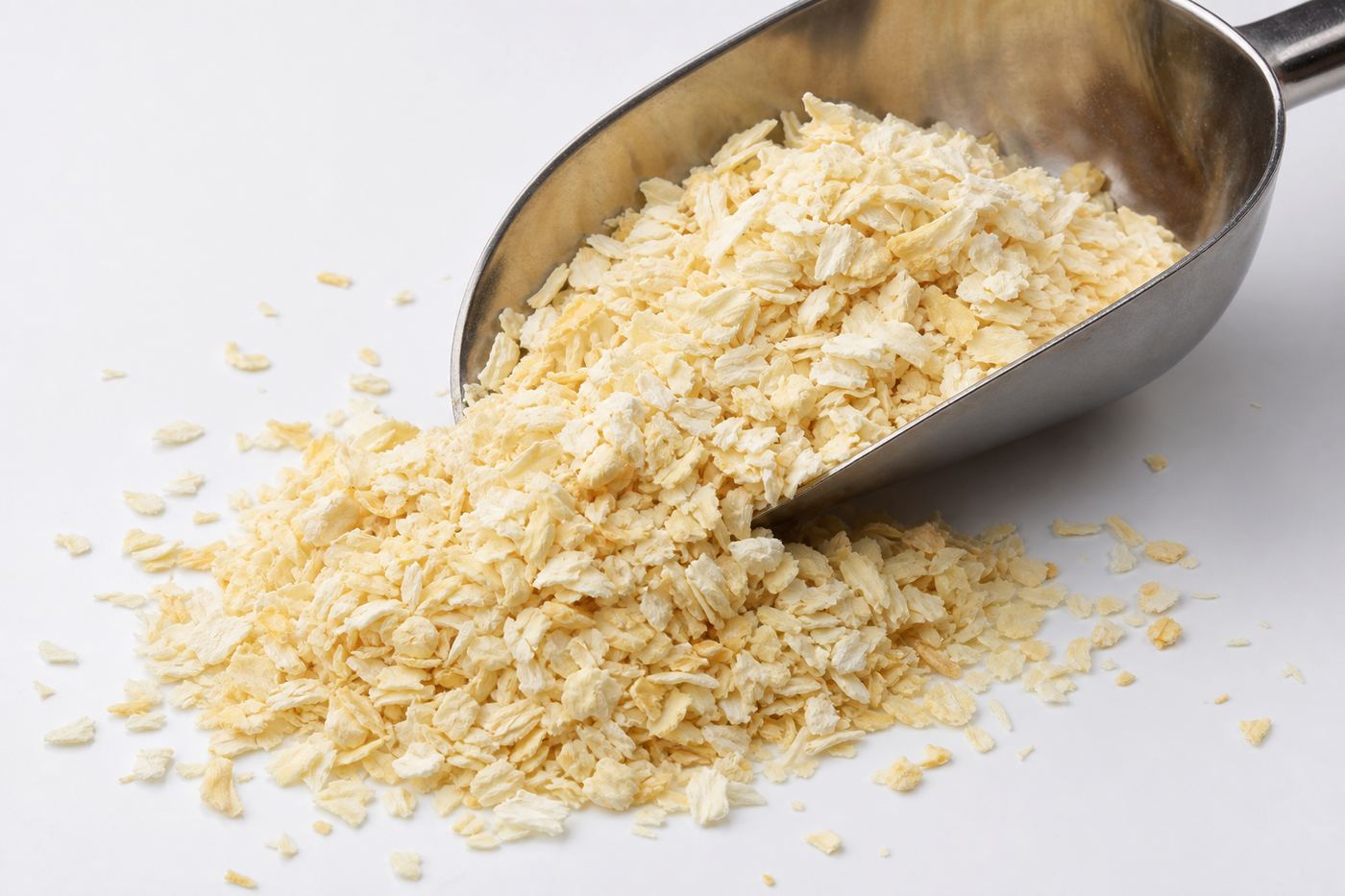
Global demand for dehydrated onion — flakes, kibbled onion, powder, granules, minced, and fried onion — from food manufacturers, seasoning blenders, snack producers, and foodservice buyers in the USA, Brazil, Germany, Indonesia, the UK, and the Middle East has made India one of the world's leading dehydrated onion origins. Gujarat's Saurashtra belt, anchored by Mahuva, Bhavnagar, and Sihor, along with trading and processing activity around Ahmedabad, forms the backbone of India's hot-air dehydration industry, converting fresh white onion into shelf-stable, export-grade dehydrated onion products classified under HS code 0712.20. If you are learning how to export dehydrated onion from India, the opportunity is real and growing — but success depends on following a defined regulatory, quality, and logistics sequence rather than simply owning dehydration capacity.
Exporting dehydrated onion from India is governed by IEC registration under DGFT, APEDA enrolment as the notified export-promotion body for processed agricultural products, FSSAI food safety compliance, and increasingly buyer-mandated certifications such as HACCP, ISO 22000, Halal, Kosher, and NPOP or USDA/EU Organic for the growing organic segment. Every commercial consignment should carry a lot-specific Certificate of Analysis covering moisture, ash, microbiological counts, and pesticide residue limits before a buyer in Germany, the UK, or Japan will accept the shipment. Understanding these gates — and the packaging, container loading, and documentation standards that accompany them — before your first inquiry is what separates exporters who convert buyer interest into repeat full-container orders from those who lose the sale after the first sample.
For most first-time exporters, the real challenge is not access to raw onion or dehydration capacity — India exported roughly 113,000 metric tonnes of dried onions under HS 071220 in 2024 (about USD 221 million in reported trade value), with Gujarat's Saurashtra belt supplying a large share of national dehydration capacity — the challenge is sequencing: registrations, quality testing, packaging that survives a 30–40 day sea voyage without moisture ingress, correct container loading for a hygroscopic product, and finding verified international buyers who will trust an unfamiliar supplier's first lot. This guide walks through the complete process end to end, from cluster and product-form selection through to shipment, documentation, and building a repeatable buyer pipeline — the exact sequence Altus Exports uses when acting as merchant exporter or global sourcing partner for dehydrated onion buyers worldwide.
Key Takeaways
Summary Box
- How to export dehydrated onion from India begins with IEC, APEDA RCMC, and FSSAI licensing — not with quoting buyers before your compliance base is ready.
- India's dehydration industry is concentrated in Gujarat's Mahuva–Bhavnagar–Sihor belt and Ahmedabad, using hot-air dehydration to convert fresh white onion into flakes, kibbled, powder, granules, minced, and fried onion for global food manufacturing.
- Dehydrated onion is classified under HS code 0712.20 (07122000); pricing, duty schedules, and trade data should always be checked against this code rather than raw onion codes.
- Moisture control (typically 5–8% maximum) and a clean lot-specific Certificate of Analysis covering microbiological and pesticide residue limits are the two most common reasons a shipment is accepted or rejected by international buyers.
- Top import markets include the USA, Brazil, Germany, Indonesia, Belgium, the UK, the Netherlands, Russia, Spain, Poland, Canada, Japan, the UAE, and South Africa — each with distinct MOQ, packaging, and certification expectations.
- Packaging in 14–25 kg multiwall kraft bags with a polyethylene liner, cartons, or 500–1,000 kg bulk bags with strict moisture-barrier control determines whether a consignment survives transit intact.
- A merchant exporter in India with dehydrated onion experience compresses the registration, testing, and buyer-access learning curve significantly for processors entering export for the first time.
Executive Summary
India is among the largest global suppliers of dehydrated onion products, built on Gujarat's dense cluster of dehydration units processing high-solids white onion grown across Saurashtra. Exporters range from farmer-linked processing cooperatives to large integrated dehydration plants supplying multinational food manufacturers, seasoning houses, and private-label retail brands.
This guide sets out the complete operational path for exporting dehydrated onion from India: registrations, sourcing and manufacturing overview, product-form selection, laboratory testing, packaging and container loading standards, pricing benchmarks, certifications, documentation, and buyer discovery. It is written for beginners — processors, traders, and merchant exporters — as well as international buyers who want to understand what a well-run Indian dehydrated onion supply chain should look like before committing to a supplier.
Altus Exports positions itself as a merchant exporter and global sourcing partner for dehydrated onion, coordinating sourcing from verified Gujarat processing units, laboratory testing, packaging, and shipment documentation under one accountable relationship — removing the fragmentation risk that international buyers face when dealing directly with multiple small processors.
Market Size & Industry Overview
India's dehydrated onion industry is anchored in Gujarat, where the combination of high dry-matter white onion varieties, established dehydration infrastructure, and decades of export experience has created the world's most concentrated dehydrated onion processing hub. Mahuva and Bhavnagar host the largest density of dehydration plants, with Sihor and satellite trading units around Ahmedabad adding further processing and consolidation capacity. Maharashtra, Madhya Pradesh, and Rajasthan contribute secondary volumes, primarily supplying raw onion to Gujarat processors or running smaller dehydration operations of their own.
Demand growth is driven by global food-manufacturing trends: convenience foods, instant soups and noodles, seasoning blends, snack coatings, ready meals, and foodservice operators all rely on dehydrated onion as a shelf-stable, easy-to-handle substitute for fresh onion with a far longer usable life and no cold-chain requirement. Trade data for HS 071220 shows India shipped roughly 113,000 MT of dried onions in 2024 (about USD 221 million), with leading destinations by value including the USA, Brazil, Germany, Indonesia, and Belgium — Gujarat's Saurashtra belt remains the primary processing hub behind those volumes.
| Production Cluster | State | Primary Specialisation | Export Role |
|---|---|---|---|
| Mahuva | Gujarat | Flakes, kibbled, powder — largest processing density | Primary export hub |
| Bhavnagar | Gujarat | Flakes, granules, minced, fried onion | Major export hub |
| Sihor | Gujarat | Kibbled and flakes; feeder units to Bhavnagar/Mahuva traders | Processing and consolidation |
| Ahmedabad | Gujarat | Trading, consolidation, and value-added packaging | Export documentation and logistics hub |
| Nashik belt | Maharashtra | Raw onion supply; some dehydration | Secondary processing and feedstock |
| Indore belt | Madhya Pradesh | Raw onion supply; emerging dehydration | Secondary processing and feedstock |
Export Statistics
India's dehydrated onion exports move under HS code 0712.20 (07122000, dried onions), a sub-heading of the broader HS 0712 group covering dried vegetables. Export volumes have grown steadily over recent years as international food manufacturers diversify sourcing away from single-origin dependence and as demand for convenience, long-shelf-life ingredients increases across processed food categories.
Exporters filing shipping bills under HS 0712.20 should note that co-shipped dried vegetable blends or other dried vegetable powders sometimes fall under the related HS 0712.90 heading — exporters and buyers should confirm classification with a customs broker before filing, since incorrect HS coding is a common cause of shipping bill delay.
| Metric | Indicative Position (2024–2026) | Notes |
|---|---|---|
| Primary HS Code | 0712.20 / 07122000 | Dried onions — whole, cut, sliced, broken, or powdered, not further prepared |
| Related HS Code | 0712.90 | Other dried vegetables and vegetable mixtures when co-shipped |
| India 2024 export volume (HS 071220) | ~113,000 MT | Reported trade volume; confirm current year via APEDA/DGCI&S/ITC Trade Map |
| India 2024 export value (HS 071220) | ~USD 221 million | Reported trade value; unit values vary by cut and destination |
| Leading 2024 destinations (value) | USA, Brazil, Germany, Indonesia, Belgium | Brazil often leads by volume; USA/Germany lead or near-lead by value |
| Leading Export State | Gujarat | Mahuva–Bhavnagar–Sihor cluster accounts for a large share of national volume |
| Typical Shipment Mode | Sea freight FCL/LCL | From Mundra, Pipavav, and Nhava Sheva ports |
| Export Growth Driver | Global convenience-food demand | Soups, seasonings, snacks, ready meals, foodservice |
Import Statistics
On the demand side, dehydrated onion is imported by food manufacturers and ingredient distributors across a wide set of markets rather than concentrated among a handful of buyers. The USA and Brazil are consistently among the largest volume markets, driven respectively by processed-food manufacturing scale and regional seasoning and snack industries. Germany and the Netherlands serve as European distribution gateways, re-exporting to smaller EU markets after import.
Indonesia is a significant volume market for flakes and kibbled onion used in instant-noodle seasoning and snack coatings, reflecting the scale of Southeast Asian convenience-food manufacturing. The UK, Belgium, Spain, Poland, and Russia round out the major European and Eurasian import markets, while Japan and Canada represent smaller but quality-focused import channels with stricter residue and microbiological requirements.
| Importing Country | Demand Driver | Typical Product Forms Imported |
|---|---|---|
| USA | Food manufacturing, seasoning blends, foodservice | Flakes, powder, granules, minced |
| Brazil | Snack and seasoning industry | Flakes, kibbled, powder |
| Germany | EU distribution gateway; food manufacturing | Powder, flakes, organic-certified lines |
| Indonesia | Instant noodle and snack seasoning | Flakes, kibbled |
| Belgium | EU distribution and re-export | Flakes, powder |
| UK | Retail seasoning brands, foodservice | Flakes, granules, minced |
| Netherlands | EU distribution gateway | Powder, flakes |
| Russia | Food processing and retail seasoning | Flakes, kibbled |
| Japan | Quality-focused food manufacturing | Powder, granules — strict residue standards |
Product Categories & Variants
Dehydrated onion is exported from India in several distinct forms, each suited to different buyer applications. Flakes and kibbled onion are the most widely traded volume forms, used directly in seasoning blends, soup mixes, and snack coatings. Powder and granules serve fine-particle applications such as spice blends and processed-meat seasoning. Minced onion bridges flake and powder particle sizes for specific rehydration profiles, while fried onion is a specialty value-added form used in toppings and garnishing. Organic-certified versions of each form are a smaller but fast-growing premium segment.
This guide focuses on the export process, applicable across all product forms. For a complete ranked breakdown of each category with specifications, applications, and pricing, see Top Dehydrated Onion Products Exported from India.
| Product Form | Typical Mesh / Cut Size | Primary Buyer Use |
|---|---|---|
| Flakes | 3–10 mm pieces | Seasoning blends, soup mixes, snack coatings |
| Kibbled | 2–5 mm granular pieces | Seasoning blends, ready meals |
| Powder | 40–100 mesh | Spice blends, processed meat, sauces |
| Granules / Minced | 1–3 mm | Rehydration-focused applications, dry mixes |
| Fried Onion | Sliced, fried, crisp | Toppings, garnishing, snack manufacturing |
| Organic (any form above) | Certified NPOP/USDA/EU Organic | Premium retail and health-focused food brands |
Manufacturing Overview: Gujarat's Dehydration Clusters
Manufacturing dehydrated onion for export begins with raw onion procurement — typically high dry-matter white onion varieties grown in Gujarat and neighbouring states — followed by grading, peeling, cutting, hot-air dehydration, sorting, and packaging. Understanding this process helps buyers evaluate supplier capability and helps new exporters know what questions to ask a processing partner before committing volume.
| Cluster | Typical Plant Scale | Export Specialisation |
|---|---|---|
| Mahuva | Mid-to-large integrated plants | Flakes, kibbled, powder for bulk buyers |
| Bhavnagar | Large integrated plants | Full product range including fried onion and organic lines |
| Sihor | Small-to-mid feeder units | Semi-processed and dehydrated onion supply to traders |
| Ahmedabad | Trading and documentation hub | Consolidation, blending, export packaging, freight coordination |
Mahuva and Bhavnagar: The Dehydration Core
Mahuva and Bhavnagar together host the highest density of dehydration plants in India, ranging from mid-sized family-run units to large integrated processing facilities supplying multinational food manufacturers directly. These clusters benefit from proximity to onion-growing belts, established labour skilled in grading and processing, and decades of accumulated export documentation experience. Most Gujarat-based merchant exporters maintain direct relationships with several Mahuva and Bhavnagar processors to manage seasonal capacity and quality variation.
Sihor and Ahmedabad: Processing and Trade Consolidation
Sihor functions as a feeder processing centre, often supplying semi-processed or fully dehydrated onion to larger traders and exporters based in Bhavnagar and Ahmedabad for final grading, blending, and export packaging. Ahmedabad, while not a primary dehydration site, is where much of the trading, documentation, freight forwarding, and value-added packaging for export takes place, given its port connectivity and concentration of export-services firms.
The Hot-Air Dehydration Process
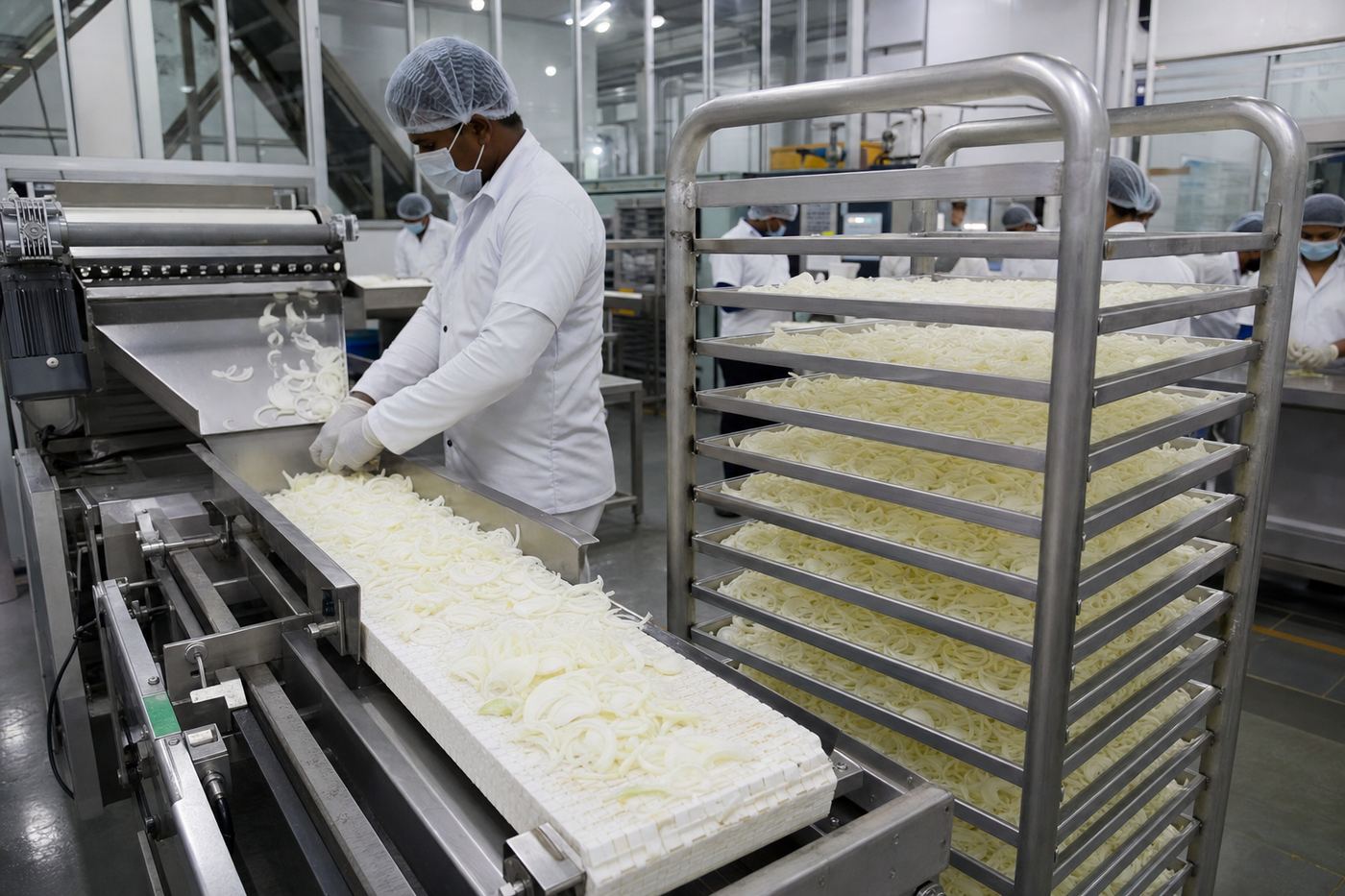
Fresh onion is graded, topped, peeled, and cut into the target form — flakes, kibbled pieces, or slices for further powdering — before passing through multi-stage hot-air dehydration tunnels that reduce moisture from over 85% in fresh onion to typically 5–8% or lower in the finished dehydrated product. Temperature and airflow are controlled to preserve colour, flavour, and pungency while achieving a stable, shelf-storable moisture level. After dehydration, product passes through metal detection, sieving or milling for powder and granules, and visual sorting before packaging.
How to Export Dehydrated Onion from India: Step-by-Step Guide
The following twelve steps represent the complete operational sequence used by successful Indian dehydrated onion exporters. Follow them in order. Skipping registrations, laboratory testing, or packaging validation to save time typically results in shipment rejections, customs holds, or destroyed buyer trust that is far more costly than the effort saved.
Step 1: Choose Your Product Form and Export Grade
Start by deciding which dehydrated onion form — flakes, kibbled, powder, granules, minced, or fried onion — you can supply consistently at export-grade moisture and particle-size specification. Flakes and kibbled onion are the easiest entry forms for new exporters because most Gujarat processors already run continuous production lines for these forms. Powder requires additional milling and sieving control; fried onion requires frying infrastructure and shorter shelf-life management. Confirm your target moisture (typically 5–8%, depending on buyer specification) and mesh or particle-size range before quoting any buyer, and document these on a standard product data sheet.
Step 2: Identify Your Target Export Markets
Choose one or two primary export markets before diversifying further. The USA, Brazil, and Indonesia suit volume-focused flakes and kibbled exporters; Germany, the UK, and the Netherlands suit exporters who can support organic certification and tighter residue documentation; Japan and Canada are better second-stage markets once your quality systems and documentation discipline are proven. Map freight economics from your nearest load port — Mundra or Pipavav for most Gujarat-based processors — to your target destination before committing to a market.
Step 3: Obtain Import Export Code (IEC) from DGFT
An Import Export Code is mandatory for filing shipping bills and is the foundational registration for any export business in India. Apply online at the DGFT portal with PAN, current bank account details, and address proof consistent with your GST registration. Most clean applications are processed within a few working days. Keep IEC details — especially bank and address — updated, since mismatches between IEC records and other registrations are a common cause of shipping bill filing delays.
Step 4: Register with APEDA
APEDA (Agricultural and Processed Food Products Export Development Authority) registration and an active RCMC (Registration Cum Membership Certificate) are required for exporting dehydrated onion, since dried and dehydrated vegetables fall under APEDA's notified product schedule. APEDA registration also provides access to market intelligence and export-promotion programmes, and in many cases is a prerequisite buyers expect to see before placing a first order. Apply through the APEDA portal with IEC, FSSAI licence, GST registration, and bank details, and renew the RCMC before it lapses each cycle.
Step 5: Obtain FSSAI Licence and Align to Food Safety Standards
Every dehydrated onion processing and export operation needs a valid FSSAI licence, with central licensing typically required once turnover or export activity crosses the applicable threshold. Align your processing unit's hygiene systems, pest control, and hazard controls to FSSAI's food safety standards, and be ready to document your process flow from raw onion intake through dehydration, sorting, and packaging. Buyers increasingly ask for evidence of HACCP or ISO 22000 alignment in addition to the baseline FSSAI licence, particularly European and Japanese buyers.
Step 6: Source from Verified Dehydration Units in Gujarat
Dehydrated onion quality begins with raw material selection, not at the packaging stage. Establish written sourcing agreements with Gujarat-based dehydration units covering onion variety, moisture target, pesticide-use records, and processing hygiene standards. If you are a trader rather than a processor, visit and audit your supplying units directly — moisture control, sieving accuracy, and metal-detection practices vary significantly between Mahuva, Bhavnagar, and Sihor units, and buyer complaints often trace back to inconsistent sourcing rather than a single bad shipment.
Step 7: Complete Mandatory Laboratory Testing (Certificate of Analysis)
Every export lot should be tested before shipment for a lot-specific Certificate of Analysis covering moisture content, ash and acid-insoluble ash, total plate count and yeast/mould counts, pathogen screening, pesticide residue levels against destination MRLs, and sulphur dioxide residue if any sulphuring step is used in processing. Do not book freight until a clean lot-specific report is in hand — a failed test discovered at destination is far more costly than the testing investment at origin.
- Moisture: typically 5–8% maximum depending on buyer specification and product form
- Microbiological: total plate count, yeast and mould, and pathogen screening within buyer or destination limits
- Pesticide residues: tested against destination-market MRL panels (EU, Japan, and US panels differ)
- Sulphur dioxide residue: relevant only where a sulphuring step is used; many premium buyers require sulphur-free product
- Foreign matter and metal detection: verified before packaging, not only at the laboratory stage
Step 8: Select Export Packaging
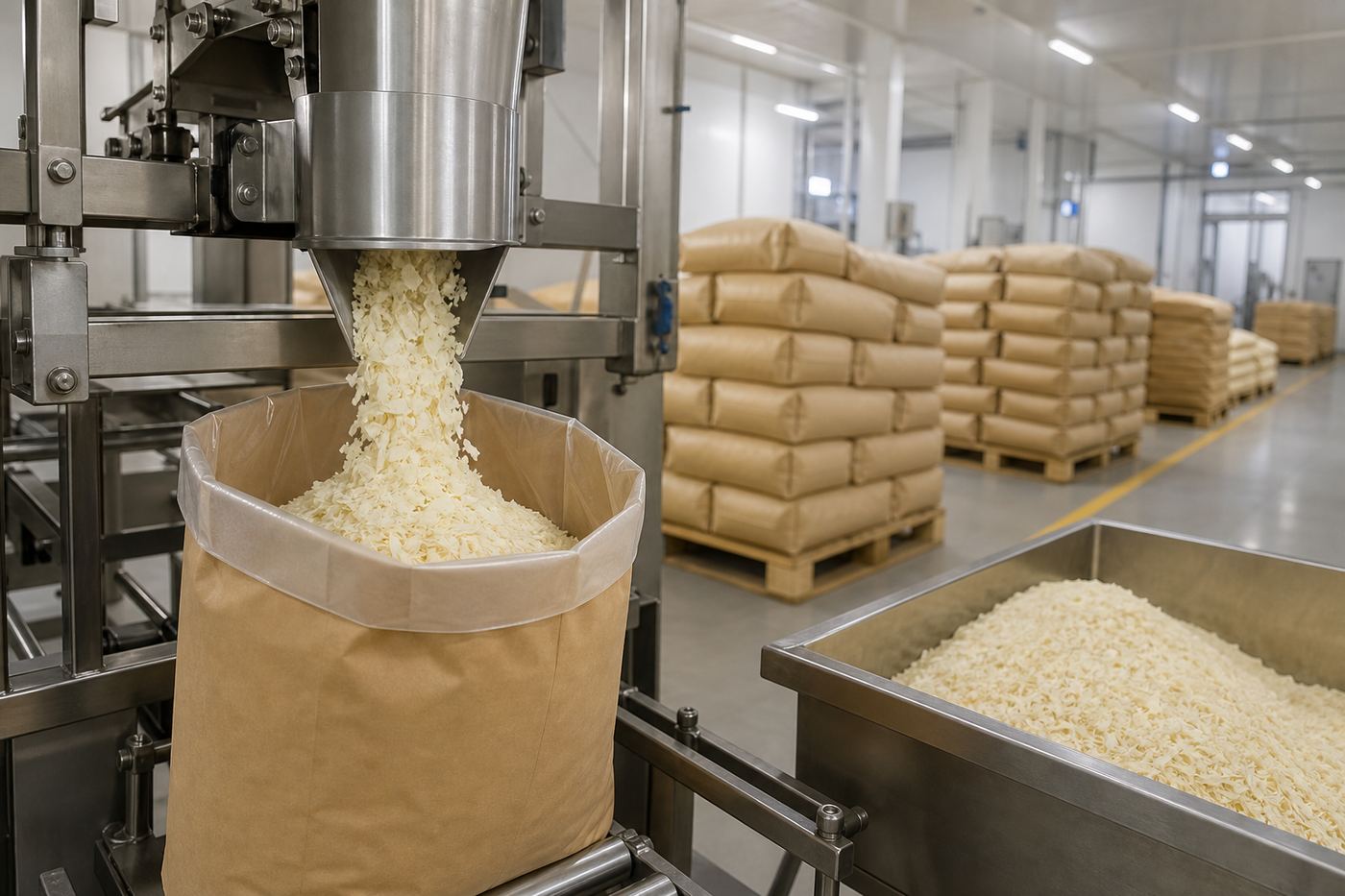
Select packaging based on buyer channel and shipment mode. Most bulk commercial shipments move in 14–25 kg multiwall kraft paper bags with a food-grade polyethylene liner, which balances handling convenience with moisture protection. Bulk bags of 500–1,000 kg suit large-volume industrial buyers running their own repacking lines. Cartons with an inner liner bag are common for smaller commercial lots and for buyers who require carton-level traceability. Moisture-barrier integrity is the single most important packaging variable for dehydrated onion — any breach allows moisture pickup that triggers clumping, mould risk, and colour degradation in transit.
Step 9: Plan Container Loading
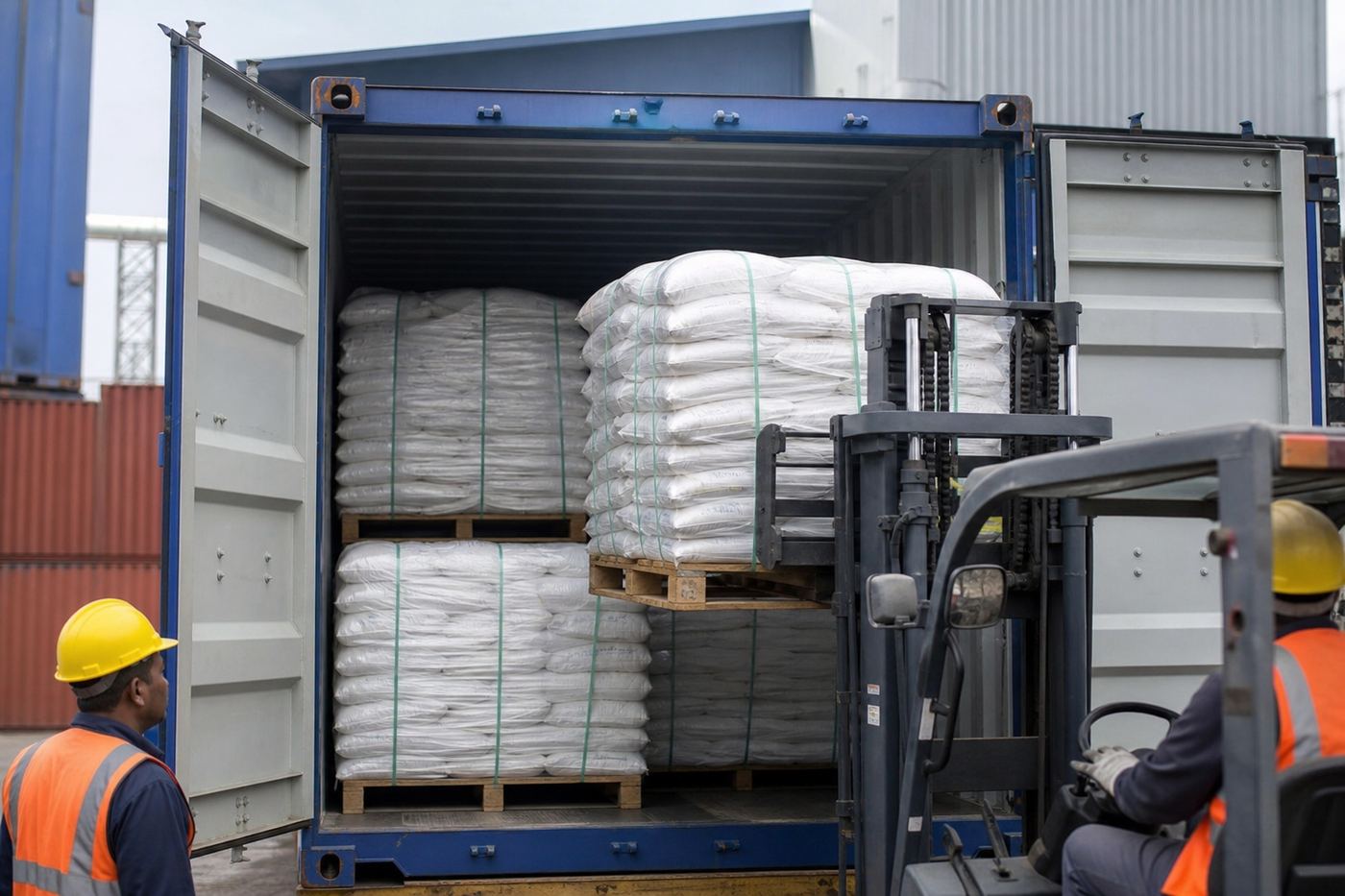
Container loading for dehydrated onion must account for its hygroscopic nature. A 20-foot container typically holds approximately 10–14 metric tonnes of flakes or powder depending on cut, density, and packaging format, while a 40-foot container typically holds approximately 20–26 metric tonnes. Containers should be inspected for structural integrity and odour-free condition before loading, and desiccant or moisture-absorbing materials are commonly used for long transit routes or humid-season shipments. Avoid direct contact between bags and container walls where condensation risk is highest, and brace pallets or bag stacks to prevent shifting during transit.
Step 10: Develop Your Export Pricing Strategy
Build your FOB export price from raw onion procurement cost, dehydration processing cost, laboratory testing, export-grade packaging, inland haulage to port, documentation and forwarding charges, and an appropriate exporter margin — not from farm-gate price plus a flat markup. Indicative FOB ranges from India are approximately USD 1.80–3.20/kg for flakes, USD 1.70–3.00/kg for kibbled onion, USD 2.20–4.00/kg for powder, USD 2.00–3.50/kg for granules and minced, and USD 3.50–6.50/kg for fried onion, with organic-certified lines commanding a 25–50% premium over conventional equivalents. Prices vary with season, crop yield, and quality grade, so always requote against current raw material cost rather than relying on a prior season's benchmark.
Step 11: Find International Buyers
Buyer discovery for dehydrated onion combines import trade-data prospecting, food-ingredient trade shows, B2B portal listings under HS 0712.20, and direct outreach to procurement teams at food manufacturers, seasoning houses, and ingredient distributors. For a structured buyer-discovery approach, see How to Find International Buyers for Dehydrated Onion.
Step 12: Prepare Documentation and Ship
Export documentation for dehydrated onion includes the commercial invoice, packing list, shipping bill, bill of lading, APEDA-linked certificate where applicable, certificate of origin, FSSAI or health certificate, and the lot-specific laboratory Certificate of Analysis. Align every document to the same lot number and bag or carton count — mismatches between the invoice, packing list, and Certificate of Analysis are a common cause of customs holds at destination. Use the Dehydrated Onion Export Documentation Checklist section later in this guide as your pre-shipment gate.
Pricing Analysis
Dehydrated onion pricing is a function of raw onion cost (itself seasonal and yield-dependent), processing form — flakes and kibbled require less processing than powder or fried onion — moisture and quality grade, and certification status. Organic-certified product commands a structural premium across every form due to additional certification, segregated processing, and typically lower-yield organic farming input costs.
Buyers should expect FOB quotes to move with the Indian onion crop cycle — prices are typically firmer immediately after the harvest processing season and can soften or tighten depending on domestic fresh onion demand, which competes with dehydration units for the same raw material.
| Product Form | Indicative FOB Price Range (USD/kg) | Key Price Driver |
|---|---|---|
| Flakes | 1.80–3.20 | Raw onion cost, cut size, moisture grade |
| Kibbled | 1.70–3.00 | Raw onion cost, particle uniformity |
| Powder | 2.20–4.00 | Milling/sieving cost, mesh fineness |
| Granules / Minced | 2.00–3.50 | Particle size control, rehydration profile |
| Fried Onion | 3.50–6.50 | Frying input cost, oil, shelf-life packaging |
| Organic (any form) | +25–50% over conventional equivalent | NPOP/USDA/EU Organic certification and segregated processing |
MOQ Analysis
Minimum order quantities for dehydrated onion typically scale in three tiers: trial orders, commercial repeat orders, and full-container-load programme volumes. New buyers are generally encouraged to start with a trial order to validate quality, packaging, and documentation before committing to full-container volumes.
| Order Tier | Typical MOQ | Purpose |
|---|---|---|
| Trial order | 500 kg – 1 metric tonne | Quality validation, buyer sampling, first documentation run |
| Commercial repeat order | 1–5 metric tonnes | Establishing a regular supply relationship, LCL shipments |
| FCL programme | 10–20+ metric tonnes | Standing supply programme; 20ft or 40ft container loads |
Packaging Standards
Packaging for dehydrated onion export must control moisture ingress above all else, since the product is hygroscopic and will reabsorb ambient moisture if the barrier is compromised, leading to clumping, discolouration, and mould risk during a typical 15–30 day transit plus onward distribution period.
Premium buyers and long-transit routes increasingly specify nitrogen flushing or vacuum packaging at the inner-bag level, particularly for powder and organic lines where colour and aroma retention command a price premium. Retail-ready private-label pouches are a smaller but growing value-added packaging format for buyers supplying supermarket seasoning ranges directly.
| Packaging Format | Typical Weight | Best Suited For |
|---|---|---|
| Multiwall kraft bag + PE liner | 14–25 kg | Standard commercial bulk shipments |
| Bulk bag (jumbo bag) | 500–1,000 kg | Large-volume industrial buyers with repacking lines |
| Carton with inner liner bag | 5–20 kg | Smaller commercial lots, carton-level traceability |
| Nitrogen-flushed / vacuum inner bag | Varies (within 14–25 kg outer) | Premium and organic lines; colour/aroma retention |
| Retail private-label pouch | 50 g – 1 kg | Direct-to-retail seasoning brands |
Container Loading Details
Correct container loading protects both cargo integrity and freight economics. Under-loading wastes container capacity and raises per-kilogram freight cost; over-loading or poor stacking risks bag rupture and moisture exposure at container doors during handling.
| Container Type | Indicative Payload | Loading Note |
|---|---|---|
| 20-foot standard | Approximately 10–14 metric tonnes | Payload varies with cut density (flakes vs. powder) and packaging format |
| 40-foot standard | Approximately 20–26 metric tonnes | Preferred for FCL programme volumes to improve per-kg freight economics |
| 40-foot high cube | Slightly above standard 40ft payload | Useful for bulk-bag loads where cubic space is the limiting factor |
Shipping Methods
Sea freight is the standard mode for commercial dehydrated onion shipments, moving as LCL for trial and small commercial orders or FCL for programme volumes, typically loaded from Mundra, Pipavav, or Nhava Sheva. Air freight is reserved for buyer sample shipments or urgent small replenishment orders given the cost premium relative to the product's value density.
Incoterms are typically buyer-led: FOB is the most common starting point for new exporters, while established programmes may move to CIF or CFR once the exporter has freight-negotiation scale and buyer trust in landed-cost transparency. Production lead time is typically 15–30 days depending on order size and season, with transit time added on top depending on destination.
| Shipping Method | Typical Use Case | Typical Incoterm |
|---|---|---|
| Sea LCL | Trial orders, small commercial lots | FOB |
| Sea FCL (20ft/40ft) | Commercial and FCL programme volumes | FOB, CIF, or CFR (buyer-led) |
| Air freight | Sample shipments, urgent small orders | FOB or CPT |
Certifications
Certifications required for dehydrated onion export scale from mandatory baseline registrations to buyer-specific quality and religious/dietary certifications. FSSAI and APEDA RCMC are non-negotiable baselines. HACCP and ISO 22000 (or FSSC 22000) are increasingly requested by European and multinational food-manufacturer buyers as evidence of systematic food safety management beyond baseline licensing.
Halal and Kosher certification unlock specific buyer segments in the Middle East, North Africa, and North American/European retail channels respectively. NPOP, USDA Organic, and EU Organic certification, obtained through NPOP-accredited certifying bodies in India, are required for any organic claim and open premium retail and health-food channels. BRC or IFS certification is typically requested by large European retailers sourcing private-label seasoning ranges.
| Certification | Purpose | Typical Buyer Requirement |
|---|---|---|
| FSSAI Licence | Baseline food safety compliance | Mandatory for all processors and exporters |
| APEDA RCMC | Export registration for notified agri-products | Mandatory for shipping bill filing |
| HACCP | Systematic food safety hazard control | Increasingly requested by EU and multinational buyers |
| ISO 22000 / FSSC 22000 | Food safety management system | Requested by larger multinational food manufacturers |
| Halal | Religious dietary compliance | Middle East, North Africa buyers |
| Kosher | Religious dietary compliance | North American and European retail buyers |
| NPOP / USDA Organic / EU Organic | Organic claim substantiation | Required for any organic-labelled shipment |
| BRC / IFS | Retail food safety standard | Large European retail private-label buyers |
Buyer Requirements
International buyers evaluating a new dehydrated onion supplier typically request, in sequence: a product data sheet with moisture, mesh size, and microbiological specification ranges; a sample shipment with an accompanying Certificate of Analysis; evidence of FSSAI and APEDA registration; and, for larger or European buyers, evidence of HACCP or ISO 22000 alignment. Buyers sourcing for organic retail lines will additionally require a valid organic transaction certificate referencing the specific lot.
Buyers also increasingly ask for traceability back to sourcing region and processing unit, particularly food manufacturers with their own retailer or regulatory due-diligence requirements. Exporters who can answer these questions with documented evidence — rather than verbal assurance — convert first inquiries into orders significantly faster.
Country-wise Opportunities
Different import markets favour different product forms and certification levels. The USA and Brazil are strong volume markets for flakes, kibbled, and powder without necessarily requiring organic certification for the bulk of demand. Germany, the UK, and the Netherlands reward suppliers who can support organic certification, HACCP/ISO 22000 documentation, and tighter residue panels. Indonesia is a strong flakes and kibbled volume market tied to instant-noodle and snack seasoning demand. The UAE serves as a Gulf distribution hub with generally moderate certification requirements — Halal being the notable exception — and duty treatment that must be verified against the current GCC/UAE tariff line (many foodstuffs are 0% or 5% depending on exact classification — do not assume a flat 5%). Japan and Canada are smaller but quality-focused markets rewarding suppliers with the tightest documentation discipline.
| Country | Opportunity Profile | Typical Requirement Focus |
|---|---|---|
| USA | Large volume market across most forms | FSSAI/APEDA docs, Certificate of Analysis; duty often low/free under HTS 0712.20 (verify current schedule) |
| Brazil | Major volume market for flakes and powder | Standard food safety documentation |
| Germany | Premium and organic-focused; EU gateway | HACCP/ISO 22000, organic certification, EU MRL compliance (indicative duty ~12.8%) |
| Indonesia | High-volume flakes/kibbled for seasoning | Standard Certificate of Analysis and food safety documentation |
| UAE | Gulf distribution hub | Halal certification; duty often 0–5% — verify GCC line |
| UK | Retail seasoning brands, foodservice | Similar to EU-style documentation under post-Brexit schedules |
| Japan | Smaller, quality-focused | Strict residue and microbiological documentation |
| South Africa | Growing volume market | Standard food safety and Certificate of Analysis documentation |
Sourcing Checklist
Checklist
- Confirm the processing unit's FSSAI licence and APEDA RCMC status before agreeing on volumes
- Request the unit's typical moisture, mesh size, and microbiological range for your target product form
- Visit or arrange a third-party audit of the dehydration facility, especially for a first sourcing relationship
- Request historical Certificate of Analysis reports for at least two prior export lots
- Confirm sulphur dioxide usage status if you require sulphur-free product for organic or premium buyers
- Establish a written sourcing agreement covering price basis, quality specification, and rejection/rework terms
Buyer Checklist
Checklist
- Request a product data sheet specifying moisture, mesh size, colour, and microbiological range for the exact product form you need
- Ask for a sample shipment with an accompanying lot-specific Certificate of Analysis before committing to a trial order
- Verify the exporter's IEC, APEDA RCMC, and FSSAI licence status independently rather than relying on stated claims
- Clarify Incoterm, packaging format, and container loading plan before finalising your purchase order
- For organic claims, request the specific organic transaction certificate referencing your shipment lot, not a general company certificate
- Confirm lead time realistically — production plus documentation typically requires 15–30 days before vessel booking
Exporter Checklist
Checklist
- Complete IEC, APEDA RCMC, and FSSAI central licence registration before approaching international buyers
- Build a standard product data sheet for each product form you export, with moisture and mesh specifications clearly stated
- Commission a Certificate of Analysis for every export lot before booking freight — never reuse a prior lot's report
- Standardise packaging formats and moisture-barrier specifications across your product range
- Maintain a documented, verifiable supply chain back to specific dehydration units for traceability queries
- Build a realistic FOB pricing model from procurement, processing, testing, packaging, and documentation costs — not a flat markup on farm-gate price
Compliance Checklist
Checklist
- IEC active and matching your GST and bank registration details
- APEDA RCMC current and not lapsed for the shipment season
- FSSAI licence valid at the central level if export/turnover thresholds apply
- Lot-specific Certificate of Analysis covering moisture, microbiological, and pesticide residue parameters
- Organic transaction certificate on file for any shipment carrying an organic claim
- All documents — invoice, packing list, Certificate of Analysis, certificate of origin — referencing the same lot number and pack count
Common Buyer Mistakes
Common Mistakes Box
Most first-shipment issues in dehydrated onion export are avoidable process failures rather than product quality problems. The patterns below account for the majority of buyer complaints, rejected consignments, and stalled first-year export programmes.
- 1. Vague moisture and mesh specifications on the product data sheet — Solution: state the exact moisture ceiling and mesh/particle range on every quote and invoice.
- 2. Skipping lot-specific Certificate of Analysis testing to save time — Solution: test every export lot; never reuse or extrapolate from a prior lot's report.
- 3. Filing under the wrong HS code — Solution: confirm HS 0712.20 for dried onions with your customs broker before every shipping bill.
- 4. Underestimating monsoon-season moisture risk during packaging and storage — Solution: schedule packaging and container loading to minimise ambient humidity exposure; use moisture-barrier packaging consistently.
- 5. No Halal or Kosher certification when the target buyer requires it — Solution: confirm certification requirements before quoting Middle East or North American/European retail buyers.
- 6. MOQ mismatch between buyer expectation and processor minimum run size — Solution: clarify MOQ tiers (trial, commercial, FCL) at the first buyer conversation.
- 7. Incoterm confusion leading to disputed freight and insurance responsibility — Solution: confirm the Incoterm in writing on the purchase order before booking cargo.
- 8. Accepting uncertified organic claims from an upstream supplier — Solution: request the valid organic transaction certificate referencing the specific lot before repeating an organic claim to your buyer.
- 9. Container under-loading that inflates per-kilogram freight cost — Solution: plan container loading against the payload benchmarks for your specific product form and packaging.
- 10. APEDA RCMC lapsed at the time of shipping bill filing — Solution: track renewal dates months ahead of peak shipment season.
- 11. Packaging that does not match the buyer's climate and transit-time risk — Solution: specify nitrogen-flushed or vacuum inner packaging for long transit routes or premium buyers.
- 12. Relying on a single dehydration unit without backup sourcing — Solution: qualify at least two processing units per product form to manage seasonal and capacity risk.
Future Market Trends
Global demand for dehydrated onion is expected to keep growing through the remainder of this decade, driven by continued expansion of convenience-food, ready-meal, and foodservice categories worldwide, alongside food manufacturers' preference for shelf-stable ingredients with lower logistics and storage costs than fresh alternatives.
Within India, growth is likely to come from increasing organic certification adoption among Gujarat processors, wider use of nitrogen-flush and vacuum packaging for premium buyer segments, and greater investment in HACCP and ISO 22000 systems as more processors target European and multinational buyer requirements directly rather than through intermediaries.
Risk factors include raw onion price volatility tied to domestic crop yields, competition from other dehydrated vegetable origins, and tightening residue standards in key import markets. Exporters and processors who invest early in certification, traceability, and consistent quality documentation will be best positioned to capture the growing premium and organic segments of global demand.
APEDA Registration for Dehydrated Onion Exporters
APEDA registration and RCMC are the primary institutional credentials for commercial dehydrated onion exports under HS 0712.20. After IEC and FSSAI foundations, exporters apply for APEDA membership so shipping-bill filing, scheme eligibility, and buyer due diligence all sit on a recognised agri-export footing. International importers routinely check APEDA status when shortlisting Indian dehydrators — registration is a credibility filter, not a substitute for lot COAs or packaging discipline.
Typical sequencing: obtain IEC from DGFT, ensure the processing unit holds a valid FSSAI licence, apply for APEDA registration/RCMC for dehydrated vegetables, then keep membership current through renewals. Pair APEDA status with NABL-aligned lab relationships so every commercial lot can ship with moisture, microbiology, and residue evidence. Altus Exports helps Gujarat processors complete this stack before first-container outreach.
- Product HS
- 0712.20 / 07122000 (dried onions)
- Authority
- APEDA — apeda.gov.in
- Prerequisite
- IEC + FSSAI before RCMC
| Step | What you complete | Why buyers care |
|---|---|---|
| 1. IEC | DGFT Import Export Code | Confirms you can legally export |
| 2. FSSAI | Valid food business licence for the plant | Baseline food-safety legitimacy |
| 3. APEDA RCMC | Registration for notified agri products incl. dried onion | Shipping-bill and directory credibility |
| 4. Lab panel | NABL-capable COA partner for moisture/micro/residues | Lot acceptance at destination |
| 5. Pack & label SOPs | Lot coding on kraft/PE bags | Traceability across invoice and B/L |
Dehydrated Onion Export Documentation Checklist
Checklist
Documentation failures stop containers even when product quality is fine. Keep HS 0712.20 descriptions, net weights, bag counts, and lot numbers identical across the commercial invoice, packing list, shipping bill, and bill of lading. Attach a lot Certificate of Analysis covering moisture and microbiology; add Halal, Kosher, or organic transaction certificates only when those claims are made. US entries may need FDA prior notice; EU and Japan often require tighter residue evidence.
| Document | Owner | Pre-shipment gate |
|---|---|---|
| Commercial invoice + packing list | Exporter | HS, lots, weights match bags |
| Shipping bill (ICEGATE) | Exporter / CHA | APEDA RCMC + IEC aligned |
| Bill of lading / AWB | Forwarder | Consignee and marks match invoice |
| Certificate of origin | Chamber / authorised issuer | Preferential duty if claimed |
| Lot COA | NABL / accepted lab | Moisture, micro, residues as specified |
| FSSAI / health docs | Exporter | As required by destination |
| Halal / Kosher / organic TC | Certifier | Only if labelled/claimed |
| FDA prior notice (USA) | Importer / filer | Filed before arrival |
- Freeze the lot number before packing — never renumber after COA issuance.
- Reconcile bag count and net weight on packing list vs warehouse tally before vessel cutoff.
- Send the full PDF pack to the destination broker 48–72 hours before ETA.
Expert Insights from Saurabh Mittal, Founder of Altus Exports
Two decades of growth in India's dehydrated onion export industry reflect a simple pattern: buyers reward consistency and documentation discipline over the lowest quoted price. Altus Exports built its merchant-exporter and global sourcing model around exactly this insight.
Why Export Infrastructure Matters More Than Raw Capability
Gujarat's dehydration clusters have built genuinely world-class processing capability. What most small processors lack is not product quality — it is the export infrastructure: registrations kept current, lab testing scheduled ahead of every shipment, and a buyer pipeline that does not depend on a single relationship. That is precisely the gap a merchant exporter or global sourcing partner closes for both the processor and the international buyer.
Conclusion
Learning how to export dehydrated onion from India is fundamentally about sequencing: IEC, APEDA RCMC, and FSSAI registration first; verified sourcing from Gujarat's Mahuva–Bhavnagar–Sihor cluster next; lot-specific laboratory testing and moisture-barrier packaging before every shipment; and documentation that clears customs in the USA, Germany, Brazil, or any other destination market without amendment. Gujarat's dehydration industry is genuinely world-class raw processing capability — the export challenge is building the compliance, testing, and buyer-access systems around that capability.
If you are a Gujarat-based processor, trader, or MSME ready to export dehydrated onion, complete your registrations, commission your first Certificate of Analysis, and approach target markets with a clear product data sheet and pricing model. International buyers sourcing verified dehydrated onion from India can work with Altus Exports as a global sourcing partner for coordinated sourcing, testing, and shipment under one accountable relationship. For the agriculture and food products industry overview and broader sourcing intelligence, visit our dedicated industry page.
- Next step for processors: Complete IEC, APEDA RCMC, and FSSAI licensing before approaching any international buyer.
- Next step for buyers: Share your target product form, destination market, certification needs, and volume — Altus Exports matches verified Indian dehydrated onion processors and coordinates documentation and shipment.
- Explore Top Dehydrated Onion Products Exported from India for flakes, kibbled, powder, fried, and organic grades.
- Compare destinations in Best Countries for Indian Dehydrated Onion Exports — including demand-by-country cut preferences.
- International buyers should read How to Source Dehydrated Onion Directly from India.
- Build your pipeline with How to Find International Buyers for Dehydrated Onion (trade data, fairs, and target company types).
- Explore the premium lane in Organic Dehydrated Onion Export Opportunities.
- Browse export products from India and product sourcing company India for multi-category food export support.