
Best Countries for Indian Marble Inlay Exports
By Saurabh Mittal, Founder, Altus Exports
A destination-ranking guide to the best countries for Indian marble inlay (pietra dura / Parchin Kari) exports in 2026. Compares USA, UAE, UK, Germany, Italy, France, Australia, Canada, Netherlands, and GCC on EPCH handicrafts context, duty exposure, freight corridors from Nhava Sheva, Mundra, and ICD Tughlakabad/Dadri, and fragility-led insurance burden — with pricing benchmarks and a country scorecard from Altus Exports.
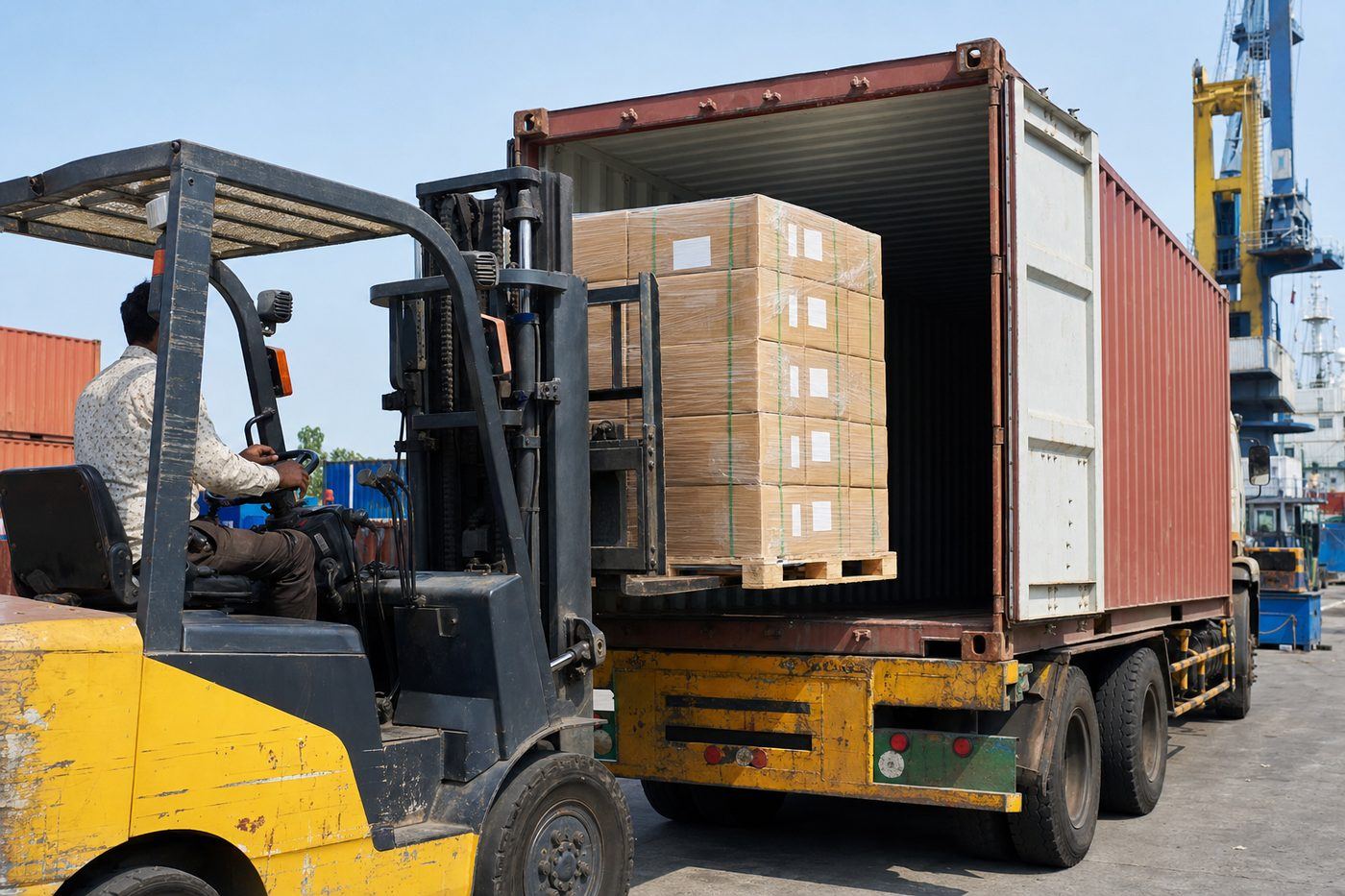
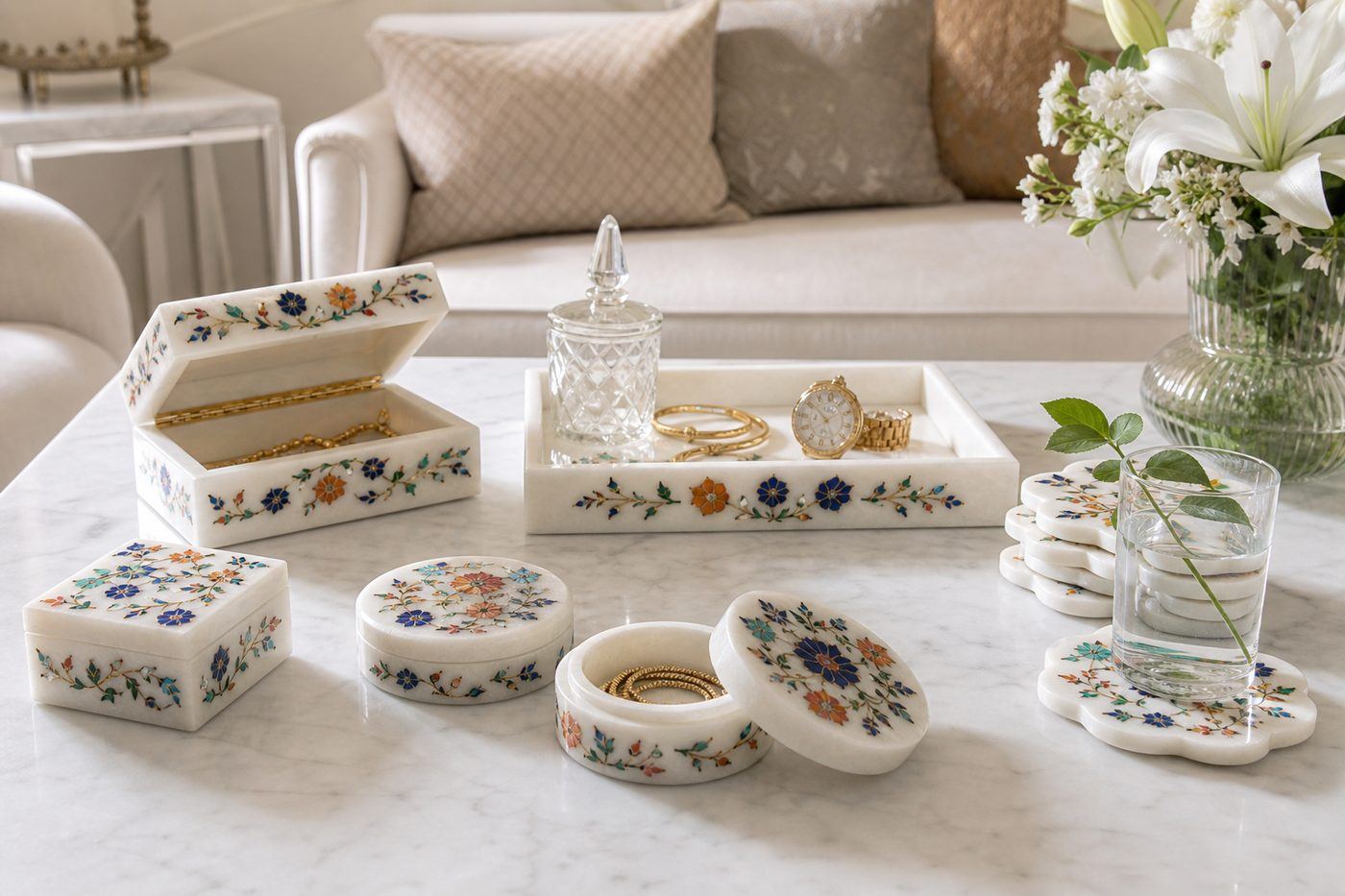
India's marble inlay sector — Agra pietra dura and Parchin Kari artware set into white Makrana marble with semi-precious floral and geometric motifs — is one of the country's most recognised premium stone-craft export categories within EPCH handicrafts. Jewelry boxes, tabletops, trays, coasters, plates, photo frames, chess boards, wall panels, decorative tiles, vases, soap dishes, and incense holders ship from the Agra corridor into home décor retail, hospitality accents, gifting, and private-label marble giftware programmes across North America, Europe, the Gulf, and Oceania. Directionally, EPCH recorded total handicrafts exports of Rs 33,122.79 crore (US$3,917.89 million) in FY 2024–25 — marble inlay sits inside that basket without a public audited subcategory total, which is exactly why destination sequencing matters more than inventing a marble-only crore figure.
Not every destination market is equally accessible, and the wrong first-market choice is one of the most common reasons new marble inlay exporters stall after a promising sample order. A country with strong retail appetite for Agra pietra dura boxes is not automatically the easiest place to land a first container if fragile packing and marine insurance are underbuilt, if HS 6802 versus 9403 classification for marble-top furniture is unclear, or if freight economics for crates and breakage risk erode margin faster than expected. This guide ranks the best countries to export Indian marble inlay products to in 2026 using the filters that actually determine commercial viability: destination demand signals, duty and preferential access, freight corridor economics from Nhava Sheva, Mundra, and ICD Tughlakabad/Dadri, and fragility/insurance burden for stone artware.
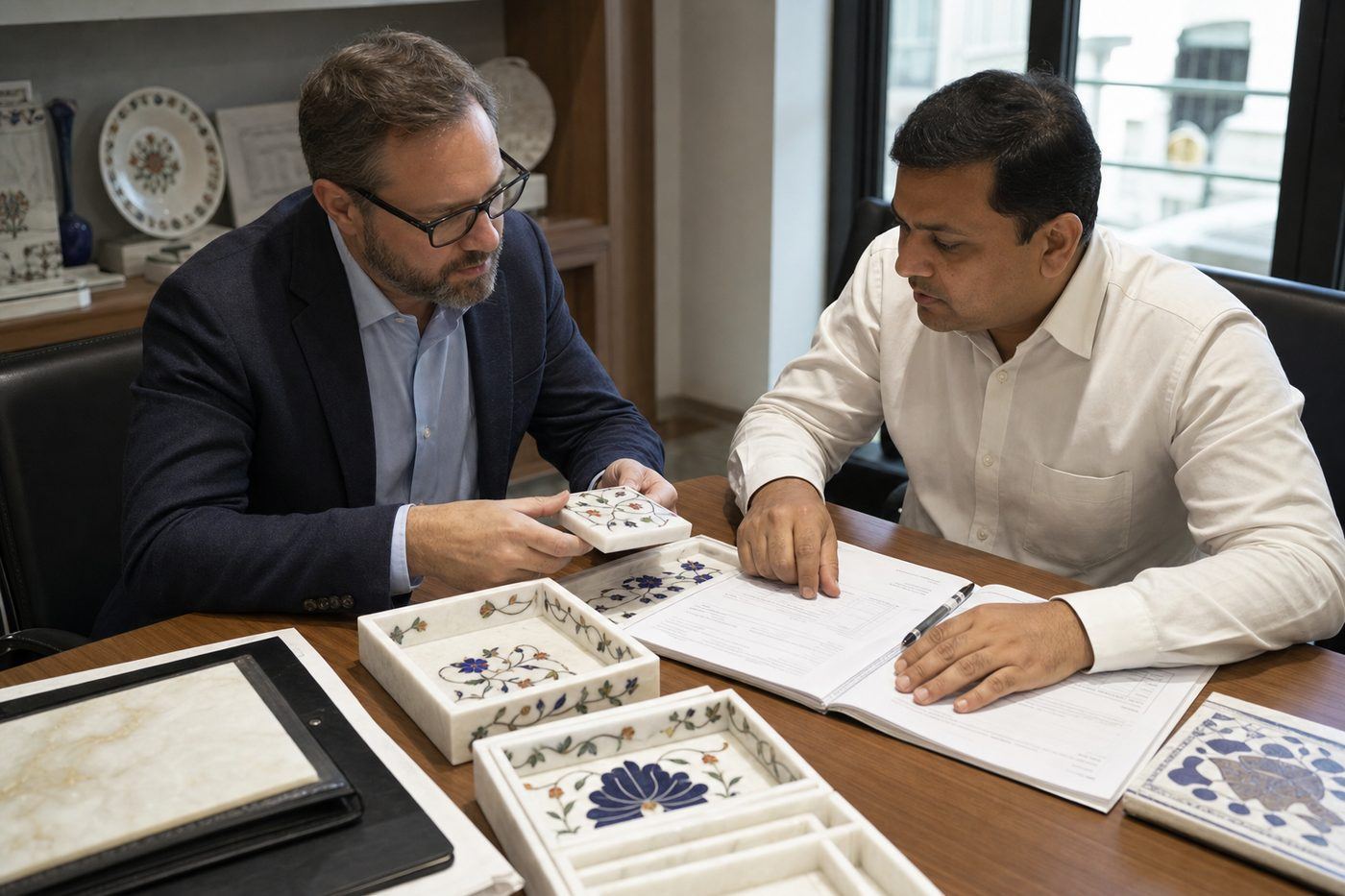
This guide is built for Indian marble inlay manufacturers, exporters, and merchant exporters deciding where to invest packing, insurance, and buyer-outreach budget first. It covers destination ranking, duty structure overview, freight corridors, and fragility-led market-entry comparison scorecards specifically — for the granular per-country SKU preference depth that sits underneath this ranking, see Most Demanded Indian Marble Inlay Products by Country, and for buyer-development tactics once you've picked a market, see How to Find International Buyers for Marble Inlay Products. For the complete export process pillar, read How to Export Marble Inlay Products from India. If you are an international buyer rather than an exporter, the companion guide Source Marble Inlay Products Directly from India covers the RFQ-to-landed-cost playbook from your side of the table.
Key Takeaways
Summary Box
Executive Summary
Summary Box
Exporting marble inlay products from India is fundamentally a market-selection exercise layered on top of a manufacturing capability that is genuinely unique: Agra's multi-generational pietra dura workshop base, Makrana white marble supply from Rajasthan, supporting Jaipur craft, and Delhi-NCR consolidation together give India a depth of Parchin Kari giftware and furniture-top programmes few competing origins can match at commercial scale.
This guide scores ten priority destinations — USA, UAE, UK, Germany, Italy, France, Australia, Canada, Netherlands, and Saudi Arabia/GCC — against demand signals, duty exposure, freight corridor transit time and economics, and fragility/insurance burden for marble inlay. Directionally, USA and Gulf markets often absorb the largest volume of Agra giftware; Germany, Italy, France, and the Netherlands reward design-led and authenticity-documented programmes; UK and Canada offer accessible premium retail; Australia is a selective niche once packing and declaration packs are ready.
The practical recommendation for most manufacturers and merchant exporters entering marble inlay export for the first time is to sequence markets rather than pursue all ten simultaneously: prove fragile packing and insurance discipline in one Gulf or North American lane first, then extend into EU/UK premium tiers once inlay QC evidence and crate SOPs are genuinely in place — not simply promised on a sales call.
Market Size & Industry Overview
Key Statistics
India's marble inlay manufacturing base is anchored in specialised clusters. Agra in Uttar Pradesh is the dominant pietra dura / Parchin Kari hub — jewelry boxes, tabletops, trays, coasters, frames, chess boards, panels, and related giftware. Makrana in Rajasthan supplies the premium white marble bases Agra workshops carve and cavity-cut. Jaipur supports design-forward marble craft for select programmes. Delhi-NCR consolidates multi-workshop lots, export packing, and ICD staging for the Agra–NCR corridor.
Below the famous cluster names, marble inlay volume is assembled from family inlay cells, mid-size carving sheds, and merchant rooms that consolidate assortments into export cartons and crates. That fragmented base is why a sealed jewelry-box sample can match flushness in January and drift toward proud stones or uneven polish by March unless one accountable exporter locks marble lots, stone identity, and packing standards across workshops.
EPCH remains the council buyers ask about when they audit Indian handicraft exporters who ship stone craft. For marble inlay programmes, RCMC signals organised membership, IHGF Delhi presence, and access to handicrafts market notes — not a substitute for fragile packing evidence or accurate material declarations. EPCH total handicrafts for FY 2024–25 are Rs 33,122.79 crore (US$3,917.89 million); use that as sector planning context and confirm live totals with EPCH or DGCI&S before capacity bets — never invent a marble-inlay-only crore total.
Directional profile of India's marble inlay manufacturing base
Swipe →
Data table — swipe horizontally on small screens
| Dimension | 2026 Snapshot | Exporter Implication |
|---|---|---|
| FY 2024–25 EPCH handicrafts | Rs 33,122.79 crore (US$3,917.89 million) | Sector context only — not a marble-inlay-only audited total |
| Core clusters | Agra (UP), Makrana (Rajasthan), Jaipur, Delhi-NCR | Match buyer grade to Agra inlay depth and Makrana base quality |
| Dominant craft | Pietra dura / Parchin Kari semi-precious stone inlay on marble | Flushness, shade, crack control, and stone identity drive claims |
| Applicable HS headings | 6802 family; 6815 residual; 9403 if furniture character dominates | Confirm exact heading per SKU with your CHA before filing |
| Regulatory/industry body | EPCH (RCMC); DGFT IEC | RCMC is a practical prerequisite for most trade-fair access |
| Structural challenge | Fragmented workshop-scale production + fragility | Lot-to-lot inlay consistency and packing SOP are the main risks |
| Top directional destinations | USA, UAE, UK, Germany, Italy, France, Australia, Canada, Netherlands, GCC | Sequence packing and insurance depth rather than chasing all markets at once |
Export Statistics
Key Statistics
India's marble inlay exports have tracked broader growth in global home-décor and hospitality demand for authentic craft with a clear origin story. Small and mid giftware — jewelry boxes, coasters, trays, frames — typically form the highest-frequency export forms, while large floral tabletops, chess boards, and wall panels remain higher-value but lower-frequency programmes that depend on crate engineering and marine insurance discipline. Premium authenticity programmes with documented natural semi-precious stones are among the most frequently requested upgrades as retailers push for honest stone identity rather than dyed or resin substitutes (directional buyer observation — not a published EPCH sub-line growth rate).
Directional export profile for Indian marble inlay products
Swipe →
Data table — swipe horizontally on small screens
| Metric | Directional Estimate | Notes |
|---|---|---|
| FY 2024–25 EPCH handicrafts | Rs 33,122.79 crore | Total handicrafts; verify latest EPCH release before investment decisions |
| Marble-inlay-only total | Not publicly audited | Do not invent subcategory crore figures; use HS 6802 proxies with caveats |
| Dominant export forms | Boxes, trays, coasters, frames, tabletops, chess boards, panels | Highest frequency in Agra giftware assortments |
| Premium growth niches | Natural semi-precious authenticity, custom floral tops | Directional buyer demand — not an EPCH published sub-segment |
| Applicable HS headings | 6802 / 6815 / 9403 (furniture-character tables only) | Confirm current classification per SKU with your CHA |
| Governing trade body | EPCH (RCMC registration) | Practical prerequisite for trade-fair access and buyer credibility |
| Load points | Nhava Sheva, Mundra; ICD Tughlakabad / Dadri | Agra–NCR corridor consolidation for northern cargo |
| Top directional markets | USA, UAE, UK, Germany, Italy, France, AU, CA, NL, GCC | Sequence by packing readiness and insurance, not brochure demand alone |
Import Statistics
Key Statistics
From the buyer side, marble inlay products typically enter destination markets under broader worked marble, stone articles, home décor, or furniture import categories rather than as a standalone tracked pietra dura line. The most useful planning approach is to combine EPCH handicrafts sector context with destination-side HS/CN import patterns under the lines you will actually ship — then reconfirm with a licensed customs broker in each market.
Because EPCH does not publish a marble-inlay-only country table, treat destination rankings below as directional commercial guidance based on observed buyer channels (home décor retail, hospitality, gifting, design wholesale) rather than as an audited country census of Agra pietra dura value.
Directional destination import-demand profile for Indian marble inlay
Swipe →
Data table — swipe horizontally on small screens
| Market | Primary Buyer Type | Demand Signal | Planning Note |
|---|---|---|---|
| USA | Home décor retail, e-commerce, gifting | Very High | Largest volume opportunity; insure fragility on every commercial lot |
| UAE / GCC | Hospitality, hypermarkets, re-export | High | Fastest freight cycle; strong for trial containers |
| UK | Home décor chains, independents, hospitality | High | Accessible premium tier post-Brexit paperwork |
| Germany | Lifestyle retail, design distributors | High | High bar on inlay consistency and material declarations |
| Italy | Design retail, craft-aware boutiques | High | Design narrative and authenticity matter as much as price |
| France | Boutique and department-store décor | Medium–High | Craft provenance rewards Agra/Parchin Kari storytelling |
| Netherlands | Wholesale hubs, design retail | Medium–High | Often an EU distribution node via Rotterdam |
| Canada | Retail distributors, gift chains | Medium | Often pairs with USA programmes on shared packing SOPs |
| Australia | Specialty and home décor importers | Medium | Premium niche; packing evidence expected early |
Product Categories & Variants (Brief Overview)
Summary Box
Destination markets absorb different marble inlay formats at different rates, and matching production planning to buyer demand by market is a core part of sequencing your export strategy. This section is a brief overview only — for a full catalogue of SKUs, grades, and forms, see Top Marble Inlay Products Exported from India and for granular country-by-country SKU preference depth, see Most Demanded Indian Marble Inlay Products by Country.
Marble inlay product category snapshot by best-fit destination
Swipe →
Data table — swipe horizontally on small screens
| Category | Typical HS Family | Best-Fit Markets |
|---|---|---|
| Jewelry boxes and small giftware | 6802 | USA, UAE, UK, Canada, GCC |
| Trays, coasters, plates | 6802 | USA, UAE, UK, Australia, Netherlands |
| Photo frames and décor plaques | 6802 / 6815 | USA, UK, UAE, France |
| Chess boards and mid giftware sets | 6802 | USA, Germany, UK, UAE |
| Tabletops and furniture tops | 6802 or 9403 if furniture character dominates | USA, Italy, France, UAE hospitality |
| Wall panels and decorative tiles | 6802 / 6815 | UAE, USA, Italy, hospitality projects |
| Vases, soap dishes, incense holders | 6802 | UAE, USA, UK, gifting retail |
Manufacturing Overview (Brief)
Export Tip
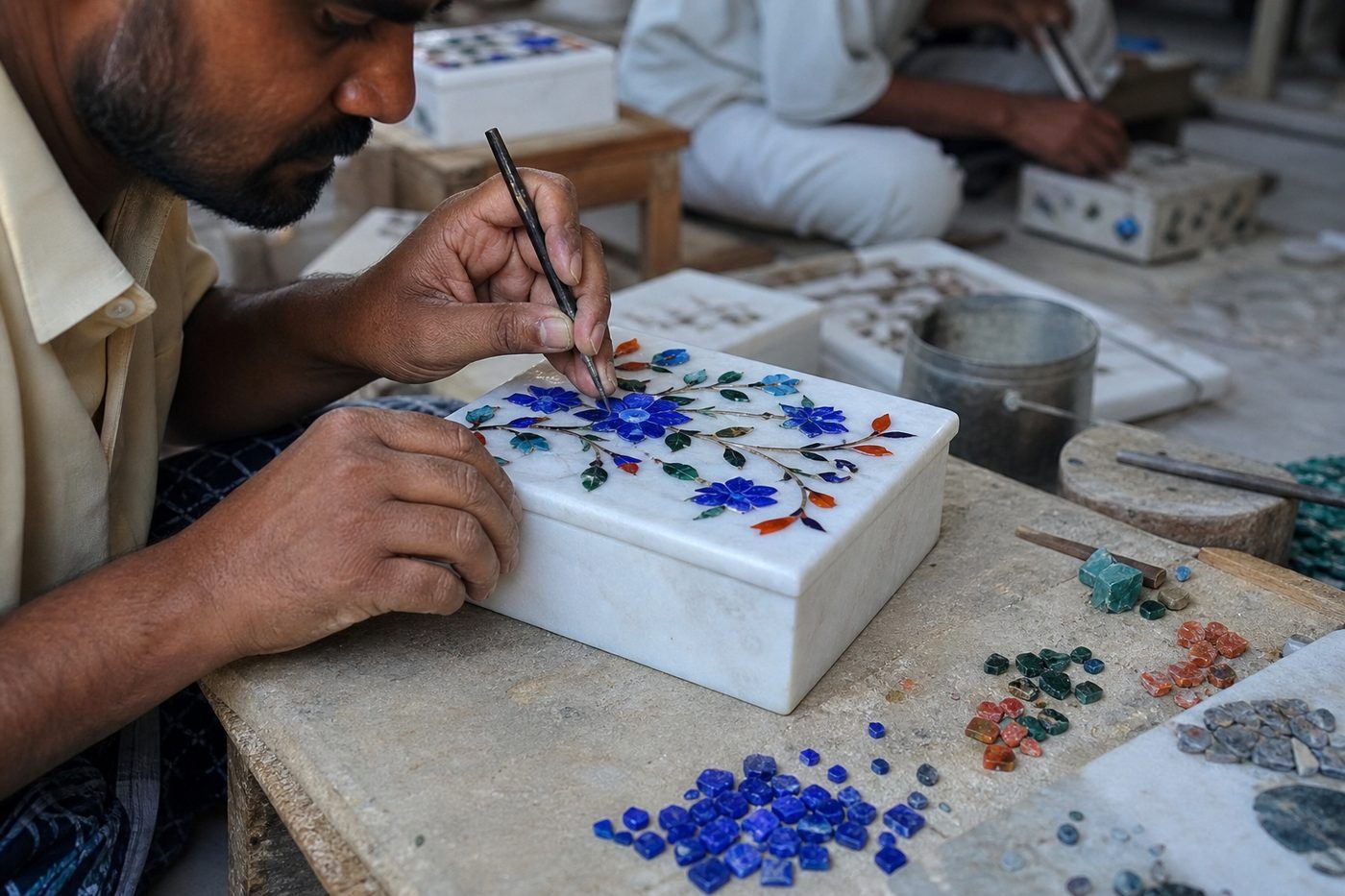
Marble inlay manufacturing runs from Makrana (or equivalent) marble base selection and cutting through motif design, cavity carving, stone cutting and shaping, inlay setting and bonding, polishing, QC for flushness, cracks, and shade, fragile packing, and export. Agra workshops specialise in semi-precious floral and geometric Parchin Kari; Makrana supplies the white marble base; Jaipur supports select craft; Delhi-NCR consolidates and packs for export.
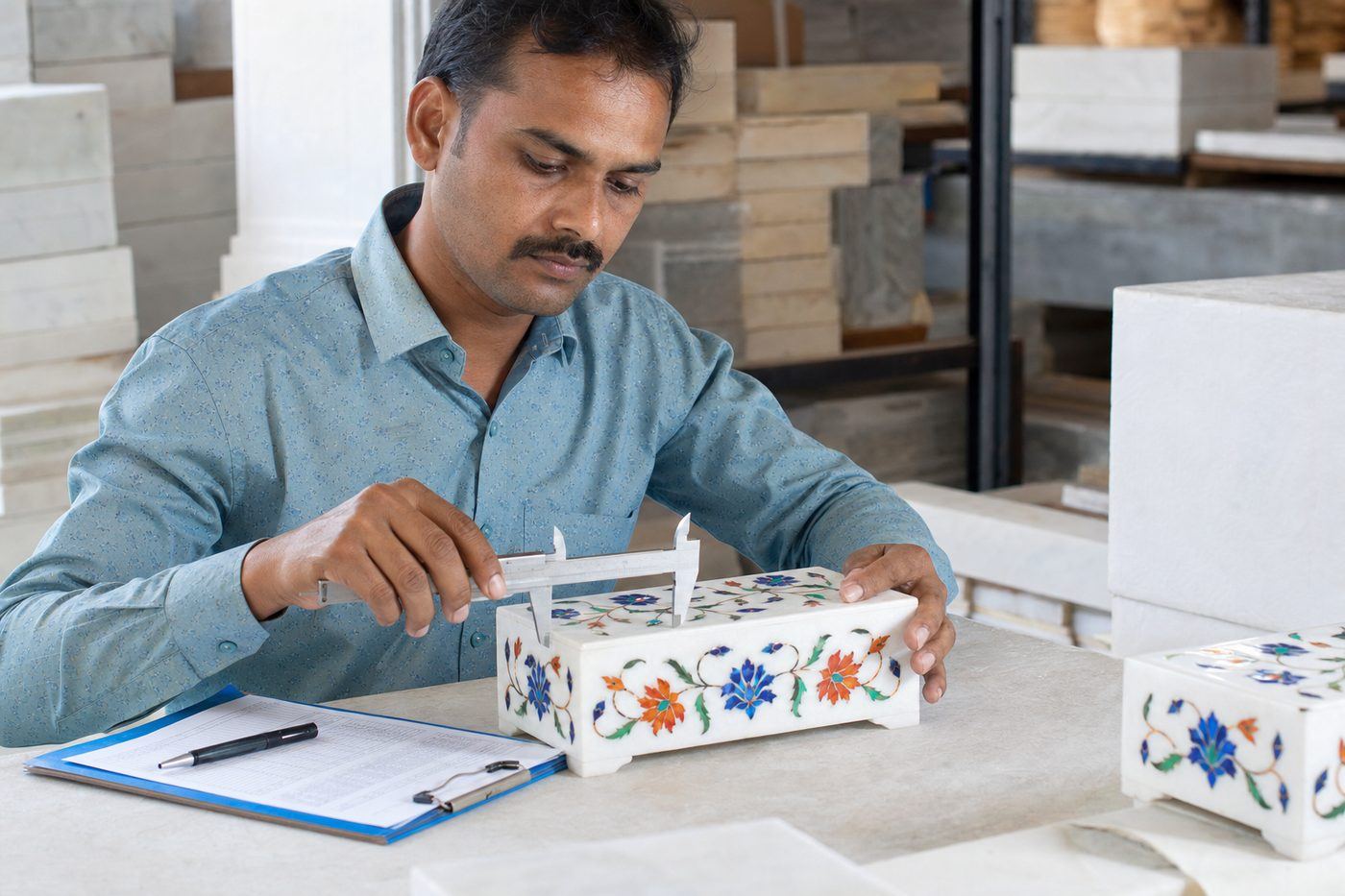
For destination-market planning purposes, buyers and exporters need the buyer-facing shape of this process: inlay flushness against a sealed reference, honest stone identity (natural versus dyed/resin), crack-free edges, polish uniformity, and crate-level packing evidence that survives ocean stack pressure. Full manufacturing detail, QC checkpoints, and process steps are covered in How to Export Marble Inlay Products from India.
Destination Ranking: Duties, Freight Corridors & Fragility/Insurance Burden
Market Snapshot
This is the core ranking exercise of this guide: scoring each priority destination on the three factors that most reliably predict whether a market is commercially viable for a first-time or scaling Indian marble inlay exporter — duty and preferential access, freight corridor economics from India's relevant load points, and fragility/insurance burden for stone artware. Duty rates and compliance rules below are directional and subject to change; always confirm the current position with a licensed customs broker in the destination market before quoting landed cost.
1. United States
- Duty and access: Worked marble and stone articles under HTS lines corresponding to HS 6802/6815 (and 9403 when furniture character dominates) may carry MFN rates from Free to low/mid digits depending on exact 10-digit classification — confirm total effective rate including any temporary measures with a US licensed customs broker; do not quote landed cost from MFN alone.
- Fragility/insurance burden: High — jewelry boxes and coasters still chip; tabletops and panels require wooden crates, corner protection, and marine open-policy or shipment-specific cover sized for replacement value plus freight.
- Freight corridor: Nhava Sheva or Mundra to US East/West Coast; 20–35 days depending on port pairing, commonly staged via ICD Tughlakabad/Dadri for Agra-origin cargo.
- Strategy: Lead with mid retail boxes, trays, and frames backed by packing photos and sealed flushness references; scale into tabletops only after crate SOP is proven on smaller lots.
The United States absorbs a leading share of Agra giftware and statement marble-top programmes through home décor retail, e-commerce brands, and gifting channels. Scale comes with private-label packing specs, return sensitivity to chips and polish haze, and insistence on accurate material and HS descriptions.
2. United Arab Emirates & GCC
- Duty and access: GCC common external tariff is generally workable for handicraft and worked-marble imports; confirm current rate and any documentation requirements with your freight forwarder.
- Fragility/insurance burden: Medium — shorter transit reduces some handling exposure, but hotel/project deliveries still demand crate photos and clear FRAGILE marking.
- Freight corridor: Mundra or Nhava Sheva to Jebel Ali / GCC ports; 7–12 days to UAE.
- Strategy: Use UAE as a fast-cycle proof-of-concept market for new motifs and crate designs before investing in longer USA/EU insurance programmes; lead with boxes, trays, panels, and hospitality-format tops.
The UAE and wider GCC (including Saudi Arabia) are the short-cycle Gulf gate for hospitality gifting, luxury villa accents, and statement marble décor. Transit from Mundra or Nhava Sheva to Jebel Ali is typically the fastest on this shortlist, so first containers often prove packing before longer-haul paperwork depth.
3. United Kingdom
- Duty and access: Confirm current UK Global Tariff treatment for the specific HS line; duty treatment for worked marble artware is generally workable but line-specific.
- Fragility/insurance burden: Medium–High — retail returns for chipped edges are commercially painful; English care labels and packing evidence are expected.
- Freight corridor: Nhava Sheva or Mundra to UK ports; 22–30 days.
- Strategy: Lead with consistent-finish giftware and hospitality accents; reward reliable repeat-order fulfilment and clean documentation more than FOB price alone.
The United Kingdom buys marble inlay through gifting retail, high-street homeware, and design boutiques. Post-Brexit paperwork differs from EU packs, so UK programmes need their own declaration set even when the SKU is identical to a German assortment.
4. Germany
- Duty and access: EU common external tariff applies to worked marble and stone articles under relevant CN headings; confirm current rates and any preferential documentation with your EU-side importer or customs broker.
- Fragility/insurance burden: High — EU retail programmes expect documented packing and often third-party PSI on first lots.
- Freight corridor: Nhava Sheva or Mundra to Hamburg/Rotterdam-adjacent EU ports; 22–30 days.
- Strategy: Do not approach German retail without sealed flushness references and packing SOP photos — consistency separates exporters who win reorders from those who compete on FOB alone.
Germany is a leading EU destination for design-conscious marble giftware and lifestyle distributors who scrutinise inlay flushness, adhesive/sealant questions, and material honesty early in conversations.
5. Italy
- Duty and access: EU common external tariff applies; confirm current CN rates with your broker.
- Fragility/insurance burden: High for tabletops and panels sold into design retail and project channels.
- Freight corridor: Nhava Sheva or Mundra to Genoa/La Spezia-adjacent ports or consolidated via Rotterdam/Hamburg; 22–32 days.
- Strategy: Lead with authentic pietra dura narrative and mid-to-premium giftware or custom tops — see also Authentic Pietra Dura and Premium Marble Inlay Export Opportunities.
Italy offers a design- and craft-aware demand profile. Buyers who understand hard-stone inlay traditions respond strongly when Agra Parchin Kari programmes lead with authentic semi-precious stones, Makrana base quality, and photographic process evidence — not when they are positioned as a cheaper generic alternative to every European craft tradition.
6. France
- Duty and access: EU common external tariff applies; confirm current rates with your customs broker.
- Fragility/insurance burden: High for polish-sensitive trays and frames; EU chemical questions on adhesives/sealants may arise.
- Freight corridor: Nhava Sheva or Mundra to Le Havre/Marseille-adjacent ports, or via Rotterdam/Hamburg; 22–30 days.
- Strategy: Lead with design-forward boxes, trays, and frames with clear Agra/Parchin Kari story and packing evidence.
France offers boutique and department-store home décor demand that responds well to Agra craft narrative, floral motifs, and finish quality when packing integrity is proven.
7. Netherlands
- Duty and access: EU common external tariff applies; confirm whether the buyer's contract assumes Rotterdam clearance and onward EU distribution.
- Fragility/insurance burden: High for hub re-handling — extra carton protection pays for itself when goods move inland after discharge.
- Freight corridor: Nhava Sheva or Mundra to Rotterdam; 22–28 days.
- Strategy: Position Netherlands-based buyers as potential EU distribution partners; lead with assortment-ready giftware SKUs that fit wholesale models.
The Netherlands is both a Dutch retail market and a common EU distribution node for décor assortments. Importers feeding Germany, Belgium, and Nordics from Rotterdam warehouses often ask for packing and material declarations before price negotiations.
8. Canada
- Duty and access: Confirm current CBSA tariff treatment for the specific HS line; generally workable for worked marble artware imports.
- Fragility/insurance burden: Medium–High on long ocean legs; bilingual labelling may apply for certain retail-packaged SKUs.
- Freight corridor: Nhava Sheva or Mundra to Canadian East Coast ports; 28–35 days.
- Strategy: Pair Canada with USA outreach using shared packing SOP and crate photos; position as North American diversification with lower brochure noise than the US alone.
Canada tracks US merchandising habits at a smaller scale: specialty gift chains and décor importers who still expect packing discipline and accurate classification even without identical US retailer forms.
9. Australia
- Duty and access: Confirm current tariff treatment and any preferential documentation with an Australian customs broker before committing to a quotation.
- Fragility/insurance burden: High relative to lane length — long ocean transit plus remoter discharge ports leave little margin for improvisational packing.
- Freight corridor: Nhava Sheva or Mundra to Australian ports; 18–26 days.
- Strategy: Confirm décor giftware versus any furniture-top classification early; rewarding once packing packs are ready, but not always ideal as a first export market for inexperienced exporters.
Australia is a selective premium niche for marble inlay. Importers usually gate POs on packing photos, English care labels, and accurate material declarations rather than on brochure motif stories alone.
10. Saudi Arabia & Wider GCC (beyond UAE hub)
- Duty and access: GCC CET framework; confirm kingdom-specific documentation and labelling with your forwarder and importer.
- Fragility/insurance burden: Medium–High for project tabletops and panels; site deliveries amplify handling risk after ocean discharge.
- Freight corridor: Direct GCC sailings or UAE hub transfer; transit often similar to UAE plus inland leg.
- Strategy: Coordinate hospitality specs early (size, motif, crate photos); use UAE trial lots to prove packing before larger Saudi project POIs.
Saudi Arabia and wider GCC markets beyond the UAE hub buy marble inlay for hospitality projects, luxury residential accents, and seasonal gifting. Many programmes still consolidate commercially through UAE logistics before inland distribution.
Pricing Analysis
Buyer Tip
When choosing which country to enter first, marble inlay FOB is driven by inlay labour intensity, stone authenticity tier, marble grade, and crate/insurance cost — not by brochure demand alone. Price after you know the duty-plus-fragility burden; see Top Marble Inlay Products Exported from India for fuller form ladders.
Directional FOB bands with the fragility overlay that changes by destination
Swipe →
Data table — swipe horizontally on small screens
| Product Category | Directional FOB Price | Fragility/Duty Overlay to Weigh Per Market |
|---|---|---|
| Tourist-grade small boxes / coasters | Low tens USD/pc | Factor packing and claim risk before comparing net margin across lanes |
| Mid retail boxes / trays / frames | Tens to low hundreds USD/pc | Finish and inlay density drive this range more than destination duty alone |
| Large floral tops / custom commissions | Hundreds to thousands+ USD/pc | Crate and insurance often matter more than duty for landed cost |
| Museum-grade / collector authentic lines | Quote-only | Premium is highest in USA, Italy, France, UK where authenticity evidence is table stakes |
| Private-label giftware assortments | Premium over open-market tourist grade | Packing SOP photos and flushness seals justify premium in EU/UK/NA |
| Hospitality project panels / tops | Project quoting | Installation damage risk after discharge — insure end-to-end where terms allow |
MOQ Analysis
Buyer Tip
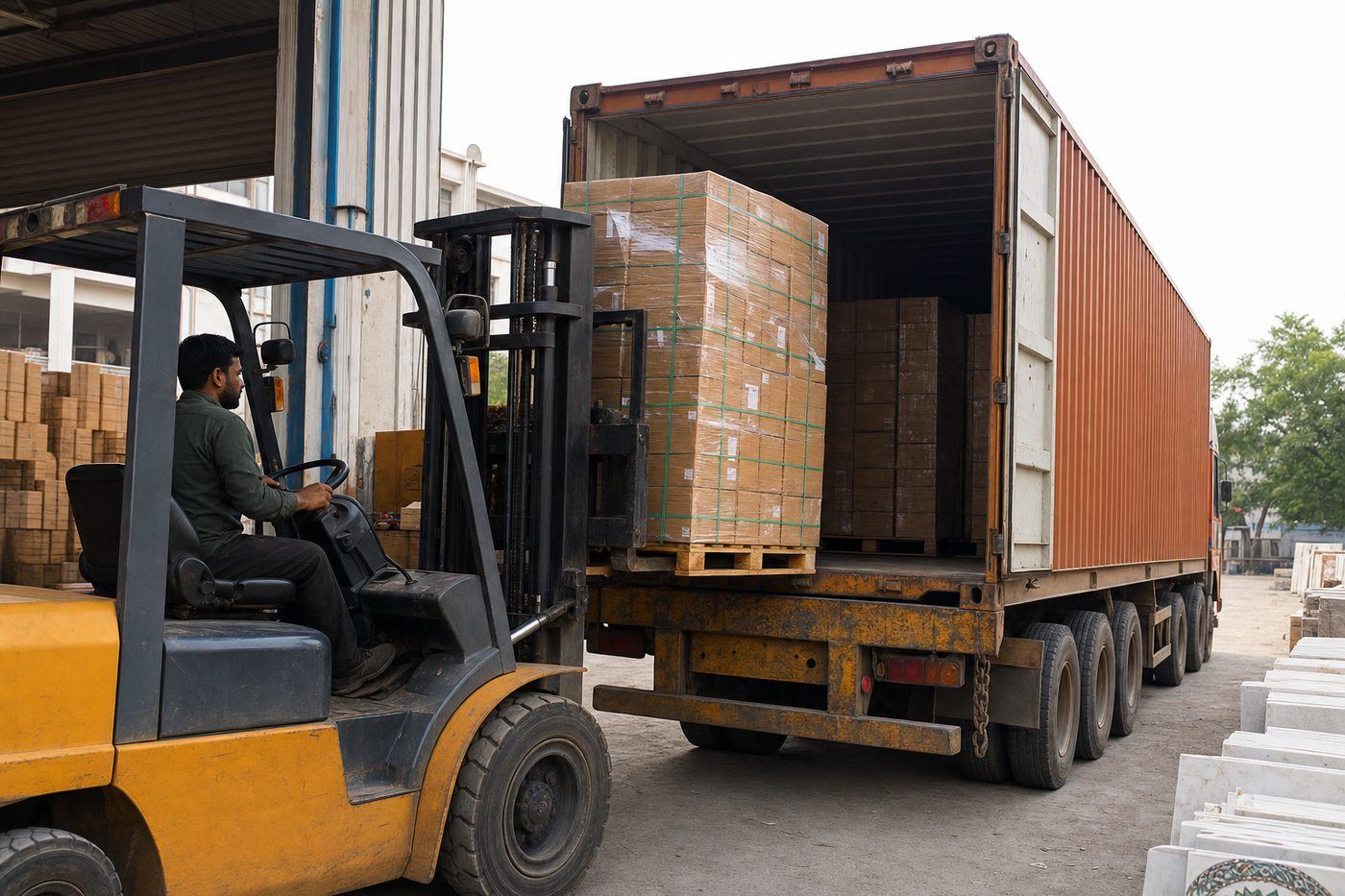
When choosing which country to enter first, stage marble inlay MOQs as samples (1–5 pcs/SKU), trials (20–100), then wholesale (100–500+ by size) only after flushness and packing QC. Destination ranking programmes should avoid full-container MOQs of large tabletops before the crate reference locks — detail in How to Export Marble Inlay Products from India and Source Marble Inlay Products Directly from India.
Directional MOQ tiers by transaction stage
Swipe →
Data table — swipe horizontally on small screens
| Stage | Typical MOQ | Purpose |
|---|---|---|
| Sample | 1–5 pieces per SKU | Buyer evaluation of flushness, polish, shade, and motif match |
| Trial order | 20–100 pieces or mixed LCL | Market and channel testing, small retail runs |
| Wholesale / bulk | 100–500+ by size / CBM | Established buyer repeat programmes |
| FCL container | Mixed giftware or fewer large tops by CBM/weight | Full-container economics for larger distributors and importers |
Packaging Standards
Export Tip
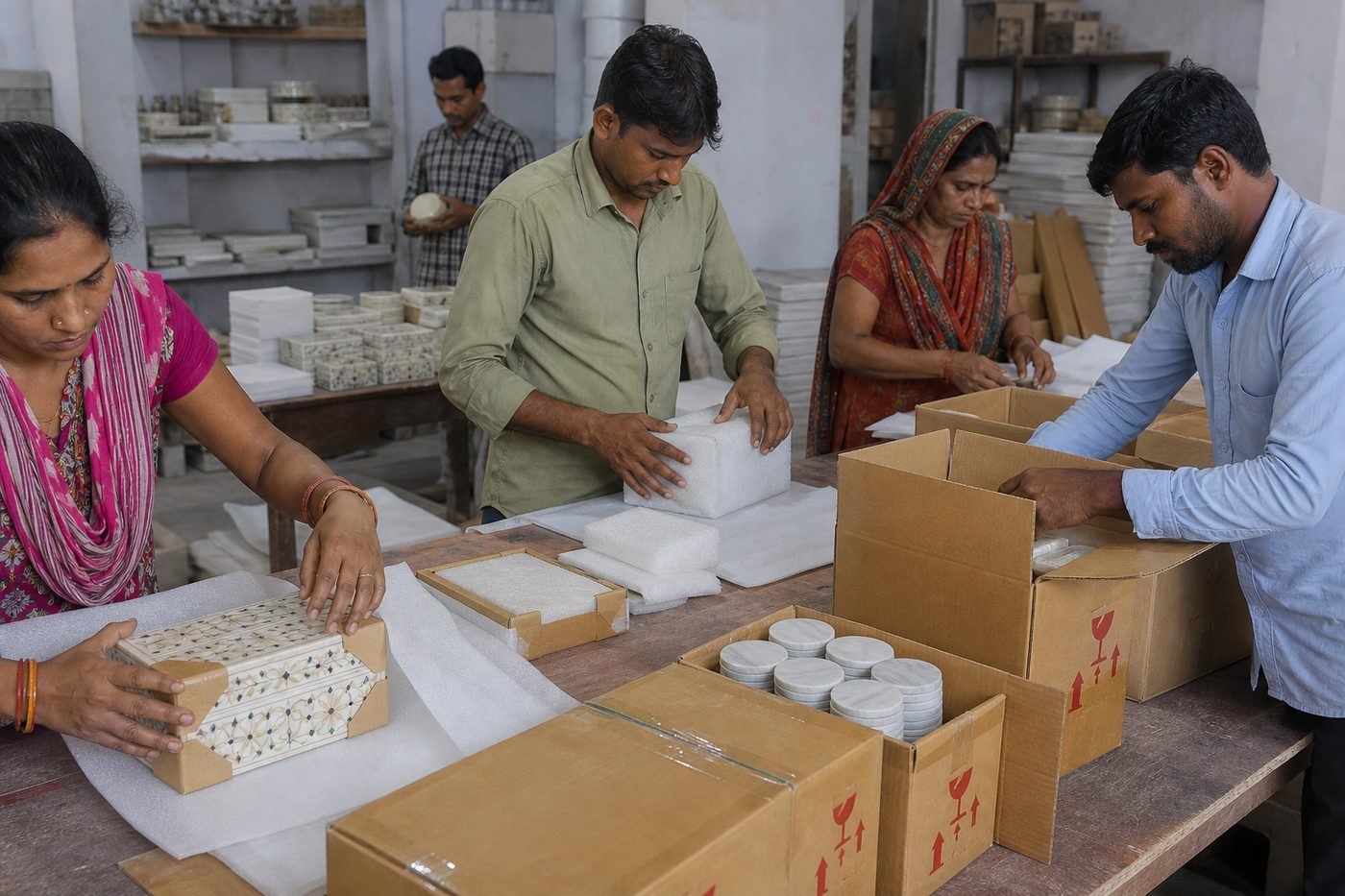
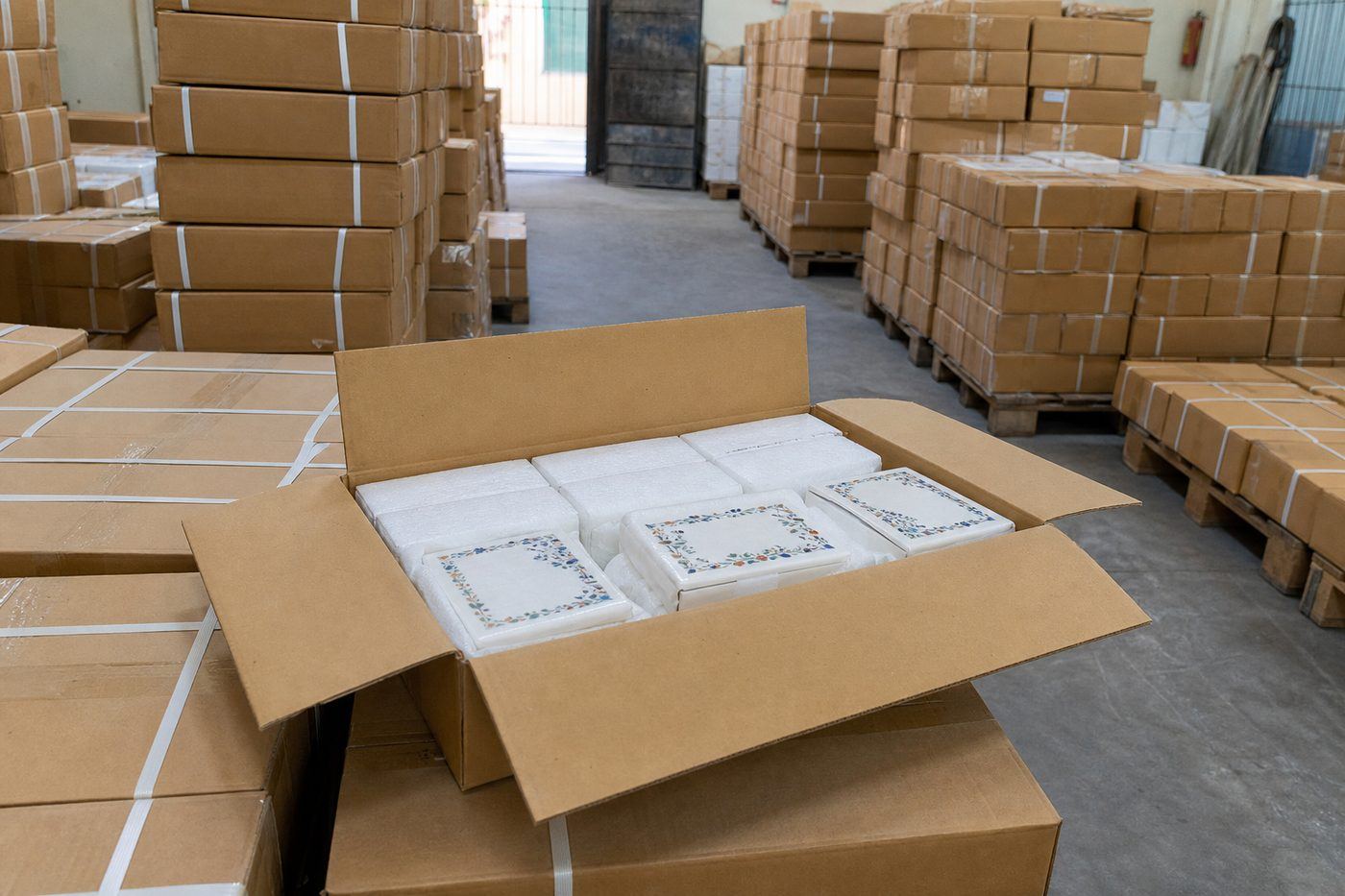
When choosing which country to enter first, treat packing as part of the product: foam/EPE wrap, corner guards, individual cartons, master cartons, wooden crates for tabletops and panels, moisture barriers where polish requires, and FRAGILE / THIS SIDE UP marking. For destination ranking, show packing photos early so duty-plus-insurance models stay believable. Deep fields: Marble Inlay Products Export Documentation Checklist.
Packaging formats and specifications for marble inlay export
Swipe →
Data table — swipe horizontally on small screens
| Format | Use Case | Key Requirement |
|---|---|---|
| Foam / EPE wrap + corner guards | Boxes, trays, frames, coasters | Prevents edge chips and face abrasion in handling |
| Individual cartons inside master cartons | Giftware assortments | Stops piece-on-piece contact during ocean transit |
| Wooden crates | Tabletops, panels, large trays | Rigid protection under container stack pressure |
| Moisture barrier where polish requires | High-polish surfaces | Reduces haze risk in humid lanes |
| FRAGILE / THIS SIDE UP marking | All commercial lots | Handling cue for terminals and destination warehouses |
Container Loading Details
Export Tip
When choosing which country to enter first, load for crack and chip protection before chasing density. Destination ranking CBM math still loses to a shattered top. Use container notes in How to Export Marble Inlay Products from India.
Directional container loading guidance for marble inlay products
Swipe →
Data table — swipe horizontally on small screens
| Container Type | Loading Consideration | Typical Use |
|---|---|---|
| 20-foot FCL | Dense stone loads can approach weight limits; large tops max out on careful stacking first | Trial and mid-size wholesale shipments |
| 40-foot FCL / 40-foot HC | Better for mixed giftware by CBM; tabletops still require crate orientation discipline | Established wholesale and distributor programmes |
| LCL | Higher handling risk — push stronger individual packing and corner protection | Samples, trials, new buyer relationships |
| Palletisation with stretch wrap | Recommended for cartoned giftware to reduce rough handling | Wholesale and retail-chain shipments |
Shipping Methods
Export Tip
- UAE/GCC-bound freight is the fastest lane on this list at roughly 7–12 days — a useful proof-of-concept destination while longer-haul packing and insurance programmes mature
- USA and EU-bound stock orders commonly run about 3–5 weeks production plus 20–35 or 22–30 days ocean transit ex Nhava Sheva or Mundra, often staged through ICD Tughlakabad/Dadri for Agra-origin cargo
- Custom inlay or large tops add 6–12+ weeks production regardless of destination, ahead of the freight leg itself
- Air freight stays reserved for samples and urgent fair kits — it rarely pencils out for mid-to-heavy marble once weighed against ocean economics
- Let market sequencing drive Incoterm choice: EXW/FOB where the buyer already manages freight, CFR/CIF where a landed-price offer helps you win a new destination; DAP/DDP selective; always insure for fragility
When choosing which country to enter first, plan ocean FCL/LCL via Nhava Sheva or Mundra (ICD Tughlakabad/Dadri for northern consolidation) and reserve air for samples. Insure for fragility on every commercial ocean lot. Destination ranking timelines should cite realistic vessel windows in How to Export Marble Inlay Products from India.
Certifications
Compliance Notes
When choosing which country to enter first, keep compliance destination-led: accurate material declarations for all markets; adhesive/sealant chemical questions for EU programmes; CITES only if restricted organic inlays are claimed; retailer social audits for larger retail chains; HS essential-character discipline for 6802 versus 9403. Destination ranking claims need packing evidence paired with EPCH credibility — see EPCH Registration Benefits for Marble Inlay Exporters.
Certifications and compliance frameworks relevant to marble inlay export
Swipe →
Data table — swipe horizontally on small screens
| Certification / Framework | Purpose | Relevant For |
|---|---|---|
| Import Export Code (IEC) | Baseline legal requirement for any commercial export from India | All exporters |
| EPCH RCMC | Registration for handicraft export benefits and trade-fair access | All exporters |
| Material declaration / stone identity | Honest natural versus dyed/resin claims | All premium destinations |
| EU chemical questions (adhesives/sealants) | Buyer chemical diligence on bonding agents | Germany, Netherlands, France, Italy, other EU |
| CITES (only if restricted organic inlays claimed) | Restricted wildlife/plant material controls | Only when such materials are actually used |
| Certificate of origin | Origin and preferential documentation as required | Most destinations |
| Marine insurance evidence | Fragility cover for ocean transit | All commercial ocean lots |
Buyer Requirements
Buyer Requirements
When choosing which country to enter first, buyers ask for sealed flushness references, HS cards (6802/6815/9403 as applicable), packing and crate photos, stone identity notes, and insurance clarity before POs. Destination ranking teams should package duty-plus-fragility evidence once — see Source Marble Inlay Products Directly from India.
Export Process Overview (Market Entry Sequence)
Export Tip
Summary Box
- Sequence one primary market and one secondary proof market rather than opening ten destinations at once
- Build packing SOP photos and marine insurance into standard process before quoting long-haul markets
- Separate giftware SKUs from furniture-character marble-top programmes in pricing, sampling, and HS filings
- Confirm HS (6802 / 6815 / 9403 as applicable) with your CHA for each hero SKU before first filing
- Treat IHGF Delhi and relevant international fair inquiries as market signals, then validate with packing readiness — see Trade Shows and B2B Marketplaces for Marble Inlay Exporters
Destination selection sits on top of the same operational backbone every marble inlay exporter needs: IEC and EPCH RCMC, Agra cluster sourcing with Makrana base discipline, sample approval against sealed flushness references, fragile packing and crates, CHA-confirmed HS filing, and FOB/CFR/CIF logistics through Nhava Sheva, Mundra, or ICD Tughlakabad/Dadri. Use market ranking to decide where to spend packing and insurance budget first — not to invent a different production process per country. Full process depth lives in How to Export Marble Inlay Products from India; document field-by-field controls live in Marble Inlay Products Export Documentation Checklist; EPCH membership mechanics live in EPCH Registration Benefits for Marble Inlay Exporters.
Country-wise Opportunities
Market Snapshot
Use this scorecard to prioritise outreach and packing/insurance investment across the destinations covered in this guide. Scores are relative guidance for a typical Indian marble inlay exporter in 2026 — validate against your specific grade mix, crate capability, and freight economics. For per-country SKU preference depth beyond this scorecard, see Most Demanded Indian Marble Inlay Products by Country.
Country comparison scorecard for Indian marble inlay exporters
Swipe →
Data table — swipe horizontally on small screens
| Country | Market Size | Duty/Access Complexity | Fragility/Insurance Burden | Freight Transit | Ease of Entry | Opportunity Score |
|---|---|---|---|---|---|---|
| USA | Very High | Low–Medium | High | 20–35 days | Medium | 9/10 |
| UAE / GCC | High | Low | Medium | 7–12 days (UAE) | High | 8.5/10 |
| UK | High | Medium | Medium–High | 22–30 days | Medium | 8/10 |
| Germany | High | Medium | High | 22–30 days | Low–Medium | 8/10 |
| Italy | High | Medium | High | 22–32 days | Medium | 8/10 |
| France | Medium–High | Medium | High | 22–30 days | Low–Medium | 7.5/10 |
| Netherlands | Medium (EU hub) | Medium | High | 22–28 days | Medium | 7.5/10 |
| Canada | Medium | Low–Medium | Medium–High | 28–35 days | Medium–High | 7.5/10 |
| Australia | Medium | Medium | High | 18–26 days | Medium | 6.5/10 |
Sourcing Checklist
Checklist
Buyer Checklist
Exporter Checklist
Compliance Checklist
Checklist
Compliance Notes
Common Buyer Mistakes
Common Mistakes Box
First-market mistakes cluster around three habits: chasing brochure demand without fragile packing readiness, quoting FOB without crate and insurance cost, and sending one mixed marble catalogue to every destination as if USA and UAE buyers share the same proof thresholds.
Common destination-selection mistakes and how to avoid them
Swipe →
Data table — swipe horizontally on small screens
| Mistake | Consequence | How to Avoid It |
|---|---|---|
| Choosing a market by size alone | Packing/insurance burden mismatch stalls the first shipment | Score markets on duty, freight, and fragility burden together |
| Treating crates as optional for tabletops | Breakage claims erase margin | Write wooden-crate SOP into every large-top quotation |
| Ignoring flushness lot consistency | Retail rejection after first reorder | Seal reference samples and mid-run photos for inlay flushness |
| Misclassifying marble-top tables under 6802 vs 9403 | Customs delays or duty surprises | Confirm essential character with CHA before first filing |
| Pursuing USA, EU, and Gulf markets simultaneously from a standing start | Packing and freight-relationship budget spread too thin | Sequence market entry — build depth in one market before expanding |
| Underestimating insurance cost differences by lane | Underinsured breakage on long-haul legs | Model insurance into landed cost by destination, not FOB alone |
Challenges & Solutions
Entering a marble inlay market is less about finding a listing agent and more about aligning inlay QC, packing evidence, and marine cover to that market's claim culture. Soft skills sell the first sample; flushness and crate discipline sell the reorder.
Destination-market challenges and mitigation strategies
Swipe →
Data table — swipe horizontally on small screens
| Challenge | Where It Bites Most | Mitigation Strategy |
|---|---|---|
| Breakage and chip claims in transit | USA, EU, Australia long-haul | Standardise packing SOP and marine insurance across all commercial lots |
| Inlay flushness / polish drift across workshops | Agra multi-workshop lots | Lock sealed references and audit mid-production flushness match |
| HS essential-character disputes on tabletops | All markets with furniture-top SKUs | Confirm 6802 vs 9403 with CHA before quoting furniture programmes |
| Stone-identity honesty challenges | Italy, France, Germany, USA premium retail | Separate natural semi-precious programmes from dyed/resin tourist grades |
| Fragmented workshop-scale supply base | All markets | Work with an aggregator or merchant exporter who manages multi-workshop consistency |
| Buyer price-benchmarking against unverified suppliers | All markets | Differentiate on documented flushness, packing integrity, and insurance — not price alone |
Future Market Trends
Key Statistics
Over the next planning cycle, expect authenticity and fragility wedges to widen: premium US and EU programmes will keep pulling away from generic tourist assortments that still move on speed and price in some Gulf gifting channels. Exporters who build packing evidence and honest stone identity once and reuse them across USA/EU will outpace those rewriting SOPs per inquiry.
Natural semi-precious authenticity programmes, custom floral tabletops, and hospitality panel projects are on track to move from nice-to-have into genuine gating credentials for USA, Italy, France, Germany, and UK premium retail. At the same time, freight-corridor optimisation between Nhava Sheva, Mundra, and ICD Tughlakabad/Dadri will matter more as buyers push for tighter landed-cost competitiveness on a category that is breakage-sensitive.
A deliberate second wave into Netherlands, Canada, France, and Australia after a USA or UAE foundation reduces concentration risk without forcing ten simultaneous packing builds. Sequence markets by fragility readiness — not by which destination looks largest on a slide.
Expert Insights
Expert Insight Box
Altus Exports partners with overseas marble inlay buyers and Agra–Makrana–Delhi-NCR workshops as merchant exporter and sourcing coordinator — locking flushness references, HS cards, packing SOPs, and insurance terms before the first commercial deposit so destination choice does not outrun evidence.
Conclusion
- Action: Confirm your packing SOP and marine insurance are ready before targeting any new long-haul destination market.
- Review How to Export Marble Inlay Products from India for the complete export process framework.
- Read Top Marble Inlay Products Exported from India to align product form with destination demand.
- See Most Demanded Indian Marble Inlay Products by Country for granular product-market matching.
- Build buyer relationships with Find International Buyers for Marble Inlay Products and Trade Shows and B2B Marketplaces for Marble Inlay Exporters.
- Prepare documentation with Marble Inlay Products Export Documentation Checklist and EPCH Registration Benefits for Marble Inlay Exporters.
- Check authenticity depth via Authentic Pietra Dura and Premium Marble Inlay Export Opportunities.
- For the buyer-side playbook, read Source Marble Inlay Products Directly from India.
- Explore merchant exporter services from India, export products from India, global sourcing partner models, product sourcing company India, and find manufacturers in India, or contact Altus Exports to discuss your target markets.
Choosing the best countries for Indian marble inlay exports in 2026 comes down to matching your current packing SOP, insurance economics, and Agra production discipline to the destination that rewards it: USA and Canada for retail and gifting scale with high fragility discipline; UAE and GCC for the fastest entry cycle; Germany, Italy, France, and Netherlands for premium EU positioning once inlay and packing evidence are genuinely in place; UK for an accessible independently regulated premium tier; and Australia as a niche once packing packs are ready.
Across every market on this scorecard, the durable advantage is the same: flushness you can show, packing you can photograph, and insurance that keeps Agra pietra dura sellable after ocean transit. Duty tables matter; cracked samples kill programmes faster.