
Best Countries for Indian Dehydrated Onion Exports (2026 Market Guide)
By Saurabh Mittal, Founder, Altus Exports
A market-selection guide for Indian dehydrated onion exporters — comparing the USA, Germany, Brazil, Indonesia, UK, Netherlands, UAE, Belgium, and Russia on import demand, duty structure, packaging preference, certification requirements, and opportunity score, with pricing benchmarks, container economics, and expert insight from Altus Exports.

India is the world's largest onion producer and one of its leading dehydrated onion exporters, supplying flakes, kibbled pieces, granules, minced, and powder under HS code 071220 (fried or oil-cooked onion may require a separate Chapter 20 classification and must be confirmed with a customs broker) to food manufacturers, spice blenders, foodservice distributors, and retail packers across more than 90 countries. But 'exporting dehydrated onion' and 'exporting dehydrated onion profitably to the right country' are two very different exercises. Duty structures, moisture and microbiological limits, packaging conventions, and certification demands vary sharply between the USA, the European Union, Brazil, Indonesia, the UK, the Netherlands, the UAE, Belgium, and Russia — and choosing the wrong first market wastes a production cycle that a better-informed exporter would have converted into a repeat buyer relationship.
This guide ranks and profiles the strongest destination markets for Indian dehydrated onion exporters in 2026 using practical filters: import volume trends under HS 071220, applicable duty and preferential-origin pathways, packaging and grade preferences, certification burden, and realistic entry difficulty for small and mid-size Indian dehydrators. It is built for exporters, producer companies, and merchant-export partners who need a prioritisation framework — not a generic country list.
This is one guide in a ten-part cluster on exporting dehydrated onion from India. For the export process itself, see How to Export Dehydrated Onion from India; for product and grade depth, see Top Dehydrated Onion Products Exported from India; and for the buyer-side sourcing process, see Source Dehydrated Onion Directly from India.
Key Takeaways
Summary Box
- The USA, Germany, and the UK remain the highest-value destinations for Indian dehydrated onion, while Brazil, Indonesia, and Russia are the largest volume markets for standard-grade flakes and kibbled onion.
- Duty structure changes the economics of every market: the EU applies an ad valorem duty of roughly 12.8% on dried vegetables, the UAE/GCC tariff treatment for dried vegetables is often 0% or 5% depending on the exact line and must be verified, and the USA applies substantial MFN duties on dried onions — typically about 29.8% for powder/flour (HTS 0712.20.20) and about 20–21.3% for other dried onion forms such as flakes (HTS 0712.20.40); India is generally not on the preferential free list for these lines, so always verify the current USITC HTS schedule and exact 10-digit classification before quoting.
- Packaging convention differs by market: North America and the EU favour 20 kg and 25 kg multi-wall kraft or kraft/PE-lined bags for bulk, while some Gulf and Southeast Asian buyers accept 14–20 kg cartons for foodservice repacking.
- Certification stacking — FSSAI, APEDA registration, HACCP, ISO 22000, Halal, Kosher, and NPOP/USDA/EU Organic — is the single biggest lever separating exporters who can serve premium retail and foodservice channels from those limited to commodity spot sales.
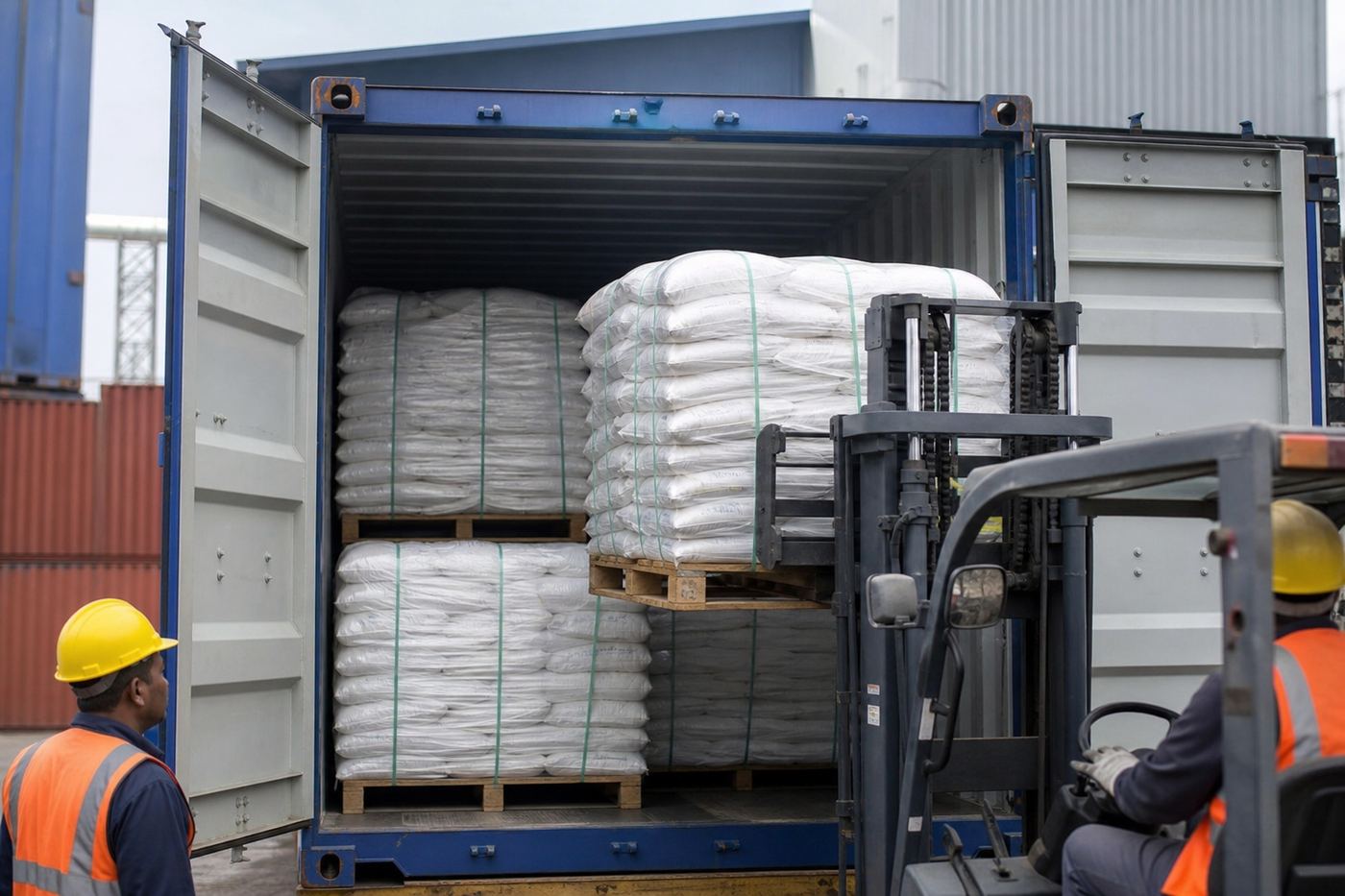
- Container economics favour full-container-load programmes: a 20ft container carries roughly 10–14 MT of bagged dehydrated onion, and a 40ft container carries roughly 20–26 MT, depending on cut, bag size, and palletisation.
- Altus Exports supports agriculture and food products exporters and buyers with market selection, supplier verification, certification alignment, and export coordination for dehydrated onion programmes.
- Match each market to consuming industries and illustrative buyer company types (seasoning brands, noodle plants, meat processors, foodservice distributors) before locking outreach.
Executive Summary
Indian dehydrated onion exports are concentrated in Gujarat, where processing clusters around Mahuva, Bhavnagar, Sihor, and Ahmedabad handle the majority of national dehydration capacity, sourcing fresh onion from Gujarat, Maharashtra, Madhya Pradesh, and Karnataka growing belts. The category ships under HS 071220 (dried onions, whether or not cut, crushed, or powdered) and covers a wide product range — flakes, kibbled, minced, granules, powder, and fried onion — each with distinct buyer bases and price tiers.
This guide evaluates nine priority destination markets — the USA, Germany, Brazil, Indonesia, the UK, the Netherlands, the UAE, Belgium, and Russia — against import demand, duty treatment, certification requirements, packaging norms, and realistic entry difficulty for Indian exporters. The intent is decision-ready prioritisation: which two or three markets should a dehydrator, merchant exporter, or export-ready processing unit target first, and what does each require before the first container ships.
The short answer: build FSSAI, APEDA, and HACCP compliance as a baseline for every market; add ISO 22000 for European and UK retail-adjacent buyers; add Halal for UAE and broader Gulf/Southeast Asia reach; add Kosher for USA and EU food-manufacturer programmes; and add NPOP-based organic certification to access the 25–50% premium available in USA, EU, and UK organic channels. Markets that reward this investment fastest are the USA, Germany, and the UK; markets that reward volume execution without heavy certification investment are Brazil, Indonesia, and Russia.
| Dimension | 2026 Snapshot | Exporter Implication |
|---|---|---|
| HS Code | 071220 (dried onions — whole, cut, sliced, broken, powder) | Confirm exact 8-digit destination tariff line with your customs broker |
| Core product range | Flakes, kibbled, minced, granules, powder, fried onion, organic grades | Match cut and mesh size to destination buyer type before quoting |
| Primary processing clusters | Mahuva, Bhavnagar, Sihor, Ahmedabad (Gujarat) | Cluster-based sourcing improves consistency and traceability |
| Moisture specification | 5–8% typical for export-grade dehydrated onion | Test every lot; moisture drives shelf life and buyer acceptance |
| Core certifications | FSSAI, APEDA, HACCP, ISO 22000, Halal, Kosher, Organic | Stack certifications progressively to unlock premium channels |
| Institutional support | APEDA, EIC, FSSAI, DGFT | Use APEDA registration and export promotion schemes actively |
| Top import markets by volume/value | USA, Brazil, Germany, Indonesia, Belgium, UK, Netherlands, Russia | Prioritise based on your grade mix, certification level, and MOQ capacity |
Market Size and Industry Overview
Global demand for dehydrated onion is driven by food manufacturing (soups, sauces, ready meals, snacks, seasoning blends), foodservice and quick-service restaurant supply chains, spice and seasoning blenders, and retail private-label programmes. Dehydrated onion offers manufacturers a shelf-stable, lower-logistics-cost alternative to fresh onion with consistent flavour concentration, and it is increasingly used as a clean-label ingredient when sourced without additives or anti-caking agents.
India's dehydration capacity is concentrated in Gujarat's Saurashtra belt, where Mahuva alone hosts a dense cluster of dehydration units benefiting from proximity to fresh onion growing areas, established labour skill in grading and slicing, and direct road access to Mundra and Pipavav ports. Bhavnagar and Sihor host complementary processing capacity, while Ahmedabad serves as a secondary hub with stronger access to Nhava Sheva-bound logistics and blending/repackaging operations for value-added exports.
Fresh onion feedstock for dehydration draws from Gujarat, Maharashtra (Nashik belt), Madhya Pradesh, and Karnataka, with harvest timing (roughly November–April depending on region and crop cycle) determining raw material cost and availability. Exporters and buyers should plan container programmes around this seasonality — pricing and lead times are materially different in peak fresh-onion season versus off-season, when dehydrators draw on stored raw material or held dehydrated stock.
| Industry Factor | Detail | Buyer/Exporter Relevance |
|---|---|---|
| Primary export HS code | 071220 | Used for all trade data, customs filing, and duty lookups |
| Key processing states | Gujarat (dominant), Maharashtra, Madhya Pradesh, Karnataka | Sourcing region affects lead time, pricing, and logistics routing |
| Key processing clusters | Mahuva, Bhavnagar, Sihor, Ahmedabad | Cluster reputation and audit history should inform supplier shortlisting |
| Feedstock seasonality | Fresh onion harvest roughly Nov–Apr by region | Confirm whether supply is fresh-season processed or held stock |
| Dominant export ports | Mundra, Pipavav, Nhava Sheva | Port choice affects transit time and freight cost to each destination |
| Primary buyer categories | Food manufacturers, foodservice distributors, spice blenders, retail packers | Buyer type determines grade, packaging, and certification priority |
Export Statistics
India's dehydrated onion export base has grown steadily as global food manufacturers diversify sourcing away from single-origin dependence and as Gujarat's processing capacity has modernised with better slicing, drying, and quality-control infrastructure. Export volumes are distributed across bulk industrial shipments (flakes and kibbled onion for manufacturing) and a smaller but growing value-added segment (powder, granules, fried onion, and organic grades) that commands materially higher unit prices.
Directional export patterns for 2026 show sustained bulk volume to price-sensitive, high-volume markets (Brazil, Indonesia, Russia) alongside growing value and certification-driven demand from the USA, Germany, the UK, the Netherlands, Belgium, and the UAE. Exporters should track HS 071220 shipment trends through DGFT and APEDA export data and cross-reference with destination-side import statistics rather than relying on aggregate 'dehydrated vegetables' figures, which blend onion with garlic, carrot, and other dried vegetable lines.
| Export Dimension | Directional 2026 Pattern | Exporter Action |
|---|---|---|
| Volume leadership | Bulk flakes and kibbled onion dominate total export volume | Build reliable FCL capacity before chasing premium niches |
| Value growth segment | Powder, granules, fried onion, and organic grades growing faster than bulk flakes | Invest in milling/frying capability and certification for margin uplift |
| Top volume destinations | Brazil, Indonesia, Russia, USA | Prioritise consistent grade and packaging specs for repeat FCL orders |
| Top value destinations | USA, Germany, UK, Netherlands, Belgium, UAE | Certification and traceability investment pays back fastest here |
| Seasonality effect on exports | Export pricing and lead time tighten in pre-harvest months | Lock contracts and lead times ahead of seasonal price swings |
| Currency and pricing basis | FOB Indian port in USD is standard quoting basis | Confirm Incoterm and currency at quotation, not after PO |
Import Statistics
On the import side, the world's leading destinations for dried/dehydrated onion combine large food-manufacturing bases (USA, Germany, UK, Netherlands, Belgium) with high-volume price-sensitive markets (Brazil, Indonesia, Russia) and fast-growing Gulf demand (UAE). Each market's import statistics reflect a different underlying driver: the USA and Germany import primarily for food-manufacturing and ingredient-distribution use; Brazil and Indonesia import largely for foodservice and packaged-snack seasoning applications; the Netherlands and Belgium function partly as EU distribution and re-export hubs; and the UAE imports for both foodservice/hospitality and re-export across the wider Gulf and East Africa corridor.
Import concentration also varies: some markets (USA, Germany) source from multiple origins including China, Egypt, and India, rewarding exporters who differentiate on certification and consistency rather than price alone. Others (Brazil, Indonesia) are more price-driven on standard-grade flakes and kibbled onion, where landed-cost competitiveness is the primary lever.
| Country | Import Demand Character | Primary Use Case | India's Competitive Position |
|---|---|---|---|
| USA | Large, diversified, quality-driven | Food manufacturing, foodservice, retail | Strong on price and grade range; needs consistent certification |
| Germany | Large, EU-gateway, compliance-driven | Food manufacturing, ingredient distribution | Strong for certified, traceable lots; entry bar is high |
| Brazil | Very large, price-driven | Foodservice, snack seasoning, food manufacturing | Highly competitive on FOB pricing for bulk flakes/kibbled |
| Indonesia | Large, price-driven, growing | Foodservice, instant noodle/snack seasoning | Strong volume fit; freight-sensitive market |
| UK | Medium-large, compliance and retail-driven | Food manufacturing, retail private label | Good for certified mid-volume programmes |
| Netherlands | Medium-large, EU-hub function | Distribution, repacking, food manufacturing | Strong as EU consolidation entry point |
| Belgium | Medium, EU-hub function | Food manufacturing, ingredient distribution | Good secondary EU entry alongside Netherlands |
| UAE | Medium, fast-growing, re-export function | Foodservice, hospitality, Gulf/Africa re-export | Fast entry cycle; lower certification bar than EU |
| Russia | Large, price and logistics driven | Food manufacturing, foodservice | Volume opportunity; confirm current payment and logistics routing |
Product Categories and Variants
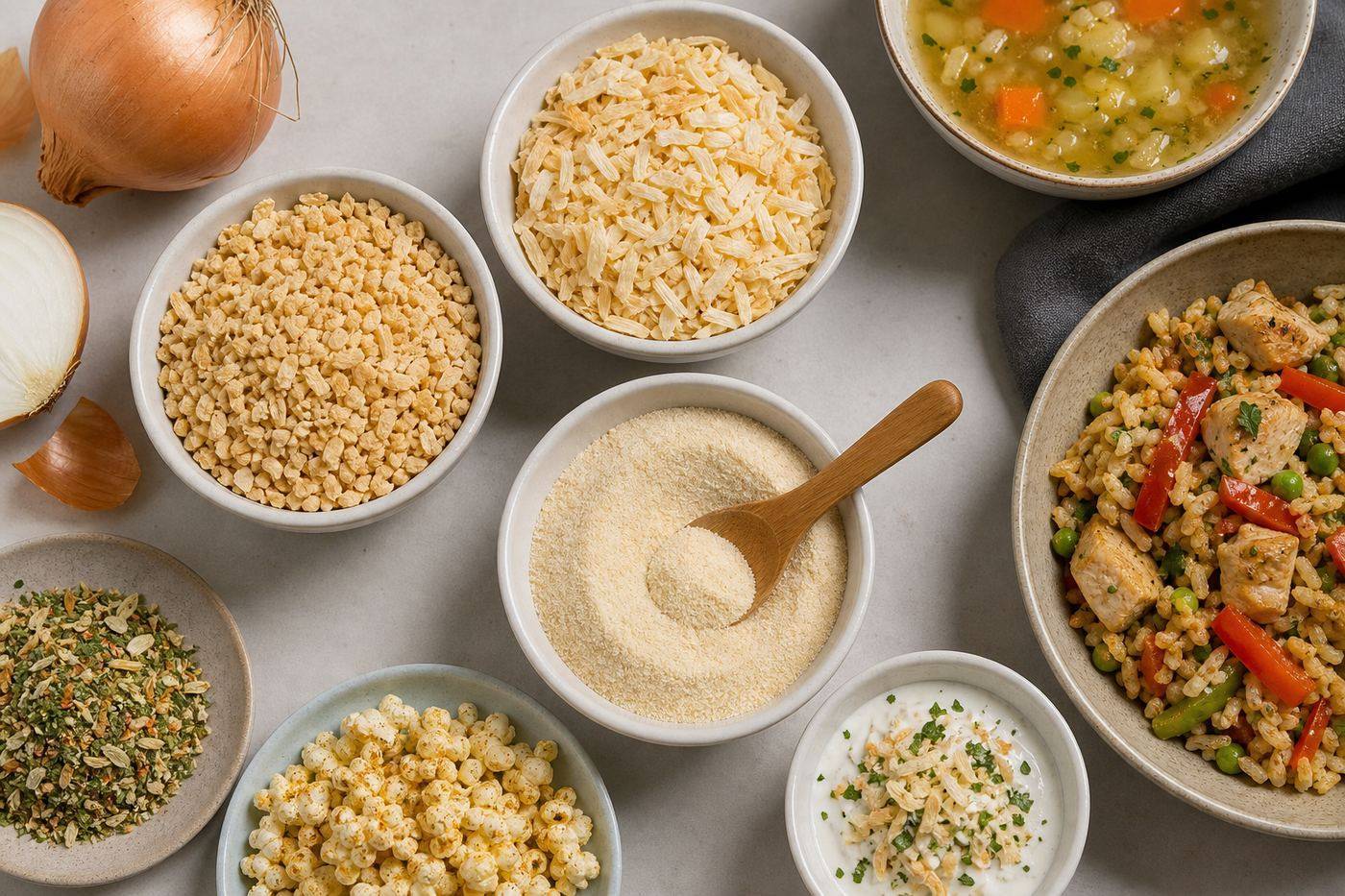
Dehydrated onion is not a single product — it is a family of cuts and formats, each suited to different industrial and retail applications, and each carrying a distinct price band. Exporters who present a full product-category menu with matched specifications close more buyer conversations than those quoting a single generic 'dehydrated onion' line.
| Product Variant | Typical Application | Indicative FOB Range (USD/kg) | Buyer Base |
|---|---|---|---|
| Onion flakes | Soups, sauces, seasoning blends, rehydration applications | $1.80–3.20 | Food manufacturers, foodservice distributors |
| Kibbled onion | Snack seasoning, ready-meal manufacturing, bouillon | $1.70–3.00 | Food manufacturers, spice blenders |
| Onion powder | Spice blends, dry seasonings, snack coatings, ready-mix | $2.20–4.00 | Spice blenders, retail packers, food manufacturers |
| Minced/granules | Instant noodle seasoning, dry mixes, rubs | $1.90–3.10 | Foodservice, instant food manufacturers |
| Fried onion | Garnish, snack topping, ready-meal inclusion | $3.50–6.50 | Retail packers, foodservice, garnish/topping buyers |
| Organic (any cut) | Clean-label and organic-certified food manufacturing | +25–50% over conventional equivalent | Organic food brands, premium retail, EU/USA/UK buyers |
Manufacturing Overview
Dehydrated onion manufacturing begins with fresh onion procurement, grading, peeling, and slicing/dicing according to the target cut (flakes, kibbled, or granule size), followed by controlled hot-air dehydration to bring moisture down to export specification — typically 5–8% for shelf-stable export grades. Flakes and kibbled onion are dried and screened for size; powder and granules undergo an additional milling and sieving stage; fried onion involves a further oil-frying and de-oiling step; and organic lines require segregated processing lines and documented chain-of-custody from NPOP-certified farms through drying and packing.
Quality control at the manufacturing stage covers moisture testing (via moisture analyser), microbiological testing (total plate count, yeast and mould, Salmonella, E. coli), foreign matter and extraneous vegetable matter screening, colour and pungency consistency, and metal detection before final packing. Export-ready dehydrators maintain in-house or contracted lab testing and retain batch-level Certificates of Analysis (COA) for every lot, which buyers should request as a standard part of due diligence.
| Manufacturing Stage | Key Control Point | Why It Matters to Buyers |
|---|---|---|
| Fresh onion grading | Size, pungency, disease/damage screening | Determines base quality and yield of finished dehydrated product |
| Peeling and cutting | Cut size and uniformity | Affects rehydration behaviour and buyer application fit |
| Dehydration (hot-air drying) | Moisture reduction to 5–8% | Directly controls shelf stability and microbial risk |
| Milling and sieving (powder/granules) | Particle size consistency | Determines blend performance in spice mixes and dry seasonings |
| Frying (fried onion) | Oil quality, colour, crispness, de-oiling | Determines shelf life and sensory quality of finished product |
| Metal detection and sieving | Foreign matter removal | Food-safety compliance requirement for all destination markets |
| Lab testing and COA issuance | Moisture, microbiology, foreign matter | Buyer due diligence and customs/import documentation support |
Pricing Analysis
Dehydrated onion pricing is driven by cut/format, moisture and quality grade, certification level (conventional versus organic), packaging format, and prevailing fresh-onion feedstock cost, which fluctuates seasonally. FOB pricing from Gujarat ports (Mundra, Pipavav) or Nhava Sheva is the standard international quoting basis; buyers should always request landed-cost comparisons (FOB plus freight, insurance, and destination duty) rather than comparing FOB figures across suppliers in isolation.
Organic-certified dehydrated onion commands a 25–50% premium over conventional equivalent grades, reflecting NPOP-certified farm sourcing, segregated processing, and the additional documentation (organic transaction certificates) required at each shipment. Fried onion is the highest per-kilogram value product in the category due to the additional processing step and oil cost, while flakes and kibbled onion remain the highest-volume, most price-competitive segment.
| Grade / Format | FOB Price Range (USD/kg) | Key Price Drivers |
|---|---|---|
| Standard flakes (conventional) | $1.80–3.20 | Feedstock cost, moisture spec, mesh size, order volume |
| Standard kibbled (conventional) | $1.70–3.00 | Feedstock cost, particle size consistency, volume |
| Onion powder (conventional) | $2.20–4.00 | Milling grade, moisture, packaging format |
| Fried onion | $3.50–6.50 | Oil cost, frying process, colour/crispness consistency |
| Organic (any format) | +25–50% premium | NPOP certification, segregated lines, transaction certificates |
MOQ Analysis
Minimum order quantity for dehydrated onion scales with buyer type and trial-versus-programme stage. Trial orders from new buyers — particularly for organic, fried, or premium retail-format onion — often start at 0.5–2 MT, while established industrial and foodservice buyers typically commit to full-container programmes once quality is verified.
| Buyer Type | Typical Trial MOQ | Programme MOQ | Notes |
|---|---|---|---|
| New retail/specialty buyer | 0.5–1 MT | Carton/pallet-based reorder | Often small-format packaging with label compliance needs |
| Spice blender / foodservice distributor | 1–5 MT LCL | 1 FCL (10–14 MT 20ft) per cycle | Consistent cut and moisture spec critical for blend performance |
| Food manufacturer (industrial) | 2–5 MT trial | 1–2 FCL (20–26 MT per 40ft) per cycle | Long-term contracts common once quality is validated |
| Organic programme buyer | 0.5–2 MT trial | FCL scale on repeat, subject to certified supply availability | Organic transaction certificate required per shipment |
| Merchant exporter consolidated order | Flexible, multi-buyer consolidation | FCL/LCL blend | Useful for buyers below single-supplier MOQ thresholds |
Packaging Standards
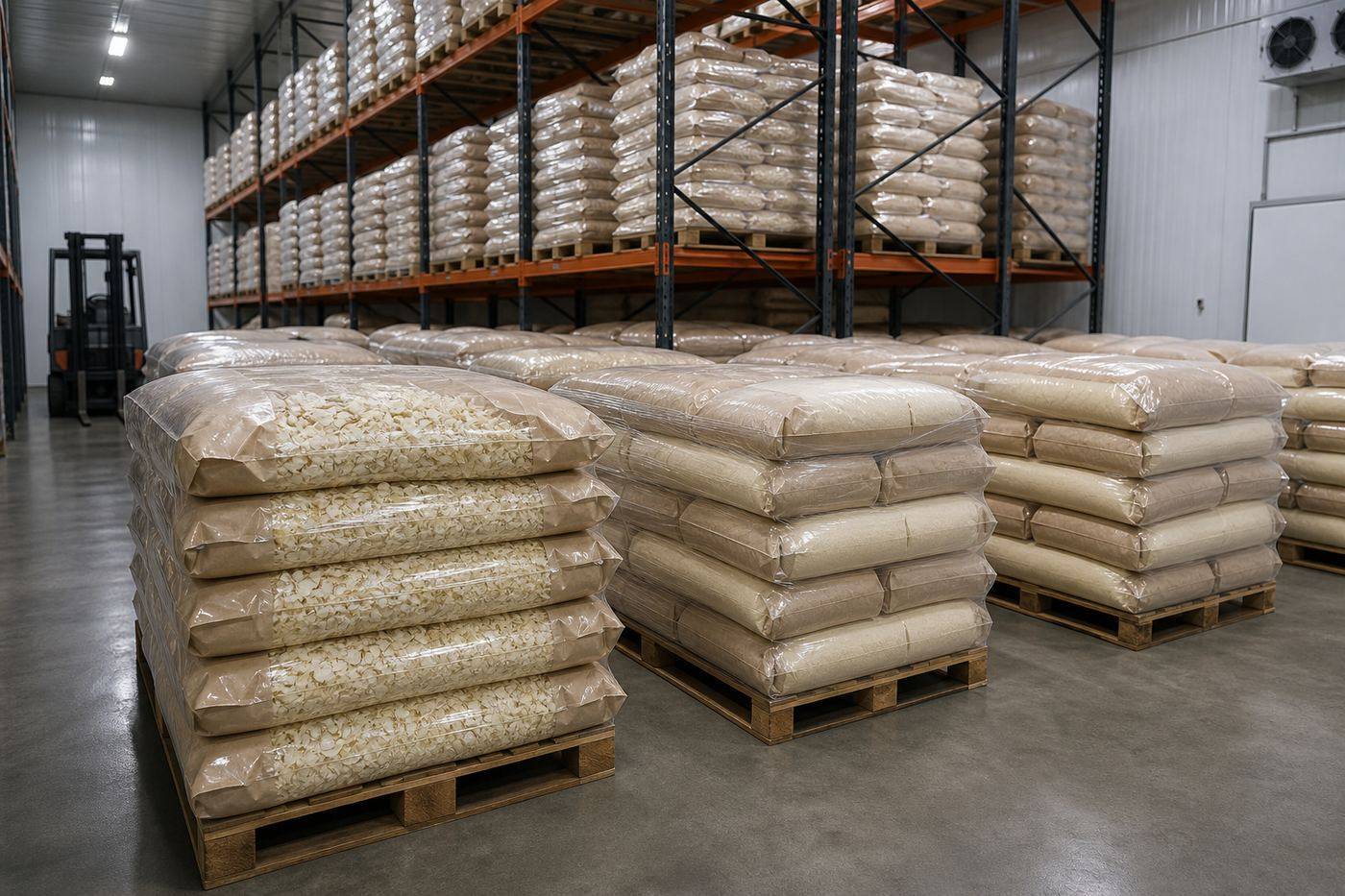
Bulk dehydrated onion is predominantly packed in multi-wall kraft paper bags with a polyethylene (PE) liner, typically in 14–25 kg net weight formats, palletised or floor-loaded depending on container type and destination handling practice. PE-lined kraft bags protect against moisture ingress during transit while remaining cost-effective for high-volume bulk shipment; some buyers specify vacuum-sealed inner liners for extended shelf life or high-humidity transit routes.
Bulk bags (jumbo bags, typically 500–1,000 kg) are used for very large industrial buyers with their own repacking infrastructure, reducing per-unit packaging cost for high-volume programmes. Retail and foodservice-ready formats — smaller pouches, cartons, or branded retail packs — require additional label compliance work (net weight in destination units, country-of-origin declaration, allergen and nutritional information where applicable) and should be scoped early in the quotation process, not after production.
| Packaging Format | Typical Net Weight | Best Suited For | Key Consideration |
|---|---|---|---|
| Multi-wall kraft/PE-lined bags | 14–25 kg | Standard bulk industrial and foodservice shipment | Moisture barrier quality directly affects shelf life in transit |
| Bulk/jumbo bags | 500–1,000 kg | Large industrial buyers with in-house repacking | Reduces per-unit packaging cost; confirm buyer handling capability |
| Vacuum-sealed inner liner + outer bag | 14–25 kg | High-humidity transit routes, extended shelf-life needs | Adds cost but reduces spoilage risk on long transit lanes |
| Retail pouches/cartons | Varies by market (typically 50g–1kg retail units) | Retail private label, specialty and organic retail | Requires destination-specific label compliance and artwork lead time |
Container Loading Details
Container loading capacity for dehydrated onion depends on packaging format, bag size, and whether cargo is palletised or floor-loaded. As a general planning benchmark, a standard 20ft container carries approximately 10–14 MT of bagged dehydrated onion, while a 40ft container carries approximately 20–26 MT, with the exact figure depending on cut density (powder and granules load more densely than flakes), bag size, and palletisation versus floor-loading.
Floor-loading (without pallets) generally maximises tonnage per container but increases loading/unloading labour and time at both origin and destination; palletised loading is preferred by buyers with forklift-equipped warehouses and simplifies quality inspection and partial-lot handling. Confirm palletisation requirements, container type (standard dry container is typical; reefer is rarely required for properly dehydrated onion at correct moisture spec), and any destination port handling constraints before finalising the loading plan.
| Container Type | Approx. Capacity (Bagged Dehydrated Onion) | Loading Note |
|---|---|---|
| 20ft standard dry container | 10–14 MT | Common for trial/mid-size orders and denser cuts (powder, granules) |
| 40ft standard dry container | 20–26 MT | Preferred for programme-scale industrial and foodservice orders |
| Palletised loading | Slightly lower tonnage than floor-loading | Faster inspection and handling; preferred by warehouse-equipped buyers |
| Floor-loaded (non-palletised) | Maximises tonnage within capacity range | Longer loading/unloading time; common for price-sensitive bulk buyers |
Shipping Methods
Sea freight is the standard shipping method for dehydrated onion exports from India, given the category's shelf stability and cost sensitivity relative to air freight. Exports load primarily from Mundra and Pipavav (both serving Gujarat's dehydration clusters directly) and Nhava Sheva/JNPT (serving Ahmedabad-area processors and buyers requiring Mumbai-region routing). FOB, CIF, and CFR are all commonly used Incoterms, with FOB most common for buyers managing their own freight relationships and CIF/CFR used where buyers prefer a landed-price quotation inclusive of freight.
Typical production-to-delivery lead time for a confirmed order runs approximately 15–30 days, covering production/packing (where not from ready stock), pre-shipment inspection and documentation, and ocean transit to destination — transit time itself varying by lane, from under two weeks to the Gulf and Southeast Asia to four-plus weeks for the Americas and parts of Europe depending on routing and transshipment. Air freight is occasionally used for urgent small-quantity samples or high-value organic/retail programmes but is not standard for bulk commercial shipment given the category's cost-per-kilogram economics.
| Shipping Element | Standard Practice | Buyer/Exporter Note |
|---|---|---|
| Primary mode | Sea freight (FCL/LCL) | Air freight reserved for samples or urgent small lots |
| Primary load ports | Mundra, Pipavav, Nhava Sheva (JNPT) | Port choice depends on processing cluster and buyer routing preference |
| Common Incoterms | FOB, CIF, CFR | Confirm Incoterm and responsible party for insurance at quotation stage |
| Typical lead time (order to shipment) | 15–30 days | Longer during peak feedstock/production season or certification-heavy orders |
| Documentation lead time | 3–5 days before vessel cutoff for document finalisation | Pre-alert buyer's customs broker with draft documents early |
Certifications
Certification is the primary lever separating exporters who can serve only commodity spot markets from those who can access premium retail, foodservice-brand, and organic channels. FSSAI licensing and APEDA registration are baseline requirements for legal export of dehydrated onion from India. HACCP and ISO 22000 demonstrate food-safety management system maturity and are increasingly requested by European, UK, and North American food-manufacturer buyers as a pre-qualification condition. Halal certification is essential for UAE, wider Gulf, and Southeast Asian markets with Muslim-majority consumer bases or halal-supply-chain requirements; Kosher certification opens USA and EU kosher-certified food-manufacturer programmes. NPOP-based organic certification, extended where needed to USDA NOP or EU Organic equivalence, unlocks the organic price premium in USA, EU, and UK channels.
Buyers should verify certification authenticity independently — checking FSSAI licence status on the FoSCoS portal, APEDA registration on the APEDA portal, and third-party certification (HACCP, ISO 22000, Halal, Kosher, Organic) validity directly with the issuing/certifying body rather than relying solely on a supplier-provided certificate copy.
| Certification | Purpose | Primary Markets Requiring / Rewarding It |
|---|---|---|
| FSSAI licence | Mandatory Indian food-safety licence for processing and export | Baseline for all markets |
| APEDA registration (RCMC) | Export eligibility for scheduled agricultural products | Baseline for all markets |
| HACCP | Hazard Analysis and Critical Control Points food-safety system | USA, EU, UK food-manufacturer buyers |
| ISO 22000 | Food safety management system standard | EU, UK, and larger industrial buyers globally |
| Halal | Compliance with Islamic dietary law across supply chain | UAE, wider Gulf, Southeast Asia (Indonesia) |
| Kosher | Compliance with Jewish dietary law | USA and EU kosher-certified food-manufacturer programmes |
| NPOP / USDA NOP / EU Organic | Organic production and chain-of-custody certification | USA, EU, UK organic and clean-label channels |
Buyer Requirements
While specifications vary by destination and application, most international dehydrated onion buyers converge on a common core requirement set before committing to a supplier relationship: moisture specification compliance (typically 5–8%, with tighter tolerance often requested for powder and granule formats), a full microbiological panel (total plate count, yeast and mould, Salmonella, E. coli — and increasingly Listeria for certain retail-facing programmes), consistent particle size/mesh grading, absence of foreign matter and extraneous vegetable material, and complete export documentation including COA, phytosanitary certificate where required, and certificate of origin.
Beyond product specification, buyers increasingly evaluate suppliers on responsiveness, consistency across repeat lots, transparency about feedstock sourcing and processing facility standards, and willingness to support pre-shipment inspection or third-party audit. Exporters who proactively share lab reports, facility certifications, and prior export references close buyer evaluation cycles faster than those who respond only to explicit requests.
| Requirement Category | Typical Buyer Expectation | Exporter Preparation |
|---|---|---|
| Moisture specification | 5–8%, tighter for powder/granule formats | Test every lot with calibrated moisture analyser |
| Microbiological panel | TPC, yeast/mould, Salmonella, E. coli (Listeria for some retail buyers) | Use accredited lab; retain COA per lot |
| Particle/mesh consistency | Uniform cut size matched to declared grade | Screen and grade before packing; avoid mixed-lot shipment |
| Foreign matter tolerance | Effectively zero for extraneous vegetable/foreign matter | Metal detection and visual/mechanical screening before packing |
| Documentation completeness | COA, phytosanitary certificate (where required), certificate of origin | Prepare document set before vessel booking, not after |
Country-wise Opportunities
The following nine markets represent the strongest practical destinations for Indian dehydrated onion exporters in 2026. Each profile is a decision brief — validate current duty rates and import statistics with your customs broker and destination-side trade data before committing certification investment or production capacity.
1. United States
The USA is among the largest and most diversified importers of dehydrated onion globally, driven by a deep food-manufacturing base, foodservice supply chains, and growing demand for certified and organic ingredient lines.
- Duty treatment
- MFN duties typically about 29.8% (powder/flour, HTS 0712.20.20) or about 20–21.3% (other dried onion, HTS 0712.20.40); India is generally not preferential-free — verify current USITC HTS before quoting
- Preferred formats
- Flakes, kibbled, powder, and organic grades for food manufacturing and retail private label
- Certification priorities
- FSSAI, APEDA, HACCP, Kosher (for many food-manufacturer programmes), USDA NOP-aligned organic for organic claims
- Packaging convention
- 20–25 kg multi-wall kraft/PE bags for bulk; retail-ready formats for private-label programmes
- Channels
- Ingredient distributors, food manufacturers, spice packers, organic/natural retail buyers
- Entry difficulty
- Medium — strong documentation and consistency expectations, but accessible with proper certification
- Strategy
- Lead with HACCP-backed quality documentation and consistent lot-to-lot specifications; build with established ingredient distributors before targeting retail private label directly.
2. Germany
Germany is the EU's largest single market for dehydrated onion and functions as a distribution and re-export hub for wider European demand.
- Duty treatment
- EU common external tariff applies — approximately 12.8% ad valorem on dried vegetables under the relevant tariff heading; verify current rate and any preferential-origin pathway
- Preferred formats
- Flakes, kibbled, and organic multi-grade for food manufacturing
- Certification priorities
- ISO 22000, HACCP, EU Organic/NPOP-equivalence for organic claims, full traceability documentation
- Packaging convention
- 20–25 kg kraft/PE bags; strict labelling and traceability documentation for EU market
- Channels
- Ingredient importers/distributors, food manufacturers, EU-wide wholesale networks
- Entry difficulty
- High — EU compliance and documentation bar is the strictest in this guide
- Strategy
- Do not approach German buyers without ISO 22000 or equivalent food-safety certification and a clean microbiological track record; German buyers often serve as a gateway to wider EU distribution once qualified.
3. Brazil
Brazil is one of the largest volume markets for Indian dehydrated onion, driven by foodservice, snack seasoning, and food-manufacturing demand at scale.
- Duty treatment
- Mercosur common external tariff applies to most food ingredient imports — confirm current rate and any applicable preferential arrangement with a Brazilian customs broker
- Preferred formats
- Standard flakes and kibbled onion in bulk for industrial and foodservice use
- Certification priorities
- FSSAI, APEDA, basic HACCP; organic and premium certification less critical for bulk volume trade
- Packaging convention
- 20–25 kg kraft/PE bags; bulk bags for very large industrial buyers
- Channels
- Food manufacturers, foodservice distributors, ingredient importers
- Entry difficulty
- Low–medium — price and logistics competitiveness matter more than certification depth for bulk volume
- Strategy
- Compete on landed-cost efficiency and consistent bulk supply; freight cost management from Indian ports to Brazil is a key competitiveness factor.
4. Indonesia
Indonesia is a large and growing market for dehydrated onion, driven by instant noodle, snack seasoning, and broader foodservice demand across Southeast Asia's most populous economy.
- Duty treatment
- ASEAN-India trade agreement provisions may offer preferential access for qualifying goods — verify current tariff schedule and rules-of-origin requirements
- Preferred formats
- Flakes, kibbled, and powder for foodservice and packaged-snack seasoning applications
- Certification priorities
- Halal certification is important given Indonesia's Muslim-majority consumer base; FSSAI and APEDA baseline
- Packaging convention
- 20–25 kg bags; smaller repack formats for domestic Indonesian distribution
- Channels
- Foodservice distributors, snack and instant-food manufacturers, ingredient importers
- Entry difficulty
- Low–medium — Halal certification is the main gating requirement beyond standard baseline compliance
- Strategy
- Secure Halal certification early; Indonesia rewards consistent bulk supply with competitive freight economics via India-Southeast Asia sea lanes.
5. United Kingdom
The UK maintains its own post-Brexit import regime with strong demand from food manufacturing and retail private-label channels.
- Duty treatment
- UK Global Tariff applies independently of EU rates post-Brexit — verify current UK tariff schedule for dried vegetables, as it may differ from the EU rate
- Preferred formats
- Flakes, kibbled, powder, and organic grades for food manufacturing and retail
- Certification priorities
- HACCP, BRC/ISO 22000-aligned food-safety systems, organic certification for premium retail
- Packaging convention
- 20–25 kg bags for bulk; retail-ready formats for private-label programmes
- Channels
- Ingredient distributors, food manufacturers, retail private-label buyers
- Entry difficulty
- Medium-high — documentation discipline expected, comparable to EU buyers
- Strategy
- Develop UK-specific labelling compliance and food-safety documentation; the UK rewards certified, consistent mid-volume programmes well.
6. Netherlands
The Netherlands functions as a major EU distribution and repacking hub, with Rotterdam's logistics infrastructure supporting efficient onward distribution across the wider EU market.
- Duty treatment
- EU common external tariff (approx. 12.8% on dried vegetables) applies, as for other EU destinations
- Preferred formats
- Bulk flakes and kibbled onion for repacking and distribution; organic grades for premium channels
- Certification priorities
- ISO 22000, HACCP, EU Organic/NPOP-equivalence documentation
- Packaging convention
- 20–25 kg bags and bulk bags for large-volume distributor buyers
- Channels
- Ingredient importers/distributors, EU-wide wholesale networks, food manufacturers
- Entry difficulty
- High — similar compliance bar to Germany, with the advantage of strong port logistics
- Strategy
- Position for distributor partnerships that serve multiple EU markets from one Dutch import relationship; Rotterdam's infrastructure makes it a logical EU consolidation point.
7. United Arab Emirates
The UAE is a fast-growing Gulf market for dehydrated onion, driven by hospitality, foodservice, and its function as a re-export hub into the wider Gulf and East Africa corridor.
- Duty treatment
- GCC/UAE tariff treatment for dried vegetables is often 0% or 5% depending on the exact line — verify with a UAE customs broker; do not assume a flat 5%
- Preferred formats
- Flakes, kibbled, powder, and fried onion for foodservice and hospitality use
- Certification priorities
- Halal certification is essential; FSSAI and APEDA baseline; ISO 22000 valued by larger hospitality-supply buyers
- Packaging convention
- 14–25 kg bags common for foodservice repacking; smaller formats for retail/hospitality kitchens
- Channels
- Foodservice and hospitality distributors, re-export traders, retail importers
- Entry difficulty
- Low — faster buyer decision cycles than EU markets, with a lower certification bar beyond Halal
- Strategy
- Excellent first-entry or parallel market alongside USA/EU outreach; combine UAE with wider Gulf outreach once the relationship is established.
8. Belgium
Belgium serves as a secondary EU distribution hub alongside the Netherlands, with strong food-manufacturing and ingredient-trading infrastructure centred around Antwerp.
- Duty treatment
- EU common external tariff (approx. 12.8% on dried vegetables) applies
- Preferred formats
- Bulk flakes, kibbled, and powder for food manufacturing and ingredient distribution
- Certification priorities
- ISO 22000, HACCP, EU Organic/NPOP-equivalence for organic lines
- Packaging convention
- 20–25 kg bags for bulk shipment
- Channels
- Ingredient distributors, food manufacturers, EU wholesale networks
- Entry difficulty
- High — comparable compliance expectations to Germany and the Netherlands
- Strategy
- Approach alongside a Netherlands or Germany entry strategy; Belgium's Antwerp logistics complement Rotterdam for EU-wide coverage.
9. Russia
Russia remains a substantial volume market for Indian dehydrated onion, with demand driven by food manufacturing and foodservice, though logistics routing and payment mechanisms require careful current verification.
- Duty treatment
- Confirm current tariff and any preferential treatment with a Russia-experienced customs broker, as trade terms and logistics routing have shifted in recent years
- Preferred formats
- Standard flakes and kibbled onion in bulk for food manufacturing and foodservice
- Certification priorities
- FSSAI, APEDA baseline; confirm any additional destination-specific import documentation requirements
- Packaging convention
- 20–25 kg bags for bulk shipment
- Channels
- Food manufacturers, foodservice distributors, ingredient importers
- Entry difficulty
- Medium — logistics routing and payment mechanism complexity require upfront diligence
- Strategy
- Confirm current logistics routing, payment channel, and documentation requirements with a Russia-experienced trade advisor before quoting; volume opportunity remains significant for verified programmes.
Country Comparison Scorecard
Use this directional scorecard as a first filter — then overlay the demand-by-cut preferences and the consuming-industry / example-company maps in the following sections before locking a market plan. Scores are relative guidance for typical Indian dehydrated onion exporters in 2026 — validate against your specific grade mix, certification level, and current production capacity.
| Country | Market Size | Duty Burden | Certification Bar | Avg Order Size | Entry Difficulty | Opportunity Score |
|---|---|---|---|---|---|---|
| USA | Very High | High (~20–30% MFN) | Medium-High | Medium-High | Medium | 9/10 |
| Germany | High | ~12.8% | Very High | Medium-High | High | 8/10 |
| Brazil | Very High | Mercosur tariff (verify) | Low-Medium | High (bulk) | Low-Medium | 8.5/10 |
| Indonesia | High | Preferential (verify) | Medium (Halal) | High (bulk) | Low-Medium | 8.5/10 |
| UK | High | UK Global Tariff (verify) | High | Medium | Medium-High | 7.5/10 |
| Netherlands | High | ~12.8% | Very High | High (bulk) | High | 8/10 |
| UAE | Medium-High | Often 0–5% (verify line) | Medium (Halal) | Medium | Low | 8.5/10 |
| Belgium | Medium-High | ~12.8% | Very High | Medium-High | High | 7/10 |
| Russia | High | Verify current | Low-Medium | High (bulk) | Medium | 7/10 |
Demand by Country — Cuts, Moisture, and Channels
Market selection is incomplete without knowing *what* each country buys. The table below consolidates demand preferences formerly covered in a separate "most demanded by country" guide — use it with the scorecard above so you do not ship one generic cut to every destination.
| Market | Most demanded cuts | Typical moisture / spec focus | Primary channels |
|---|---|---|---|
| USA | Powder, flakes | Mesh consistency; micro + residue panels | Seasoning brands, CPG, foodservice distributors |
| Germany / EU | Flakes, kibbled | MRL + micro documentation depth | Food manufacturers, private label, organic |
| Brazil | Flakes, kibbled (bulk) | Rehydration performance; FCL economics | Meat/seasoning processors, industrial blenders |
| Indonesia | Flakes, kibbled, powder | Moisture for tropical storage; Halal often | Instant noodle & snack plants |
| UK / NL / BE | Flakes, kibbled, powder | Retail/foodservice specs; EU-style docs | Private label, traders, redistributors |
| UAE / Gulf | Flakes, fried onion, powder | Halal; heat-stable packaging | Manufacturers, HORECA importers |
| Japan | Fine powder, high-spec flakes | Tightest residue / micro expectations | Seasoning makers, trading houses |
Industries Consuming Dehydrated Onion
Dehydrated onion is an industrial ingredient, not a consumer end-product for most export volume. Approach companies in these consuming industries — not generic "importers" directories — when building a market plan.
| Consuming industry | Why they buy dried onion | Cuts they typically specify |
|---|---|---|
| Instant noodles & snack seasoning | Flavour bases and toppings at scale | Flakes, kibbled, powder |
| Soup, sauce & ready meals | Shelf-stable onion without fresh prep | Flakes, kibbled |
| Spice blends & seasoning houses | Dry mixes, rubs, private-label jars | Powder, granules |
| Meat processing & marinades | Brines, sausages, coated proteins | Powder, minced |
| Foodservice & QSR supply | Kitchen packs and catering lines | Fried onion, flakes |
| Retail private label | Branded jars/pouches needing COAs | Flakes, powder, organic |
| Frozen foods & savoury bakery | Fillings and frozen meal components | Flakes, powder |
Example Companies to Approach by Market
The companies below are public examples of the *types* of organisations that procure dehydrated onion or adjacent dried-vegetable ingredients. They are illustrative targets for outreach research — not a claim that they currently buy from Altus Exports. Use them to understand buyer personas, then verify active HS 071220 importers via trade data before sampling.
- Research tip
- Confirm current import activity under HS 071220 before free samples
- Disclaimer
- Names illustrate buyer types — verify independently
| Market | Example organisations (buyer types) | How to approach |
|---|---|---|
| USA | McCormick; Kraft Heinz; General Mills; Sysco; US Foods; McCain (US) | Ingredient / seasoning procurement; lead with mesh, moisture, COA + landed cost incl. duty |
| Germany / EU | Nestlé EU plants; Unilever Foods; Dr. Oetker; Metro AG foodservice | Anuga/Fi Europe + MRL-ready sample packs |
| Brazil | BRF; JBS / Seara ecosystem; São Paulo seasoning blenders | Bulk FCL economics; Portuguese-ready specs |
| Indonesia | Indofood; Wings Group; Mayora; Jakarta seasoning tollers | Noodle/snack plants; Halal + moisture control |
| UK / Benelux | Premier Foods; ABF food businesses; private-label partners; Rotterdam/Antwerp traders | Clarify end-user vs redistributor before sampling |
| UAE / Gulf | IFFCO; Americana; Al Ain ecosystem; Gulfood importers | Halal-first; Gulfood meetings; Jebel Ali logistics |
| Japan | Ajinomoto ecosystem; Kikkoman-adjacent seasoning chains; sogo shosha | Long qualification; premium only with exemplary panels |
Duty and Tariff Snapshot by Destination
Duty rates and preferential-origin arrangements change; the table below is a directional 2026 snapshot for planning purposes only. Always confirm current rates with a licensed customs broker in the destination country before finalising a quotation, since trade-remedy measures, preferential trade agreements, and tariff-line reclassification can shift the applicable rate materially.
| Country/Bloc | Indicative Duty Treatment | Preferential Pathway to Check |
|---|---|---|
| USA | MFN about 29.8% powder/flour (0712.20.20) or about 20–21.3% other dried onion (0712.20.40); India generally not preferential-free | Confirm exact 10-digit HTS with a US customs broker before quoting |
| European Union (incl. Germany, Netherlands, Belgium) | Approximately 12.8% ad valorem common external tariff on dried onions (CN 0712.20) | Check any applicable preferential pathway and rules of origin |
| United Kingdom | UK Global Tariff — verify current independent rate post-Brexit | Confirm UK-specific tariff schedule; may differ from EU rate |
| UAE (GCC) | Often 0% or 5% depending on exact GCC tariff line — verify; do not assume a flat 5% | Confirm free-zone re-export provisions if applicable |
| Brazil (Mercosur) | Mercosur common external tariff applies to most food ingredient imports — verify current rate | Confirm current rate and any bilateral arrangement |
| Indonesia | ASEAN-India trade agreement may offer preferential access for qualifying goods | Verify rules-of-origin compliance and certificate of origin requirements |
| Russia | Confirm current tariff and logistics/payment routing | Consult a Russia-experienced trade advisor given evolving trade terms |
Sourcing Checklist
Checklist
For exporters building or expanding a dehydrated onion supply base — and for buyers evaluating Indian suppliers — this checklist covers the operational fundamentals that separate export-ready processing units from unverified operators.
- Confirm processing cluster and facility location (Mahuva, Bhavnagar, Sihor, Ahmedabad, or other) and align with feedstock sourcing claims
- Verify FSSAI licence status on the FoSCoS portal and APEDA registration/RCMC on the APEDA portal
- Request six months of lot-level moisture and microbiological test records from an accredited laboratory
- Confirm in-house or contracted lab testing capability — moisture analyser, microbiological panel access, metal detection
- Verify HACCP, ISO 22000, Halal, Kosher, or Organic certification validity directly with the issuing/certifying body
- Request prior export documentation (redacted commercial invoices, bills of lading, phytosanitary certificates) as evidence of export track record
- Confirm packaging capability — kraft/PE bag formats, bulk bags, or retail-ready pouches matching your specification
- Assess production capacity against your MOQ and container programme requirements before committing to a supplier relationship
Buyer Checklist
Checklist
Before placing a first purchase order for Indian dehydrated onion, buyers should complete this pre-commitment checklist to reduce first-shipment quality and compliance risk.
- Define specification completely: cut/format, moisture threshold, microbiological limits, mesh/particle size, certification requirements, and packaging format
- Shortlist suppliers using APEDA registered exporter directories, trade fair exhibitor lists, and referrals — verify before any deposit
- Request samples accompanied by lot-level lab reports, not samples alone
- Independently retest samples at a destination-country-accredited lab for high-value or first-time programmes
- Confirm Incoterm, payment milestones, and pre-shipment inspection rights in writing before production begins
- Verify destination duty treatment and any preferential-origin documentation requirements before finalising landed-cost economics
- Align packaging and labelling requirements (including destination-specific compliance) before production, not after
- Confirm the supplier's export documentation capability — COA, phytosanitary certificate, certificate of origin — matches your import broker's requirements
Exporter Checklist
Checklist
Exporters preparing to enter a new destination market should work through this readiness checklist before their first quotation to a buyer in that market.
- Confirm current duty and tariff treatment for the target destination with a licensed customs broker
- Map required certifications for the target market (baseline FSSAI/APEDA plus HACCP, ISO 22000, Halal, Kosher, or Organic as relevant) and confirm current validity
- Align packaging format and net-weight convention to destination market norms before quoting
- Prepare a sample kit with full lab documentation (COA, moisture, microbiological panel) rather than sending unlabelled samples
- Confirm container loading plan (20ft vs 40ft, palletised vs floor-loaded) and realistic lead time for the target order size
- Build a document template set (commercial invoice, packing list, COA, phytosanitary certificate, certificate of origin) specific to the destination's customs requirements
- Identify the correct buyer channel (ingredient distributor, food manufacturer, foodservice distributor, or retail packer) for your grade mix before outreach
Compliance Checklist
Checklist
Legal and regulatory compliance is non-negotiable for dehydrated onion exports from India. This checklist covers the baseline compliance layer that applies regardless of destination market.
- IEC (Import Export Code) registered and current with DGFT
- FSSAI licence active and covering the specific processing facility and export operations
- APEDA registration (RCMC) active for dehydrated vegetable exports
- GST registration and compliance for domestic transactions supporting the export supply chain
- Phytosanitary certificate arranged where required by destination market regulations
- Certificate of origin prepared correctly for any preferential trade agreement claims
- Lot-level Certificate of Analysis (COA) issued from an accredited laboratory for every shipment
- Third-party certifications (HACCP, ISO 22000, Halal, Kosher, Organic) current and independently verifiable by the buyer
Common Buyer Mistakes
Common Mistakes Box
Buyers new to sourcing dehydrated onion from India repeat a predictable set of mistakes that increase first-shipment risk and cost. Recognising these patterns in advance is the fastest way to avoid them.
| Common Mistake | Consequence | How to Avoid It |
|---|---|---|
| Comparing FOB prices without landed-cost context | Selecting a supplier who appears cheaper but costs more after freight, duty, and quality risk | Always build a full landed-cost comparison including freight, insurance, and duty |
| Skipping independent lab verification on samples | Bulk lot quality diverges materially from the approved sample | Independently retest a representative sample at an accredited lab before committing to volume |
| Accepting certificates without independent verification | Risk of relying on outdated or invalid certification claims | Verify FSSAI, APEDA, and third-party certifications directly with issuing bodies |
| Underspecifying moisture and microbiological limits in the RFQ | Ambiguous specifications lead to disputes over acceptable quality on arrival | Document precise moisture, microbiological, and particle-size specifications in writing |
| Paying 100% advance to an unverified new supplier | Limited recourse if the shipment fails to meet specification or ships late | Use milestone-based payment terms (advance plus balance against shipping documents) for new relationships |
| Ignoring seasonal feedstock pricing dynamics | Unexpectedly higher pricing or longer lead times when ordering off-cycle | Plan procurement calendars around Indian onion harvest seasonality |
| Overlooking destination-specific labelling and packaging rules | Customs delays or rejected shipments due to non-compliant packaging/labelling | Confirm destination labelling requirements before production, not after |
Future Market Trends
Global demand for dehydrated onion is expected to keep growing through 2030, driven by continued food-manufacturing reliance on shelf-stable, flavour-consistent ingredients, rising demand for clean-label and organic-certified ingredient lines, and the ongoing diversification of global food-ingredient sourcing away from single-origin dependence — a trend that favours India as a scaled, increasingly certified alternative supply base.
Within India, expect continued modernisation of Gujarat's dehydration clusters — including investment in more consistent drying technology, expanded organic-certified processing capacity, and growing adoption of digital traceability tools that let buyers verify lot-to-farm chain-of-custody. Value-added formats (powder, granules, fried onion, and organic grades) are likely to grow faster than commodity flakes and kibbled onion, rewarding exporters who invest in milling, frying, and certification infrastructure now rather than waiting for buyer demand to force the transition.
Regulatory trends — including the EU's continued tightening of food-safety and traceability requirements, evolving UK import regulations post-Brexit, and growing Halal-certification expectations across Gulf and Southeast Asian markets — will keep raising the compliance bar. Exporters who build robust certification and documentation infrastructure today will face fewer disruptions as these requirements tighten further.
Expert Insights
Perspective from Altus Exports on market selection and country-entry sequencing for dehydrated onion exporters.
- Sequence market entry deliberately: build volume and consistency credibility in an accessible market (UAE, Indonesia, or Brazil) before investing in the EU or USA's higher compliance bar.
- Treat certification as a market-access investment with a measurable payback — organic certification typically pays back fastest in USA, EU, and UK channels where the price premium is largest.
- Reconfirm duty rates and any trade-remedy measures before every significant quotation cycle — tariff treatment for agricultural imports shifts more often than exporters expect.
Conclusion
The best countries to export Indian dehydrated onion to in 2026 depend on your grade mix, certification readiness, and container capacity — but the practical priority list is clear: the USA for scale across both conventional and organic-certified programmes; Germany and the Netherlands as the EU entry gateway once ISO 22000-level compliance is in place; Brazil and Indonesia for high-volume bulk flakes and kibbled onion with a lower certification bar; the UK for certified mid-volume programmes; Belgium as a secondary EU distribution point; the UAE as a fast, accessible Gulf entry market; and Russia as a substantial volume opportunity once logistics and payment routing are confirmed.
Every market on this list rewards the same underlying investment: accurate specification, verifiable certification, consistent lot-to-lot quality, and complete export documentation. Build that operational foundation first, then expand geographically in a deliberate sequence rather than chasing every inbound inquiry at once.
- Action: Confirm your FSSAI, APEDA, and current lot-level lab testing capability before targeting any new destination market.
- Review How to Export Dehydrated Onion from India for the complete export process framework.
- Read Top Dehydrated Onion Products Exported from India to align your grade mix with destination demand.
- Explore the buyer-side process in Source Dehydrated Onion Directly from India.
- Complete your compliance foundation in How to Export Dehydrated Onion from India — including APEDA registration and the documentation checklist.
- Use the demand-by-country, consuming-industry, and example-company sections above to prioritise outreach in each market.
- Build your buyer pipeline with Find International Buyers for Dehydrated Onion — trade data, fairs, industries, and company types.
- Explore organic positioning in Organic & Food-Grade Dehydrated Onion Export Opportunities.
- Explore global sourcing partner, product sourcing company in India, and find manufacturers in India service models with Altus Exports.