
Organic GOTS OEKO-TEX Cotton Throw and Cushion Cover Export Opportunities from India
By Saurabh Mittal, Founder, Altus Exports
A practical export guide to organic and certified cotton throws and cushion covers from India — what GOTS, OEKO-TEX, and BCI certification actually require, why EU and US demand for certified soft furnishings is accelerating, how evidence-dependent premiums should be priced into FOB, what transaction certificates prove at each supply-chain step, and how private-label programmes win on documentation rather than marketing language.
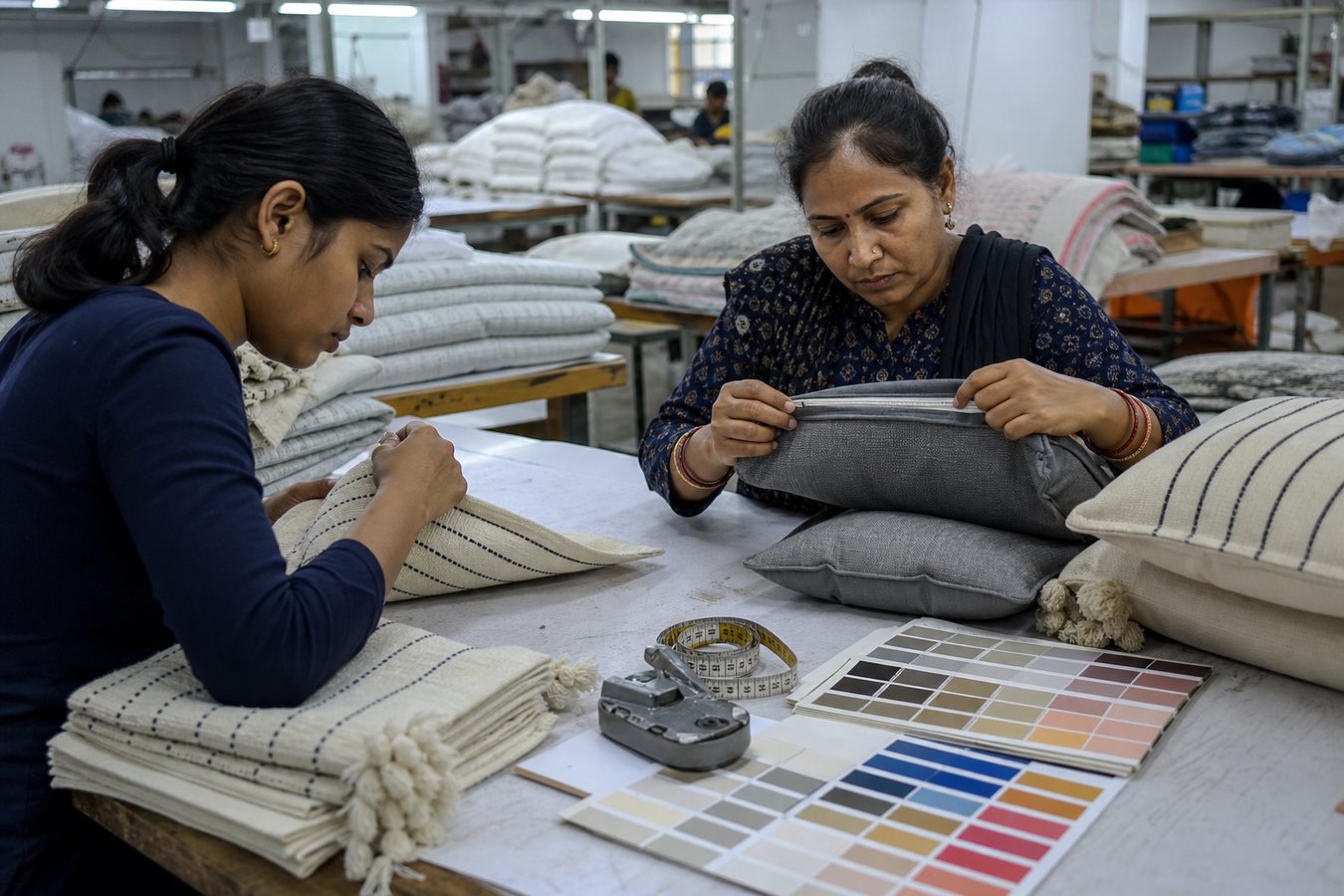
Premium home specialty retail in Germany, the Netherlands, the UK, and the USA has quietly rewritten its vendor onboarding questionnaire over the past few seasons. Buyers now ask whether cotton is GOTS-certified organic, whether a transaction certificate accompanies every batch, what dyes and finishes the OEKO-TEX Standard 100 label actually covers on cushion covers and sofa throws, and how outer packaging is disposed of — not only what the GSM is. Organic cotton throw and cushion cover exports from India are becoming a genuine margin protector for manufacturers who can answer these questions with paperwork rather than marketing language, and a real compliance risk for those who cannot.
This shift matters because soft-furnishing made-ups sit on top of one of the most scrutinised raw material supply chains in global retail: cotton. India is both the world's largest cotton-growing country and the largest organic cotton producer, giving Panipat, Karur, and Coimbatore units a structural advantage that few competing origins can match at comparable scale for cushion cover and throw programmes. But that advantage only converts into commercial value when certification, chain-of-custody documentation, and honest labelling are in place. An unverified "organic" or "eco-friendly" claim on a throw product page is not a marketing asset — it is a compliance liability that can trigger customs holds, retailer delisting, or reputational damage in a tightly networked buyer community.
This guide maps the practical sustainability levers available to Indian cotton throw and cushion cover manufacturers: GOTS organic cotton certification and transaction certificates, OEKO-TEX Standard 100 chemical safety, Better Cotton Initiative (BCI) sourcing, how to price certified premiums correctly into FOB, country-by-country demand for certified soft furnishings, green packaging, and — just as important — where to draw the line so sustainability claims never drift into greenwashing. Manufacturers building their broader export programme should pair this guide with How to Export Cotton Throws and Cushion Covers from India for the full production and compliance sequence.
Altus Exports works as a merchant exporter in India and global sourcing partner connecting verified certified and conventional soft-furnishings programmes with international buyers across Textiles & Home Furnishings.
Key Takeaways
Summary Box
Executive Summary
Summary Box
Sustainable and organic positioning in cotton throws and cushion covers rewards manufacturers who treat certification as a documentation discipline rather than a marketing layer. EU, UK, and premium US buyers increasingly gate vendor approval on GOTS transaction certificates, OEKO-TEX test reports, and honest fibre-labelling on care tags — particularly for products that touch skin daily, such as sofa throws and decorative cushion covers in living spaces.
India's organic cotton growing base — concentrated in Madhya Pradesh, Maharashtra, Odisha, and parts of Gujarat — gives Panipat and Karur soft-furnishings exporters a raw-material advantage, but only when every processing partner in the chain holds current certification and issues valid transaction certificates per lot. Manufacturers who build batch-level traceability now will convert higher FOB on certified programmes; those who print "organic" without audit-ready paperwork will lose listings faster than conventional competitors lose price negotiations.
This guide covers certification differences, evidence requirements, pricing premiums, destination demand, packaging alignment, and common claim mistakes — without duplicating the general export process pillar or TEXPROCIL membership essay owned by sibling cluster posts.
Market Size & Industry Overview
Key Statistics
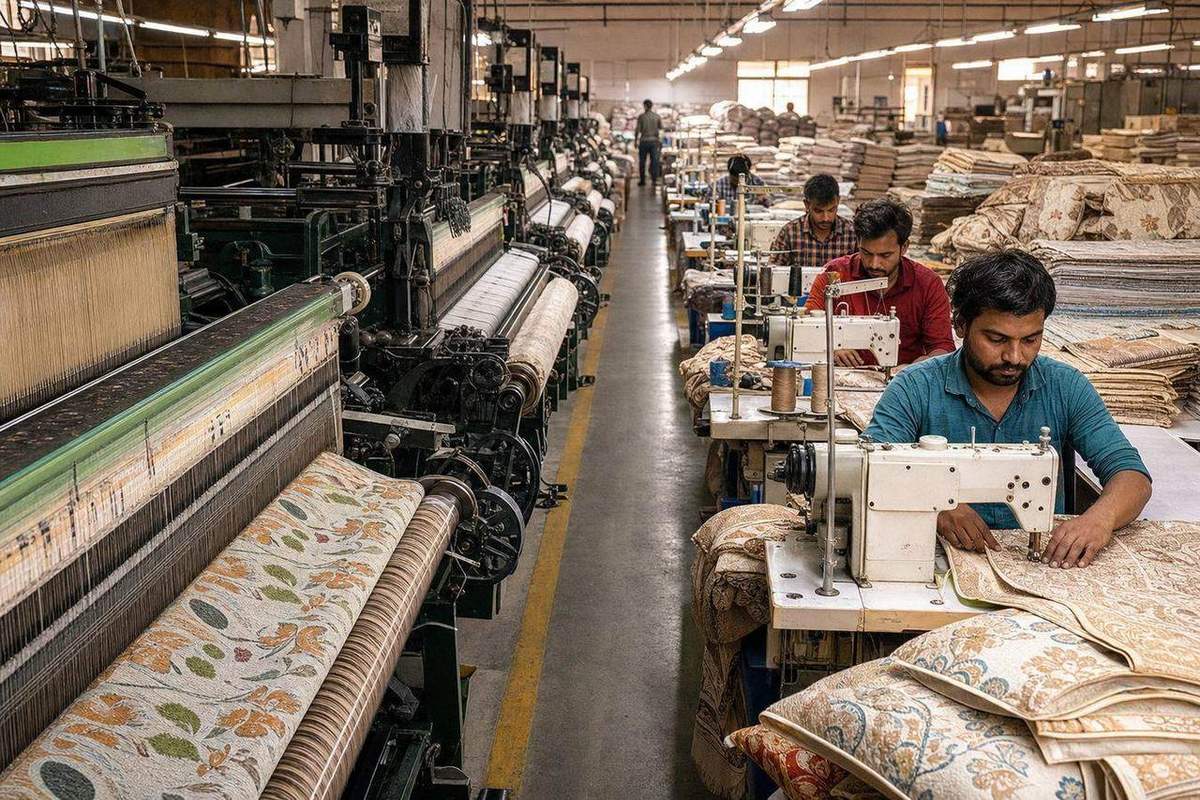
There is no official customs subcode that isolates organic cotton throws from conventional furnishing made-ups — trade data describes the broader HS 6304 basket directionally, not certified organic value alone. What is measurable is India's depth in cotton soft-furnishings production: Panipat for volume throws and cushion programmes, Karur and Coimbatore for export-disciplined made-ups, Solapur for textile made-ups adjacency, and Delhi-NCR for merchant consolidation of private-label certified assortments.
Premium soft-furnishings retail in Germany, the Netherlands, the UK, and the USA is where certified organic and OEKO-TEX programmes convert most reliably into listing contracts and repeat colourway orders. UAE and mainstream US volume channels ask fewer explicit organic questions today but increasingly require OEKO-TEX chemical compliance and honest fibre labelling regardless of organic status.
Certified Soft-Furnishings Market Snapshot (Directional)
Swipe →
Data table — swipe horizontally on small screens
| Dimension | Fact / Range | Commercial Relevance |
|---|---|---|
| Primary HS family | 6304 furnishing articles; 6301 blanket-character throws — verify with CHA | Certification does not alter customs heading |
| Council | TEXPROCIL primary for cotton made-ups | Credibility alongside certification scope |
| Organic cotton base | India — largest global organic cotton producer | Raw-material advantage for GOTS programmes |
| Premium destinations | Germany, Netherlands, UK, USA, Australia | Strongest GOTS/OEKO-TEX RFQ volume |
| Typical certified premium | Approx. 30–50% over comparable conventional FOB | Evidence-dependent; varies by GSM and construction |
| Lead time impact | 8–14 weeks custom certified programmes | Organic yarn booking and TC admin add time |
Export Statistics
Key Statistics
Published export statistics for cotton furnishing made-ups rarely split throws from cushion covers or certified from conventional at the public data level — cite TEXPROCIL, DGCI&S, or ITC Trade Map HS 6304 figures as directional only, and never invent throw-specific certified subtotals when the source publishes broader made-ups baskets. For commercial planning, the more actionable signal is destination-level import demand for furnishing articles combined with buyer RFQ frequency for GOTS and OEKO-TEX scope in your target market tier.
Directionally, the USA, UK, Germany, Australia, Canada, France, and Australia remain among the leading destinations for Indian cotton soft furnishings exports — validate current rank order against latest trade data before locking programme investment. Certified organic programmes concentrate disproportionately in Germany, Netherlands, UK premium retail, and US natural-home private label relative to their share of total HS 6304 volume.
Directional Export Destination Signals for Certified Programmes
Swipe →
Data table — swipe horizontally on small screens
| Destination | Certified Demand Intensity | Typical Certified SKU |
|---|---|---|
| Germany | Highest GOTS scrutiny | Organic cushion covers, natural-colour throws |
| Netherlands | EU hub; strong OEKO-TEX baseline | Private-label organic soft furnishings |
| UK | GOTS + OEKO-TEX combined | Yarn-dyed organic cushion programmes |
| USA | Growing organic segment; larger conventional base | Natural-home throws, organic cushion private label |
| UAE | Moderate; OEKO-TEX often sufficient | Premium hospitality throws |
| Australia | Premium niche; documentation-heavy | GOTS throws and cushion sets |
Import Statistics
Key Statistics
Import-side demand for certified soft furnishings is visible indirectly through retailer sustainability reporting and shipment-level buyer identity under HS 6304, rather than through a dedicated "organic throw" customs line. German and Dutch home specialty retailers and US natural-home e-commerce brands importing furnishing made-ups from India at repeat frequency are the highest-probability targets for GOTS programme pitches — cross-reference consignee names in trade data with public sustainability disclosures and LinkedIn procurement titles.
Buyers already importing cotton cushion covers and throws from India, Turkey, or Portugal who publish organic or OEKO-TEX assortment targets are warmer prospects for certified Indian programmes than importers with zero furnishing import history, because they already understand landed cost, shade approval workflow, and fibre-labelling burden for soft furnishings.
Import Market Signals for Certified Soft-Furnishings Buyers
Swipe →
Data table — swipe horizontally on small screens
| Importing Market | Certification Expectation | Prospecting Signal |
|---|---|---|
| Germany | GOTS TC chain often mandatory for organic claim | Retailers with published organic home textile targets |
| USA | USDA NOP + GOTS for organic label; OEKO-TEX common | Natural-home DTC brands with certified bedding adjacency |
| UK | GOTS + OEKO-TEX; packaging waste scrutiny | Premium supermarket and specialty home ranges |
| Netherlands | GOTS or strong OEKO-TEX; BCI on conventional lines | EU redistribution wholesalers |
| France | Design-led; GOTS for organic storytelling | Boutique home retailers and hospitality gifting |
| Australia | GOTS or OEKO-TEX for premium listings | Specialty natural-home retail |
Product Categories / Variants
Summary Box
Certification applies at SKU level, not at factory level generically. A Panipat unit may hold OEKO-TEX Standard 100 on specific dye classes used for yarn-dyed cushion covers while running a separate GOTS-certified organic line on plain weave throws — each SKU's care label must match the evidence pack for that lot only. Coordinated throw-plus-cushion private-label programmes are common in premium retail, but organic claims require the entire coordinated set to trace through certified chain-of-custody unless the buyer accepts mixed messaging (rare in EU organic listings).
Construction type affects certification cost and testing scope: Jacquard throws may require additional OEKO-TEX component testing; piped and embroidered cushion covers add trim and thread testing; zipper tapes and pullers must fall within Standard 100 scope when buyers expect full-product certification. For full construction catalogue depth, see Top Cotton Throw and Cushion Cover Products Exported from India.
Certified Product Categories and Typical Evidence Pack
Swipe →
Data table — swipe horizontally on small screens
| SKU Family | Typical Certification Stack | Evidence Buyers Request |
|---|---|---|
| Plain organic cotton cushion covers | GOTS + OEKO-TEX | Full TC chain; Standard 100 test report |
| Yarn-dyed organic throws | GOTS + OEKO-TEX | TC chain; dye class listed in OEKO-TEX scope |
| Conventional OEKO-TEX cushion covers | OEKO-TEX Standard 100 only | Test report per fabric/finish; no organic claim |
| BCI conventional throw programmes | BCI membership + optional OEKO-TEX | BCI licensing proof; mass-balance reporting |
| Coordinated certified sets | GOTS across all components | Matched TC weights vs. PO quantities |
| Jacquard premium throws | GOTS and/or OEKO-TEX | Component testing for complex constructions |
Manufacturing Overview
Export Tip
Certified manufacturing requires certified partners at every stage that handles organic cotton — ginning, spinning, weaving or knitting, dyeing/finishing, cut-and-sew, and export trading if the merchant exporter claims certification scope. Panipat units often integrate weaving and cut-and-sew for throws and cushions; Karur and Coimbatore lines excel at export packing discipline for high piece-count cushion cover cartons. A processing house whose GOTS certificate lapses mid-season without the exporter noticing is one of the most common causes of failed buyer audits on organic soft-furnishings programmes.
Segregation discipline matters as much as certification paperwork: certified organic greige and conventional stock must be physically and administratively separated at every stage to prevent commingling that invalidates transaction certificate claims. Needle detection, metal-free accessory policies, and cover-only vs. filled cushion disclosure remain operational requirements independent of organic status.
Pricing Analysis
Buyer Tip
Organic and certified cotton throws and cushion covers fall under the same HS 6304 headings as conventional furnishing made-ups — certification status does not create a separate customs classification — but it does change the commercial FOB structure significantly. Indicative commercial range: GOTS-certified organic cushion covers and throws typically command FOB pricing with a 30–50% premium over comparable conventional cotton SKUs once certification, testing, and transaction-certificate administration costs are priced correctly into the quote. These bands vary by GSM, construction, certification scope, and packaging, and are not a published official index.
A common mistake is building a certified programme, absorbing all GOTS and OEKO-TEX costs, and then quoting buyers at conventional soft-furnishings prices because sales teams fear losing the deal on price. This destroys the commercial rationale for the certification investment. Run internal dual costing for every programme: conventional FOB versus certified FOB, and price the difference transparently.
Indicative FOB Ranges for Certified Soft-Furnishings (Directional USD)
Swipe →
Data table — swipe horizontally on small screens
| Product Tier | HS Family | Typical MOQ | Indicative FOB Range | Premium vs Conventional |
|---|---|---|---|---|
| Basic conventional cushion covers | 6304 | 300–1,000 pcs/colourway | $1.50–6/pc | Baseline |
| OEKO-TEX conventional cushion covers | 6304 | 300–1,000 pcs | $2.50–8/pc | Approx. 15–25% above baseline |
| BCI conventional throw programmes | 6304/6301 | 500+ pcs programme | $7–24/pc | Approx. 10–20% above baseline |
| GOTS organic cushion covers | 6304 | 300–1,000 pcs | $4–18/pc | Approx. 30–50% above comparable conventional |
| GOTS organic throws | 6304/6301 | 200–800 pcs | $10–45+/pc | Approx. 30–50% above comparable conventional |
| GOTS + Fairtrade combined | 6304 | 500+ pcs cooperative-linked | Highest premium tier | Story-driven EU retail |
MOQ Analysis
Buyer Tip
Certified programmes carry higher effective MOQs because organic yarn booking, dye-lot control, and transaction-certificate administration favour consolidated colourway runs over fragmented small batches. Buyers requesting fifty pieces of six organic colourways on a first order should be quoted honestly about setup economics or steered toward a narrower hero colourway for trial.
Typical MOQ by Programme Stage (Certified Soft-Furnishings)
Swipe →
Data table — swipe horizontally on small screens
| Stage | Cushion Covers | Throws | Notes |
|---|---|---|---|
| Certified samples | 2–10 pcs/SKU | 2–10 pcs/SKU | TC may reference sample lot separately |
| Trial colourway | 100–300 pcs hero SKU | 100–300 pcs | Single colourway reduces TC complexity |
| Wholesale certified | 300–1,000+ pcs/colourway | 300–1,000+ pcs | Jacquard organic often higher MOQ |
| Retail FCL programme | Planned vs 20GP/40HC CBM | Planned vs container mix | Book organic yarn 4–9 months ahead for seasons |
Packaging Standards
Export Tip
Packaging for certified organic throws and cushion covers increasingly needs to match the sustainability story of the fibre itself. EU and UK buyers ask about outer carton recyclability, plastic content in polybags, and right-sizing during vendor onboarding — not only about GOTS scope. FSC-certified board, reduced-plastic wraps, cotton drawstring pouches for premium throws, and recyclable void fill are common upgrades that support premium positioning without contradicting organic claims.
Protection still comes first: a lighter carton that fails to protect Jacquard throw texture through ocean transit generates damage claims that erase environmental benefits. Validate compression and moisture performance before bulk packing any packaging change marketed as sustainable.
Packaging Elements for Certified Programmes
Swipe →
Data table — swipe horizontally on small screens
| Element | Conventional Default | Certified/Sustainable Alternative | Buyer Expectation |
|---|---|---|---|
| Individual wrap | Standard polybag | Recyclable mono-material or cotton pouch | EU plastic-content limits |
| Care label | Fibre content tag | GOTS logo only when TC supports lot | Audit-ready label artwork |
| Hangtag | Mixed-fibre card | FSC board, soy/water-based inks | Vendor scorecard points |
| Master carton | Standard corrugated | Right-sized recycled-content board | Reduced void space |
| Void fill | Generic plastic film | Recycled paper or biodegradable pillows | Validated with compression test |
Container Loading Details
Export Tip
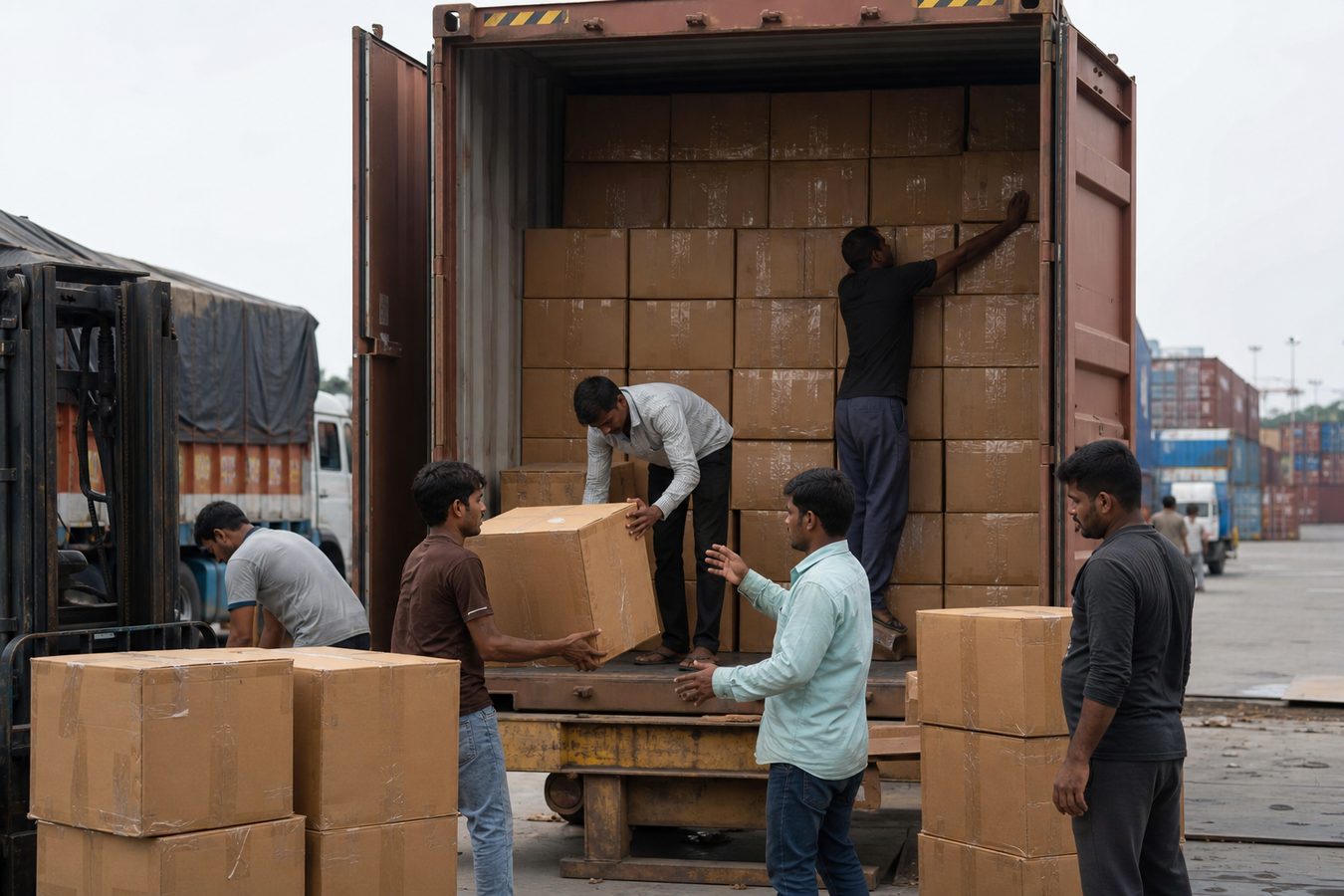
Certified programmes load the same dense carton economics as conventional soft furnishings — high piece count per container relative to weight. Organic premium pricing does not change CBM planning: cushion covers and folded throws still volume-constrain 20GP and 40HC loads. Mixed containers combining certified throws and conventional cushion covers require clear lot segregation in documentation even when physically packed in the same container, so transaction certificate quantities reconcile to PO lines without ambiguity.
Indicative Container Loading (Directional — Confirm with Forwarder)
Swipe →
Data table — swipe horizontally on small screens
| Container | Cushion Covers | Throws | Certified Programme Note |
|---|---|---|---|
| 20GP | ~15,000–25,000 standard pcs | ~3,000–6,000 mid-GSM pcs | TC qty must match shipped pcs per lot |
| 40HC | ~30,000–45,000 standard pcs | ~7,000–12,000 mid-GSM pcs | Preferred for multi-colourway retail programmes |
| LCL trial | 200–2,000 mixed SKUs | 200–1,500 pcs | Common for first certified colourway |
| Air sample kits | Certified strike-offs | GSM swatches + TC copies | Qualification only |
Shipping Methods
Export Tip
Sea freight dominates certified soft-furnishings export economics — FOB Mundra, Nhava Sheva, ICD Delhi/Dadri, or Chennai/Tuticorin depending on cluster. Transaction certificates must reference the exporter entity and lot quantities that match commercial invoice and packing list fields at dispatch; discrepancies between TC weight and shipped quantity are a common audit failure point. Air freight suits urgent certified sample kits and lab-dip approvals but rarely works for bulk organic programmes given freight cost relative to unit value on high piece-count cushion cover orders.
Certifications
Compliance Notes
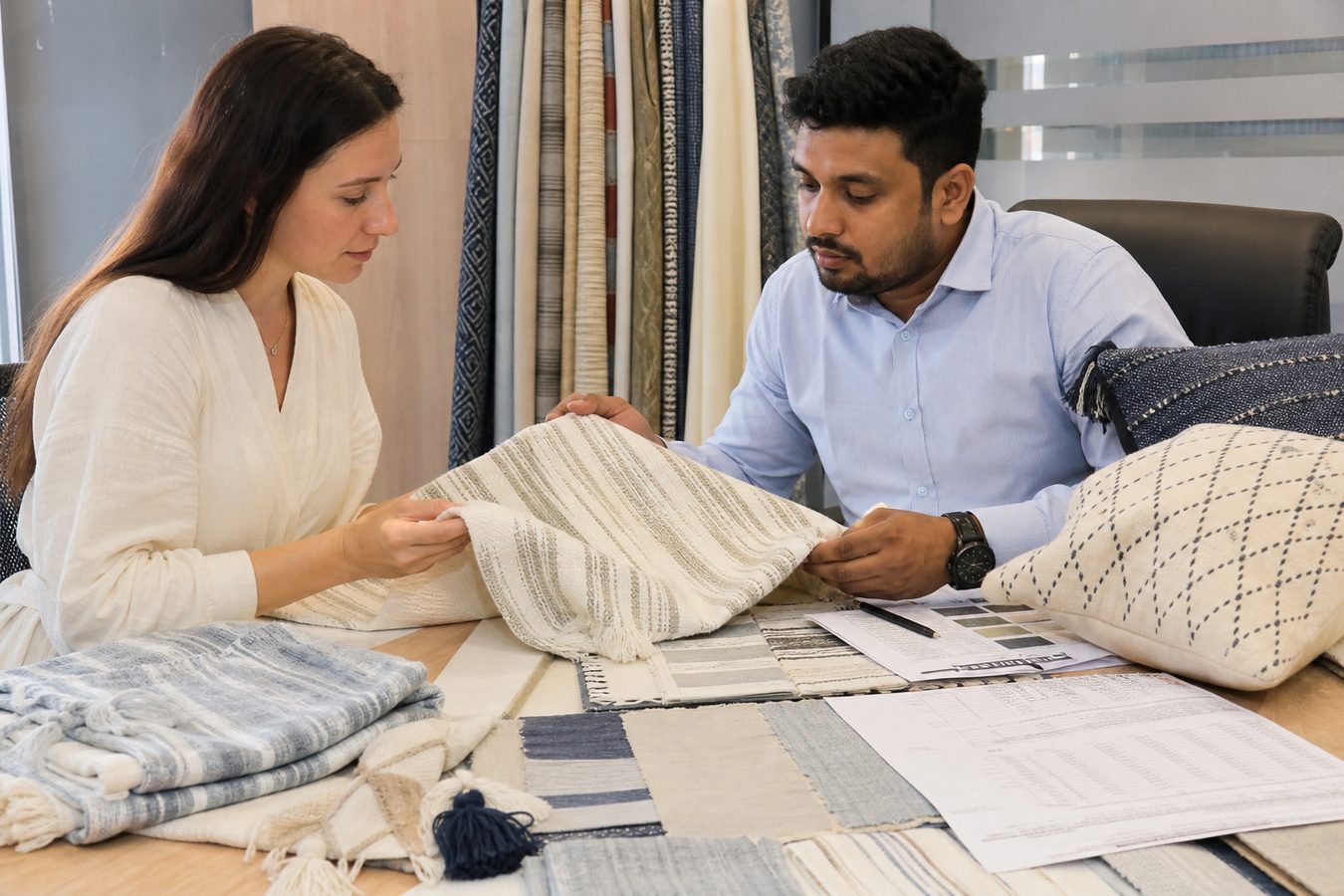
Manufacturers frequently conflate GOTS, OEKO-TEX, and BCI, but each addresses a different part of the sustainability claim, and buyers expect exporters to know the difference. Confusing them in outreach or on a product page is one of the fastest ways to lose credibility with a technically literate buyer evaluating organic throw and cushion cover programmes.
Certification Comparison for Soft-Furnishings Exporters
Swipe →
Data table — swipe horizontally on small screens
| Certification | What It Covers | Typical Timeline | Approximate Annual Cost Range |
|---|---|---|---|
| GOTS | Organic fibre + full chain + social criteria + TCs | 6–18 months full chain + annual audit | ₹1,50,000–₹6,00,000+ depending on chain complexity |
| OEKO-TEX Standard 100 | Chemical safety of finished product/components | 2–4 months initial + annual renewal | ₹40,000–₹1,50,000 per product class |
| BCI | More sustainable conventional cotton, mass balance | 3–6 months to join + annual reporting | Modest relative to GOTS |
| USDA Organic (NOP) | US-market organic claims — often alongside GOTS | 6–18 months + annual audit | $2,000–$8,000 USD approximate |
| Fairtrade Cotton | Farmer livelihood and minimum price | 6–12 months + annual audit | Varies by cooperative scale |
GOTS — Global Organic Textile Standard
GOTS certifies organic fibre content and social criteria through the full processing chain, backed by transaction certificates at every handoff. GOTS is the strongest organic textile certification recognised in EU and US premium retail for soft furnishings, and it is the certification buyers mean when they ask specifically for "organic cotton cushion covers" or "organic sofa throws" with documentation.
OEKO-TEX Standard 100
OEKO-TEX Standard 100 tests the finished product or components for harmful substances above defined limits, independent of whether the fibre is organic. A conventional cotton throw can hold OEKO-TEX certification without any organic claim. Many EU and UK buyers treat OEKO-TEX as a baseline expectation for cushion covers and throws regardless of fibre type.
Better Cotton Initiative (BCI)
BCI certifies more sustainable farming practices for conventional cotton without making an organic claim. BCI cotton is mass-balanced through the supply chain rather than segregated lot-by-lot like GOTS organic cotton, meaning a specific finished cushion cover cannot claim traceable "100% BCI cotton" in the same sense as a GOTS organic claim.
GOTS Certification and Transaction Certificates: What Is Real
The transaction certificate is the operational heart of GOTS compliance, and it is also the single most common point of failure for Indian soft-furnishings exporters. A TC is issued by the certification body confirming that a specific quantity of organic material moved from one certified entity to the next, referencing batch numbers and both parties' certification scope. If a ginner, spinner, weaver, or processing house in your supply chain cannot produce a valid TC for the specific lot used in your cushion cover or throw batch, the organic claim for that finished shipment is not defensible — regardless of how organic the raw cotton was at the farm level.
India has the largest organic cotton growing base in the world, so raw material exists at meaningful scale. What breaks down is paperwork: uncertified stock accidentally mixed with certified stock, a processing unit whose GOTS certificate lapses mid-season, or a TC issued for a different lot than the one physically shipped. Audit your full supply chain's certification status at the start of every season, not assume it carries over automatically from the prior year.
The single non-negotiable rule: if you cannot evidence a sustainability claim with documents that would survive a buyer audit, do not print it on a care label, carton, or product page. A single exposed false claim damages trust with that buyer permanently in a category where retail buyers share supplier intelligence actively.
Buyer Requirements
Buyer Requirements
Premium buyers onboarding certified soft-furnishings suppliers typically require a bundle of evidence beyond sample quality: current scope certificates for every chain partner, transaction certificates for the specific lot quoted, OEKO-TEX test reports covering dyes and finishes used, fibre and care labels aligned to destination law, and packaging disclosure forms. Vendor questionnaires in Germany and the Netherlands often arrive before price negotiation begins — manufacturers who cannot complete them credibly never reach a PO discussion.
Typical Buyer Evidence Requests by Certification Type
Swipe →
Data table — swipe horizontally on small screens
| Buyer Request | GOTS Programme | OEKO-TEX Only | BCI Conventional |
|---|---|---|---|
| Scope certificates | Required all partners | Not applicable | BCI license proof |
| Transaction certificates | Per lot/shipment | Not applicable | Mass-balance reporting |
| Chemical test reports | Often plus OEKO-TEX | Standard 100 required | Optional but valued |
| Label artwork approval | GOTS logo rules strict | OEKO-TEX label rules | No organic logo |
| Packaging disclosure | Increasingly mandatory EU/UK | Same | Same |
Country-wise Opportunities
Market Snapshot
Match certification investment to the requirements and premiums of your primary target market — full GOTS chain certification for unconfirmed global interest is expensive; OEKO-TEX plus honest labelling may unlock sufficient listings while you build toward organic programmes. For macro destination ranking methodology, see Best Countries for Indian Cotton Throw and Cushion Cover Exports and SKU-level preferences in Most Demanded Indian Cotton Throws and Cushion Covers by Country.
Germany and EU
Germany is among the most stringent markets for GOTS documentation on cushion covers and throws. Dutch retailers function as EU distribution hubs; France rewards design-led organic storytelling. Heimtextil remains the flagship sourcing event for certified soft-furnishings buyers across the EU.
USA
The USA has a fast-growing organic and natural-home segment led by DTC brands, alongside a much larger conventional market where BCI or OEKO-TEX matters more than formal organic certification. USDA Organic (NOP) is required for organic label claims at US retail alongside underlying GOTS supply-chain certification for many programmes.
United Kingdom
UK organic standards remain closely aligned with EU frameworks in substance post-Brexit. UK retailers combine organic-fibre interest with strong OEKO-TEX scrutiny and packaging waste questions during vendor onboarding.
UAE and Middle East
Growing premium demand for certified throws in hospitality and gifting, but full GOTS chain documentation is valued more than universally required — OEKO-TEX chemical safety and consistent quality often suffice for entry while building toward full organic programmes.
Transaction Certificates and Documentation for Buyer Audits
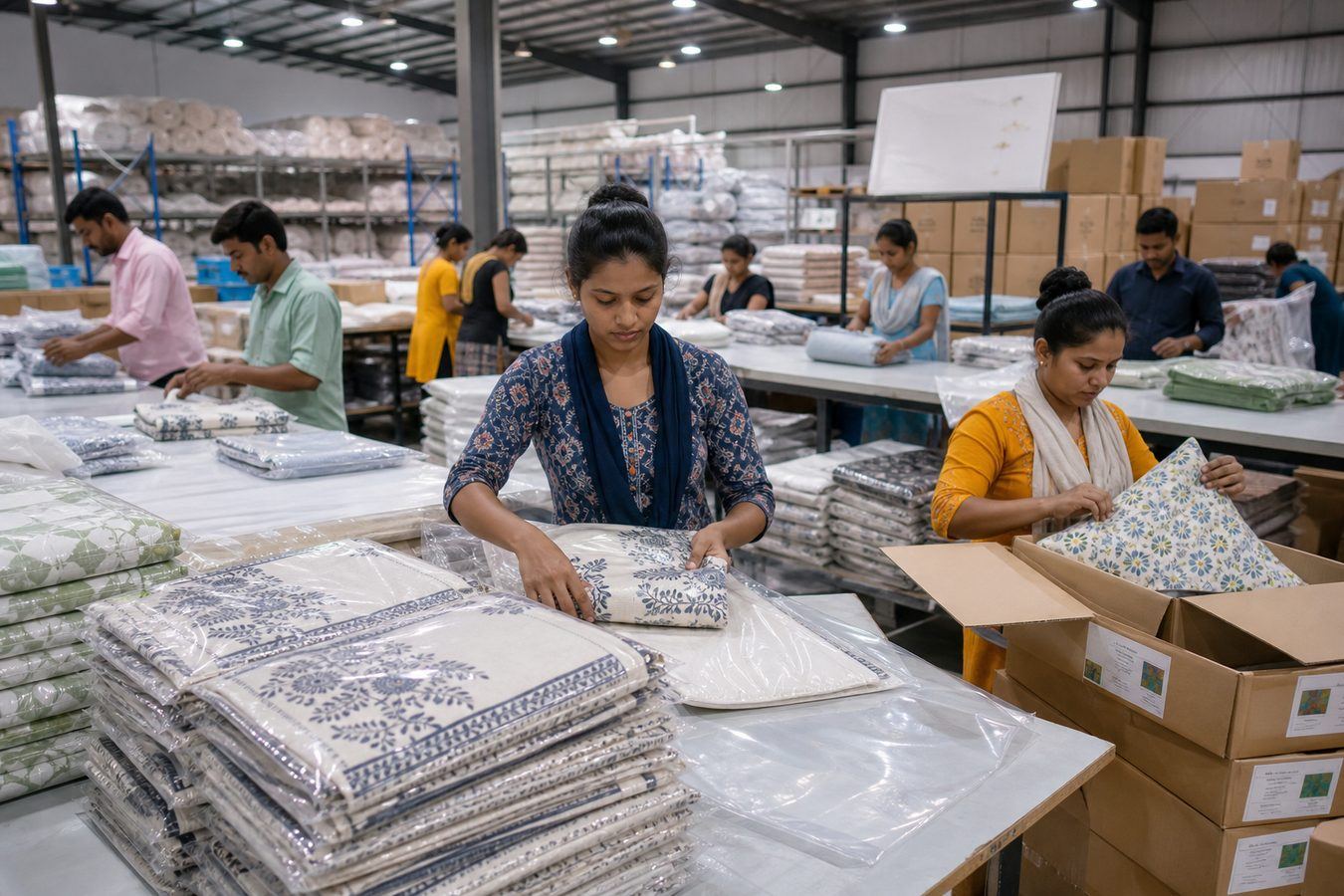
Buyers conducting vendor audits on organic throw and cushion cover programmes want to reconstruct the organic chain of custody on request. At minimum, retain the farm-level or ginner-level organic certificate, the transaction certificate at each handoff, and an internal batch record linking the finished lot back to the specific TC chain. A disciplined spreadsheet is usually sufficient, provided every claim on a care label can be traced to a retrievable document within days, not weeks.
Comparison table
Swipe →
Data table — swipe horizontally on small screens
| Document | Issued By | What It Proves |
|---|---|---|
| Farm/ginner organic certificate | GOTS-approved certification body | Raw cotton meets organic farming standard |
| Transaction Certificate (TC) | Certification body, per consignment | Specific lot of organic material moved between certified entities |
| Scope Certificate | Certification body, per processing unit | Processing unit holds valid GOTS certification for defined scope |
| OEKO-TEX Standard 100 test report | Accredited testing lab | Finished throw/cushion free of harmful substances above limits |
| Internal batch record | Exporter/manufacturer | Links finished lot back to specific TC chain and processing units |
India's Structural Advantage in Organic Cotton
India is the world's largest producer of organic cotton by a wide margin, with the majority of global organic cotton output originating from Indian growing regions — principally Madhya Pradesh, Maharashtra, Odisha, and parts of Gujarat and Rajasthan. This scale gives Indian throw and cushion cover manufacturers a raw-material advantage that Pakistan, Bangladesh, Turkey, and China cannot replicate at comparable volume for certified soft-furnishings programmes.
That advantage is strongest when manufacturers connect directly to certified organic ginning units rather than buying organic-labelled fibre through intermediaries with unclear chain-of-custody discipline. Panipat and Karur mills that build auditable relationships with certified organic ginners carry a real cost and reliability edge over competitors sourcing organic cotton opportunistically on the spot market.
Sourcing Checklist
Checklist
Common Buyer Mistakes
Common Mistakes Box
Future Market Trends
Key Statistics
Through 2030, sustainability expectations in soft-furnishings retail are likely to move from vendor-questionnaire checkboxes toward verified, ongoing reporting as major EU and US retail groups extend corporate disclosure obligations down supply chains. Manufacturers who build batch-level traceability for throws and cushion covers now — even simple systems — will be better positioned than those who treat sustainability as a one-time onboarding exercise.
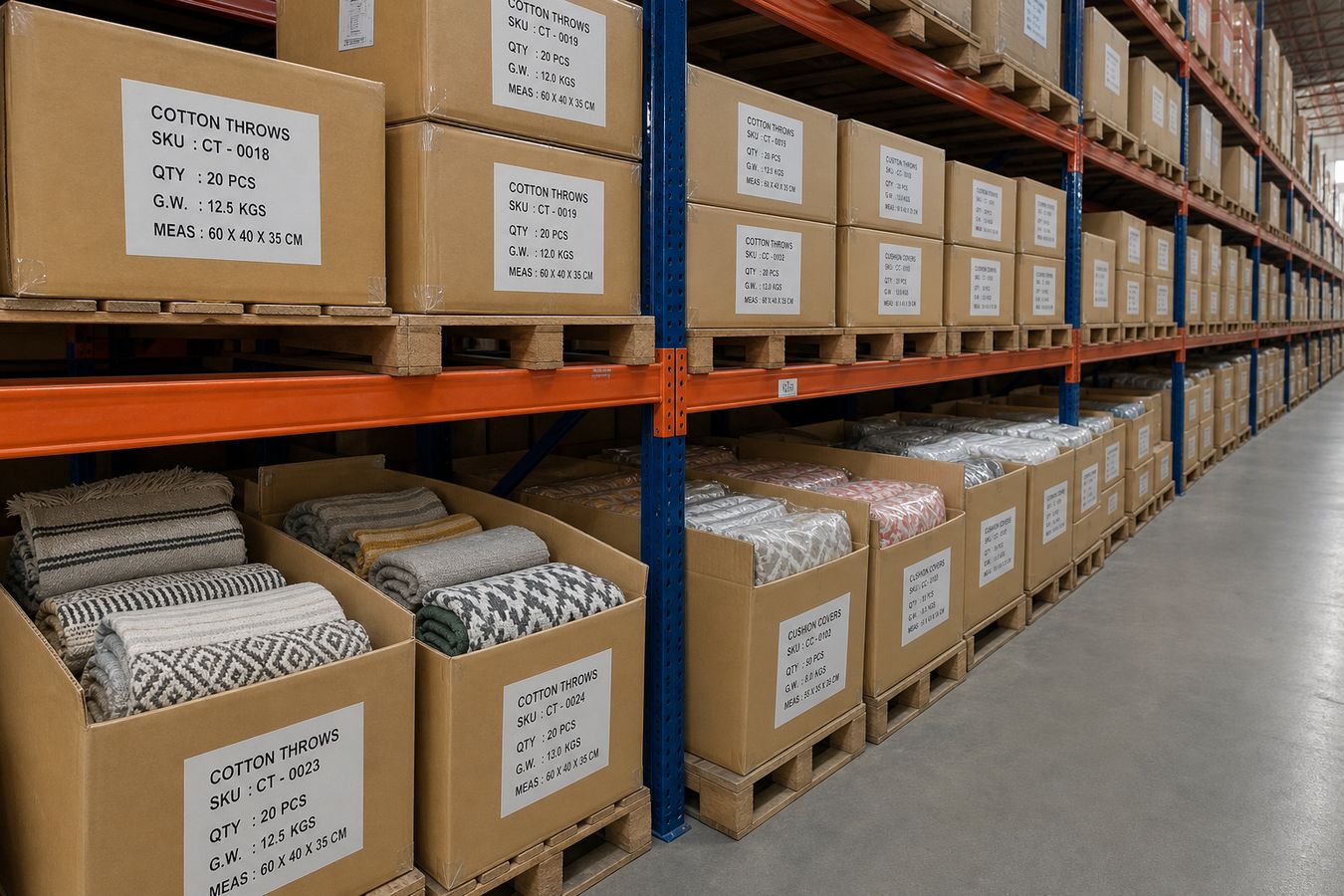
Packaging expectations will likely tighten fastest, given direct visibility of packaging waste to retail buyers. India's expanding organic cotton base should gradually ease raw-material constraints while keeping documentation discipline as the primary differentiator between certified programme exporters.
Challenges & Solutions
Certified Programme Challenges and Practical Solutions
Swipe →
Data table — swipe horizontally on small screens
| Challenge | Impact | Solution |
|---|---|---|
| Missing transaction certificate | Organic claim invalid for lot | TC checklist at every handoff; batch log from day one |
| Certificate lapse at processing partner | Audit failure mid-season | Quarterly scope certificate validity review |
| Commingled organic/conventional stock | Contamination of TC chain | Physical segregation + admin lot control |
| Silent absorption of cert costs | Programme economics collapse | Dual costing; transparent certified FOB |
| Unsustainable packaging on organic SKU | Vendor scorecard rejection | Right-size FSC cartons; reduce plastic with tested protection |
Case Study: Karur Unit Building GOTS Cushion Covers for Dutch Private Label
Challenge: A Karur cut-and-sew unit supplying conventional yarn-dyed cushion covers to a Dutch home specialty retailer received a formal sustainability questionnaire requiring GOTS chain-of-custody, OEKO-TEX scope, and packaging material disclosure for a proposed organic private-label line.
Approach: The unit engaged a GOTS-accredited certifier to assess its supply chain — certified organic ginner in Madhya Pradesh, spinning partner, in-house cutting and sewing, and an OEKO-TEX-certified processing house for dyeing. One weaving partner who could not achieve certification within timeline was replaced. OEKO-TEX testing was commissioned for all dyes and zipper tapes on the organic SKU.
Documentation: A batch-tracking spreadsheet linked each finished cushion cover lot to ginner TC, spinning and weaving references, and OEKO-TEX report IDs — sufficient to answer retailer audit questions within hours.
Results: Vendor approval passed on first submission for GOTS SKUs. The account expanded to quarterly reorders at FOB roughly 40% above the unit's conventional yarn-dyed rate. The documentation system now supports every subsequent organic inquiry with minimal incremental work.
Lessons learned: Honest disclosure where certification did not apply on conventional lines earned as much trust as the certified organic business — overstating conventional credentials would have risked the entire relationship.
Buyer Checklist
Checklist
Exporter Checklist
Checklist
Compliance Checklist
Checklist
Compliance Notes
Conclusion
- Next step for manufacturers: Share certification status, cotton sourcing chain, and packaging practices with Altus Exports for a sustainability-readiness review.
- Next step for buyers: Send your sustainability questionnaire — we match verified Indian soft-furnishings manufacturers who can document their claims.
- Process pillar: How to Export Cotton Throws and Cushion Covers from India.
- Buyer pipeline: How to Find International Buyers for Cotton Throws and Cushion Covers.
- Documentation: Cotton Throw and Cushion Cover Export Documentation Checklist.
- Explore export products from India and global sourcing partner India.
Organic GOTS and OEKO-TEX cotton throw and cushion cover export opportunities from India are real and growing, but they reward manufacturers who treat sustainability as a documentation discipline rather than a marketing layer. GOTS certification backed by valid transaction certificates, OEKO-TEX chemical compliance, honest BCI positioning where organic is not used, and right-sized, reduced-plastic packaging together build the credible profile that EU, UK, and US buyers now expect during vendor onboarding.
The path forward is straightforward: confirm exactly which SKUs can genuinely support certification claims, build simple batch-tracking linking finished throws and cushion covers back to fibre and processing sources, and communicate organic and conventional sustainability stories honestly and separately. Altus Exports coordinates certified sourcing, documentation alignment, and shipment execution for international buyers and Indian manufacturers ready to formalise this work — connect through contact with your certification requirements and target markets.