
TEXPROCIL Registration Benefits for Cotton Throw and Cushion Cover Exporters
By Saurabh Mittal, Founder, Altus Exports
A complete guide to TEXPROCIL registration for cotton throw and cushion cover exporters from India — what the Cotton Textiles Export Promotion Council is, why RCMC matters for Panipat throws, Karur cushion covers, and coordinated soft-furnishings programmes, who should register, the step-by-step application process, documents, fees, RCMC continuity, and how membership unlocks Index Mumbai and Heimtextil fair access and builds buyer confidence in the USA, UK, Germany, Australia, Canada, France, Australia, Canada, and Italy. Includes market context, HS 6304 export framing, pricing, MOQ, packing overview, and country-wise opportunity tables — separate from the full shipment document pack owned by the cotton throw and cushion cover export documentation checklist and the certified organic specialty pathway owned by the GOTS/OEKO-TEX opportunities guide.
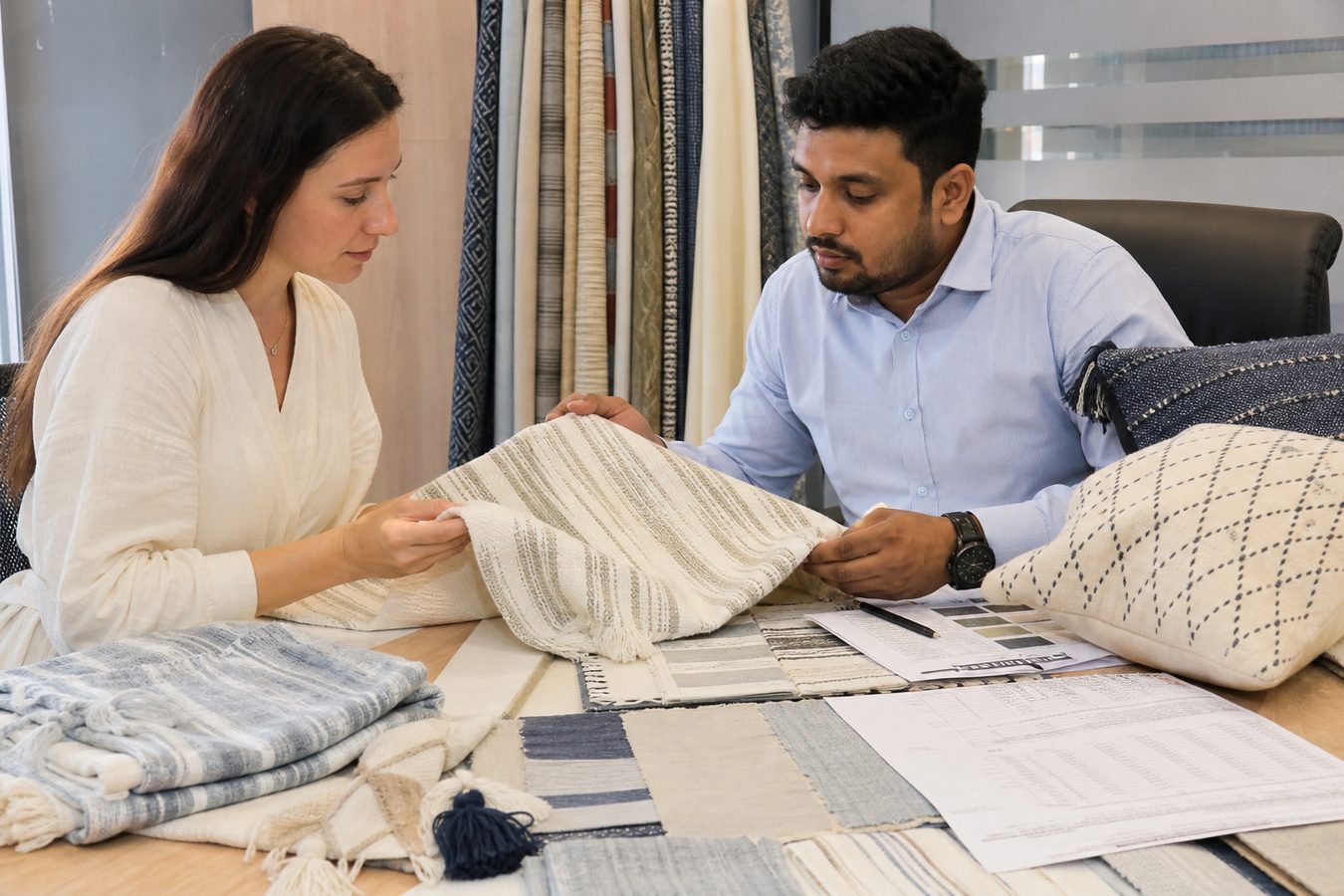
India's cotton throw and cushion cover export sector combines high-volume weaving and cut-and-sew capacity with shade-sensitive, construction-diverse soft-furnishings SKUs — cotton sofa throws, lap throws, Jacquard and yarn-dyed decorative throws, zipper and envelope cushion covers, piped decorative pillow covers, and coordinated throw-plus-cushion colourway programmes — produced across Panipat (Haryana) for throws and volume cushions, Karur and Coimbatore (Tamil Nadu) for export-disciplined cushion covers, Solapur and Tirupur-adjacent belts for specific cushion programmes, Jaipur/Rajasthan for design-led printed cushions and throws where craft-print character may suggest EPCH adjacency on minority lines, and Delhi-NCR for merchant consolidation before ocean freight from Nhava Sheva, Mundra, ICD Delhi/Dadri/Panipat, or Chennai/Tuticorin. Trade is commonly tracked under HS 6304 other furnishing articles for cushion covers and many decorative throws, with HS 6301 only when essential character is blanket or travelling rug — never force throws into HS 6302 bed linen, which belongs to the bedsheet cluster. Demand is anchored by the USA, UK, Germany, Australia, Canada, France, Australia, Canada, and Italy, where home specialty retail, department stores, big-box home, e-commerce private label, hospitality soft furnishings, wholesale distributors, and interior design trade stock Indian cotton soft-furnishings programmes.
For cotton throw and cushion cover exporters, TEXPROCIL registration is the foundational institutional credential. TEXPROCIL — the Cotton Textiles Export Promotion Council — is the government-recognised apex body mandated to promote and facilitate export of Indian cotton yarn, fabric, and made-ups, and cotton sofa throws, lap throws, decorative cushion covers, and coordinated soft-furnishings sets fall squarely within that scope under HS 6304. Registration issues the Registration-cum-Membership Certificate (RCMC), unlocks Index Mumbai and Heimtextil booth eligibility pathways, opens market development assistance for overseas fairs, and — most importantly for a cluster category where shade continuity, GSM honesty, zipper closure discipline, and cover-only versus filled disclosure dominate buyer questioning — signals institutional identity that international buyers rely on when separating serious Panipat and Karur exporters from casual traders.
This guide explains what TEXPROCIL is, why registration matters specifically for cotton throw and cushion cover exporters, who should register, the step-by-step application process, documents and fees, and how membership translates into Index Mumbai and Heimtextil access and buyer trust. It is not a document-by-document shipment pack walkthrough or a certified organic specialty pathway — for the full commercial-invoice-to-COO checklist, see the cotton throw and cushion cover export documentation checklist; for GOTS, OEKO-TEX, and BCI-certified programme depth, see organic GOTS OEKO-TEX cotton throw and cushion cover export opportunities. Pair this guide with how to export cotton throws and cushion covers from India for the full operational picture, and always verify current fees and portal workflows on texprocil.org and dgft.gov.in before you file.
Key Takeaways
Summary Box
Executive Summary
Summary Box
Cotton throws and cushion covers — sofa throws, lap throws, decorative zipper cushion covers, envelope pillow covers, and coordinated colourway sets — sit at the intersection of India's largest cotton made-ups export capacity and one of its most shade-sensitive export categories. Panipat dominates throws and blankets-adjacent soft furnishings; Karur and Coimbatore supply export-disciplined cut-and-sew cushion programmes; Solapur and Tirupur-adjacent belts contribute specific cushion capacity; Jaipur contributes design-led printed lines; and Delhi-NCR consolidators handle mixed-SKU wholesale and private-label programmes with export-grade colourway packing. Broader cotton made-ups export streams should be framed via TEXPROCIL sector context and HS 6304 TradeStat proxies with caveats — there is no audited throw-only or cushion-only export total, and SKU-specific trade should never be presented as if total cotton made-ups equals throw and cushion volume.
TEXPROCIL registration sits at the centre of the institutional layer for the cotton soft-furnishings cluster. It is the gateway to RCMC issuance, Index Mumbai and Heimtextil fair access, market development assistance for overseas fairs, and — commercially most important — the credibility signal that shortens buyer due diligence when a US home specialty retail team or a German department store buyer is comparing several Panipat and Karur suppliers. This guide combines the TEXPROCIL registration playbook with the market context a cotton throw and cushion cover exporter needs: size and industry overview, export and import statistics framing, product categories, manufacturing overview, export process overview, pricing, MOQ, packaging, container loading, shipping methods, certifications, buyer requirements, country-wise opportunities, and full buyer/exporter/compliance checklist sets — without duplicating the field-by-field document checklist or the GOTS/OEKO-TEX specialty pathway owned by peer cluster posts.
Market Size & Industry Overview
Key Statistics
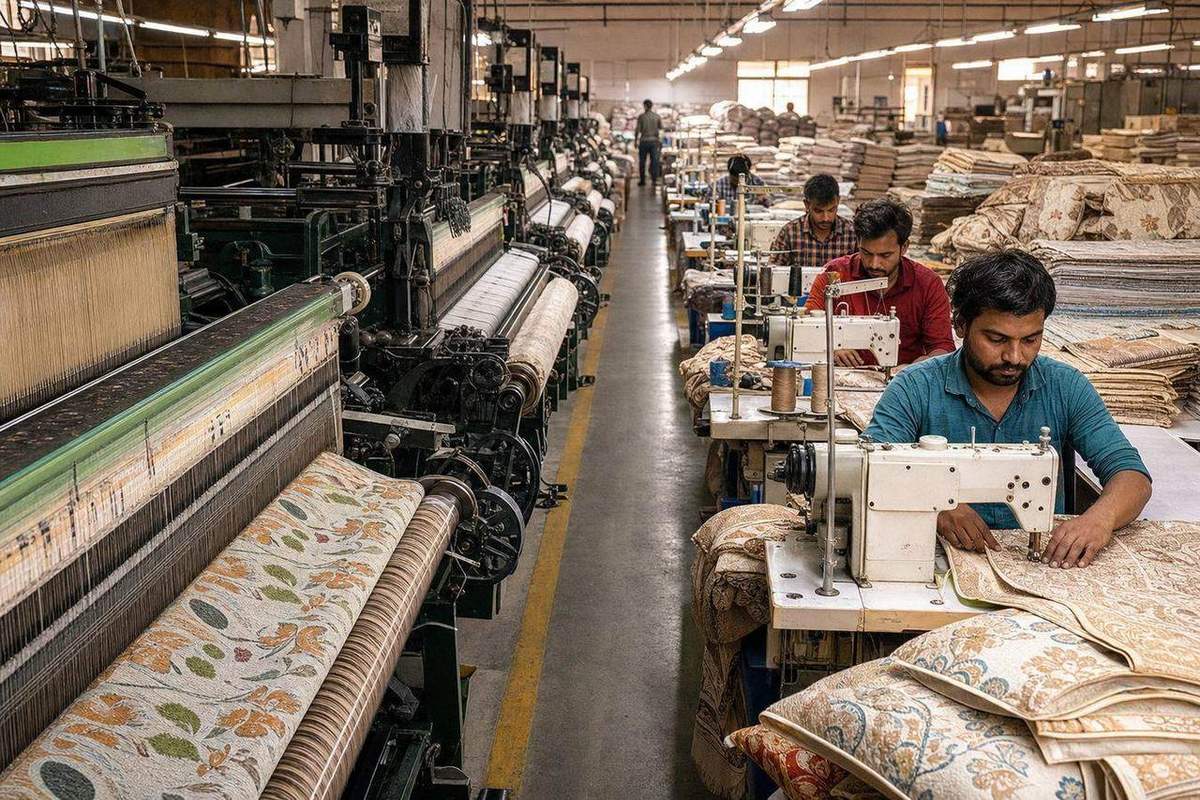
Global demand for Indian cotton throws and cushion covers spans a broad SKU ladder: basic plain and yarn-dyed sofa throws and utility cushion covers for wholesale distributors, mid decorative Jacquard and dobby throws with zipper 45×45 cm and 50×50 cm cushion covers for home specialty retail, premium yarn-dyed and embroidered coordinated throw-plus-cushion sets for department stores and e-commerce private label, and hospitality soft-furnishings programmes specifying GSM, size, and flammability where channel rules apply. Production is concentrated in specialist clusters: Panipat dominates throws, blankets-adjacent volume, and plain or yarn-dyed cushions; Karur and Coimbatore dominate export-disciplined cushion cover cut-and-sew; Solapur contributes textile made-ups capacity; Tirupur-adjacent units serve specific cushion programmes; Jaipur/Rajasthan contributes design-led printed cushions and throws; Delhi-NCR handles mixed-SKU consolidation, export-grade colourway packing, and private-label logistics.
Category value for cotton throws and cushion covers should be tracked via HS 6304 other furnishing articles and directional TEXPROCIL cotton made-ups context — never present broader cotton textile totals as if they were a throw-and-cushion-only figure. Demand across verified HS 6304 destinations (USA, UK, Germany, Australia, Canada, and EU markets) is driven by home specialty retail, department stores, big-box home, e-commerce private label, hospitality soft furnishings, wholesale distributors, and interior design trade rotating toward coordinated cotton soft-furnishings programmes and away from undifferentiated mass imports without shade discipline.
What Is TEXPROCIL and Why It Matters for Cotton Throw and Cushion Cover Exporters
Compliance Notes
TEXPROCIL stands for the Cotton Textiles Export Promotion Council, an apex body recognised by India's Ministry of Textiles and Ministry of Commerce and Industry to promote and facilitate export of Indian cotton yarn, fabric, and made-ups — including cotton sofa throws, lap throws, Jacquard throws, yarn-dyed cushion covers, zipper decorative pillow covers, envelope cushion covers, and coordinated throw and cushion programmes. It supports exporters through registration services, market development assistance (MDA), trade fair organisation and delegation support — most notably Index Mumbai for home textiles and Heimtextil Frankfurt for global soft-furnishings buyers — and market intelligence relevant to cotton made-ups export cycles including seasonal retail and hospitality procurement windows.
For cotton throw and cushion cover exporters specifically, TEXPROCIL plays a dual role. It is the registration authority that issues the Registration-cum-Membership Certificate (RCMC) that scheduled cotton made-ups exporters need for export documentation and scheme eligibility, and it is a commercial facilitator that connects registered members to Index Mumbai booths, Heimtextil delegation pathways, overseas buyer-seller meets, and international home textile exhibitions. Because cotton throws and cushion covers fall within TEXPROCIL's scheduled scope under HS 6304, registration functions as a genuine institutional requirement for organised export — not a discretionary add-on. Buyers in developed markets increasingly request RCMC evidence during vendor onboarding precisely because the cotton soft-furnishings category is populated by many small Panipat and Karur units and a smaller number of organised Delhi-NCR merchant exporters, and buyers use registration status as a first-order filter before investing in sample shipments that are expensive to freight when shade or GSM disputes arise.
Export Statistics
Key Statistics
Indian cotton throw and cushion cover exports are tracked primarily under HS 6304 — other furnishing articles, not knitted or crocheted — with cushion covers and many decorative throws commonly filed under 6304.90 or related 6304 subheadings depending on construction and essential character; some heavy throws may classify under HS 6301 when blanket or travelling-rug character dominates. Exporters shipping mixed containers of throws and cushion covers should confirm correct classification per SKU with their customs broker (CHA), since duty treatment and destination-market compliance requirements can differ even for visually similar soft-furnishings SKUs. Do not force throws into HS 6302 bed linen — that belongs to the bedsheet cluster.
Directional trade context: use DGCI&S / TradeStat under HS 6304 lines as the cotton soft-furnishings proxy — never present total cotton made-ups or total cotton textile export figures as the throw-and-cushion number. By destination, DGCI&S calendar-year 2024 HS 6304 value order places USA, UK, Germany, Australia, Canada, France, Italy, Spain, Netherlands, and Israel as India's top named destinations — sequence UAE hospitality programmes as a niche opportunity after verifying current data. Exporters should verify current figures via TEXPROCIL trade statistics, DGFT export dashboards, and ITC Trade Map before making sourcing or capacity commitments.
Comparison table
Swipe →
Data table — swipe horizontally on small screens
| Metric | Directional Trend | TEXPROCIL/Fair Relevance |
|---|---|---|
| Primary HS proxy | 6304 other furnishing articles (cushion covers; many decorative throws); 6301 only when blanket character dominates | RCMC product-category declaration must match declared headings across throw and cushion SKUs |
| Broader cotton made-ups context | Directional TEXPROCIL sector releases — not a throw/cushion-only audited total | Sector context only — never a SKU-specific claim without TradeStat confirmation |
| Primary production clusters | Panipat (throws); Karur/Coimbatore (cushion covers); Solapur; Delhi-NCR (consolidation) | Index Mumbai draws soft-furnishings buyers evaluating GSM and shade on-site |
| Top destination markets | USA, UK, Germany, Australia, Canada, France, Italy, Spain, Netherlands, Israel (DGCI&S HS 6304 2024); UAE = niche | Heimtextil buyer delegations from most of these markets every edition |
| Registration base | Fragmented across Panipat weaving units, Karur cut-and-sew, and Delhi-NCR merchants | TEXPROCIL exporter directory separates registered suppliers from unregistered intermediaries |
Import Statistics
Key Statistics
Council registration does not change destination trade math. DGCI&S HS 6304 CY 2024 still ranks India's export value as USA 55.82%, then UK, Germany, Australia, Canada, France, Italy, Spain, Netherlands, and Israel — with UAE/Japan as niche only. Full corridor scoring lives in Best Countries for Indian Cotton Throw and Cushion Cover Exports; demand-by-SKU mapping lives in Most Demanded Indian Cotton Throws and Cushion Covers by Country.
Product Categories / Variants
Summary Box
- Cotton cushion covers and decorative throws declared under cotton made-ups / HS 6304 pathways
- Coordinated throw-plus-cushion colourway programmes sold as cotton home textiles
- GOTS / OEKO-TEX cotton lines where certificate scope matches the TEXPROCIL-registered entity pathway
TEXPROCIL RCMC covers cotton made-ups programmes — throws and cushion covers under HS 6304 (and HS 6301 only where blanket character applies). For the full SKU ladder (plain, yarn-dyed, Jacquard, printed, embroidered, closures), use Top Cotton Throw and Cushion Cover Products Exported from India. Here, focus on what registration unlocks: fair access, buyer credibility on council membership, and cleaner invoice identity for cotton soft furnishings.
Manufacturing Overview
Export Tip
TEXPROCIL membership signals organised cotton made-ups export readiness; it does not replace weaving, cut-and-sew, lab-dip, or shade QC. Keep manufacturing depth in How to Export Cotton Throws and Cushion Covers from India. Use this post to connect RCMC evidence to buyer confidence, fair eligibility, and invoice consistency for Panipat/Karur programmes.
Why TEXPROCIL Registration Matters for Cotton Soft-Furnishings Exporters
Compliance Notes
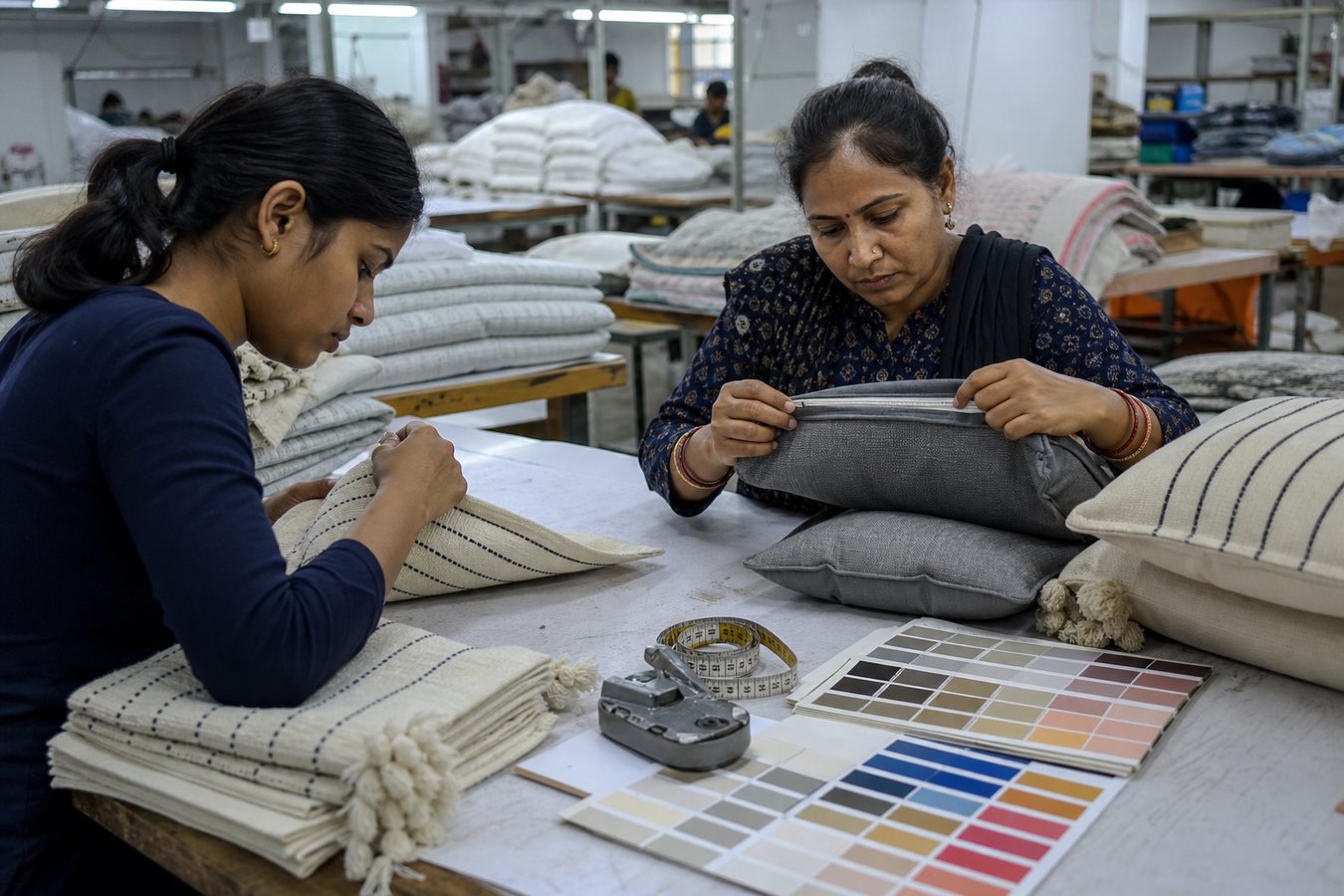
Beyond the institutional-facilitation role, TEXPROCIL membership delivers practical commercial value for cotton throw and cushion cover exporters: RCMC issuance for export documentation, Index Mumbai booth eligibility, Heimtextil delegation and MDA-supported overseas fair participation, and visibility in TEXPROCIL's exporter directory used by international sourcing teams building supplier shortlists ahead of each fair season. For a cluster-scale category like Panipat throws and Karur cushion covers, a registered merchant exporter with a live RCMC is often the only credible bridge between weaving and cut-and-sew units and a US department store buyer with a mid-six-figure seasonal PO — buyers do not want to onboard five separate units directly, and small workshops cannot handle export documentation, fibre labelling compliance, and colourway packing coordination alone.
Buyer trust is the immediate commercial payoff. When a buyer onboarding pack includes IEC, GSTIN, TEXPROCIL RCMC, and — where relevant — OEKO-TEX or GOTS certificates where claimed, azo-free dye declarations for EU channels, and honest cover-only versus filled disclosure, the perceived risk for a German home specialty buyer or a US private-label team drops sharply. Missing TEXPROCIL documentation causes serious buyers to pause, request workarounds, or move to an already-registered competitor — a meaningful risk in a category where buyers frequently discover new suppliers at Index Mumbai and Heimtextil and expect institutional registration as table stakes for any follow-up conversation about a coordinated throw-and-cushion programme.
Who Should Register with TEXPROCIL for Cotton Throw and Cushion Cover Exports
Compliance Notes
- Panipat units producing plain, yarn-dyed, Jacquard, and dobby cotton throws and volume cushion covers
- Karur and Coimbatore cut-and-sew factories producing zipper and envelope cushion covers for export
- Solapur and Tirupur-adjacent textile made-ups producers on specific cushion programmes
- Delhi-NCR merchant exporters consolidating Panipat throws with Karur cushion covers in coordinated colourways
- Hospitality soft-furnishings exporters supplying USA, UAE, and European hotel programmes
- MSMEs and startups with IEC and GST readiness entering cotton soft-furnishings export via a curated SKU range
TEXPROCIL registration is relevant to any entity engaged in commercial export of cotton throws and cushion covers, including Panipat weaving and stitching units, Karur and Coimbatore cut-and-sew cushion cover factories, Solapur textile made-ups producers, Delhi-NCR merchant exporters consolidating multi-cluster lots, MSMEs entering cotton soft-furnishings export with a valid IEC, and startups building private-label throw-and-cushion programmes for US or EU retail.
Eligibility generally requires a valid IEC, GST registration, and entity constitution documents matching the applicant's business structure — proprietorship, partnership, company, cooperative, or LLP. Manufacturer-exporter classification typically requires weaving or cut-and-sew production evidence; merchant-exporter classification requires procurement-and-export documentation. If your role is unclear or you operate across both models (common for Delhi-NCR merchants supporting Panipat throws and Karur cushion covers), state it explicitly during application, since default classification affects RCMC scope and fair participation category.
Benefits of TEXPROCIL Membership for Cotton Throw and Cushion Cover Exporters
Compliance Notes
Treat TEXPROCIL membership as a commercial toolkit rather than a certificate to file away — the RCMC and fair access open institutional doors, but GSM discipline, lab-dip approval, shade continuity across coordinated sets, and honest fibre declarations close orders.
Comparison table
Swipe →
Data table — swipe horizontally on small screens
| Benefit | What You Gain | How to Use It for Cotton Throws and Cushion Covers |
|---|---|---|
| RCMC issuance | Export documentation credential for scheduled cotton made-ups | Include in every buyer onboarding pack alongside IEC and GST for throws and cushion covers |
| Index Mumbai access | Eligibility to participate in India's premier home textiles trade fair | Bring graded throw and cushion samples across GSM, size, and finish with clear FOB pricing |
| Heimtextil delegation pathways | MDA-supported participation at the world's leading home textiles fair | Apply before booking; prepare coordinated colourway catalogues and MOQ sheets |
| Market development assistance (MDA) | Partial reimbursement for overseas fair participation and promotion | Apply before booking Heimtextil, Ambiente, or NY Home Fashions Market booths |
| Buyer-seller meets | Structured introductions to vetted international importers | Prepare cluster origin, construction, GSM, and MOQ specifics for each meeting |
| Exporter directory listing | Visibility to buyers searching for registered Indian cotton soft-furnishings suppliers | Keep product categories, clusters, and construction tiers current |
| Market intelligence | Destination-specific demand and compliance updates for cotton made-ups | Prioritise one or two markets based on current TEXPROCIL intelligence |
| Buyer credibility | Institutional signal reducing onboarding friction for shade-sensitive programmes | Attach RCMC to every inquiry response and Index Mumbai booth presentation |
TEXPROCIL Registration for Cotton Throw and Cushion Cover Exporters: Step-by-Step Process
Compliance Notes
Export Tip
The sequence below reflects the current organised application pathway through the TEXPROCIL portal, which is linked to DGFT login infrastructure for IEC-holding exporters. Confirm live screen flows and document checklists on texprocil.org before filing, as workflows are periodically updated.
Step 1: Obtain IEC
Apply for an Import Export Code on the DGFT portal if you do not already hold one. IEC is the foundation of all commercial export from India, and TEXPROCIL registration cannot proceed without it. Keep PAN, bank details, and address consistent with your GST registration to avoid mismatches later — a common source of delay for Panipat applicants whose banking address does not match the production unit address on file.
Step 2: Confirm Product Category Fit
Confirm that your cotton throws, sofa throws, lap throws, and decorative cushion covers fall within the scheduled cotton made-ups categories TEXPROCIL recognises under HS 6304. Heavy throws with blanket essential character may require HS 6301 declaration — verify classification against current TEXPROCIL product-category lists and your CHA before applying so RCMC scope matches what you plan to ship. EPCH adjacency applies only when a minority craft-print line dominates by handicraft character — confirm with your CHA rather than assuming dual registration is always required.
Step 3: Prepare Documentation
Assemble IEC copy, GST certificate, PAN, cancelled cheque, bank financial soundness certificate where required, and entity constitution proofs (partnership deed, incorporation certificate, MoA/AoA, cooperative registration, or LLP agreement as applicable). Manufacturer-exporter classification may require MSME Udyam registration and production-unit evidence such as a rent agreement, utility bill, or ownership proof for the Panipat or Karur unit. Incomplete document packs are the leading cause of processing delays.
Step 4: Register on the TEXPROCIL Portal
Create an applicant account on the TEXPROCIL online registration portal using your IEC and business email. This is the primary interface for new registration; DGFT portal linkages may form part of the workflow depending on the application type.
Step 5: Complete the Application and Select Product Categories
Fill in entity details, IEC, and product categories — select cotton made-ups / soft furnishings categories as applicable, and note whether you also intend to ship heavy throws under HS 6301. Declare export destination interests and exporter type (manufacturer, merchant, or both). Accurate category selection matters because RCMC scope, Index Mumbai participation eligibility, and scheme access often tie back to declared products.
Step 6: Pay Registration Fees
Pay the prescribed fee online via the portal's payment gateway. First-year fees typically comprise a one-time registration fee plus annual subscription plus GST. Retain receipts and acknowledgement numbers in your compliance file, and always verify live amounts before remitting since fee schedules are revised periodically.
Step 7: Upload Documents and Submit
Upload clear, self-attested scans of all required documents. Names, addresses, and signatory details must match precisely across IEC, GST, and the application form — even minor spelling discrepancies generate deficiency notices. Submit only once every required field and upload is confirmed complete.
Step 8: Verification and RCMC Issuance
TEXPROCIL officials verify completeness and document authenticity. Respond to any deficiency communication within 24–48 hours to avoid application dormancy. On approval, TEXPROCIL issues the RCMC — download and store it alongside IEC and GSTIN, and diary the annual renewal date so continuity is never broken, since a lapsed RCMC can jeopardise Index Mumbai booth eligibility ahead of the fair season and disrupt buyer onboarding packs that referenced active membership on a retail season tender.
Documents and Fees for TEXPROCIL Registration
Compliance Notes
Use this snapshot as a preparation gate. Exact requirements vary slightly by entity type and by manufacturer- versus merchant-exporter category, and always verify the live fee schedule on the TEXPROCIL portal before remitting payment.
Comparison table
Swipe →
Data table — swipe horizontally on small screens
| Item | Requirement / Typical Cost | Practical Note |
|---|---|---|
| IEC certificate | Mandatory prerequisite | Self-attest; ensure name matches all other documents |
| GST registration certificate | Mandatory | Legal name and address must align with IEC |
| Entity constitution proof | Deed / incorporation / MoA-AoA / cooperative registration / LLP agreement as applicable | Ensure notarisation where required |
| Production-unit evidence (manufacturer category) | Rent agreement, utility bill, or ownership proof for Panipat/Karur unit | Required for manufacturer-exporter classification |
| Bank financial soundness certificate | Often required | Use the bank account reflected in your IEC |
| First-year registration + membership + GST | Fee benchmark varies by exporter turnover slab | Verify live fee schedule on the TEXPROCIL portal |
| Annual renewal fee | Lower than first-year enrolment | Diary renewal before the financial-year deadline |
RCMC for Cotton Throw and Cushion Cover Exporters: What It Means and How to Use It
Compliance Notes
The Registration-cum-Membership Certificate (RCMC) confirms an exporter's registration and membership under TEXPROCIL's institutional framework. For cotton throw and cushion cover exporters, RCMC is referenced during buyer vendor onboarding, in applications for government export incentives, in Index Mumbai and Heimtextil fair allocation, and in documentary credit transactions where institutional membership proof is a documentary condition. Validity is typically multi-year but subject to annual fee payment — lapsing disrupts continuity even within the nominal validity window. Keep RCMC alongside IEC in a master compliance file accessible to your export desk and shipping agent, and reference the RCMC number on quotations, proforma invoices, and buyer-onboarding cover letters as a matter of routine — especially for coordinated throw-and-cushion colourway programmes where buyers audit the paperwork chain harder than they do for single-SKU utility cushion covers.
Index Mumbai and Heimtextil Access for Cotton Soft-Furnishings Exporters
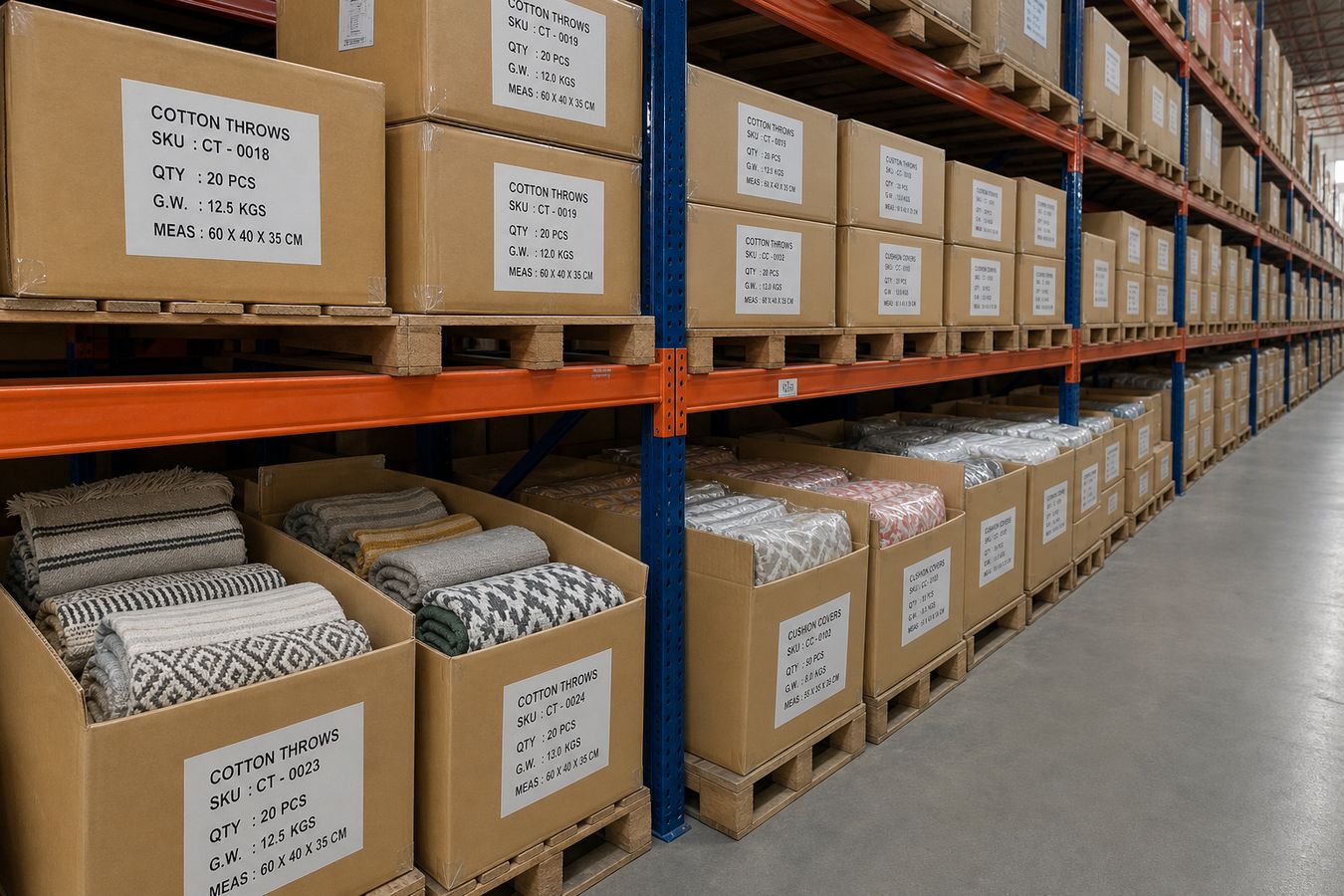
Index Mumbai — India's premier home textiles and soft-furnishings trade fair — and Heimtextil Frankfurt — the world's leading home textiles exhibition — are the two highest-leverage organised buyer-access channels for cotton throw and cushion cover exporters. TEXPROCIL membership is a prerequisite for booth eligibility, delegation participation, and MDA-supported overseas fair pathways in most cycles, and cotton soft-furnishings exhibitors form a visible throws-and-cushions segment where buyers can inspect GSM, shade continuity, zipper function, and packing samples on the spot.
For cotton throw and cushion cover exporters, these fairs deliver value well beyond the booth itself: buyers physically compare throw hand-feel and cushion cover dimensional tolerance, test zipper pull strength, and evaluate coordinated colourway sets before committing to seasonal programmes. Exhibitors who arrive with a well-organised catalogue segmented by cluster origin (Panipat throws vs Karur cushion covers), construction tier (plain, yarn-dyed, Jacquard), GSM band, size matrix (45×45 cm, 50×50 cm, throw dimensions), and clear FOB pricing tiers plus MOQ and lead-time sheets convert significantly more booth visits into follow-up purchase orders than those relying on ad hoc conversation. Booking typically opens months ahead of each edition — plan booth applications, product-catalogue readiness, and travel logistics well in advance of fair dates published on texprocil.org and heimtextil.com.
Comparison table
Swipe →
Data table — swipe horizontally on small screens
| Fair | Primary Value for Throw/Cushion Exporters | TEXPROCIL Linkage |
|---|---|---|
| Index Mumbai | Domestic and international home textile buyer concentration; on-site GSM and shade evaluation | Booth eligibility and delegation support for registered members |
| Heimtextil Frankfurt | Global soft-furnishings buyer access; EU retail and wholesale discovery | MDA-supported delegation pathways for registered exporters |
| NY Home Fashions Market | US home specialty and department store buyer access | TEXPROCIL trade mission and delegation participation in select cycles |
| Ambiente Frankfurt | Design-led home and gift retail crossover for decorative cushion programmes | Overseas fair MDA eligibility for registered members |
EPCH Adjacency for Craft-Print Cotton Throw and Cushion Lines
TEXPROCIL is the primary council for cotton throw and cushion cover exporters. EPCH — the Export Promotion Council for Handicrafts — becomes relevant only when a minority SKU line carries dominant handicraft or hand-print character — for example block-printed or Ajrakh-style cushion covers and throws from Jaipur where craft identity rather than volume made-ups weaving defines the commercial proposition. In those cases, confirm dual-registration need with your CHA and buyer rather than assuming EPCH replaces TEXPROCIL for the core plain, yarn-dyed, Jacquard, and dobby cotton soft-furnishings programme. For technique-depth on hand-printed textiles as a primary topic, see how to export hand-printed textiles from India as an optional cross-link — do not paste hand-print facts into a TEXPROCIL cotton made-ups registration guide.
Export Process
Export Tip
TEXPROCIL registration is one step in a broader export sequence. A typical cotton throw and cushion cover export process runs: IEC and TEXPROCIL registration; buyer discovery via Index Mumbai, Heimtextil, direct outreach, or B2B platforms; sample dispatch with construction, GSM, size, and shade specifications; price negotiation and purchase order; procurement or production scheduling with Panipat and Karur units; pre-shipment quality control (GSM, dimensional tolerance, shade continuity, zipper pull test); export packing with polybag, care labels, hangtags where retail-ready, colourway-separated master cartons, and moisture barriers; customs documentation and clearance; booking and loading at Nhava Sheva or Mundra via ICD Delhi/Dadri/Panipat or Chennai/Tuticorin; shipment tracking; and final documentation handover against payment terms.
For the complete operational walkthrough — including full documentation specifics such as fibre content labels, azo-free declarations, and broker handoff — see how to export cotton throws and cushion covers from India and the cotton throw and cushion cover export documentation checklist.
Pricing Analysis
Buyer Tip
Cotton throw and cushion cover pricing is driven primarily by construction (plain, yarn-dyed, Jacquard, printed, embroidered), GSM, size, finish (piping, embroidery, brush texture), certification tier (OEKO-TEX, GOTS, BCI where claimed), and retail-ready packing depth. Directional FOB pricing for basic cushion covers commonly runs roughly US$1.50–6 per piece; mid decorative covers roughly US$4–14 per piece; lightweight throws roughly US$6–22 per piece; heavy Jacquard or premium throws roughly US$15–40+ per piece; certified premiums are evidence-dependent. None of that pricing power matters if a buyer stalls at vendor qualification — for the full country-by-country SKU preference context, see most demanded Indian cotton throws and cushion covers by country, and for certified organic positioning, see organic GOTS OEKO-TEX cotton throw and cushion cover export opportunities.
Comparison table
Swipe →
Data table — swipe horizontally on small screens
| Product / Format | Typical FOB Price (USD, directional) | Price Driver |
|---|---|---|
| Basic plain cushion covers | US$1.50–6 per piece | GSM, size, closure type, volume tier |
| Mid decorative zipper/piped covers | US$4–14 per piece | Finish, piping, embroidery, retail-ready packing |
| Lightweight plain/yarn-dyed throws | US$6–22 per piece | GSM, dimensions, yarn-dye complexity |
| Jacquard/dobby decorative throws | US$15–40+ per piece | Weave complexity, GSM, brush finish |
| Coordinated throw-plus-cushion sets | Set pricing by colourway and piece count | Shade continuity discipline across SKUs |
| OEKO-TEX/GOTS-certified premiums | Evidence-dependent uplift on base FOB | Valid scope-matched certificates per SKU |
MOQ Analysis
Buyer Tip
MOQ for cotton throws and cushion covers scales from small sample batches to full container loads depending on buyer type and construction. Retail and private-label buyers typically start with 2–10 pieces per SKU for shade and GSM evaluation, move to trial orders of 100–300 pieces per hero SKU or 200–500 mixed pieces, and scale to wholesale programmes of 300–1,000+ pieces per colourway and size once specification, packaging, and QC protocols are finalised. FCL 20GP/40HC is used for mixed throw-and-cushion programmes planned by CBM density rather than weight alone.
Comparison table
Swipe →
Data table — swipe horizontally on small screens
| Buyer Stage | Typical MOQ | Shipment Mode |
|---|---|---|
| Sample / lab-dip evaluation | 2–10 pcs per SKU/colourway | Courier/air parcel |
| Trial order | 100–300 pcs hero SKU or 200–500 mixed | LCL sea freight |
| Standing wholesale reorder | 300–1,000+ pcs per colourway/size | LCL or part-container |
| FCL mixed soft-furnishings programme | 1 × 20GP or 40HC by CBM density | FCL sea freight |
| Hospitality throw/cushion programme | Case-by-case by room count and SKU matrix | FCL or structured LCL by project |
Packaging Standards
Export Tip
Bulk export packaging for cotton throws and cushion covers typically uses polybag plus export carton for folded throws and flat-packed cushion covers, retail hangtags and care labels for retail-ready channels, moisture-barrier layers in master cartons for ocean freight, and colourway-separated carton mapping to prevent shade mixing in warehouse receiving. Cartons must carry size, colourway, and SKU labels; avoid crushing Jacquard or brushed texture through over-stuffing. Cover-only versus filled disclosure must be explicit — most ocean programmes ship flat covers without inserts unless specified.
Comparison table
Swipe →
Data table — swipe horizontally on small screens
| Format | Typical Packing Approach | Notes |
|---|---|---|
| Folded cotton throws | Individual polybag, master carton by colourway | Avoid Jacquard crush; engineer carton CBM |
| Flat-packed cushion covers | Polybag, size/colourway-labelled cartons | Ship cover-only unless insert specified |
| Retail-ready programmes | Hangtags, care labels, barcode-ready cartons | Align fibre content labels to destination rules |
| Coordinated colourway sets | Colourway-separated master cartons with set mapping | Document throw-to-cushion shade linkage on packing list |
| Hospitality programmes | Neutral polybag, bulk master cartons, project labels | GSM and size labels per room-SKU matrix |
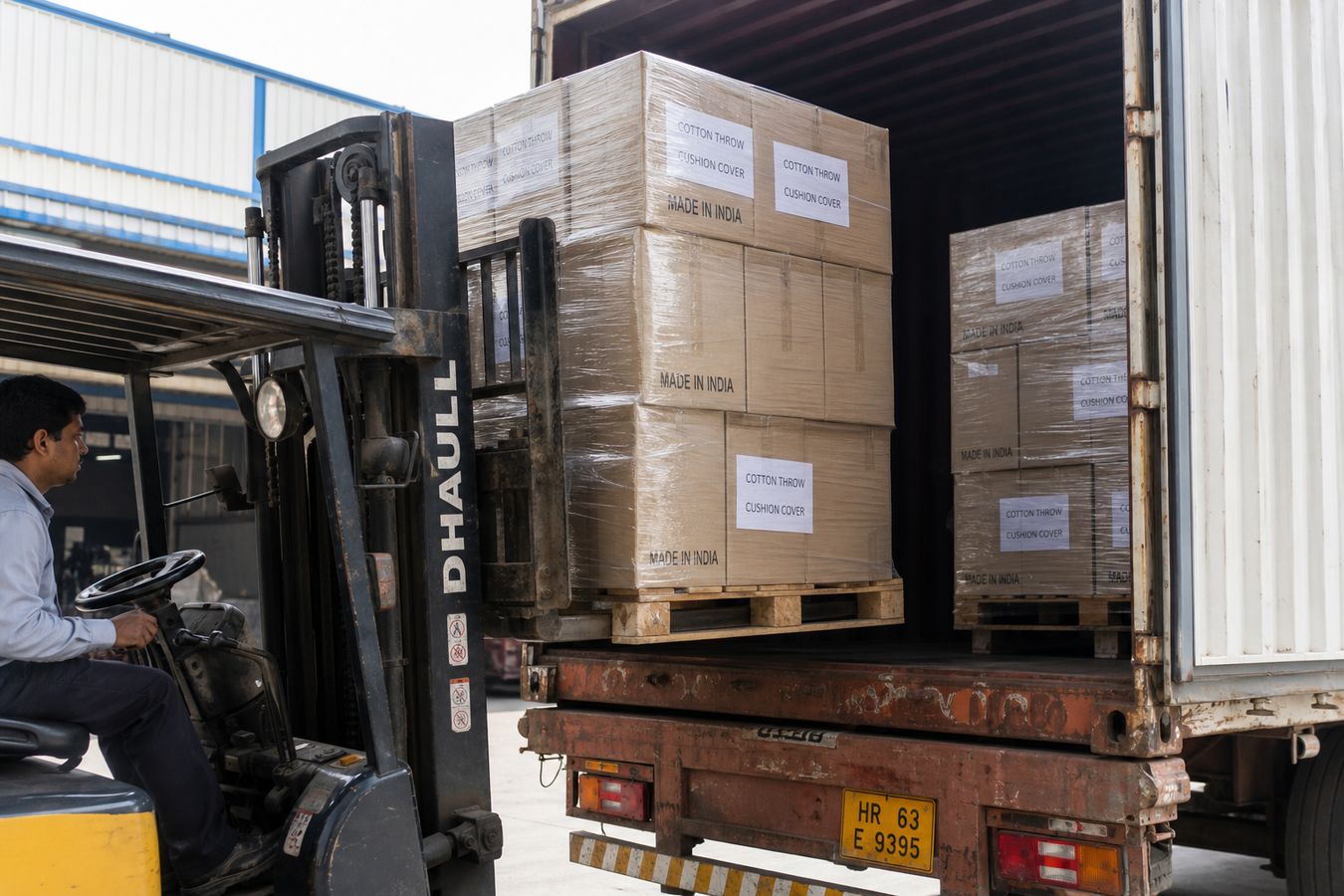
Container Loading Details
Export Tip
Container loading is a freight-forwarder decision, not a TEXPROCIL one — but RCMC reference and IEC details on paperwork must match the specific container and lot being stuffed. Cotton soft-furnishings are cube-dense rather than weight-limited: carton design, fold technique, and piece count per colourway drive achievable load per container. Jacquard throws yield fewer units per container than flat-packed cushion covers because fold bulk and crush-risk limits stack height.
Comparison table
Swipe →
Data table — swipe horizontally on small screens
| Container | Approximate Fill (Cotton Soft-Furnishings) | Paperwork Checkpoint Before Stuffing |
|---|---|---|
| 20ft FCL | Directional — CBM-dependent; confirm stuffing plan with forwarder for mixed throw/cushion mix | IEC, RCMC reference, HS 6304 per SKU on invoice match stuffed lot |
| 40ft HC FCL | Higher CBM capacity; preferred for mixed colourway programmes | Packing list colourway mapping verified against carton labels |
| LCL trial | Small trial and mixed-SKU validation | Shade card and GSM evidence attached to trial documentation |
Shipping Methods
Export Tip
- FOB Nhava Sheva / Mundra — standard for first FCL programmes with experienced freight forwarders
- CFR/CIF — common when buyer specifies destination port and insurance framing
- EXW Panipat/Karur — useful for buyers with established India logistics partners
- Air courier — lab-dips, shade cards, and pre-production strike-offs
Ocean FCL from Nhava Sheva or Mundra is the dominant mode for wholesale cotton throw and cushion cover programmes, with LCL used for trial orders and mixed-SKU validation. Air freight and courier serve lab-dip dispatch and urgent sample evaluation. Inland haul from Panipat and Delhi-NCR to gateway ports commonly routes via ICD Delhi, Dadri, or Panipat corridor consolidation; Karur and Coimbatore origin cargo often exits via Chennai or Tuticorin. Incoterms typically run EXW, FOB, CFR/CIF for first programmes, with DAP/DDP selective for experienced retail partners.
Certifications
Compliance Notes
TEXPROCIL RCMC is the institutional baseline; destination and channel certifications become commercially decisive as you move into premium retail, EU distribution, and certified organic programmes.
Comparison table
Swipe →
Data table — swipe horizontally on small screens
| Certification / Compliance | Relevance | Typical Channel |
|---|---|---|
| TEXPROCIL RCMC | Cotton made-ups export registration and fair access | All organised cotton throw and cushion cover exporters |
| OEKO-TEX Standard 100 | Chemical safety for dyes and finishes | EU and premium US home specialty retail |
| GOTS | Organic cotton chain of custody | Organic private-label and boutique retail |
| BCI | Better Cotton Initiative sourcing claims | Mass retail sustainability programmes |
| US TPFIA / care labelling | Fibre content and care instruction compliance | USA retail and e-commerce |
| EU Textile Regulation / azo dyes | Fibre declaration and restricted substances | Germany, Netherlands, France, Italy distribution |
Buyer Requirements
Buyer Requirements
- Construction and size matrix: throw dimensions, cushion cover sizes (45×45 cm, 50×50 cm, custom), closure type
- GSM targets with test-method reference and acceptable tolerance band
- Physical lab-dip approval linked to signed shade card — not photo-only sign-off
- Fibre content and care labels aligned to US TPFIA or EU Textile Regulation as applicable
- Azo-free dye declaration for EU-bound programmes where required
- TEXPROCIL RCMC, IEC, and GST evidence in the first inquiry response
International buyers evaluating a new Indian cotton soft-furnishings supplier typically request a consistent set of proof points before issuing a purchase order: a coherent programme sheet by construction, size, and GSM; physical lab-dips that match the agreed shade standard; clear FOB or landed pricing by colourway and volume tier; packaging specification sign-off; GSM test evidence; zipper pull test records for cushion covers; honest cover-only disclosure; and confirmation of IEC and TEXPROCIL registration status. Preparing these proactively is one of the clearest signals of export readiness a new supplier can send.
Country-wise Opportunities
Market Snapshot
RCMC helps you show up as a credible cotton made-ups exporter in every corridor; market order still follows DGCI&S HS 6304 value — USA, UK, Germany, Australia, Canada first. See Best Countries for Indian Cotton Throw and Cushion Cover Exports for the scorecard rather than repeating destination tables here.
TEXPROCIL vs Other Export Bodies for Cotton Soft-Furnishings Exporters
Compliance Notes
Cotton throw and cushion cover exporters sometimes ask whether other bodies are more relevant. For cotton soft-furnishings as the primary export product, TEXPROCIL is the correct primary registration and facilitation body. EPCH applies only when handicraft or hand-print character dominates a minority craft-print line. FIEO offers broader cross-sector federation benefits; state-level textile development corporations support cluster-specific capacity; and DGFT governs IEC issuance and broader export policy. These bodies complement TEXPROCIL rather than compete with it.
Comparison table
Swipe →
Data table — swipe horizontally on small screens
| Body | Primary Role for Throw/Cushion Exporters | When to Engage |
|---|---|---|
| TEXPROCIL | Cotton made-ups registration, RCMC, Index Mumbai, Heimtextil, MDA | Primary registration for all commercial cotton throw and cushion cover exporters |
| EPCH | Handicraft registration for craft-print dominant lines | Only when hand-print/handicraft character dominates a minority SKU line |
| FIEO | Broad exporter federation, cross-sector networking | Supplementary for wider export community benefits |
| DGFT | IEC issuance, RCMC portal infrastructure, export policy | IEC first; portal credentials used throughout |
Sourcing Checklist
Checklist
Use this two-sided checklist to align expectations before the first purchase order.
Buyer Checklist
- Request IEC, TEXPROCIL RCMC, and GST evidence upfront in the first inquiry response
- Ask for samples across your target construction, GSM, and size combinations with dimensions noted
- Confirm cover-only versus filled policy and cotton percentage in writing
- Clarify MOQ, lead time, colourway packing format, and payment terms before quoting retail pricing
- For EU/UK shipments, confirm azo-free and fibre-labelling readiness; for USA, confirm TPFIA care label compliance
Exporter Checklist
- Complete IEC and TEXPROCIL registration before active buyer outreach or Index Mumbai booking
- Standardise construction tiers (plain, yarn-dyed, Jacquard) and maintain consistent GSM and size specification sheets by cluster
- Invest in lab-dip approval rhythms and shade-card discipline before targeting coordinated colourway programmes
- Offer a graded price ladder across GSM, finish, and construction so buyers can find their budget tier
- Respond to specification questions and sample requests within 24–48 hours, including honest Panipat vs Karur origin statements
Compliance Checklist
Checklist
Compliance Notes
Comparison table
Swipe →
Data table — swipe horizontally on small screens
| Compliance Item | Status Check | Owner |
|---|---|---|
| IEC | Valid and matches GST/PAN details | Export desk |
| GST registration | Active and address-consistent | Accounts/compliance |
| TEXPROCIL RCMC | Current and renewed annually | Export desk |
| Pre-shipment QC | GSM, shade match, dimensional tolerance, zipper test documented | QC team |
| Packaging compliance | Care labels, fibre content, colourway carton mapping | Packaging team |
| Azo-free / EU textile readiness (EU-facing) | Dye and finish declarations current per programme | Quality/compliance |
| Cover-only disclosure | Honest insert policy on invoice and packing list | Marketing/compliance |
| OEKO-TEX/GOTS (if claimed) | Valid scope-matched certificates per SKU | Compliance |
Common Buyer Mistakes
Common Mistakes Box
- Assuming all Indian cotton throws are the same GSM and construction — Panipat output spans plain utility through premium Jacquard, and construction must be specified per SKU.
- Skipping lab-dip evaluation before a bulk order, then finding shade mismatch between throw and cushion cover only once the container has landed.
- Not verifying TEXPROCIL/IEC credentials before wiring an advance payment to an unregistered trader met at a fair or online.
- Choosing the lowest FOB quote without checking whether it reflects lower GSM, weaker zippers, or missing fibre labels for USA-bound shipments.
- Ordering coordinated colourway sets without a single approved shade card referenced across Panipat throw and Karur cushion production.
- Confusing TEXPROCIL registration with a complete shipment document pack — RCMC is institutional credibility, not a substitute for commercial invoice reconciliation or a bill of lading.
Challenges & Solutions
Comparison table
Swipe →
Data table — swipe horizontally on small screens
| Challenge | Impact | Solution |
|---|---|---|
| Fragmented Panipat/Karur supply base | Inconsistent shade and GSM across small producers | Work with TEXPROCIL-registered merchant exporters who standardise QC across units |
| TEXPROCIL RCMC allowed to lapse during peak colourway season | Retail claims and programme cancellation | Single approved shade card; mid-bulk shade checkpoint across clusters |
| Jacquard crush in container | Texture damage and margin loss | Engineer CBM with stack limits; reinforce carton structure |
| Fibre labelling questions from US/EU buyers | Onboarding delays for retail programmes | Build TPFIA/EU label compliance rhythms per programme — see documentation checklist |
| New, undocumented entrants met at fairs | Buyer scepticism during vendor diligence | Lead with TEXPROCIL RCMC and IEC in every first response and Index Mumbai conversation |
Future Market Trends
Key Statistics
Through 2030, three trends will shape cotton soft-furnishings export registration and buyer expectations: continued growth in coordinated throw-plus-cushion private-label programmes across the USA, Germany, and UK requiring early TEXPROCIL-credible supplier onboarding for seasonal colourway windows; rising OEKO-TEX, GOTS, and BCI documentation expectations across EU and premium US retail; and Index Mumbai and Heimtextil-driven discovery of Panipat Jacquard and Karur cushion programmes by boutique retailers in France, Italy, and specialty US home channels. TEXPROCIL's digital registration processes are also expected to streamline further, reducing administrative friction for smaller Panipat and Karur units entering export for the first time.
Exporters who treat TEXPROCIL registration as living infrastructure — renewed annually, paired with consistent GSM and shade QC documentation, and used actively for Index Mumbai and Heimtextil participation — will be best positioned to capture disproportionate share as international demand keeps expanding across the anchor destination markets rather than being confined to undifferentiated utility cushion cover volumes.
Expert Insights
Expert Insight Box
Exporters preparing for their first TEXPROCIL registration or Index Mumbai booth often underestimate how much documentation discipline shortens the path from fair conversation to signed purchase order. Buyers who visit an Index Mumbai booth and receive a complete construction catalogue, transparent GSM and FOB pricing ladder, and a valid RCMC on the spot move to sample requests far faster than exporters who promise to send details later. A second recurring insight from Panipat and Karur cluster visits: units that specialise deeply in one construction family — yarn-dyed throws, Jacquard throws, or export-disciplined zipper cushion covers — generally out-compete units attempting to offer every construction simultaneously without matching shade consistency across colourways.
The third recurring insight is that fibre labelling and azo-free dye expectations are firming up alongside institutional credentials. What was optional EU declaration attachment two years ago is becoming closer to a baseline requirement for German and Dutch home specialty buyers — exporters who build compliance documentation rhythms into every programme now will have a meaningful head start over competitors who treat compliance as a per-shipment scramble after RCMC is already in place.
Conclusion
- Do next: Verify live TEXPROCIL registration fees and process on texprocil.org, then file with a complete document pack before buyer outreach or Index Mumbai booking begins.
- Read how to export cotton throws and cushion covers from India, most demanded Indian cotton throws and cushion covers by country, top cotton throw and cushion cover products exported from India, best countries for Indian cotton throw and cushion cover exports, find international buyers for cotton throws and cushion covers, source cotton throws and cushion covers directly from India, organic GOTS OEKO-TEX cotton throw and cushion cover export opportunities, the cotton throw and cushion cover export documentation checklist, and trade shows and B2B marketplaces for cotton throw and cushion cover exporters.
- For related partnership models, see textiles & home furnishings, merchant exporter services, export products from India, global sourcing partner, and product sourcing company.
TEXPROCIL registration for cotton throw and cushion cover exporters is the foundational institutional credential behind India's Panipat–Karur–Delhi soft-furnishings supply: RCMC continuity, Index Mumbai and Heimtextil access, market development support, and the buyer credibility that shortens the path from first inquiry to first colourway-packed container. The steps are clear — obtain IEC first, complete TEXPROCIL registration with a clean document pack, diary annual renewals, and pair the credential with disciplined GSM and shade QC documentation.
Actionable next steps: verify IEC and GST consistency this week; assemble the documents from this guide; complete TEXPROCIL registration; and plan an Index Mumbai or direct buyer-outreach cycle with graded throw and cushion samples and a complete credential pack. Contact Altus Exports for a readiness review connecting TEXPROCIL registration to real commercial outcomes for your cotton throw and cushion cover export programme.