
How to Export Hand Printed Textiles from India: Complete Process Guide
By Saurabh Mittal, Founder, Altus Exports
The complete step-by-step process guide to exporting hand printed textiles from India — Import Export Code registration, EPCH RCMC, strike-off and print-registration QC, colourway packing, HS classification for printed fabrics and made-ups, Incoterms, lead times, ports, and international buyer development — with expert insight from Altus Exports.
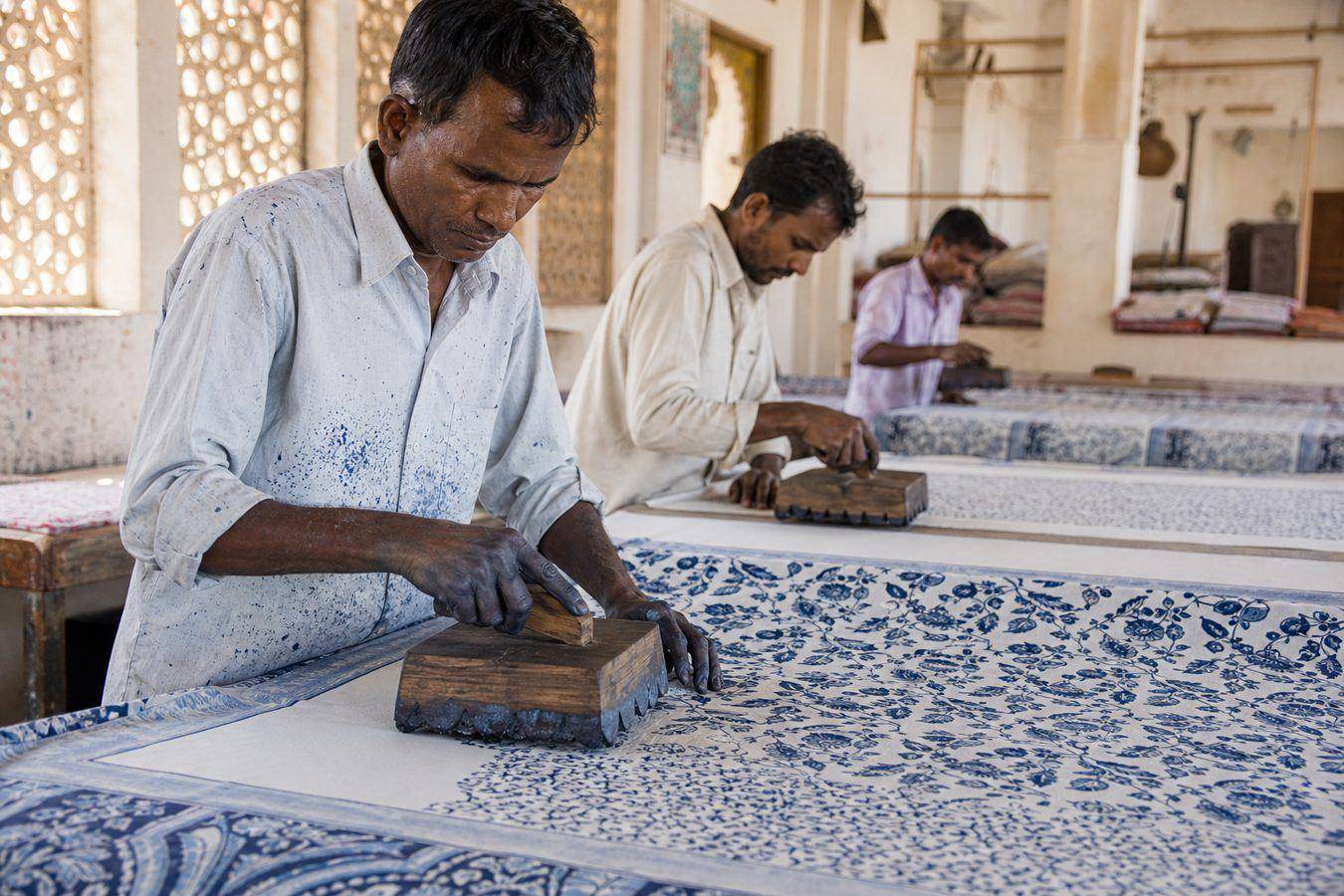
Exporting hand printed textiles from India is a genuinely scalable trade for a well-prepared block-print workshop, screen-print unit, merchant exporter, or trading house — but it is a technique-and-colourway business, not a commodity plain-fabric export you can run on one undifferentiated SKU list. A single container bound for a US home specialty retailer or a German design boutique might carry Bagru block-print cushion covers, Sanganer yardage for a private-label curtain programme, Ajrakh natural-dye throws, and Kalamkari table linen — all riding on one commercial invoice, one packing list organised by colourway, and one buyer relationship. The exporters who convert that complexity into a durable, repeat-order business are the ones who treat registration, strike-off approval, print-registration QC, colourway packing discipline, and HS-accurate documentation as one connected operating system rather than a series of separate scrambles before each sailing date.
This guide is the complete process pillar for exporting hand printed textiles from India: obtaining an Import Export Code (IEC), registering with the Export Promotion Council for Handicrafts (EPCH) for RCMC, building a print-technique sourcing plan across Jaipur–Sanganer–Bagru, Kutch/Ajrakhpur, Machilipatnam–Srikalahasti, and Panipat/Karur made-up conversion belts, locking strike-offs and colourfastness standards before bulk, packing by colourway and fabric format, loading a container without crushing hand-feel finishes, preparing export documentation, choosing a shipping route and Incoterm, and building an initial international buyer pipeline. It is written for first-time hand print exporters, artisan workshops expanding into export, and trading companies evaluating block print, Ajrakh, Dabu, Kalamkari, and hand screen programmes as a new channel.
Because this is the process pillar for the hand printed textiles export cluster, several topics are covered here at process-overview depth and linked out to dedicated guides: the full product catalogue by print technique and made-up format lives in Top Hand Printed Textile Products Exported from India; destination-market ranking lives in Best Countries for Indian Hand Printed Textile Exports; buyer-side sourcing and strike-off playbooks live in Source Hand Printed Textiles Directly from India; EPCH membership mechanics live in EPCH Registration Benefits for Hand Printed Textile Exporters; country-by-country technique demand mapping lives in Most Demanded Indian Hand Printed Textiles by Country; buyer prospecting tactics live in Find International Buyers for Hand Printed Textiles; natural-dye, organic, and fair-trade programme depth lives in Block Print, Ajrakh, Kalamkari & Sustainable Hand Printed Textile Export Opportunities; the complete document-by-document checklist lives in Hand Printed Textile Export Documentation Checklist; and trade-fair strategy lives in Trade Shows and B2B Marketplaces for Hand Printed Textile Exporters.
Key Takeaways
Summary Box
Executive Summary
Summary Box
This guide sets out the complete, sequential process for exporting hand printed textiles from India: register your business for export (IEC and EPCH RCMC), decide which print techniques and made-up formats belong in your first programme, choose the sourcing clusters that fit that assortment, vet and onboard artisan units and conversion workshops, lock strike-off quality and print-registration consistency for every colourway, package and load by fabric format and colourway, prepare HS-accurate documentation, choose a shipping route and Incoterm, and build an initial international buyer pipeline. Each stage is covered here at the depth a new exporter needs to move confidently from registration to a shipped container — deeper dives into the full SKU catalogue, destination-market ranking, EPCH mechanics, sustainable print programmes, full documentation, buyer outreach, and trade fairs are linked throughout.
The exporters who succeed at scale in hand printed textiles are not necessarily the ones with the widest block library — they are the ones who build registration, strike-off discipline, colourway packing, and HS-accurate invoicing into their standard operating process from the first shipment, rather than treating every new print design as a one-off puzzle to solve under deadline pressure. That discipline is what converts a single successful strike-off order into a repeatable, multi-year hand print export business.
Market Size & Industry Overview
Key Statistics
India's hand printed textile export capability sits across a set of specialised craft-print clusters, each contributing a different technique, dye chemistry, and design language to the finished programme. Jaipur, Sanganer, and Bagru in Rajasthan anchor woodblock print and Dabu mud-resist programmes on cotton and blended bases — the visual language most international buyers associate with Indian block print. Kutch and Ajrakhpur in Gujarat supply Ajrakh natural-dye resist print with its distinctive indigo, madder, and resist geometry. Machilipatnam and Srikalahasti in Andhra Pradesh produce Kalamkari through hand-drawn and block-assisted narrative and floral motifs. Panipat, Karur, and Tirupur belts convert printed yardage into cushion covers, throws, table linen, curtains, and scarves at volume, often combining artisan print with screen-print capacity for repeat retail programmes. Delhi-NCR functions as the merchant-exporter consolidation point where multi-technique, multi-cluster print assortments are typically brought together into a single, coherent export programme.
The Export Promotion Council for Handicrafts (EPCH) is the principal industry body relevant to hand printed textile handicraft lines, issuing RCMC registration and providing access to IHGF Delhi Fair and related textile-handicraft promotion. Hand printed textiles are best understood as a technique-and-cluster category within EPCH's textile handicraft and artware streams rather than a single officially published total — directional EPCH sector figures for textile handicrafts illustrate manufacturing depth, but print-specific totals are not consolidated into one published line item. Always re-verify the latest EPCH, TEXPROCIL, DGFT, and ITC Trade Map releases before quoting figures in buyer-facing material.
New exporters typically enter through one or two print techniques paired with one made-up format — Bagru block-print cushion covers, or Sanganer yardage for a curtain private-label programme — before expanding into coordinated soft-furnishing assortments as buyer relationships and strike-off systems mature. Trying to launch simultaneously across Ajrakh, Kalamkari, Dabu, and volume screen print as a first-time exporter usually spreads print-registration QC attention too thin to build a reliable early track record.
India's core hand printed textile sourcing clusters
Swipe →
Data table — swipe horizontally on small screens
| Cluster | State/Region | Primary Technique | Typical Output |
|---|---|---|---|
| Jaipur / Sanganer / Bagru | Rajasthan | Woodblock print, Dabu | Yardage, cushion covers, scarves, coordinated sets |
| Kutch / Ajrakhpur | Gujarat | Ajrakh natural-dye resist | Yardage, throws, stoles, heritage programmes |
| Machilipatnam / Srikalahasti | Andhra Pradesh | Kalamkari | Table linen, yardage, apparel fabric, wall panels |
| Panipat / Karur / Tirupur | North / South India | Made-up conversion, screen print | Cushions, throws, curtains, volume retail programmes |
| Delhi-NCR | Delhi / NCR | Cross-technique consolidation | Merchant-exporter programme management and export coordination |
Export Statistics
Key Statistics
Export statistics for hand printed textiles should start with EPCH's dedicated "Handprinted Textiles" category rather than inventing a custom aggregate across unrelated textile HS lines. Sustained global demand shows up across block-print cushion covers, Ajrakh yardage, Kalamkari table linen, hand screen printed throws, printed curtain programmes, and coordinated soft-furnishing assortments for home specialty retail, design boutiques, e-commerce private label, and hospitality soft furnishings. Private-label print programmes and certified organic or natural-dye collections are among the most frequent premium commercial conversations, reflecting buyer appetite for technique-led storytelling rather than undifferentiated commodity yardage (directional buyer feedback layered on top of the EPCH category total).
EPCH does publish a dedicated "Handprinted Textiles" export category, distinct from the wider handicrafts basket: Rs 2,450.62 crore in FY 2023-24, rising to Rs 3,216.94 crore in FY 2024-25 (+31.27% YoY in rupee terms; ~US$380–382 million directional). Treat this as the primary category benchmark; ITC Trade Map data on printed cotton fabrics (HS 5208/5209 family) and furnishing made-ups (6303/6304) provides supplementary directional import-demand context by destination, because those HS tables are not fully disaggregated by hand-print technique. Always re-verify the latest EPCH, TEXPROCIL, and DGFT releases before quoting figures in buyer-facing material.
EPCH Handprinted Textiles export context (FY 2023-24 vs FY 2024-25)
Swipe →
Data table — swipe horizontally on small screens
| Metric | Indicative Position (Directional) |
|---|---|
| Governing trade body (craft print) | EPCH (Export Promotion Council for Handicrafts) |
| EPCH Handprinted Textiles total | Rs 2,450.62 crore (FY23-24) → Rs 3,216.94 crore (FY24-25, +31.27% YoY) |
| Directional USD equivalent (FY24-25) | ~US$380–382 million |
| TEXPROCIL adjacency | Relevant when cotton made-ups classify under cotton textile made-ups — confirm RCMC route per SKU mix |
| Technique clusters | Jaipur–Bagru–Sanganer; Kutch/Ajrakh; Machilipatnam–Srikalahasti; Panipat/Karur conversion |
| Dominant export forms | Block print cushions, Ajrakh yardage, Kalamkari table linen, printed curtains, scarves |
| Core HS families (verify per SKU) | 5208/5209, 6302, 6303, 6304, 6214 |
| Directional top markets (EPCH FY24-25 value order) | UAE, USA, UK, France, Germany, Canada, Japan, Australia, Netherlands |
Import Statistics
Key Statistics
From an Indian exporter's perspective, "import statistics" means understanding how destination markets absorb hand printed textile programmes — which countries pull the largest EPCH-reported share of Handprinted Textiles exports, what compliance filters buyers apply at the border, and how channel mix (home specialty retail, department stores, design boutiques, e-commerce private label, hospitality soft furnishings, and fashion fabric buyers) shapes MOQ and packaging expectations. By EPCH's FY 2024-25 Handprinted Textiles country-wise data, UAE leads by value, followed by USA, UK, France, Germany, Canada, Japan, Australia, and Netherlands — each with a distinct compliance posture and design-season calendar.
For a country-by-country demand matrix of preferred print techniques, fabric bases, and certifications, see Most Demanded Indian Hand Printed Textiles by Country. For a ranked market-entry scorecard covering duty and freight corridors, see Best Countries for Indian Hand Printed Textile Exports.
EPCH Handprinted Textiles destination-market profile (FY 2024-25 value order)
Swipe →
Data table — swipe horizontally on small screens
| Destination | EPCH FY24-25 Value / Demand Position | Primary Compliance Consideration |
|---|---|---|
| UAE | Largest EPCH value (Rs 1,539.46 crore); fast freight; wholesale and hospitality velocity | Lighter chemical-compliance stack; fast reorder cycles |
| USA | Second-largest EPCH value (Rs 319.92 crore); deepest home textile print retail channel | Textile Fiber Products Identification Act; care labelling; azo dye awareness |
| UK | Established soft furnishings and design retail demand | Fibre composition disclosure; care labelling |
| France | Design retail; craft provenance valued | EU textile labelling; natural-dye documentation for premium |
| Germany | Design-led, quality- and compliance-conscious retail | EU Textile Regulation; REACH; OEKO-TEX/GOTS for premium |
| Canada | Similar profile to USA at smaller scale | Often paired with US-facing documentation |
| Japan | Precision market; smaller EPCH value | Strict fibre labelling; hand-print authenticity scrutiny |
| Australia | Accessible premium niche | Labeling clarity; flammability awareness for furnishing channels |
| Netherlands | Smaller EPCH value for this category; EU redistribution and design-channel role | REACH re-export exposure via EU distribution |
Product Categories / Variants
Summary Box
This section is a brief category overview only — for the full product catalogue with print technique, fabric base, MOQ by colourway, and packaging-by-format detail, see the dedicated companion guide, Top Hand Printed Textile Products Exported from India. What matters at the process-planning stage is choosing which print techniques and made-up formats anchor your first programme, since strike-off approval, dye documentation, HS mapping, and packing design differ meaningfully across block print, Ajrakh, Kalamkari, and hand screen lines.
Hand printed textile category snapshot for export planning
Swipe →
Data table — swipe horizontally on small screens
| Category | Typical Technique | Typical HS Heading | Best Starting Category For |
|---|---|---|---|
| Printed cotton yardage | Block, screen, Ajrakh | 5208 / 5209 | Fashion fabric buyers and private-label curtain programmes |
| Cushion covers | Bagru, Sanganer, screen | 6304 | First-time exporters building a hero retail SKU |
| Throws and table linen | Block, Kalamkari, Ajrakh | 6304 / 6302 | Home specialty and hospitality programmes |
| Curtains / drapery | Screen, block repeat | 6303 | Coordinated soft-furnishing buyers |
| Scarves / stoles | Ajrakh, block, Kalamkari | 6214 | Design boutique and gift wholesale channels |
| Coordinated print programmes | Multi-technique | Multi-line per composition | Retail chains wanting room-set storytelling |
Manufacturing Overview
Export Tip
Manufacturing for hand printed textiles is, by definition, a technique-coordination problem rather than a single production line. Block print units in Bagru and Sanganer move through fabric scouring, mordanting where required, block carving or selection, repeat registration, multi-pass printing, resist application for Dabu, and post-print washing and finishing. Ajrakh workshops in Kutch follow natural-dye resist cycles with indigo vats, madder, and multiple resist layers across days. Kalamkari units combine hand drawing, block assistance, and natural or low-impact dye fixation. Made-up conversion in Panipat or Karur adds cutting, stitching, edge finishing, and retail-ready labelling on top of printed base fabric — often sourced from an artisan cluster and finished at a conversion unit. A merchant exporter assembling a multi-technique programme must coordinate strike-off approval and bulk production across these parallel streams on a shared timeline.
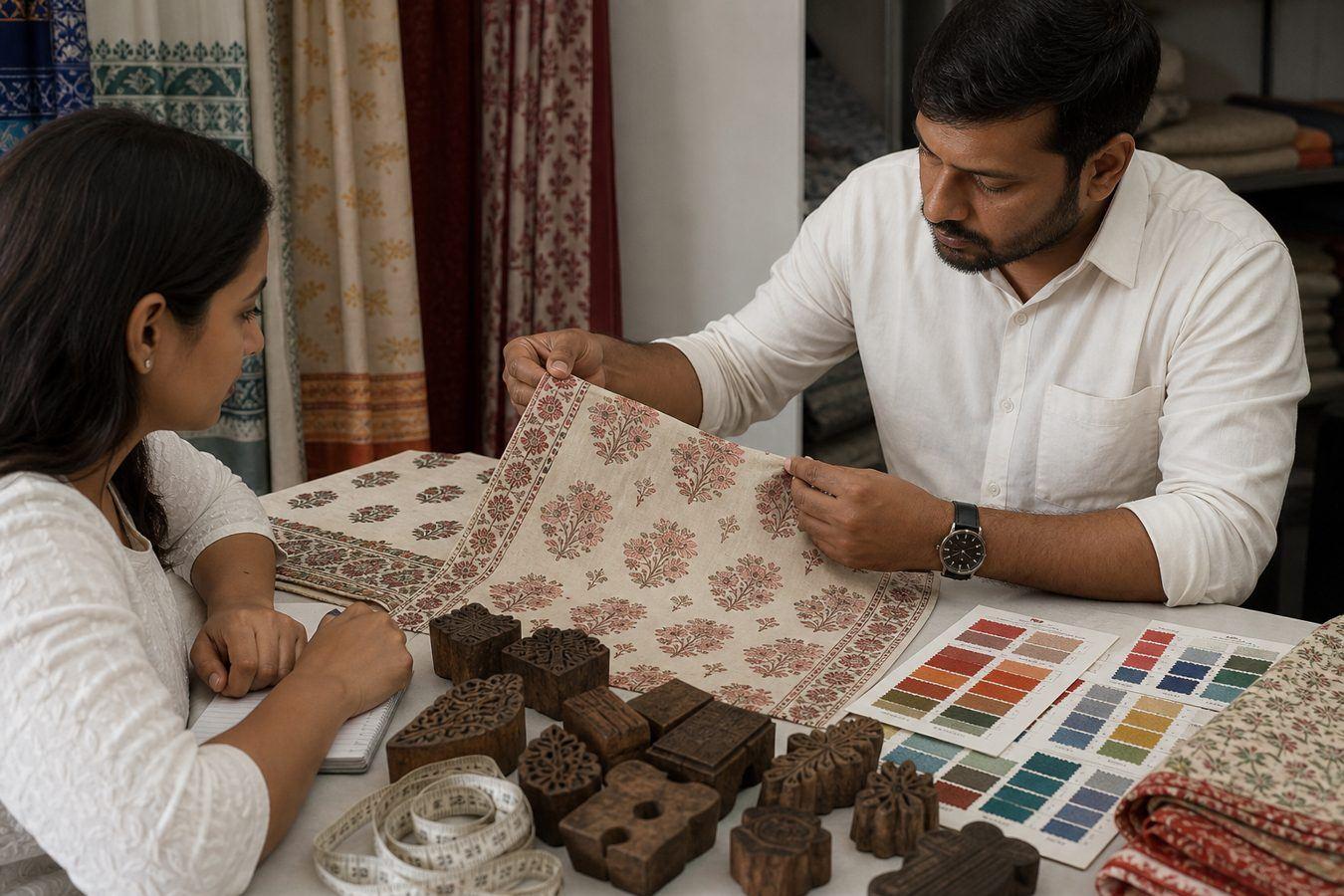
New exporters should visit or video-audit candidate artisan units for the print techniques they plan to include, paying particular attention to strike-off capability, colour consistency between strike-off and bulk, and how finished goods are staged for packing — since print-registration drift and dye-lot variation are created as much by process discipline as by design complexity. A block-print unit that cannot document its dye recipe and repeat registration creates downstream QC problems that no amount of pre-shipment inspection at the consolidation stage can fully undo.
The Export Process: From Registration to Your First Shipment
Export Tip
This is the core operational sequence of this guide. Follow the steps in order — registration before sourcing, technique selection before cluster mapping, strike-off approval before bulk production, and documentation prepared in parallel with production rather than after packing is complete. Skipping a step to compress the timeline is the most common reason first hand print shipments stall at customs or arrive with colourway disputes.
Step 1: Obtain an Import Export Code (IEC)
The Import Export Code, issued by the Directorate General of Foreign Trade (DGFT), is the baseline legal requirement for any commercial export from India — no hand printed textile shipment can be filed without one. Apply online through the DGFT portal with PAN, business registration proof, a cancelled cheque or bank certificate, and a digital signature or Aadhaar-based e-sign for authentication. Processing is typically fast once documents are in order. This is a one-time registration per legal entity, not a per-shipment requirement. Use the gap between IEC application and your first shipment to start mapping your intended SKUs against HS 5208, 5209, 6302, 6303, 6304, and 6214 — the correct heading depends on base fabric, weave, weight, and made-up form, not print method alone.
Step 2: Register with EPCH and Obtain RCMC
Register with the Export Promotion Council for Handicrafts (EPCH) to obtain a Registration-cum-Membership Certificate (RCMC), which supports export benefit eligibility, IHGF Delhi Fair access, and buyer-facing credibility across hand printed textile handicraft lines. EPCH RCMC is not a legal precondition for export the way IEC is, but in practice most organised hand print exporters hold it, and many international buyers treat it as a baseline credibility signal during supplier vetting. When your SKU mix is dominated by cotton made-ups that classify under cotton textile made-ups rather than EPCH-scheduled handicraft lines, confirm whether TEXPROCIL adjacency applies — see EPCH Registration Benefits for Hand Printed Textile Exporters and, for bedding-led programmes only, TEXPROCIL Registration Benefits for Exporters.
Step 3: Plan Your Print Technique and Made-Up Format Before Choosing Clusters
Unlike commodity plain-fabric exporting, hand print exporting starts with a technique-and-format decision, not a cluster decision. Decide which one or two print techniques and made-up formats will anchor your first catalogue — for example Bagru block-print cushion covers, or Sanganer yardage for a curtain private-label programme — before you approach any artisan unit. This sequencing matters because cluster selection, strike-off logistics, dye documentation, and packing design all flow from the programme plan. For the full SKU-to-technique-to-channel mapping, see Top Hand Printed Textile Products Exported from India.
Step 4: Match Techniques to Sourcing Clusters
Once your programme is defined, match each technique to the cluster best suited to produce it: Jaipur–Sanganer–Bagru for woodblock and Dabu, Kutch/Ajrakhpur for Ajrakh, Machilipatnam–Srikalahasti for Kalamkari, and Panipat/Karur/Tirupur for made-up conversion and volume screen print. Many new exporters consolidate multi-cluster sourcing through a Delhi-NCR merchant-exporter partner rather than negotiating separately with artisan units in three different states — especially valuable for a first coordinated print programme where strike-off and colourway coordination risk is the primary threat to a clean first shipment.
Step 5: Source and Vet Artisan Units and Conversion Partners
Identify candidate workshops or export houses through EPCH's registered-exporter directory, IHGF Delhi Fair exhibitor lists, and trade referrals — one search per print technique in your programme. Verify IEC and EPCH RCMC status independently before committing to any relationship, and request to see strike-off production and in-process print registration, not only finished showroom samples. Prefer partners with documented prior export history to your target market: a Bagru unit already shipping to USA or German buyers is more likely to understand colourfastness testing expectations, retail-ready care labelling, and HS-accurate invoicing than a domestic-only workshop. For buyer-side audit flows, see Source Hand Printed Textiles Directly from India.
Step 6: Finalise Specifications and Approve Strike-Offs
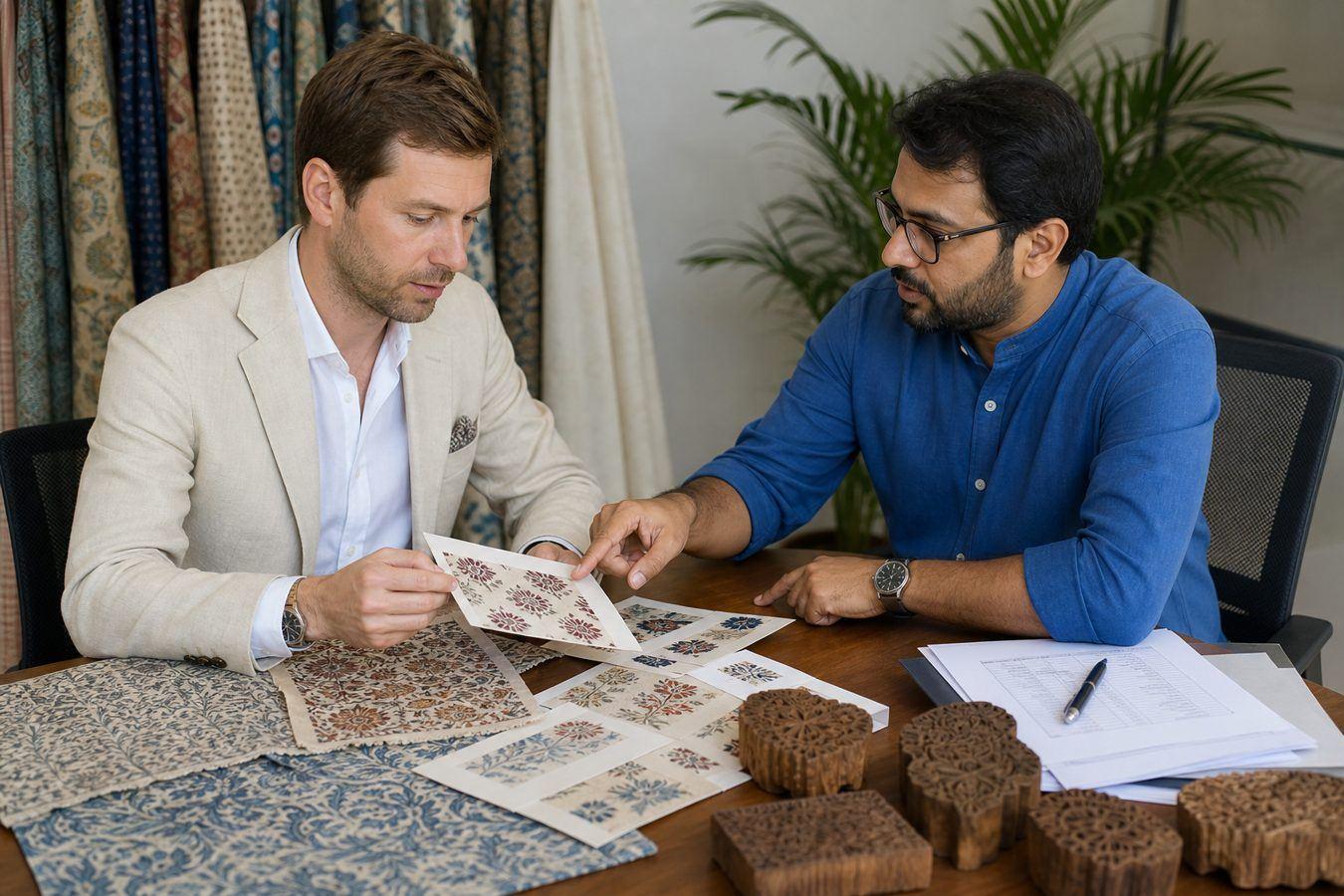
Document a complete specification for every colourway before requesting strike-offs: print technique, fabric base and weight, repeat dimensions, dye type (natural, azo-free reactive, pigment), colourfastness target, made-up dimensions and tolerance, packaging format, and labelling requirements. Request strike-offs of one to five metres per colourway or five to twenty pieces per made-up SKU for evaluation. Approve a written physical reference strike-off for each colourway that becomes the production standard for bulk — a photograph is a marketing prop, not quality evidence for a print-registration dispute.
Step 7: Control Print Registration and Colourfastness Through Bulk Production
Schedule quality checkpoints at strike-off approval, mid-bulk, and pre-shipment: confirm repeat registration against the approved reference, evaluate colour consistency across the lot, and test colourfastness to rubbing and washing where buyers require it. Natural-dye Ajrakh and Kalamkari programmes need particular attention to vat-to-vat variation — document dye lots on the packing list. Require a second visual and dimensional check immediately before consolidation, since handling during hand-off between artisan unit and packer can misalign block repeats or crease hand-feel finishes.
Step 8: Plan Colourway Packing and Container Loading
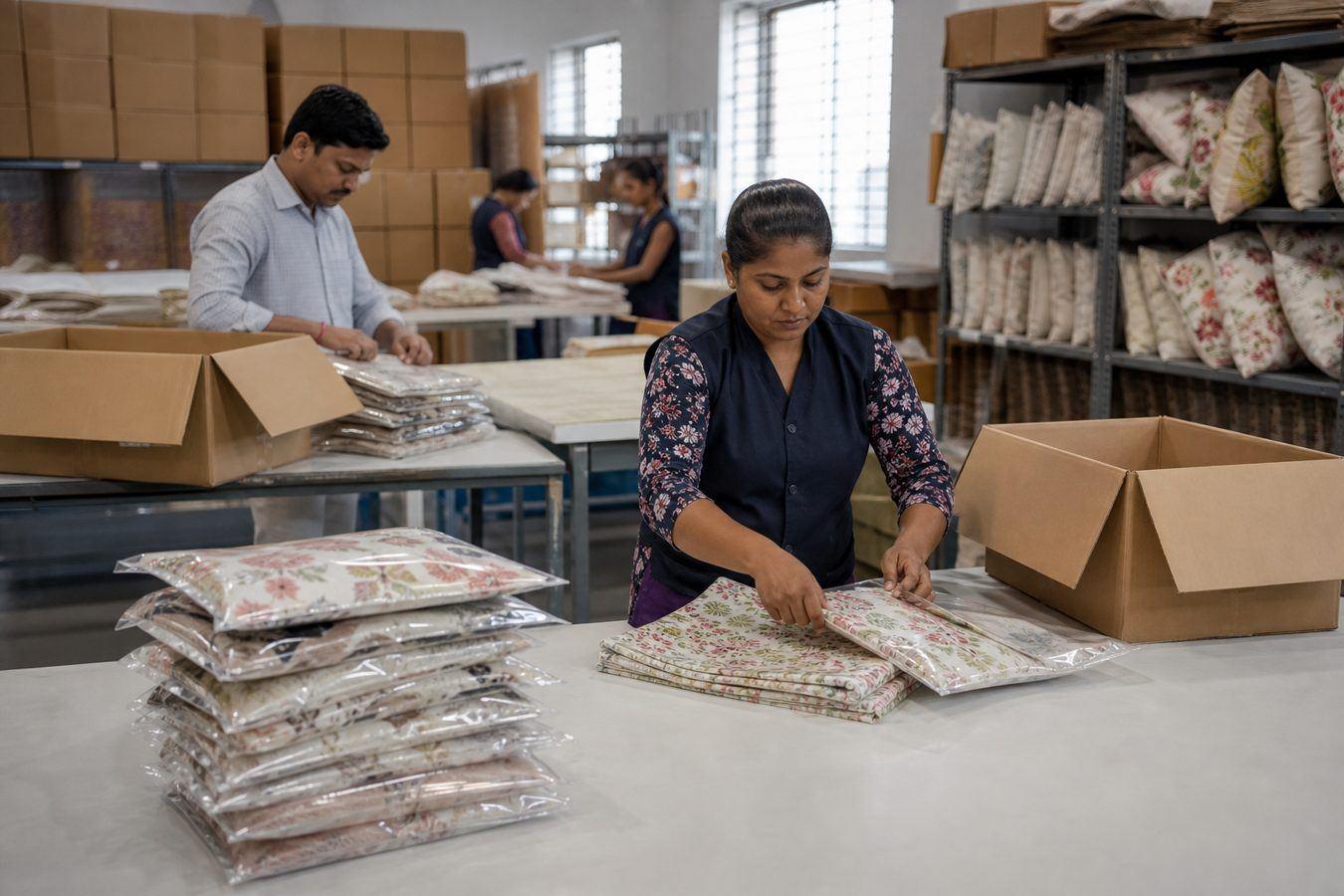
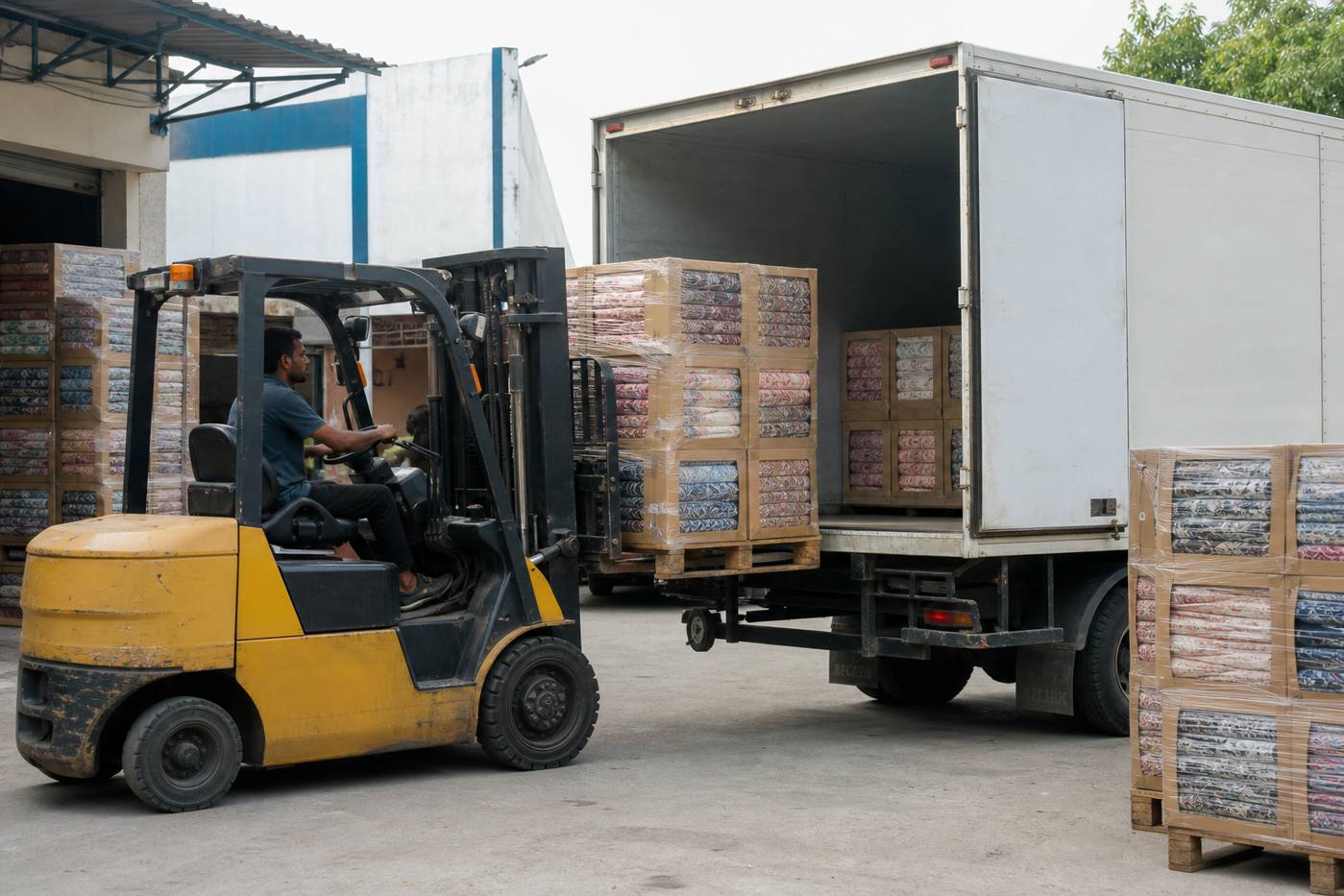
Specify packaging before bulk production, not after: polybag plus export carton for made-ups with colourway and size labels; roll packing or bale for yardage with moisture barrier; hangtags and care labels for retail-ready channels; avoid crushing embossed or hand-feel finishes on block-print surfaces. Colourway-separated cartons reduce pick errors at destination warehouses and simplify customs inspection when HS lines differ between yardage and made-ups in the same programme. Plan carton and pallet dimensions around cubic efficiency and finish protection, not just piece count.
Step 9: Prepare Export Documentation
Prepare the core document set in parallel with production: commercial invoice with correct HS codes per SKU form, packing list with colourway and carton mapping, shipping bill, bill of lading, certificate of origin where preferential duty applies, fibre content and care label documentation, and azo-free or OEKO-TEX/GOTS certificates where buyers require them. Consistent descriptions across every document prevent avoidable customs holds. This is a process overview only — the complete checklist lives in Hand Printed Textile Export Documentation Checklist.
Step 10: Choose Shipping Method, Route, and Incoterm
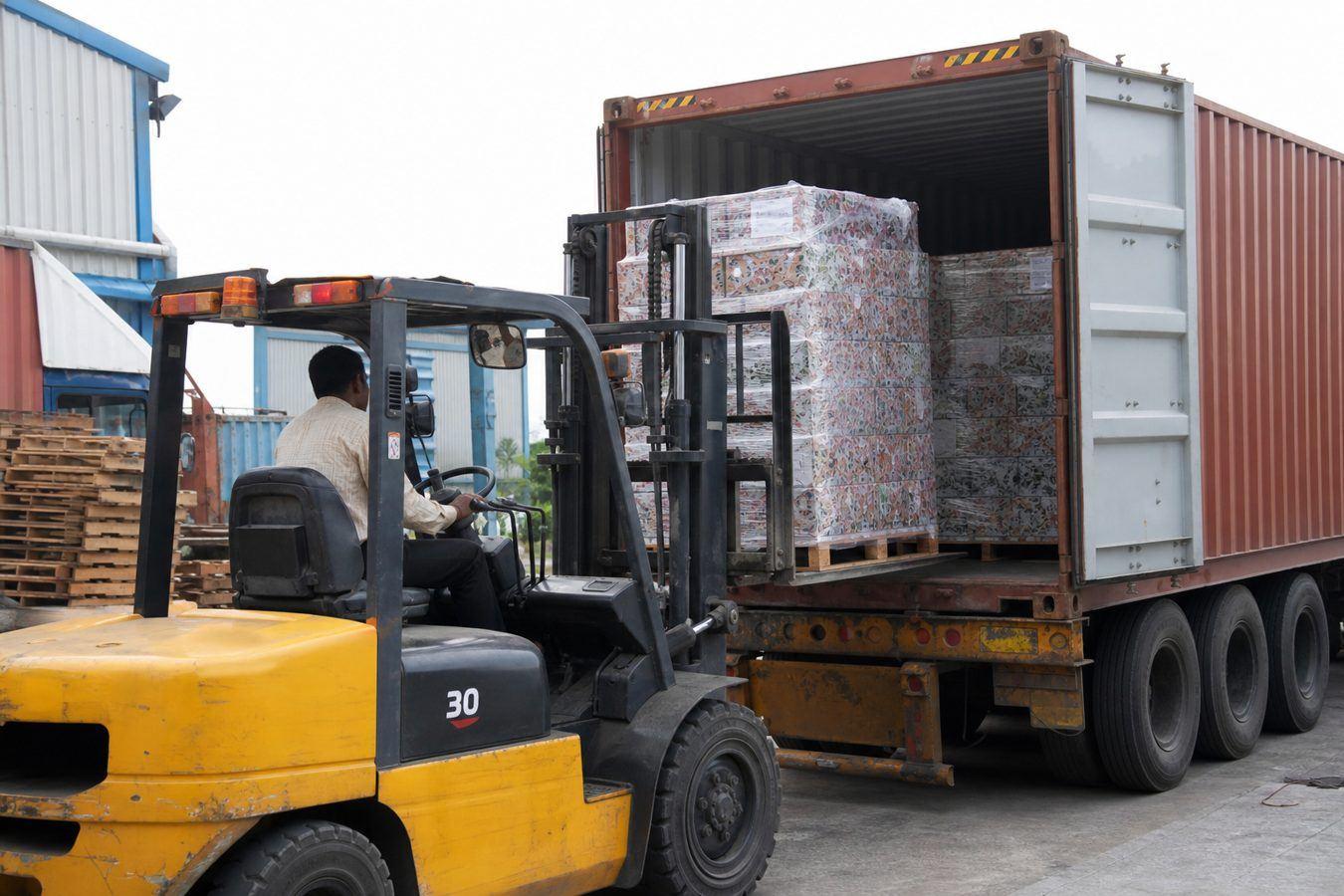
Sea freight under FCL or LCL from Nhava Sheva or Mundra is standard for commercial volumes, often via inland consolidation through ICD Delhi/Dadri for North India–origin cargo from Rajasthan and Panipat clusters, or via Mundra/Pipavav corridor for Gujarat Ajrakh programmes. Air freight suits strike-offs and urgent sample kits but is not economical for bulk yardage or made-up volume. Agree Incoterms with your buyer — EXW, FOB, CFR, or CIF are the most common; DDP is selective and rarely ideal for a first print trial — and confirm who manages freight booking, insurance, and destination-side clearance before finalising a quotation.
Step 11: Address Destination Compliance for Your Target Market
Map compliance requirements to your destination before your first shipment: US Textile Fiber Products Identification Act labelling for fibre content and care instructions, EU Textile Regulation for composition disclosure, azo dye restrictions, REACH where chemical claims apply, OEKO-TEX or GOTS for premium programmes, and flammability awareness for furnishing channels that require it. Honest "hand printed" versus machine/rotary claims matter commercially and legally — document your print method accurately. Deeper sustainable and natural-dye pathways live in Block Print, Ajrakh, Kalamkari & Sustainable Hand Printed Textile Export Opportunities.
Step 12: Find and Develop International Buyers
Build your initial buyer pipeline through EPCH's IHGF Delhi Fair, international fairs such as Heimtextil and Ambiente, B2B marketplaces, and structured outbound outreach using trade-data mining across your programme's core HS codes. Convert interest into a phased commercial relationship: strike-off (one to five metres per colourway or five to twenty pieces per SKU), trial order (fifty to two hundred metres per colourway or two hundred to five hundred pieces of a hero made-up), then wholesale volume once strike-off reliability and documentation discipline are proven. This step is covered at overview depth — the full playbook lives in Find International Buyers for Hand Printed Textiles and Trade Shows and B2B Marketplaces for Hand Printed Textile Exporters.
Pricing Analysis
Buyer Tip
Hand printed textile pricing is driven primarily by print technique labour, dye chemistry, fabric base quality, repeat complexity, and certification — followed by private-label tooling, natural-dye premiums, and retail-ready labelling. Quote pricing broken out by technique and format rather than a single blended rate — a blended figure often hides a supplier's inability to hold print-registration consistency across colourways. For SKU-level pricing depth, see Top Hand Printed Textile Products Exported from India.
Directional FOB pricing bands for hand printed textile exports
Swipe →
Data table — swipe horizontally on small screens
| Product Category | Directional FOB Price (USD) | Key Price Driver |
|---|---|---|
| Volume printed cotton yardage (screen/block hybrid) | $2.5–8/m | Fabric weight, print passes, colour count |
| Heritage Ajrakh / fine block yardage | $8–25+/m | Natural-dye cycles, resist complexity, artisan labour |
| Cushion covers / small made-ups | $2–12/pc | Print technique, size, edge finish, labelling |
| Throws / table linen / curtains | $8–45/pc or set | Dimensions, lining, header finish, print area |
| Private-label / certified organic-print programmes | Premium, evidence-dependent | Certification, strike-off cycles, custom blocks |
MOQ Analysis
Buyer Tip
Structure every new manufacturing relationship through the same staged MOQ sequence: strike-off evaluation, trial order, and then wholesale volume by colourway, design, or carton. In hand print programmes, apply this per colourway and technique, not once across the whole catalogue — a Bagru hero cushion and an Ajrakh yardage line rarely reach trial-ready confidence on the same calendar.
Directional MOQ tiers for hand printed textile export programmes
Swipe →
Data table — swipe horizontally on small screens
| Stage | Typical MOQ | Purpose |
|---|---|---|
| Strike-off / sample | 1–5 m/colourway or 5–20 pcs/SKU | Print registration, colour, and hand-feel evaluation |
| Trial order | 50–200 m/colourway or 200–500 pcs/hero SKU | Bulk-lot consistency and colourway packing validation |
| Wholesale / commercial order | By colourway, design, or carton | Programme-level supply for repeat buyers |
| Programme FCL | 20GP / 40HC planned to retail season cut-offs | Peak-season fill against a fixed design calendar |
Packaging Standards
Export Tip
Colourway packing and finish protection are the defining quality-control disciplines of hand printed textile exporting, because a single programme can legitimately contain rolled Ajrakh yardage, folded Bagru cushion covers, and Kalamkari table runners with three different damage-risk profiles. Confirm and sign off packaging design before bulk production begins, not after the first trial lot reveals crushed block texture or moisture staining on natural-dye surfaces.
Packaging formats for hand printed textile export by product form
Swipe →
Data table — swipe horizontally on small screens
| Product Form | Typical SKUs | Key Requirement |
|---|---|---|
| Rolled yardage | Block, Ajrakh, screen yardage | Tube or roll core; moisture barrier; colourway label on roll end |
| Folded made-ups | Cushion covers, throws, table linen | Polybag; colourway/size label; avoid crushing hand-feel emboss |
| Hanging / retail-ready | Curtains, scarves, premium cushions | Hangtag, care label, barcode where channel requires |
| Coordinated colourway cartons | Multi-SKU soft-furnishing sets | Colourway-separated inner packs; export carton manifest |
| Natural-dye / heritage lines | Ajrakh, Kalamkari yardage and made-ups | Breathable wrap; avoid plastic sweat; document dye lot on label |
Container Loading Details
Export Tip
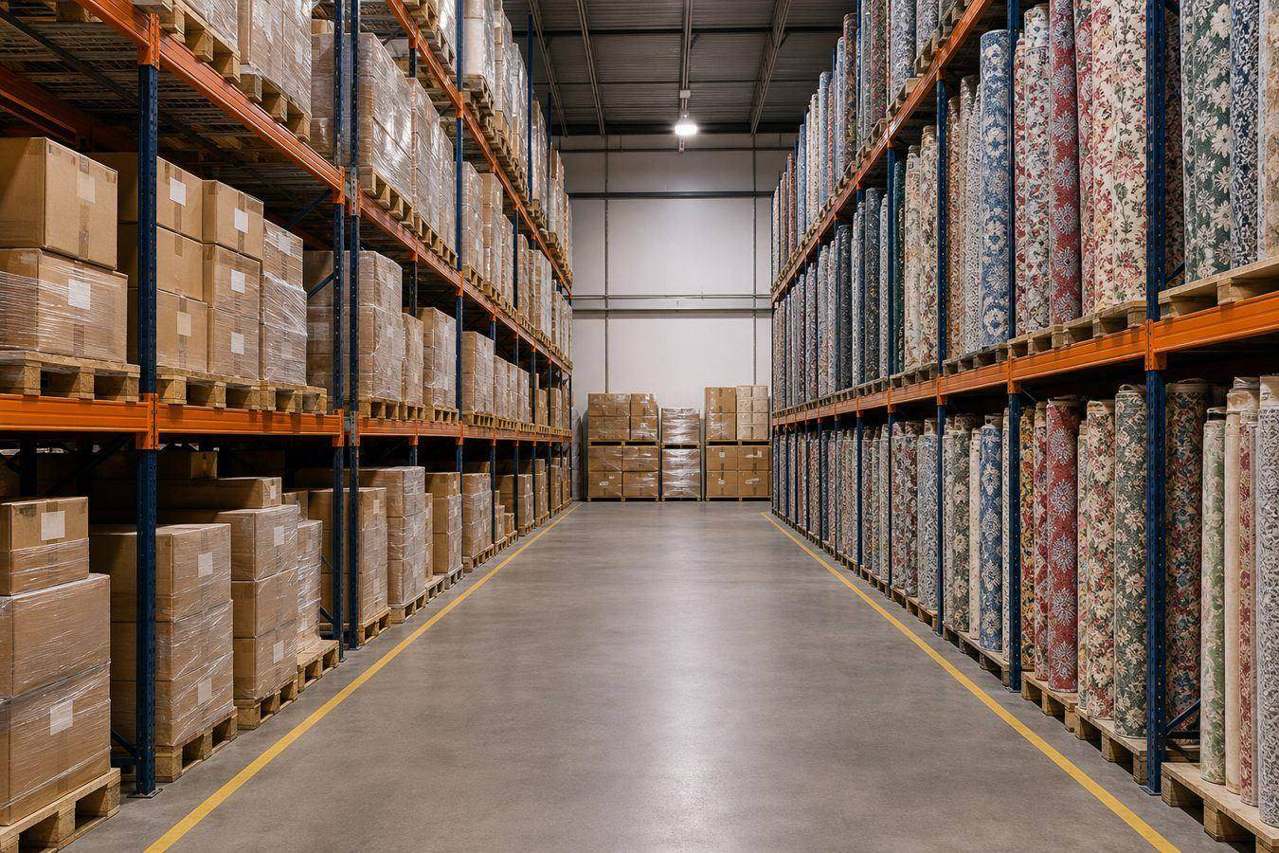
Hand printed textile programmes often hit volume limits before weight limits — rolled yardage, folded throws, and curtain panels all create CBM-heavy profiles even at modest total weight. Stuffing plans must treat finish protection, colourway segregation, and moisture management as first-class constraints.
Container loading guidance for hand printed textile exporters
Swipe →
Data table — swipe horizontally on small screens
| Container Type | Typical Loadability | Planning Note |
|---|---|---|
| 20ft FCL | Suitable for focused made-up or yardage programmes | Confirm weight vs CBM after carton/roll engineering |
| 40ft FCL / 40ft HC | Preferred for multi-SKU coordinated print programmes | Stage rolls upright; protect folded made-ups from compression |
| LCL | Standard for trial colourways and consolidated loads | Higher per-unit freight; acceptable at trial volume |
| ICD Delhi/Dadri consolidation | Common for Rajasthan and Panipat origin cargo | Align inland cut-offs with Nhava Sheva sailings |
| Mundra / Pipavav corridor | Common for Gujarat Ajrakh origin cargo | Coordinate vat-dye drying time before stuffing |
Shipping Methods
Export Tip
- Strike-offs and sample kits: air freight or express courier, 7–21 days typical lead time
- Stock-ready print programmes: ocean FCL/LCL from Nhava Sheva or Mundra, 4–8 weeks typical lead time
- Custom block / natural-dye / private-label programmes: ocean freight, 8–14 weeks typical lead time
- Major retail seasons: booked 4–9 months ahead of peak to hit design-calendar cut-offs
- Incoterms commonly used: EXW, FOB (named port), CFR/CIF; DDP selective and rare for first print trials
Sea freight via FCL or LCL from Nhava Sheva or Mundra is the standard shipping method for commercial hand printed textile volumes. The category is shelf-stable once finished and properly packed — there is no cold-chain requirement — but moisture management inside cartons and rolls still matters, particularly for natural-dye Ajrakh and Kalamkari lines. Air freight is used for urgent strike-offs, trade-fair sample kits, or time-critical retail fill-ins.
Certifications
Compliance Notes
Baseline export registration (IEC, EPCH RCMC) is non-negotiable for a serious hand print export programme; the technique-specific certifications below become commercially decisive as you move into OEKO-TEX/GOTS premium channels, EU REACH-conscious retail, and US fibre-labelling-compliant programmes.
Certifications and declarations relevant to hand printed textile export
Swipe →
Data table — swipe horizontally on small screens
| Certification / Document | What It Confirms | Relevant For |
|---|---|---|
| IEC | Legal export entity registration | All exporters |
| EPCH RCMC | Textile handicraft export registration and fair access | Organised exporters; IHGF prerequisite |
| Fibre content & care labelling | Composition and care instructions per destination rules | All made-ups and many yardage programmes |
| Azo-free / restricted substance declaration | Dye chemistry compliance | EU and premium US/EU retail |
| OEKO-TEX Standard 100 | Tested absence of harmful substances | Premium retail and private-label programmes |
| GOTS | Organic fibre and processing chain | Certified organic print programmes |
| Honest hand-print declaration | Print method accuracy vs machine/rotary | Craft-positioned retail and legal compliance |
| Certificate of origin | Preferential duty or origin claim support | Where FTA/preference is claimed |
Buyer Requirements
Buyer Requirements
International buyers evaluating a new Indian hand print supplier typically request a consistent set of proof points before issuing a purchase order: a coherent programme sheet by print technique and made-up format, physical strike-offs that match the agreed registration standard, clear FOB or landed pricing by colourway and volume tier, packaging specification sign-off, and evidence of IEC and EPCH registration status. Preparing these proactively is one of the clearest signals of export readiness a new hand print supplier can send.
Buyers targeting Germany, Netherlands, or France will often raise azo dye and REACH questions even for craft-positioned lines. Buyers targeting US retail will expect coherent fibre content and care labelling. Buyers building GOTS or OEKO-TEX programmes will ask for certificate scope matching the exact fabric and dye pathway before an order proceeds. For finding and qualifying those buyers, see Find International Buyers for Hand Printed Textiles.
Country-wise Opportunities
Market Snapshot
Destination choice materially affects your compliance workload, freight economics, and buyer channel profile. This is a brief overview only — the full destination-ranking analysis lives in Best Countries for Indian Hand Printed Textile Exports.
Country-wise opportunity snapshot for hand printed textile exporters (EPCH FY24-25 value order)
Swipe →
Data table — swipe horizontally on small screens
| Country | Opportunity Summary | Key First-Shipment Consideration |
|---|---|---|
| UAE | Largest EPCH Handprinted Textiles value; fast freight; wholesale and hospitality velocity | Strong first-market choice while building compliance depth |
| USA | Second-largest EPCH value; deepest home specialty, e-commerce, hospitality channel | Build fibre labelling and colourfastness discipline early |
| UK | Established soft furnishings and design retail demand | Composition and care labelling disclosure |
| France | Design and craft retail demand | Lead with technique provenance and strike-off reliability |
| Germany | Design- and compliance-led retail; strong EU distribution role | OEKO-TEX/GOTS and azo-free documentation for premium |
| Canada | Similar profile to USA at smaller scale | Pair with USA outreach using shared documentation |
| Japan | Precision-driven niche; smaller EPCH value | Print registration and colourfastness evidence critical |
| Australia | Accessible premium niche | Clear labelling and colourway packing QC reduce returns |
| Netherlands | Smaller EPCH value for this category; EU redistribution and design-channel role | Position for wholesale distribution, not only single-market retail |
Sourcing Checklist
Checklist
Buyer Checklist
Exporter Checklist
Compliance Checklist
Checklist
Compliance Notes
Common Buyer Mistakes
Common Mistakes Box
New exporters can anticipate a predictable set of buyer-side friction points — recognising them in advance saves real time during your first few hand print shipments.
Common mistakes buyers make and how exporters can pre-empt them
Swipe →
Data table — swipe horizontally on small screens
| Mistake | Consequence | How to Pre-Empt It |
|---|---|---|
| Approving strike-offs from photos only | Print registration drift in bulk | Require physical reference strike-offs with signed approval |
| Mixing colourways in one carton without labels | Pick errors and customs confusion | Present colourway-separated packing plan for sign-off |
| Skipping trial order on a new technique | Colourfastness failures at container scale | Recommend trial lot before FCL on new Ajrakh or Kalamkari lines |
| Assuming print method sets HS code | Misclassification and duty disputes | Confirm HS with CHA based on fabric and made-up form |
| Underestimating retail season lead time | Missed design-calendar cut-offs | Confirm 4–9 month booking calendar before quoting |
Future Market Trends
Key Statistics
Technique transparency and sustainable dye credentials will keep gaining weight across premium hand print retail over the next several years. Natural-dye Ajrakh, azo-free reactive block print, GOTS-certified organic print programmes, and fair-trade Kalamkari private-label lines are moving from a marketing footnote to a genuine buyer requirement in USA and EU-facing programmes — exporters who build dye-recipe and artisan-provenance dossiers now will hold a real advantage over suppliers who treat every sustainability question as an emergency.
Coordinated soft-furnishing print programmes — cushion, throw, and curtain colourways from one block library — are likely to remain stronger growth conversations than undifferentiated commodity yardage. Digital strike-off-to-bulk traceability, tying packing lists to photographed lot samples, is beginning to appear among more sophisticated merchant exporters. See Block Print, Ajrakh, Kalamkari & Sustainable Hand Printed Textile Export Opportunities for the dedicated playbook.
Challenges & Solutions
Most first-shipment failures in this category come from colourway drift, multi-line HS gaps, or late production booking — not from a lack of craft skill. The table below pairs each failure mode with the control that prevents it.
Hand printed textile export challenges and solutions
Swipe →
Data table — swipe horizontally on small screens
| Challenge | Root Cause | Solution |
|---|---|---|
| Multi-technique coordination across clusters | Parallel artisan streams with different timelines | Plan programme and schedule strike-offs before sourcing |
| Print registration drift in bulk | Weak strike-off-to-bulk process control | Physical reference strike-off and mid-bulk checkpoint |
| Natural-dye lot variation | Vat-to-vat chemistry variance in Ajrakh/Kalamkari | Document dye lots; set buyer expectations; limit colourways per lot |
| HS misclassification | Assuming print method alone sets heading | Confirm fabric base and made-up form with CHA per SKU |
| Retail season cut-off misses | Late planning against fixed design calendar | Book programmes 4–9 months ahead of peak |
Expert Insights
Expert Insight Box
Altus Exports works with Indian hand print artisan units, conversion workshops, and international buyers as a merchant exporter, global sourcing partner, and export consultant — coordinating registration, multi-cluster sourcing across Jaipur–Bagru–Sanganer, Kutch, Machilipatnam, and Panipat/Karur, strike-off QC standards, colourway packing, and export documentation so that new exporters can move from a standing start to a confident first container of hand printed textiles.
Conclusion
- Next step: Send your print programme plan, target destination, and registration status to Altus Exports for a readiness assessment via Contact.
- See the full SKU catalogue, MOQ, and packaging depth in Top Hand Printed Textile Products Exported from India.
- Rank your destination market with Best Countries for Indian Hand Printed Textile Exports.
- If you are a buyer rather than an exporter, read Source Hand Printed Textiles Directly from India.
- Understand EPCH membership in EPCH Registration Benefits for Hand Printed Textile Exporters.
- Match techniques to demand with Most Demanded Indian Hand Printed Textiles by Country.
- Build your buyer pipeline with Find International Buyers for Hand Printed Textiles and Trade Shows and B2B Marketplaces for Hand Printed Textile Exporters.
- Go deeper on sustainable print programmes with Block Print, Ajrakh, Kalamkari & Sustainable Hand Printed Textile Export Opportunities.
- Prepare full documentation with Hand Printed Textile Export Documentation Checklist.
- Explore merchant exporter services from India, export products from India, global sourcing partner India, product sourcing company India, and find manufacturers in India, or contact Altus Exports directly.
Exporting hand printed textiles from India rewards technique and process discipline more than any single sourcing shortcut. Obtain your IEC and EPCH RCMC. Plan your print technique and made-up format before choosing clusters — Jaipur–Bagru–Sanganer, Kutch, Machilipatnam, and Panipat/Karur each contribute a different technique to the finished programme. Lock strike-off quality across every colourway. Package by product form and colourway, not by weight alone. Prepare compliance and shipping documentation in parallel with production, not after. Build your buyer pipeline through trade fairs, marketplaces, and structured outreach.
This guide is the process pillar for the hand printed textiles export cluster on this site — if you are ready to move from planning to execution, share your intended print programme, target destination market, and current registration status with Altus Exports for a readiness assessment and sourcing plan.