
Block Print, Ajrakh, Kalamkari & Sustainable Hand Printed Textile Export Opportunities from India
By Saurabh Mittal, Founder, Altus Exports
A premium export guide to sustainable hand printed textiles from India — what block print, Ajrakh, Dabu, and Kalamkari techniques actually require at export scale, how natural-dye and azo-free reactive programmes differ in compliance burden, why GOTS and OEKO-TEX transaction certificates gate EU and US private-label listings, how fair-trade and artisan-livelihood narratives convert into defensible margin, and how to price organic-print premiums without greenwashing.
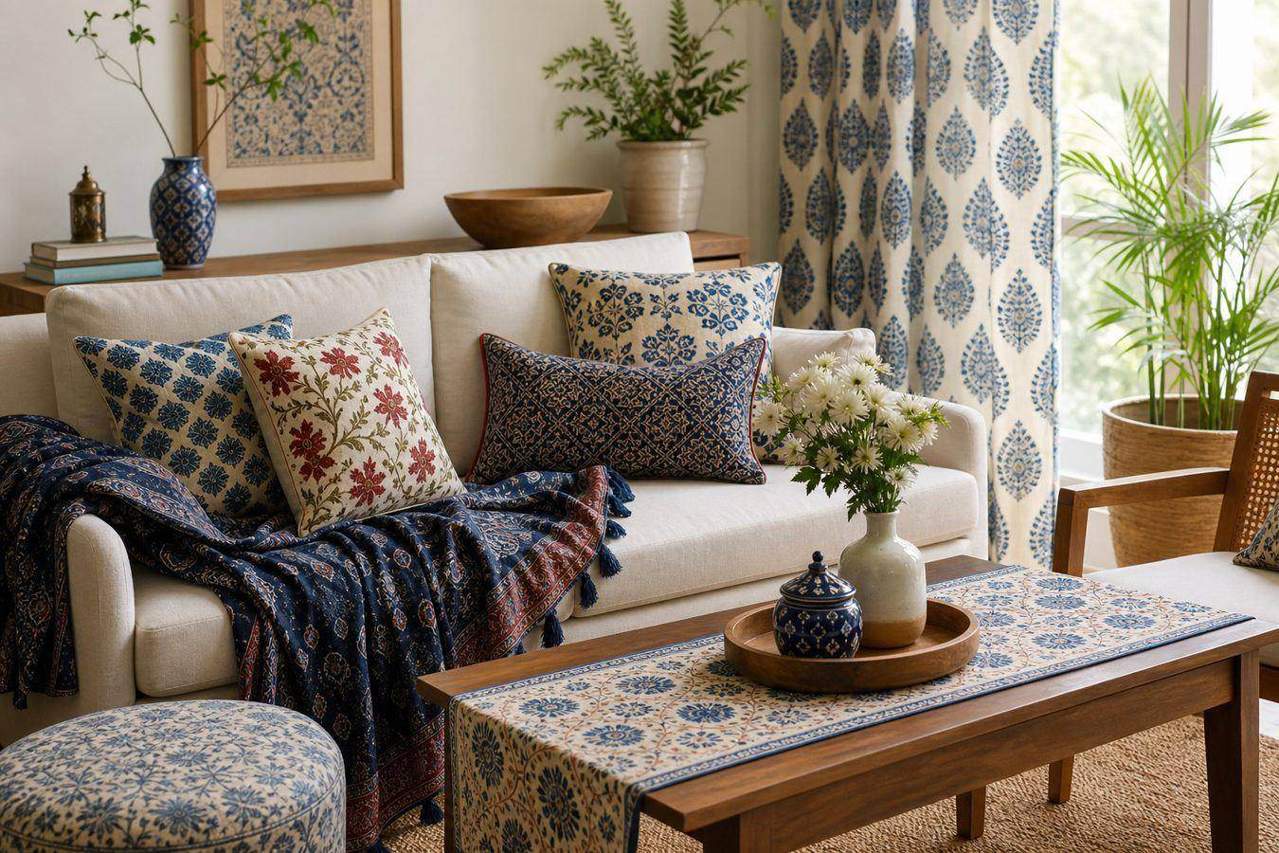
Premium home specialty retail in Germany, the Netherlands, the UK, and the USA has rewritten vendor onboarding for hand printed textiles over the past several seasons. Buyers now ask whether cotton is GOTS-certified organic, whether natural-dye Ajrakh claims are backed by mordant and dye lot records, what the OEKO-TEX Standard 100 label covers on block-print pigments, whether print registration tolerances survive washing, and how artisan livelihood narratives translate into audit-ready fair-trade documentation — not only whether the motif looks attractive on a cushion cover.
Sustainable and heritage hand printed textile exports from India — block print from Jaipur–Sanganer–Bagru, mud-resist Dabu, double-dye Ajrakh from Kutch, pen-and-block Kalamkari from Andhra Pradesh — are becoming a genuine margin protector for exporters who can answer these questions with paperwork rather than marketing language, and a real compliance risk for those who cannot.
India's craft-print clusters offer structural advantages few competing origins match at comparable depth: generational block-carving skills, natural indigo and madder dye cycles, Kalamkari narrative motifs, and merchant-exporter consolidation in Delhi-NCR that can run private-label colourway programmes across multiple artisan belts. But that advantage only converts into commercial value when certification, chain-of-custody documentation, honest hand-print claims, and colourway MOQ discipline are in place.
This guide maps the practical sustainability and premium levers available to Indian hand printed textile exporters: craft technique specification, natural-dye and azo-free chemistry pathways, GOTS organic print and OEKO-TEX chemical safety, fair-trade and artisan-livelihood positioning, private-label margin playbooks, and — equally important — where to draw the line so sustainability claims never drift into greenwashing. Pair it with How to Export Hand Printed Textiles from India for operational execution and Source Hand Printed Textiles Directly from India for importer-side vetting.
Altus Exports supports sustainable hand printed textile programmes as a global sourcing partner and merchant exporter in India — connecting verified print clusters with premium international demand.
Key Takeaways
Summary Box
Executive Summary
Summary Box
Sustainable hand printed textile export is not a single product category — it is a stack of verifiable claims applied to specific craft techniques on defined fabric bases. A German organic private-label buyer purchasing GOTS-certified Ajrakh throws is evaluating an entirely different evidence pack than a US home specialty retailer buying azo-free reactive Bagru cushion covers without an organic fibre claim. Exporters who conflate these programmes in one catalogue lose credibility in the first audit question.
This guide owns the premium and specialty angle for Indian hand printed textiles: how block print, Ajrakh, Dabu, and Kalamkari differ in production economics and compliance burden; how natural-dye cycles interact with colourfastness and registration QC; how GOTS transaction certificates and OEKO-TEX scope gate EU and US listings; how fair-trade positioning converts artisan livelihood into defensible margin; and how private-label buyers expect FOB to reflect certification, block carving, and colourway MOQ — not commodity screen-print pricing.
It deliberately does not restate commodity export process steps (see the pillar guide) or general EPCH membership mechanics (see the dedicated EPCH post). It also avoids bedsheet thread-count ladders and mixed-material home-décor assortments — hand printed bed linen appears only as a print-technique SKU format where relevant.
Market Size & Industry Overview
Key Statistics
Global demand for craft-print and sustainable home textiles sits inside the broader home-furnishing soft-goods market, but premium buyers segment it separately from commodity rotary print. EPCH textile handicraft export framing and directional trade data show repeat purchasing of Indian block print, Ajrakh, and Kalamkari made-ups across North America, Europe, the Gulf, and Oceania — with accelerating RFQ volume for GOTS organic print, OEKO-TEX-certified colourways, and fair-trade artisan programmes in Germany, the Netherlands, the UK, and premium US e-commerce private label.
India's competitive advantage in sustainable hand print is cluster depth: Jaipur–Sanganer–Bagru for heritage and contemporary block programmes; Kutch/Ajrakhpur for natural-dye resist Ajrakh; Machilipatnam–Srikalahasti for Kalamkari; and Panipat/Karur conversion capacity for certified organic made-ups at scale. Competing origins — Pakistan, Turkey, Morocco — offer block print at volume, but India's combination of natural-dye heritage, organic cotton supply chain adjacency, and EPCH-scheduled textile handicraft export infrastructure is difficult to replicate for premium private-label programmes.
Sustainable Hand Print Market Segments (Directional)
Swipe →
Data table — swipe horizontally on small screens
| Segment | Typical Buyer | Certification Expectation | Price Tier |
|---|---|---|---|
| Heritage block print (reactive azo-free) | Home specialty, boutique wholesale | OEKO-TEX common; azo-free mandatory EU/UK | Mid-premium |
| Natural-dye Ajrakh / Dabu | Design retail, museum shops, premium e-commerce | Natural-dye records; OEKO-TEX on finished SKU | Premium |
| GOTS organic print programmes | EU/US organic private label | GOTS + transaction certificates | Premium+ |
| Kalamkari narrative programmes | Hospitality, gift, design boutiques | Azo-free; artisan documentation | Mid-premium to premium |
| Fair-trade artisan collections | Corporate ESG retail, fair-trade shops | Fairtrade or equivalent audit | Premium with story margin |
Export Statistics
Key Statistics
EPCH's dedicated Handprinted Textiles export data for FY 2024-25 places the UAE first by value (Rs 1,539.46 crore), followed by the USA (Rs 319.92 crore), the UK, France, Germany, Canada, and Australia among leading destinations for Indian textile handicraft and hand printed artware — with sustainable and organic print programmes over-indexing in Germany, France, and premium US West Coast and Northeast retail. Japan represents a design-led niche for fine registration and natural-dye Ajrakh. These figures are directional; verify latest council releases before citing in buyer presentations.
Directional Export Destination Profile for Sustainable Print Programmes
Swipe →
Data table — swipe horizontally on small screens
| Destination | Sustainable Print Demand Signal | Typical SKU Format |
|---|---|---|
| Germany | GOTS organic Ajrakh, OEKO-TEX block print | Throws, yardage, cushion covers |
| Netherlands | Organic private label, reduced-impact packaging | Coordinated soft-furnishing sets |
| USA | Natural-dye storytelling, azo-free block print | Throws, table linen, fashion yardage |
| UK | Heritage block, Kalamkari table programmes | Boutique assortments, hospitality |
| UAE | Premium hospitality print, gift wholesale | Curtains, table linen, cushions |
| Australia | Fibre-labelling strict; eco print growing | Cushion covers, throws |
Import Statistics
Key Statistics
Import-side analysis helps premium exporters prioritise markets where sustainable print RFQs are accelerating rather than commoditising. EU import regimes apply stricter azo-dye and fibre-labelling enforcement on printed home textiles than many other regions, which correlates with higher penetration of OEKO-TEX and GOTS requirements in German and Dutch buyer onboarding. US import demand for craft print remains large in absolute terms, with organic and natural-dye segments growing faster than volume reactive print — though the majority of US cushion and throw import volume still sits in conventional azo-compliant reactive programmes.
When reading import statistics, segment by HS family and by buyer channel: a 6304 furnishing article importer serving organic private label behaves differently from a 5208 yardage importer feeding fast-fashion converters. Sustainable margin playbooks target the former.
Import Market Compliance Intensity for Hand Printed Textiles
Swipe →
Data table — swipe horizontally on small screens
| Import Market | Azo / REACH Intensity | Organic Print RFQ Trend | Flammability Notes |
|---|---|---|---|
| Germany / EU | Very high | Strong GOTS/OEKO-TEX | Furnishing flammability for some channels |
| UK | High post-UKCA alignment | Growing organic private label | Retail flammability for upholstery-adjacent SKUs |
| USA | CPSIA for children's; Textile Fiber Products Identification Act fibre ID + care labelling as the primary rule | Growing natural-dye niche | California Prop 65 disclosure awareness optional, relevant only where a listed chemical substance and specific claim applies — not a primary textile fibre or labelling rule |
| UAE / Gulf | Moderate; hospitality specs vary | Premium natural-dye hospitality | Project-specific fire codes |
| Japan | High registration QC | Niche natural-dye Ajrakh | Label accuracy heavily scrutinised |
Product Categories / Variants
Summary Box
Sustainable export programmes succeed when technique, fabric base, dye chemistry, and made-up format are specified as one coherent SKU — not as interchangeable "print" options. Block print on organic cotton voile for fashion yardage carries different certification scope than Ajrakh on conventional cotton twill for throws, even if both are "hand printed."
Craft Print Techniques and Export Positioning
Swipe →
Data table — swipe horizontally on small screens
| Technique | Cluster | Dye Chemistry | Typical Export Formats |
|---|---|---|---|
| Bagru / Sanganer block print | Rajasthan | Natural + reactive azo-free | Yardage, cushions, scarves |
| Dabu mud-resist | Rajasthan | Indigo, mud resist, natural mordants | Yardage, apparel fabric, throws |
| Ajrakh double-dye resist | Kutch / Ajrakhpur | Natural indigo, madder, resist paste | Yardage, stoles, premium throws |
| Kalamkari (pen + block) | Andhra Pradesh | Natural + azo-free reactive | Table linen, wall hangings, apparel |
| Hand screen (certified organic base) | Panipat / Karur | GOTS-approved pigments | Volume cushion, curtain programmes |
Yardage vs. made-ups in premium programmes
Fashion and interior fabric buyers often import yardage under printed cotton fabric headings (5208/5209 verified per weave/GSM), while retail private label imports made-ups under 6303/6304. Sustainable premiums apply to both, but documentation differs: GOTS transaction certificates must chain through weaving and print processing for yardage, while made-up programmes additionally require care-label packs and retail packaging compliance.
Manufacturing Overview
Export Tip
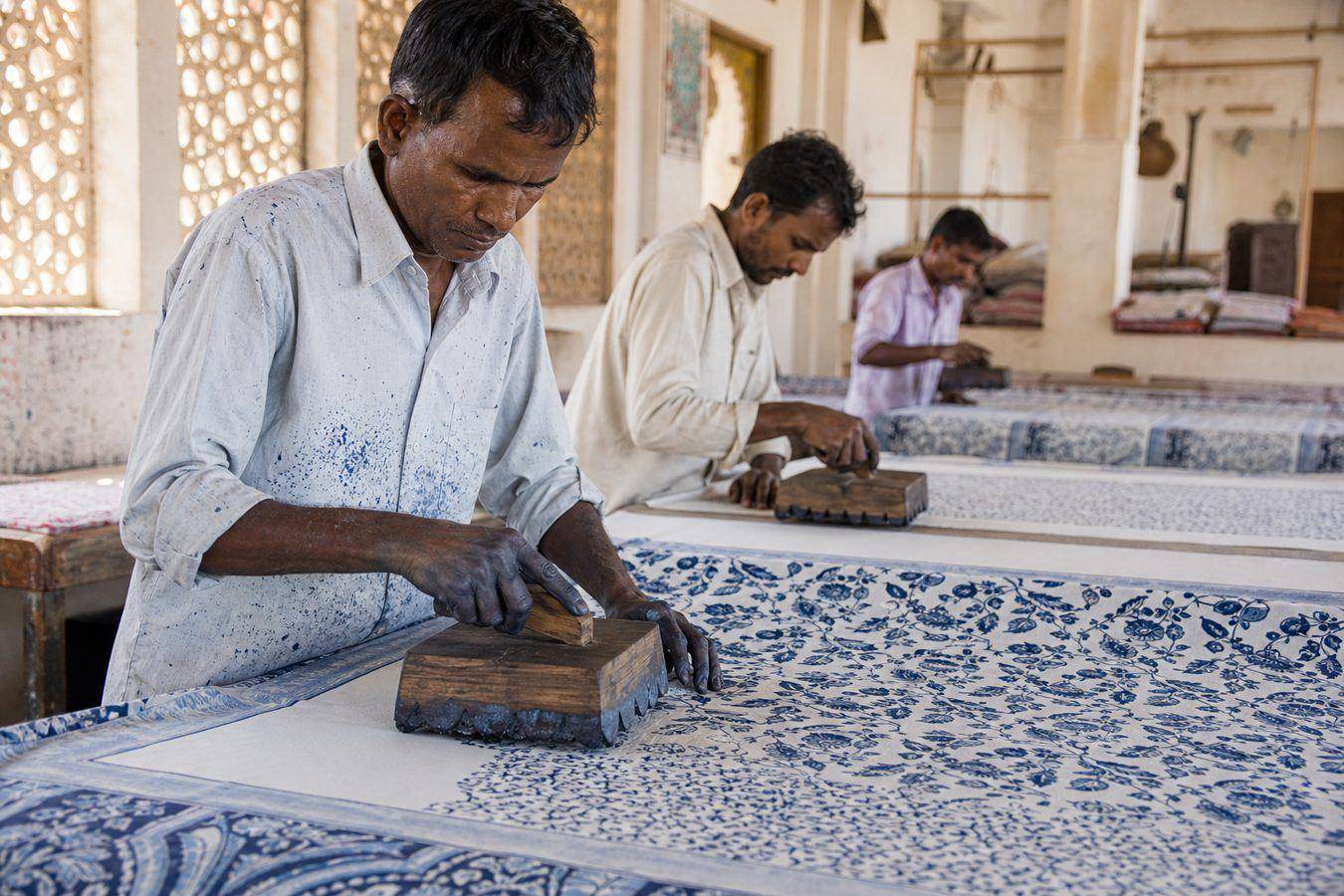
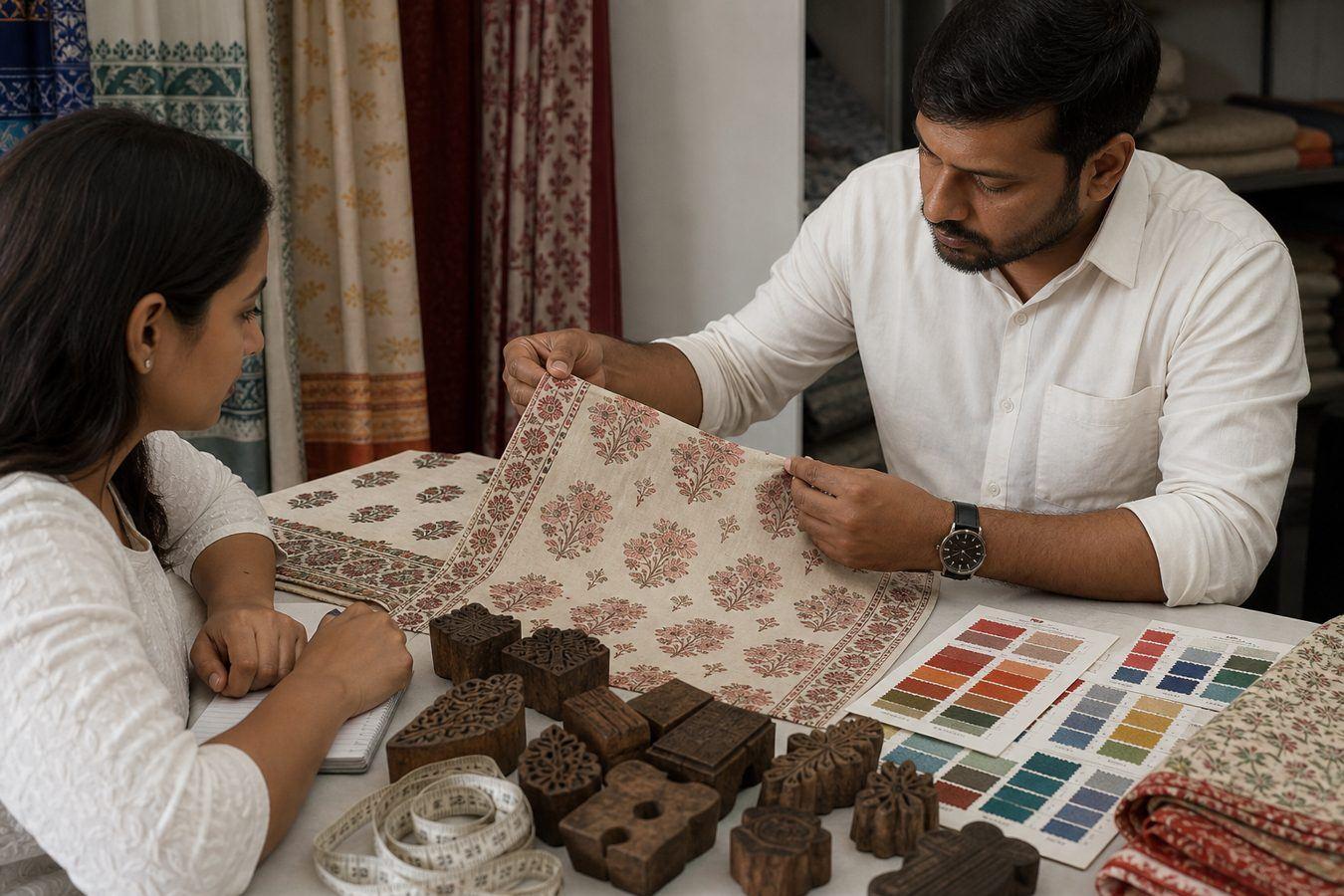
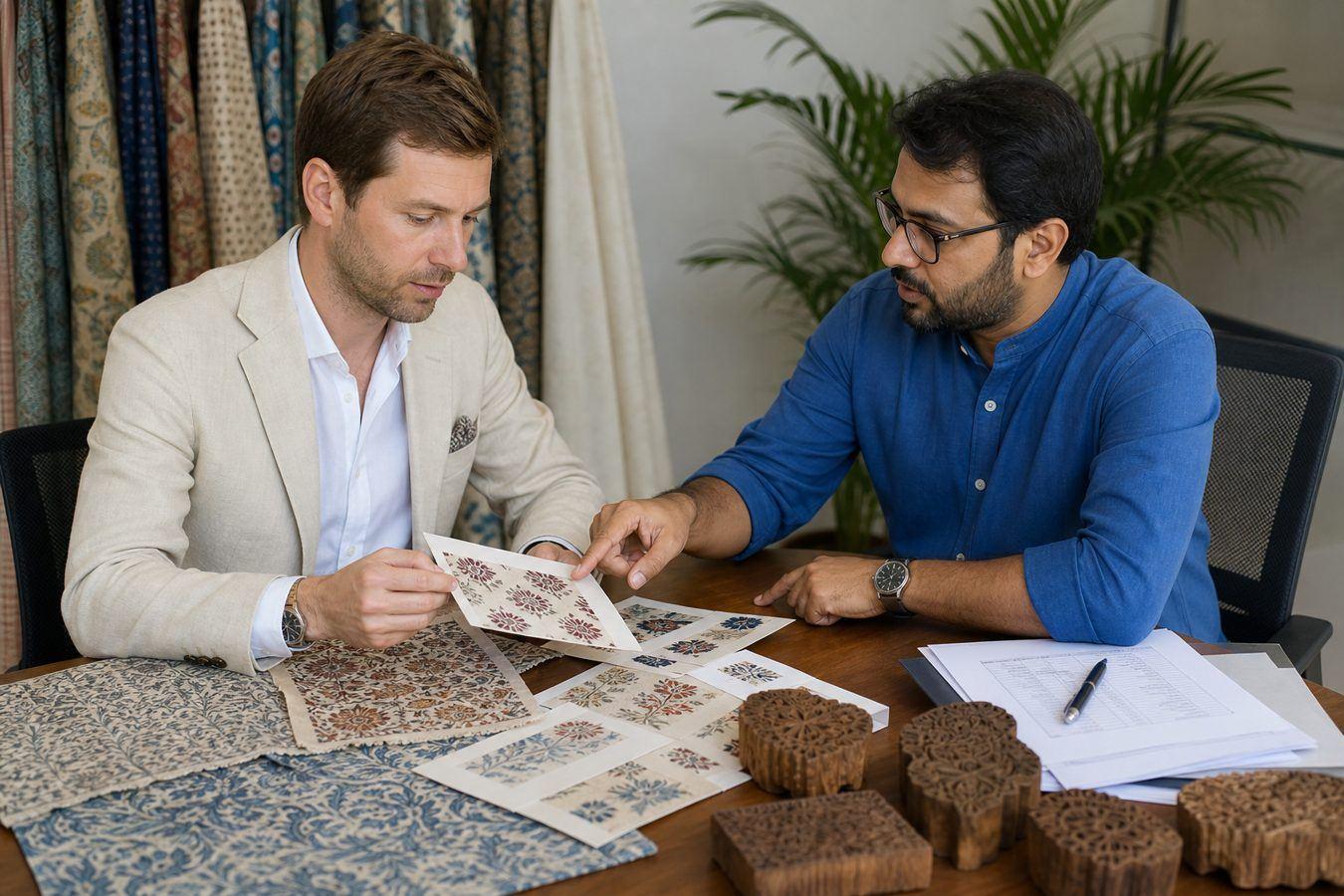
Block print manufacturing begins with carved wooden blocks — often teak or sheesham — aligned by master printers on wet fabric tables. Registration tolerance, repeat length, and colour sequence are technique-specific; Bagru earth-toned palettes differ from Sanganer bright reactive programmes. Dabu adds mud-resist paste steps that extend lead time. Ajrakh requires multiple dye and resist cycles over days, limiting daily output but creating natural-dye depth buyers pay premium for. Kalamkari combines pen drawing and block fills with narrative motifs requiring skilled artisans per design.
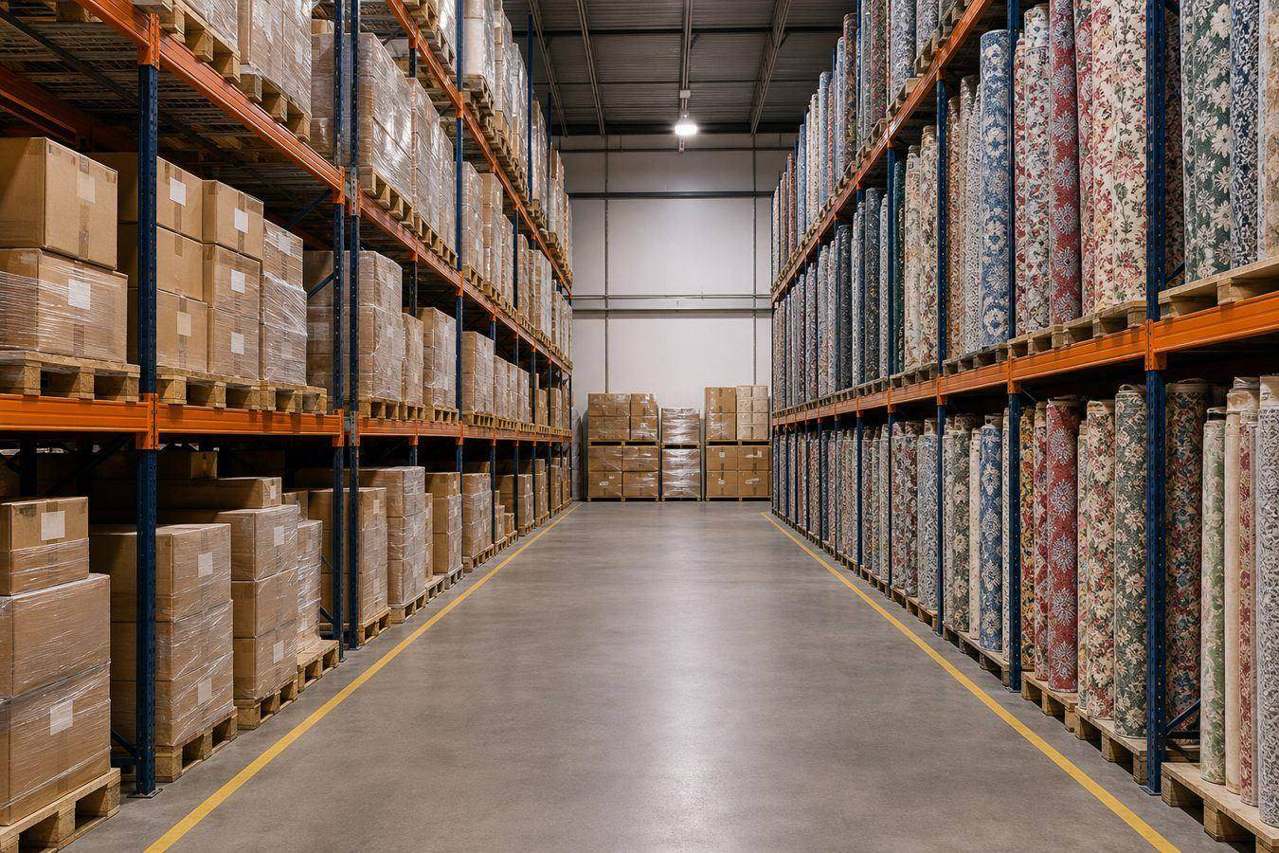
Sustainable scale does not mean abandoning artisan process — it means documenting process honestly, segregating certified organic stock from conventional, and planning colourway MOQ against block inventory and dyer capacity. Merchant exporters consolidating multiple clusters must maintain lot traceability so a GOTS claim on a German private-label throw does not commingle with conventional Bagru stock at packing.
Pricing Analysis
Buyer Tip
Sustainable hand printed textile FOB must absorb technique labour, natural-dye cycle time, block carving amortisation, certification audit costs, strike-off iterations, packaging upgrades, and exporter margin — then compare against competing origins and against commodity rotary print benchmarks inside the buyer's own range architecture.
Indicative directional bands: volume reactive block print yardage ~US$2.5–8/m; heritage natural-dye Ajrakh / fine block ~US$8–25+/m; cushion covers ~US$2–12/pc; throws and table linen ~US$8–45/pc or set; GOTS organic print programmes carry evidence-dependent premiums of roughly 30–80% over comparable conventional craft print when transaction certificates and OEKO-TEX scope are current.
Private-Label Margin Playbook — Cost Stack (Directional)
Swipe →
Data table — swipe horizontally on small screens
| Cost Layer | Typical Share of FOB | Premium Programme Notes |
|---|---|---|
| Fabric base (organic vs. conventional) | 25–40% | GOTS organic cotton premium significant |
| Print labour & block amortisation | 15–30% | Ajrakh/Kalamkari higher labour share |
| Dye chemistry & effluent compliance | 5–15% | Natural dyes + wastewater treatment |
| Certification amortisation (GOTS/OEKO-TEX) | 3–8% | Spread across colourway volume |
| QC, strike-offs, lab testing | 5–10% | Colourfastness per destination market |
| Packaging & retail readiness | 5–12% | Reduced-plastic EU requirements |
| Inland logistics & export docs | 3–8% | Gujarat vs. Rajasthan port routing |
| Exporter margin | 10–20% | Justified by audit-ready programme management |
Indicative FOB Premium Ladder by Technique
Indicative FOB Premium Ladder by Technique (Directional USD)
Swipe →
Data table — swipe horizontally on small screens
| Programme Type | Yardage FOB/m | Cushion Cover FOB/pc | Throw FOB/pc |
|---|---|---|---|
| Volume azo-free reactive block | $2.5–8 | $2–6 | $8–18 |
| Heritage natural-dye Ajrakh | $8–25+ | $5–12 | $18–45 |
| Kalamkari table/bed programmes | $6–18 | $4–10 | $12–35 |
| GOTS organic print (certified chain) | +30–80% over conventional craft base | +30–80% | +30–80% |
| Fair-trade audited artisan line | Story premium +10–25% on craft base | +10–25% | +10–25% |
MOQ Analysis
Buyer Tip
Sustainable craft print MOQ is constrained by colourway economics, not factory size alone. Each Ajrakh resist cycle and each new block alignment carries setup cost that must amortise across metres or pieces. Organic GOTS programmes additionally require segregated lot runs — mixing certified and conventional stock in one colourway destroys the claim.
MOQ by Technique and Certification Scope
Swipe →
Data table — swipe horizontally on small screens
| Programme | Strike-Off MOQ | Trial MOQ | Wholesale MOQ Notes |
|---|---|---|---|
| Reactive azo-free block print | 1–5 m / 5–20 pcs | 50–200 m / 200–500 pcs | By colourway; block inventory limits |
| Natural-dye Ajrakh | 1–3 m / 5–15 pcs | 50–150 m / 150–400 pcs | Dyer capacity; longer lead times |
| Kalamkari narrative designs | 1–5 m / 5–20 pcs | 50–200 m / 200–500 pcs | Artisan hours per motif |
| GOTS organic print | Certified lot minimums apply | Full-chain TC from gin forward | No commingling with conventional |
| Fair-trade collection | Per artisan cooperative terms | Seasonal allocation windows | Audit-matched wage documentation |
Packaging Standards
Export Tip
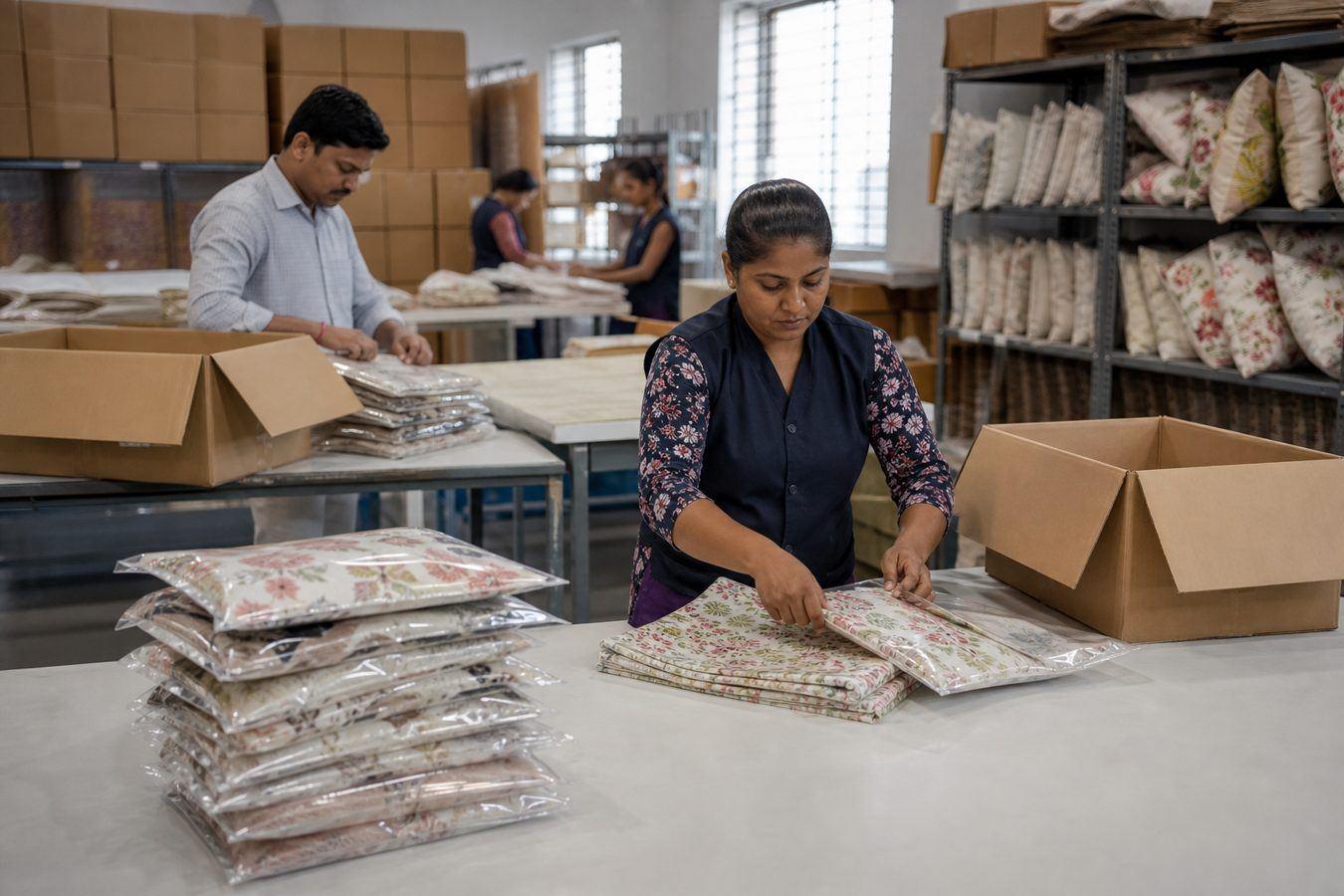
Premium and sustainable buyers increasingly specify packaging as part of the environmental claim — reduced plastic, recyclable kraft, right-sized cartons, and FSC-certified outer boxes appear in EU and UK vendor onboarding alongside product certifications. For hand printed made-ups, polybag minimisation, paper belly bands, and compostable mailer alternatives are replacing heavy PVC retail packaging in organic private-label programmes.
Yardage for organic print ships with lot tags referencing GOTS transaction certificate numbers where applicable; crush-prone embossed block prints require tube or careful fold protocols to protect registration in transit.
Sustainable Packaging Options by Channel
Swipe →
Data table — swipe horizontally on small screens
| Channel | Inner Pack | Outer Carton | Buyer Expectation |
|---|---|---|---|
| EU organic private label | Minimal or no poly; paper band | Recyclable kraft, right-sized | Plastic reduction targets in vendor scorecards |
| US home specialty | Polybag common; recycled content preferred | Standard export carton + moisture barrier | Fibre/care label retail-ready |
| Hospitality FF&E | Bulk fold; minimal retail packaging | Heavy-duty export carton | Durability over aesthetics |
| Fashion yardage | Roll tube; lot tag | Bale or roll crate | GOTS TC reference on tag for organic lots |
Container Loading Details
Export Tip
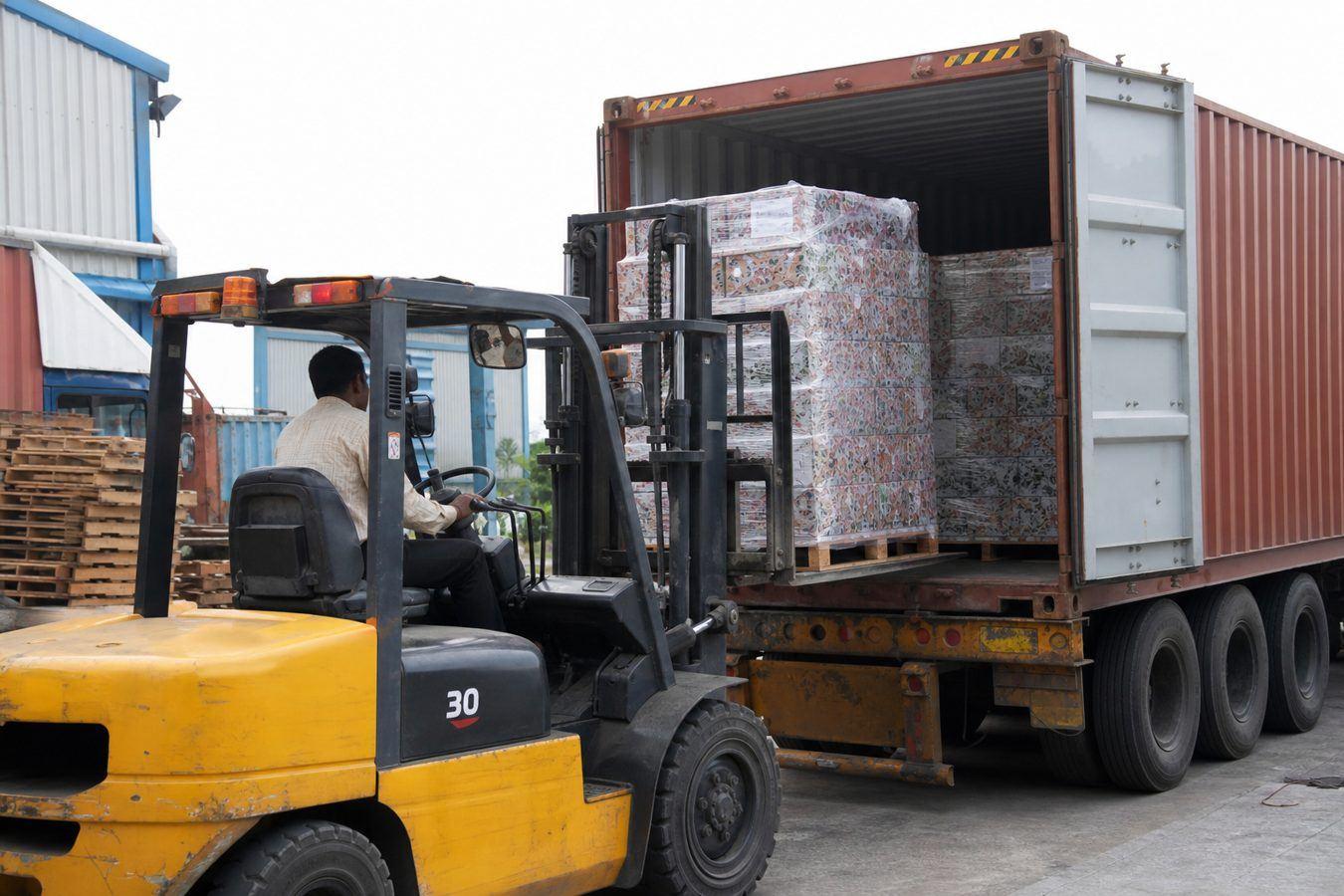
Sustainable premium programmes often ship mixed cartons of throws, cushion covers, and table linen under one private-label collection — CBM planning must protect fine block registration from stack crush. Rolled GOTS yardage consumes different container space than folded made-ups; forwarders should confirm dunnage for long transits to Hamburg, Los Angeles, or Sydney.
Indicative FCL Payloads — Premium Made-Up Mix (Directional)
Swipe →
Data table — swipe horizontally on small screens
| Container | Cushion-Heavy Mix | Throw-Heavy Mix | Planning Notes |
|---|---|---|---|
| 20GP | 8,000–14,000 cushion covers | 2,000–3,500 throws | Trial sustainable collections |
| 40HC | 18,000–28,000 cushion covers | 5,000–8,000 throws | Seasonal private-label programmes |
| LCL | 200–1,500 pcs mixed SKUs | Mixed premium assortment | First organic listing tests |
| Air (strike-offs) | Sample kits + TC copies | Urgent colourway approval | Pre-FCL qualification only |
Shipping Methods
Export Tip
Ocean FCL remains default for wholesale sustainable print programmes; air freight serves strike-off and urgent listing deadlines. FOB Mundra suits Gujarat Ajrakh corridors; Nhava Sheva and ICD Dadri serve Rajasthan block print consolidated through Delhi-NCR. Lead times: strike-offs 7–21 days; stock-ready azo-free programmes 4–8 weeks; custom natural-dye / GOTS private-label 8–14 weeks; major retail seasons booked 4–9 months ahead.
Incoterms: EXW for buyer-audited factory visits; FOB most common; CFR/CIF for buyers wanting single freight quote; DDP selective for established organic retail partners with customs broker relationships.
Certifications
Compliance Notes
Certifications are the operational core of sustainable hand printed textile export — not decorative logos. GOTS covers organic fibre integrity and processing chemical restrictions with transaction certificates at every handoff. OEKO-TEX Standard 100 addresses finished-product chemical safety independent of organic claims. Fairtrade and artisan cooperative audits add livelihood documentation. Azo-free and REACH-aligned reactive systems remain mandatory baselines for EU/UK regardless of organic status.
Certification Comparison for Hand Printed Textiles
Swipe →
Data table — swipe horizontally on small screens
| Certification | What It Proves | Typical Buyer | Common Failure Mode |
|---|---|---|---|
| GOTS | Organic fibre + restricted chemicals + social criteria | EU/US organic private label | Missing transaction certificate at one processing step |
| OEKO-TEX Standard 100 | Harmful substance limits on finished SKU | EU/US premium retail broadly | Certificate scope does not cover new pigment class |
| Fairtrade / artisan audit | Livelihood and wage standards | ESG-linked retail, fair-trade shops | Storytelling without audit renewal |
| Azo-free / REACH dyes | Restricted amine compliance | Mandatory EU/UK | Undocumented pigment switch mid-season |
| Honest hand-print claim | Process integrity vs. rotary hybrid | All premium buyers | Mislabelled machine print as hand block |
GOTS transaction certificates on print programmes
Every GOTS organic print lot requires transaction certificates from certified gin, spinner, weaver, printer, and exporter entities — referencing batch numbers that match physical tags on rolls and cartons. If the print unit's GOTS scope covers wet processing but the weaver's certificate lapsed mid-season, the finished throw's organic claim is not defensible. Audit supply-chain certificate status at season start, not at shipment crunch.
OEKO-TEX on natural-dye and block-print pigments
Natural dyes are not automatically exempt from chemical safety testing — mordants and fixatives must fall within OEKO-TEX limits where buyers require Standard 100. Test each colourway class when pigments or mordants change; renewal annually or when formulation shifts.
Buyer Requirements
Buyer Requirements
Premium sustainable buyers evaluate exporters on technique honesty, certificate scope, strike-off registration consistency, colourfastness to declared care instructions, fibre and care labels, packaging compliance, and MOQ realism per colourway. Vendor onboarding questionnaires in Germany and the Netherlands often request GOTS transaction certificate samples, OEKO-TEX certificate PDFs, azo test reports, and artisan wage audit summaries in one submission pack.
Premium Buyer RFQ Requirements Checklist
Swipe →
Data table — swipe horizontally on small screens
| Requirement | Evidence Expected | Timeline in RFQ Process |
|---|---|---|
| Print technique specification | Written process sheet + strike-off photos | First quote stage |
| GOTS / OEKO-TEX scope | Current certificates + TC sample | Vendor onboarding gate |
| Colourfastness | ISO 105 series or buyer-equivalent | Before bulk approval |
| Fibre & care labels | Destination-market compliant artwork | Pre-production sign-off |
| Artisan / fair-trade claims | Audit report or cooperative reference | Before marketing copy approval |
| Packaging sustainability | Material spec + plastic weight | EU listing gate increasingly |
Country-wise Opportunities
Market Snapshot
Sustainable print opportunity intensity varies by destination compliance burden and design calendar. See Best Countries for Indian Hand Printed Textile Exports for macro ranking and Most Demanded Indian Hand Printed Textiles by Country for technique-by-market detail.
Germany and the Netherlands
Strongest GOTS organic print RFQ volume in Europe; buyers expect transaction certificates, OEKO-TEX, reduced-plastic packaging, and honest natural-dye documentation. Ajrakh and organic Bagru programmes over-index. Heimtextil remains a key listing gate for sustainable collections.
USA
Large absolute craft-print market with a fast-growing organic and natural-dye niche on West Coast and Northeast e-commerce private label. Fibre content labelling under Textile Rules is non-negotiable; GOTS increasingly requested alongside OEKO-TEX for organic listings.
UK and France
Design-led heritage block and Kalamkari demand with rising organic private-label interest post-Brexit UKCA alignment. Boutique and department store buyers reward artisan storytelling when backed by azo-free test reports.
UAE and hospitality channels
Premium hospitality FF&E for natural-dye print curtains, table linen, and cushions — project-based rather than seasonal retail. Sustainability claims matter in five-star brand standards even where formal GOTS is not always mandatory.
Australia, Canada, Japan
Australia and Canada: strict labelling, growing eco print. Japan: exceptional registration QC for fine block and Ajrakh; long relationship cycles; premium pricing when consistency proven over multiple seasons.
Sourcing Checklist
Checklist
Common Buyer Mistakes
Common Mistakes Box
International buyers and importers new to sustainable hand print make predictable errors that destroy margin or trigger compliance failures.
Future Market Trends
Key Statistics
Regenerative cotton narratives, low-impact print chemistry, digital traceability (blockchain lot tags, QR care labels linking to artisan profiles), and EU packaging reduction mandates will tighten sustainable print requirements through 2028+. Buyers are moving from single-certificate checks to multi-claim audits combining GOTS, OEKO-TEX, packaging weight, and honest hand-process verification in one vendor scorecard.
Private-label e-commerce brands are shortening listing cycles but increasing documentation depth — a trend that favours Indian merchant exporters who can hold certificate packs and strike-off libraries ready for repeat colourway seasons rather than one-off artisan relationships without export discipline.
Challenges & Solutions
Sustainable hand printed textile export challenges are solvable with cluster selection, certificate discipline, and honest MOQ communication.
Sustainability Export Challenges and Solutions
Swipe →
Data table — swipe horizontally on small screens
| Challenge | Impact | Solution |
|---|---|---|
| Broken GOTS chain of custody | Listing rejection; legal claim risk | Season-start TC audit of all processors |
| Registration drift on natural dyes | Premium buyer churn | Written tolerance + wash test per colourway |
| Greenwashing accusations | Retailer delisting; social media risk | Claims match certificate scope exactly |
| Artisan capacity vs. retail MOQ | Missed season windows | Merchant consolidation + realistic colourway caps |
| Packaging plastic mandates | EU vendor score failure | Spec reduced-plastic inner packs early |
Buyer Checklist
Checklist
Exporter Checklist
Checklist
Compliance Checklist
Checklist
Compliance Notes
Expert Insight: Margin Follows Evidence
Expert Insight Box
Price sustainable hand print as a programme, not a unit. Amortise block carving across colourway volume, certification across season MOQ, strike-offs across trial-to-bulk conversion, and sustainable packaging across carton count. Present FOB as a table with technique, GSM, cert scope, MOQ, and lead time — buyers respect transparency and repeat with suppliers who protect margin without surprise uplifts at bulk stage.
Conclusion
- Process pillar: How to Export Hand Printed Textiles from India.
- Buyer vetting: Source Hand Printed Textiles Directly from India.
- Lead generation: Find International Buyers for Hand Printed Textiles.
- Documentation: Hand Printed Textile Export Documentation Checklist.
- Bedding adjacency only: How to Export Bedsheets from India when print-led bed linen is bedding-classified.
Block print, Ajrakh, Kalamkari, and related sustainable hand printed textile export opportunities from India reward exporters and buyers who treat craft technique, natural-dye chemistry, GOTS/OEKO-TEX evidence, fair-trade documentation, and private-label margin discipline as one integrated programme — not as marketing overlays on commodity print pricing.
Altus Exports helps international buyers build audit-ready sustainable print collections and supports Indian exporters in connecting verified artisan clusters with premium demand — from strike-off through FCL execution. Explore merchant exporter India, export products from India, global sourcing partner India, and Handicrafts & Lifestyle Products — or contact Altus to scope a GOTS, Ajrakh, or Kalamkari programme.