
Hand Printed Textile Export Documentation Checklist
By Saurabh Mittal, Founder, Altus Exports
A field-ready, document-by-document checklist for Indian hand printed textile exporters — commercial invoice lines for printed yardage versus cushion covers and throws, packing lists for rolls versus cartons, shipping bills, bills of lading, certificates of origin, fibre-content and care-label packs, OEKO-TEX/GOTS/azo-free dye documentation, and a clean customs broker handoff for block print, Ajrakh, Dabu, and Kalamkari programmes.
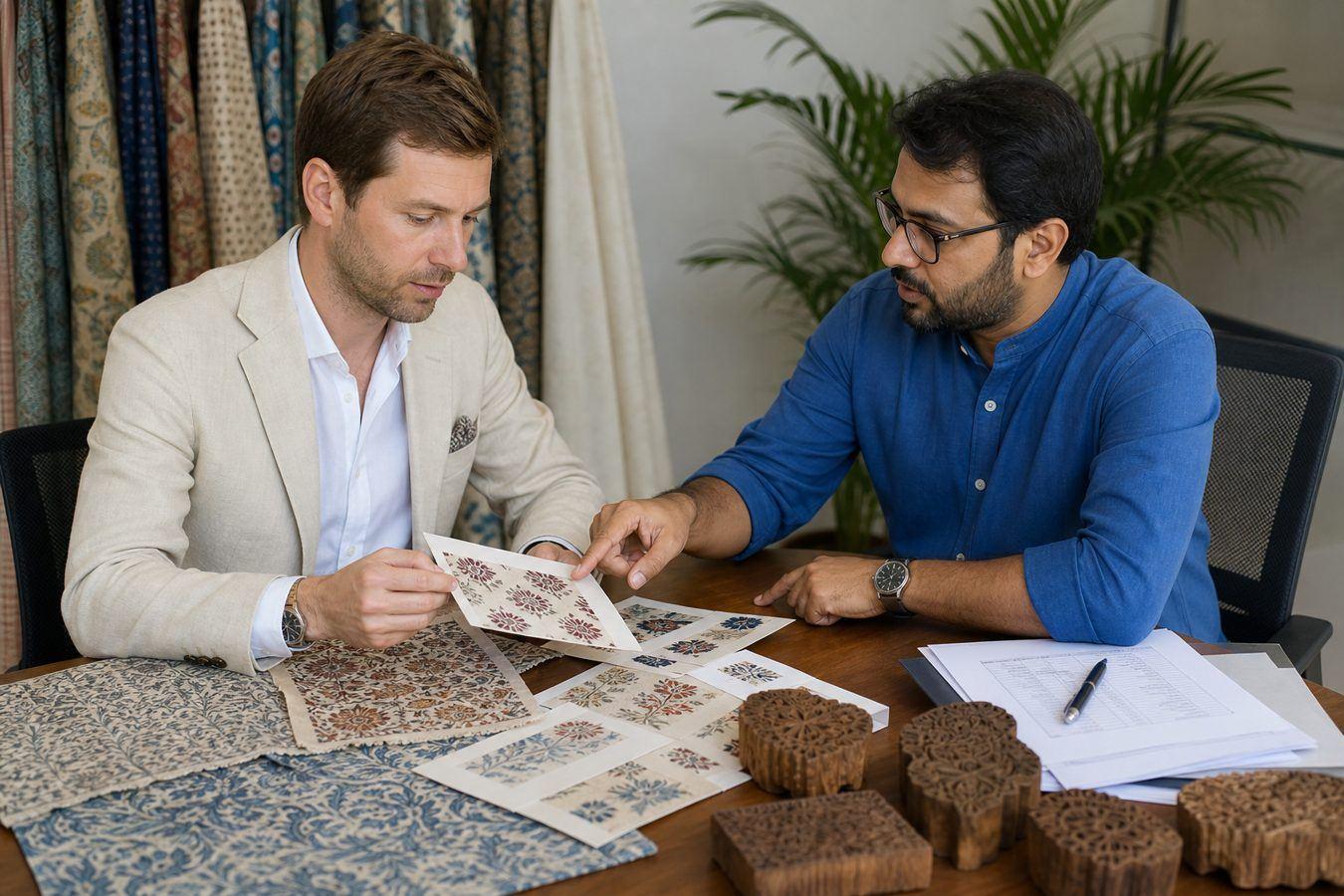
Documentation — not print registration or carton availability — is the single most common reason Indian hand printed textile shipments hold at Nhava Sheva, Mundra, or an ICD before they ever reach a vessel. A commercial invoice that describes block-print yardage under a made-up HS line; a packing list that lists roll lengths in metres while the shipping bill declares pieces; a missing fibre-content certificate for a USA-bound cushion cover programme; or an azo-dye attestation that never arrived for an EU retail chain — these are the everyday failure modes for Jaipur–Sanganer–Bagru block print, Kutch Ajrakh, Machilipatnam Kalamkari, and Panipat/Karur made-up conversion alike.
This guide is a field-ready, document-by-document checklist for hand printed textile exporters shipping printed fabrics and made-ups. It covers every paper from IEC and EPCH (Export Promotion Council for Handicrafts) RCMC through commercial invoice, packing list, shipping bill, bill of lading, certificate of origin, fibre-content and care-label packs, OEKO-TEX/GOTS/azo-free dye documentation, and customs broker handoff — with particular attention to the control point that makes print-textile exports distinctive: the same purchase order may mix printed cotton yardage under HS 5208 / 5209, cushion covers under 6304, and scarves under 6214, and every document must reconcile line by line. Print method alone does not set the heading; base fabric, weave, weight, and made-up form do — confirm each SKU with your licensed CHA.
This checklist assumes you already know why exporters register with EPCH and which countries to prioritise — those questions are answered in EPCH Registration Benefits for Hand Printed Textile Exporters and Best Countries for Indian Hand Printed Textile Exports. For end-to-end process, read How to Export Hand Printed Textiles from India. For the SKU catalogue behind these documents, see Top Hand Printed Textile Products Exported from India.
Altus Exports operates as a merchant exporter in India and export products from India coordinator, handling documentation packs from IEC through post-shipment for hand printed textile programmes across Jaipur, Kutch, Andhra Pradesh Kalamkari belts, and Panipat/Karur made-up conversion, with Delhi-NCR consolidation. This guide is written for exporters preparing their first FCL of a coordinated print colourway programme and for buyers verifying supplier readiness before signing a purchase order.
Key Takeaways
Summary Box
Executive Summary
Summary Box
The hand printed textile export documentation pack is a coordinated set of roughly 18–24 documents split across five families: (1) registration and compliance foundation; (2) commercial transaction documents; (3) shipping and logistics documents; (4) print-textile product and compliance documents; and (5) destination-specific fibre-labelling and chemical-compliance documents. Each document has an owner, a format expectation, and a timing constraint tied to the vessel cutoff. What makes this cluster's documentation distinctive is not any single certificate — it is the fabric-versus-made-up HS split, the roll-versus-carton packing reconciliation, and the dye-chemistry evidence that must align with every colourway on the invoice.
This guide walks through each family with format guidance, common pitfalls, and a clean handoff sequence to your customs broker. It deliberately does not re-explain why EPCH registration matters or which countries to prioritise for hand printed textile exports — those are covered in the linked posts above. What it does cover in depth is the paperwork itself: how commercial invoices differ for printed yardage versus cushion covers, how packing lists must mirror roll lengths or carton piece counts, how shipping bills and bills of lading must agree on HS lines, and when OEKO-TEX, GOTS, or azo-free dye packs are mandatory versus optional.
For overseas buyers, this checklist is a supplier readiness benchmark. Ask any prospective Indian hand printed textile exporter to walk through each document family with sample copies from a recent shipment that mixed yardage and made-ups. Exporters who can produce clean, HS-segregated examples across all five families — including fibre-content labels that match strike-off cards — are the ones who convert first purchase orders into durable, multi-season print programmes.
Market Size & Industry Overview
Key Statistics
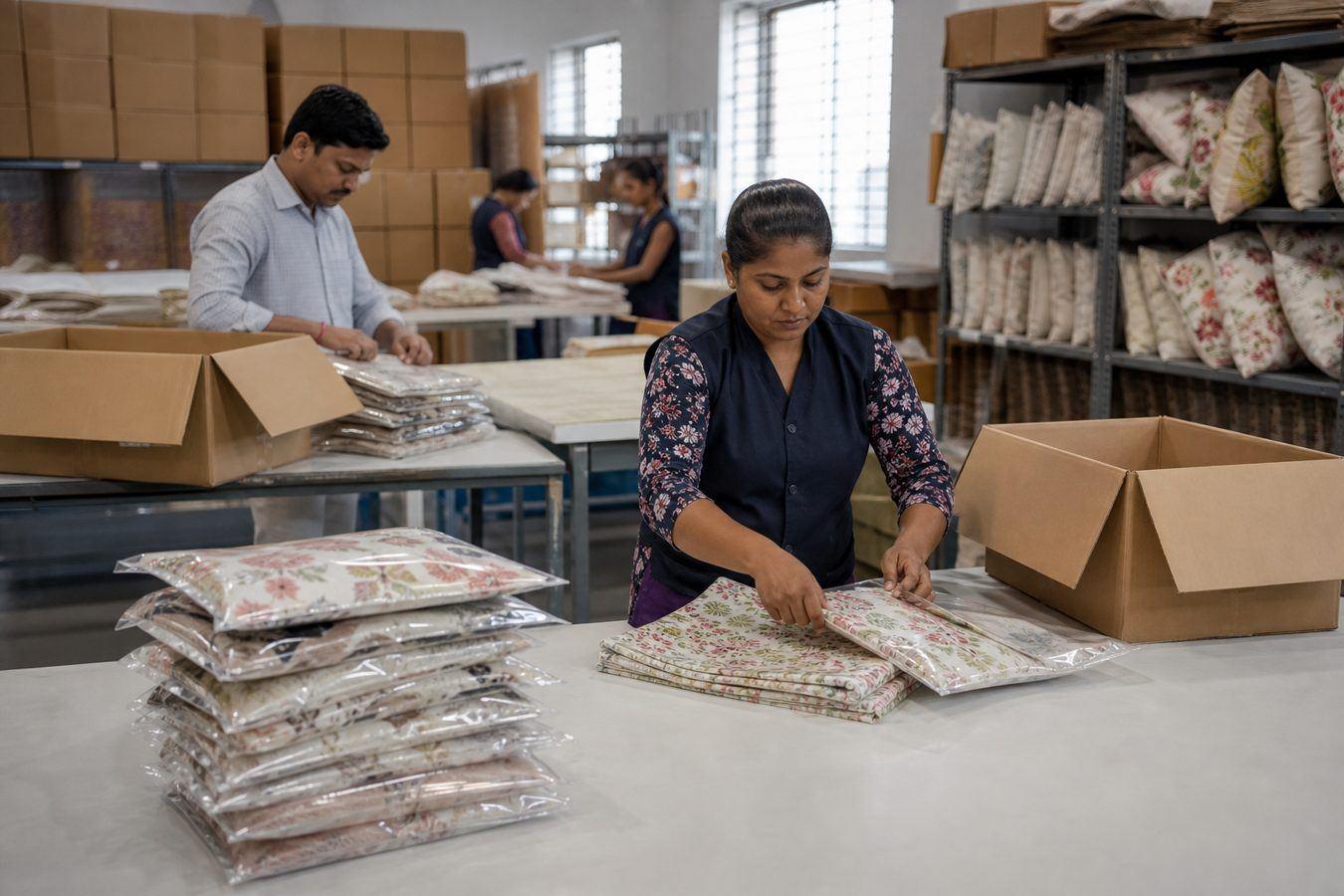
India's hand printed textile export industry is a technique-and-cluster play — block print (Bagru, Sanganer), Dabu/mud-resist, Ajrakh natural-dye resist, Kalamkari, and hand screen print on cotton and natural-fibre bases, converted into yardage, cushion covers, throws, table linen, curtains, and scarves/stoles. Documentation intensity scales with how many HS families and colourways a single programme touches. A wholesaler ordering one Ajrakh yardage line carries a lighter document panel than a retail chain ordering a coordinated soft-furnishing programme that blends printed fabric rolls, cushion covers, and table linen under one purchase order. Clusters in Jaipur / Sanganer / Bagru; Kutch / Ajrakhpur; Machilipatnam / Srikalahasti; Panipat / Karur / Tirupur; Delhi-NCR each feed the same broad document workflow, which is precisely why fabric-versus-made-up HS discipline — not any single certificate — is the operational core of this checklist.
Documentation Intensity by Programme Type + Destination
Swipe →
Data table — swipe horizontally on small screens
| Programme Type + Destination | Documentation Intensity |
|---|---|
| Single colourway printed cotton yardage + Gulf wholesaler | Baseline (registration + commercial + shipping + fibre note) |
| Mixed yardage + cushion covers + USA retail chain | Baseline + split HS invoice + US Textile Rules fibre/care labels + azo attestation |
| OEKO-TEX/GOTS private-label throws + EU brand | Baseline + cert copies + REACH-aware dye declaration + EU textile labelling |
| Heritage Ajrakh/Kalamkari natural-dye programme + premium boutique | Baseline + dye-process note + lot-linked strike-off approval + cert where claimed |
| Coordinated hospitality print programme (curtains + table linen + cushions) | Baseline + multi-HS segregation + flammability note where furnishing channel requires |
Export Statistics
Key Statistics
Export documentation flows follow the HS map above depending on whether the shipment is yardage, made-ups, or a mixed programme. Directional traffic moves through Mundra, Nhava Sheva, ICD Delhi / Dadri, Pipavav / Ahmedabad corridor, with rail-linked ICDs feeding containers from the North Indian print and made-up belt to west-coast gateways. Top directional destinations for documentation planning: UAE, USA, UK, France, Germany, Canada, Japan, Australia, Netherlands.
Documentation errors are a small but consistent share of Indian port hold cases across textile handicraft and print-textile categories — proportionally higher on first-time exporter shipments and on mixed fabric-plus-made-up programmes new to a workshop's export history. Mixed shipments fail most often on invoice-to-packing-list mismatches when yardage rolls and made-up cartons share one container; USA-bound programmes fail most often on missing or inaccurate fibre-content and care labels; EU-bound programmes fail most often on incomplete azo-dye or REACH-aligned dye declarations or missing OEKO-TEX/GOTS evidence when those claims appear on hangtags.
Documentation Failure Rate Signals (Directional)
Swipe →
Data table — swipe horizontally on small screens
| Failure Mode | Frequency Direction |
|---|---|
| Invoice–packing list mismatch (metres vs pieces, rolls vs cartons) | High |
| HS misalignment: fabric line declared as made-up or vice versa | High |
| Missing or unverified fibre-content / care-label pack | Medium–High |
| Azo-free / restricted-substance declaration absent for EU-bound print | Medium–High |
| OEKO-TEX/GOTS cert quoted on tag but not in document pack | Medium–High when claimed |
| Print method mis-described (hand vs rotary) on commercial invoice | Medium |
| Certificate of origin delay | Low–Medium |
| COO origin criteria mismatch for preferential claims | Low–Medium |
Import Statistics
Key Statistics
Import-side documentation requirements vary by destination and by whether the shipment is fabric yardage or finished made-ups. The USA drives Textile Fiber Products Identification Act fibre-content and care-labelling expectations for cushion covers, throws, scarves, and apparel-adjacent print SKUs. The EU (Germany, Netherlands, France) drives EU Textile Regulation labelling, azo-dye restrictions, and REACH-aligned chemical claims where marketing materials reference eco or natural-dye positioning. The UK largely mirrors EU textile labelling practice with its own confirmation step post-Brexit. UAE and Canada mainly add labelling and language layers; Australia adds import-condition checks that still expect consistent fibre declarations across the colourway programme.
Cross-check your buyer's prior hand printed textile import HS history when sizing documentation effort. A retailer who has never imported Kalamkari table linen will need more coaching on HS classification than a seasoned European home-textile importer who already runs an OEKO-TEX and fibre-labelling library on file.
Destination Documentation Add-Ons for Print Textiles
Swipe →
Data table — swipe horizontally on small screens
| Destination | Documentation Add-On |
|---|---|
| USA | Textile Rules fibre-content + care labels + azo/restricted-substance note as buyer requires + flammability where furnishing channel requires |
| Germany / France / Netherlands (EU) | EU textile labelling + azo-dye compliance + REACH note where chemical claims apply + OEKO-TEX/GOTS copies if claimed |
| UK | UK textile labelling + azo note + care-label confirmation aligned with buyer template |
| UAE | Arabic retail labels + fibre-content in required format |
| Australia | Import-condition alignment + English labels + fibre consistency |
| Canada | Bilingual English/French labels + fibre-content certificate |
| Japan | Fibre-content and care symbols per buyer QC template; JIS-aligned care where specified |
Product Categories / Variants
Summary Box
The documentation pack shape follows the product form — yardage versus made-up — and the print technique, not a single generic 'hand print' line. Block-print cotton yardage packs around fabric HS lines, roll dimensions, and colourway lot numbers. Cushion covers, throws, and table linen pack around made-up HS lines, piece counts, and retail-ready hangtags. Scarves and stoles may classify under apparel-accessory headings. Coordinated soft-furnishing programmes — the format that defines many retail and hospitality orders — carry the heaviest documentation load because one purchase order can trigger separate HS lines, packing formats, and label packs at once.
Document Pack Structure by Print-Textile Category
Swipe →
Data table — swipe horizontally on small screens
| Category | Document Pack Focus |
|---|---|
| Printed cotton yardage (block, screen, Dabu) | 5208 / 5209 + roll length/width/GSM + colourway lot + dye chemistry note |
| Heritage Ajrakh / natural-dye yardage | 5208 / 5209 or ch. 54/55 + natural-dye process note + strike-off approval |
| Kalamkari yardage and made-ups | Fabric or 6304 as classified + Kalamkari process note + fibre cert |
| Cushion covers, throws, printed furnishing articles | 6304 + fibre-content cert + care labels + piece-count packing list |
| Table linen and printed bed linen (print-led SKU) | 6302 / table-linen lines as classified / 6302 as classified + label pack (bedding-led → see bedsheet cluster) |
| Curtains / drapery | 6303 + panel dimensions + header/hem spec on invoice |
| Scarves / stoles | 6214 + fibre-content + dimensions + care labels |
Manufacturing Overview
Export Tip
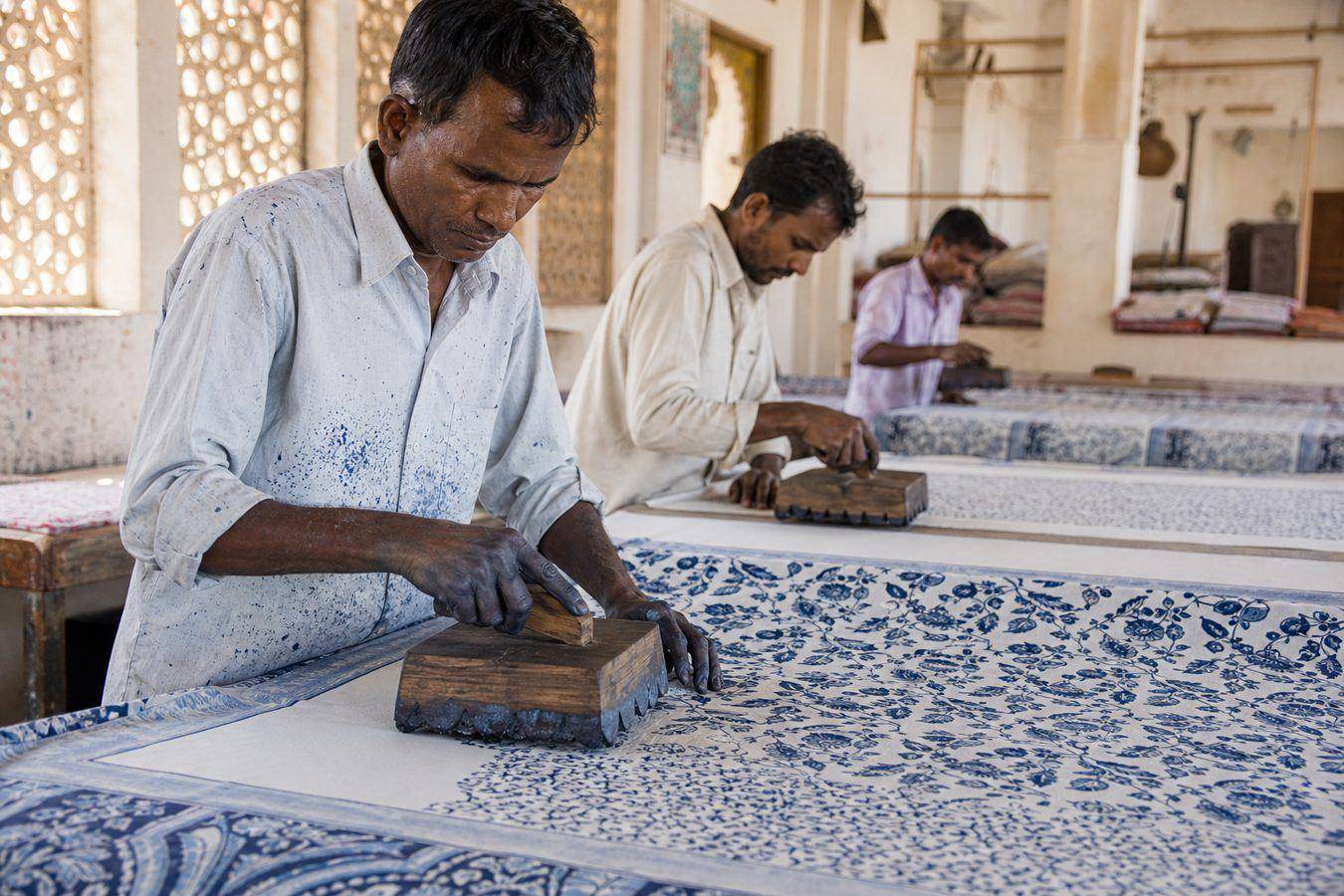
Documentation workflow starts before the first strike-off is approved. The fabric specification — base cloth, GSM, print method, dye chemistry — drives the HS line on the commercial invoice; the colourway lot drives the packing list; the sales contract drives Incoterms and label responsibility; the made-up conversion step (if any) triggers a separate HS family. Manufacturing runs alongside documentation preparation, not sequentially — a merchant exporter consolidating Bagru yardage with Karur cushion conversion that waits until cartons are sealed to start the paperwork will miss the vessel cutoff almost every time.
Fibre-content testing, OEKO-TEX/GOTS certificate copies, and azo-dye lab reports are not same-day documents. Sync lab and label-printing requests with the strike-off and bulk print schedule so certificates land before hangtag application, not after container stuffing.
The Hand Printed Textile Export Document Checklist, Family by Family
Checklist
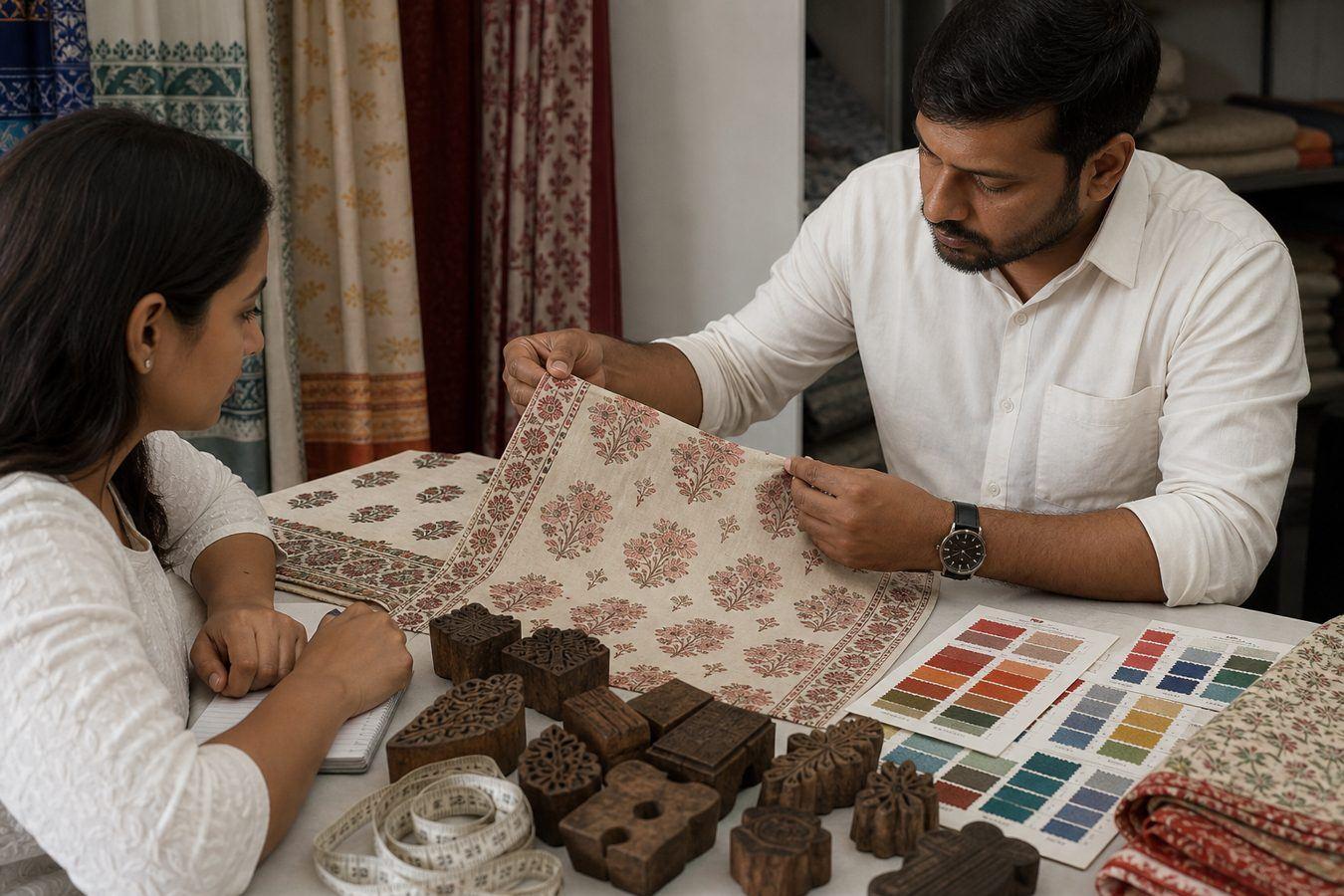
This is the operational core of the guide: every document a hand printed textile exporter needs, grouped into five families, each with a clear owner and timing.
Registration & Compliance Documents (Foundation Layer)
- IEC (Importer-Exporter Code) from DGFT
- GST registration
- PAN
- Bank AD code / forex account confirmation
- EPCH (Export Promotion Council for Handicrafts) RCMC (Registration-cum-Membership Certificate) — primary for textile handicraft / hand printed artware lines
- TEXPROCIL RCMC confirmation where cotton made-ups classify under cotton textile made-ups (confirm with CHA per SKU mix)
- Factory / print workshop / merchant exporter incorporation documents
- Board resolution or partnership authorisation for export signatory
- OEKO-TEX / GOTS facility or product certificates (where held and where claims are made)
- Empanelled textile lab accreditation record for fibre-content, colourfastness, and azo testing
Commercial Transaction Documents
- Proforma invoice (buyer-approved before PO) — separate lines for yardage (metres) and made-ups (pieces), with print method, colourway, and HS hint per line
- Sales contract or purchase order with strike-off approval annex and label-responsibility clause
- Commercial invoice (final, matching PO) — printed fabrics: declare fabric composition, width, GSM, metres per colourway, print technique; made-ups: declare piece count, dimensions, fibre blend, print placement, HS per SKU
- Packing list (matching commercial invoice) — rolls: roll number, net metres, gross weight, diameter; cartons: piece count, colourway, net/gross weight, carton dimensions
- Insurance certificate (voyage-specific; all-risk cover recommended for print textiles subject to transit rub-off claims)
- Letter of Credit (where applicable) or advance payment receipt
- Strike-off / lab-dip approval record signed by buyer (attach to commercial file)
Shipping & Logistics Documents
- Shipping bill (filed with Indian customs) — one line per HS code; never blend yardage and made-ups on one line
- Bill of Lading or Sea Waybill (issued by carrier) — description must match shipping bill and invoice
- Certificate of Origin (chamber or EPCH-issued; preferential where FTA criteria met)
- Container pre-stow inspection / condition report
- Seal number record (photograph)
- Freight forwarder booking confirmation
- CHA authorisation and shipping bill checklist
- Verified Gross Mass (VGM) declaration
Print-Textile Product & Compliance Documents
- Fibre-content certificate per fabric lot and made-up SKU
- Care-label artwork and approved hangtag pack (destination-compliant symbols and fibre percentages)
- Azo-free / restricted-substance dye declaration or lab report per colourway lot
- OEKO-TEX Standard 100 or GOTS certificate copy where tags or POs claim certification
- Colourfastness / wash-fastness test summary where buyer QC requires
- Print-method attestation (hand block, hand screen, Ajrakh, Kalamkari, Dabu) aligned with marketing claims
- Natural-dye process note for heritage programmes where buyer marketing references plant dyes
- Flammability test summary where USA/EU furnishing channel requires for curtains or throws
Destination-Specific Compliance Documents
- US Textile Fiber Products Identification Act fibre-content and care labels (USA retail programmes)
- EU Textile Regulation labelling compliance pack (Germany, France, Netherlands, and other member states)
- REACH-aligned chemical statement where eco or natural-dye marketing triggers substance scrutiny
- UK textile labelling confirmation post-Brexit
- Bilingual retail labels (Canada)
- Arabic retail labels (UAE)
- Japan buyer QC template alignment where JIS care symbols are specified
Commercial Invoice: Printed Fabrics vs Made-Ups — Field-by-Field Controls
The commercial invoice is the anchor document. For printed fabrics, each line must state: HS heading (typically 5208 / 5209 for cotton prints or ch. 54/55 for other fibres), fabric composition (% cotton, linen, silk, etc.), width in cm or inches, GSM or ounce weight, print method (block, screen, Ajrakh, Kalamkari, Dabu), colourway name or code, quantity in metres (or yards if contract specifies), unit price per metre, total value, and Incoterm. For made-ups — cushion covers, throws, table linen sets, curtains, scarves — each line must state: HS heading (6304, 6303, 6214, or table/bed linen lines as classified), dimensions or size grade, piece count, fibre composition, print description, quantity in pieces or sets, unit price, total value, and Incoterm.
Never describe a 500-metre Bagru yardage roll and a 2,000-piece cushion cover programme on one blended invoice line. Customs and destination brokers reconcile against the packing list; a single 'hand printed textiles' line invites re-examination even when duty rates are similar. Where a coordinated programme ships as one retail collection, still split invoice lines by HS family and packing format, then cross-reference with a programme reference number if the buyer wants collection-level billing.
Commercial Invoice Line Requirements: Fabric vs Made-Up
Swipe →
Data table — swipe horizontally on small screens
| Field | Printed Fabric (Yardage) | Made-Up (Cushion, Throw, etc.) |
|---|---|---|
| HS code | 5208 / 5209 or ch. 54/55 as classified | 6304 / 6303 / 6214 as classified |
| Quantity unit | Metres (or yards per contract) | Pieces or sets |
| Composition | Fabric blend % by weight | Fibre blend % for finished article |
| Dimensions | Width; optional roll length | Finished size (e.g. 45×45 cm cushion) |
| Print description | Colourway + technique (block, Ajrakh, etc.) | Print placement + technique |
| Unit price basis | Per metre | Per piece or per set |
| Label reference | Optional batch/lot for dye traceability | Hangtag SKU + care-label code |
Packing List, Shipping Bill, and Bill of Lading Alignment
The packing list mirrors physical packing. Roll-packed yardage lists: roll ID, colourway, net metres, gross weight, roll diameter or bale number, and carton or bale count. Carton-packed made-ups lists: carton number, SKU/colourway, piece count per carton, net and gross weight, and dimensions. The shipping bill filed at Indian customs must carry the same HS lines, quantities, and values as the commercial invoice — one HS line per fabric or made-up category, never a convenience blend. The bill of lading issued by the carrier describes the cargo in terms consistent with the shipping bill; vague descriptions like 'textile goods' cause destination holds.
For mixed FCL programmes, segregate the packing list by section: Section A rolls (fabric HS), Section B cartons (made-up HS). Sub-totals must reconcile to invoice totals. Photograph roll labels and carton colourway marks during stuffing — this evidence supports claims if transit rub-off or colour mismatch disputes arise.
Document Alignment Matrix: Packing List → Shipping Bill → B/L
Swipe →
Data table — swipe horizontally on small screens
| Document | Yardage Shipment | Made-Up Shipment | Mixed FCL |
|---|---|---|---|
| Packing list unit | Metres per roll + roll count | Pieces per carton + carton count | Both sections with sub-totals |
| Shipping bill HS | 5208/5209 or 54/55 line | 6304/6303/6214 line as classified | Separate line per HS family |
| B/L description | Woven printed cotton fabric rolls | Printed furnishing articles / cushion covers | Two commodity descriptions or attached rider |
| Weight basis | Roll gross weights summed | Carton gross weights summed | VGM matches combined total |
| Common failure | Metres on PL, pieces on SB | Missing colourway on B/L | Single blended HS on shipping bill |
Certificate of Origin, Fibre Content, and Care Labels
A Certificate of Origin is standard for hand printed textile exports. Non-preferential COOs are typically issued by trade chambers or EPCH. Preferential COOs for FTA claims require specific origin criteria — yarn-forward or fabric-forward rules may apply depending on the agreement and the base cloth sourcing story. Apply in parallel with production; COO delays are a frequent cause of missed cutoffs.
Fibre-content certificates and care labels are not optional for USA, EU, UK, Canada, and most retail programmes. The certificate states the exact fibre percentages by weight; the care label must match and use destination-compliant symbols and language. For cushion covers and throws, labels are typically sewn or printed on the article or hangtag. For yardage sold B2B, some buyers accept a lot certificate plus label artwork for their own conversion — confirm in the PO.
Fibre Content & Care Label Requirements by Format
Swipe →
Data table — swipe horizontally on small screens
| Format | Fibre Certificate | Care Label Placement | Typical Buyer Ask |
|---|---|---|---|
| Retail-ready cushion covers | Per SKU/lot | Sewn label or hangtag | US Textile Rules or EU Regulation format |
| Throws / table linen | Per colourway lot | Sewn corner label or hangtag | Wash symbols + fibre % in local language |
| Yardage (B2B wholesale) | Per fabric lot | Often certificate only; buyer applies label | Lot-linked cert + strike-off card |
| Scarves / stoles | Per SKU | Sewn label mandatory for retail | Fibre % + dry-clean/wash guidance |
| Curtains (hospitality) | Per panel lot | Sewn label on header tape | Flammability + care where specified |
OEKO-TEX, GOTS, and Azo-Free Dye Documentation
Premium and private-label buyers increasingly require OEKO-TEX Standard 100 product or facility certification, GOTS organic certification for organic cotton print programmes, and explicit azo-free or restricted-substance dye compliance for EU-bound colourways. These documents belong in the shipment file when — and only when — the purchase order, hangtag, or marketing materials claim them. Quoting OEKO-TEX on a hangtag without attaching the valid certificate copy is one of the fastest ways to lose a retail onboarding.
Azo-dye restrictions under EU and many buyer codes limit certain aromatic amines in dyed textiles. Maintain lab reports or supplier dye declarations per colourway lot, linked to the same lot numbers on the packing list. Natural-dye Ajrakh and heritage Kalamkari programmes still need fibre-content accuracy and honest process descriptions — 'natural' is not a substitute for a missing azo test when the buyer's compliance template requires one.
Certification & Dye Doc Pack by Claim Type
Swipe →
Data table — swipe horizontally on small screens
| Claim on PO/Tag | Required Document | Timing |
|---|---|---|
| OEKO-TEX Standard 100 | Valid certificate copy matching product scope | Before hangtag print |
| GOTS organic | Scope certificate + transaction certificate per shipment where required | Before organic label application |
| Azo-free / restricted substances | Lab report or signed dye declaration per lot | Before bulk dye/print run |
| Hand block / Ajrakh / Kalamkari | Process attestation + strike-off approval | At sampling stage |
| No cert claim | Baseline fibre cert + azo note if EU/USA destination | Before booking |
Customs Broker (CHA) Handoff
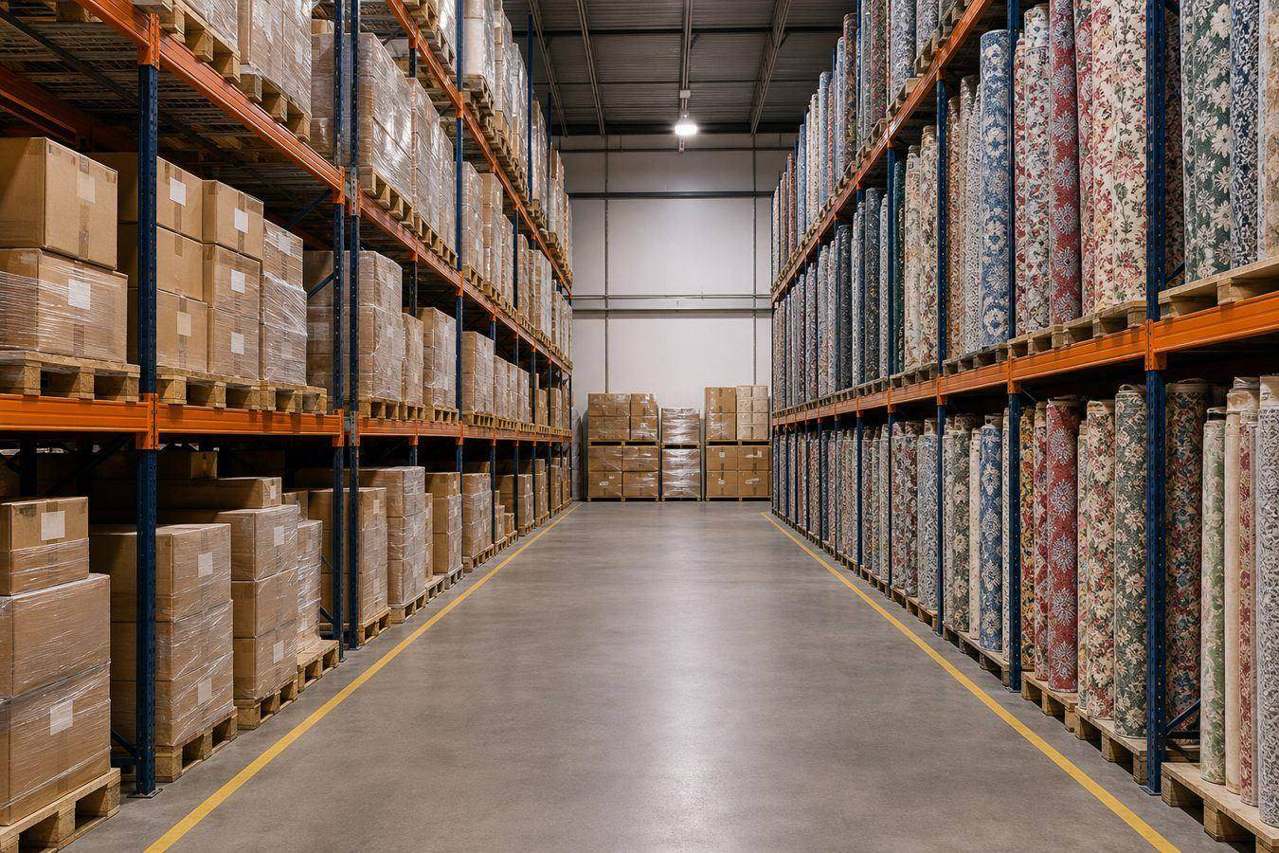
The customs broker (CHA — Customs House Agent) is the last checkpoint before a shipping bill is filed. Hand the CHA a complete packet segregated by HS line and packing format — not a partial file with one blended description to be untangled over email the night before cutoff.
CHA Handoff Package Checklist for Hand Printed Textiles
Swipe →
Data table — swipe horizontally on small screens
| Item | Format | When to Deliver |
|---|---|---|
| Commercial invoice + packing list (final, fabric/made-up segregated) | PDF + editable copy | 48–72 hours before stuffing |
| HS classification confirmation per SKU / roll line | Written note or email from CHA | Before invoice finalisation |
| Fibre-content certs + care-label artwork approval | Lab PDF + buyer sign-off | Alongside commercial invoice |
| OEKO-TEX / GOTS / azo packs (as applicable) | Certificate or lab PDF, lot-linked | Before booking confirmation |
| Insurance certificate (voyage-specific) | Insurer PDF | Before vessel cutoff |
| CHA authorisation letter | Signed original | At CHA engagement |
| Certificate of origin application | Filed in parallel | 5–7 working days before cutoff |
| Seal number + load photos (rolls and cartons) | Dated photographs | At stuffing |
Pricing Analysis
Buyer Tip
Documentation cost is a small share of landed cost but disproportionately affects on-time performance. Include documentation preparation, CHA fees, certificate of origin fees, fibre-content and azo lab testing, OEKO-TEX/GOTS transaction certificate fees where applicable, and label artwork/prepress in the landed-cost model. Programmes across indicative FOB bands — volume printed yardage at US$2.5–8/m (FOB, indicative), heritage natural-dye yardage at US$8–25+/m (FOB, indicative), cushion covers at US$2–12/pc (FOB, indicative), and throws/table/curtain at US$8–45/pc or set (FOB, indicative) — all require the same documentation discipline regardless of unit price. For deeper pricing structures by SKU, see Top Hand Printed Textile Products Exported from India.
Documentation Cost Framework
Swipe →
Data table — swipe horizontally on small screens
| Item | Cost Framework |
|---|---|
| CHA fees | Per shipping bill; standard tariff |
| Certificate of origin | Per certificate; chamber or EPCH-issued |
| Fibre-content lab test | Per fabric lot / SKU family |
| Azo / restricted-substance test | Per colourway lot or composite as buyer allows |
| OEKO-TEX / GOTS transaction certificate | Per shipment where GOTS chain-of-custody requires |
| Care-label prepress and printing | Per SKU or colourway |
| Cargo insurance certificate | Per voyage; ad valorem |
MOQ Analysis
Buyer Tip
Documentation intensity scales with programme complexity more than order size. A strike-off shipment of 1–5 m/colourway or 5–20 pcs/SKU still needs fibre notes and strike-off approval on file. A trial of 50–200 m/colourway or 200–500 pcs/hero made-up requires almost the same document pack as a full FCL — plus first exposure to destination labelling if the buyer is US, EU, or UK retail. Full MOQ tiers live in Top Hand Printed Textile Products Exported from India; this guide focuses on documentation load per tier.
Documentation Load by Order Size
Swipe →
Data table — swipe horizontally on small screens
| Order Size | Document Load |
|---|---|
| Strike-off (1–5 m/colourway or 5–20 pcs/SKU) | Commercial docs for courier + strike-off approval + fibre note if labels required |
| Trial (50–200 m/colourway or 200–500 pcs/hero made-up) | Full baseline pack (foundation + commercial + shipping + fibre/azo) |
| Full FCL / retail programme | Full baseline + OEKO-TEX/GOTS + destination labelling + multi-HS segregation |
Packaging Standards
Export Tip
The packing list must document how yardage and made-ups are physically packed. Yardage: roll wrap, tube or fold, moisture barrier, colourway label on each roll, bale strapping if applicable. Made-ups: polybag per piece or set, export carton, desiccant in humid seasons, colourway/size label on carton exterior. Avoid crushing hand-feel or embossed print finishes — note padding type on the packing list when buyer QA requires.
Packing Documentation Detail by Format
Swipe →
Data table — swipe horizontally on small screens
| Format | Packing List Detail Required |
|---|---|
| Roll-packed yardage | Roll ID, colourway, net metres, gross weight, wrap type |
| Bale-packed yardage | Bale number, roll count inside bale, total metres |
| Carton made-ups | Carton #, SKU, piece count, net/gross weight, dimensions |
| Mixed FCL | Section totals by HS + packing type with sub-totals |
| Retail-ready hangtag SKUs | Hangtag SKU cross-reference on packing list |
Container Loading Details
Export Tip
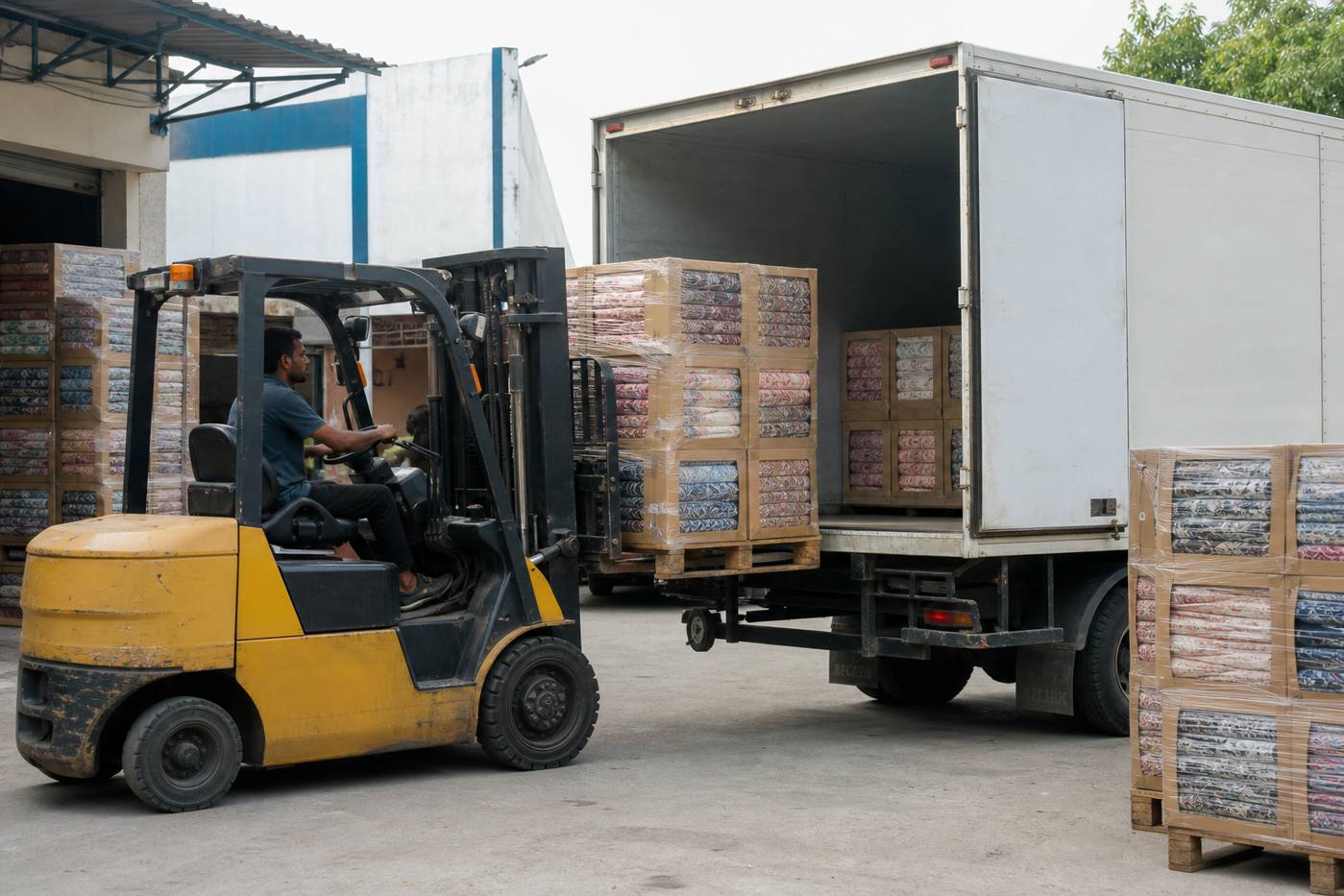
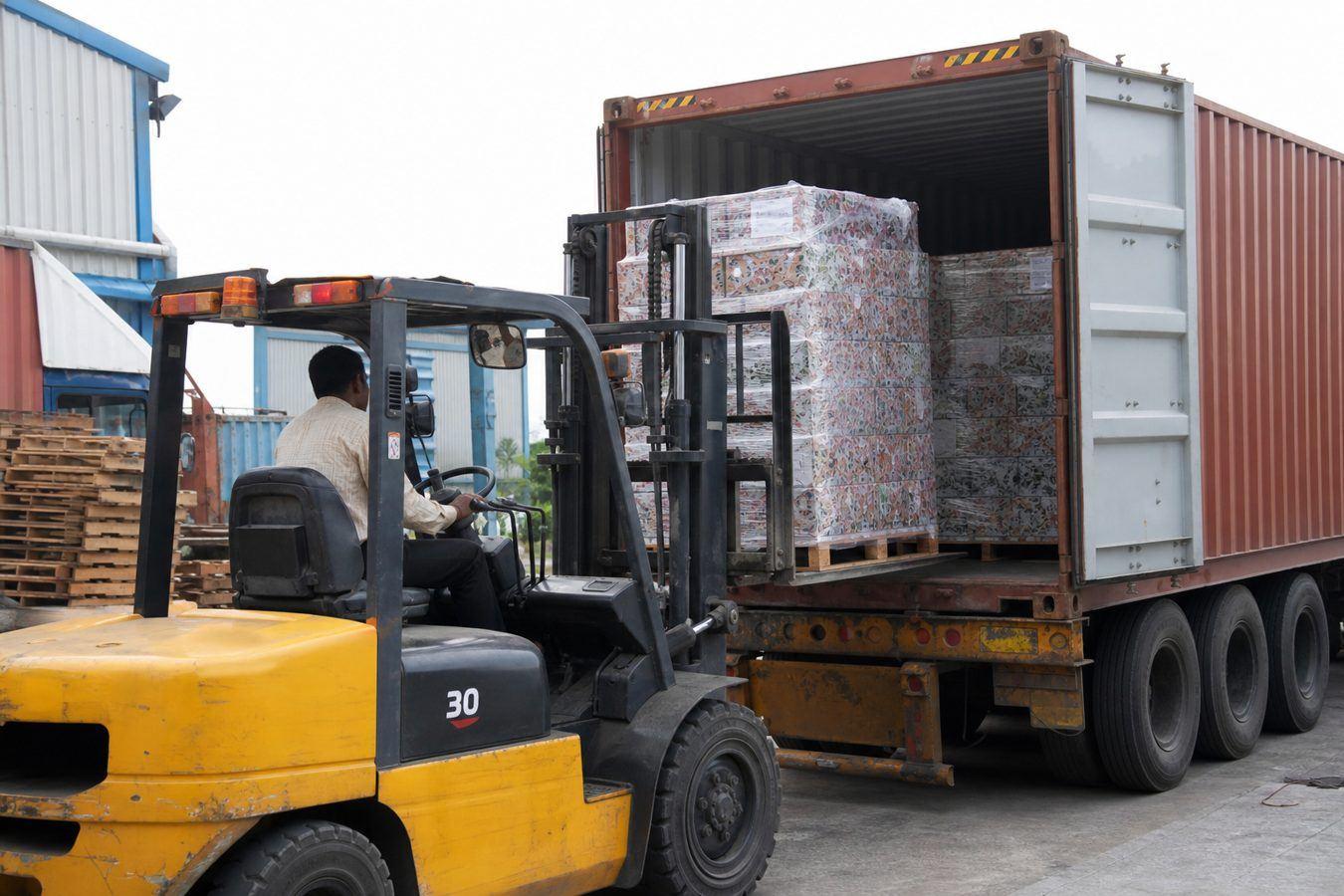
Container loading generates its own documentation: pre-stow inspection report, seal number record, load photos, and lot-to-roll/carton traceability. Photograph roll colourway labels and carton marks during stuffing. Mixed fabric-plus-made-up FCLs should segregate stow plan by section so destination surveyors can reconcile position against the packing list.
Loading Documentation Items
Swipe →
Data table — swipe horizontally on small screens
| Item | Purpose |
|---|---|
| Pre-stow inspection | Container fitness for rolls + cartons |
| Seal number photo | Chain of custody |
| Load photos (roll labels, carton marks) | Colourway traceability |
| Lot-to-roll/carton map | Match packing list and dye lots |
| VGM | Regulatory requirement |
| Moisture-control note | Claim defence for monsoon-season stuffing |
Shipping Methods
Export Tip
Shipping method affects documentation. Sea FCL uses a standard bill of lading; sea LCL uses a house BL; air uses an airway bill for strike-offs or urgent sample kits. Common Incoterms: EXW, FOB, CFR, CIF. Lead times: strike-offs 7–21 days; stock-ready 4–8 weeks; custom block/natural-dye 8–14 weeks; retail seasons often 4–9 months ahead of peak retail. Documentation timers start at PO confirmation, not at container booking.
Shipping Method Documentation
Swipe →
Data table — swipe horizontally on small screens
| Mode | Key Documents |
|---|---|
| Sea FCL | BL, packing list, shipping bill, COO, fibre/azo/cert pack |
| Sea LCL | House BL, shared packing list, COO, lot statements |
| Air (strike-offs) | AWB, commercial invoice, fibre note, strike-off approval |
| CFR/CIF | Insurance certificate added to pack |
Certifications
Compliance Notes
Certifications alongside the core document pack: EPCH (Export Promotion Council for Handicrafts) RCMC, OEKO-TEX Standard 100, GOTS (where claimed), fibre-content lab certificates, azo/restricted-substance reports, and ISO 9001 where held. Include valid cert copies in the exporter qualification file so buyer audits move quickly. For EPCH membership detail, see EPCH Registration Benefits for Hand Printed Textile Exporters — this post does not restate why EPCH exists.
Cert Pack Alongside Documentation
Swipe →
Data table — swipe horizontally on small screens
| Cert / Doc | Filing Frequency |
|---|---|
| EPCH (Export Promotion Council for Handicrafts) RCMC | Renewable per council policy |
| OEKO-TEX Standard 100 | Renewable; scope must match SKU |
| GOTS | Annual scope + per-shipment TC where required |
| Fibre-content certificate | Per fabric lot / SKU |
| Azo / restricted-substance report | Per colourway lot or programme |
| ISO 9001 | Renewable per certifier |
Buyer Requirements
Buyer Requirements
Buyer requirements aggregate destination labelling, cert claims, and HS accuracy described above. Present the complete, HS-segregated document pack proactively during supplier qualification — especially when mixing yardage and made-ups. Buyers who see fibre-content certificates, azo reports, and clean invoice/packing-list alignment usually accelerate trial POs faster than buyers left to request each document individually.
Buyer Documentation Expectations
Swipe →
Data table — swipe horizontally on small screens
| Buyer Type | Documentation Expectation |
|---|---|
| US retail / e-commerce private label | Full pack + Textile Rules labels + azo note + flammability where applicable |
| EU design-led retailer | Full pack + EU labelling + OEKO-TEX/GOTS if claimed + REACH note if eco marketing |
| UK wholesaler | Full pack + UK labelling + azo note |
| Gulf trading house | Baseline pack + Arabic labels + COO |
| Hospitality FF&E procurement | Full pack + multi-HS breakdown + care labels on all made-ups |
| Fashion fabric buyer (yardage) | Fabric HS invoice + lot cert + strike-off approval |
Country-wise Opportunities
Market Snapshot
Documentation opportunities by country revolve around adding the right compliance layer without over-documenting for lighter-compliance destinations. For which countries to prioritise strategically, see Best Countries for Indian Hand Printed Textile Exports and Most Demanded Indian Hand Printed Textiles by Country; this section focuses only on the paperwork each destination adds to a hand printed textile shipment.
Destination Documentation Add-On Summary
Swipe →
Data table — swipe horizontally on small screens
| Country | Additional Documents |
|---|---|
| USA | Textile Rules labels + azo note + flammability where applicable |
| Germany / Netherlands / France | EU labelling + azo + OEKO-TEX/GOTS if claimed |
| UK | UK labelling + azo note |
| UAE | Arabic labels + COO |
| Australia | Import-condition alignment + fibre consistency |
| Canada | Bilingual labels |
| Japan | Buyer QC template + care symbols |
United States
US documentation adds Textile Fiber Products Identification Act fibre-content and care labels on retail-bound made-ups, azo/restricted-substance notes where buyer templates require, and flammability evidence for some furnishing channels (curtains, throws). Yardage sold B2B may ship with lot certificates if the buyer converts domestically — confirm label responsibility in the PO.
Germany, Netherlands, France (EU)
EU documentation adds EU Textile Regulation labelling, azo-dye compliance evidence, OEKO-TEX/GOTS copies when claimed, and REACH-aligned statements where marketing references natural dyes or eco finishes. Premium buyers frequently request standing template libraries rather than one-off letters per shipment.
United Kingdom
UK documentation adds UK-format textile labelling, azo notes, and care-label confirmation. Treat UK packs as parallel to — not identical with — EU templates; confirm buyer formats before first shipment.
United Arab Emirates
UAE documentation mainly adds Arabic retail labels and robust COO for re-export programmes. Jebel Ali redistribution requires clean commercial and packing-list alignment for downstream brokers.
Australia, Canada, and Japan
Australia emphasises import-condition alignment and English labelling. Canada adds bilingual labels. Japan adds buyer-specific QC templates and care-symbol alignment where JIS formats are specified.
Sourcing Checklist (Buyer + Exporter)
Checklist
A sourcing checklist for hand printed textile documentation focuses on preparing every element before serious buyer conversations begin. Pair with Source Hand Printed Textiles Directly from India and Find International Buyers for Hand Printed Textiles when building the commercial pipeline.
Compliance Checklist
Checklist
Compliance Notes
Common Buyer Mistakes
Common Mistakes Box
Documentation-related mistakes recur across hand printed textile programmes: accepting suppliers who cannot produce sample document copies; ignoring fabric-versus-made-up HS mismatch until customs holds; approving samples without confirming care-label accuracy; assuming 'hand print' marketing does not need process attestation; and under-scoping azo or OEKO-TEX requirements until the vessel sails.
Future Market Trends
Key Statistics
Documentation trends: tighter US and EU retail scrutiny on fibre-content accuracy and azo evidence; broader buyer insistence on valid OEKO-TEX/GOTS copies linked to hangtags; digital bills of lading and electronic COO adoption; lot-level traceability from dye lot to carton barcode for retail chains; and honest hand-print versus rotary-assisted disclosure as sustainability marketing intensifies. For craft-technique and sustainable print depth, see Block Print, Ajrakh, Kalamkari & Sustainable Hand Printed Textile Export Opportunities.
Documentation Trend Signals
Swipe →
Data table — swipe horizontally on small screens
| Trend | Exporter Response |
|---|---|
| Fibre-label scrutiny rising | Standardise lot-linked certs across all retail-bound made-ups |
| OEKO-TEX/GOTS tag-to-cert matching | Maintain cert scope register synced to active SKUs |
| Azo template libraries replacing one-off letters | Standing azo declaration per dye supplier |
| Electronic BL / digital COO | Coordinate with carriers and chambers early |
| Print-method honesty expectations | Align invoice descriptions with actual production method |
Challenges & Solutions
Recurring documentation challenges for hand printed textile exporters are predictable — and so are the fixes.
Documentation Challenges and Solutions
Swipe →
Data table — swipe horizontally on small screens
| Challenge | Solution |
|---|---|
| Yardage metres on packing list, pieces on shipping bill | Single source of truth spreadsheet signed off before CHA handoff |
| Fabric and made-ups blended on one HS line | Mandatory invoice template with separate sections per HS family |
| Care labels printed before fibre test returns | Hold label print until lab cert confirms blend percentages |
| OEKO-TEX quoted on tag, cert expired | Cert expiry calendar owned by merchandising team |
| CHA receives documents piecemeal | One-batch handoff packet with shared checklist (see broker section) |
Expert Insights
Expert Insight Box
High-performing hand printed textile programmes treat the document pack as a sales asset. Buyers who receive clean fabric-versus-made-up alignment alongside strike-off cards move to trial POs faster — with fewer destination holds after the first container sails.
Conclusion
The hand printed textile export documentation pack spans registration foundation, commercial transaction documents, shipping and logistics papers, print-textile compliance documents, and destination-specific labelling layers. Every document has an owner and a timing tied to vessel cutoff — and the defining discipline is keeping fabric yardage and made-up HS lines aligned across invoice, packing list, shipping bill, and bill of lading while fibre-content, azo, and OEKO-TEX/GOTS evidence matches every colourway on the hangtag.
Use HS 5208 / 5209 (or ch. 54/55) for printed fabrics, 6304 for cushion covers and similar furnishing articles, 6303 for drapery, 6214 for scarves and stoles, and table/bed linen lines as classified for those SKU formats. Prepare labels and cert copies in parallel with strike-off approval — not after stuffing.
Contact Altus Exports to structure your hand printed textile documentation workflow with EPCH-backed credibility, verified Jaipur, Kutch, Kalamkari, and Panipat/Karur capacity, and coordinated CHA plus forwarder execution via our merchant exporter, global sourcing partner, and product sourcing company in India services — or contact us for a document-pack review. Continue with How to Export Hand Printed Textiles from India for end-to-end process, Trade Shows and B2B Marketplaces for Hand Printed Textile Exporters for buyer channels, or Source Hand Printed Textiles Directly from India for importer-side qualification. Explore Textiles & Home Furnishings and Handicrafts & Lifestyle Products for industry context.