
Trade Shows and B2B Marketplaces for Hand Printed Textile Exporters
By Saurabh Mittal, Founder, Altus Exports
A fair-by-fair and marketplace playbook for Indian hand printed textile exporters — Heimtextil's home-textile halls, IHGF Delhi's textile handicraft zones, Maison & Objet and Ambiente soft-furnishing buyers, Index Mumbai's domestic retail reach, plus Alibaba and IndiaMART qualification playbooks for block print, Ajrakh, and Kalamkari lines. Not a full export-process or pricing guide; those live in linked cluster posts.
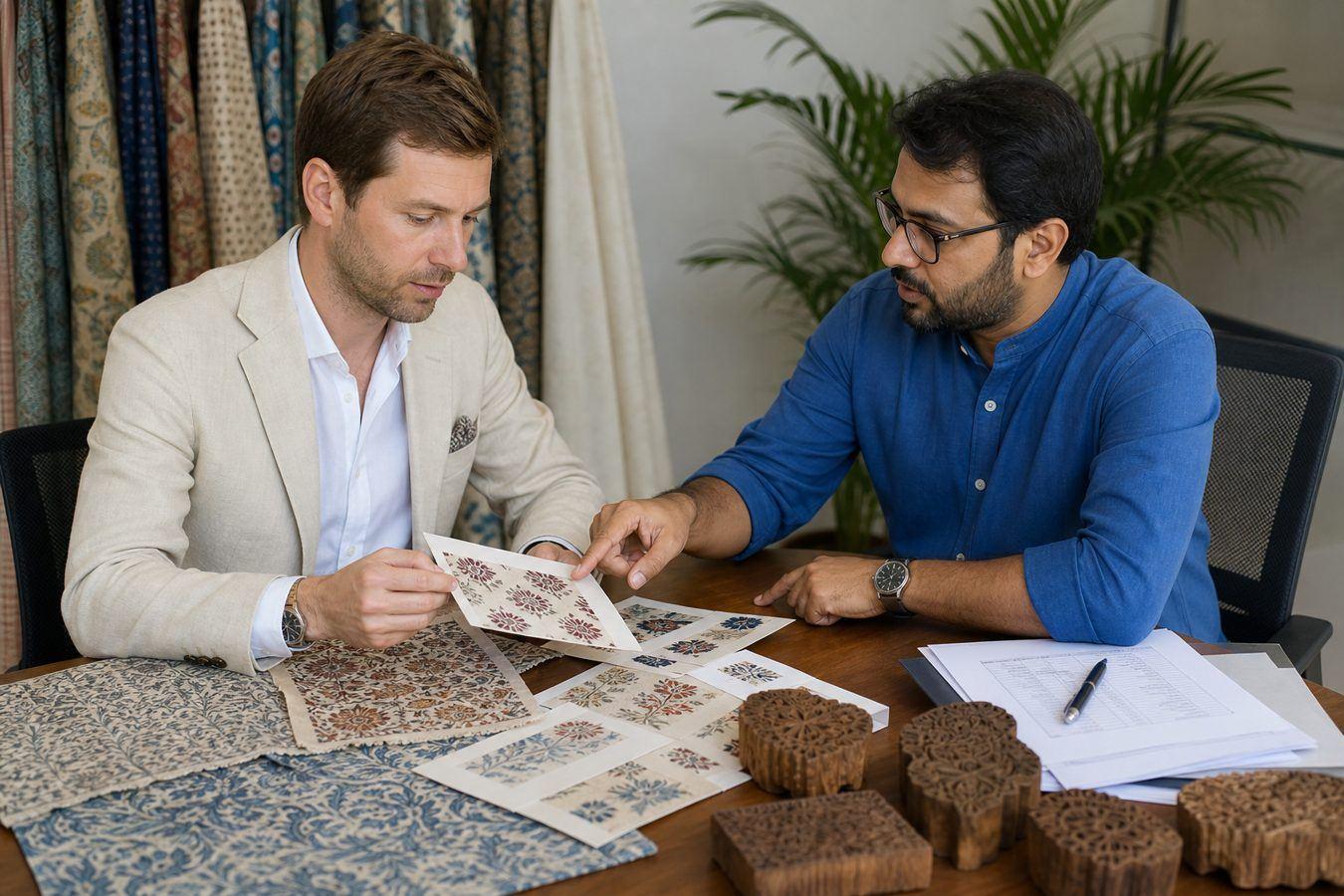
Heimtextil's print and soft-furnishing halls, IHGF Delhi's textile handicraft aisles, and Index Mumbai's home-textile buyer traffic compress discovery time for Indian block print yardage, Ajrakh throws, Kalamkari table linen, and coordinated cushion programmes — but only if strike-off cards sit on the table with HS hints, fibre-content talking points, and colourway MOQ tiers ready, and the fair feeds a year-round CRM rather than replacing one.
Where to show: Heimtextil Frankfurt (global home textiles) · IHGF Delhi Fair (EPCH textile handicraft anchor) · Maison & Objet Paris (design-led soft furnishings) · Ambiente Frankfurt (tabletop and lifestyle textiles) · Index Mumbai (Indian retail and distribution) — each with a distinct booth-to-PO path and 72-hour quote discipline, supplemented by Alibaba and IndiaMART playbooks for year-round print-line discovery.
Scope note: this is the fair and marketplace playbook, not the full export process or a pricing catalogue. For process, see How to Export Hand Printed Textiles from India; for SKU-level pricing and MOQ depth, see Top Hand Printed Textile Products Exported from India; for paperwork, see Hand Printed Textile Export Documentation Checklist.
Altus turns fair and marketplace hand-print leads into sailed orders via merchant exporter and global sourcing partner coverage across Jaipur, Kutch, Kalamkari, and Panipat/Karur print and made-up capacity.
Key Takeaways
Summary Box
Executive Summary
Summary Box
- Pre-fair: production-ready strike-offs for 2–3 hero print techniques · one-page product sheet with HS hints and colourway MOQ · EPCH credential visible · OEKO-TEX/GOTS/azo talking points ready.
- On-floor: qualify wholesale, retail, and hospitality FF&E buyers before promising custom blocks or private-label colourways.
- 72-hour CRM: most fair ROI dies in week one without a defined follow-up cadence.
- Year-round: one CRM pipeline across fairs and marketplaces, not a fairs-only plan.
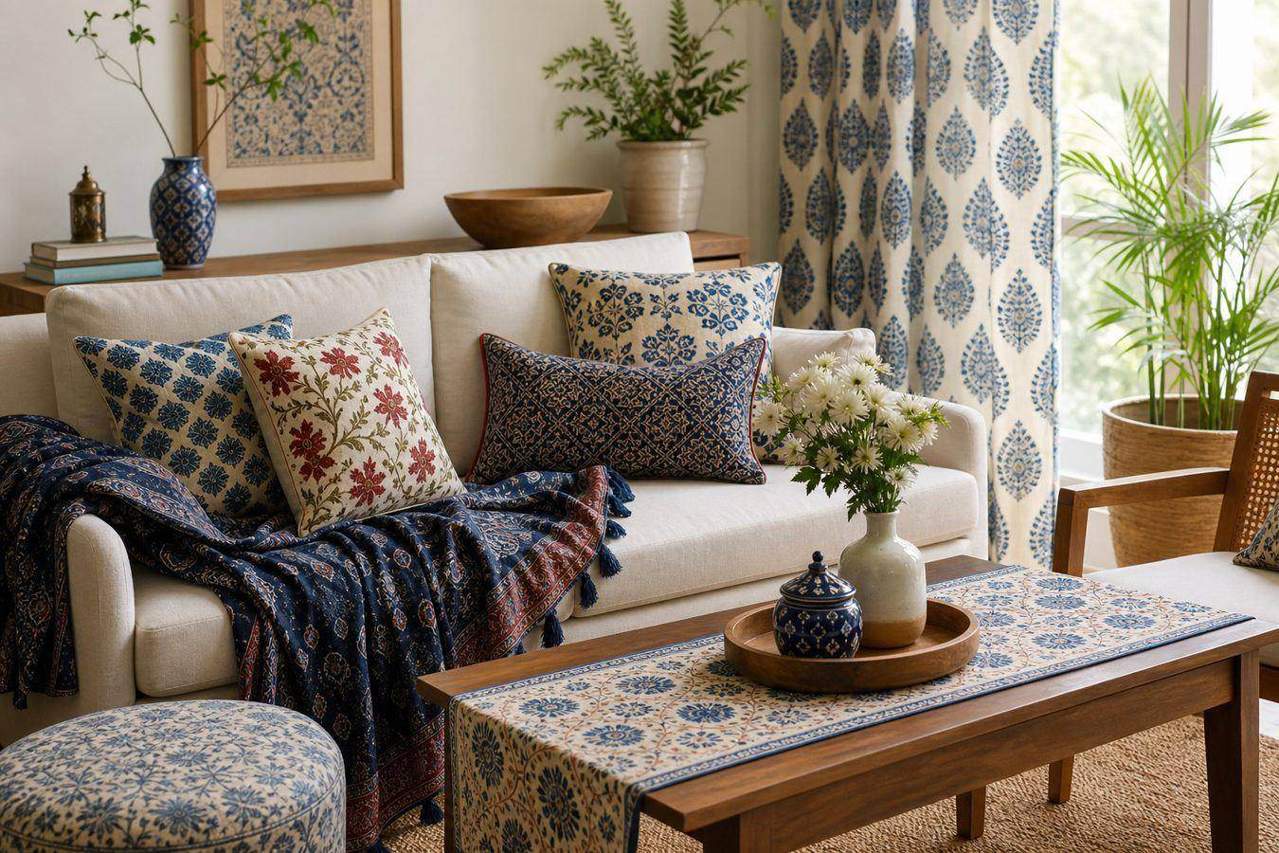
Convert fair and marketplace attendance into shipped hand printed textile orders with one repeatable sequence: pre-fair strike-off readiness, on-floor qualification by print technique and MOQ realism, and 72-hour formal quotation with fibre-content and cert-status lines. Directional top markets — UAE, USA, UK, France, Germany, Canada, Japan, Australia, Netherlands — concentrate at different fairs: European home-textile volume at Heimtextil and Ambiente; design-led Southern European buyers at Maison & Objet; Indian retail and private-label discovery at Index Mumbai and IHGF Delhi; year-round global RFQs on Alibaba and IndiaMART between fair cycles.
Market Size & Industry Overview
Key Statistics
India's hand printed textile export industry — block print (Bagru, Sanganer), Dabu, Ajrakh, Kalamkari, and hand screen on cotton and natural-fibre bases — is anchored by EPCH (Export Promotion Council for Handicrafts) registration and clusters in Jaipur / Sanganer / Bagru; Kutch / Ajrakhpur; Machilipatnam / Srikalahasti; Panipat / Karur / Tirupur; Delhi-NCR. Domestic and international fairs plus B2B marketplaces connect that capacity to global home-textile, hospitality, and fashion-fabric demand. This is a print-technique and colourway cluster: buyers at every fair below ask about print method honesty, dye chemistry, fabric base, colourway MOQ, and fibre-label readiness early — bring answers on a one-page sheet, not only in verbal booth talk.
Print-textile SKUs ship under HS 5208 / 5209 for yardage, 6304 for cushion covers and throws, 6303 for drapery, and 6214 for scarves as classified — confirm with your CHA per SKU. Fairs are where buyers first test whether an exporter understands that fabric-versus-made-up split before issuing a trial PO.
Hand Printed Textile Fair and Marketplace Landscape (Indicative)
Swipe →
Data table — swipe horizontally on small screens
| Channel | Location / Type | Primary Value to Print-Textile Exporters |
|---|---|---|
| Heimtextil | Frankfurt, Germany | Global home-textile sourcing; print yardage and made-up buyers |
| IHGF Delhi Fair | Greater Noida/Delhi — EPCH-organised | Domestic anchor; textile handicraft and print buyer delegations |
| Maison & Objet | Paris, France | Design-led soft furnishings; premium Ajrakh/block positioning |
| Ambiente | Frankfurt, Germany | Tabletop, dining, lifestyle textiles; printed table linen |
| Index Mumbai | Mumbai, India | Indian retail, e-commerce PL, distribution for print programmes |
| IndiaMART / Alibaba | Online B2B marketplaces | Year-round inbound RFQs for block print and made-ups |
Export Statistics
Key Statistics
Directional fair selection logic: European home-textile and wholesale print buyers concentrate at Heimtextil; design-led boutique and concept-store buyers concentrate at Maison & Objet; dining-and-tabletop textile buyers concentrate at Ambiente; Indian retail and private-label volume concentrates at Index Mumbai and IHGF Delhi; mixed international delegations — including Gulf trading houses and hospitality FF&E teams — concentrate at IHGF and Heimtextil.
Exporters who measure fair ROI by business cards collected underperform exporters who measure sample requests within 30 days and first trial shipments within 90–150 days. Coordinated colourway programmes often convert on edited strike-off sets; private-label retail programmes convert when fibre-label and OEKO-TEX/GOTS readiness is already clear at the booth.
Fair Relevance by Target Export Destination
Swipe →
Data table — swipe horizontally on small screens
| Target Destination | Most Relevant Fair(s) | Buyer Profile at That Fair |
|---|---|---|
| Germany / DACH / Northern Europe | Heimtextil, Ambiente | Home-textile wholesalers, department stores, design retailers |
| France / design-led Southern Europe | Maison & Objet, Heimtextil | Boutique chains, concept stores, premium soft-furnishing buyers |
| USA / Canada | Heimtextil (international delegations), Alibaba follow-up | Home specialty retail, e-commerce PL, hospitality FF&E |
| UK / Australia | Heimtextil, marketplace CRM | Design-led home textile importers and distributors |
| UAE / Gulf re-export | IHGF Delhi, Heimtextil | Trading houses, hospitality, mall retail consolidators |
| India domestic / re-export hub | Index Mumbai, IHGF Delhi | Retail chains, e-commerce PL, domestic distributors |
Import Statistics
Key Statistics
Import-side buyer behaviour at fairs mirrors destination compliance expectations: US buyers ask early about Textile Rules fibre labels and azo notes; EU buyers ask about OEKO-TEX/GOTS validity and REACH-aligned dye claims; UK buyers mirror EU with separate template requests; Gulf buyers focus on Arabic label readiness and COO; Japanese buyers request care-symbol alignment. Booth teams that cannot answer these questions lose qualified conversations to better-prepared exhibitors in the same aisle.
For import-side demand detail by country and technique, see Most Demanded Indian Hand Printed Textiles by Country — this post focuses on channel mechanics, not demand matrices.
Buyer Questions at Print-Textile Fairs (By Destination)
Swipe →
Data table — swipe horizontally on small screens
| Destination | Typical First Booth Questions |
|---|---|
| USA | Fibre-content labels, azo status, MOQ per colourway, lead time |
| Germany / EU | OEKO-TEX/GOTS scope, azo lab evidence, print-method honesty |
| UK | Care labels, azo note, strike-off approval process |
| UAE | Arabic label readiness, COO, carton MOQ |
| Japan | Care symbols, colourfastness, repeat-order colour consistency |
| India retail | Private-label MOQ, stock service, Index-ready packaging |
Product Categories / Variants
Summary Box
Fair booth strategy should segment by print technique and product form — not display every SKU in the catalogue. Hero zones work well: (1) block print yardage and cushion covers from Jaipur–Bagru–Sanganer; (2) Ajrakh throws and scarves from Kutch; (3) Kalamkari table linen from Andhra Pradesh; (4) volume screen-print soft furnishings from Panipat/Karur when wholesale MOQ is the pitch.
Booth Hero Assortment by Fair Type
Swipe →
Data table — swipe horizontally on small screens
| Fair | Recommended Hero SKUs | Avoid Leading With |
|---|---|---|
| Heimtextil | Coordinated cushion + throw colourways; print yardage swatch books | Single-scarf craft story without volume MOQ path |
| IHGF Delhi | Full technique range; yardage + made-ups side by side | Undifferentiated mixed rack with no HS or MOQ sheet |
| Maison & Objet | Ajrakh throws, fine block table linen, design-led colourways | Commodity screen-print volume with no craft narrative |
| Ambiente | Printed table linen sets, napkin programmes, dining textiles | Apparel scarves without tabletop relevance |
| Index Mumbai | Retail-ready cushion covers, e-commerce PL colourways | Heritage-only story without price ladder |
| Alibaba / IndiaMART | Separate listings per technique with MOQ and HS hints | One generic 'hand print fabric' listing for all SKUs |
Manufacturing Overview
Export Tip
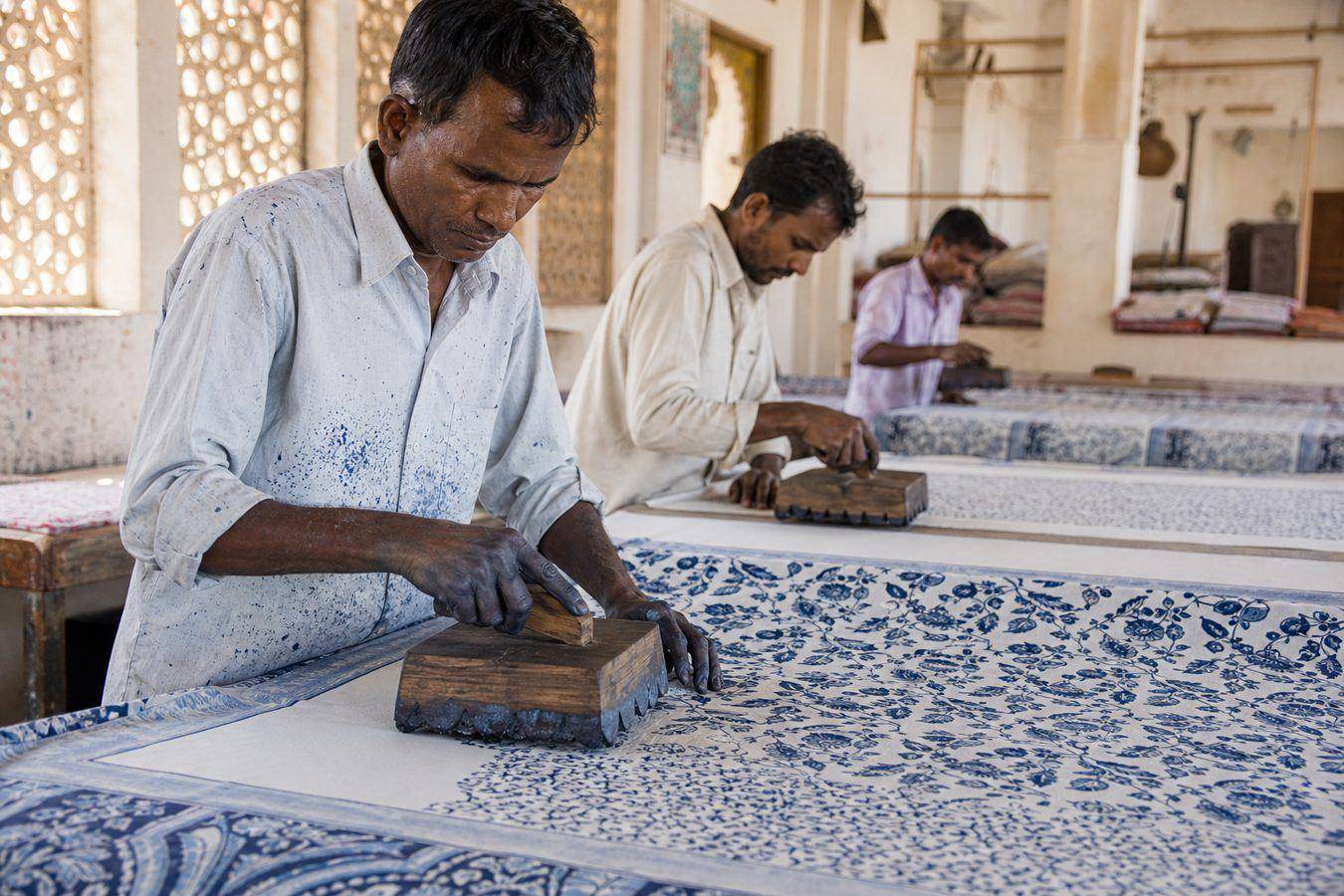
Fair sampling depends on print-cluster capacity and strike-off lead times. Block and Ajrakh strike-offs typically need 7–21 days; stock-ready colourways 4–8 weeks; custom block or natural-dye private-label programmes 8–14 weeks. Booth samples should be production-representative — same base cloth GSM, same dye chemistry — not showroom-only pieces that cannot be replicated in bulk.
Merchant exporters consolidating Jaipur yardage with Karur cushion conversion should bring samples that prove colourway consistency across fabric and made-up forms, because hospitality and retail buyers at Heimtextil routinely ask for coordinated programmes rather than isolated SKUs.
Heimtextil: Global Home-Textile Fair Playbook
- Booth focus: 2–3 coordinated colourway stories with fabric + made-up strike-offs; swatch books for yardage buyers.
- Buyer targets: European wholesalers, department store textile teams, hospitality FF&E, e-commerce private-label sourcing offices.
- Talking points: HS split (fabric vs made-up), colourway MOQ, lead time, fibre-label and azo/OEKO-TEX status.
- Follow-up: 72-hour quote with metre vs piece pricing separated; offer protected sample swatches for serious requests.
Heimtextil Frankfurt is the anchor international fair for hand printed home textiles — wholesale buyers for printed yardage, cushion covers, throws, table linen, and curtains congregate in the world's largest home-textile hall. Indian exhibitors compete on print differentiation, colourway discipline, OEKO-TEX/GOTS readiness, and honest hand-print versus rotary-assisted disclosure.
Heimtextil Booth Readiness Checklist
Swipe →
Data table — swipe horizontally on small screens
| Item | Detail |
|---|---|
| Strike-off set | Fabric + at least one made-up per hero colourway |
| Product sheet | Print technique, HS hint, MOQ, lead time, cert status |
| EPCH reference | Visible on sheet and booth backdrop |
| Label sample | Destination-format care label or hangtag mock |
| CRM capture | Buyer country, channel, colourway interest, MOQ tier discussed |
IHGF Delhi Fair: Domestic Anchor for Print Exporters
- Advantage: lower travel cost than Heimtextil; concentrated international delegations; strong EPCH ecosystem.
- Booth strategy: segment by print technique (block, Ajrakh, Kalamkari, Dabu); show yardage rolls and made-ups together.
- Upgrade path: use IHGF meetings to pre-book Heimtextil or Maison & Objet appointments for serious European buyers met on-site.
IHGF Delhi Fair — organised under EPCH (Export Promotion Council for Handicrafts) — is India's largest handicraft trade fair and the most cost-efficient first fair for hand printed textile exporters building international exposure. Textile handicraft and print aisles attract Gulf delegations, European buying offices, Indian retail chains, and e-commerce sourcing teams. EPCH registration is effectively prerequisite for credible participation; see EPCH Registration Benefits for Hand Printed Textile Exporters for membership detail — this post does not restate why EPCH exists.
Maison & Objet and Ambiente: Design-Led vs Tabletop Textiles
Maison & Objet Paris rewards curated, design-forward hand print — Ajrakh throws with genuine natural-dye narrative, fine Sanganer block table linen, Kalamkari panels with artisan attribution. Ambiente Frankfurt overlaps partially with Heimtextil but emphasises dining, tabletop, and lifestyle contexts — printed napkin sets, table runners, and coordinated dining textiles convert well when retail-ready packaging is visible.
Maison & Objet vs Ambiente Positioning
Swipe →
Data table — swipe horizontally on small screens
| Fair | Best Print Positioning | Sample Format |
|---|---|---|
| Maison & Objet | Heritage craft, natural dye, boutique colourways | Editorial display; fewer SKUs, higher finish |
| Ambiente | Table linen, dining textiles, giftable soft furnishings | Set merchandising; price band on sheet |
Index Mumbai: Indian Retail and Private-Label Discovery
Index Mumbai concentrates Indian home-textile retail chains, e-commerce private-label teams, and domestic distributors seeking print programmes with faster sampling loops than overseas fairs allow. Exporters use Index to validate colourway acceptance, MOQ tiers, and retail-ready packaging before scaling the same programme for export through Nhava Sheva or Mundra.
Index complements — does not replace — international fairs: domestic POs can fund strike-off and label tooling for export programmes targeting Heimtextil buyers later in the season.
Alibaba and IndiaMART: Marketplace Playbooks for Print Lines
- Qualification filter: confirm destination, import history, MOQ realism, and label requirements before dispatching strike-offs.
- Listing hygiene: separate hero images for yardage (metre MOQ) vs made-ups (piece MOQ); state print method honestly.
- CRM integration: route marketplace inquiries into the same pipeline as IHGF and Heimtextil leads — verify → paid sample → quote → PO.
- Scam awareness: reject requests for free bulk samples, unrelated product mixes, or payment outside agreed terms.
Alibaba and IndiaMART generate continuous inbound RFQs for block print fabric, Ajrakh yardage, cushion covers, and made-ups — but average lead quality is lower than fair-sourced conversations. Maintain separate listings or storefront sections per print technique with accurate MOQ, HS hints, lead times, and cert status. Never promise OEKO-TEX or GOTS on a listing without valid certificate scope.
Marketplace vs Fair Lead Comparison
Swipe →
Data table — swipe horizontally on small screens
| Dimension | Fair Lead | Marketplace Lead |
|---|---|---|
| Initial quality | Higher on average | Mixed; more noise |
| Volume intent | Often wholesale/retail programme | Wide range; many tire-kickers |
| Compliance awareness | Higher at EU/USA fairs | Must be qualified by questions |
| Follow-up urgency | 72-hour window critical | 48-hour response still matters |
| Cost per qualified lead | Higher upfront booth cost | Lower entry; higher filter labour |
Export Process at Fairs (Documentation & Sampling Handoff)
Export Tip
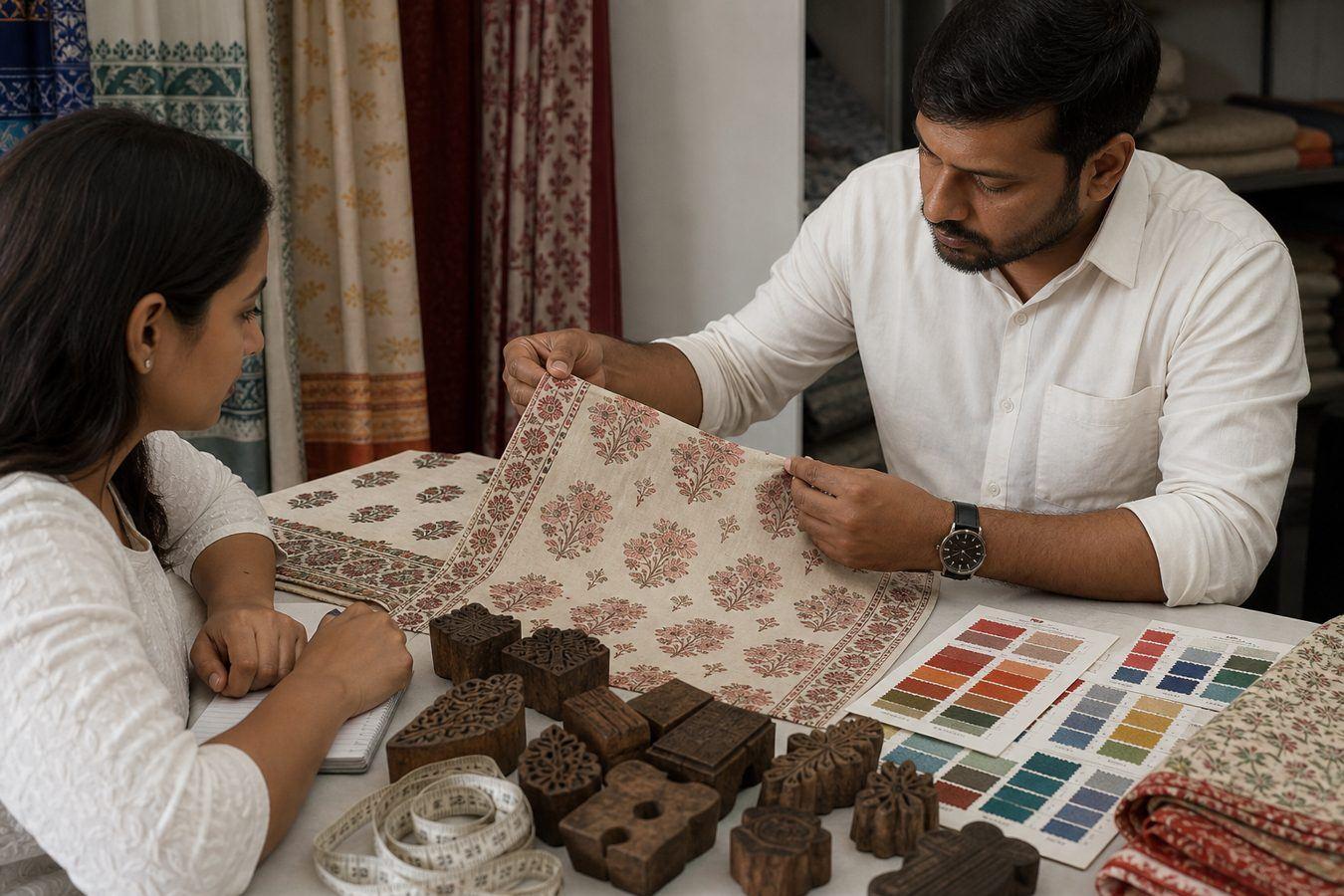
Fairs are not where exporters explain IEC registration from scratch — they are where buyers test whether the exporter can move from booth conversation to documented trial shipment. Have a one-page documentation readiness summary: EPCH RCMC status, fibre-label capacity, azo/OEKO-TEX/GOTS status, and typical shipping bill HS split for the SKUs discussed. Full process depth lives in How to Export Hand Printed Textiles from India; field-by-field document detail in Hand Printed Textile Export Documentation Checklist.
Pricing Analysis
Buyer Tip
Fair conversations should cite indicative FOB bands and MOQ tiers — not publish full pricing tables owned by Top Hand Printed Textile Products Exported from India. At the booth, quote colourway MOQ and lead time with a note that final FOB depends on base cloth, print complexity, cert requirements, and port. Heimtextil buyers expect metre pricing for yardage and piece pricing for made-ups on the same product sheet.
What to Quote at the Booth (Indicative Framework)
Swipe →
Data table — swipe horizontally on small screens
| SKU Format | Quote Unit at Fair | Always Pair With |
|---|---|---|
| Print yardage | FOB per metre band + MOQ metres/colourway | Lead time, fabric composition |
| Cushion covers / throws | FOB per piece band + MOQ pcs/colourway | Label readiness, cert status |
| Table linen sets | FOB per set + MOQ sets | Print technique, dimension spec |
| Private-label programme | Tooling + strike-off fee note | 8–14 week lead window |
MOQ Analysis
Buyer Tip
Fair buyers ask MOQ before price. Standard tiers: strike-offs 1–5 m/colourway or 5–20 pcs/SKU; trial 50–200 m/colourway or 200–500 pcs/hero made-up; wholesale by colourway/carton; FCL programmes for retail season. State MOQ per colourway — not just per design — because print registration and dye lotting drive factory scheduling. Misstated MOQ at the booth is a leading cause of post-fair ghosting.
MOQ Talking Points by Buyer Channel
Swipe →
Data table — swipe horizontally on small screens
| Buyer Channel | MOQ Expectation to Discuss |
|---|---|
| European wholesaler | 200–500+ pcs or 50–200 m per colourway trial |
| US specialty retail | 300–1,000 pcs hero SKU or coordinated set trial |
| Hospitality FF&E | Programme MOQ across curtains + cushions + linen |
| E-commerce private label | 200–500 pcs with replenishment path |
| Fashion fabric buyer | 50–200 m per colourway; wider width options |
| Marketplace inquiry | Qualify before quoting — many sub-wholesale RFQs |
Packaging Standards
Export Tip
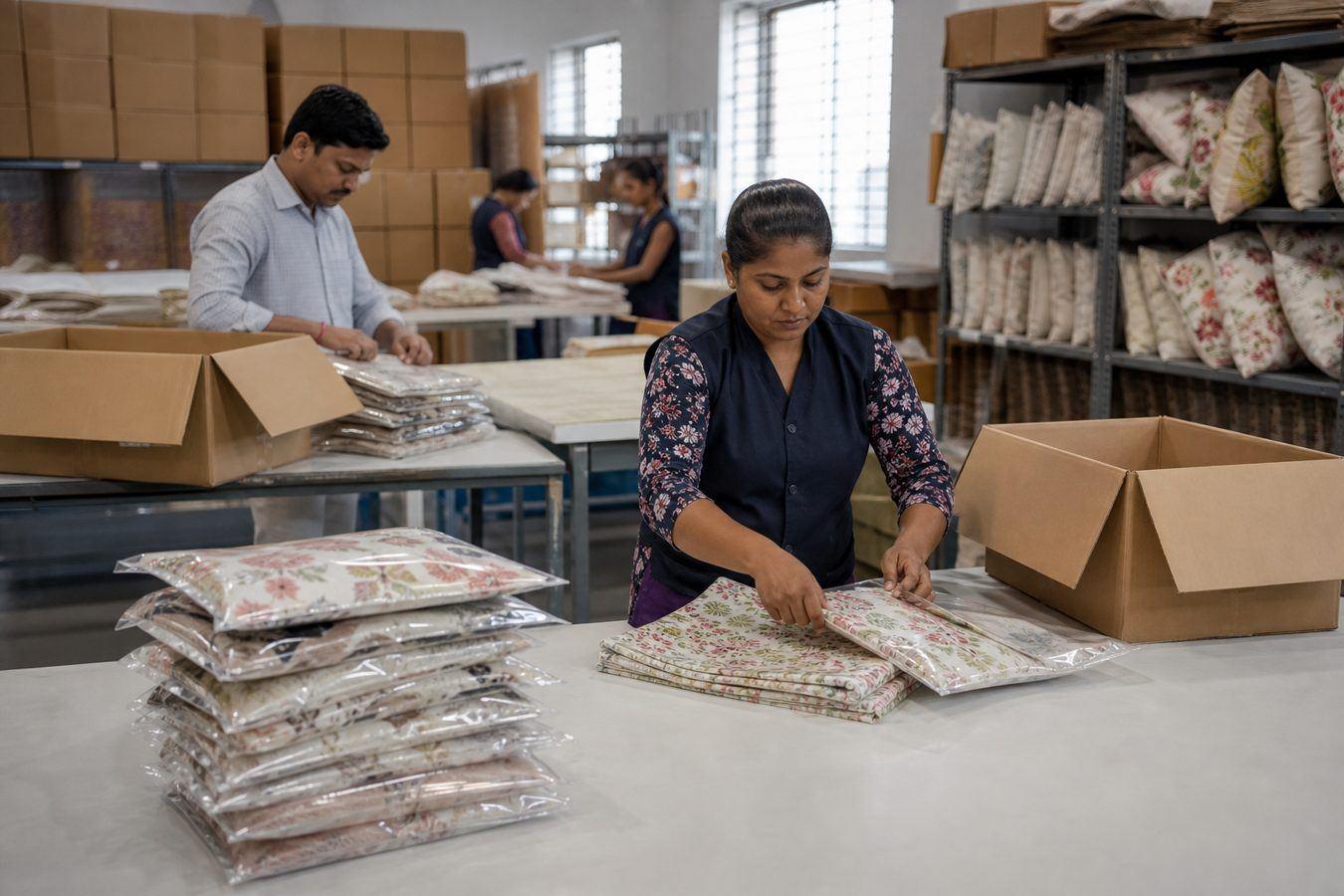
Booth samples should reflect export packaging logic: polybagged made-ups, roll-wrapped yardage swatches in labelled tubes, hangtag mocks for retail programmes. Buyers at Index and Heimtextil increasingly ask whether export cartons, moisture barriers, and colourway carton labels are production-ready — show a carton label mock on the product sheet.
Container Loading Details
Export Tip
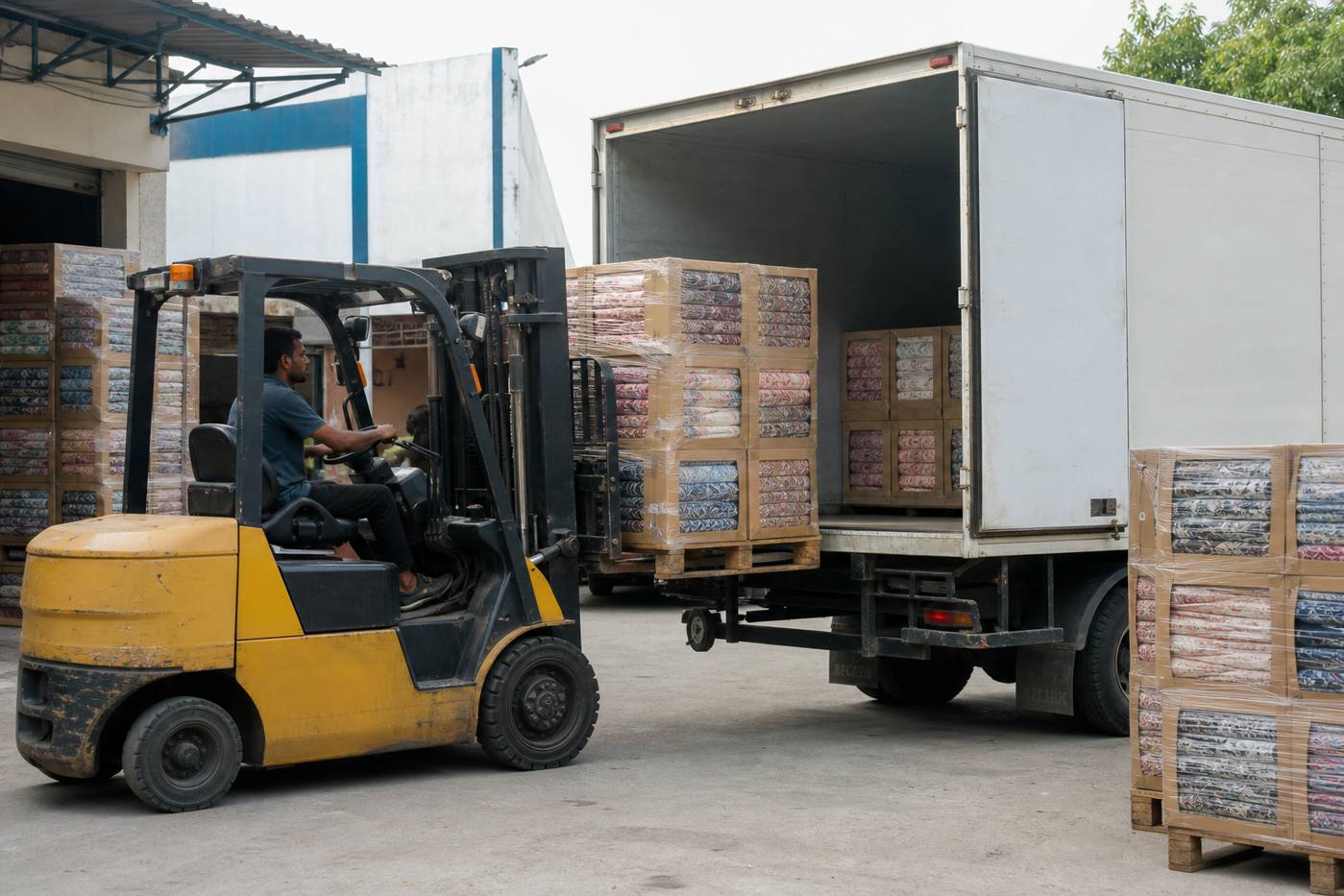
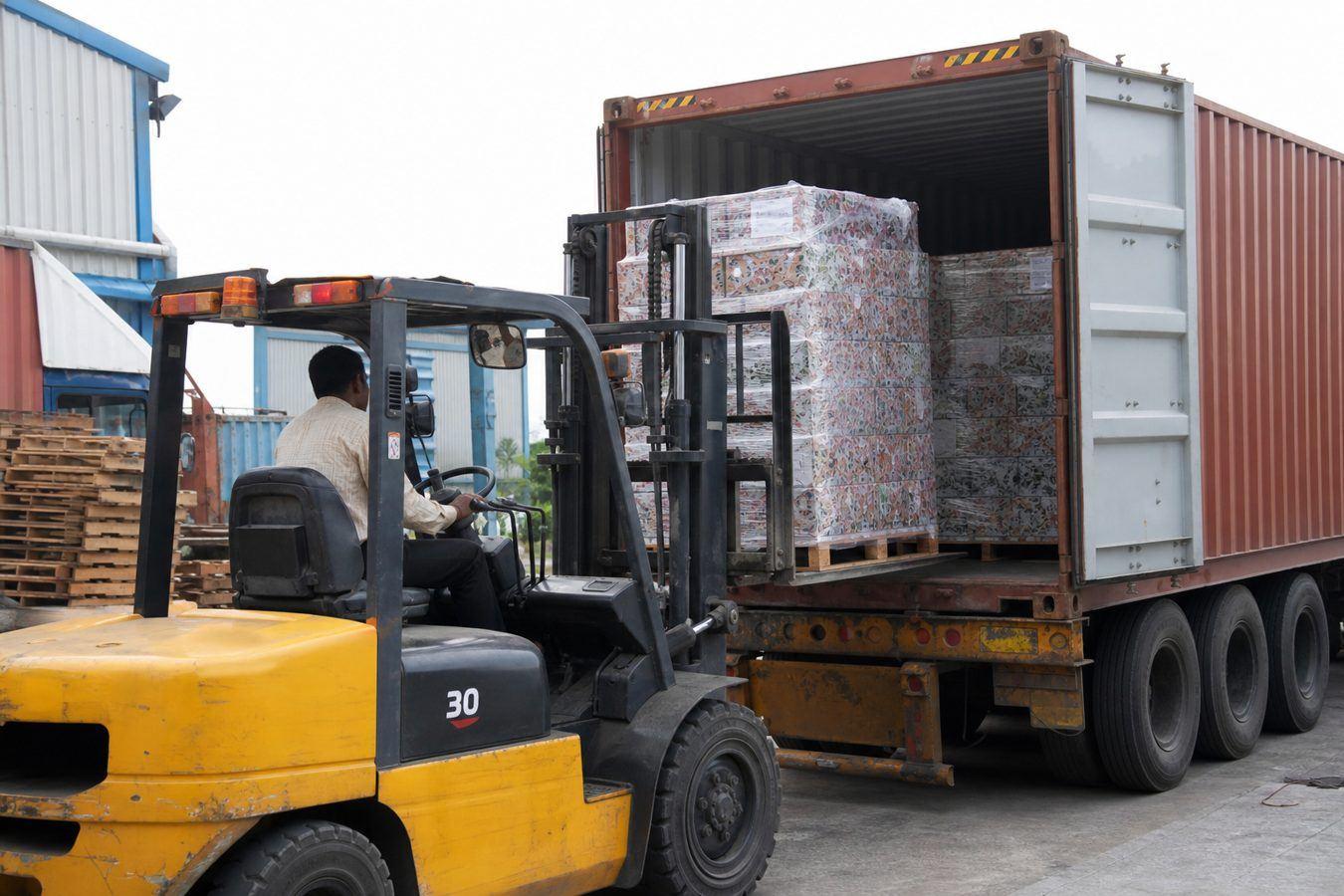
Fair conversations occasionally advance to FCL planning for retail season programmes. Be ready to discuss roll vs carton mix, indicative CBM per colourway, and port choice (Mundra, Nhava Sheva, ICD Delhi / Dadri, Pipavav / Ahmedabad corridor). Detailed loading math belongs in the export process pillar — at the fair, confirm only that the exporter has shipped FCL print programmes before and can provide load photos from a prior sailing.
Shipping Methods
Export Tip
Quote Incoterms common to print textiles: EXW, FOB, CFR, CIF. Strike-offs and post-fair samples often ship air; trial programmes LCL; retail season programmes FCL. Lead times: strike-offs 7–21 days; stock-ready 4–8 weeks; custom block 8–14 weeks; retail bookings often 4–9 months ahead of peak retail.
Post-Fair Shipment Mode by Order Stage
Swipe →
Data table — swipe horizontally on small screens
| Stage | Typical Mode | Fair Follow-Up Note |
|---|---|---|
| Protected samples | Air courier | Quote within 72 hours of fair close |
| Trial colourway | Sea LCL | Confirm HS split in quotation |
| Retail programme | Sea FCL | Align with season cut-off dates discussed at booth |
| Urgent replenishment | Air partial | Premium freight noted in quote |
Certifications
Compliance Notes
Booth signage and product sheets should state OEKO-TEX, GOTS, and azo-compliance status accurately — premium European buyers at Heimtextil and Maison & Objet treat false cert claims as immediate disqualifiers. For sustainable craft-technique and cert depth, see Block Print, Ajrakh, Kalamkari & Sustainable Hand Printed Textile Export Opportunities.
Cert Talking Points at Booth
Swipe →
Data table — swipe horizontally on small screens
| Cert / Claim | What to Show | What Not to Do |
|---|---|---|
| OEKO-TEX Standard 100 | Certificate copy or scope ID on sheet | Claim without valid scope |
| GOTS organic | Scope cert; explain TC process | Imply organic on conventional cotton |
| Azo-free dyes | Lab summary or supplier declaration | Assume natural dye exempts all testing |
| Hand block / Ajrakh | Process photos + strike-off | Label rotary as hand block |
Buyer Requirements
Buyer Requirements
Buyers met at fairs expect rapid qualification of the exporter's print programme capability: strike-off approval process, colourway MOQ, fibre-label readiness, documentation pack availability, and repeat-order colour consistency. Exporters who email a documentation checklist excerpt and product sheet within 72 hours outperform exporters who send generic catalogues.
Country-wise Opportunities
Market Snapshot
Match fair spend to destination strategy — detailed country ranking methodology lives in Best Countries for Indian Hand Printed Textile Exports. Heimtextil justifies spend when Germany, Netherlands, France, UK, and Nordic buyers are priority; IHGF and Index justify spend when validating programmes for Gulf, Indian retail, or re-export hub routes; Maison & Objet when Southern European design retail is core.
Fair Budget Allocation Signal (Directional)
Swipe →
Data table — swipe horizontally on small screens
| If Priority Market Is… | Allocate Fair Budget To… |
|---|---|
| Germany / EU wholesale home textiles | Heimtextil (+ Ambiente if tabletop skew) |
| France / Italy design retail | Maison & Objet + Heimtextil |
| USA / Canada specialty retail | Heimtextil delegations + marketplace CRM |
| UAE / Gulf | IHGF Delhi + Heimtextil Gulf buyers |
| India retail / e-commerce PL | Index Mumbai + IHGF Delhi |
| First-time exporter | IHGF Delhi + IndiaMART before overseas fair |
Sourcing Checklist (Buyer + Exporter)
Checklist
Compliance Checklist
Checklist
Compliance Notes
Common Buyer Mistakes
Common Mistakes Box
Buyers collect business cards without colourway notes and lose context within a week. Buyers assume fair samples guarantee bulk colour match without written strike-off approval terms. Buyers conflate IHGF craft aesthetics with Heimtextil wholesale MOQ capacity. Buyers engage marketplace RFQs without qualification and waste sample budget on non-importers.
Future Market Trends
Key Statistics
Hybrid fair formats — digital buyer-matchmaking before doors open — are standard at Heimtextil and IHGF. Marketplaces add verification badges that reward accurate MOQ and cert listings. Buyers increasingly expect virtual strike-off approval workflows between fairs. Sustainability storytelling demands honest print-method disclosure alongside natural-dye narratives.
Fair and Marketplace Trend Signals
Swipe →
Data table — swipe horizontally on small screens
| Trend | Exporter Response |
|---|---|
| Pre-booked fair meetings | Upload product sheet to organiser portals early |
| Virtual strike-off approval | Digitise colourway cards with lot references |
| Marketplace verification | Keep listings aligned with actual cert scope |
| Print-method transparency | Update product sheets when production uses hybrid methods |
| Coordinated programme demand | Show fabric + made-up colourways together at every fair |
Challenges & Solutions
Fair Channel Challenges and Solutions
Swipe →
Data table — swipe horizontally on small screens
| Challenge | Solution |
|---|---|
| High booth cost vs uncertain ROI | Pre-book meetings; measure sample requests not card count |
| Marketplace inquiry overload | Qualification questionnaire before samples |
| Booth staff cannot answer HS/MOQ questions | One-page product sheet mandatory for every staff member |
| Post-fair follow-up delay | 72-hour quote template ready before fair opens |
| Sample not reproducible in bulk | Only show production-representative strike-offs |
72-Hour CRM Follow-Up System
Export Tip
The 72-hour system: Day 0 (fair close) — log conversations with country, channel, colourway codes, MOQ tier discussed. Day 1 — thank-you email with product sheet PDF. Day 2–3 — formal quotation: FOB band, MOQ per colourway, lead time, HS hint, fibre-label and cert status, Incoterm, port. Week 2 — protected sample dispatch for qualified buyers. Weeks 3–8 — follow-up cadence until PO or closed-lost.
Expert Insights
Expert Insight Box
High-performing hand print exporters merge fair, Index, IHGF, and marketplace leads into one CRM with identical qualification gates. Channel volume is not buyer quality.
Conclusion
- Full export process: How to Export Hand Printed Textiles from India.
- SKU pricing depth: Top Hand Printed Textile Products Exported from India.
- Documentation: Hand Printed Textile Export Documentation Checklist.
- EPCH detail: EPCH Registration Benefits for Hand Printed Textile Exporters.
- Market focus: Best Countries for Indian Hand Printed Textile Exports and Most Demanded Indian Hand Printed Textiles by Country.
- Buyer prospecting: Find International Buyers for Hand Printed Textiles.
- Direct sourcing: Source Hand Printed Textiles Directly from India.
- Sustainable print programmes: Block Print, Ajrakh, Kalamkari & Sustainable Hand Printed Textile Export Opportunities.
Trade shows and B2B marketplaces work for Indian hand printed textile exporters when preparation, on-floor qualification, and 72-hour CRM follow-up operate as one system. Heimtextil, IHGF Delhi, Maison & Objet, Ambiente, and Index Mumbai each reach distinct buyer profiles; Alibaba and IndiaMART extend discovery between fair cycles — none replaces documentation readiness or honest print-programme MOQ.
Altus Exports staffs IHGF and international-fair follow-up for Jaipur, Kutch, Kalamkari, and Panipat/Karur hand print lines, then closes leads under a merchant exporter in India and global sourcing partner mandate. Continue via export products from India, product sourcing company in India, or find manufacturers in India — or contact us for a booth-to-order plan. Explore Textiles & Home Furnishings and Handicrafts & Lifestyle Products for industry context.