
Private-Label Food Ingredient Export Documentation Checklist
By Saurabh Mittal, Founder, Altus Exports
Pre-shipment documentation checklist for private-label food ingredient exports from India — IEC, APEDA/Spices Board registration by SKU, FSSAI, commercial invoice, packing list, lot COA, buyer artwork sign-off, phytosanitary and fumigation certificates, and multi-HS shipping-bill filing.

Documentation is the compliance gate that determines whether a private-label food-ingredient shipment clears customs smoothly or stalls at destination — and because this cluster spans multiple HS chapters and two possible export councils, documentation failures are more common here than in single-SKU categories. IEC proof, APEDA or Spices Board registration matched to the correct council, FSSAI licence reference, commercial invoice, packing list, lot COA, buyer artwork sign-off, shipping bill, bill of lading, and certificate of origin must all cross-reference the same order, category, lot ID, and correct underlying HS heading.
This checklist walks through every document an Indian private-label food-ingredient exporter should prepare before filing a shipping bill, and every document an international buyer should request before releasing payment on a first or repeat order. Wrong-council filing — registering a spice-oleoresin SKU through APEDA instead of the Spices Board, or vice versa — misaligned invoice and packing-list quantities across a multi-SKU shipment, and skipping buyer artwork sign-off before printing a retail-ready production run remain the most common and most avoidable documentation failures in this category.
For the complete export process that documentation supports, see How to Export Private-Label Food Ingredients from India. For APEDA and Spices Board registration context, see APEDA and FSSAI Benefits for Private-Label Food Ingredient Exporters. Altus Exports maintains documentation discipline across every private-label shipment as part of its export products from India service.
Key Takeaways
Summary Box
Executive Summary
Summary Box
- Multi-HS OEM / private-label programme — buyer brand, Indian manufacture
- Councils: APEDA and/or Spices Board by SKU + FSSAI always
- HS family: Ch.09 · 0712 · 0713 · Ch.11 · Ch.15 · Ch.21 · oleoresins 1301.90/3301.90
- Stage: sample COA → bulk trial → retail-ready artwork → FCL
- Quote FOB per ingredient family with a quote date — never one blended cluster price
Private-label food-ingredient export documentation must cross-reference the correct underlying HS heading, category, lot ID, quantity, and — where applicable — buyer artwork sign-off across invoice, packing list, COA, shipping bill, and bill of lading.
Wrong-council registration references and unreconciled multi-SKU quantities remain the top preventable customs and payment delays in this cluster.
Document-by-Document Checklist
Checklist
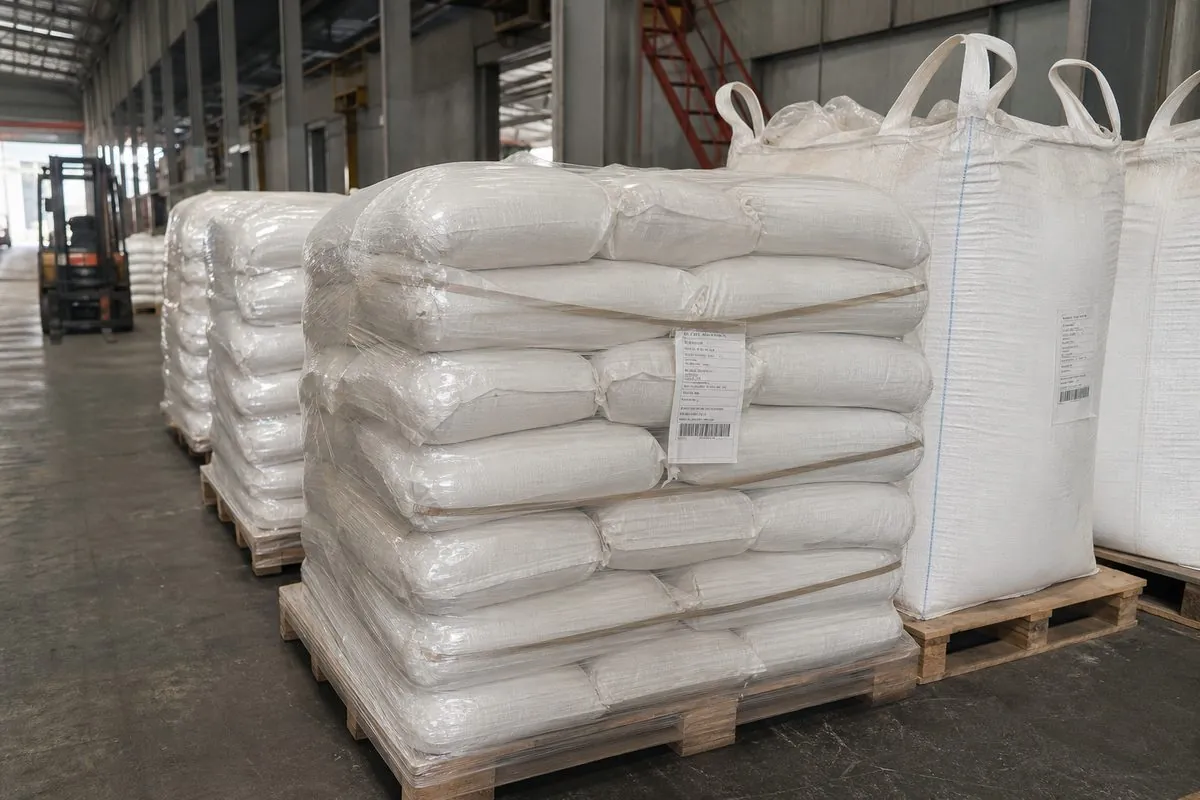
Every private-label food-ingredient export shipment requires a consistent document pack. The table below lists each document, what it must contain, and the most common failure mode — use it as a pre-shipment gate before your CHA files the shipping bill under the correct underlying HS heading.
Private-label food-ingredient export documentation requirements
Swipe →
Data table — swipe horizontally on small screens
| Document | Must contain | Common failure |
|---|---|---|
| Commercial invoice | Exporter, buyer, correct HS heading per SKU, category, qty, unit value | Blanket 'private label food ingredients' description instead of per-SKU HS |
| Packing list | Carton/bag count, weight, lot numbers per SKU | Quantity mismatch vs. invoice on multi-SKU shipments |
| Lot COA | Category-matched parameters (moisture/purity/protein%/FFA/colour strength) | COA references the wrong lot or a generic quality statement |
| Buyer artwork sign-off record | Approved print-ready design reference per retail-ready SKU | Production run printed before formal sign-off |
| APEDA / Spices Board registration proof | Current RCMC (and CRES for spices) matched to the SKU's council | Wrong-council registration for the SKU's HS chapter |
| FSSAI licence reference | Valid licence number for the manufacturing/packing site | Expired licence or site mismatch |
| Shipping bill | Correct underlying HS heading, FOB value, port of loading | Wrong HS chapter filed under a generic description |
| Certificate of origin / phytosanitary | Country of manufacture; plant-health inspection where required | Missing phytosanitary on applicable dehydrate or spice shipments |
Trade Statistics & HS Classification Analysis
Key Statistics
Compliance Notes
- Spices: Chapter 09 (+ 2103/2106 blends)
- Dehydrates: HS 0712 (onion 071220; other 071290)
- Dried pulses: HS 0713 — not Chapter 12
- Oleoresins: 1301.90 / 3301.90 (Spices Board schedule)
- Flours/meals · oils · snack mixes: Ch.11 · Ch.15 · 1901/2106
- CHA confirms the eight-digit line before every shipping bill
HS classification must match across invoice, COA description, and shipping bill per SKU — never file a blanket 'private label food ingredients' description; CHA signs off on the correct underlying heading before vessel cutoff.
Multi-HS classification reference by ingredient family (directional — CHA confirms per SKU)
Swipe →
Data table — swipe horizontally on small screens
| Ingredient Family | HS Chapter / Heading (directional) | Example | Filing Note |
|---|---|---|---|
| Spices & seasoning blends | Chapter 09 (whole/ground spices); 2103/2106 for compounded blends | Cumin, chili, turmeric, pepper; buyer-recipe masalas | Never file a blend as a single generic spice line — split by dominant ingredient where required |
| Dehydrated vegetables & alliums | HS 0712 | Onion 071220; garlic and mixed/other typically under 071290 lines | Confirm the eight-digit split with CHA per cut and blend |
| Oleoresins & spice extracts | HS 1301.90 / 3301.90 (Spices Board); other veg. extracts may be 1302.19 | Spice oleoresins (e.g. 13019044; 33019012 ginger, 33019013 pepper, 33019014 turmeric) | Prefer Spices Board schedule over a blanket 1302 filing — CHA confirms |
| Flours & starches | Chapter 11 | Rice flour, maize/tapioca starch | Confirm milling and modification level against the correct 1101–1108 line |
| Pulse & plant proteins | HS 0713 (dried pulses); 1106 (pulse flour/meal); 2106/3504 for isolates/concentrates | Chickpea flour, pea protein isolate | Do not file dried pulses under Chapter 12 — processing depth sets the heading |
| Selective edible oils | Chapter 15 | Refined vegetable oils, cold-pressed specialty oils | Heading depends on oil type and refinement stage (commonly 1507–1515) |
| Natural colors & functional blends | HS 3203 (often India 32030020) or 2106 | Natural colour extracts; fortified functional blends | Colour extracts and functional food preparations file differently — CHA confirms |
| Snack & ready-mix bases | HS 1901 or 2106 | Dough/mix bases, seasoning-coated snack bases | Confirm formulation-led heading; never invent an eight-digit code without CHA sign-off |
Certifications
Compliance Notes
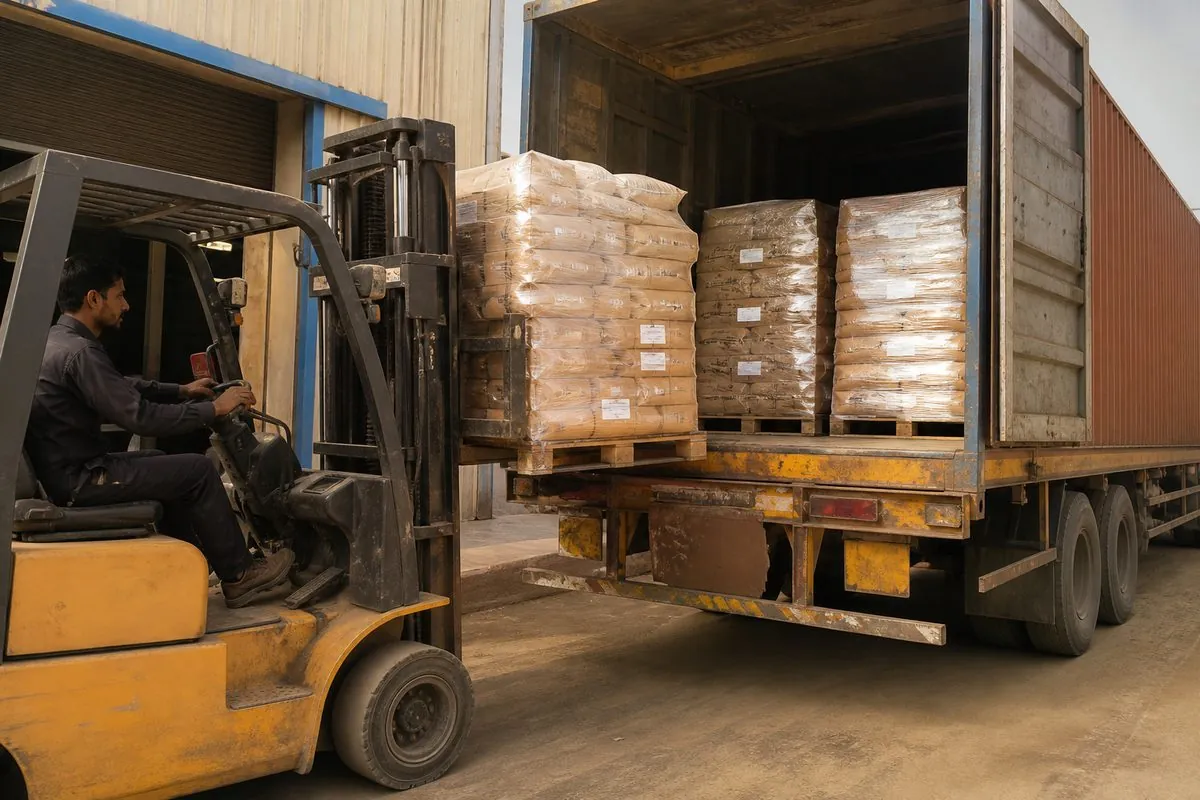
Certification copies must match invoice lot lines — expired organic certificates or lapsed council registration fail buyer audit.
Certifications relevant to private-label food-ingredient export
Swipe →
Data table — swipe horizontally on small screens
| Certification | Purpose | Relevant For |
|---|---|---|
| Certificate of Analysis (COA) | Lot-specific parameters matched to the SKU category (moisture, purity, mesh, protein%, FFA, colour strength) | All commercial shipments — baseline buyer requirement |
| APEDA RCMC | Registration for scheduled dehydrated-vegetable, flour/starch, protein, oil, and processed-food SKUs | Programmes with APEDA-scheduled ingredient families |
| Spices Board RCMC + CRES | Registration for HS Chapter 09 spice and spice-oleoresin SKUs | Spice and spice-oleoresin programmes |
| FSSAI licence | Food safety premises and product-standard compliance | Every category, regardless of council route — mandatory |
| BRC / IFS / FSSC 22000 | Global food-safety management-system audit for the packing site | US, UK, EU, and Australian retail-brand private-label programmes |
| NPOP / USDA NOP / EU Organic | Organic certification and cross-border equivalence for organic claims | Organic private-label SKUs sold into US/EU/domestic organic channels |
| Halal / Kosher | Religious compliance for applicable formulations | UAE, Saudi Arabia, wider GCC, and faith-aligned retail programmes |
| Phytosanitary / fumigation certificate | Plant-health inspection and ISPM-15 compliance where required | Applicable dehydrate, spice, and pulse/protein shipments |
Shipping Methods
Export Tip
- Samples: air/express 7–14 days
- Bulk trial: LCL or partial FCL 2–4 weeks post-production
- Retail-ready private-label: 4–8 weeks including artwork approval and production
- Incoterms: EXW, FOB, CFR/CIF; DDP selective for mature retail programmes
Ocean FCL/LCL from Mundra or Nhava Sheva is standard; air freight is reserved for urgent lab samples or artwork proofs only.
Manufacturing Overview
Export Tip
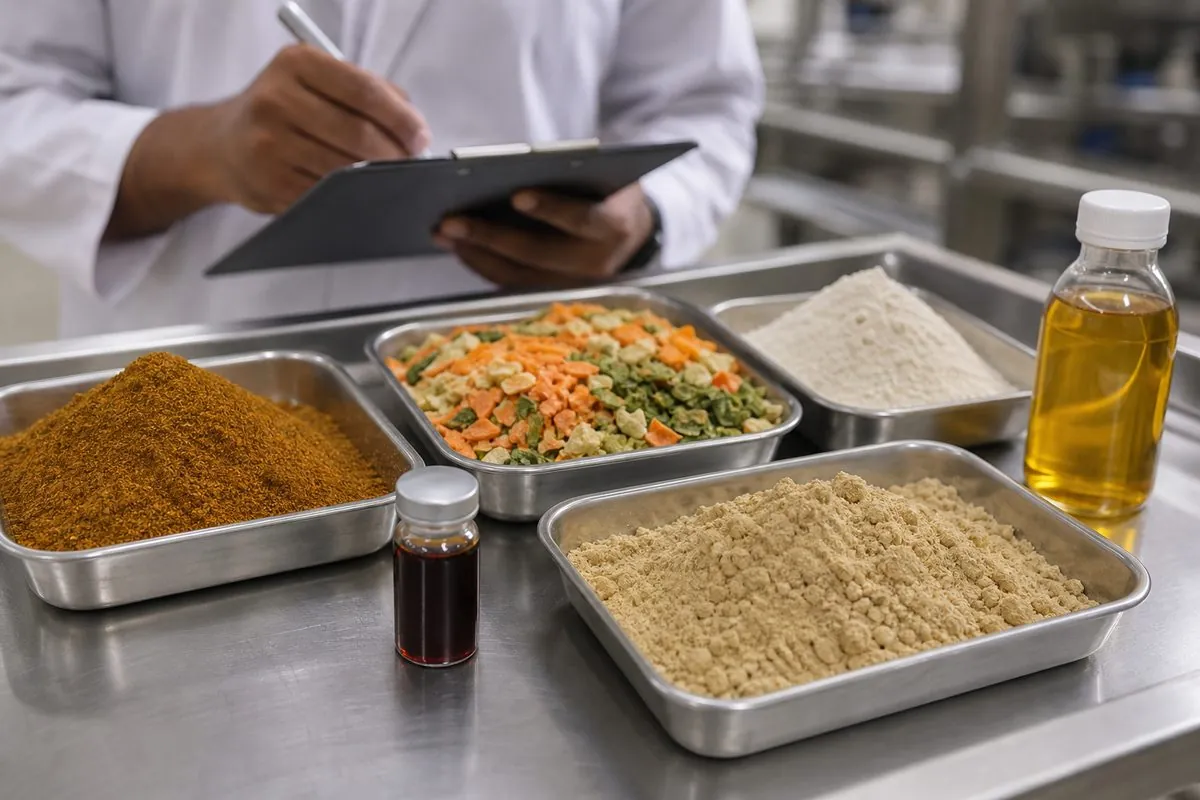
Documentation packs must reflect how manufacturers batch and pack each SKU — lot ID on COA originates at formulation and packing, not at the forwarder.
Exporters who reconcile production batch marks before invoice finalisation avoid the most common destination customs holds in this multi-category cluster.
Manufacturing traceability supports every document in the checklist — invoice, packing list, and COA must tell one lot story per SKU.
MOQ Analysis
Buyer Tip
Document packs should state the same MOQ and pack format that will appear on the packing list — mismatched trial quantities between proforma and shipping documents trigger unnecessary CHA queries.
Directional MOQ tiers by transaction stage
Swipe →
Data table — swipe horizontally on small screens
| Stage | Typical MOQ | Purpose |
|---|---|---|
| Sample | 0.5–5 kg per SKU (or 50–200 retail units for packed PL) | Formulation and quality evaluation before any commercial commitment |
| Bulk trial | 100–500 kg or 1–5 MT per hero SKU | Confirms formulation consistency and documentation flow before scaling |
| Retail-ready private-label first run | Often 1–5 MT equivalent per SKU/pack size | Amortises artwork, plate, and packaging-format tooling costs |
| Wholesale / programme | 5–20+ MT or 1×20ft / 1×40ft FCL by density | Established multi-SKU private-label and OEM supply programmes |
| Retail call-off | By seasonal forecast against a standing programme contract | Ongoing replenishment once formulation and audit trail are proven |
Packaging Standards
Export Tip
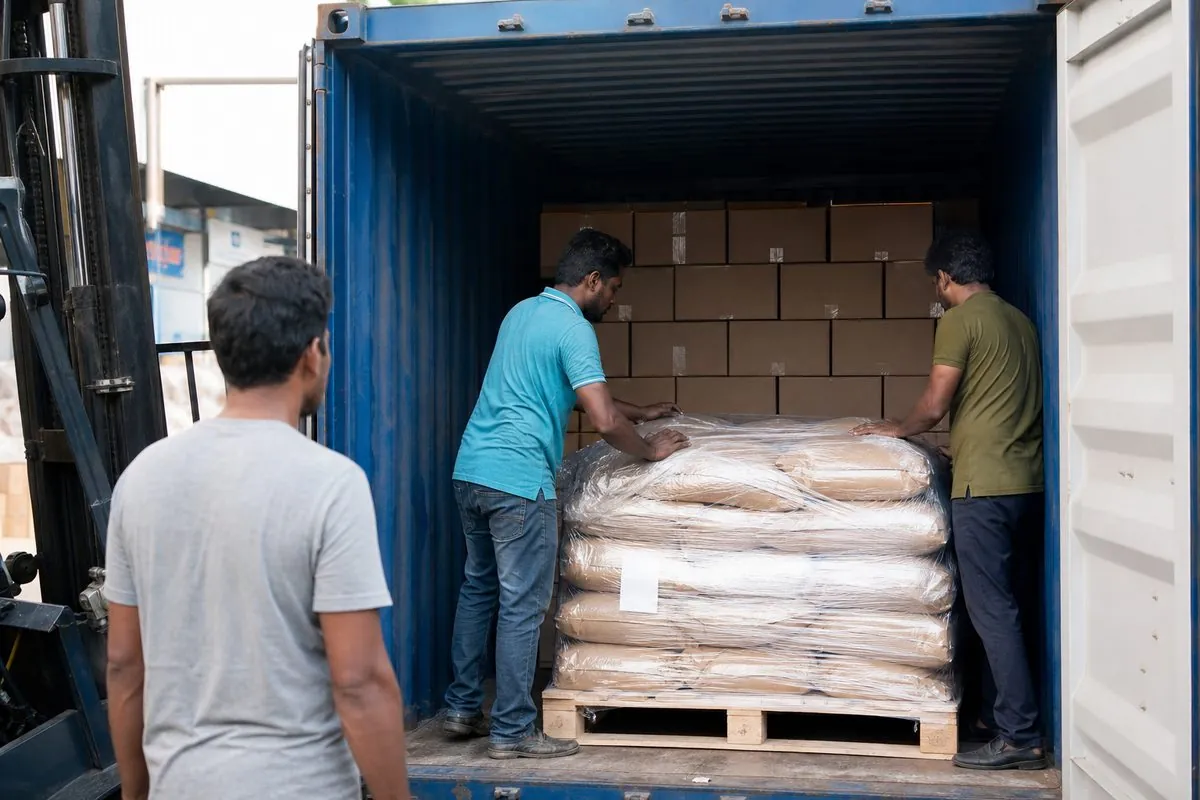
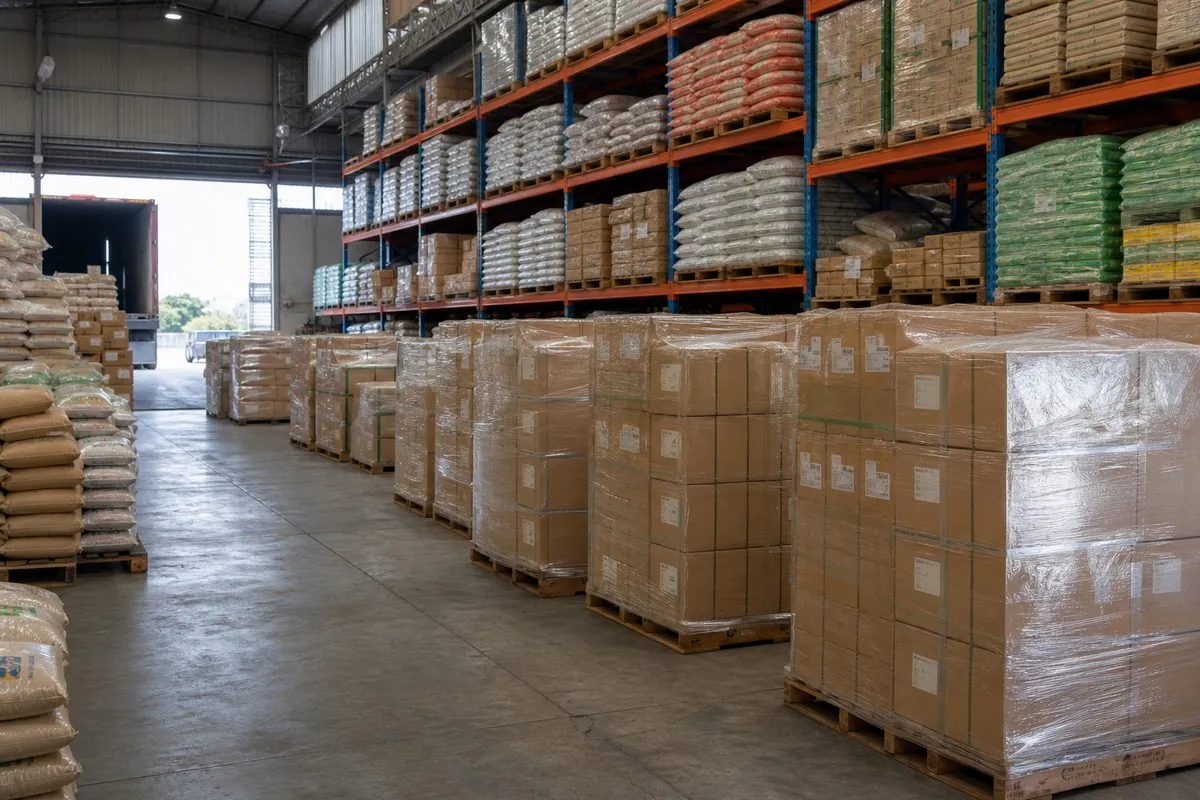
Packing list lines must reconcile carton or bag count, net/gross weight, and lot marks with the COA and buyer artwork sign-off record — packaging documentation errors are among the top shipping-bill hold triggers in this multi-category cluster.
Fumigation certificates apply when wood pallets are used and the destination requires ISPM-15 — note the certificate on the packing list when applicable.
Packaging formats and specifications for private-label food-ingredient export
Swipe →
Data table — swipe horizontally on small screens
| Format | Typical Configuration | Use Case | Key Requirement |
|---|---|---|---|
| 10/20/25 kg industrial bags | Food-grade PP/HDPE-lined bags with moisture barrier | Standard bulk export for spices, dehydrates, flours, proteins | Lot/batch ID, net weight, origin marking, FSSAI licence reference |
| 50 kg bags / jumbo (FIBC) bags | 500 kg or 1,000 kg flexible intermediate bulk containers | High-volume flour, starch, and dehydrate programmes | Moisture barrier, lifting loops, fumigation certificate where required |
| Drums / flexitanks | Commonly ~180–220 kg drums or 20ft flexitanks (~20–24 MT by density) | Edible oils and some liquid extract formats | Food-grade lining; confirm tank rating and density with forwarder |
| Retail-ready pouches, jars, sachets | 50 g–1 kg formats with buyer artwork | Private-label retail programmes under the buyer's own brand | Buyer artwork sign-off, barcode, nutrition and allergen panels |
| N2 flush / vacuum pack | Nitrogen flush or vacuum-sealed premium powders | Oleoresins, functional blends, and premium spice powders | Oxygen-barrier film and shelf-life validation per SKU |
| Scent segregation | Dedicated staging for pungent SKUs (onion/garlic) vs. mild spices | Mixed-assortment private-label programmes | Separate storage and stuffing sequence unless a mixed aromatic order is confirmed |
Container Loading Details
Export Tip
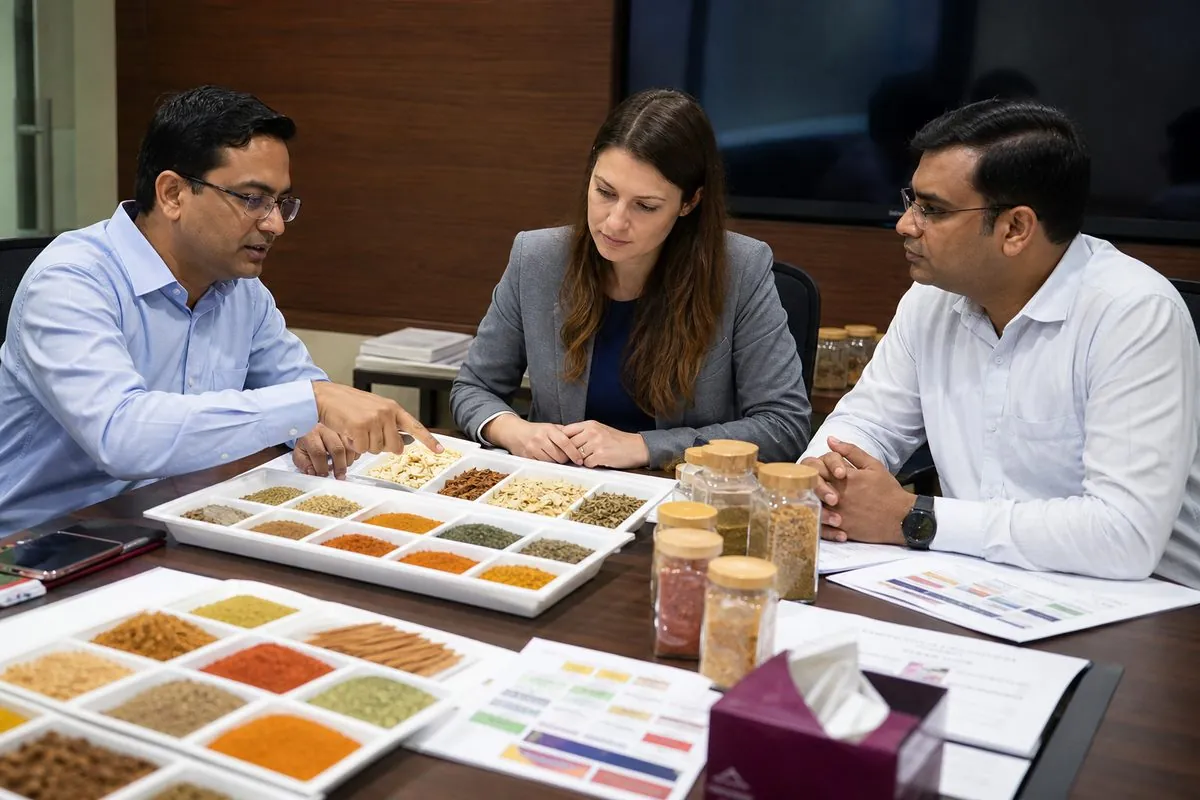
Container number and seal ID on the bill of lading must match stuffing photos and the packing list — document reconciliation includes logistics identifiers, not only COA chemistry, especially on multi-SKU shipments.
Directional container loading guidance for multi-SKU private-label programmes
Swipe →
Data table — swipe horizontally on small screens
| Container Type | Loading Consideration | Typical Use |
|---|---|---|
| 20-foot FCL | ~10–20 MT payload depending on SKU density and pack format; verify stow plan with forwarder | Bulk trial and standard commercial shipments |
| 40-foot FCL / 40-foot HC | ~18–27 MT payload; higher cube for lightweight retail-ready pouches and cartons | Established multi-SKU private-label and OEM programmes |
| LCL (less than container load) | Suitable for mixed-SKU trial lots below FCL threshold | New buyer relationships and multi-category sample assortments |
| Reefer / temperature-controlled | Recommended for heat-sensitive oleoresins and some functional blends | Premium extract and functional-blend programmes in warm transit corridors |
| Palletisation | Recommended for bagged and retail-ready cartons to speed discharge | Buyers with forklift handling at destination distribution centres |
Pricing Analysis
Buyer Tip
Pricing on the commercial invoice must match the proforma and COA category description — document disputes often trace to FOB quoted on one formulation model and shipped on another.
Directional FOB pricing bands by ingredient family (verify on quote date)
Swipe →
Data table — swipe horizontally on small screens
| Ingredient Family | Directional FOB Band | Notes |
|---|---|---|
| Spices & seasoning blends | ~USD 2–14/kg | Mid-single-digit to low-teens for commodity bulk; blends and steam-sterilized grades price higher |
| Dehydrated vegetables & alliums | ~USD 2–9/kg | Onion/garlic powder and flakes at the lower end; specialty cuts and low-moisture grades higher |
| Flours & starches | ~USD 0.6–2.5/kg | Commonly quoted per MT for bulk; premium functional starches price above commodity flour |
| Oleoresins & natural extracts | ~USD 20–150+/kg | Highly formulation- and potency-dependent; quote per kg, never per MT |
| Pulse & plant proteins | ~USD 1.5–6/kg | Isolates and concentrates price above basic pulse flour |
| Selective edible oils | ~USD 1–3/kg | Feedstock-indexed; quote per MT for bulk, per kg for retail-ready packs |
| Natural colors & functional blends | ~USD 8–60/kg | Colour strength and functional claim drive most of the spread |
| Snack & ready-mix bases | ~USD 1.5–5/kg | Formulation complexity and retail-ready packaging add premium over bulk mix |
| Retail-ready private-label pack premium | Add ~15–40% over bulk | Artwork/plate tooling, smaller runs, and audit compliance drive the premium — quote as a separate line item |
Import Statistics
Key Statistics
- USA / UK / EU hubs: BRC / IFS / FSSC retail-PL programmes
- UAE / Saudi: Halal + Arabic artwork readiness
- Canada / Australia: CFIA / BICON-aligned import controls
- Singapore: low-duty re-export and repack hub
Import-side scrutiny on private-label shipments concentrates on COA-to-invoice consistency and correct HS classification per SKU — documentation discipline matters more here than in single-category clusters because of the multi-HS structure.
Reconcile each SKU's declared category and HS heading against the buyer's own import broker expectations before shipment, since a blended multi-SKU description invites additional scrutiny at destination.
Directional destination demand profile for private-label food-ingredient buyers
Swipe →
Data table — swipe horizontally on small screens
| Market | Directional Demand Profile | Primary Buyer Type |
|---|---|---|
| United States | Large retail private-label and food-service ingredient demand across spices, dehydrates, and functional blends | Retail chains, co-packers, food-service distributors |
| United Kingdom | Established retail-PL culture; clean-label and BRCGS-audited dehydrate and spice demand | Retail chains, ingredient distributors, food manufacturers |
| United Arab Emirates | Halal-documented private-label demand plus re-export role for wider GCC | Wholesale distributors, Gulf retail chains, re-export traders |
| Germany / Netherlands | EU retail-PL repack and distribution hub demand for spices, dehydrates, and blends | EU retail chains, importers, repackers |
| Canada | Growing retail-PL and food-processor demand under CFIA-aligned import rules | Retail chains, food processors, importers of record |
| Australia | Retail-PL and food-service demand subject to biosecurity (BICON) import conditions | Retail chains, food manufacturers, importers |
| Saudi Arabia | Halal-certified private-label demand across spices, blends, and snack bases | Retail chains, food-service distributors, GCC wholesalers |
| Singapore | Low-duty re-export and repacking hub for Southeast Asian private-label demand | Repackers, distributors, regional trading houses |
Compliance Checklist
Checklist
Compliance Notes
Common Buyer Mistakes
Common Mistakes Box
Future Market Trends
Key Statistics
Customs digitisation increases pre-arrival document scrutiny across every HS chapter in this cluster — exporters who reconcile invoice, COA, and packing-list data before cutoff avoid demurrage seen at busy ports.
Buyer audit portals now archive artwork sign-off and certification copies per lot — document expiry management becomes an ongoing task, not a shipment-only exercise.
Sources
- APEDA — official site
- APEDA — Processed Vegetables (FY2024-25 export table)
- APEDA Annual Administrative Report 2024-25 (PDF)
- Spices Board of India — official site
- Spices Board — Major Itemwise Export / FY2024-25 review
- Spices Board — Trade Classification (ITC HS) codes
- FSSAI — Food Safety and Standards Authority of India
- DGFT (India) — IEC and trade portal
- ICEGATE — Indian Customs EDI Gateway
- CBIC — Central Board of Indirect Taxes and Customs
- DGCI&S — Directorate General of Commercial Intelligence and Statistics
- WITS — India HS 071290 exports 2024
- UN Comtrade Plus
- World Bank WITS
- ITC Trade Map
- EDC — Global private label markets for agri-food (2025 retail sales cue)
- USITC Harmonized Tariff Schedule
- US FDA — Prior Notice of Imported Foods
- US FDA — Foreign Supplier Verification Programs (FSVP)
- European Commission TARIC
- EU Regulation (EC) 396/2005 — Pesticide MRLs
- EU Regulation (EU) 2018/848 — Organic production and labelling
- DAFF Australia — BICON biosecurity import conditions
- Codex Alimentarius — food standards
- BRCGS — Global Standards
- IFS — International Featured Standards
- FSSC 22000
- USDA NOP — National Organic Program
- ICC Incoterms
- Altus Exports — Contact
All sources accessed 2026-08-09 for this factual audit. Prefer primary government, council (APEDA / Spices Board / FSSAI), and multilateral trade databases when citing figures in contracts or buyer presentations. Because this cluster spans multiple HS chapters, always re-verify the specific underlying commodity line and duty/regulatory position on the quote date.
Document field requirements vary by underlying HS heading and destination — reconcile this checklist with buyer LC terms and CHA filing rules per consignment and per SKU category.

Conclusion
Documentation QC before vessel cutoff prevents destination holds — invoice, packing list, COA, artwork sign-off, and BL must tell one lot story under the correct underlying HS heading for every SKU.
Altus Exports assembles export document sets for private-label FCL programmes — export products from India with APEDA/Spices Board/FSSAI-aligned packs.
Start exporters on How To Export Private Label Food Ingredients From India; buyers on Source Private Label Food Ingredients Directly From India.