
Source Soap Noodles Directly from India: Buyer Playbook
By Saurabh Mittal, Founder, Altus Exports
International buyer playbook for sourcing soap noodles directly from India — supplier verification in Gujarat oleochemical clusters, sample and COA protocols, TFM grade matching, and shipment execution without unnecessary intermediary layers.
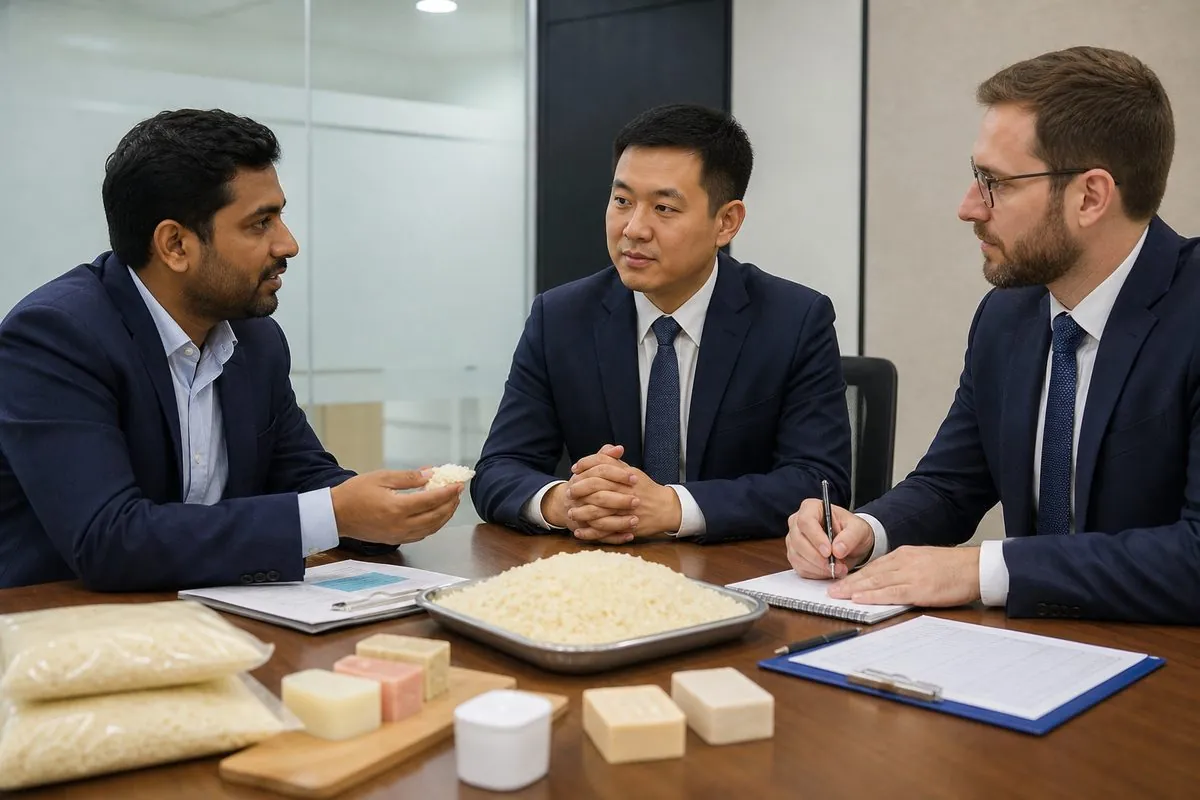
Sourcing soap noodles directly from India rewards buyers who treat supplier verification as a structured process rather than a price-comparison exercise. Gujarat's Vapi–Ankleshwar oleochemical belt includes saponification lines, vacuum drying units, and noodle pelletisers serving export programmes — but capabilities sit across dozens of independent plants rather than one vertically integrated factory. Buyers who understand that structure, and who know how to evaluate TFM consistency, sample-to-bulk COA matching, and export documentation readiness, extract significantly better value than those who rely on marketplace listings alone.
This buyer playbook walks through the complete direct-sourcing sequence: defining your specification (TFM band, fatty-acid base, packaging format, certification tier), identifying and verifying Vapi–Ankleshwar and Ahmedabad manufacturers, running sample and COA protocols, commissioning lot QC appropriate to your price point, and coordinating FCL shipment execution under HS 34012000 with correct Incoterms from Nhava Sheva, Mundra, Kandla, or Chennai. For exporters building parallel programmes, see How to Export Soap Noodles from India; for grade-level depth, see Top Soap Noodle Products Exported from India.
WITS 2024 directional figures place India HS 340120 exports at roughly US$6.8M and 4.7 kt, with the Vapi–Ankleshwar belt as the primary supply cluster. Whether you engage a product sourcing company in India or work directly with verified manufacturers, the verification checkpoints in this guide apply equally — because the product risks are grade-specific, not origin-specific.
Key Takeaways
Summary Box
Executive Summary
Summary Box
Sourcing soap noodles directly from India succeeds when buyers run structured verification — IEC/RCMC check, mill capability audit, sample COA against written TFM spec, 5–10 MT trial, then FCL scale.
Gujarat's fragmented saponification ecosystem rewards buyers who share formulation requirements upfront rather than negotiating undefined 'soap noodles' on price alone.
This buyer playbook compresses direct-sourcing risk for international soap plants evaluating Vapi–Ankleshwar supply without unnecessary intermediaries.
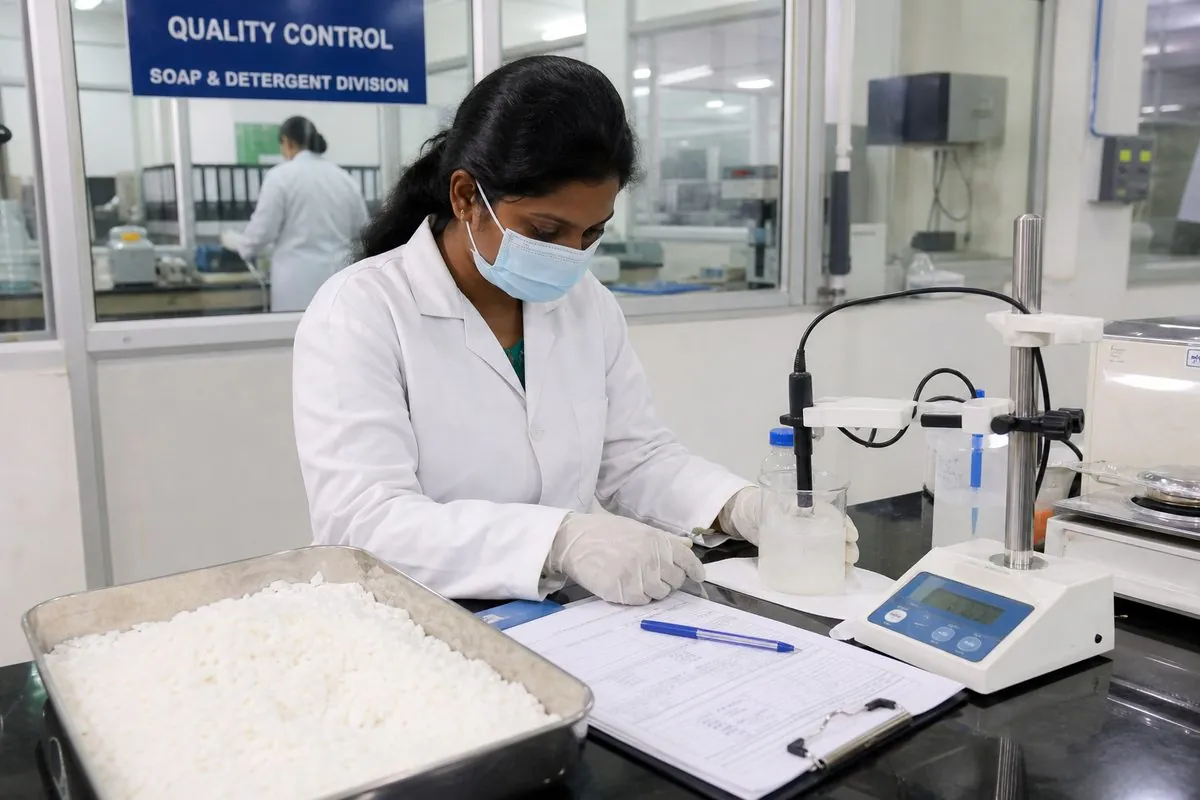
Direct Sourcing Verification Protocol
Buyers sourcing soap noodles directly from India should run this verification sequence before releasing deposit on a trial order. Each checkpoint exists because TFM grade mismatches and COA documentation gaps are the two most common failure modes in direct sourcing relationships.
Phase 1: Credential and capability check
Phase 2: Sample and COA gate
Manufacturing Overview
Export Tip
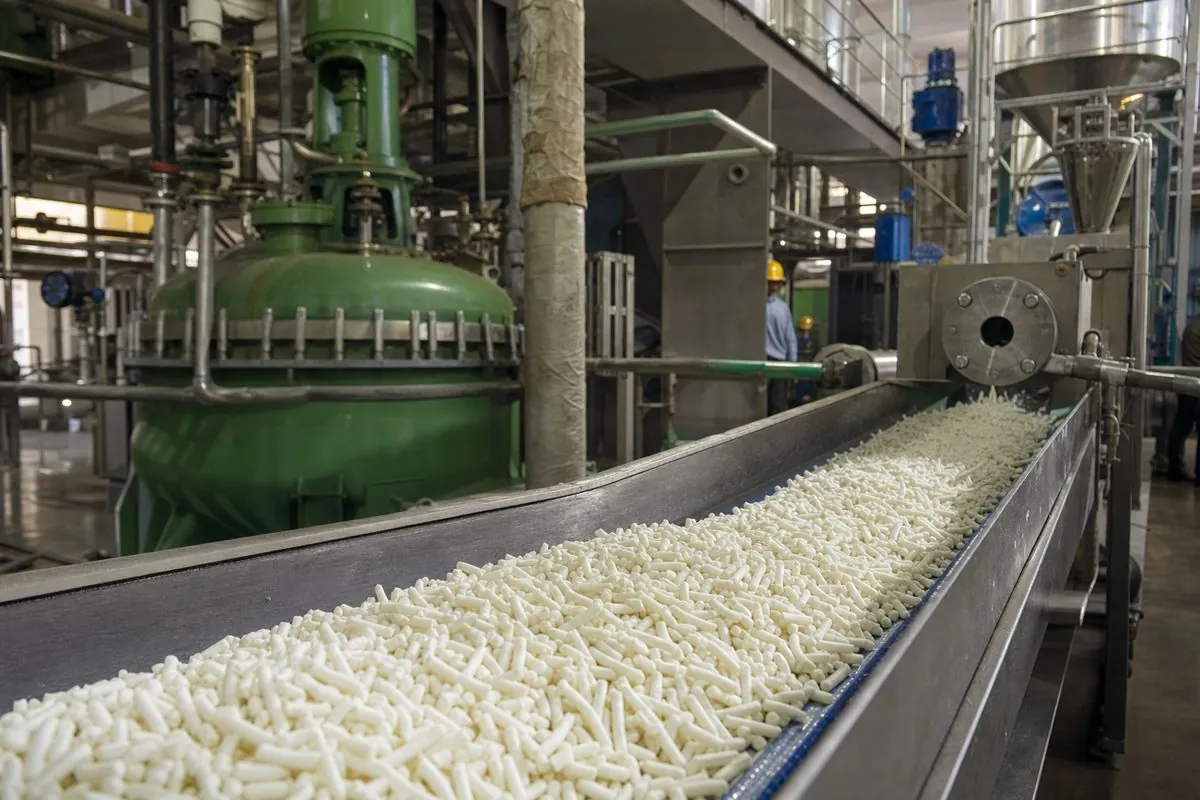
Direct sourcing audits should confirm saponification, vacuum drying, and pelletising lines — capabilities vary by plant within Vapi–Ankleshwar, not one generic 'factory tour'.
Retain reference samples from approved trial lots; bulk production must match approved fatty-acid base and TFM parameters.
Merchant exporters consolidate multiple mill lines when buyers need single-interface FCL programmes.
Product Categories & Variants Overview
Summary Box
- 80/20 toilet — higher TFM FMCG and private-label toilet bars
- 90/10 laundry — cost-effective laundry and multi-purpose plants
- Transparent — clear-bar specialty formulations
- Palm RSPO — sustainability-led FMCG programmes
- Neem/medicated — regional hygiene programmes
Direct buyers should shortlist grades before supplier calls — product catalogue defines TFM and certification options.
Primary soap noodle product types exported from India
Swipe →
Data table — swipe horizontally on small screens
| Product Type | Typical TFM / Spec | Fatty-Aid Base | Primary Channel |
|---|---|---|---|
| 80/20 toilet soap noodles | TFM 60–78%; FFA <1% | Palm/coconut blend | FMCG toilet-bar and beauty-soap plants |
| 90/10 laundry soap noodles | TFM 50–65%; FFA <1.5% | Palm/tallow cost mix | Laundry, multi-purpose, and economy bar programmes |
| Transparent soap noodles | TFM 65–72%; low FFA | Specialty clear-bar blend | Premium transparent and glycerin-rich bars |
| Palm-based noodles (RSPO) | Grade-specific TFM bands | RSPO MB/SG palm stearin | Sustainability-led FMCG and multinational buyers |
| Tallow / blended bases | Buyer-specified iodine and FFA | Tallow, palm, coconut blends | Regional soap plants with legacy formulations |
| Neem / medicated bases | Standard toilet TFM with actives | Neem oil or medicated additive | Hygiene programmes, Ayurvedic and regional brands |
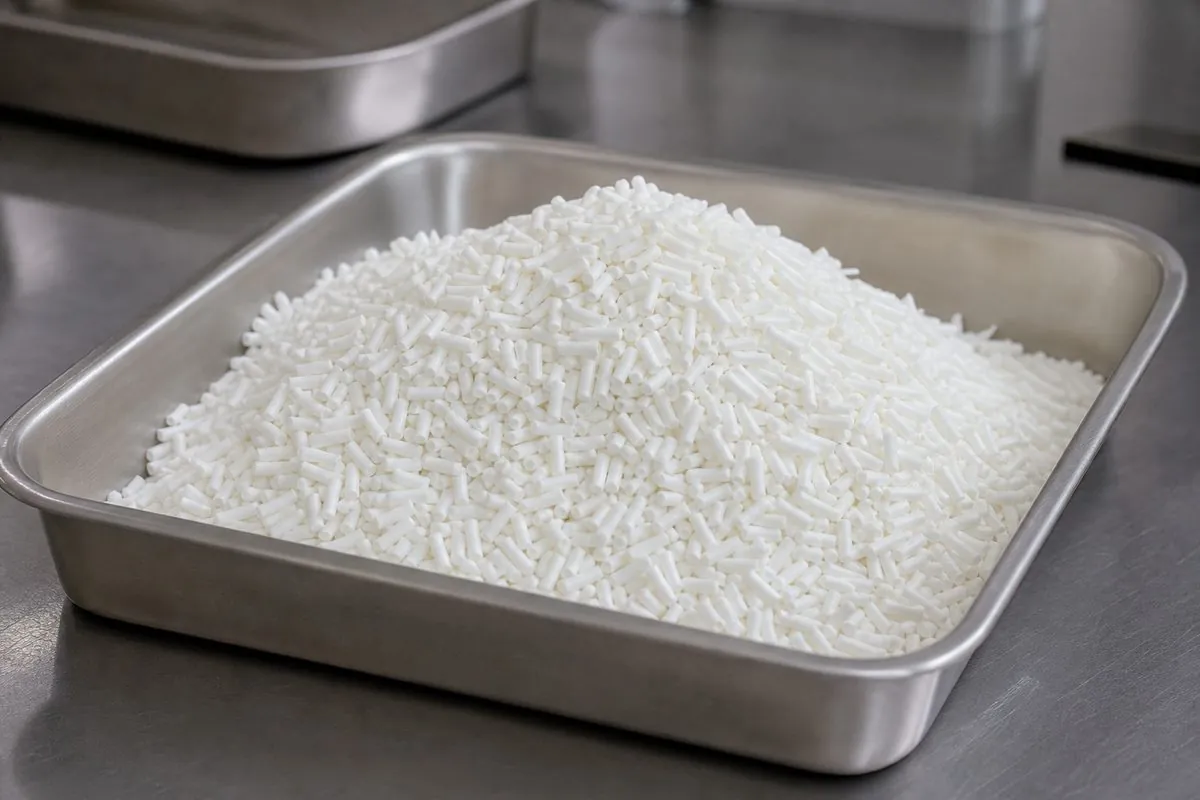
Export Statistics
Key Statistics
When verifying suppliers, confirm they file exports under India 34012000 (soap in other forms) — misclassification on 34011990 bar lines is a common supplier red flag during due diligence.
India exported roughly US$6.8M / 4.7 kt on HS 340120 in 2024 (WITS directional) — scale is modest, so supplier COA discipline matters more than volume claims alone.
Directional profile of Indian soap noodle trade (HS 340120 / India 34012000)
Swipe →
Data table — swipe horizontally on small screens
| Metric | Directional Estimate | Notes |
|---|---|---|
| Primary manufacturing cluster | Vapi–Ankleshwar, Gujarat | Oleochemical saponification and soap-noodle pelletising belt |
| Supporting clusters | Ahmedabad; Mumbai–Pune; Chennai | Trading, FMCG consolidation, and South India supply |
| Applicable HS headings | 3401.20 / India 34012000 (primary); 3401.19 / India 34011990 (bar-form contrast only) | Confirm eight-digit line with CHA before shipping-bill filing |
| Governing trade council | Chemexcil (Basic Chemicals, Cosmetics & Dyes EPC) | RCMC alongside IEC for export credibility in HS 3401 |
| WITS 2024 export value (HS 340120) | ~US$6.8M / ~4.7 kt | Directional UN Comtrade figure for soap in other forms — re-verify annually |
| Leading destination regions | ASEAN, South Asia, East & West Africa, Middle East | WITS 340120 partners: Nepal, USA, UAE, Djibouti, UK; smaller flows to Nigeria, Bangladesh, Kenya |
| Dominant export grades | 80/20 toilet + 90/10 laundry noodles | Transparent, palm RSPO, and medicated bases for specialty programmes |
Import Statistics
Key Statistics
Buyers comparing Indian direct supply to Indonesian CIF offers should note India imported ~US$118.3M HS 340120 in 2024 — landed-cost models must include duty, freight, and COA retest where required.
Malaysia and Indonesia dominate global export value on HS 340120; Indian trials succeed when spec and documentation beat commodity CIF, not on ignoring import parity.
Directional import demand profile by destination market
Swipe →
Data table — swipe horizontally on small screens
| Market | Directional Demand Profile | Primary Buyer Type |
|---|---|---|
| Indonesia | Large FMCG and local soap-plant demand for toilet-grade noodles | Soap manufacturers, oleochemical distributors, private-label FMCG |
| Philippines | Strong laundry and multi-purpose soap base demand | Soap plants, wholesale chemical distributors, hygiene programmes |
| Africa (Kenya, Tanzania, Nigeria) | Toilet and laundry noodles for greenfield and expanding soap plants | Soap factories, NGO hygiene programmes, regional distributors |
| Nepal | Land-corridor South Asian demand for cost-effective soap base | Soap manufacturers, border traders, FMCG repackers |
| Bangladesh | High-volume laundry and toilet base via short-sea and land routes | Soap plants, trading houses, private-label bar-soap programmes |
| UAE | Re-export hub and local FMCG plant demand for palm-based noodles | Wholesale distributors, Gulf FMCG plants, re-export traders |
| Vietnam | Growing ASEAN soap-plant capacity sourcing Indian base | Soap manufacturers, chemical importers, contract manufacturers |
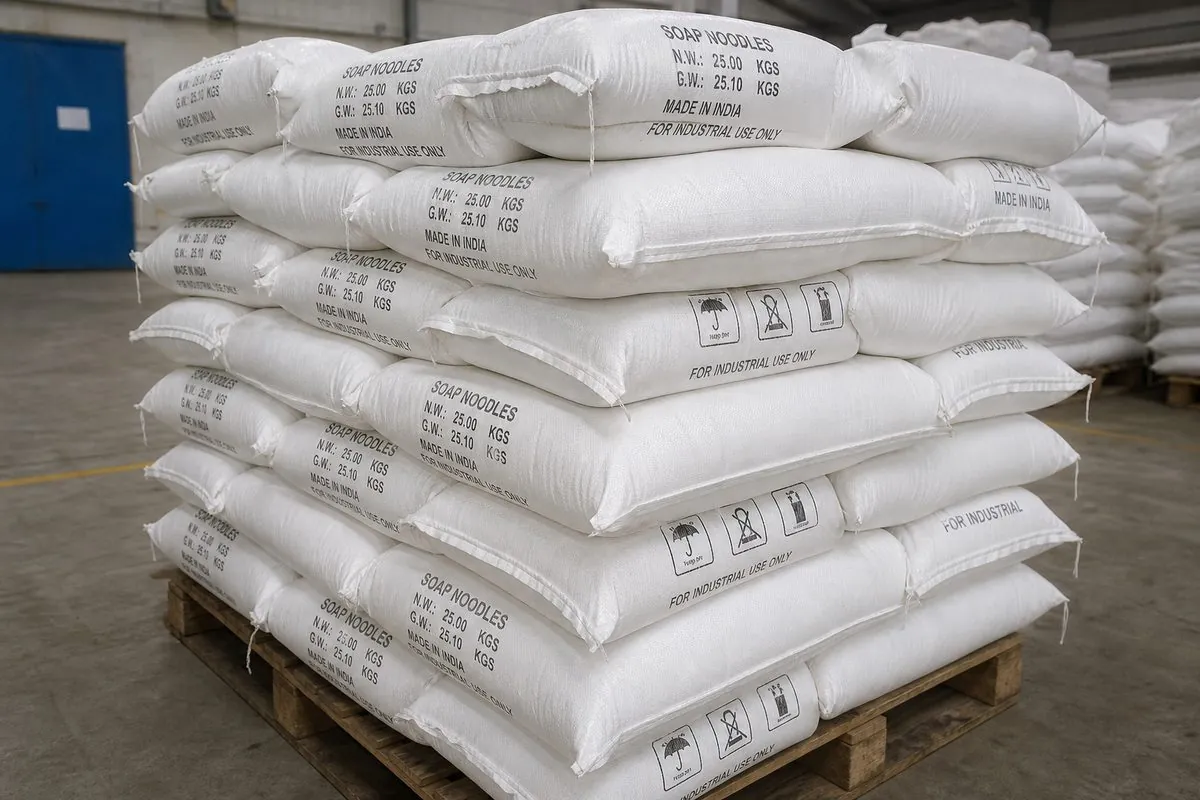
Trade Statistics & HS Classification Analysis
Key Statistics
Compliance Notes
Classify soap noodles under 3401.20 / India 34012000 for sourcing programmes — bar-form 34011990 is contrast only; CHA confirmation required.
HS classification reference for Indian soap-noodle exports
Swipe →
Data table — swipe horizontally on small screens
| HS Heading | Scope | Filing Note |
|---|---|---|
| 3401.20 (international) | Soap in other forms (WITS HS 340120) | Primary soap-noodle planning line |
| 34012000 (India) | Soap in other forms | Primary eight-digit line — confirm with CHA |
| 3401.19 / 34011990 | Bar or moulded soap | Contrast line — not primary for noodles |
Pricing Analysis
Buyer Tip
Direct sourcing comparisons must use the same TFM grade and packaging format — lowest FOB on mismatched grade is not a valid benchmark.
Directional FOB USD/MT pricing bands by soap noodle grade
Swipe →
Data table — swipe horizontally on small screens
| Grade / Base | Directional FOB USD/MT | Notes |
|---|---|---|
| 80/20 toilet soap noodles | ~900–1,150 | Higher TFM toilet-grade base; palm/coconut fatty-acid mix drives spread |
| 90/10 laundry soap noodles | ~800–1,000 | Cost-effective laundry and multi-purpose base; largest volume share |
| Transparent soap noodles | ~1,050–1,350 | Specialty clear-bar formulations; tighter FFA and colour specs |
| RSPO MB palm-based noodles | ~950–1,250 | Sustainability premium; mass-balance chain-of-custody documentation |
MOQ Analysis
Buyer Tip
Direct sourcing trials typically start at 5–10 MT mixed-grade samples or single-grade 20ft FCL — confirm trial MOQ before factory audit travel.
Directional MOQ tiers by transaction stage
Swipe →
Data table — swipe horizontally on small screens
| Stage | Typical MOQ | Purpose |
|---|---|---|
| Trial order | 5–10 MT | Buyer grade evaluation, COA verification, and repacking trials |
| Standard FCL | 20–25 MT (20ft FCL) | First commercial shipment; verify bag stow and payload with CHA |
| Programme contract | 50–500+ MT/month | Established soap-plant and distributor repeat programmes |
Packaging Standards
Export Tip
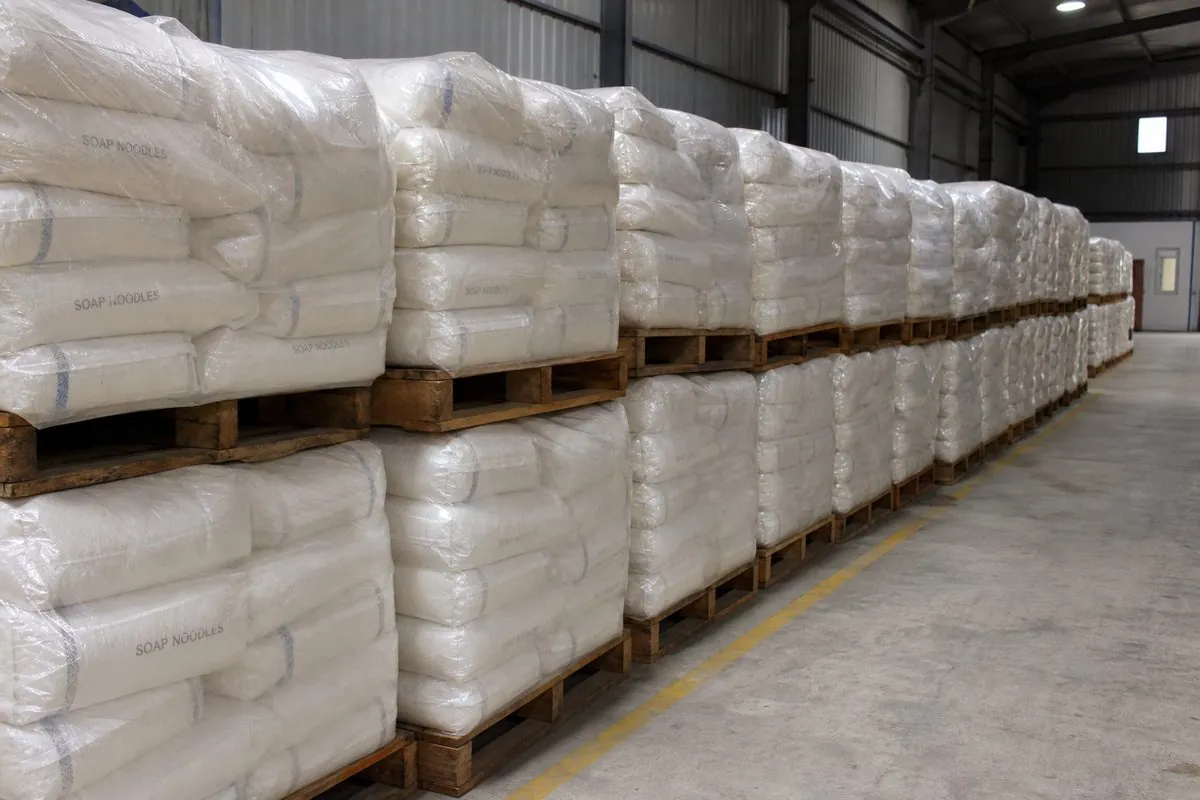
Direct sourcing checks should confirm bag format before trial PO — switching from 25 kg to FIBC after sample approval invalidates stow plans and plant handling assumptions.
Moisture-resistant weaving and liner spec belong in the written purchase spec alongside TFM bands.
Packaging formats and specifications for soap noodle export
Swipe →
Data table — swipe horizontally on small screens
| Format | Typical Configuration | Use Case | Key Requirement |
|---|---|---|---|
| 25 kg woven PP bags | HDPE-lined, palletised | Standard export and FCL loading | Lot/batch ID, TFM grade, net weight, origin marking |
| 500 kg FIBC | Flexible intermediate bulk container | Mid-volume soap plants with bulk handling | Moisture barrier, lifting loops, fumigation when required |
| 1,000 kg FIBC | Jumbo bulk bags | Large soap plants and tolling programmes | Stacking pattern and payload confirmation before booking |
| Moisture protection | Sealed liners, dry warehouse staging | All ocean shipments | Avoid condensation damage during transit and discharge |
Container Loading Details
Export Tip
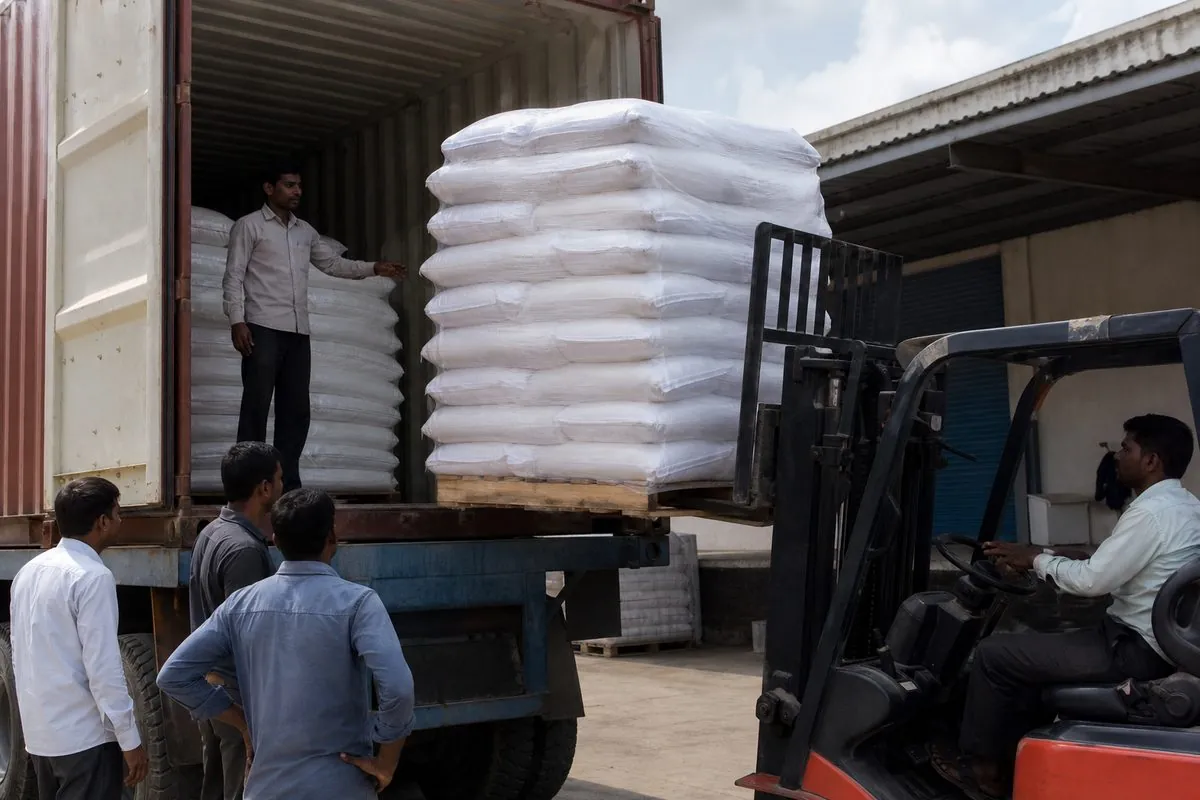
Trial buyers should agree stow assumptions before first FCL — 25 kg bag stacking density differs from FIBC payload and affects whether 20–25 MT target is achievable.
Directional container loading guidance for soap noodles
Swipe →
Data table — swipe horizontally on small screens
| Container Type | Loading Consideration | Typical Use |
|---|---|---|
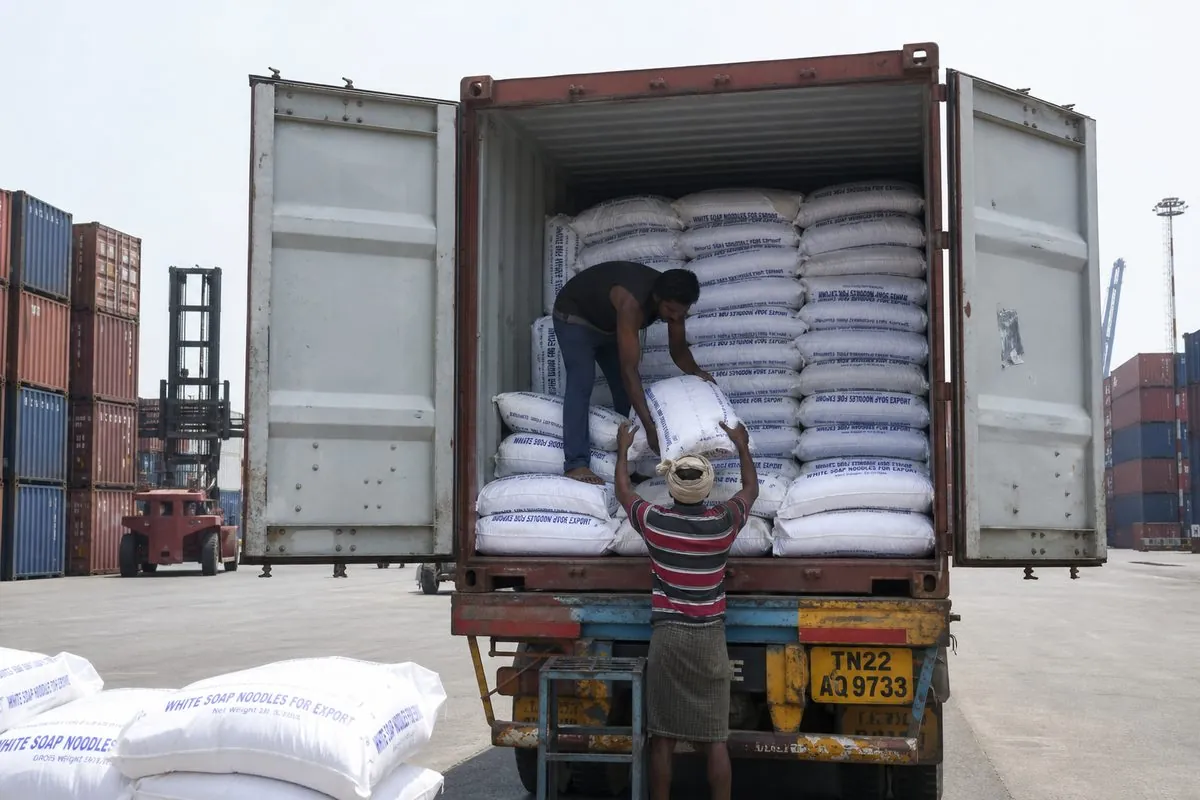
| 20-foot FCL | 20–25 MT payload in 25 kg bags; verify stow plan with forwarder | Trial and standard commercial shipments |
| 40-foot FCL / 40-foot HC | Higher payload with FIBC or dense bag stacking | Established distributor and soap-plant programmes |
| LCL (less than container load) | Suitable for 5–10 MT trial lots below FCL threshold | New buyer relationships, grade testing |
| Palletisation | Recommended for 25 kg bag loads to speed discharge | Buyers with forklift handling at destination plant |
Shipping Methods
Export Tip
- Samples: air/express 7–14 days
- Trial: LCL or partial FCL 2–4 weeks post-production
- FCL: 3–6 weeks door-to-port by corridor
- Incoterms: EXW, FOB, CFR/CIF; DDP selective
Ocean FCL/LCL from Nhava Sheva, Mundra, Kandla, or Chennai; air freight reserved for urgent lab samples.
Sourcing Checklist
Checklist
Buyer Checklist
Exporter Checklist
Common Buyer Mistakes
Common Mistakes Box
Future Market Trends
Key Statistics
Buyers shorten supplier lists after one failed trial — direct sourcing trends reward mills with sample-to-bulk COA match rates, not lowest first quote.
Third-party audit requests rise for programmes above 100 MT/month — plan audit readiness before scaling beyond trial FCL.
Compliance Checklist
Checklist
Compliance Notes
Sources
- WITS / UN Comtrade — India exports HS 340120 by partner, 2024
- WITS / UN Comtrade — India imports HS 340120 by partner, 2024
- WITS / UN Comtrade — Indonesia exports HS 340120, 2024
- WITS / UN Comtrade — Malaysia exports HS 340120, 2024
- UN Comtrade Database
- ITC Trade Map
- DGFT (India) — IEC / trade portal
- ICEGATE — Indian Customs EDI
- India CBIC / Customs Tariff — Chapter 34 Soap
- Chemexcil India — Basic Chemicals, Cosmetics & Dyes EPC
- RSPO — Roundtable on Sustainable Palm Oil
- USITC Harmonized Tariff Schedule (search 3401)
- European Commission TARIC
- ICC Incoterms
- Altus Exports — Contact
All sources accessed 2026-07-27. Prefer primary government, council, and multilateral trade databases when citing figures in contracts or buyer presentations.
Supplier verification and sample COA protocols should reference the same HS 34012000 line the exporter files on the shipping bill.
Conclusion
Sourcing soap noodles directly from India works when verification, sample COA approval, and trial MOQ precede volume commitment — price without spec fails at the soap plant.
Altus Exports compresses supplier verification and export execution for international buyers — product sourcing company in India programmes available.
See How To Export Soap Noodles From India for exporter-side process and Top Soap Noodle Products Exported From India for grades.