
Top Soap Noodle Products Exported from India: Grade Catalogue
By Saurabh Mittal, Founder, Altus Exports
A product-level catalogue of soap noodle grades exported from India — 80/20 toilet, 90/10 laundry, transparent, palm-based, tallow, and neem medicated bases with TFM, FFA, moisture specs, MOQ tiers, and channel fit for soap plants and distributors.
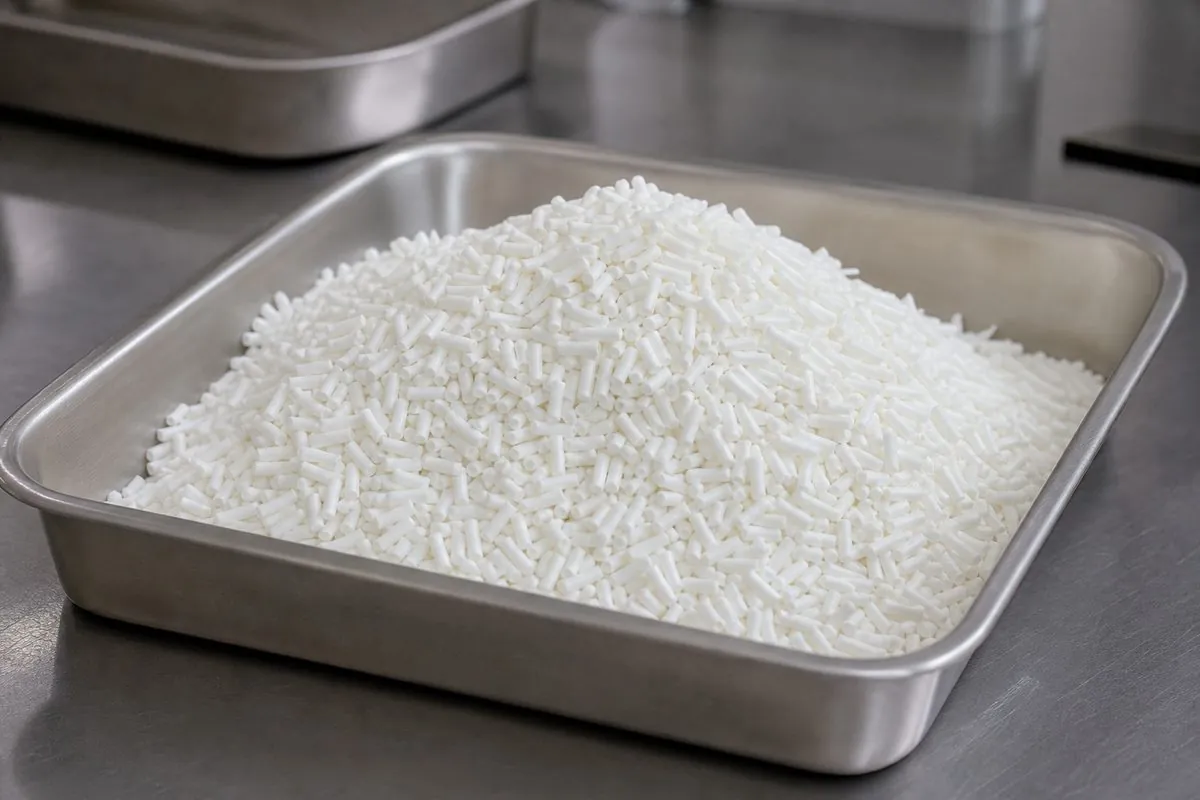
International buyers evaluating India as a soap noodle sourcing origin rarely fail because India lacks oleochemical capacity — they fail because they treat 'soap noodles' as a single commodity rather than a matrix of TFM grades, fatty-acid bases, and formulation requirements. Eighty-twenty toilet noodles, ninety-ten laundry bases, transparent formulations, RSPO palm programmes, and neem medicated bases share a pellet form but not the same saponification discipline, and quoting or ordering the wrong grade is the fastest route to a rejected lot at the soap plant. This guide maps the top soap noodle products exported from India under HS 34012000 with enough specificity to structure RFQs, compare FOB USD/MT bands honestly, and match each grade to the buyer channel it serves. For the end-to-end export process, see How to Export Soap Noodles from India.
India's soap noodle export catalogue spans 80/20 toilet grades (typical TFM 60–78%), 90/10 laundry bases (TFM 50–65%), transparent specialty noodles, palm-based RSPO mass-balance options, tallow and blended fatty-acid bases, and neem or medicated formulations for regional hygiene programmes. Quality parameters — TFM, FFA, moisture, glycerin, color, and odor — must be declared lot-by-lot on the Certificate of Analysis. The Vapi–Ankleshwar belt remains the primary manufacturing cluster, with Ahmedabad trading houses and Mumbai–Pune export documentation teams supporting FCL programmes. WITS 2024 directional figures for India HS 340120 show roughly US$6.8M and 4.7 kt — one slice of a broader HS 3401 export base serving ASEAN, South Asia, and Africa.
Whether you are an FMCG soap plant building a private-label bar programme, a regional distributor stocking laundry-grade base, or a multinational buyer evaluating RSPO palm supply, this grade catalogue gives you the vocabulary and specification framework to evaluate Indian suppliers without conflating TFM tiers. For direct sourcing guidance, see Source Soap Noodles Directly from India; for RSPO and sustainability depth, see RSPO-Certified Sustainable Palm Soap Noodle Export Opportunities.
Key Takeaways
Summary Box
Executive Summary
Summary Box
Evaluating Indian soap noodle grades means separating TFM band, fatty-acid base, and certification tier before comparing FOB USD/MT — 80/20 toilet, 90/10 laundry, transparent, RSPO palm, and medicated bases are different products, not interchangeable SKUs.
Gujarat's Vapi–Ankleshwar belt supplies the bulk of export catalogues; every commercial lot requires COA covering TFM, FFA, moisture, glycerin, color, and odor.
This catalogue guide helps FMCG plants, distributors, and traders structure RFQs and acceptance criteria without conflating laundry commodity with toilet or RSPO premium lines.
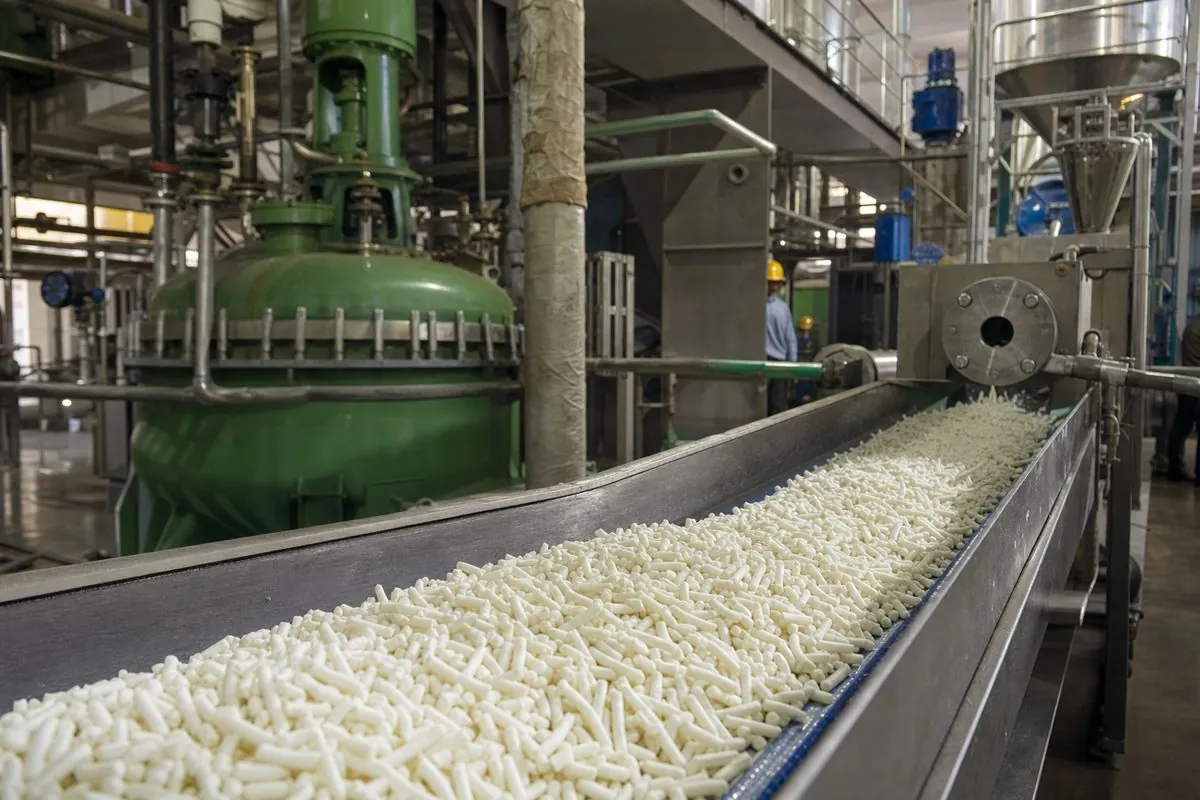
Product Categories & Variants Overview
Summary Box
- 80/20 toilet — higher TFM FMCG and private-label toilet bars
- 90/10 laundry — cost-effective laundry and multi-purpose plants
- Transparent — clear-bar specialty formulations
- Palm RSPO — sustainability-led FMCG programmes
- Neem/medicated — regional hygiene programmes
Indian export catalogues span toilet 80/20, laundry 90/10, transparent, palm RSPO, tallow, and medicated bases — each SKU maps to buyer formulation and certification requirements.
Primary soap noodle product types exported from India
Swipe →
Data table — swipe horizontally on small screens
| Product Type | Typical TFM / Spec | Fatty-Aid Base | Primary Channel |
|---|---|---|---|
| 80/20 toilet soap noodles | TFM 60–78%; FFA <1% | Palm/coconut blend | FMCG toilet-bar and beauty-soap plants |
| 90/10 laundry soap noodles | TFM 50–65%; FFA <1.5% | Palm/tallow cost mix | Laundry, multi-purpose, and economy bar programmes |
| Transparent soap noodles | TFM 65–72%; low FFA | Specialty clear-bar blend | Premium transparent and glycerin-rich bars |
| Palm-based noodles (RSPO) | Grade-specific TFM bands | RSPO MB/SG palm stearin | Sustainability-led FMCG and multinational buyers |
| Tallow / blended bases | Buyer-specified iodine and FFA | Tallow, palm, coconut blends | Regional soap plants with legacy formulations |
| Neem / medicated bases | Standard toilet TFM with actives | Neem oil or medicated additive | Hygiene programmes, Ayurvedic and regional brands |
TFM & Quality Specification Reference
Use the matrix for RFQ and COA acceptance — confirm numeric bands on the mill COA for each lot.
Directional TFM, FFA, and moisture specifications by grade
Swipe →
Data table — swipe horizontally on small screens
| Grade | TFM (%) | FFA (max %) | Moisture (max %) | Notes |
|---|---|---|---|---|
| 80/20 toilet | 60–78 | 1.0 | 14 | Higher TFM commands premium; confirm lot COA |
| 90/10 laundry | 50–65 | 1.5 | 14 | Cost-effective base; wider FFA tolerance acceptable |
| Transparent | 65–72 | 0.5 | 12 | Tighter colour and odor specs; lower moisture target |
| RSPO palm toilet | 60–76 | 1.0 | 14 | RSPO MB/SG documentation alongside COA |
| Neem / medicated | 58–72 | 1.0 | 14 | Active content and odor per buyer formulation sheet |
Manufacturing Overview
Export Tip
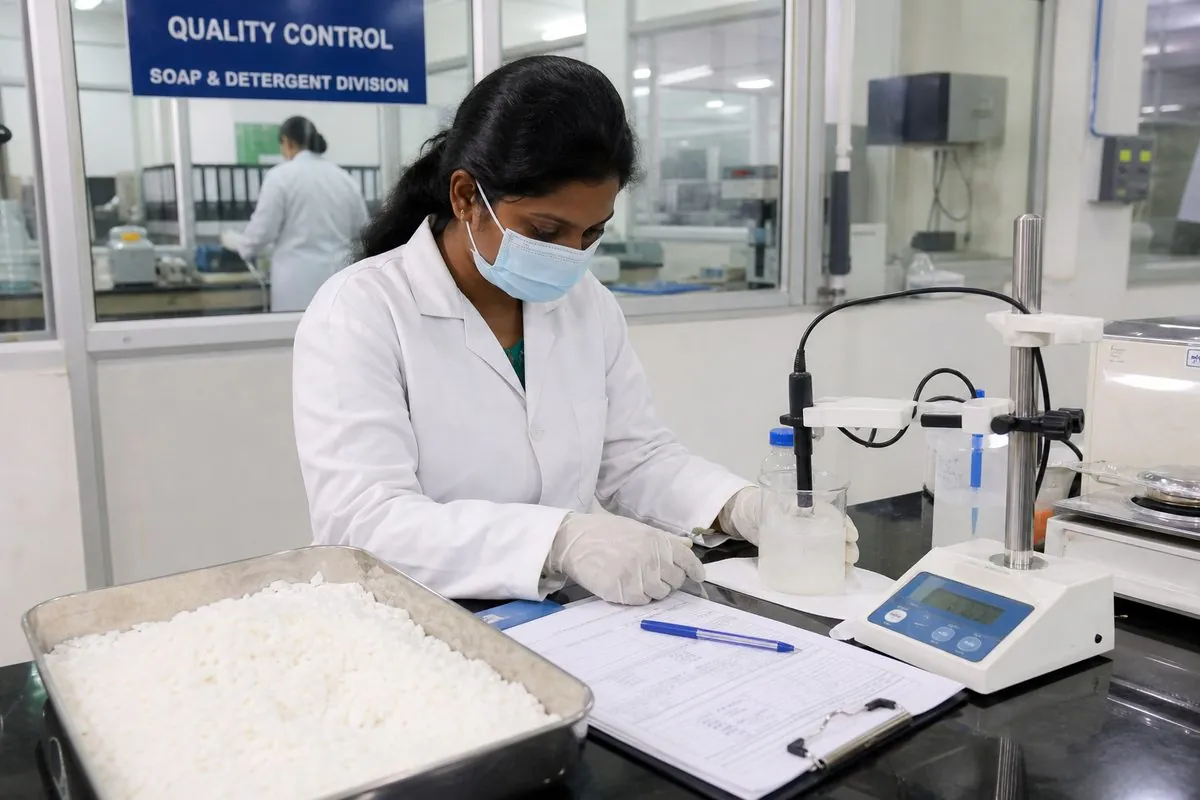
From a product perspective, manufacturing differentiation is grade-specific: toilet lines target higher TFM extrusion bands; laundry lines optimise cost; transparent runs need tighter FFA control.
Lot sampling covers TFM, FFA, moisture, glycerin, color, and odor before COA release — SKU integrity depends on not commingling grades in bagging.
See export process guide for operational steps from mill to port.
Product Deep Dive: Grades and Channel Fit
Summary Box
- 80/20 toilet — higher TFM beauty and toilet bar programmes, premium FOB band
- 90/10 laundry — cost-effective laundry and multi-purpose bars, largest volume share
- Transparent — specialty clear-bar formulations, tightest FFA and color specs
- RSPO palm — sustainability-led FMCG programmes with chain-of-custody docs
- Neem / medicated — regional hygiene and Ayurvedic brand demand
Indian soap noodle exporters win when catalogues separate TFM grade, fatty-acid base, and certification tier rather than quoting a single generic noodle price. The table below maps each primary grade to its saponification profile, typical buyer channel, and honest FOB USD/MT positioning band.
For specification depth, 80/20 toilet noodles target TFM 60–78%, 90/10 laundry bases target TFM 50–65%, and transparent grades require tighter FFA and moisture bands. Every lot must ship with a COA covering TFM, FFA, moisture, glycerin, color, and odor.
Primary soap noodle product types exported from India
Swipe →
Data table — swipe horizontally on small screens
| Product Type | Typical TFM / Spec | Fatty-Aid Base | Primary Channel |
|---|---|---|---|
| 80/20 toilet soap noodles | TFM 60–78%; FFA <1% | Palm/coconut blend | FMCG toilet-bar and beauty-soap plants |
| 90/10 laundry soap noodles | TFM 50–65%; FFA <1.5% | Palm/tallow cost mix | Laundry, multi-purpose, and economy bar programmes |
| Transparent soap noodles | TFM 65–72%; low FFA | Specialty clear-bar blend | Premium transparent and glycerin-rich bars |
| Palm-based noodles (RSPO) | Grade-specific TFM bands | RSPO MB/SG palm stearin | Sustainability-led FMCG and multinational buyers |
| Tallow / blended bases | Buyer-specified iodine and FFA | Tallow, palm, coconut blends | Regional soap plants with legacy formulations |
| Neem / medicated bases | Standard toilet TFM with actives | Neem oil or medicated additive | Hygiene programmes, Ayurvedic and regional brands |
Pricing Analysis
Buyer Tip
Grade-level FOB bands below reflect TFM tier and base-oil mix — refresh quotes on quote date; palm volatility moves all bands simultaneously.
Directional FOB USD/MT pricing bands by soap noodle grade
Swipe →
Data table — swipe horizontally on small screens
| Grade / Base | Directional FOB USD/MT | Notes |
|---|---|---|
| 80/20 toilet soap noodles | ~900–1,150 | Higher TFM toilet-grade base; palm/coconut fatty-acid mix drives spread |
| 90/10 laundry soap noodles | ~800–1,000 | Cost-effective laundry and multi-purpose base; largest volume share |
| Transparent soap noodles | ~1,050–1,350 | Specialty clear-bar formulations; tighter FFA and colour specs |
| RSPO MB palm-based noodles | ~950–1,250 | Sustainability premium; mass-balance chain-of-custody documentation |
MOQ Analysis
Buyer Tip
Grade-specific MOQ varies — transparent and RSPO lines may require higher minimum runs than commodity 90/10 laundry due to extrusion changeover.
Directional MOQ tiers by transaction stage
Swipe →
Data table — swipe horizontally on small screens
| Stage | Typical MOQ | Purpose |
|---|---|---|
| Trial order | 5–10 MT | Buyer grade evaluation, COA verification, and repacking trials |
| Standard FCL | 20–25 MT (20ft FCL) | First commercial shipment; verify bag stow and payload with CHA |
| Programme contract | 50–500+ MT/month | Established soap-plant and distributor repeat programmes |
Packaging Standards
Export Tip
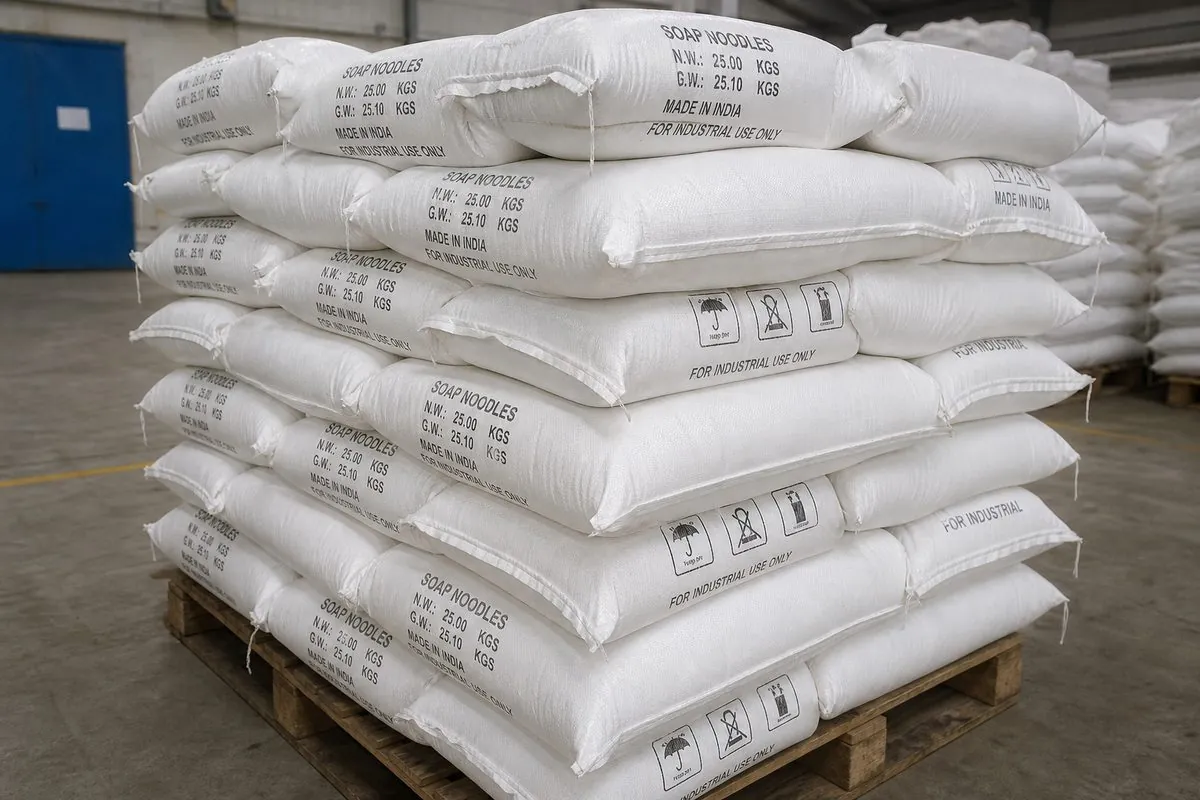
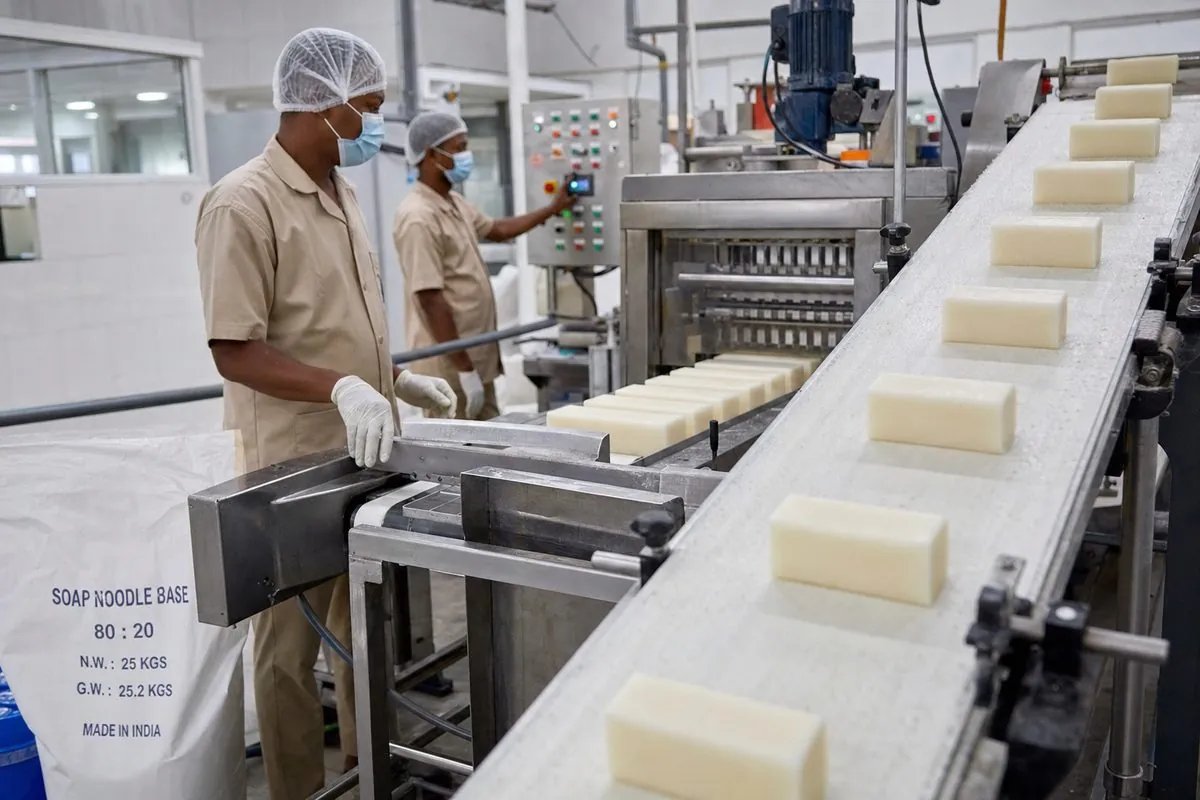
Packaging format is part of SKU definition — 25 kg bags suit manual soap-plant handling; FIBC programmes require unloading equipment and affect quoted FOB.
Bag marks must state TFM grade and lot ID matching COA — packaging errors cause rejection even when extrusion quality is acceptable.
Packaging formats and specifications for soap noodle export
Swipe →
Data table — swipe horizontally on small screens
| Format | Typical Configuration | Use Case | Key Requirement |
|---|---|---|---|
| 25 kg woven PP bags | HDPE-lined, palletised | Standard export and FCL loading | Lot/batch ID, TFM grade, net weight, origin marking |
| 500 kg FIBC | Flexible intermediate bulk container | Mid-volume soap plants with bulk handling | Moisture barrier, lifting loops, fumigation when required |
| 1,000 kg FIBC | Jumbo bulk bags | Large soap plants and tolling programmes | Stacking pattern and payload confirmation before booking |
| Moisture protection | Sealed liners, dry warehouse staging | All ocean shipments | Avoid condensation damage during transit and discharge |
Container Loading Details
Export Tip
Container planning varies by SKU packaging — FIBC toilet-grade programmes and 25 kg laundry bags produce different payload curves; confirm with forwarder per grade.
Directional container loading guidance for soap noodles
Swipe →
Data table — swipe horizontally on small screens
| Container Type | Loading Consideration | Typical Use |
|---|---|---|
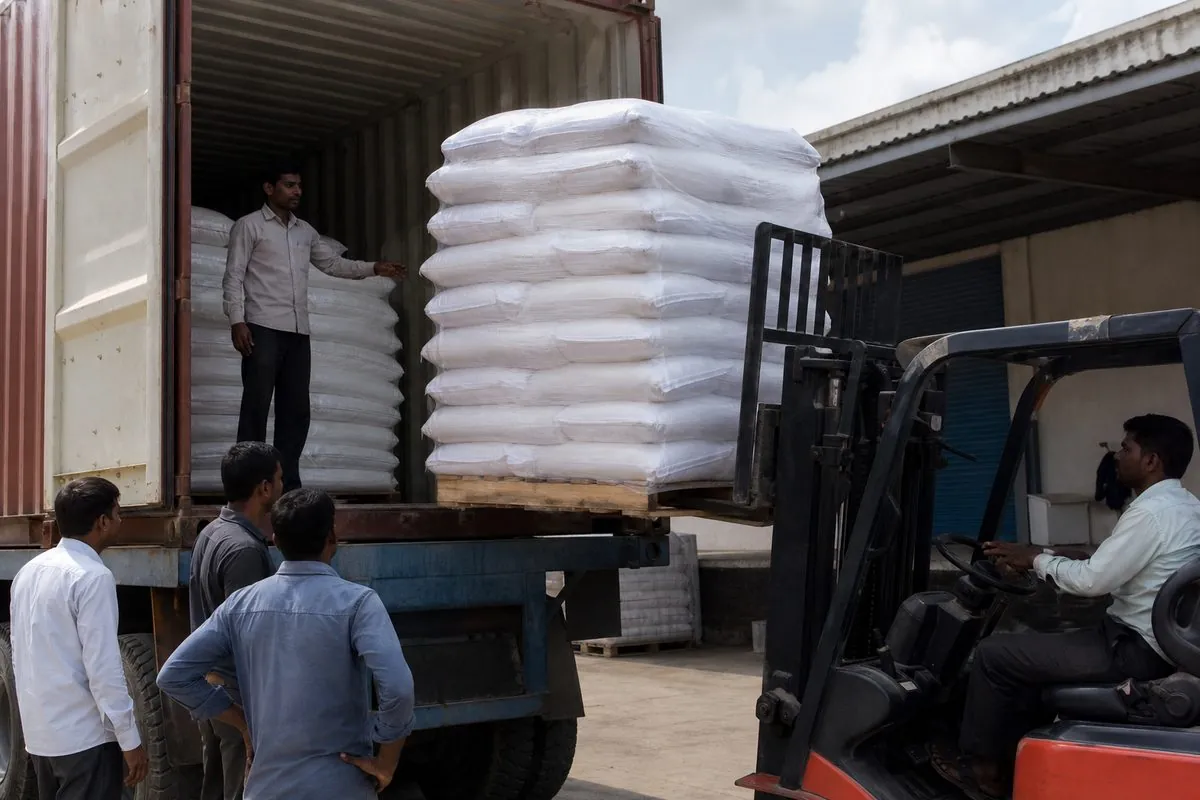
| 20-foot FCL | 20–25 MT payload in 25 kg bags; verify stow plan with forwarder | Trial and standard commercial shipments |
| 40-foot FCL / 40-foot HC | Higher payload with FIBC or dense bag stacking | Established distributor and soap-plant programmes |
| LCL (less than container load) | Suitable for 5–10 MT trial lots below FCL threshold | New buyer relationships, grade testing |
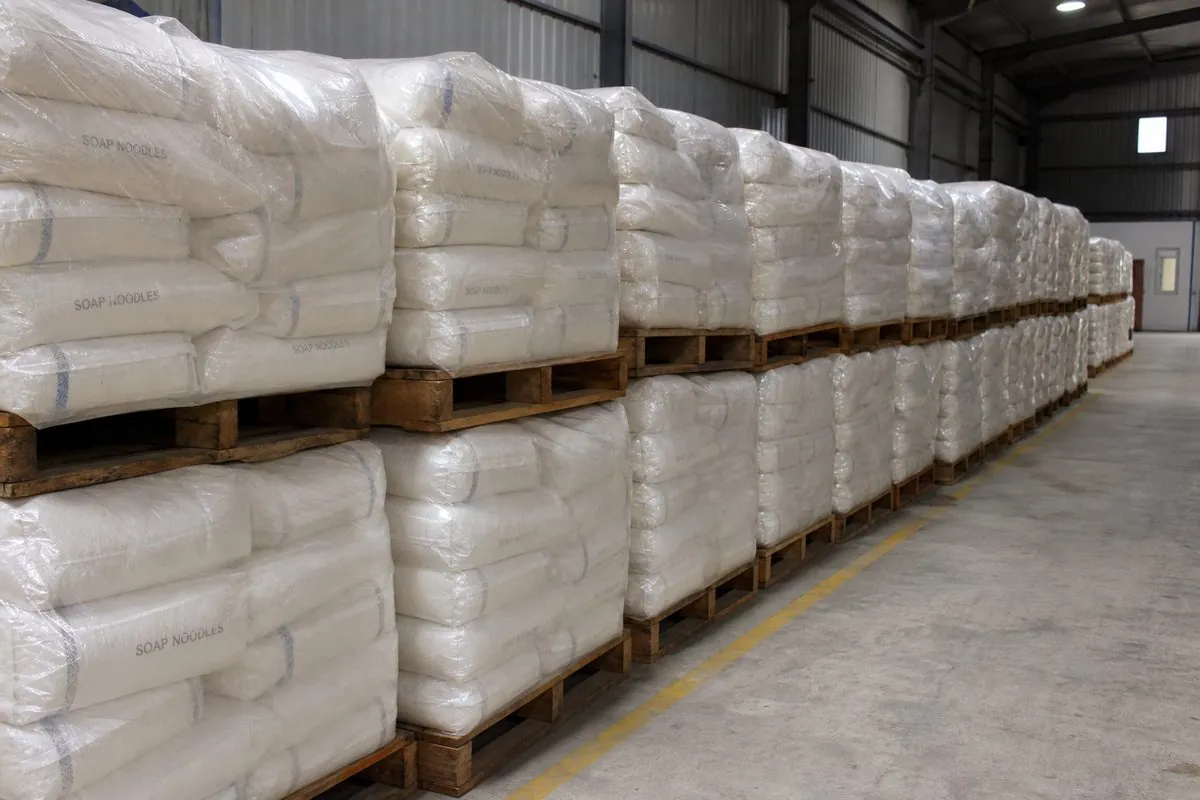
| Palletisation | Recommended for 25 kg bag loads to speed discharge | Buyers with forklift handling at destination plant |
Certifications
Compliance Notes
IEC and Chemexcil RCMC are baseline; lot COA universal; RSPO/Halal by segment.
Certifications relevant to soap noodle export
Swipe →
Data table — swipe horizontally on small screens
| Certification | Purpose | Relevant For |
|---|---|---|
| Certificate of Analysis (COA) | Lot-specific TFM, FFA, moisture, glycerin, color, odor | All commercial shipments — baseline buyer requirement |
| Chemexcil RCMC + IEC | Baseline export registration and council membership | All commercial soap noodle export shipments from India |
| ISO 9001 / GMP (producer) | Quality-system credibility at manufacturing site | FMCG and multinational soap-plant buyers |
| Halal / Kosher | Religious compliance for palm and tallow bases | Middle East, Malaysia, and faith-aligned FMCG programmes |
| RSPO MB / SG | Sustainable palm chain-of-custody | FMCG buyers with public sustainability commitments |
| Safety Data Sheet (SDS) | Chemical handling and downstream compliance | All shipments; EU/US importers require current SDS |
Buyer Requirements
Buyer Requirements
Buyers in products programmes request samples, written TFM/FFA/moisture spec, lot COA, SDS, FOB pricing, and Chemexcil/IEC proof — FMCG adds RSPO/Halal where applicable.
Common Buyer Mistakes
Common Mistakes Box
Future Market Trends
Key Statistics
Transparent and RSPO SKUs gain share in premium retail assortments while 90/10 laundry remains volume leader — catalogue breadth beats single-SKU price wars.
Formulation managers increasingly request iodine and odor bands on COA, not TFM alone — spec sheets must evolve with buyer R&D trends.
Compliance Checklist
Checklist
Compliance Notes
Sources
- WITS / UN Comtrade — India exports HS 340120 by partner, 2024
- WITS / UN Comtrade — India imports HS 340120 by partner, 2024
- WITS / UN Comtrade — Indonesia exports HS 340120, 2024
- WITS / UN Comtrade — Malaysia exports HS 340120, 2024
- UN Comtrade Database
- ITC Trade Map
- DGFT (India) — IEC / trade portal
- ICEGATE — Indian Customs EDI
- India CBIC / Customs Tariff — Chapter 34 Soap
- Chemexcil India — Basic Chemicals, Cosmetics & Dyes EPC
- RSPO — Roundtable on Sustainable Palm Oil
- USITC Harmonized Tariff Schedule (search 3401)
- European Commission TARIC
- ICC Incoterms
- Altus Exports — Contact
All sources accessed 2026-07-27. Prefer primary government, council, and multilateral trade databases when citing figures in contracts or buyer presentations.
TFM and grade bands cited here are planning ranges — confirm mill COA values on every lot before invoicing or buyer approval.

Conclusion
Grade-level honesty on TFM, base oil, and certification converts faster than collapsing every SKU into one FOB band — catalogue clarity is sales infrastructure.
Altus Exports matches 80/20, 90/10, transparent, and RSPO programmes to buyer formulation needs — contact us for COA-backed samples.
Continue with How To Export Soap Noodles From India and Rspo Certified Sustainable Palm Soap Noodle Export Opportunities.