
Trade Shows & B2B Marketplaces for Shikakai & Reetha Exporters
By Saurabh Mittal, Founder, Altus Exports
A B2B guide to Indian shikakai pods and powder, reetha soapnuts and pericarp powder, hair-wash blends and saponin-rich extracts.
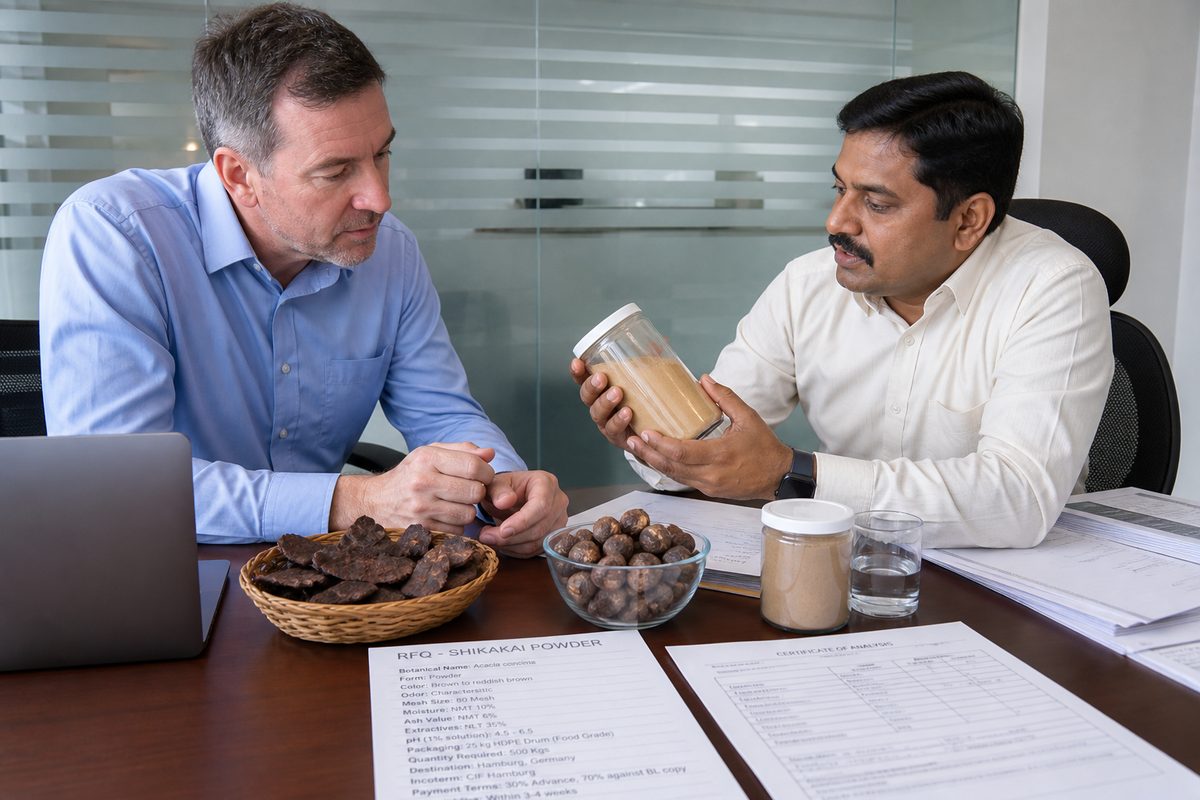
Ingredient, hair-care, and clean-beauty events plus B2B marketplaces create useful shikakai and reetha opportunities when suppliers present defined, testable products rather than broad wellness claims. Prepare small labelled samples of pods, powder, whole soapnuts, pericarp, hair-wash blends, and extracts; a concise specification sheet; current COA examples; certification scope; MOQ ranges; lead times; and a clear answer on whether the supply is pod, powder, whole nut, pericarp, blend, or saponin extract. The buyer guide explains how to qualify the contacts you meet.
Prioritise events that attract hair-care, clean-beauty, cosmetic-adjacent, and eco-laundry procurement teams in target shikakai and reetha markets — in-cosmetics, Cosmoprof, Biofach organic, Gulfood, and regional Ayurveda expos. Online marketplaces can widen the funnel, but every inquiry should be screened for buyer role, country, use case, volume, and documentation needs before pricing. A sample sent without a written specification rarely produces a dependable export programme from MP, HP, or Gujarat supply.
Follow up promptly with the correct SKU sheet and trial proposal for shikakai and reetha: samples are normally 100 g–2 kg; powder trials 100–500 kg; extract trials 25–100 kg. Link every event conversation to the catalogue and the documentation checklist so commercial interest can move to a valid trial order through Mundra, Nhava Sheva, Chennai, or Tuticorin.
Key Takeaways
Summary Box
Executive Summary
Summary Box
Trade shows and B2B listings create shikakai and reetha opportunities only when exhibitors bring labelled pod, powder, whole-soapnut, pericarp, and extract samples, plus a 72-hour follow-up system that ships the matching SKU sheet.
Exhibitors should capture destination, form, foam-profile expectation, volume, and decision date at the booth, then send the matching one-pager and an example lot COA immediately — not a bulk catalogue attachment three weeks later.
Fair ROI is approved trials and repeat orders, not badge scans, undated teaser FOBs, or generic wellness copy that never mentions saponin, pericarp, or the buyer's downstream channel.
Trade Show and Marketplace Conversion
Market Size & Industry Overview
Key Statistics
Cosmetics and natural-product events plus digital marketplaces concentrate shikakai and reetha discovery, but conversion still happens in post-event specification work on pod, powder, whole nut, pericarp, and extract format.
In-cosmetics, Cosmoprof, Biofach organic, Gulfood, Vitafoods, and regional Ayurveda events attract different mixes of hair-care versus eco-laundry versus wash-powder interest — event choice should mirror the SKU on offer.
Treat the fair calendar as a demand sensor for saponin-standardized extracts, COSMOS-aligned pericarp powder, and Ayurvedic hair-wash triad blends — then validate every booth signal with a written RFQ.
Buyer Requirements
Buyer Requirements
- RFQ: Latin name, plant part, form, mesh or ratio, destination, quantity, pack, Incoterm.
- Methods: agree saponin analytical method and foam-profile expectation before sample dispatch.
- Tests: confirm micro, heavy-metal, and pesticide-residue expectations against destination MRLs.
- Labels: approve artwork and outer-mark wording before production; artwork drift is a launch-date risk.
- Pathway: confirm cosmetics, wash-powder, or eco-laundry route with importer's broker before DAP/DDP.
Fair conversations must capture shikakai and reetha requirements in structured CRM fields before samples ship — destination, form, foam-profile expectation, MOQ, cert needs.
Marketplace forms should force destination and form fields so an inbound inquiry cannot be a one-line 'quote your best price' message.
72-hour follow-up restates requirements back to the buyer for confirmation so no one starts a trial working from different assumptions.
Country-wise Opportunities
Market Snapshot
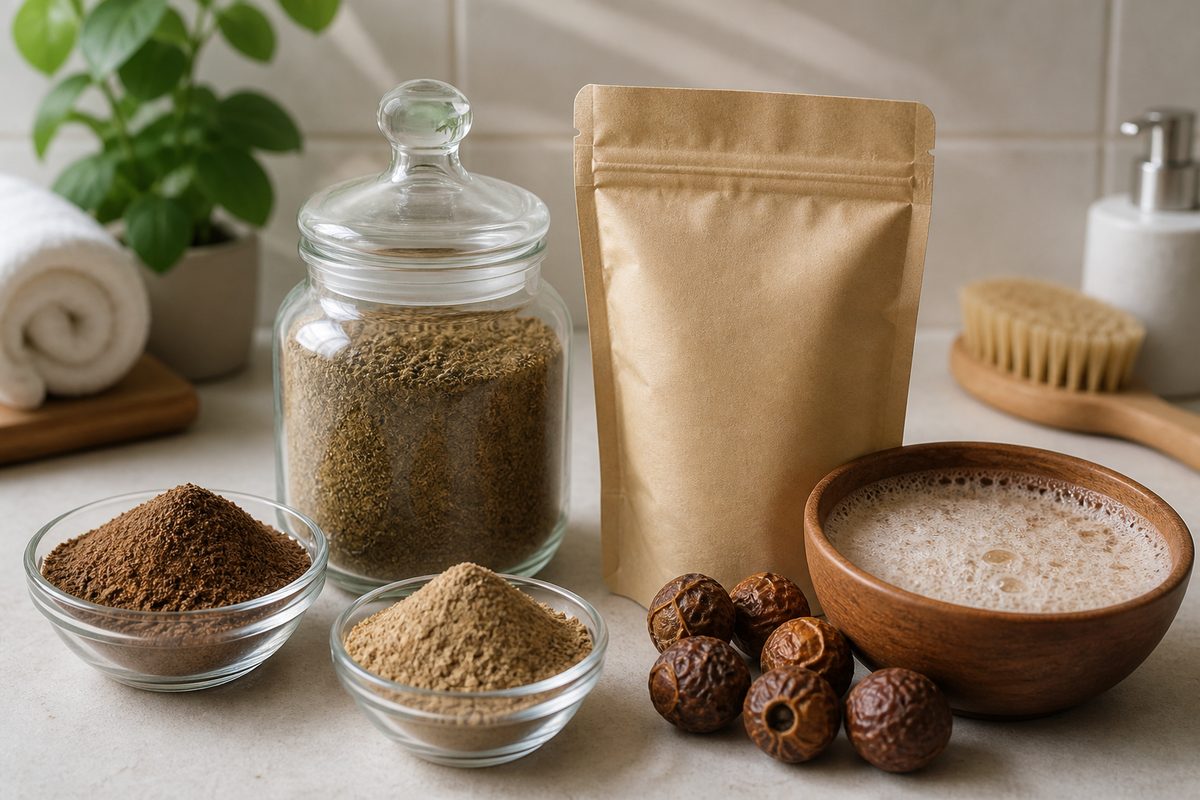
Fair strategy should pick events that densify target-country shikakai and reetha buyers — Gulfood for GCC, Cosmoprof and in-cosmetics for EU/global hair-care, Biofach for organic, Vitafoods where clean-beauty ingredient conversations overlap.
Prepare regional booth material differently for GCC bulk, EU clean-beauty, and Asia specialty conversations rather than one global brochure.
Follow up by country queue with the corresponding SKU card and example COA rather than a single undifferentiated blast.
Scan: country fit map
Swipe →
Data table — swipe horizontally on small screens
| Market | Product fit | Requirement focus | Opportunity |
|---|---|---|---|
| USA | Powder, blends, extracts | Supplier file; route confirmed by importer | Natural hair-care and CM base |
| EU / UK | Organic powder and documented extracts | Cosmetics pathway and contaminants | Clean-beauty distributors |
| UAE / GCC | Bulk powder and private-label packs | Halal where needed; heat-safe logistics | Regional distribution |
| Canada / Australia | Premium natural-cleanser inputs | Confirm local product route | Specialist programmes |
| Japan / Korea | Fine mesh and saponin extracts | Tight technical file | Quality-led formulators |
| SE Asia | Soapnut and powder bulk | Practical pack and import alignment | Distributor expansion |
Export Statistics
Key Statistics
- India HS 130219 exports ≈ USD 539.8M / 18,857,300 kg CY2024 (WITS) — multi-botanical parent, not shikakai/reetha-only.
- Confirm each finished SKU (pod, powder, whole nut, pericarp, blend, extract) with CHA and destination broker.
- Re-check current trade data on the quote and shipping-bill date before customer conversations.
- Verified India soapnut lines: 14049021 (powder) and 14049029 (other) — never file reetha powder under 1211.90 by habit.
- Archive the classification note beside every export-stat slide used with buyers.
Booth boards that show trade figures must label HS 130219 as multi-botanical parent data and note the verified India 14049021 (soapnut powder) / 14049029 (other soapnuts) before a buyer even looks up.
Fair conversations convert on SKU fit — pod, powder, whole nut, pericarp, blend, extract — with stats only as background context, not as a headline number that a savvy buyer will unpick in a follow-up email.
Hand serious hair-care and eco-laundry leads the source list rather than unverifiable booth charts; a WITS link with the multi-botanical caveat beats a rounded figure printed on a banner.
Scan: trade & HS context (directional — verify on quote date)
Swipe →
Data table — swipe horizontally on small screens
| Metric | Position | Buyer note |
|---|---|---|
| Core products | Dried shikakai pods/powder; whole reetha soapnuts/pericarp/powder; blends and saponin extracts | Lock Latin name, plant part and form |
| Origins | MP, Chhattisgarh and Maharashtra shikakai; HP and Uttarakhand Sapindus mukorossi; Gujarat packing/blends | Verify processing site per lot |
| Shikakai pods/powder cue | ITC-HS 1211.90 family (no dedicated audited shikakai national line) | CHA confirms live eight-digit line |
| Reetha soapnut powder (verified) | India 14049021 — Soap-nuts: Powder | Do not file reetha powder under 1211.90 by habit |
| Whole / other soapnuts (verified) | India 14049029 — Soap-nuts: Other | CHA confirms finished article vs powder |
| Extract cue | HS 1302.19 / India 13021919–13021990 cues | Saponin % is a COA field, not an HS nickname |
| Parent extract trade context | India HS 130219 ≈ USD 539.8M / 18,857,300 kg CY2024 (WITS) | Multi-botanical parent, not shikakai/reetha-only |
| Ports | Mundra, Nhava Sheva, Chennai, Tuticorin | Choose after route and sailing review |
Import Statistics
Key Statistics
- Segment destinations by hair-care, clean-beauty, wash-powder, or eco-laundry channel.
- Confirm importer's cosmetics or wash-powder route before shipment scheduling.
- Match SKU (pod, powder, whole nut, pericarp, blend, extract) to importer capability, not just to country.
- Refresh partner data and prior-notice needs for USA and EU shikakai and reetha entries per trial.
- Track repeat RFQs from the same importer as the honest pull-through signal.
Fair leads from different import markets need different follow-up packs — a Gulfood distributor gets a bulk-reetha and Halal-ready file, an in-cosmetics buyer gets a COSMOS-adjacent pericarp powder card and a saponin method note.
Capture the destination country's import pathway and channel role in the booth CRM field so the follow-up email doesn't ship the wrong SKU card to the wrong regulatory route.
Do not send one global document pack to every import inquiry; a shikakai-reetha eco-laundry lead and a saponin HPLC extract lead need visibly different attachments and lot-example COAs.
Scan: destination demand by channel
Swipe →
Data table — swipe horizontally on small screens
| Market | Likely fit | Buyer type |
|---|---|---|
| USA | Natural hair-care powders and extracts | Brands, CMs, ingredient importers |
| EU / UK | Traceable organic powders and clean-beauty inputs | Cosmetics distributors and brands |
| UAE / GCC | Bulk hair-wash and Halal-ready programmes | Distributors and re-exporters |
| Canada / Australia | Premium natural cleanser programmes | Specialist brands; confirm pathway |
| Japan / Korea | Fine powders and tightly specified extracts | Formulators and distributors |
| SE Asia | Bulk soapnut and hair-care formats | Regional wholesalers |
Product Categories / Variants
Summary Box
- Separate shikakai fruit-powder cards from reetha pericarp powder and whole-nut cards.
- Use shikakai-reetha-amla only as a named hair-wash triad blend — not as an amla feature.
- Do not make unsupported cosmetic or therapeutic claims on shikakai or reetha SKUs.
- Publish only SKUs the MP mill, HP aggregator, or Gujarat blend line can reproduce with lot-linked evidence.
- Version-stamp SKU cards so sales, procurement, and quality reference the same edition.
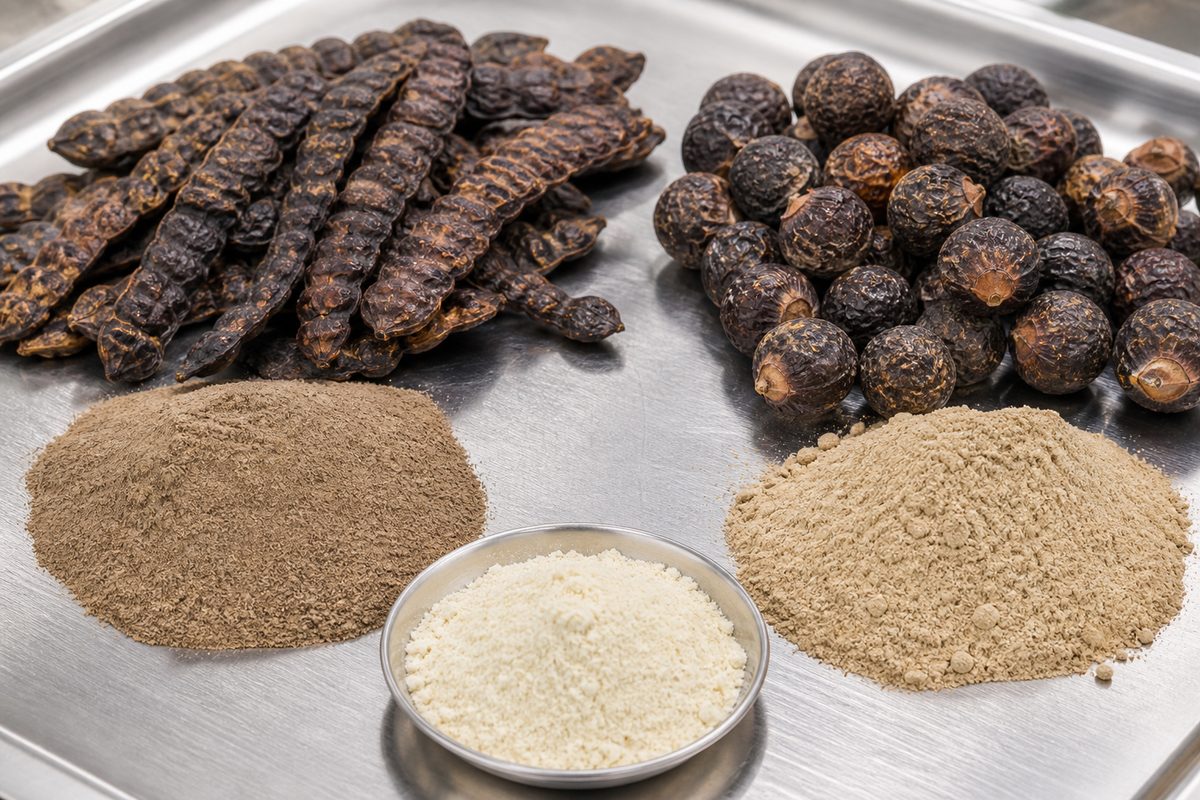
Booth kits should physically separate shikakai pods, mesh powder, whole reetha soapnuts, pericarp powder, hair-wash blend, and extract samples — with matching sheets marked per jar, not stacked in one anonymous tray.
Fair staff must know which SKU each jar represents and which example COA belongs to it; buyers who ask a basic question and get a generic answer walk away silently.
Marketplace listings should mirror the same SKU cards used offline so that a Gulfood or in-cosmetics conversation continues on a marketplace page rather than starting over.
Scan: SKU catalogue
Swipe →
Data table — swipe horizontally on small screens
| Product | Specification variables | Channel |
|---|---|---|
| Dried shikakai pods | Acacia concinna / Senegalia rugata, dried fruit, cleaning | Hair-wash and Ayurvedic retail |
| Shikakai powder | Mesh, moisture, micro | Hair-care brands and CMs |
| Whole soapnuts | Sapindus mukorossi, whole fruit/pericarp | Eco-laundry and natural cleanser |
| Reetha pericarp / powder | Species, seed content, mesh, foam profile | Clean-beauty and wash powders |
| Saponin-rich grade | Declared method and acceptance band | Ingredient formulators |
| Ratio extract | Ratio, solvent, carrier, solubility | Natural-cosmetics formulators |
| Saponin HPLC extract | Marker method, residual solvents | Technical ingredient buyers |
| Organic / steam-sterilized | Certificate or treatment record | Premium brands |
| Shikakai-reetha blend | Ratio and lot traceability | Hair-wash powder |
| Shikakai-reetha-amla triad | Blend ratio and botanical labels | Hair-wash powder programmes |
| Private-label bulk | Pack and artwork scope | Retail programmes |
Quality Specification Reference
- Lock Latin name (*Acacia concinna* / *Senegalia rugata* or *Sapindus mukorossi*) and fruit/pericarp plant part.
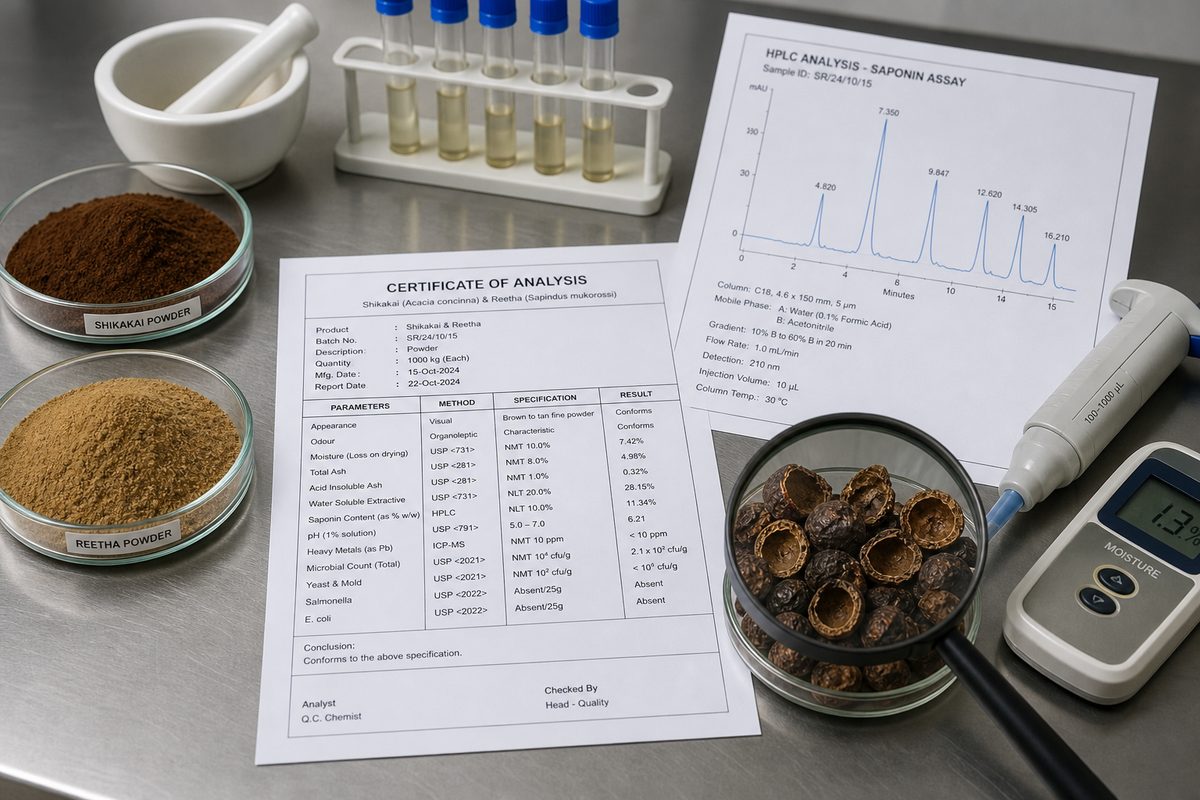
- Specify saponin only with a stated analytical method (HPLC, gravimetric, or contracted equivalent).
- Extracts need residual-solvent disclosure where applicable — treat missing data as a release blocker.
- Add a foam-profile expectation for pericarp powder and hair-wash blend SKUs.
- Retain a sealed reference sample per commercial lot ID for destination retest disputes.
Booth example COAs for shikakai pod powder, reetha pericarp powder, and saponin extract should reflect the matrix you actually sell — mark them clearly as examples, not as active shipments.
Do not display saponin HPLC or foam-profile panels you cannot reproduce in commercial lots; a booth impression is not worth a subsequent buyer complaint that the extract underperforms.
Fair technical credibility is a quality-system promise, not a marketing headline; staff should be able to explain the saponin method behind a sample jar without checking the brochure.
Scan: quality checklist
Swipe →
Data table — swipe horizontally on small screens
| Parameter | Pods / whole nuts | Powder | Extract |
|---|---|---|---|
| Identity | Latin name and fruit/pericarp | Latin name, plant part, mesh | Latin name, plant part, process |
| Physical | Cleaning, moisture, foreign matter | Mesh, color, moisture, flow | Ratio, carrier, solubility |
| Saponin | Method only where contracted | Method and agreed band | Saponin by stated HPLC/assay method |
| Food-safety | Agreed micro and contaminants | Agreed micro and contaminants | Micro, contaminants, residual solvents |
| Traceability | Collection and lot records | Input-to-batch records | Input and extraction records |
| Organic | Certificate where sold organic | Certificate and transaction evidence | Scope and carrier review |
| Release | COA matches lot marks | COA matches bags | COA matches drum labels |
Manufacturing Overview
Export Tip
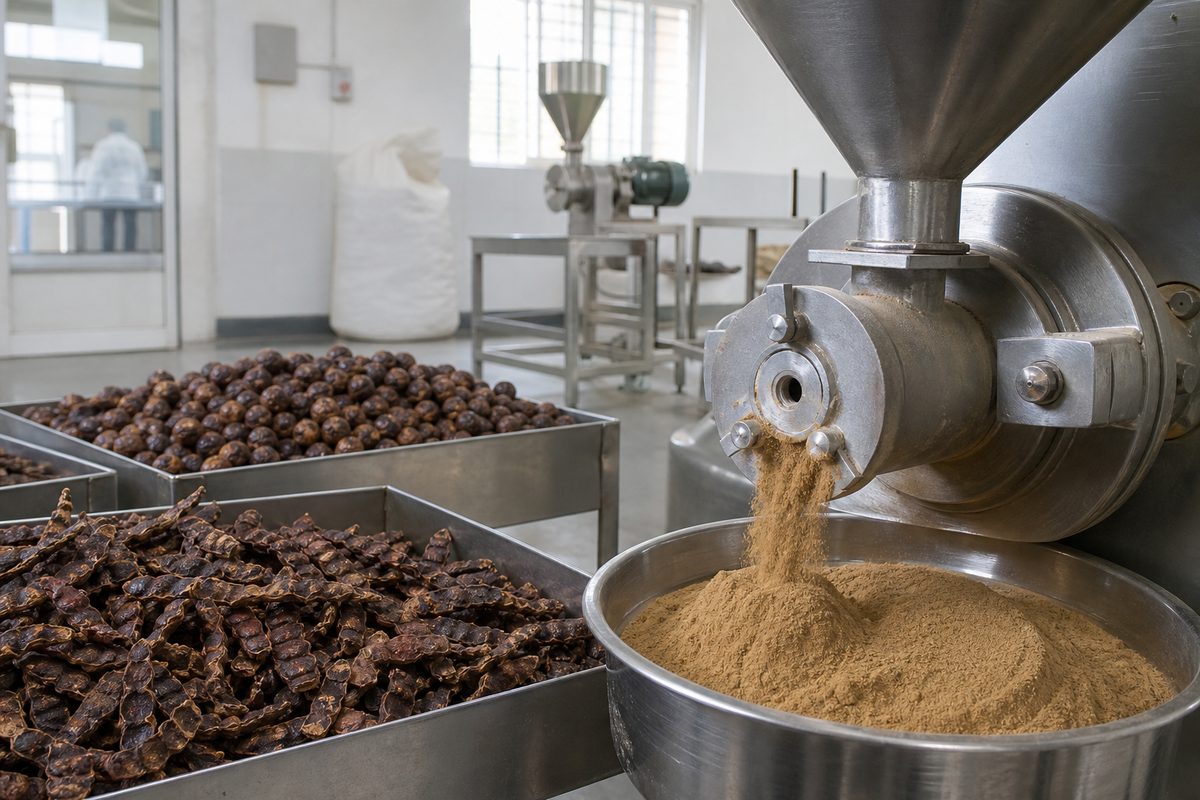
Fair promises about shikakai and reetha manufacturing lead times must match real dryer, mill, and extract calendars back at MP, HP, or Gujarat.
Do not quote 2-week saponin HPLC extract lead times at a booth if the plant realistically needs 3–6 weeks for the specification the buyer is describing.
Bring process one-pagers that match the pod, powder, whole-nut, pericarp, and extract samples on the booth so a buyer can move from touch to specification in the same conversation.
Pricing Analysis
Buyer Tip
Fair teaser prices for shikakai and reetha without SKU cards create unqualified leads that clog the inbox for weeks after the event.
Booth quotes need validity dates, Incoterm names, and a note on which port the FOB assumes — Mundra, Nhava Sheva, Chennai, or Tuticorin.
Follow up with a formal dated FOB after qualification, not during badge scans, so both sides can defend the number internally.
Scan: FOB USD/kg bands (directional — verify quote date)
Swipe →
Data table — swipe horizontally on small screens
| Product | FOB position | Driver |
|---|---|---|
| Commodity shikakai/reetha powder | Low-to-mid single digits | Mesh, cleaning, micro, lot size |
| Whole soapnuts | Often lower USD/kg; CBM-sensitive | Pericarp quality, dryness, freight cube |
| Organic powder | Mid single digits to mid-teens+ | Certification custody and segregation |
| Shikakai-reetha blend | Above single-botanical commodity bulk | Ratio, packing, private label |
| Ratio extract | Mid-teens upward | Solvent, carrier, ratio, documentation |
| Saponin-standardized extract | Mid-teens to tens+ | Assay method, grade and volume |
MOQ Analysis
Buyer Tip
Fair conversations should quote sample and trial MOQs on paper for shikakai and reetha — not on a napkin — so both sides can revisit the number a week later.
Marketplace leads that refuse trial logic on shikakai-reetha bulk or extract rarely become durable programmes; the ones that accept trials are the ones worth chasing.
Track conversion from sample MOQ to trial MOQ to wholesale MOQ as the real funnel metric for shikakai and reetha booth investment.
Scan: MOQ ladder (commercial practice — not statutory; agree in writing)
Swipe →
Data table — swipe horizontally on small screens
| Stage | Typical quantity | Purpose |
|---|---|---|
| Sample | 100 g–2 kg | Identity, foam and formulation review |
| Powder trial | 100–500 kg | Lot and packing validation |
| Extract trial | 25–100 kg | Assay and formulation work |
| Powder wholesale | 1–5 MT+ | Recurring bulk programme |
| Extract wholesale | 200 kg–1 MT+ | Established specification |
Packaging Standards
Export Tip
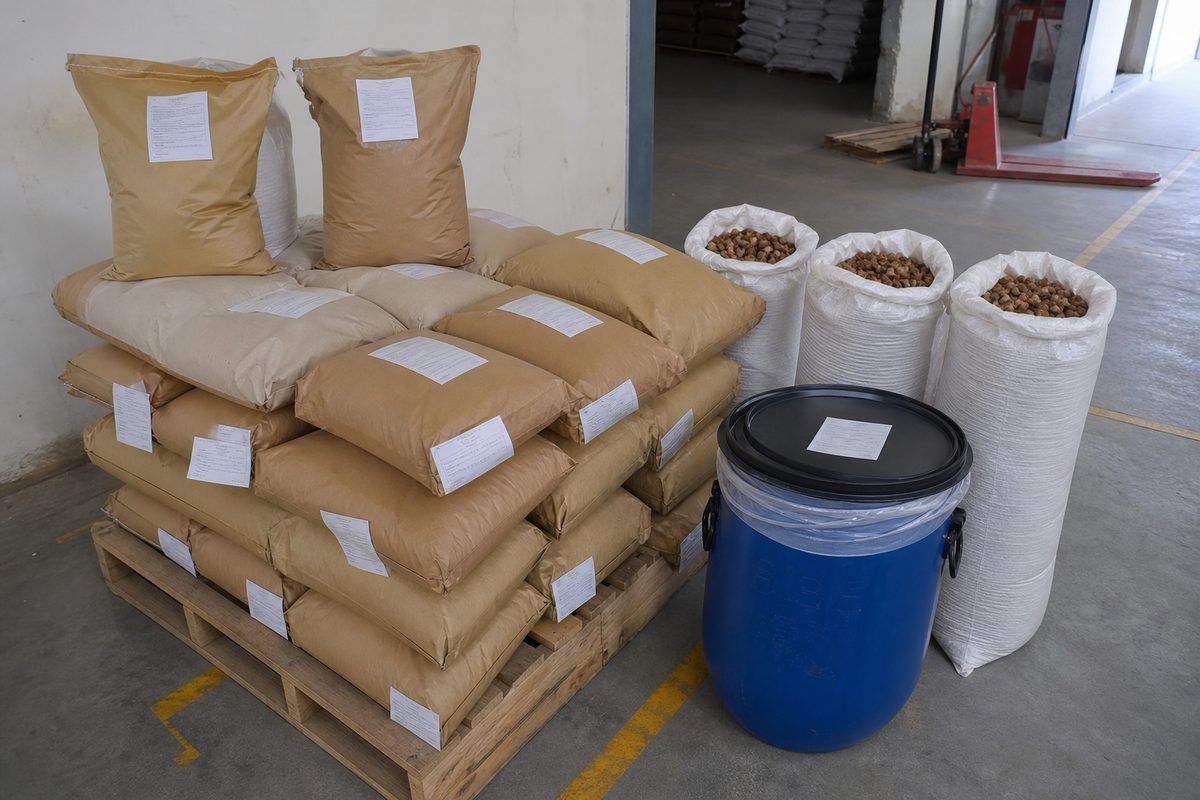
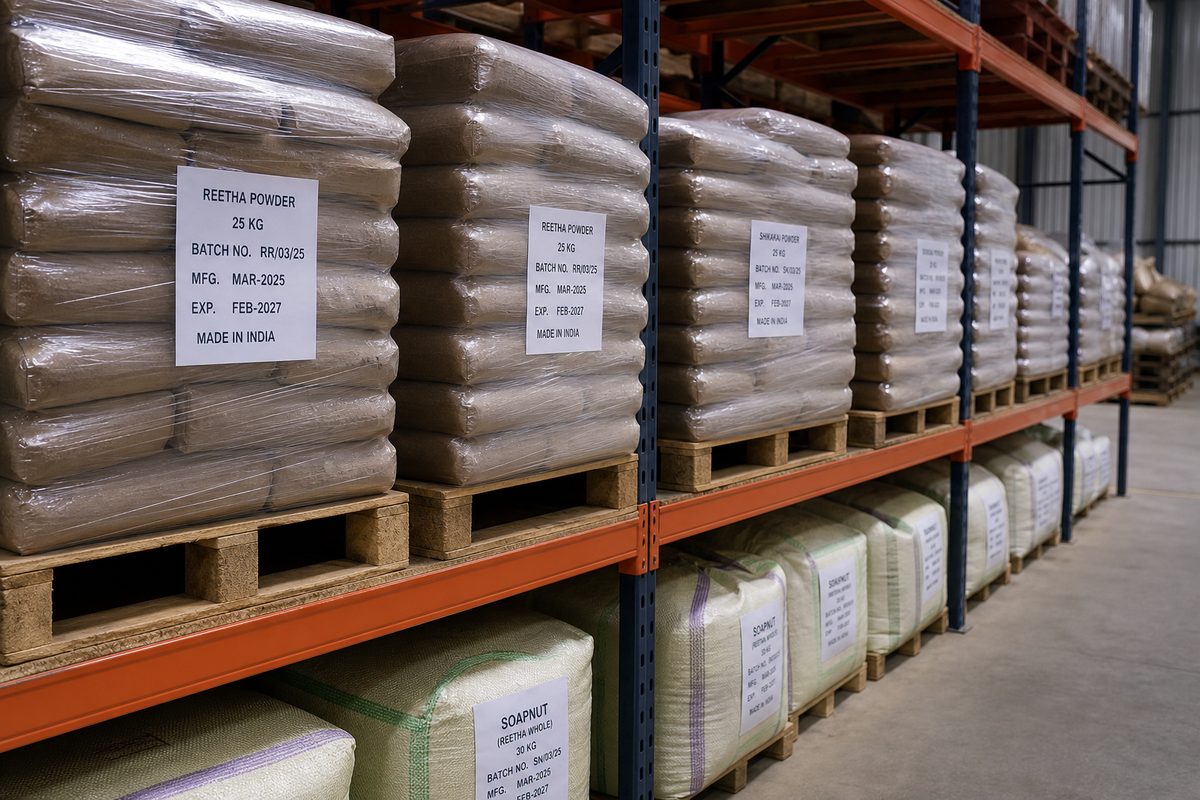
Booth visuals for shikakai and reetha should show real bag, jute soapnut sack, and drum formats — not only decorative jars of pericarp powder.
Fair follow-up packs should include pack photos and dimensions so buyers can plan pallet handling before requesting a trial.
Marketplace listings must state 20/25 kg powder bag and 25 kg extract drum defaults clearly, with woven-soapnut pack options where relevant.
Scan: export packing formats
Swipe →
Data table — swipe horizontally on small screens
| Format | Configuration | Control |
|---|---|---|
| Powder | 20/25 kg lined kraft or PP bags; fiber drums | Lot tags and moisture barrier |
| Whole soapnuts | Woven PP, jute, or cartons as contracted | Protect pericarp and prevent moisture |
| Extract | 25 kg HDPE drums with double liner | Seal, label and traceability |
| Blends | Lot-segregated lined bags | Show botanical ratio on label |
| Private label | Buyer-approved pouches or cartons | Artwork and destination review |
Container Loading Details
Export Tip
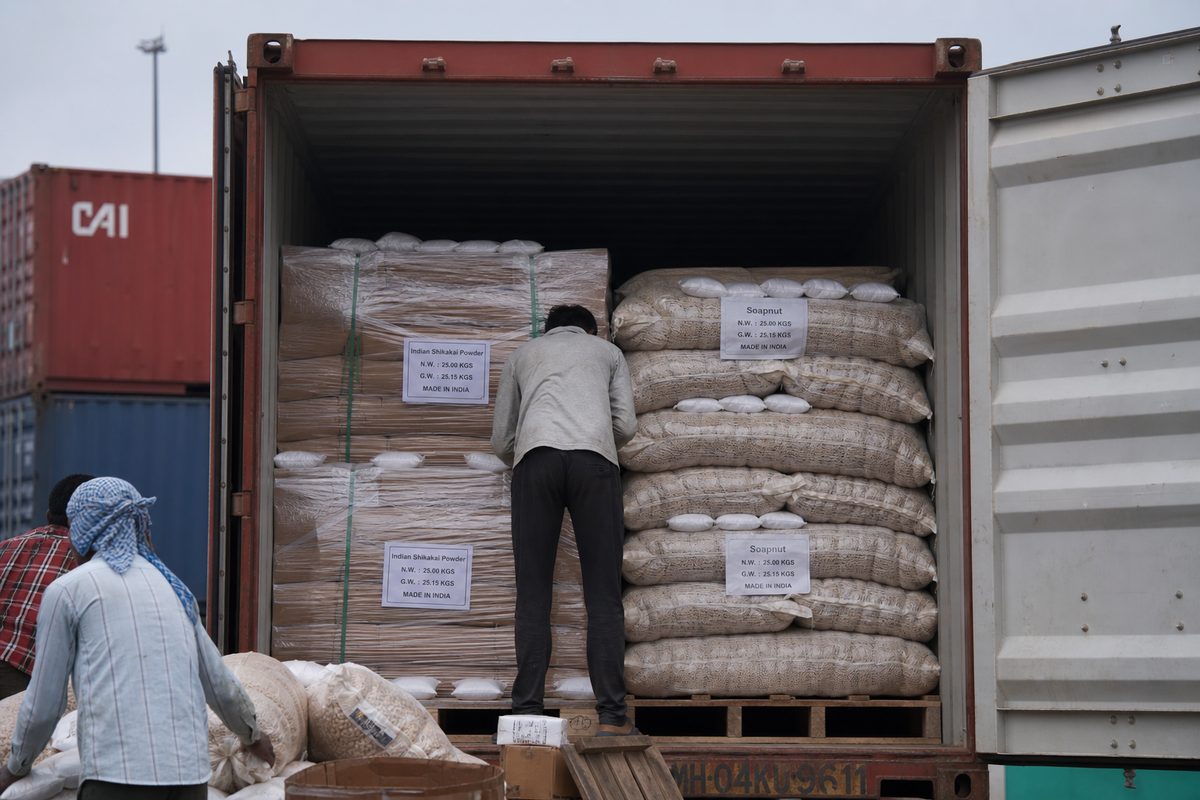
Fair conversations about FCL of shikakai and reetha should stay indicative until sample and trial phases succeed; a stuffing commitment at a booth is premature.
Bring stuffing photos and pallet diagrams as credibility assets for serious hair-care and eco-laundry buyers considering a container programme.
Marketplace FCL claims for shikakai-reetha lots without MOQ staging create unqualified leads and empty follow-ups.
Scan: dispatch modes (density-dependent — do not invent fixed MT)
Swipe →
Data table — swipe horizontally on small screens
| Mode | Use | Planning point |
|---|---|---|
| Courier / air | Samples and urgent trials | Protect against humidity and odor |
| LCL | Trials below container scale | Palletize and segregate mixed loads |
| 20-foot FCL | Bulk powder or nuts | Confirm actual density and payload |
| 40-foot HC | High-volume powder | Cube with forwarder |
| Drum shipment | Extract orders | Confirm gross weight and storage conditions |
Shipping Methods
Export Tip
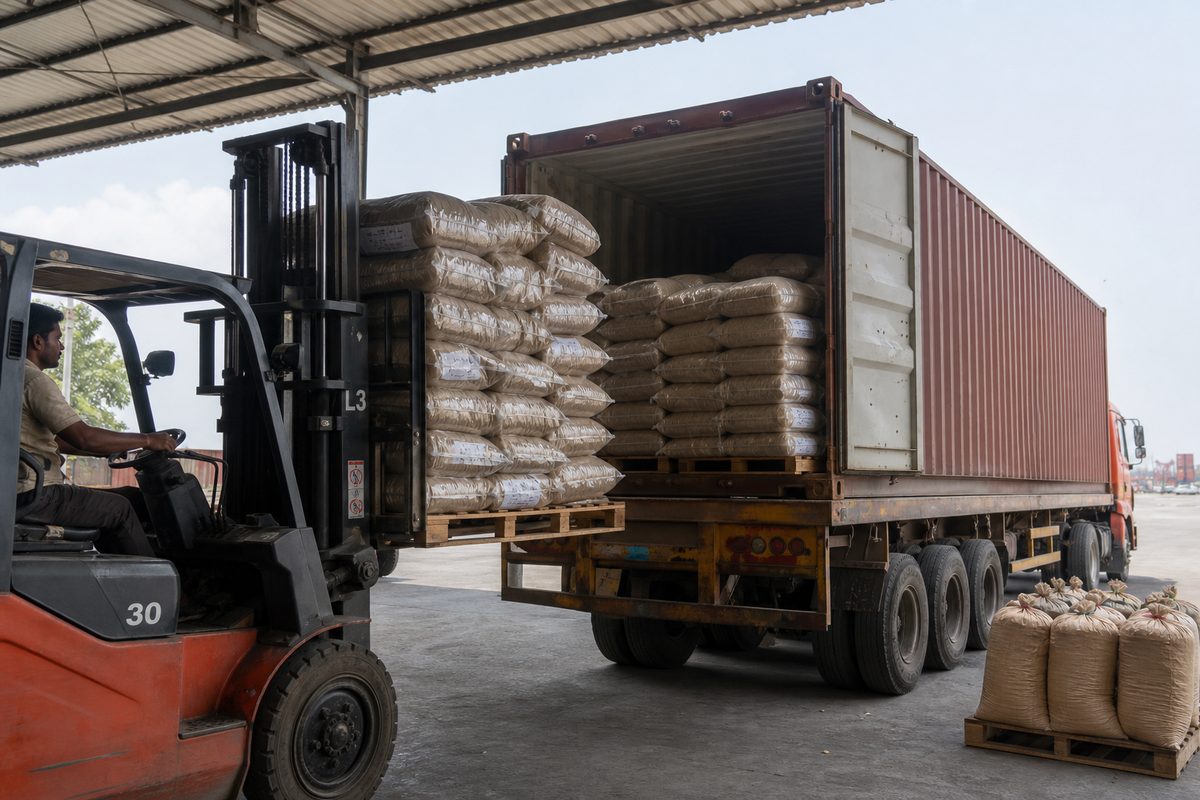
- Air or courier for shikakai and reetha samples; LCL for trials; FCL for validated wholesale.
- Use Mundra, Nhava Sheva, Chennai, or Tuticorin after route, sailing, and consolidation review.
- Do not offer DAP or DDP until destination duty and cosmetics or wash-powder pathway liability are understood.
- Inspect and photograph the empty container before stuffing at the packing site or CFS.
- Keep container, seal, and lot IDs consistent across BL draft, packing list, and shipping bill.
Fair follow-ups should propose a shipping mode for the shikakai or reetha trial — sample air, LCL for a first commercial trial, FCL after approval — not only a teaser FOB.
Marketplace quotes need named ports and Incoterms; a naked bag price on a shikakai-reetha listing invites time-wasting inquiries.
Convert booth interest with a sample air plan plus an ocean trial path rather than an unstructured 'we can ship anywhere' claim.
Certifications
Compliance Notes
Booth certificate binders for shikakai and reetha should be current, skim-friendly, and organized by SKU family — pod/powder, whole nut/pericarp, blend, extract.
Fair staff must know what each cert proves and does not prove — organic ≠ saponin standardized, WHO-GMP ≠ COSMOS handled — before a buyer asks the awkward question.
Follow up with digital cert packs within 72 hours for qualified shikakai and reetha leads, matched to the SKU actually discussed at the booth.
Scan: credentials and documents
Swipe →
Data table — swipe horizontally on small screens
| Item | Purpose | Relevant programme |
|---|---|---|
| IEC | Indian export readiness | Exporter file |
| AYUSH / FSSAI as applicable | India-side KYC and appropriate framing | Ayurvedic or food-adjacent programmes |
| COA | Identity, saponin where contracted, moisture, micro, contaminants | Every commercial lot |
| NPOP / USDA / EU organic | Organic custody | Organic SKUs |
| ISO / HACCP / GMP | System evidence | Processors and packers |
| WHO-GMP | Controlled extract manufacturing signal | Extract buyers |
| COSMOS adjacency | Natural-cosmetics buyer documentation | Clean-beauty programmes |
| Halal / Kosher | Channel request | GCC and specialist buyers |
Sourcing Checklist
Checklist
- Confirm the exact packing site in MP, Chhattisgarh, Maharashtra, HP, Uttarakhand, or Gujarat matches the file.
- Verify retained-sample policy, corrective-action behaviour, and subcontracting disclosure before deposits.
- Stage samples (100 g–2 kg) then trials (100–500 kg powder or 25–100 kg extract) before wholesale.
- Match legal names and addresses across IEC, FSSAI, AYUSH, and shipping documents.
- Require anonymized COA and foam-profile examples per SKU under review.
Trade-show sourcing follow-up should convert shikakai and reetha booth claims into checklist evidence within 72 hours — cert scans, SKU card, example COA.
Request plant photographs, site addresses, and cert scopes immediately after the fair rather than trusting a business card and a booth impression.
Do not book travel audits to MP, HP, or Gujarat until checklist gaps have been closed by document exchange first.
Common Buyer Mistakes
Common Mistakes Box
- Form mix-up: do not treat whole reetha soapnuts, pericarp powder, shikakai pod powder, and extracts as interchangeable.
- Method gap: do not accept a saponin percentage without a stated analytical method on the COA.
- Scale jump: do not jump from courier sample to FCL without a completed trial and prior-shipment review.
- Stat misuse: do not present parent HS 130219 (≈ USD 539.8M / 18,857,300 kg CY2024) as shikakai/reetha-only trade.
- Claim overreach: avoid unsupported cosmetic or therapeutic claims on pod, powder, blend, or extract cards.
Trade-show mistakes: badge-scan vanity metrics, undated teaser FOBs, and sending generic shikakai-reetha catalogues a week after a live booth conversation.
Unlabelled jars of pod powder, pericarp, or extract destroy technical trust — even a serious buyer walks away.
72-hour SKU-specific follow-up with example COAs is the fix; put it on a checklist that survives every exhibition.
Future Market Trends
Key Statistics
Event trends favor prepared technical booths and 72-hour digital follow-up for shikakai and reetha rather than brochure stacks left on a table.
Hybrid fair-plus-marketplace funnels work when booth qualification and marketplace filter language are shared.
ROI measurement shifts to approved trials and repeat orders per event over 90–180 days, not badge counts on Day 1.
Challenges & Solutions
Challenge: fair-lead decay after a good booth conversation — solve with same-day CRM capture and 72-hour SKU-specific follow-up.
Challenge: marketplace tire-kickers absorbing team time — solve with forced qualification fields on inbound forms.
Challenge: booth overclaiming on saponin, foam profile, or COSMOS alignment — solve with staff training on evidence limits and a rehearsed answer to the awkward question.
Compliance Checklist
Checklist
Compliance Notes
Fair compliance training for shikakai and reetha teams covers Australia caveats, saponin extract pathway caution, and multi-botanical HS stat language.
Booth claims stay inside evidenced pathways for pod, powder, whole nut, pericarp, blend, and extract — even under enthusiastic buyer questioning.
Follow-up packs repeat the same compliant wording that was rehearsed for the booth; do not soften it in emails just to close.
Trade Classification and Product Description
Compliance Notes
- Shikakai pods/powder: ITC-HS 1211.90 family (no dedicated audited shikakai national line) — CHA confirms.
- Reetha soapnut powder: verified India 14049021; whole/other soapnuts: 14049029 — CHA confirms finished article.
- Saponin extracts: HS 1302.19 / India 13021919–13021990 cues; assay % is a COA field, not an HS nickname.
- Destination HTS or TARIC may differ — confirm with the importer's broker; never invent MFN rates from memory.
- Reconcile HS language across invoice, packing list, and shipping bill for every shikakai and reetha lot.
Fair staff should know shikakai and reetha pod/powder versus extract HS families at a high level and defer final line decisions to CHA.
Booth boards that show trade stats need the multi-botanical footnote for HS 130219 and the 14049021/14049029 soapnut reminder for whole-nut lines.
Follow-up emails after the fair should repeat correct classification caveats so buyer expectations align with what will actually be filed.
Sources
- WITS — India HS 130219 exports CY2024
- UN Comtrade Database
- DGCI&S / TradeStat — Indian trade statistics
- DGFT — Directorate General of Foreign Trade (IEC)
- ICEGATE — Indian Customs EDI Gateway
- EximGuru — India HS 14049021 Soap-nuts: Powder
- EximGuru — India HS 14049029 Soap-nuts: Other
- EximGuru — Chapter 1404 vegetable products
- EximGuru — Chapter 1211 medicinal / perfumery plants
- Ministry of AYUSH
- FSSAI — Food Safety and Standards Authority of India
- APEDA — NPOP organic
- USDA Organic
- COSMOS / COSMetic Organic and Natural Standard
- FDA — cosmetics
- CBP CROSS ruling NY N235288 — soap nuts from India
- USITC Harmonized Tariff Schedule
- EU Access2Markets
- EU TARIC — customs tariff database
- EU Pesticides Database — MRLs
- TGA Australia
- ITC Trade Map
- ICC — Incoterms rules
Fair scripts citing shikakai and reetha trade or regulation should be refreshed from the primaries below before each event cycle so booth staff quote current information.
Hand serious hair-care and eco-laundry leads the source list rather than unverifiable booth claims that they cannot then check on the plane home.
Re-verify classification, duties, destination cosmetics or wash-powder pathway, and lot records on the quote date. Parent HS 130219 (≈ USD 539.8M / 18,857,300 kg CY2024, WITS) is multi-botanical context, not shikakai/reetha-only trade data.
Clickable government, intergovernmental, and market-intelligence references used across the shikakai and reetha cluster:
Conclusion
Events and marketplaces work for shikakai and reetha when labelled SKUs meet 72-hour follow-up and trial MOQ proposals rather than promotional catalogues.
Altus turns fair conversations into sample dispatch and named-port quotations ex Mundra, Nhava Sheva, Chennai, or Tuticorin. Compare formats in the shikakai and reetha product guide.
Share event contacts with destination, form, foam-profile expectation, and next action to accelerate follow-up beyond a business-card exchange Contact Altus Exports with product form, destination, quantity, pack, certificates, and analytical requirements for a structured trial.