
Best Countries for Indian Home Decor and Gift Exports
By Saurabh Mittal, Founder, Altus Exports
A destination-ranking guide to the best countries for Indian home décor and gift article exports in 2026. Compares USA, Germany, UK, UAE, Netherlands, France, Australia, and Canada on demand, duty exposure, freight corridors from Nhava Sheva, Mundra, and ICD Delhi/Dadri, and seasonal-entry gift calendars — with pricing benchmarks and a country scorecard from Altus Exports.
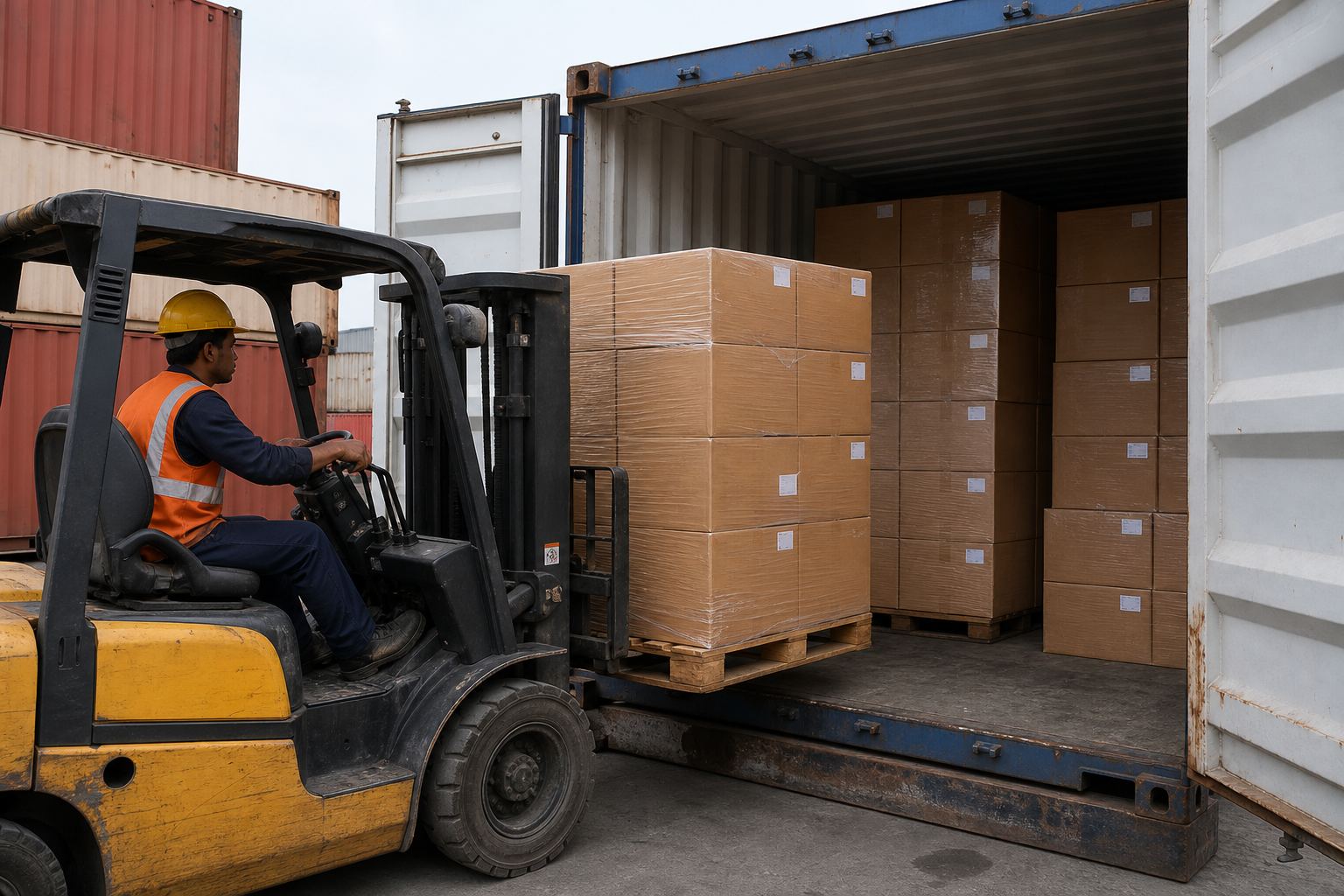
India's home décor and gift article trade is a multi-material assortment business, not a single-factory export line. A single container leaving Nhava Sheva or Mundra for a home décor retail chain commonly carries ceramic vases from Khurja, glass tealight holders from Firozabad, mango-wood trays from Saharanpur or Jodhpur, brass photo frames from Moradabad, cushion covers from a Panipat textile unit, and a festive candle set consolidated through a Delhi-NCR merchant exporter — all on one packing list, several HS headings, and one sailing date. That breadth is exactly why destination choice matters more in this category than in a single-material trade: a market that rewards ceramic tabletop décor is not automatically the easiest place to also land wood-accent gift sets or Christmas giftware, once duty lines, freight economics, and seasonal retail calendars are compared side by side.
This guide ranks the best countries to export Indian home décor and gift articles to in 2026 using the filters that actually decide whether a mixed-SKU programme is commercially viable: directional demand across the EPCH categories that feed this assortment, duty and preferential access by HS heading, freight corridor economics from Nhava Sheva, Mundra, and ICD Delhi/Dadri, and — a factor unique to gift and festive merchandise — how each market's retail buying calendar lines up with India's production and shipping lead times. Getting the Christmas or year-end gifting cut-off wrong is one of the most expensive mistakes a new décor and gift exporter can make, because a container that misses a retailer's distribution-centre deadline by even two weeks can lose an entire season's order.
This guide is written for Indian home décor and gift article manufacturers, merchant exporters, and trading houses deciding where to invest compliance and buyer-outreach budget first. For the complete process pillar covering registration, sourcing, and documentation, read How to Export Home Decor and Gift Articles from India. For the full SKU catalogue across tabletop, wall décor, textile accents, candle décor, and festive giftware, see Top Home Decor and Gift Products Exported from India. This guide covers destination ranking, duties, freight corridors, and seasonal-entry calendars specifically — for the granular per-country SKU, material, and price-ladder preference depth that sits underneath this ranking, see Most Demanded Indian Home Decor and Gift Articles by Country, and for buyer-development tactics once you have picked a market, see How to Find International Buyers for Home Decor and Gift Articles. If you are an international buyer rather than an exporter, the companion guide Source Home Decor and Gift Articles Directly from India: Importer Playbook covers the RFQ-to-landed-cost process from your side of the table.
Key Takeaways
Summary Box
Executive Summary
Summary Box
Exporting home décor and gift articles from India is fundamentally a destination-and-calendar sequencing exercise layered on top of a genuinely deep, multi-cluster manufacturing base: Moradabad's metal décor and gift accents, Saharanpur and Jodhpur's wood décor gifts, Jaipur's mixed-design décor and gifts, Khurja's ceramic pottery, Firozabad's glass décor and gift glassware, Panipat's decorative textile accents, and Delhi-NCR's merchant-exporter consolidation together give India a breadth of materials, price points, and finishing styles that few single-category competitors can match from one country of origin. The constraint on export growth for most Indian manufacturers and merchant exporters is rarely production capacity — it is choosing which destination market to invest compliance documentation, buyer-outreach budget, and seasonal production-slot planning in first.
This guide scores eight priority destinations — USA, Germany, Netherlands, UK, UAE, France, Canada, and Australia — against directional demand (using EPCH woodwares and art metalwares as proxy categories for the broader home décor and gift assortment), duty exposure, freight corridor transit time and economics, and the seasonal-entry calendar each market's gift retail sector runs on. USA ranks first by directional value, followed by Germany and the Netherlands, then the UK; UAE, France, Canada, and Australia are smaller by value but strategically important for freight speed, EU distribution access, or diaspora and hospitality gifting demand.
The practical recommendation for most manufacturers and merchant exporters entering this category is to sequence markets rather than pursue all eight simultaneously in the same production season: build one North American or Gulf market's freight, multi-HS documentation, and seasonal-calendar discipline first, then extend into the EU/UK premium tier once compliance-ready composition and textile-labelling documentation is genuinely in place — not simply promised on a sales call.

Market Size & Industry Overview
Key Statistics
India's home décor and gift article export capability is distributed across specialised material clusters rather than concentrated in one factory town, which is itself the category's core strategic feature. Moradabad (Uttar Pradesh) supplies metal décor and gift accents — candle holders, trays, and photo frames in brass, copper, and iron. Saharanpur (Uttar Pradesh) and Jodhpur (Rajasthan) supply wood décor gifts — carved trays, boxes, and furniture-adjacent accessories. Jaipur (Rajasthan) supplies mixed-design décor and gifts spanning textile, metal, and painted finishes. Khurja (Uttar Pradesh) is India's principal ceramic and pottery décor belt. Firozabad (Uttar Pradesh) is the glass décor and gift-glassware hub. Panipat and adjoining textile hubs (Haryana) supply cushion covers, throws, and decorative textile accents. Delhi-NCR and Noida function as the merchant-exporter consolidation layer, where multi-cluster assortments are packed, quality-checked, and shipped as a single programme.
The Export Promotion Council for Handicrafts (EPCH) is the principal industry body across this multi-material assortment, providing RCMC registration, market intelligence, and access to India's flagship handicraft and gift trade fair, IHGF Delhi. EPCH does not publish a single unified 'home décor and gift' export total — instead it reports by material category, including woodwares (Rs 8,524.74 crore in FY 2024-25) and art metalwares (Rs 4,386.63 crore in FY 2024-25), with ceramic, glass, festive/Christmas, and textile-décor lines reported within EPCH's broader miscellaneous handicrafts and textile-handicraft categories rather than broken out separately in most public releases. Treat woodwares and art metalwares as directional proxy categories for this guide's ranking, and validate current-year figures against EPCH and DGCI&S trade data before making capacity or budget decisions.
New exporters and merchant exporters typically enter through a two- or three-cluster combination — for example, ceramic tabletop from Khurja paired with candle décor consolidated through Delhi-NCR — before expanding into the full multi-cluster, multi-material assortment that established gift programmes require. Trying to source ceramic, glass, wood, metal, and textile SKUs simultaneously as a first-time exporter usually spreads quality-control and documentation attention too thin across HS headings and material-specific defect types to build a reliable early track record.
India's core home décor and gift article sourcing clusters
Swipe →
Data table — swipe horizontally on small screens
| Cluster | State | Primary Material/Role | Typical Output |
|---|---|---|---|
| Moradabad | Uttar Pradesh | Metal décor/gift accents | Candle holders, trays, photo frames, festive metal gifts |
| Saharanpur & Jodhpur | Uttar Pradesh & Rajasthan | Wood décor gifts | Carved trays, boxes, frames, décor accessories |
| Jaipur | Rajasthan | Mixed-design décor/gifts | Painted, textile, and mixed-material décor and gift sets |
| Khurja | Uttar Pradesh | Ceramic/pottery décor | Vases, tableware-adjacent décor, ceramic gift items |
| Firozabad | Uttar Pradesh | Glass décor | Tealight holders, glass vases, decorative glassware |
| Panipat & textile hubs | Haryana | Textile décor accents | Cushion covers, throws, decorative textile accents |
| Delhi-NCR / Noida | Delhi & Uttar Pradesh | Merchant consolidation | Multi-cluster assortment packing, QC, and export |
Export Statistics
Key Statistics
India's home décor and gift article export volume reflects sustained global demand for multi-material lifestyle assortments — retailers and distributors increasingly buy a coordinated décor programme (tabletop, wall accents, textile, candle, festive) from one Indian source rather than sourcing each material separately from different countries. Directionally, EPCH woodwares exports were valued at Rs 8,524.74 crore in FY 2024-25 and art metalwares at Rs 4,386.63 crore in FY 2024-25 — together a useful, though partial, proxy for the wood- and metal-accent share of the wider home décor and gift assortment. Ceramic, glass, textile-décor, candle, and festive/Christmas giftware add further volume that is not broken out as standalone EPCH totals in most public releases; treat these as directionally significant but not independently quantified here.
For context, total Indian handicrafts exports excluding carpets stood at Rs 33,122.79 crore in FY 2024-25 (EPCH) — home décor and gift articles across all materials represent a meaningful share of that wider basket, not a niche sideline. Candle holders, tabletop ceramics, glass décor, wood-accent gift sets, cushion covers, and festive/Christmas giftware are among the most consistently ordered export forms across this assortment.
Directional export snapshot for Indian home décor and gift categories (EPCH proxy data)
Swipe →
Data table — swipe horizontally on small screens
| Metric | FY 2024-25 Indicative Position |
|---|---|
| EPCH woodwares (wood décor gift proxy) | Rs 8,524.74 crore |
| EPCH art metalwares (metal décor gift proxy) | Rs 4,386.63 crore |
| Total handicrafts excl. carpets (context) | Rs 33,122.79 crore |
| Largest directional destination | USA — leads across both proxy categories |
| Next major markets | Germany, Netherlands, UK |
| Fast-cycle secondary market | UAE |
| Dominant export forms | Candle décor, tabletop, wall décor, textile accents, festive giftware |
| Governing trade body | EPCH (Export Promotion Council for Handicrafts) |
Import Statistics
Key Statistics
From an Indian exporter's perspective, "import statistics" for this category means understanding how destination markets absorb a mixed home décor and gift assortment — which countries pull the largest combined wood- and metal-accent share (as directional proxies), what compliance filters buyers apply at the border for a multi-material carton, and how channel mix (home specialty retail, department stores, gift shops, big-box/DIY décor, e-commerce private label, hospitality amenity gifts, corporate gifting, Christmas/festive importers) shapes MOQ and seasonal-entry expectations. The USA remains the primary value destination across both proxy categories; Germany and the Netherlands lead among European buyers, with the Netherlands functioning heavily as an EU distribution hub; the UAE offers fast freight cycles and wholesale/hospitality gifting velocity with a lighter compliance stack than the EU or USA.
The table below combines EPCH's published woodwares and art metalwares country figures for FY 2024-25 as a directional proxy for the broader multi-material home décor and gift assortment — ceramic, glass, textile-décor, and festive giftware are not separately published by EPCH and are not included in the combined figure, so treat the ranking as directionally indicative rather than a complete category total. For per-country SKU and material-preference depth, see Most Demanded Indian Home Decor and Gift Articles by Country.
Directional combined EPCH woodwares + art metalwares exports by destination (FY 2024-25, Rs crore) — a proxy for wood/metal-accent home décor and gift demand
Swipe →
Data table — swipe horizontally on small screens
| Market | Woodwares (Rs cr) | Art Metalwares (Rs cr) | Combined Proxy (Rs cr) | Primary Buyer Type |
|---|---|---|---|---|
| USA | 4,095.02 | 1,540.79 | 5,635.81 | Home décor retail chains, e-commerce brands, hospitality and gifting buyers |
| Germany | 732.73 | 377.69 | 1,110.42 | Home décor and lifestyle retail, compliance-conscious distributors |
| Netherlands | 714.93 | 167.52 | 882.45 | Wholesale distributors, design-forward retail brands, EU hub |
| UK | 465.33 | 314.82 | 780.15 | Home décor chains, independent retail, hospitality procurement |
| UAE | 208.63 | 262.47 | 471.10 | Hypermarkets, hospitality, re-export to wider Gulf |
| France | 378.64 | 81.44 | 460.08 | Boutique and department-store home décor buyers |
| Canada | 221.80 | 91.35 | 313.15 | Retail distributors, gift and home décor chains |
| Australia | 227.82 | 65.81 | 293.63 | Specialty and home décor retail importers |
Product Categories & Variants (Brief Overview)
Summary Box
Destination markets absorb different home décor and gift formats at different rates, and matching assortment planning to buyer demand by market is a core part of sequencing export strategy. This section is a brief overview only — for a full catalogue of tabletop, wall décor, textile accents, candle décor, frames, ceramic/glass, festive gifts, and curated sets, see Top Home Decor and Gift Products Exported from India, and for granular country-by-country SKU depth, see Most Demanded Indian Home Decor and Gift Articles by Country.
Product category snapshot by best-fit destination
Swipe →
Data table — swipe horizontally on small screens
| Category | Typical HS Heading | Best-Fit Markets |
|---|---|---|
| Ornaments, statues, décor accents (metal) | 8306 | USA, Germany, UK, UAE |
| Carved décor, boxes, frames (wood) | 4420 / 4414 | USA, Germany, Netherlands, UK |
| Ceramic/pottery décor and tabletop | 6913 | USA, UK, Australia, Netherlands |
| Glass décor and gift glassware | 7013 | USA, Germany, France, UAE |
| Candle décor and holders | 3406 / 9405 / 8306 | USA, Germany, UK, UAE |
| Cushion covers, throws, textile accents | 6304 | USA, UK, Netherlands, France |
| Festive / Christmas giftware | 9505 | USA, Germany, UK, Netherlands |
| Resin/mixed-media décor and curated gift sets | 3926 (as classified) | USA, UAE, Australia, Canada |
Manufacturing Overview (Brief)
Export Tip
Home décor and gift article manufacturing runs on parallel, material-specific processes that converge only at the packing and consolidation stage. Ceramic pieces move through moulding or throwing, bisque firing, glazing, and glaze firing at Khurja units; glass décor is mouth-blown or pressed and annealed at Firozabad; wood accents are cut, carved, sanded, and finished at Saharanpur and Jodhpur workshops; metal accents are cast or formed and polished or plated at Moradabad; textile accents are woven or printed and stitched at Panipat units; and candle décor is poured, set, and finished on dedicated lines. A merchant exporter or consolidator in Delhi-NCR then brings these material streams together into a single mixed-SKU shipment, aligning finish standards, carton specifications, and documentation across every material line before the container is sealed.
For a destination-market planning guide, the buyer-facing shape of this process matters more than the individual technique: consistent finish against a sealed reference sample per material, fragility-class packaging appropriate to ceramic, glass, resin, and wood-and-metal mixes, and a multi-HS invoice and packing list that reconciles cleanly across every material line in the carton. Full manufacturing detail and process steps for the assortment as a whole are covered in How to Export Home Decor and Gift Articles from India.

Destination Ranking: Duties, Freight Corridors & Seasonal-Entry Calendars for Gift Programmes
Market Snapshot
This is the core ranking exercise of this guide: scoring each of the eight priority destinations on the four factors that most reliably predict whether a mixed-material home décor and gift programme is commercially viable — directional demand, duty and preferential access, freight corridor economics from India's three relevant load points, and the seasonal-entry calendar each market's gift retail sector runs on. Duty rates and compliance rules below are directional and subject to change; always confirm the current position with a licensed customs broker in the destination market before quoting landed cost.
1. United States
- Duty and access: Duty treatment varies materially by exact HTS line and material — ceramic, glass, wood, metal, textile, and festive articles are classified separately, so a single mixed carton can carry several different duty rates. Confirm the total effective rate for each HTS line and sailing date with a US licensed customs broker; do not quote landed cost from one representative line alone.
- Seasonal-entry calendar: US big-box and department-store Christmas resets typically require stock in the distribution centre by August–September for a Q4 sell-through, meaning production and booking commonly start 6–9 months ahead of peak retail. Valentine's, Mother's Day, and back-to-school gifting windows create secondary shipping peaks.
- Freight corridor: Nhava Sheva or Mundra to US East/West Coast; 20–35 days depending on port pairing, commonly staged via ICD Delhi/Dadri for North India-origin cargo.
- Strategy: Lead with a coordinated tabletop-plus-candle-plus-festive assortment rather than a single-material offer; build multi-HS invoice discipline into standard paperwork from the first shipment.
The USA is the largest single destination for Indian home décor and gift assortments by directional value, anchored by home décor retail chains, e-commerce brands, big-box/DIY décor programmes, and hospitality/gifting procurement.
2. Germany
- Duty and access: EU common external tariff applies to ceramic, glass, wood, metal, and textile décor articles under the relevant CN headings; confirm current rates and any preferential documentation with your EU-side importer or customs broker.
- Seasonal-entry calendar: German Christmas market (Weihnachtsmarkt) retail and department-store buying is booked well ahead of the autumn season, with many retailers finalising festive giftware orders 6–8 months in advance; year-round tabletop and candle décor orders run on standard 3–6 week stock-replenishment cycles.
- Compliance: REACH/SVHC awareness for metal and resin components, textile labelling for cushion and throw lines, and food-contact evidence only where tableware use is claimed.
- Strategy: Do not approach German retail or wholesale buyers without a credible multi-material compliance and composition story — readiness across metal, resin, and textile lines separates exporters who win repeat orders from those who compete on FOB price alone.
Germany is the largest EU destination in this ranking, and the market where compliance documentation for metal and plastic/resin components carries the most direct commercial weight.
3. Netherlands
- Duty and access: EU common external tariff applies line-by-line across ceramic, glass, wood, metal accents, candles, and textile décor; many mixed décor/gift FCL programmes use Rotterdam as the EU gateway for onward redistribution — confirm Incoterm and who handles deconsolidation before you quote a single NL-landed price.
- Seasonal-entry calendar: Dutch and broader EU distributors typically plan Christmas/festive giftware ranges 6–9 months ahead, mirroring Germany; year-round décor programmes run shorter replenishment cycles.
- Compliance: Subject to the same REACH and textile-labelling framework as Germany; Dutch importers acting as EU distribution hubs are often especially attentive to composition documentation given their downstream re-export exposure.
- Strategy: Position Netherlands-based buyers as potential EU distribution partners rather than single-market retail accounts, and lead with design-forward, multi-material assortments that fit a wholesale distribution model.
The Netherlands functions as both a direct retail market and a distribution/re-export hub for wider EU home décor and gift demand, making it a strategically useful entry point for exporters targeting EU scale.
4. United Kingdom
- Duty and access: Confirm current UK Global Tariff treatment for each specific HS line post-Brexit; UK duty treatment for décor and gift categories is generally workable but line-specific across materials.
- Seasonal-entry calendar: UK Christmas trading follows a similar 6–9 month advance-booking pattern to Germany and the Netherlands for festive giftware, with independent gift-shop and department-store buyers often finalising ranges at spring trade shows for autumn delivery.
- Compliance: UK retail policies often mirror EU chemical and textile-labelling expectations practically, even where legal text differs; food-contact SKUs still need destination-aligned evidence.
- Strategy: Lead with consistent-finish décor and hospitality gift lines; UK retail buyers reward reliable repeat-order fulfilment and clean multi-HS documentation more than price alone.
The UK combines an established home décor and gifting retail culture with its own post-Brexit regulatory framework, independent of the EU customs territory but still commercially aligned with EU-style chemical and labelling expectations in premium retail.
5. United Arab Emirates
- Duty and access: GCC common external tariff is generally favourable for handicraft and gift-article imports; confirm the current rate and any GCC-wide documentation requirements with your freight forwarder.
- Seasonal-entry calendar: UAE gifting demand peaks around Ramadan/Eid and year-end hospitality/corporate gifting programmes rather than a single Christmas-driven cycle; lead times for hospitality amenity-gift contracts are often shorter than Western retail seasonal bookings.
- Compliance: Comparatively lighter than USA or EU markets for décor-only SKUs, though hospitality buyers increasingly ask for basic composition documentation and food-contact evidence where tableware use is implied.
- Strategy: Use UAE as a fast-cycle proof-of-concept market for a new mixed-material assortment before investing in the heavier EU/US compliance work; lead with candle décor, glass décor, and gifting-format sets.
UAE offers the fastest freight cycle and buyer decision timeline on this list, driven by hypermarket retail, hospitality amenity-gift procurement, and its role as a re-export hub for the wider Gulf.
6. France
- Duty and access: EU common external tariff applies; confirm current rates with your customs broker for each material heading in the assortment.
- Seasonal-entry calendar: French Christmas and year-end gifting retail books 6–8 months ahead, similar to Germany and the Netherlands; Maison & Objet's January and September editions are natural planning checkpoints for seasonal range decisions.
- Compliance: Same REACH and textile-labelling framework as Germany and the Netherlands; French design-retail buyers increasingly ask for craft-provenance documentation alongside chemical compliance.
- Strategy: Lead with distinctive, story-driven multi-material sets — Jaipur mixed-design décor performs particularly well with French lifestyle buyers — supported by clean composition documentation.
France offers a design- and lifestyle-retail-oriented demand profile, with boutique and department-store buyers who respond well to craft narrative, material variety, and finish quality across a mixed-décor assortment.
7. Canada
- Duty and access: Confirm current CBSA tariff treatment for each specific HS line; generally workable for décor and gift-article imports across materials.
- Seasonal-entry calendar: Canadian Christmas retail follows the same 6–9 month advance-booking rhythm as the USA; many Canadian buyers coordinate purchase timing directly with a supplier's US programme.
- Compliance: Provincial and federal consumer-product rules plus bilingual labelling for certain retail-packaged SKUs; textile labelling requirements apply to cushion and throw lines.
- Strategy: Pair Canada with USA outreach using shared seasonal production slots and documentation as a baseline; position Canada as a lower-friction North American diversification play.
Canada mirrors USA buyer behaviour at a smaller directional scale, with an established retail and gift-import channel and its own CBSA documentation requirements.
8. Australia
- Duty and access: Confirm current tariff treatment and any preferential documentation with an Australian customs broker before committing to a quotation across the assortment's materials.
- Seasonal-entry calendar: Because Christmas is a summer holiday in Australia, buyers favour lighter festive palettes, outdoor-entertaining gift formats, and earlier warm-weather décor ranges — but the 25 December fixed date means booking and freight timing still needs the same 6–9 month lead as northern-hemisphere markets, not a shifted calendar.
- Compliance: Consumer product safety and food-contact rules for tableware-adjacent SKUs are real commercial gates; décor-only SKUs face lighter chemical paperwork but still need accurate composition and origin documentation.
- Strategy: Confirm summer-appropriate festive merchandising with the buyer before finalising a Christmas-specific range; not always an ideal first export market for inexperienced exporters, but rewarding once seasonal merchandising nuance is understood.
Australia is a manageable premium niche for home décor and gift imports, made distinctive by its reversed seasonal calendar — Christmas falls in the southern-hemisphere summer, which changes SKU mix without moving the calendar date retailers need stock on shelf.
Pricing Analysis
Buyer Tip
Because this guide ranks destinations rather than products, the more useful pricing question is not what a piece costs FOB but how much of that cost gets absorbed by compliance, duty, and seasonal-freight premiums once a specific destination and shipping window are chosen. Base material-and-labour cost is set in India regardless of where the container is headed — what changes market to market and season to season is how much a buyer is willing to pay on top of it, and how much freight-rate volatility around peak Christmas booking windows eats into margin.
Directional FOB bands with the compliance and seasonal overlay that changes by destination
Swipe →
Data table — swipe horizontally on small screens
| Product Category | Directional FOB Price | Compliance/Seasonal Overlay to Weigh Per Market |
|---|---|---|
| Small gift/accent décor | US$1–8/pc | Factor peak-season freight rate premiums into landed cost for Q3 Christmas bookings |
| Mid tabletop / frame / candle programme | US$4–25/pc | Finish and material mix drive this range more than destination duty differences do |
| Statement décor / curated gift sets | US$15–60+/set | Gift-box and presentation packaging cost varies materially by premium retail channel |
| Private-label / sustainable programmes | Evidence-dependent premium | Premium is highest in USA, Germany, and Netherlands where documentation is table stakes |
| Festive/Christmas giftware | Category-dependent, seasonal | Off-season production slots often price better than last-minute peak bookings |
MOQ Analysis
Buyer Tip
Minimum order quantities for home décor and gift assortments scale from single-SKU evaluation samples through to full seasonal container programmes, and matching MOQ expectations to where you are in the buyer relationship — and where you are in the retail calendar — avoids wasted negotiation cycles for both exporters and buyers.
Directional MOQ tiers by transaction stage
Swipe →
Data table — swipe horizontally on small screens
| Stage | Typical MOQ | Purpose |
|---|---|---|
| Sample | 5–20 pieces per SKU, or 1–2 gift-set concepts | Buyer evaluation of finish, material match, and presentation |
| Trial order | Mixed LCL or 200–500 pieces per hero SKU | Market and channel testing, small retail runs |
| Wholesale / bulk | By carton, CBM, or colourway | Established buyer repeat programmes |
| Seasonal FCL | 20GP / 40HC planned against Christmas/holiday cut-offs | Full-container economics for retail-chain and distributor peak-season orders |
Packaging Standards
Export Tip
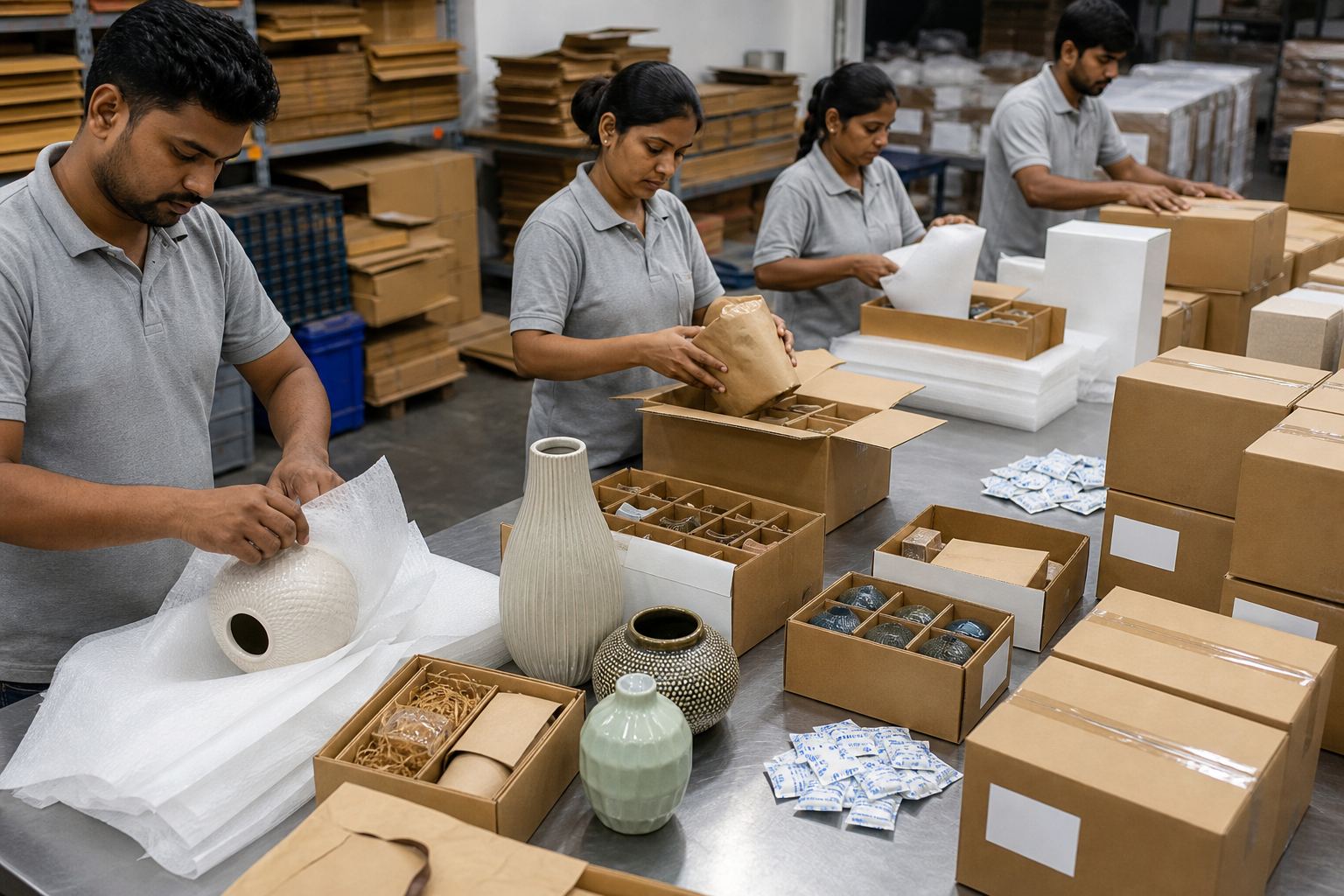
A mixed-material carton needs fragility-class packaging discipline that respects the most breakable component in the box, not the average. Ceramic and glass décor are genuinely fragile; wood and metal accents in the same carton need desiccants to manage humidity; textile accents need moisture protection; and premium gift formats need retail-ready gift boxes and barcoding. Confirm packaging design before production begins across every material stream feeding a consolidated shipment.
Packaging formats for home décor and gift article export
Swipe →
Data table — swipe horizontally on small screens
| Format | Use Case | Key Requirement |
|---|---|---|
| Fragility-class cushioning (foam/kraft/paper wrap) | Ceramic and glass décor | Sized to each material's breakage risk, not a single blanket standard |
| Desiccant sachets | Metal/wood mix in the same carton | Moisture control matched to transit duration and carton volume |
| Retail-ready gift boxes with barcoding | Premium and hospitality gifting lines | Channel-ready presentation and scan-ready labelling where required |
| Carton dividers / cell packs | Multi-SKU mixed assortments | Zero cross-material contact damage in transit |
| Clear mixed-SKU packing-list discipline | All consolidated shipments | Every carton's contents map cleanly to the multi-HS commercial invoice |
Container Loading Details
Export Tip
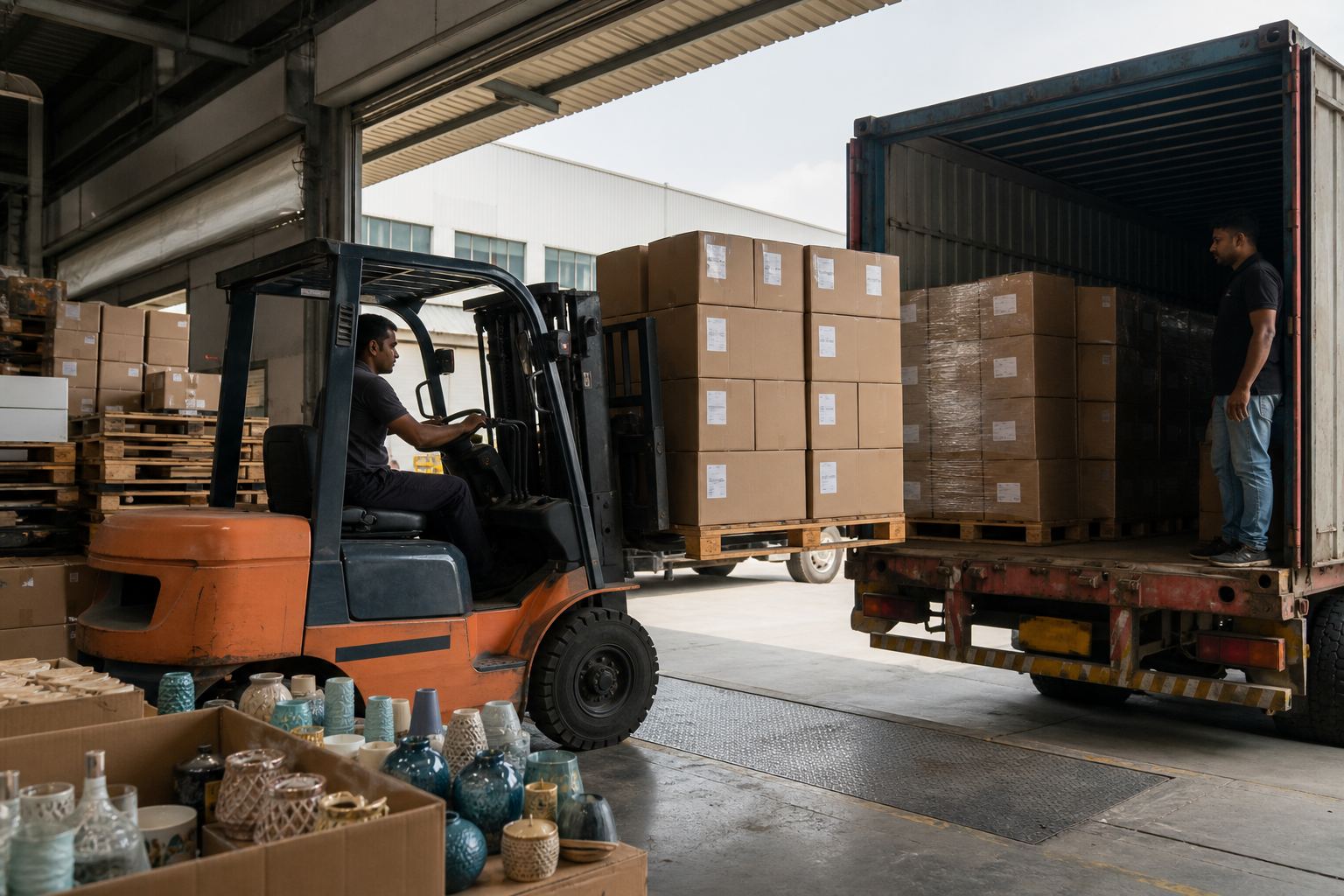
Mixed home décor and gift programmes routinely hit volume limits before weight limits — ceramic vases, glass décor, and boxed textile sets create awkward CBM profiles even when unit weight looks modest. Metal and wood accents can reverse that pattern and become weight-sensitive. Either way, stuffing plans must treat cross-material damage and crush risk as first-class constraints across every cluster feeding the container, not afterthoughts at the yard.
Container loading guidance for home décor and gift exporters
Swipe →
Data table — swipe horizontally on small screens
| Container Type | Typical Loadability | Planning Note |
|---|---|---|
| 20ft FCL | Useful for focused single-material or dense-mix programmes | Confirm weight vs CBM after carton engineering across materials |
| 40ft FCL / 40ft HC | Preferred for multi-cluster, multi-SKU seasonal assortments | Palletise to reduce handling damage; protect fragile top layers |
| LCL | Suitable for trials and consolidated multi-buyer loads | Higher per-unit freight; acceptable at trial and sample-scale volume |
| ICD Delhi/Dadri consolidation | Common for North India multi-cluster origin cargo | Align inland cut-offs with Nhava Sheva or Mundra sailings, especially ahead of Christmas peak |
Shipping Methods
Export Tip
- USA / Canada: plan ocean FCL for assortments; allow buffer for inland DC delivery after arrival
- Germany / Netherlands / France / UK: lock Christmas/festive production 6–9 months ahead of peak retail cut-off
- UAE: denser hospitality and gift mixes are common when fragility-class packing is documented
- Australia: longer transit — confirm sample air freight vs ocean replenishment separately
- Process pillar owns full mode, Incoterm, and carton-engineering detail
Destination planning changes freight timing more than it changes the port map. USA and Canada programmes often stretch inland after West/East Coast discharge; Germany, Netherlands, France, and UK Christmas ranges depend on hitting retailer DC cut-offs, so festive SKUs usually need earlier production slots than year-round tabletop. UAE hospitality and re-export programmes tolerate denser mixed cartons when packing evidence is clean. Baseline FCL/LCL modes, humidity control for mixed materials, and Incoterm defaults remain in How to Export Home Decor and Gift Articles from India — use this section only to match sailings to each market's calendar.
Certifications
Compliance Notes
Baseline export registration (IEC, EPCH RCMC) is non-negotiable for a serious export programme; the assortment-level declarations below become commercially decisive as you move into USA, EU, and UK premium retail specifically. This section is a process map — not a substitute for laboratory method selection or destination-specific legal counsel.
Certifications and declarations relevant to home décor and gift article export
Swipe →
Data table — swipe horizontally on small screens
| Certification / Document | What It Confirms | Relevant For |
|---|---|---|
| IEC | Legal export entity registration | All exporters |
| EPCH RCMC | Handicraft/gift export registration and fair access eligibility | Organised exporters; IHGF prerequisite |
| Multi-HS commercial invoice discipline | Accurate declaration across ceramic, glass, wood, metal, textile, and festive lines | All mixed-SKU consignments |
| US CPSC-relevant documentation | Consumer product safety where applicable | USA-bound consumer décor/gift SKUs |
| Prop 65 / REACH awareness (material-dependent) | Chemical exposure management for metal/resin components | USA (Prop 65) and EU (REACH) — link wood/metal cluster posts for depth |
| Textile labelling | Fibre content and care labelling for cushion/throw lines | Cushion covers, throws, textile décor accents |
| Food-contact evidence | Suitability where tableware use is claimed | Only SKUs marketed for food contact |
| Certificate of origin | Preferential duty or origin claim support | Where FTA/preference is claimed |
Buyer Requirements
Buyer Requirements
Market choice reshapes the same readiness bar. USA programmes lean into CPSC awareness and Prop 65 where metal/resin or candle claims apply; Germany, Netherlands, and France push REACH and fibre labelling even when only accents are metal or textile; UK premium retail often mirrors EU chemical expectations in practice; UAE hospitality buyers ask for finish consistency and amenity-spec sheets more than laboratory suites on first contact. Keep the shared proof stack — samples, multi-HS pricing, packing sign-off, IEC/EPCH — in the process pillar and discovery guide; here, prioritise the destination filter before you spend compliance budget.
Christmas and year-end gifting across USA, Germany, UK, and Netherlands also requires a written production and sailing date tied to the buyer's DC cut-off, not an aspirational week. For finding and qualifying those accounts, see How to Find International Buyers for Home Decor and Gift Articles.
Country-wise Opportunities
Market Snapshot
Use this scorecard to prioritise outreach and compliance investment across the eight destinations covered in this guide. Scores are relative guidance for a typical Indian home décor and gift exporter in 2026 — validate against your specific material mix, finish capability, and freight economics. For per-country SKU and material-preference depth beyond this scorecard, see Most Demanded Indian Home Decor and Gift Articles by Country.
Country comparison scorecard for Indian home décor and gift exporters
Swipe →
Data table — swipe horizontally on small screens
| Country | Market Size | Duty/Access Complexity | Seasonal-Calendar Pressure | Freight Transit | Opportunity Score |
|---|---|---|---|---|---|
| USA | Very High | Low–Medium | High (Q4 retail cut-off) | 20–35 days | 9/10 |
| Germany | High | Medium | High (Christmas market booking) | 22–30 days | 8/10 |
| Netherlands | Medium (EU hub) | Medium | High (EU distribution planning) | 22–28 days | 8/10 |
| UK | High | Medium | High (autumn trade-show cycle) | 22–30 days | 7.5/10 |
| UAE | High | Low | Medium (Ramadan/Eid + hospitality) | 7–12 days | 8.5/10 |
| France | Medium | Medium | High (Maison & Objet cycle) | 22–30 days | 7/10 |
| Canada | Medium | Low–Medium | High (mirrors USA calendar) | 28–35 days | 7.5/10 |
| Australia | Medium–Low | Medium | Medium (reversed summer Christmas) | 18–26 days | 6.5/10 |
Sourcing Checklist
Checklist
Buyer Checklist
Exporter Checklist
Compliance Checklist
Checklist
Compliance Notes
Common Buyer Mistakes
Common Mistakes Box
New exporters can anticipate a predictable set of buyer-side friction points — recognising them in advance saves real time during your first few mixed-assortment shipments.
Common mistakes buyers make and how exporters can pre-empt them
Swipe →
Data table — swipe horizontally on small screens
| Mistake | Consequence | How to Pre-Empt It |
|---|---|---|
| Choosing a market by size alone | Compliance and seasonal-calendar mismatch stalls the first shipment | Score markets on duty, freight, and calendar pressure together, not demand size alone |
| Booking Christmas production too late | Missed distribution-centre cut-off; lost season | Confirm and lock seasonal slots 6–9 months ahead of peak retail |
| Treating a mixed carton as a single-HS shipment | Customs holds or incorrect duty assessment | Declare every material line correctly on the commercial invoice |
| Underspecifying fragility-class packaging for the whole carton | Breakage across ceramic/glass SKUs on arrival | Present packing BOM sized to the most fragile component before production |
| Assuming Australia's Christmas timing matches southern-hemisphere shipping needs | Wrong-season SKU mix arriving too early or late | Confirm summer-appropriate merchandising and calendar fixed-date shipping together |
Challenges & Solutions
Exporting home décor and gift articles from India involves operational challenges tied to the category's multi-material, multi-HS nature and its genuinely calendar-driven demand — all addressable through the sequencing discipline in this guide.
Home décor and gift export challenges and solutions
Swipe →
Data table — swipe horizontally on small screens
| Challenge | Root Cause | Solution |
|---|---|---|
| Missed seasonal cut-offs | Christmas/festive production booked too close to peak retail | Lock production slots 6–9 months ahead; treat the calendar as a hard constraint |
| Multi-HS documentation errors | Mixed cartons declared inconsistently across invoice and packing list | Standardise a multi-HS invoice template per assortment type |
| Cross-material breakage in transit | Packaging engineered for the average, not the most fragile component | Design cartons around the most breakage-prone material in each box |
| Compliance gaps for metal/resin components | Treated as a décor-only afterthought | Maintain standing composition notes per material family, not per buyer request |
| Market concentration risk | Over-reliance on one or two destinations | Diversify across USA, EU hub markets, UAE, and secondary markets deliberately |
Future Market Trends
Key Statistics
Expect the gap between the easiest and hardest markets on this scorecard to widen rather than narrow over the next several years. Germany, the Netherlands, and France will keep raising the compliance and traceability bar in premium retail, while UAE and (to a degree) Canada stay comparatively lower-friction for décor-only programmes — which means the 'best' market on this list increasingly depends on how much documentation and seasonal-planning runway an exporter is willing to invest, not simply which market buys the most volume.
Private-label programmes, sustainable and recycled-content décor lines, and hospitality amenity-gift contracts are likely to remain stronger growth conversations than undifferentiated commodity décor, particularly in USA, Germany, and Netherlands premium retail. Diversification beyond the USA-Germany-Netherlands-UK concentration into UAE, France, Canada, and Australia is the most likely structural shift for exporters seeking to reduce destination concentration risk while building a repeatable seasonal-calendar operating rhythm.
Expert Insights
Expert Insight Box
Altus Exports works with Indian home décor and gift article manufacturers and merchant exporters as a merchant exporter, global sourcing partner, and export consultant — helping exporters sequence market entry around their actual multi-material readiness and seasonal production capacity rather than chasing every inbound inquiry simultaneously.
Conclusion
- Action: Confirm your multi-HS documentation and seasonal production capacity before targeting any new destination market.
- Review How to Export Home Decor and Gift Articles from India for the complete export process framework.
- Read Top Home Decor and Gift Products Exported from India to align product form with destination demand.
- See Most Demanded Indian Home Decor and Gift Articles by Country for granular product-market matching.
- Build buyer relationships with How to Find International Buyers for Home Decor and Gift Articles.
- Explore seasonal and private-label depth in Private Label, Seasonal, and Sustainable Home Decor Export Opportunities.
- Prepare documentation with Home Decor and Gift Article Export Documentation Checklist and EPCH Registration Benefits for Home Decor and Gift Exporters.
- For the buyer-side playbook, read Source Home Decor and Gift Articles Directly from India: Importer Playbook.
- Explore merchant exporter services from India, export products from India, global sourcing partner India, product sourcing company India, and find manufacturers in India, or contact Altus Exports directly.
Choosing the best countries for Indian home décor and gift article exports in 2026 comes down to matching your current multi-material documentation and seasonal-production readiness to the destination that rewards it: USA and Canada for retail and gifting scale with a firm Q4 calendar; Germany, Netherlands, and France for premium EU positioning once compliance and textile-labelling readiness is genuinely in place; UK for an accessible, independently regulated premium tier; UAE for the fastest entry cycle and a Ramadan/Eid-plus-hospitality demand pattern distinct from Western Christmas timing; and Australia as a niche once reversed-season merchandising is understood.
Every market on this list rewards the same underlying investment: consistent multi-HS documentation, fragility-class packing discipline across every material in the assortment, and production booked against a real seasonal deadline rather than an aspirational one. Exporters who sequence market entry around their current documentation and calendar readiness outperform those who chase every market inquiry simultaneously.