
Best Countries for Indian Jute Handicraft Exports
By Saurabh Mittal, Founder, Altus Exports
A destination-ranking guide to the best countries for Indian jute handicraft exports in 2026. Compares USA, Germany, UK, Netherlands, France, UAE, Australia, Canada, and Japan on import appetite for jute shopping bags under HS 42022230, jute floor coverings under 5705, and related lifestyle made-ups; duty exposure; freight corridors from Kolkata, Haldia, Nhava Sheva, and Mundra; and the dye-compliance, laminate Prop 65, OEKO-TEX/GOTS claim scrutiny, and moisture/mould transit risk that determines whether a West Bengal jute tote, laminated retail bag, or jute rug programme actually reaches retail shelves — with a country scorecard from Altus Exports.
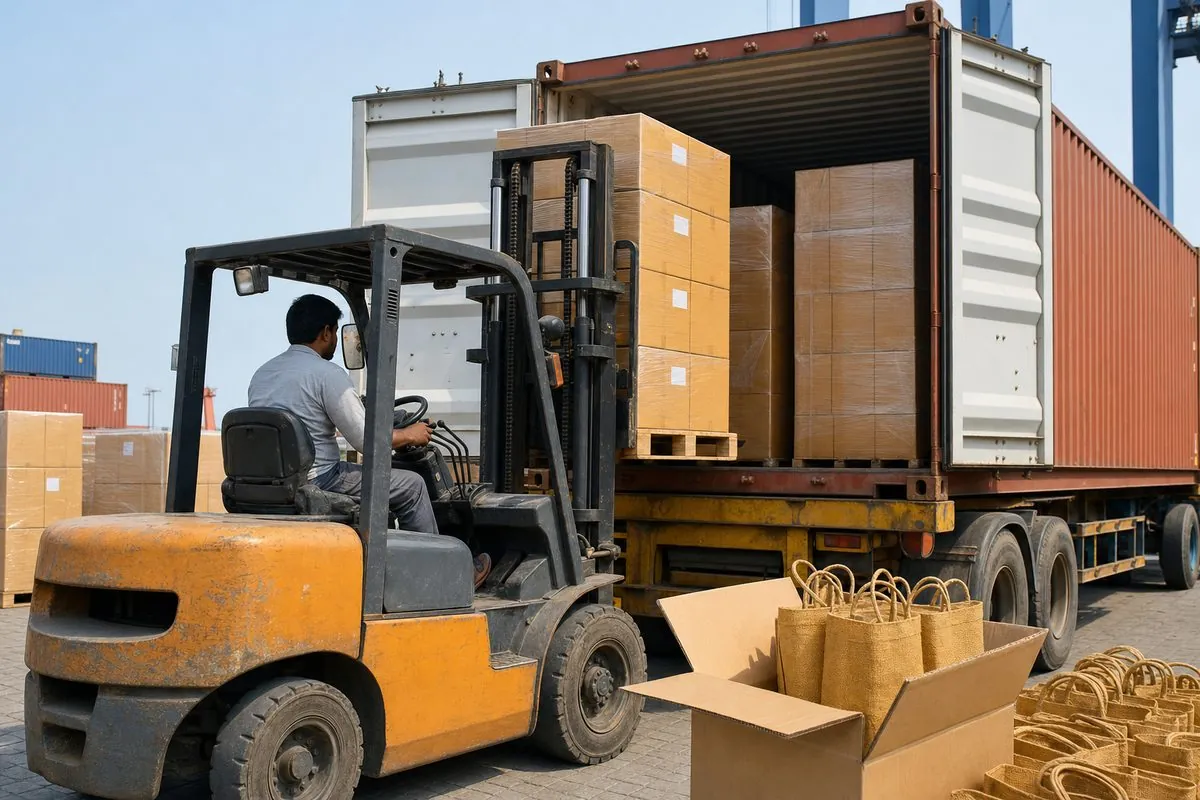
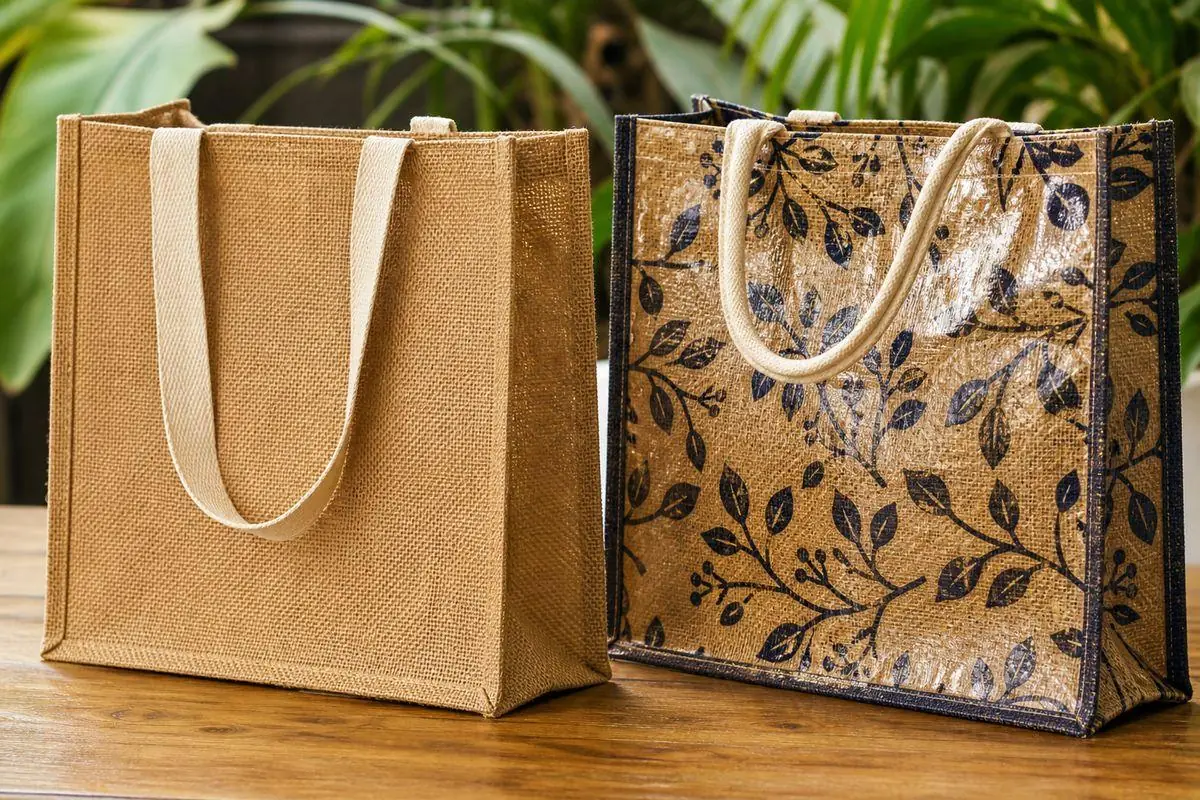
India's jute handicraft export basket — lifestyle shopping bags, fashion handbags, promotional totes, wine and gift bags, laminated and printed jute bags, placemats, table runners, coasters, wall hangings, storage organizers with handicraft character, jute rugs and floor coverings sold as lifestyle artware, and jute-cotton blend craft programmes — occupies a distinctive place in the country's natural-fibre handicraft portfolio. The industrial and craft backbone sits in West Bengal's jute belt around Kolkata, Howrah, Barrackpore, and North 24 Parganas, where fibre selection, weaving or hessian cloth sourcing, cutting, stitching, handle attachment, optional lamination and print, finishing, QC, and export packing concentrate for international programmes. Supporting fibre and stitching capacity runs in Assam, Bihar, Odisha, Andhra Pradesh, and Tamil Nadu; merchant consolidation and private-label finishing often route through Delhi-NCR before ocean freight via Kolkata, Haldia, Nhava Sheva, or Mundra.
Directionally, trade analysis for this basket runs across ITC-HS lines rather than a single heading: 42022230 for hand-bags and shopping bags of jute (the primary lifestyle bag line), 5705 for other textile floor coverings of jute (rugs and lifestyle mats), and the 6305 family for packing sacks — commonly 63051030 hessian bags, 63051040 sacking bags, and 63051090 other — which must be contrasted only when buyers confuse industrial packaging with fashion shopping bags. Broader EPCH handicrafts excluding carpets reached Rs 33,122.79 crore / US$3,917.89 million in FY 2024–25 — cite that figure only as sector context, never as a stand-alone jute handicraft export total. Validate current-year DGCI&S or TradeStat releases under 4202, 6305, and 5705 as jute proxies before capacity decisions.
Not every destination market is equally accessible for jute handicrafts, and the wrong first-market choice is one of the most common reasons a promising West Bengal exporter stalls after its first IHGF Delhi Fair inquiry. A country with strong retail appetite for eco shopping bags is not automatically the easiest place to land a first FCL if duty exposure under 42022230 versus 5705 is unclear, if the destination's dye-compliance regime (EU REACH and SVHC on prints and coatings, California Prop 65 on laminated bags and inks, OEKO-TEX or GOTS claims without chain-of-custody evidence) exceeds the supplier's documentation readiness, or if moisture and mould economics in ocean transit quietly erode margin before goods leave Kolkata. This guide ranks the best countries to export Indian jute handicrafts to in 2026 using the filters that actually decide commercial viability: import demand by HS heading, duty and preferential access, freight corridor economics, eco-claim and dye-compliance burden, and channel fit for grocery retail plastic-ban programmes versus promotional products versus home specialty décor.
This guide is written for Indian jute bag manufacturers, West Bengal craft cluster exporters, Delhi-NCR merchant exporters, and export houses deciding where to invest compliance documentation, sampling, and buyer-outreach budget first. It owns the market-selection framework — destination ranking by demand, duty, freight, and eco-claim scrutiny — and deliberately does not repeat the SKU-by-country demand matrix, which lives in Most Demanded Indian Jute Handicrafts by Country. For the end-to-end export process see How to Export Jute Handicrafts from India; for the SKU catalogue read Top Jute Handicraft Products Exported from India; and if you are an international buyer, jump to Source Jute Handicrafts Directly from India for the RFQ-to-landed-cost playbook.
Key Takeaways
Summary Box
Executive Summary
Summary Box
Exporting jute handicrafts from India is fundamentally a fibre honesty, dye compliance, lamination discipline, and moisture-control exercise layered on top of a manufacturing base that is genuinely capable but fragmented across West Bengal stitching units, lamination lines, print shops, and Delhi-NCR merchant consolidators. Kolkata and Howrah workshops cut, stitch, attach handles, laminate, print, and finish lifestyle bags and décor for retail and promotional programmes; Assam, Bihar, and Odisha supply supporting fibre and craft capacity; Andhra Pradesh and Tamil Nadu run selective stitching programmes; Delhi-NCR merchant exporters consolidate mixed eco-assortments and coordinate ocean freight through Kolkata, Haldia, Nhava Sheva, or Mundra. Converting that depth into a repeat export programme starts with matching the destination market to your current stitch QC, laminate adhesion standards, dye declaration readiness, and moisture-protected export packing.
This guide scores nine priority destinations — USA, Germany, UK, Netherlands, France, UAE, Australia, Canada, and Japan — against directional import appetite for HS 42022230 jute shopping and fashion bags and 5705 jute floor coverings; duty and preferential access; freight corridor economics from Kolkata, Haldia, Nhava Sheva, and Mundra; eco-claim and dye-compliance burden (REACH SVHC, Prop 65 on laminates and inks, OEKO-TEX and GOTS claim controls, fibre composition labelling, plastic-packaging taxes where relevant); and channel fit for grocery retail plastic-ban programmes, promotional products distributors, home specialty décor, hospitality gifting, and e-commerce private label. Validate live country rankings via DGCI&S or ITC Trade Map before locking presentations as fact. Germany, UK, and Netherlands anchor EU distribution; France rewards design-forward natural-fibre gift positioning; UAE gives the shortest freight cycle; Australia and Japan are strict-but-premium niches for certified and finish-quality programmes; Canada mirrors USA-style retail compliance at smaller scale.
The practical recommendation for most Indian jute handicraft exporters entering direct international trade for the first time is to sequence markets rather than pursue all nine simultaneously — build stitch QC, colourfastness checks, laminate adhesion discipline, moisture-protected packing, and honest fibre labelling against a UAE or USA trial container, then extend into the EU premium tier once REACH-aligned supplier declarations and OEKO-TEX or GOTS evidence are reliable where claimed. For per-SKU country demand matrices, see the sibling piece Most Demanded Indian Jute Handicrafts by Country; this guide restricts itself to the market-selection framework, duty structure, freight corridors, and eco-claim scrutiny that decide which of those markets to invest in first.
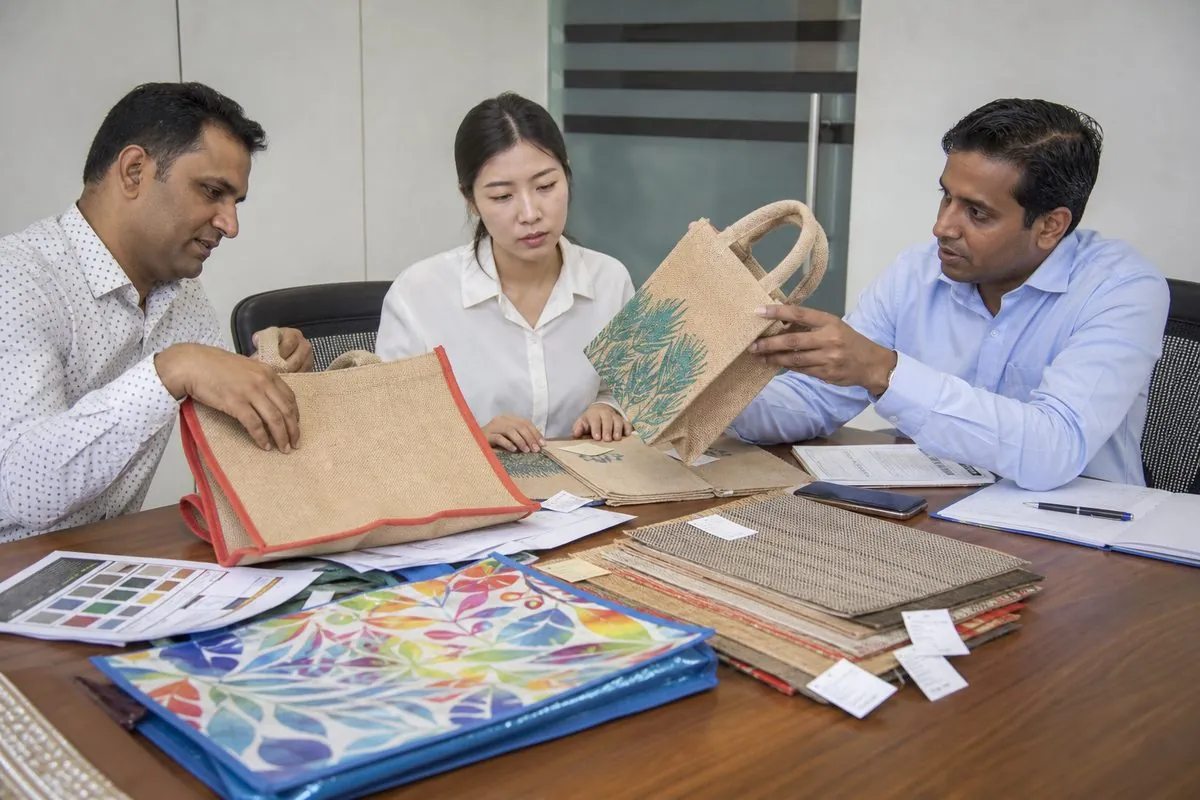
Market Size & Industry Overview
Key Statistics
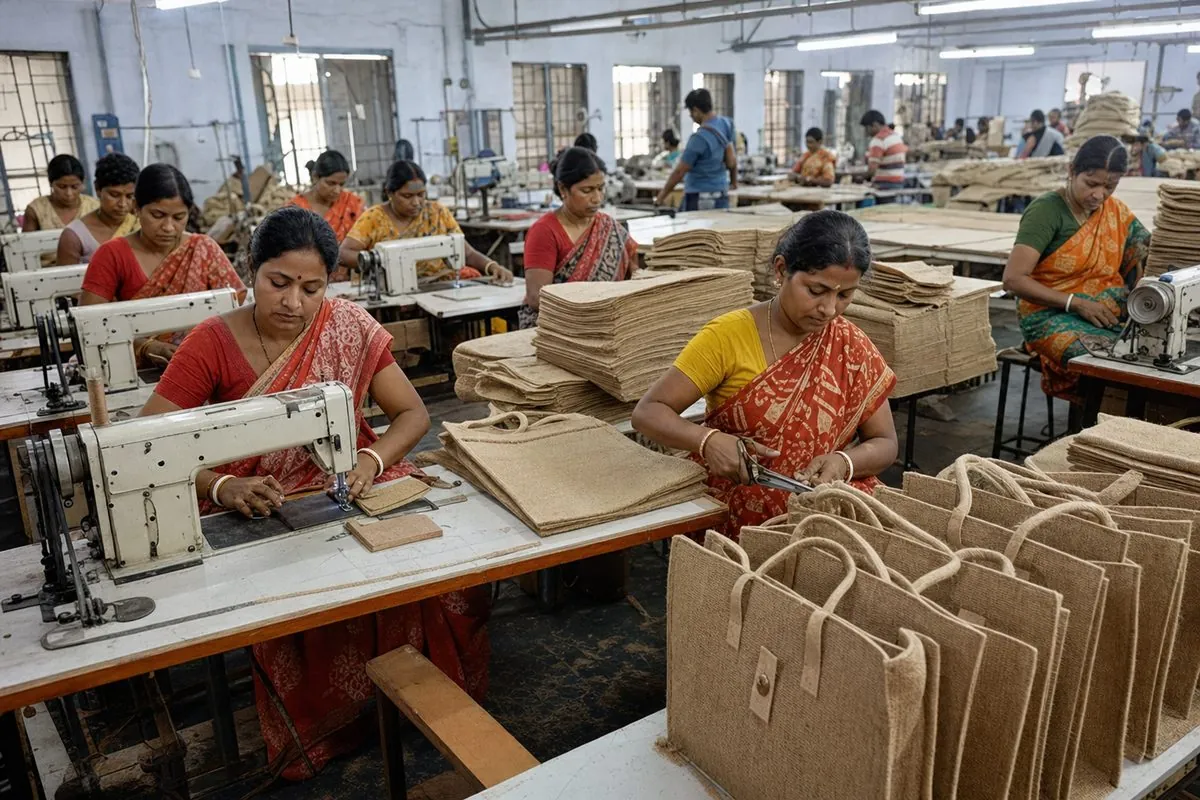
India's jute handicraft manufacturing base combines West Bengal's jute belt — historically the country's largest concentration of lifestyle bag stitching, lamination, and print capacity for export programmes — with supporting fibre and craft belts in Assam, Bihar, and Odisha, selective stitching in Andhra Pradesh and Tamil Nadu, and Delhi-NCR merchant consolidation for mixed eco-assortment export packing. Export-oriented production spans village and family stitching units, mid-sized lamination and print lines, and Delhi-NCR merchant exporters registered under EPCH RCMC with active IEC from DGFT. Because much of the artisan and semi-mechanized base remains capacity-constrained, stitch consistency across colourways, laminate adhesion on retail bags, dimensional tolerance on rugs and placemats, and moisture control before carton sealing are the operational variables that separate reliable exporters from those who struggle after the first buyer complaint about mould odor, colour bleed, or handle pull failure.
The Export Promotion Council for Handicrafts (EPCH) is the principal industry body for organised jute handicraft and lifestyle bag exporters, offering RCMC registration, IHGF Delhi Fair access, and market intelligence. JPDEPC (Jute Products Development and Export Promotion Council) and the National Jute Board (NJB) sit adjacent for broader jute-products trade — clarify council fit by essential character (handicraft lifestyle versus industrial packaging) with CHA and council guidance before locking RCMC route. Directionally, cite DGCI&S or TradeStat lines under 42022230, 6305, and 5705 as jute proxies for trade planning — never present total EPCH handicraft figures as jute-handicraft-specific volume.
Directional profile of India's jute handicraft manufacturing and export base
Swipe →
Data table — swipe horizontally on small screens
| Dimension | 2026 Snapshot | Exporter Implication |
|---|---|---|
| Primary HS proxies | 42022230 (jute shopping/fashion bags), 5705 (jute floor coverings), 6305 (packing sacks — contrast only) | Confirm lifestyle bag vs sack vs rug classification with CHA per SKU |
| Primary craft cluster | West Bengal — Kolkata, Howrah, Barrackpore, North 24 Parganas | Best fit for stitched bags, lamination, print, and export packing at programme scale |
| Supporting clusters | Assam, Bihar, Odisha (fibre/craft); AP, TN (stitching); Delhi-NCR (consolidation) | Honest origin labelling per cluster; QC before carton sealing |
| Regulatory body | EPCH (RCMC primary for handicraft character); JPDEPC/NJB adjacency for broader jute trade | EPCH RCMC is practical prerequisite for buyer credibility and IHGF access |
| Sector context (not jute volume) | EPCH handicrafts excl. carpets FY 2024–25: Rs 33,122.79 crore / US$3,917.89 million | Use only as broad handicraft sector reference — never as jute-only total |
| Structural challenge | Moisture/mould in ocean transit; laminate adhesion; dye/print compliance; honest eco claims | Stitch discipline, moisture barriers, and fibre honesty decide market access |
| Top directional destinations | USA, Germany, UK, Netherlands, France, UAE, Australia, Canada, Japan | Sequence compliance documentation investment by destination tier |
| Primary load ports | Kolkata/Haldia (East India); Nhava Sheva, Mundra (westbound); ICD Delhi/Dadri (NCR) | Corridor choice materially affects landed cost and sailing frequency |
Export Statistics
Key Statistics
India's jute handicraft exports have grown as global grocery retail chains, promotional products distributors, home specialty retail, hospitality gifting, and e-commerce private label broaden sourcing toward natural-fibre bags and décor with authentic West Bengal craft provenance narratives. Laminated and printed jute shopping totes anchor year-round promotional and retail programmes; plain hessian-look totes serve plastic-ban grocery channels; jute placemats, runners, and coasters serve home specialty; jute rugs and floor coverings under 5705 serve lifestyle and garden retail. Do not conflate industrial hessian sack exports under 6305 with lifestyle shopping bag programmes under 42022230 when reading trade tables.
Verified industry context: DGCIS figures summarised by IBEF put India's total jute goods exports at about US$229 million in FY25 (about US$204 million in FY24), with floor coverings around US$92 million and hessian around US$103 million. EPCH handicrafts excluding carpets reached Rs 33,122.79 crore / US$3,917.89 million in FY 2024–25 — sector context only. Validate current-year DGCI&S, JPDEPC, or TradeStat releases under 4202 / 5705 / 6305 before capacity decisions; do not invent a single lifestyle-only EPCH jute subcategory total.
Verified / directional export profile for Indian jute and jute handicraft programmes
Swipe →
Data table — swipe horizontally on small screens
| Metric | Directional Estimate | Notes |
|---|---|---|
| Primary bag HS | 42022230 — hand-bags and shopping bags of jute | Confirm lifestyle bag vs packing sack wording on invoices |
| Floor covering HS | 5705 (e.g. 57050031 blended jute / 57050032 coir jute / 57050039 other jute) | Confirm 8-digit line with CHA per SKU |
| Packing sack HS (contrast) | 63051030 / 63051040 / 63051090 under 6305 family | Industrial packaging — do not conflate with fashion totes |
| India jute goods exports (FY25) | ~US$229 million (DGCIS via IBEF) | Industry-wide total — not HS 42022230-only |
| Floor covering / hessian (FY25) | ~US$92M floor coverings; ~US$103M hessian (DGCIS via IBEF) | Useful proxies; confirm latest release before presentations |
| Primary load corridor | Kolkata/Haldia from West Bengal; Nhava Sheva/Mundra westbound | Model inland haul from cluster to port in landed cost |
| Lead time (custom print) | 5–9 weeks directional | Retail plastic-ban resets often 4–8 months ahead |
| Sample lead time | 7–18 days directional | Air common for colour/print approval |
| Lifestyle programme markets | USA, France, Germany, UK, Netherlands, UAE, Australia, Canada, Japan, Spain | Distinct from all-jute-goods ranking (JPDEPC lists Ghana highly for packing/hessian demand) |
| Council registration | EPCH RCMC for handicraft/lifestyle character | JPDEPC adjacency when essential character is broader jute products |
Import Statistics
Key Statistics
Import-side analysis must separate all-jute-goods destination tables from lifestyle-bag programmes. JPDEPC/DoC FY 2024–25 tables for all Indian jute goods rank USA, France, Ghana, Germany, the UK, and the Netherlands among the largest markets — Ghana and Côte d'Ivoire often reflect agri-packing and hessian demand rather than HS 42022230 shopping-bag programmes. For lifestyle and handicraft programmes under 42022230 / 5705, buyer concentration is directionally strongest in the USA, France, Germany, UK, and Netherlands, with UAE, Australia, Canada, Spain, and Japan as commercially important secondary destinations. EU member states collectively represent a major share of laminated retail bag and home décor imports where REACH and SVHC dye scrutiny applies. Treat country rankings as planning inputs — pull fresh ITC Trade Map or destination customs data for 42022230 and 5705 before investor presentations or buyer pitches.
Directional import appetite indicators for jute handicrafts by destination tier
Swipe →
Data table — swipe horizontally on small screens
| Destination Tier | Import Appetite Signal | Compliance Intensity |
|---|---|---|
| Tier 1 — USA | High volume promotional totes, grocery plastic-ban bags, home décor | Prop 65 on laminates/inks; fibre labelling; colourfastness |
| Tier 1 — Germany | EU anchor for eco retail bags and jute décor | REACH/SVHC dyes; strict OEKO-TEX/GOTS claim verification |
| Tier 1 — UK | Grocery chains, gift wholesale, home specialty | UK REACH; plastic-packaging taxes; honest biodegradable claims |
| Tier 2 — Netherlands | EU distribution hub and direct retail | Same EU dye framework; hub clearance discipline |
| Tier 2 — France | Design-forward natural-fibre gift and décor | REACH; premium finish and composition honesty |
| Tier 2 — UAE | Fast-cycle hospitality, hypermarket, re-export | Lighter formal dye docs; presentation and moisture QC matter |
| Tier 3 — Australia | Eco retail and home specialty niche | Strict finish quality; ACCC claim scrutiny on eco labels |
| Tier 3 — Canada | Mirrors USA at smaller scale | Bilingual labelling; similar eco-claim expectations |
| Tier 3 — Japan | Premium gift and design retail niche | Finish quality; import dye awareness; modest volume |
Product Categories & Variants (Brief Overview)
Summary Box
This section is a brief overview only — the SKU-by-country demand matrix belongs to Most Demanded Indian Jute Handicrafts by Country. Full product depth sits in Top Jute Handicraft Products Exported from India. What follows is category-to-market fit relevant for choosing which destination to target first, with emphasis on promotional bags versus grocery retail plastic-ban programmes versus home specialty décor channel alignment — not per-SKU GSM, handle type, or print preference detail.
Product category snapshot by best-fit destination market
Swipe →
Data table — swipe horizontally on small screens
| Category | Typical HS Heading | Best-Fit Destination Markets |
|---|---|---|
| Plain promotional jute totes | 42022230 | USA, UK, UAE, Canada — promotional products distributors |
| Laminated/printed retail shopping bags | 42022230 | USA, Germany, Netherlands, France — grocery and specialty retail |
| Fashion handbags and structured totes | 42022230 | USA, France, Japan, Germany — accessories and design retail |
| Wine/gift bags and drawstring pouches | 42022230 | USA, UAE, UK, France — hospitality and gift specialty |
| Placemats, runners, coasters | 42022230 / 6307 (confirm) | USA, Germany, UK, Australia — home specialty |
| Jute rugs and floor coverings | 5705 | USA, UK, Netherlands, Australia — lifestyle and garden retail |
| Jute-cotton blend craft bags | 42022230 (confirm blend) | Germany, USA, UK — certified and eco retail programmes |
| Wall hangings and décor organizers | 6307 (confirm essential character) | France, USA, Japan — design and gift specialty |
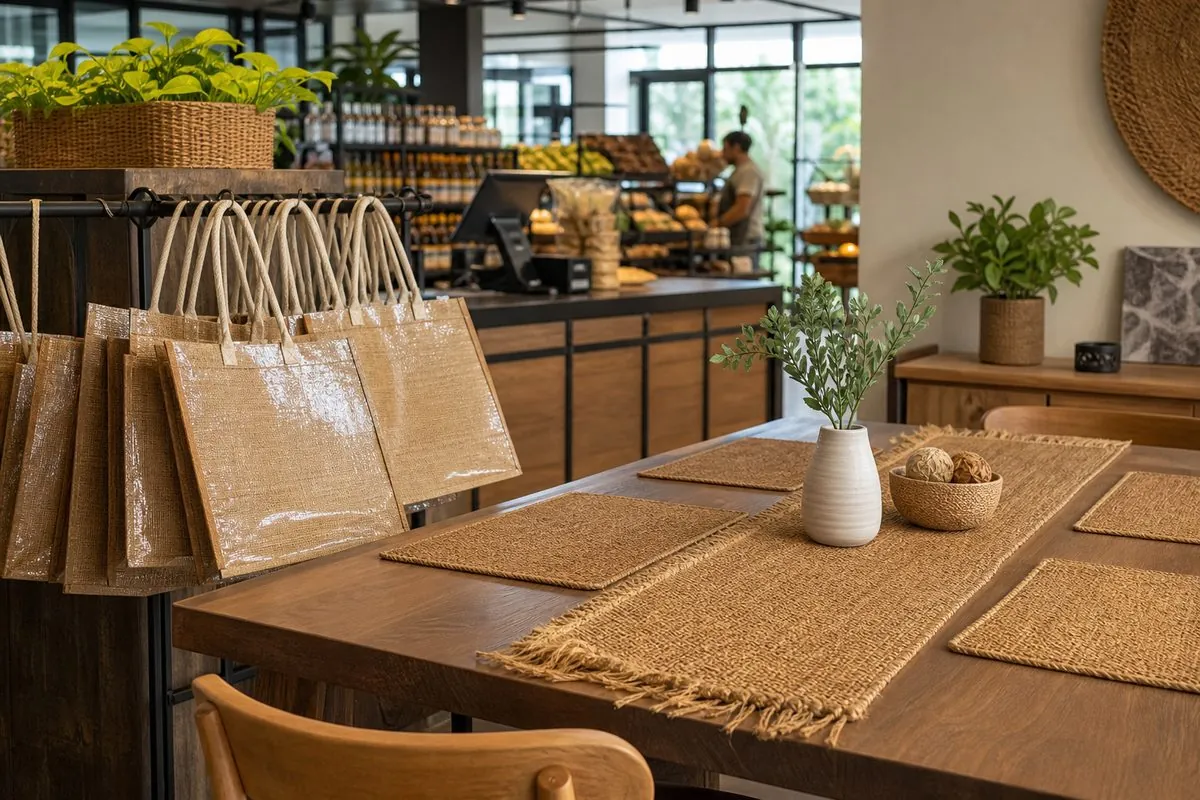
Manufacturing Overview (Brief)
Export Tip
For market selection, manufacturing depth only matters where it changes destination risk. Ask whether the shortlisted supplier can produce your SKU at trial scale with controlled stitch tension, laminate adhesion on retail faces, colourfast print registration, moisture-controlled storage before packing, and desiccant-protected export cartons — that is the gate for USA Prop 65-ready laminated programmes, EU REACH-aligned dye declarations, and premium Japan gift channels. Process walkthroughs for exporters live in How to Export Jute Handicrafts from India; buyer audit tactics live in Source Jute Handicrafts Directly from India; GOTS, OEKO-TEX, and plastic-ban deep-dive lives in Eco, GOTS and Plastic-Ban Alternative Jute Handicraft Export Opportunities.
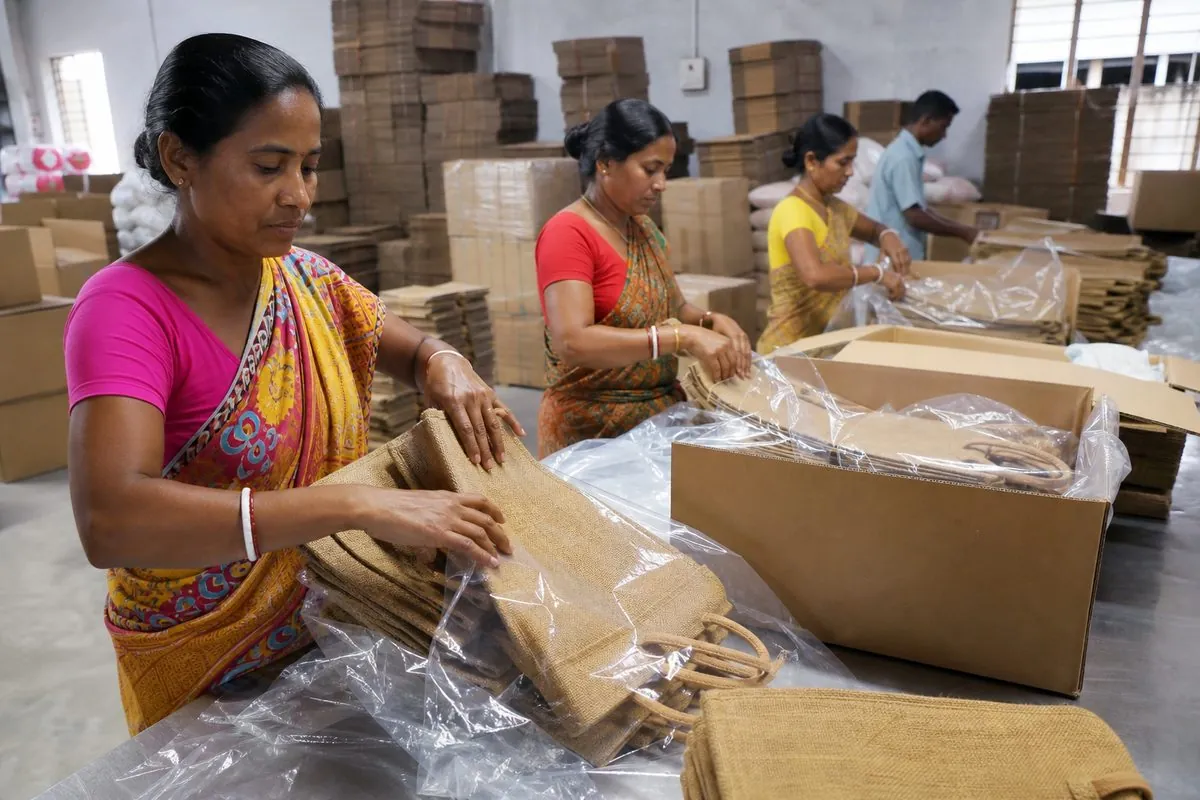
For destination-market planning the buyer-facing shape of the process is what matters: proof that fibre selection and weaving or hessian sourcing match declared composition, stitch QC and handle pull tests against a signed reference sample, laminate adhesion checks where BOPP film is applied, honest cluster labelling (West Bengal stitched versus Delhi-NCR consolidated), and moisture/mould prevention evidence when ocean transit humidity is high. Eco claims require evidence-bound representation — never treat biodegradable or plastic-free as generic marketing adjectives for laminated retail bags.
Destination Ranking: Duties, Freight Corridors & Eco-Claim Scrutiny
Market Snapshot
This is the core ranking exercise of this guide: scoring each of the nine priority destinations on duty and preferential access under HS 42022230 and 5705; freight corridor economics from Kolkata, Haldia, Nhava Sheva, and Mundra; eco-claim and dye-compliance burden (REACH SVHC, Prop 65 on laminates and inks, OEKO-TEX and GOTS claim controls, fibre composition labelling, plastic-packaging taxes where relevant); moisture and mould transit risk; and channel fit for grocery retail plastic-ban programmes versus promotional products versus home specialty décor. Duty rates and compliance rules below are directional — always confirm the current position with a licensed customs broker in the destination market before quoting landed cost. This section deliberately does not rank per-SKU demand — that job belongs to Most Demanded Indian Jute Handicrafts by Country.
1. United States
- Duty and access: US HTS 4202.22 textile handbags commonly face Column 1 MFN rates that vary by 10-digit line (illustratively ~7.4% on certain braid lines such as 4202.22.40, and ~17.6% on many 'other' textile handbags under 4202.22.89). Rates are not uniformly Free. Confirm the exact HTS line, floor-covering lines under 5705, and any Chapter 99 measures with a US broker before quoting landed cost.
- Eco-claim scrutiny: California Prop 65 applies to listed substances in laminates, inks, and coatings where thresholds are exceeded — maintain supplier declarations and test evidence for California-facing chains. Biodegradable and compostable claims on laminated bags face increasing retail audit scrutiny.
- Fibre labelling: FTC textile labelling expectations apply to jute-cotton blends and mixed-fibre bags — composition honesty is non-negotiable for national retail.
- Operational compliance: Moisture and mould in ocean transit, laminate face crushing, and colourfastness after humid warehousing dominate operational risk.
- Freight corridor: Nhava Sheva or Mundra to US East and West Coast; 22–35 days. Kolkata/Haldia sailings also serve USA via transshipment or direct where available.
- Strategy: Lead with promotional plain totes or laminated grocery bags for established distributors — both require moisture-protected packing and honest eco claims from the first shipment.
The USA is directionally the highest-priority destination for Indian jute handicraft exports — driven by promotional products distributors stocking plain and printed totes, grocery and specialty retail carrying laminated shopping bags under plastic-ban programmes, home specialty retail for placemats and runners, hospitality gifting, and e-commerce private label for natural-fibre assortments. Both 42022230 bag programmes and 5705 rug lines find established buyer channels.
2. Germany
- Duty and access: EU CN 4202 22 90 (handbags with outer surface of textile materials) commonly carries MFN duty around 3.7%; outer surface of plastic sheeting under 4202 22 10 commonly around 9.7%. Laminated jute bags may classify by essential outer-surface character — confirm TARIC line, 5705 rug lines, and any India preferential claim with a German/EU broker.
- Eco-claim scrutiny: REACH SVHC restricts certain substances in dyes, prints, and coatings. GOTS and OEKO-TEX require full chain-of-custody evidence for certified programmes.
- Biodegradable claims: Laminated BOPP retail bags cannot be marketed as fully plastic-free without qualification — German retail audits reject vague eco copy quickly.
- Freight corridor: Nhava Sheva or Mundra to Hamburg or Bremerhaven; 22–30 days.
- Strategy: Do not approach German eco retail buyers without dye declarations and honest laminate labelling in hand. Promotional plain totes are approachable earlier once moisture packing is proven.
Germany anchors EU demand for Indian jute shopping bags, laminated retail totes, and home décor — and is among the strictest destinations for dye and chemical compliance under REACH and SVHC on prints and coatings. OEKO-TEX and GOTS claims are verified, not accepted on brochure assertion.
3. United Kingdom
- Duty and access: Confirm current UK Global Tariff treatment for 42022230 and 5705 with a UK broker.
- Eco-claim scrutiny: UK REACH applies to substances in dyes and coatings; plastic-packaging taxes and extended producer responsibility frameworks directionally increase scrutiny on bag programmes.
- Operational compliance: Mould odor and colour bleed after humid transit are common first-shipment failure modes.
- Freight corridor: Nhava Sheva or Mundra to Felixstowe or London Gateway; 22–30 days.
- Strategy: Lead with grocery tote programmes for chains with published plastic-ban timelines or promotional bags for UK distributors — both need moisture packing proof.
The UK combines established grocery retail plastic-ban programmes, gift chain retail, and home specialty channels with post-Brexit product-safety frameworks separate from the EU's — REACH documentation prepared for Rotterdam does not automatically satisfy a UK retail compliance review.
4. Netherlands
- Duty and access: EU Common External Tariff — textile-outer handbags under CN 4202 22 90 commonly ~3.7% MFN; plastic-sheeting outer under 4202 22 10 commonly ~9.7%. Rotterdam clearance is a natural EU gateway for consolidated jute programmes; confirm TARIC and preferences with an EU broker.
- Eco-claim scrutiny: Same REACH and SVHC framework as Germany; Dutch retail audits on imported bag dye compliance are directionally increasing.
- Freight corridor: Nhava Sheva or Mundra to Rotterdam; 22–28 days.
- Strategy: Position Dutch buyers as potential EU distribution partners — high-volume laminated totes and jute décor SKUs suit wholesale redistribution.
The Netherlands operates as both a direct retail market and an EU distribution hub — Dutch importers acting as EU wholesalers are usually more paperwork-disciplined on REACH declarations and OEKO-TEX verification than single-market boutique buyers.
5. France
- Duty and access: EU Common External Tariff on relevant CN lines under 4202 and 5705 — textile-outer handbags commonly ~3.7% MFN (CN 4202 22 90); confirm TARIC and India preferential proof of origin with a French broker.
- Eco-claim scrutiny: REACH and SVHC; premium buyers expect honest fibre composition and evidence for any organic or GOTS claim.
- Freight corridor: Nhava Sheva or Mundra to Le Havre or via Rotterdam; 22–30 days.
- Strategy: Lead with fashion handbags, wine/gift bags, and design-forward décor supported by honest cluster documentation and dye compliance packets.
France rewards design-forward natural-fibre positioning — boutique retail, department-store gift, hospitality-design buyers, and home specialty respond to honest West Bengal craft narratives and refined jute-cotton blend constructions.
6. United Arab Emirates
- Duty and access: GCC tariff treatment is generally favourable for handicraft bags — confirm current rate with your freight forwarder.
- Eco-claim scrutiny: Lighter than USA or EU premium retail for most wholesale channels — presentation integrity, moisture-free arrival, and laminate face quality matter more than formal OEKO-TEX packets.
- Freight corridor: Mundra or Nhava Sheva to Jebel Ali; 7–12 days — fastest lane on this list.
- Strategy: Use UAE as a fast-cycle proof-of-concept market for new print and laminate finishes before investing in heavier USA and EU compliance programmes.
UAE offers the fastest freight cycle and lightest formal compliance documentation ask on this list — hypermarket gifting, hospitality amenity programmes, Gulf re-export, and promotional corporate gifting drive demand for jute totes, wine bags, and curated natural-fibre assortments.
7. Australia
- Duty and access: Confirm current tariff treatment with an Australian customs broker for 4202 and 5705 lines.
- Eco-claim scrutiny: ACCC expectations on misleading biodegradable and compostable claims; fibre composition honesty for retail.
- Freight corridor: Nhava Sheva or Mundra to Melbourne, Sydney, or Brisbane; 18–26 days.
- Strategy: Confirm moisture packing and dye documentation with an experienced broker before quoting — workable entry via home specialty placemats and eco totes.
Australia is a strict-but-manageable premium niche for Indian jute handicrafts — home specialty, gift retail, and eco grocery buyers value natural-fibre bags and jute rugs but expect honest ACCC-aligned eco claims, colourfastness, and intact arrival.
8. Canada
- Duty and access: Confirm CBSA tariff treatment for 42022230 and 5705 with a Canadian broker.
- Eco-claim scrutiny: Similar fibre labelling and eco-claim expectations to USA; bilingual retail labels where applicable.
- Freight corridor: Nhava Sheva or Mundra to Halifax, Montreal, or Vancouver; 28–35 days.
- Strategy: Pair Canada with USA outreach using shared dye declarations and moisture packing standards as baseline.
Canada mirrors USA buyer behaviour at a smaller directional scale — grocery chains, gift importers, and promotional buyers with eco-claim expectations similar to US retail practice but often smaller trial volumes.
9. Japan
- Duty and access: Confirm Japan customs tariff and any India-Japan CEPA preferential treatment on 4202 and 5705 lines with a Japan-side broker.
- Eco-claim scrutiny: Finish quality and packaging presentation weigh heavily; import dye awareness expected for premium retail.
- Freight corridor: Nhava Sheva or Mundra to Yokohama, Tokyo, or Kobe; 20–28 days.
- Strategy: Enter Japan only once stitch consistency, laminate adhesion, and moisture packing standards are genuinely reliable.
Japan is a small but high-value niche — department-store gift, design retail, and specialty natural-fibre buyers value refined jute handbags and décor, but expect flawless finish quality, stable print registration, and honest import documentation.
Pricing Analysis
Buyer Tip
FOB pricing for jute handicrafts varies by construction, GSM, lamination, print complexity, handle type, and certification level. Directional bands below are planning inputs — confirm against a fresh supplier quotation dated to your sailing window and include duty, freight, compliance test overhead, and moisture-related claims allowance in your landed-cost model. Certified GOTS or OEKO-TEX programmes carry evidence-dependent premiums.
Indicative FOB bands for Indian jute handicrafts (USD; commercial estimates — not published indices)
Swipe →
Data table — swipe horizontally on small screens
| Product Type | Indicative FOB (USD/pc; confirm quote date) | Primary Cost Drivers |
|---|---|---|
| Plain promotional shopping totes | $0.80–2.50 | GSM, handle type, order quantity |
| Laminated/printed retail bags | $1.20–4.50 | Laminate grade, print colours, gusset size |
| Fashion handbags / structured totes | $3–15 | Construction, lining, hardware, finish grade |
| Placemats / runners / coasters | $1.50–8/set | Size, weave, print or embroidery accents |
| Jute rugs / floor coverings | $8–45+ | Size, weave density, binding finish |
| GOTS / OEKO-TEX certified programmes | Premium over base | Chain-of-custody, audit, restricted chemical lists |
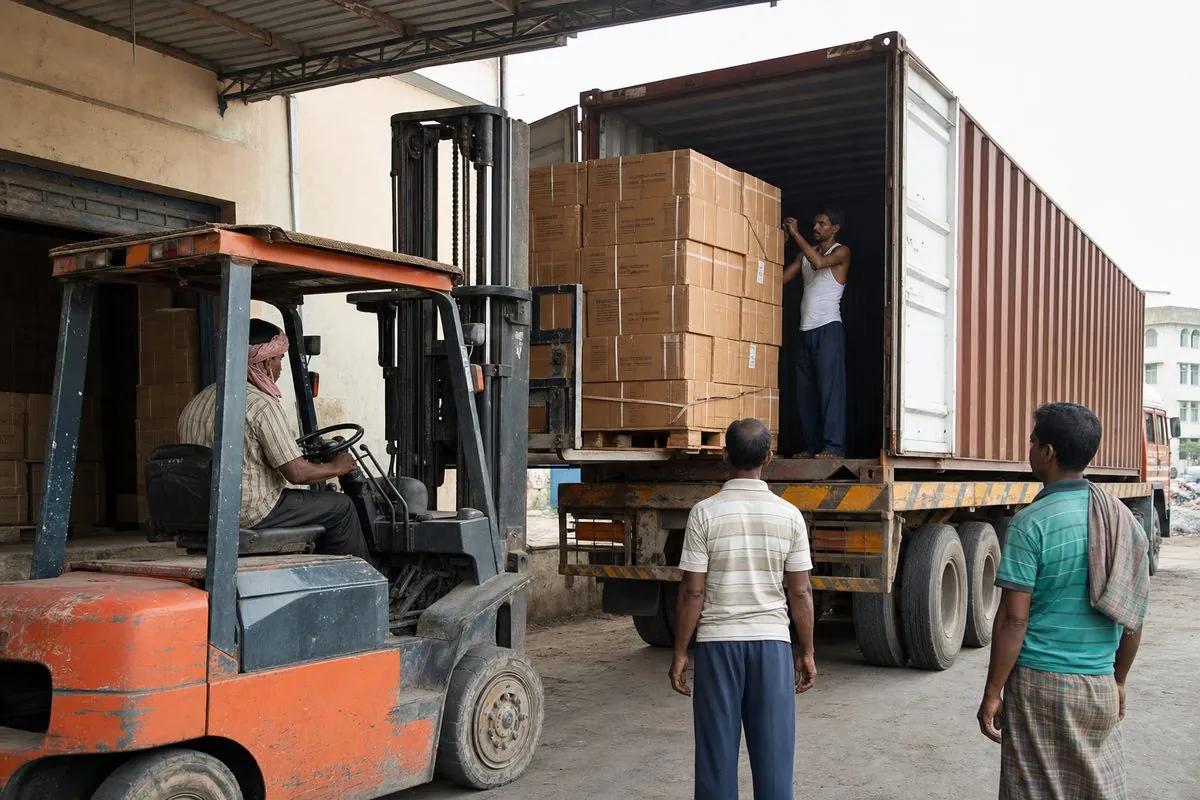
MOQ Analysis
Buyer Tip
MOQ discipline in jute handicrafts follows buyer channel and construction complexity. Samples prove colour, print, and handle strength; trial lots prove stitch consistency and moisture packing; FCL programmes align with retail plastic-ban resets and promotional season calendars.
Directional MOQ framework for jute handicraft export programmes
Swipe →
Data table — swipe horizontally on small screens
| Stage | Typical MOQ | Purpose |
|---|---|---|
| Samples | 5–20 pcs/SKU | Colour, print, handle pull, laminate adhesion approval |
| Trial order | 500–2,000 pcs hero SKU or mixed LCL | Validate stitch consistency, moisture packing, transit performance |
| Wholesale | By carton / colourway / print design | Repeat promotional or specialty retail replenishment |
| Programme FCL | 20GP / 40HC | Retail plastic-ban resets; major promotional campaigns |
Packaging Standards
Export Tip
Export packing for jute handicrafts must balance cube efficiency with moisture protection and laminate face preservation. Polybag or kraft wrap per piece where needed; carton by dozen or assorted colourways; moisture barrier and desiccants for humid sailings; avoid crushing laminated print faces; retail hangtags and barcode inserts for private label. Palletize with stack-height discipline — soft goods compress but laminated retail faces do not forgive top-load crush.
Export packaging standards for jute handicrafts by destination tier
Swipe →
Data table — swipe horizontally on small screens
| Pack Element | Standard Practice | Destination Note |
|---|---|---|
| Individual piece wrap | Polybag or kraft wrap as needed | USA/EU retail often requires clean individual presentation |
| Moisture control | Desiccants; moisture barrier liners in cartons | Critical for USA/EU summer arrivals and UK winter storage |
| Laminate face protection | Face-out stacking; no heavy cartons atop print faces | German and USA retail reject creased laminate |
| Carton marking | SKU, colourway, PO, destination, handling icons | Mixed-SKU FCL requires packing-list discipline |
| Retail inserts | Hangtags, fibre content labels, barcode stickers | Private-label grocery programmes require pre-approved formats |
Container Loading Details
Export Tip
Jute bag and décor stuffing is cube-driven — bags compress and can over-stuff if not planned, but over-compression damages laminated faces and handle attachments. Mixed SKU cartons require packing-list discipline. LCL suits trials; FCL suits retail and promotional seasons. Model CBM against carton dimensions and stack-height limits before booking.
Directional container loading guidance for jute handicrafts
Swipe →
Data table — swipe horizontally on small screens
| Container | Typical Load Profile | Planning Note |
|---|---|---|
| 20GP | Promotional tote trials; mixed décor LCL consolidation | Protect laminate faces; desiccants in every stack layer |
| 40HC | Retail shopping bag programmes; rug assortments | Maximize cube without crushing print faces |
| LCL | First trial; mixed colourway samples | Higher per-unit freight — acceptable for validation |
| Air | Critical samples; late colour fill-ins | Rare for bulk; common for 5–20 pc approval lots |
Shipping Methods
Export Tip
Ocean freight dominates jute handicraft export economics — FCL for retail and promotional programmes, LCL for trials, air selectively for samples and urgent replenishment. Primary sailings ex Kolkata and Haldia serve East India production; Nhava Sheva and Mundra serve westbound consolidations from Delhi-NCR and western buyers. Incoterms: EXW, FOB (named Indian port), CFR/CIF; DDP selective and rare for first jute trials.
Lead times directionally: samples 7–18 days; stock promotional bags 3–5 weeks; custom print and private label 5–9 weeks; major retail resets often booked 4–8 months ahead. Build sailing cut-offs and monsoon humidity into production schedules — stuffing damp jute cartons is a preventable first-container failure.
Certifications
Compliance Notes
Certifications in jute handicrafts are claim-specific — OEKO-TEX Standard 100 applies to tested articles when evidence exists; GOTS applies to organic fibre programmes with full chain of custody; EPCH RCMC supports exporter credibility; fibre composition certificates support label accuracy. Do not claim GOTS or OEKO-TEX without valid scope certificates covering the exact SKU and supplier facility.
Certifications and claims relevant to jute handicraft export markets
Swipe →
Data table — swipe horizontally on small screens
| Certification / Claim | Applies When | Key Destinations |
|---|---|---|
| EPCH RCMC | Exporter registration for handicraft/lifestyle character | All — buyer credibility baseline |
| OEKO-TEX Standard 100 | Tested article with valid certificate | Germany, Netherlands, USA eco retail |
| GOTS | Organic fibre with certified supply chain | Germany, USA, UK certified programmes |
| REACH / SVHC declarations | Dyes, prints, coatings on EU-bound goods | Germany, Netherlands, France, UK |
| Prop 65 compliance | Listed substances in laminates/inks | California-facing USA retail |
| Fibre composition certificate | Jute % vs cotton/poly blend honesty | All retail channels |
Buyer Requirements
Buyer Requirements
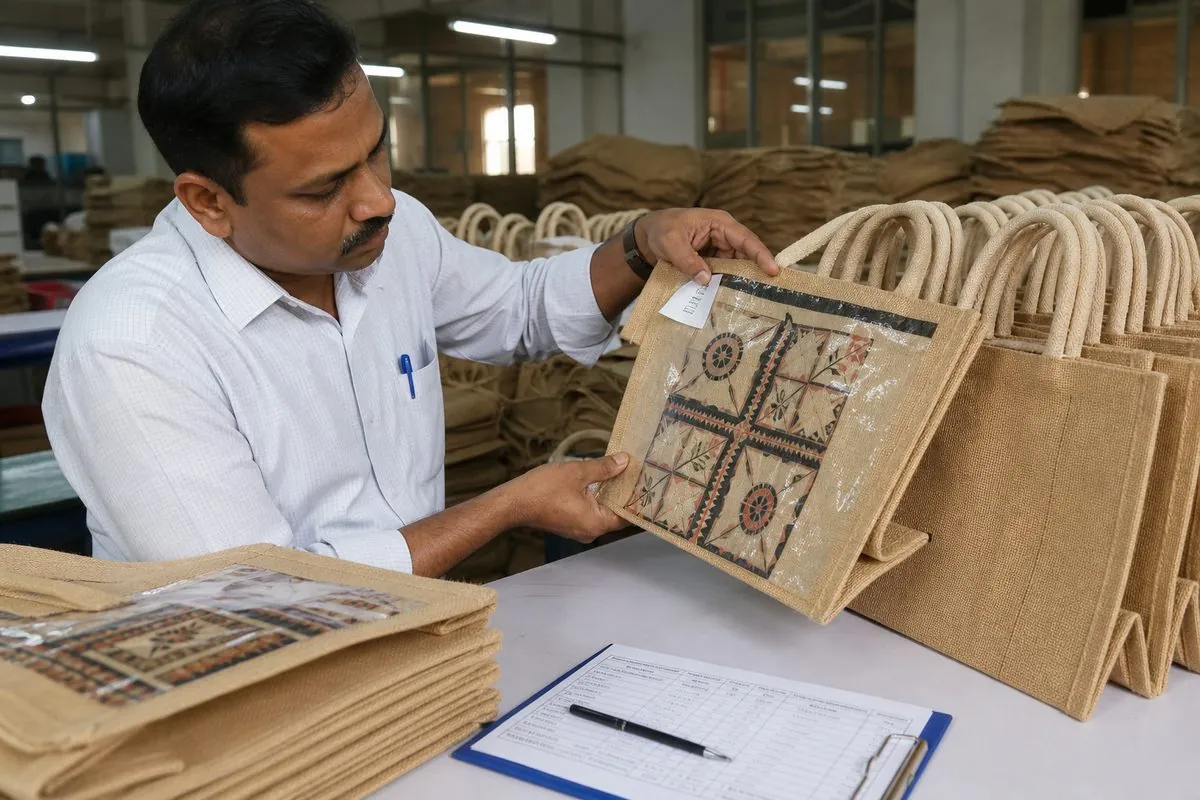
International buyers evaluating Indian jute handicraft suppliers typically require: verified IEC and EPCH RCMC; fibre composition labelling matching actual goods; colourfastness and handle pull evidence on trial lots; REACH or Prop 65 readiness where applicable; moisture-protected export packing; honest biodegradable claims distinguishing laminated from unlaminated bags; and packing lists reconciled to PO line items. Retail grocery programmes add barcode, hangtag, and private-label artwork specifications. Promotional distributors prioritize print registration, gusset size consistency, and on-time delivery against campaign dates.
Full buyer-side audit and RFQ guidance lives in Source Jute Handicrafts Directly from India. Document templates and field-by-field checklist live in Jute Handicraft Export Documentation Checklist.
Country-wise Opportunities
Market Snapshot
The table below summarizes directional opportunity scoring across the nine priority destinations — combining import appetite, duty/friction, freight cycle, eco-claim burden, and channel fit. Use it as a sequencing tool, not a substitute for live trade data or buyer-specific PO commitments.
Directional country opportunity scorecard for Indian jute handicraft exporters (2026)
Swipe →
Data table — swipe horizontally on small screens
| Country | Opportunity Score | Primary Channel | Key Gate |
|---|---|---|---|
| USA | Very High | Promotional, grocery plastic-ban, home specialty | Prop 65, fibre labelling, moisture packing |
| Germany | Very High | Eco retail, wholesale redistribution | REACH/SVHC, OEKO-TEX/GOTS verification |
| UK | High | Grocery, gift, home specialty | UK REACH, plastic-packaging scrutiny |
| Netherlands | High | EU hub + direct retail | REACH; distribution partner potential |
| France | High | Design gift, fashion accessories | Finish quality; honest composition claims |
| UAE | High (fast cycle) | Hospitality, hypermarket, re-export | Moisture QC; presentation integrity |
| Australia | Medium | Home specialty, eco retail | ACCC eco-claim alignment |
| Canada | Medium | Grocery, promotional | Mirrors USA; bilingual labels |
| Japan | Medium (premium niche) | Department gift, design retail | Finish quality; modest volume |
Sourcing Checklist
Checklist
Buyer Checklist
Exporter Checklist
Compliance Checklist
Checklist
Compliance Notes
Common Buyer Mistakes
Common Mistakes Box
First-time jute handicraft market selectors repeat predictable errors — below are the patterns that most often destroy first-container economics when choosing destinations without matching compliance readiness.
Common market-selection mistakes and how to avoid them
Swipe →
Data table — swipe horizontally on small screens
| Mistake | Consequence | How to Avoid It |
|---|---|---|
| Choosing market by size alone | Eco-claim mismatch stalls first retail listing | Score duty, freight, and dye/laminate burden together |
| Treating 42022230 and 6305 as interchangeable | Duty and buyer mismatch at customs | Confirm lifestyle bag vs packing sack with CHA per SKU |
| Marketing laminated bags as fully compostable | EU and USA retail audit failure | Honest claim language — BOPP laminate ≠ unlaminated jute |
| Pursuing Germany without REACH dye readiness | Wholesale delist after SVHC inquiry | Build dye supplier declarations before EU outreach |
| Ignoring moisture packing for long-haul sailings | Mould claims at USA/EU arrival | Desiccants and moisture barriers — non-negotiable |
| Claiming OEKO-TEX without valid certificate | Premium programme collapse; legal exposure | Certificate scope must match SKU and facility |
| Pursuing USA, EU, and Gulf simultaneously from standing start | Compliance budget spread too thin | Sequence — UAE or single EU anchor first, then scale |
| Conflating jute rugs (5705) with yoga exercise mats | Wrong buyer channel and compliance path | Cross-link yoga mat cluster only for exercise-mat SKUs |
Future Market Trends
Key Statistics
Expect the gap between low-friction markets (UAE, selective Canada promotional) and high-documentation markets (Germany, Netherlands, California-facing USA retail, Japan) to widen as EU REACH enforcement on textile dyes and Prop 65 retail scrutiny on laminate and ink substances directionally tighten — while simultaneously, private-label jute tote programmes from West Bengal gain share as importers seek authentic natural-fibre story over synthetic bag imports.
Plastic-ban retail calendars in California, Canada, the UK, parts of the EU, and Australia directionally expand laminated and unlaminated jute shopping bag demand — exporters who invest in honest fibre labelling, dye compliance files, and moisture-protected packing now will command repeat programme margin. GOTS and OEKO-TEX certified jute-cotton blend lines will matter more in German and USA eco retail channels as retail audits tighten; exporters who build chain-of-custody evidence now will win listings.
Diversification beyond USA-Germany-UK concentration into UAE, Canada, and selective Australia/Japan programmes is the most likely structural shift for exporters reducing destination concentration risk while building dye compliance depth incrementally.
Challenges & Solutions
Selecting export markets for jute handicrafts involves operational challenges distinct from ceramic or timber handicrafts — moisture and mould, laminate adhesion, dye compliance, and honest eco claims dominate, not kiln breakage or phytosanitary certificates.
Destination-market challenges and mitigation strategies
Swipe →
Data table — swipe horizontally on small screens
| Challenge | Where It Bites Most | Mitigation Strategy |
|---|---|---|
| Moisture and mould in ocean transit | USA summer arrivals, EU winter warehousing, UK grocery | Desiccants, moisture barriers, dry warehouse staging, no damp stuffing |
| Laminate adhesion failure on retail bags | USA and EU grocery chains | Supplier laminate QC; face-out packing; humidity-controlled storage |
| REACH/SVHC dye compliance gaps | Germany, Netherlands, France, UK | Dye supplier declarations; restricted substance lists in PO |
| Prop 65 exposure on laminates and inks | California-facing USA retail | Supplier declarations and test evidence before programme launch |
| False biodegradable or plastic-free claims | All eco retail channels | Honest hangtags; distinguish BOPP laminate from plain jute |
| HS misclassification 42022230 vs 6305 vs 5705 | All destinations — duty and buyer mismatch | CHA sign-off per SKU before quoting or production |
| Freight cost dominance for low-density bag programmes | All long-haul destinations | Optimise CBM; plan FCL for retail plastic-ban programmes |
| Fragmented West Bengal stitching base | All markets — batch inconsistency | Use merchant exporter consolidating QC and packing under one accountable IEC |
How Altus Exports Helps
Altus Exports works with international buyers and Indian jute handicraft manufacturers as a merchant exporter from India, global sourcing partner, and export consultant — helping exporters and importers sequence market entry around real stitch QC, laminate discipline, dye declaration readiness, moisture-protected packing, and honest eco claims rather than chasing every inbound inquiry simultaneously.
Support includes West Bengal cluster coordination, Delhi-NCR consolidation, sample and pre-shipment QC, HS triage with CHA partners across 42022230 and 5705, EPCH-aligned export documentation, and logistics through Kolkata, Haldia, Nhava Sheva, and Mundra. Whether you are an Indian exporter prioritising USA promotional programmes or a German eco retail buyer evaluating laminated jute totes, Altus structures the market-selection decision against landed cost and compliance reality. Contact Altus Exports to discuss target destinations, or explore export products from India, product sourcing company India, and find manufacturers in India services. Related industry: Handicrafts & Lifestyle Products.
Expert Insights
Expert Insight Box
Market selection for jute handicrafts is less about finding the biggest eco retail chain and more about finding the buyer whose compliance bar matches your stitch QC, laminate honesty, dye documentation, and moisture packing story today — with a credible path to the next tier after one clean container.
Sources
- EPCH Annual Report 2024–25 — handicrafts excl. carpets Rs 33,122.79 crore / US$3,917.89 million (FY 2024–25).
- EPCH export statistics pages — category and country tables for Indian handicrafts.
- IBEF — Jute Industry in India — DGCIS-sourced jute goods export totals (FY25 ~US$229 million) and product splits.
- JPDEPC — Jute Products Development & Export Promotion Council — jute product export promotion and RCMC authority for jute goods.
- JPDEPC commodity-wise jute goods exports FY 2020–21 to 2024–25 — DoC-sourced commodity series.
- JPDEPC major country destinations for Indian jute goods FY 2020–21 to 2024–25 — USA, France, Ghana, Germany, UK, Netherlands, etc.
- National Jute Board — Ministry of Textiles statutory body for jute development.
- DGFT — IEC profile management — Import Export Code registration.
- DGCI&S Kolkata — official Indian foreign trade statistics.
- ITC Trade Map — HS-line export/import matrices for buyer and market validation.
- USITC Harmonized Tariff Schedule — verify US HTS 4202.22 / 5705 10-digit lines and Column 1 MFN rates.
- EU TARIC / taxation and customs — verify CN 4202 22 duty and preferences.
- EximGuru ITC-HS 42022230 — Indian export policy line for hand-bags and shopping bags of jute.
- EximGuru ITC-HS 63051030 — jute hessian packing bags (contrast line).
- GOTS — Global Organic Textile Standard — organic fibre and chain-of-custody claims.
- OEKO-TEX STANDARD 100 — harmful-substance testing claims.
- Textile Exchange — GRS — recycled-content chain claims.
- ECHA — REACH — EU chemical compliance for dyes, prints, and coatings.
- California OEHHA — Proposition 65 — US warning and listed-substance framework for laminates/inks where applicable.
- FTC — Textile labeling — US fibre composition labelling.
- ICC — Incoterms® rules — EXW, FOB, CFR, CIF, DDP definitions.
- Altus Exports — Handicrafts & lifestyle products — merchant exporter / sourcing context.
Trade figures below are cited from government councils and reputable trade portals. HS classification and destination duties must be confirmed with a licensed Customs House Agent (India) and a destination customs broker before quoting landed cost. Commercial FOB and MOQ bands elsewhere in this guide are programme estimates, not published price indices. All sources accessed 2026-07-26.
Conclusion
- Action: Confirm stitch QC, moisture packing, and dye declaration readiness before targeting a new destination.
- Review How to Export Jute Handicrafts from India for the complete export process.
- Read Top Jute Handicraft Products Exported from India to align product form with channel fit.
- See Most Demanded Indian Jute Handicrafts by Country for granular SKU matching — not covered here.
- Build buyer relationships with How to Find International Buyers for Jute Handicrafts and Trade Shows and B2B Marketplaces for Jute Handicraft Exporters.
- Prepare documentation with Jute Handicraft Export Documentation Checklist and EPCH Registration Benefits for Jute Handicraft Exporters.
- Match destination eco-claim scrutiny with Eco, GOTS and Plastic-Ban Alternative Jute Handicraft Export Opportunities.
- For the buyer-side playbook read Source Jute Handicrafts Directly from India.
- Explore merchant exporter services, global sourcing partner models, and find manufacturers in India, or contact Altus Exports to discuss target markets.
Choosing the best countries for Indian jute handicraft exports in 2026 comes down to matching your stitch discipline, dye compliance, laminate honesty, moisture packing, and fibre labelling standards to the destination that rewards them: USA and Canada for promotional and grocery plastic-ban scale with Prop 65 and fibre labelling awareness; Germany, Netherlands, France, and UK for the EU eco retail tier once REACH-aligned documentation is reliable; UAE for the fastest entry cycle and lightest formal compliance burden; Australia and Japan as finish-quality and certified niches once packing standards are proven.
Every market on this list rewards the same underlying investment: controlled stitching and handle attachment, evidence-based OEKO-TEX and GOTS claims where advertised, honest biodegradable language distinguishing laminated from unlaminated bags, moisture-protected export packing, and HS discipline across 42022230 and 5705. Exporters who sequence market entry around real fibre and logistics readiness outperform those who chase every market inquiry simultaneously.