
Eco, GOTS and Plastic-Ban Alternative Jute Handicraft Export Opportunities
By Saurabh Mittal, Founder, Altus Exports
A dedicated guide to evidence-bound premium jute handicraft export from India — GOTS and OEKO-TEX certified programmes, GRS recycled-content pathways, plastic-ban retail shopping-bag alternatives, honest biodegradable claim architecture (laminated BOPP ≠ unlaminated jute), and high-margin certified private-label lines.
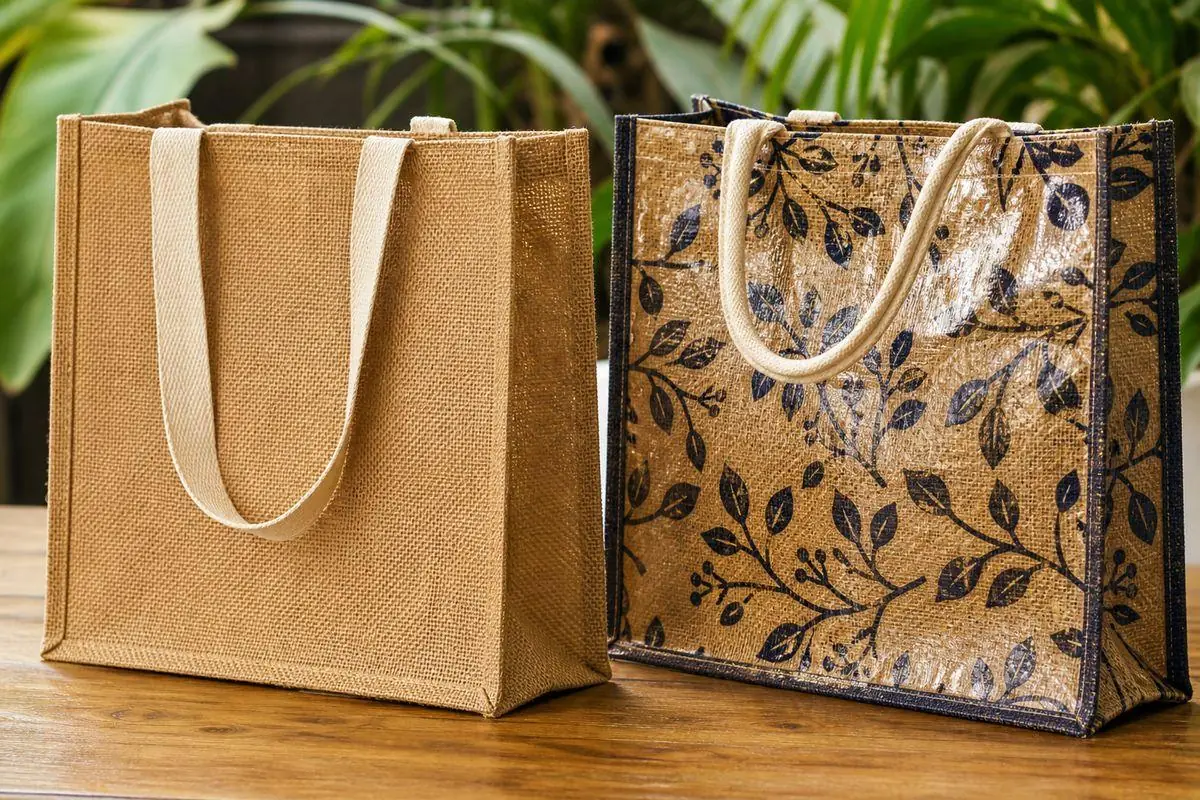
Eco, GOTS, and plastic-ban alternative jute handicraft export opportunities sit at the intersection of natural-fibre retail credibility and modern compliance — and the exporters who capture premium margins are the ones who tell both stories honestly. GOTS-certified jute-cotton blend bags demand organic fibre and certified supply-chain evidence; OEKO-TEX Standard 100 programmes face chemical-limit scrutiny on dyes, prints, and laminate components; GRS recycled-content claims require verified post-consumer or pre-consumer fibre inputs; plastic-ban retail programmes in USA, Germany, UK, Netherlands, France, UAE, Australia, Canada, Japan pay evidence-dependent premiums when construction honesty, cert chain-of-custody, and private-label packing are substantiated per lot — not invented in a brochure.
This guide is dedicated entirely to the premium, compliance, and eco layer of Indian jute handicraft exports — GOTS certified programmes, OEKO-TEX Standard 100 pathways, GRS recycled-content positioning, plastic-ban retail shopping-bag alternatives, honest biodegradable and plastic-free claim architecture, and private-label premium margin structure. It is not a general export process guide (see the process pillar), it is not a buyer prospecting playbook (see Find International Buyers for Jute Handicrafts), and it deliberately does not restate industrial hessian mill commodity essays, yoga-mat thickness specs, bamboo phytosanitary deep-dives, or ceramic glaze content — because this cluster is jute handicraft only: lifestyle shopping bags, fashion totes, laminated retail bags, placemats, runners, rugs, and jute-cotton blend craft programmes under HS 42022230 and 5705.
For the standard operational export process, read How to Export Jute Handicrafts from India. For the SKU catalogue, see Top Jute Handicraft Products Exported from India. For buyer discovery and outreach tactics, read How to Find International Buyers for Jute Handicrafts. For market ranking, see Best Countries for Indian Jute Handicraft Exports. For pre-shipment paperwork — fibre composition certificates, REACH SVHC dye declarations, Prop 65 laminate/ink statements, and GOTS transaction certificates — see Jute Handicraft Export Documentation Checklist.
Altus Exports operates as a merchant exporter in India and global sourcing partner, coordinating honest laminate-versus-unlaminated claim discipline, GOTS and OEKO-TEX certification workflows, plastic-ban retail programme structure, and private-label premium margin architecture for buyers and Indian jute clusters that want to build durable certified programmes without eco overclaim exposure.
Key Takeaways
Summary Box
Executive Summary
Summary Box
Premium jute handicraft export from India has moved from a commodity tote niche to a structured retail category where USA, EU, UK, Australian, Canadian, and Japanese buyers audit fibre composition, certification chain-of-custody, laminate construction, and biodegradable claim language before finalising private-label programmes. Five distinct pillars define the honest opportunity: GOTS certified jute-cotton and organic-fibre programmes with valid scope and transaction certificates; OEKO-TEX Standard 100 pathways for dyes, prints, and components; GRS recycled-content positioning where verified inputs exist; plastic-ban retail shopping-bag alternatives with honest laminated versus unlaminated disclosure; and private-label premium margin structure that sits inside the commercial evidence pack rather than as late-stage marketing adjectives.
None of these pillars functions as marketing veneer. Premium retail buyers — particularly grocery chains running plastic-ban resets, eco-packaging distributors, department-store private-label merchandisers, and e-commerce brands operating under Prop 65, REACH, and anti-greenwashing rules — audit supplier claims before finalising or repeating programmes. Exporters who invest in genuine GOTS transaction certificates, OEKO-TEX test reports, GRS scope documentation, and honest laminate disclosure earn premium FOB and durable retail placement. Exporters who claim GOTS, OEKO-TEX, '100% biodegradable', or 'plastic-free' status without evidence risk contract termination at first audit and reputational damage that outlasts any single order.
This guide walks through market context for certified jute programmes, the GOTS evidence architecture, OEKO-TEX and GRS pathways, plastic-ban retail programme design, honest biodegradable claim standards, Prop 65 and REACH dye/laminate compliance, private-label premium margin logic, pricing and MOQ, packaging and shipping for certified fibre goods, and destination-specific opportunity — closing with sourcing and compliance checklists for both buyers and exporters building this tier without claim misuse exposure.
Market Size & Industry Overview
Key Statistics
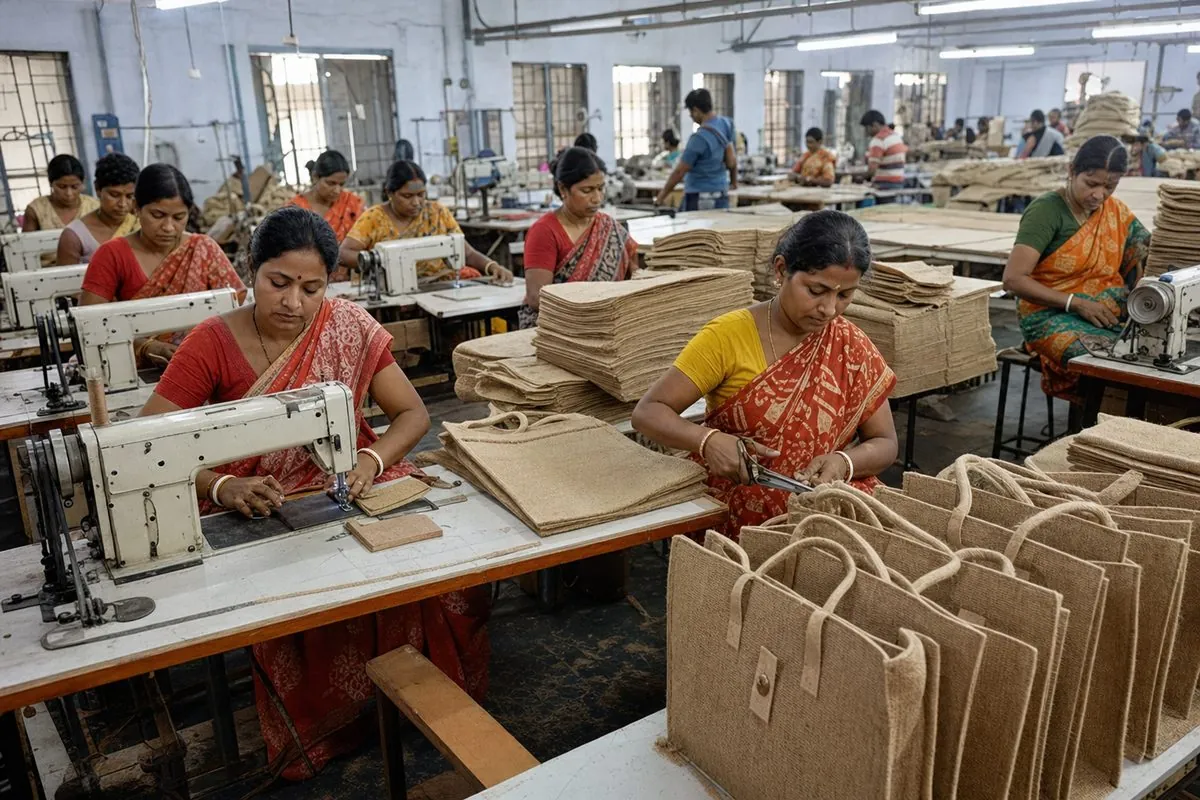
India's jute handicraft exports concentrate under ITC-HS 42022230 (hand-bags and shopping bags of jute), 5705 (jute rugs and mats), and selected 6307 décor lines when essential character fits. Use DGCI&S / TradeStat / ITC Trade Map screens on these jute-specific lines as the lifestyle-bag proxy — never substitute EPCH miscellaneous handicrafts totals or invent a single "jute handicraft export total" that blends industrial 6305 sacking with lifestyle bags. For sector context only, broader EPCH handicrafts exports (excluding carpets) reached Rs 33,122.79 crore / US$3,917.89 million in FY 2024–25. Inside that base, the evidence-bound premium tier — GOTS certified programmes, OEKO-TEX tested lines, plastic-ban retail alternatives, honest biodegradable positioning — is a smaller but faster-growing slice driven by retail audit expansion, EU plastic-packaging regulation, and formal Prop 65 / REACH scrutiny in destination markets.
India's competitive position in this tier is genuinely strong because West Bengal anchors the world's largest jute fibre and lifestyle bag stitching concentration, East India belts supply supporting craft capacity, and Delhi-NCR adds merchant consolidation, private-label finishing, and mixed eco-assortment packing for buyers who prefer western load-port routing. The premium opportunity is not volume competition with Bangladesh plain-bag commodity lines; it is evidence-bound certification, construction honesty, and plastic-ban programme discipline that converts into repeat private-label orders.
Premium Eco Jute Handicraft Market Snapshot
Swipe →
Data table — swipe horizontally on small screens
| Segment | Growth Direction | India Fit |
|---|---|---|
| GOTS certified jute-cotton bags | Rising (EU/USA organic retail driven) | Strong — when scope and transaction certificates exist |
| OEKO-TEX Standard 100 jute bags/décor | Rising (German/Dutch retail audit driven) | Strong — when component tests cover dyes, prints, handles |
| Plastic-ban retail shopping-bag alternatives | Rising (grocery chain programme led) | Strong — when laminate honesty is maintained |
| GRS recycled-content jute blends | Emerging (sustainability PL driven) | Moderate — when verified inputs and scope exist |
| Private-label certified jute décor | Steady premium in home specialty | Strong — placemats, runners, rugs with dye compliance |
| Unsubstantiated 'biodegradable jute' claims | Declining credibility | Avoid — laminated BOPP undermines claim |
Export Statistics
Key Statistics
Directional export proxy analysis for certified jute programmes uses HS 42022230 and 5705 screens on DGCI&S / TradeStat / ITC Trade Map — segmented by destination and value band to identify buyers already importing premium natural-fibre lines. Rising unit values under 42022230 often signal a buyer upgrading from plain Bangladesh commodity totes to laminated, printed, or certified Indian programmes. Do not conflate these lifestyle-bag figures with industrial 6305 hessian and sacking exports, which serve an entirely different buyer universe.
Certified programme volume is not separately published as a single DGCI&S line — it sits inside the same HS codes with higher per-unit values and repeat consignee patterns to Germany, Netherlands, USA, and UK. Use consignee frequency, value-per-piece trends, and cert-keyword RFQ patterns (GOTS, OEKO-TEX) from trade platforms as supplementary signals rather than inventing a standalone 'certified jute export total.'
Export Proxy Signals for Certified Jute Programmes
Swipe →
Data table — swipe horizontally on small screens
| Signal | Interpretation |
|---|---|
| Rising unit value under HS 42022230 to Germany/Netherlands | Buyer upgrading toward OEKO-TEX or GOTS programmes |
| Repeat FCL under 42022230 to USA grocery destinations | Plastic-ban or private-label retail programme in play |
| Seasonal peaks under 42022230 before Q1/Q3 retail resets | Plastic-ban campaign or festive bag programme — plan 4–8 months ahead |
| Mixed 5705 + 42022230 consignments | Home specialty eco-assortment buyer |
| Origin concentration in West Bengal with rising print/laminate SKUs | India competitive on certified retail bag depth vs Bangladesh plain bags |
Import Statistics
Key Statistics
Destination-side import data under HS 42022230 confirms which markets are actively expanding jute shopping-bag categories versus plateauing. Germany, Netherlands, France, and the UK show sustained import growth in natural-fibre bag alternatives aligned with plastic-packaging regulation. The USA shows grocery-chain-driven spikes tied to state and municipal plastic-ban ordinances. Australia and Canada import smaller volumes but with high compliance scrutiny on fibre claims and mould-safe packing.
Buyers whose import records show simultaneous growth in OEKO-TEX-adjacent textile categories (organic cotton, certified home textiles) are strong targets for GOTS jute-cotton blend pitches. Buyers whose records show only commodity plain jute from Bangladesh may need education on Indian laminated, printed, and certified programme depth before converting to premium FOB.
Import-Driven Premium Programme Signals by Market
Swipe →
Data table — swipe horizontally on small screens
| Market | Import Signal | Certification Relevance |
|---|---|---|
| Germany | High jute bag import volume + strict retail audit | OEKO-TEX, GOTS, REACH/SVHC dyes |
| Netherlands | Plastic-ban grocery programme imports | Construction honesty, OEKO-TEX |
| USA | State-level plastic-ban driven bag imports | Prop 65 laminates/inks, fibre composition |
| UK | Eco retail and PL bag imports | Plastic-packaging tax context, GOTS/OEKO-TEX |
| France | Design-led natural-fibre gift imports | REACH dyes, handicraft-character décor |
| Australia | Smaller but compliance-heavy bag imports | Fibre labelling, mould-safe packing |
| UAE | Hospitality gift bag imports | Print quality, less cert depth unless EU re-export |
Product Categories / Variants
Summary Box
Certified and eco-premium jute handicraft programmes span distinct construction types, each with different certification pathways and claim boundaries. This section maps product variant to cert fit — not the full SKU catalogue (see the top-products post). The critical distinction throughout: laminated BOPP retail bags and unlaminated hessian-look promotional totes are different products for eco-marketing purposes even when both classify under HS 42022230.
Eco-Premium Jute Product Variant Map
Swipe →
Data table — swipe horizontally on small screens
| Variant | Typical Cert Pathway | Claim Boundary |
|---|---|---|
| Unlaminated plain jute promotional tote | OEKO-TEX (dye/handle), fibre composition label | Strongest honest biodegradable positioning |
| BOPP-laminated printed retail shopping bag | OEKO-TEX on components; Prop 65 on laminate/ink | Not equivalent to 'plastic-free' or 'fully biodegradable' |
| GOTS jute-cotton blend fashion tote | GOTS scope + transaction certificate | Organic claim only on certified fibre content % |
| GRS recycled jute-cotton blend bag | GRS scope + verified recycled input % | Recycled content claim only with GRS evidence |
| Screen/digital printed jute décor (placemats, runners) | OEKO-TEX on print/dye; REACH/SVHC declaration | Food-contact only if tested and claimed explicitly |
| Jute rug / floor covering | 5705; OEKO-TEX on dye | Shrinkage and colourfastness evidence for premium PL |
Manufacturing Overview
Export Tip
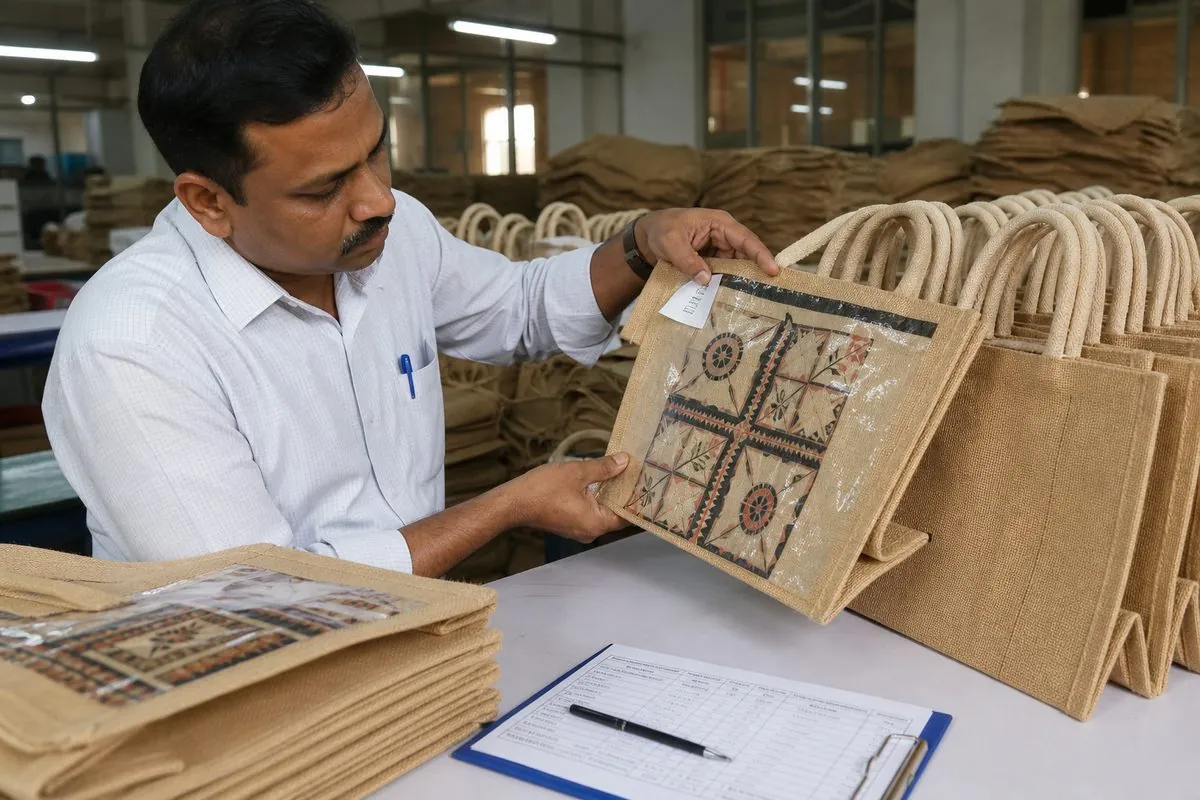
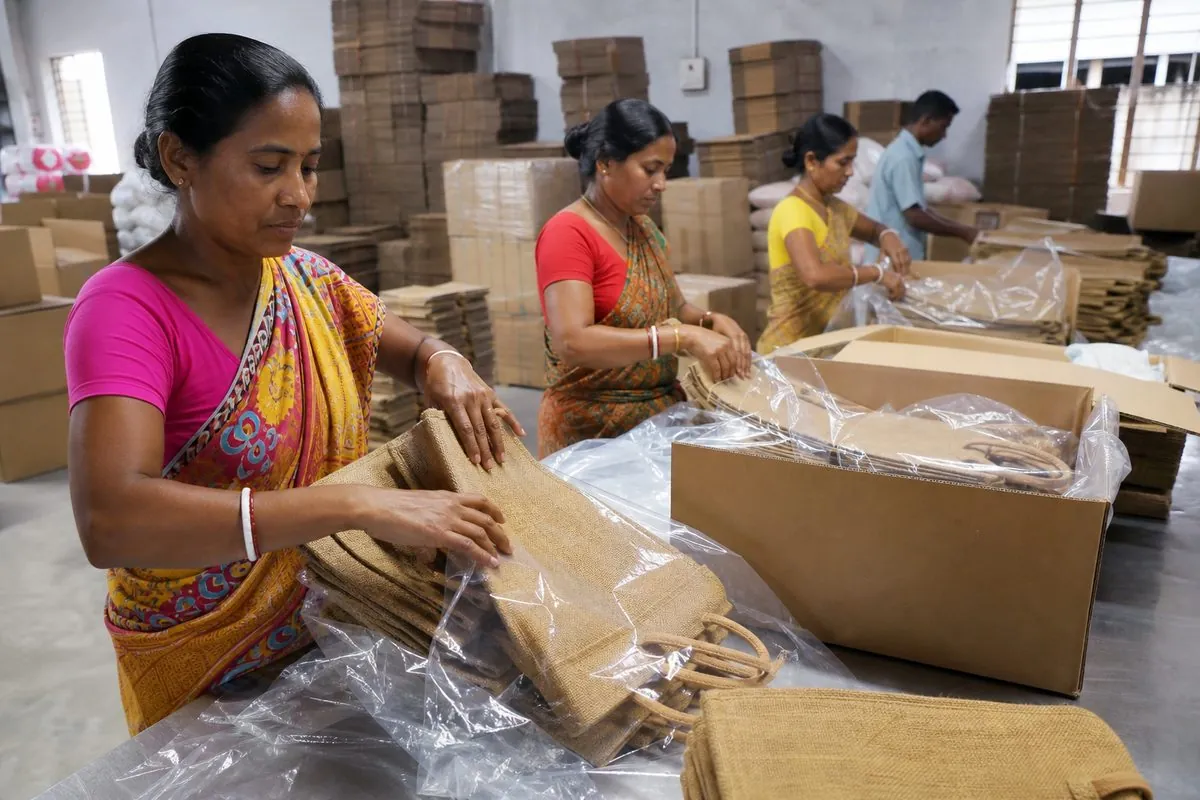
Certified jute handicraft manufacturing in West Bengal (Kolkata / Howrah / Barrackpore / North 24 Parganas) follows a chain-of-custody-sensitive workflow: fibre selection (organic where GOTS applies) → spinning/weaving or hessian cloth sourcing from approved suppliers → cutting → stitching → handle attachment → optional lamination/print (certified ink/dye systems) → finishing → QC → export packing with cert labels. Each stage must be documented for GOTS and traceable for OEKO-TEX component testing. Delhi-NCR consolidation units add private-label hangtag insertion, barcode application, and mixed eco-assortment packing — but cannot substitute West Bengal stitch capacity in buyer audits without honest disclosure.
Buyers building certified programmes should audit whether the exporter controls GOTS-certified subcontractor lists, maintains OEKO-TEX tested dye and ink inventories, segregates certified from non-certified production runs, and retains transaction certificates before shipment release. A workshop visit that shows uncertified laminate stock on the same floor as GOTS-labelled goods is a common audit failure mode.
Certified Production Controls
- Segregate GOTS-certified fibre and production runs from conventional stock
- Maintain approved dye/ink/laminate supplier lists aligned to OEKO-TEX or REACH posture
- Document handle, lining, and thread components in cert scope — not just the jute body
- Run pre-shipment QC on stitch, handle pull, colourfastness, and laminate adhesion per lot
- Retain transaction certificates and test reports matched to export lot numbers
GOTS Certified Jute Programmes
Global Organic Textile Standard (GOTS) applies when organic fibre content and certified supply-chain controls exist — most commonly in jute-cotton blend shopping bags and fashion totes where the cotton component carries organic certification and the full processing chain from fibre to finished bag is GOTS-certified. Pure conventional jute without organic fibre certification does not qualify for GOTS labelling. GOTS requires a valid scope certificate for the manufacturing unit and transaction certificates (TCs) for each shipment, linking certified inputs to finished goods.
Indian exporters frequently overclaim GOTS by displaying a supplier's scope certificate without transaction certificates for the specific export lot, or by applying GOTS hangtags to bags containing non-certified laminate, print, or handle components outside cert scope. Retail buyers in Germany, Netherlands, UK, and premium USA channels verify TC numbers against the certifying body's database — a mismatch terminates the programme immediately.
GOTS Evidence Architecture
- Scope certificate: valid for the stitching/finishing unit handling GOTS production
- Transaction certificate: issued per shipment, linking certified inputs to finished SKUs
- Label grade: confirm 'organic' vs 'made with organic' based on fibre percentage thresholds
- Component scope: handles, linings, prints, and laminates must be inside cert boundary or excluded from claim
- Subcontractor disclosure: lamination and print subcons must appear on scope or be pre-approved
OEKO-TEX Standard 100 Pathways
OEKO-TEX Standard 100 tests finished textile articles or components against restricted substance limits — valuable for jute shopping bags, placemats, runners, and fashion totes where dyes, prints, handles, and linings face retail chemical-audit scrutiny. An OEKO-TEX label on the bag body does not automatically cover untested handles or BOPP laminate film unless included in the test scope. German and Dutch retail buyers frequently require OEKO-TEX or equivalent test reports before listing private-label jute bags.
Build OEKO-TEX into the sample stage: submit the full component set (body fabric, handle material, thread, print, lining if any) for testing against the destination market's class requirements. Re-test when dye, print, handle, or laminate suppliers change — not only when the buyer asks.
OEKO-TEX Application by Jute SKU Component
Swipe →
Data table — swipe horizontally on small screens
| Component | Test Scope Note | Common Gap |
|---|---|---|
| Jute body fabric | Dye and finish chemistry | Assuming natural=jute needs no test |
| Print ink / pigment | Must be included in test submission | Tested body only, not print |
| Cotton handles | Separate component or full article test | Untested PP rope handles |
| BOPP laminate film | Often excluded — disclose separately | Claiming OEKO-TEX on full bag including untested film |
| Sewing thread | Include in component set | Overlooked in component lists |
| Placemat / runner sets | Full set testing for retail PL | Testing single swatch only |
GRS Recycled-Content Programmes
Global Recycled Standard (GRS) verifies recycled content claims and chain-of-custody for products containing post-consumer or pre-consumer recycled fibre — applicable to jute-cotton or jute-poly blends where verified recycled inputs exist. GRS does not apply to conventional virgin jute marketed as 'sustainable' without recycled fibre evidence. Premium e-commerce and department-store buyers experimenting with circular-economy narratives may pay modest FOB premiums for GRS-verified blends — but only when scope certificates and transaction certificates match the claimed recycled percentage.
Do not confuse GRS with GOTS or OEKO-TEX — they solve different claims. A bag can carry GRS for recycled cotton content and OEKO-TEX for chemical limits and GOTS for organic content simultaneously, but each requires its own evidence chain and honest hangtag language that does not merge claims into vague 'eco certified' marketing.
Plastic-Ban Retail Programmes
Plastic-ban retail programmes — driven by state and municipal ordinances in the USA, national measures in EU member states, and grocery-chain sustainability commitments globally — create structured demand for reusable shopping bags including jute, jute-cotton, and laminated jute alternatives. These programmes run on retail-calendar cadence: buyers book 4–8 months ahead of reset dates, specify GSM, handle type, print design, barcode integration, and increasingly demand construction honesty on laminate content.
The honest positioning for Indian exporters: unlaminated jute and jute-cotton totes as high-credibility natural-fibre alternatives; laminated jute as a durable reusable option that must not be marketed as 'plastic-free' without qualifying the BOPP film layer. Retailers who face greenwashing litigation or consumer complaints penalize suppliers who blur this line — even when the FOB price is attractive.
Plastic-Ban Programme Design Matrix
Swipe →
Data table — swipe horizontally on small screens
| Programme Element | Exporter Requirement | Claim Risk if Skipped |
|---|---|---|
| Construction disclosure | State laminated vs unlaminated in spec and hangtag | Greenwashing audit failure |
| GSM and handle pull spec | Written QC table per lot | Retail load failure returns |
| Print registration and colourway lock | Approved swatch signed before bulk | Shelf reset delay and chargebacks |
| Barcode / PLU integration | Retail-ready carton and hangtag | Receiving DC rejection |
| Reuse-cycle messaging | Honest 'reusable bag' vs 'biodegradable' language | Consumer complaint and legal exposure |
| Capacity booking | 4–8 months ahead of reset | Missed season — buyer switches origin |
Honest Biodegradable & Plastic-Free Claims
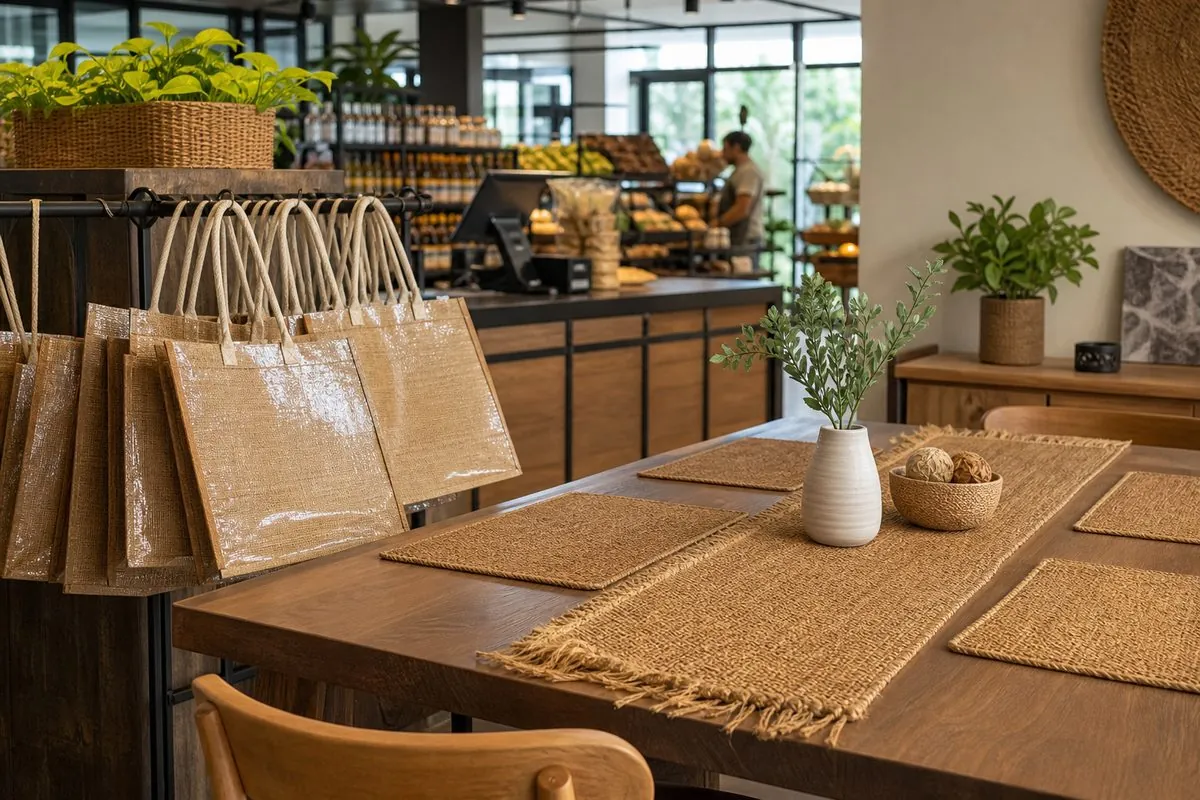
Biodegradable, compostable, and plastic-free claims on jute handicrafts require construction-specific honesty. Unlaminated jute fibre degrades faster in appropriate composting environments than BOPP-laminated jute, but 'biodegradable' is not automatic for any jute product — compostability requires testing under recognized standards (EN 13432, ASTM D6400 for applicable materials) and honest communication of conditions. Laminated BOPP film on jute bags is a plastic layer; marketing such bags as 'plastic-free' without qualification is a primary greenwashing failure mode in EU and USA retail audits.
Preferred honest language hierarchy: (1) 'Unlaminated jute tote — natural fibre, reusable' for plain promotional bags; (2) 'Jute body with BOPP laminate for durability — reusable shopping bag' for retail laminated lines; (3) 'GOTS certified organic cotton-jute blend' only with TC evidence; (4) 'OEKO-TEX Standard 100 tested' only with valid certificate number and scope. Avoid: '100% eco friendly', 'fully biodegradable jute', 'plastic-free jute bag' on laminated SKUs.
Laminated vs Unlaminated — Claim Architecture
Swipe →
Data table — swipe horizontally on small screens
| Construction | Honest Primary Claim | Claims to Avoid |
|---|---|---|
| Unlaminated jute tote | Reusable natural-fibre bag | 'Compostable' without test evidence |
| BOPP-laminated jute retail bag | Reusable jute shopping bag with durable laminate | 'Plastic-free', '100% biodegradable' |
| GOTS jute-cotton blend | GOTS certified [label grade] — cite TC number | '100% organic' when blend is mixed |
| OEKO-TEX tested printed bag | OEKO-TEX Std 100 tested — cite cert number | 'Chemical-free' (overbroad) |
| GRS recycled blend | Contains X% recycled content — GRS certified | 'Sustainable' without recycled evidence |
MOQ Analysis
Buyer Tip
Certified programmes still begin at human scale: samples 5–20 pieces per SKU for GSM, construction, cert validation, and print approval; trial 500–2,000 pieces per hero bag SKU or mixed LCL for lot consistency, cert document reconciliation, and packing proof; private-label and plastic-ban programme scale toward Programme FCL 20GP/40HC planned by carton, colourway, and retail calendar. GOTS and OEKO-TEX programmes often require an extra validation round at trial MOQ before FCL release — because a failed cert audit at programme scale destroys both inventory and the brand relationship.
MOQ by Certified Programme Stage
Swipe →
Data table — swipe horizontally on small screens
| Stage | Typical Quantity | Certification Focus |
|---|---|---|
| Sample | 5–20 pieces per SKU | Component test plan, GOTS scope check, print swatch |
| Trial | 500–2,000 pieces per hero bag SKU or mixed LCL | TC issuance, OEKO-TEX lot match, laminate adhesion QC |
| Programme FCL | Programme FCL 20GP/40HC planned by carton, colourway, and retail calendar | Seasonal volume + TC per shipment + retail packing |
Packaging Standards for Certified Programmes
Export Tip
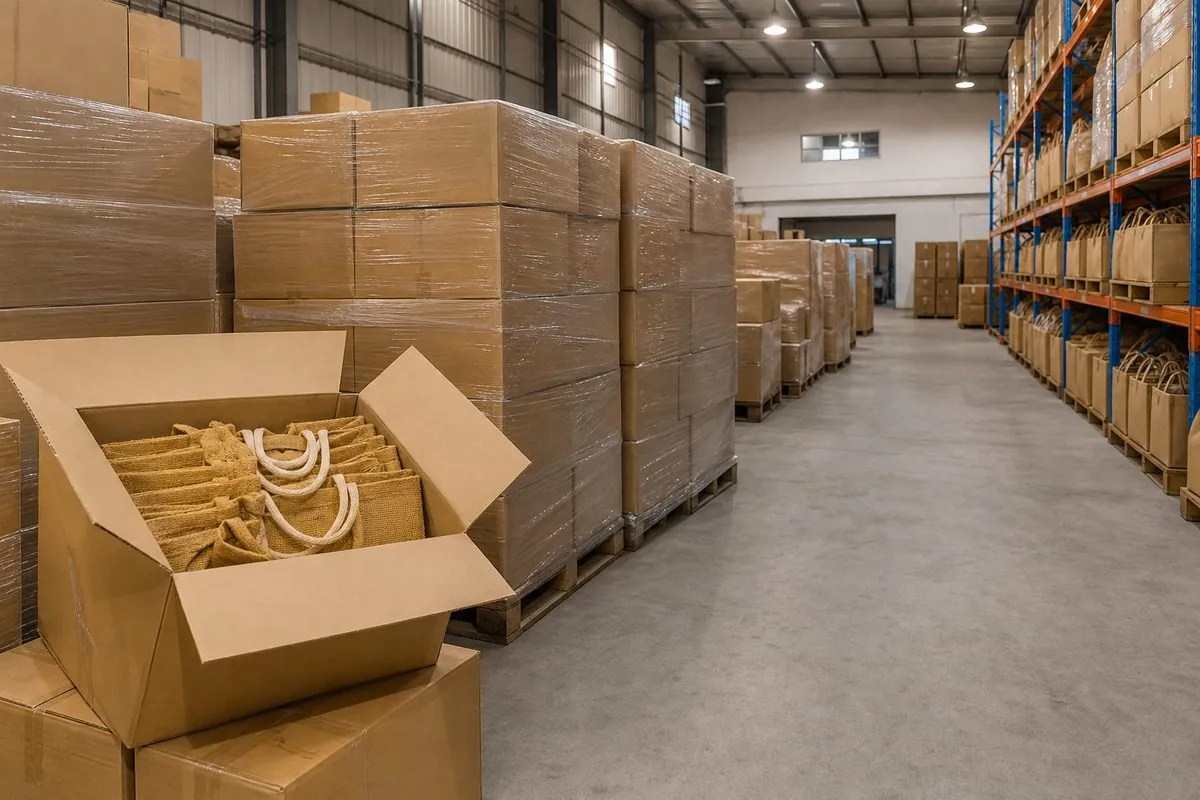
Certified jute export packing must protect both the product and the claim: polybag or kraft wrap per piece where needed; moisture barrier and desiccants for ocean transit; laminate-face protection; cert hangtags and barcode inserts for private label; carton markings that do not contradict fibre-composition or cert labels. Mould in transit destroys jute body integrity and triggers returns — desiccant discipline is part of the certified programme SOP, not an optional extra.
Certified Programme Packing Standards
Swipe →
Data table — swipe horizontally on small screens
| Element | Standard | Cert Programme Note |
|---|---|---|
| Moisture control | Desiccants in every master carton for ocean lanes | Mould = claim failure at receiving |
| Cert hangtag | GOTS/OEKO-TEX number matches TC or cert scope | Mismatch = retail audit failure |
| Fibre composition label | Jute % / cotton % / laminate disclosure | Must match TC and test scope |
| Laminate-face protection | Insert or wrap preventing print crush | Retail presentation quality gate |
| Carton marking | SKU, colourway, cert reference, stack limit | DC scanning and audit traceability |
| Retail gift box | Where PL specifies | Artwork approved before print — no post-hoc claim edits |
Container Loading Details
Export Tip
Certified jute FCL loads through Kolkata / Haldia, Nhava Sheva (JNPT), Mundra, ICD Delhi / Dadri with cube-first planning — bags compress; protect laminated print faces; maintain packing-list discipline for mixed cert and non-cert SKUs (never mix TC references on a single PL line). Inland haul from West Bengal commonly routes via Kolkata/Haldia for eastbound programmes or ICD Delhi/Dadri into western ports for NCR-finishing consolidations.
Loading Planning for Certified Jute FCL
Swipe →
Data table — swipe horizontally on small screens
| Container | Typical Load Pattern | Cert Programme Note |
|---|---|---|
| 20ft dry | Cube-planned cartons; stack-height limited | Trial or moderate certified PL |
| 40ft dry | Higher carton count; mixed colourways | Plastic-ban seasonal programme |
| 40ft HC | Extra cube for bulky assortments | Mixed bag + décor eco assortment |
| LCL consolidation | Partial pallet, shared container | Cert validation trial stage |
Shipping Methods & Lead Times
Export Tip
Certified programme lead times exceed standard stock bags when chain-of-custody must be built or renewed: samples 7–18 days; stock bags 3–5 weeks; custom print/private label 5–9 weeks; GOTS/OEKO-TEX build-out Longer when GOTS/OEKO-TEX chain of custody must be built; plastic-ban retail resets 4–8 months ahead of plastic-ban retail reset. Book capacity early — cert audit and TC issuance add days that cannot be compressed once the retail calendar is fixed.
Incoterms: EXW, FOB, CFR/CIF for most programmes; DDP selective. Air freight useful for cert sample approval cycles despite higher per-piece cost.
Lead Time Reference for Certified Jute Programmes
Swipe →
Data table — swipe horizontally on small screens
| Stage | Typical Lead Time |
|---|---|
| Sample with cert test plan | 7–18 days |
| Stock promotional bags | 3–5 weeks |
| Custom print / private label | 5–9 weeks |
| GOTS/OEKO-TEX chain build | Longer when GOTS/OEKO-TEX chain of custody must be built |
| Plastic-ban retail reset (planning horizon) | 4–8 months ahead of plastic-ban retail reset |
Certifications
Compliance Notes
EPCH RCMC remains the baseline export-sector credibility signal for jute handicraft lifestyle programmes — distinct from JPDEPC/NJB adjacency for broader industrial jute products. Layer GOTS, OEKO-TEX, and GRS only with valid scope and transaction evidence. Prop 65 and REACH/SVHC apply to laminate films, print inks, and dye chemistry regardless of cert status.
Certification Stack by Destination Programme
Swipe →
Data table — swipe horizontally on small screens
| Certification | Primary Use | Evidence Type |
|---|---|---|
| EPCH RCMC | Sector export credibility | Council registration certificate |
| GOTS | Organic fibre jute-cotton programmes | Scope + transaction certificates |
| OEKO-TEX Std 100 | Chemical limits on bag/décor | Test report / label licence |
| GRS | Recycled content blends | Scope + transaction certificates |
| REACH/SVHC declaration | EU/UK dye and chemical compliance | Supplier declaration + test where needed |
| Prop 65 | USA laminate/ink exposure | Warning or exposure assessment where applicable |
Buyer Requirements
Buyer Requirements
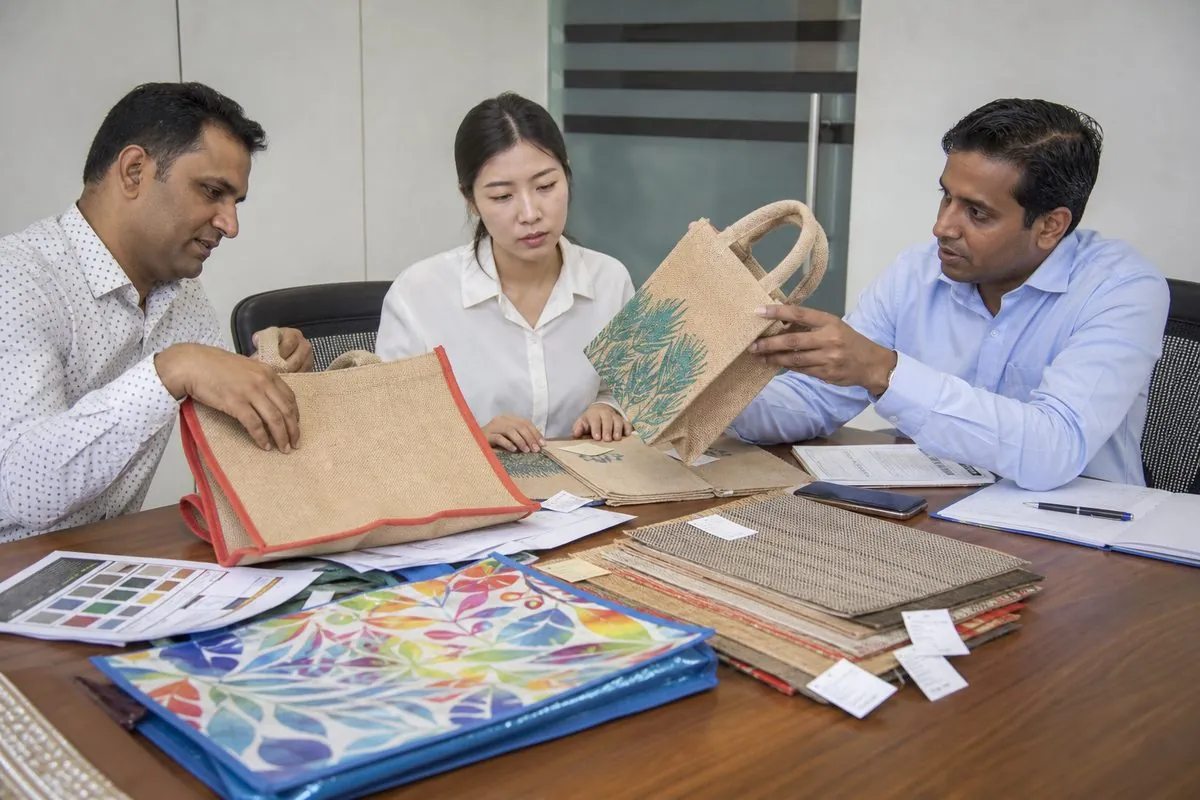
Premium certified jute buyers require evidence at RFQ stage, not after first shipment. Standard gates: valid GOTS transaction certificate for the specific lot; OEKO-TEX certificate covering all components; honest laminated versus unlaminated specification; fibre composition label matching cert scope; Prop 65 or REACH posture for destination; retail packing SOP with approved hangtag artwork; and mould-prevention packing evidence for ocean transit.
Certified Programme Buyer Requirement Matrix
Swipe →
Data table — swipe horizontally on small screens
| Requirement | Exporter Delivery |
|---|---|
| GOTS claim | Scope cert + TC for export lot |
| OEKO-TEX claim | Valid cert number covering components |
| GRS recycled claim | Scope + TC + verified % |
| Plastic-ban PL spec | GSM, handle, print, barcode, construction disclosure |
| Biodegradable language | Honest claim matrix — no overclaim on laminated SKUs |
| Fibre composition | Label matching cert and lab test |
| Mould-safe packing | Desiccant SOP + moisture barrier evidence |
Country-wise Opportunities
Market Snapshot
Certified and plastic-ban jute programme opportunity varies by destination compliance burden and retail-channel maturity. Germany and Netherlands lead OEKO-TEX and GOTS depth; USA leads plastic-ban grocery programmes with Prop 65 laminate awareness; UK balances plastic-packaging tax context with PL growth; France favours design-led natural-fibre gift and décor; Australia and Canada run smaller but audit-heavy programmes.
Certified Programme Priority by Destination
Swipe →
Data table — swipe horizontally on small screens
| Destination | Primary Cert / Compliance Focus |
|---|---|
| Germany | OEKO-TEX + GOTS + REACH/SVHC dyes |
| Netherlands | Plastic-ban PL + OEKO-TEX + construction honesty |
| USA | Prop 65 laminates/inks + plastic-ban grocery programmes |
| UK | Plastic-packaging tax context + GOTS/OEKO-TEX PL |
| France | REACH dyes + design-led natural-fibre PL |
| Australia / Canada | Fibre labeling + mould-safe packing |
| Japan | Tight spec + emerging OEKO-TEX in premium gift |
Germany & Netherlands
Highest cert depth: OEKO-TEX essentially gates German retail jute listings; GOTS valued for organic jute-cotton blends; REACH/SVHC dye declarations expected on all print programmes. Netherlands grocery plastic-ban programmes drive laminated and unlaminated jute tote demand — construction honesty is non-negotiable.
United States
State and municipal plastic-ban ordinances drive grocery-chain jute bag programmes. Prop 65 awareness for BOPP laminate and print inks required. GOTS niche growing in premium organic retail and e-commerce. Fibre composition labeling under textile rules applies to jute-cotton blends.
United Kingdom
Plastic-packaging tax and retailer greenwashing scrutiny make laminate disclosure critical. Smaller trial MOQs than Germany but strong PL growth. GOTS and OEKO-TEX increasingly expected on premium eco lines.
France, Australia, Canada, Japan
France: design-led jute gift bags and décor with REACH dye compliance. Australia/Canada: fibre labeling and mould-safe packing gates. Japan: smaller volume, tight spec on stitch and print — cert depth growing in premium hospitality gift programmes.
Export Process — Certified Programme Workflow
Export Tip
Certified jute export follows the standard operational skeleton — IEC, EPCH RCMC, HS triage with CHA, QC, packing, shipping — but adds evidence-layer steps at sample, trial, and programme scale. Full process detail lives in How to Export Jute Handicrafts from India.
Certified Workflow Additions
- Sample stage: construction disclosure, GOTS scope check, OEKO-TEX component test plan, print swatch approval
- Trial stage: transaction certificate issuance, OEKO-TEX lot match, laminate adhesion and handle pull validation
- Programme stage: TC per shipment, cert hangtag QC, retail packing SOP, CHA-confirmed HS on invoice
- Plastic-ban stage: capacity booking 4–8 months ahead, GSM and print lock-down, barcode integration
Sourcing Checklist — Buyer and Exporter
Checklist
Certified jute programmes work when both sides follow a disciplined checklist. Cert, construction, and claim misalignment surfaces at retail audit — not at the stitching floor — and the late discovery costs the buyer a campaign reset and the exporter the account.
Buyer Checklist
- Request GOTS transaction certificate for the specific export lot — not only the factory scope certificate
- Require OEKO-TEX certificate covering handles, prints, and linings — not body fabric alone
- Verify laminated versus unlaminated construction before approving hangtag language
- Demand GRS transaction certificate for any recycled-content claim
- Put Prop 65 / REACH / fibre-composition requirements into PO language
- Audit packing SOP for desiccants and mould prevention before trial FCL
- Confirm EPCH RCMC and HS 42022230 / 5705 classification on sample invoice
Exporter Checklist
- Never claim GOTS, OEKO-TEX, GRS, or biodegradable status without evidence
- Build cert evidence packs at sample stage — not after shipment
- Segregate certified and non-certified production physically and in documentation
- Disclose BOPP laminate on all retail bag specs and hangtags
- Retain lot-linked QC photos and cert documents through audit windows
- Book plastic-ban retail capacity 4–8 months ahead
- Match fibre-composition labels to TC and test scope exactly
Common Buyer Mistakes
Common Mistakes Box
Buyers building certified jute programmes often accept GOTS scope certificates as proof of certified shipment without transaction certificates, approve OEKO-TEX labels without verifying component scope, pay biodegradable premiums on BOPP-laminated bags without construction review, and skip Prop 65 / REACH review on print inks and laminate films — creating audit failures that surface after containers arrive.
Challenges & Solutions
Certified jute programmes fail for predictable reasons: GOTS TC missing or mismatched at audit, OEKO-TEX scope excluding handles or print, biodegradable claims rejected on laminated SKUs, mould in transit on certified lots, plastic-ban lead-times missed because TC issuance started too late, and fibre-composition labels that do not match cert documents.
Certified Programme Challenges & Solutions
Swipe →
Data table — swipe horizontally on small screens
| Challenge | Solution |
|---|---|
| GOTS TC missing at retail audit | Issue TC before shipment release; match lot numbers |
| OEKO-TEX scope excludes handles/print | Submit full component set at sample stage |
| Biodegradable claim rejected on laminated bag | Honest construction disclosure on spec and hangtag |
| Prop 65 / REACH failure on ink or laminate | Pre-select compliant suppliers; test before bulk |
| Mould on certified lot in transit | Desiccant SOP + moisture barrier in every carton |
| Plastic-ban window missed | Book capacity 4–8 months ahead; lock print early |
| GRS recycled % cannot be verified | Do not claim until GRS TC issued for lot |
| Mixed cert/non-cert SKUs on one invoice | Separate PL lines; separate TC references |
Future Market Trends
Key Statistics
Certified jute export will see tighter retail-led GOTS and OEKO-TEX verification, expanding plastic-ban grocery programmes globally, stronger EU greenwashing enforcement on biodegradable language, and growing buyer intolerance for laminated bags marketed as plastic-free. Exporters who build cert evidence packs early capture margin; exporters who rely on hangtags without paperwork lose programmes to audit failure.
Certified Jute Trend Signals
Swipe →
Data table — swipe horizontally on small screens
| Trend | Exporter Response |
|---|---|
| Retail-led GOTS/OEKO-TEX verification at receiving | TC and cert numbers on carton and hangtag before shipment |
| Plastic-ban expansion to more US states and EU markets | Book retail capacity 4–8 months ahead |
| Greenwashing litigation on biodegradable claims | Construction-honest hangtag language only |
| GRS growth in circular-economy PL | Build GRS scope before marketing recycled blends |
| Prop 65 / REACH earlier in RFQ funnel | Lead with laminate and ink compliance posture |
| Private-label jute décor with dye compliance | OEKO-TEX on placemats/runners/rugs at sample stage |
Compliance Checklist
Checklist
Compliance Notes
Expert Insights
Expert Insight Box
Altus Exports coordinates certified jute handicraft programmes as a merchant exporter and global sourcing partner — connecting international buyers with West Bengal and East India cluster capacity; GOTS and OEKO-TEX certification workflows; plastic-ban retail programme structure; and private-label premium margin architecture without eco overclaim. The exporters who convert one-time jute POs into multi-year certified private-label programmes treat construction honesty and certificate discipline as commercial infrastructure — not marketing footnotes.
Sources
- EPCH Annual Report 2024–25 — handicrafts excl. carpets Rs 33,122.79 crore / US$3,917.89 million (FY 2024–25).
- EPCH export statistics pages — category and country tables for Indian handicrafts.
- IBEF — Jute Industry in India — DGCIS-sourced jute goods export totals (FY25 ~US$229 million) and product splits.
- JPDEPC — Jute Products Development & Export Promotion Council — jute product export promotion and RCMC authority for jute goods.
- JPDEPC commodity-wise jute goods exports FY 2020–21 to 2024–25 — DoC-sourced commodity series.
- JPDEPC major country destinations for Indian jute goods FY 2020–21 to 2024–25 — USA, France, Ghana, Germany, UK, Netherlands, etc.
- National Jute Board — Ministry of Textiles statutory body for jute development.
- DGFT — IEC profile management — Import Export Code registration.
- DGCI&S Kolkata — official Indian foreign trade statistics.
- ITC Trade Map — HS-line export/import matrices for buyer and market validation.
- USITC Harmonized Tariff Schedule — verify US HTS 4202.22 / 5705 10-digit lines and Column 1 MFN rates.
- EU TARIC / taxation and customs — verify CN 4202 22 duty and preferences.
- EximGuru ITC-HS 42022230 — Indian export policy line for hand-bags and shopping bags of jute.
- EximGuru ITC-HS 63051030 — jute hessian packing bags (contrast line).
- GOTS — Global Organic Textile Standard — organic fibre and chain-of-custody claims.
- OEKO-TEX STANDARD 100 — harmful-substance testing claims.
- Textile Exchange — GRS — recycled-content chain claims.
- ECHA — REACH — EU chemical compliance for dyes, prints, and coatings.
- California OEHHA — Proposition 65 — US warning and listed-substance framework for laminates/inks where applicable.
- FTC — Textile labeling — US fibre composition labelling.
- ICC — Incoterms® rules — EXW, FOB, CFR, CIF, DDP definitions.
- Altus Exports — Handicrafts & lifestyle products — merchant exporter / sourcing context.
Trade figures below are cited from government councils and reputable trade portals. HS classification and destination duties must be confirmed with a licensed Customs House Agent (India) and a destination customs broker before quoting landed cost. Commercial FOB and MOQ bands elsewhere in this guide are programme estimates, not published price indices. All sources accessed 2026-07-26.

Conclusion
GOTS, OEKO-TEX, GRS, plastic-ban retail programmes, and honest biodegradable positioning represent the evidence-bound premium tier of Indian jute handicraft export — not a volume play against Bangladesh plain-bag commodity lines, but a compliance and natural-fibre story that earns repeat private-label programmes when told honestly. GOTS demands transaction certificate discipline; OEKO-TEX demands full-component test scope; GRS demands verified recycled inputs; plastic-ban programmes demand construction honesty and retail-calendar capacity booking; Prop 65 and REACH demand substance-aware laminate and ink control.
Private-label programmes planned with staged sample → trial → FCL cadence, moisture-aware packing, and CHA-correct HS lines (42022230 shopping bags, 5705 floor coverings) capture durable margin. Plastic-ban programmes booked 4–8 months ahead with honest laminated versus unlaminated hangtag language protect retail relationships. Certified programmes with GOTS TCs and OEKO-TEX component reports protect grocery and eco-packaging buyers from post-arrival audit failure.
Altus Exports helps international buyers and Indian jute exporters build certified programmes with GOTS and OEKO-TEX coordination, plastic-ban retail structure, honest biodegradable claim discipline, and private-label premium margin architecture. Contact us via /contact/ to scope your programme, explore global sourcing partner and export products from India services, or continue with How to Export Jute Handicrafts from India for the operational pillar, Top Jute Handicraft Products Exported from India for SKU taxonomy, Best Countries for Indian Jute Handicraft Exports for market ranking, and Jute Handicraft Export Documentation Checklist for the commercial document pack. See also our handicrafts & lifestyle industry overview.