
How to Export Aluminium Billets from India: Complete Process Guide
By Saurabh Mittal, Founder, Altus Exports
A complete operational guide on how to export aluminium extrusion billets from India — registrations, DC-cast sourcing from Odisha, Chhattisgarh, and Hindalco cast-houses, 6063/6061/6082/6005 alloy and not-alloyed billet grades, LME Aluminium-linked billet premium FOB quoting, homogenization discipline, packaging, FCL loading, and buyer development, with expert insight from Altus Exports.
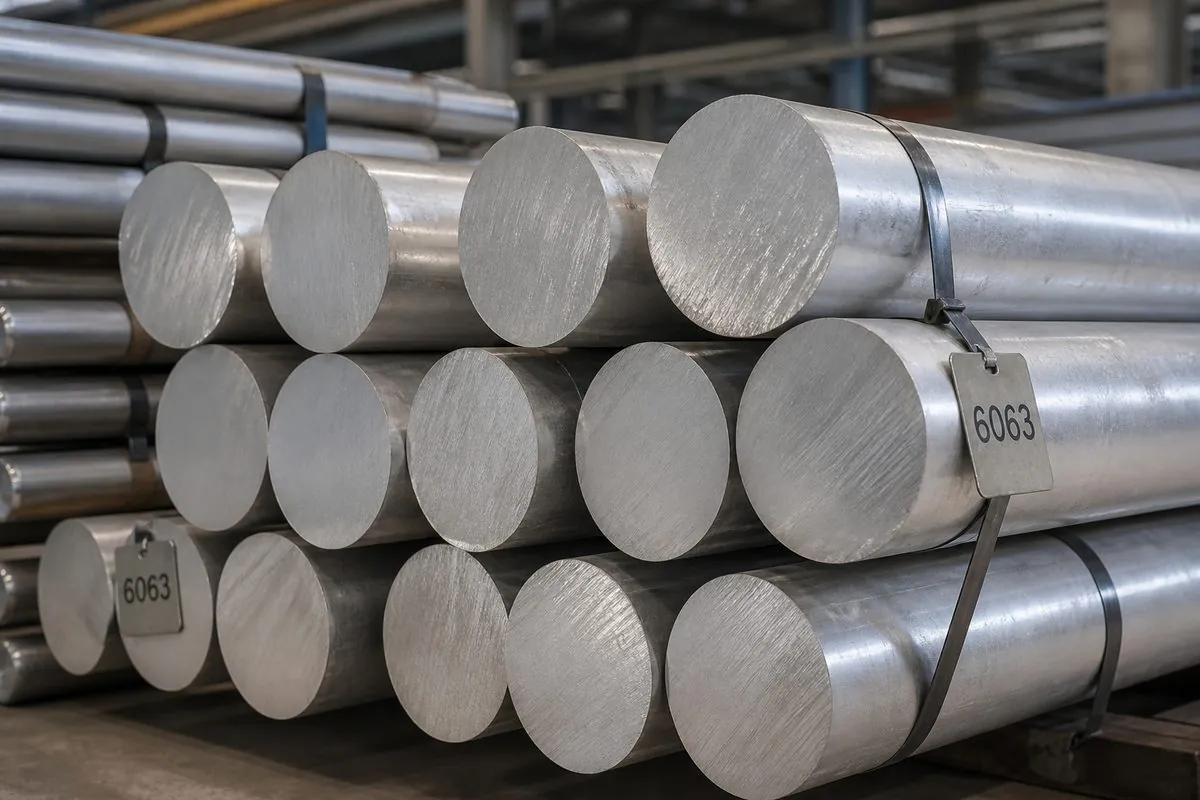
India has become a structurally important sourcing origin for aluminium extrusion billets — built on primary aluminium capacity concentrated in Odisha (NALCO Angul, Vedanta Jharsuguda) and Chhattisgarh (BALCO), with Hindalco / Aditya Birla DC-cast billet programmes and Gujarat and Maharashtra merchant cast-house consolidation supporting extrusion feedstock for global architectural fabricators, profile mills, and structural extruders. Buyers searching for how to export aluminium billets from India, or how to import them reliably, are really asking a supply-chain question: how do you connect verified cast-houses to an MTC-backed, homogenization-recorded, EEPC-documented, LME-linked billet shipment that clears customs and arrives within alloy and press-fit spec? This guide answers that question end to end. For the grade-level catalogue, see Top Aluminium Billet Products and Grades Exported from India; for market selection, see Best Countries for Indian Aluminium Billet Exports.
Aluminium billet exporting sits under India's broader non-ferrous / engineering export basket, tracked under Harmonized System heading 7601 — India tariff 76011020 for not-alloyed billets and 76012020 for 6xxx alloy billets (6063 architectural, 6061 and 6082 structural, 6005 medium-strength). EEPC India — the Engineering Export Promotion Council — is the relevant government-recognised trade body, and its RCMC sits alongside the Import Export Code (IEC) as the credential extruder buyers expect before committing volume. Beyond registrations, the real operational work is alloy-specific: 6063 architectural, 6061 and 6082 structural, 6005 medium-strength, and not-alloyed billets are different DC-cast disciplines with different Mg-Si windows, homogenization cycles, and extruder buyer segments. Note briefly that billet-form extrusion feedstock is a distinct product from the sibling ingot cluster — do not file as ingots. If you would rather work through a verified cast-house network than build these relationships from scratch, see Source Aluminium Billets Directly from India and consider a merchant exporter in India to compress the learning curve.
This guide walks through the complete operational sequence — registrations, sourcing from India's DC-cast houses, MTC + homogenization discipline, LME Aluminium ± billet / extrusion premium FOB pricing logic, cradle billet packaging, FCL loading from Mundra, Paradip, Visakhapatnam, Nhava Sheva, Kandla, or Krishnapatnam, documentation, and buyer development — that Indian aluminium billet exporters and international extruders, profile mills, architectural fabricators, and distributors should follow. Directional WITS / UN Comtrade 2024 shows India's parent HS 760120 exports (alloyed unwrought, covering alloy ingots plus billets plus wire) at ~US$1.25B / ~0.60 Mt and parent HS 760110 (not-alloyed unwrought) at ~US$3.50B / ~1.41 Mt; 6xxx alloy billet-only tonnage under India 76012020 is a subline inside the parent — pull DGCI&S / ICEGATE for billet-specific volume before contract citations. For registration depth, see EEPC Registration Benefits for Aluminium Billet Exporters, and for the pre-shipment paperwork gate, see Aluminium Billet Export Documentation Checklist.
Key Takeaways
Summary Box
Executive Summary
Summary Box
- Process path: IEC → EEPC RCMC → cast-house allocation → MTC + homogenization → FCL — use sticky nav to jump steps.
- File 76011020 not-alloyed billets or 76012020 6xxx alloy billets from assay — confirm with CHA before first bill.
- Quote dated LME Aluminium ± billet / extrusion premium, FOB Mundra / Paradip / Vizag / Nhava Sheva.
- Stage trial 5–25 MT, then first FCL ~20–25 MT after stow verification.
- Re-verify WITS parent partner figures and live tariffs before commercial commitment.
Exporting aluminium extrusion billets from India is a five-part operating system: IEC and EEPC India RCMC registration, sourcing from Odisha (NALCO Angul, Vedanta Jharsuguda) and Chhattisgarh (BALCO) primary aluminium capacity plus Hindalco / Aditya Birla DC-cast billet programmes and Gujarat / Maharashtra merchant cast-house consolidation, alloy-matched DC-cast and homogenized production (6063 architectural, 6061 and 6082 structural, 6005 medium-strength, or not-alloyed billets), MTC + homogenization chart discipline on every lot, and FCL logistics from Mundra, Paradip, Visakhapatnam, Nhava Sheva, Kandla, or Krishnapatnam.
Directional WITS / UN Comtrade 2024 anchors India's parent HS 760110 exports (not-alloyed unwrought, covering not-alloyed ingots plus billets plus wire) at ~US$3.50B / ~1.41 Mt with partners Korea Rep. (~US$592.0M), Malaysia (~US$494.8M), Turkey (~US$421.6M), China (~US$266.0M), and Japan (~US$253.6M); parent HS 760120 (alloyed unwrought, covering alloy ingots plus billets plus wire) adds ~US$1.25B / ~0.60 Mt, led by Mexico (~US$154.7M), Brazil (~US$122.2M), Korea Rep. (~US$85.1M), the United States (~US$78.2M), and Turkey (~US$75.7M). Billet-only tonnage under India 76011020 and 76012020 sits as a subline inside these parent headings — pull DGCI&S / ICEGATE eight-digit extracts for billet-specific volume. Export success depends on alloy discipline, homogenization records, and corridor fit — not on chasing every destination on FOB alone.
This pillar guide walks registrations through extruder buyer development — the operational sequence Indian export houses and international extruders, profile mills, architectural fabricators, and distributors should follow before first FCL of DC-cast round billets.
Market Size & Industry Overview
Key Statistics
- Process spine starts in Odisha (NALCO / Vedanta) and Chhattisgarh (BALCO) primary aluminium plus DC-casting.
- West-coast merchants in Gujarat / Maharashtra support billet cast-house consolidation and FCL stuffing.
- New exporters usually prove MTC + homogenization rhythm on 6063 architectural / not-alloyed before 6061 / 6082 structural.
- Extruder buyer types to design the process around: architectural fabricators, structural extruders, profile mills, distributors.
India's aluminium extrusion billet export spine sits in Odisha (NALCO Angul, Vedanta Jharsuguda) and Chhattisgarh (BALCO) primary aluminium corridors with Hindalco / Aditya Birla DC-cast billet programmes, plus Gujarat and Maharashtra merchant cast-house consolidation supporting downstream extrusion billet supply. Industrial feedstock for extruders, profile mills, architectural fabricators, and distributors — not consumer product.
Extruder buyers purchase 6xxx alloy chemistry windows, homogenization discipline, diameter and length fit for their press, and delivery reliability under EEPC India's Chapter 76 lens.
Most new exporters enter on 6063 architectural or not-alloyed billet lots FOB coastal ports, then add 6061 / 6082 structural or 6005 medium-strength programmes once MTC + homogenization rhythm is proven.
Export Statistics
Key Statistics
- Process planning uses parent HS 760110 (~US$3.50B / ~1.41 Mt) as a directional not-alloyed basket — billets are a subline.
- Alloy process capacity maps to parent HS 760120 (~US$1.25B / ~0.60 Mt) where 6xxx billets sit inside.
- Pull India 76011020 / 76012020 DGCI&S / ICEGATE extracts before promising billet-only tonnage.
- Sequence process trials toward Mexico · Brazil · Korea · USA · Turkey alloy partners first.
Start export planning with HS-line discipline: India 76011020 covers not-alloyed billets; 76012020 covers 6xxx alloy billets (6063 / 6061 / 6082 / 6005 chemistry). Sibling ingot lines 76011010 and 76012010 sit adjacent — confirm the eight-digit billet line with your CHA before the first shipping bill; do not file billets on the ingot sublines.
Directional WITS / UN Comtrade 2024 anchors India's parent HS 760110 exports (not-alloyed unwrought, covering not-alloyed ingots plus billets plus wire) at ~US$3.50B / ~1.41 Mt (US$3,503,308.31K / 1,409,040,000 kg); leading partners by value include Korea Rep. (~US$592.0M), Malaysia (~US$494.8M), Turkey (~US$421.6M), China (~US$266.0M), and Japan (~US$253.6M). Parent HS 760120 (alloyed unwrought, covering alloy ingots plus billets plus wire) adds ~US$1.25B / ~0.60 Mt, led by Mexico (~US$154.7M), Brazil (~US$122.2M), Korea Rep. (~US$85.1M), the United States (~US$78.2M), and Turkey (~US$75.7M) — a combined ~US$4.75B / ~2.01 Mt basket. Billet-only tonnage under India 76011020 and 76012020 sublines sits inside these parent totals; pull DGCI&S / ICEGATE extracts for billet-specific volume.
Re-verify against WITS / UN Comtrade / DGCI&S / TRADESTAT annually — the table below summarises directional cluster metrics for board and extruder buyer presentations.
India aluminium billet trade profile (WITS 2024 parent HS 760110 not-alloyed / HS 760120 alloy — directional context; billet sublines 76011020 / 76012020 sit inside)
Swipe →
Data table — swipe horizontally on small screens
| Metric | Directional Estimate | Notes |
|---|---|---|
| Primary DC-cast corridors | Odisha (NALCO Angul, Vedanta Jharsuguda), Chhattisgarh (BALCO) | Large-scale primary aluminium capacity feeding DC-cast extrusion billet supply |
| Supporting clusters | Hindalco / Aditya Birla extrusion billet programmes; Gujarat and Maharashtra merchant cast-house consolidation; secondary-to-billet corridors | Downstream cast-house discipline and merchant-consolidation billet capacity |
| Applicable HS lines | Filing lines: India 76011020 not-alloyed billets, 76012020 alloy billets (6063 / 6061 / 6082 / 6005 chemistry); sibling ingot lines 76011010 / 76012010 sit adjacent — confirm eight-digit line with CHA before shipping-bill filing per lot | Confirm eight-digit billet line with CHA before shipping-bill filing |
| Governing trade council | EEPC India (Engineering Export Promotion Council) | RCMC alongside IEC for Chapter 76 billet export credibility |
| 2024 India HS 760110 exports (parent, not-alloyed unwrought) | ~US$3.50B / ~1.41 Mt | US$3,503,308.31K / 1,409,040,000 kg — WITS / UN Comtrade 2024; PARENT heading covers ingots plus billets plus wire bars plus wire rods plus other cast forms — not-alloyed BILLET-only tonnage (India 76011020) is a subline inside this total |
| 2024 India HS 760110 imports (parent, not-alloyed unwrought) | ~US$225.4M | US$225,428.14K — WITS / UN Comtrade 2024; top origins Oman, Russia, Qatar, UAE, Bahrain — parent context, not billet-only |
| 2024 India HS 760120 exports (parent, alloyed unwrought) | ~US$1.25B / ~0.60 Mt | US$1,250,017.72K / 604,281,000 kg — WITS / UN Comtrade 2024; PARENT heading covers alloy ingots plus billets plus wire bars plus wire rods plus other cast forms — 6xxx alloy BILLET-only tonnage (India 76012020) is a subline inside this total |
| 2024 India HS 760120 imports (parent, alloyed unwrought) | ~US$833.8M / ~0.32 Mt | US$833,810.58K / 322,392,000 kg — WITS / UN Comtrade 2024; top origins Malaysia, Qatar, Bahrain, UAE, Russia — parent context, not billet-only |
| Billet-only eight-digit tonnage | India 76011020 and 76012020 — DGCI&S / ICEGATE extract required | WITS does not publish at the Indian eight-digit level; use paid customs extracts or DGCI&S / TRADESTAT for actual billet-only volume |
| Leading parent HS 760120 alloy destinations | Mexico ~US$154.7M, Brazil ~US$122.2M, Korea Rep. ~US$85.1M, United States ~US$78.2M, Turkey ~US$75.7M, Japan, Spain, Taiwan (Other Asia nes), Canada, Italy | Directional planning — 6xxx alloy billets sit inside this parent heading alongside alloy ingots |
| Leading parent HS 760110 not-alloyed destinations | Korea Rep. ~US$592.0M, Malaysia ~US$494.8M, Turkey ~US$421.6M, China ~US$266.0M, Japan ~US$253.6M | Directional planning — not-alloyed billets sit inside this parent heading alongside not-alloyed ingots and wire |
| Dominant export billet SKUs | 6063 architectural + 6061 / 6082 structural + 6005 / 6005A medium-strength + not-alloyed billets (DC-cast, homogenized to buyer press window) | Alloy chemistry, diameter, length, and homogenization determine extruder buyer channel fit |
Import Statistics
Key Statistics
- India also imports parent HS 760110 (~US$225.4M) and 760120 (~US$833.8M) — process teams should know both directions.
- Destination demand table maps extruder buyer type for process sequencing — not billet-only volumes.
- Match sample slug kits to corridor alloy fit before first process FCL.
- Never pitch scrap 7602 into extrusion billet RFQs during process quotes.
Destination import demand for Indian aluminium extrusion billets concentrates in the Americas alloy corridor (Mexico, Brazil, USA), East Asia (Korea, Japan), Turkey, and Southeast Asia (Malaysia, Vietnam). The table below summarises directional import demand profiles by primary extruder buyer type so exporters can align sample slug kits to what each destination market actually consumes.
India also imports unwrought aluminium: directional WITS / UN Comtrade 2024 shows parent HS 760110 imports around ~US$225.4M and parent HS 760120 imports around ~US$833.8M / ~0.32 Mt across all alloy cast forms. Net trade context does not block billet export programmes — it clarifies that alloy chemistry integrity, homogenization discipline, and corridor logistics determine repeat orders. HS 7602 (aluminium scrap) is a separate line and does not compete with HS 7601 unwrought billet flows.
Directional import demand profile for Indian aluminium billets by destination market
Swipe →
Data table — swipe horizontally on small screens
| Market | Directional Demand Profile | Primary Buyer Type |
|---|---|---|
| Mexico | 6063 architectural + 6061 / 6082 structural extrusion offtake tied to nearshoring investment in profile mills | Extruders, architectural fabricators, transport-profile mills |
| Brazil | 6063 architectural fenestration + 6082 structural extrusion demand | Architectural extruders, fenestration fabricators, distributors |
| South Korea | 6082 / 6061 high-spec extrusion + 6063 architectural + rolling-adjacent extrusion feed | High-spec extruders, profile mills, architectural fabricators |
| United States | 6063 architectural + 6061 / 6082 structural extrusion offtake; Section 232 aware landed-cost planning | Extruders, architectural fabricators, transport-profile mills |
| Turkey | 6063 architectural + 6082 structural extrusion demand for fenestration and industrial profiles | Extruders, architectural fabricators, structural profile mills |
| Japan | 6082 / 6061 high-spec extrusion for transport and industrial profiles; tight impurity and homogenization ceilings | OEM-linked extruders, structural profile mills |
| Malaysia | 6063 architectural extrusion and distributor demand across Southeast Asia | Extruders, distributors, regional profile mills |
| Vietnam | Expanding architectural extrusion and structural profile mill capacity pulling 6063 and 6082 billets | Extruders, architectural fabricators, distributors |
Product Categories / Variants
Summary Box
- Process SKUs: start 6063 architectural and not-alloyed billets, then add 6061 / 6082 structural or 6005 medium-strength.
- 6063 (Mg-Si per AA 6063) for architectural extruders — file 76012020 with homogenization chart.
- 6061 / 6082 structural for higher mechanical demand — file 76012020 with Mg-Si / Cu / Mn ceilings written.
- Keep not-alloyed billets on separate cast-house workstream under 76011020.
Exporters must quote alloy explicitly on proforma and MTC — 6063 architectural, 6061 and 6082 structural, 6005 medium-strength, and not-alloyed billets sit across HS 7601 billet sublines and require distinct Mg-Si chemistry and homogenization packs.
Primary aluminium extrusion billet product types exported from India
Swipe →
Data table — swipe horizontally on small screens
| Product Type | Typical Chemistry / Spec | HS (India) | Primary Channel |
|---|---|---|---|
| 6063 architectural extrusion billet | Mg-Si alloy per EN 573-3 / AA 6063 registered designation; homogenized DC-cast for anodizing-quality architectural profiles | 76012020 | Architectural extruders, fenestration fabricators, heat-sink and general profile mills |
| 6061 structural extrusion billet | Mg-Si-Cu alloy per EN 573-3 / AA 6061 registered designation; homogenized DC-cast for structural and transport profiles | 76012020 | Transport, defence, marine, and general structural extruders |
| 6082 structural extrusion billet | Mg-Si-Mn medium-to-high strength alloy per EN 573-3 / AA 6082 registered designation; homogenized DC-cast for tolerance-critical profiles | 76012020 | EU and Asia Pacific structural extruders and profile mills |
| 6005 / 6005A medium-strength extrusion billet | Mg-Si medium-strength alloy family per EN 573-3 / AA (confirm 6005 vs 6005A); homogenized DC-cast to buyer press window | 76012020 | Transport, rail, and industrial extruders |
| Not-alloyed extrusion billet | Primary or remelt-cast unalloyed billet chemistry; buyer alloys or homogenizes downstream at their own cast-house | 76011020 | Downstream cast-houses, primary-line distributors, cost-led extruders |
| Custom Mg-Si extrusion chemistry | Buyer-specific 6xxx chemistry window beyond published AA / EN registers; homogenized to buyer press cycle | 76012020 | OEM structural, architectural anodizing-quality, and specialty extrusion programmes |
Manufacturing Overview
Export Tip
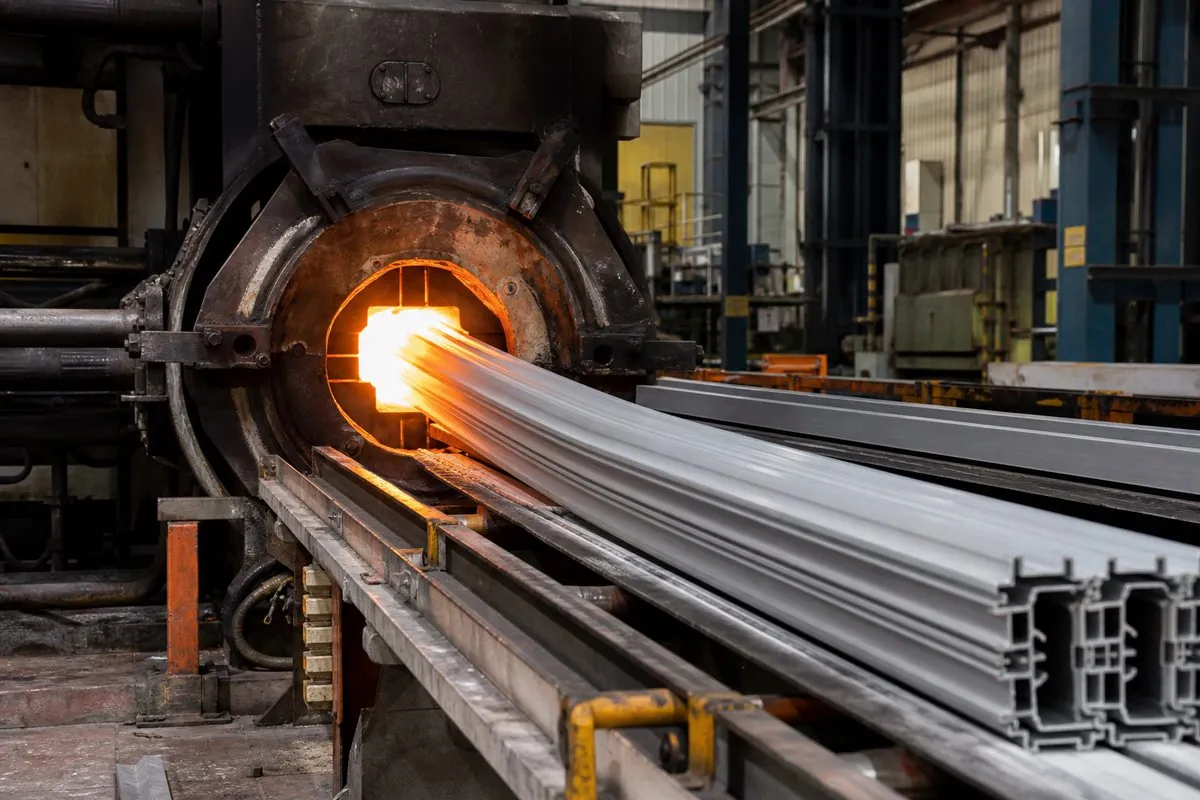
Aluminium extrusion billet manufacturing in India starts with primary aluminium smelting of alumina from bauxite via the Bayer and Hall–Héroult processes — with NALCO, Vedanta, and BALCO anchoring primary capacity in Odisha and Chhattisgarh; Hindalco / Aditya Birla adds dedicated DC-cast extrusion billet programmes; Gujarat and Maharashtra host merchant cast-house consolidation feeding extrusion billet supply.
The Odisha–Chhattisgarh belt concentrates primary aluminium capacity; DC-cast extrusion billet lines follow with alloying (Mg-Si for 6063 / 6082 / 6005; Mg-Si-Cu for 6061), casting to buyer diameter and length, and homogenization soak / cool / quench cycles per 6xxx metallurgy for extrusion-grade acceptance.
Exporters coordinate cast-house allocation, MTC + homogenization identity, and cradle stuffing discipline per order.
One thing I keep telling new billet exporters is simple: aluminium extrusion feedstock is not a single product. If you treat 6063 architectural, 6082 structural, and not-alloyed billets as interchangeable, you will lose money on your first shipment and trust on your second. Saurabh Mittal, our Founder at Altus Exports, has watched this pattern repeat with new sellers many times, and the fix is always the same — get the alloy and homogenization discipline right before you talk about price.
The lesson Saurabh keeps coming back to is process discipline. He tells our operations team that a clean billet shipment is built at the DC-cast house, not at the port. When the cast-house, the exporter, and the extruder buyer all agree on the same Mg-Si chemistry, diameter, length, and homogenization before production starts, the FCL of DC-cast billets that leaves Mundra or Paradip almost always arrives without a fight at the other end.
Export Process: From IEC to First Aluminium Billet FCL
Export Tip
The following sequence is the complete operational path from a standing start to a shipped, documented aluminium extrusion billet consignment. Follow the steps in order — registrations, sample slug MTC + homogenization approval, and quality gates exist precisely because skipping them creates customs holds, rejected billet lots at the extrusion press, or damaged extruder buyer trust.
Step 1: Obtain an Import Export Code (IEC) from DGFT
An IEC is the baseline legal requirement for any commercial export from India, including aluminium extrusion billets. Apply online through the DGFT portal with PAN, current bank account details, and address proof consistent with your GST registration. Clean applications are typically processed within a few working days.
Step 2: Register with EEPC India and secure your RCMC
Aluminium extrusion billets fall under EEPC India's notified product scope for Chapter 76 billet sublines 76011020 (not-alloyed) and 76012020 (6xxx alloy). Registration with an active RCMC is a practical necessity for trade-fair access and extruder buyer credibility. See Eepc Registration Benefits For Aluminium Billet Exporters for deeper detail.
Step 3: Source from verified Odisha, Chhattisgarh, or Gujarat / Maharashtra cast-houses
Map supply to specific DC-cast houses — NALCO Angul and Vedanta Jharsuguda in Odisha, BALCO in Chhattisgarh, Hindalco / Aditya Birla for dedicated DC-cast extrusion billet programmes — with Gujarat and Maharashtra merchant cast-house consolidators for mixed-alloy FCL depth. See Source Aluminium Billets Directly From India for extruder buyer-side verification checkpoints.
Step 4: Match alloy chemistry to extruder application
Align 6063 architectural, 6061 or 6082 structural, 6005 medium-strength, or not-alloyed billet grade to the extruder buyer's Mg-Si sheet, press window, and homogenization requirement before production. Architectural fabricators rarely accept commodity as-cast specs, and downstream distributor programmes rarely pay premium for OEM-tight chemistry and homogenization they will not use.
Step 5: Approve sample slugs and run pre-shipment MTC + homogenization review
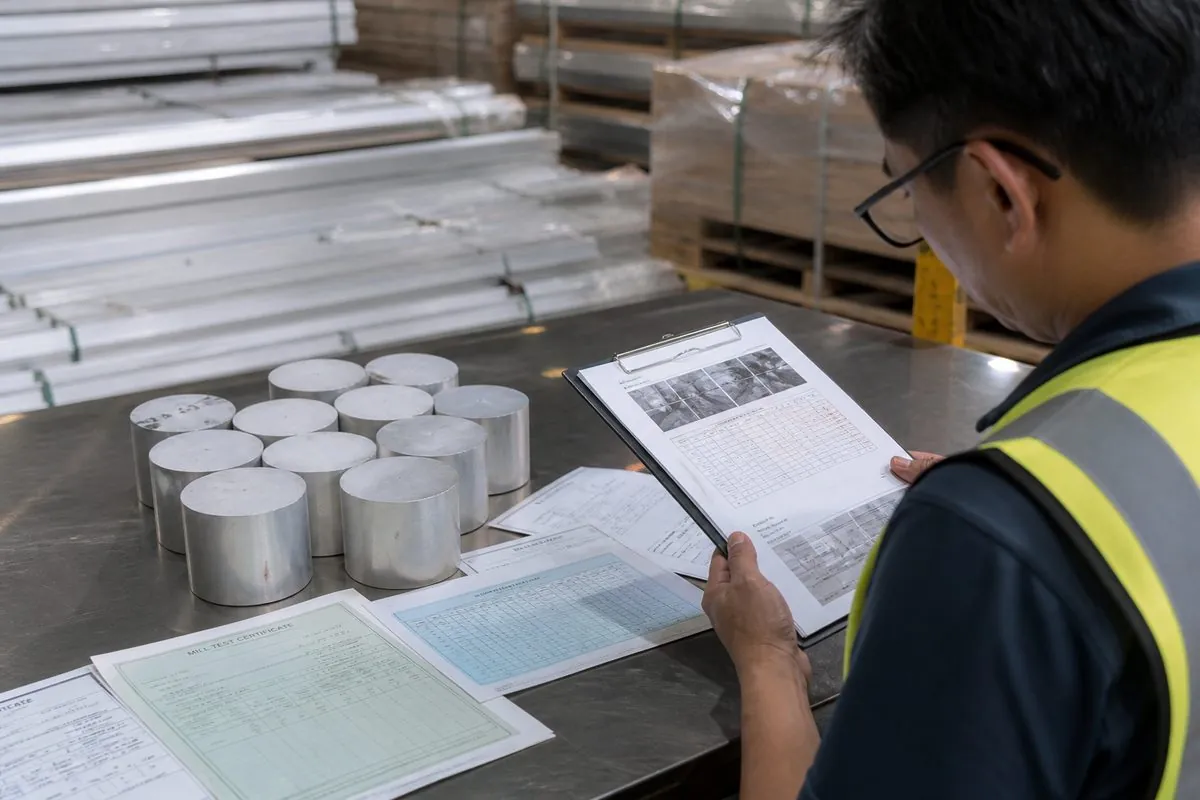
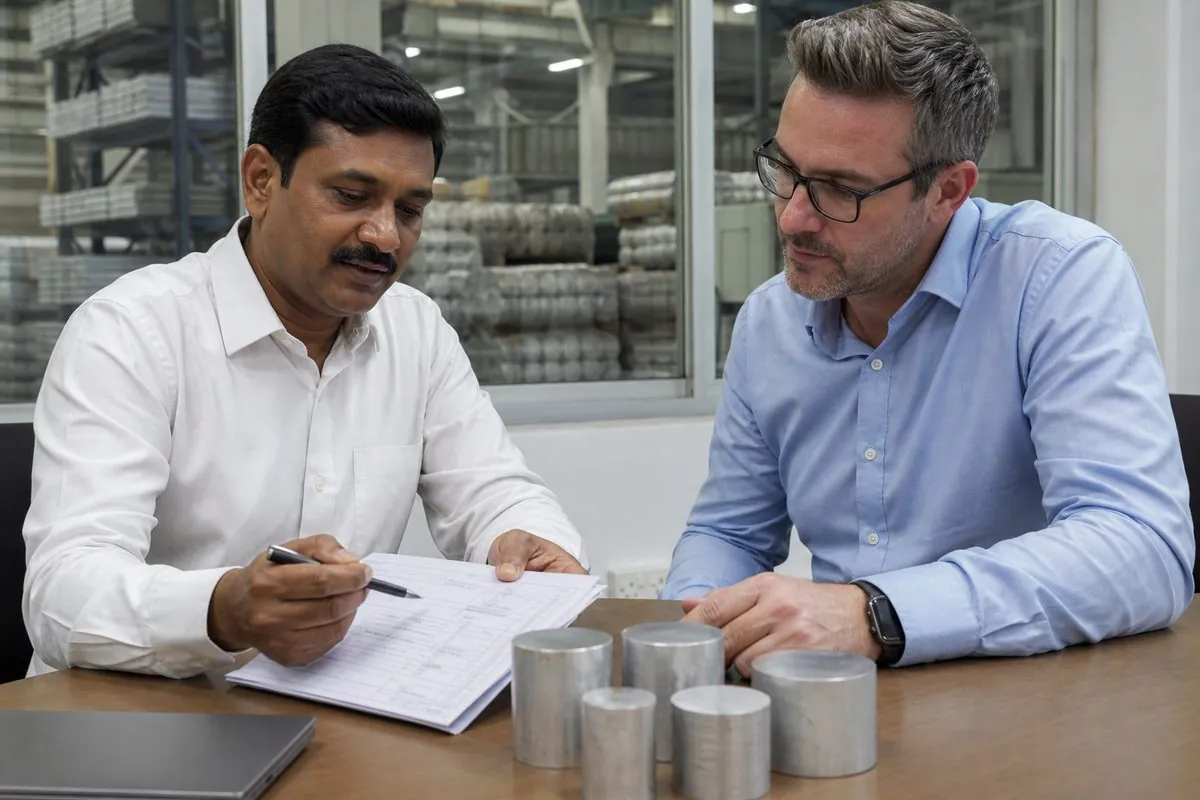
Approve sealed sample slugs and lab MTC across exact Mg-Si window plus Fe, Cu, Mn ceilings alongside diameter, length, and homogenization furnace chart before bulk production. Sign off against a written specification — never let bulk drift from approved sample slug lots.
Step 6: Commission testing appropriate to extruder buyer tier
Commodity as-cast billets need lot MTC against written specs. Homogenized 6xxx architectural and OEM structural extruder programmes need documented homogenization furnace charts, chemistry-locked lots, and PPAP-style packs where required. See Homogenized Extrusion Grade Aluminium Billet Export Opportunities.
Step 7: Select packaging and plan FCL loading
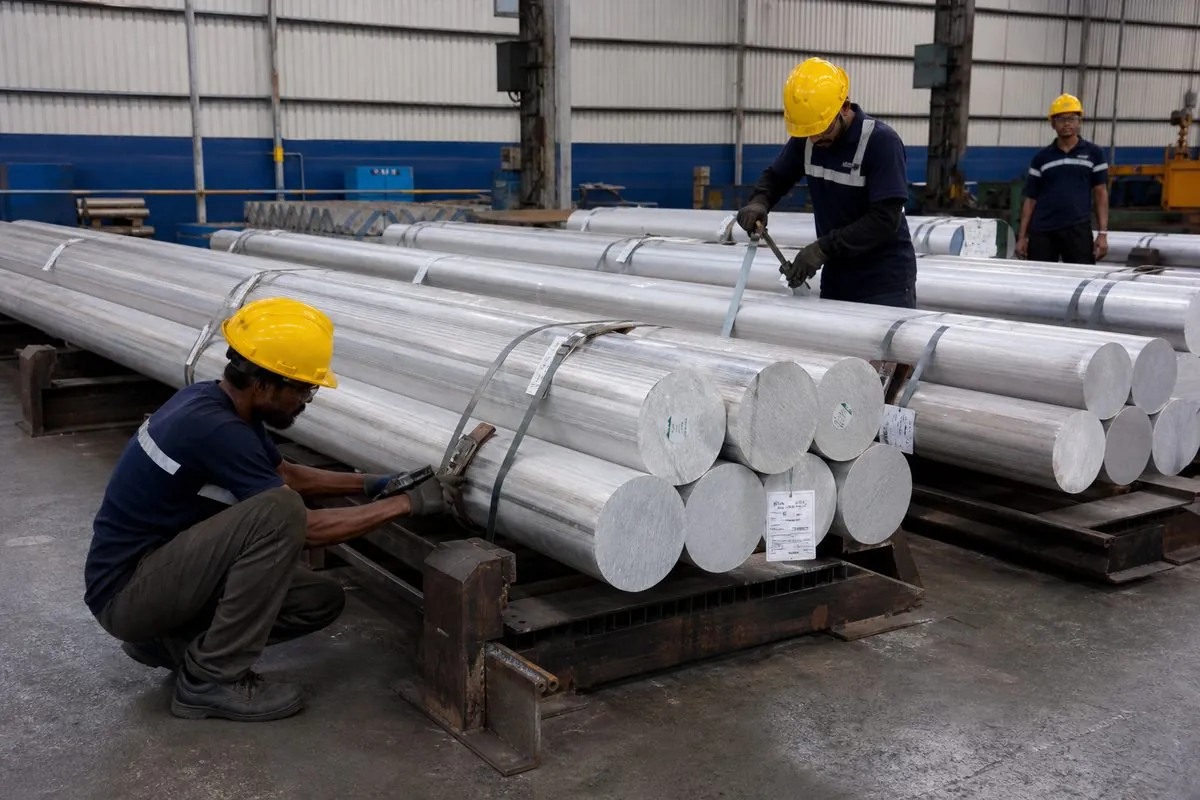
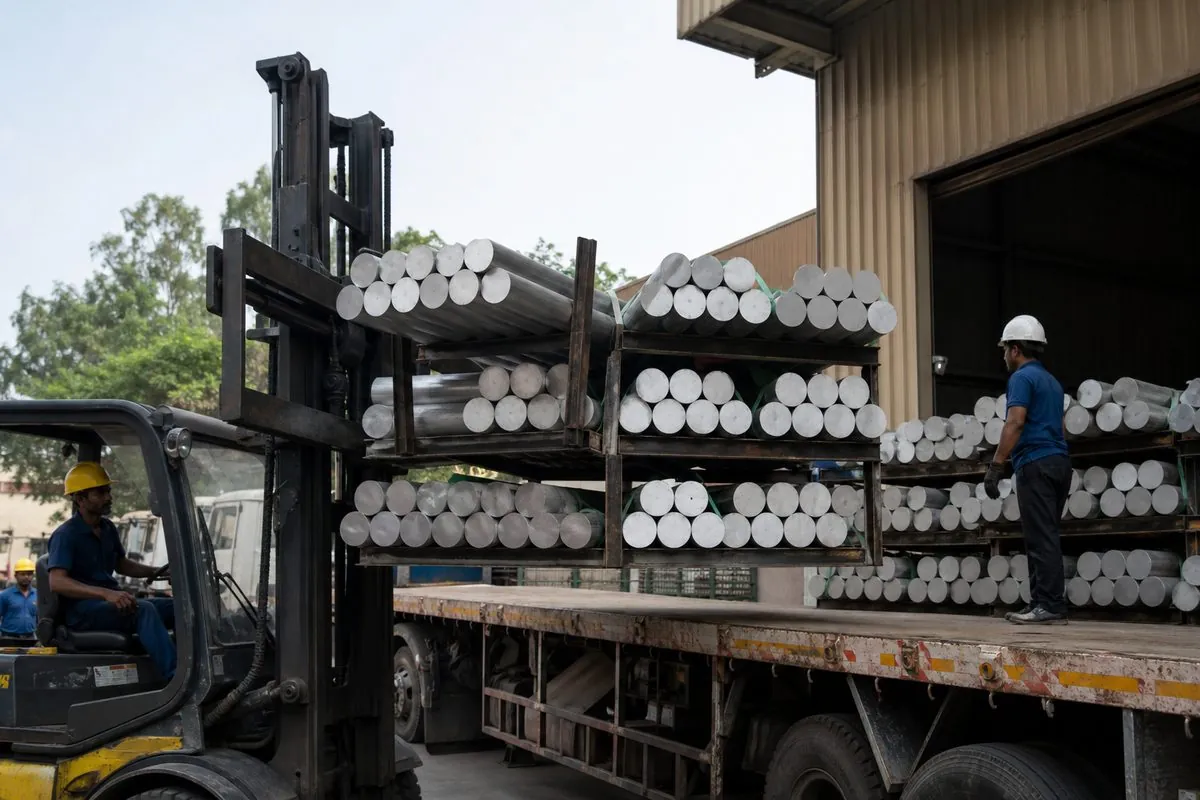
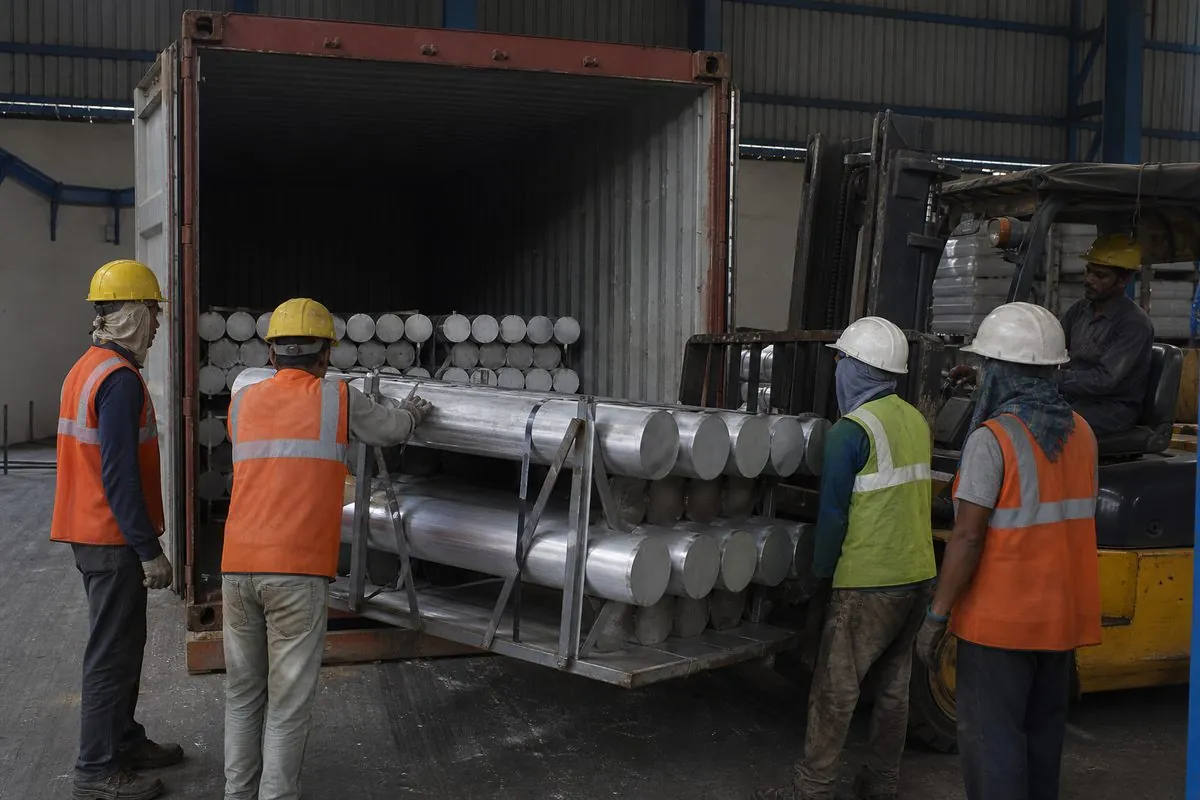
Ship as DC-cast round billets to buyer diameter (typical 6–12 inch / ~150–305 mm) × length (commonly 3–7 metres cut-to-order) with squared saw-cut ends, mill-strapped into cradles or bundles with weather and end-face oxide protection. Target 20–25 MT payload in a 20-foot FCL — confirm stow plan with your forwarder before booking, given billet diameter and length variability.
Step 8: Build export pricing and confirm Incoterms
Construct LME Aluminium ± billet / extrusion premium FOB from cash or 3M reference, alloy-specific premium, homogenization premium where applicable, testing, packaging, inland haulage to Mundra / Paradip / Visakhapatnam / Nhava Sheva / Kandla / Krishnapatnam, and margin. Quote EXW, FOB, or CFR/CIF based on extruder buyer preference.
Step 9: Prepare documentation and coordinate with your CHA
Core docs: commercial invoice, packing list, lot MTC with homogenization chart, shipping bill, BL, certificate of origin, extruder OEM approval evidence where applicable. Confirm HS 7601 billet subheading (76011020 not-alloyed or 76012020 6xxx alloy) with your CHA. See Aluminium Billet Export Documentation Checklist.
Step 10: Book shipping via Mundra, Paradip, Visakhapatnam, Nhava Sheva, Kandla, or Krishnapatnam
Ocean FCL is standard for commercial billet volumes. Mundra and Nhava Sheva handle the majority of west-coast aluminium extrusion exports; Paradip and Visakhapatnam serve Odisha primary aluminium and DC-cast output; Kandla and Krishnapatnam add capacity for specific liner strings. Air freight for urgent sealed sample slug lots only.
Step 11: Develop and maintain international extruder buyers
Combine trade-data prospecting, Aluminium USA / EEPC fair meetings, architectural fenestration and structural extrusion expos, and buyer outreach. See Find International Buyers For Aluminium Billets and Trade Shows B2B Marketplaces For Aluminium Billet Exporters.
HS Classification & Trade Notes
Compliance Notes
File not-alloyed billets under 7601.10 / India 76011020; 6xxx alloy billets under 7601.20 / India 76012020. Sibling ingot sublines 76011010 (not-alloyed ingots) and 76012010 (alloy ingots) sit adjacent — confirm the eight-digit billet line with CHA before first shipping bill; do not file billets on ingot sublines. 7602 aluminium waste and scrap is contrast only, not for unwrought billets.
HS classification reference for Indian aluminium extrusion billet exports
Swipe →
Data table — swipe horizontally on small screens
| HS Heading | Scope | Filing Note |
|---|---|---|
| 7601.10 (international) | Aluminium, not alloyed | Parent heading covering all not-alloyed unwrought forms including billets |
| 76011020 (India) | Not-alloyed aluminium billets | PRIMARY billet-line filing for not-alloyed billets — confirm with CHA |
| 76011010 (India) | Not-alloyed aluminium ingots | Sibling ingot line — not the billet filing focus (brief contrast only) |
| 76011030 / 76011040 / 76011090 (India) | Not-alloyed aluminium wire bars / wire rods / other unwrought | Adjacent not-alloyed cast forms — not the billet filing |
| 7601.20 (international) | Aluminium alloys, unwrought | Parent heading covering all alloy unwrought forms including 6xxx billets |
| 76012020 (India) | Alloy aluminium billets | PRIMARY billet-line filing for 6063 / 6061 / 6082 / 6005 and other 6xxx alloy billets |
| 76012010 (India) | Alloy aluminium ingots | Sibling ingot line — not the billet filing focus (brief contrast only) |
| 76012030 / 76012040 / 76012090 (India) | Alloy aluminium wire bars / wire rods / other unwrought | Adjacent alloy cast forms — not the billet filing |
| 7602 / 76020010 / 76020090 | Aluminium waste and scrap | Contrast line — not primary for unwrought billets; recycling feedstock only |
Pricing Analysis
Buyer Tip
- Date the LME Aluminium cash or 3M print on every process offer.
- Separate packing and inspection from base metal before CHA costing.
- Model ocean + duty before promising CFR/CIF in the process quote pack.
- Never paste an undated LME screenshot into an extruder buyer email.
Process exporters should model FOB as LME Aluminium cash or 3M plus billet / extrusion premium — static price lists fail when LME moves between quote acceptance and vessel cutoff.
Directional FOB pricing structure by aluminium extrusion billet grade (LME Aluminium ± billet / extrusion premium)
Swipe →
Data table — swipe horizontally on small screens
| Grade / Programme | Pricing Structure | Notes |
|---|---|---|
| 6063 architectural extrusion billet (HS 76012020) | LME Aluminium cash or 3M + 6063 architectural extrusion premium, FOB | Homogenized DC-cast anodizing-quality lots command tighter premium than as-cast |
| 6061 structural extrusion billet (HS 76012020) | LME Aluminium + 6061 structural extrusion premium, FOB | Mechanical-spec buyers add third-party assay premium as required |
| 6082 structural extrusion billet (HS 76012020) | LME Aluminium + 6082 structural extrusion premium, FOB | EU and Asia Pacific structural profile programmes drive premium tier |
| 6005 / 6005A medium-strength extrusion billet (HS 76012020) | LME Aluminium + 6005 / 6005A medium-strength extrusion premium, FOB | Confirm exact AA/EN designation; transport, rail, and industrial profile spec drives premium |
| Not-alloyed billet (HS 76011020) | LME Aluminium + not-alloyed billet premium, FOB | Buyers alloy or homogenize downstream at their own cast-house; premium closest to LME cash |
| Custom Mg-Si extrusion chemistry (HS 76012020) | LME Aluminium + custom-alloy + homogenization premium, FOB | Chemistry window beyond published AA / EN designations; homogenization chart per lot |
MOQ Analysis
Buyer Tip
- Process trial: 5–25 MT after chemistry + diameter + homogenization window agreed.
- First process FCL: ~20–25 MT in a 20ft — verify billet payload and cradle stow.
- Industrial process: monthly MT contracts for extruders / fabricators after trial pass.
- Do not promise 1 MT commercial parcels at FCL economics in the process quote.
MOQ discipline is part of the process — trial 5–25 MT → standard 20–25 MT FCL of DC-cast billets → monthly MT contracts once chemistry and homogenization protocol and payment terms are proven.
Directional MOQ tiers for aluminium extrusion billets by transaction stage
Swipe →
Data table — swipe horizontally on small screens
| Stage | Typical MOQ | Purpose |
|---|---|---|
| Trial order | 5–25 MT | Extruder buyer alloy evaluation, MTC + homogenization verification, and press-fit protocol test |
| Standard FCL | 20–25 MT (20ft FCL) | First commercial billet shipment; verify billet diameter, length, cradle geometry, and payload with CHA |
| Industrial contract | Monthly MT contracts | Extruder, profile mill, architectural fabricator, and distributor repeat programmes |
Packaging Standards
Export Tip
- Process SOP: DC-cast round billets to buyer diameter × length; squared saw-cut ends.
- Mill straps + steel cradles; end-face protection for architectural process lots.
- Tag alloy / heat / diameter / length / homogenization status on every process bundle.
- Keep not-alloyed and 6xxx alloy billets on separate packing-list lines in process filings.
For process programmes, standard export packs remain DC-cast round billets to buyer diameter × length in mill-strapped cradles — alloy / diameter / length / homogenization tags must match MTC and packing list before CHA filing.
Aluminium extrusion billet packaging formats — commercial cast-house and buyer press-plant practice
Swipe →
Data table — swipe horizontally on small screens
| Format | Typical Configuration | Use Case | Key Requirement |
|---|---|---|---|
| DC-cast round billet geometry | Round DC-cast billets to buyer diameter (commonly 6–12 inch / ~150–305 mm) × length (commonly 3–7 metres cut-to-order) — confirm per mill and press specification | All extrusion billet export programmes | Diameter, length, and squared saw-cut end faces must match buyer press-container plan |
| Not-alloyed vs 6xxx alloy segregation | Separate cast-house pours and lot batches for HS 76011020 (not-alloyed) and 76012020 (6xxx alloy) billets | All mixed-alloy export programmes | Do not commingle not-alloyed and 6xxx alloy lots in the same bundle without clear alloy identity tags |
| Mill-strapped billet bundles / cradles | Buyer-sized cradles or bundles per extrusion press feed cadence; steel cradles or wooden supports as specified | Standard FCL loading for extrusion billet lots | Cradle geometry stable in ocean transit; heat / alloy / diameter identity tags per bundle |
| Marking discipline | Lot / heat / cast tagging on every billet or bundle plus alloy, diameter, length, and homogenization status stencilled or tagged | All aluminium extrusion billet lots | Heat identity + diameter + length + homogenization must reconcile MTC ↔ packing list |
| End-face protection | Squared saw-cut ends protected with end caps or protective film where the buyer press plant requires it | Architectural anodizing-quality and OEM structural extrusion programmes | Prevent end-face oxide staining or damage that affects extrusion press dead-cycle scrap |
| Homogenization status tagging | Homogenized DC-cast billets tagged with soak / cool / quench chart lot reference alongside heat identity | Homogenized 6xxx architectural and structural extrusion programmes | Buyer extruder press acceptance depends on documented homogenization discipline |
| Weather / moisture protection | Dry warehouse staging; wrapping where specified for architectural anodizing-quality lots | All ocean shipments — 6063 architectural anodizing lots especially | Prevent surface oxide staining or contamination before receipt at extrusion mill |
Container Loading Details
Export Tip
- Process stow plan: ~20–25 MT in a 20ft — verify diameter, cut length, cradle geometry.
- Photograph process stow + seal numbers before vessel cutoff.
- Confirm payload with CHA / forwarder before booking the process FCL.
- Break-bulk only for mega industrial extrusion programmes after process FCL proof.
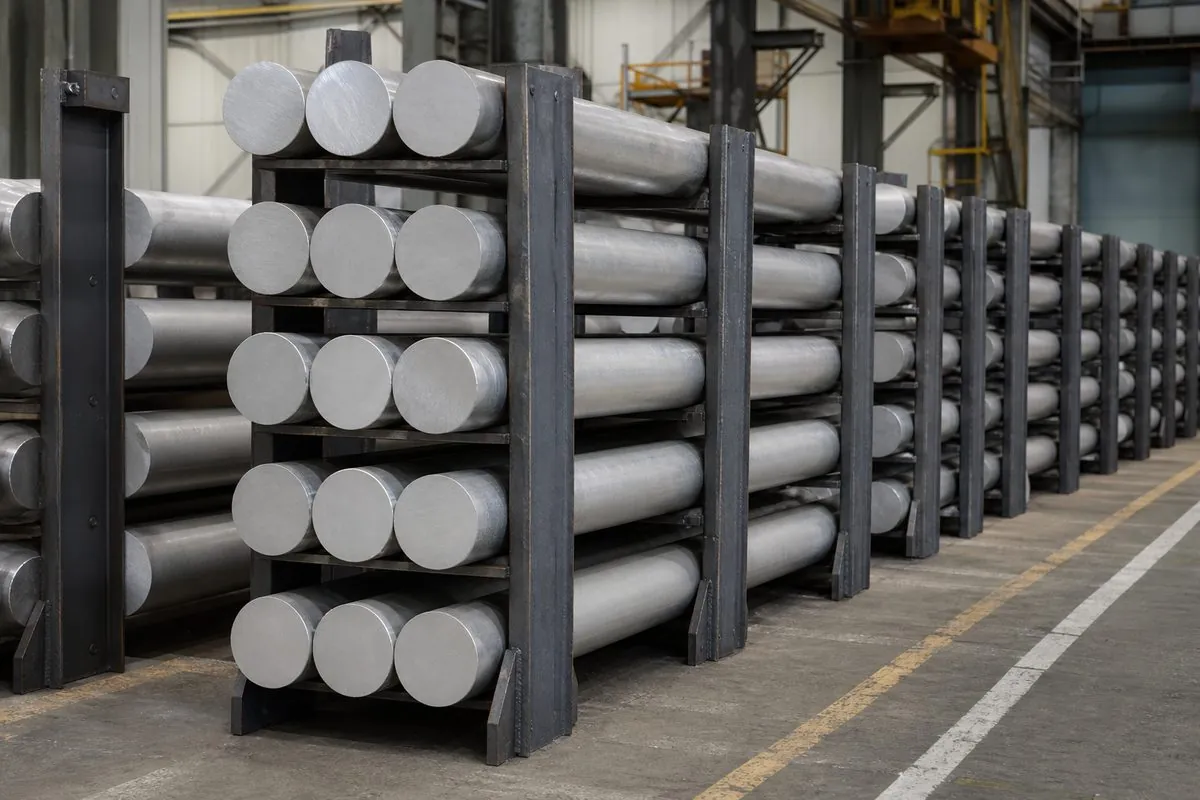
Dense aluminium billet cargo in process programmes typically targets 20–25 MT per 20ft FCL — forwarder stow verification required before extruder buyer MT commitment.
Directional container loading guidance for aluminium extrusion billets
Swipe →
Data table — swipe horizontally on small screens
| Container Type | Loading Consideration | Typical Use |
|---|---|---|
| 20-foot FCL | 20–25 MT payload in mill-strapped billet bundles or cradles; verify stow with forwarder for billet diameter and length | Trial and standard commercial extrusion billet shipments |
| 40-foot FCL / 40-foot HC | Higher payload with dense billet cradle stacking; check max payload limits and cradle stability | Established extruder and profile mill programmes |
| Break-bulk | Large architectural or automotive extrusion billet programmes beyond standard FCL cadence | Mega architectural fenestration and structural extrusion contracts |
| Cradle / palletisation | Recommended for consistent forklift handling and press-plant discharge speed | Extruder buyers with forklift or crane handling at destination plant |
Shipping Methods
Export Tip
- Process samples: air / express 7–14 days for sealed sample slugs.
- Process trial: FCL 2–4 weeks post-production, depending on cast-house and homogenization cycle.
- Process FCL ocean: 3–6 weeks door-to-port by corridor.
- Incoterms for process launches: EXW, FOB, CFR/CIF; DDP selective for OEM structural programmes.
First-time exporters ship trial aluminium billet lots as ocean FCL from Mundra or Nhava Sheva; smaller sealed sample slugs move by air-express to accelerate the extruder buyer approval window before bulk stuffing of DC-cast cradles.
Certifications
Compliance Notes
- Process baseline: IEC + EEPC RCMC + lot MTC with homogenization data.
- Third-party assay / dimensional check (SGS / BV / Intertek) when the process buyer requires it.
- COO for FTA claims; ISO 9001 / 14001 as cast-house credibility layers.
- OEM / PPAP-style packs only when the process extruder audit asks for them.
Process programmes treat IEC and EEPC RCMC as baseline credentials; lot MTC + homogenization chart is universal on every FCL; extruder OEM audit layers attach only when the process buyer requires them.
Certifications and documents relevant to aluminium extrusion billet export
Swipe →
Data table — swipe horizontally on small screens
| Certification / Document | Purpose | Relevant For |
|---|---|---|
| Mill Test Certificate (MTC) with homogenization data | Lot-specific alloy chemistry (Mg, Si, Fe, Cu, Mn, others as required), diameter, length, heat identity, and homogenization soak / cool / quench record | All commercial aluminium extrusion billet shipments — baseline extruder buyer requirement |
| EEPC RCMC + IEC | Baseline export registration and council membership for Chapter 76 billet sublines 76011020 and 76012020 | All commercial aluminium extrusion billet export shipments from India |
| ISO 9001 (cast-house / exporter) | Quality-system credibility at DC-casting, homogenization furnace, and export site | Architectural fabricator, OEM structural extrusion, and multinational distributor buyers |
| Homogenization furnace chart / temperature log | Documented time-temperature record of soak / cool / quench cycle per billet lot | Homogenized DC-cast 6xxx-series extrusion billet export programmes |
| Third-party assay + homogenization audit (SGS / Bureau Veritas / Intertek) | Independent lot chemistry, diameter, length, and homogenization verification | Architectural anodizing-quality, OEM structural, or LC-backed extrusion programmes |
| Extruder / architectural fabricator quality pack (PPAP-style) | OEM approval of alloy chemistry, homogenization, diameter, length, cradle format, and traceability | Direct architectural fabricator and OEM structural extrusion programmes |
| Certificate of Origin | Country of manufacture; FTA claims where applicable to billet sublines | Destination customs and FTA duty programmes for extrusion billet lots |
| Destination metal standard declarations | Conformance to destination aluminium alloy standards (EN 573-3, AA registered 6063/6061/6082/6005 designations, JIS H 4100 profile alloy references) | Extruder buyers requiring formal alloy standard cross-reference |
Buyer Requirements
Buyer Requirements
- Lock written Mg-Si + Fe / Cu / Mn maxima and homogenization status before the process trial PO.
- Require lot MTC + homogenization chart heat / alloy / diameter / length IDs that match cradle tags at stuffing.
- Default Incoterm for first process shipments: FOB named Indian port.
- Run 5–25 MT trial after chemistry + homogenization protocol — not before.
- Add extruder OEM approval evidence only if the process programme requires it.
Extruder buyers in process programmes request sample slugs, written Mg-Si + Fe / Cu / Mn spec, homogenization chart, lot MTC, LME-linked FOB pricing, and EEPC / IEC proof — architectural fabricators and OEM structural extruders add homogenization audit evidence or PPAP-style approval where applicable.
Country-wise Opportunities
Market Snapshot
- Process Americas: lock MTC + homogenization before quoting Mexico / Brazil CFR.
- Process East Asia: sequence Korea / Japan after proven Mg-Si + soak rhythm.
- Process US / Turkey / SEA: model Section 232 overlays and distributor FOB honesty.
- One corridor first in the process plan — do not chase every market on FOB alone.
First-time exporters should shortlist two or three corridors from the matrix below before scaling; sequencing corridor entry protects cash flow. Cross-check with the corridor guide for freight and duty context.
Directional country opportunity profile for Indian aluminium extrusion billet exporters
Swipe →
Data table — swipe horizontally on small screens
| Country | Demand Profile | Key Requirement Focus | Opportunity Note |
|---|---|---|---|
| Mexico | 6063 architectural + 6061 / 6082 structural extrusion for nearshoring profile mills and fabricators | Homogenization discipline + Mg-Si chemistry lock + PPAP-style packs for OEM structural | Top WITS 2024 HS 760120 parent partner (~US$154.7M) — 6xxx billet subline sits inside this corridor |
| Brazil | 6063 architectural fenestration + 6082 structural extrusion demand across a wide industrial base | 6063 anodizing-quality homogenization + MTC discipline + FTA-aware paperwork | Second WITS 2024 HS 760120 parent partner (~US$122.2M) — architectural extrusion pull |
| South Korea | 6082 / 6061 high-spec extrusion + 6063 architectural for profile mills and rolling-adjacent programmes | Tight Mg-Si windows + deep MTC + homogenization audit + OEM PPAP for structural | Third WITS 2024 HS 760120 parent partner (~US$85.1M); also large HS 760110 parent partner (~US$592.0M) |
| United States | 6063 architectural + 6061 / 6082 structural extrusion offtake; Section 232 aware landed-cost planning | Homogenization discipline + Mg-Si lock + USMCA-linked documentation where relevant | Fourth WITS 2024 HS 760120 parent partner (~US$78.2M) — Section 232 overlay dominant |
| Turkey | 6063 architectural + 6082 structural extrusion demand for fenestration and industrial profiles | Homogenization + Mg-Si chemistry + FTA-aware paperwork | Fifth WITS 2024 HS 760120 parent partner (~US$75.7M) plus HS 760110 (~US$421.6M) — dual-line corridor |
| Japan | 6082 / 6061 high-spec extrusion for transport and industrial profiles | Tight impurity ceilings + homogenization audit + OEM PPAP + conductivity where relevant | HS 760120 top-ten partner + HS 760110 (~US$253.6M) — quality-driven, OEM-linked extruders |
| Malaysia | 6063 architectural extrusion and distributor demand across Southeast Asia | MTC discipline + consistent homogenization + FTA-aware duty | Large WITS 2024 HS 760110 parent partner (~US$494.8M) — extrusion-hub demand |
| Vietnam | Growing architectural extrusion and structural profile mill capacity pulling 6063 and 6082 billets | MTC discipline + FTA rules of origin + expanding OEM audit expectations | Present across HS 760110 / 760120 parent partner lists — expanding extrusion corridor |
Americas extrusion corridors
In a process programme, Mexico and Brazil are the alloy-first FCL proving grounds: parent HS 760120 demand is strongest here, and India 76012020 6xxx billets sit inside that basket. Lock written Mg-Si + homogenization soak records before you quote CFR / CIF, run the 5–25 MT trial, then scale stuffing SOPs. Architectural 6063 with anodizing-quality charts and structural 6061 / 6082 with mechanical windows are two process tracks — do not merge them on one first shipment.
Asia-Pacific high-spec corridors
Process teams should treat South Korea and Japan as second-wave corridors after MTC + homogenization rhythm is proven on a less audit-heavy lane. Tight Mg-Si windows, deep soak audits, and occasional OEM PPAP-style packs reward exporters who already photograph furnace charts and reconcile heat identity. Parent HS 760110 and 760120 both matter — sequence Korea only when your process checklist can survive a high-spec reject without improvisation.
US, Turkey, and Southeast Asia
US process files need Section 232 Chapter 99 overlays on heading 7601 modelled from live USITC / CBP rates before the first FOB becomes a landed-cost promise. Turkey, Malaysia, and Vietnam are useful process rungs for architectural and distributor-led billets when cradle identity and dated LME ± billet premium discipline are already stable. Use these corridors to harden logistics SOPs — not as dumping grounds for unfinished process documentation.
Expert Insight: Corridor Discipline
Expert Insight Box
The exporters who convert destination corridor knowledge into consistent monthly FCL billet programmes are the ones who treat each country as an alloy conversation, not a freight conversation. Mexican architectural fabricators want homogenized 6063 with clean anodizing-quality furnace charts; Korean OEM structural extruders want 6082 / 6061 with tight Mg-Si and homogenization discipline; Malaysian distributors want reliable billet diameter and short-sea discipline. Sequence extruder corridors deliberately and the process pays for itself.
For process programmes, Saurabh Mittal frames corridor discipline as an operating gate: IEC and EEPC are ready, but you still pause before booking the first FCL and ask whether this destination's extruder actually needs the alloy and homogenization your Odisha or Chhattisgarh cast-house is running today. If the honest answer is yes, sample slug MTC work becomes straightforward and the extruder buyer returns without chasing. If the answer is no, walking away early is cheaper than explaining a chemistry reject at destination.
He also warns process teams that corridor knowledge ages. A Mexico architectural 6063 account from two seasons ago may have reshuffled vendors; a Korean OEM structural buyer may now lock 6082 Mg-Si windows differently. Refresh parent HS 760110 / 760120 partner lists and India 76011020 / 76012020 billet extracts every quarter and keep the process checklist tied to today's extruder, not last year's memory — that habit keeps monthly billet FCL programmes alive.
Sourcing Checklist
Checklist
Buyer Checklist
Common Buyer Mistakes
Common Mistakes Box
Future Market Trends
Key Statistics
- Nearshoring extrusion in Mexico keeps pulling homogenized 6063 / 6061 into process pipelines.
- Architectural fenestration + solar / EV programmes favour monthly MT after process trials clear.
- Korea / Japan / EU desks pay for soak-and-quench discipline in process SOPs.
- Refresh DGCI&S billet extracts quarterly so process forecasts do not ride stale parent HS totals.
Mexican and US nearshoring extrusion growth plus Korean, Japanese, and Turkish high-spec extrusion expansion support 6063 architectural and 6xxx structural billet demand; homogenized DC-cast programmes move toward standard in audited extruder buyer chains.
LME Aluminium volatility keeps FOB index-linked — exporters and extruder buyers who contract transparent index references reduce dispute risk.
Challenges & Solutions
- Challenge: LME volatility — Solution: index-linked FOB with dated reference
- Challenge: MTC + homogenization drift — Solution: cast-house QC gates and retained sample slugs
- Challenge: HS errors — Solution: CHA-confirmed 76011020 / 76012020 billet lines (not sibling ingot sublines)
- Challenge: end-face oxidation / weather damage — Solution: cradle spec, dry warehouse staging, and end-cap SOP
Scaling process aluminium extrusion billet export involves LME volatility, documentation, and chemistry + homogenization discipline.
Exporter Checklist
Checklist
Compliance Checklist
Checklist
Compliance Notes
Sources
- WITS / UN Comtrade — India exports HS 760110 by partner, 2024 (parent context)
- WITS / UN Comtrade — India imports HS 760110 by partner, 2024 (parent context)
- WITS / UN Comtrade — India exports HS 760120 by partner, 2024 (parent context)
- WITS / UN Comtrade — India imports HS 760120 by partner, 2024 (parent context)
- WITS / UN Comtrade — Aluminium waste and scrap trade, HS 7602 (contrast)
- Federal Register — Section 232 aluminium proclamations (verify live)
- GovInfo — FR 2026-11314 Section 232 aluminium/steel/copper proclamation (Jun 4, 2026)
- White House — Further Adjusting Tariff Regimes for Aluminum, Steel, and Copper (Jun 2026)
- CBP — Aluminum HTS subject to Section 232 (heading 7601 listed; verify live)
- UN Comtrade Database
- ITC Trade Map
- India Ministry of Commerce — TRADESTAT / MEIDB
- DGFT (India) — IEC / trade portal
- ICEGATE — Indian Customs EDI (eight-digit billet extract source)
- India CBIC — Customs Tariff (Chapter 76)
- EximGuru — ITC-HS 76011020 Aluminium, not alloyed: Billets
- EximGuru — ITC-HS 76012020 Aluminium alloys: Billets
- EEPC India
- London Metal Exchange — Aluminium (LME cash / 3M reference)
- Aluminum Association — Teal Sheets registered alloy designations
- European Aluminium — extrusion industry data
- EN 573-3 aluminium wrought alloy chemical composition (BSI / CEN)
- USITC Harmonized Tariff Schedule (search 7601)
- European Commission TARIC
- ISO 9001 overview
- Altus Exports — Engineering Goods
All sources accessed 2026-08-01 during the Aluminium Billets factual sweep. Prefer primary government, exchange, and multilateral trade databases (WITS/UN Comtrade for HS 760110 / 760120 parent context, DGCI&S / TRADESTAT / ICEGATE for eight-digit billet sublines, CBIC, USITC, LME, EEPC, AA Teal Sheets, EN 573-3) when citing figures in contracts or buyer presentations.
Process and registration steps in this guide should be cross-checked against current DGFT, EEPC India, and CBIC tariff entries for Chapter 76 (billet sublines 76011020 and 76012020) before first shipment.
Conclusion
Exporting aluminium extrusion billets from India succeeds when IEC, EEPC India RCMC, DC-cast house MTC + homogenization discipline, LME Aluminium ± billet / extrusion premium quoting, cradle-strapped FCL stuffing, and document reconciliation operate as one system.
Altus Exports supports Indian DC-cast houses, merchant cast-house consolidators, and international extruders, profile mills, architectural fabricators, and distributors as a merchant exporter in India and global sourcing partner — contact us for your first or next billet FCL.
Next reads: Top Aluminium Billet Products Exported From India, Aluminium Billet Export Documentation Checklist, Best Countries For Indian Aluminium Billet Exports.