
Top Aluminium Billet Products and Grades Exported from India
By Saurabh Mittal, Founder, Altus Exports
A product-level catalogue of aluminium extrusion billet grades exported from India — 6063 architectural, 6061 and 6082 structural, 6005 medium-strength, and not-alloyed billets with Mg-Si chemistry windows, homogenization discipline, diameter and length bands, MOQ tiers, and channel fit for extruders, profile mills, architectural fabricators, and distributors.
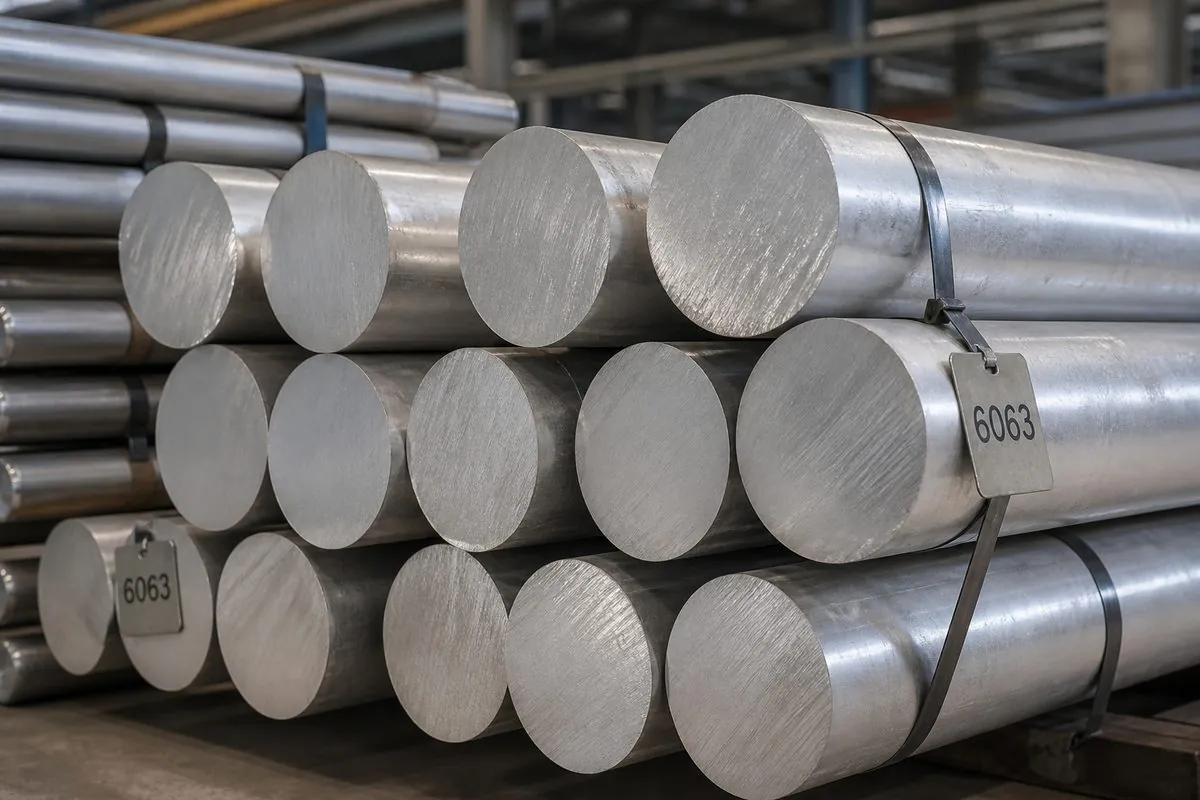
International extruder buyers evaluating India as an aluminium sourcing origin rarely fail because India lacks DC-cast capacity — they fail because they treat 'aluminium billets' as a single commodity rather than a matrix of alloy chemistries, homogenization windows, and diameter / length specifications. 6063 architectural, 6061 and 6082 structural, 6005 medium-strength, and not-alloyed billets share a billet form but not the same DC-cast or homogenization discipline, and quoting or ordering the wrong alloy is the fastest route to a rejected billet at the extrusion press. This guide maps the top aluminium extrusion billet products exported from India under HS 76011020 and 76012020 with enough specificity to structure RFQs, compare LME Aluminium ± billet / extrusion premium bands honestly, and match each alloy to the extruder channel it serves. For the end-to-end export process, see How to Export Aluminium Billets from India.
India's aluminium extrusion billet export catalogue spans 6063 architectural (AA 6063 / EN 573-3 registered Mg-Si window, homogenized for anodizing-quality profiles), 6061 structural (Mg-Si-Cu for transport and higher-mechanical-demand profiles), 6082 structural (Mg-Si-Mn for tolerance-critical EU / Asia Pacific extrusion), 6005 medium-strength (Mg-Si for transport and industrial profiles), and not-alloyed billets under India HS 76011020 where the buyer alloys or homogenizes downstream at their own cast-house. Chemistry parameters — Mg, Si, Fe, Cu, Mn plus any additional buyer-specified elements — must be declared lot-by-lot on the Mill Test Certificate alongside diameter, length, heat identity, and the homogenization furnace chart. Odisha (NALCO Angul, Vedanta Jharsuguda) and Chhattisgarh (BALCO) concentrate primary aluminium capacity, with Hindalco DC-cast billet programmes and Gujarat and Maharashtra merchant cast-houses supporting extrusion billet supply. Directional WITS / UN Comtrade 2024 shows India's parent HS 760120 (alloyed unwrought, covering alloy ingots plus billets plus wire) at ~US$1.25B / ~0.60 Mt — 6xxx alloy billets sit inside this parent alongside sibling ingot forms.
Whether you are an architectural fabricator building chemistry-locked 6063 anodizing programmes, a regional distributor stocking 6082 structural extrusion feedstock, or a multinational extruder evaluating homogenized DC-cast supply, this alloy catalogue gives you the vocabulary and specification framework to evaluate Indian cast-houses without conflating architectural and structural tiers or confusing billet-form extrusion feedstock with sibling cast forms. For direct sourcing guidance, see Source Aluminium Billets Directly from India; for homogenization discipline depth, see Homogenized Extrusion-Grade Aluminium Billet Export Opportunities.
Key Takeaways
Summary Box
Executive Summary
Summary Box
- Catalogue SKUs separately: 6063 architectural · 6061 · 6082 · 6005 · not-alloyed — not one catch-all billet.
- Map each alloy to 76011020 or 76012020 from Mg-Si chemistry, not nickname.
- Price each SKU as LME ± alloy premium + homogenization with a quote date on every card.
- Trial 5–25 MT per new alloy before promising industrial monthly MT.
- Keep homogenization chart data on every 6xxx architectural or OEM structural card.
Evaluating Indian aluminium extrusion billet grades means separating alloy chemistry (6063 architectural, 6061 and 6082 structural, 6005 medium-strength, not-alloyed), Mg-Si window, diameter, length, and homogenization status before comparing LME Aluminium ± billet / extrusion premium. These are distinct DC-cast disciplines with distinct extruder buyer channels, not interchangeable SKUs on a single price sheet.
Odisha, Chhattisgarh, and Gujarat / Maharashtra producers with Hindalco DC-cast programmes supply the bulk of India's extrusion billet export catalogue; every commercial lot requires an MTC covering Mg, Si, Fe, Cu, Mn plus any additional buyer-specified elements alongside diameter, length, heat identity, and the homogenization furnace chart.
This alloy catalogue guide helps extruders, profile mills, architectural fabricators, distributors, and merchant traders structure RFQs and acceptance criteria without conflating commodity as-cast billets with homogenized 6xxx architectural or OEM structural programmes.
Product Categories / Variants
Summary Box
- Catalogue: 6063 · 6061 · 6082 · 6005 · not-alloyed · custom Mg-Si as separate cards.
- 6063 architectural (anodizing-quality) is not a nickname for 6061 or 6005 — write the Mg-Si window.
- 6082 structural sells on Mn and mechanical acceptance — document the register.
- Not-alloyed billet is downstream feedstock — never market it as 6xxx extrusion-grade.
Indian export catalogues span 6063 architectural (Mg-Si per AA 6063 register with anodizing-quality homogenization), 6061 structural (Mg-Si-Cu), 6082 structural (Mg-Si-Mn), 6005 medium-strength (controlled Mg-Si), and not-alloyed billets under India 76011020 — each SKU maps to extruder chemistry, homogenization, and end-use requirements.
Primary aluminium extrusion billet product types exported from India
Swipe →
Data table — swipe horizontally on small screens
| Product Type | Typical Chemistry / Spec | HS (India) | Primary Channel |
|---|---|---|---|
| 6063 architectural extrusion billet | Mg-Si alloy per EN 573-3 / AA 6063 registered designation; homogenized DC-cast for anodizing-quality architectural profiles | 76012020 | Architectural extruders, fenestration fabricators, heat-sink and general profile mills |
| 6061 structural extrusion billet | Mg-Si-Cu alloy per EN 573-3 / AA 6061 registered designation; homogenized DC-cast for structural and transport profiles | 76012020 | Transport, defence, marine, and general structural extruders |
| 6082 structural extrusion billet | Mg-Si-Mn medium-to-high strength alloy per EN 573-3 / AA 6082 registered designation; homogenized DC-cast for tolerance-critical profiles | 76012020 | EU and Asia Pacific structural extruders and profile mills |
| 6005 / 6005A medium-strength extrusion billet | Mg-Si medium-strength alloy family per EN 573-3 / AA (confirm 6005 vs 6005A); homogenized DC-cast to buyer press window | 76012020 | Transport, rail, and industrial extruders |
| Not-alloyed extrusion billet | Primary or remelt-cast unalloyed billet chemistry; buyer alloys or homogenizes downstream at their own cast-house | 76011020 | Downstream cast-houses, primary-line distributors, cost-led extruders |
| Custom Mg-Si extrusion chemistry | Buyer-specific 6xxx chemistry window beyond published AA / EN registers; homogenized to buyer press cycle | 76012020 | OEM structural, architectural anodizing-quality, and specialty extrusion programmes |
Chemistry Specification Reference
Use this alloy catalogue matrix for RFQ and MTC acceptance — confirm numeric Mg-Si bands and homogenization data on the cast-house MTC + furnace chart for each billet SKU before you publish a card.
Directional Mg-Si chemistry reference bands for Indian aluminium extrusion billet grades (confirm against MTC per lot; AA Teal Sheets and EN 573-3 register bind exact ceilings)
Swipe →
Data table — swipe horizontally on small screens
| Alloy | Typical Mg (%) | Typical Si (%) | Notes |
|---|---|---|---|
| 6063 architectural (EN AW-6063) | 0.45–0.90 | 0.20–0.60 | EN 573-3 / AA registered; anodizing-quality architectural workhorse; homogenized DC-cast standard |
| 6061 structural (EN AW-6061) | 0.80–1.20 | 0.40–0.80 | EN 573-3 / AA registered; Cu typically 0.15–0.40%; homogenized for mechanical acceptance |
| 6082 structural (EN AW-6082) | 0.60–1.20 | 0.70–1.30 | EN 573-3 / AA registered; Mn typically 0.40–1.00%; homogenized for tolerance profiles |
| 6005 / 6005A medium-strength | 0.40–0.70 | 0.50–0.90 | Confirm exact AA/EN designation (6005 vs 6005A) per lot — Si ceilings differ slightly; homogenized to buyer press window |
| Not-alloyed billet | trace only | trace only | Unalloyed billet chemistry; buyer alloys or homogenizes downstream — not a 6xxx extrusion-grade product |
| Custom 6xxx | buyer-defined | buyer-defined | Buyer-specific Mg-Si window beyond published AA / EN registers; homogenization chart per lot |
Market Size & Industry Overview
Key Statistics
- Alloy supply mirrors clusters: primary + DC-cast 6063 and not-alloyed from Odisha / Chhattisgarh; specialty structural from Hindalco DC-cast + merchant belts.
- Hindalco / Aditya Birla DC-cast billet programmes add extrusion-grade depth beyond commodity as-cast.
- Catalogue entries should name the cluster that can actually cast and homogenize each alloy.
- Start SKU expansion only after one alloy clears trial MTC + homogenization without chemistry fights.
From a product perspective, the Indian aluminium extrusion billet ecosystem produces 6063 architectural (anodizing-quality DC-cast), 6061 structural (Mg-Si-Cu), 6082 structural (Mg-Si-Mn), 6005 medium-strength, and not-alloyed billets across DC-cast + homogenized programmes. Each alloy sits inside HS 7601 but on the specific India 76011020 (not-alloyed) or 76012020 (alloy) billet subline with a different Mg-Si window and homogenization discipline.
Manufacturing capacity concentrates in Odisha and Chhattisgarh primary aluminium plus Hindalco DC-cast billet programmes; Gujarat and Maharashtra merchant cast-house consolidation add extrusion-billet depth. Homogenized architectural and OEM structural extruder audit packs sit at the top of the quality pyramid.
Extruder buyers pick alloy first, cast-house second — never the reverse.
Export Statistics
Key Statistics
- Catalogue SKUs sit inside parent HS totals — do not publish billet volumes equal to full 760110 / 760120.
- Not-alloyed billet cards map to 76011020; 6xxx alloy cards map to 76012020.
- Use Korea / Malaysia / Turkey not-alloyed partner ranks only as catalogue demand signals.
- Refresh product export notes when DGCI&S billet-line extracts update.
Alloy catalogues map to India 76012020 (6xxx alloy billets — 6063 architectural, 6061 / 6082 structural, 6005 medium-strength) or 76011020 (not-alloyed billets) on export documents — alloy chemistry and DC-cast billet form drive the eight-digit choice, not marketing labels.
Directional parent HS export scale (WITS / UN Comtrade 2024): HS 760110 (not-alloyed unwrought parent) was ~US$3.50B / ~1.41 Mt, and HS 760120 (alloyed unwrought parent) was ~US$1.25B / ~0.60 Mt — the parent inside which India 76011020 not-alloyed billets and 76012020 6xxx alloy billets sit. Alloy differentiation and homogenization discipline drive extruder win-rate, not headline tonnage alone.
India aluminium billet trade profile (WITS 2024 parent HS 760110 not-alloyed / HS 760120 alloy — directional context; billet sublines 76011020 / 76012020 sit inside)
Swipe →
Data table — swipe horizontally on small screens
| Metric | Directional Estimate | Notes |
|---|---|---|
| Primary DC-cast corridors | Odisha (NALCO Angul, Vedanta Jharsuguda), Chhattisgarh (BALCO) | Large-scale primary aluminium capacity feeding DC-cast extrusion billet supply |
| Supporting clusters | Hindalco / Aditya Birla extrusion billet programmes; Gujarat and Maharashtra merchant cast-house consolidation; secondary-to-billet corridors | Downstream cast-house discipline and merchant-consolidation billet capacity |
| Applicable HS lines | Alloy-to-HS mapping: 6063 / 6061 / 6082 / 6005 alloy billets → India 76012020; not-alloyed billets → India 76011020 (billet-form sublines under Chapter 76 heading 7601) | Confirm eight-digit billet line with CHA before shipping-bill filing |
| Governing trade council | EEPC India (Engineering Export Promotion Council) | RCMC alongside IEC for Chapter 76 billet export credibility |
| 2024 India HS 760110 exports (parent, not-alloyed unwrought) | ~US$3.50B / ~1.41 Mt | US$3,503,308.31K / 1,409,040,000 kg — WITS / UN Comtrade 2024; PARENT heading covers ingots plus billets plus wire bars plus wire rods plus other cast forms — not-alloyed BILLET-only tonnage (India 76011020) is a subline inside this total |
| 2024 India HS 760110 imports (parent, not-alloyed unwrought) | ~US$225.4M | US$225,428.14K — WITS / UN Comtrade 2024; top origins Oman, Russia, Qatar, UAE, Bahrain — parent context, not billet-only |
| 2024 India HS 760120 exports (parent, alloyed unwrought) | ~US$1.25B / ~0.60 Mt | US$1,250,017.72K / 604,281,000 kg — WITS / UN Comtrade 2024; PARENT heading covers alloy ingots plus billets plus wire bars plus wire rods plus other cast forms — 6xxx alloy BILLET-only tonnage (India 76012020) is a subline inside this total |
| 2024 India HS 760120 imports (parent, alloyed unwrought) | ~US$833.8M / ~0.32 Mt | US$833,810.58K / 322,392,000 kg — WITS / UN Comtrade 2024; top origins Malaysia, Qatar, Bahrain, UAE, Russia — parent context, not billet-only |
| Billet-only eight-digit tonnage | India 76011020 and 76012020 — DGCI&S / ICEGATE extract required | WITS does not publish at the Indian eight-digit level; use paid customs extracts or DGCI&S / TRADESTAT for actual billet-only volume |
| Leading parent HS 760120 alloy destinations | Mexico ~US$154.7M, Brazil ~US$122.2M, Korea Rep. ~US$85.1M, United States ~US$78.2M, Turkey ~US$75.7M, Japan, Spain, Taiwan (Other Asia nes), Canada, Italy | Directional planning — 6xxx alloy billets sit inside this parent heading alongside alloy ingots |
| Leading parent HS 760110 not-alloyed destinations | Korea Rep. ~US$592.0M, Malaysia ~US$494.8M, Turkey ~US$421.6M, China ~US$266.0M, Japan ~US$253.6M | Directional planning — not-alloyed billets sit inside this parent heading alongside not-alloyed ingots and wire |
| Dominant export billet SKUs | 6063 architectural + 6061 / 6082 structural + 6005 / 6005A medium-strength + not-alloyed billets (DC-cast, homogenized to buyer press window) | Alloy chemistry, diameter, length, and homogenization determine extruder buyer channel fit |
Manufacturing Overview
Export Tip
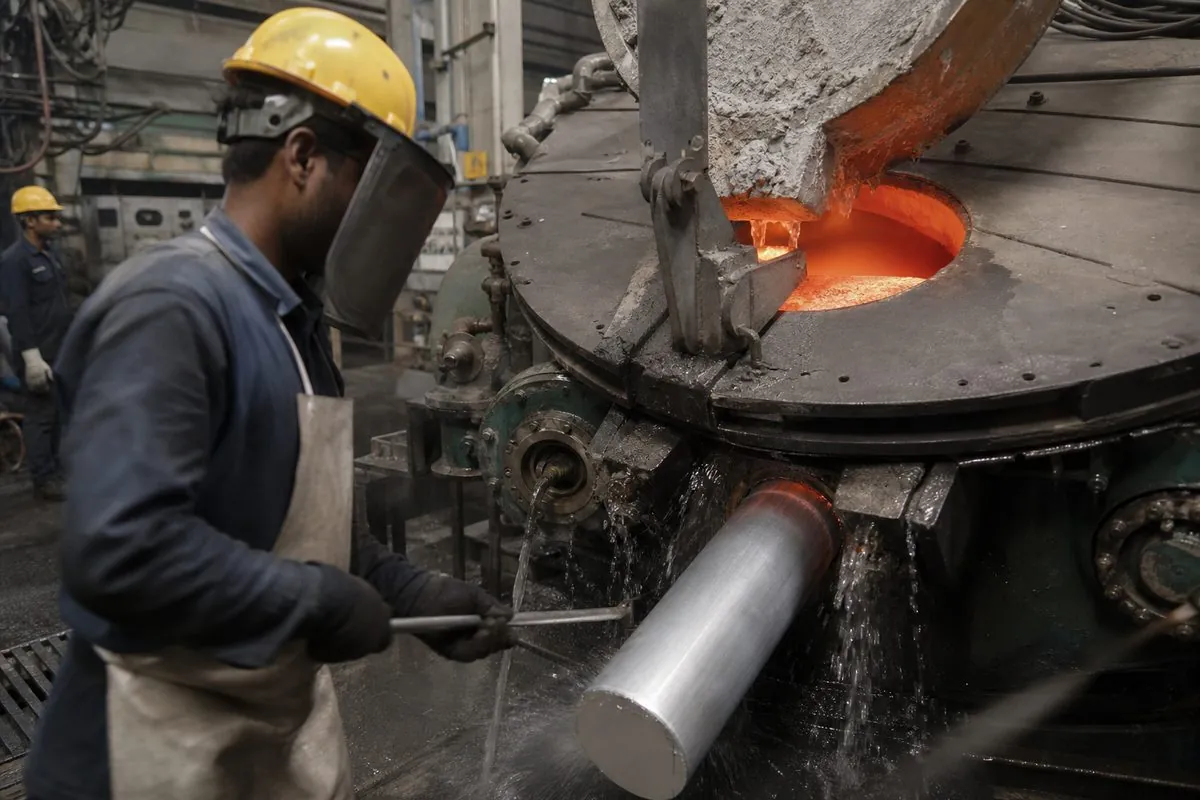
From a product perspective, manufacturing differentiation is alloy-specific: 6063 architectural DC-cast lines target Mg-Si per AA 6063 register with homogenization for anodizing surface quality; 6061 structural adds Cu; 6082 structural adds Mn per EN 573-3 register; 6005 medium-strength targets a controlled Mg-Si band; not-alloyed billet lines run without deliberate alloy addition.
Lot sampling covers Mg, Si, Fe, Cu, Mn and any additional buyer-specified elements before MTC release alongside diameter, length, heat identity, and the homogenization furnace chart — SKU integrity depends on not commingling alloys in cradle bundling.
See export process guide for operational steps from DC-cast house to port.
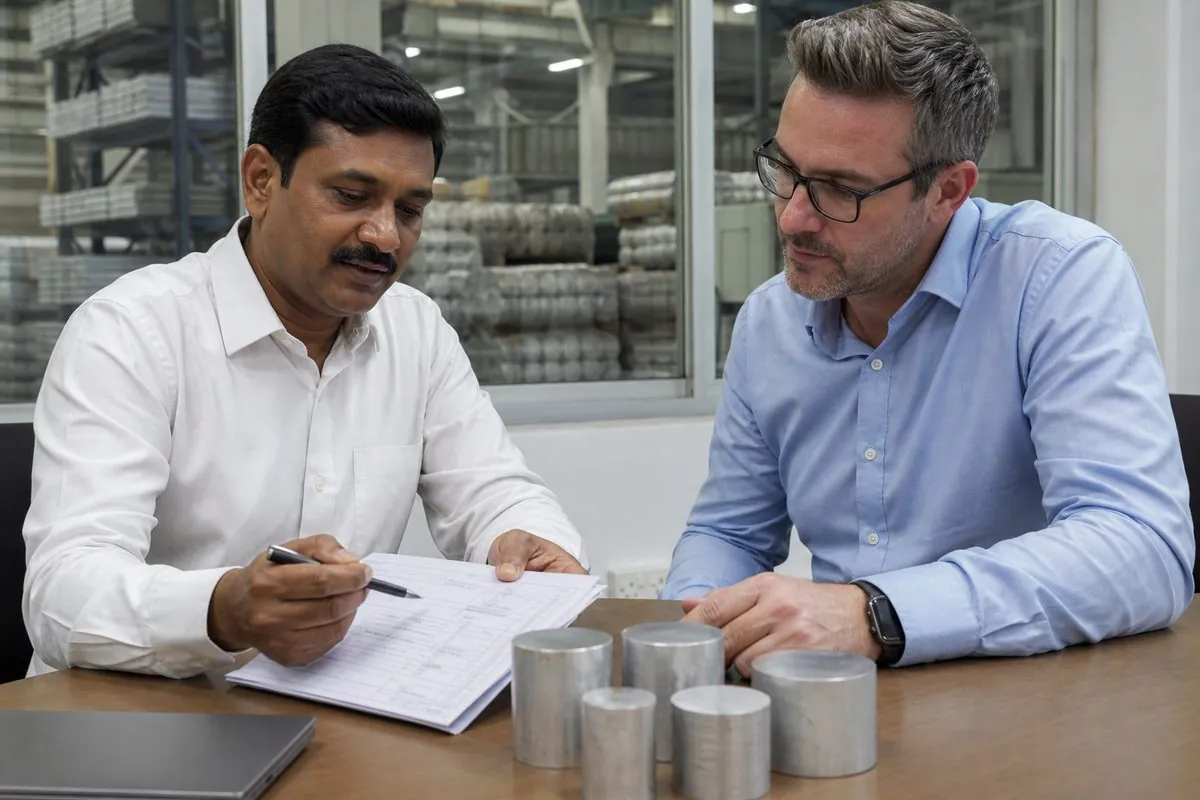
Saurabh Mittal, Founder of Altus Exports, likes to explain alloy thinking in plain language. He says most new extruder buyers come in asking for 'aluminium billets' and expecting one price to cover everything from a homogenized 6063 architectural anodizing lot to a not-alloyed downstream cast-house feed. That is where the confusion starts, and where a good exporter should slow down and ask real questions instead of just sending a quote.
Saurabh's practical advice is to sell the alloy catalogue like a menu, not like a shelf. He says every alloy in India's aluminium extrusion billet export basket has its own extruder buyer, its own Mg-Si and homogenization story, and its own margin. When you mix them up, you underprice the good architectural stuff and overpromise the as-cast material, and both sides of that mistake cost you money over a year.
Alloy Catalogue Deep Dive
- 6063 architectural extrusion billet — architectural fabricators, fenestration extruders, heat-sink profile mills; India HS 76012020 with anodizing-quality homogenization
- 6061 structural extrusion billet — transport, defence, marine, and general structural extruders; India HS 76012020 with mechanical-acceptance homogenization
- 6082 structural extrusion billet — EU and Asia Pacific structural profile mills; India HS 76012020 with tolerance-critical homogenization
- 6005 medium-strength extrusion billet — transport, rail, and industrial profile extruders; India HS 76012020 with buyer press-window homogenization
- Not-alloyed extrusion billet — downstream cast-houses, primary-line distributors, cost-led extruders; India HS 76011020
- Custom Mg-Si extrusion chemistry — OEM architectural anodizing-quality and structural extrusion programmes; India HS 76012020
Indian aluminium extrusion billet exporters win when catalogues separate Mg-Si chemistry, diameter, length, and homogenization discipline rather than quoting a single generic aluminium billet price. The table below maps each primary alloy to its DC-cast profile, typical extruder buyer channel, and honest LME Aluminium ± billet / extrusion premium positioning tier.
For specification depth: 6063 architectural targets AA 6063 registered Mg-Si window with homogenized DC-cast for anodizing surface quality; 6061 structural (AA 6061) adds Cu to the Mg-Si base for higher mechanical demand; 6082 structural (per EN 573-3 register) adds Mn to Mg-Si for medium-to-high strength profiles; 6005 medium-strength (AA 6005) targets a controlled Mg-Si band for transport and industrial profiles; not-alloyed billet under India 76011020 is downstream cast-house feedstock. Every lot must ship with an MTC covering Mg, Si, Fe, Cu, Mn and any additional buyer-specified elements plus diameter, length, heat identity, and homogenization furnace chart.
Primary aluminium extrusion billet product types exported from India
Swipe →
Data table — swipe horizontally on small screens
| Product Type | Typical Chemistry / Spec | HS (India) | Primary Channel |
|---|---|---|---|
| 6063 architectural extrusion billet | Mg-Si alloy per EN 573-3 / AA 6063 registered designation; homogenized DC-cast for anodizing-quality architectural profiles | 76012020 | Architectural extruders, fenestration fabricators, heat-sink and general profile mills |
| 6061 structural extrusion billet | Mg-Si-Cu alloy per EN 573-3 / AA 6061 registered designation; homogenized DC-cast for structural and transport profiles | 76012020 | Transport, defence, marine, and general structural extruders |
| 6082 structural extrusion billet | Mg-Si-Mn medium-to-high strength alloy per EN 573-3 / AA 6082 registered designation; homogenized DC-cast for tolerance-critical profiles | 76012020 | EU and Asia Pacific structural extruders and profile mills |
| 6005 / 6005A medium-strength extrusion billet | Mg-Si medium-strength alloy family per EN 573-3 / AA (confirm 6005 vs 6005A); homogenized DC-cast to buyer press window | 76012020 | Transport, rail, and industrial extruders |
| Not-alloyed extrusion billet | Primary or remelt-cast unalloyed billet chemistry; buyer alloys or homogenizes downstream at their own cast-house | 76011020 | Downstream cast-houses, primary-line distributors, cost-led extruders |
| Custom Mg-Si extrusion chemistry | Buyer-specific 6xxx chemistry window beyond published AA / EN registers; homogenized to buyer press cycle | 76012020 | OEM structural, architectural anodizing-quality, and specialty extrusion programmes |
HS Classification & Trade Notes
Compliance Notes
Alloy SKUs in this catalogue map across HS 7601 billet sublines: 6063 architectural, 6061 / 6082 structural, 6005 medium-strength, and custom Mg-Si extrusion chemistry at India 76012020; not-alloyed billets at India 76011020. Differentiation is MTC Mg-Si chemistry, diameter, length, and homogenization discipline — not a single subheading.
HS classification reference for Indian aluminium extrusion billet exports
Swipe →
Data table — swipe horizontally on small screens
| HS Heading | Scope | Filing Note |
|---|---|---|
| 7601.10 (international) | Aluminium, not alloyed | Parent heading covering all not-alloyed unwrought forms including billets |
| 76011020 (India) | Not-alloyed aluminium billets | PRIMARY billet-line filing for not-alloyed billets — confirm with CHA |
| 76011010 (India) | Not-alloyed aluminium ingots | Sibling ingot line — not the billet filing focus (brief contrast only) |
| 76011030 / 76011040 / 76011090 (India) | Not-alloyed aluminium wire bars / wire rods / other unwrought | Adjacent not-alloyed cast forms — not the billet filing |
| 7601.20 (international) | Aluminium alloys, unwrought | Parent heading covering all alloy unwrought forms including 6xxx billets |
| 76012020 (India) | Alloy aluminium billets | PRIMARY billet-line filing for 6063 / 6061 / 6082 / 6005 and other 6xxx alloy billets |
| 76012010 (India) | Alloy aluminium ingots | Sibling ingot line — not the billet filing focus (brief contrast only) |
| 76012030 / 76012040 / 76012090 (India) | Alloy aluminium wire bars / wire rods / other unwrought | Adjacent alloy cast forms — not the billet filing |
| 7602 / 76020010 / 76020090 | Aluminium waste and scrap | Contrast line — not primary for unwrought billets; recycling feedstock only |
Import Statistics
Key Statistics
- Import-side demand informs which alloy cards to lead with per corridor.
- India's own 760120 import basket shows competitive alloy feedstock pressure — price honestly.
- Use destination buyer-type rows to choose 6063 vs 6082 catalogue emphasis.
- Keep scrap and billet product stories separated in every catalogue note.
Destination import demand profiles show Mexican and US extruders pulling 6063 architectural + 6061 / 6082 structural, Brazilian architectural fabricators pulling 6063, Korean and Japanese extruders pulling 6082 / 6061 high-spec, and Southeast Asian distributor demand mixing 6063 and not-alloyed billets — each alloy in the catalogue has its own extruder demand geography.
Directional import demand profile for Indian aluminium billets by destination market
Swipe →
Data table — swipe horizontally on small screens
| Market | Directional Demand Profile | Primary Buyer Type |
|---|---|---|
| Mexico | 6063 architectural + 6061 / 6082 structural extrusion offtake tied to nearshoring investment in profile mills | Extruders, architectural fabricators, transport-profile mills |
| Brazil | 6063 architectural fenestration + 6082 structural extrusion demand | Architectural extruders, fenestration fabricators, distributors |
| South Korea | 6082 / 6061 high-spec extrusion + 6063 architectural + rolling-adjacent extrusion feed | High-spec extruders, profile mills, architectural fabricators |
| United States | 6063 architectural + 6061 / 6082 structural extrusion offtake; Section 232 aware landed-cost planning | Extruders, architectural fabricators, transport-profile mills |
| Turkey | 6063 architectural + 6082 structural extrusion demand for fenestration and industrial profiles | Extruders, architectural fabricators, structural profile mills |
| Japan | 6082 / 6061 high-spec extrusion for transport and industrial profiles; tight impurity and homogenization ceilings | OEM-linked extruders, structural profile mills |
| Malaysia | 6063 architectural extrusion and distributor demand across Southeast Asia | Extruders, distributors, regional profile mills |
| Vietnam | Expanding architectural extrusion and structural profile mill capacity pulling 6063 and 6082 billets | Extruders, architectural fabricators, distributors |
Pricing Analysis
Buyer Tip
- Price 6063 / 6061 / 6082 / 6005 / not-alloyed as separate premium lines.
- Do not blend architectural and structural premiums on one catalogue card.
- Homogenized programmes carry a documented homogenization premium — show evidence.
- Refresh alloy premiums when Mg-Si ceilings tighten.
Alloy-level pricing structure below reflects Mg-Si chemistry, diameter, length, and homogenization discipline — refresh quotes on quote date; LME Aluminium volatility moves all bands simultaneously.
Directional FOB pricing structure by aluminium extrusion billet grade (LME Aluminium ± billet / extrusion premium)
Swipe →
Data table — swipe horizontally on small screens
| Grade / Programme | Pricing Structure | Notes |
|---|---|---|
| 6063 architectural extrusion billet (HS 76012020) | LME Aluminium cash or 3M + 6063 architectural extrusion premium, FOB | Homogenized DC-cast anodizing-quality lots command tighter premium than as-cast |
| 6061 structural extrusion billet (HS 76012020) | LME Aluminium + 6061 structural extrusion premium, FOB | Mechanical-spec buyers add third-party assay premium as required |
| 6082 structural extrusion billet (HS 76012020) | LME Aluminium + 6082 structural extrusion premium, FOB | EU and Asia Pacific structural profile programmes drive premium tier |
| 6005 / 6005A medium-strength extrusion billet (HS 76012020) | LME Aluminium + 6005 / 6005A medium-strength extrusion premium, FOB | Confirm exact AA/EN designation; transport, rail, and industrial profile spec drives premium |
| Not-alloyed billet (HS 76011020) | LME Aluminium + not-alloyed billet premium, FOB | Buyers alloy or homogenize downstream at their own cast-house; premium closest to LME cash |
| Custom Mg-Si extrusion chemistry (HS 76012020) | LME Aluminium + custom-alloy + homogenization premium, FOB | Chemistry window beyond published AA / EN designations; homogenization chart per lot |
MOQ Analysis
Buyer Tip
- Trial MOQ applies per new alloy card — 6063 pass does not unlock 6082 industrial MOQ.
- Catalogue first-FCL notes stay at ~20–25 MT unless the press plant confirms otherwise.
- Not-alloyed and 6xxx SKUs keep separate trial gates.
- Homogenized premium SKUs may need longer furnace-cycle lead time inside the same MT band.
Alloy-specific MOQ varies — homogenized 6063 architectural anodizing-quality and OEM structural 6082 lots may require higher minimum runs than commodity as-cast not-alloyed billets due to homogenization furnace changeover.
Directional MOQ tiers for aluminium extrusion billets by transaction stage
Swipe →
Data table — swipe horizontally on small screens
| Stage | Typical MOQ | Purpose |
|---|---|---|
| Trial order | 5–25 MT | Extruder buyer alloy evaluation, MTC + homogenization verification, and press-fit protocol test |
| Standard FCL | 20–25 MT (20ft FCL) | First commercial billet shipment; verify billet diameter, length, cradle geometry, and payload with CHA |
| Industrial contract | Monthly MT contracts | Extruder, profile mill, architectural fabricator, and distributor repeat programmes |
Packaging Standards
Export Tip
- Each alloy card needs its own cradle / end-face note — especially homogenized 6063.
- Catalogue photos should show tags that match the SKU chemistry story.
- Not-alloyed packing must not inherit anodizing-quality end-cap promises.
- Structural 6082 / 6061 cards call out diameter and length tolerances on the pack note.
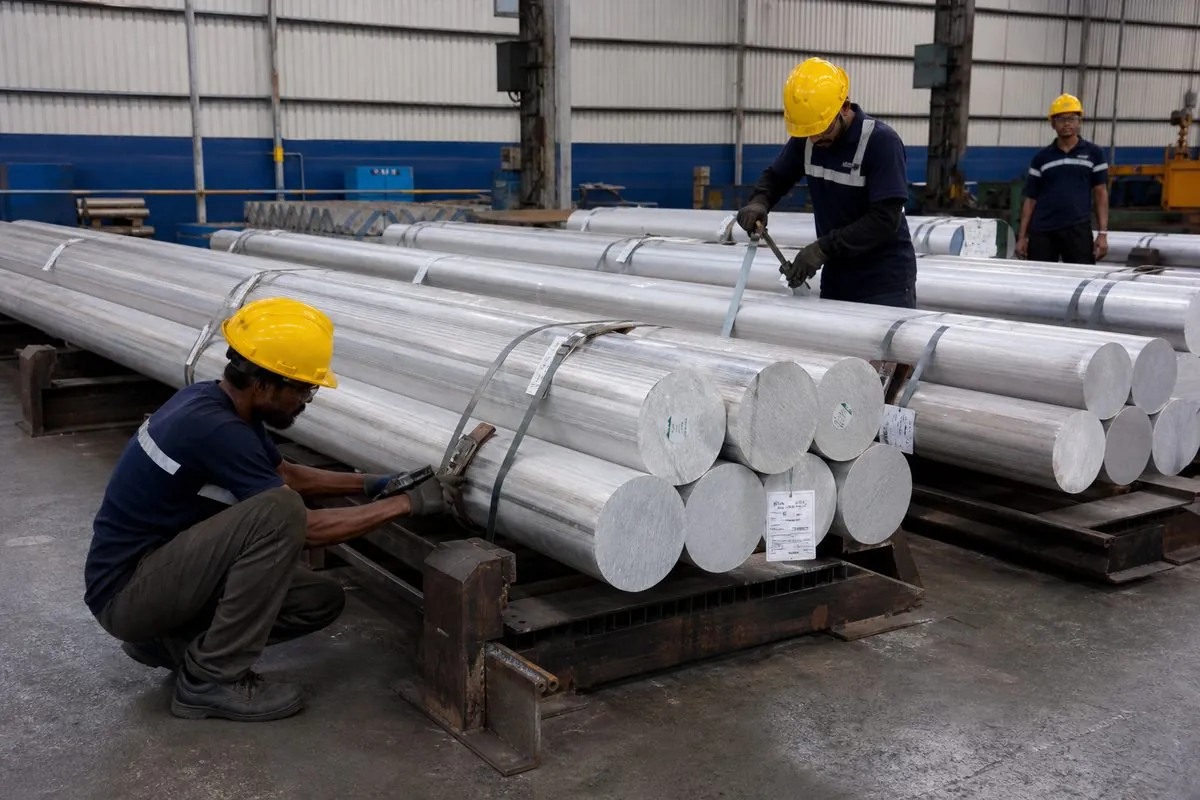
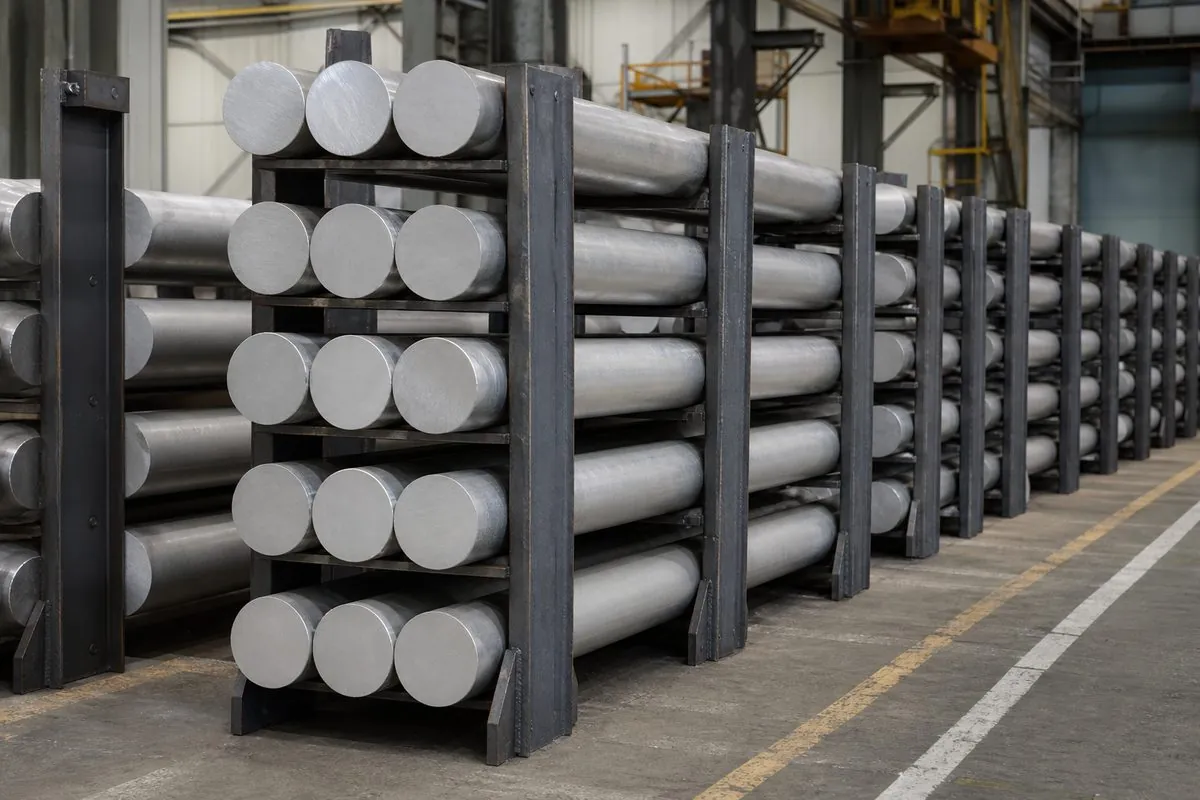
Packaging format is part of SKU definition — DC-cast round billets to buyer diameter (typical 6–12 inch / ~150–305 mm) × length (commonly 3–7 metres cut-to-order) with squared saw-cut ends and homogenization identity tagging suit extruder press feed; billet bundle mass and cradle geometry affect quoted FOB and forklift discharge speed at the extrusion plant.
Bundle marks must state alloy, diameter, length, lot / heat / cast ID, and homogenization status and must match MTC and homogenization chart — packaging errors cause rejection at the extrusion press even when chemistry is acceptable.
Aluminium extrusion billet packaging formats — commercial cast-house and buyer press-plant practice
Swipe →
Data table — swipe horizontally on small screens
| Format | Typical Configuration | Use Case | Key Requirement |
|---|---|---|---|
| DC-cast round billet geometry | Round DC-cast billets to buyer diameter (commonly 6–12 inch / ~150–305 mm) × length (commonly 3–7 metres cut-to-order) — confirm per mill and press specification | All extrusion billet export programmes | Diameter, length, and squared saw-cut end faces must match buyer press-container plan |
| Not-alloyed vs 6xxx alloy segregation | Separate cast-house pours and lot batches for HS 76011020 (not-alloyed) and 76012020 (6xxx alloy) billets | All mixed-alloy export programmes | Do not commingle not-alloyed and 6xxx alloy lots in the same bundle without clear alloy identity tags |
| Mill-strapped billet bundles / cradles | Buyer-sized cradles or bundles per extrusion press feed cadence; steel cradles or wooden supports as specified | Standard FCL loading for extrusion billet lots | Cradle geometry stable in ocean transit; heat / alloy / diameter identity tags per bundle |
| Marking discipline | Lot / heat / cast tagging on every billet or bundle plus alloy, diameter, length, and homogenization status stencilled or tagged | All aluminium extrusion billet lots | Heat identity + diameter + length + homogenization must reconcile MTC ↔ packing list |
| End-face protection | Squared saw-cut ends protected with end caps or protective film where the buyer press plant requires it | Architectural anodizing-quality and OEM structural extrusion programmes | Prevent end-face oxide staining or damage that affects extrusion press dead-cycle scrap |
| Homogenization status tagging | Homogenized DC-cast billets tagged with soak / cool / quench chart lot reference alongside heat identity | Homogenized 6xxx architectural and structural extrusion programmes | Buyer extruder press acceptance depends on documented homogenization discipline |
| Weather / moisture protection | Dry warehouse staging; wrapping where specified for architectural anodizing-quality lots | All ocean shipments — 6063 architectural anodizing lots especially | Prevent surface oxide staining or contamination before receipt at extrusion mill |
Container Loading Details
Export Tip
- Longer structural billets may change piece count inside the same MT band — check per SKU.
- Catalogue FCL notes should warn that diameter drives stow, not only MT.
- Do not assume every alloy card stuffs identically in a 20ft.
- Homogenized lots still follow the same payload math — furnace status is not denser metal.
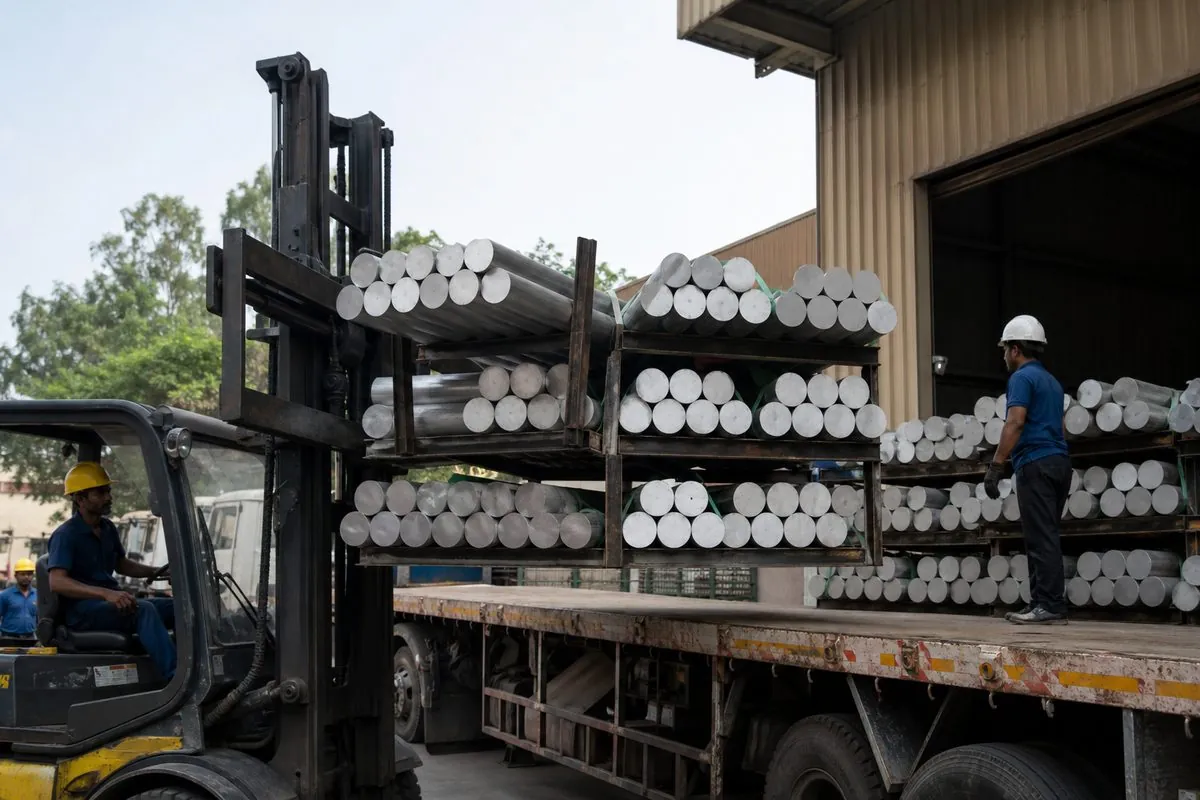
Container planning varies by SKU packaging — 6063 architectural cradle geometry and 6082 structural billet cradle geometry produce different payload curves; confirm with forwarder per alloy.
Directional container loading guidance for aluminium extrusion billets
Swipe →
Data table — swipe horizontally on small screens
| Container Type | Loading Consideration | Typical Use |
|---|---|---|
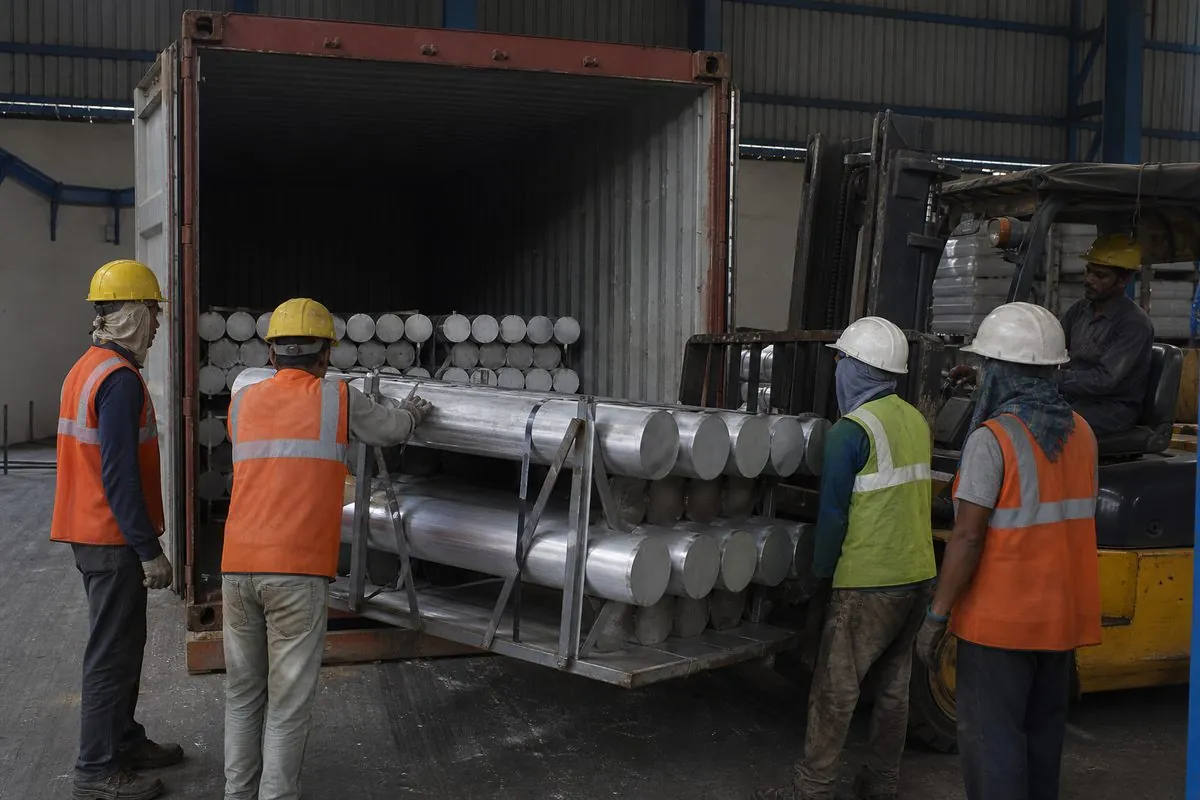
| 20-foot FCL | 20–25 MT payload in mill-strapped billet bundles or cradles; verify stow with forwarder for billet diameter and length | Trial and standard commercial extrusion billet shipments |
| 40-foot FCL / 40-foot HC | Higher payload with dense billet cradle stacking; check max payload limits and cradle stability | Established extruder and profile mill programmes |
| Break-bulk | Large architectural or automotive extrusion billet programmes beyond standard FCL cadence | Mega architectural fenestration and structural extrusion contracts |
| Cradle / palletisation | Recommended for consistent forklift handling and press-plant discharge speed | Extruder buyers with forklift or crane handling at destination plant |
Shipping Methods
Export Tip
- Sample slug air freight applies per new alloy card before catalogue FCL promises.
- Homogenized SKUs may add furnace-cycle days inside the same ocean band.
- Do not publish one lead-time row for every alloy on the catalogue.
- Incoterm notes on product cards should default to FOB named Indian port.
6063 architectural and 6xxx structural extrusion billet lots move as ocean FCL from Mundra, Paradip, Visakhapatnam, Nhava Sheva, Kandla, or Krishnapatnam; sealed sample slug kits by air-express for chemistry and homogenization approval before bulk allocation.
Certifications
Compliance Notes
- Every alloy card inherits IEC / EEPC / MTC — homogenization chart is mandatory on 6xxx premium SKUs.
- Not-alloyed cards still need lot MTC even without soak charts.
- Do not print OEM PPAP language on distributor-only catalogue SKUs.
- ISO certificates support credibility; they never replace lot chemistry evidence.
Catalogue credibility starts with IEC and EEPC RCMC; each alloy card still needs lot MTC + homogenization evidence — OEM audit language belongs only on SKUs that actually support it.
Certifications and documents relevant to aluminium extrusion billet export
Swipe →
Data table — swipe horizontally on small screens
| Certification / Document | Purpose | Relevant For |
|---|---|---|
| Mill Test Certificate (MTC) with homogenization data | Lot-specific alloy chemistry (Mg, Si, Fe, Cu, Mn, others as required), diameter, length, heat identity, and homogenization soak / cool / quench record | All commercial aluminium extrusion billet shipments — baseline extruder buyer requirement |
| EEPC RCMC + IEC | Baseline export registration and council membership for Chapter 76 billet sublines 76011020 and 76012020 | All commercial aluminium extrusion billet export shipments from India |
| ISO 9001 (cast-house / exporter) | Quality-system credibility at DC-casting, homogenization furnace, and export site | Architectural fabricator, OEM structural extrusion, and multinational distributor buyers |
| Homogenization furnace chart / temperature log | Documented time-temperature record of soak / cool / quench cycle per billet lot | Homogenized DC-cast 6xxx-series extrusion billet export programmes |
| Third-party assay + homogenization audit (SGS / Bureau Veritas / Intertek) | Independent lot chemistry, diameter, length, and homogenization verification | Architectural anodizing-quality, OEM structural, or LC-backed extrusion programmes |
| Extruder / architectural fabricator quality pack (PPAP-style) | OEM approval of alloy chemistry, homogenization, diameter, length, cradle format, and traceability | Direct architectural fabricator and OEM structural extrusion programmes |
| Certificate of Origin | Country of manufacture; FTA claims where applicable to billet sublines | Destination customs and FTA duty programmes for extrusion billet lots |
| Destination metal standard declarations | Conformance to destination aluminium alloy standards (EN 573-3, AA registered 6063/6061/6082/6005 designations, JIS H 4100 profile alloy references) | Extruder buyers requiring formal alloy standard cross-reference |
Buyer Requirements
Buyer Requirements
- Each SKU needs its own Mg-Si ceiling list and homogenization status — no shared 'aluminium billet' spec.
- MTC must name the alloy card (6063 / 6061 / 6082 / 6005 / not-alloyed) and cite homogenization chart reference.
- Cradle format on the PO must match the SKU (commercial as-cast vs homogenized OEM structural).
- Trial per new alloy before multi-SKU monthly contracts.
- Architectural fabricator approval required only on homogenized 6063 anodizing-quality SKUs.
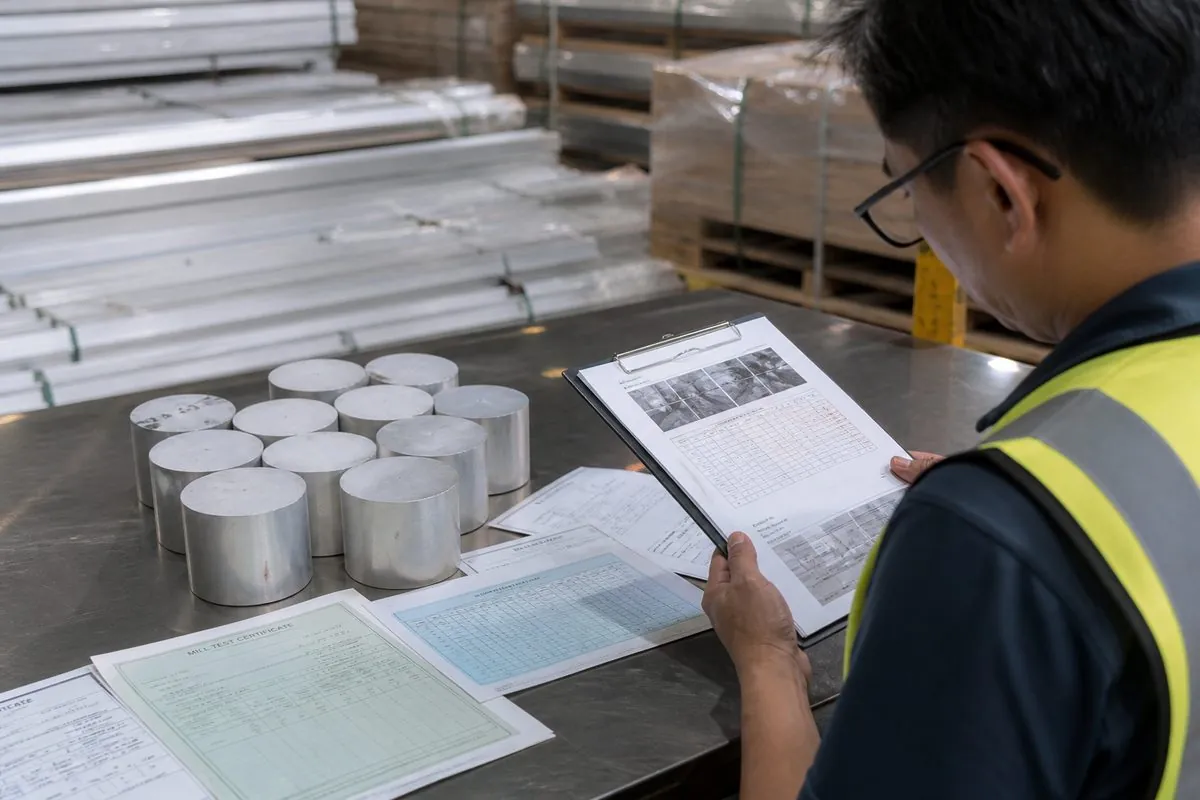
Extruder buyers in products programmes request sample slugs, written Mg-Si + Fe / Cu / Mn spec, homogenization chart, lot MTC, LME-linked FOB pricing, and EEPC / IEC proof — architectural fabricators and OEM structural extruders add homogenization audit evidence or PPAP-style approval where applicable.
Country-wise Opportunities
Market Snapshot
- Lead 6063 architectural cards into Mexico / Brazil; lead 6082 / 6061 into Korea / Japan.
- US cards need duty-stack notes beside the alloy chemistry.
- Turkey / Malaysia / Vietnam favour clean catalogue FOB with clear SKU split.
- Do not send one SKU sheet as if every country buys the same billet.
Alloy selection drives corridor fit as much as freight does — 6063 architectural into Mexico and Brazil, 6082 / 6061 structural into Korea and Japan, dual-line into Turkey and USA. Pair the matrix with country demand profiles before finalising the catalogue-to-corridor map.
Directional country opportunity profile for Indian aluminium extrusion billet exporters
Swipe →
Data table — swipe horizontally on small screens
| Country | Demand Profile | Key Requirement Focus | Opportunity Note |
|---|---|---|---|
| Mexico | 6063 architectural + 6061 / 6082 structural extrusion for nearshoring profile mills and fabricators | Homogenization discipline + Mg-Si chemistry lock + PPAP-style packs for OEM structural | Top WITS 2024 HS 760120 parent partner (~US$154.7M) — 6xxx billet subline sits inside this corridor |
| Brazil | 6063 architectural fenestration + 6082 structural extrusion demand across a wide industrial base | 6063 anodizing-quality homogenization + MTC discipline + FTA-aware paperwork | Second WITS 2024 HS 760120 parent partner (~US$122.2M) — architectural extrusion pull |
| South Korea | 6082 / 6061 high-spec extrusion + 6063 architectural for profile mills and rolling-adjacent programmes | Tight Mg-Si windows + deep MTC + homogenization audit + OEM PPAP for structural | Third WITS 2024 HS 760120 parent partner (~US$85.1M); also large HS 760110 parent partner (~US$592.0M) |
| United States | 6063 architectural + 6061 / 6082 structural extrusion offtake; Section 232 aware landed-cost planning | Homogenization discipline + Mg-Si lock + USMCA-linked documentation where relevant | Fourth WITS 2024 HS 760120 parent partner (~US$78.2M) — Section 232 overlay dominant |
| Turkey | 6063 architectural + 6082 structural extrusion demand for fenestration and industrial profiles | Homogenization + Mg-Si chemistry + FTA-aware paperwork | Fifth WITS 2024 HS 760120 parent partner (~US$75.7M) plus HS 760110 (~US$421.6M) — dual-line corridor |
| Japan | 6082 / 6061 high-spec extrusion for transport and industrial profiles | Tight impurity ceilings + homogenization audit + OEM PPAP + conductivity where relevant | HS 760120 top-ten partner + HS 760110 (~US$253.6M) — quality-driven, OEM-linked extruders |
| Malaysia | 6063 architectural extrusion and distributor demand across Southeast Asia | MTC discipline + consistent homogenization + FTA-aware duty | Large WITS 2024 HS 760110 parent partner (~US$494.8M) — extrusion-hub demand |
| Vietnam | Growing architectural extrusion and structural profile mill capacity pulling 6063 and 6082 billets | MTC discipline + FTA rules of origin + expanding OEM audit expectations | Present across HS 760110 / 760120 parent partner lists — expanding extrusion corridor |
Americas extrusion corridors
Catalogue strategy for Mexico and Brazil puts homogenized 6063 architectural cards first, with 6061 / 6082 structural cards as the second SKU wave inside parent HS 760120 demand. India 76012020 filings must match the alloy card on the packing list — not a catch-all 'aluminium billet' line. Show diameter, length, and soak-chart status on each Americas-facing product sheet so fabricators and structural extruders self-select correctly.
Asia-Pacific high-spec corridors
Korea and Japan product sheets should lead with 6082 / 6061 high-spec chemistry windows and homogenization audit language, not only architectural 6063. Parent HS 760110 not-alloyed and 760120 alloy both appear in the region — keep not-alloyed billet cards on a separate catalogue page so OEM structural buyers are not offered the wrong feedstock. Sequence high-spec SKUs after your mill can attach furnace charts to every lot identity.
US, Turkey, and Southeast Asia
US-facing alloy cards need a duty-stack footnote beside 6063 / 6061 / 6082 premiums; MFN Free language alone mis-sells the product. Turkey, Malaysia, and Vietnam catalogue versions can emphasise clean FOB SKU splits — architectural vs structural vs not-alloyed — with competitive cradle identity. Keep product photography and tag examples corridor-honest so distributors and extruders trust the card they received at the fair or in the RFQ pack.
Expert Insight: Corridor Discipline
Expert Insight Box
Corridor-level demand validates the alloy catalogue — if your 6063 architectural and 6082 structural programmes only sell into one market, you are running product-market fit on one leg. Broaden the catalogue conversation across Mexico, Brazil, Korea, USA, Turkey, and Japan and you learn which chemistry and homogenization claims actually hold.
On the alloy catalogue, Saurabh Mittal ties corridor discipline to SKU honesty: do not pitch not-alloyed billets into a Japan OEM structural conversation just because the destination imports aluminium. Match 6063 architectural, 6061 / 6082 structural, or 6005 medium-strength to the extrusion press that can use it. When alloy and country fit, the sample slug and MTC + homogenization close the loop; when they do not, no brochure anodizing claim salvages the trial.
Product managers should refresh corridor × alloy maps quarterly. 6xxx alloy billet demand in Mexico and Brazil moves with architectural + structural OEM programmes; Korean and Japanese high-spec demand moves with extrusion press capacity utilisation. Keep each alloy card's destination notes current so the catalogue stays a decision tool, not a recycled PDF.
Sourcing Checklist
Checklist
Buyer Checklist
Common Buyer Mistakes
Common Mistakes Box
Future Market Trends
Key Statistics
- Catalogue roadmaps should expect more homogenized 6xxx SKUs, not more catch-all billet SKUs.
- 6005 / 6005A medium-strength cards grow where presses want mid-spec alternatives to 6063 / 6082.
- Not-alloyed billet cards remain a distinct downstream cast-house story.
- Update alloy cards when OEM Mg-Si windows tighten — trends show up as chemistry first.
Homogenized 6063 architectural and 6082 / 6005 structural extrusion billet SKUs gain share in architectural and transport extrusion corridors while commodity as-cast not-alloyed billets remain volume-driven — catalogue breadth beats single-SKU price wars.
Extruder OEM buyers increasingly request tighter Fe / Cu impurity ceilings on MTC — spec sheets must evolve with extruder R&D and homogenization discipline trends.
Exporter Checklist
Checklist
Compliance Checklist
Checklist
Compliance Notes
Sources
- WITS / UN Comtrade — India exports HS 760110 by partner, 2024 (parent context)
- WITS / UN Comtrade — India imports HS 760110 by partner, 2024 (parent context)
- WITS / UN Comtrade — India exports HS 760120 by partner, 2024 (parent context)
- WITS / UN Comtrade — India imports HS 760120 by partner, 2024 (parent context)
- WITS / UN Comtrade — Aluminium waste and scrap trade, HS 7602 (contrast)
- Federal Register — Section 232 aluminium proclamations (verify live)
- GovInfo — FR 2026-11314 Section 232 aluminium/steel/copper proclamation (Jun 4, 2026)
- White House — Further Adjusting Tariff Regimes for Aluminum, Steel, and Copper (Jun 2026)
- CBP — Aluminum HTS subject to Section 232 (heading 7601 listed; verify live)
- UN Comtrade Database
- ITC Trade Map
- India Ministry of Commerce — TRADESTAT / MEIDB
- DGFT (India) — IEC / trade portal
- ICEGATE — Indian Customs EDI (eight-digit billet extract source)
- India CBIC — Customs Tariff (Chapter 76)
- EximGuru — ITC-HS 76011020 Aluminium, not alloyed: Billets
- EximGuru — ITC-HS 76012020 Aluminium alloys: Billets
- EEPC India
- London Metal Exchange — Aluminium (LME cash / 3M reference)
- Aluminum Association — Teal Sheets registered alloy designations
- European Aluminium — extrusion industry data
- EN 573-3 aluminium wrought alloy chemical composition (BSI / CEN)
- USITC Harmonized Tariff Schedule (search 7601)
- European Commission TARIC
- ISO 9001 overview
- Altus Exports — Engineering Goods
All sources accessed 2026-08-01 during the Aluminium Billets factual sweep. Prefer primary government, exchange, and multilateral trade databases (WITS/UN Comtrade for HS 760110 / 760120 parent context, DGCI&S / TRADESTAT / ICEGATE for eight-digit billet sublines, CBIC, USITC, LME, EEPC, AA Teal Sheets, EN 573-3) when citing figures in contracts or buyer presentations.
Alloy chemistry bands, homogenization windows, and diameter / length definitions cited here are planning ranges — confirm cast-house MTC values, homogenization soak records, and buyer press-window fit on every lot before invoicing or extruder approval.
Conclusion
Alloy-level honesty on Mg-Si chemistry, diameter, length, and homogenization discipline converts faster than collapsing every SKU into one premium band — catalogue clarity is sales infrastructure.
Altus Exports matches 6063 architectural, 6061 and 6082 structural, 6005 medium-strength, and not-alloyed billet programmes to extruder chemistry and homogenization needs — contact us for MTC-backed sample slugs.
Continue with How To Export Aluminium Billets From India and Homogenized Extrusion Grade Aluminium Billet Export Opportunities.