
How to Export Licorice (Mulethi) Powder & Extract from India: Complete Process Guide
By Saurabh Mittal, Founder, Altus Exports
A practical guide for buyers and exporters of Indian licorice dried root, root powder, block/paste, spray-dried extract, and glycyrrhizin-standardized extracts, covering sourcing, testing, documentation, packing, and delivery.
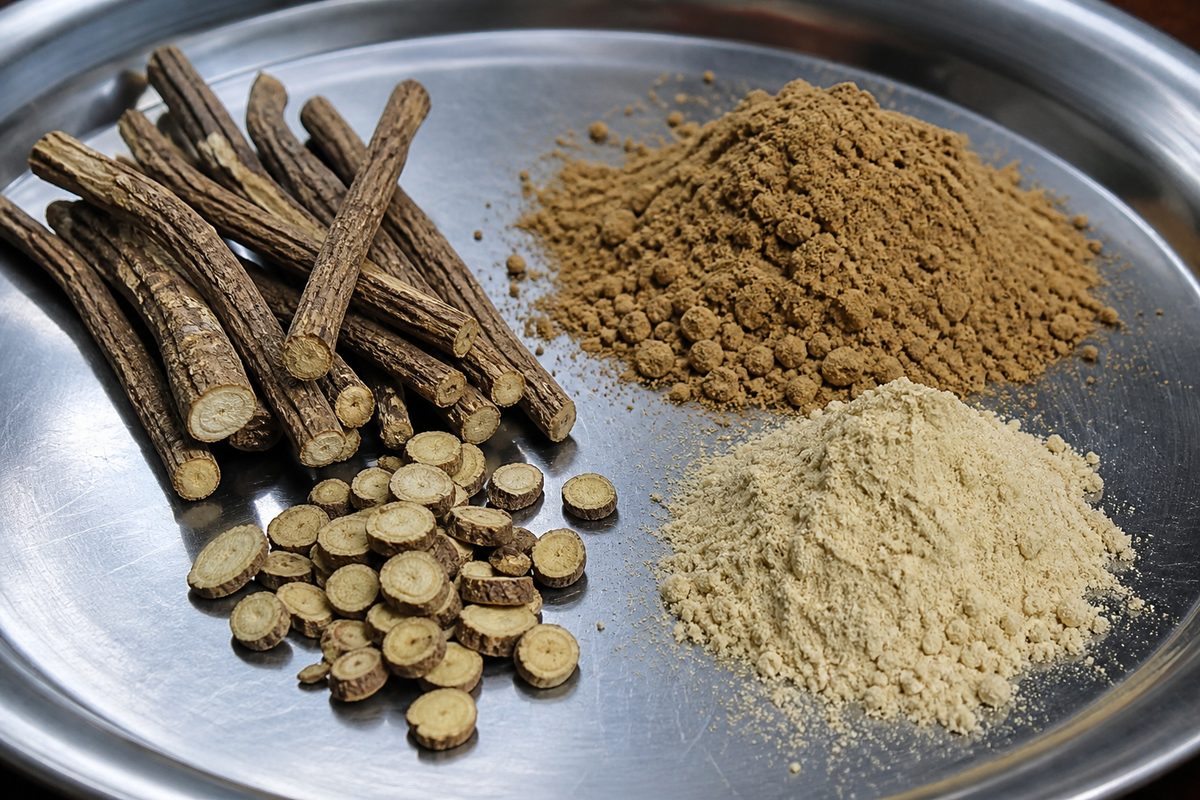
Exporting India licorice (mulethi) (*Glycyrrhiza glabra*) is an execution project, not simply a powder sale. A buyer needs the right root form, mesh grade or extract ratio, a lot-specific COA, heat- and moisture-safe packing, and documents that match the shipment.
India supplies dried whole and cut root, licorice root powder (churna/mesh), spray-dried / block-paste grade, ratio extracts, and glycyrrhizin HPLC-standardized extracts from Punjab / sub-Himalayan cultivation belts and supporting North India aggregation, Gujarat packing, and extract hubs — commercial lots may also finish imported roots, so lock lot origin on the COA. Start with a written buyer specification, then use the product catalogue to match the commercial format to the application.
For dried root and powder, Indian exporters commonly cite ITC-HS 1211.10 with the India eight-digit cue 12111000 (Liquorice roots — whether or not cut, crushed or powdered when that heading applies). Confirm live with CHA; do not invent a CY2024 India 121110 export total — WITS reports no World rows for that year.
Concentrated liquorice extracts commonly sit under HS 1302.12 (India cue 13021200). WITS shows India HS 130212 exports ≈ USD 176.99 thousand in CY2024 — a dedicated liquorice extract heading, not residual 1302.19. Destination HTS/TARIC can differ. Confirm with CHA and the importer's broker. See the licorice (mulethi) documentation checklist before a shipping bill is prepared.
Altus Exports acts as a merchant exporter, global sourcing partner, and export consulting resource from sample to named-port shipment. Punjab/Haryana/UP/Rajasthan supply often consolidates toward Mundra or Nhava Sheva, with ICD options and air for samples.
For market sequencing, read the country guide and set FOB, CFR/CIF, EXW, or selective DDP expectations before pricing.
Key Takeaways
Summary Box
Executive Summary
Summary Box
Exporting India licorice (mulethi) (*Glycyrrhiza glabra*) is an operations sequence: freeze the herb form, qualify the dryer or extract plant, approve a sealed sample, release a lot-true COA, reconcile documents, then stuff a named-port shipment.
Process owners should refuse vessel bookings until mesh or extract ratio, glycyrrhizin or HPLC marker method, pack format, Incoterm, and importer pathway are written. FOB shopping without those gates creates rework and glycyrrhizin / glabridin disputes.
Use a retained sample and staged trial before promising recurring containers. Punjab–Haryana–western UP–Rajasthan herb supply is real; self-proving glycyrrhizin claims without HPLC method are not.
Market Size & Industry Overview
Key Statistics
The process view of India’s licorice (mulethi) market follows herb harvest → hygienic drying or slicing → milling or extraction → testing → export packing → named-port or ICD handover.
Each handoff needs an owner: who approves the specification, who releases the COA including glycyrrhizin method if claimed, who books the vessel, and who answers destination queries.
Treat market size talk as background; treat gate completion as the real capacity signal for first FCL programmes.
Export Statistics
Key Statistics
- Cite India HS 130212 ≈ USD 176.99K CY2024 (WITS) as dedicated liquorice-extract context — re-verify grades/SKU demand; do not invent a 121110 India export total (WITS shows no CY2024 World rows).
- Verify the applicable India ITC-HS and destination HTS/TARIC for the exact finished SKU with CHA + importer broker.
- Re-check TradeStat/WITS/Comtrade before quoting figures to a buyer.
When sequencing first licorice exports, cite India HS 130212 ≈ USD 176.99K CY2024 (WITS) as dedicated extract context — never as your plant’s booking pad; do not invent a 121110 India export total.
Process teams should isolate powder versus extract filing habits with the CHA before using trade decks in customer calls.
Refresh TradeStat/WITS figures whenever a board pack or buyer presentation is dated.
Scan: trade & HS cues (directional — verify on quote date)
Swipe →
Data table — swipe horizontally on small screens
| Metric | Directional position | Buyer note |
|---|---|---|
| Core product | Dried whole/cut licorice root, root powder (churna/mesh), confectionery block/paste, spray-dried extract, glycyrrhizin-standardized extracts, DGL, glabridin cosmetic fractions | Specify *G. glabra* identity, root/stolon plant part, mesh or glycyrrhizin assay in every RFQ |
| Production base | Punjab / sub-Himalayan mulethi cultivation · North India aggregation · Gujarat packing · Hyderabad/Indore extracts (lots may also finish imported roots) | Verify actual processing site and lot origin per COA — India programmes may cultivate and/or process imported roots |
| Dried root and powder (India export cue) | ITC-HS 1211.10 — India eight-digit cue 12111000 (Liquorice roots) | Confirm live ITC-HS with CHA; WITS shows no India 121110 World export rows for CY2024 — do not invent a root-export total from silence |
| Extract classification (India export cue) | HS 1302.12 — India eight-digit cue 13021200 (Liquorice saps and extracts) | Do NOT default Glycyrrhiza extract to residual 1302.19; confirm block/paste/spray-dried form with CHA before shipping bill |
| Trade-data (WITS CY2024) | India HS 130212 exports ≈ USD 176.99K; top partners Nepal, Germany, Spain, Myanmar, Indonesia | Dedicated liquorice extract heading — still reconcile grade/SKU; re-fetch WITS/DGCI&S on quote date |
| Export gateways | Mundra, Nhava Sheva; ICD from Punjab/Haryana/UP; air for samples | Select the named port after factory location and sailing schedule are fixed |
Import Statistics
Key Statistics
- Segment destinations by buyer type and product form.
- Confirm the importer’s local route before shipping.
- Re-verify current partner data.
Import-side planning for licorice (mulethi) should segment destinations by buyer type and product form before booking samples.
Process owners confirm the importer’s local food or supplement route before promising arrival dates.
Re-verify partner data and prior-notice needs for USA programmes on each new trial.
Scan: market → form → buyer type
Swipe →
Data table — swipe horizontally on small screens
| Market | Demand profile | Typical buyer |
|---|---|---|
| USA | Root powder, organic powder, glycyrrhizin–aware ingredients, and extracts | Ingredient importers, brand owners, private-label packers |
| EU / UK | Traceable root powder and organic programmes; extracts need pathway confirmation | Organic distributors, food brands; extract buyers need pathway confirmation |
| UAE / GCC | Bulk powder and retail-ready programmes with food-safety and Halal documentation | Distributors, re-export traders, retail chains |
| Australia / Canada | Canada: premium powder interest; Australia: food vs complementary-medicine pathway with counsel | Canada natural-product distributors; AU: confirm lawful product route before quoting |
| Japan / South Korea | Consistent fine powders and tightly specified HPLC extracts | Ingredient distributors and formulation companies |
| SE Asia | Accessible bulk powder, block/paste, and dried-root programmes | Wholesalers, distributors, confectionery houses, and regional packers |
Product Categories / Variants
Summary Box
- Conventional and certified organic root powder.
- Declared mesh and industrial packing options.
- Declared extract formats with transparent analytical basis.
- No unsupported health or therapeutic claims.
Process planners should treat dried root, churna mesh powder, spray-dried / block-paste grade, and ratio/HPLC extracts as different release workflows with separate COA templates.
Assign owners for mesh approval, glycyrrhizin method checks, and extract residual-solvent gates before production starts.
Link each approved SKU to packing and named-port instructions so booking cannot outrun specification. Compare forms via the India licorice (mulethi) product guide.
Scan: SKU catalogue (one row per commercial form)
Swipe →
Data table — swipe horizontally on small screens
| Product | Specification variables | Primary buyer channel |
|---|---|---|
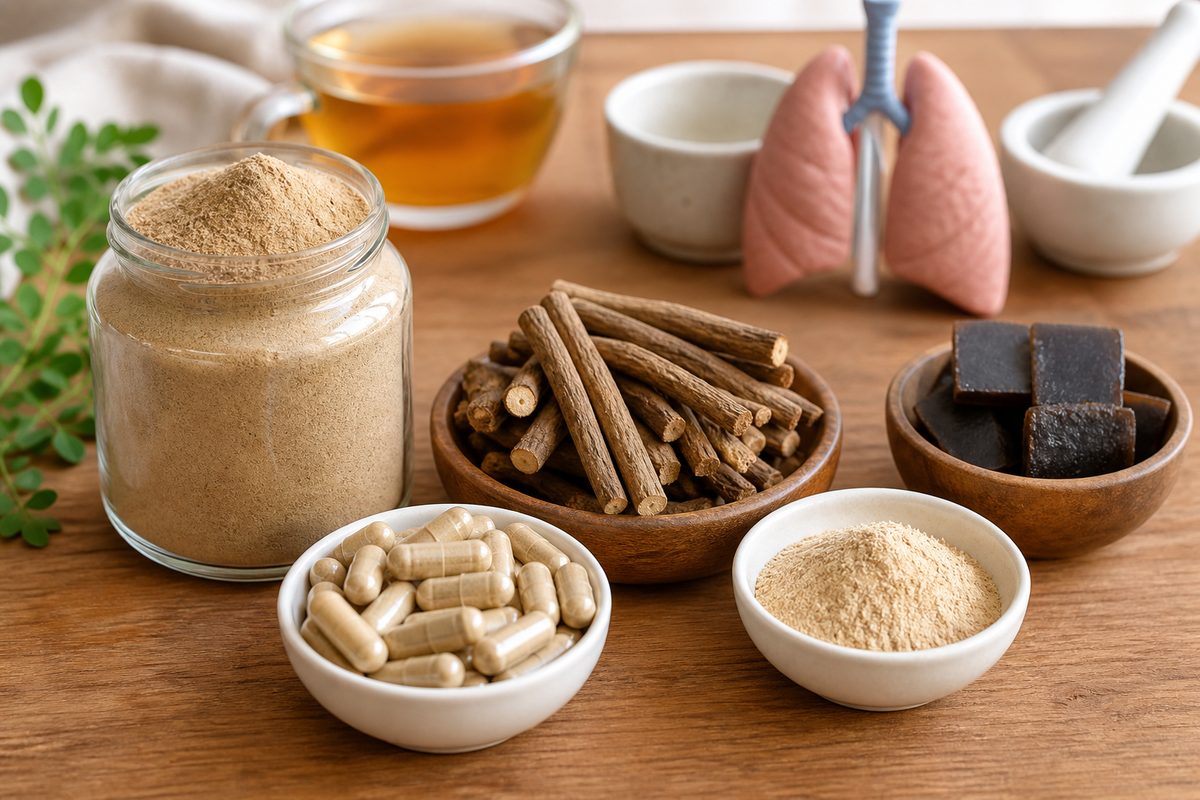
| Dried whole / cut licorice root | Root integrity, moisture, cleaning level, *G. glabra* ID | Ayurvedic, respiratory/throat, digestive ingredient distributors |
| Licorice root powder (churna/mesh) | Mesh grade, colour, moisture, micro profile | Nutraceutical, confectionery-ingredient, formulation buyers |
| Confectionery block / paste / soft extract | Solids %, glycyrrhizin content, flavor profile | Confectionery houses, flavor houses, food manufacturers |
| Steam-sterilized powder | Treatment record, micro release, moisture | Premium brands and retail-adjacent programmes |
| Organic root powder | NPOP/USDA/EU scope, segregation, TC | Organic respiratory/digestive and Ayurvedic programmes |
| 4:1 / 10:1 / 20:1 ratio extract | Ratio, solvent, carrier, assay, solubility | Nutraceutical and formulation buyers |
| ~5% / ~10% / ~20%+ glycyrrhizin HPLC extract | Marker, HPLC method, acceptance band | Respiratory/digestive and confectionery ingredient buyers |
| DGL (deglycyrrhizinated licorice) | Residual glycyrrhizin max, process disclosure | Digestive and gut-health brands |
| Glabridin / cosmetic-grade fraction | Glabridin %, solvent, cosmetic spec | Personal-care and cosmetic-ingredient buyers |
| Private-label respiratory / digestive / confectionery bulk | Pack format, label scope, MOQ | Retail and brand-owner programmes |
Manufacturing Overview
Export Tip
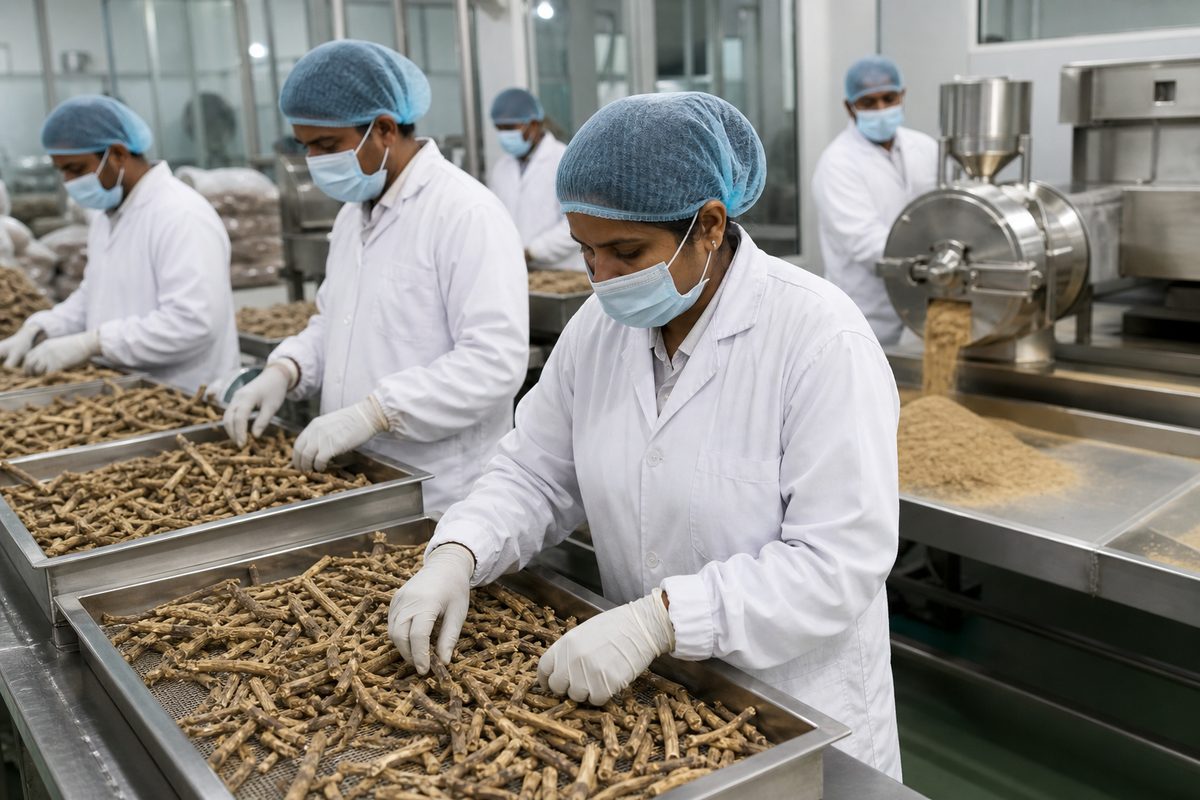
Manufacturing control for licorice (mulethi) starts at root intake in belts such as Punjab–Haryana–western UP–Rajasthan, then drying, milling or extraction, testing, and export packing under lot identity.
Process maps should show who releases moisture, micro, and marker results before bags or drums are filled.
Heat and light exposure must be managed because glycyrrhizin assays can drift with processing abuse See the licorice export process guide for release-to-booking handoff.
Quality Specification Reference
- Write acceptance limits before the first sample leaves India.
- Match COA parameters to the finished lot — not only the approved sample.
- Extracts need residual-solvent and carrier disclosure where applicable.
- Retain a sealed reference sample for destination retest disputes.
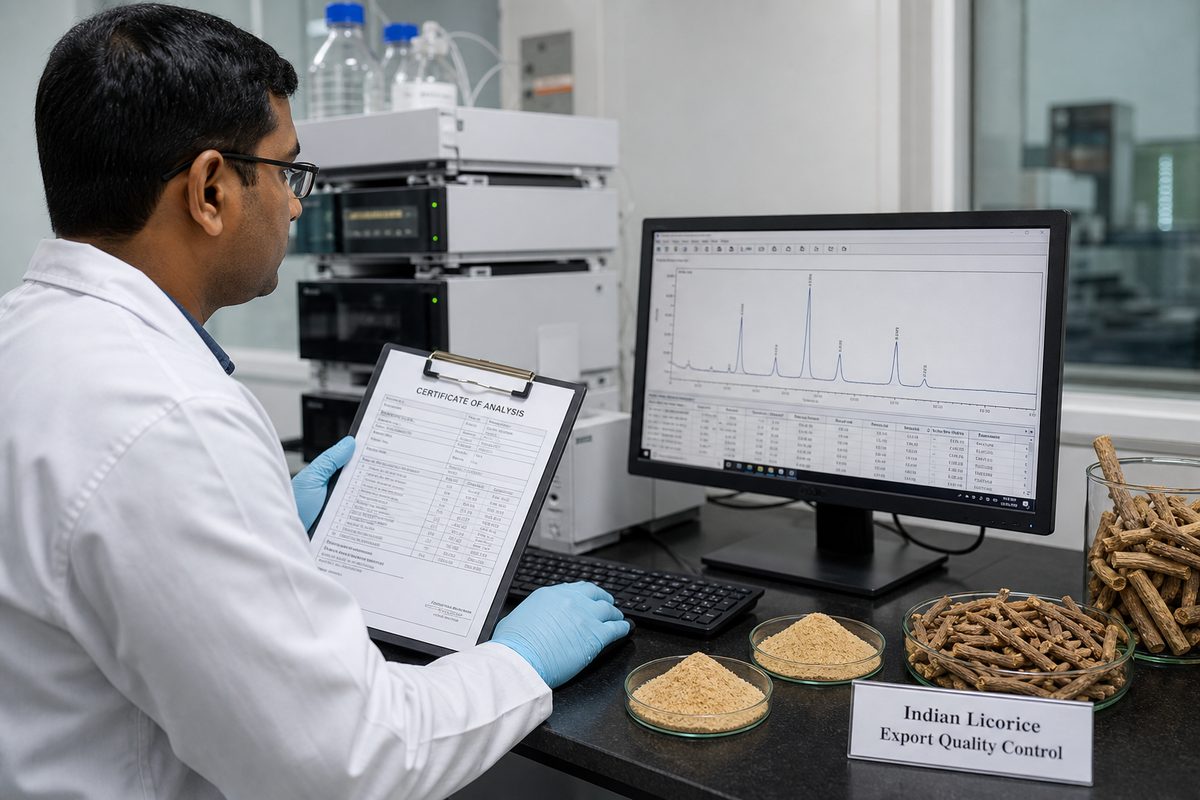
For process control, treat the quality matrix as the release gate: identity, root / stolon plant part, moisture, micro, contaminants, mesh or extract basis, and glycyrrhizin/HPLC where claimed.
Test the finished lot against those limits — not the memory of an approved sample jar.
Retain a sealed reference sample linked to the batch record before packaging and loading.
Scan: spec checklist (agree limits before sampling)
Swipe →
Data table — swipe horizontally on small screens
| Parameter | Dried root / cut root | Licorice root powder | Extract |
|---|---|---|---|
| Identity | Glycyrrhiza glabra root / stolon (not anise / fennel confusion) | Glycyrrhiza glabra root / stolon | Glycyrrhiza glabra root / stolon; disclose plant part |
| Physical specification | Cut size, colour, moisture, foreign matter | Mesh grade, colour, moisture, flow | Ratio, solubility, carrier, appearance |
| Glycyrrhizin / glabridin / markers | Where claimed — method stated | Where claimed — HPLC method stated | Glycyrrhizin / glabridin % by HPLC; residual solvents for extracts |
| Food-safety testing | Agreed microbiology and contaminants | Agreed microbiology and contaminants | Agreed microbiology, contaminants, residual solvents |
| Contaminants | Heavy metals, pesticides/EtO as agreed | Heavy metals, pesticides/EtO as agreed | Heavy metals, pesticides/EtO, residual solvents |
| Traceability | Farm or collection and batch records | Input-to-batch records | Input, extraction, and batch records |
| Organic status | Certificate where sold as organic | Certificate where sold as organic | Certificate scope and carrier review |
| Lot release | COA matched to packing list | COA matched to packing list | COA matched to drum labels |
Trade Classification and Product Description
Compliance Notes
- India powder/dried root cue: ITC-HS 1211.10 family — eight-digit cue 12111000 (Liquorice roots); extracts 13021200; confirm live lines with CHA.
- India extract cue: HS 1302.12 / often 130212 (assay % is COA, not HS).
- Never invent alternate HS from memory — CHA confirms the finished article against live ITC-HS.
- Destination HTS/TARIC can differ — confirm with the importer's broker; never invent MFN %.
- Reconcile HS language across invoice, packing list, and shipping bill.
Trade classification for licorice: dried root/powder commonly in ITC-HS 1211.10 family (India cue 12111000); extracts under HS 1302.12 (India cue 13021200).
Process teams lock CHA advice before first shipping bill.
Destination HTS/TARIC may differ — confirm with the importer’s broker.
End-to-End Licorice (Mulethi) Export Process from India
Export Tip
Map the export sequence as qualification, specification, sample approval, commercial trial, production release, document reconciliation, loading, and destination feedback. Assign an owner and decision gate to each stage. A buyer should not request a vessel booking until product, packing, documents, and importer responsibilities are approved.
The most useful process file contains the RFQ, signed specification, sample record, purchase order, test plan, COA, certificate scope, artwork approval, packing list, invoice, transport record, and receiving feedback. This creates a simple audit trail for the next shipment.
After the first arrival, compare the destination result with the retained sample and supplier release file, then improve the next order. Continue with the licorice (mulethi) documentation guide to build the release gate.
Pricing Analysis
Buyer Tip
Price licorice (mulethi) only after form, mesh or ratio, certs, pack, and Incoterm are fixed — then quote dated FOB Mundra or Nhava Sheva.
Process teams should reject undated “market price” emails that skip glycyrrhizin or HPLC method fields.
Validity windows protect both sides when harvest and freight move.
Scan: FOB USD/kg bands (dated quote — lock assay & solvent)
Swipe →
Data table — swipe horizontally on small screens
| Product | Directional FOB band | Commercial driver |
|---|---|---|
| Conventional licorice/mulethi root powder | Low-to-mid single digits to low teens | Mesh, moisture, micro controls, packing, and lot size |
| Organic licorice/mulethi root powder | Mid-teens to mid-twenties+ | Valid NPOP/USDA/EU chain, segregation, and demand timing |
| Dried whole / cut licorice root (G. glabra — disclose species) | Quote by cut size and moisture specification | Visual grade, foreign-matter control, botanical identity |
| Spray-dried / block-paste grade | Premium to solvent-extract mid tiers when contracted | Water process disclosure, residual-solvent N/A or low, documentation |
| ~10% glycyrrhizin HPLC extract | Often ~USD 18–55 depending on assay tier, solvent, and docs | Assay method, solvent system, carrier, WHO-GMP plant |
| ~20%+ glycyrrhizin / DGL / glabridin specialty grades | Mid-tens to USD 55–140+ for premium HPLC / DGL / glabridin lots | Assay tier, DGL residual, glabridin fraction, organic, volume, documentation |
| Confectionery block / paste | Quote by solids % and glycyrrhizin content | Block/paste form, solids, flavor profile, carton/drum MOQ |
| Private-label respiratory / digestive / confectionery bulk | Quote after pack and artwork scope | Packaging conversion, label compliance, and approval lead time |
MOQ Analysis
Buyer Tip
Stage MOQ deliberately: samples 100 g–2 kg, powder trials 100–500 kg, extract trials 25–100 kg, then wholesale powder 1–5 MT+ or extract 200 kg–1 MT+.
Process owners should block first FCL bookings until trial release succeeds.
Write MOQ into the order confirmation beside lead times.
Scan: MOQ ladder (commercial practice — not statutory)
Swipe →
Data table — swipe horizontally on small screens
| Stage | Typical quantity | Purpose |
|---|---|---|
| Sample | 100 g–2 kg | Sensory review, lab testing, and formulation work |
| Powder trial | 100–500 kg | First commercial quality and packing validation |
| Extract trial | 25–100 kg | Formula compatibility and buyer approval |
| Powder wholesale | 1–5 MT+ | Distributor, processor, and recurring bulk demand |
| Extract wholesale | 200 kg–1 MT+ | Established ingredient programmes |
Packaging Standards
Export Tip
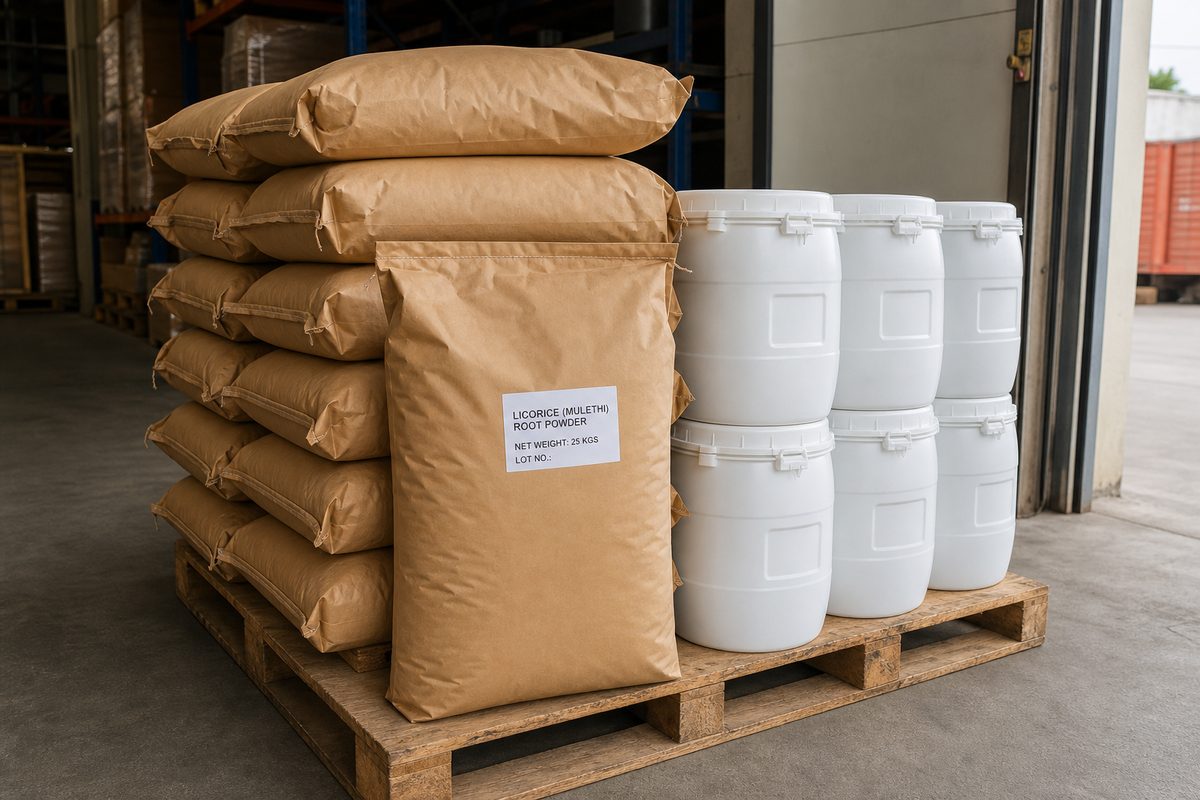
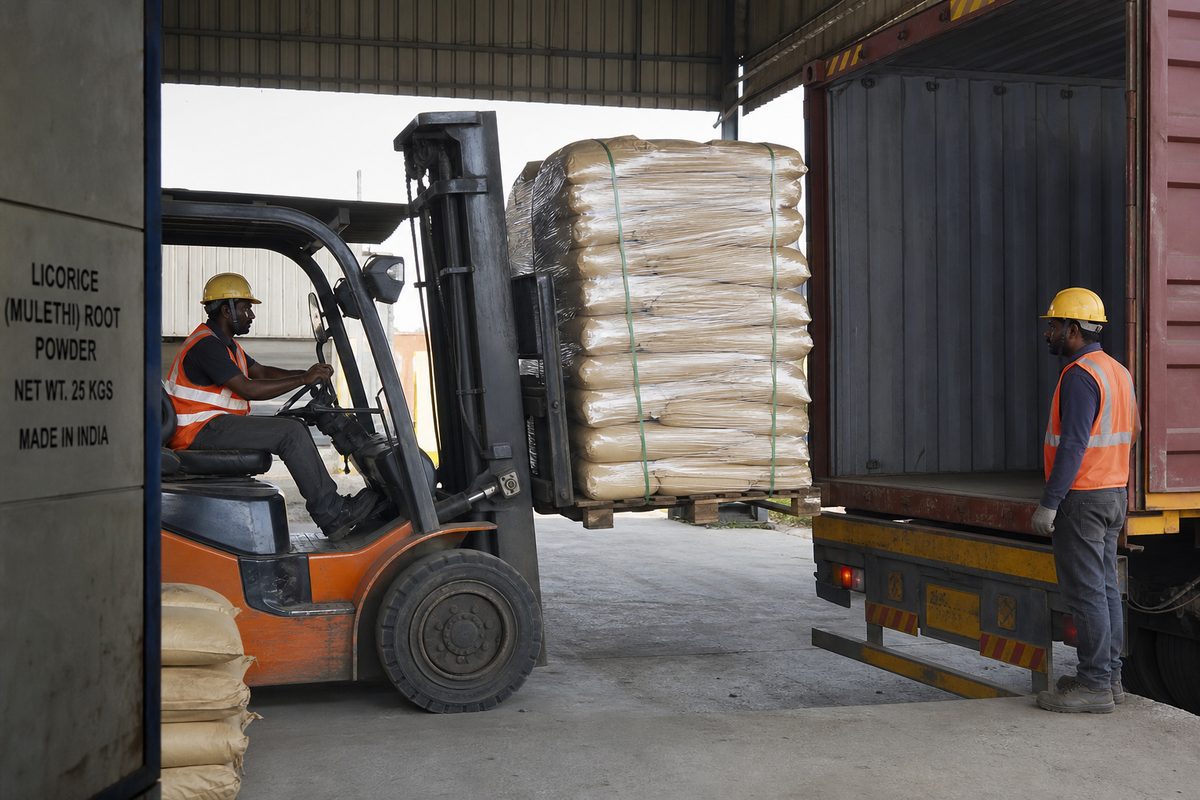
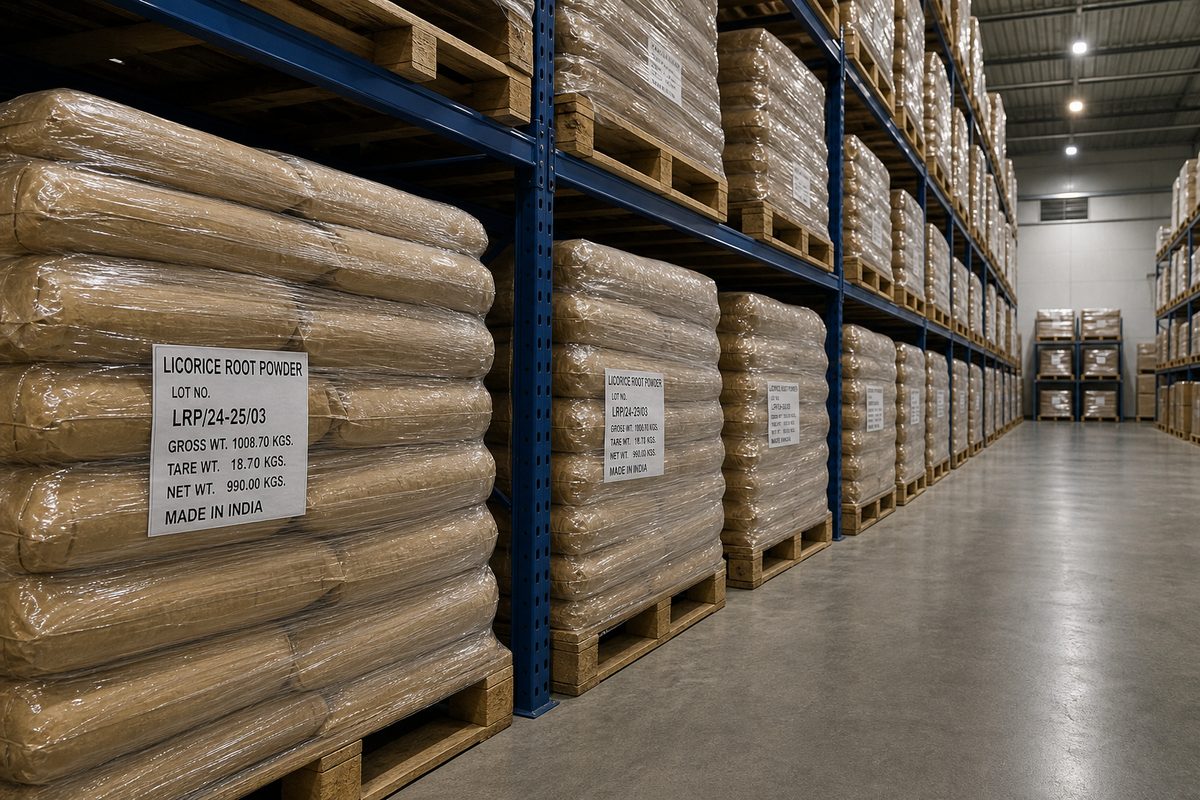
Packaging is a process control for glycyrrhizin / glabridin–sensitive licorice: 20/25 kg lined bags or fiber drums for powder; 25 kg HDPE double-lined drums for extracts; protect heat, light, and moisture.
Release packing only after lot marks and liner integrity checks.
Photograph packed pallets before inland haul to Mundra or Nhava Sheva.
Scan: pack format → config → use case
Swipe →
Data table — swipe horizontally on small screens
| Format | Configuration | Use case | Control point |
|---|---|---|---|
| Licorice root powder | 20/25 kg food-grade bag with liner or fiber drum | Bulk food and ingredient buyers | Lot code, moisture/heat/light barrier, clean outer pack |
| Dried root / cut root | 20/25 kg food-grade bag with liner | Ayurvedic, confectionery-ingredient, and respiratory/digestive-ingredient channels | Protect root integrity and prevent moisture pickup |
| Extract | 25 kg HDPE drum with double liner | Nutraceutical and ingredient supply | Seal integrity, drum label, and batch traceability |
| Private label | Buyer-approved pouches, jars, or cartons | Retail programmes | Artwork, destination labels, and master-carton plan |
Container Loading Details
Export Tip
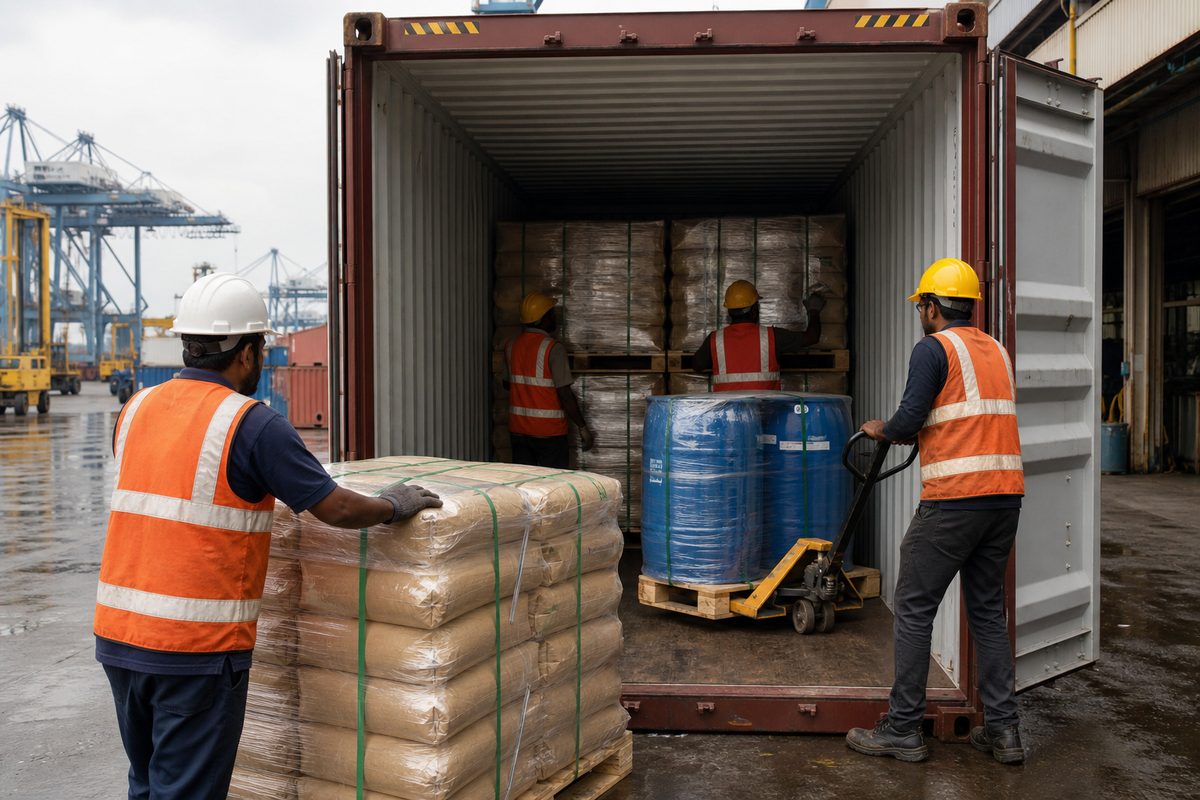
Container planning follows actual bag/drum dimensions, payload limits, and moisture/heat protection — not round-number tonnage promises.
Inspect and photograph empty containers before stuffing licorice root powder or extract drums.
Keep seal numbers aligned to transport documents.
Scan: dispatch mode (density-dependent — no fixed MT)
Swipe →
Data table — swipe horizontally on small screens
| Mode | Use | Planning point |
|---|---|---|
| Courier / air | Samples and urgent approvals | Heat/moisture protection; confirm destination import rules |
| LCL | Trials below container scale | Use palletisation or secure cartons where appropriate |
| 20-foot FCL | Bulk powder or dried-root programmes | Confirm payload after actual pack dimensions and port limits — do not invent fixed MT |
| 40-foot HC FCL | High-volume powder programmes | Cube with forwarder; use stuffing plan and moisture/heat protection |
| Drum shipment | Extract orders | Verify drum count, gross weight, and hazardous-status declaration if applicable |
Shipping Methods
Export Tip
- Match freight to quantity, shelf-life, humidity risk, and receiving plan.
- Inspect and photograph the empty container before stuffing.
- Keep container, seal, and lot identifiers consistent across documents.
- Confirm who files destination entry before offering DAP/DDP.
Shipping methods for licorice: air/courier for samples; LCL for trials; FCL for wholesale; protect heat/light/moisture on every mode.
Name Mundra or Nhava Sheva early and consider ICD origin moves from Punjab/Haryana/UP/Rajasthan.
Select Incoterm — EXW, FOB, CFR/CIF, selective DAP/DDP — before freight shopping.
Certifications
Compliance Notes
Certifications for licorice exports commonly include IEC, FSSAI, AYUSH adjacency where Ayurvedic framing applies, AYUSH adjacency for dried root, organic scopes, food-safety systems, Halal/Kosher, and WHO-GMP for extracts.
Process teams should verify validity dates before outreach peaks.
Lot COAs remain mandatory beside every certificate stack.
Scan: cert/doc → purpose → who needs it
Swipe →
Data table — swipe horizontally on small screens
| Item | Purpose | Most relevant for |
|---|---|---|
| IEC and AYUSH adjacency | Indian export readiness; Ayurvedic framing where applicable | Exporter supplier file |
| FSSAI licence | Food-business compliance in India | Food and nutraceutical handling |
| AYUSH adjacency | Medicinal-root / Ayurvedic programme participation where eligible | Dried root and selected powder programmes |
| Certificate of Analysis | Lot-specific identity, mesh or ratio, moisture, glycyrrhizin/HPLC where claimed, microbiology, and agreed tests | Every commercial shipment |
| NPOP / USDA / EU organic | Organic chain-of-custody and market claim support | Organic programmes |
| ISO 22000 / HACCP / BRCGS | Food-safety system evidence | Retail, distributor, and processor approval |
| WHO-GMP | Preferred manufacturing signal for extract plants | Extract and formulation buyers |
| Halal / Kosher | Channel-specific compliance | GCC and selected specialist markets |
| Certificate of origin | Origin declaration | When buyer, bank, or destination requests it |
Buyer Requirements
Buyer Requirements
- RFQ: form · mesh/ratio · destination · quantity · pack · Incoterm.
- Specs first: certs and analytical limits before you ask for FOB.
- Methods: agree lab methods and dispute process before the trial ships.
- Labels: approve artwork and document wording before production starts.
Buyer requirements should be captured as written RFQs: form, root / stolon plant part, mesh/ratio, glycyrrhizin or HPLC method, micro/metals/pesticides, pack, quantity, Incoterm, destination pathway.
Process teams freeze acceptance tests before PO.
Change requests after production need formal revision.
Country-wise Opportunities
Market Snapshot
Country opportunity work for licorice (mulethi) should sequence USA, EU/UK, UAE/GCC, Canada, Japan, South Korea, Australia, and SE Asia by pathway fit and operational readiness.
Process pilots one corridor end-to-end before multi-country expansion.
Named-port logistics via Mundra/Nhava Sheva should be modelled per corridor Use the destination-market guide with the country table for a testable shortlist.
Scan: country → form × cert × channel
Swipe →
Data table — swipe horizontally on small screens
| Market | Product fit | Requirement focus | Opportunity |
|---|---|---|---|
| USA | Organic root powder, glycyrrhizin-standardized lots, ratio/HPLC extracts | Supplier controls, lot COA, product and label review | Large ingredient and private-label base |
| EU / UK | Organic/documented root powder; glycyrrhizin food-limit grades; block/paste for confectionery | Glycyrrhizin labeling/limits, MRLs, contaminants, organic records | Root powder and extract demand strong; confirm form/use pathway with national authority |
| UAE / GCC | Bulk powder, dried root, retail programmes | Food-safety file, Halal where needed, suitable labels, reliable delivery | Regional distribution and re-export |
| Australia / Canada | Canada: organic/premium powder; AU: confirm food vs complementary-medicine route | Canada: organic + label review; Australia: counsel before retail-food assumptions | Premium natural-product and counsel-led AU programmes |
| Japan / South Korea | Fine mesh powder and HPLC extracts | Specification consistency and detailed technical documents | Quality-led ingredient channels |
| SE Asia | Value-oriented bulk root powder and dried root | Practical pack sizes and import-document alignment | Distributor-led regional expansion |
Sourcing Checklist
Checklist
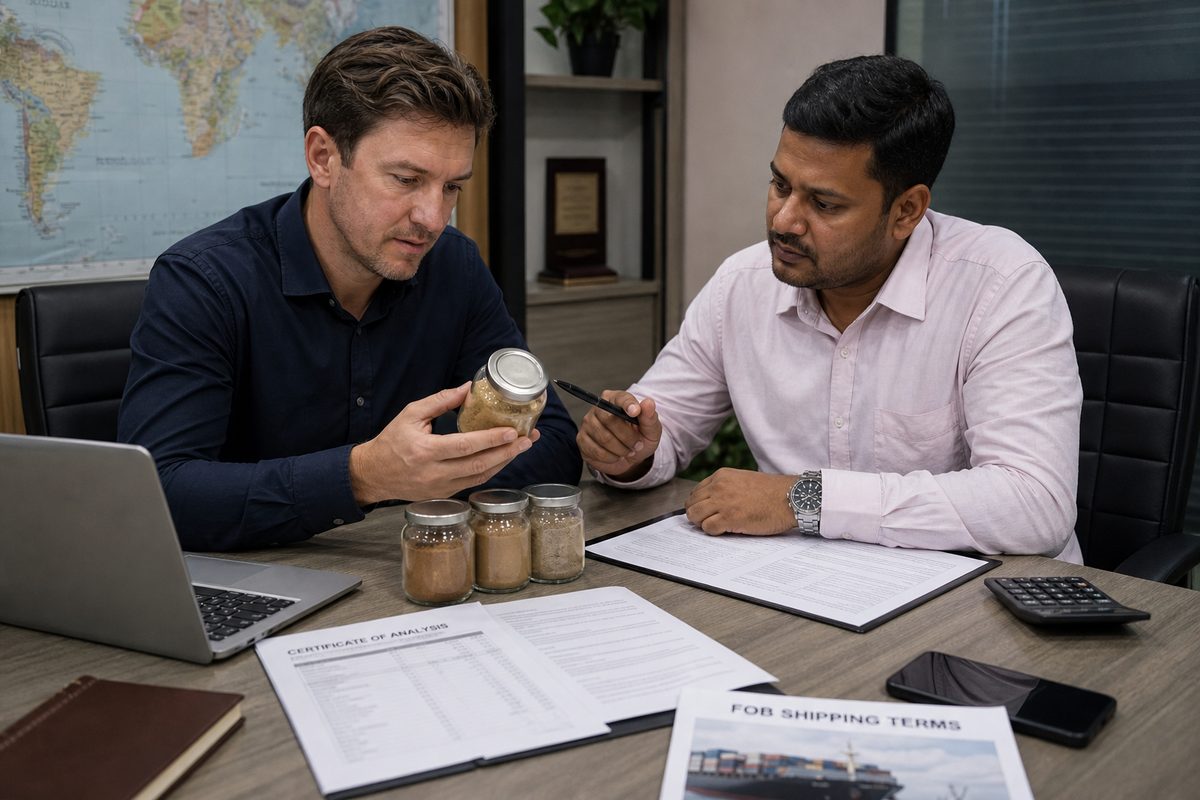
Sourcing checklist for process launches: identity, site verification, sample COA, written specs, trial MOQ, document matrix, named port, payment terms.
Tick each gate before deposits and before vessel booking.
Retain sealed samples against every commercial lot ID.
Common Buyer Mistakes
Common Mistakes Box
- Form mix-up: do not treat root powder and HPLC extract as interchangeable commodities.
- Method gap: do not approve samples without a written glycyrrhizin/HPLC lot-release method.
- Late rules: do not add destination requirements after cargo is already produced.
- Scale jump: do not jump to FCL before a sealed sample and trial succeed.
Common process mistake: booking freight before specification freeze, or approving samples without lot-release methods.
Another failure mode is citing HS 130212 totals as licorice-only capacity.
Fix with written gates and retained samples.
Future Market Trends
Key Statistics
Process trends favor tighter lot genealogy, method disclosure for glycyrrhizin / glabridin, and staged digital document packs before sailing.
Buyers expect retained-sample discipline as standard.
Exporters who industrialize gates win repeat FCL.
Challenges & Solutions
Challenge: glycyrrhizin / glabridin degradation and moisture pickup during drying and ocean transit — solve with process controls, protective packs, and honest methods.
Challenge: first-shipment document chaos — solve with pre-cutoff dual review.
Challenge: HS confusion between powder and extract — solve with CHA notes.
Compliance Checklist
Checklist
Compliance Notes
Compliance for licorice exports combines India-side identity (IEC, FSSAI, AYUSH adjacency, AYUSH adjacency where relevant) with destination pathway checks and lot analytics.
Process owners re-verify before every shipment, not once a year.
CHA plus destination broker confirm classification for the finished SKU.
Sources
- WITS — India HS 130212 liquorice extract exports by country, 2024
- WITS — India HS 121110 liquorice roots exports by country, 2024
- UN Comtrade Database
- DGCI&S / TradeStat — Indian trade statistics
- DGFT — Directorate General of Foreign Trade (IEC)
- ICEGATE — Indian Customs EDI Gateway
- Ministry of AYUSH
- FSSAI — Food Safety and Standards Authority of India
- NMPB — National Medicinal Plants Board
- Chandigarh Administration — Madhu Yashti / Glycyrrhiza glabra cultivation note
- Apni Kheti — Mulethi farming (Punjab)
- APEDA — NPOP organic certification
- EximGuru — ITC HS 12111000 Liquorice roots
- Indian Business Portal — Dry Licorice / Mulethi (ITC-HSN 121110)
- XIMPEX — HS 13021200 Liquorice extracts (India ITC-HS)
- USITC Harmonized Tariff Schedule
- CBP CROSS — NY K88301 licorice roots HTS 1211.10.0000
- FDA — Dietary Supplements (USA)
- FDA Prior Notice (USA food imports)
- EUR-Lex — Commission Directive 2004/77/EC (glycyrrhizinic acid labelling)
- EUR-Lex — Regulation (EU) No 1169/2011 (FIC)
- EU Novel Food status Catalogue
- EU TARIC — customs tariff database
- Access2Markets (EU)
- EU Pesticides Database — MRLs
- TGA — Therapeutic Goods Administration (Australia)
- Health Canada — Natural Health Products
- ITC Trade Map
- ICC — Incoterms rules
For process launches, re-verify primary sources on the quote and shipping-bill dates — HS, duties, and food pathways move.
Use the linked government and trade references below as research starting points, then confirm with CHA and destination counsel for the lot.
Re-verify HS, duties, food-labelling / food-supplement pathways, and lot documents on the quote and shipping-bill dates. WITS CY2024: India HS 130212 ≈ USD 176.99K; India HS 121110 shows no World export rows — re-check DGCI&S/TradeStat and CHA filings before quoting.
US duty planning cues (verify live on USITC HTS): licorice roots HTS 1211.10.0000 General/MFN Free (CBP NY K88301); licorice extract HTS 1302.12.00.00 General/MFN Free on published schedules — Chapter 99 / reciprocal overlays may still apply. Confirm with the importer’s broker.
EU glycyrrhizinic-acid labelling for prepacked confectionery/beverages follows Commission Directive 2004/77/EC / Regulation (EU) No 1169/2011 Annex III thresholds — labelling rules, not a single bulk-ingredient maximum. Clickable government and trade references used for this licorice (mulethi) cluster:
Conclusion
India licorice export success is a controlled sequence from herb specification to named-port delivery, not a commodity chase.
Altus Exports acts as a merchant exporter, global sourcing partner, and export consulting resource for sample-to-shipment programmes. Start with our Licorice (Mulethi) sourcing resources for SKU context.
Share form, quantity, destination, certificates, and analytical needs to proceed with a structured trial Contact Altus Exports with form, quantity, destination, application, certificates, and analytical needs to proceed.