
Trade Shows and B2B Marketplaces for Herbal Tea and Ayurvedic Tea Exporters
By Saurabh Mittal, Founder, Altus Exports
Event and marketplace playbook to convert specialty tea and wellness leads into herbal and Ayurvedic tea blend trials.
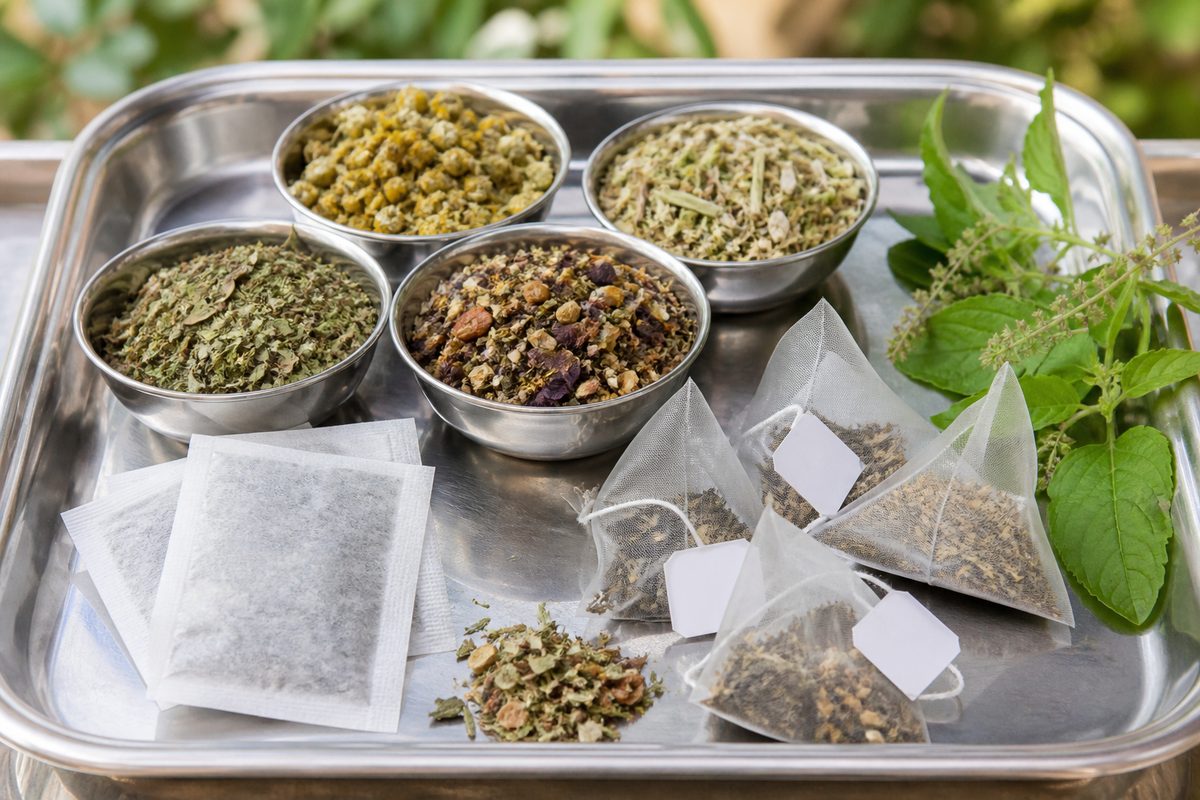
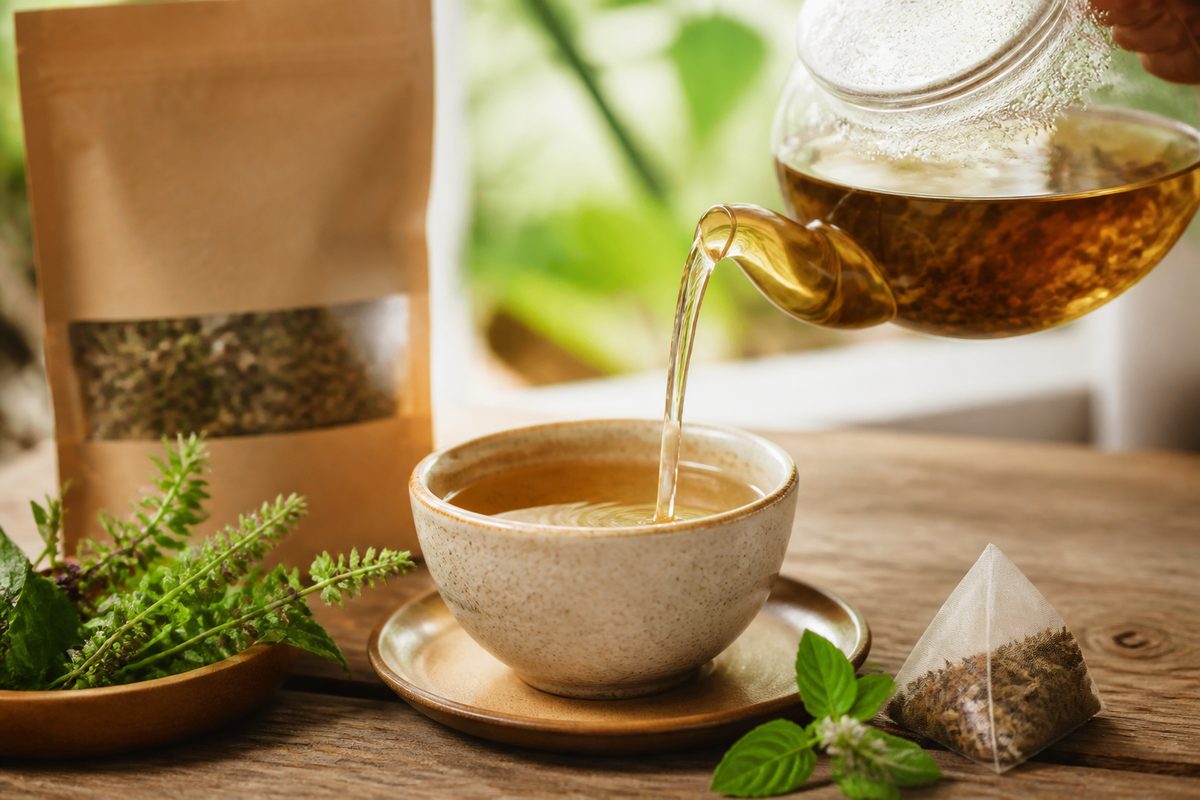
Tea, food and wellness events plus B2B marketplaces create opportunities when suppliers present defined, cuppable SKUs. Prepare labelled filter and pyramid samples, small loose pouches, specification sheets, COA examples, FSSAI/AYUSH scope, MOQ and lead times. The buyer guide explains qualification.
Prioritise World Tea Expo, Gulfood, Anuga, SIAL, Vitafoods and Biofach mixes that match your SKU. Online marketplaces widen the funnel but every inquiry needs role, country, volume and pathway screening.
Follow up within 72 hours with the correct SKU sheet: samples 50–200 bags or 1–5 kg; trials 100–500 kg or 5–20 master cartons. Link conversations to the catalogue and the documentation checklist.
Key Takeaways
Summary Box
Executive Summary
Summary Box
Trade shows and B2B listings create herbal tea opportunities only when exhibitors bring labelled filter bags, pyramid samples and small loose pouches in the exact grades that will ship — plus a seventy-two-hour follow-up system.
Capture destination, blend, bag format, volume and decision date at the booth, then send the matching one-pager and an example batch COA immediately — not a bulk catalogue attachment three weeks later.
Fair ROI is approved trials and repeat orders, not badge scans, undated teaser FOBs, or generic wellness copy that never mentions cut grade, bag material or the buyer's food pathway.
Market Size & Industry Overview
Key Statistics
Tea, food and wellness events plus digital marketplaces concentrate herbal tea discovery, but conversion still happens in post-event specification work on blend, bag format and claim language.
World Tea Expo, Gulfood, Anuga, SIAL, Vitafoods and Biofach attract different mixes of specialty tea versus wellness versus organic interest — event choice should mirror the SKU on offer.
Treat the fair calendar as a demand sensor for organic tulsi, compostable pyramids, Halal kadha and private-label OEM interest — then validate every booth signal with a written RFQ.
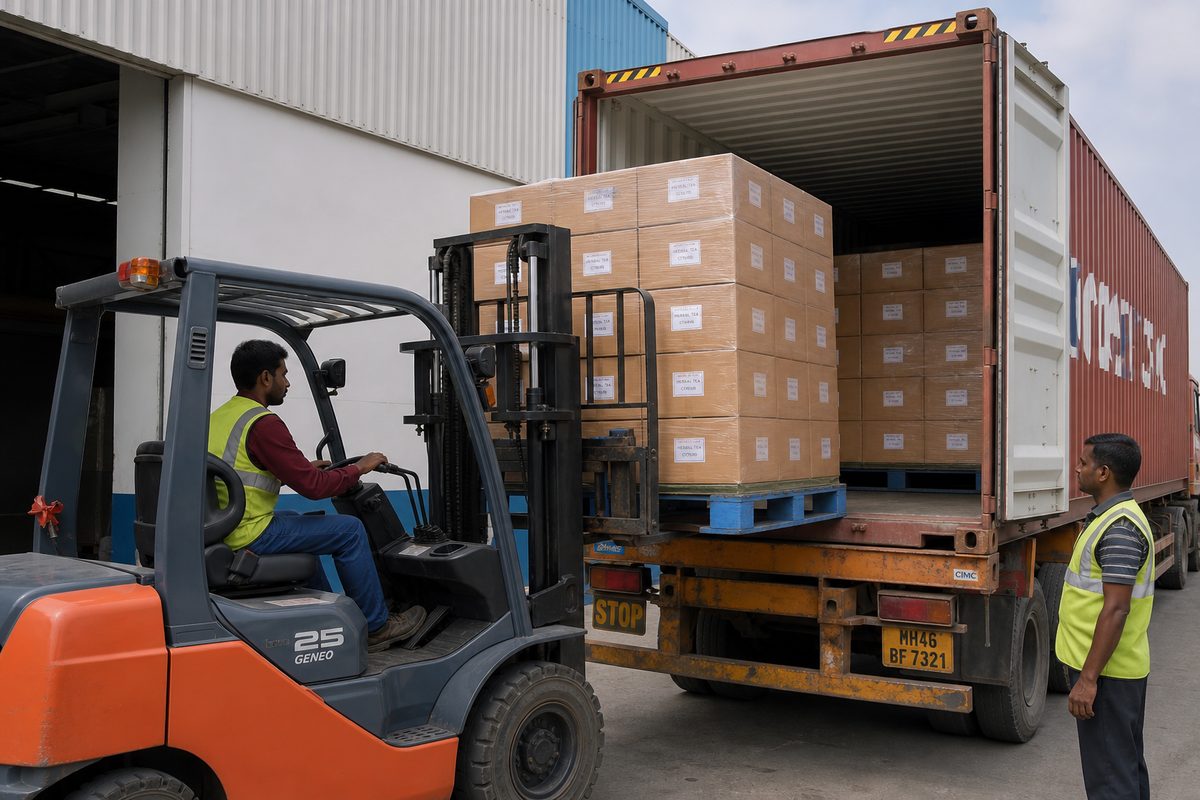
Shipping Methods
Export Tip
- Use courier or air for samples and small trials.
- Use LCL for qualified trials below container scale.
- Confirm 20′ / 40′ HC cube and payload with the forwarder — never invent fixed FCL MT.
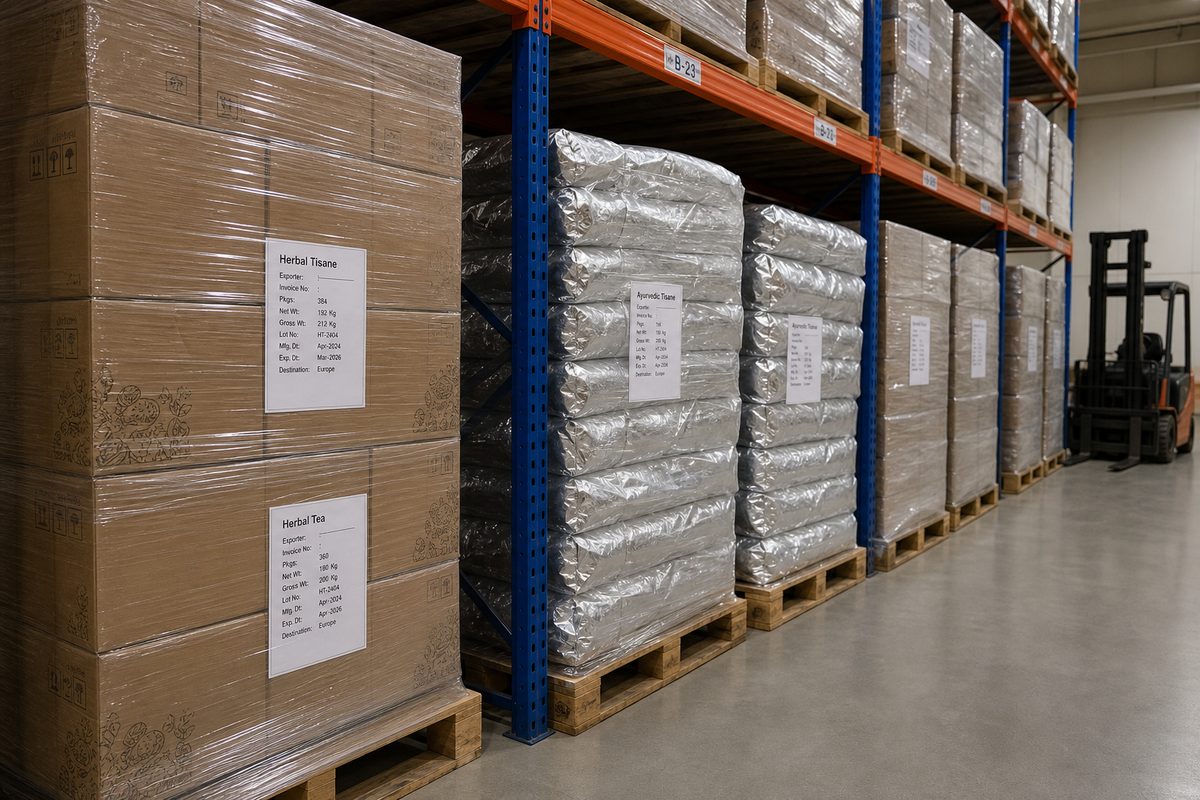
- Keep carton and lot marks aligned with invoice, packing list and COA.
- Name Nhava Sheva, Mundra, Chennai, Kochi or Tuticorin in the Incoterm line after route review.
If a fair lead needs rush samples, book courier with the same SKU labels discussed at the booth — speed without identity wastes the rush.
Explain ocean versus air trade-offs in follow-up when leads ask for unrealistic two-week FCL fantasies.
Capture preferred destination airports or ports in booth notes for logistics planning.
Certifications
Compliance Notes
Booth cert binders should be example scopes clearly labelled, with live copies reserved for qualified follow-up.
Do not hand out stale certificates at fairs; nothing erodes trust faster.
Capture cert questions in CRM fields so follow-up packs answer exactly what was asked.
Scan: credentials and documents
Swipe →
Data table — swipe horizontally on small screens
| Item | Purpose | Relevant programme |
|---|---|---|
| IEC | Indian export readiness | Exporter file |
| FSSAI licence | Food manufacturing / packing legitimacy | Finished herbal tea |
| AYUSH framing | Ayurvedic blend manufacturing basis where used | Ayurvedic-positioned SKUs |
| COA per lot | Sensory, micro, heavy metals, pesticides, moisture | Every commercial batch |
| Organic (NPOP/USDA/EU) | Certified organic herb chain | Organic SKUs |
| Halal / Kosher | Channel requirement | GCC and specialist buyers |
| Phytosanitary / health cert | Plant health where required | Destination demand |
| Steam-treatment record | Microbial control evidence | Steam-treated programmes |
Buyer Requirements
Buyer Requirements
Booth qualification questions are a mini-RFQ: destination, blend, bag, volume, decision date, pathway.
Leads unwilling to answer cannot be prioritised for rush samples after the fair.
Transfer booth answers into the formal RFQ without forcing the buyer to repeat everything.
Country-wise Opportunities
Market Snapshot
Choose fairs that concentrate buyers from your pilot countries rather than collecting random global badges.
Gulfood for GCC, Biofach for EU organic, World Tea Expo for specialty tea — align attendance to country strategy.
Post-fair country follow-up lists should be short and owned.
Scan: country fit map
Swipe →
Data table — swipe horizontally on small screens
| Market | Product fit | Requirement focus | Opportunity |
|---|---|---|---|
| USA | Tulsi/immunity filter bags; PL wellness | Prior notice; structure-function discipline; mixed herbal HTS often 2106.90.99.87 @ 6.4% MFN (verify) | Wellness retail volume |
| UK / EU | Organic digestive/calming pyramids | Novel Food / MRL; labelling; live TARIC duty | Specialty organic tea |
| UAE / GCC | Halal kadha and immunity cartons | Halal; Arabic-English label; local registration | Regional distribution |
| Canada / Australia | Premium sleep / women's wellness | Pathway confirm; TGA counsel in AU | Natural retail |
| Germany / Netherlands | Organic loose and compostable bags | Organic + residue panels | EU hub re-export |
| Japan / Singapore | Consistent sensory private-label | FFC adjacency / local rules | Specialty and regional OEM |
Sourcing Checklist
Checklist
Pre-fair checklist: ship-grade samples, SKU sheets, example COAs, cert binder, CRM fields, seventy-two-hour owners.
Post-fair checklist: qualify, send pack, schedule call, sample, trial proposal.
Skip leads that fail basic qualification ticks.
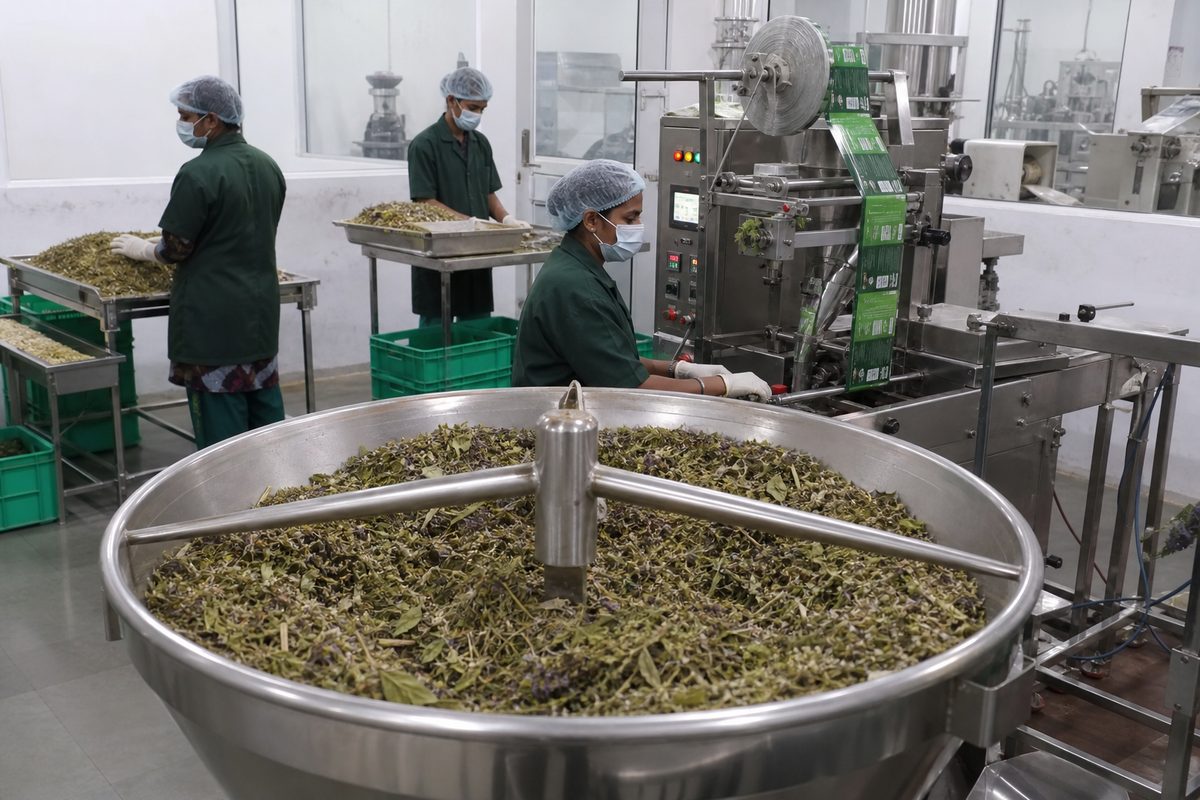
Manufacturing Overview
Export Tip
If you demo manufacturing capability at a fair, bring process photos that match the actual FSSAI site — buyers compare booth stories to audit day quickly.
Do not promise steam treatment or organic segregation from the booth floor unless those systems are live on the lines that will pack the order.
Collect technical questions about mesh, fill weight and film specs at the booth and answer from manufacturing, not sales improvisation.
Trade Shows and Marketplace ROI for Herbal Tea
This events guide converts World Tea Expo, Gulfood, Anuga, SIAL, Vitafoods, Biofach and marketplace leads into trials with seventy-two-hour SKU follow-up.
Booth ROI is measured in approved trials, not badge scans; undated teaser FOBs without blend identity train buyers to ignore you.
Bring ship-grade samples and example COAs — fair theatre without operational truth wastes the ticket price.
Common Buyer Mistakes
Common Mistakes Box
Fair mistakes include unmarked samples, therapeutic claim improvisation and follow-up catalogues that ignore the booth conversation.
Undated teaser FOBs without blend identity waste the lead.
Fix with ship-grade trays and seventy-two-hour SKU follow-up.
Future Market Trends
Key Statistics
Event trends mix large food fairs with specialty tea and organic shows; hybrid follow-up with virtual cuppings is now normal.
Marketplace noise rises, so qualification skill matters more than listing count.
Exhibitors who bring operational truth will keep winning post-fair trials.
Challenges and Solutions
Challenge: badge-scan vanity. Fix: trial conversion metrics.
Challenge: improvised claims on the booth. Fix: do-and-don't cards for staff.
Challenge: slow post-fair follow-up. Fix: pre-assigned owners and SKU packs.
Compliance Checklist
Checklist
Compliance Notes
Fair compliance checklist: claim do-and-don't; example COAs marked as examples; no undated FOBs; CRM pathway fields mandatory; follow-up owners named.
Booth staff sign the checklist before doors open.
Post-fair audit of whether follow-ups stayed compliant.
Sources
- WITS — India HS 210690 exports by country, 2024
- WITS — India HS 210690 imports by country, 2024
- WITS — India HS 121190 exports by country, 2024
- WITS — India HS 0902 tea exports by country, 2024
- EximGuru — ITC HS Chapter 2106 food preparations
- EximGuru — ITC HS 21069099 other food preparations
- EximGuru — ITC HS Chapter 1211 plant parts
- EximGuru — ITC HS Chapter 0902 tea
- USITC Harmonized Tariff Schedule
- CBP CROSS Rulings
- CBP ruling NY N248388 — mixed herbal teas under 2106.90.9987
- FDA — Prior Notice for imported foods
- FDA — Dietary Supplements / structure-function overview
- FSSAI — Food Safety and Standards Authority of India
- FSSAI labelling clarification context — Camellia-only “tea” naming
- Ministry of AYUSH
- Tea Board of India
- Spices Board of India
- APEDA — National Programme for Organic Production (NPOP)
- DGFT — Import Export Code / foreign trade
- EU Novel Food status Catalogue
- EU TARIC — customs tariff database
- Access2Markets (EU)
- EU Pesticides Database — MRLs
- TGA — Therapeutic Goods Administration (Australia)
- Health Canada — Natural Health Products
- ICC — Incoterms rules
- ITC Trade Map
Booth and listing copy should refresh HS and pathway language before each fair season. Cite India HS 210690 ≈ USD 776.6M / 205,578,000 kg and HS 121190 ≈ USD 535.2M / 121,397,000 kg CY2024 (WITS) only as multi-product parent baskets — not herbal-tea / Ayurvedic-tisane-only totals. HS 0902 ≈ USD 804.2M / 249,986,000 kg is Camellia tea adjacency only.
For this tradeshows guide, apply the live duty check as follows: US planning cue for mixed herbal infusions often HTS 2106.90.99.87 at Column 1 General/MFN 6.4% (confirm statistical suffix, Chapter 99 overlays and preferences with the importer’s broker / USITC). Single-species unmixed infusions often sit under HTS 1211.90 lines with species-specific rates. Never invent a hard MFN % from memory.
FSSAI clarification: the word “Tea” on Indian food labels is reserved for Camellia sinensis products. Non-Camellia herbal infusions should not be misbranded as “tea” in India; use accurate infusion / tisane / proprietary-food naming. Destination “herbal tea” wording still follows local labelling rules.
Clickable government, intergovernmental and market-intelligence references used across the herbal tea / Ayurvedic tea blends cluster. Re-check on the quote and shipping-bill dates:
Export Statistics
Key Statistics
- Cite India HS 210690 / 121190 only as multi-product parent context — never as herbal-tea-only trade.
- Confirm India ITC-HS (often 21069099 for finished mixed preparations; 121190xx for bulk herbs) and destination HTS/TARIC with CHA + importer broker.
- Re-check TradeStat/WITS/Comtrade before quoting figures to a buyer.
For tradeshows planning: Cite India HS 210690 ≈ USD 776.6M / 205,578,000 kg and HS 121190 ≈ USD 535.2M / 121,397,000 kg CY2024 (WITS) only as multi-product parent baskets — not herbal-tea / Ayurvedic-tisane-only totals. HS 0902 ≈ USD 804.2M / 249,986,000 kg is Camellia tea adjacency only.
Top WITS 2024 destinations under HS 210690 include the United States, UAE, Australia, Canada and the United Kingdom — use these as parent-heading corridor cues for prospecting and freight planning, not as audited herbal-tisane-only demand.
Booth boards that show trade figures must label HS 2106 / 1211 as multi-product parent data and note the finished-tisane versus bulk-herb distinction before a buyer even looks up.
Fair conversations convert on SKU fit — blend, bag format, MOQ, food pathway — with stats only as background context, not as a headline number a savvy buyer will unpick later.
Hand serious specialty and wellness leads the source list rather than unverifiable booth charts; a WITS link with the multi-product caveat beats a rounded figure on a banner.
Scan: trade & HS context (directional — verify on quote date)
Swipe →
Data table — swipe horizontally on small screens
| Metric | Position | Buyer note |
|---|---|---|
| Core products | Tulsi, kadha/immunity, digestive, calming, detox, women's wellness, masala-chai spice blends; loose C/S; filter & pyramid bags; private-label | Lock blend and bag format per SKU |
| Origins | UP, Uttarakhand herb networks; Kerala/Karnataka finishing; Gujarat packing/export houses | Verify FSSAI site per programme |
| Finished HS cue | HS 2106.90 / India ITC-HS often 21069099 — finished herbal infusion / bagged mixed food preparations | CHA confirms live 8-digit line per lot |
| Bulk herb cue | HS 1211.90 (e.g. 12119029 / 12119090 / 12119099 cues) — dried plant parts for blending / single-herb infusions | Use for blender bulk; confirm with CHA |
| Camellia adjacency | HS 0902 only when blend intentionally includes Camellia sinensis leaf | Do not default caffeine-free tisanes to 0902 |
| WITS CY2024 HS 210690 (parent) | ≈ USD 776.6M / 205,578,000 kg — Other food preparations, nes | MULTI-PRODUCT basket — NOT herbal-tea-only |
| WITS CY2024 HS 121190 (parent) | ≈ USD 535.2M / 121,397,000 kg — Other plants/parts | MULTI-PRODUCT basket — NOT tisane-only |
| WITS CY2024 HS 0902 (adjacency) | ≈ USD 804.2M / 249,986,000 kg — Camellia tea | Cite only for Camellia-containing lines |
| Top HS 210690 partners (USD M) | USA ~206.9; UAE ~92.1; Australia ~59.1; Canada ~59.0; UK ~51.0 | Parent-heading corridor cues only |
| Councils | FSSAI (food) + AYUSH (Ayurvedic framing); Tea Board / Spices Board adjacency by SKU | Match council to finished form |
| Ports | Nhava Sheva, Mundra, Chennai, Kochi, Tuticorin | Choose after route and sailing review |
| India labelling note | FSSAI: “Tea” reserved for Camellia sinensis; non-Camellia = infusion/tisane naming in India | Destination “herbal tea” wording follows local rules |
Import Statistics
Key Statistics
- India’s HS 210690 import total (≈ USD 78.1M CY2024 WITS) is a multi-product parent basket, not herbal-tea-only imports.
- Export-partner ranks under parent headings are corridor cues, not destination Ayurvedic-tisane import totals.
- Confirm the importer’s local food pathway (FDA prior notice, Novel Food/MRL, Halal, TGA) before sampling.
Fair leads that cannot name an import pathway for filter bags or loose blend are not yet buyers; capture destination pathway in the booth note before promising samples.
Import-ready conversations at Gulfood or Anuga often hinge on Halal, organic or residue questions — bring example COA pages that answer those questions without improvisation.
After the show, qualify import capability before courier spend; a badge scan without a pathway is a brochure request, not a programme.
Scan: destination demand + India import context
Swipe →
Data table — swipe horizontally on small screens
| Market / metric | Likely fit / verified cue | Buyer / broker note |
|---|---|---|
| USA | Tulsi/immunity filter bags; PL wellness; FDA prior notice | Mixed herbal infusions often HTS 2106.90.99.87 @ 6.4% MFN planning cue |
| UAE / GCC | Halal Ayurvedic kadha pyramids; diaspora grocery | Halal + bilingual label; local product registration as required |
| UK / EU | Organic digestive/calming loose/pyramid | Novel Food / MRL diligence; TARIC + responsible importer |
| Canada / Australia | Premium organic sleep / women's wellness | Confirm pathway; TGA counsel in AU for claim framing |
| Germany / Netherlands | Organic herbal tisane hubs; compostable bags | EU hub re-export; residue panels |
| Japan / Singapore | Consistent sensory private-label | FFC adjacency / local food rules |
| India HS 210690 imports CY2024 | ≈ USD 78.1M / 11,474,300 kg (WITS parent basket) | Multi-product import context — not herbal-tea-only |
Product Categories / Variants
Summary Box
Booth trays should show the same SKU grades that ship — labelled filter bags, pyramids and small loose pouches — not unmarked jars that cannot be ordered.
Limit the tray to the three to five SKUs you can sample within seventy-two hours; overcrowded trays dilute serious conversations.
Print QR codes to SKU cards so badge scans convert into the correct one-pager after the fair.
Scan: SKU catalogue
Swipe →
Data table — swipe horizontally on small screens
| Product | Specification variables | Channel |
|---|---|---|
| Tulsi / holy basil tea | Leaf cut, cultivar mix, organic status | Wellness retail; filter/pyramid |
| Kadha / immunity blend | Herb ratios, spice load, bag format | Diaspora and GCC retail |
| Digestive herbal tea | Fennel/ginger/ajwain-style ratios as tisane herbs | Specialty tea; foodservice |
| Calming / sleep blend | Sensory profile; caffeine-free framing | Premium natural retail |
| Detox / cleanse blend | Herb list; claim discipline | Wellness e-commerce |
| Women's wellness herbal tea | Herb list; labelling restraint | Specialty wellness |
| Masala-chai spice blend | Spice mesh; tea-service use; Spices Board adjacency | Foodservice; retail spice-tea |
| Loose C/S bulk blend | Cut grade; barrier bag size | Blenders and re-packers |
| Filter tea bags | Bag paper; tag; carton count | Grocery and diaspora |
| Pyramid / biodegradable bags | Film spec; envelope; unit carton | Premium specialty tea |
| Private-label OEM | Artwork; claim text; pack engineering | Buyer-brand retail |
| Organic steam-treated blend | Organic scope; steam log; segregation | EU/US premium |
Quality Specification Reference
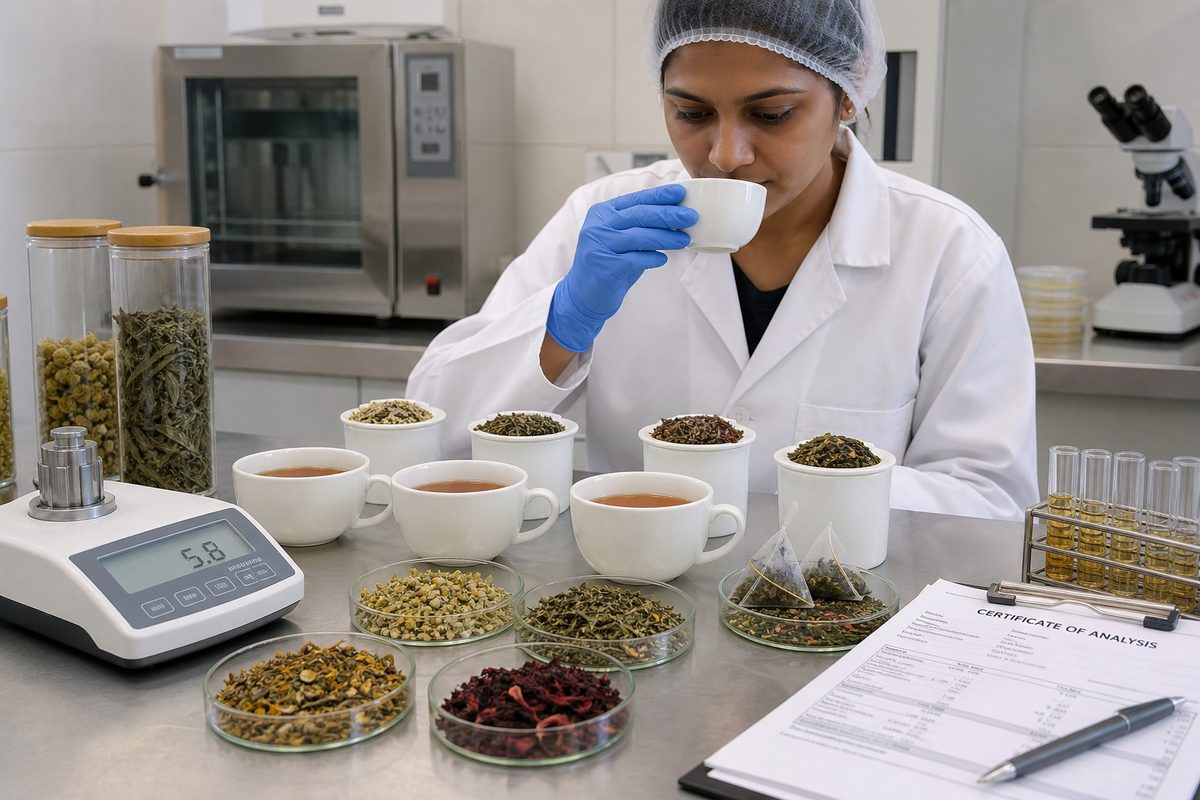
Booth COA examples should be clearly marked as examples and should match the SKU on the tray, including blend name and pack format.
Bring a one-page quality summary listing standard panels so technical buyers can engage without a full dossier on day one.
Capture any extra test requests at the booth and confirm cost and lead time in the seventy-two-hour follow-up.
Scan: quality checklist
Swipe →
Data table — swipe horizontally on small screens
| Parameter | Loose blend | Bagged retail |
|---|---|---|
| Identity | Herb list, cut grade, blend code | Same + label ingredient order |
| Physical | Moisture, particle size, foreign matter | Bag fill weight; appearance |
| Sensory | Cup colour, aroma, taste score | Same against retention pouch |
| Microbial | TPC, yeast/mould, pathogens as agreed | Same limits on retail lot |
| Contaminants | Heavy metals; pesticide panel | Same per destination food rule |
| Process | Steam-treatment record if claimed | Bag seal integrity |
| Release | COA matches barrier-bag marks | COA matches carton batch marks |
Trade Classification and Product Description
Compliance Notes
Booth staff should not invent HS codes under pressure; hand a card that says CHA confirms per finished form and list the planning cues with caveats.
Serious leads who ask classification questions should receive a written follow-up, not a whiteboard guess.
Marketplace listings that slap 0902 on pure herbal tisanes create downstream disputes — fix listing templates.
Pricing Analysis
Buyer Tip
Booth teaser prices must name blend, bag format, volume assumption and quote date — or they are not prices.
Refuse undated best-price promises under fair pressure; follow up with a dated SKU quote within seventy-two hours.
Marketplace listings with fantasy FOBs damage trust; align public bands to what sales will actually confirm.
Scan: FOB USD bands (directional — verify quote date)
Swipe →
Data table — swipe horizontally on small screens
| Product | FOB position | Driver |
|---|---|---|
| Loose conventional C/S blend (20–25 kg barrier bag) | Low-to-mid single digits USD/kg | Herb mix, cut grade, order size |
| Loose organic steam-treated blend | Mid single digits USD/kg upward | Organic scope, steam records, segregation |
| Filter tea bags, buyer-branded carton | Sub-dollar to low single digits USD/bag-equivalent | Bag material, carton, artwork run |
| Biodegradable pyramid bags, retail carton | Low-to-mid single digits USD/bag-equivalent | Pyramid film, tag, envelope, box |
| Private-label OEM master carton programme | Priced per SKU per volume | Artwork, claim review, pack engineering |
| Masala-chai spice blend for tea service (bulk) | Spice-mix dependent USD/kg | Spice ratios, mesh, aroma target |
MOQ Analysis
Buyer Tip
Booth conversations should capture desired first-order MOQ and decision date; without those, follow-up quotes lack an anchor.
Offer a written sample-to-trial MOQ path on the leave-behind rather than improvising numbers under crowd pressure.
Marketplace inquiries that refuse to state MOQ stay in nurture until they do.
Scan: MOQ ladder (commercial practice — not statutory; agree in writing)
Swipe →
Data table — swipe horizontally on small screens
| Stage | Typical quantity | Purpose |
|---|---|---|
| Samples | 50–200 bags or 1–5 kg loose | Cupping, sensory, residue screen |
| Trial | 100–500 kg or 5–20 master cartons | Artwork, bag integrity, lot COA |
| Wholesale loose | 1–5+ MT per blend | Blender / re-packer supply |
| Wholesale bags | Pallet or FCL of retail cartons | Recurring retail programme |
| Private-label FCL | Full container after artwork lock | Buyer-brand launch |
Packaging Standards
Export Tip
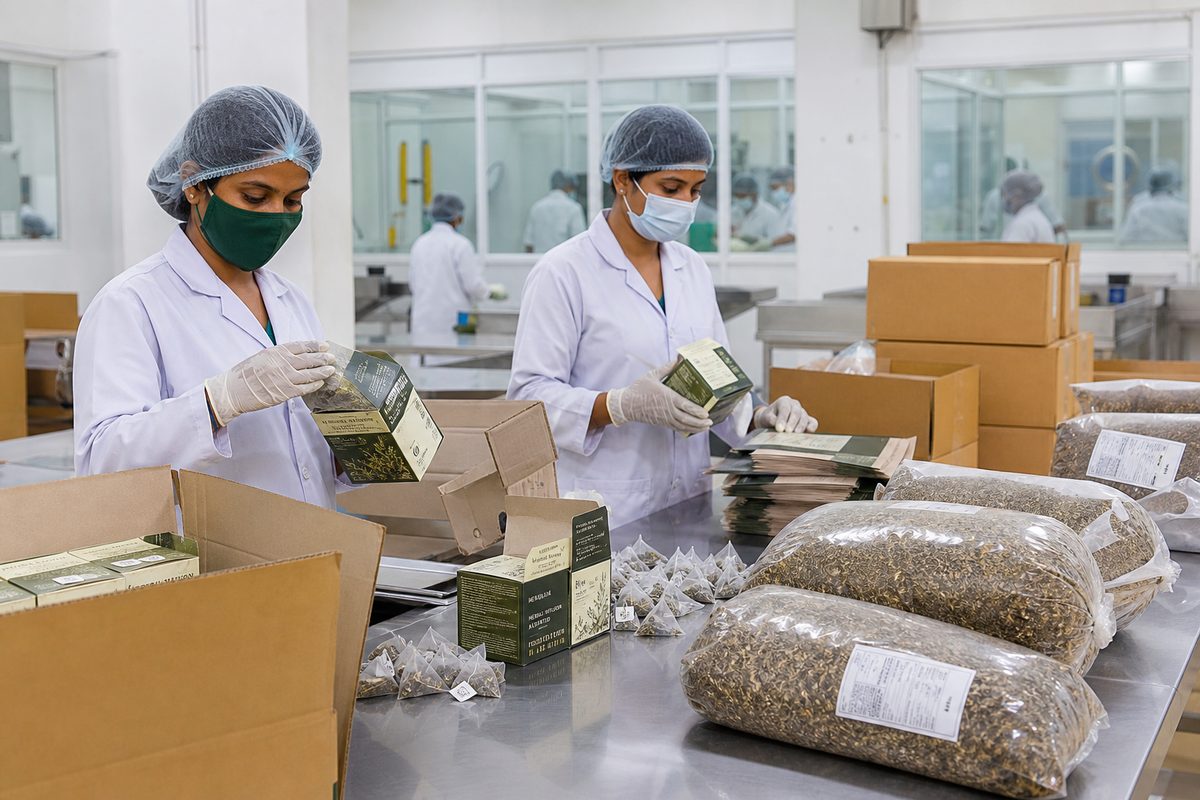
Booth packs must be the commercial grades; unmarked lab pouches undermine packaging credibility.
Bring cutaways of pyramid and filter constructions for technical buyers who ask about film and paper specs.
Collect packaging constraints from leads — retailer barcode rules, language, sleeve size — in the booth CRM fields.
Scan: export packing formats
Swipe →
Data table — swipe horizontally on small screens
| Format | Configuration | Control |
|---|---|---|
| Loose barrier bag | 20–25 kg food-grade barrier bag in carton | Moisture, oxygen, lot mark |
| Filter tea bags | Retail cartons 20–100 bags; bulk envelopes for re-pack | Bag seal, tag, carton crush |
| Pyramid / biodegradable | Compostable pyramid in envelope + unit carton | Film spec, tag ink, outer carton |
| Private-label OEM | Buyer-approved pouch/carton/shipper | Artwork, regulatory text, run size |
| Export shipper | Five-ply corrugated with palletisation | Corner posts, stretch wrap, marks |
Container Loading Details
Export Tip
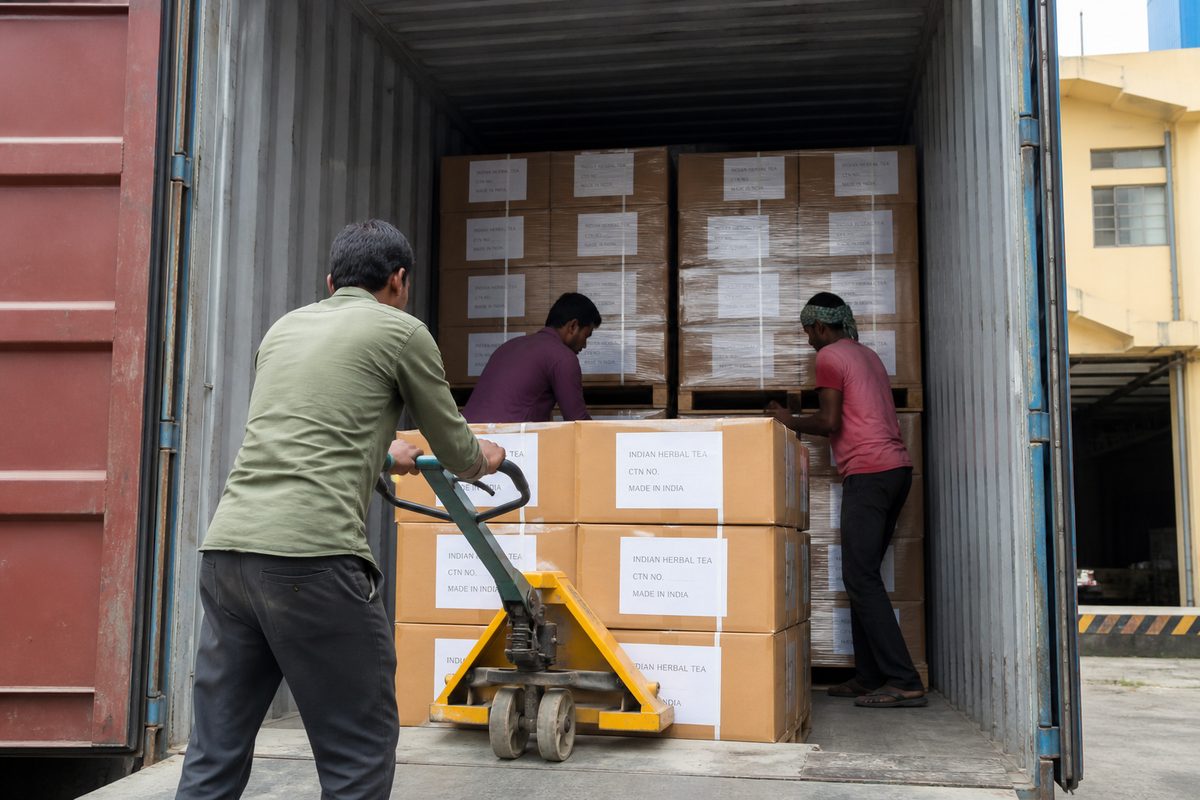
Fair conversations about full containers should still start from SKU counts and pack dimensions, not from empty enthusiasm.
Use a simple stow sketch in follow-ups when a lead asks how many cartons fit — education converts better than hype.
Do not promise a sailing date from the booth without forwarder confirmation.
Scan: dispatch modes (density-dependent — do not invent fixed MT)
Swipe →
Data table — swipe horizontally on small screens
| Mode | Use | Planning point |
|---|---|---|
| Courier / air | Samples and small trials | Pouch protection; food declaration |
| LCL | Trials below FCL threshold | Palletise; segregate mixed SKUs |
| 20-foot FCL | Bulk barrier bags or dense cartons | Confirm payload vs cube |
| 40-foot HC | High-volume retail carton programmes | Cube with forwarder |
| Reefer (optional) | Only if buyer specifies cool transit | Cost review; most ship dry |
Conclusion
Fairs and marketplaces convert when ship-grade samples meet seventy-two-hour SKU follow-up.
Judge ROI by trials, not badges. Compare formats in the herbal tea product guide.
Altus helps turn qualified event leads into structured herbal tea programmes Contact Altus Exports with blend type, bag format, destination, quantity, certificates and analytical requirements for a structured trial.