
Trade Shows and B2B Marketplaces for Licorice (Mulethi) Exporters
By Saurabh Mittal, Founder, Altus Exports
How Indian licorice suppliers can use ingredient events, buyer meetings, and B2B marketplaces to create qualified export opportunities.
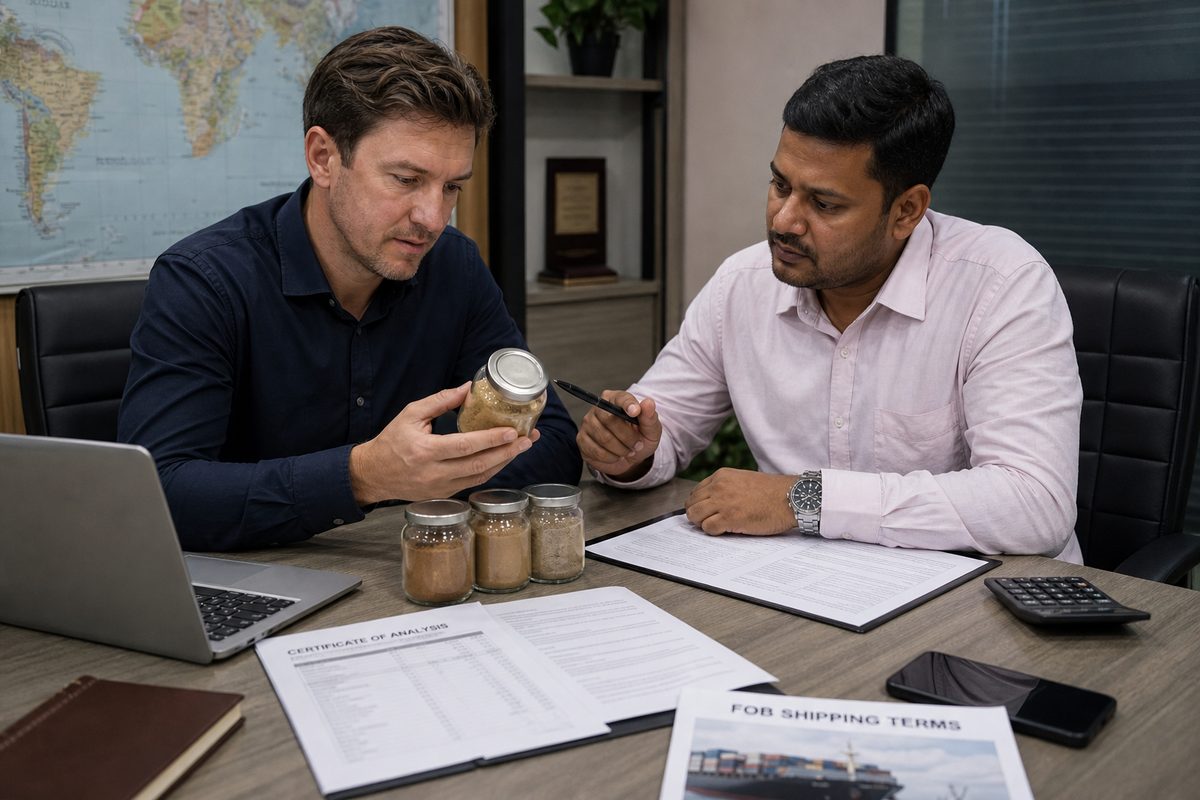
Ingredient events and B2B marketplaces can create useful licorice (mulethi) opportunities when suppliers present defined, testable products instead of broad claims. Prepare small labelled samples, a concise specification sheet, current COA examples, certification scope, MOQ ranges, lead times, and a clear answer on whether the supply is dried root, powder, or extract. The buyer guide explains how to qualify the contacts you meet.
Prioritise events that attract food, nutraceutical, natural-product, and ingredient procurement teams in target markets. Online marketplaces can widen the funnel, but every inquiry should be screened for buyer role, country, use case, volume, and documentation needs before pricing. A sample sent without a written specification rarely produces a dependable export programme.
Follow up promptly with the correct product sheet and trial proposal: samples are normally 100 g–2 kg; powder trials 100–500 kg; extract trials 25–100 kg. Link every event conversation to the catalogue and the documentation checklist so commercial interest can move to a valid order.
Key Takeaways
Summary Box
Executive Summary
Summary Box
Trade shows and B2B listings create licorice (mulethi) opportunities only when exhibitors bring labelled SKUs and a 72-hour follow-up system.
Exhibitors should capture destination, form, volume, and decision date at the booth, then send the matching sheet and example COA immediately.
Fair ROI is approved trials, not badge scans or undated teaser prices.
Trade Shows and Marketplace ROI for Licorice
Select events and marketplaces by buyer density and conversion path. Ingredient-focused events suit extract and bulk-powder discussions; food and wellness events may suit brand and distributor conversations. Digital listings should route serious enquiries to a qualified technical and commercial response, not an unfiltered price list.
Bring a controlled sample kit: clearly labeled formats, current technical sheets, representative COA examples marked as examples, certification-scope information, packaging visuals, trial MOQ, and a follow-up form that captures destination, application, and decision timeline.
Use the buyer-qualification guide after each event. Measure ROI by qualified trials, technical approvals, and repeat orders within the expected sales cycle.
Market Size & Industry Overview
Key Statistics
Ingredient fairs and digital marketplaces concentrate licorice (mulethi) discovery, but conversion still happens in post-event specification work on root powder versus extract.
Vitafoods, SupplySide, Biofach, Gulfood, and SIAL attract different mixes of powder versus extract interest for licorice root ingredients.
Treat the fair calendar as a demand sensor, then validate with written RFQs.
Buyer Requirements
Buyer Requirements
- RFQ: form · mesh/ratio · destination · quantity · pack · Incoterm.
- Specs first: certs and analytical limits before you ask for FOB.
- Methods: agree lab methods and dispute process before the trial ships.
- Labels: approve artwork and document wording before production starts.
Fair conversations must capture requirements in structured fields before samples ship.
Marketplace forms should force destination and form fields.
72-hour follow-up restates requirements back to the buyer for confirmation.
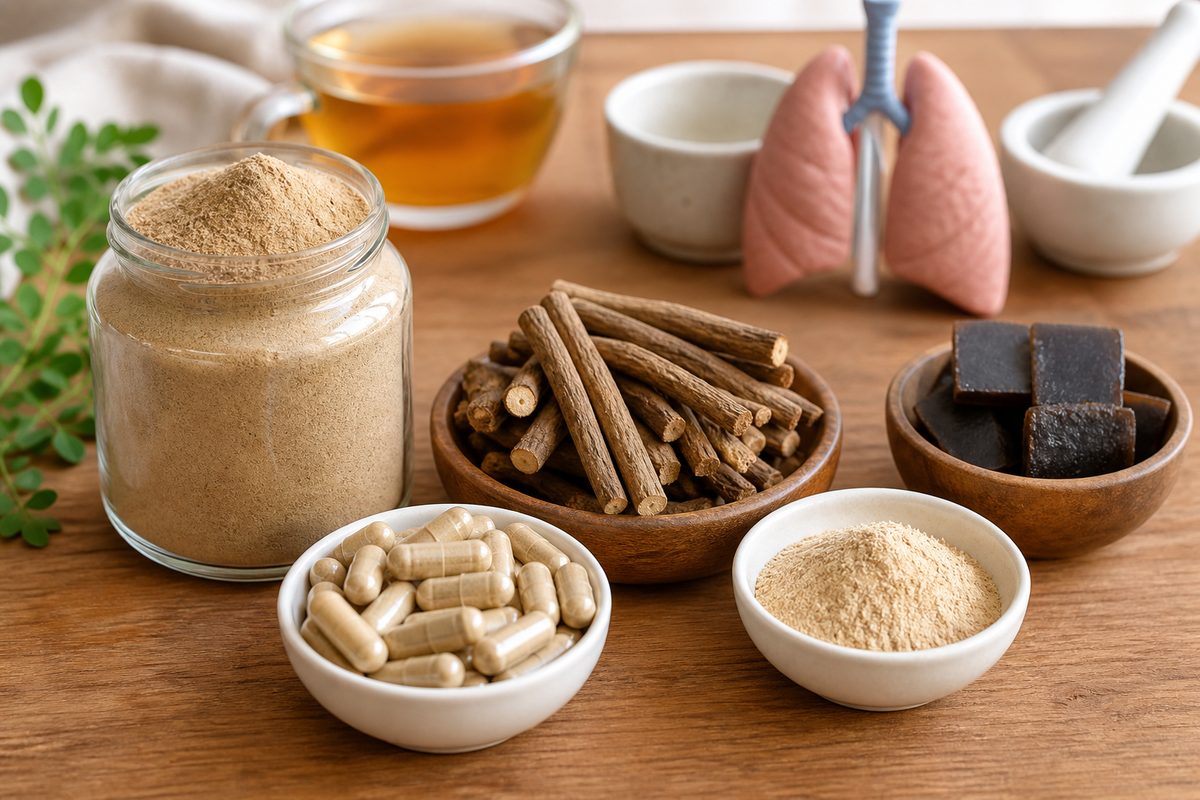
Country-wise Opportunities
Market Snapshot
Fair strategy should pick events that densify target-country buyers.
Gulfood for GCC, Vitafoods/SupplySide for ingredient hubs, Biofach for organic interest.
Follow up by country queue, not a single undifferentiated blast Use the destination-market guide with the country table for a testable shortlist.
Scan: country → form × cert × channel
Swipe →
Data table — swipe horizontally on small screens
| Market | Product fit | Requirement focus | Opportunity |
|---|---|---|---|
| USA | Organic root powder, glycyrrhizin-standardized lots, ratio/HPLC extracts | Supplier controls, lot COA, product and label review | Large ingredient and private-label base |
| EU / UK | Organic/documented root powder; glycyrrhizin food-limit grades; block/paste for confectionery | Glycyrrhizin labeling/limits, MRLs, contaminants, organic records | Root powder and extract demand strong; confirm form/use pathway with national authority |
| UAE / GCC | Bulk powder, dried root, retail programmes | Food-safety file, Halal where needed, suitable labels, reliable delivery | Regional distribution and re-export |
| Australia / Canada | Canada: organic/premium powder; AU: confirm food vs complementary-medicine route | Canada: organic + label review; Australia: counsel before retail-food assumptions | Premium natural-product and counsel-led AU programmes |
| Japan / South Korea | Fine mesh powder and HPLC extracts | Specification consistency and detailed technical documents | Quality-led ingredient channels |
| SE Asia | Value-oriented bulk root powder and dried root | Practical pack sizes and import-document alignment | Distributor-led regional expansion |
Export Statistics
Key Statistics
- Cite India HS 130212 ≈ USD 176.99K CY2024 (WITS) as dedicated liquorice-extract context — re-verify grades/SKU demand; do not invent a 121110 India export total (WITS shows no CY2024 World rows).
- Verify the applicable India ITC-HS and destination HTS/TARIC for the exact finished SKU with CHA + importer broker.
- Re-check TradeStat/WITS/Comtrade before quoting figures to a buyer.
Booth boards that show trade figures must label HS 130212 as heading-level trade data (verify grades).
Fair conversations convert on SKU fit; stats are only context.
Hand serious leads the source list rather than unverifiable booth charts.
Scan: trade & HS cues (directional — verify on quote date)
Swipe →
Data table — swipe horizontally on small screens
| Metric | Directional position | Buyer note |
|---|---|---|
| Core product | Dried whole/cut licorice root, root powder (churna/mesh), confectionery block/paste, spray-dried extract, glycyrrhizin-standardized extracts, DGL, glabridin cosmetic fractions | Specify *G. glabra* identity, root/stolon plant part, mesh or glycyrrhizin assay in every RFQ |
| Production base | Punjab / sub-Himalayan mulethi cultivation · North India aggregation · Gujarat packing · Hyderabad/Indore extracts (lots may also finish imported roots) | Verify actual processing site and lot origin per COA — India programmes may cultivate and/or process imported roots |
| Dried root and powder (India export cue) | ITC-HS 1211.10 — India eight-digit cue 12111000 (Liquorice roots) | Confirm live ITC-HS with CHA; WITS shows no India 121110 World export rows for CY2024 — do not invent a root-export total from silence |
| Extract classification (India export cue) | HS 1302.12 — India eight-digit cue 13021200 (Liquorice saps and extracts) | Do NOT default Glycyrrhiza extract to residual 1302.19; confirm block/paste/spray-dried form with CHA before shipping bill |
| Trade-data (WITS CY2024) | India HS 130212 exports ≈ USD 176.99K; top partners Nepal, Germany, Spain, Myanmar, Indonesia | Dedicated liquorice extract heading — still reconcile grade/SKU; re-fetch WITS/DGCI&S on quote date |
| Export gateways | Mundra, Nhava Sheva; ICD from Punjab/Haryana/UP; air for samples | Select the named port after factory location and sailing schedule are fixed |
Import Statistics
Key Statistics
- Segment destinations by buyer type and product form.
- Confirm the importer’s local route before shipping.
- Re-verify current partner data.
Fair leads from different import markets need different follow-up packs.
Capture the destination country’s import pathway in the booth CRM field.
Do not send one global document pack to every import enquiry.
Scan: market → form → buyer type
Swipe →
Data table — swipe horizontally on small screens
| Market | Demand profile | Typical buyer |
|---|---|---|
| USA | Root powder, organic powder, glycyrrhizin–aware ingredients, and extracts | Ingredient importers, brand owners, private-label packers |
| EU / UK | Traceable root powder and organic programmes; extracts need pathway confirmation | Organic distributors, food brands; extract buyers need pathway confirmation |
| UAE / GCC | Bulk powder and retail-ready programmes with food-safety and Halal documentation | Distributors, re-export traders, retail chains |
| Australia / Canada | Canada: premium powder interest; Australia: food vs complementary-medicine pathway with counsel | Canada natural-product distributors; AU: confirm lawful product route before quoting |
| Japan / South Korea | Consistent fine powders and tightly specified HPLC extracts | Ingredient distributors and formulation companies |
| SE Asia | Accessible bulk powder, block/paste, and dried-root programmes | Wholesalers, distributors, confectionery houses, and regional packers |
Product Categories / Variants
Summary Box
- Conventional and certified organic root powder.
- Declared mesh and industrial packing options.
- Declared extract formats with transparent analytical basis.
- No unsupported health or therapeutic claims.
Booth kits should physically separate herb, powder, and extract samples with matching sheets.
Fair staff must know which SKU each jar represents and which COA example belongs to it.
Marketplace listings should mirror the same SKU cards used offline. Compare forms via the India licorice (mulethi) product guide.
Scan: SKU catalogue (one row per commercial form)
Swipe →
Data table — swipe horizontally on small screens
| Product | Specification variables | Primary buyer channel |
|---|---|---|
| Dried whole / cut licorice root | Root integrity, moisture, cleaning level, *G. glabra* ID | Ayurvedic, respiratory/throat, digestive ingredient distributors |
| Licorice root powder (churna/mesh) | Mesh grade, colour, moisture, micro profile | Nutraceutical, confectionery-ingredient, formulation buyers |
| Confectionery block / paste / soft extract | Solids %, glycyrrhizin content, flavor profile | Confectionery houses, flavor houses, food manufacturers |
| Steam-sterilized powder | Treatment record, micro release, moisture | Premium brands and retail-adjacent programmes |
| Organic root powder | NPOP/USDA/EU scope, segregation, TC | Organic respiratory/digestive and Ayurvedic programmes |
| 4:1 / 10:1 / 20:1 ratio extract | Ratio, solvent, carrier, assay, solubility | Nutraceutical and formulation buyers |
| ~5% / ~10% / ~20%+ glycyrrhizin HPLC extract | Marker, HPLC method, acceptance band | Respiratory/digestive and confectionery ingredient buyers |
| DGL (deglycyrrhizinated licorice) | Residual glycyrrhizin max, process disclosure | Digestive and gut-health brands |
| Glabridin / cosmetic-grade fraction | Glabridin %, solvent, cosmetic spec | Personal-care and cosmetic-ingredient buyers |
| Private-label respiratory / digestive / confectionery bulk | Pack format, label scope, MOQ | Retail and brand-owner programmes |
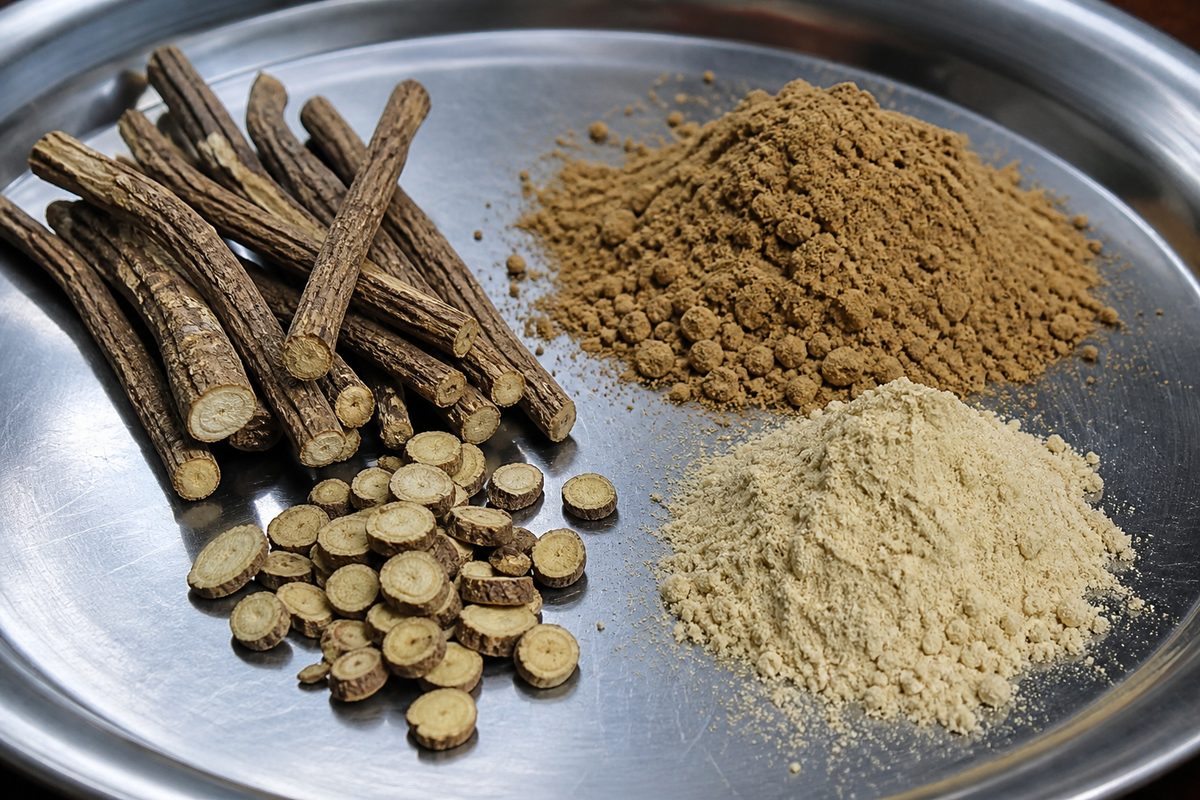
Quality Specification Reference
- Write acceptance limits before the first sample leaves India.
- Match COA parameters to the finished lot — not only the approved sample.
- Extracts need residual-solvent and carrier disclosure where applicable.
- Retain a sealed reference sample for destination retest disputes.
Booth example COAs should reflect the matrix you actually sell — mark them as examples.
Do not display glycyrrhizin or HPLC panels you cannot reproduce in commercial lots.
Fair technical credibility is a quality-system promise.
Scan: spec checklist (agree limits before sampling)
Swipe →
Data table — swipe horizontally on small screens
| Parameter | Dried root / cut root | Licorice root powder | Extract |
|---|---|---|---|
| Identity | Glycyrrhiza glabra root / stolon (not anise / fennel confusion) | Glycyrrhiza glabra root / stolon | Glycyrrhiza glabra root / stolon; disclose plant part |
| Physical specification | Cut size, colour, moisture, foreign matter | Mesh grade, colour, moisture, flow | Ratio, solubility, carrier, appearance |
| Glycyrrhizin / glabridin / markers | Where claimed — method stated | Where claimed — HPLC method stated | Glycyrrhizin / glabridin % by HPLC; residual solvents for extracts |
| Food-safety testing | Agreed microbiology and contaminants | Agreed microbiology and contaminants | Agreed microbiology, contaminants, residual solvents |
| Contaminants | Heavy metals, pesticides/EtO as agreed | Heavy metals, pesticides/EtO as agreed | Heavy metals, pesticides/EtO, residual solvents |
| Traceability | Farm or collection and batch records | Input-to-batch records | Input, extraction, and batch records |
| Organic status | Certificate where sold as organic | Certificate where sold as organic | Certificate scope and carrier review |
| Lot release | COA matched to packing list | COA matched to packing list | COA matched to drum labels |
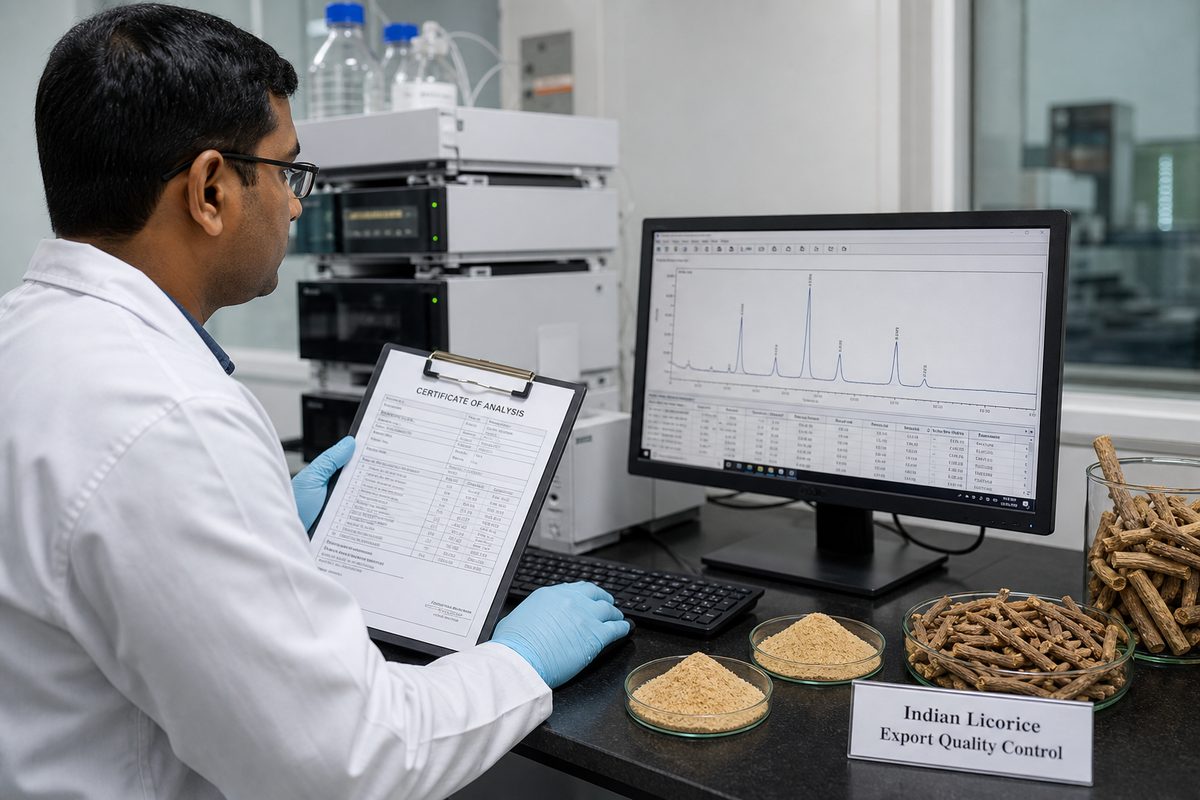
Manufacturing Overview
Export Tip
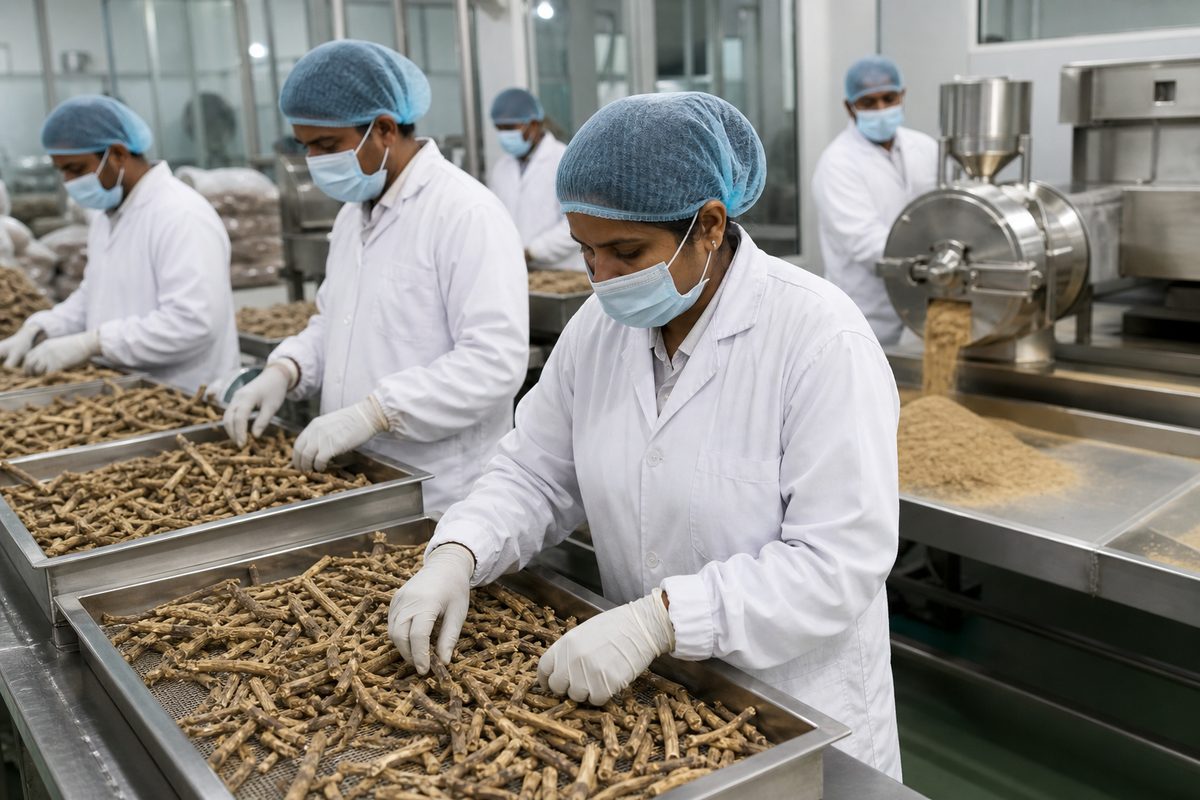
Fair promises about manufacturing lead times must match real dryer and extract calendars.
Do not quote 2-week HPLC extract lead times if the plant needs 3–6 weeks.
Bring process one-pagers that match the samples on the booth See the licorice export process guide for release-to-booking handoff.
Pricing Analysis
Buyer Tip
Fair teaser prices without SKU cards create unqualified leads.
Booth quotes need validity dates and Incoterm names.
Follow up with formal dated FOB after qualification, not during badge scans.
Scan: FOB USD/kg bands (dated quote — lock assay & solvent)
Swipe →
Data table — swipe horizontally on small screens
| Product | Directional FOB band | Commercial driver |
|---|---|---|
| Conventional licorice/mulethi root powder | Low-to-mid single digits to low teens | Mesh, moisture, micro controls, packing, and lot size |
| Organic licorice/mulethi root powder | Mid-teens to mid-twenties+ | Valid NPOP/USDA/EU chain, segregation, and demand timing |
| Dried whole / cut licorice root (G. glabra — disclose species) | Quote by cut size and moisture specification | Visual grade, foreign-matter control, botanical identity |
| Spray-dried / block-paste grade | Premium to solvent-extract mid tiers when contracted | Water process disclosure, residual-solvent N/A or low, documentation |
| ~10% glycyrrhizin HPLC extract | Often ~USD 18–55 depending on assay tier, solvent, and docs | Assay method, solvent system, carrier, WHO-GMP plant |
| ~20%+ glycyrrhizin / DGL / glabridin specialty grades | Mid-tens to USD 55–140+ for premium HPLC / DGL / glabridin lots | Assay tier, DGL residual, glabridin fraction, organic, volume, documentation |
| Confectionery block / paste | Quote by solids % and glycyrrhizin content | Block/paste form, solids, flavor profile, carton/drum MOQ |
| Private-label respiratory / digestive / confectionery bulk | Quote after pack and artwork scope | Packaging conversion, label compliance, and approval lead time |
MOQ Analysis
Buyer Tip
Fair conversations should quote sample and trial MOQs on paper.
Marketplace leads that refuse trial logic rarely become programmes.
Track conversion from sample MOQ to trial MOQ as the real funnel metric.
Scan: MOQ ladder (commercial practice — not statutory)
Swipe →
Data table — swipe horizontally on small screens
| Stage | Typical quantity | Purpose |
|---|---|---|
| Sample | 100 g–2 kg | Sensory review, lab testing, and formulation work |
| Powder trial | 100–500 kg | First commercial quality and packing validation |
| Extract trial | 25–100 kg | Formula compatibility and buyer approval |
| Powder wholesale | 1–5 MT+ | Distributor, processor, and recurring bulk demand |
| Extract wholesale | 200 kg–1 MT+ | Established ingredient programmes |
Packaging Standards
Export Tip
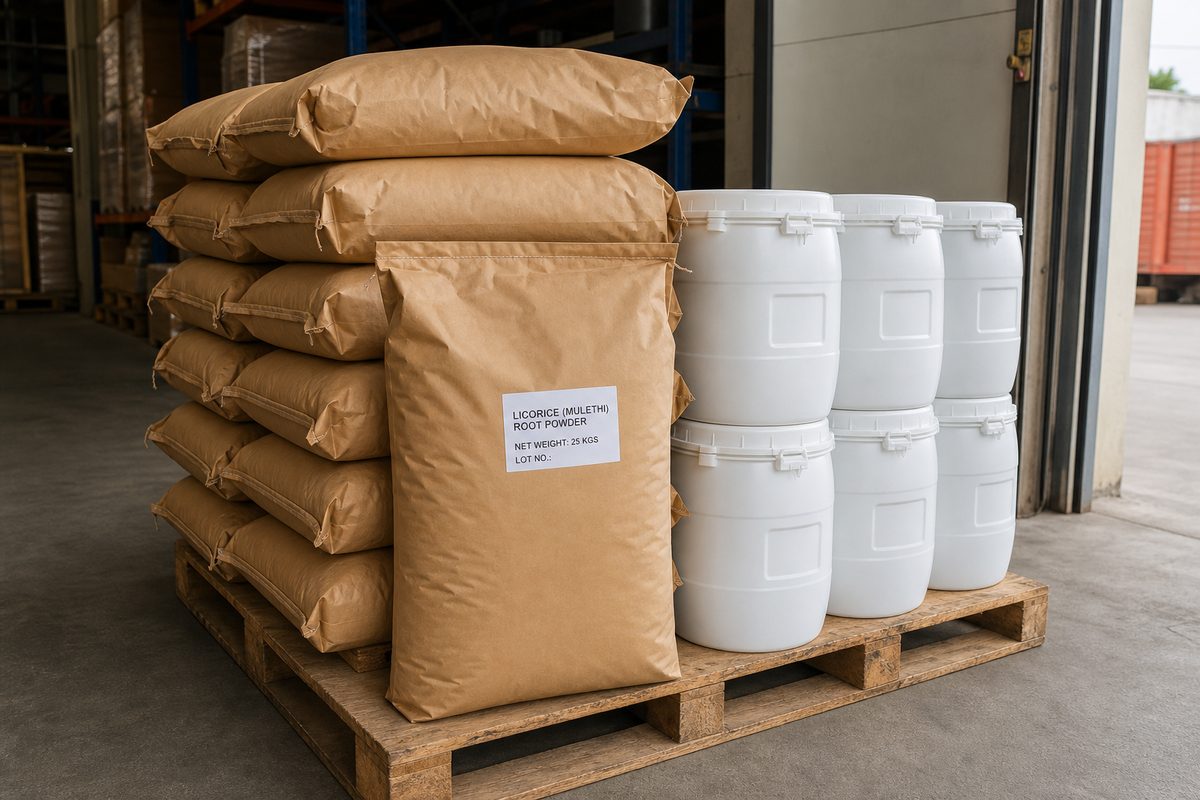
Booth visuals should show real bag and drum formats, not only jars.
Fair follow-up packs should include pack photos and dimensions.
Marketplace listings must state 20/25 kg or 25 kg drum defaults clearly.
Scan: pack format → config → use case
Swipe →
Data table — swipe horizontally on small screens
| Format | Configuration | Use case | Control point |
|---|---|---|---|
| Licorice root powder | 20/25 kg food-grade bag with liner or fiber drum | Bulk food and ingredient buyers | Lot code, moisture/heat/light barrier, clean outer pack |
| Dried root / cut root | 20/25 kg food-grade bag with liner | Ayurvedic, confectionery-ingredient, and respiratory/digestive-ingredient channels | Protect root integrity and prevent moisture pickup |
| Extract | 25 kg HDPE drum with double liner | Nutraceutical and ingredient supply | Seal integrity, drum label, and batch traceability |
| Private label | Buyer-approved pouches, jars, or cartons | Retail programmes | Artwork, destination labels, and master-carton plan |
Container Loading Details
Export Tip
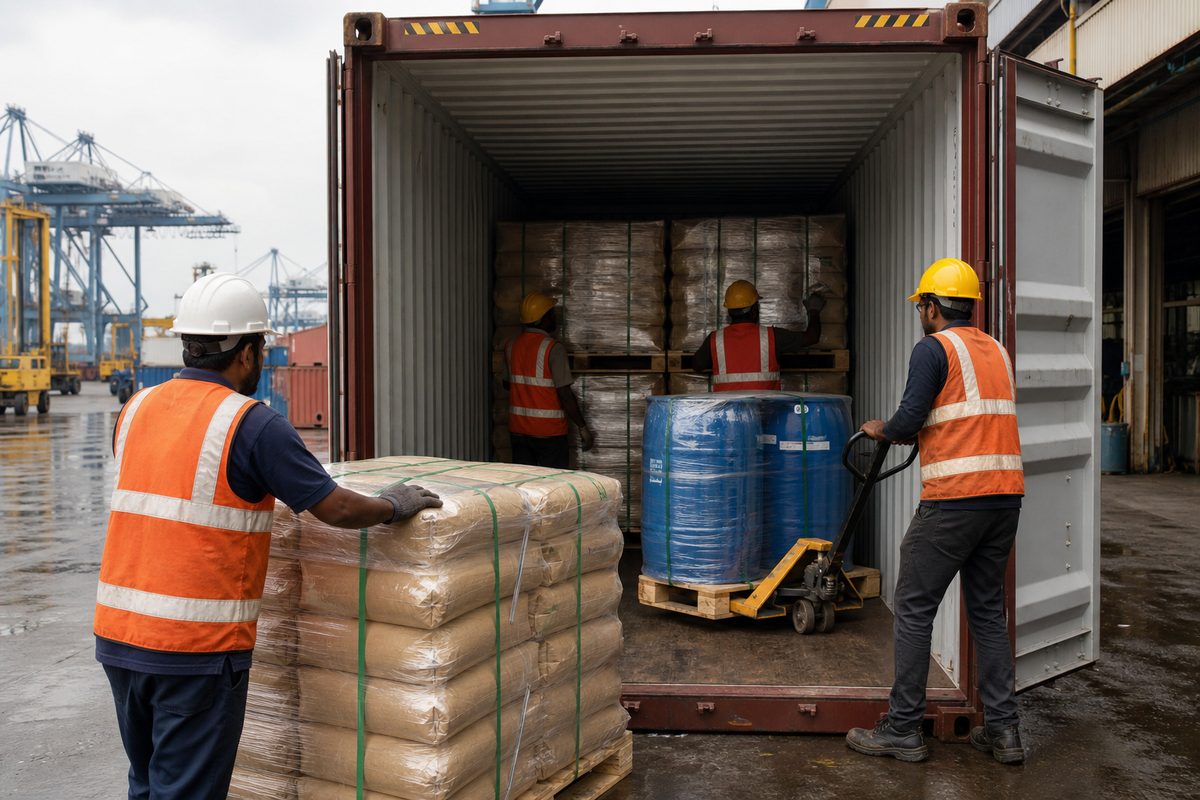
Fair conversations about FCL should stay indicative until trials succeed.
Bring stuffing photos as credibility assets for serious buyers.
Marketplace FCL claims without MOQ staging create unqualified leads.
Scan: dispatch mode (density-dependent — no fixed MT)
Swipe →
Data table — swipe horizontally on small screens
| Mode | Use | Planning point |
|---|---|---|
| Courier / air | Samples and urgent approvals | Heat/moisture protection; confirm destination import rules |
| LCL | Trials below container scale | Use palletisation or secure cartons where appropriate |
| 20-foot FCL | Bulk powder or dried-root programmes | Confirm payload after actual pack dimensions and port limits — do not invent fixed MT |
| 40-foot HC FCL | High-volume powder programmes | Cube with forwarder; use stuffing plan and moisture/heat protection |
| Drum shipment | Extract orders | Verify drum count, gross weight, and hazardous-status declaration if applicable |
Shipping Methods
Export Tip
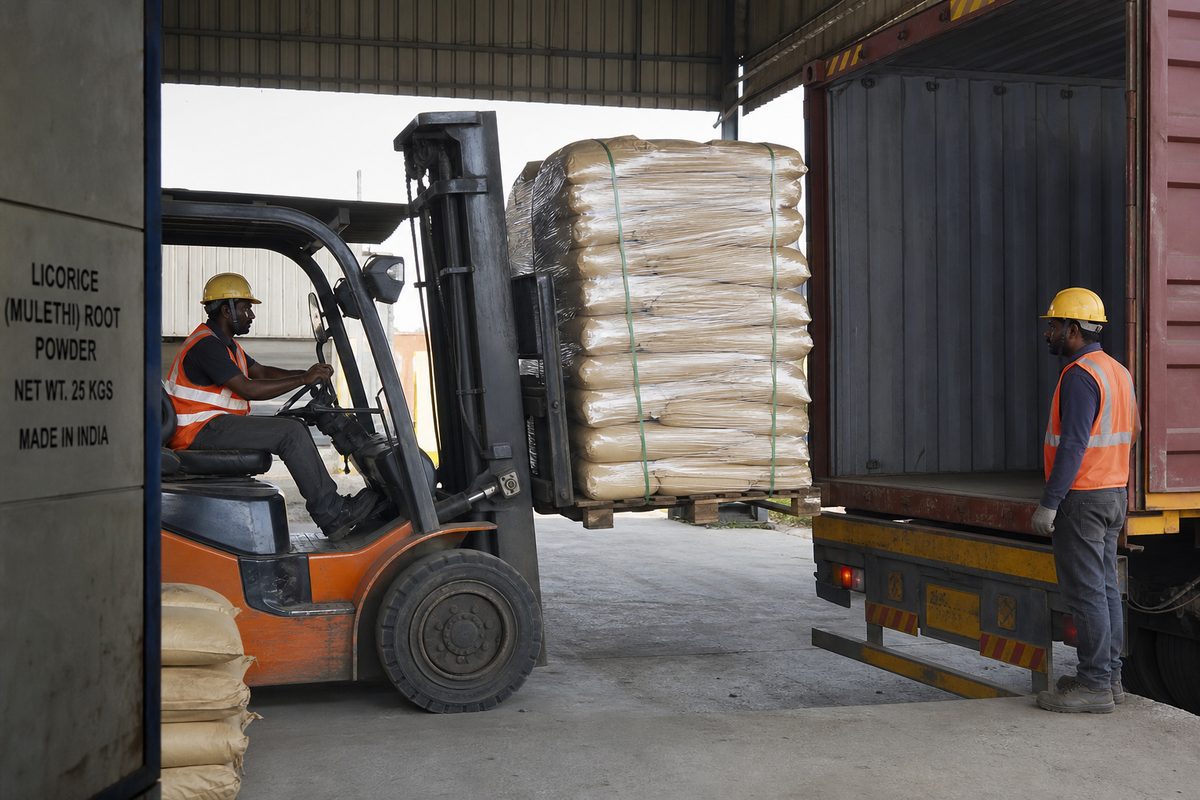
- Match freight to quantity, shelf-life, humidity risk, and receiving plan.
- Inspect and photograph the empty container before stuffing.
- Keep container, seal, and lot identifiers consistent across documents.
- Confirm who files destination entry before offering DAP/DDP.
Fair follow-ups should propose a shipping mode for the trial, not only a teaser FOB.
Marketplace quotes need named ports and Incoterms.
Convert interest with a sample air plan plus ocean trial path.
Certifications
Compliance Notes
Booth certificate binders should be current and skim-friendly.
Fair staff must know what each cert does — and does not — prove.
Follow up with digital cert packs within 72 hours for qualified leads.
Scan: cert/doc → purpose → who needs it
Swipe →
Data table — swipe horizontally on small screens
| Item | Purpose | Most relevant for |
|---|---|---|
| IEC and AYUSH adjacency | Indian export readiness; Ayurvedic framing where applicable | Exporter supplier file |
| FSSAI licence | Food-business compliance in India | Food and nutraceutical handling |
| AYUSH adjacency | Medicinal-root / Ayurvedic programme participation where eligible | Dried root and selected powder programmes |
| Certificate of Analysis | Lot-specific identity, mesh or ratio, moisture, glycyrrhizin/HPLC where claimed, microbiology, and agreed tests | Every commercial shipment |
| NPOP / USDA / EU organic | Organic chain-of-custody and market claim support | Organic programmes |
| ISO 22000 / HACCP / BRCGS | Food-safety system evidence | Retail, distributor, and processor approval |
| WHO-GMP | Preferred manufacturing signal for extract plants | Extract and formulation buyers |
| Halal / Kosher | Channel-specific compliance | GCC and selected specialist markets |
| Certificate of origin | Origin declaration | When buyer, bank, or destination requests it |
Sourcing Checklist
Checklist
Trade-show sourcing follow-up converts booth claims into checklist evidence within 72 hours.
Request plant details and cert scopes immediately after the fair.
Do not book travel audits until checklist gaps are closed.
Common Buyer Mistakes
Common Mistakes Box
- Form mix-up: do not treat root powder and HPLC extract as interchangeable commodities.
- Method gap: do not approve samples without a written glycyrrhizin/HPLC lot-release method.
- Late rules: do not add destination requirements after cargo is already produced.
- Scale jump: do not jump to FCL before a sealed sample and trial succeed.
Trade-show mistakes: badge vanity metrics, undated teaser prices, and sending generic catalogues a week later.
Unlabelled jars destroy technical trust.
72-hour SKU-specific follow-up is the fix.
Future Market Trends
Key Statistics
Event trends favor prepared technical booths and 72-hour digital follow-up over brochure stacks.
Hybrid fair-plus-marketplace funnels work when qualification is shared.
ROI measurement shifts to approved trials.
Challenges & Solutions
Challenge: fair lead decay — solve with same-day CRM capture and 72-hour packs.
Challenge: marketplace tire-kickers — solve with forced qualification fields.
Challenge: booth overclaiming — solve with staff training on evidence limits.
Compliance Checklist
Checklist
Compliance Notes
Fair compliance training covers Australia caveats, extract pathway caution, and heading-level trade-stat language.
Booth claims stay inside evidenced pathways.
Follow-up packs repeat the same compliant wording.
Sources
- WITS — India HS 130212 liquorice extract exports by country, 2024
- WITS — India HS 121110 liquorice roots exports by country, 2024
- UN Comtrade Database
- DGCI&S / TradeStat — Indian trade statistics
- DGFT — Directorate General of Foreign Trade (IEC)
- ICEGATE — Indian Customs EDI Gateway
- Ministry of AYUSH
- FSSAI — Food Safety and Standards Authority of India
- NMPB — National Medicinal Plants Board
- Chandigarh Administration — Madhu Yashti / Glycyrrhiza glabra cultivation note
- Apni Kheti — Mulethi farming (Punjab)
- APEDA — NPOP organic certification
- EximGuru — ITC HS 12111000 Liquorice roots
- Indian Business Portal — Dry Licorice / Mulethi (ITC-HSN 121110)
- XIMPEX — HS 13021200 Liquorice extracts (India ITC-HS)
- USITC Harmonized Tariff Schedule
- CBP CROSS — NY K88301 licorice roots HTS 1211.10.0000
- FDA — Dietary Supplements (USA)
- FDA Prior Notice (USA food imports)
- EUR-Lex — Commission Directive 2004/77/EC (glycyrrhizinic acid labelling)
- EUR-Lex — Regulation (EU) No 1169/2011 (FIC)
- EU Novel Food status Catalogue
- EU TARIC — customs tariff database
- Access2Markets (EU)
- EU Pesticides Database — MRLs
- TGA — Therapeutic Goods Administration (Australia)
- Health Canada — Natural Health Products
- ITC Trade Map
- ICC — Incoterms rules
Fair scripts citing trade or regulation should be refreshed from the primaries below before each event cycle.
Hand serious leads the source list rather than unverifiable booth claims.
Re-verify HS, duties, food-labelling / food-supplement pathways, and lot documents on the quote and shipping-bill dates. WITS CY2024: India HS 130212 ≈ USD 176.99K; India HS 121110 shows no World export rows — re-check DGCI&S/TradeStat and CHA filings before quoting.
US duty planning cues (verify live on USITC HTS): licorice roots HTS 1211.10.0000 General/MFN Free (CBP NY K88301); licorice extract HTS 1302.12.00.00 General/MFN Free on published schedules — Chapter 99 / reciprocal overlays may still apply. Confirm with the importer’s broker.
EU glycyrrhizinic-acid labelling for prepacked confectionery/beverages follows Commission Directive 2004/77/EC / Regulation (EU) No 1169/2011 Annex III thresholds — labelling rules, not a single bulk-ingredient maximum. Clickable government and trade references used for this licorice (mulethi) cluster:
Conclusion
Events and marketplaces work when labelled SKUs meet 72-hour follow-up and trial MOQs.
Altus turns fair conversations into sample dispatch and named-port quotations. Start with our Licorice (Mulethi) sourcing resources for SKU context.
Share event contacts with destination, form, and next action to accelerate follow-up Contact Altus Exports with form, quantity, destination, application, certificates, and analytical needs to proceed.