
How to Find International Buyers for Metal Handicrafts
By Saurabh Mittal, Founder, Altus Exports
A practical, channel-by-channel playbook to find international buyers for Indian metal handicrafts and art metalware — inbound discovery through website and LinkedIn, outbound prospecting through HS 8306/7419/7323 trade data and structured email, and a verification protocol that separates genuine art metalware importers from time-wasters.
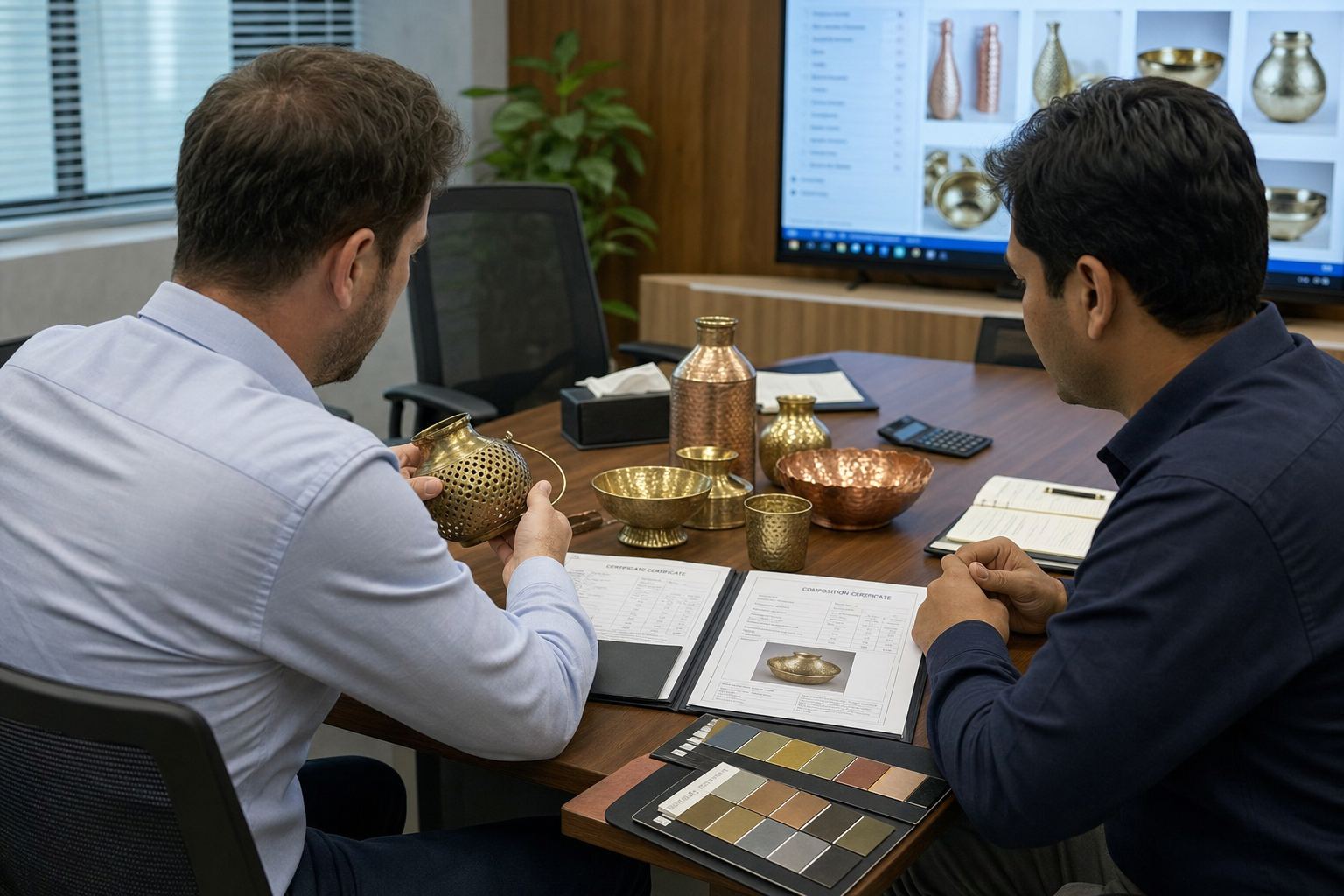
Finding international buyers for metal handicrafts and art metalware is a discovery-and-verification problem before it is a selling problem. India's brass, copper, iron, and aluminium craft export base — candle stands, trays, planters, lanterns, utensils, Bidriware, and sculptural décor from clusters like Moradabad, Jaipur, Bidar, and Thanjavur — reaches importers across USA, Germany, UK, UAE, Netherlands, Canada, France, Australia every month, but very little of that flow starts with a walk-in customer. It starts with a trade-data screen under the right HS line, a LinkedIn message to a home-décor distributor, or a cold email that named the correct product family on the first try.
This guide is a buyer discovery and outreach playbook specifically for metal handicrafts — not a product catalogue and not a documentation template library. HS references you will use across every channel in this article: base-metal ornaments, frames, and statues under HS 8306 / 830629; other copper articles and brass artware under HS 7419 / 74198030; copper and brass household articles under HS 7418; iron and steel household articles under HS 7323; aluminium household articles under HS 7615; and metal lamps or lanterns under HS 9405 when the SKU is lighting. Confirm the exact 8-digit ITC-HS line with your CHA per SKU.
For the full SKU range, see Top Metal Handicraft Products Exported from India. For the end-to-end export process, read How to Export Metal Handicrafts from India. For documentation checklists, see Metal Handicraft Export Documentation Checklist. For lead-free, food-contact, and recycled-metal programme positioning, read the companion specialty guide, Lead-Free, Food-Contact and Recycled Metal Handicraft Export Opportunities.
Altus Exports operates as a merchant exporter in India and global sourcing partner, running structured buyer discovery programmes for art metalware exporters across Moradabad, Jaipur, and supporting West UP / Delhi-NCR workshops. This guide is written for exporters allocating outreach bandwidth and for buyers who want to understand how credible Indian metal handicraft suppliers actually get found.
Key Takeaways
Summary Box
Executive Summary
Summary Box
Metal handicraft buyer discovery breaks into two structural halves: inbound channels that let buyers find you (a discoverable website with SEO-optimised category pages, an active LinkedIn presence aimed at home-décor distributors and merchandisers, and visible workshop credibility) and outbound channels that let you find buyers first (trade-data mining under HS 8306, 7419, and 7323, and structured, non-generic cold email). Neither half works alone. Inbound builds a pipeline of buyers who are already motivated; outbound builds a pipeline of buyers who do not yet know you exist but already import art metalware.
The buyer universe for Indian metal handicrafts is not homogeneous. A home-décor wholesaler buying brass candle stands for a mid-market retail chain has a completely different qualification bar than a private-label utensils buyer requiring food-contact evidence, or a gift wholesaler buying seasonal lantern assortments. Matching outreach language, sample size, and FOB framing to the correct buyer archetype is what separates a low single-digit cold-email reply rate from a conversion-ready conversation.
This guide walks through market context using EPCH Art Metalwares figures, trade-data-led prospecting, LinkedIn and distributor outreach, retail-chain qualification, buyer verification, and destination-specific opportunity — closing with sourcing and compliance checklists for both sides of the transaction. Companion posts cover the SKU catalogue, the export process, documentation, and lead-free / food-contact / recycled-metal positioning in depth; this post stays focused on finding and qualifying international buyers.
Market Size & Industry Overview
Key Statistics
India's art metalware exports are tracked by EPCH (Export Promotion Council for Handicrafts) under the Art Metalwares category. In FY 2024-25, Art Metalwares exports stood at Rs 4,386.63 crore — roughly US$519–530 million at a directional conversion of about Rs 83–84 per USD — compared with Rs 4,435.74 crore in FY 2023-24. That figure sits inside a broader Indian handicrafts export base (excluding carpets) of Rs 33,122.79 crore in the same year; cite the larger figure only for sector context, never as the metal number.
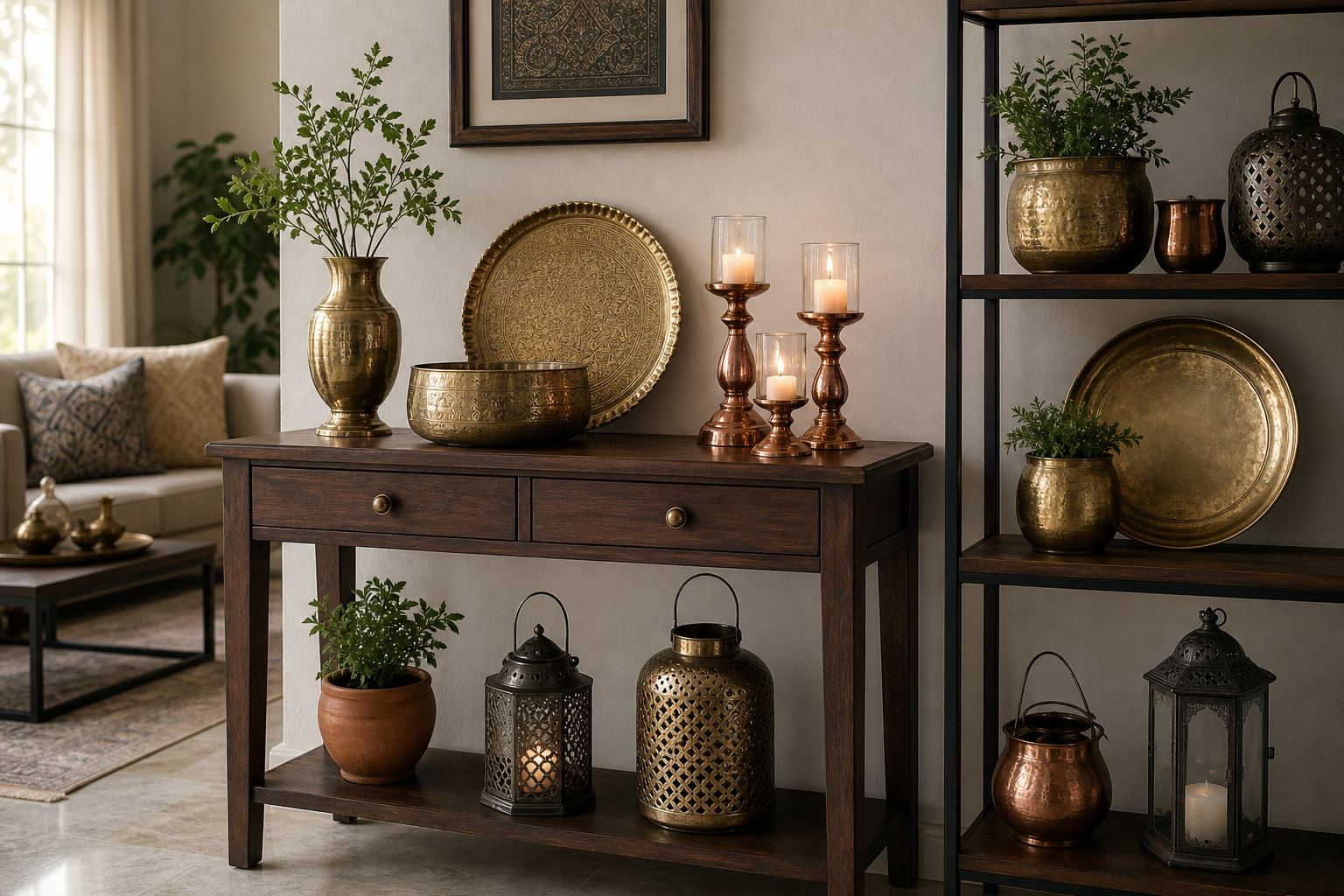
Moradabad (Uttar Pradesh) is recognised as a Town of Export Excellence for handicrafts and directionally accounts for roughly 40–50% of India's metal craft export origin in trade literature. Supporting clusters include Jaipur for decorative brass and mixed-metal décor, Bidar for Bidriware, Thanjavur for traditional metal plates, Aligarh for hardware-adjacent metal items, and Delhi-NCR / West UP for finishing, plating, and consolidation. For an exporter, that means the buyer you are trying to reach already has other Indian art metalware suppliers competing for the same inquiry — discovery speed and credibility signalling matter as much as price.
Metal Handicraft Buyer Archetype Map
Swipe →
Data table — swipe horizontally on small screens
| Buyer Archetype | Typical Volume Pattern | Best Discovery Channel |
|---|---|---|
| Home-décor importer / wholesaler | Trial LCL or pallet, then repeat FCL | Trade data, LinkedIn, EPCH fairs |
| Home-décor distributor (regional) | Assorted SKU programmes, reorder-driven | LinkedIn, distributor directories, referral |
| Retail chain private-label buyer | Cartonised retail launch programme | Trade data, retail sourcing portals |
| Gift & seasonal wholesaler | Seasonal bulk, holiday-driven lanterns/décor | Trade fairs, trade data, email |
| Food-contact / kitchenware importer | Spec-driven trial, then programme | Trade data (HS 7418/7323), LinkedIn |
| E-commerce / DTC brand buyer | Small-MOQ trial, frequent reorder | Website inbound, LinkedIn |
Export Statistics
Key Statistics
Trade-data screens are the single highest-leverage tool for metal handicraft buyer discovery. Filtering Indian export shipping-bill data under HS 8306 / 830629 (base-metal ornaments, frames, statues), HS 7419 / 74198030 (other copper articles / brass artware), and HS 7323 (iron or steel household articles) by destination country surfaces the consignees who are already importing your category — not prospects who might be interested, but companies with a documented, repeatable import habit.
Read export statistics for discovery, not for pricing benchmarking alone: shipment frequency separates a company that imported once opportunistically from one that reorders quarterly, and port-of-discharge patterns reveal which regional distribution hub a buyer is serving. Cross-reference DGCI&S export data with ITC Trade Map or a paid platform (Panjiva, ImportGenius, ExportGenius) for destination-side confirmation. EPCH destination splits for Art Metalwares FY 2024-25 give you a clear outreach priority stack.
EPCH Art Metalwares — Top Destinations FY 2024-25 (Rs crore)
Swipe →
Data table — swipe horizontally on small screens
| Destination | Export Value (Rs crore) | Outreach Priority Signal |
|---|---|---|
| USA | 1,540.79 | Primary — largest single market |
| Germany | 377.69 | High — compliance-literate EU buyer base |
| UK | 314.82 | High — retail and indie décor chains |
| UAE | 262.47 | High — Gulf redistribution hub |
| Netherlands | 167.52 | High — EU re-export & décor wholesale |
| Canada | 91.35 | Medium-high — bilingual retail readiness |
| France | 81.44 | Medium-high — premium décor retail |
| Australia | 65.81 | Medium — lifestyle retail growth |
| LAC | 64.65 | Selective — Spanish/Portuguese outreach |
| Italy | 48.57 | Selective — design-led programmes |
| Japan | 14.98 | Niche — quality-first, slower cycle |
| Switzerland | 6.31 | Niche — premium gift/décor |
| Other | 1,350.23 | Segment before outreach |
Import Statistics
Key Statistics
Destination-side import data adds the confirmation layer that origin data alone cannot give you: landed-cost patterns, competing origin countries (China, Türkiye, and Vietnam compete on overlapping metal décor SKUs), and which buyers are actively growing their brassware or iron décor category versus which are shrinking it. Top markets worth building dedicated import-data watchlists for: USA, Germany, UK, UAE, Netherlands, Canada, France, Australia.
A buyer showing rising month-over-month art metalware import volume from any origin is a stronger discovery target than one with a single historical shipment, because rising volume signals active category investment rather than a one-time seasonal purchase. Watch also for buyers switching origin — those often represent supplier-dissatisfaction opportunities if your finish consistency and Prop 65 / REACH posture are clearer than the incumbent's.
Import Statistics — Buyer Prioritisation Signals
Swipe →
Data table — swipe horizontally on small screens
| Signal | Buyer Prioritisation Action |
|---|---|
| Repeat quarterly imports under HS 8306/7419/7323 | High priority — steady demand |
| Rising volume trend across 2–3 quarters | High priority — growth signal |
| Seasonal spike pattern (Q3–Q4 gift/lantern) | Medium priority — time outreach ahead of season |
| Single historical shipment only | Low priority — verify intent before investing time |
| Falling volume or origin-switching | Investigate why before pursuing or pursue as switch opportunity |
Product Categories for Buyer Targeting
Summary Box
This section maps buyer type to product category for outreach targeting — it is not the full SKU catalogue (see the dedicated top-products post for that). The point is to match your outreach message and sample kit to what a specific buyer archetype is actually procuring, rather than sending one generic 'we make metal handicrafts' message to every contact on a list.
Buyer Targeting by Metal Product Family
Swipe →
Data table — swipe horizontally on small screens
| Product Family | HS Reference | Primary Buyer Type |
|---|---|---|
| Ornaments, frames, statues, candle décor | 8306 / 830629 | Home-décor importer, gift wholesaler |
| Brass / copper artware & trays | 7419 / 74198030 | Décor wholesaler, retail private-label |
| Copper / brass household articles | 7418 | Kitchenware importer, food-contact buyer |
| Iron / steel household & décor | 7323 | Lifestyle retail, planter/lantern programmes |
| Aluminium household & décor | 7615 | Lightweight décor, recycled-aluminium programmes |
| Metal lamps & lanterns | 9405 | Lighting importer, hospitality décor buyer |
Manufacturing Overview
Export Tip
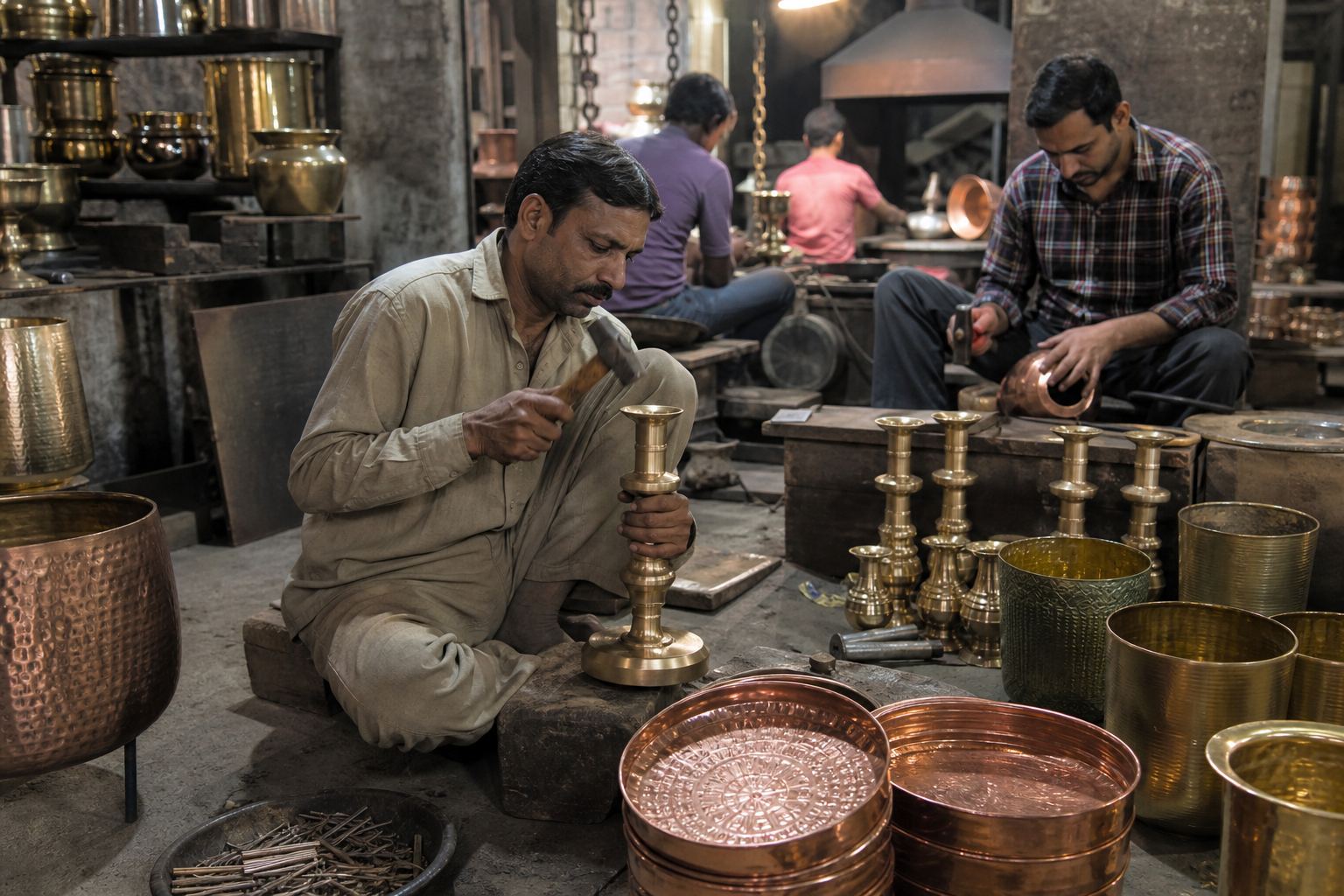
Buyer conversion for metal handicrafts depends heavily on manufacturing credibility signals that you can show, not just claim. Buyers who have been burned before will ask — directly or through a verification step — whether you actually run or control a polishing, plating, and finishing floor, or whether you are a trading intermediary reselling someone else's production without quality oversight on dent, scratch, and tarnish risk.
Be ready to demonstrate cluster-specific capability relevant to the buyer's SKU interest: Moradabad for brass, copper, and aluminium art metalware; Jaipur for decorative brass and mixed-metal programmes; Bidar for Bidriware; Thanjavur for traditional metal plates. A short workshop video, photos of plating and lacquer lines, and a named quality-control contact do more for buyer confidence in the first message than a lengthy company history.
Exporter Credibility Package for First Contact
- 2–4 page company profile with cluster affiliation and workshop / finishing-floor photos
- SKU catalogue extract relevant to the buyer's stated category, with FOB bands
- Registration copies: IEC, EPCH RCMC
- Composition / finish evidence where relevant (alloy note, lacquer type, plating specification)
- Prior shipment references (redacted invoices or shipping bills)
- Named commercial contact with a stated response-time commitment
Buyer Discovery & Outreach Playbook
Export Tip
This is the core operational section of this guide — the process and channel breakdown for finding metal handicraft buyers, organised into inbound discovery, outbound prospecting under the key HS lines, retail-chain qualification, and a verification protocol that sits between first contact and a signed purchase order.
Inbound Buyer Discovery Channels
Inbound channels attract buyers who are already searching for a metal handicraft or brassware supplier. They take longer to build than outbound campaigns but produce buyers with lower price sensitivity, because they arrived motivated rather than cold-contacted.
Website & SEO-Optimised Category Pages
A discoverable website with category pages built around actual buyer search terms — 'wholesale brass décor supplier India', 'Moradabad metal handicraft exporter', 'iron lantern manufacturer export' — captures buyers who are already at the research stage of a sourcing decision. Each product-family page should show FOB indication ranges, MOQ, lead time, and compliance posture (Prop 65 readiness, food-contact capability, REACH awareness) up front; buyers filter suppliers on these details before ever sending an inquiry.
Publish specific, technical content rather than generic marketing copy. A page explaining anti-tarnish packing for polished brass converts better with serious buyers than a page listing adjectives like 'premium' and 'exquisite' without evidence.
LinkedIn Presence & Home-Décor Distributor Outreach
LinkedIn works two ways for metal handicraft discovery: passive presence (a company page and personal profiles posting workshop finishes, packing photos, and category insight that buyers find when they search) and active outreach (Sales Navigator filtered to procurement, buying, merchandising, and distributor titles at home-décor importers, lifestyle retail groups, and regional distributors in target markets).
For active outreach to home-décor distributors, reference something specific — a buyer's public brass or iron range, a recent import shipment visible in trade data, or a shared connection — rather than opening with 'we are a leading exporter of handicrafts from India.' Specific, short messages that name the actual SKU family (candle décor, trays, lanterns) and FOB band outperform generic introductions by a wide margin.
Trade Shows & EPCH Channel Visibility
EPCH-linked fairs and buyer-seller meets remain high-signal discovery venues for art metalware, particularly when you arrive with a sample kit already organised by HS family and finish type. Treat shows as list-building events: capture buyer cards, note which SKUs drew the most handling time, and follow up within 72 hours with a trade-data-informed message rather than a generic 'nice to meet you' note. For a dedicated channel map of fairs and B2B platforms, see Trade Shows & B2B Marketplaces for Metal Handicraft Exporters.
Outbound Buyer Discovery Channels
Outbound channels let you reach buyers before they start searching — useful because many art metalware importers renew supplier relationships reactively (when an existing supplier fails on finish consistency or lead time) rather than proactively, and a well-timed outbound message can be the trigger that starts a switch.
Trade Data Mining Under HS 8306 / 7419 / 7323
Build a named target list from export shipping-bill data under HS 8306 / 830629, HS 7419 / 74198030, and HS 7323, cross-referenced with destination import data. Add HS 7418, 7615, and 9405 screens when your range includes utensils, aluminium décor, or lighting. Prioritise consignees showing repeat or rising-volume import patterns over one-off shipments.
Segment the list by product family before writing outreach, so a brass-tray-focused buyer receives brass-tray messaging and an iron-lantern buyer receives iron-lantern messaging. Trade data also reveals which competing origin countries a target buyer currently sources from — useful context for framing finish quality, MOQ flexibility, or Prop 65 / lead-free readiness against a real incumbent.
Structured Cold Email Programmes
Cold email for metal handicrafts converts when it is anchored to a trade-data signal, not a generic "leading exporter" pitch. The anatomy that works: line one names the buyer's own import record under HS 8306/830629 or HS 7419/74198030 (a shipment you can see, not a guess); line two states the FOB band for that exact SKU family; line three states MOQ and lead time; line four states your compliance posture in one honest sentence — Prop 65 composition evidence for a US brass buyer, REACH/EN 1811 for an EU buyer — because a buyer who already imports under that HS line has usually been asked for this before and notices immediately if you skip it; and line five is a single ask (a 15-minute call or a sample kit offer). Five lines, not five paragraphs.
Cadence discipline matters more than message polish: initial email, a LinkedIn connection note three to five days later, a second email around day ten referencing a specific product photo (finish close-up preferred) and re-stating the HS-line-specific FOB, and a final follow-up at day twenty-five. Stop after four touches without response and revisit the lead in three to six months rather than escalating frequency.
Retail Chain Qualification
Retail-chain private-label buyers are among the highest-value targets in metal handicrafts, but they also run the longest qualification cycles. Do not treat a retail merchandiser the same way you treat a wholesaler: retail programmes usually require written specifications, consistent finish across carton lots, barcode-ready packing, and often composition evidence for Prop 65 or REACH before a purchase order is issued.
Qualifying a Retail Opportunity
- Confirm whether the contact is a merchandiser, private-label buyer, or seasonal assortment buyer — messaging differs for each
- Ask which finish standard and carton colourway the chain already uses for metal décor
- Clarify whether the first ask is a seasonal fill-in or a multi-season programme (different MOQ and lead-time logic)
- Confirm composition and compliance expectations early (lead-free brass, nickel release, food contact) before quoting
- Offer a staged sample-to-trial path rather than pushing full FCL commitment on first contact
Signals That a Retail Lead Is Real
- Willingness to share a written brief or previous vendor pack specification
- Named compliance or QA contact copied on early threads
- Paid sample budget rather than free-sample-only requests at programme scale
- Clear calendar windows tied to set dates or seasonal resets
Buyer Verification Protocol
Metal handicraft transactions carry specific verification risks that differ from other categories: alloy or plating claims that do not match the physical goods, finish inconsistency across cartons, and Prop 65 / REACH / food-contact claims that cannot be substantiated on request. Verification protects both sides — buyers should verify exporters, and exporters should verify buyers before committing polishing and plating capacity to unverified inquiries.
Verifying Genuine Art Metalware Importers
- Confirm the buyer's own shipment history under HS 8306/830629 or HS 7419/74198030 through trade data — a genuine importer has a repeatable pattern, not a single opportunistic entry
- Confirm registered business identity and destination trade presence where available
- Ask for a reference from a previous Indian or other-origin metalware supplier if this is a supplier-switching inquiry
- Red flag: a US-bound buyer who never raises Prop 65 or composition questions for a brass programme — either they are unqualified or they intend to skip a step that will surface later as a rejected shipment
- Red flag: unwillingness to pay for samples, pressure for immediate large-volume commitment before any sample stage, and payment terms that shift after a written quote is issued
- Prefer buyers whose public catalogue already includes brass, copper, iron, or aluminium décor over buyers who appear to be dabbling in 'handicrafts' generically
What Verified Buyers Expect From You
- Composition and finish evidence on request, not only on the packing list — a lot-linked alloy note, not a generic 'brass' description
- Prop 65-aware documentation offered proactively for US-bound brass, and REACH/EN 1811 awareness offered proactively for EU-bound brass and copper — waiting to be asked reads as unprepared
- A named, responsive commercial contact rather than a rotating inbox
- Willingness to ship paid samples with visible lot traceability
- Consistent FOB quoting across repeated conversations, not shifting numbers per inquiry
- Honest answers on lead-free / food-contact / recycled-metal capability — claim only what you can evidence with a matching lab or supplier attestation
Pricing Analysis for Outreach
Buyer Tip
Outreach that leads with an SKU-specific FOB indication converts faster than outreach that leads with a company introduction. Indicative FOB bands to reference by product family: small décor and candle items $1.50–10 per piece; trays and planters $4–25 per piece; statement lanterns and sculptural pieces Higher — SKU-specific quotation. Always frame the band alongside packing format and load port so the buyer can sanity-check landed cost quickly.
Buyers who respond to a specific FOB band typically ask for a sample and a formal quote against a written finish specification — not a discount negotiation on the headline number. Treat that as the expected next step, not a stall. Lead-free brass, food-contact utensils, and recycled-aluminium programmes often sit at a documented premium; see the specialty companion post rather than inventing premiums in first contact.
Outreach FOB Framing by Product Family
Swipe →
Data table — swipe horizontally on small screens
| Product Family | Indicative FOB (USD) | Typical Packing Reference |
|---|---|---|
| Small décor / candle stands | $1.50–10 per piece | Foam + anti-tarnish + carton |
| Trays / planters | $4–25 per piece | Divider-lined carton, corner protectors |
| Statement lanterns / sculptural | Higher — SKU-specific quotation | Individual foam cradle + master carton |
MOQ Analysis for First Orders
Buyer Tip
Position MOQ as a staged commitment in outreach rather than a single number. Sample stage runs 5–20 pieces per SKU; trial orders typically run 200–500 pieces per SKU or mixed LCL; full programmes scale toward programmes by carton / CBM / FCL lane. Buyers who want to start at sample or trial stage are the buyers worth investing follow-up time in; buyers who demand full-container commitment before any sample is a common signal to verify carefully before proceeding.
MOQ Positioning by Stage
Swipe →
Data table — swipe horizontally on small screens
| Stage | Typical Quantity | Purpose |
|---|---|---|
| Sample | 5–20 pieces per SKU | Finish, alloy, and quality confirmation |
| Trial order | 200–500 pieces per SKU or mixed LCL | Packing, consistency, and logistics validation |
| Programme scale | programmes by carton / CBM / FCL lane | Repeat FCL or CBM cadence |
Packaging Standards Referenced in Outreach
Export Tip
Mentioning metal-specific packaging capability in first-contact outreach signals operational maturity. Standard export packing for art metalware uses foam or kraft wrap, anti-tarnish paper or poly bags, dividers so polished surfaces never sit bare metal-on-metal, and desiccants for humid ocean lanes. Buyers evaluating multiple suppliers often use packing detail as a tie-breaker when FOB quotes are similar.
Packaging Detail Worth Referencing Early
Swipe →
Data table — swipe horizontally on small screens
| Packing Element | Buyer Signal |
|---|---|
| Foam / kraft individual wrap | Dent and scratch-prevention discipline |
| Anti-tarnish paper or poly bag | Finish-protection awareness for brass/copper |
| Dividers — no bare metal-on-metal | Carton-consistency maturity |
| Desiccant sachets for humid lanes | Transit-risk awareness |
| Corner protectors / foam cradles for lanterns | FCL-readiness for fragile shapes |
Container Loading Details
Export Tip
Reference realistic loading detail when a buyer signals interest in FCL cadence. Art metalware can mix cube-limited light aluminium décor with denser cast brass pieces, so both CBM planning and stack-height limits for dent-sensitive cartons matter in early conversations. Plan stuffing with your forwarder before booking — finish-sensitive loads need dunnage that generic carton stuffed mixed freight often skips.
Loading Planning Reference
Swipe →
Data table — swipe horizontally on small screens
| Container | Typical Load Pattern | Buyer Interpretation |
|---|---|---|
| 20ft dry | CBM-planned palletised cartons | Suitable for trial/moderate FCL |
| 40ft dry | Higher pallet count, finish-segregated SKUs | Serious repeat programme |
| LCL consolidation | Partial pallet, shared container | Trial-stage or assortment buyer |
Shipping Methods & Lead Times
Export Tip
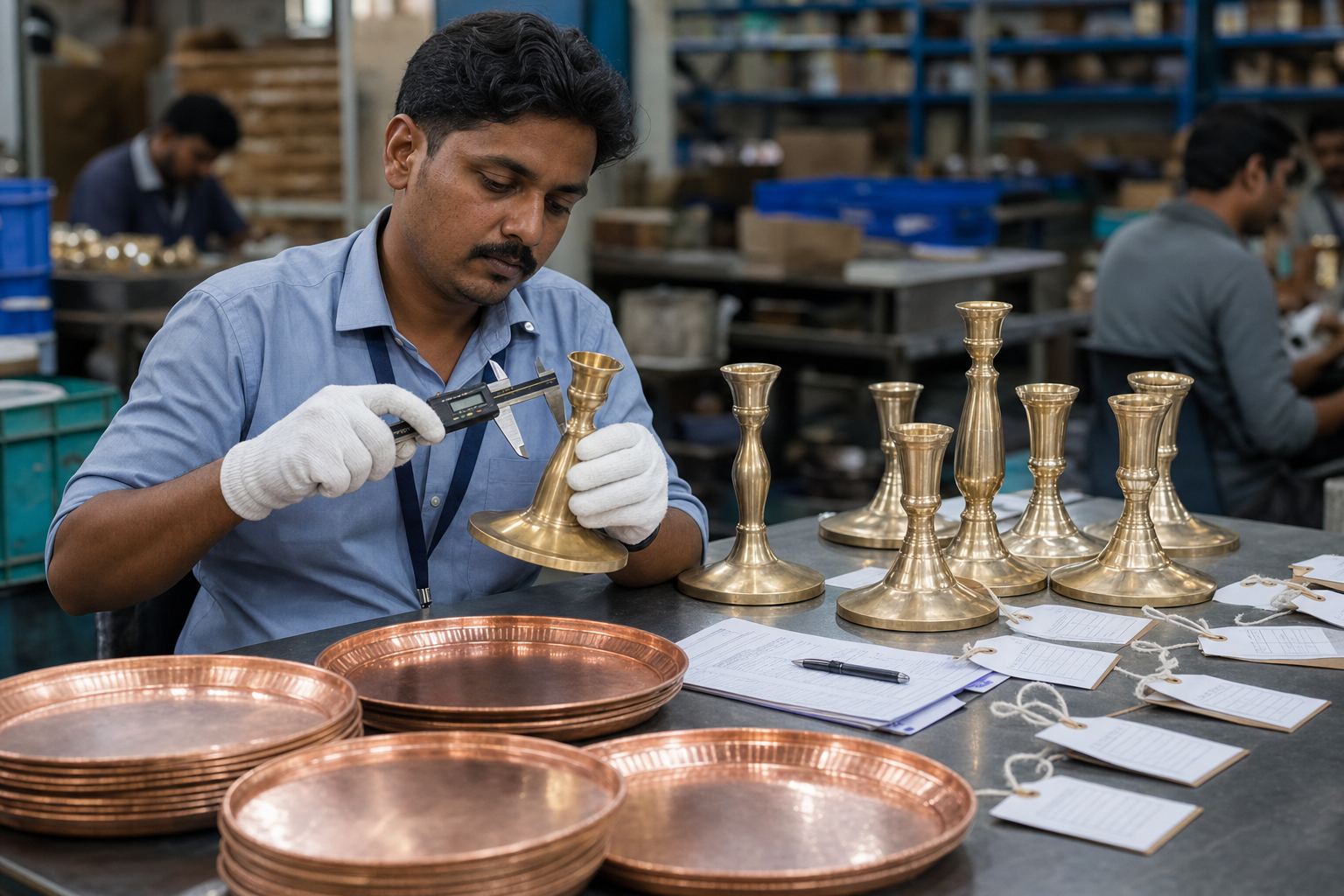
Load ports and inland gateways for metal handicraft exports are typically Nhava Sheva (JNPT); Mundra; ICD Delhi / Dadri (Moradabad corridor). Reference realistic lead times so buyers can plan their own retail or reorder calendar: sample dispatch 10–21 days, stock / repeat programmes 3–5 weeks, and custom or private-label programmes 6–10 weeks. Buyers appreciate a realistic timeline far more than an optimistic one that slips.
Common commercial Incoterms include EXW, FOB, and CFR/CIF; DDP is selective and should only be offered when you have a destination-side partner and landed-cost control. Do not invent DDP capability in outreach if you cannot execute it.
Lead Time Reference for Outreach
Swipe →
Data table — swipe horizontally on small screens
| Stage | Typical Lead Time |
|---|---|
| Sample dispatch | 10–21 days |
| Stock / repeat programme | 3–5 weeks |
| Custom / private-label programme | 6–10 weeks |
Certifications That Support Buyer Trust
Compliance Notes
Certification and compliance signals accelerate buyer trust at the discovery stage without requiring a full technical deep dive up front. Lead with EPCH RCMC as a baseline sector credibility signal. For USA buyers, mention California Prop 65 awareness for brass programmes; for EU buyers, mention REACH / nickel-release awareness; for food-contact utensils, mention FDA or LFGB readiness where you actually hold capability.
For a full treatment of lead-free brass, food-contact utensils, REACH nickel release, and recycled aluminium / iron décor premiums, see the dedicated specialty guide — this post covers only what to reference in outreach, not the underlying compliance programme detail.
Certification Signal by Buyer Type
Swipe →
Data table — swipe horizontally on small screens
| Buyer Type | Signal to Lead With |
|---|---|
| Home-décor importer (USA) | EPCH RCMC + Prop 65 awareness for brass |
| Home-décor importer (EU/UK) | EPCH RCMC + REACH / nickel-release awareness |
| Food-contact / kitchenware buyer | EPCH RCMC + FDA / LFGB readiness (if actual) |
| Retail private-label buyer | EPCH RCMC + finish COA + composition note |
| Lighting / lantern importer | EPCH RCMC + RoHS awareness if electrical |
Buyer Requirements at the Discovery Stage
Buyer Requirements
First-contact buyer requirements are simpler than commercial negotiation requirements. At discovery stage, buyers mainly want evidence that you exist as a legitimate exporter, can meet a stated finish specification, and can communicate reliably. Save detailed alloy negotiation and private-label artwork for after the buyer has qualified you at this first level.
Discovery-Stage Buyer Requirement Matrix
Swipe →
Data table — swipe horizontally on small screens
| Requirement | Exporter Delivery |
|---|---|
| Company legitimacy | IEC, EPCH RCMC referenced in profile |
| SKU capability match | Catalogue extract with relevant FOB band |
| Quality evidence | Finish photos, composition note, sample offer |
| Export history | Redacted shipping bill or invoice references |
| Communication reliability | Named contact with stated response SLA |
Country-wise Opportunities for Buyer Discovery
Export Tip
Market Snapshot
Discovery channel priority shifts by destination. Matching the right channel to the right market saves outreach hours that would otherwise go to low-conversion tactics. Use EPCH destination values as your starting priority stack, then overlay channel fit.
Discovery Channel Priority by Destination
Swipe →
Data table — swipe horizontally on small screens
| Destination | Primary Discovery Channels |
|---|---|
| USA | Trade data + LinkedIn; Prop 65 framing for brass |
| Germany / Netherlands / France | Trade data + REACH-aware outreach |
| UK | Trade data + LinkedIn to retail chains |
| UAE | Referral + direct RFQ + trade-data validation |
| Australia | LinkedIn lifestyle/retail outreach |
| Canada | LinkedIn + bilingual retail readiness |
United States (Rs 1,540.79 crore)
The USA is the largest single Art Metalwares destination and responds well to trade-data-led outreach combined with LinkedIn prospecting to home-décor distributors and retail merchandisers. Prop 65 awareness for brass should appear early in outreach when your range includes brass décor or utensils.
Germany, Netherlands, and France
Western European buyer discovery favours REACH-aware messaging alongside trade-data targeting under HS 8306/7419/7323. These markets have some of the most compliance-literate art metalware buyers, and outreach that skips nickel-release and composition framing loses credibility quickly. Germany (Rs 377.69 crore), Netherlands (Rs 167.52 crore), and France (Rs 81.44 crore) together form a strong EU outreach block.
United Kingdom (Rs 314.82 crore)
UK buyer discovery blends trade-data targeting with LinkedIn outreach to independent retail chains and online home-décor brands, many of which run smaller trial-stage MOQs than large continental European retailers.
United Arab Emirates (Rs 262.47 crore)
UAE buyer discovery centres on redistribution-focused importers serving the wider Gulf region; referral networks and direct RFQ outreach often outperform purely cold trade-data prospecting here, though trade data still helps identify who is already importing brassware and iron décor at volume.
Australia and Canada
Australian (Rs 65.81 crore) and Canadian (Rs 91.35 crore) buyer discovery responds to LinkedIn outreach targeting lifestyle and home-décor retail chains, with bilingual (Canada) and lifestyle-retail-aware messaging respectively improving response rates.
Sourcing Checklist — Buyer and Exporter
Checklist
Buyer discovery works best when both sides follow a disciplined checklist rather than an ad-hoc conversation.
Buyer Checklist
- Verify EPCH RCMC and IEC before deep specification discussion
- Request a redacted export history or prior shipping bill reference under relevant metal HS lines
- Insist on a paid sample with visible lot traceability before any trial order
- Confirm finish, plating, and composition claims with laboratory evidence where program volumes justify it
- Ask for a written packing bill of materials matched to your receiving format (anti-tarnish, dividers, desiccants)
Exporter Checklist
- Complete a credibility package before starting outreach (profile, catalogue extract, registrations, finish photos)
- Segment target lists by HS family and destination before writing outreach
- Verify buyer legitimacy (registration, prior import history under art metalware HS codes) before committing plating capacity
- Track every outreach touch in a simple CRM and review channel performance quarterly
- Follow a disciplined follow-up cadence — a maximum of four touches per unresponsive lead
Compliance Checklist
Checklist
Compliance Notes
Common Buyer Mistakes
Common Mistakes Box
The most common mistakes in metal handicraft buyer discovery are structural, not tactical: sending the same generic message to every contact regardless of whether they import brass décor, iron lanterns, or aluminium planters; skipping trade-data segmentation under HS 8306/7419/7323; failing to mention Prop 65 or REACH awareness when relevant to the destination; chasing retail chains without a sample and finish-consistency plan; and abandoning a lead after one unanswered email instead of following a disciplined multi-touch cadence.
Challenges & Solutions
Metal handicraft buyer discovery carries a specific set of recurring challenges beyond generic export sales friction — especially the difficulty buyers have distinguishing genuine art metalware producers from intermediaries who cannot control polish, plating, or tarnish outcomes.
Buyer Discovery Challenges and Solutions
Swipe →
Data table — swipe horizontally on small screens
| Challenge | Practical Solution |
|---|---|
| Buyers can't distinguish workshops from pure traders | Lead with finishing-floor evidence and named QC contact |
| Trade-data lists mix décor, utensils, and lighting | Segment by HS family before writing outreach |
| Cold email response rates are low | Reference a buyer-specific import signal in the first line |
| Retail buyers demand FCL before any sample | Redirect to staged sample-to-trial process with written brief |
| Finish disputes emerge after delivery | Provide finish/composition notes proactively at quote stage |
Future Market Trends
Key Statistics
Buyer discovery for metal handicrafts will keep shifting toward digital-first verification: buyers increasingly expect to check EPCH RCMC status, review finish close-ups, and see composition or Prop 65 posture statements online before a first call, rather than requesting them after several email exchanges. AI-assisted lead scoring on trade-data platforms is making HS 8306/7419/7323 segmentation faster, but it does not replace SKU-specific message writing.
Compliance framing (Prop 65 for brass, REACH/nickel release for EU, FDA/LFGB for utensils, recycled-metal narratives for aluminium and iron décor) is moving from a late-stage negotiation topic to a first-contact expectation for premium USA and EU buyers. Exporters who lead with honest, evidence-backed readiness in outreach will convert faster than those who wait for the buyer to ask — or worse, invent capabilities they cannot prove. For the deeper specialty programme playbook, see Lead-Free, Food-Contact and Recycled Metal Handicraft Export Opportunities.
Buyer Discovery Trend Signals
Swipe →
Data table — swipe horizontally on small screens
| Trend | Exporter Response |
|---|---|
| Digital-first verification expectation | Publish RCMC status and finish evidence on your website |
| AI-assisted trade-data lead scoring | Adopt for HS segmentation; keep messaging human and SKU-specific |
| Compliance framing earlier in the funnel | Lead outreach with Prop 65 / REACH / food-contact honesty |
| Rising retail private-label interest | Prepare finish specs and packing BOMs before outreach spikes |
Expert Insights
Expert Insight Box
Altus Exports works with international art metalware buyers and Indian metal handicraft exporters as a merchant exporter and global sourcing partner — connecting verified outreach targets with sample-ready Moradabad and Jaipur workshops and destination-aware commercial documentation.
Conclusion
Finding international buyers for metal handicrafts is a discovery-and-verification discipline, not a single channel or a lucky email. Inbound channels (an SEO-ready website, LinkedIn presence aimed at home-décor distributors, and EPCH fair visibility) build a pipeline of buyers who arrive already motivated. Outbound channels (HS 8306 / 7419 / 7323 trade-data mining, structured and SKU-specific cold email) reach buyers who have not started searching yet. Retail-chain qualification and genuine-importer verification protect the relationship once contact turns into a commercial conversation.
Use HS 8306/830629 for ornaments and statues, 7419/74198030 for brass and copper artware, and 7323 for iron/steel household metalware when building trade-data target lists. Frame outreach around sample MOQs of 5–20 pieces per SKU and trial MOQs of 200–500 pieces per SKU or mixed LCL, with realistic lead times of 10–21 days for samples and 3–5 weeks for stock programmes.
Altus Exports helps international buyers and Indian art metalware exporters connect with verified counterparts, structured sample workflows, and export coordination aligned to destination-market expectations. Contact us via /contact/ to structure your metal handicraft buyer discovery programme, explore our product sourcing and find manufacturers services, or continue with Best Countries for Indian Metal Handicraft Exports for market ranking and Source Metal Handicrafts Directly from India for buyer-side sourcing mechanics. For sector registration context, see EPCH Registration Benefits for Metal Handicraft Exporters and our handicrafts & lifestyle industry overview.