
Most Demanded Indian Metal Handicrafts by Country
By Saurabh Mittal, Founder, Altus Exports
A market intelligence guide mapping the most demanded Indian metal handicrafts by country — comparing base metal, finish, pack format, and certification requirements across the USA, Germany, UK, UAE, Netherlands, Canada, France, and Australia. Understand exactly what buyers in each market want from Moradabad, Jaipur, Bidar, and Thanjavur supply, and how to adapt metal selection, finishing, and documentation to win orders. Includes a full country × metal × finish × certification demand matrix, EPCH art metalwares statistics, pricing, MOQ, container loading, and Altus Exports advisory context.
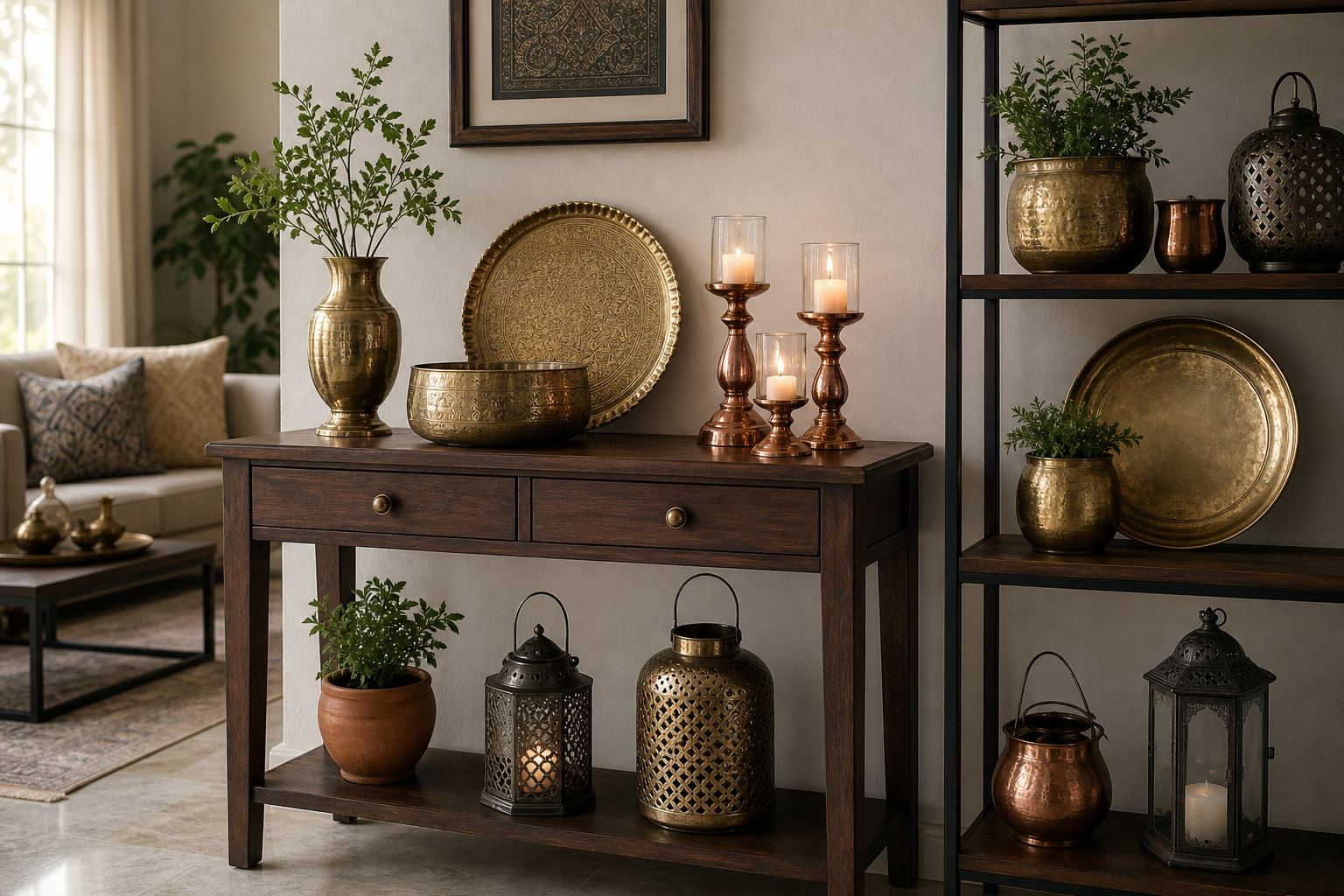
Not every international metal handicraft buyer wants the same thing. A US home-décor retailer sourcing polished brass candle holders with Prop 65-ready composition evidence for a big-box seasonal set has entirely different requirements from a German design importer seeking lead-aware, REACH-documented copper trays and LFGB food-contact utensils, or a UAE hospitality distributor buying bulk iron lanterns for hotel corridors alongside a Bidriware corporate-gifting line. India's structural advantage — deep craft capacity in Moradabad, Jaipur, Bidar, and Thanjavur, feeding EPCH art metalwares exports of Rs 4,386.63 crore in FY 2024-25 — only converts into repeat export orders when exporters understand exactly which metal, finish, and certification each market rewards.
India's metal handicraft production is concentrated in distinct clusters: Moradabad (Uttar Pradesh) for brass, copper, and aluminium art metalware casting and finishing (Town of Export Excellence; directional literature often attributes ~40–50% of India's metal craft export origin); Jaipur (Rajasthan) for decorative brass and mixed-metal décor; Bidar (Karnataka) for Bidriware; and Thanjavur (Tamil Nadu) for traditional metal plates. Export classification runs primarily under HS 8306 (base-metal ornaments, frames, statues — often 830629), HS 7419 / commonly Indian ITC-HS 74198030 (articles of brass) among other 7419 lines for copper articles, HS 7418 (copper/brass household), HS 7323 (iron/steel household), HS 7615 (aluminium household), and HS 9405 when metal lanterns/lamps are classified as lighting (non-electrical often 94055000; confirm CHA).
This guide maps the most demanded Indian metal handicrafts by country in 2026, translating metal, finish, and certification preferences into practical guidance for exporters and international buyers across the USA, Germany, UK, UAE, Netherlands, Canada, France, and Australia. It is deliberately different from best countries for Indian metal handicraft exports, which ranks destinations at a macro level (demand, duty, freight, compliance burden). Use this matrix alongside top metal handicraft products exported from India and how to export metal handicrafts from India. Validate demand signals with EPCH market intelligence, DGFT trade data under HS 8306/7419/7418/7323/7615/9405, and direct buyer conversations before committing production or certification investment.
Key Takeaways
Summary Box
- Most demanded Indian metal handicrafts by country vary sharply by base metal, finish, and certification — not just by price.
- The USA leads EPCH art metalwares value (Rs 1,540.79 crore FY24-25) with polished brass candle décor and Prop 65-aware programmes.
- Germany, the Netherlands, and France form the EU's REACH/LFGB-conscious tier, rewarding lead-aware and documented metalware at meaningful premiums.
- The UK favours brass décor and giftware, while the UAE runs a dual hospitality-bulk and premium-metal-gifting demand pattern.
- Canada and Australia track North American / Anglophone décor patterns at smaller EPCH values but with rising consistency expectations.
- Altus Exports aligns handicrafts & lifestyle products sourcing with per-country metal, finish, and certification intelligence for buyers and Indian exporters.
Executive Summary
Summary Box
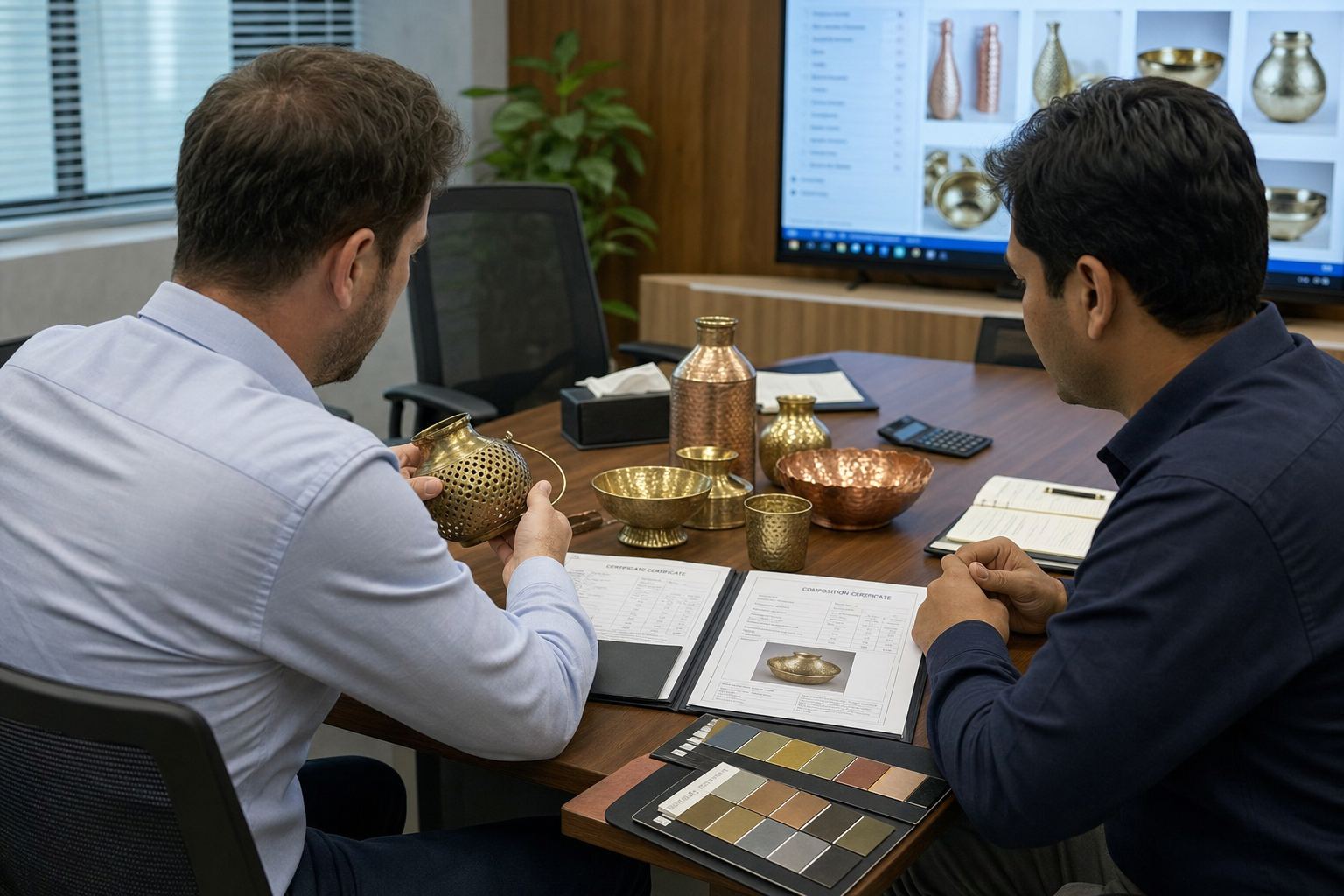
Art metalware has grown from regional craft traditions in Moradabad, Jaipur, Bidar, and Thanjavur into an internationally traded home-décor, gifting, and hospitality category, with EPCH art metalwares exports at Rs 4,386.63 crore in FY 2024-25 (versus Rs 4,435.74 crore in FY 2023-24). But 'demand' for Indian metal handicrafts is not a single number — it splits sharply by metal (brass, copper, iron, aluminium, Bidri zinc-alloy), finish (polished, antique, hammered, powder-coated, lacquered, electroplated), pack format (bulk cartons versus retail-ready gift sets), and certification (baseline EPCH/IEC versus Prop 65 / REACH / food-contact premium) — and each destination market weights these variables differently.
This guide builds a practical country × metal × finish × certification demand matrix across the USA, Germany, UK, UAE, Netherlands, Canada, France, and Australia, alongside the market context exporters need to act on it: size and statistics overview (including EPCH country breakdowns), product categories, manufacturing, export process, pricing, MOQ, packaging, container loading, shipping, certifications, buyer requirements, sourcing and compliance checklists, common buyer mistakes, and future trends through 2030.
Market Size & Industry Overview
Key Statistics
Global demand for Indian metal handicrafts has grown as home décor, tabletop, gifting, and hospitality retail across North America, Europe, and the Gulf added brass candle accessories, copper trays, iron lanterns, aluminium housewares, and Bidri giftware to core and seasonal assortments. EPCH art metalwares of Rs 4,386.63 crore in FY 2024-25 reflects demand anchored by the USA (Rs 1,540.79 crore), Germany (Rs 377.69), UK (Rs 314.82), UAE (Rs 262.47), Netherlands (Rs 167.52), Canada (Rs 91.35), France (Rs 81.44), Australia (Rs 65.81), with additional destinations including LAC (Rs 64.65), Italy (Rs 48.57), Japan (Rs 14.98), Switzerland (Rs 6.31), and Other (Rs 1,350.23). Within India's total handicrafts (ex carpets) of Rs 33,122.79 crore FY24-25, art metalwares remain a flagship engineered-craft vertical.
Each cluster's craft specialisation directly shapes which markets it serves best: Moradabad's brass casting and polish suits both contemporary USA retail and EU design buyers when composition control is strong; Jaipur's antique and painted decorative finishes align with Western farmhouse and boutique décor; Bidar's Bidriware occupies a premium gifting tier that resonates with UAE corporate programmes and French specialty retail; and Thanjavur metal plates serve a narrower cultural/gifting niche with strong story-driven demand.
Why Demand Varies So Much by Country
Four variables explain almost all of the difference in what buyers want across markets: metal selection (polished brass dominates USA candle décor; iron lanterns skew hospitality and outdoor; aluminium wins volume housewares; Bidri wins premium gifting); finish complexity (mirror polish versus antique, hammered, powder-coated); certification depth (baseline EPCH/IEC versus Prop 65, REACH SVHC, EN 1811 nickel release, FDA/LFGB food-contact); and channel type (home-décor retail behaves very differently from hospitality bulk-procurement or boutique gifting).
Buyers who have received scratched, tarnished, or under-documented metal shipments in the past apply much stricter scrutiny to new Indian suppliers, regardless of quoted FOB price. Matching your current craft specialisation and certification status to the market that actually rewards it — rather than chasing every inquiry with the same catalogue — is the single highest-leverage decision a metal handicraft exporter can make.
Export Statistics
Key Statistics
India's metal handicraft exports are classified primarily under HS 8306, 7419/74198030, 7418, 7323, 7615, and 9405 (metal lighting crossover). EPCH art metalwares stood at Rs 4,386.63 crore in FY 2024-25, with the USA alone contributing more than one-third of tabulated destination value, followed by Germany, UK, UAE, and the Netherlands. Exporters should verify current figures via EPCH trade statistics, DGFT export dashboards, and ITC Trade Map before committing capacity.
Comparison table
Swipe →
Data table — swipe horizontally on small screens
| Metric | Country/SKU Pattern | Notes |
|---|---|---|
| India art metalwares (EPCH FY24-25) | Rs 4,386.63 crore (~US$519–530m directional) | Base figure the country × metal demand matrix below builds on |
| Prior year (EPCH FY23-24) | Rs 4,435.74 crore | Directional year-on-year context for capacity planning |
| SKU concentration by value | Brass décor (8306/7419) dominates USA/UK; iron/aluminium grow in hospitality and volume retail | Confirm split via DGFT/ICEGATE before committing production |
| Fastest-growing demand pattern | Prop 65-ready brass and REACH-documented décor across USA and EU | See country × metal × finish matrix below |
| Cluster origin concentration | Moradabad corridor directionally ~40–50% of metal craft export origin | Validate per programme with supplier audit, not brochure claims |
Import Statistics
Key Statistics
Import patterns diverge clearly by market maturity and channel. The USA shows the largest EPCH destination value for polished brass candle décor, copper trays, and iron wall pieces, with Prop 65 communication increasingly part of vendor onboarding. Germany and the Netherlands form Europe's most compliance-conscious tier for REACH and food-contact metalware. The UK blends giftware and home décor. The UAE combines large hospitality metal décor procurement with premium Bidri/brass gifting. France, Canada, Australia, Italy, and Japan form secondary but strategically useful tiers.
Comparison table
Swipe →
Data table — swipe horizontally on small screens
| Country | EPCH FY24-25 (Rs crore) | Import Growth Driver | Typical Metal/Finish Imported |
|---|---|---|---|
| USA | 1,540.79 | Home décor and gift retail, e-commerce private label | Polished brass candle décor; copper trays; Prop 65 awareness |
| Germany | 377.69 | Design retail, LFGB food-contact, REACH-conscious buyers | Lead-aware brass/copper; nickel-controlled accessories |
| UK | 314.82 | Home décor and gifting retail | Brass décor, antique finishes, lanterns |
| UAE | 262.47 | Hospitality fit-outs, retail, corporate gifting | Iron/aluminium bulk; Bidri/brass premium gifts |
| Netherlands | 167.52 | EU distribution hub, design retail | Contemporary metal décor, aluminium housewares |
| Canada | 91.35 | Home décor retail aligned with USA patterns | Brass/copper décor and candle accessories |
| France | 81.44 | Boutique and artisanal home décor | Hammered copper, Bidri, sculptural brass |
| Australia | 65.81 | Metal home décor retail | Iron lanterns, brass trays, powder-coated pieces |
Product Categories
Summary Box
- Brass candle holders and table décor (HS 8306 / 7419) — dominant USA retail-ready export format from Moradabad
- Copper trays, planters, and bowls — polished, antique, and hammered finishes across US, EU, and Gulf buyers
- Iron lanterns and wall décor (HS 7323 / 8306) — strong in UAE hospitality and Australian outdoor-adjacent décor
- Aluminium housewares and lightweight décor (HS 7615) — volume programmes for Netherlands distribution and hotel channels
- Bidriware boxes and panels — Bidar's premium gifting SKU for UAE and French specialty retail
- Thanjavur metal plates — niche cultural/gifting demand with strong craft narrative
- Metal lamps and lanterns (HS 9405) — lighting classification; RoHS if electrical components are present
Metal and finish are the two variables buyers care about most, and both differ meaningfully by market — a full product breakdown lives in top metal handicraft products exported from India.
Manufacturing Overview
Export Tip
Metal handicraft manufacturing capability varies meaningfully by cluster, and that variation is the biggest driver of which export markets a given workshop can realistically serve. Moradabad casting and polish houses can serve both contemporary USA retail and EU design buyers when alloy control and lacquer consistency are documented. Jaipur decorative-finish units align closely with antique and painted Western décor trends. Bidar Bidri specialists occupy a premium tier that commands strong pricing but requires patient, relationship-driven buyer development given lower production volumes. Thanjavur plate craft serves a narrower but high-storytelling gifting niche.
Most Demanded Indian Metal Handicrafts in the USA
Market Snapshot
- Preferred metals: Brass (primary), copper, iron accents
- Preferred finish: Mirror polish and light antique for mainstream retail; hammered for design-led boutique tiers
- Certifications expected: EPCH RCMC, IEC, Prop 65 awareness / composition evidence for brassware
- Watch-out: US retail buyers are consistency-sensitive on polish colour matching across multi-piece sets
- Channel tip: Lead-free / Prop 65-ready brass programmes command a meaningful premium in US private label — see lead-free food-contact opportunities
The USA is the largest EPCH destination for Indian art metalwares (Rs 1,540.79 crore FY24-25), driven by home-décor retail chains, specialty gift shops, and e-commerce private-label brands. US buyers overwhelmingly prefer polished brass candle holders, votives, and small table décor, alongside copper trays and iron wall pieces. California Prop 65 lead awareness for brassware is now a standing vendor expectation for serious programmes — composition evidence and labelling readiness matter as much as FOB price.
Most Demanded Indian Metal Handicrafts in Germany
Market Snapshot
- Preferred metals: Brass and copper with documented composition; stainless accents where relevant
- Preferred finish: Clean, design-forward contemporary finishes
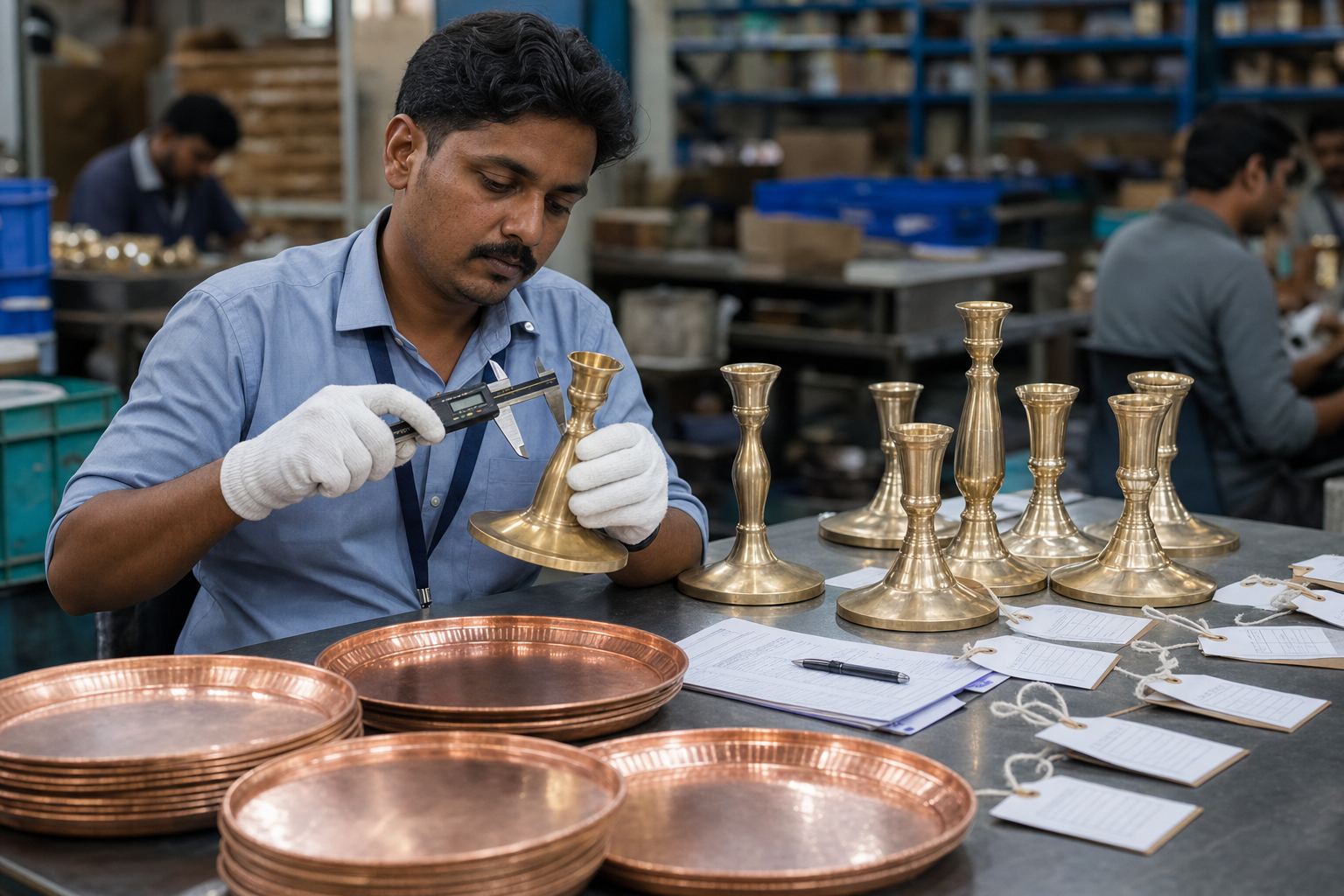
- Certifications expected: REACH SVHC, EN 1811 where applicable, LFGB for food-contact, EPCH RCMC
- Watch-out: Incomplete or unsubstantiated lead-free/REACH claims cause immediate buyer sourcing suspension
Germany is the most compliance-intensive European market in this comparison (EPCH Rs 377.69 crore FY24-25) and rewards exporters who can substantiate REACH SVHC statements, nickel-release awareness (EN 1811 for prolonged skin-contact accessories), and LFGB food-contact pathways for utensils. German home-décor and design retailers seek lead-aware brass and copper with clean contemporary finishes and full composition disclosure. The commercial reward is meaningful — well-documented metalware can command a substantial premium in German specialty retail — but unsubstantiated 'lead-free' claims are penalised with immediate sourcing suspension.
Most Demanded Indian Metal Handicrafts in the UK
Market Snapshot
- Preferred metals: Brass, copper, iron lanterns
- Preferred finish: Polished and antique heritage-style alongside contemporary décor
- Certifications expected: EPCH RCMC, IEC; REACH docs if goods also serve EU distribution
- Channel tip: UK online home-décor retail and D2C brands are an accessible entry point for premium-finished brass pieces
UK demand (EPCH Rs 314.82 crore FY24-25) blends home-décor retail with strong gifting pull, showing particular strength in polished and antique brass décor, lanterns, and copper trays. UK buyers generally want consistent finish quality and post-Brexit import documentation handled separately from EU-bound shipments. Prop 65-style discipline is not UK law but helps when UK retailers share US private-label parent programmes.
Most Demanded Indian Metal Handicrafts in the UAE and Gulf
Market Snapshot
- Preferred metals: Iron/aluminium (bulk hospitality); brass and Bidri (premium gifting)
- Preferred finish: Durable powder-coat or lacquer for hospitality; high-polish or Bidri for gifting
- Certifications expected: EPCH RCMC, IEC; clean documentation for hospitality-fit-out procurement
- Seasonal tip: Festive and corporate gifting procurement begins well ahead of the season — confirm availability and pricing early
The UAE (EPCH Rs 262.47 crore FY24-25) runs a distinct dual demand pattern for Indian metal handicrafts: bulk iron lanterns, aluminium décor, and mid-tier brass housewares for hospitality fit-outs and mainstream retail, where price and reliable supply matter most; and a premium Bidriware or polished-brass gifting tier for boxes, trays, and corporate gifts, especially around festive and Ramadan/Eid procurement cycles. Exporters who can serve both tiers with clearly differentiated product lines capture more of the UAE's total opportunity than those offering a single undifferentiated range.
Most Demanded Indian Metal Handicrafts in the Netherlands
Market Snapshot
- Preferred metals: Aluminium housewares, brass décor, lightweight mixed metal
- Preferred finish: Clean contemporary finishes suited to Scandinavian-influenced European design
- Certifications expected: REACH documentation, EPCH RCMC
- Channel tip: Dutch distribution partners are a practical entry point for reaching wider EU retail
The Netherlands (EPCH Rs 167.52 crore FY24-25) functions both as a direct retail market and as a European distribution hub, importing contemporary metal décor and aluminium housewares for onward EU distribution as well as domestic design-forward retail. Dutch buyers are pragmatic about certification relative to Germany — REACH documentation is expected for EU-bound goods, but the intensity of LFGB-specific food-contact marketing claims is lower than in the German premium tier unless utensils are the core offer.
Most Demanded Indian Metal Handicrafts in France
Market Snapshot
- Preferred metals: Copper, Bidri, sculptural brass
- Preferred finish: Hammered, antique, design-led pieces with a clear craft-origin story
- Certifications expected: REACH documentation, EPCH RCMC; food-contact certs if utensils are offered
- Channel tip: Curated, story-driven product ranges outperform broad undifferentiated catalogues with French boutique buyers
French demand (EPCH Rs 81.44 crore FY24-25) concentrates in boutique and artisanal home-décor retail, where design storytelling and craft provenance matter as much as price. French buyers respond well to hammered copper, Bidriware, and sculptural brass with a clear artisan-origin narrative, and boutique retailers often prefer smaller, curated product ranges over large undifferentiated catalogues.
Most Demanded Indian Metal Handicrafts in Canada
Market Snapshot
- Preferred metals: Brass, copper
- Preferred finish: Polished and lightly antique, matching US retail formats
- Certifications expected: EPCH RCMC, IEC; composition discipline aligned with US parent programmes
- Channel tip: Cross-border programmes already serving the USA can extend into Canada with modest packaging localisation
Canadian demand (EPCH Rs 91.35 crore FY24-25) closely mirrors the USA, with home-décor retail driving steady import of brass candle décor and copper trays. Canadian buyers often source through established US or direct-import channels. Bilingual (English/French) labelling awareness is a practical differentiator for exporters targeting Canadian retail directly.
Most Demanded Indian Metal Handicrafts in Australia
Market Snapshot
- Preferred metals: Iron, brass, aluminium
- Preferred finish: Powder-coated and plain polished contemporary finishes
- Certifications expected: EPCH RCMC, IEC, clean import documentation
- Channel tip: Position as a distinctive craft metal décor category rather than competing purely on price against established local products
Australia (EPCH Rs 65.81 crore FY24-25) is an earlier-stage but growing market for Indian metal handicrafts, driven by expanding metal and mixed-material home-décor retail interest. Import volumes remain smaller than the USA or UK, but buyers show a strong preference for iron lanterns, brass trays, and powder-coated outdoor-adjacent pieces with credible quality documentation. Simple, well-finished retail formats perform best in this compliance-conscious, early-stage market.
Country × Metal × Finish × Certification Demand Matrix
Use this directional comparison to prioritise metal selection, finishing investment, and certification effort by target market. Validate with EPCH intelligence, DGFT HS 8306/7419/7418/7323/7615/9405 trade data, and direct buyer conversations — demand levels reflect commercial intensity for typical Indian art metalware exporters in 2026, not a guarantee that every metal/finish combination will find buyers in every listed country. For how to rank markets macro (duty, freight, compliance burden), return to best countries for Indian metal handicraft exports.
Comparison table
Swipe →
Data table — swipe horizontally on small screens
| Country | Preferred Metal | Preferred Finish | Key Certifications | Hero SKUs | Demand | Growth |
|---|---|---|---|---|---|---|
| USA | Brass, copper | Polished; light antique | EPCH, IEC, Prop 65 | Candle holders, trays | Very High | High |
| Germany | Brass/copper (lead-aware) | Clean contemporary | REACH, EN 1811, LFGB, EPCH | Trays, utensils, décor | High | High |
| UK | Brass, copper, iron | Polished/antique | EPCH, IEC | Gift décor, lanterns | High | High |
| UAE | Iron/Al (bulk); brass/Bidri (gift) | Powder-coat; high-polish/Bidri | EPCH, IEC | Lanterns, gift boxes | Very High | High |
| Netherlands | Aluminium, brass | Contemporary, clean | REACH, EPCH | Housewares, décor | High | High |
| France | Copper, Bidri, brass | Hammered, design-led | REACH, EPCH | Sculptural décor, Bidri | Medium–High | Medium–High |
| Canada | Brass, copper | Polished; lightly antique | EPCH, IEC | Candle décor, trays | High | High |
| Australia | Iron, brass, aluminium | Powder-coat; plain polish | EPCH, IEC | Lanterns, trays | Medium–High | Medium–High |
Export Process
Export Tip
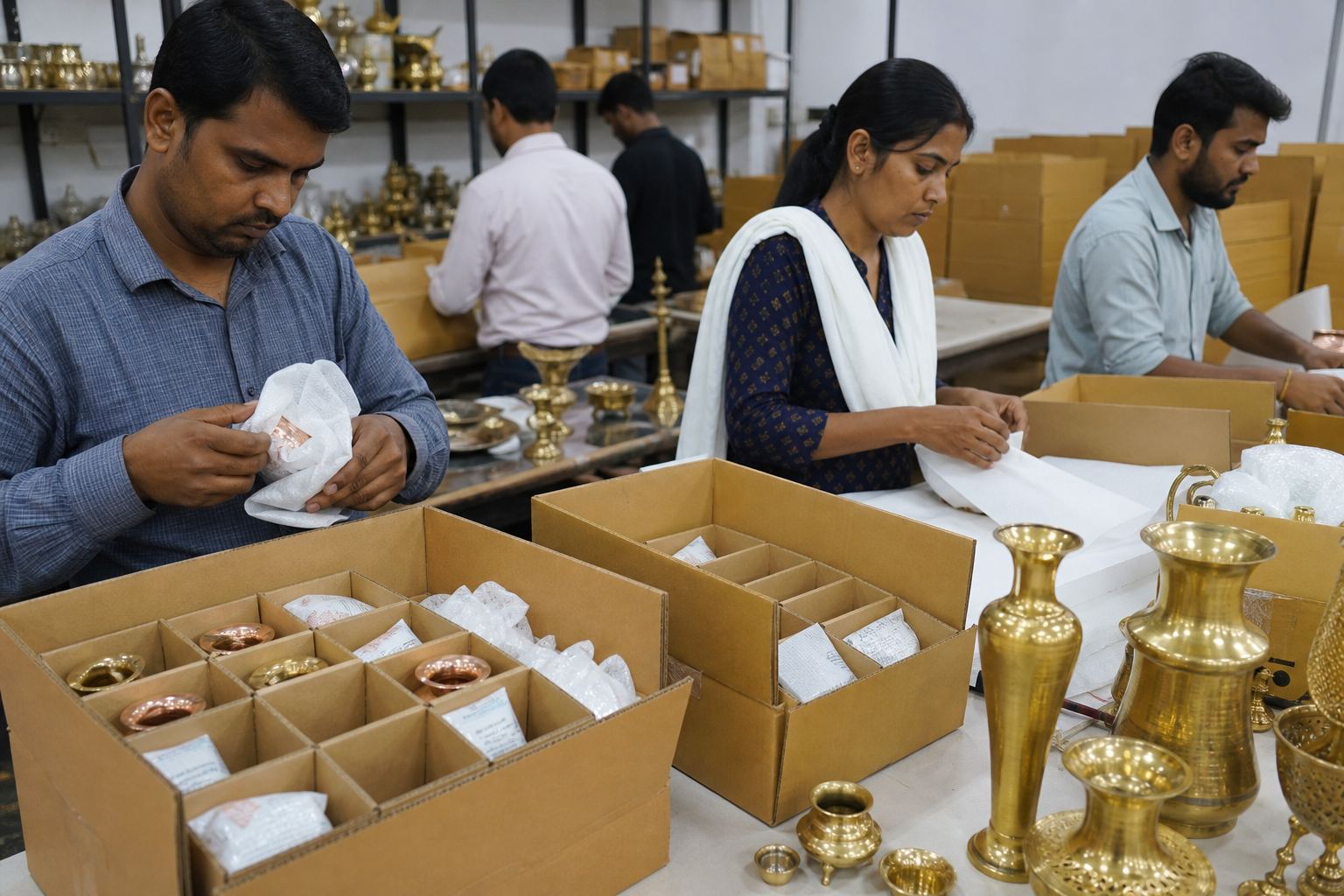
The registration-to-shipment sequence is identical regardless of destination — only the finish, alloy, and compliance specification changes by market. That full operational walkthrough (IEC, EPCH RCMC, cluster sourcing, alloy QC, anti-tarnish packing, documentation, shipping) lives in how to export metal handicrafts from India; this guide stays focused on which metal, finish, and certification each country actually rewards.
Pricing Analysis
Buyer Tip
Pricing follows metal and finish complexity closely across all markets, with country-specific certification and packaging costs layered on top. Directional FOB bands: small décor/candle stands about US$1.5–10 per piece; trays/planters about US$4–25; statement lanterns and sculptural pieces higher; lead-free, food-contact, and private-label programmes at a premium. The compliance premium — Prop 65-ready brass or REACH-documented décor — is what unlocks Germany's specialty retail channel and the top end of US private label.
Comparison table
Swipe →
Data table — swipe horizontally on small screens
| Product / Format | Typical FOB Price (USD) | Markets Where This Wins |
|---|---|---|
| Small brass candle décor (standard polish) | 1.5–6 | UAE bulk hospitality adjacency, Australia entry-level retail |
| Polished brass candle holders / sets (retail grade) | 4–10 | USA, UK, Canada mainstream and private label |
| Copper/brass trays and planters | 4–25 | USA, Netherlands, Canada, France |
| Iron lanterns (powder-coated) | Mid-range; size-dependent | UAE hospitality, Australia outdoor-adjacent décor |
| Bidriware gift boxes / panels | Premium over comparable brass | UAE gifting, France specialty retail |
| Lead-free / food-contact / Prop 65 programmes | Add meaningful premium | Germany specialty retail, US private label |
MOQ and Packaging by Market
MOQ and pack format are the two operational variables that shift most by destination, but the underlying tiers and packing formats are the same ones covered in depth in how to export metal handicrafts from India (sample, trial, wholesale MOQ stages; anti-tarnish carton engineering). What differs by country is which tier and which pack format a given market actually buys at: USA/UK/Canadian/Australian retail and private-label buyers start at sample-then-trial (5–20 pcs, then 200–500 pcs) in retail-ready branded sleeves or kraft boxes; UAE hospitality and gifting buyers move faster to bulk trial volumes in protected export cartons or rigid gift boxes for festive/corporate cycles; and Germany/France specialty retail sit at trial-stage volumes but demand premium gifting presentation. Never ship bare metal-on-metal in any format.
Container Loading Details
Export Tip
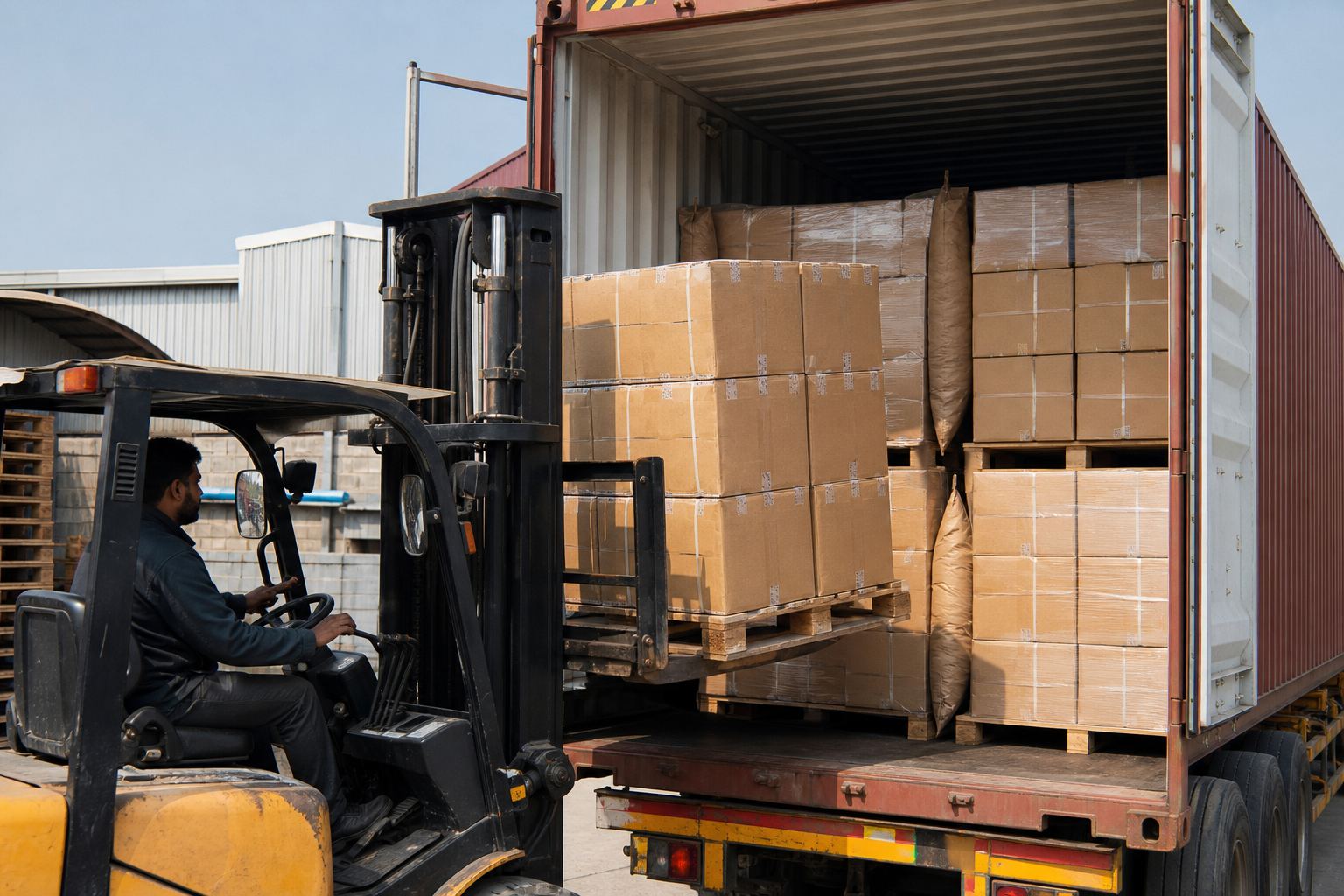
Pack format, not just product shape, is what actually drives container economics across the eight markets in this guide — the same brass tray loads very differently in a UAE bulk hospitality carton than in a branded US retail-ready box. Match your production and carton plan to the format your target country actually buys, then confirm exact stuffing plans with your freight forwarder for that specific format. Dent risk and finish sensitivity often bind before weight.
Container yield by demand format and destination
Swipe →
Data table — swipe horizontally on small screens
| Pack Format | Countries Where This Format Dominates | Approximate Container Yield |
|---|---|---|
| Bulk protected cartons (décor/lanterns) | UAE hospitality, Australia entry-level retail | Cube and dent risk often bind before weight on 20GP/40HC |
| Retail-ready branded units | USA, UK, Canada, Netherlands | Fewer pieces per container once branded packaging bulk is factored in |
| Premium gifting sets | UAE festive/corporate cycles, Germany/France specialty retail | Lowest units per container given rigid gift-box volume |
| Mixed brass + iron loads | USA, UAE, UK programmes carrying both décor tiers | Segregate polished brass; isolate powder-coated iron to avoid finish transfer |
Shipping Methods
Export Tip
Shipping routes, Incoterms, and lead times are the same across all eight markets in this guide (Nhava Sheva/Mundra sea freight via ICD Delhi/Dadri, 10–21 day samples through 6–10 week custom/certified programmes) — see how to export metal handicrafts from India for the full breakdown. What actually changes by destination is which lead-time tier a market's buyers expect: UAE and hospitality reorder cycles move fastest on stock-ready décor, while Germany/France premium and USA Prop 65-certified private-label programmes routinely sit at the long end once composition testing is added to the schedule.
Certifications
Compliance Notes
Certification depth is the clearest signal of market sophistication in this comparison. EPCH RCMC and IEC form the baseline every market expects — see EPCH registration benefits for metal handicraft exporters. Beyond that floor, requirements diverge sharply: USA programmes increasingly need Prop 65-related composition evidence for brassware; Germany, the Netherlands, and France expect REACH SVHC statements and EN 1811 awareness for prolonged skin-contact items, plus LFGB for German food-contact metalware; FDA pathways matter for US utensils; RoHS applies when metal lighting under HS 9405 includes electrical components.
Comparison table
Swipe →
Data table — swipe horizontally on small screens
| Certification/Registration | Baseline or Premium | Markets Where It Matters Most |
|---|---|---|
| IEC + GST | Baseline | All markets |
| EPCH RCMC | Baseline | All markets |
| Prop 65 composition evidence | Baseline for destination programmes | USA (brassware) |
| REACH SVHC + EN 1811 | Baseline for destination | Germany, Netherlands, France (EU) |
| FDA / LFGB food-contact | Premium / channel-specific | USA utensils; Germany food-contact metalware |
| RoHS (electrical lighting) | Channel-specific | HS 9405 metal lamps with electrical components |
Buyer Requirements
Buyer Requirements
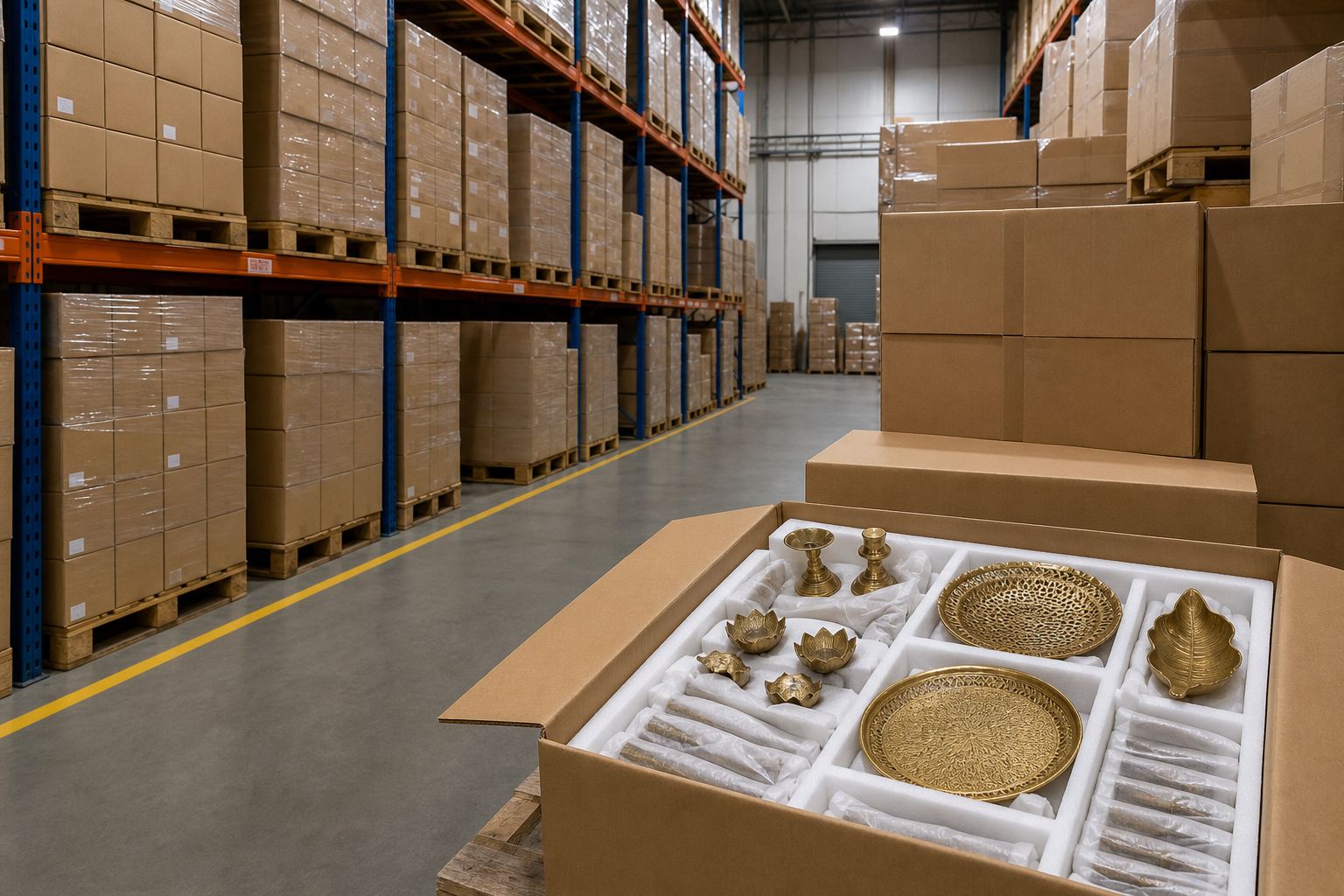
Across every market, buyers expect metal and finish samples with clear specifications, lot-to-lot consistency, anti-tarnish packing evidence, and a clean institutional credential set presented upfront. What changes by market is the depth beyond that baseline: US/UK/Canadian retail buyers add private-label packaging customisation and Prop 65 awareness; German/Dutch/French buyers add REACH and food-contact documentation; UAE buyers add dual bulk-and-gifting format flexibility; and Australian buyers add documentation discipline as a top priority alongside quality.
Country-wise Opportunities
Market Snapshot
Beyond the metal/finish/certification matrix above, exporters should weigh entry difficulty against growth potential when choosing where to focus first. For buyer prospecting tactics once you have chosen a market, see find international buyers for metal handicrafts.
Comparison table
Swipe →
Data table — swipe horizontally on small screens
| Country | Entry Difficulty | Growth Outlook | Best Fit For |
|---|---|---|---|
| USA | Medium (Prop 65 + consistency bar) | High | Moradabad polish houses with private-label capability |
| Germany | High (REACH/LFGB intensive) | High | Exporters with composition testing investment capacity |
| UK | Medium (post-Brexit documentation) | High | Exporters strong in polished/antique brass gift décor |
| UAE | Low–Medium (fast-moving buyers) | High | Exporters who can run both bulk iron and premium Bidri/brass lines |
| Netherlands | Medium (REACH documentation) | High | Exporters seeking an EU distribution-hub entry point |
| France | Medium–High (design/story expectations) | Medium–High | Bidri and hammered-copper specialists with strong craft narrative |
| Canada | Medium (similar to USA) | High | Exporters already serving the USA seeking channel diversification |
| Australia | Medium (documentation discipline) | Medium–High | Iron lantern and powder-coat specialists with clean packing |
Sourcing Checklist for Buyers and Exporters
Checklist
Buyer Checklist
- Specify metal, finish type, and dimensions in every RFQ
- Confirm pack format (bulk vs retail) and anti-tarnish requirements for polished brass/copper
- Ask for EPCH RCMC and IEC evidence before sending a sample-evaluation fee or deposit
- For Prop 65, REACH, or food-contact claims, request lot-matched evidence — do not accept unverified claims
- Align MOQ and lead time expectations with the exporter's actual casting/finishing capacity
Exporter Checklist
- Map your cluster's metal specialisation honestly against the country matrix before quoting a new market
- Maintain separate documentation packs for baseline (EPCH/IEC) versus premium (Prop 65/REACH/food-contact) buyers
- Invest in composition testing before targeting German or US Prop 65-intense private-label tiers
- Prepare tiered pricing by metal and finish so buyers can select against their specific price point
- Respond to specification and sample requests within 24–48 hours across every market
Compliance Checklist
Checklist
Compliance Notes
Comparison table
Swipe →
Data table — swipe horizontally on small screens
| Compliance Item | Status Check | Owner |
|---|---|---|
| IEC + GST | Valid and consistent across documents | Export desk |
| EPCH RCMC | Current and renewed annually | Export desk |
| Pre-shipment QC | Metal, finish, scratch/tarnish control documented | QC team |
| Destination labelling | Country of origin and composition declaration per market | Packaging team |
| Prop 65 / REACH / food-contact docs (where applicable) | Evidence current and matched to the specific lot | Quality/compliance |
| Anti-tarnish packing verification | No bare metal-on-metal; desiccants present for polish SKUs | Packaging team |
Common Buyer Mistakes
Common Mistakes Box
- Assuming the metal/finish combination that works in one market (e.g., UAE bulk iron lanterns) will satisfy a US or German premium buyer without adaptation.
- Requesting Prop 65-ready or REACH-documented specifications while only budgeting for commodity bulk brass pricing.
- Not confirming whether a 'lead-free' claim has verifiable composition evidence behind it.
- Underestimating post-Brexit UK documentation differences from EU-bound shipments.
- Ignoring festive and corporate gifting seasonal timing when sourcing Bidri or premium brass for UAE gifting formats.
- Skipping sample evaluation before a bulk order and discovering polish inconsistency or tarnish only on arrival.
Challenges & Solutions
Comparison table
Swipe →
Data table — swipe horizontally on small screens
| Challenge | Impact | Solution |
|---|---|---|
| Metal/finish requirements differ sharply by market | Wasted quotes and mismatched inquiries | Map current craft specialisation to the country matrix before outreach |
| Certification-intensive markets (Germany, USA Prop 65 programmes) | Slower market entry, higher upfront cost | Sequence testing deliberately after baseline markets are stable |
| Tarnish and dent sensitivity | Post-shipment claims | Anti-tarnish packing, dividers, freight-aware carton design |
| Seasonal demand spikes (UAE gifting) | Short procurement windows with high stakes | Confirm gifting-format availability and pricing well ahead of the season |
| Post-Brexit UK documentation differences | Customs delays if EU-style documents are reused | Prepare UK-specific documentation separate from EU-bound shipments |
Future Market Trends
Key Statistics
Through 2030, demand differentiation by country is likely to deepen rather than converge. The USA, UK, and Canadian retail will keep pushing toward Prop 65-ready and private-label brass programmes as the category matures beyond commodity décor. Germany, the Netherlands, and France will continue rewarding REACH-documented, composition-transparent metalware as a competitive prerequisite rather than an optional premium. The UAE will likely sustain its dual hospitality-bulk and premium-gifting demand pattern, and Australia will grow steadily as well-packed iron and brass programmes become more available.
Exporters who invest now in composition testing pathways, anti-tarnish packing discipline, and destination-specific finishing will be positioned to serve the full spread of this matrix by 2030, rather than being confined to the lowest-certification, price-competitive segment of the global art metalware trade. Recycled-metal and lead-aware programmes will also carve out higher-margin niches — covered in depth in lead-free food-contact and recycled metal handicraft export opportunities.
Expert Insights
Expert Insight Box
A pattern that shows up repeatedly across buyer conversations: exporters who lead with 'we make everything in every metal' struggle to close premium orders, while exporters who lead with a specific, well-documented metal-and-finish specialisation close faster — even at a higher price point — because buyers trust depth over breadth when polish consistency and composition control are the primary concerns.
The second pattern worth noting is how quickly USA and EU buyer expectations are shifting on brass composition. What was a soft preference for Prop 65 readiness two years ago is becoming closer to a baseline requirement for serious US private-label programmes — exporters who start building tested supply chains now will have a meaningful head start over competitors who wait until a major retailer makes it mandatory.
Conclusion
- Action: Share your current metal range, certifications, and target markets with Altus Exports for a demand-fit sourcing review via contact.
- Explore handicrafts & lifestyle products, textiles & home furnishings, merchant exporter, export products from India, global sourcing partner, and product sourcing company partnership models.
- Continue with how to export metal handicrafts from India, top metal handicraft products exported from India, best countries for Indian metal handicraft exports, EPCH registration benefits for metal handicraft exporters, find international buyers for metal handicrafts, source metal handicrafts directly from India, the metal handicraft export documentation checklist, lead-free food-contact and recycled metal opportunities, and trade shows and B2B marketplaces for metal handicraft exporters.
The most demanded Indian metal handicrafts by country in 2026 depend on metal, finish, and certification depth as much as on price: the USA, UK, and Canada reward consistent polished brass and copper with Prop 65 awareness where relevant; Germany, the Netherlands, and France reward REACH-documented, lead-aware programmes; the UAE rewards a dual hospitality-bulk and Bidri/brass gifting strategy; and Australia rewards documentation and packing discipline in a growing metal décor market.
Exporters should prioritise three actions: (1) map current craft specialisation and metal range honestly against the country matrix in this guide; (2) choose one or two markets that match that capability rather than pursuing every destination simultaneously; (3) sequence certification investment (Prop 65, REACH, food-contact) toward the specific premium market it unlocks. Altus Exports can help both international buyers sourcing Indian metal handicrafts and Indian exporters aligning metal, certification, and documentation with destination demand.