
Top Metal Handicraft Products Exported from India
By Saurabh Mittal, Founder, Altus Exports
A practical catalogue of the top metal handicraft products exported from India — brass and copper décor, iron lanterns, aluminium planters, Bidriware, finishes, MOQ by SKU, packaging by product type, and HS mapping — so importers and exporters can choose the right assortment before engaging the export process.
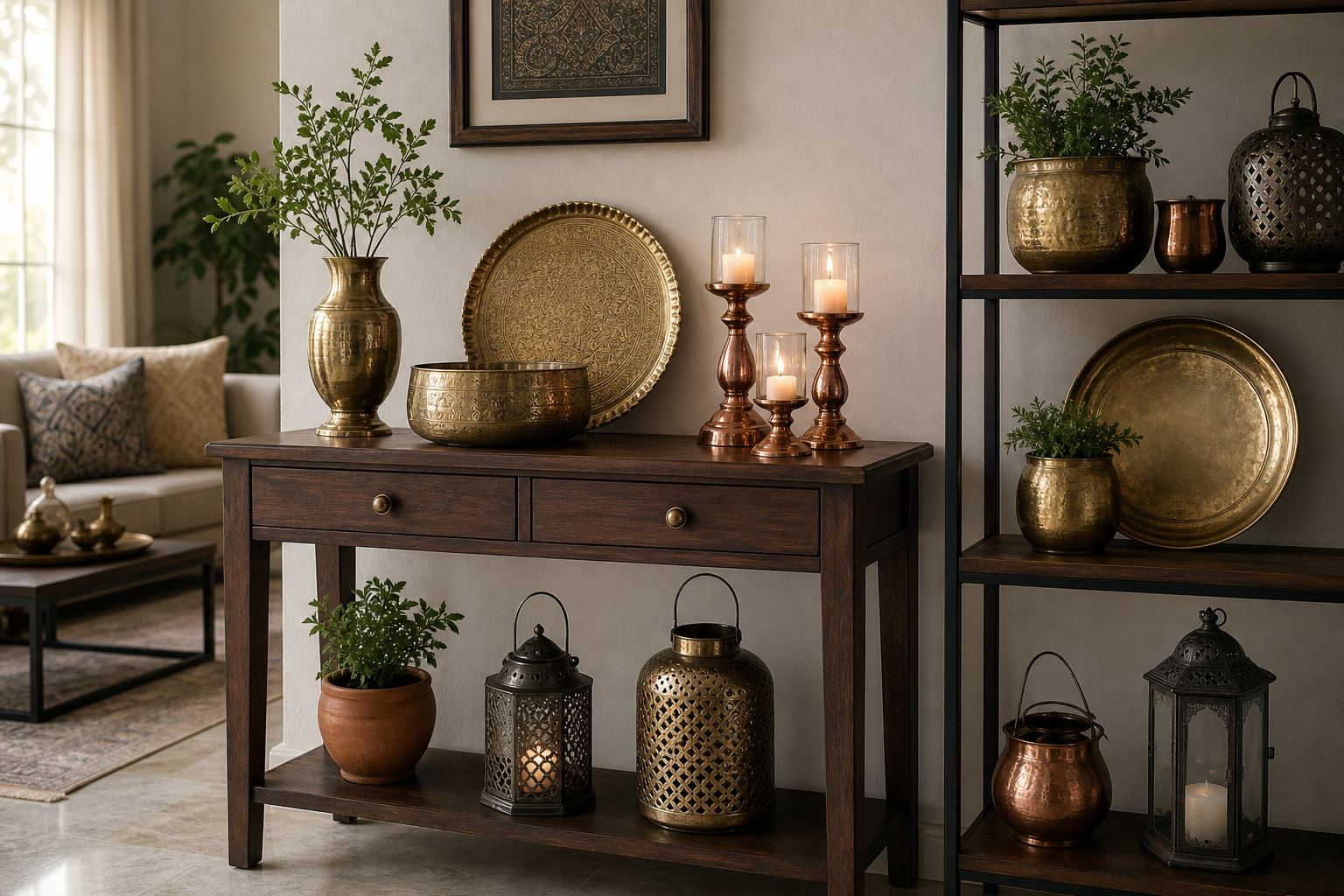
Choosing which metal handicraft products to export from India is a commercial decision about metal, finish, pack format, and buyer channel — not a generic handicraft assortment exercise. Brass candle holders and trays from Moradabad, hammered copper planters, powder-coated iron lanterns, aluminium décor, Bidriware from Bidar, and Thanjavur metal plates travel to different buyer desks with different MOQ logic, scratch risk, and HS classifications. EPCH art metalwares exports reached Rs 4,386.63 crore in FY 2024-25, with the USA at Rs 1,540.79 crore, Germany 377.69, UK 314.82, UAE 262.47, Netherlands 167.52, Canada 91.35, France 81.44, and Australia 65.81 — confirming that assortment quality, not just "metal décor" as a label, drives which SKUs repeat.
This guide owns the product side of the metal handicraft export cluster: which product types sell, which base metals and finishes map to which channels, indicative FOB bands, MOQ by SKU stage, packaging standards by product type, and HS heading mapping for 8306, 7419/74198030, 7418, 7323, 7615, and 9405. It is written for importers building a first metalware PO, private-label buyers comparing brass versus iron lines, and Indian exporters deciding which hero SKUs to put into sample kits.
For the end-to-end export process — IEC, EPCH RCMC, cluster vetting, documentation, Incoterms, and shipping — use the process pillar How to Export Metal Handicrafts from India. For destination ranking see Best Countries for Indian Metal Handicraft Exports; for country × SKU demand pairs see Most Demanded Indian Metal Handicrafts by Country; for lead-free, food-contact, Prop 65, and REACH programme design see Lead-Free Food-Contact and Recycled Metal Handicraft Export Opportunities; for packaging and document field control see Metal Handicraft Export Documentation Checklist; for sourcing audits see Source Metal Handicrafts Directly from India.
Key Takeaways
Summary Box
Executive Summary
Summary Box
This catalogue walks through the metal handicraft products India actually exports at commercial scale: product types by metal and finish, indicative pricing, MOQ logic by SKU, packaging standards by shape and surface, and HS classification patterns. Use it to choose hero SKUs and sample kits before you engage freight and registration sequencing. Process steps — IEC, EPCH, shipping, buyer pipelines — belong in the pillar guide and are referenced, not duplicated, here.
Buyers who succeed with Indian art metalware usually narrow to one metal–finish family for the first container (for example polished brass candleware plus trays, or powder-coated iron lanterns), prove packing and finish consistency, then expand. Exporters who succeed usually publish finish standards and MOQ tiers by SKU rather than selling "brass décor" as an undifferentiated bag of pictures.
Market Size & Industry Overview
Key Statistics
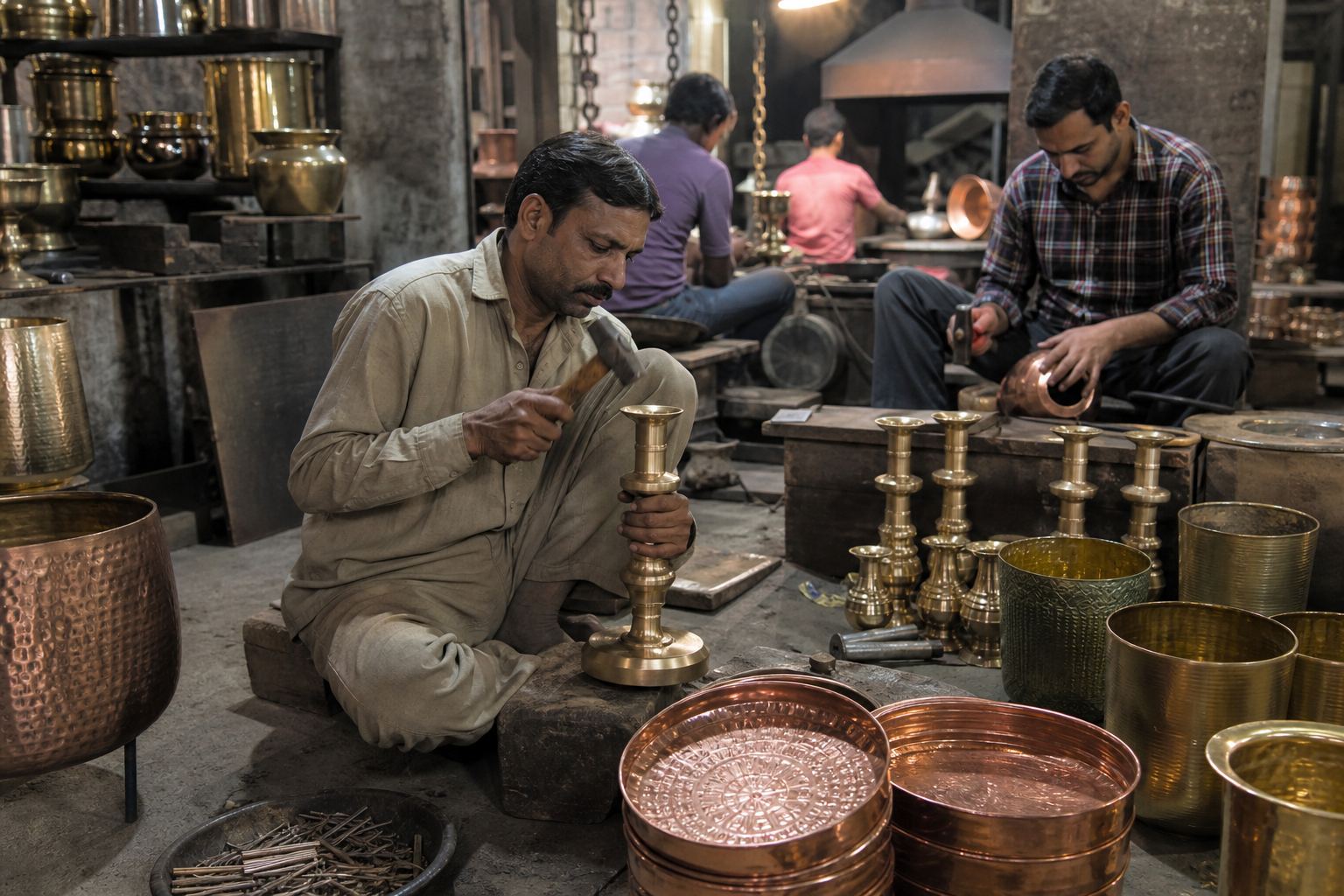
India's art metalware supply is specialised by cluster. Moradabad remains the volume engine for brass, copper, and aluminium candleware, trays, planters, lanterns, and décor ornaments — widely cited as contributing roughly 40–50% of India's metal craft export origin. Jaipur contributes decorative brass and mixed-metal design pieces favoured by lifestyle retail. Bidar supplies Bidriware — a zinc-alloy inlay craft that buyers treat as heritage gifting rather than fill-in décor. Thanjavur contributes traditional metal plates with ceremonial and diaspora gifting pull. Aligarh and Delhi-NCR provide hardware-adjacent and finishing support that feeds export packing programmes.
EPCH valued art metalwares at Rs 4,386.63 crore in FY 2024-25 (directional US$519–530 million at about Rs 83–84/USD), versus Rs 4,435.74 crore in FY 2023-24. Country concentration matters for assortment planning: USA 1,540.79 crore leads; Germany, UK, UAE, and Netherlands form the next tier; Canada, France, and Australia remain commercially meaningful niches. Total handicrafts excluding carpets were Rs 33,122.79 crore in FY 2024-25 — useful only as sector context, not as a metal figure.
Product planners should treat "metal handicrafts" as a family of SKUs with different compliance and packing behaviours: polished brass décor faces Prop 65 conversations into California-facing US retail; food-contact copper or brass utensils need FDA/LFGB pathways; iron lanterns care more about powder-coat adhesion and corner crush; aluminium décor cares about gauge and denting. Collapsing those into one QC checklist is how programmes fail.
Cluster-to-product map for Indian metal handicraft exports
Swipe →
Data table — swipe horizontally on small screens
| Cluster | Hero Product Types | Primary Metals | Buyer Channel Fit |
|---|---|---|---|
| Moradabad | Candleware, trays, planters, lanterns, ornaments | Brass, copper, aluminium | Wholesale home décor, hospitality, e-commerce |
| Jaipur | Decorative brass, wall accents, gift metalware | Brass, mixed metal | Design retail, boutique gifting |
| Bidar | Bidriware boxes, vases, ceremonial pieces | Zinc alloy inlay (Bidri) | Heritage gifting, specialty collections |
| Thanjavur | Traditional metal plates, ceremonial crafts | Traditional plate metals | Diaspora gifting, cultural retail |
Export Statistics
Key Statistics
Export statistics for assortment planning should answer which product families ride the EPCH art metalwares number, not only which countries buy. High-velocity forms remain brass candle holders, bowls and trays, copper décor planters, iron lanterns classified under household or lighting headings depending on construction, and aluminium lifestyle décor. Premium growth conversations cluster around lead-free brass, food-contact utensils, recycled-content metal lines, and private-label hospitality sets.
When you quote internal marketing numbers, label EPCH FY figures as directional snapshots: FY 2024-25 total Rs 4,386.63 crore; USA 1540.79; Germany 377.69; UK 314.82; UAE 262.47; Netherlands 167.52; Canada 91.35; France 81.44; Australia 65.81; plus LAC 64.65, Italy 48.57, Japan 14.98, Switzerland 6.31, and other 1350.23.
Product-family export snapshot for assortment planners
Swipe →
Data table — swipe horizontally on small screens
| Product Family | Typical Metals | Commercial Role |
|---|---|---|
| Candle holders & tealight décor | Brass, iron, aluminium | High-velocity entry SKU for samples and trials |
| Trays, bowls, and serving accents | Brass, copper, iron | Mid-ticket home and hospitality assortments |
| Planters and cachepots | Copper, brass, aluminium, iron | Volume and nesting-sensitive programmes |
| Lanterns and metal lamps | Iron, brass, aluminium | Statement SKUs; often HS 9405 when lighting |
| Bidriware & heritage plates | Bidri alloys; traditional plate metals | Premium gifting; lower velocity, higher story |
| Utensils / tableware (food-contact) | Brass, copper (controlled alloys) | Premium certified programmes, slower onboarding |
Import Statistics
Key Statistics
Importer demand shapes which SKUs you should prioritise in sample kits. US importers pull the largest EPCH art metalwares value and favour brass décor, copper accents, and hospitality-ready sets, with Prop 65 questions rising on brass. German and broader EU importers emphasise finish consistency, REACH/SVHC awareness, and LFGB pathways for kitchen metalware. UAE importers favour fast-cycle wholesale and gifting metalware with polished presentation. UK and Netherlands buyers mix décor wholesale with design assortments that repay antique and hammered finishes.
Detailed country × SKU preference matrices live in Most Demanded Indian Metal Handicrafts by Country. Use the table below as a first filter for sample-kit design.
Destination demand filter for metal product assortment
Swipe →
Data table — swipe horizontally on small screens
| Destination | EPCH FY24-25 (Rs cr) | SKU Emphasis for First Kits |
|---|---|---|
| USA | 1,540.79 | Brass décor, copper accents; Prop 65-ready brass stories |
| Germany | 377.69 | Consistent finishes; LFGB pathways for utensils |
| UK | 314.82 | Gifting brass/copper; clean composition disclosure |
| UAE | 262.47 | Polished hospitality and wholesale gifting metalware |
| Netherlands | 167.52 | Assortment packs for EU re-distribution |
| Canada | 91.35 | US-similar décor kits at smaller trial MOQs |
| France | 81.44 | Design antique/hammered brass and Bidri storytelling |
| Australia | 65.81 | Curated mid-premium décor with strong packing |
Product Categories & Variants
Summary Box
This section is the commercial catalogue heart of the post. Each category below pairs typical metals, finishes, buyer channels, HS patterns, and packing notes so you can build a coherent first assortment rather than a scrapbook of unrelated polished photos.
SKU catalogue matrix — metals, finishes, HS patterns
Swipe →
Data table — swipe horizontally on small screens
| SKU Type | Common Metals | Popular Finishes | Typical HS Pattern |
|---|---|---|---|
| Candle holders / ornaments | Brass, iron, aluminium | Polish, antique, lacquer | 8306 / 830629 |
| Artware trays & décor articles | Brass, copper | Hammered, antique, polish | 7419 / 74198030 |
| Household brass/copper articles | Brass, copper | Food-safe polish, lacquer where allowed | 7418 |
| Iron household décor | Iron / mild steel | Powder-coat, black antique | 7323 |
| Aluminium household décor | Aluminium | Powder-coat, brushed | 7615 |
| Lanterns / metal lamps | Iron, brass, aluminium | Powder-coat, polish | 9405 (when lighting) |
Brass candle holders, tealights, and small décor ornaments
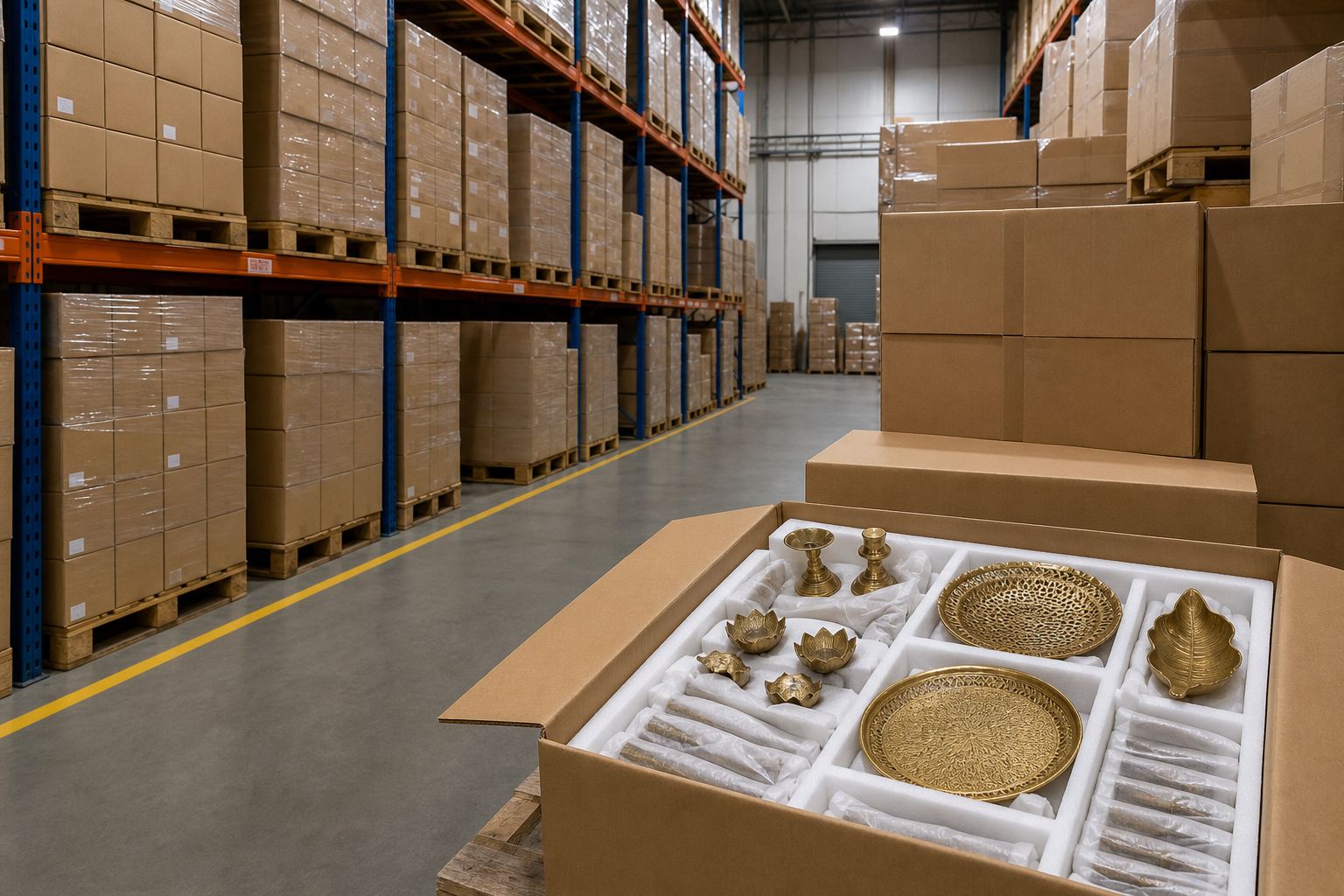
Brass candleware remains one of Moradabad's highest-velocity export families: pillar stands, tealight cups, votive sets, and small desk ornaments. Finishes that convert include high polish with clear lacquer, antique brass, and distressed vintage looks. Typical HS treatment sits under 8306/830629 for ornaments or related artware, or sometimes household headings when function is clearly utility-led — confirm with your CHA. Sample MOQs of 5–20 pieces per shape are standard; trials of 200–500 pieces prove polish consistency before FCL commitments.
Brass and copper trays, bowls, and table accents
Trays and bowls sit at the intersection of décor and household function. Decorative trays often classify nearer 7419/74198030 artware; more explicitly kitchen/household constructions may land in 7418 for copper/brass. Hammered copper trays and polished brass serving accents are strong hospitality and lifestyle retail performers. Pack with surface barriers and dividers — tray-on-tray polish rub is a leading arrival claim.
Planters, cachepots, and outdoor-adjacent metal décor
Planters in copper, brass, powder-coated iron, and aluminium move well into home and garden lifestyle channels. Nesting designs improve CBM but raise dent risk if nest friction is unmanaged. Quote FOB carefully by diameter and gauge; mid-range trays/planters often fall around US$4–25/pc directionally. Aluminium planters win on weight for e-commerce landed cost; copper wins on story and price point.
Iron and brass lanterns and metal lighting
Lanterns and metal lamps are statement SKUs. When the article is a lighting fitting, HS 9405 often applies; decorative non-electrified lantern forms may sit elsewhere — classify carefully and document whether electrical components or glass inserts travel in the same carton. Powder-coated iron lanterns dominate industrial décor looks; brass lanterns support hospitality gifting. Pack for corner crush and protruding handles; never ship bare metal against bare metal.
Aluminium décor and lightweight household accents
Aluminium décor and household accents under HS 7615 (when household-oriented) give exporters a lighter freight profile and a contemporary finish palette — powder-coat colours, brushed looks, or polished silver-adjacent appearances depending on treatment. Gauge selection determines dent resistance. Ideal as a complementary line to brass rather than a total substitute when buyers want mixed-metal assortment boards.
Bidriware and Thanjavur traditional metal crafts
Bidriware from Bidar and traditional metal plates from Thanjavur are heritage SKUs: lower piece velocity than Moradabad candleware, higher story value for specialty retail and gifting. Do not buy them as anonymous fill-in décor — buyers who understand Bidri pay for authentic process and finish, not generic inlay imitations. MOQs are often sample-led and smaller; packing should protect fine inlay surfaces and ceremonial plate edges.
Food-contact brass and copper utensils / tableware
Utensils and tableware programmes are product-managed differently because FDA, LFGB, and EU food-contact frameworks apply. Alloys, surface treatments, and claims must be intentional. These SKUs usually sit under household headings (often 7418 for copper/brass household articles) but confirm construction. Treat them as a premium sub-assortment linked to Lead-Free Food-Contact and Recycled Metal Handicraft Export Opportunities rather than mixing casually into décor lots.
Manufacturing Overview
Export Tip
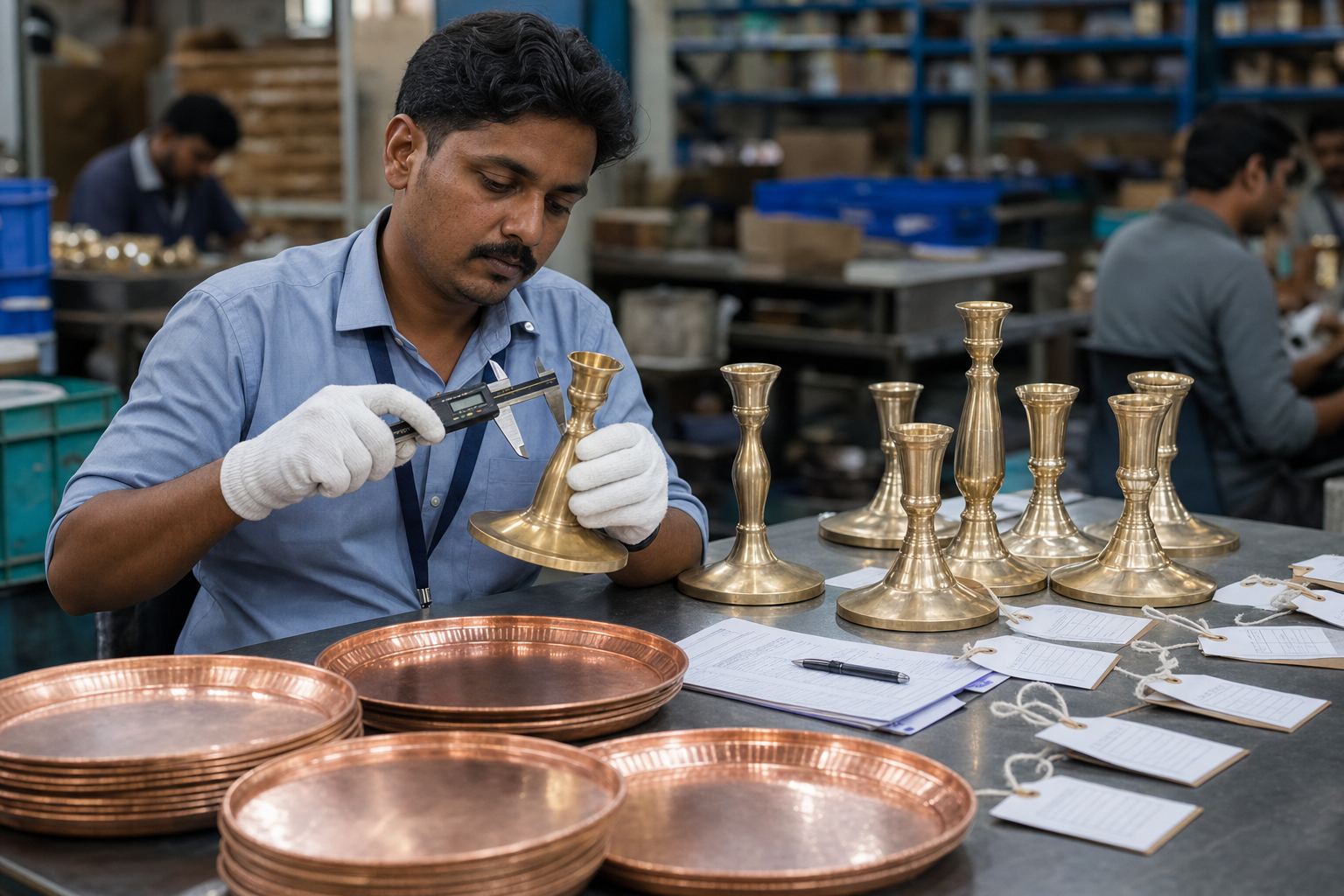
Understanding manufacturing is product strategy, not factory tourism. Candleware and small ornaments often flow through casting, fettling, soldering, multi-stage polishing, optional antique dips, and lacquer. Trays may be spun, pressed, or cast depending on profile, then hammered or chased. Iron lanterns rely on fabrication, welding, grinding, and powder-coat cure quality. Bidriware follows specialised inlay and oxidising sequences that cannot be short-cut by a generic brass line. Aluminium décor emphasises gauge control and coating adhesion.
When you evaluate a product for export, ask how the workshop measures finish acceptance: reflectance or visual shade boards for polish, adhesion tests for powder-coat, thickness checks for plating, and composition certificates for regulated brass or food-contact SKUs. A beautiful sample without a repeatable finish recipe is a one-shipment story.
Export Process (Product Lens)
Export Tip
From a product-selection perspective, the export process starts with locking SKU specifications before paperwork. Define metal, finish, tolerance, pack format, and HS intent for each hero SKU; approve samples against that written standard; then run registration, production, packing, and shipping through the process pillar. Do not reverse the order — freight bookings cannot rescue an undefined finish.
Full IEC → EPCH → Moradabad/Jaipur sourcing → QC → pack → docs → sailing sequence is owned by How to Export Metal Handicrafts from India. Use the product checklists later in this post to keep assortment decisions aligned with that process.
Product-led export sequence (overview)
Swipe →
Data table — swipe horizontally on small screens
| Stage | Product Decision | Handoff |
|---|---|---|
| SKU shortlist | Choose metal–finish families by channel | Sample request pack |
| Sample approval | Lock gold sample and pack mock-up | PO for trial lot |
| Trial production | Validate finish consistency and packing | Scale to CBM/FCL |
| Process execution | HS, docs, Incoterms, sailing | See process pillar guide |
Pricing Analysis
Buyer Tip
Price by metal, size, finish labour, and pack complexity — not by "brass décor average." Directional FOB bands that buyers and exporters use for first conversations: small décor and candle stands about US$1.50–10 per piece; trays and planters about US$4–25 per piece; statement lanterns and sculptural pieces higher depending on welding, glass, and size; Bidriware and heritage plates in a premium gifting tier; lead-free, food-contact, and private-label programmes at a clear premium over commodity equivalents. Confirm every quote against metal markets, labour, and testing costs at the quotation date.
Directional FOB bands by metal handicraft product type
Swipe →
Data table — swipe horizontally on small screens
| Product Type | Directional FOB (USD) | What Moves Price Up |
|---|---|---|
| Small candle / décor ornaments | $1.50–10/pc | Solid brass weight, hand antique, gift packing |
| Trays and mid décor bowls | $4–25/pc | Diameter, hammering, composition testing |
| Planters / cachepots | $4–25+/pc | Gauge, nesting design, powder-coat system |
| Lanterns / sculptural lighting forms | Premium vs mid décor | Welding detail, size, inserts, 9405 compliance |
| Bidriware / Thanjavur plates | Premium gifting | Authentic craft labour and presentation packing |
| Food-contact utensils | Premium vs décor brass | Alloy control, COAs, labeling |
MOQ Analysis
Buyer Tip
MOQ should be stated by SKU and stage, because candle cups, nested planters, and Bidri boxes do not share the same production economics. The commercial pattern across Moradabad and Jaipur programmes is consistent: samples 5–20 pieces per SKU; trials 200–500 pieces of a hero SKU or a mixed LCL assortment; wholesale by carton, CBM, or FCL after finish reliability is proven. Private-label tooling can raise sample costs and trial MOQs — bake that into the commercial conversation early.
MOQ by product type and programme stage
Swipe →
Data table — swipe horizontally on small screens
| Product Type | Sample MOQ | Trial MOQ | Programme MOQ |
|---|---|---|---|
| Candleware / small ornaments | 5–20 / shape | 200–500 / hero shape | Carton or CBM programmes |
| Trays / bowls | 5–10 / size | 200–400 or LCL mix | Nested carton / CBM |
| Planters | 5–10 / diameter | 150–400 depending on size | Nest-aware CBM or FCL |
| Lanterns | 3–10 / model | 100–300 or LCL | FCL preferred for statement mixes |
| Bidriware / heritage plates | 2–10 / design | Smaller craft batches | Seasonal buy programmes |
| Food-contact utensils | 5–20 / SKU | Trial after COA pathway | PO-linked certified lots |
Packaging Standards
Export Tip
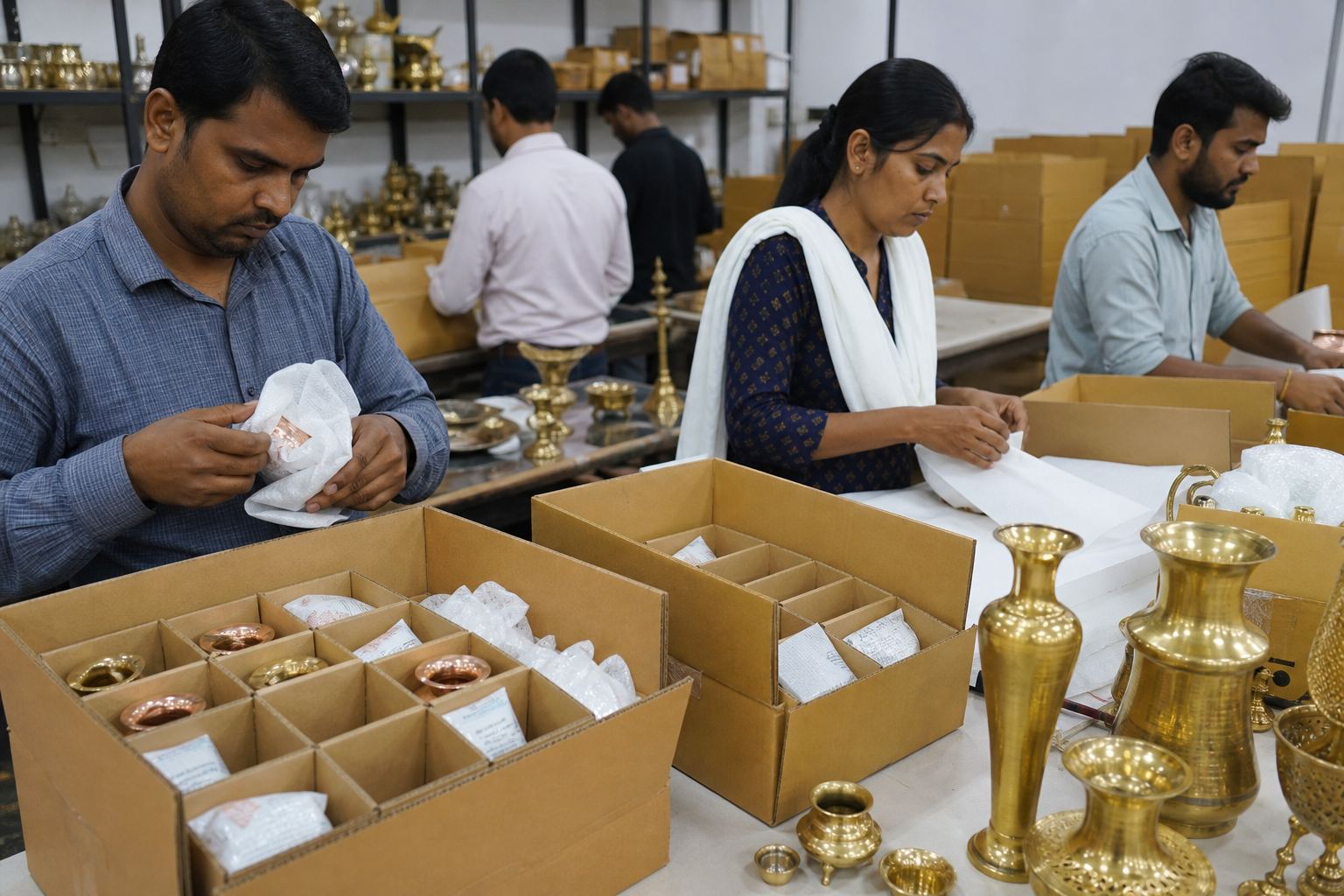
Packaging is product-specific in metalware. Polished brass candle cups need soft sleeves and anti-tarnish layers; trays need full-surface barriers and dividers; planters need nest separators; lanterns need rigid corner protection; Bidriware needs abrasion-safe wraps that do not polish off oxidised contrast; food-contact utensils need clean, contamination-aware packing that still prevents scratch. Desiccants belong in most ocean cartons for polished metals.
Packaging standards by metal product type
Swipe →
Data table — swipe horizontally on small screens
| Product Type | Primary Pack Method | Critical Failure to Avoid |
|---|---|---|
| Polished brass candleware | Foam/kraft + anti-tarnish bag/paper | Fingerprint tarnish and polish rub |
| Copper trays / hammered bowls | Surface barrier + cell divider | Tray-on-tray abrasion rings |
| Nested planters | Nest separators + outer carton | Denting during nest friction |
| Iron/brass lanterns | Corner guards + rigid carton | Crushed corners and bent handles |
| Aluminium décor | Soft wrap + dent shields | Creasing of thin gauges |
| Bidriware / plates | Soft wrap + edge protectors | Inlay abrasion and edge chips |
Container Loading Details
Export Tip
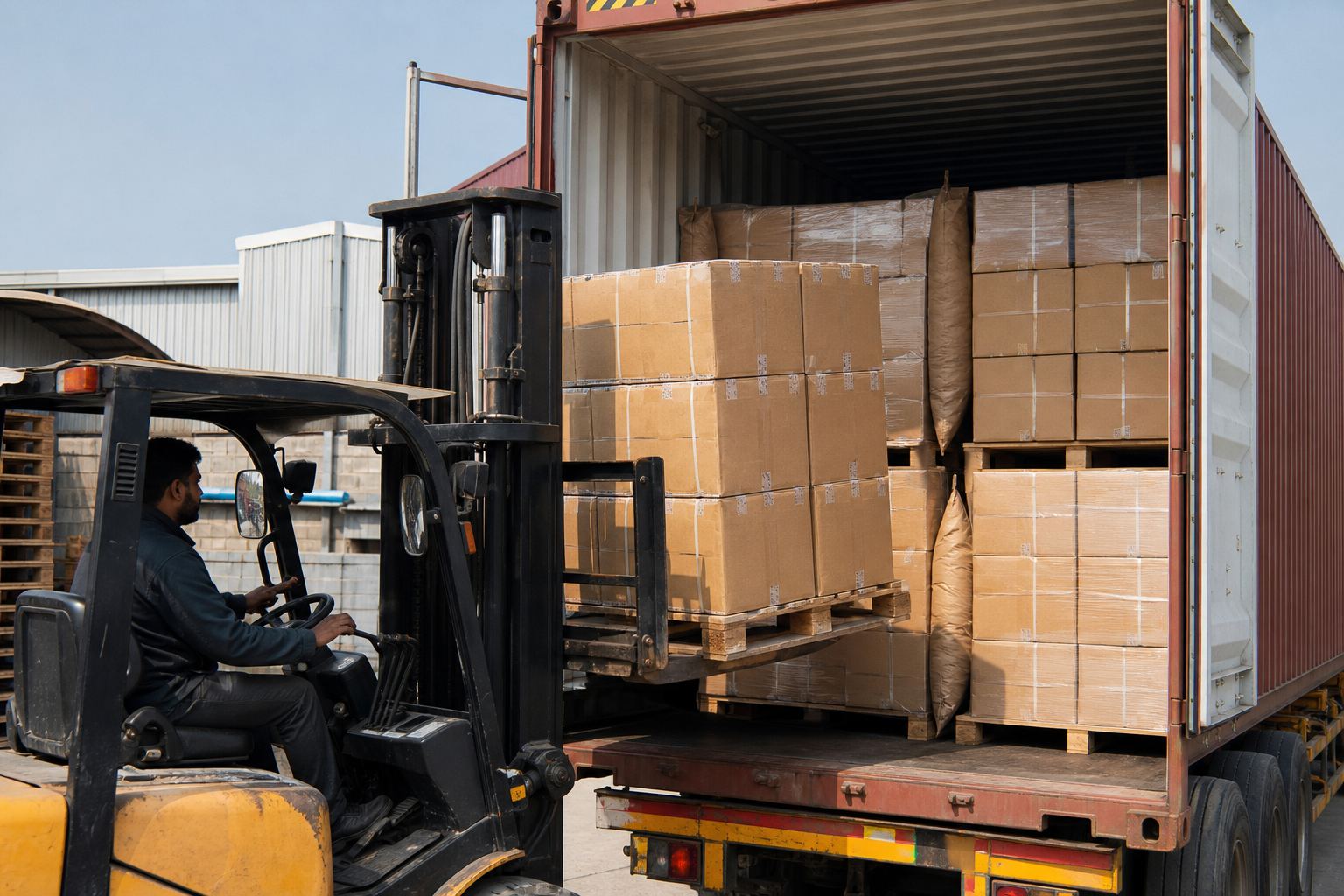
Loading strategy follows product geometry. Dense solid-brass assortments can approach weight limits in a 20GP; lantern and planter mixes usually hit CBM first in 40HC. Nestable planters improve utilisation only if separators prevent damage. Mixed SKU containers should stage heavy iron bases low and fragile polish SKUs upper with crush-safe stacking plans. ICD Delhi/Dadri consolidation is common for Moradabad-origin product before Nhava Sheva or Mundra sailings.
Container planning by product mix
Swipe →
Data table — swipe horizontally on small screens
| Mix Type | Typical Constraint | Container Preference |
|---|---|---|
| Dense brass candle/tray mix | Weight and packing labour | 20GP or carefully weighed 40' |
| Lantern + planter décor mix | CBM and crush risk | 40HC with pallet tiers |
| Trial multi-SKU assortment | Handling frequency | LCL acceptable |
| Hospitality private-label FCL | Carton uniformity | 40HC dedicated programme |
Shipping Methods
Export Tip
- Air/courier: samples and fair kits across all metals
- Ocean LCL: multi-SKU trials before FCL commitment
- Ocean FCL 20GP/40HC: proven candleware, tray, planter, lantern programmes
- Lead-time planning must include polish rework buffers for brass lots that fail shade gates
Product type influences shipping mode less than value density and urgency. Samples of candleware and Bidri pieces commonly move by air or courier within 10–21 days. Stock décor programmes move ocean FCL/LCL in about 3–5 weeks production plus sailing. Custom finishes, private labels, and certified food-contact or lead-managed brass programmes commonly need 6–10 weeks or more. Incoterms remain EXW, FOB, CFR/CIF for most metal product trades; DDP is selective.
Certifications
Compliance Notes
Certifications attach to products differently. Décor-only brass ornaments still face Prop 65 questions into California-facing US retail. Skin-contact adjacent metal may face nickel-release expectations in the EU. Utensils require food-contact evidence. Electrified lanterns may need RoHS attention under lighting classification. Baseline IEC and EPCH RCMC apply at the exporter level regardless of SKU.
Certification relevance by metal product family
Swipe →
Data table — swipe horizontally on small screens
| Product Family | Most Relevant Controls | Notes |
|---|---|---|
| Brass décor / candleware | Prop 65 awareness; composition notes | Especially USA retail programmes |
| EU skin-contact adjacent metal | REACH / EN 1811 nickel | Know which SKUs are prolonged contact |
| Food-contact utensils | FDA / LFGB / EU food-contact | Do not claim suitability without pathway |
| Electrified lanterns/lamps | RoHS (as applicable) | Confirm HS 9405 electrical scope |
| All export SKUs | IEC + EPCH RCMC at exporter level | Buyer credibility baseline |
Buyer Requirements
Buyer Requirements
Buyers evaluating Indian metal products typically demand a SKU sheet with metal, finish, size, HS intent, FOB by volume tier, MOQ, lead time, and packing method — then physical samples that match the sheet. Increasingly they also ask for composition notes on brass and copper before expanding PO value. Packaging mock-ups matter as much as the metal object for polished and nesting SKUs.
Channel differences are sharp: e-commerce buyers obsess over dimensional accuracy and packaging weight; hospitality buyers obsess over finish match across dozens of identical candle stands; design retail cares about antique authenticity and storytelling SKUs such as Bidriware. Build sample kits to the channel, not to a generic "metal" kit.
Country-wise Opportunities
Market Snapshot
Assortment opportunity by country should follow EPCH value and compliance posture. USA supports the widest brass/copper décor breadth if Prop 65 planning is intentional. Germany rewards finish consistency and food-contact readiness. UAE rewards polished hospitality and gifting velocity. Use this as an opportunity filter — full country ranking lives in the best-countries guide.
Country × product opportunity snapshot
Swipe →
Data table — swipe horizontally on small screens
| Country | Strong Product Fit | Watch-out |
|---|---|---|
| USA | Brass décor, copper accents, hospitality sets | Prop 65 on brass |
| Germany | Consistent décor + LFGB utensil pathways | REACH documentation depth |
| UK | Gifting brass/copper assortments | Composition disclosure |
| UAE | Polished wholesale gifting metalware | Finish presentation quality |
| Netherlands | EU redistribution packs | Assortment breadth vs QC span |
| France | Antique/hammered design metals, Bidri stories | Craft authenticity claims |
| Canada | US-similar décor kits | Smaller trial economics |
| Australia | Mid-premium curated décor | Packing quality vs freight |
Sourcing Checklist
Checklist
Buyer Checklist
Exporter Checklist
Compliance Checklist
Checklist
Compliance Notes
Common Buyer Mistakes
Common Mistakes Box
Most assortment failures come from treating metal handicrafts as interchangeable SKUs with interchangeable packing.
Assortment mistakes and product-level fixes
Swipe →
Data table — swipe horizontally on small screens
| Mistake | Consequence | Product-Level Fix |
|---|---|---|
| Mixing food-contact utensils into décor POs casually | Compliance delays and claim risk | Separate utensil programme with COAs |
| Ordering lanterns on candleware MOQ logic | Air pockets and freight shocks | Quote lanterns by model CBM and corner pack |
| Skipping nest separators on planters | Dent claims on arrival | Engineer nest pack before trial |
| Buying "Bidri-look" without authenticity checks | Returns and brand damage | Source Bidar specialists; verify process |
| One blended FOB for polish and antique | Workshop cherry-picks easy finish | Price and QC by finish recipe |
Challenges & Solutions
Product-side challenges differ from pure logistics challenges: finish shade drift across polishers, alloy opacity on brass lots, nesting damage, and misclassification between ornament and household HS headings. Solutions sit in written finish recipes, composition dossiers, product-specific pack BOMs, and CHA classification memos per hero SKU.
Product challenges and practical solutions
Swipe →
Data table — swipe horizontally on small screens
| Challenge | Why It Happens | Solution |
|---|---|---|
| Polish shade drift | Multiple polishers, no gold sample | Lock physical reference; inspect lots mid-run |
| Tarnish after ocean transit | Weak anti-tarnish barriers | Bag/paper + desiccant BOM by SKU |
| HS disputes at destination | Vague invoice descriptions | CHA memo mapping SKU → heading |
| Dent claims on aluminium | Gauge too light for pack method | Re-spec gauge or redesign shields |
| Prop 65 surprises | No brass composition plan | Link SKUs to lead-managed pathway early |
Future Market Trends
Key Statistics
Product trends favour fewer, better-specified metal SKUs over sprawling undifferentiated catalogues. Lead-managed brass, recycled aluminium and iron décor, and tested food-contact copper/brass utensils are gaining buyer attention relative to anonymous polished fillers. Private-label hospitality metalware with locked finishes and retail-ready gift packs continues to outgrow unbranded bulk dumps.
Expect more buyers to request digital lot photos tied to carton marks and composition certificates at PO stage. Exporters who organise catalogues by metal–finish–pack–HS will win RFQs against workshops that only send polished photo grids.
Expert Insights
Expert Insight Box
Altus Exports helps international buyers and Indian manufacturers build metal handicraft assortments that can actually ship — connecting Moradabad, Jaipur, Bidar, and Thanjavur product choices to finish QC, anti-tarnish packing, HS clarity, and merchant-export execution without collapsing everything into a single vague brass catalogue.
Conclusion
- Build your process plan with How to Export Metal Handicrafts from India.
- Rank destinations with Best Countries for Indian Metal Handicraft Exports.
- Match SKUs to markets via Most Demanded Indian Metal Handicrafts by Country.
- Plan certified programmes with Lead-Free Food-Contact and Recycled Metal Handicraft Export Opportunities.
- For importer audits, see Source Metal Handicrafts Directly from India.
- Engage merchant exporter services from India, export products from India, global sourcing partner India, product sourcing company India, or contact Altus Exports.
India's top metal handicraft exports succeed when product choices are deliberate: the right metal and finish for the channel, the right MOQ ladder, the right pack for scratch and tarnish risk, and the right HS pattern — then the process pillar for registration, shipping, and buyer development. Brass candleware, copper trays and planters, iron lanterns, aluminium décor, Bidriware, and traditional metal plates can all win internationally when specified as commercial products rather than workshop souvenirs.
If you want help building a metal SKU shortlist, sample kit, or first trial PO, talk to Altus Exports about merchant-export and sourcing support for art metalware.