
How to Manage Multi-Product Procurement From India Without an Indian Office
By Saurabh Mittal, Founder, Altus Exports
An international buyer can manage multi-product procurement from India without an Indian office by retaining commercial and product decisions remotely while assigning defined on-ground work—supplier follow-up, sample movement, production evidence, inspection coordination,…

Buying one standard product from one established supplier can often be managed from abroad with careful communication. Buying several products, working with several factories, coordinating samples, quality, packaging, documents, and one shipment creates a different operating problem. The question is no longer whether a buyer can send emails across time zones. It is whether the buyer has a reliable way to turn supplier updates into verified decisions on the ground.
An Indian office is one possible answer, but it is not the only one and it is not automatically the right first answer. An office creates local presence, yet it also creates recruiting, supervision, legal, administrative, and management obligations. For many SMEs and mid-market buyers, the more useful initial design is a remote operating model with clear buyer-side ownership and a defined India-based execution layer.
Altus Exports supports international buyers that need local sourcing and procurement coordination without immediately building their own India office. The purpose of that support is not to remove the buyer from procurement. It is to give the buyer an accountable local path for evidence, follow-up, exception escalation, quality coordination, and export readiness while the buyer retains its product, commercial, and customer decisions.
This guide explains the no-office model. For the broader multi-product sourcing approach, see how to source multiple products from India through one procurement partner. For the full system map, see multi-supplier procurement in India: a complete guide for international buyers. For day-to-day overseas supplier management, see how to manage multiple Indian suppliers from overseas.
Executive answer: run procurement remotely, execute verification locally
You do not need an Indian office to run multi-product procurement, but you do need an operating system that separates remote decision-making from local execution. The buyer should own product requirements, supplier appointment, commercial terms, budgets, customer and destination-market requirements, major changes, and shipment release. On-ground work should cover supplier discovery support, factory follow-up, sample coordination, production evidence, inspection logistics, issue escalation, consolidation coordination, and export-document handoff.
The model fails when local work is assumed rather than assigned, when approvals remain buried in email, or when a supplier’s statement that goods are ready is treated as equivalent to independent release evidence. It works when each party has a written role, shared source documents, a regular cadence, clear stop/go gates, and an escalation route for exceptions.

The Remote India Procurement Operating Model (RIPOM)
The Remote India Procurement Operating Model (RIPOM) is a practical framework for buyers that source several products without a local office. It has five connected components:
RIPOM is an operating model, not a promise that every product can be sourced remotely with equal effort. A simple repeat SKU needs different controls from a private-label launch involving custom materials, regulated claims, several factories, and a fixed retail date.
Comparison table
Swipe →
Data table — swipe horizontally on small screens
| RIPOM component | Purpose | Main output |
|---|---|---|
| 1. Buyer control center | Keeps buyer decisions, budgets, and product truth centralized | Product brief, decision log, approval authority |
| 2. India execution layer | Gives factories and service providers an accountable local coordination path | Supplier follow-up, evidence, issue escalation |
| 3. Common operating rhythm | Converts scattered updates into planned decisions | Milestone plan, weekly dashboard, exception calls |
| 4. Control gates | Stops money, production, and cargo moving without required evidence | Supplier, sample, production, QC, and release gates |
| 5. Commercial service model | Matches local support to the buyer’s scale and complexity | Direct, specialist, partner, or merchant-exporter setup |
What the buyer can manage remotely
The buyer should not outsource decisions that depend on its brand, customers, budget, or market obligations. These are normally most effective when owned by a named buyer-side program manager, even if that person is part of a small team.
Remote ownership does not mean the buyer must personally chase every factory for a photo or packing-list correction. It means the buyer has the information and authority to make timely decisions. A good local partner should turn routine activity into a concise, decision-ready update rather than transfer every email to the buyer.
Comparison table
Swipe →
Data table — swipe horizontally on small screens
| Buyer-managed work | Why it belongs with the buyer |
|---|---|
| Product concept, specifications, performance requirements, and target customer | The buyer understands its market and promise to customers |
| Product and packaging approval | Local coordination can organize evidence; it cannot define acceptable brand outcome |
| Supplier appointment and commercial terms | The buyer must approve risk, price, MOQs, payment structure, and contractual commitments |
| Destination-market compliance requirements | Requirements vary by product and market; buyers should obtain suitable specialist advice where necessary |
| Forecast, purchase volume, and launch dates | Supplier capacity planning depends on accurate buyer decisions |
| Major substitutions, delays, remedies, and claim settlement | These have commercial and customer consequences |
| Payment authorization and shipment release | Keep final financial and cargo authority controlled and documented |
Build one buyer control center
- one current product brief and packaging file per SKU;
- a supplier and quotation comparison record;
- sample approval record linked to the correct revision;
- purchase-order and milestone tracker;
- decision log for price, material, artwork, deviation, and shipment changes;
- dashboard of supplier status, QC status, and consolidation dependencies;
- controlled contacts and escalation rules;
- central storage for inspection reports, CAPA, and shipping documents.
The buyer control center can begin as a disciplined shared workspace rather than expensive software. Its essential features are version control and decision visibility:
The goal is not to make a remote team imitate a large procurement department. It is to make the current approved instruction obvious to every party. The absence of an office becomes risky when “the latest version” depends on a person remembering an email thread.

What needs credible on-ground support
Some activities can be done entirely by suppliers; others need independent evidence or local follow-up, especially when several factories are active. The correct level depends on product risk, supplier history, order value, and shipment timing.
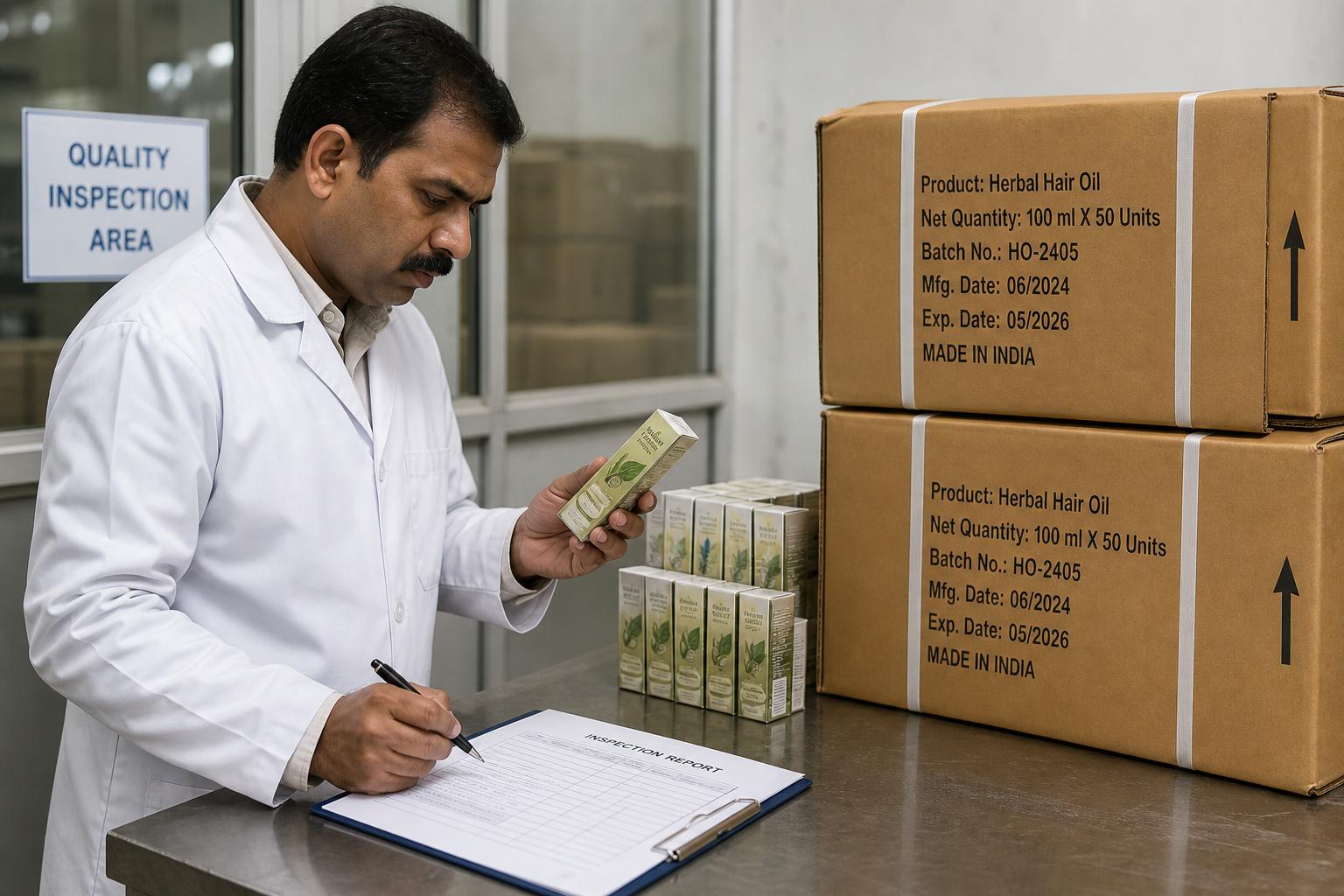
“On-ground” does not always mean a full-time employee at every factory. A risk-based arrangement may use scheduled visits, independent PSI, production photos with targeted verification, and focused local intervention when milestones turn amber or red. What matters is that the model names the method before a problem appears.
Comparison table
Swipe →
Data table — swipe horizontally on small screens
| On-ground activity | Why remote-only management can be weak | Possible delivery model |
|---|---|---|
| Supplier discovery and capability evidence | Online profiles and quotations may not show actual product fit or capacity | Buyer research plus local sourcing partner or factory assessment |
| Sample collection, comparison, and movement | Samples may be delayed, mixed, or sent without a complete reference | Partner-led sample coordination or courier process |
| Production follow-up | Vague progress statements can hide material or schedule risk | Supplier milestone evidence; local coordinator for higher-risk orders |
| Factory visits and inspections | A remote buyer cannot physically observe readiness or sample the lot | Independent inspector, buyer visit, or partner-coordinated QC |
| Cross-factory quality alignment | Each supplier may use a different reference or report style | Central QC coordinator; see how to coordinate quality control across multiple Indian suppliers |
| Consolidation and handoff | Products can arrive at different times with inconsistent packing or documents | Merchant exporter, consolidator, freight provider, or partner |
| Local exception escalation | A time-sensitive issue can stall between time zones | Named India-based owner with authority to gather evidence and escalate |
The remote operating rhythm
A no-office program needs a predictable cadence. Daily messages without structure create noise; monthly updates can reveal problems too late. Use an agreed milestone plan and raise only exceptions outside the normal cycle.
Before supplier engagement: brief and sourcing cadence
Issue a usable request pack before asking for quotations. It should cover product description, drawings or reference images, materials, dimensions, performance requirements, expected quantity, packaging, labels, destination market, target timing, and commercial assumptions. Ask suppliers and the local coordination team to identify assumptions rather than fill gaps silently.
Compare quotes on the same basis. Unit price alone is not a supplier decision. Track MOQ, sample cost, tooling, material assumptions, lead time, packing, payment terms, quality controls, capacity, export readiness, and exclusions. For a structured supplier comparison method, see how to compare and manage multiple Indian manufacturers.
Before production: approval cadence
- supplier and factory role are understood;
- PO, specifications, packaging, and artwork revisions are acknowledged;
- the sample approval status and golden sample are recorded;
- material substitutions and tolerances are defined;
- quality checkpoints, AQL or other acceptance method, and inspection authority are agreed;
- production milestones and ready-date evidence are planned;
- freight and consolidation cut-offs are visible;
- payment and shipment-release conditions are clear.
Before a production deposit or bulk release, confirm:
These gates protect remote buyers from treating an informal sample email as permission for a factory to choose details during production.
During production: milestone and exception cadence
For active multi-supplier orders, use a weekly buyer-facing dashboard as a normal baseline, adjusted upward for tight or high-risk programs. It should show planned versus actual status, next milestone, current risk, owner, and decision required. Require immediate escalation for critical quality findings, material substitutions, missed milestones, large quantity variance, compliance concern, or an event that threatens the consolidation plan.
Useful evidence includes dated material confirmation, first-article approval status, in-process photos or reports at agreed points, packing and labeling checks, finished quantity, inspection booking, inspection report, and rework evidence. Evidence should be linked to the correct SKU and version, not sent as a generic photo album.
Before shipment: release cadence
- supplier-reported ready;
- inspected;
- passed;
- passed with documented conditions;
- failed or on hold;
- document-complete;
- authorized for consolidation;
- authorized for shipment.
Do not let freight urgency make the release decision. A product can be physically ready but still lack a passed inspection, resolved CAPA, correct carton marks, agreed documentation, or buyer authorization. Maintain a release register that distinguishes:
For the logistics side of that handoff, read how to consolidate products from multiple Indian suppliers into one shipment. For QC mechanics, use how to conduct quality control when sourcing from India.

Choosing the right no-office service model
There is no single “partner model.” Select one based on category complexity, supplier maturity, order frequency, buyer capability, and the need for a single contracting or export coordination point.
Altus Exports can act as a global sourcing partner in India, support buyers through a product sourcing company in India, or help structure a merchant exporter in India arrangement where appropriate. The best route should follow the buyer’s actual operating need, rather than a blanket assumption that one structure always costs less.
Comparison table
Swipe →
Data table — swipe horizontally on small screens
| Model | Best fit | Advantages | Boundaries to understand |
|---|---|---|---|
| Direct buyer-to-factory | Stable, simple products; experienced buyer; manageable supplier count | Direct relationship and control | Buyer must organize verification, QC, follow-up, and handoffs |
| Direct factories plus specialists | Buyer wants direct relationships but needs selective inspection, testing, or freight support | Flexible, independent expertise | Buyer remains the integration layer |
| India procurement partner | Several products/factories; buyer needs recurring coordination without an office | One local operating point, consolidated reporting, supplier and QC follow-up | Scope, fee, decision rights, and supplier relationship transparency must be defined |
| Merchant exporter / exporter-of-record model | Buyer needs coordinated purchasing, consolidation, and export execution through an India entity | Can simplify supplier-side export and consolidation coordination | Confirm commercial role, documents, payment flow, responsibilities, and product eligibility |
| Dedicated local team or own office | High volume, strategic categories, frequent development, sustained local workload | Deep control and institutional knowledge | Requires hiring, management, legal/admin setup, and enough work to justify the fixed commitment |
Cost of no office versus hiring: compare the right things
The decision is not simply partner fees versus one employee salary. An office or local team creates fixed obligations and management demand. A no-office model often creates variable or program-based costs. Both can be economical or expensive depending on scale and how well the buyer uses them.
Avoid invented savings claims. Collect quotes and estimate the actual workload: number of active suppliers, product complexity, sample cycles, factory visits, inspection frequency, exception rate, documentation needs, and consolidation activity. Then compare the fully defined partner scope with the fully loaded cost and management capacity of an internal arrangement.
An office often becomes more compelling when procurement volume and development work are sustained, the buyer needs frequent technical presence, supplier strategy is core to its advantage, and management can lead a local team well. A partner-supported model is often sensible when the program is developing, volume fluctuates, categories are diverse, or the buyer needs local coordination without adding permanent management infrastructure.
Comparison table
Swipe →
Data table — swipe horizontally on small screens
| Cost and control factor | No-office partner-supported model | Own India office / dedicated team |
|---|---|---|
| Cost profile | More variable by service, order, or program | Higher fixed commitment plus operating overhead |
| Time to begin | Can start after scope and onboarding | Requires recruitment, setup, training, and management |
| Category expertise | Can be selected for the program | Must be hired, developed, or supplemented |
| Control and availability | Defined by service scope and cadence | Direct but dependent on team capacity and leadership |
| Geographic reach | Partner network may support several regions | Team coverage may initially be limited |
| Independence | Must be established through reporting and agreed controls | Internal, though still dependent on supplier evidence |
| Management burden | Buyer manages partner relationship and approvals | Buyer manages staff, systems, performance, and local administration |
| Scalability | Add or reduce support with program needs | Scaling may require recruitment and process redesign |

A decision checklist for SMEs and mid-market buyers
Checklist
Use this checklist before committing to either a remote model or an office investment.
Product and supplier complexity
- Are products standard, customized, regulated, safety-sensitive, or brand-critical?
- How many factories, regions, components, and packaging suppliers will be active at one time?
- Are factories established repeat suppliers or new relationships?
- Does any one product require frequent technical development or daily intervention?
Buyer-side readiness
- Is there a named program owner with authority and time to approve samples, changes, payments, and release?
- Can the buyer provide controlled specifications and realistic forecasts?
- Does it understand the destination-market requirements it must own?
- Can it respond quickly enough when a local coordinator escalates an issue?
Local execution need
- What evidence is needed before supplier appointment, production, and shipment?
- Which work requires physical presence: factory audit, sampling, testing, inspection, consolidation?
- Is independent inspection necessary on some or all orders?
- Who will coordinate a failed inspection, rework, or split-shipment decision?
Commercial fit
- Is workload recurring and large enough to support a dedicated local team?
- Can service scope and charges be tied to defined deliverables?
- Is a merchant-exporter model operationally appropriate for the products and transaction?
- Have the buyer, partner, suppliers, and logistics providers agreed payment, document, and release responsibilities?
If these answers are incomplete, do not solve uncertainty by opening an office or placing a large order. Start with a controlled program and evaluate the actual coordination load.

A 90-day no-office implementation path
Days 1–30: design the control base
Select the initial product family and write the product, packaging, quantity, target-date, and quality brief. Name buyer approvals. Decide whether the buyer will communicate directly with suppliers, through a partner, or both. Establish the shared file structure, decision log, supplier comparison format, and initial risk tier.
Use supplier discovery and validation appropriate to the category. Altus Exports can assist buyers that need to find manufacturers in India while keeping final appointment with the buyer.
Days 31–60: qualify and approve
Obtain comparable quotations, samples, capability evidence, and realistic timing. Review sample results against the brief. Confirm the quality plan, milestone reporting, inspection scope, document needs, and handling of deviations. Do not let a good price bypass missing specifications or a weak sample process.
Days 61–90: execute a controlled pilot
Place a manageable order. Run the weekly dashboard, collect agreed production evidence, book inspection at the right readiness point, maintain the release register, and coordinate only released goods to consolidation or shipment. After arrival, review actual quality, lead time, documentation, communication effort, landed-cost experience, and supplier response. Decide whether to repeat, revise controls, add a supplier, or expand the category.
A pilot is not casual purchasing. It is a limited exposure designed to teach the buyer what operating model it truly needs.
Common no-office mistakes
- Assuming direct supplier contact eliminates coordination work. It often moves integration work back to the buyer.
- Outsourcing without a written scope. “Manage the order” is not a measurable service definition.
- Treating a partner as the product owner. The buyer must still define requirements and approve key deviations.
- Using supplier claims as quality evidence. Match claims to samples, checkpoints, inspection, and release records.
- Adding suppliers faster than the process can control them. Each new factory adds versions, milestones, documentation, and risk.
- Ignoring consolidation until the end. Factory ready dates, carton standards, release status, and handoff cut-offs should be planned together.
- Hiring locally before proving the workload. Permanent structure should follow sustained operating need, not anxiety about distance.
- Trying to solve every issue with more meetings. Use written owners, due dates, evidence, and escalation thresholds.

Conclusion
Multi-product procurement from India without an Indian office is feasible when it is designed as an operating model rather than treated as a collection of supplier emails. RIPOM keeps buyer authority central, assigns local execution deliberately, creates a regular evidence-and-decision rhythm, protects orders with control gates, and selects a service structure that fits actual workload.
Altus Exports can help international buyers scope that model—from supplier search and sample coordination to quality follow-up, consolidation support, and export execution. If you are assessing a multi-product India program, contact Altus Exports with your product categories, supplier count, destination market, and target shipment window for a practical discussion of the appropriate local support.
Related guides
- How to source multiple products from India through one procurement partner
- How to manage multiple Indian suppliers from overseas
- Multi-supplier procurement in India: a complete guide
- How to consolidate products from multiple Indian suppliers into one shipment
- How to coordinate quality control across multiple Indian suppliers
- Global sourcing partner in India
- Product sourcing company in India
- Merchant exporter in India
- Import products from India
- Find manufacturers in India
- Contact Altus Exports
Next step
Request a no-office procurement scoping discussion with Altus Exports to map your products, suppliers, local-control needs, quality gates, consolidation plan, and suitable service model.