
Shipping From India: A Complete Guide for International Importers
By Saurabh Mittal, Founder, Altus Exports
Shipping from India for international importers usually means choosing FCL or LCL ocean freight for bulk cargo, air freight for urgent or high-value goods, or courier for samples; booking through the party responsible under your Incoterm; allowing two to six weeks ocean…
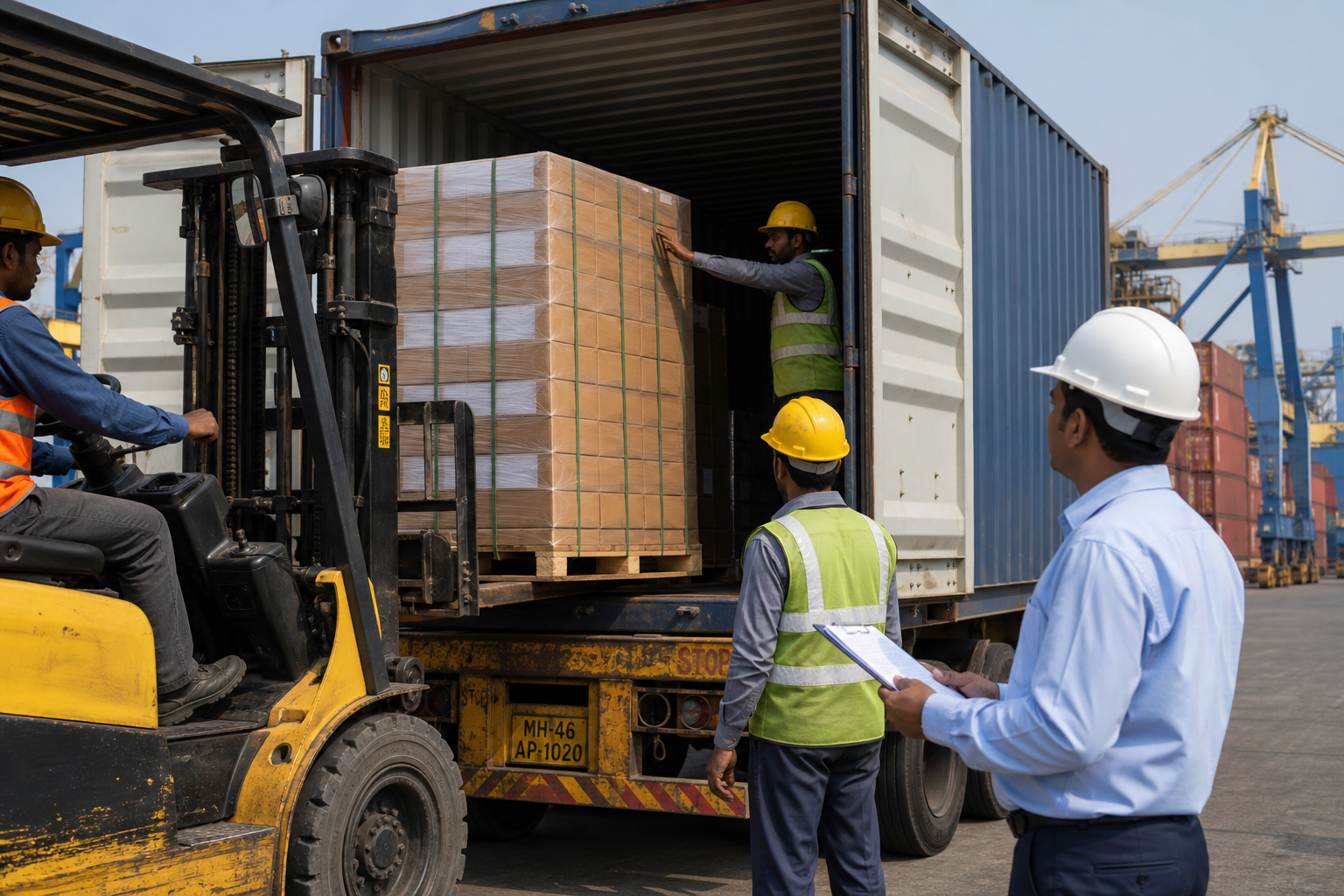
Shipping from India is the operational bridge between a completed production order and goods arriving at your warehouse or fulfillment center. It involves choosing a freight mode, coordinating pickup and export clearance on the Indian side, managing container or airway documentation, and handing a consistent document set to your customs broker at destination—without treating freight as an afterthought once payment terms are settled.
International buyers often underestimate how much shipping choices affect total lead time, damage risk, and import cost. A low unit price paired with poor packing, the wrong mode, or a late booking can erase margin before duties are even calculated. Shipping also interacts directly with Incoterms: the term you agree determines who books freight, who carries insurance, and when responsibility transfers.
India exports through a network of seaports, air cargo gateways, and inland container depots linked to manufacturing clusters. Most general merchandise importers use ocean freight for planned replenishment and air or courier for samples, launches, or emergency top-ups. The right mode depends on volume, weight, product value, shelf-life, and how much control you need over booking and routing.
Altus Exports coordinates export logistics for international buyers buying from India—aligning factory readiness, inspection release, documentation, and freight handoff with the commercial terms of each order. The frameworks below apply whether you self-manage freight, work with a forwarder, or import through a merchant exporter.
How shipping fits into the India import workflow
- Production complete; quality gate passed.
- Export packing and labeling finalized.
- Freight booking confirmed (by buyer or supplier per Incoterm).
- Empty container placed or LCL cargo accepted at CFS/depot (ocean) or cargo booked on air/flight.
- Goods moved to port or airport; export customs cleared.
- Cargo loaded; bill of lading or air waybill issued.
- Documents sent to buyer/bank per payment and clearance needs.
Shipping is not a standalone task. It sits between production completion (and usually pre-shipment inspection), export documentation, and destination customs clearance. Treat it as a stage gate in the full India import process.
Typical sequence on the India side:
Delays at any step—especially booking, container placement, or document mismatch—flow downstream as missed receiving dates, demurrage charges, or customs holds. Planning backward from your required arrival date is more reliable than forward-planning from "factory says ready next week."
For a broader import overview, see how to import products from India.

Freight modes: FCL, LCL, air, and courier
Full container load (FCL)
Comparison table
Swipe →
Data table — swipe horizontally on small screens
| Destination region | Typical FCL transit (port to port, indicative) |
|---|---|
| US West Coast | ~18–28 days |
| US East Coast via Suez | ~28–40 days |
| UK / North Europe | ~25–35 days |
| Mediterranean | ~18–28 days |
| Middle East (Jebel Ali etc.) | ~5–12 days |
| Southeast Asia | ~7–14 days |
| Australia (East) | ~20–30 days |
- volume justifies a container (or you accept consolidating your own multi-SKU load);
- you want lower per-unit freight on dense cargo;
- you need to control loading, sealing, and stow photos;
- product is not suitable for consolidation with unrelated shippers' cargo.
FCL means you pay for exclusive use of a container—typically 20-foot or 40-foot standard, high-cube, or specialized equipment if required. The container is usually stuffed at the factory or an nearby container freight station (CFS), then moved to port for vessel loading.
FCL fits when:
Common FCL considerations from India:
Transit times vary by destination region. Broad ranges:
Always confirm schedule with your forwarder for the specific sailing—these ranges are planning guides, not guarantees.
Less than container load (LCL)
- shipment volume is below roughly half a 20-foot container (rules of thumb vary by forwarder);
- you are testing a new SKU or supplier;
- you accept slightly longer handling and more touch points;
- you want to avoid paying for unused container space.
- More handling at origin CFS and destination deconsolidation—higher damage risk for fragile goods unless packed well.
- Additional CFS charges on both ends.
- Transit can be longer than FCL on the same lane due to consolidation cutoffs.
LCL consolidates your cargo with other shippers in a shared container. Your freight forwarder or consolidator handles CFS receiving, consolidation, deconsolidation at destination, and often last-mile handoff to your broker or warehouse.
LCL fits when:
LCL tradeoffs:
For cost planning, LCL ocean freight feeds into landed cost calculations as a per-CBM or per-ton line item, often with minimum charges.
Air freight
- product value or margin supports higher freight cost;
- lead time reduction protects revenue (fashion, promo, spare parts);
- ocean transit threatens a launch or stockout;
- samples or prototypes must reach quickly for approval (though very small parcels may use courier instead).
Air freight from India uses major cargo gateways—Delhi, Mumbai, Chennai, Bangalore, Hyderabad, and others depending on airline and product. Air suits high-value, time-sensitive, seasonal, or launch inventory where ocean lead time is unacceptable.
Air fits when:
Air costs are driven by chargeable weight (actual vs volumetric). Packing dimensions matter as much as gross weight. Expect airport handling, screening, and export clearance on the Indian side before uplift.
Transit excluding customs at destination is often 3–10 days door-to-door depending on lane, flight frequency, and handoff efficiency—still subject to booking cutoffs and security screening.
Courier and express (samples and small parcels)
- Cost per kilogram is high; use for small declared values and quantities.
- Customs clearance at destination may be simplified for low-value samples but is not automatic—commodity description and HS code still matter.
- Factory "free sample" shipments still need accurate commercial invoice and content description.
- Some buyers use courier for first articles while ocean freight handles bulk replenishment.
Couriers (DHL, FedEx, UPS, and similar) handle small shipments under express networks. They are the default for samples, swatches, small component sets, and urgent documents—not for production volume.
Courier considerations:
Do not assume courier experience transfers to FCL/LCL booking. Production shipping requires different documentation volume and coordination.
Major export ports and logistics gateways (overview)
India's export cargo flows through seaports on the west and east coasts, with inland container depots (ICDs) feeding ports from northern and interior manufacturing clusters. You do not need to master every port to import—but you should know where your supplier's cargo likely exits, because it affects trucking cost, cutoff times, and sailing options.
West coast (heavy share of containerized exports):
South and east coast:
Air cargo gateways (examples): Delhi (IND), Mumbai (BOM), Chennai (MAA), Bangalore (BLR), Hyderabad (HYD)—availability depends on airline, product, and DG restrictions.
Ask suppliers which port of loading or airport of departure they quote under your Incoterm. A FOB Mumbai quote from a Gujarat factory may include substantial inland haulage embedded in supplier pricing—or surprise you if not clarified upfront.
Comparison table
Swipe →
Data table — swipe horizontally on small screens
| Port / gateway | Region served (broadly) | Notes for importers |
|---|---|---|
| Chennai | Tamil Nadu and southern clusters | Strong for auto, engineering, textiles |
| Ennore (Kamarajar), near Chennai | Southern India | Growing container capacity |
| Tuticorin (Thoothukudi) | Southern Tamil Nadu | Useful for southern factories |
| Kolkata / Haldia | Eastern India | Bay of Bengal lanes |
| Visakhapatnam (Vizag) | Andhra/Odisha belt | Bulk and some container |
| Cochin (Kochi) | Kerala and nearby | Niche and regional exports |
Who books freight: Incoterm impact
- FOB is common for buyers with forwarders who want control of ocean/air choice and consolidation.
- CIF can work when the supplier has strong export logistics, but verify insurance coverage and compare freight cost transparency.
- EXW minimizes supplier freight padding but maximizes buyer coordination burden—including export procedures on the Indian side unless a partner handles them.
Your Incoterm when buying from India determines who contracts the carrier, pays main freight, and carries insurance—not who physically talks to the forwarder day to day (both parties may coordinate).
Practical guidance:
Misaligned Incoterms and actual booking behavior cause recurring problems: supplier books a slow service while buyer expected priority; buyer waits for booking confirmation that supplier assumed was buyer's task; insurance gaps on CIF with minimal coverage.
Document the named place precisely on the PO and invoice. "FOB India" is not specific enough.
Comparison table
Swipe →
Data table — swipe horizontally on small screens
| Incoterm (examples) | Main carriage booked by | Importer should |
|---|---|---|
| EXW | Buyer (from supplier premises) | Arrange pickup, export clearance support if needed, all main freight |
| FOB (named Indian port) | Buyer from port of loading | Book ocean/air from port; verify export clearance by supplier |
| CIF / CIP (named destination) | Seller to destination port/place | Verify insurance, document set, and arrival notice; still clear customs |
| DAP / DDP (if used) | Seller to named place | Understand remaining customs/duty responsibility under DDP |
Booking timeline: working backward from arrival
Use a backward plan from required in-warehouse date. Build buffers for inspection, document issuance, sailing frequency, transshipment, destination port congestion, and customs clearance—without duplicating clearance steps here.
Illustrative FCL timeline (adjust per lane and season):
LCL adds consolidation cutoffs at CFS—often fewer sailings per week than FCL port cutoffs.
Air compresses the timeline but has flight capacity and screening cutoffs; booking one to two weeks ahead may be insufficient in peak season without premium rates.
Communicate cargo readiness date to your forwarder only when inspection and packing are realistically achievable. Repeated reschedules erode carrier relationships and can incur cancellation fees.
Comparison table
Swipe →
Data table — swipe horizontally on small screens
| Weeks before required arrival | Action |
|---|---|
| 8–10 | Confirm production finish date; align inspection date |
| 6–8 | Obtain cargo dimensions, weight, carton count; choose FCL vs LCL |
| 5–6 | Book vessel space; confirm cutoff and documentation deadline |
| 4–5 | Pre-shipment inspection; release payment per terms |
| 3–4 | Container release to factory; stuffing scheduled |
| 2–3 | Gate-in at port; export customs filed and cleared |
| 2 | Vessel departure; bill of lading draft reviewed |
| 0–2+ | Ocean transit; arrival notice; docs to broker |

Export packing, labeling, and container loading
- export-grade cartons (double-wall where needed);
- inner protection (polybags, foam, dividers) suited to product fragility;
- consistent carton labeling: PO, SKU, quantity, gross/net weight, carton X of Y, country of origin;
- palletization rules if LCL or warehouse handling requires it;
- moisture protection for long ocean transits (desiccants, VCI where appropriate);
- compliance marks if required (fragile, this side up, handling icons).
- load plan or photo record for dispute resolution;
- weight distribution to avoid shifting;
- seal number recorded on packing list and communicated for BL;
- no last-minute carton additions without document update.
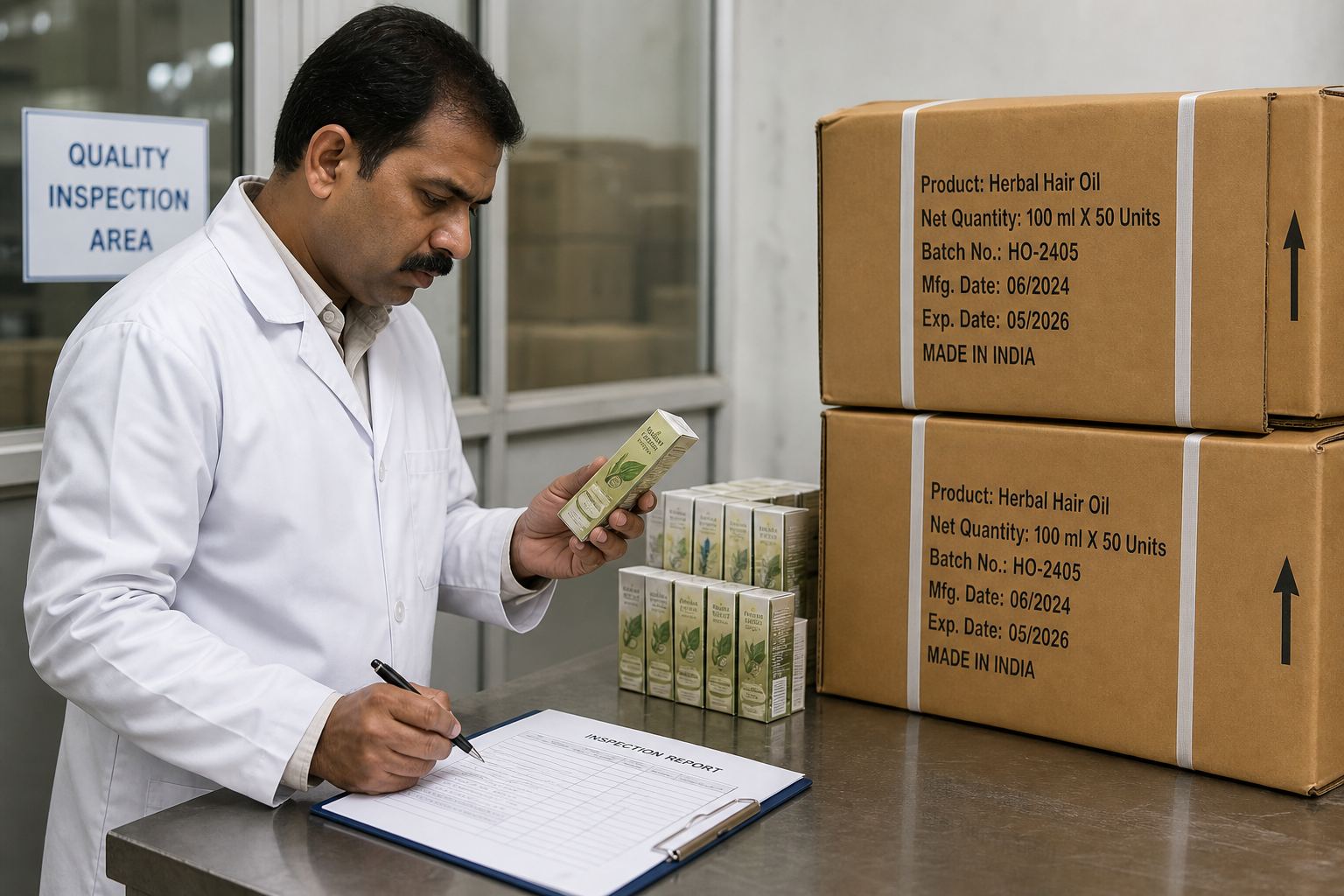
Poor packing is one of the most preventable shipping failures. Indian suppliers vary widely in export packing standards. Define requirements in the PO—not as an optional note.
Minimum packing expectations for production shipments:
FCL loading practices:
LCL-specific: Cartons must survive CFS handling and co-loading. Corner protection and strapping matter more than in a single-SKU FCL load.
Samples shipped by courier should still meet content labeling and invoice accuracy—customs holds on samples delay approvals and project timelines.
Bills of lading, air waybills, and document handoff
Shipping documents connect freight, payment, and customs. Your import document pack from India must align across invoice, packing list, transport document, and certificates.
Ocean: bill of lading (BL)
Comparison table
Swipe →
Data table — swipe horizontally on small screens
| BL type | Character | Importer note |
|---|---|---|
| Master BL (MBL) | Issued by ocean carrier | Underlying carrier contract |
| House BL (HBL) | Issued by NVOCC/forwarder | Common in LCL; forwarder is contractual carrier |
| Telex release / express release | Electronic release without original | Speeds pickup; confirm fraud controls |
| Original BL | Physical negotiable document | Required for some payment/LC setups |
- shipper, consignee, notify party match your import plan;
- port of loading and discharge correct;
- container number, seal number, packages, and description consistent with invoice;
- freight terms (prepaid/collect) match Incoterm intent;
- on-board notation and dates support LC or internal cutoff rules if applicable.
The bill of lading is the core ocean transport document. Key types:
Verify before acceptance:
Discrepancies between BL and commercial invoice are a common customs and payment friction point.
Air: air waybill (AWB)
Air shipments use air waybills (house or master AWB through forwarders). AWBs are typically non-negotiable. Check weight, chargeable weight, commodity description, and HS-relevant wording consistency across AWB and invoice.
Document routing timeline
- Original BL by courier to buyer or bank (LC);
- Telex/express release after payment or agreed trigger;
- Electronic copies to customs broker for pre-arrival entry prep;
- Certificates (origin, inspection, fumigation if needed) bundled consistently.
Agree when documents issue and how they travel:
Brokers cannot clear efficiently if documents arrive after vessel arrival. Target sending complete copies before cargo arrives at destination port or airport when possible.
Payment terms may gate BL release—coordinate with how to pay Indian suppliers so document timing does not trigger demurrage.

Transit, tracking, and arrival coordination
- Carrier/forwarder tracking — container or AWB status, vessel ETA changes, transshipment events.
- Commercial tracking — invoice value, insurance claim window, warehouse receiving slot, customs broker readiness.
- notify consignee/broker of ETA updates;
- confirm liner charges, local terminal fees, and who pays destuffing (FCL) or CFS pickup (LCL);
- align delivery appointment with warehouse labor and equipment;
- prepare for customs process per customs clearance guide—this article stops at handoff, not entry filing steps.
After departure, track shipment at two levels:
Transshipment hubs (Middle East, Southeast Asia, European ports depending on lane) add schedule risk. Build buffer for missed connections during peak season.
On arrival:
Demurrage, detention, and port storage
- clear customs and pick up promptly;
- pre-share documents with broker;
- align payment and BL release before arrival;
- book reliable drayage/trucking in advance;
- return empty container within allowed window (FCL).
Demurrage and detention are among the most expensive avoidable shipping costs. Definitions vary slightly by carrier, but broadly:
Free days depend on carrier, port, and contract. Promotional "14 days" at destination can shrink in practice if documentation delays pickup.
How to minimize charges:
One week of demurrage on a busy port can exceed the savings from a slightly cheaper unit price. Operations matter as much as procurement.
Comparison table
Swipe →
Data table — swipe horizontally on small screens
| Charge | Typical meaning | Who pays (often) |
|---|---|---|
| Demurrage | Container held in port/terminal beyond free days | Importer/consignee |
| Detention | Container held outside terminal (e.g., at warehouse) beyond free days | Importer/consignee |
| Storage | Warehouse or CFS storage for LCL cargo | Importer |
Freight cost drivers that affect landed cost
- lane and season (spot vs contract rates);
- container size and utilization;
- origin trucking from factory to port or CFS;
- terminal handling, documentation, and seal fees;
- fuel and surcharge structures (BAF, etc.);
- destination local charges (often excluded from ocean freight quote).
- chargeable CBM/weight and minimum charges;
- CFS handling at origin and destination;
- consolidation frequency on lane.
- chargeable weight vs actual weight;
- commodity type and screening;
- fuel surcharge and security fees;
- direct vs indirect routing.
- poor packing leading to damage claims or rework;
- incorrect HS description causing customs delays (ties to duty exposure in import duties and taxes);
- last-minute booking premiums;
- demurrage from document or payment delays.
Shipping feeds directly into landed cost of products imported from India. You do not need the full worksheet here—understand what moves the freight line item.
Ocean FCL cost drivers:
LCL cost drivers:
Air cost drivers:
Indirect cost drivers:
Compare quotes on the same basis: include origin charges, main freight, and whether destination THC/delivery is quoted or excluded. For total procurement economics, link freight to total cost of buying from India including working capital during transit.
Choosing a freight forwarder for India-origin cargo
- experience on your specific India port to destination lane;
- FCL and LCL options if you use both;
- document accuracy track record;
- communication on rollings, cutoffs, and ETA changes;
- transparency on local charges at both ends;
- ability to coordinate factory stuffing, CFS, and export clearance timing.
Many international buyers use a destination-based forwarder who coordinates with an India agent or NVOCC. Others rely on supplier-appointed forwarders under CIF. Either can work with clear accountability.
Evaluate forwarders on:
Ask for a shipment plan showing milestones from cargo ready to BL issue. Forwarders who only quote a rate without a timeline often underperform when problems arise.
If you import through Altus Exports or similar coordination, clarify whether freight is buyer-nominated, included in exporter service, or passed through at cost—and who owns delay escalation with the factory.

Common shipping mistakes when importing from India
Mistake 1: Booking freight before inspection release
Container placed early while production is incomplete generates detention or rework costs. Align booking with realistic cargo-ready date.
Mistake 2: Vague Incoterms and port names
"FOB India" or "CIF New York" without specifying port/airport and handoff points creates disputes over who pays what.
Mistake 3: Under-specified export packing
Assume factory default cartons are export-ready. Define standards and approve pre-production pack photos for fragile or retail-ready goods.
Mistake 4: Ignoring chargeable weight/volume on air and LCL
Low-density cargo pays for volume. Model freight using CBM and volumetric weight before choosing mode.
Mistake 5: Document mismatch at BL stage
Allowing invoice, packing list, and BL to diverge on quantity, weight, or description delays customs and payment. Review drafts before vessel sails when possible.
Mistake 6: No plan for demurrage
Treat free days as a hard deadline. Pre-clear docs and arrange pickup before arrival when feasible.
Mistake 7: Using courier economics for production scale
Couriers are for samples—not a scalable replenishment model unless order size truly fits express parcel economics.
Mistake 8: Separating shipping from payment and QC gates
If balance payment is due before BL release but inspection failed, resolve conflicts in contract—not at port cutoff.
Coordinating shipping with suppliers and partners
- confirm cargo-ready date and carton manifest;
- share commercial invoice and packing list drafts for forwarder/broker pre-check;
- confirm container release and trucking appointment (FCL);
- verify inspection certificate and compliance docs attached to document pack;
- track cutoff dates and vessel/flight schedule changes;
- send document copies to broker before arrival.
Effective shipping requires three synchronized parties: supplier (packing, export clearance support, stuffing), freight forwarder (booking, carriage, documents), and importer (payment release, insurance verification, broker instruction).
Weekly rhythm during shipping window:
For multi-supplier orders, avoid assuming one BL covers unrelated factories unless using a consolidator with a clear plan. Document consolidation adds time but can save freight on mixed SKUs destined for one warehouse.

Conclusion
Shipping from India successfully means choosing the right mode for your volume and timeline, aligning booking responsibility with your Incoterm, specifying export packing before production finishes, and managing documents so invoice, packing list, and bill of lading or air waybill tell the same story. Build backward from your required arrival date, watch demurrage exposure, and hand a complete document pack to your customs broker early enough to avoid storage charges—while leaving detailed clearance steps to your destination customs process.
If you are planning an upcoming shipment from India and need export coordination aligned with inspection, documentation, and freight handoff, Altus Exports can help structure the shipping window as part of your import execution plan.