
Documents Required to Import Products From India
By Saurabh Mittal, Founder, Altus Exports
To import from India you typically need a commercial invoice, packing list, bill of lading or air waybill, and any category certificates (origin, inspection, phytosanitary, test reports). The Indian supplier or exporter prepares most commercial and export documents; the…

Every international shipment from India moves on documents. Customs authorities at your destination do not clear cargo based on emails, verbal confirmations, or factory photos—they clear based on a consistent document pack where invoice quantities match packing list cartons, weights align with the bill of lading, HS codes support duty calculation, and certificates prove compliance where required. When documents disagree, shipments stall. Storage charges accrue. Banks reject payment documents. Buyers discover too late that "the goods shipped" but the paperwork cannot release them.
Import document discipline is a buyer-side responsibility even when Indian suppliers prepare most export papers. You do not need to draft every form yourself—but you must know which documents are required, who prepares them, when they must be available, and what errors recur. This article owns the buyer import document pack: the master checklist, ownership matrix, mismatch risks, and category-specific add-ons for international buyers importing from India into the USA, UK, Europe, UAE, Australia, Canada, and other markets.
This guide complements—not replaces—exporter-side depth in export documentation checklist for India. It also complements the end-to-end import playbook in how to import products from India, which covers stage gates from supplier selection through warehouse receiving. Freight booking mechanics sit in shipping from India; duty calculation depth sits in how import duties and taxes work when buying from India—this article does not duplicate those topics.
Altus Exports supports international buyers with document collection, review, and export execution as part of merchant export and India sourcing coordination. Whether you manage imports internally or with a partner, the checklist and ownership rules below apply.
Why import document packs fail
- Invoice unit count differs from packing list carton totals
- Gross or net weight on the packing list does not match bill of lading
- HS code on the invoice differs from the broker's entry filing
- Shipper name is the factory while the contract party is a trading company
- Certificate of origin product description does not match invoice line items
- Required phytosanitary or test certificate is missing or expired
- Consignee details do not match the importer of record
Document failures rarely happen because a form is unknown. They happen because no one owned consistency across forms prepared by different parties—the factory, the freight forwarder, the chamber of commerce, the inspection company, and your customs broker.
Typical failure patterns include:
Each issue is fixable before shipment. After cargo sails or flies, corrections involve couriered amendments, carrier fees, customs holds, and delayed delivery. Treat document review as a pre-shipment gate, not post-arrival admin.

Master document checklist by category
Checklist
The table below lists core documents for most India-origin imports. Category-specific add-ons appear later. "Required" means required for most commercial shipments; your product, destination, and trade lane may add or remove items.
Commercial and contractual documents
Comparison table
Swipe →
Data table — swipe horizontally on small screens
| Document | Who prepares | When needed | Common errors |
|---|---|---|---|
| Proforma invoice (PI) | Supplier / exporter | Before PO; for import license, LC opening, or budget approval | Specs or Incoterm differ from final invoice; outdated pricing |
| Purchase order (PO) | Buyer | Before production start | PO does not reference approved sample version or Incoterm |
| Sales contract / order confirmation | Supplier / exporter | With or after PO | Terms conflict with PO or PI |
| Commercial invoice | Supplier / exporter | Required for shipment, customs, and payment | Wrong HS code; invoice value excludes agreed adjustments; shipper/consignee mismatch |
| Packing list | Supplier / exporter | Required with shipment; customs and warehouse reference | Carton count/weight differs from invoice or BL; no marks and numbers |
| Weight note / measurement list | Supplier / forwarder | When BL requires verified weight (some commodities) | Discrepancy with packing list |
Transport documents
Comparison table
Swipe →
Data table — swipe horizontally on small screens
| Document | Who prepares | When needed | Common errors |
|---|---|---|---|
| Bill of lading (ocean BL) | Carrier or forwarder | Required for ocean freight; title document | Description too vague; weight/packages differ from packing list; wrong notify party |
| Seaway bill (express release) | Carrier or forwarder | When original BL not required | Release before buyer payment verification when terms require original docs |
| Air waybill (AWB) | Airline or forwarder | Required for air freight | Consignee cannot clear if details wrong; chargeable weight disputes |
| Delivery order / release note | Destination agent | After freight payment and customs (process varies) | Delayed because upstream docs incomplete |
| Freight invoice | Forwarder / carrier | For cost accrual and landed-cost true-up | Charges not aligned with quoted Incoterm scope |
Origin and preferential trade documents
Comparison table
Swipe →
Data table — swipe horizontally on small screens
| Document | Who prepares | When needed | Common errors |
|---|---|---|---|
| Certificate of origin (non-preferential) | Chamber / authorized body / exporter | When buyer or customs requires origin proof | Product description mismatch with invoice |
| Preferential COO (FTA) | Authorized certifier in India | When claiming reduced duty under trade agreement | Rules-of-origin not met; wrong format for destination customs |
| Manufacturer's declaration | Manufacturer / exporter | Supporting origin claims or customer compliance | Unsigned or undated; specs differ from invoice |
Quality, inspection, and compliance documents
Comparison table
Swipe →
Data table — swipe horizontally on small screens
| Document | Who prepares | When needed | Common errors |
|---|---|---|---|
| Pre-shipment inspection (PSI) report | Inspection agency | When contract or LC requires inspection | Report references wrong PO or batch |
| Test report / COA (certificate of analysis) | Lab or manufacturer | Food, chemicals, materials—market dependent | Batch not linked to shipped lot; standard cited is outdated |
| Fumigation certificate | Licensed fumigator | Wood packaging (ISPM 15) or destination requirement | Treatment date after packing; invalid for destination rule |
| Phytosanitary certificate | Plant quarantine authority (India) | Agricultural products, seeds, plant materials | Scientific name or treatment missing; expired validity |
| Health / sanitary certificate | Competent authority | Meat, dairy, seafood—highly regulated categories | Not applicable product scope; wrong authority stamp |
Destination import and customs documents
Comparison table
Swipe →
Data table — swipe horizontally on small screens
| Document | Who prepares | When needed | Common errors |
|---|---|---|---|
| Customs entry / import declaration | Buyer's customs broker | Required at destination clearance | HS classification differs from supplier invoice |
| Import license or permit | Buyer / broker assistance | Category or country specific | Applied after shipment departs |
| Importer security filing (e.g., ISF for US) | Buyer or broker | Before US ocean cargo loading (US imports) | Late filing; bill party data wrong |
| Bond or duty payment authorization | Buyer | When customs requires before release | Unbudgeted cash flow delay |
| Delivery order to warehouse | Broker / forwarder | Final mile to buyer warehouse | Issued before customs release |
Document ownership matrix
Clear ownership prevents documents from falling between parties. Use this matrix in your import SOP and purchase order.
When Altus Exports acts as merchant exporter or export coordinator, document assembly and cross-checking against the order typically sit in its scope—but the buyer still approves commercial data, consignee details, and certificate requirements before final shipment release.
Comparison table
Swipe →
Data table — swipe horizontally on small screens
| Task | Primary owner | Supports / reviews |
|---|---|---|
| Define required document list for SKU and destination | Buyer (compliance/trade) | Broker, partner, supplier |
| Draft commercial invoice and packing list | Supplier / exporter | Buyer reviews before shipment |
| Book freight and issue BL/AWB | Forwarder (per Incoterm) | Buyer confirms consignee and notify party |
| Arrange inspection and test certificates | Buyer or agreed inspector | Supplier provides access and samples |
| Apply for certificate of origin | Exporter / chamber agent | Buyer confirms preferential claim requirements |
| Obtain phytosanitary / health certificates | Supplier via competent authority | Buyer confirms destination format |
| File ISF / security declarations | Buyer or US broker | Forwarder supplies bill data |
| Prepare customs entry | Destination customs broker | Buyer supplies document pack and classification |
| Pay duties and taxes | Buyer (importer of record) | Broker calculates and files |
| Release to warehouse | Buyer logistics | Broker, forwarder, 3PL |
The commercial invoice: what customs and banks scrutinize
- Exporter name and address match the contracting party (or explain third-party shipper relationship)
- Consignee matches importer of record or agreed consignee structure
- Product description is specific enough for classification—not "goods" or "merchandise"
- HS code aligns with broker's pre-classification
- Quantity and unit of measure match packing list totals
- Unit price and extensions calculate correctly; currency stated
- Incoterm and named place match contract
- Country of origin stated (India, or specific rules for multi-country content)
- Payment terms reference (LC number, PO number) included when applicable
- Signature or authorized signatory where required
The commercial invoice is the anchor document. It states seller, buyer, product description, quantity, unit price, total value, currency, Incoterm, payment terms reference, HS code, country of origin, and shipping marks. Customs uses it for valuation and classification; banks use it under letters of credit; your accounts team uses it for three-way match against PO and receipt.
Invoice fields to verify before shipment:
Illustrative example: A UK buyer imports brass candle holders. Invoice line reads "handicrafts" with HS code 8306. Broker classifies under a different heading due to material and function. Duty rate changes. Clearance delays while broker requests amended invoice. Specific description—"brass candle holder, polished, 15 cm height"—reduces classification dispute risk.
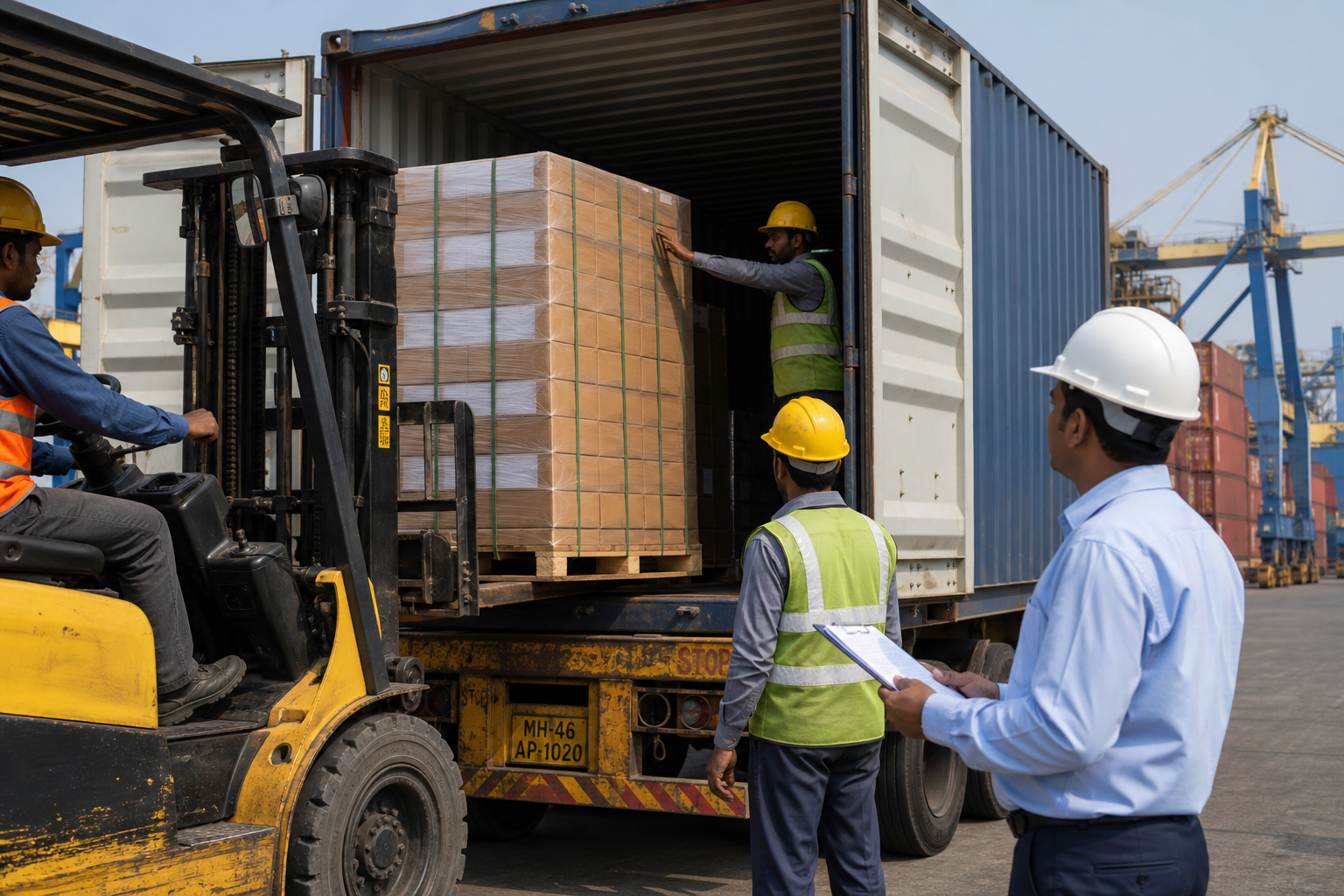
The packing list: physical shipment truth
- Total number of packages matches BL package count
- Gross weight consistent with BL (carrier tolerance may apply)
- Carton marks match invoice shipping marks
- Mixed-SKU cartons clearly broken out if invoice is line-by-line SKU
- Pallet count and dimensions stated when applicable
The packing list details how goods are packed: carton numbers, dimensions, gross and net weight per carton, total packages, and shipping marks. Warehouse receiving and customs examination both reference it. It must reconcile with the invoice (what you bought) and the bill of lading (what the carrier accepted).
Checklist:
LCL shipments amplify packing list importance because cartons may be consolidated with other shippers—clear marks prevent misdelivery at destination CFS.
Transport documents: bill of lading and air waybill
Ocean bill of lading
- Port of loading misspelled or wrong (e.g., Nhava Sheva vs. Mumbai wording confusion)
- "Said to contain" description without link to invoice specificity
- Shipper shown as forwarder without disclosure when buyer expected manufacturer
- Notify party missing or outdated broker contact
The BL is a receipt, contract of carriage, and—when issued as original—document of title. Key fields: shipper, consignee, notify party, vessel/voyage, port of loading (Indian port), port of discharge, description of goods, number of packages, gross weight, freight terms (prepaid/collect).
Under LC transactions, BL clauses must match LC terms exactly—clean on board notation, consignee format, latest shipment date. Discrepancies cause bank rejection.
Common BL errors on India exports:
Air waybill
Air shipments use AWB instead of BL. There is usually no document of title in the same sense; release follows customs and freight procedures at destination. AWB weight and piece count must match packing list. For high-value or time-sensitive SKUs, confirm air cargo screening and battery/hazardous restrictions before production completes—documentation cannot fix inadmissible cargo.
For freight booking and mode selection, see shipping from India—this article covers document requirements only.
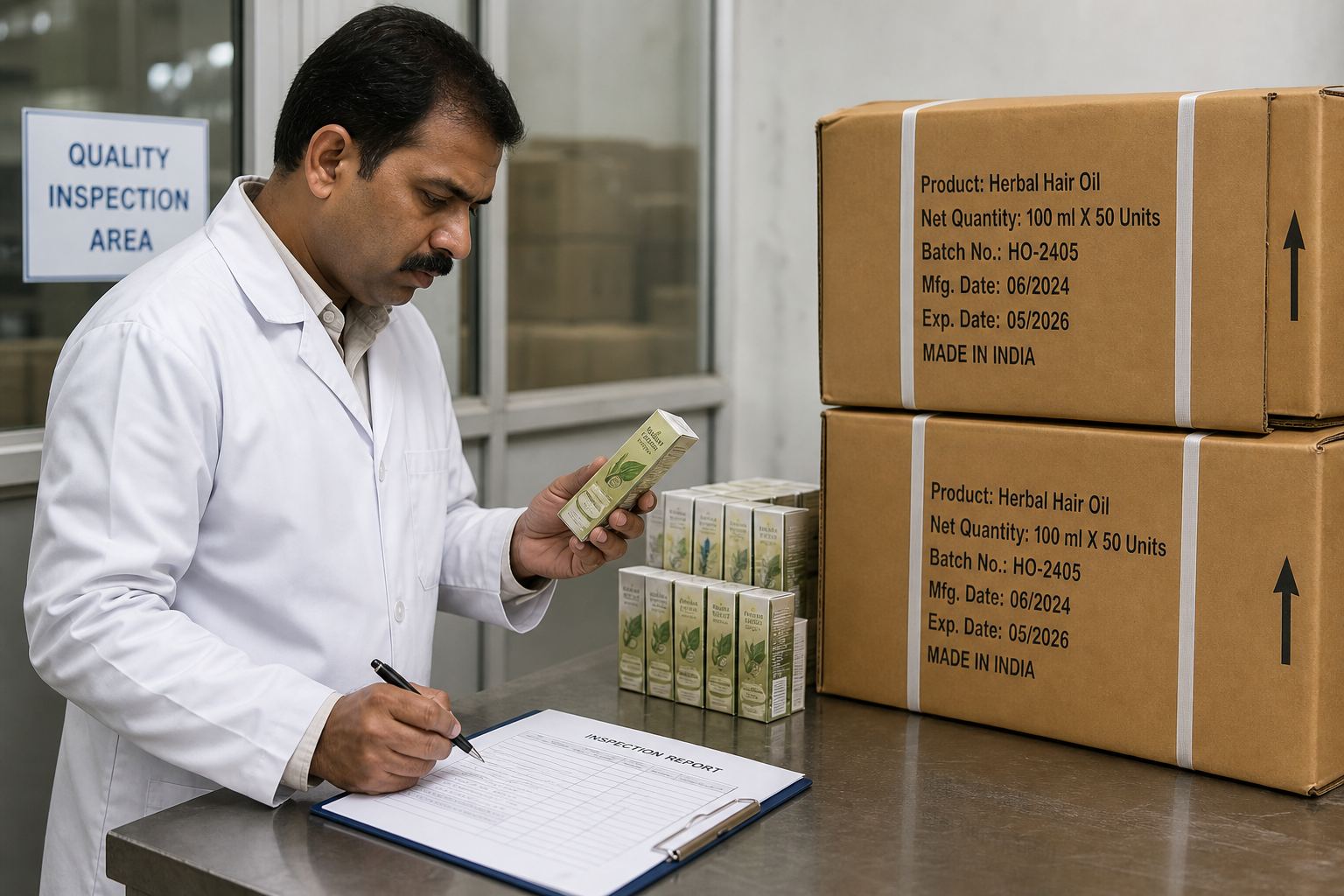
Certificate of origin and preferential duty claims
- Confirm the agreement applies to the product and destination country
- Understand rules of origin (regional value content, tariff shift, etc.)
- Request the correct certificate format before shipment
- Ensure invoice, COO, and packing list descriptions align
- Retain supporting manufacturing records if customs audits
A certificate of origin confirms where goods originate under defined rules—not simply where they shipped from. India exports may qualify for preferential rates under agreements depending on destination (rules change over time; verify current applicability with your broker).
Buyers claiming preferential treatment must:
Non-preferential certificates may still be required by buyers for internal compliance or destination customs even when no FTA claim is made.
Errors that void preference claims include wrong HS on COO, exporter not authorized to certify, and goods transshipped through third countries without meeting direct consignment rules.
Inspection, testing, and regulatory certificates
Regulated and high-risk categories require certificates beyond the core commercial set. The buyer defines requirements in the product brief and PO; the supplier arranges issuance through labs or authorities.
Do not list certificates in the PO without confirming issuing authority, format, validity period, and who pays. A "test report" clause without standard reference produces unusable documents.
For exporter-side preparation workflows, cross-reference export documentation checklist for India.
Comparison table
Swipe →
Data table — swipe horizontally on small screens
| Category | Typical additional documents | Notes |
|---|---|---|
| Food and spices | COA, pesticide/micro test reports, phytosanitary (plant-based), fumigation if applicable | Destination MRL limits differ—EU, US FDA, GCC rules vary |
| Textiles and apparel | Fiber content labels (destination format), OEKO-TEX or RSL test reports if required | Labeling is often destination law, not export law |
| Electronics | CE, FCC, RoHS test summaries or certificates (product dependent) | India export may not require; import destination does |
| Chemicals | SDS, REACH-related docs (EU), batch COA | Restricted substance lists vary |
| Wood and handicrafts | ISPM 15 treatment certificate on wood packaging | Required for many destinations |
| Machinery | CE declaration, inspection report, serial number list | Supports warranty and customs valuation |
Destination-side import documents
Documents prepared at import—not export—are equally critical. The buyer's customs broker typically drives this package, but the buyer must supply accurate data and respond quickly.
United States: Importer of record, HTS classification, ISF for ocean, entry summary, bond if required, and agency filings for regulated products. UK/EU: EORI, commodity code, import declaration, VAT accounting. UAE/GCC: Invoice or COO attestation may apply—confirm with local broker. Australia/Canada: Biosecurity or CFIA filings for food; bilingual labeling rules may apply for retail in Canada.
Your broker should provide a destination-specific checklist during import readiness. See customs clearance when importing from India for clearance process detail.

Document mismatch risks: invoice vs. packing list vs. BL
- Invoice shows 500 cartons; packing list shows 480
- BL weight 2,200 kg; packing list total 2,650 kg
- Two different HS codes on invoice and buyer's prior classification advice
- LC requires "Manufacturer as shipper" but BL shows unrelated trading company without LC allowance
The three-way match among invoice, packing list, and transport document is the highest-frequency document failure on India lanes. Use this reconciliation table before approving shipment release.
Red flags that should stop shipment:
When discrepancies appear, amend before departure. Post-departure corrections cost time and may fail LC or customs scrutiny.
Comparison table
Swipe →
Data table — swipe horizontally on small screens
| Data element | Must match across invoice, packing list, BL/AWB |
|---|---|
| Total packages / cartons | Yes—exact count |
| Gross weight | Yes—within carrier tolerance |
| Product description | Consistent specificity (BL may be abbreviated but not contradictory) |
| Shipper / exporter reference | Consistent or explained (e.g., forwarder as shipper) |
| Marks and numbers | Packing list and BL; invoice marks reference |
| HS code | Invoice and customs entry; BL may omit but must not conflict |
| Value | Invoice is authoritative for customs; not repeated on BL usually |
Document timeline: when each document is needed
Request draft invoice and packing list at least several days before cargo cutoff. Review against PO and sample approval while goods are still accessible for correction.
Comparison table
Swipe →
Data table — swipe horizontally on small screens
| Phase | Documents typically in play |
|---|---|
| Pre-order | PI, buyer PO, sales confirmation, sample approval record |
| Production | Revised PI if specs change; inspection booking confirmation |
| Pre-shipment | Draft commercial invoice, draft packing list, inspection report, test/COA, COO application, phytosanitary where applicable |
| Shipment | Final invoice, final packing list, BL/AWB, insurance cert (if CIF/CIP), fumigation cert |
| In transit | Copies to broker for ISF/security filing; arrival notice preparation |
| Destination clearance | Full pack to broker, entry filing, duty payment, release |
| Warehouse | Invoice and packing list for receiving and inventory match |

Payment documents and bank requirements
- Signed commercial invoice (copies as specified)
- Packing list
- Full set original BL or AWB
- Certificate of origin
- Inspection certificate
- Insurance document (if CIP/CIF and required by LC)
Under letter of credit or documentary collection, banks examine documents against strict terms—not against commercial reality alone. Common LC document set:
Discrepancies as minor as invoice date after LC latest shipment date cause rejection. Align LC drafting with realistic production and document timelines. See how to pay Indian suppliers for payment instrument detail.
Working with forwarders and customs brokers
- Product description and intended HS code
- Supplier/export party details
- Incoterm and expected arrival port
- Required certificates for product category
- Importer-of-record credentials
- Draft BL for approval
- Cut-off dates for shipping instructions and VGM (verified gross mass) for FCL
- Import document checklist for your SKU
- Security filing deadlines (ISF, etc.)
- Estimated duty and tax for cash planning—brokers estimate; official rates in import duties article
Forwarders and brokers are not interchangeable. Forwarders focus on carriage booking and transport documents; brokers focus on regulatory entry and clearance. Many firms offer both; clarify which team owns each document.
Provide your broker early:
Request from forwarder before sailing:
Request from broker before sailing:
Category-specific document add-ons (brief)
The following add-ons appear frequently on India exports. Confirm destination rules; do not treat this as legal advice.
Spices and agricultural products: Phytosanitary certificate from APEDA/plant quarantine channel where applicable; COA with batch reference; pesticide residue tests for EU/US; fumigation certificate if wood pallets; proper botanical names on phytosanitary forms.
Textiles and garments: Detailed invoice composition (fiber %); packing list by size/color ratio; buyer may need separate labeling compliance file for FTC, UK textile regulations, or care-label language—not always a customs document but required for retail.
Engineering goods and metals: Mill test certificates for steel; dimensional inspection sheets; country-of-origin marking requirements for US and other markets; anti-dumping duty sensitivity—classification and origin documentation especially important.
Handicrafts and furniture: ISPM 15 on wooden crates; CITES documentation if protected species materials (buyer must verify legality); high-value insurance alignment on invoice value.
For product-specific compliance beyond documents, link to category content in complete guide to importing products from India rather than expanding into category encyclopedias here.

Document checklist you can use before every shipment
Checklist
- Required document list confirmed for SKU and destination (broker sign-off)
- Commercial invoice reviewed: parties, HS, value, qty, Incoterm, origin
- Packing list reviewed: cartons, weights, marks match invoice
- BL/AWB draft approved: packages, weight, ports, consignee, notify party
- Three-way match complete (invoice ↔ packing list ↔ BL/AWB)
- Certificate of origin ordered/issued if needed for duty or compliance
- Inspection/test/phytosanitary certificates received and batch-linked
- LC/collection documents match bank terms (if applicable)
- Insurance certificate matches Incoterm and LC (if applicable)
- Copies sent to broker for security filing and arrival prep
- Buyer logistics notified of ETA and document pack for receiving
Print or adapt this pre-shipment gate checklist:
If any item fails, hold shipment release until corrected.
How an export partner reduces document friction
Buyers managing multiple suppliers often face inconsistent invoice formats, late packing lists, and missing certificates. A merchant exporter or export coordination partner standardizes document assembly, chases authorities for certificates, and cross-checks data before handoff to freight and customs channels.
Altus Exports, under Saurabh Mittal, supports buyers who need on-ground document follow-through as part of India sourcing and export execution—not as a replacement for buyer compliance decisions, but to reduce the failure modes that come from fragmented supplier document habits.
If document mismatches have delayed past shipments, pair document discipline with the stage-gate import model in how to import products from India and the process map in India import process.

Conclusion
Importing from India requires a complete, consistent document pack spanning commercial, transport, origin, quality, and destination-clearance paperwork. The buyer owns the requirement definition and final review; the supplier or exporter prepares most export-side forms; forwarders and brokers handle carriage and clearance documents. The highest-leverage habit is three-way reconciliation of invoice, packing list, and bill of lading before cargo departs—most clearance delays trace to preventable mismatches, not missing regulations.
Use this article as your master checklist and ownership matrix. Use export documentation checklist for India for exporter-side depth. Use shipping, customs, and duties articles in this cluster for freight booking and duty mechanics—not document duplication.
Contact Altus Exports with your product category and destination market if you need on-ground support collecting, reviewing, and aligning India export documents before shipment.