
India Import Process: From Supplier Selection to Delivery at Your Warehouse
By Saurabh Mittal, Founder, Altus Exports
The India import process runs from supplier selection and verification through RFQ, purchase order, production, quality inspection, export documentation, freight booking, customs clearance, and final delivery to your warehouse. Use the IIPM-12 process map to assign owners,…

Importing from India is not a single transaction. It is a chain of dependent steps—each with documents, approvals, costs, and failure modes—that must align before goods arrive usable at your warehouse. When buyers treat import as "find a factory, pay, ship," delays and cost overruns usually appear at handoffs: incomplete export documents, inspection skipped before payment release, freight booked before cargo readiness, or customs held for classification mismatches.
This article provides an end-to-end process map, not a commercial strategy essay. It answers: what happens next, who does it, what goes in and out, how long it typically takes, and what breaks if the step is weak. For decision frameworks, Incoterm trade-offs, and buyer-side commercial gates, start with how to import products from India—the cluster pillar that focuses on how to decide. This article focuses on how the sequence runs.
The India Import Process Map (IIPM-12) defines twelve stages from supplier selection through warehouse receipt. Each stage links to a deep-dive article in the Importing From India cluster (and to supplier verification, QC, and legacy sourcing guides where those disciplines apply). Use IIPM-12 as your operating timeline whether you self-manage import or work with a sourcing partner or merchant exporter.
How IIPM-12 differs from a general import guide
Altus Exports coordinates import execution for international buyers across supplier identification, commercial comparison, production follow-up, export documentation, and logistics handoffs. The process map below is useful whether you execute with Altus Exports or build internal capability—with clear ownership either way.
For category strategy, market selection, and long-form context on building an India import program, see the legacy complete guide to importing products from India. For pre-first-import orientation, see what buyers need to know before importing from India.
Buyers often confuse three types of content:
IIPM-12 does not replace those guides. It connects them. When Stage 7 (Export documentation pack) fails, you do not need a new overview—you need documents required to import products from India. When Stage 6 (Pre-shipment inspection) is skipped, you need pre-shipment inspection in India from the QC cluster. The process map tells you when that deep dive must happen.
Comparison table
Swipe →
Data table — swipe horizontally on small screens
| Content type | Primary question | Best resource in this cluster |
|---|---|---|
| Commercial import playbook | What should I decide, and what are my options? | How to import products from India (Art 1) |
| End-to-end process map | What happens in sequence, and who owns each step? | This article (Art 10 / IIPM-12) |
| Topic deep dive | How do I execute one step correctly? | Arts 2–9 (documents, cost, Incoterms, payment, shipping, customs, duties, TCO) |
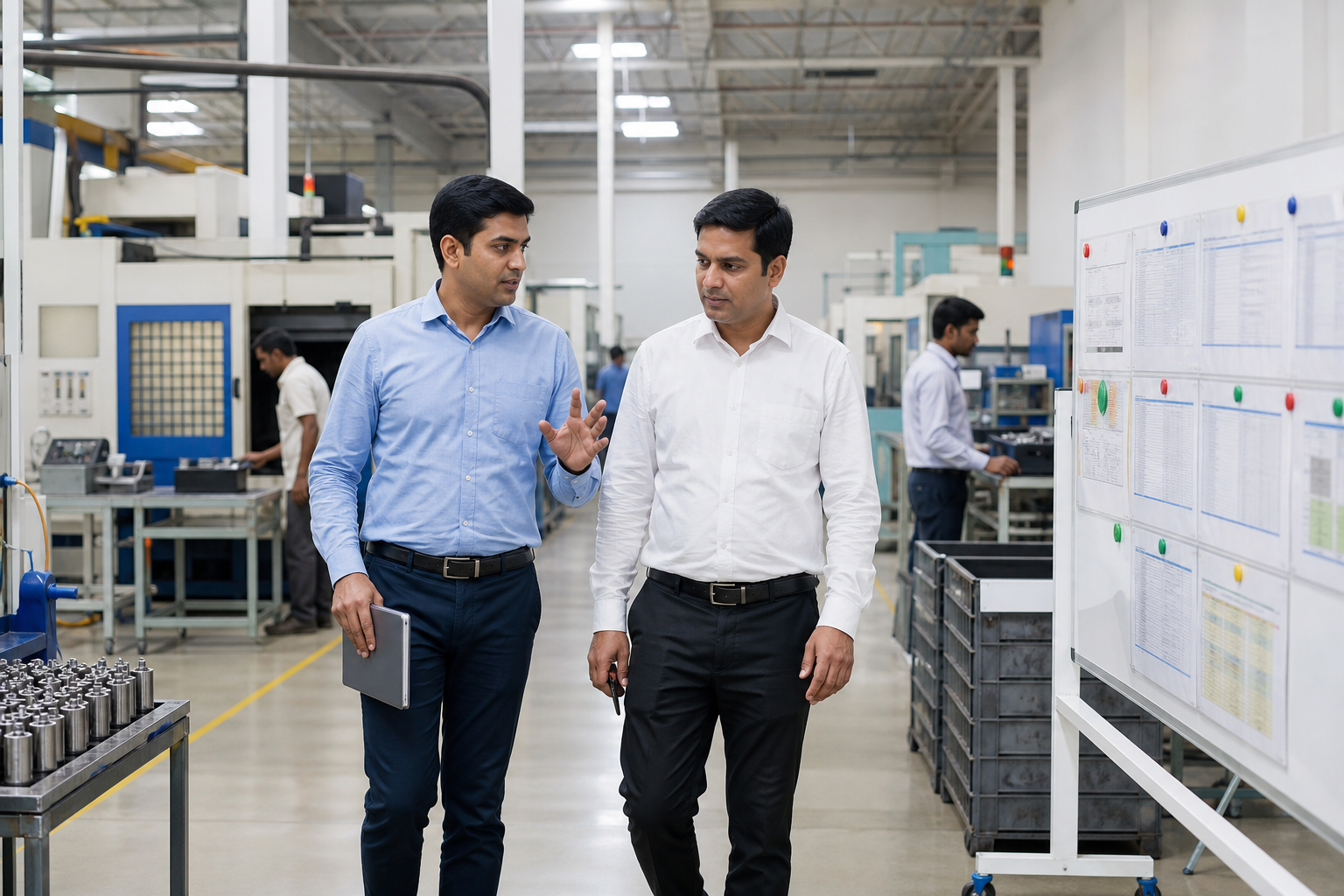
IIPM-12 overview: twelve stages to warehouse delivery
- Define import brief and selection criteria
- Discover and shortlist suppliers
- Verify and select supplier
- RFQ, quotation comparison, and Incoterm selection
- Purchase order, payment terms, and production planning
- Production monitoring and in-process quality gates
- Pre-shipment inspection and release decision
- Export documentation pack assembly
- Freight booking, cargo handoff, and export customs (India)
- In-transit tracking and arrival preparation
- Destination customs clearance and duty payment
- Final delivery and warehouse receipt
```text SELECT → COMMERCIALIZE → PRODUCE → VERIFY → DOCUMENT → SHIP → CLEAR → RECEIVE
[1–3] [4–5] [6–7] [8] [9] [10–11] [12] Supplier RFQ & PO Production QC/PSI Export Freight Customs Warehouse selection terms & monitor docs booking clearance receipt ```
The twelve stages:
Stages 1–3 overlap with sourcing workflow guides such as how to source products from India and ultimate guide to sourcing products from India. Stages 4–12 are import execution proper—this cluster's core territory.
Master process table: IIPM-12 at a glance
Duration note: Production (Stage 6) and ocean transit (Stage 10) dominate most timelines. Air freight compresses Stage 10 but raises freight cost. First-time supplier relationships often add time in Stages 3, 7, and 8.
Comparison table
Swipe →
Data table — swipe horizontally on small screens
| Stage | IIPM-12 name | Primary owner | Key inputs | Key outputs | Typical duration | Common failure modes | Deep-dive link |
|---|---|---|---|---|---|---|---|
| 1 | Define import brief | Buyer | Product spec, target market, volume, compliance needs | Written import brief, selection criteria | 3–10 days | Vague specs; wrong category assumptions | How to import products from India |
| 2 | Discover and shortlist suppliers | Buyer / sourcing partner | Import brief, category research | Longlist (5–15), shortlist (2–4) | 1–3 weeks | B2B platform noise; no cluster fit | Find manufacturers in India; How to source products from India |
| 3 | Verify and select supplier | Buyer / sourcing partner | Shortlist, verification checklist | Approved supplier, sample plan | 1–4 weeks | Fake factories; trader vs manufacturer | Verify Indian supplier before order; Indian supplier due diligence |
| 4 | RFQ, quote compare, Incoterms | Buyer | Approved spec, quantities, delivery need | Comparable quotes, Incoterm choice | 1–2 weeks | Incomparable quotes; wrong Incoterm | FOB vs CIF vs EXW India; Landed cost calculation |
| 5 | PO, payment terms, planning | Buyer + supplier | Final quote, Incoterm, milestones | Signed PO, payment schedule, production plan | 3–10 days | 100% advance without controls; PO/spec mismatch | How to pay Indian suppliers |
| 6 | Production monitoring | Supplier + buyer/partner | PO, approved sample, BOM | Production updates; in-process QC reports | 2–10+ weeks | Spec drift; undisclosed subcontracting | Monitor production at Indian factories; India QC process |
| 7 | Pre-shipment inspection | Buyer / inspector | Finished goods, AQL plan | PSI report; release/hold decision | 2–5 days | Ship before PSI; sample not representative | Pre-shipment inspection in India |
| 8 | Export documentation pack | Supplier / exporter / partner | PSI release, booking details | CI, PL, COO, certs, BL draft set | 3–7 days | Invoice/packing mismatch; missing COO or HS | Documents required to import from India |
| 9 | Freight booking and export customs | Freight forwarder / exporter | Cargo ready date, docs draft | Booking confirmation, BL/AWB, export cleared | 5–14 days | Booking before cargo ready; port cutoff miss | Shipping from India guide |
| 10 | In-transit and arrival prep | Buyer / broker | BL/AWB, docs copy, ISF/data prep | Tracking; broker entry filed | 2–45 days (mode dependent) | Late ISF/entry data; insurance gap | Shipping from India; Customs clearance |
| 11 | Destination customs clearance | Customs broker / buyer | Full doc pack, HS, duty payment | Customs release, delivery order | 2–10 days | Classification dispute; missing cert | Customs clearance importing from India; Import duties and taxes |
| 12 | Warehouse delivery and receipt | Buyer / 3PL | Customs release, carrier delivery | GRN, put-away, stock in system | 1–5 days | Short cartons; damage; labeling issues | How to import products from India; Total cost of buying |
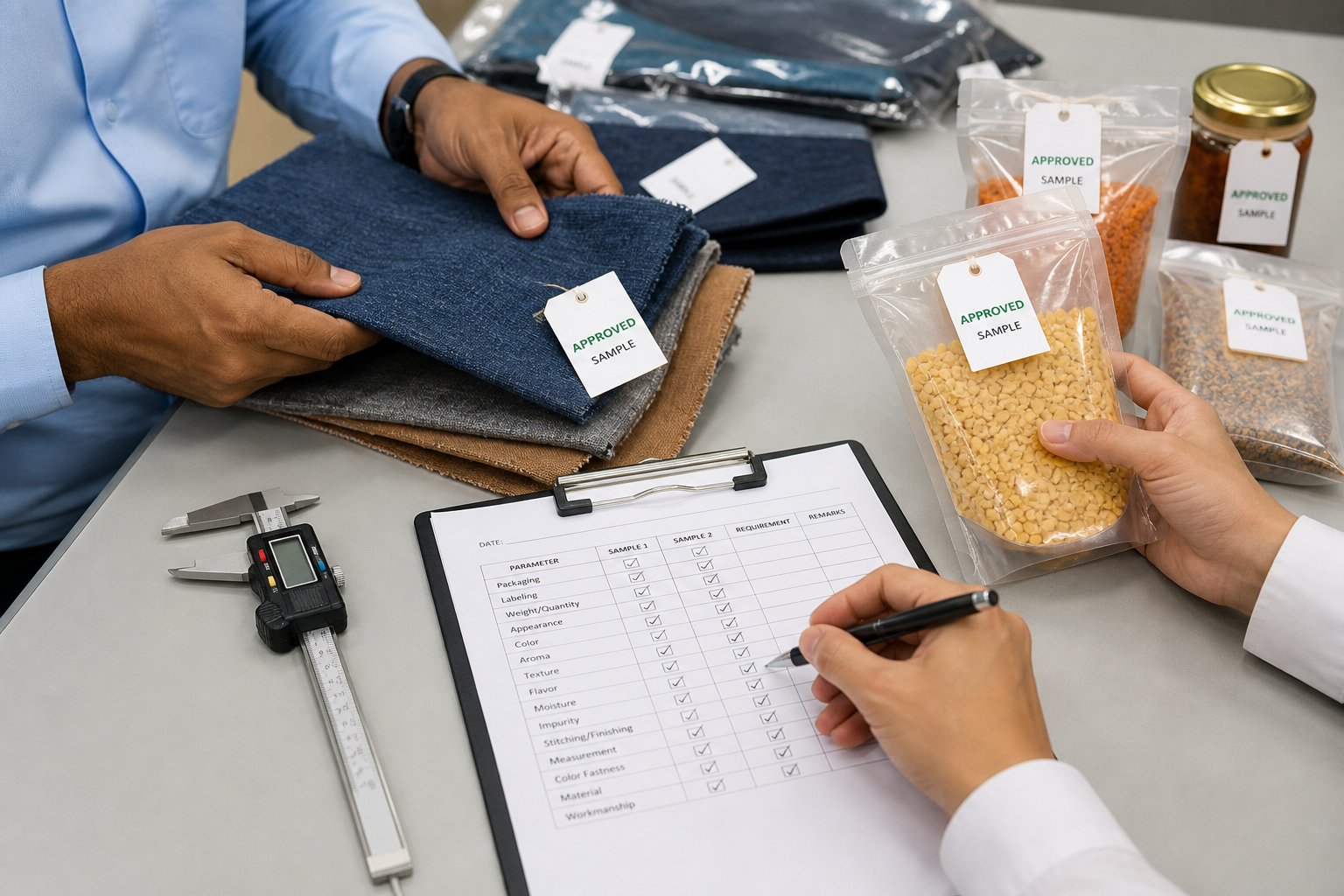
Stage-by-stage detail (Stages 1–12)
The master table above is your primary reference. Below is a condensed view of critical outputs and failure modes at each stage.
Stage 1 — Define import brief: Product spec, compliance, quantity, destination, Incoterm direction, payment tolerance, and timeline. Failure: vague specs that make quotes incomparable. → How to import products from India
Stage 2 — Discover and shortlist: Longlist 5–15 candidates; narrow to 2–4 for verification. Failure: choosing from B2B listings without cluster fit. → How to source products from India
Stage 3 — Verify and select: Registration, capacity, manufacturer authenticity, export experience, fraud screening. Failure: skipping verification on "urgent" timelines. → Verify Indian supplier; Supplier scorecard
Stage 4 — RFQ, compare, Incoterms: Normalized quotes, Incoterm choice, preliminary landed cost. Failure: comparing quotes with different packing or HS assumptions. → FOB vs CIF vs EXW; Landed cost; Total cost
Stage 5 — PO and payment terms: Signed PO matching approved sample; milestone payments with inspection hold. Failure: 100% advance; PO/spec mismatch. → How to pay Indian suppliers
Stage 6 — Production monitoring: Status updates, DUPRO where needed, packaging approval, realistic ship-ready dates. Failure: spec drift discovered late. → Monitor production overseas; India QC process
Stage 7 — Pre-shipment inspection: PSI before balance payment and dispatch; pass/fail decision. Failure: shipping before PSI or without agreed AQL. → Pre-shipment inspection in India
Stage 8 — Export documentation: Commercial invoice, packing list, BL/AWB, COO, certificates, consistent HS codes. Failure: invoice/packing mismatch. → Documents required to import from India
Stage 9 — Freight and export customs: Booking, container load, Indian export clearance, BL release. Failure: booking before cargo ready. → Shipping from India
Stage 10 — In-transit and arrival prep: Tracking, ISF/data filing, broker instructions, warehouse receiving plan. Failure: late security filings. → Customs clearance
Stage 11 — Destination customs: Entry filing, duty payment, release. Failure: HS misclassification or missing permits. → Import duties and taxes
Stage 12 — Warehouse receipt: Carton count, damage notes, GRN, spot-check QC. Failure: accepting shorts without documentation. → Total cost true-up
What each stage requires in practice
Beyond the summary lines above, three stages cause disproportionate delays when buyers underestimate them.
Production and quality (Stages 6–7)
Production is where specifications become physical goods. Buyers without India staff should define a reporting rhythm before PO issuance: weekly photo updates, milestone gates at material receipt and first production, and packaging approval before final pack. Do not treat production as a black box between deposit and PSI.
Pre-shipment inspection is a release gate, not a formality. Agree AQL levels, defect classifications, and who pays for rework before inspection is booked. If PSI fails, the process loops back to Stage 6—not forward to Stage 9. For regulated categories, align PSI criteria with destination compliance requirements so Stage 11 does not become the first compliance check.
Documentation and freight handoff (Stages 8–9)
Documentation errors are the most common avoidable cause of customs delay. Before cargo moves, confirm that commercial invoice value, quantity, and description match the PO and packing list; HS code is consistent across all documents; certificate of origin is present if you intend to claim preferential duty; and consignee and notify party details match your broker instructions.
Freight booking should follow confirmed cargo readiness, not optimistic production dates. Demurrage, detention, and rebooking fees often exceed the savings from booking early. Align Incoterms with who books freight and who bears risk during port dwell time—see FOB vs CIF vs EXW when buying from India.
Clearance and receipt (Stages 11–12)
Customs clearance begins before arrival. Provide your broker with documents, classification rationale, and any import permits as early as Stage 10 allows. When duties post higher than modeled at Stage 4, update landed cost and TCO records for reorder pricing decisions.
Warehouse receipt closes the operational loop. Compare received quantity to packing list, document damage on the carrier proof of delivery, and quarantine the first inbound lot for spot-check QC if PSI was conditional. Feed inspection pass rates and defect notes back into Stage 3 supplier records for the next PO cycle.
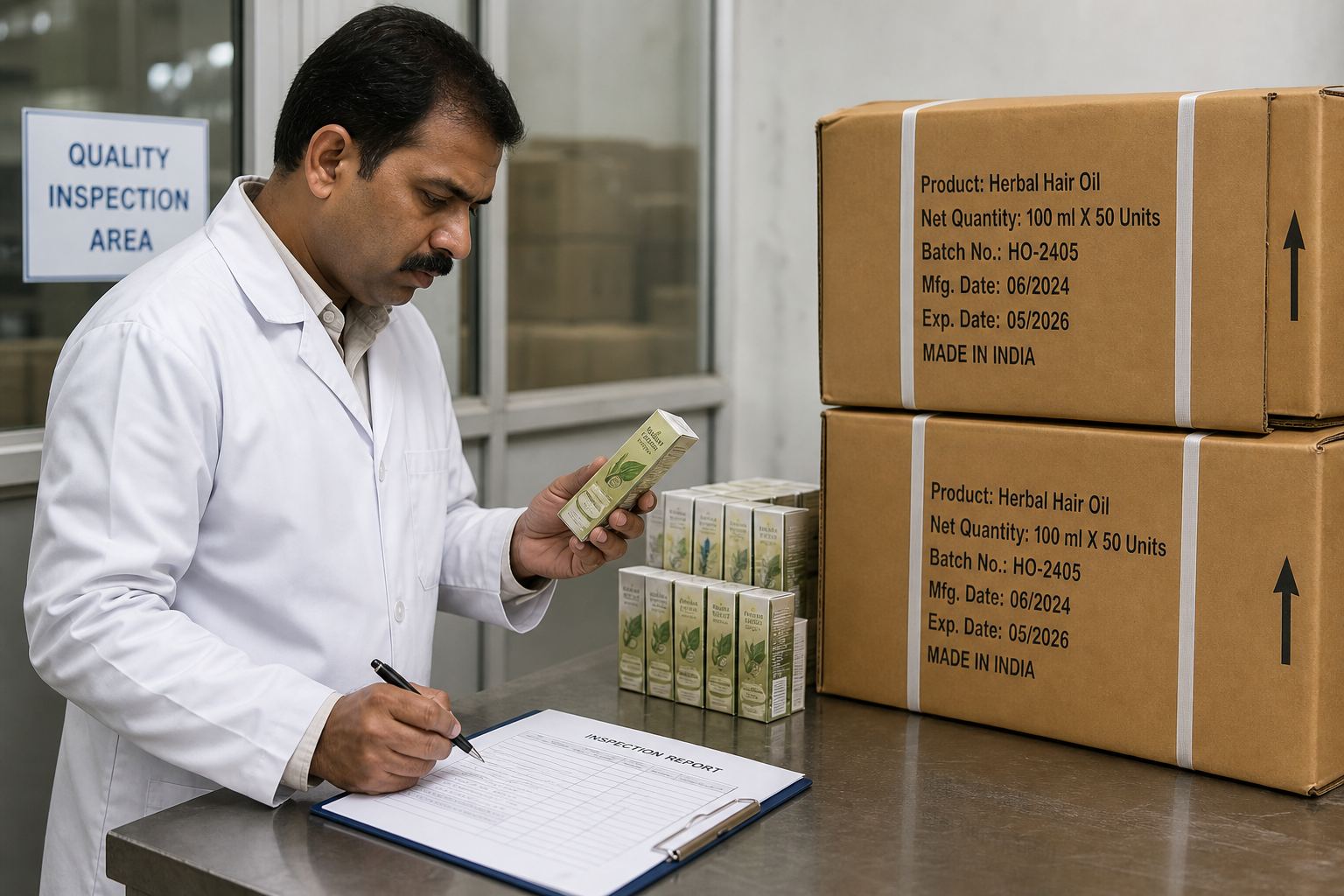
First import vs reorder: how IIPM-12 compresses
Not every stage runs at full depth on every shipment. Use this guide:
Reorders save calendar time in Stages 1–5 but should not skip Stages 7–8 on high-risk goods. A supplier that performed well on one SKU may still fail on a new material or packaging change.
Comparison table
Swipe →
Data table — swipe horizontally on small screens
| Stage | First import with new supplier | Reorder with proven supplier |
|---|---|---|
| 1 Define brief | Full spec and compliance write-up | Revision only if SKU or market changed |
| 2 Discover | Full search | Skip—return to approved supplier list |
| 3 Verify | Full verification or audit | Light refresh if >12 months or new product line |
| 4 RFQ | Multi-supplier compare | Single RFQ or call-off against frame agreement |
| 5 PO | Full negotiation | Streamlined PO against approved terms |
| 6 Production | Close monitoring | Periodic updates; DUPRO if high risk |
| 7 PSI | Recommended | Risk-based—may reduce scope on stable SKUs |
| 8–12 Docs to warehouse | Full process each time | Same rigor; fewer surprises if supplier is stable |
Coordinating IIPM-12 with sourcing and QC clusters
- Import cluster (Arts 1–9): commercial and logistics depth for Stages 4–11;
- Supplier verification cluster: Stages 2–3 evidence and fraud prevention;
- Quality control cluster: Stages 6–7 inspection planning and execution.
IIPM-12 sits at the center of three content areas:
When a buyer asks "what do I do next?", use stage number to route the question. Payment milestone dispute before production starts → Stage 5 and how to pay Indian suppliers. Factory will not share production photos → Stage 6 and monitor production overseas. Invoice HS code differs from sample submission → Stage 8 and import duties and taxes.
For category-level strategy—choosing product families, evaluating India as a supply base, and building multi-year import programs—pair IIPM-12 with the legacy complete guide to importing products from India and ultimate guide to sourcing products from India. Those guides answer why and what category; IIPM-12 answers when and in what order.

Typical timeline bands by import profile
Use these bands for planning—not guarantees:
Add buffer for holidays (Indian festival seasons, Chinese New Year if components sourced regionally), monsoon logistics in some corridors, and port congestion.
Comparison table
Swipe →
Data table — swipe horizontally on small screens
| Import profile | Stages 1–5 (pre-production) | Stage 6 (production) | Stages 7–9 (ready to ship) | Stage 10 (transit) | Stages 11–12 (clear + deliver) | Total indicative |
|---|---|---|---|---|---|---|
| Reorder, proven supplier, ocean FCL | 1–2 weeks | 4–6 weeks | 1–2 weeks | 3–5 weeks | 1–2 weeks | 10–16 weeks |
| First order, new supplier, ocean LCL | 3–6 weeks | 6–10 weeks | 2–3 weeks | 4–6 weeks | 1–2 weeks | 16–27 weeks |
| Urgent replenishment, air freight | 1–2 weeks | 3–5 weeks | 1 week | 3–7 days | 3–7 days | 6–9 weeks |
| Custom tooling / new mold | 4–8 weeks | 8–16 weeks | 2–3 weeks | 3–5 weeks | 1–2 weeks | 18–34 weeks |
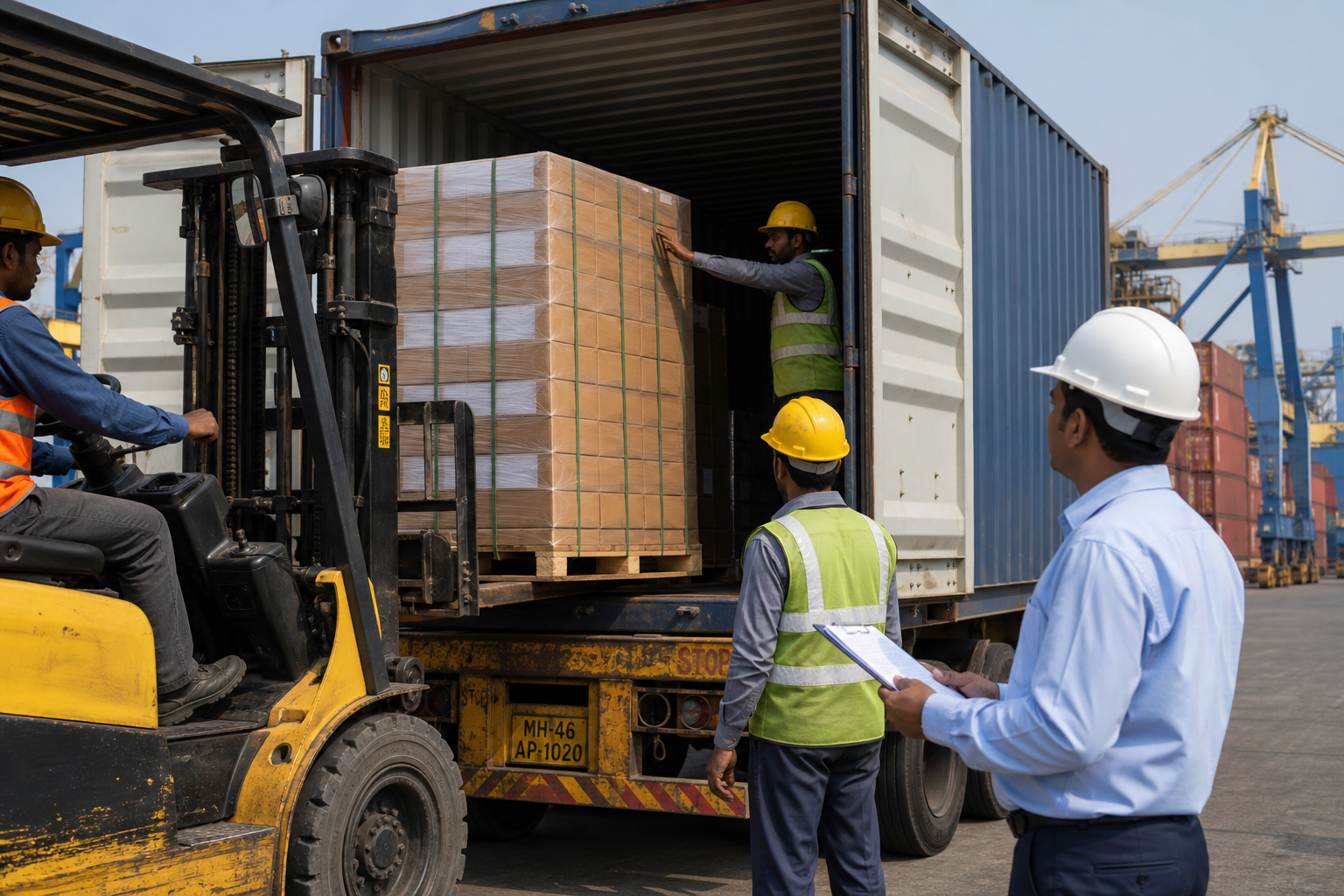
Roles and ownership: who runs IIPM-12
Ambiguity kills import timelines. Document one accountable owner per stage in your PO or service agreement—even if tasks are delegated.
Comparison table
Swipe →
Data table — swipe horizontally on small screens
| Role | Typical IIPM-12 stages owned or shared |
|---|---|
| International buyer | 1, 4, 5, 7 decision, 10–12 |
| Indian supplier / factory | 6 production, 8 docs support, 9 cargo readiness |
| Sourcing partner | 2–3, 6 monitoring, 7 coordination, 8 collection |
| Merchant exporter | 3–9 as exporter of record; docs and booking bundled |
| Freight forwarder | 9–10 booking and tracking |
| Customs broker | 10–11 entry and clearance |
| Third-party inspector | 6–7 QC and PSI |
| Warehouse / 3PL | 12 receipt |
Operating models: self-managed vs partner-led import
Altus Exports supports buyer-side coordination across import products from India, global sourcing partner in India, and merchant exporter in India models depending on scope. IIPM-12 applies to all—the difference is which boxes sit in-house.
Comparison table
Swipe →
Data table — swipe horizontally on small screens
| Model | Buyer directly manages | Partner or exporter typically manages |
|---|---|---|
| Self-managed import | Stages 1–5, 7 decision, 9–12 with forwarder/broker | — |
| Sourcing partner coordination | 1, 4–5 decisions; approvals | 2–3, 6–8 execution support |
| Merchant exporter | Spec, PO approval, 7, 11–12 | 3–9 as commercial exporter |

Failure modes that span multiple stages
Some problems are stage-specific; others are systemic:
Prevention guides: how to prevent quality problems when sourcing from India, reduce India sourcing risk for international buyers, total cost IBTCO-10.
Comparison table
Swipe →
Data table — swipe horizontally on small screens
| Cross-stage failure | Where it starts | Where it hurts |
|---|---|---|
| Weak specification control | Stage 1 | Stages 6–7 rework; Stage 11 misdeclaration |
| Verification skipped | Stage 3 | Stages 6–8 fraud or capacity collapse |
| Incomparable commercial terms | Stage 4 | Stages 9–11 cost overruns |
| Advance-heavy payment | Stage 5 | Stage 7 leverage lost |
| No production visibility | Stage 6 | Stage 7 surprises; Stage 9 false ready dates |
| Document pack treated as afterthought | Stage 8 | Stage 11 hold; Stage 12 accounting mismatch |
| Landed cost not modeled pre-PO | Stage 4 | Stage 11 margin shock; Stage 12 pricing error |
Cluster article map: which guide to open at each stage
Comparison table
Swipe →
Data table — swipe horizontally on small screens
| IIPM-12 stage | Primary cluster article | Supporting articles |
|---|---|---|
| 1 | How to import products from India | What buyers need to know importing India |
| 2–3 | How to source products from India | Supplier verification cluster |
| 4 | FOB vs CIF vs EXW | Landed cost; Total cost |
| 5 | How to pay Indian suppliers | How to import products from India |
| 6–7 | QC cluster + documents prep | India QC process |
| 8 | Documents required to import from India | Export documentation checklist |
| 9–10 | Shipping from India | Incoterms |
| 11 | Customs clearance importing from India | Import duties and taxes |
| 12 | Total cost of buying from India | Landed cost true-up |

Conclusion
The India import process from supplier selection to warehouse delivery is a twelve-stage chain best managed with explicit ownership, documented handoffs, and timely deep dives—not improvised at each shipment. IIPM-12 gives international buyers a practical map: what happens when, who owns it, how long it typically takes, what breaks, and which cluster guide to open next.
Use how to import products from India for commercial decisions, IIPM-12 for sequential execution, and Articles 2–9 for step-specific depth on documents, landed cost, Incoterms, payments, shipping, customs, duties, and total cost. For category and long-range strategy, retain the legacy complete guide to importing products from India as complementary reading—not a substitute for this process map.
If you want coordinated support across supplier selection, production follow-up, export documentation, and import logistics, contact Altus Exports with your product brief and destination market. A clear first conversation can map IIPM-12 stages to your team’s capacity and identify where partner-led execution would reduce timeline risk.