
Customs Clearance When Importing From India: What Buyers Need to Know
By Saurabh Mittal, Founder, Altus Exports
Customs clearance when importing from India happens at your destination country, not in India. Before arrival, send a pre-alert and required filings such as ISF where applicable, appoint a licensed customs broker, submit a complete import entry with origin export documents,…

When goods leave an Indian factory or exporter and sail or fly toward your warehouse, the export side in India is only half of the border-crossing story. The other half—the part that determines whether your shipment is released, held, examined, or sent back for correction—happens at destination customs in your country.
Customs clearance importing from India is not a single form or a one-day event. It is a sequence of pre-arrival notifications, document matching, regulatory checks, duty assessment, possible physical examination, and final release so freight can move to your facility. For international buyers sourcing textiles, engineering goods, handicrafts, food ingredients, components, or private-label products from India, clearance delays at arrival can erase the savings from a well-negotiated FOB price.
This guide focuses on buyer-side destination clearance for goods originating from India. It explains the clearance workflow from pre-alert through delivery, what documents you need, how origin export paperwork relates to your import entry, why shipments are held or examined, and how to reduce avoidable delays. It does not replace market-specific legal advice, and it does not restate full duty-rate theory—that belongs in the companion guide on how import duties and taxes work when buying products from India. For freight booking and transit, see shipping from India: a complete guide for international importers.
Altus Exports supports international buyers with export documentation coordination from India and handoff visibility before shipment departs. Clearance itself is executed at destination through your broker, but document accuracy at origin strongly affects whether clearance is routine or painful.
Destination clearance vs. export clearance in India
Buyers often conflate two different processes:
Goods made or shipped from India arrive with export-side documents—commercial invoice, packing list, bill of lading or air waybill, and often a certificate of origin or regulatory certificates. Those documents support your import entry filed at destination. Customs authorities do not "clear" your shipment in India for entry into the United States, United Kingdom, UAE, Australia, Canada, or any other import market. That decision happens when the cargo reaches your border.
Understanding this split prevents two common errors: assuming the Indian supplier's "export clearance" means your import is pre-approved, and assuming your broker can fix missing or inconsistent documents after the vessel has already arrived.
For a full checklist of documents the buyer must receive and verify, see documents required to import products from India.
Comparison table
Swipe →
Data table — swipe horizontally on small screens
| Process | Where it happens | Who primarily manages it | Purpose |
|---|---|---|---|
| Export clearance | India (origin) | Indian exporter, CHA, or freight forwarder | Confirm goods may legally leave India; export declarations and shipping docs |
| Import clearance | Your country (destination) | Your customs broker and you as importer of record | Confirm goods may enter; assess duties/taxes; apply import regulations |
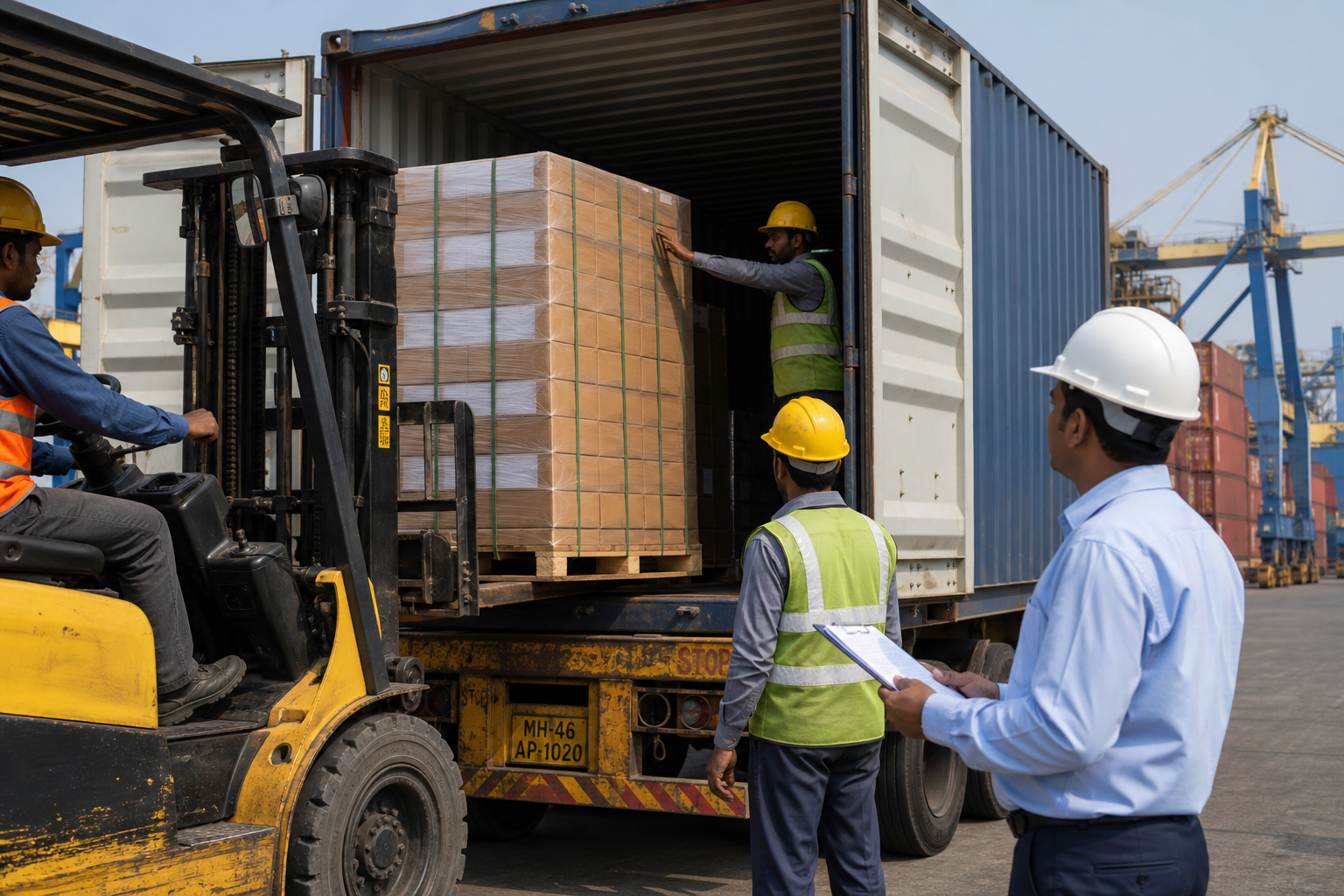
The destination customs clearance workflow at a glance
Although each country has its own system, the operational sequence for India-origin imports follows a recognizable pattern:
``text Pre-alert → Pre-arrival filing (where required) → Broker entry → Regulatory/duty assessment → Exam (if selected) → Duty/fee payment → Customs release → Delivery to warehouse ``
The following sections walk through each stage in the order a typical ocean or air shipment experiences them.
Step 1: Pre-alert—before the shipment arrives
- exporter name and address in India;
- buyer or consignee name;
- estimated departure date (ETD) and estimated arrival date (ETA);
- vessel or flight details;
- container number(s) or air waybill number;
- Incoterms and who booked freight;
- commercial invoice and packing list (draft or final);
- product description sufficient for broker review;
- any known regulatory flags (food, cosmetics, electronics, textiles, wood packaging, etc.).
A pre-alert is an advance notice from your supplier, exporter, or freight forwarder that a shipment is coming. It should reach your customs broker and, if you manage logistics internally, your operations team before cargo arrives at the port or airport.
A useful pre-alert for India-origin goods typically includes:
The pre-alert is not a substitute for the formal import entry. Its purpose is to give your broker time to review product classification hints, identify missing certificates, confirm consignee/importer-of-record details, and flag any entry type or filing deadline—such as ISF in the United States—before the shipment lands.
Why pre-alert quality matters for India imports
India exports a wide range of product categories with different document expectations. A shipment of brass handicrafts, organic spice blends, and industrial fasteners may each need different supporting papers. If your broker learns about the shipment only when the container is already at berth, you lose the window to obtain a corrected invoice, origin certificate, or test report from the Indian exporter.
Build pre-alert into your purchase order workflow or sourcing-partner reporting cadence. For end-to-end process context, see India import process: from supplier selection to delivery at your warehouse.

Step 2: Pre-arrival filing—ISF, safety and security declarations, and entry prep
Several destination markets require pre-arrival electronic filings separate from the full customs entry. These filings are time-sensitive. Missing or late filing can trigger penalties, holds, or exam bias even when duties are eventually paid correctly.
ISF deserves explicit mention for U.S. buyers because India-to-U.S. ocean freight is common. ISF is not the customs entry. It is a security filing tied to the bill of lading data. The importer of record is responsible even when a supplier or forwarder offers to "handle shipping." If your name is importer of record, confirm who files ISF, verify data against the invoice and supplier records, and treat late or mismatched ISF as a clearance risk.
Your broker should receive shipment data early enough to prepare the entry before arrival when your program allows pre-filed entries. Pre-filing does not guarantee instant release, but it reduces idle time after the vessel discharges.
Comparison table
Swipe →
Data table — swipe horizontally on small screens
| Market | Common pre-arrival requirement | Typical deadline (check current rules) | Notes for India-origin cargo |
|---|---|---|---|
| United States | Importer Security Filing (ISF / "10+2") | Generally 24 hours before loading at foreign port for ocean | Importer of record or authorized agent files; needs accurate supplier, buyer, HTS hints |
| United States | Entry type planning (formal vs informal vs ABI) | Before arrival for fastest release | Broker selects entry type based on value and program eligibility |
| European Union | Entry Summary Declaration (ENS) via carrier | Before arrival at EU port | Carrier-driven; buyer should confirm data accuracy in shipping instructions |
| United Kingdom | Safety and Security declarations | Pre-arrival via carrier or declarant | Post-Brexit UK systems differ from legacy EU-only workflows |
| Australia | Integrated Cargo System (ICS) reporting | Pre-arrival via carrier and broker | Quarantine and biosecurity may add parallel requirements |
| Canada | Advance Commercial Information (ACI) / eManifest | Pre-arrival | Broker and carrier coordination required |
| UAE | Carrier and port pre-arrival processes | Varies by emirate and mode | Free-zone vs mainland import paths differ |
Step 3: Appoint and instruct your customs broker
- complete commercial invoice and packing list;
- transport document (bill of lading, sea waybill, or air waybill);
- certificate of origin if you intend to claim preferential treatment;
- product specifications or catalog pages for classification support;
- any product-specific certificates (phytosanitary, fumigation, test reports, FDA prior notice where applicable, etc.);
- Incoterms and freight/insurance amounts for valuation;
- your importer-of-record registration details (EIN, VAT, ABN, BN, etc.).
In most markets, international buyers use a licensed customs broker (customs broker, customs agent, or authorized declarant depending on jurisdiction) to file the import entry, communicate with customs, arrange duty payment, and obtain release.
The broker works on your instructions but relies on your data. For India imports, give your broker:
Broker selection criteria
- multi-SKU invoices with detailed descriptions customs expects;
- hand-crafted or artisan goods where valuation scrutiny is higher;
- consolidated LCL shipments where document mismatches are common;
- re-used descriptions from supplier templates that do not match HTS language.
Choose a broker with experience in your product category and origin lane, not only the lowest disbursement fee. India-origin shipments may involve:
Ask whether the broker handles exams in-house, what their average release time is for your port and product type, and how they communicate holds. A broker who responds only after a storage clock starts running is expensive regardless of quoted service fees.
Step 4: Import entry, matching, and regulatory screening
- consignee and importer-of-record identifiers;
- origin country (India);
- HS/HTS classification per line item;
- customs value components;
- quantities, weights, and package counts;
- reference to transport document and invoice numbers;
- applicable preference or program claims;
- flags for partner government agencies (PGAs) where required.
Once cargo is in-bound or arrived, the broker files the import entry (customs declaration) with:
Customs systems match the entry against manifest data, security filings, and prior importer history. Automated risk engines may select the shipment for review or exam based on factors such as importer profile, supplier country, product type, value anomalies, and data inconsistencies—not necessarily because anything is wrong.
Origin export documents vs. destination import entry
Comparison table
Swipe →
Data table — swipe horizontally on small screens
| Document (typical) | Prepared at | Used primarily for |
|---|---|---|
| Commercial invoice | India (exporter) | Value, seller/buyer, terms, product description |
| Packing list | India (exporter) | Weights, cartons, marks, SKU breakdown |
| Bill of lading / AWB | Carrier / forwarder | Evidence of shipment, consignee, routing |
| Export invoice / shipping bill references | India | Export compliance; may appear in document pack |
| Certificate of origin | Chamber or authorized body | Preference claims; origin verification |
| Import entry / declaration | Destination broker | Legal import declaration to your customs authority |
- invoice says 500 units but packing list says 480;
- description "home décor items" on invoice but "handmade brass candle holders" on entry;
- FOB value on invoice does not align with payment records or added freight;
- wrong consignee name between BL and entry;
- origin certificate product description does not match invoice line items.
These document sets serve different authorities but must tell a consistent story:
Discrepancies trigger holds. Examples seen on India-origin shipments:
Your Indian supplier or sourcing partner should issue export documents that are entry-ready—clear descriptions, consistent quantities, harmonized currency, and explicit Incoterms. For how commercial terms affect what costs belong in customs value, see FOB vs CIF vs EXW: which Incoterm should you use when buying from India?.

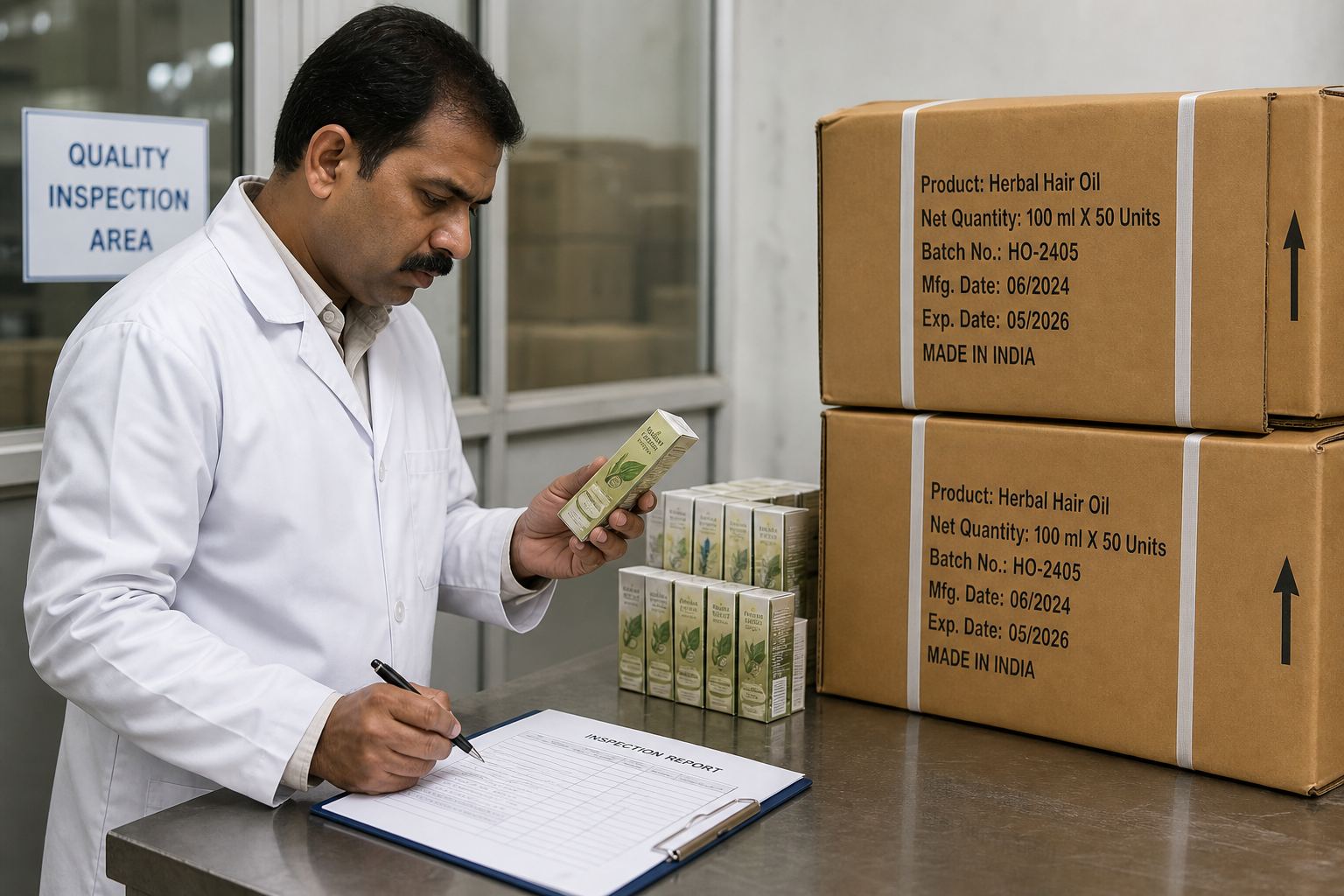
Step 5: Exam risk—when customs wants to see the cargo
- document review (customs asks questions or requests supporting papers);
- x-ray or non-intrusive inspection;
- partial physical exam (selected cartons opened);
- intensive exam (container devanned and goods inspected).
- first-time importer or first-time supplier combination;
- high-value or low-declared-value anomalies;
- products with intellectual property or anti-dumping sensitivity;
- food, supplements, cosmetics, and medical-adjacent goods;
- wood packaging and agricultural products (quarantine interest);
- inconsistencies between ISF, invoice, BL, and entry;
- random pool selection.
- keeping descriptions accurate and specific from the first order;
- aligning weights and counts across all documents;
- avoiding vague invoice lines like "assorted goods";
- responding quickly to broker requests for clarifications;
- maintaining consistent importer compliance history.
Not every shipment is physically examined. Many clear on document review plus automated risk scoring. Others receive:
Exam selection is often opaque to importers. Risk factors relevant to India-origin imports include:
Exams add days or weeks and generate charges—exam site fees, demurrage, drayage, and warehouse handling. They are not proof of fraud; they are part of risk-based enforcement. Still, you should budget time and money for exam possibility on early shipments from a new Indian supplier.
Reduce exam friction by:
Step 6: Valuation questions and customs holds
- the declared value is unusually low for the product type;
- related-party pricing exists between buyer and Indian supplier without adequate explanation;
- assists, royalties, or subsequent proceeds should be included but were not;
- freight, insurance, or packing allocations look inconsistent with Incoterms;
- identical or similar goods have higher prior declarations from other importers.
- purchase order and payment proof;
- related-party pricing studies if applicable;
- identical/similar goods pricing references;
- revised invoice or transfer-pricing documentation.
Customs valuation is the process customs uses to determine the dutiable value of imported goods. Most systems build from the transaction value—the price paid or payable—adjusted for certain additions and deductions according to WTO-aligned rules implemented locally.
Customs may hold or query a shipment when:
For India-origin goods, valuation scrutiny can appear on handicrafts where production cost is hard to infer, on samples declared at nominal value, and on goods where invoice price differs materially from market references.
When customs questions valuation, the hold is not always resolved by paying a higher duty immediately. You may need:
This article does not restate full duty calculation methodology. For how value and classification drive duty amounts, see how import duties and taxes work when buying products from India. For where duty sits inside total import math, see how to calculate the landed cost of products imported from India.
Common hold types beyond valuation
Comparison table
Swipe →
Data table — swipe horizontally on small screens
| Hold type | Typical cause | Buyer action |
|---|---|---|
| Document hold | Missing invoice, BL mismatch, incomplete PGA data | Supply corrected docs quickly via broker |
| PGA hold | Food, FDA, USDA, AQIS, CFIA, etc. requirements | Provide certificates, prior notice, registrations |
| Manifest hold | Discrepancy between carrier manifest and entry | Broker coordinates with carrier |
| Security filing hold | Late or inaccurate ISF or equivalent | Prevention is key; corrections may be limited after arrival |
| Quarantine hold | Wood packaging, seeds, organic material | Fumigation or treatment certificates |
| Anti-dumping / trade remedy | Product within scope of AD/CVD order | Verify before purchase; broker confirms scope |
Treat holds as normal operational events on complex SKUs, not as signs that importing from India is inherently problematic. The cost of holds rises when nobody monitors arrival status daily.
Step 7: Duty, tax, and fee payment
- United States: Duties, MPF, HMF, and any ADD/CVD deposited; informal entries may have simplified processes;
- United Kingdom / EU: Import VAT and customs duty; deferment accounts or postponed VAT accounting where eligible;
- UAE: Duty and VAT depending on mainland vs free-zone treatment;
- Australia: Customs duty plus GST at import;
- Canada: Customs duties, GST/HST, and provincial taxes as applicable.
After customs accepts the entry classification and value—or provisionally accepts them pending review—duties, taxes, and fees are assessed.
Payment mechanics vary:
Your broker often pays on your behalf and invoices you (disbursement). Confirm whether payment is due before release or under a periodic statement program. Late payment blocks release and accumulates storage.
Duty amounts depend on classification and value—topics covered in the duties guide, not repeated here. At clearance stage, your job is to ensure funds are available and that the broker's assessment matches your landed-cost expectations. Surprises at release usually trace back to HS code assumptions made weeks earlier.
Step 8: Customs release
- Full release: All lines cleared; cargo may move;
- Conditional release: Cargo moves while PGA or valuation review continues;
- Partial release: Some lines clear; others held (multi-SKU containers).
Customs release means customs authorizes the cargo to leave bonded control. Release language differs by market—" Customs cleared," "entry accepted," "green lane," "approved for delivery"—but the operational meaning is the same: the broker can instruct the carrier or warehouse to deliver.
Release types:
For ocean freight, release must align with carrier release—freight paid, original BL or telex release, and no ocean freight holds. Buyers who focus only on customs while ignoring freight collect terms can still fail to pick up cargo.
Air shipments usually move faster but face tighter cutoff windows at airline cargo terminals. Missing release by a day on air can mean storage charges that exceed the air freight savings from India.

Step 9: Delivery to your warehouse
After customs and carrier release, cargo moves by truck, rail intermodal, or courier to your warehouse or 3PL. Confirm who arranges last-mile delivery—the broker, your forwarder, or you. For DDP terms, the seller's forwarder may manage this leg, but the importer of record remains responsible for entry accuracy in most markets.
At receipt, verify carton counts against the packing list, note transit or exam damage on the delivery receipt, match SKUs to the PO, and file entry summaries for accounting. Packaging or labeling issues often appear here even after successful clearance.
Market-specific clearance notes for buyers
The core workflow is universal; local rules differ. Confirm current requirements with your broker.
Comparison table
Swipe →
Data table — swipe horizontally on small screens
| Market | Key clearance considerations for India-origin cargo |
|---|---|
| United States | Customs broker, ISF for ocean, formal/informal entry by value, PGA compliance; FDA prior notice for many foods |
| UK / EU | EORI registration, import VAT handling, separate UK vs EU entry post-Brexit; preferential origin requires valid proof |
| UAE / Gulf | Mainland vs free-zone paths differ; document intended use clearly |
| Australia | Biosecurity parallel to customs—wood packaging, food, and plant materials may need treatment certificates |
| Canada | CBSA entry, GST/HST, possible SIMA duties; pre-arrival ACI data quality matters |
How export documentation quality affects clearance
Most clearance delays start before arrival: vague descriptions, invoices issued before final weights, missing origin or regulatory certificates, and inconsistent names across GST invoice, export invoice, and BL. Specify document standards in writing—English descriptions, SKU-level invoice detail, post-packing weights, and a named contact for corrections before sailing. Cross-reference documents required to import products from India. Altus Exports coordinates export document packs so destination brokers receive consistent data before the vessel sails.
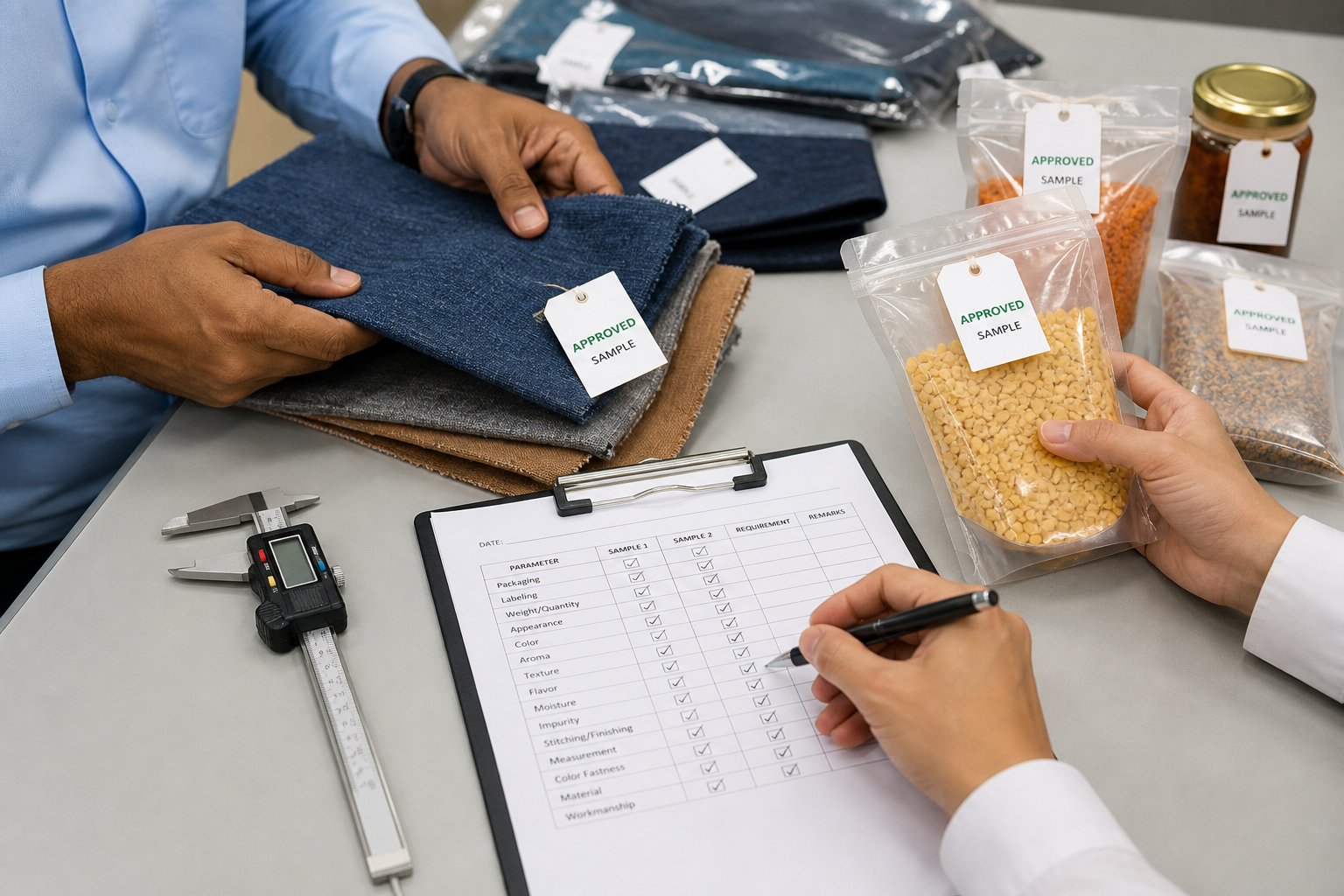
Reducing clearance delays: a practical buyer checklist
Checklist
- Confirm importer-of-record details before production finishes.
- Share product specs and intended HS direction with your broker at PO stage—not at arrival.
- Require pre-alert with draft invoice and packing list before shipment.
- Verify ISF or equivalent filing for ocean to the United States or other required markets.
- Match invoice, packing list, and BL before the supplier hands cargo to the carrier.
- Obtain origin or regulatory certificates before sailing, not after holds appear.
- Monitor arrival and hold status daily during the critical window.
- Pre-authorize duty payment so release is not waiting on finance approval.
- Budget exam and storage contingency on first shipments.
- File entry summaries and reconcile against your landed cost model.
Use this checklist on every India shipment until the lane is routine:
Common mistakes international buyers make
Common Mistakes Box
Mistake 1: Assuming export clearance in India equals import approval
Indian customs clearing export does not pre-clear your country. Destination rules, duties, and agencies still apply fully.
Mistake 2: Using the freight forwarder as broker without confirming responsibility
Forwarders may offer brokerage, but roles blur. Know who is legally filing, who carries errors, and who pays penalties.
Mistake 3: Vague product descriptions on the invoice
"General merchandise" invites classification questions, valuation skepticism, and exams. Use specific, honest descriptions.
Mistake 4: Ignoring pre-arrival filing deadlines
Late ISF or poor manifest data creates holds that no amount of broker effort fully removes.
Mistake 5: Treating the certificate of origin as optional paperwork
If you rely on preferential rates, origin proof must be valid before entry. Obtaining it after arrival often fails.
Mistake 6: No daily monitoring during arrival week
Customs and carriers move on their clocks. Unanswered broker questions turn into storage charges.
Mistake 7: Separating clearance from total cost planning
Duty surprises at release mean your pricing model was incomplete. Connect clearance outcomes back to total cost of buying products from India.
Clearance is a shared outcome across supplier, forwarder, broker, and buyer. If you buy FOB from India, you control freight and usually appoint the broker. Under CIF or DDP, confirm who files entry and whether you remain importer of record—Incoterms allocate cost, not always compliance. See FOB vs CIF vs EXW.

Conclusion
Customs clearance importing from India is a destination-side process that begins before the vessel or aircraft arrives. Successful clearance depends on pre-alerts, timely ISF or equivalent filings where required, a competent broker, consistent origin export documents, accurate import entry data, readiness for exams and valuation questions, prompt duty payment, and coordinated delivery after release.
The Indian export paperwork your supplier provides is the foundation your broker builds on. Weak documents at origin become holds at destination. International buyers who treat clearance as a shared workflow—linking sourcing, documentation, freight, and broker instructions—move India-origin goods into inventory faster and with fewer surprise costs.
If you are sourcing from India and want export documentation coordinated before shipment so your broker receives a clean handoff, contact Altus Exports with your product category, destination market, and Incoterm. A structured document review before sailing is one of the highest-return clearance steps you can take.