
How to Verify an Indian Supplier Before Placing an Order
By Saurabh Mittal, Founder, Altus Exports
To verify an Indian supplier before placing an order, confirm the legal entity and export credentials, validate that the factory can make your specification, obtain and approve representative samples, assess quality controls and capacity, compare commercial terms, and start…

An Indian supplier can look credible in a marketplace profile, a video call, or a quotation and still be unsuitable for your order. The risk is not limited to fraud. A genuine business may be a trader rather than the stated factory, lack capacity at your required volume, misunderstand a material specification, or quote with assumptions that change after a deposit is paid.
For an international buyer, verification is therefore a decision process, not a single document check. You want enough evidence to answer four questions before you issue a purchase order: Who is the contracting party? Can it make the product as specified? Can it deliver the agreed quality and timing? Are the commercial and payment controls clear if something goes wrong?
This guide uses the Pre-Order Verification Gate Framework. Each gate removes a different uncertainty before the next commitment. The framework is designed for a first order, a new category, or any supplier relationship where your team does not yet have repeat-order evidence. It does not promise that every delivery risk disappears; it helps make the risks visible and controllable before funds are committed.
Altus Exports supports international buyers with local supplier research, verification, sample coordination, quality follow-up, and export execution. The same gates are useful whether you work with Altus Exports, an independent inspection company, or your own procurement team.
Why supplier verification must happen before the PO and deposit
- you found the supplier through a directory, marketplace, social platform, or unsolicited approach;
- the order uses a new material, custom tooling, branded packaging, or regulatory requirement;
- the supplier is quoting substantially below comparable offers;
- you are buying from a factory for the first time or through an unfamiliar trading company;
- the order has a meaningful deposit, a tight launch date, or limited opportunity for replacement stock;
- several people on the supplier side are communicating but no one clearly owns technical, commercial, and export responsibilities.
Once a purchase order and deposit are sent, your negotiating position changes. The supplier may have purchased material, reserved production time, or started work. Correcting an unclear specification then becomes slower and more expensive. If the business identity or export role was never confirmed, even a routine dispute can become hard to resolve across borders.
Pre-order verification is especially important when:
It is also worth separating “real company” from “approved supplier.” A company-registration record can support the first conclusion. It does not prove that the company controls the factory, can meet your specifications, or will perform consistently. For the entity checks behind the first gate, see how to verify Indian company registration, GST, and export credentials.
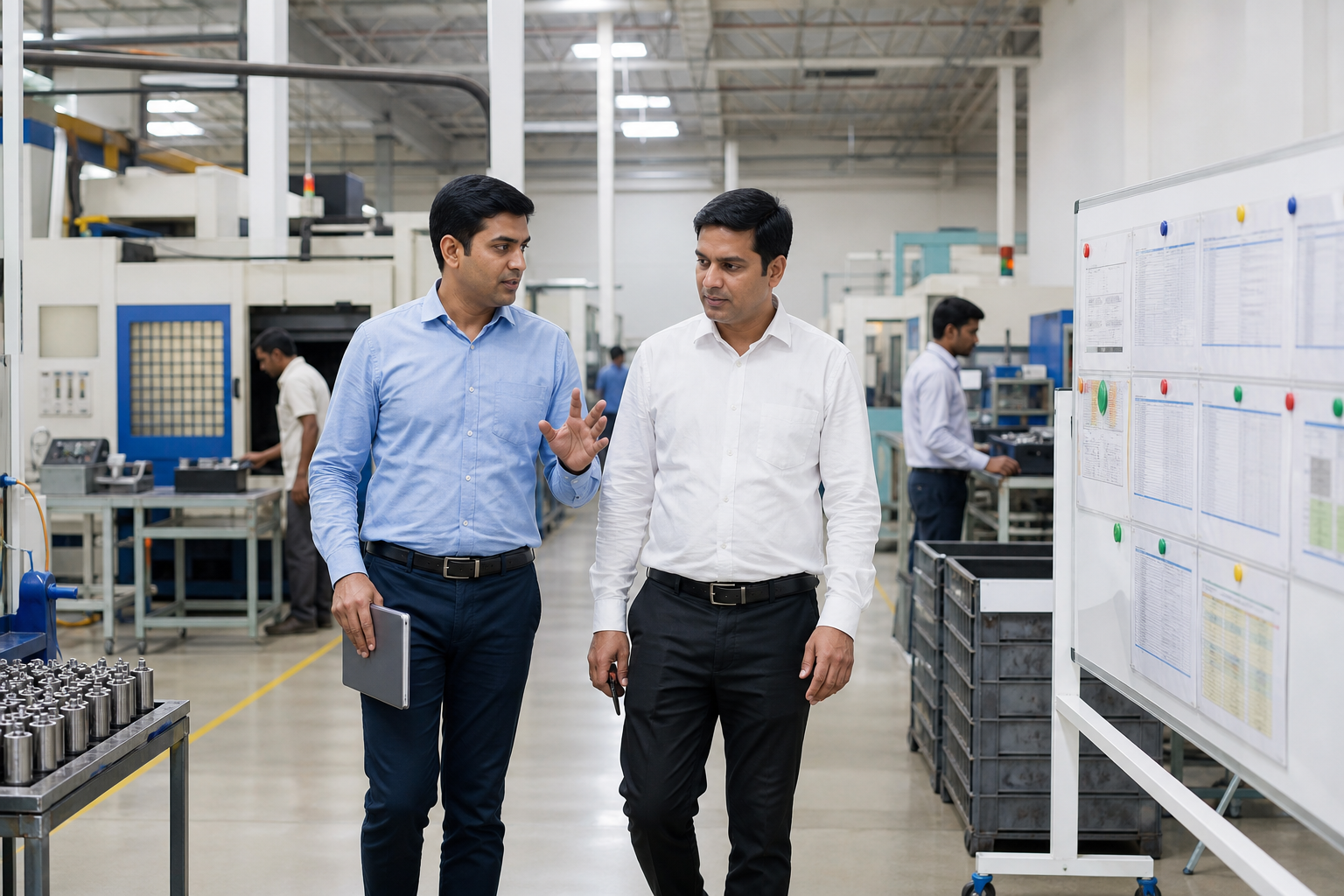
The Pre-Order Verification Gate Framework
Move through the gates in order. A concern at an early gate should be resolved before you spend heavily on samples, travel, inspection, tooling, or deposit. The required evidence should be proportionate: a simple stock item and a safety-critical private-label product do not need the same depth of review.
Document the outcome of every gate in a supplier file. A simple scorecard is usually sufficient, provided it distinguishes supplier claims, documents reviewed, observations made, and items still unverified. Use the Indian supplier verification checklist with 25 checks for a detailed evidence list and a supplier scorecard when comparing candidates.
Comparison table
Swipe →
Data table — swipe horizontally on small screens
| Gate | Decision to make | Core evidence | Do not proceed when |
|---|---|---|---|
| 1. Entity and role | Who will contract, invoice, and export? | Legal name, address, tax/export details, bank-account consistency | Names, roles, or payment instructions conflict |
| 2. Product and capability | Can this supplier make your exact requirement? | Process explanation, equipment, material sources, sample plan | Claims are broad and no technical evidence is available |
| 3. Quality system | How will conformity be checked and recorded? | Specifications, inspection plan, defect handling, traceability | “Quality guaranteed” replaces measurable controls |
| 4. Capacity and continuity | Can the supplier deliver your volume and timing? | Production plan, lead-time assumptions, capacity explanation | Capacity is promised without a plan or constraints |
| 5. Commercial alignment | Are quotes genuinely comparable and complete? | Itemized quotation, MOQ, tooling, packaging, Incoterms, terms | Low price depends on unstated substitutions or exclusions |
| 6. Transaction protection | Is the PO, payment, and trial structure controlled? | Contracting details, approval points, deposit milestones, inspection rights | You are pushed to pay before documents and controls are agreed |
Gate 1: Confirm the legal entity, operating location, and transaction role
Start by identifying the exact party you are dealing with. Ask for the full legal entity name, registered address, operating address, primary contact details, tax registration information where relevant, and the role it will play in the transaction. The party presenting the product may be a manufacturer, merchant exporter, trader, buying office, or agent. None of those roles is automatically unacceptable, but they create different visibility and contractual needs.
Match names across the commercial record
- which entity will sign or accept the purchase order;
- which entity will issue the commercial invoice;
- which entity will receive payment and whether the bank account is in that entity’s name;
- which entity will appear as exporter or merchant exporter;
- whether a factory, group company, or third party is involved in production;
- who owns your tooling, artwork, molds, and approved product records.
Compare the legal name on the quotation, pro forma invoice, bank account, website footer, registration records, tax documents, and any export documentation the supplier provides. Small differences can be legitimate—such as a manufacturing entity and separate export entity—but they should be explained in writing.
Request clarification on:
If payment is requested to an unrelated personal account or a newly introduced entity, stop and verify before acting. A bank-account change by itself is not proof of misconduct, but it is a high-risk event that requires confirmation through a known contact and documented company evidence.
Verify location rather than relying on photographs
Ask for the address of the actual production site, not only a sales office. Review map information, public company presence, and factory photographs with reasonable skepticism. A live video walk-through can provide useful context if it includes production areas, raw-material storage, work-in-process, finished goods, quality points, and site signage. It is still not equivalent to an independent visit.
For higher-value orders, use an on-site audit or local verification. If a visit is not practical, the guide to supplier audits in India without visiting the factory explains how to define a remote-plus-independent-check approach.
Ask direct questions about manufacturer versus trader status
A trader can provide value through access to several factories and export coordination. Problems arise when a trading business presents itself as the factory, because you lose clarity over technical control, production access, and traceability. Ask who makes each component, who controls the process, and whether you can verify the producing site before approval.
For a focused examination of authenticity signals, read how to check whether an Indian manufacturer is genuine. Treat that check as an input to selection, not a substitute for the remaining gates.

Gate 2: Verify product fit and actual manufacturing capability
The supplier should be able to explain how it will make your product, not simply show that it makes something similar. “We can do it” is a starting point for technical discovery, not evidence of capability. Give the supplier a clear RFQ pack: drawings, material grade, dimensions and tolerances, bill of materials where available, color standard, labeling, packaging, testing needs, target quantity, destination market, and requested Incoterm.
Test the supplier’s technical understanding
- a description of the production route from incoming material to packing;
- relevant equipment, tooling, process controls, and subcontracted operations;
- examples of comparable work with confidential details removed;
- material specifications, supplier sources, and certificates when required;
- internal or third-party test capability relevant to the product;
- a sample plan stating what the sample will and will not prove;
- the name of the person responsible for technical approvals.
Ask the supplier to restate the critical requirements and identify open points. A capable supplier will ask useful questions about material, finish, tolerances, tooling, testing, packaging, and acceptable variation. It may point out a trade-off between cost, lead time, appearance, and durability. A supplier that agrees to every request immediately without clarifying the product may be quoting assumptions rather than an executable specification.
Evidence to request can include:
Do not demand confidential customer information. You need evidence that lets you assess process fit, not another buyer’s designs or pricing.
Confirm subcontracting and critical dependencies
Many products involve outsourced processes such as plating, printing, heat treatment, stitching, assembly, testing, or packaging. Subcontracting is common and can be well managed. Your concern is whether the supplier knows, controls, and can monitor the dependency.
Ask which operations happen on site, which are outsourced, how suppliers are approved, and who is responsible if a subcontractor fails. For products with sensitive specifications, request that critical subcontractors are identified in the supplier file and subject to your agreed confidentiality and quality controls.
Altus Exports can help buyers compare factory claims with on-ground observations, including whether a supplier’s stated process is actually in place. This is particularly useful when a buyer is evaluating unfamiliar production clusters or does not have local technical staff.
For a category-specific process, use how to verify product quality with an Indian manufacturer alongside this gate.
Gate 3: Turn quality claims into measurable pre-production controls
Quality cannot be verified by inspecting a website, a certificate image, or a promise to “take care of it.” Before the order, establish the standard against which the product will be accepted and the point at which nonconformity will be identified.
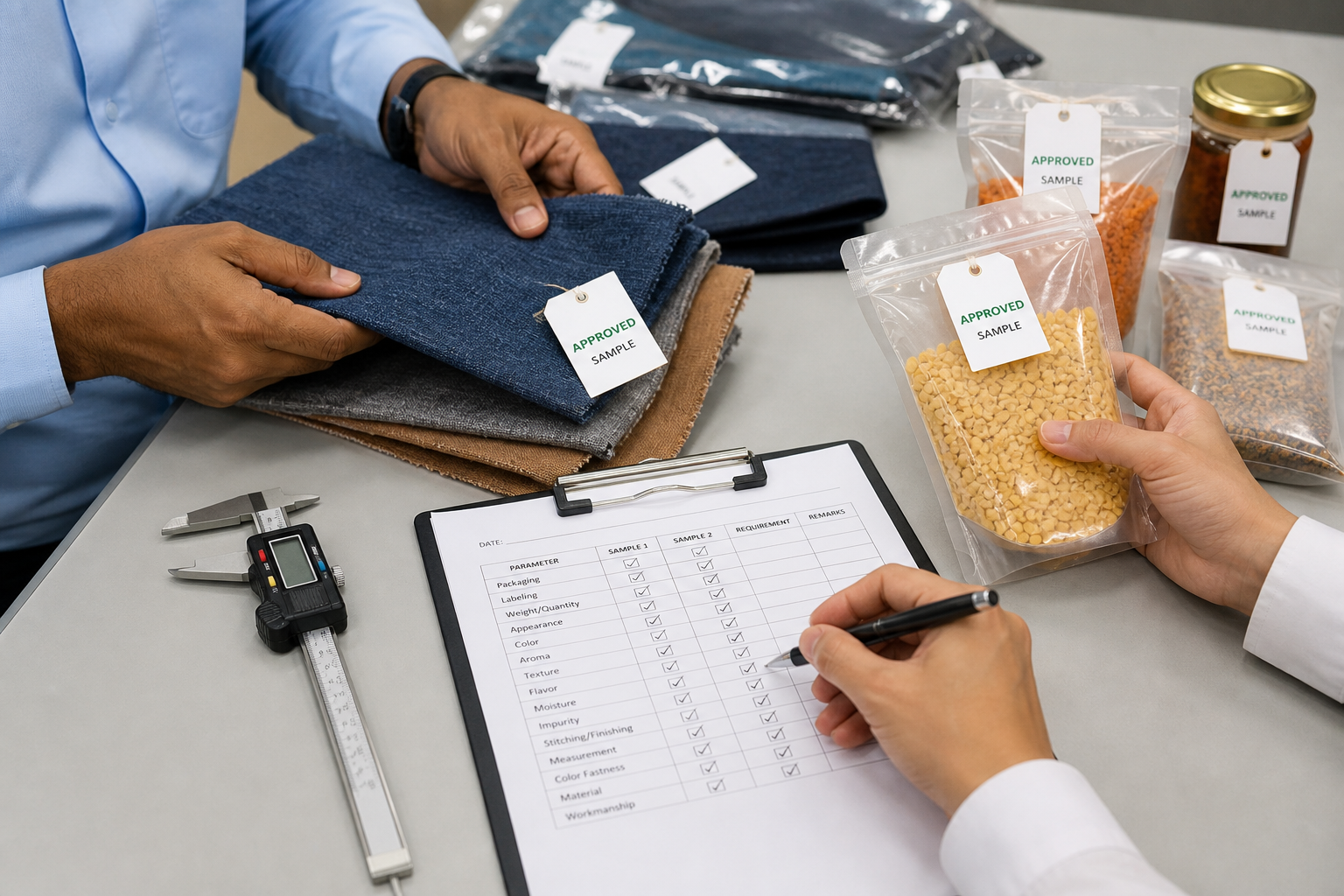
Build an approval pack
- approved sample or retained sample reference;
- drawings, dimensions, tolerances, materials, and finish requirements;
- color standard, artwork, barcode, labels, and packaging artwork;
- bill of materials and approved substitutions policy;
- defect classification: critical, major, and minor;
- test methods, test frequency, applicable standards, and certificate requirements;
- inspection level or acceptance criteria;
- photo requirements, reporting format, and authority to approve rework;
- change-control process for any deviation after approval.
An approval pack is the controlled reference for the order. It should be versioned, dated, and acknowledged by the buyer and supplier. Depending on the product, it may include:
An approved sample is valuable, but it does not automatically control mass production. Record what it represents: material, color, construction, packaging, dimensions, performance, or all of these. If a sample uses handwork or provisional material, make that limitation explicit.
Ask how issues are controlled, not only detected
A useful quality conversation covers incoming material inspection, first-piece or pilot approval, in-process checks, pre-shipment inspection, corrective action, and record retention. Ask who performs each check, what happens when a result fails, and how you are informed before the goods are packed or dispatched.
Independent inspection can add discipline, but it does not replace a specification. An inspector cannot reliably accept a product if the buyer and supplier never agreed on measurable requirements. Define inspection scope and timing before the PO, especially when rework time is limited.
Gate 4: Assess capacity, lead time, and continuity risk
- material procurement and approval;
- sample or pre-production approval;
- production start and in-process checks;
- finishing, packing, inspection, and rework allowance;
- export-ready date and shipment handoff.
Capacity is not a number on a sales presentation. It is the supplier’s ability to make your order at the promised quality within the promised window while managing existing commitments, material availability, labor, equipment uptime, and subcontractor dependencies.
Ask for an indicative production plan that separates:
Then ask what could change each stage: imported material, seasonal labor, power, maintenance, festival closures, customer order peaks, or an outsourced process. Credible suppliers discuss constraints as well as capacity.
For a deeper capacity review, see how to evaluate an Indian supplier’s manufacturing capacity. If the supplier cannot support your first volume, consider a smaller phased order rather than accepting a promise that lacks evidence.
Comparison table
Swipe →
Data table — swipe horizontally on small screens
| Capacity question | Useful evidence | Warning sign |
|---|---|---|
| What is normal output for this process? | Shift plan, equipment count, recent production range | A single large number with no basis |
| What share of output would our order use? | Order slot and production sequence | “No problem” without current commitments |
| What is the material lead time? | Material specification and supplier confirmation | Material is unspecified or “always available” |
| What buffer is included? | Timeline with inspection and rework time | Lead time ends on the shipment date |
| What is the backup plan? | Alternate machine, supplier, or phased shipment plan | No plan for a common dependency |
Gate 5: Make quotations comparable before selecting a supplier
The lowest unit price is not necessarily the lowest landed or total risk cost. Quotes often differ in material, thickness, finish, tooling, packaging, MOQ, inspection, payment terms, lead time, and Incoterm. Unless those variables are normalized, a price comparison is misleading.
Use a quotation comparison sheet that shows:
Clarify whether the supplier has quoted based on your actual destination-market requirements. For example, a quote may exclude a test, retail-ready label, special carton standard, certificate, or export packing needed for your route. A supplier should state exclusions in writing rather than leaving you to discover them after acceptance.
If you are comparing several candidates, score total fit as well as price. The Indian supplier scorecard guide provides a repeatable way to weigh quality, capability, commercial alignment, responsiveness, and risk.
Comparison table
Swipe →
Data table — swipe horizontally on small screens
| Commercial field | What to confirm |
|---|---|
| Product basis | Exact drawing, revision, material, dimensions, finish |
| Quantity and MOQ | Quantity breaks, overrun/underrun policy, mixed-SKU rules |
| Unit price | Currency, price validity, included and excluded items |
| Tooling and development | Ownership, amortization, maintenance, return rights |
| Packaging | Inner pack, master carton, labels, testing, artwork responsibility |
| Lead time | Start trigger, approval dependency, production and dispatch dates |
| Quality costs | Included testing, inspection scope, rework or replacement responsibility |
| Incoterm | Named place, handoff point, freight and export-cost allocation |
| Payment | Deposit, balance trigger, bank charges, payment protection |
Gate 6: Control the PO, deposit, and first-order payment structure
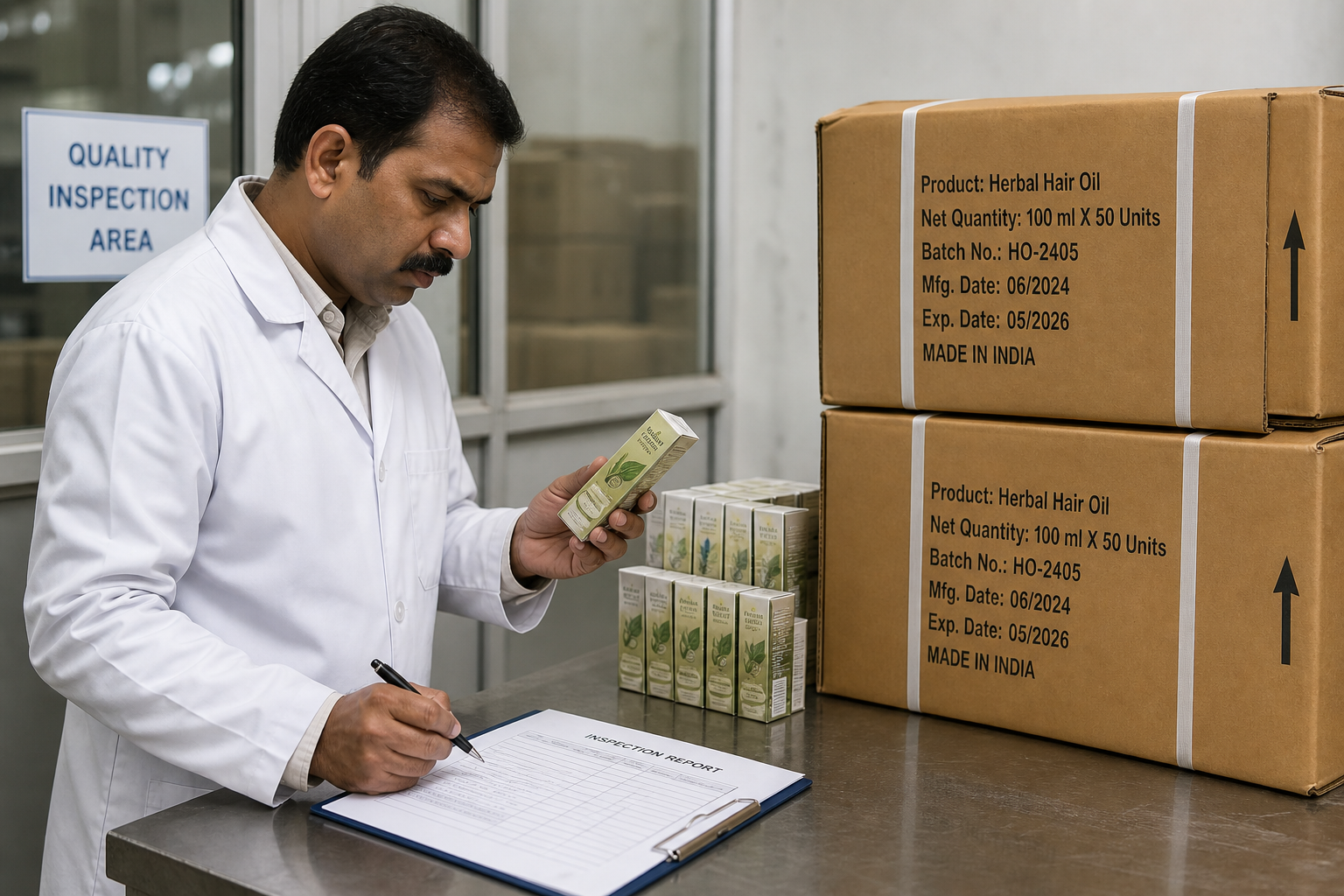
A purchase order should not be a loose restatement of a quotation. It should identify the contracting parties, product version, quantity, price, Incoterm, delivery window, packaging, inspection rights, document requirements, payment milestones, and terms for changes or nonconforming goods. Have your legal and trade advisers review terms appropriate to your transaction and jurisdiction.
Use payment milestones that match evidence
- a deposit only after supplier identity, product scope, approval pack, and bank details are confirmed;
- sample, pre-production, or first-article approval before full production where appropriate;
- documented in-process or pre-shipment inspection rights;
- a balance trigger tied to agreed evidence, not only a supplier statement that goods are ready;
- clear treatment of inspection failure, rework, replacement, short shipment, and late delivery;
- shipping documents and export responsibilities aligned with the agreed Incoterm.
There is no universal “safe” deposit percentage. The appropriate structure depends on product customization, material exposure, supplier history, order value, and available trade-finance options. The principle is to avoid paying ahead of the evidence you need.
A controlled first-order structure may include:
Be careful with urgency. A supplier that says a deposit is needed “today” to secure material may be reporting a real constraint, but the request still needs documentation and an approval decision. Speed is not a reason to skip identity, specification, or payment verification.
Altus Exports can coordinate a practical pre-order file so the buyer has a single record of supplier identity, sample status, quote assumptions, capacity discussion, and agreed quality gates before releasing a first-order payment.

Use a trial order to verify performance, not just promises
- Was the approved specification followed without unapproved changes?
- Did the supplier meet the agreed reporting and response times?
- Were quality findings reported early and corrected with evidence?
- Did actual lead time match the production plan?
- Were packing, labeling, documents, and export handoff accurate?
- Did the supplier handle a question or deviation transparently?
For a new supplier, a well-scoped trial order often produces better evidence than a large first commitment. The trial should be commercially meaningful enough to test the real process—communication, material control, production, inspection, packing, documents, and response to a problem—but small enough that a failure is manageable.
Define trial success criteria in advance:
The guide to starting India sourcing with a small trial order explains how to size and document the pilot. Do not treat a successful sample as the same thing as a successful trial order; production consistency and shipment execution still need evidence.
Common red flags before placing an order
- The supplier will not identify the legal entity, production site, or role in the transaction.
- Website claims, invoice name, bank beneficiary, and contact details do not match.
- A supplier refuses a video walk-through, independent visit, or reasonable evidence without a credible confidentiality reason.
- The quotation arrives before the supplier has reviewed a usable specification.
- Prices are unusually low but material, packaging, testing, or Incoterm assumptions are missing.
- The supplier guarantees every certification, capacity level, or delivery date without supporting process evidence.
- Only polished photos are provided; no current production, equipment, quality, or site information can be shown.
- Deposit pressure increases while key questions remain unanswered.
- The supplier discourages written approvals, inspection criteria, or recorded changes.
- A new bank account, payment recipient, or shipping instruction is introduced without verified explanation.
Red flags are prompts to pause and investigate. They do not all establish bad intent, but several unresolved signals together should change your decision.
For signs that suggest deliberate deception rather than normal supplier immaturity, read how to identify fake Indian suppliers and export scams. Escalate any suspected fraud to your bank, legal adviser, and relevant authorities promptly; do not try to solve it by sending a “small test payment.”

A practical 10-day pre-order verification sequence
The timeline will vary by product, but the sequence below prevents parallel activity from hiding unresolved risks.
Some checks take longer, especially testing, factory visits, or custom sample development. Do not compress the sequence by accepting missing evidence as a future task. The purpose of the framework is to decide what must be known before money is committed.
Comparison table
Swipe →
Data table — swipe horizontally on small screens
| Day or phase | Buyer action | Supplier output | Gate decision |
|---|---|---|---|
| 1–2 | Send RFQ pack and entity request | Legal details, role, initial technical questions | Is the supplier identifiable and responsive? |
| 2–3 | Validate names and transaction role | Company and export-support documents | Can this entity contract and receive payment? |
| 3–5 | Review capability and conduct video/visit | Process explanation, site evidence, sample plan | Can it make the specified product? |
| 4–6 | Build approval pack and RFQ comparison | Revised quote, quality plan, exclusions | Are product and commercial assumptions aligned? |
| 6–8 | Review capacity and first-order schedule | Production plan, material timing, contingencies | Is the delivery plan credible? |
| 8–10 | Agree PO, inspection, and payment controls | Confirmed PO acceptance and bank details | Are you ready to release a controlled deposit? |
When to involve an independent local partner
An on-ground partner can be valuable when you cannot visit the site, are evaluating multiple suppliers, need a factory observation before a deposit, or require support coordinating samples and production controls. The role should be defined clearly: identify whether the party is acting as your sourcing representative, exporter, inspection coordinator, or another commercial role.
Altus Exports provides global sourcing partner services in India for buyers who need practical local coordination across supplier discovery, verification, comparison, quality follow-up, and export execution. The service should complement—not replace—your approval authority over product, commercial terms, and acceptable risk.
For another importer-focused sequence of checks, see the supplier verification India checklist for importers.

Conclusion
To verify an Indian supplier before placing an order, do not rely on a single registration document, sample, or low quote. Use the Pre-Order Verification Gate Framework to confirm the legal entity and transaction role, product capability, quality controls, capacity, commercial assumptions, and payment protections in sequence. Keep a written supplier file and resolve material gaps before issuing a PO or deposit.
If you need local support to apply these gates to a live sourcing project, contact Altus Exports with your product brief, target quantity, and first-order timeline. A focused review can establish appropriate verification depth before you make a commitment.