
How to Identify Fake Indian Suppliers and Export Scams
By Saurabh Mittal, Founder, Altus Exports
To identify fake Indian suppliers, verify the legal entity, tax and export credentials, physical facility, named contacts, bank beneficiary, product evidence, and references before paying. Pause if a supplier pressures you to pay, changes bank details unexpectedly, refuses a…

Most Indian suppliers are legitimate businesses, and India has a large, capable export base. The practical risk for an international buyer is not that every unfamiliar supplier is fraudulent. It is that online discovery, cross-border payment, urgency, and incomplete information can make it easier for a bad actor—or an impersonator using a real company’s identity—to obtain a deposit before inconsistencies are noticed.
The right response is disciplined verification, not blanket distrust. A supplier can be genuine yet unsuitable for your product or unable to meet your volume. Conversely, a convincing website, certificate, video, or marketplace profile can be copied or misrepresented. Buyers need a way to distinguish normal commercial variation from patterns that deserve a pause.
This Export Scam Pattern Recognition Guide explains six common patterns: advance-fee pressure, cloned websites, hijacked identities, bait samples, phantom factories, and payment diversion. It also gives a practical response plan if you have already sent money or shared sensitive details. The guidance is preventive and commercial; it does not replace legal, banking, insurance, or law-enforcement advice for a specific incident.
Start with a useful distinction: bad supplier, fake supplier, or impersonated supplier
- A weak but genuine supplier may exist legally and operate a real facility, yet lack capacity, quality discipline, export knowledge, or financial stability for your order.
- A fake supplier may use invented details, misleading premises, copied imagery, fabricated records, or a false claim of factory ownership to obtain money or data.
- An impersonation or payment-diversion event can involve a real supplier whose identity, email domain, invoice, or bank instructions have been copied or altered by another party.
Altus Exports supports buyers with on-ground supplier verification and sourcing coordination in India. The aim of this article is broader: give any buyer a repeatable way to question claims, validate evidence, and stop a transaction before uncertainty becomes loss.
For general sourcing controls beyond fraud, see how to reduce risks when sourcing from India. If you need a full pre-order process, start with how to verify an Indian supplier before placing an order.
These categories require different responses.
Do not assume an unexpected problem proves fraud. Late replies, imperfect English, a small office, or a different business structure can have legitimate explanations. The concern grows when several pieces of evidence conflict and the counterparty responds with urgency, evasion, or pressure instead of verifiable clarification.

The Export Scam Pattern Recognition Guide
Use the guide as a pattern test, not a single red-flag test. One anomaly can be explained; a cluster of anomalies should stop payment and trigger independent verification.
Pattern 1: Advance-fee pressure
- The supplier asks for an unusually large payment before a controlled sample, specification, or purchase order exists.
- A “today only” discount or alleged stock allocation creates pressure to transfer immediately.
- The requested fee changes name or amount when questioned.
- Payment is requested to an individual, a different company, a third-country account, or a personal wallet without a documented reason.
- The supplier says a government, port, or customs fee must be paid directly to it but will not provide verifiable official documentation.
- A small initial payment is followed by repeated unexpected charges before goods are released.
In this pattern, the counterparty focuses on obtaining money before it provides sufficient product, facility, or contract evidence. The request may be described as a sample release fee, customs charge, export registration cost, allocation fee, material reservation, urgent booking fee, or discount deadline.
Legitimate suppliers may require sample costs, tooling contributions, or deposits. The warning sign is not the existence of an advance. It is whether the requested amount, beneficiary, timing, and supporting evidence make commercial sense.
#### Red flags to examine
#### How to respond
Pause and ask for a written breakdown, a signed pro forma invoice, the legal entity name, bank beneficiary, commercial purpose, and the deliverable tied to the payment. Compare each item with the quotation and contract. Independently call a known company number or speak live with the finance contact before releasing funds.
If the payment has no clear contractual purpose, cannot be tied to a verifiable entity, or must be made immediately before normal verification can occur, do not treat urgency as evidence. It is a reason to slow down.
Pattern 2: Cloned websites and copied online profiles
- The domain is very new, slightly misspelled, or differs from the email address used for negotiation.
- The contact page has only a messaging number and no consistent physical address or legal name.
- Product images reverse-search to multiple unrelated companies, or pages contain copied text, mismatched locations, and broken documents.
- The site claims many unrelated product categories, extreme production scale, every certification, or global offices without specific evidence.
- The company’s social profiles have no named operational staff, no credible history, or were created shortly before the sales approach.
- A supplier will only communicate through a marketplace chat or private messaging account and resists moving to a company email and documented quotation.
A cloned website can use a real factory’s photos, a familiar brand’s name, copied certificates, customer logos, and content from genuine exporters. A marketplace profile can similarly display stock images and claims that are hard to test from abroad.
Website polish is neither proof of legitimacy nor proof of fraud. The verification question is whether the digital presence is connected to the legal entity, facility, named people, and bank account in your proposed transaction.
#### Red flags to examine
#### How to respond
Record the web address, company name, contact details, and date. Compare the domain in the email, website footer, quotation, registration documents, and bank letter. Search for the business name and address independently; ask for a live call from the stated facility, not another brochure or edited video.
Do not accuse the counterparty based on a web anomaly alone. Ask a precise reconciliation question: “Your quotation uses this legal entity, while the website footer uses another. Which entity will contract, manufacture, and receive payment?” A legitimate business should be able to answer clearly and support the answer.
Pattern 3: Hijacked business identities
- An email domain differs by one character from the company’s published domain, or the sender uses a free email service for a large transaction.
- The invoice, email signature, and bank beneficiary use different entity names.
- The counterparty refuses to introduce a second named employee or finance contact through independently found company channels.
- You receive documents that are correct in appearance but contain inconsistent addresses, dates, fonts, phone numbers, or signatory details.
- The supplier says its normal email is “down” and asks you to use a new address or messaging app just before payment.
Some fraud attempts borrow the name, registration information, tax number, certificates, or address of a real Indian company. The fraudster may create a lookalike domain, use a copied letterhead, or pose as an employee. This is particularly dangerous because basic searches can confirm that the underlying company exists.
The key control is to verify the channel, not just the name. You must establish that the person emailing you is actually authorized by the company and that the account receiving funds belongs to the contracting entity.
#### Red flags to examine
#### How to respond
Use contact details you find independently through official records, the company’s established website, a trade association, a previous trusted contact, or a verified office number. Ask the company to confirm the salesperson’s employment, quotation number, bank details, and bank-change authorization in a fresh channel.
For the underlying entity, GST, and export checks, use how to verify Indian company registration, GST, and export credentials. This does not prove a specific email is genuine, so keep the channel-verification step separate.
Pattern 4: Bait samples and specification switching
- The sample is excellent, but the supplier cannot explain the material, process, tolerances, or lead time required to repeat it.
- The quoted price falls sharply after you approve the sample, with unclear changes to scope.
- The supplier discourages testing, measurement, or written sample feedback.
- A “factory sample” ships from an unrelated location and the supplier will not explain the relationship.
- The pre-production sample differs from the approved development sample, but the supplier says differences are normal and need not be documented.
- The seller insists on a large MOQ before allowing a pre-production confirmation or third-party inspection.
A bait-sample pattern begins with an attractive sample, price, or technical claim. The supplier then tries to move quickly to a large order while details remain vague. In a problematic version, the sample was made by another factory, used a better material than the quotation permits, or cannot be replicated at production scale.
Not every sample issue is dishonest. Sampling is iterative. The risk lies in approving a purchase order without a controlled link between the sample, written specification, factory process, and inspection plan.
#### Red flags to examine
#### How to respond
Classify every sample: development, pre-production, production, or retention sample. Put the approved version under revision control with photographs, drawings, material details, tolerances, packaging, and test requirements. Require written approval before bulk production and agree the inspection standard before goods are made.
Read how to verify product quality before buying from an Indian manufacturer for the quality evidence required between a promising sample and a scalable order.
Pattern 5: Phantom factories and misleading factory claims
- The supplier repeatedly postpones a live walkthrough, citing vague reasons, while continuing to request a deposit.
- A video tour starts inside a workshop but never shows exterior signage, location context, production records, or people who can answer technical questions.
- Machinery, workers, products, and company signage do not match the claimed product category or company name.
- The supplier cannot say which steps are in-house, which are subcontracted, or where critical processes take place.
- A proposed facility address maps to a residence, virtual office, unrelated business, or location inconsistent with the claimed scale.
- The company refuses a reasonable independent visit or says no outsider is ever permitted, even for a large customized order.
A phantom-factory claim can range from fully fabricated premises to a sales office using a real factory’s photos without authority. More commonly, a trader presents itself as a manufacturer and hides that production will occur at an unreviewed subcontractor.
Again, trading is not inherently deceptive. A buyer can work successfully with a merchant exporter or sourcing company if that role is transparent. The concern is a false statement about who controls production, quality, and delivery.
#### Red flags to examine
#### How to respond
Request a guided live walkthrough with a question list. Ask to see the areas relevant to your product: incoming material, the proposed line, work in progress, quality checking, packing, and dispatch. Ask who owns the facility and whether subcontractors will touch the order.
If travel is not possible, use a documented remote process or local support. How to conduct a supplier audit in India without visiting the factory explains what remote evidence can and cannot establish. For higher-risk commitments, a physical verification may be proportionate.
Pattern 6: Payment diversion and changed bank details
- A new bank account appears shortly before payment with an explanation involving audit, tax, currency controls, or temporary account problems.
- The beneficiary does not match the contract entity, and the explanation is only verbal.
- The message asks you to keep the change confidential or bypass your normal approval process.
- The email style, reply-to address, or attached invoice differs subtly from prior correspondence.
- The supplier urges a same-day transfer because the old account will “close” or goods will be withheld.
Payment diversion is one of the most urgent patterns because it can happen even after a genuine supplier relationship has been established. A fraudster may compromise an email account, send a lookalike email, alter an invoice, or claim the supplier has changed banks.
Treat every new payment instruction as a new verification event. Prior successful transactions do not make an emailed bank change safe by default.
#### Red flags to examine
#### How to respond
Stop the payment workflow. Call a previously verified number—not the number in the change email—and speak with an authorized finance contact. Obtain written bank confirmation using an independently verified channel and apply your internal two-person approval process. If the bank cannot be reconciled, do not send funds.
Altus Exports advises buyers to make identity and bank-beneficiary alignment a routine control in each supplier-verification workflow. That control is simple, but it is often missed when a team is focused on shipment deadlines.

A five-step prevention routine before any meaningful payment
The strongest protection is a repeatable procedure used before excitement, urgency, or a low price affects judgment.
Step 1: Verify the legal and transaction identity
Confirm the legal entity, trading name, registration context, GST where relevant, physical operating address, and role in the transaction. Establish whether the party is manufacturer, trader, or merchant exporter. Ensure the quote, contract, invoice, and bank beneficiary refer to a clearly explained entity relationship.
Step 2: Verify the communication channel
Confirm named contacts through an independently sourced telephone number, established company domain, and a live video call. Be especially careful with a new email domain, a sudden address change, or requests made entirely through messaging apps.
Step 3: Verify product and facility evidence
Conduct a technical call, request controlled samples, and obtain a guided facility review. Ask product-specific questions that a real operator should be able to answer. Check whether the proposed factory, process, and capacity match the purchase you intend to make.
Step 4: Verify commercial logic
Normalize the quotation. Compare materials, tooling, quantity, packaging, lead time, Incoterms, payment terms, and exclusions. An exceptionally low price is not proof of a scam, but it must have an explainable basis.
Step 5: Release money in proportion to verified evidence
Tie payment milestones to defined contractual deliverables and preserve records of approvals. Independently reconfirm bank details for each new supplier and every bank change. Consider inspections, documentary controls, credit support, or a smaller pilot order where the transaction warrants them.
For a complete operational checklist, use the 25-point Indian supplier verification checklist. It helps turn these prevention steps into a documented decision record.
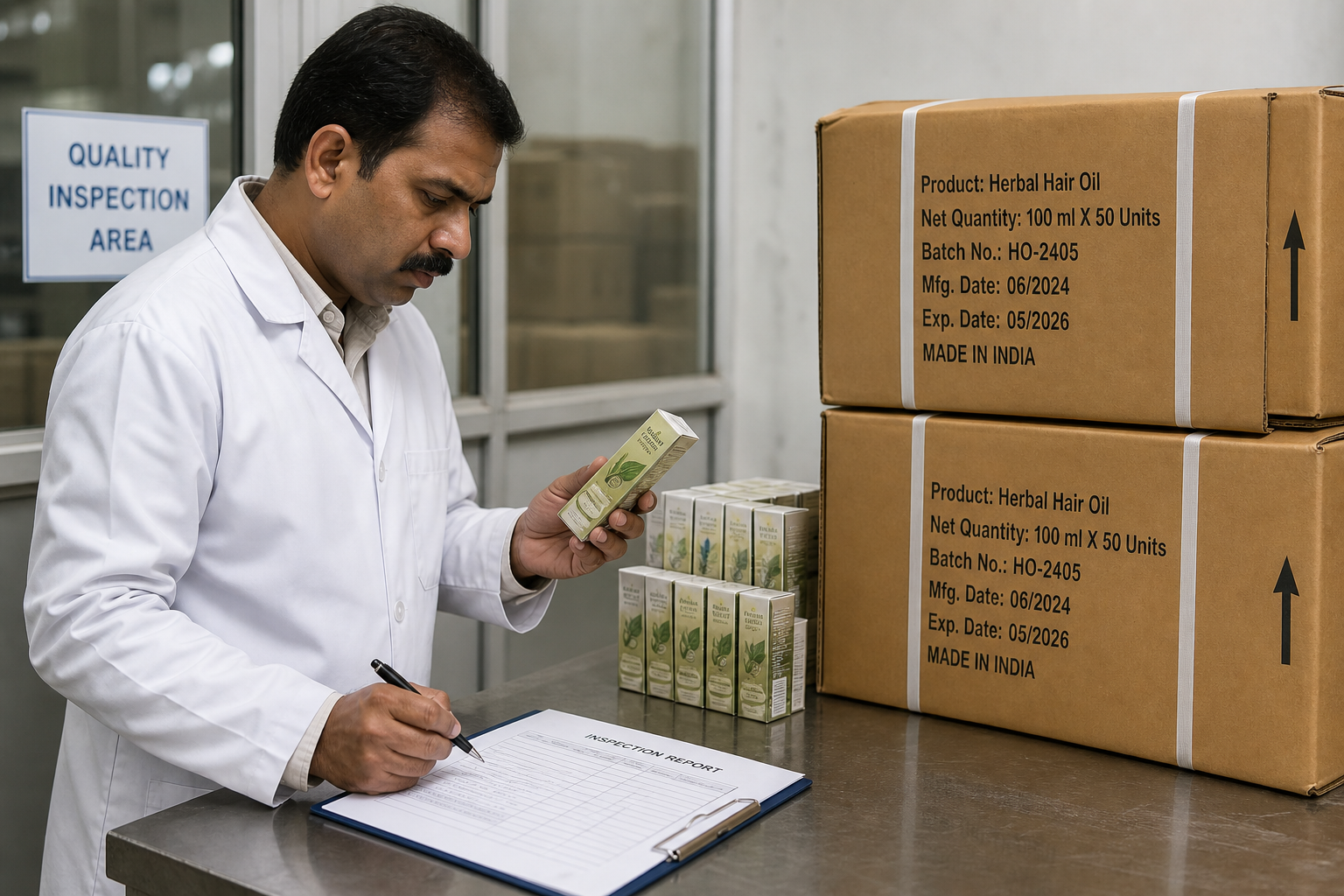
What to do if you already suspect an export scam
Act promptly but carefully. Preserve evidence, limit additional exposure, and seek qualified help. Do not send further payments to “unlock” a shipment, recover an earlier payment, or resolve a disputed fee until the counterparty and claim have been independently verified.
1. Stop further payments and changes
Pause pending transfers, bank-detail updates, new purchase orders, access sharing, and delivery instructions connected to the suspicious transaction. If a transfer is still pending, contact your bank through its official fraud or payment-support channel immediately and ask what options remain. The available actions depend on timing, payment method, jurisdiction, and bank procedures.
2. Preserve the record
Keep emails with full headers where available, chat logs, quotations, invoices, payment confirmations, contracts, website links, shipping documents, call notes, photographs, and the names and contact details used. Do not alter files or delete messages. Create a simple timeline: who said what, when, what evidence was supplied, and what money or data changed hands.
3. Re-verify through independent channels
Contact the real company, bank, platform, logistics provider, or inspection company using contact details you find independently—not links or numbers supplied by the suspicious party. Ask concise factual questions: Does this employee work for you? Did you issue this invoice? Is this bank account yours? Did you book this shipment?
4. Notify the appropriate institutions
Report the issue to your bank or payment provider first if money is involved. Also notify the marketplace, trade platform, freight provider, insurer, or escrow provider where applicable. Consult qualified legal counsel, your bank’s fraud team, and relevant official reporting channels in your own jurisdiction and India as appropriate to the facts.
5. Protect future communications
Change passwords for affected business accounts, enable multi-factor authentication, review mailbox forwarding and payment-approval rules, and warn relevant internal colleagues. If a supplier’s email may be compromised, use a verified alternate channel before relying on any further instruction.
This is high-level business guidance, not a method for tracing individuals or taking retaliatory action. Preserve evidence and use authorized financial, legal, and law-enforcement channels.

Red flags that deserve a pause, not an argument
- pressure to transfer funds before basic verification;
- an unexplained bank beneficiary or a late bank change;
- refusal to put prices, specifications, or responsibilities in writing;
- documents that do not agree on names, addresses, or signatories;
- an implausibly low price with no technical explanation;
- refusal of a reasonable live facility review;
- copied-looking product images, certificates, or customer logos;
- a salesperson who will not introduce operational or finance colleagues;
- repeated changes to the story about who manufactures, exports, or owns the goods;
- shipping documents or tracking details that cannot be independently confirmed.
You do not need to prove fraud before you pause a transaction. A buyer’s goal is to decide whether the risk is acceptable, not to win a debate with a seller.
Pause and investigate when you see:
One red flag does not necessarily establish bad intent. Several unresolved inconsistencies are enough to choose another supplier.

Build a safer supplier-selection process
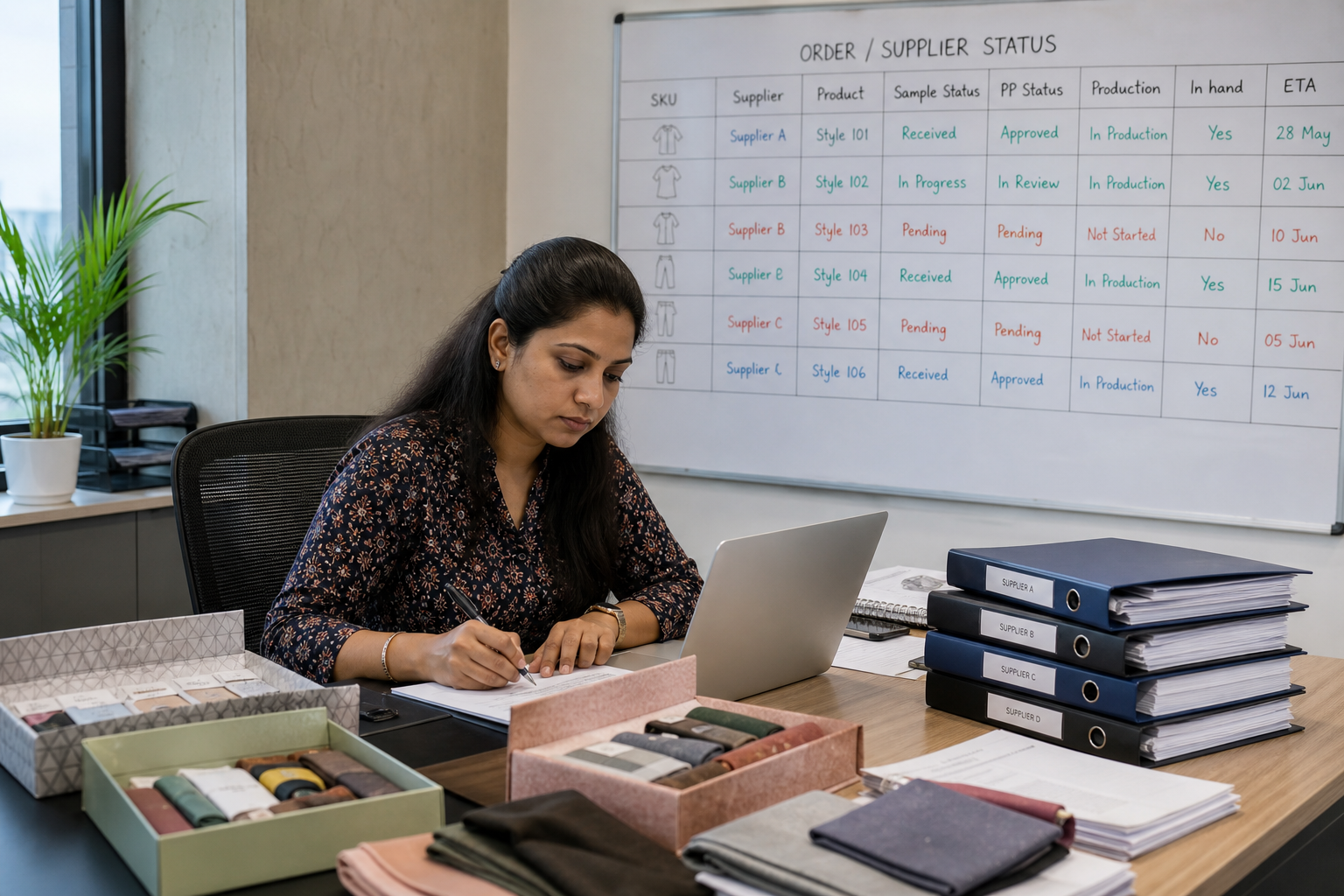
Fraud prevention should be embedded in normal sourcing, not added only when someone feels uneasy. Build a supplier file with identity documents, public-record checks, address and facility evidence, key contacts, sample records, quotation comparisons, capacity notes, inspection reports, bank confirmations, and reference findings.
Use the same process for each candidate so that the team is comparing evidence instead of impressions. The Indian supplier due diligence complete guide provides the broader lifecycle, while how to check if an Indian manufacturer is genuine focuses on establishing whether a factory claim is authentic.
For buyers without a local team, Altus Exports can provide global sourcing partner support or a structured product sourcing process in India. Independent observation, clear reporting, and disciplined commercial comparison are more useful than assurances that risk can be eliminated.
Conclusion
The most effective way to identify fake Indian suppliers and export scams is to look for patterns, not stereotypes. Confirm the entity and communication channel, verify the facility and product evidence, test commercial logic, independently validate bank instructions, and pause when important facts do not reconcile.
Fraud prevention is part of supplier selection. If your team needs local verification before committing funds or appointing a supplier, contact Altus Exports with the product scope, transaction stage, and evidence already collected. A proportionate review can help distinguish a normal supplier question from a decision that should not proceed.