
How to Check if an Indian Manufacturer Is Genuine
By Saurabh Mittal, Founder, Altus Exports
To check whether an Indian manufacturer is genuine, triangulate three kinds of evidence: the legal entity and registrations, a verifiable operating facility, and proof that it can make your product. Confirm whether it is a manufacturer or trader, request live and…

An Indian supplier can have a professional website, responsive sales contact, and attractive product photographs while still not being the factory you expect. It may be a legitimate trader, a merchant exporter, a small workshop relying on subcontractors, or, in the worst case, a business misrepresenting its identity. None of those categories automatically makes a supplier unsuitable. The risk arises when its role, control over production, or legal identity is unclear.
For an international buyer, “genuine” should mean more than “the company exists.” It should mean that the contracting party is correctly identified, its actual role is understood, and there is enough evidence that it can reliably deliver the specified product. A supplier that transparently uses subcontractors may be a workable option. A supplier presenting a showroom as its own factory, or using another factory’s certificates without explanation, is not providing the information needed for an informed decision.
Use the Manufacturer Authenticity Triangulation Method: validate documents, facility evidence, and production evidence independently, then compare them. One source can be staged or incomplete. Three consistent sources make a much stronger case. Altus Exports uses this kind of evidence-led approach when helping buyers evaluate prospective suppliers, but the method is useful whether you work with Altus Exports, an inspection provider, or your own team.
The Manufacturer Authenticity Triangulation Method
- Documents: Does the legal entity, address, tax identity, and export position make sense for the proposed transaction?
- Facility: Is there an operating site with the people, equipment, materials, and controls claimed?
- Production evidence: Can the supplier show credible, product-relevant proof that it makes the product or manages the production it is selling?
The method has three evidence points:
The objective is not to demand every confidential record a business holds. It is to make a proportionate purchasing decision. A low-risk, standard item may justify a lighter review than a custom product, regulated category, large advance payment, or supplier with no prior track record.
Triangulation works because each evidence point tests a different claim. A registration can show that an entity exists but not that it owns machinery. A factory visit can show equipment but not that the visitor is speaking to the contractual entity. A sample can demonstrate capability but not repeatable capacity. Do not close the verification loop until the pieces align.
Comparison table
Swipe →
Data table — swipe horizontally on small screens
| Evidence point | What it establishes | Useful evidence | Warning signs |
|---|---|---|---|
| Documents | Who you are dealing with | legal name, GSTIN, company or LLP details, IEC where relevant, registered address | different names on invoices, bank account, and registrations |
| Facility | Whether a real operation exists | live walkthrough, address confirmation, machinery, staff, material flow | stock imagery, restricted camera view, only a sales office |
| Production | Whether the supplier can make your product | work orders, process steps, samples, current production, QA records | generic catalog photos, unrelated goods, no technical answers |

First establish whether you are dealing with a manufacturer, trader, or merchant exporter
Many sourcing mistakes start with an assumption. Indian B2B listings often use “manufacturer,” “supplier,” “exporter,” and “factory” broadly. A company may design a product, source it from several factories, finish or pack it in-house, and export it. That can be a reasonable commercial model, but it is different from a vertically integrated manufacturer.
Manufacturer
A manufacturer directly controls at least the primary production process for the product being quoted. It may still buy raw materials, outsource specialized work such as plating, testing, printing, or packing, and use job workers at peak capacity. Ask which operations take place at its site and which are outsourced.
Trader
A trader buys products from other manufacturers and resells them. Traders can be useful when they aggregate product lines, manage small quantities, or provide access to multiple factories. However, they usually have less direct control over production planning and quality changes unless they have a strong operating process.
Merchant exporter
A merchant exporter exports goods made by another company or a network of companies. It may hold export registrations and manage documents, logistics, or packaging. Do not assume that an IEC or export history proves that the exporter owns the factory.
Hybrid or subcontracting manufacturer
Comparison table
Swipe →
Data table — swipe horizontally on small screens
| Supplier statement | Follow-up question |
|---|---|
| “We are the manufacturer.” | Which production steps happen at this address? |
| “We have several units.” | Which unit will make this order, and can we verify it? |
| “We outsource only finishing.” | What finishes are outsourced, and how do you inspect them? |
| “We are an exporter.” | Are you also the producing entity? If not, who is? |
| “We can make any quantity.” | What is current committed capacity and which machines or lines are allocated? |
Some genuine factories subcontract selected processes or overflow work. This is common in clusters where specialized finishing, molding, embroidery, casting, machining, or packaging services are distributed among businesses. The relevant question is not “Do you outsource anything?” It is “Which process is outsourced, to whom, how is it controlled, and can you document that control?”
Accurate role disclosure matters for commercial terms. If the seller is a trader, ask how it controls supplier substitutions, approved samples, production changes, inspection access, and traceability. If it is a manufacturer using subcontractors, include approved-process and approval-of-subcontractor terms in your purchase order where appropriate.
Step 1: Verify the contracting identity before reviewing the sales pitch
- legal entity name and business type;
- registered and operating addresses;
- GSTIN, where applicable;
- company CIN or LLPIN for a company or LLP;
- IEC if it will export directly;
- authorized signatory and company contact details;
- bank-account beneficiary name for payment;
- category licences or certifications that are relevant to the product and destination market.
Ask the supplier to state, in writing, the exact legal name that will quote, invoice, receive payment, manufacture or source the goods, and export them. Those roles may be held by one entity or several. Either arrangement can work if it is transparent and contractually clear.
Request a basic identity pack proportionate to the order:
Use public official portals for a sensible first check. The companion guide on how to verify an Indian company’s registration, GST and export credentials explains what to verify through MCA, the GST portal, and DGFT. Do not scrape private data, request personal credentials, or treat public search results as a substitute for a contract and operational evidence.
Reconcile names, addresses, and roles
Create a one-page identity reconciliation sheet. Compare the name on the quotation, pro forma invoice, GST record, company record, bank beneficiary confirmation, factory gate, and export documents if examples are available. Small formatting differences may be normal. Material differences deserve an explanation before payment.
For example, a factory brand may differ from the legal entity name. That is not inherently a problem if the supplier documents the relationship. But a quotation from one company, payment requested to an unrelated individual, and a facility shown under a third name should stop the process until the arrangement is evidenced.

Step 2: Confirm the facility is an operating production site
A physical address is not enough. The site could be an office, warehouse, showroom, shared industrial building, or an unrelated factory. Confirm what it is and what work occurs there.
How to assess the address
Ask for the full operating address, a map pin, and a description of the unit: factory, workshop, warehouse, registered office, or showroom. Compare it with the address shown in the relevant registration and the supplier’s documents. A different registered office and factory address is common; concealment is the concern.
If travel is feasible, conduct an announced or appropriately arranged visit. If not, a supplier audit in India without visiting the factory can combine a local visit with a structured report. Remote evidence is useful, but it is more credible when the buyer controls at least part of the request.
Avoid the showroom-only trap
- incoming material or components;
- process-specific equipment and operators;
- work-in-progress at more than one stage;
- finished-goods or packing area;
- quality-control tools or inspection point;
- production planning board, batch identification, or work orders with sensitive data covered;
- dispatch or loading practices appropriate to the operation.
Showrooms can be legitimate sales spaces. The trap is treating product displays as proof of production. A showroom may contain samples from many factories, and a sales representative may not know the technical process behind them.
Ask the contact to distinguish the showroom from the production site. Request a live walkthrough that begins outside the operating address, shows an identifiable entrance or sign where appropriate, and moves through the actual manufacturing workflow. A supplier may need to protect customer designs or safety areas; it should still be able to explain reasonable access limits and offer alternate proof.
Look for evidence consistent with the product:
Do not judge only by factory size. A specialized small unit can be genuine and capable for a limited order. The question is whether its process, capacity, and controls fit your requirement.
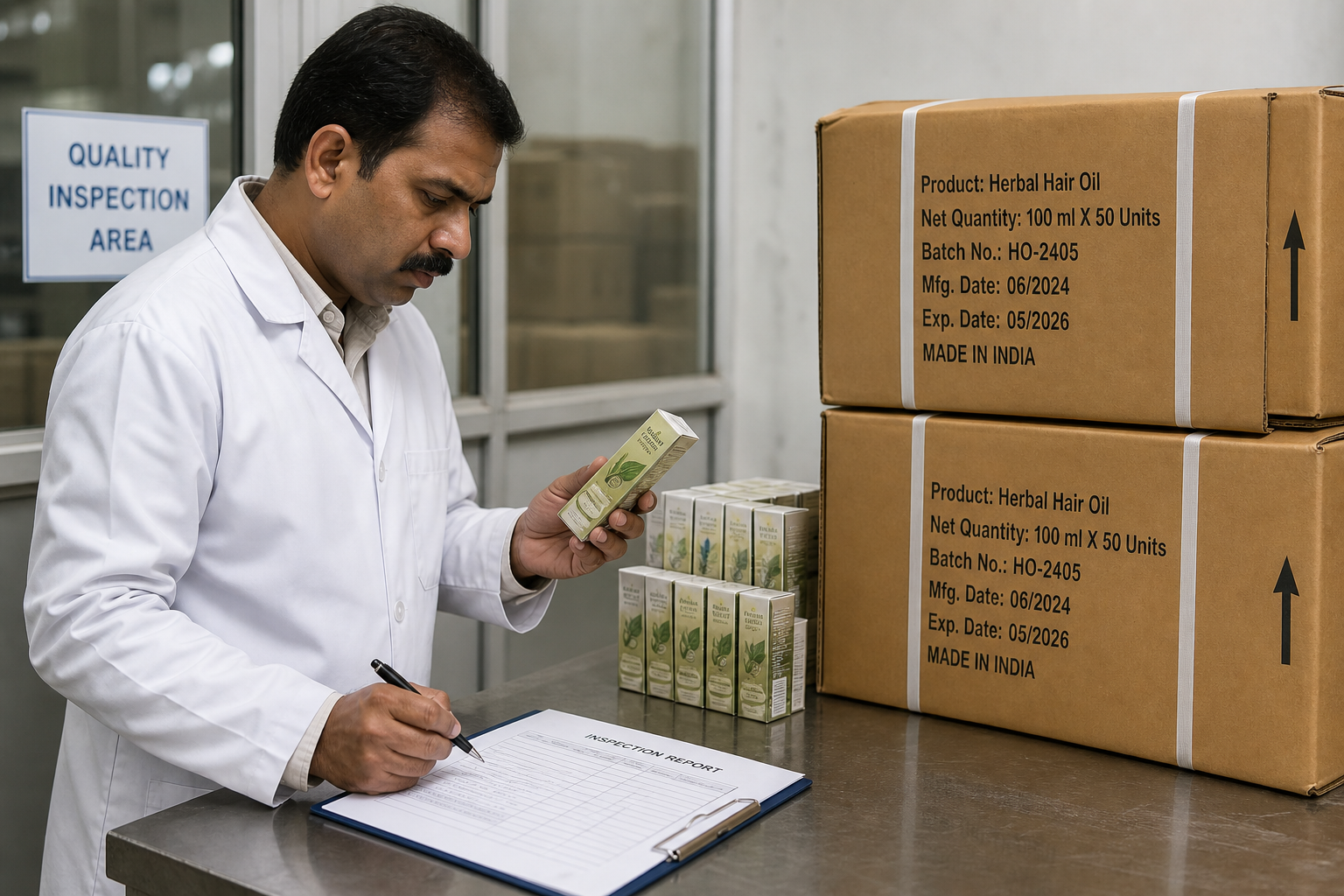
Step 3: Ask for live, product-specific production proof
Historic factory videos and catalog photos are weak evidence because they can be copied or selectively curated. Live proof does not need to reveal confidential customer information. It should respond to your product and your questions in real time.
A practical live-video request
- show the exterior or entrance and state the location;
- introduce the person responsible for production or quality;
- walk from input material to finished goods for a comparable item;
- show the machine or workstation used for a named operation;
- show a current work order, process card, or quality check with confidential fields covered;
- answer a product-specific question, such as tolerance, material grade, tooling, curing time, stitch density, or packing method;
- show how finished goods are identified and separated from rejected or unapproved goods.
Schedule a short call during local working hours. Tell the supplier in advance that you need to understand the workflow, but keep a few reasonable prompts for the call. Ask them to:
The purpose is not surveillance. It is to test whether the seller can connect its claimed facility to a real production process. A live call is stronger when the person can explain why a process is used, what can go wrong, and what control point catches it.
What live video cannot prove
Video cannot fully prove ownership of the premises, long-term capacity, labour compliance, or that a particular order will be produced there. It also may not be possible in sensitive areas. Treat it as one element of triangulation. For significant orders, use an independent or buyer-appointed audit, sample approval, and inspection plan.
Step 4: Test whether the supplier understands your product
- a comparable product sample or recent anonymized example;
- bill of materials or material specifications at an appropriate level;
- process flow for your product family;
- drawing review comments or questions;
- tooling ownership and maintenance approach if tooling is involved;
- sample lead time and production lead time assumptions;
- quality checkpoints and relevant test capability;
- packing method and export readiness.
An authentic factory does not necessarily make every item in its online catalog. Catalog breadth is often a sign to ask more questions, especially when products require unrelated processes. A metal fabricator, injection molder, textile printer, and food processor may all be legitimate businesses; one factory claiming to own all of them needs a clear explanation.
Provide a controlled technical brief and assess the response. A credible manufacturer normally asks clarifying questions about material, dimensions, tolerances, finish, packaging, testing, tooling, quantity, and target market. It may identify constraints or recommend alternatives. A generic price given immediately is not evidence of capability.
Ask for:
For a systematic review of whether output can match your order, use the guide to evaluating manufacturing capacity in an Indian supplier. Capability is not only a machine list. It includes trained operators, approved inputs, current workloads, quality discipline, and the ability to repeat an approved sample.
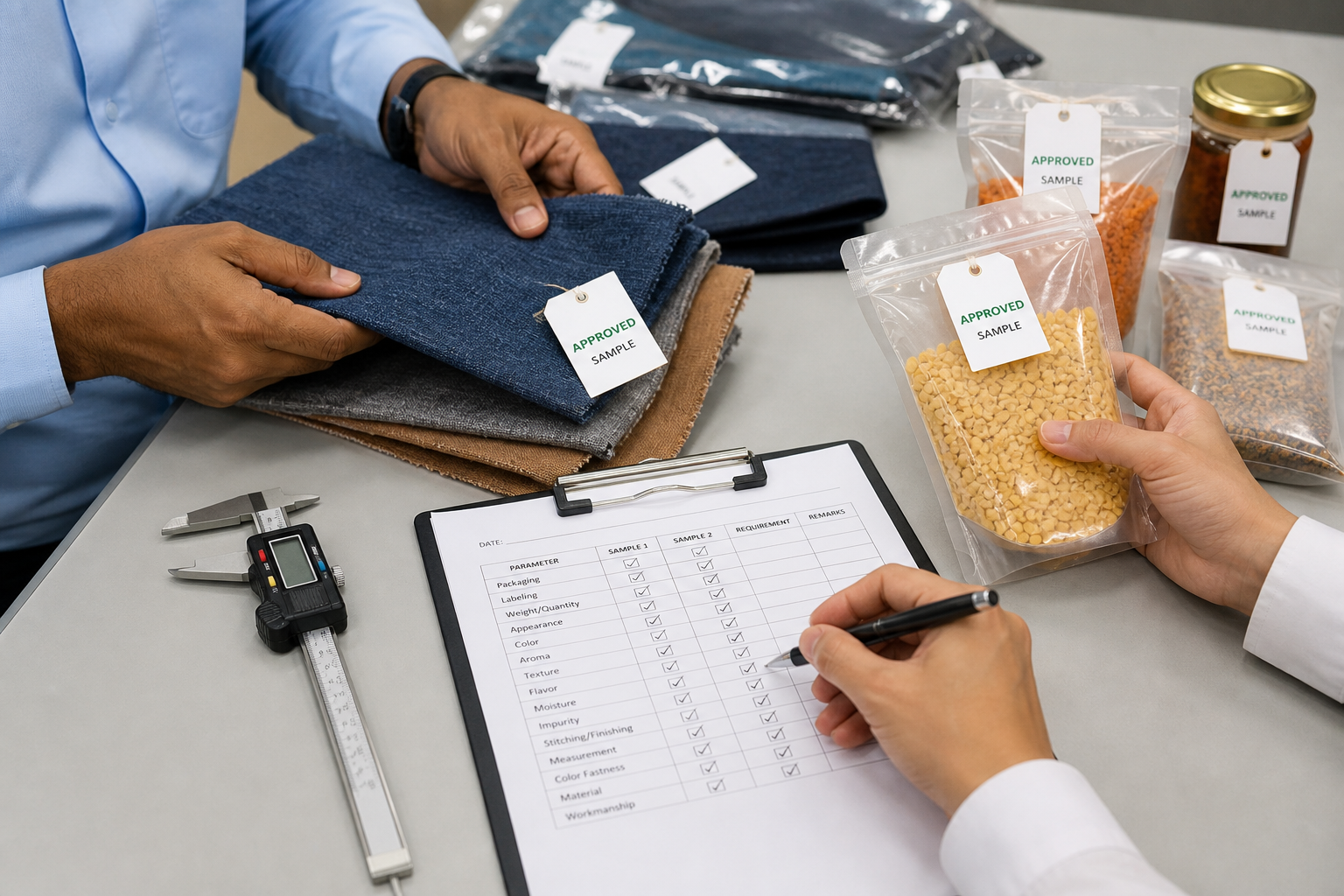
Step 5: Investigate subcontracting without treating it as automatic failure
Subcontracting can be necessary and sensible. It becomes a risk when the supplier does not disclose it, cannot identify the controlled process, or has no mechanism to maintain specifications and traceability across sites.
Use this subcontracting review:
For a routine, low-risk component, disclosure and final inspection may be enough. For branded goods, safety-critical parts, regulated products, or custom tooling, require more: named approved subcontractors, a no-substitution clause, buyer approval for changes, and access to relevant evidence.
Comparison table
Swipe →
Data table — swipe horizontally on small screens
| Question | Why it matters |
|---|---|
| Which steps are subcontracted? | Identifies where control leaves the main facility |
| Is the subcontractor approved for this process? | Tests whether sourcing is deliberate rather than improvised |
| Who supplies the material or tooling? | Clarifies ownership and substitution risk |
| Who performs incoming and outgoing inspection? | Shows quality-accountability handoffs |
| Can we audit or approve the subcontractor? | Important for high-risk or regulated products |
| How are batches traced? | Supports investigation if defects occur |
| What happens when the subcontractor is at capacity? | Reveals substitution and lead-time risk |

Step 6: Use samples and a small order as operational evidence
- document and facility review;
- sample or prototype;
- technical approval with written revision control;
- limited pilot order;
- in-process or pre-shipment inspection;
- larger order after performance review.
An approved sample is evidence of a supplier’s ability to make one version at one point in time. It does not itself prove that bulk production will match. Preserve the approved sample, drawings, material callouts, packaging reference, and approval date. Make them part of the production-control record.
Before increasing volume, consider a staged path:
The right sequence depends on product risk and commercial reality. A pilot may not be possible with high MOQs or custom tooling, but you can still introduce production gates. Altus Exports can help buyers define these gates across supplier verification, samples, production follow-up, and export coordination when a local operating layer is needed.
Red flags that require a pause
- The supplier refuses to state whether it manufactures, trades, or exports.
- Documents identify a different entity without a documented relationship.
- Payment is requested to a personal or unrelated beneficiary account.
- The company shows a showroom or office but cannot show or explain the actual facility.
- Photos have visible inconsistencies, copied branding, or unrelated product categories.
- The supplier declines a reasonable live walkthrough yet offers no alternative evidence.
- Technical questions receive only sales-language answers.
- A claimed manufacturer will not identify outsourced processes.
- Certificates belong to a different company or have expired, and the supplier cannot explain their applicability.
- The supplier demands a high advance payment before identity, sample, and terms are settled.
No single sign proves fraud. Several unresolved signs indicate that you should withhold payment, reduce exposure, or engage a local verifier.
Read how to identify fake Indian suppliers and export scams for fraud-specific warning signs. A genuine business can still be a poor fit on capacity, quality, or commercial terms; verification should assess both authenticity and suitability.

A practical decision matrix
Score each evidence point before selecting a supplier. “Unproven” does not always mean reject; it means choose an evidence-gathering action before progressing.
The same record can form part of your broader Indian supplier due-diligence complete guide. Keep dates, source links, screenshots where permitted, interview notes, and open actions. That makes later supplier comparison more disciplined and gives your team an audit trail for its decision.
Comparison table
Swipe →
Data table — swipe horizontally on small screens
| Area | Strong | Needs follow-up | Stop or escalate |
|---|---|---|---|
| Legal identity | names and roles reconcile | minor address or brand difference explained | contradictory entity or bank information |
| Facility | live or local evidence matches process | access limited but alternative evidence offered | no credible production site |
| Product proof | comparable output and technical answers | new process needs sample validation | generic claims only |
| Subcontracting | disclosed and controlled | partial detail pending | denied, unclear, or uncontrolled |
| Capacity | workload and process support timeline | capacity needs pilot confirmation | unrealistic or unsupported promise |
| Commercial behaviour | written, traceable terms | details still being negotiated | rushed payment or shifting terms |

Conclusion
To check whether an Indian manufacturer is genuine, do not rely on a profile, a certificate, or a factory video in isolation. Use the Manufacturer Authenticity Triangulation Method: reconcile documents, confirm the operating facility, and obtain product-specific production evidence. Then clarify the supplier’s role, test subcontracting controls, and stage commercial exposure through samples and defined production gates.
If you need local support to identify and verify potential factories, Altus Exports can review supplier evidence, coordinate facility checks, compare manufacturer roles, and support a structured sourcing process. Share your product brief, expected volume, destination market, and verification concerns to discuss an appropriate scope For factory discovery support, see find manufacturers in India and the Indian supplier due diligence complete guide..