
How to Verify Product Quality Before Buying From an Indian Manufacturer
By Saurabh Mittal, Founder, Altus Exports
To verify product quality before buying from an Indian manufacturer, create an unambiguous specification, approve a controlled golden sample, obtain relevant lab evidence, place a limited pilot lot, conduct an AQL-based pre-shipment inspection, and maintain change control for…
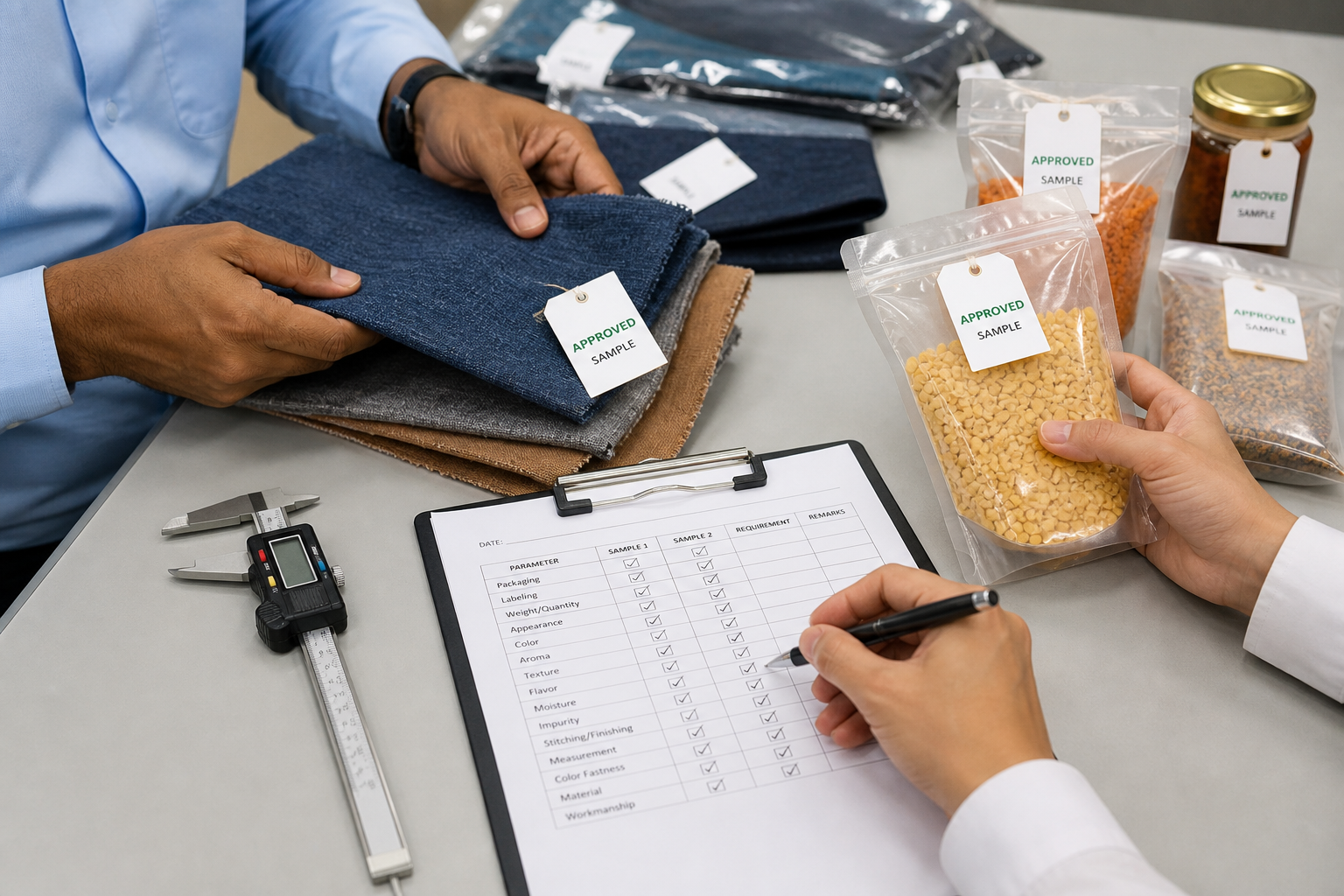
For an international buyer, the phrase “quality is good” has almost no purchasing value. It does not identify the material grade, acceptable tolerance, test method, packaging condition, labeling requirement, or response when a defect is found. It also does not establish whether the factory can reproduce the approved product when the order becomes larger.
The practical way to verify product quality from an Indian manufacturer is to replace opinion with a sequence of evidence. That sequence should begin before a purchase order is released and continue after the first shipment. A supplier can be genuine, capable, and commercially attractive while still producing an item that fails your actual customer, regulatory, or distribution requirements. Quality verification therefore needs its own process alongside supplier due diligence.
This article uses a Quality Evidence Ladder:
Quality verification is different from supplier verification
> Specification → golden sample → lab evidence → pilot lot → pre-shipment inspection (PSI) → ongoing control
Each step reduces a different uncertainty. A detailed specification prevents assumptions. A golden sample creates a visual and physical reference. Testing addresses performance and destination-market claims. A pilot tests repeatability. PSI checks the finished shipment. Ongoing control keeps a successful first order from becoming a one-time outcome.
Altus Exports supports international buyers with supplier coordination, specification follow-up, sample management, quality checks, and export execution. The framework below is intended to help you evaluate quality evidence whether you work with Altus Exports, an inspection company, or directly with an Indian manufacturer.
Supplier verification asks, “Is this business real, suitable, and able to perform?” Product verification asks, “Will this specific product, made under these conditions, meet our agreed acceptance requirements?”
Both questions matter, but they use different evidence. Registration documents and an address do not prove a shipment’s material composition. A factory tour can show equipment but not whether every retail carton will carry a legally required warning. A positive sample does not prove a bulk lot was made from the same inputs.
Start with the broader screening work. Use how to verify an Indian supplier before placing an order to establish identity, role, and baseline credibility, then use the Indian supplier due diligence complete guide for a risk-based review. Where production capability is uncertain, review how to evaluate manufacturing capacity of an Indian supplier before assuming a sample can be scaled.
The distinction can be summarized this way:
Do not treat “ISO certified,” “export quality,” or “we supply global markets” as a substitute for the right-hand column. Such statements may be relevant context, but they do not define your product’s acceptance standard.
Comparison table
Swipe →
Data table — swipe horizontally on small screens
| Question | Supplier verification evidence | Product-quality evidence |
|---|---|---|
| Is the business legitimate? | Legal entity, export history where relevant, bank and address checks | Not sufficient on its own |
| Can it make this type of product? | Equipment, process, workforce, capacity review | Process capability, sample and pilot results |
| Does the product meet requirements? | Supplier’s stated quality system | Specification, sample approval, test reports, inspection findings |
| Will the shipment be saleable? | Commercial terms and lead-time plan | AQL result, packing check, labels, documents, destination compliance |
| Will repeat orders remain consistent? | Relationship and communication | Approved baseline, revision history, incoming-material and production controls |
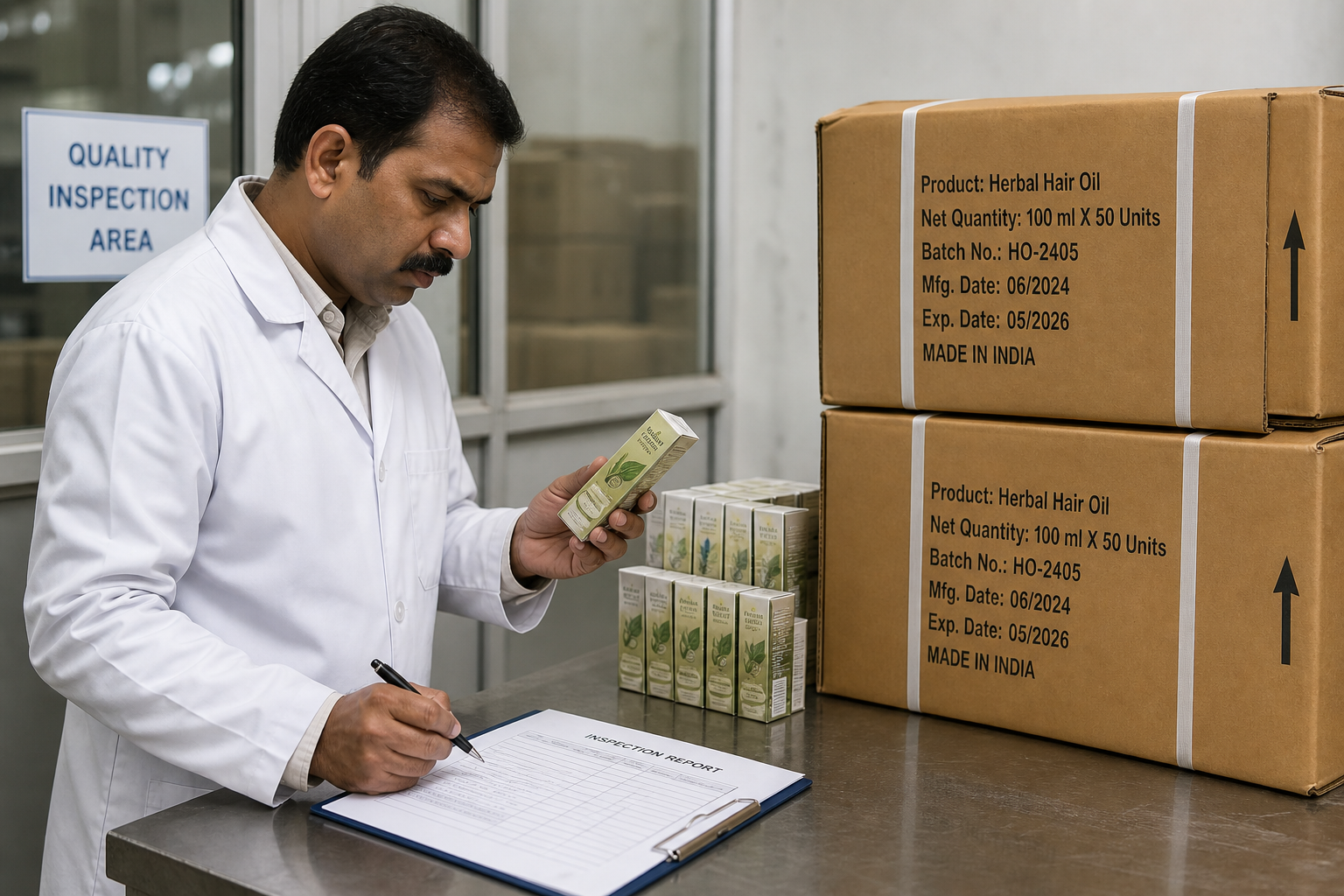
Use the Quality Evidence Ladder before committing volume
The ladder is deliberately ordered. Skipping a lower rung makes later evidence harder to interpret. If a PSI fails but there was no signed specification, for example, the buyer and factory may disagree about whether the issue is a defect or an unstated preference.
1. Build a purchase-ready product specification
- product name, SKU, revision number, date, and owner;
- dimensions, tolerances, weight, color references, surface finish, and appearance standards;
- material names, grades, composition, approved suppliers if necessary, and prohibited substitutions;
- construction details, assembly sequence, functionality, safety features, and critical-to-quality points;
- photographs or drawings that identify acceptable and unacceptable examples;
- test methods, sampling requirements, pass/fail limits, and who pays for testing;
- quantity, unit of measure, batch or lot identification, and traceability needs;
- inner packing, master carton, pallet, moisture protection, drop protection, and carton marking;
- labels, language, country-of-origin statement where applicable, barcode, warnings, and artwork version;
- destination-market regulations and customer-specific requirements;
- inspection level, AQL acceptance limits, defect definitions, and rework or replacement process.
A supplier quotation is not a product specification. Quotes often summarize dimensions, material, quantity, and price. A quality specification records the details that determine what is acceptable and how acceptance will be judged.
For simple products, a controlled specification may be a few pages plus photographs. For technical, regulated, or branded products, it may include drawings, bills of materials, test plans, artwork files, and packaging standards. The format matters less than having one current, agreed version.
At minimum, include:
Use measured requirements instead of subjective words. “Premium finish” is not verifiable. “No visible scratches at 60 cm under normal indoor light; no scratch longer than 3 mm on the front face” is much closer to an inspection rule. “Food-safe” should identify the regulatory regime, material scope, migration test where applicable, and documentation expected. “Blue” should point to a physical reference, approved color standard, or a controlled digital file plus an agreed tolerance.
Assign a version number to every specification and artwork file. When you email a revision, state clearly whether it replaces the previous document and which purchase orders it affects. Altus Exports can help organize this approval trail, but the buyer should retain final control of product, brand, and market requirements.
Define critical, major, and minor defects before production
- Critical defect: A defect that could create a safety, legal, serious functional, or severe customer-harm risk. Examples may include sharp exposed edges on a children’s item, wrong voltage marking, a prohibited substance, or a missing mandatory warning.
- Major defect: A defect likely to cause functional failure, a customer return, an important appearance failure, or noncompliance with an agreed product requirement. Examples may include a leaking closure, incorrect dimension beyond tolerance, broken component, or incorrect primary label.
- Minor defect: A departure from the agreed standard that does not materially affect use, saleability, or required information. Examples may include a small non-prominent cosmetic variation within agreed limits.
Defect classifications make inspection findings actionable. They should be tailored to the product and customer risk, not copied blindly from another category.
Your definitions must be visible to the factory and inspector. A defect called “minor” by a factory could be commercially unacceptable to a premium retailer; conversely, an overly strict standard may be unrealistic for a handmade product unless priced and controlled accordingly.
2. Approve a golden sample, not merely “a sample”
- Was it made using production-intent materials, tooling, and process?
- Does it incorporate the latest specification and artwork revision?
- Were its dimensions, function, color, packing, and labels checked?
- Has the buyer approved it in writing, including known agreed deviations?
- Is the factory holding an identified retained copy, and does the buyer retain one?
- Are photographs, measurements, and approvals stored with the sample record?
A sample can serve many purposes: confirming capability, obtaining customer feedback, testing a material, or checking a new design. A golden sample has a more specific role. It is the approved physical or digital baseline against which production is assessed.
Before calling a sample golden, confirm what it represents:
If the sample was hand-made by a development team but bulk units will use different machinery, it is a development sample, not proof of production consistency. If packaging was omitted to reduce sample freight, do not assume it is approved. Record it as “product approved; packaging pending” and keep the status visible.
The golden sample should be protected from casual alteration. Give it an ID, label it with the relevant revision, photograph it, and record its storage location. For apparel, textiles, wood, ceramics, or products with natural variation, a golden sample is a reference range rather than an impossible promise of identical appearance. State the allowable variation explicitly.
3. Obtain meaningful lab and material evidence
Comparison table
Swipe →
Data table — swipe horizontally on small screens
| Evidence | What it can help establish | What it does not establish automatically |
|---|---|---|
| Supplier COA | Reported attributes of a defined material or batch | Finished-product performance, identity of every future input, or destination compliance |
| Mill certificate / material certificate | Claimed grade, heat, batch, composition, or mechanical values | Correct fabrication and assembly of the finished item |
| Factory internal test | Process-level evidence for a stated method | Independent verification or a different regulatory test |
| Accredited third-party lab report | Results for the submitted sample and cited method | Compliance of untested lots or requirements outside the scope |
| Declaration of conformity | Supplier’s or importer’s stated responsibility | Proof when supporting technical evidence is missing |
A certificate of analysis (COA) is useful only when it answers a relevant question. It may show a material batch’s composition, chemical property, or test result. It is not automatically a certificate that the finished product complies in your destination market.
Ask what the document covers:
Request reports in full, not only a cropped certificate image. Check the laboratory name, report number, issue date, sample description, sample receipt date, test standard, result, units, conclusion, and any limitation. Confirm that the sample description matches your actual product and the destination requirement. A report for “plastic toy sample” may be too vague if the relevant concern is a painted coating, a specific age grade, or a different material composition.
For regulated goods, involve your own compliance counsel, retailer compliance team, or qualified laboratory early. Requirements vary by destination, product classification, intended use, age group, materials, claims, and sales channel. The manufacturer may suggest what is common in its export work, but the importer or brand usually remains responsible for ensuring the product is lawful in the market where it is sold.
Altus Exports can coordinate document collection and testing logistics where within scope; it should not be treated as legal advice or as the party that decides what regulation applies to your product.

Destination compliance belongs in the quality plan
- product-safety standards and test requirements;
- chemical, food-contact, electrical, flammability, or packaging rules;
- labeling language, warning text, importer details, country-of-origin marking, and care instructions;
- traceability, lot codes, date codes, or technical-file requirements;
- restricted substances and material declarations;
- retailer or marketplace policies that go beyond law;
- customs classification, documentation, and product claims that need support.
Quality and compliance overlap, but they are not identical. A visually sound item can still be blocked by customs, removed from a marketplace, recalled, or rejected by a retailer because its labels, claims, documents, or material controls are wrong.
Create a destination-compliance checklist before finalizing the purchase order. Relevant items may include:
Do not ask the factory simply, “Is this compliant with the United States/EU/UK?” Ask a narrow question tied to a written requirement: “Can you supply this exact material with the specified test report for the intended product and label it using this approved artwork?” That produces evidence that can be checked.
4. Place a controlled pilot lot
- the exact specification and golden-sample revision in force;
- production-intent materials and components;
- first-article or pre-production sample approval, if used;
- in-process checkpoints for high-risk steps;
- test and inspection plan;
- allowed rework and who must approve any deviation;
- quantity released, quantity rejected, and root cause of material defects;
- full packing and label validation;
- shipment records and buyer feedback after receipt.
A pilot lot is the bridge between a sample and a commercial order. Its objective is not merely to obtain inexpensive inventory. It is to observe whether approved requirements can be reproduced at a defined scale and whether the parties can handle normal production decisions.
The right size depends on product risk, MOQs, tooling, and the cost of failure. It may be a small batch, first production run, trial shipment, or limited market release. See how to start sourcing from India with a small trial order for a commercial structure that keeps the first order testable.
For a pilot, document:
Avoid changing several variables at once. If you approve a new material, new color, new factory line, and new packaging on the same pilot, a later failure may have no clear cause. Prioritize the risks that would make the product unsaleable or unsafe.
5. Use AQL-based pre-shipment inspection appropriately
- purchase order, product name, SKU, lot size, and readiness percentage;
- approved specification, golden sample, approved artwork, and packing standard;
- sampling plan, inspection level, and AQL values or acceptance numbers;
- critical, major, and minor defect definitions with photo examples where possible;
- required functional tests, measurements, carton checks, and label checks;
- barcode scanning or count verification if applicable;
- destination-specific documents or markings to review;
- whether the inspector may witness rework, conduct re-inspection, or issue a hold recommendation;
- report timing and who receives it.
Pre-shipment inspection (PSI), sometimes called final random inspection, takes place when the order is substantially complete and packed—or at the agreed stage when a representative sample can be selected. An inspector draws a random sample from the available lot, checks against the specification, classifies defects, and reports findings.
Many buyers use ANSI/ASQ Z1.4 or ISO 2859-1-style acceptance sampling plans. “AQL” means Acceptable Quality Limit, a sampling-plan parameter; it does not mean every shipment is allowed to contain a fixed percentage of defective items. The sample size, inspection level, lot size, and chosen AQL determine acceptance and rejection numbers.
An illustrative consumer-goods plan might use a general inspection level and different limits for critical, major, and minor defects, such as zero critical defects, a stricter major-defect threshold, and a more tolerant minor-defect threshold. Do not copy those numbers without assessing your product. Medical, safety-sensitive, luxury, promotional, handmade, and industrial items can require very different controls.
Your PSI brief should state:
PSI is a decision input, not a blanket warranty. It examines a sample, not every unit. It can detect evidence of a process problem, but it may not reveal hidden defects, incorrect material composition, or issues that require destructive or laboratory testing. A passed PSI also does not excuse a factory from meeting the purchase order.
What to do when a PSI fails
- Hold shipment while the factory segregates, reworks, replaces, or remakes affected goods.
- Investigate root cause: material issue, operator training, tooling, machine setting, specification misunderstanding, packing process, or inspection inconsistency.
- Define corrective action with an owner, deadline, and evidence required.
- Reinspect after corrective action when risk warrants it.
- Decide commercially whether delayed delivery, discount, replacement, disposal, or cancellation is appropriate under your contract.
Do not ask only, “Can you make it pass?” First determine the defect pattern and its cause. Review photographs, sample quantities, defect classification, lot traceability, and whether the finding reflects the written specification.
Then agree on a documented disposition:
Do not reclassify a defect simply to reach a passing result. If the original requirement was unclear, improve it for the next lot—but record the decision openly.
6. Maintain ongoing quality control after the first shipment
- current product specification and revision history;
- signed or documented golden-sample approval;
- bill of materials and approved material evidence where relevant;
- test reports, COAs, inspection reports, and corrective actions;
- production and shipment lot traceability;
- defect trends, customer returns, and warranty feedback;
- packaging and label approvals;
- approved change notices and their effective dates.
The strongest quality program does not stop when the first PSI passes. Reorders create new risks: a purchaser changes an input to manage cost, a trained operator leaves, a subcontractor is used, equipment is maintained poorly, artwork changes, or demand pushes a factory beyond normal capacity.
For repeat orders, keep a supplier quality file containing:
Review this information periodically. If defects rise, lead times compress, or the factory proposes substitutions, increase oversight rather than assuming the first successful shipment will repeat itself. Altus Exports can provide local coordination for this follow-up, including status reporting and agreed quality checkpoints, where it is the right fit for the buyer’s category and scope.

Packing and labeling are product quality, not last-minute logistics
- retail pack material, dimensions, inserts, seals, and presentation;
- protective materials and whether they can contact the product;
- inner-pack quantity and master-carton configuration;
- carton dimensions, gross and net weight limits, and stacking limits;
- moisture protection, desiccants, fumigation or pallet requirements where applicable;
- drop, compression, vibration, or transit testing when relevant;
- shipping marks, carton numbering, PO/SKU identification, and country-of-origin marking;
- barcode format, location, quiet zones, scan requirement, and label artwork;
- warning labels, care instructions, language versions, and date/lot coding.
Buyers sometimes approve the item and leave packing to the final days before shipment. That is risky. Product damage, mixed SKUs, incorrect carton counts, illegible barcodes, missing warnings, and wet cartons can make otherwise acceptable goods difficult or impossible to sell.
Treat packing as a controlled component of the product. Specify:
Request photographs of pre-production packaging and packed cartons, not just an artwork PDF. During PSI, include a count check, carton measurement, packing method review, label scan where relevant, and condition check. For fragile products, consider confirming that the packing configuration—not merely the product—has undergone appropriate transit testing.

Set up change control so approvals remain valid
- material grade, supplier, origin, colorant, coating, or recycled-content claim;
- component, tooling, mold, process, production line, or subcontractor;
- dimensions, tolerance, finish, performance, or construction;
- packaging, carton count, protective material, label, barcode, or artwork;
- test method, laboratory, compliance document, or certificate scope;
- production date, ship date, or quantity that affects inspection readiness.
Change control is the mechanism that prevents a factory from treating an approved order as permission to make unrecorded substitutions. It should cover changes proposed by the supplier and changes requested by the buyer.
Require written approval before changes to:
A simple change request can record the change description, reason, affected SKU and order, risk assessment, samples or tests required, buyer approval, factory authorization, and effective date. If the change is material, use a new golden sample or repeat relevant testing. “No change without written approval” should appear in your purchase order or quality agreement, but it only works when your team responds promptly and maintains a revision log.
Change control is especially important for cost-down proposals. A lower-cost alternative may be valid, but it deserves the same evidence standard as the original material. Ask what changed, why, which requirement could be affected, and what sample, test, or inspection will demonstrate continued conformity.

Use the right quality controls at the right risk level
- consumer safety or a regulated claim;
- high cost of returns, recalls, rework, or reputation damage;
- new supplier, new factory, new material, or new product design;
- tight tolerance or complex assembly;
- seasonal launch date or retailer chargeback risk;
- long ocean transit, fragile product, or difficult packing;
- supplier capacity pressure or an unusually short lead time;
- a history of variation, late samples, or unresolved corrective actions.
Not every product needs the same investment. A low-risk, non-regulated commodity with a stable design may need a clear specification, sample approval, and periodic inspection. A children’s product, food-contact article, electrical item, branded retail product, or high-cost industrial component may need layered testing, tighter acceptance limits, traceability, and independent audits.
Consider these risk signals:
For high-risk work, an on-site assessment may be useful before production. If you cannot visit, how to conduct a supplier audit in India without visiting the factory explains ways to gather evidence remotely and through third parties. A quality check does not replace a capacity review, and a capacity review does not replace product testing; layer the controls that address your actual risk.

Common quality-verification mistakes
Approving a sample without a specification
The buyer remembers one appearance; the factory remembers another. Convert sample feedback into a controlled document before bulk production.
Treating a COA as compliance proof
A COA may be legitimate and still be irrelevant to the finished product or destination regulation. Review the document’s scope, sample, method, and date.
Booking inspection after goods are already loaded
Inspection needs enough completed production and time for corrective action. Agree the readiness threshold and notification window in advance.
Using generic AQL values with no defect definitions
Sampling plans work only when the inspector knows what counts as critical, major, or minor. Define the product-specific examples.
Forgetting labels and cartons
Packing defects can cause retailer rejection or transit damage even when the item itself looks correct. Include packing and labeling in the golden-sample and PSI plan.
Allowing verbal substitutions
An informal “same quality” assurance does not show what changed. Require written change approval and sample or test evidence when relevant.
Assuming the first successful order proves the process
Repeat orders need trend review and re-approval of meaningful changes. Quality control is a managed system, not a single event.
For a broader, ready-to-use sequence of verification checks, see the Indian supplier verification checklist: 25 things to check. Once you have quality evidence from several shortlisted factories, use the Indian supplier scorecard to compare it fairly with cost, capacity, compliance, and commercial evidence.

Conclusion
To verify product quality before buying from an Indian manufacturer, build evidence in stages rather than relying on claims. Start with a measurable specification, convert the approved sample into a controlled golden sample, validate materials and destination requirements, use a pilot to test repeatability, inspect the finished lot using an agreed plan, and maintain change control for every repeat order.
Altus Exports can help international buyers coordinate these steps across Indian suppliers, from samples and documentation through agreed inspection and shipment readiness. Share your product brief, destination market, product risk, and target order plan to discuss an appropriate quality-verification scope For local execution support, use global sourcing partner India and import products from India alongside a controlled trial order..