
How to Pay Indian Suppliers: Payment Terms for International Buyers
By Saurabh Mittal, Founder, Altus Exports
To pay Indian suppliers safely, match the payment instrument to supplier trust and order risk: use milestone T/T tied to sample approval, production checkpoints, and pre-shipment inspection for new suppliers; consider a letter of credit for large or complex orders; reserve…

Paying an Indian supplier is not a separate step from importing—it is one of the main controls in your import process. The payment method you choose, the percentage paid in advance, and the conditions for releasing the balance determine how much leverage you retain if specifications change, production slips, or documents do not match the shipment.
International buyers often focus first on unit price and Incoterms. Payment terms receive less attention until a supplier asks for a large advance, a bank requests supporting documents, or a shipment arrives without the quality gate you assumed was in place. By then, the commercial structure is already fixed.
The practical goal is not to find one "best" way to pay Indian suppliers. It is to design payment terms that match supplier verification level, order value, production timeline, inspection requirements, and the Incoterm you agreed. A first order with a new factory should not use the same structure as a repeat order with a supplier that has passed several inspection cycles.
Altus Exports supports international buyers through merchant-exporter and import-coordination models where commercial terms, documentation, and shipment release are managed as one workflow. The payment frameworks in this article apply whether you buy direct from a manufacturer, through a merchant exporter, or with a sourcing partner coordinating the order.
Why payment structure matters as much as unit price
- Supplier trust and verification level. Has the legal entity been confirmed? Have you approved samples? Is there independent inspection?
- Order risk profile. Product complexity, customization, tooling, long lead times, and single-source dependency increase exposure.
- Commercial and logistics alignment. Your Incoterm defines cost and responsibility split; payment milestones should align with when goods, documents, and inspection results become verifiable.
Payment terms affect cash flow, dispute leverage, and how quickly a supplier prioritizes your order. They also interact with freight booking, export documentation, and customs clearance at destination. A buyer who pays 100% before production starts has limited options if the factory substitutes material or misses the agreed packing standard.
Indian export transactions commonly use telegraphic transfer (T/T), letters of credit (LC), and documentary collection. Open account exists but is usually reserved for established relationships. Escrow-like arrangements and third-party payment platforms appear occasionally, but they are not the default in mainstream B2B manufacturing trade.
Three variables should drive your payment design:
Payment terms belong inside the same decision framework as the broader India import process. Treat them as stage gates—not as a final administrative transfer after everything else is decided.
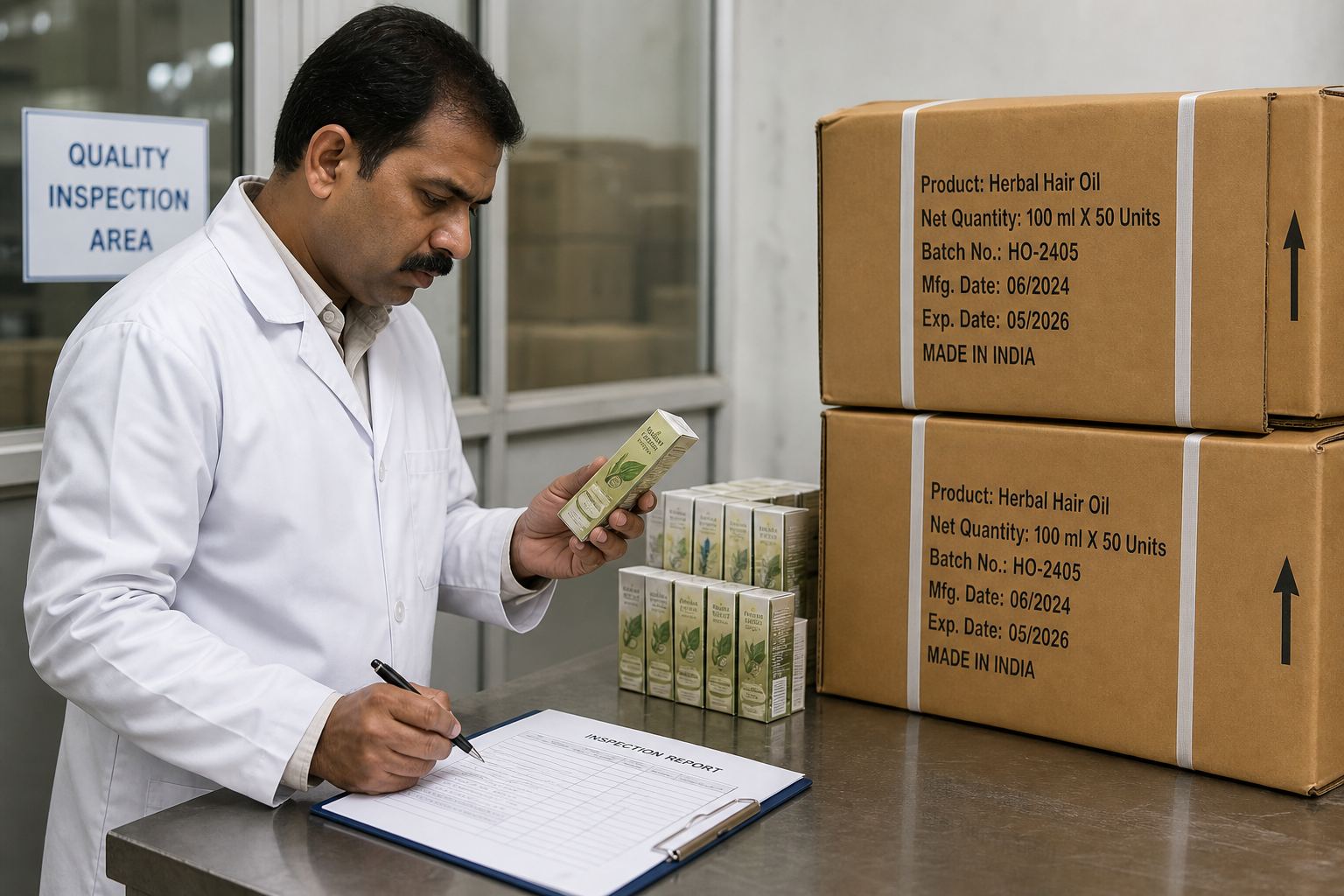
Main payment methods international buyers use with Indian suppliers
Each method trades speed and simplicity against buyer protection. None eliminates diligence. Even a letter of credit requires correct documents, consistent specifications, and someone who understands discrepancies.
Telegraphic transfer (T/T): advance and balance
Comparison table
Swipe →
Data table — swipe horizontally on small screens
| Typical structure | When it is used | Buyer protection level |
|---|---|---|
| 30% advance / 70% before shipment | Common starting point for verified suppliers | Moderate—balance withheld until production and inspection |
| 20% advance / 80% before shipment | Buyers with stronger verification or inspection gates | Moderate to good |
| 50% advance / 50% before shipment | Supplier push on cash flow; higher buyer risk | Lower unless milestones are defined |
| 100% advance | Rare for new suppliers; sometimes samples or tooling | Low |
- exact percentages and due dates;
- what evidence triggers each payment;
- whether "before shipment" means before goods leave the factory, before container gate-in, or before bill of lading release;
- currency (USD is common; INR or other currencies possible by agreement);
- who pays bank charges (OUR, SHA, or BEN under SWIFT conventions).
T/T—also called wire transfer or SWIFT payment—is the most common method in India manufacturing trade. The buyer instructs their bank to send funds to the supplier's bank using SWIFT messaging. Transfers are typically irrevocable once sent.
The standard structure is advance plus balance before shipment:
Advance is usually tied to order confirmation, material purchase, or production slot booking. Balance should be tied to a defined release condition: successful pre-shipment inspection, presentation of draft export documents, or readiness for pickup under the agreed Incoterm.
For T/T to work as a control, the purchase agreement must define:
T/T is fast and widely accepted. Its weakness is that recovery after a bad transfer is difficult. That is why advance percentage and release gates matter more than the label "T/T."
Letter of credit (LC)
Comparison table
Swipe →
Data table — swipe horizontally on small screens
| LC type | What it means | Practical note |
|---|---|---|
| Irrevocable LC | Cannot be amended or canceled without beneficiary consent | Standard in international trade |
| Confirmed LC | A second bank adds its payment undertaking | Used when supplier distrusts buyer's country bank risk |
| At sight LC | Payment when compliant docs are presented | Stronger supplier cash flow; buyer relies on doc compliance |
| Usance LC | Deferred payment (e.g., 30, 60, 90 days after sight or shipment) | Affects supplier financing; buyer must understand maturity |
- larger order values;
- new supplier relationships where both sides want bank involvement;
- buyers whose internal policy requires documentary payment;
- categories where document precision is well established.
- agreement on Incoterm and who arranges freight (see FOB vs CIF vs EXW when buying from India);
- precise document list (commercial invoice, packing list, bill of lading or air waybill, certificate of origin, inspection certificate if required);
- tolerances for quantity and shipment date;
- clarity on partial shipment and transshipment;
- a bank or trade finance adviser who can review drafts before issuance.
A letter of credit is a bank undertaking to pay the beneficiary (supplier) when compliant documents are presented under the LC terms. For the buyer, the LC shifts part of the risk from "trust the supplier" to "trust the document set."
LCs are common for:
Documentary credit types buyers encounter:
An LC is not automatic protection against quality problems. Banks examine documents, not goods. If the LC calls for a clean on-board bill of lading and accepted inspection certificate—but your actual quality standard is not reflected in those documents—you may pay for goods you cannot sell.
LC setup requires:
LCs add bank fees and administrative time. For small or sample orders, T/T with tight milestones is often more practical.
Documentary collection (D/P and D/A)
Comparison table
Swipe →
Data table — swipe horizontally on small screens
| Type | Mechanism | Buyer risk profile |
|---|---|---|
| Documents against payment (D/P) | Buyer pays to receive documents | Lower than open account; no bank payment guarantee |
| Documents against acceptance (D/A) | Buyer accepts a draft payable later to receive documents | Higher—buyer may obtain documents before paying |
Documentary collection means shipping documents are handled through banks. Payment or acceptance is required before the buyer receives documents needed to take delivery and clear customs.
Collections cost less than LCs but provide less bank commitment. They can suit mid-size shipments where the supplier wants bank-mediated document handling and the buyer does not want full LC cost.
The buyer still depends on document accuracy. If the bill of lading and invoice do not support customs entry at destination, payment mechanics will not fix the problem. Cross-reference the documents required to import from India when defining what the supplier must produce before payment release.
Escrow-like and third-party payment arrangements
- trade-payment platforms with milestone release;
- sourcing companies or merchant exporters that invoice the buyer and pay suppliers under contract;
- contractual retention where a percentage is held until inspection or arrival.
True escrow—where funds sit with a neutral third party until conditions are met—is not standard in most Indian factory relationships. Buyers sometimes use:
Treat "escrow" claims carefully. Ask who holds funds, under what jurisdiction, what triggers release, and what happens in a dispute. A merchant exporter or import partner acting as commercial counterparty is a common India-market structure—not technically escrow, but it can centralize payment and document control if terms are transparent.
If a supplier proposes a unfamiliar platform, verify fees, currency conversion, dispute process, and whether the factory accepts it before building your plan around it.
Open account for established suppliers
- you have a multi-order track record with the same legal entity;
- quality performance is consistent;
- specifications are stable;
- the supplier has more to lose from damaging the relationship than from one delayed invoice.
Open account means the supplier ships and invoices; the buyer pays on agreed terms (Net 30, Net 60, etc.) after shipment or after receipt. This is the lowest-friction method for the supplier and the highest trust requirement for the buyer.
Open account can work when:
Even with open account, retain inspection rights and document checks. "Established" should mean proven performance, not simply several emails exchanged.
Milestone payments tied to production and inspection
Comparison table
Swipe →
Data table — swipe horizontally on small screens
| Milestone | Typical % | Release trigger |
|---|---|---|
| Order confirmation | 20–30% | Signed PI/PO, spec confirmation, production slot |
| Production start / material | 20–30% | Photo or report confirmation per agreement |
| Pre-shipment inspection pass | Balance or 40–50% | Third-party or agreed inspection report |
| Document presentation | If not yet paid | Draft BL, invoice, packing list review |
| After delivery | Optional retention | Only for very large or engineered orders |
Milestone payments split the order into tranches linked to verifiable events. This is often the strongest practical approach for new Indian suppliers when neither side wants LC overhead.
Example milestone framework:
Milestones should connect to quality control gates—not arbitrary dates. If you use pre-shipment inspection, the payment schedule should say balance is due after a passed inspection under defined AQL and checklist criteria, not merely "before shipment."
Buyers importing through coordinated programs often combine milestone T/T with a partner that verifies production status before recommending release. That does not replace your approval responsibility, but it adds an operating checkpoint.

Payment method risk comparison
Use this table to compare methods at a high level. Your bank, order size, and category may shift the ranking.
Protection is never automatic. Define what happens if a milestone is missed, inspection fails, or shipment is delayed— including whether advance can be applied to a rework order or partial refund.
Comparison table
Swipe →
Data table — swipe horizontally on small screens
| Payment method | Speed | Cost | Buyer protection | Supplier acceptance | Best fit |
|---|---|---|---|---|---|
| T/T advance + balance | Fast | Low bank fees | Low to moderate (depends on milestones) | Very high | Most orders with defined release gates |
| T/T 100% advance | Fast | Low | Very low | High (supplier preference) | Avoid for unverified suppliers |
| Letter of credit | Slower setup | Higher fees | Moderate to high (document-based) | High for larger exporters | Large value, new rel., policy-driven buys |
| Documentary collection D/P | Moderate | Moderate | Moderate | Moderate | Mid-size shipments, some trust |
| Documentary collection D/A | Moderate | Moderate | Lower | Moderate | Usually avoid early in relationship |
| Escrow / platform | Varies | Platform fees | Varies widely | Low to moderate | Case-by-case; verify structure |
| Open account | Fast for supplier | Low | Low (trust-based) | Desired by supplier | Repeat, proven relationships |
| Milestone T/T + inspection | Moderate | Low | Good when gates are enforced | High if clearly defined | New suppliers, customized goods |
How to align payment terms with Incoterms
- Under EXW or FOB, the buyer often arranges main carriage. Balance payment should not be due before you can verify export readiness—inspection completed, export packing done, and documents available for review if your process requires it.
- Under CIF or CIP, the supplier arranges freight and insurance to the named destination. Payment release should still tie to inspection and document accuracy, not only to the supplier's claim that shipment is booked. You will need the document set for customs clearance even if freight is prepaid.
- Do not pay full balance on "supplier says shipped." Define evidence: copy of bill of lading or air waybill, invoice matching PO, packing list, and any inspection or compliance certificates required in your import document pack.
- Sample and tooling payments often sit outside standard advance/balance. Specify whether tooling is buyer-owned, refundable against volume, or amortized into unit price.
- Currency alignment. If quoted FOB USD but invoiced differently, confirm FX handling in writing before transfer.
Incoterms and payment terms are related but not identical. Incoterms define cost and risk transfer for delivery. Payment terms define when money moves. Misalignment creates gaps where you have paid but cannot verify goods, or where the supplier expects payment before providing documents you need to import.
Practical alignment rules:
If you are new to importing from India, read the overview in how to import products from India before locking payment language into a long-term supply agreement.

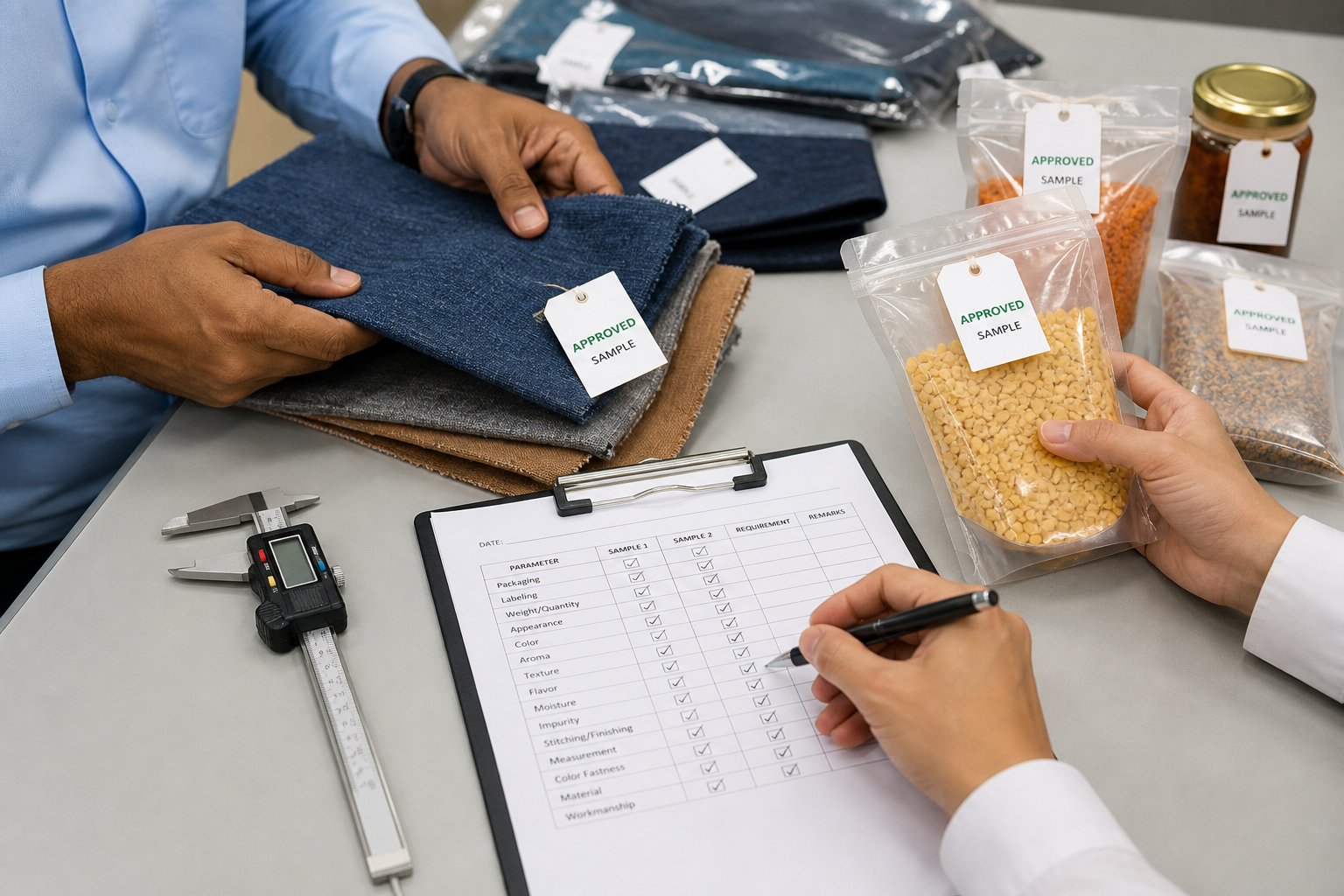
Quality control release gates and when to pay
- Sample approval — No production advance beyond a token amount until approved sample and spec sheet are documented.
- Production start — First tranche after confirmation that materials and production schedule match PO.
- In-line or mid-production check — Optional for high-risk categories; not a payment milestone for every order but useful for complex goods.
- Pre-shipment inspection (PSI) — Balance release tied to passed inspection or defined defect handling.
- Document review — Draft documents checked against PO, quantities, weights, and HS description before final payment if terms require.
- Shipment release — Under some Incoterms, supplier arranges booking only after balance clears; clarify timing to avoid detention or demurrage from delays.
Payment and quality control should be designed together. A supplier motivated by a pending balance payment is more responsive to inspection findings than one who has already received 100%.
Recommended release sequence for production orders:
If inspection fails, the agreement should specify: rework at supplier cost, re-inspection cost allocation, partial shipment options, or order cancellation with advance treatment. Silence on failure modes is a common source of disputes.
For buyers using third-party inspection, confirm who pays inspection fees and whether failed inspections automatically pause payment—do not assume the inspector's presence alone enforces it.
Currency, banking, and SWIFT practical tips
- Verify the beneficiary legal name matches the contracting entity on the proforma invoice and purchase order.
- Confirm bank name, branch, SWIFT/BIC, and account number on bank letterhead or a verified invoice—not only in an email body.
- Ask whether the supplier uses an intermediary bank for USD receipts; missing intermediary details can delay or return transfers.
- Clarify charges: OUR (buyer pays all), SHA (shared), or BEN (beneficiary pays). Misunderstanding here causes short payments that suppliers treat as incomplete.
- beneficiary name and address;
- bank SWIFT code;
- account number or IBAN where applicable;
- payment reference (invoice or PO number);
- purpose of payment text if your bank requires it for compliance.
Most Indian export contracts for international buyers are quoted and invoiced in USD. Some suppliers accept EUR, GBP, or other currencies. Invoicing in INR is possible but less common for merchant export transactions; confirm FX conversion and who bears rate risk.
Before your first transfer:
SWIFT transfers typically require:
Allow two to five business days for international T/T to credit, depending on corridors and intermediary banks. Build this into production and shipment timelines.
Compliance and documentation: Banks may request invoice, PO, or transport documents for large or new beneficiaries. Keep a consistent paper trail. If using LC, work with a bank experienced in India-origin export documents.
Retain records for reconciliation with landed cost calculations and tax reporting—payment date and invoice value often anchor import value declarations, though duty mechanics are covered separately in how import duties and taxes work.

Red flags when paying Indian suppliers
- Full advance demanded from a supplier you have not verified or visited (even virtually through structured audit).
- Bank account in a different company name without a written, verifiable explanation (related entity, export house, etc.).
- Pressure to pay before proforma invoice details match the PO—quantity, spec, Incoterm, port, timeline.
- Frequent bank detail changes between PI and payment date.
- Refusal to tie balance to inspection or document presentation for a customized or high-value order.
- Payment to personal accounts for commercial production orders.
- Requests to misstate invoice value for "customs savings"—this creates compliance risk in India and at destination.
- Vague milestone language such as "pay when ready" without defining ready.
- Conflict between trader and factory on who receives funds when you thought you contracted with the manufacturer.
Slow down or restructure terms if you see:
Red flags do not always mean fraud. Sometimes they indicate a disorganized exporter or a trading intermediary you did not know was in the chain. Either way, standard release gates and verified banking details should be non-negotiable on early orders.
Common payment mistakes international buyers make
Mistake 1: Copying supplier payment terms without risk assessment
The supplier's standard PI is written for its cash-flow preference, not your protection. Adjust percentages and gates to match verification and order risk.
Mistake 2: Paying balance before pre-shipment inspection
Once full payment clears, urgency and leverage shift. Tie balance to inspection pass or a documented waiver you explicitly approve.
Mistake 3: Ignoring Incoterm and document timing
Paying under CIF before reviewing insurance and document set can leave you funding a shipment you cannot clear. Align with shipping from India timelines and document handoff.
Mistake 4: Using LC language without LC expertise
Poorly drafted LCs generate discrepancies, delays, and disputes. If you choose LC, invest in correct drafting or use an experienced trade finance bank.
Mistake 5: Mixing sample, tooling, and production payments
Apply one lump sum without allocation tracking. Split invoices and references so each payment type is traceable.
Mistake 6: Assuming a sourcing partner payment removes your approval duty
If a partner collects and pays suppliers, you should still understand milestones, retain approval rights on release, and confirm fee versus pass-through treatment in total cost planning.
Mistake 7: No written agreement on failed inspection or late shipment
Verbal assurances do not survive stress. Document remedies before money moves.
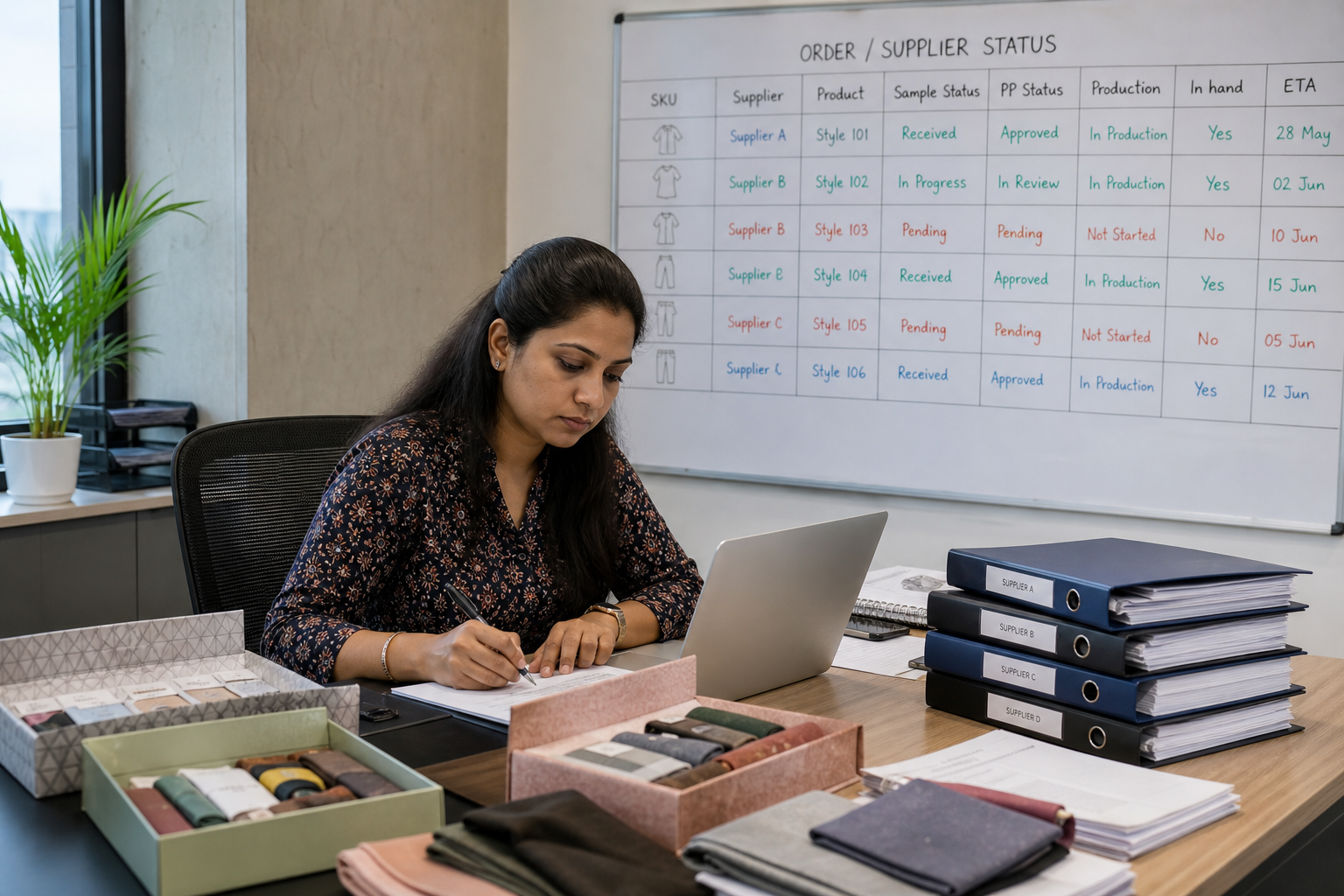
How to document payment terms in your purchase agreement
- contracting parties' legal names;
- currency and total value;
- payment method (T/T, LC, collection);
- milestone percentages and triggers;
- inspection standard and pass/fail consequences;
- Incoterm and named place;
- document list required before final payment;
- bank details and change-control procedure (changes only on written bank advice);
- late shipment and force majeure treatment of payments;
- dispute resolution and governing law if applicable.
Whether your agreement is a formal contract, signed PI, or PO accepted by the supplier, payment language should be explicit.
Include at minimum:
Illustrative payment clause structure (simplified):
> Buyer shall pay 30% deposit within five banking days of PO acceptance. Buyer shall pay 40% upon written confirmation of production completion and availability for pre-shipment inspection. Buyer shall pay the balance of 30% within three banking days of receipt of a passed pre-shipment inspection report and draft bill of lading consistent with the PO, unless Buyer notifies Supplier in writing of a documented discrepancy within two business days.
Adapt percentages to your category. The pattern—linking money to verifiable events—is more important than copying the numbers.

Conclusion
To pay Indian suppliers effectively, match the instrument and milestone structure to supplier trust, order risk, and your Incoterm—not to whatever default terms appear on the first proforma invoice. Telegraphic transfer with inspection-linked balance, letters of credit for larger or policy-driven deals, and carefully bounded open account for proven partners cover most international buyer scenarios. Document release gates in writing, verify banking details, and align payment with quality and shipment evidence before most of the order value leaves your account.
If you are structuring payment terms for an upcoming India import order, Altus Exports can help align commercial terms with inspection, export documentation, and shipment coordination so payment release supports—not undermines—your import controls.