
How to Calculate the Landed Cost of Products Imported From India
By Saurabh Mittal, Founder, Altus Exports
To calculate landed cost for products imported from India, add product cost, packaging, inland transport, international freight, insurance, import duties and taxes, customs brokerage, inspection, and other clearance costs, then divide by the number of sellable units. Use the…

Calculating landed cost is how an international buyer turns an India supplier quote into a number that reflects what product actually costs at the warehouse door. A factory may quote a competitive unit price on FOB Mumbai terms, but that figure alone does not tell you whether the product is profitable in your market after freight, duties, clearance fees, and the costs you absorb between factory and shelf.
Landed cost is the classic import math layer: the direct, documentable costs to get goods from the agreed shipping point in India to your receiving location, expressed per unit or per shipment. It is not the same as total cost of ownership, which adds softer costs such as quality failures, partner fees, working capital, and reorder risk. For the broader TCO view, see how to calculate the total cost of buying products from India. This article owns the formula, the worksheet, and the line-by-line method.
The most practical approach is to build every quote into the same structure before you compare suppliers or Incoterms. That structure is the India Landed Cost Worksheet (ILCW-12)—twelve cost categories buyers should capture for India-origin imports. Whether you use a spreadsheet, ERP template, or procurement tool, the discipline matters more than the software.
Altus Exports supports international buyers who need India quotes translated into comparable landed-cost views before order commitment. The method below is useful whether you buy direct from a factory, through a merchant exporter, or with a sourcing partner coordinating export execution.
What landed cost means—and what it does not
- the commercial value of the goods and agreed packaging;
- transport from the supplier's location to the port or airport in India;
- international freight to your destination;
- cargo insurance where applicable;
- import duties, taxes, and government fees at destination;
- customs brokerage and related clearance charges;
- pre-shipment or arrival inspection where you require it;
- other direct costs tied to import clearance and delivery to your warehouse.
- sourcing partner or agent fees beyond pass-through logistics;
- internal staff time, travel, or procurement overhead;
- inventory carrying cost and payment-term finance charges;
- rework, returns, or quality-failure costs;
- marketing, warehousing rent beyond first receipt, or retail allocation.
Landed cost answers a narrow but critical question: What did this shipment cost me to receive, before I allocate overhead, marketing, or margin? For inventory buyers, distributors, and private-label brands, it is the baseline for pricing, margin analysis, and supplier comparison.
Landed cost typically includes:
Landed cost does not, by itself, include:
Those belong in total cost of ownership. Treating landed cost as the full picture of buying from India is one of the most common pricing mistakes importers make.
Why India imports need a dedicated worksheet
India exports span dense manufacturing clusters, multiple major ports, varied product classifications, and quotes that may omit packaging, inland haulage, or export documentation assumptions. A buyer comparing two suppliers on "FOB $3.20/unit" may be comparing unlike bases if one quote includes export cartons and the other assumes bulk packing, or if one factory sits 800 kilometers from the port.
A worksheet forces every quote into the same buckets. It also makes Incoterm differences visible. EXW, FOB, and CIF do not change the physics of landed cost—they change who pays which lines and when those costs become visible in your budget. For Incoterm selection, see FOB vs CIF vs EXW when buying from India.
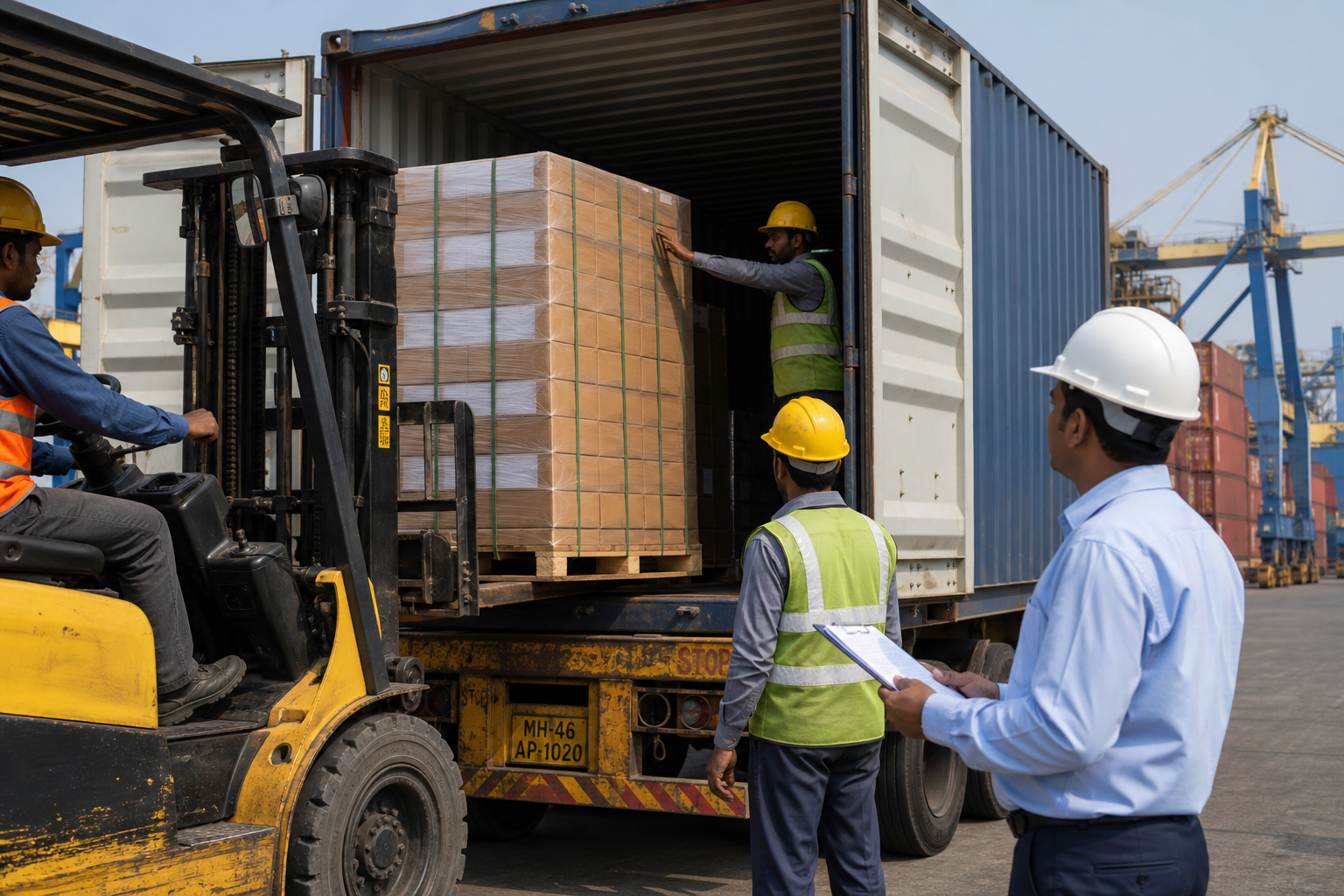
The India Landed Cost Worksheet (ILCW-12)
- supplier name and quote reference;
- Incoterm and named place;
- HS code used for duty estimate;
- shipment mode (FCL, LCL, air);
- quantity and sellable units after known breakage or QC reject policy;
- exchange rate and date;
- duty rate source and effective date;
- calculation owner and revision date.
Use ILCW-12 as a standard template whenever you evaluate an India supplier quote, revise a purchase order, or reconcile an invoice after arrival. Each line should be populated in the destination currency you use for pricing decisions, with a notes column for assumptions and source documents.
ILCW-12 rule: No line should be left blank with a mental estimate. If a cost is genuinely zero for a scenario, enter zero and note why. Hidden zeros become surprises at arrival.
Download or replicate ILCW-12 in your procurement system with these additional fields for every calculation:
Comparison table
Swipe →
Data table — swipe horizontally on small screens
| # | ILCW-12 line item | Typical source document | Usually paid by (FOB India) |
|---|---|---|---|
| 1 | Product cost (commercial invoice value) | Proforma / commercial invoice | Buyer |
| 2 | Export packaging and labeling | Invoice line or packing spec | Buyer |
| 3 | Inland transport in India (factory to port/airport) | Freight quote, supplier invoice | Buyer if not in quote |
| 4 | Export clearance and terminal handling (origin) | Supplier invoice, forwarder quote | Often supplier on FOB; verify |
| 5 | International freight (ocean or air) | Forwarder quote, bill of lading | Buyer |
| 6 | Cargo insurance | Policy or CIF invoice | Buyer unless CIF |
| 7 | Import duties (ad valorem or specific) | Customs entry, HS classification | Buyer |
| 8 | Import taxes (VAT, GST, sales tax, MPF/HMF etc.) | Customs / broker statement | Buyer |
| 9 | Customs brokerage and filing fees | Broker invoice | Buyer |
| 10 | Destination port/airport handling and delivery | Drayage, CFS, last-mile quote | Buyer |
| 11 | Inspection and compliance testing | Inspection invoice, lab report | Buyer if required |
| 12 | Other direct import costs (storage, demurrage, bonds) | Actual invoices | Buyer |

The landed cost formula
At shipment level, the classic landed cost formula is:
Landed cost (total) = Product + Packaging + Inland + Ocean/Air freight + Insurance + Duties/Taxes + Brokerage + Inspection + Other
At unit level:
Landed cost per unit = Landed cost (total) ÷ Sellable units
Each term maps directly to ILCW-12. The formula is simple; the work is in assembling accurate inputs and keeping Incoterm boundaries consistent across suppliers.
Line 1: Product cost
- ex-factory or ex-warehouse;
- inclusive or exclusive of export cartons;
- based on a specific MOQ and production run;
- subject to currency conversion on payment date versus quote date.
Product cost is the agreed commercial value of the goods on the invoice, usually excluding international freight and insurance unless the Incoterm bundles them. Confirm whether the unit price is:
For India imports, clarify whether the supplier quotes in USD, EUR, INR, or another currency, and whether revaluation applies if payment is delayed.
Line 2: Packaging
- units per master carton;
- carton dimensions and gross weight for freight modeling;
- whether branded or retail-ready packaging is in scope;
- who pays for packaging artwork plates or flexo cylinders if applicable.
Packaging cost includes export cartons, inner packs, pallets, strapping, moisture protection, and any buyer-specific labeling or barcoding required before shipment. Some quotes fold packaging into the unit price; others list it separately. A landed-cost comparison that ignores a $0.18/unit packaging difference can wrongly rank suppliers.
Ask suppliers to confirm:
Line 3: Inland transport in India
Inland transport covers movement from the factory or supplier warehouse to the port of loading or airport of departure. On EXW or some FCA terms, this line is entirely the buyer's responsibility or must be arranged through a freight forwarder. On FOB, many Indian suppliers include delivery to port in their quote, but "FOB" on a proforma does not guarantee it—verify the named place and whether loading at the port is included.
Distance, road quality, state taxes, and congestion around major ports such as Nhava Sheva (JNPT), Mundra, Chennai, and Kolkata affect this line. If your supplier is inland in Gujarat, Tamil Nadu, or Uttar Pradesh, model inland cost explicitly rather than assuming it is negligible.
Line 4: International freight (ocean or air)
- port of loading and port of discharge;
- FCL versus LCL;
- chargeable weight or volume (W/M for LCL);
- validity date of the rate;
- surcharges (BAF, LSS, PSS, congestion, peak season if quoted).
Ocean freight is usually the largest variable line for containerized India exports. Air freight dominates for samples, urgent replenishment, or high-value low-weight goods. Build this line from a forwarder quote that specifies:
Freight is volatile. Use the shipping from India guide for international importers for mode and booking context; this article focuses on where freight sits in landed cost, not how to negotiate carrier rates.
Line 5: Insurance
Cargo insurance protects the commercial value of goods in transit. Under CIF, the seller must provide minimum cover to the destination, but the level may not match your risk policy. Under FOB or EXW, the buyer typically arranges insurance from the point where risk transfers—often at port of loading for FOB.
Insurance premium is usually estimated as a percentage of insured value (invoice + freight + assumed markup). Even a small rate applied to a large invoice value can materially affect landed cost on high-value goods.
Lines 6–7: Duties and taxes
Import duties and taxes depend on destination country rules and correct HS classification. Duties are often ad valorem (percentage of customs value) but may include specific rates, anti-dumping cases, or preferential rates under trade agreements where documentation supports them.
Taxes at import may include VAT, GST on import, state sales tax, harbor maintenance fees, merchandise processing fees, or similar charges depending on your market. Do not confuse India's domestic GST on the export transaction with your country's import VAT/GST—the latter belongs in landed cost for the buyer.
For classification and rate mechanics, see how import duties and taxes work when buying from India. In ILCW-12, keep duty and tax lines separate so a classification change does not blur into a generic "customs" bucket.
Line 8: Customs brokerage
Customs brokerage covers filing the import entry, payment facilitation, communication with customs authorities, and document submission on your behalf. Broker fees may be flat per entry, per line item, or include disbursements. For first-time importers, this line also includes learning-curve costs if errors trigger holds or re-filings.
Line 9: Inspection
Inspection costs include pre-shipment inspection (PSI), production inspection, laboratory testing for compliance (lead, phthalates, food contact, electrical safety), or destination sampling if your process requires it. If inspection is mandatory for your category, treating it as optional in landed cost understates true cost.
Line 10: Other direct import costs
- port storage, demurrage, or detention if clearance is delayed;
- customs bond or guarantee fees;
- fumigation or quarantine charges for wood packaging;
- liftgate, appointment delivery, or residential surcharges;
- currency conversion spreads on supplier or freight payments;
- bank charges for international transfers if not captured elsewhere.
Other costs may include:
Keep this line for documented, shipment-specific costs—not soft overhead. Soft costs belong in TCO.

Worked example: ILCW-12 landed cost calculation
- FOB unit price was $2.85, but landed cost per unit is $3.31—a 16.1% uplift before margin, warehousing, or sales expense.
- Lines that were "included" in FOB (inland, origin handling) still appear in the worksheet as zero with a note. If the supplier later changes the named port or terms, those zeros may become non-zero.
- Duty at 2.0% is illustrative. Kitchen utensils may fall under different headings with different rates. Misclassification is a landed-cost risk, not merely a compliance risk.
- Insurance was calculated on an estimated customs value including freight. Your broker may use a different insurable value basis.
The following example is illustrative only. Rates, duties, and freight figures are hypothetical and must be replaced with current quotes and official classification for your product and destination.
Scenario: A US distributor imports 10,000 units of stainless steel kitchen utensils from an Indian manufacturer. Terms: FOB Nhava Sheva (JNPT). Shipment: one 20-foot container. Destination: US West Coast port, delivered to a 3PL warehouse.
Several observations from this example matter for real procurement:
Always reconcile the worksheet after arrival. Actual landed cost should be tracked against estimate variance by line to improve the next quote cycle.
Comparison table
Swipe →
Data table — swipe horizontally on small screens
| ILCW-12 line | Calculation | Amount (USD) |
|---|---|---|
| 1. Product cost | 10,000 units × $2.85 | $28,500.00 |
| 2. Packaging | Export cartons included in unit price | $0.00 |
| 3. Inland transport | Supplier includes factory to JNPT on FOB | $0.00 |
| 4. Origin THC / export docs | Included in supplier FOB quote | $0.00 |
| 5. Ocean freight | $1,950 all-in for 20' container | $1,950.00 |
| 6. Insurance | 0.45% × (CIF value estimate $30,450) | $137.03 |
| 7. Import duty | 2.0% ad valorem on customs value $30,450 | $609.00 |
| 8. Import taxes/fees | MPF/HMF and related fees (illustrative) | $485.00 |
| 9. Customs brokerage | Flat entry fee + disbursements | $275.00 |
| 10. Destination drayage + warehouse delivery | Port to 3PL | $680.00 |
| 11. Inspection | Pre-shipment inspection (optional PSI) | $320.00 |
| 12. Other | Liftgate, document couriers | $95.00 |
| Total landed cost | Sum of lines | $33,051.03 |
| Landed cost per unit | $33,051.03 ÷ 10,000 | $3.31 |
How FOB vs CIF changes which lines you pay
Incoterms allocate cost and risk between buyer and seller. They do not eliminate cost—they shift who invoices whom and when the buyer sees the expense.
Under FOB, the buyer typically adds freight, insurance, duties, and destination costs on top of the invoice value. That is why "FOB $2.85" is never the landed cost.
Under CIF, freight and minimum insurance appear on the seller's invoice, which increases the customs value base for duty in many countries. CIF can look simpler in the proforma but may obscure freight quality, routing, or insurance limits. Compare CIF quotes by unpacking freight and insurance into ILCW-12 lines anyway.
Under EXW, the buyer absorbs maximum origin-side cost and coordination. Landed-cost worksheets for EXW often underestimate inland haulage, export documentation, and terminal fees because buyers focus on the low product price.
For a full Incoterm decision framework, see FOB vs CIF vs EXW when buying from India.
Comparison table
Swipe →
Data table — swipe horizontally on small screens
| Cost line | EXW (named place, India) | FOB (named port, India) | CIF (named port, destination) |
|---|---|---|---|
| Product + export packing | Seller | Seller | Seller |
| Inland to port | Buyer | Usually seller to port | Seller |
| Export clearance | Buyer (unless agreed) | Seller | Seller |
| Ocean/air freight | Buyer | Buyer | Seller |
| Insurance to destination | Buyer | Buyer (unless agreed) | Seller (minimum cover) |
| Import duty/tax | Buyer | Buyer | Buyer |
| Destination handling | Buyer | Buyer | Buyer |

Sensitivity analysis: what moves landed cost most
Before you fix retail pricing or sign a long-term supply agreement, stress-test the worksheet. Small assumption changes can erase margin.
Freight spikes and mode errors often move landed cost more than modest unit-price discounts. Duty misclassification can trigger retroactive liability beyond the initial landed-cost miss. Currency affects India imports when inland costs, tooling, or partial payments are INR-denominated while sales are in USD.
Build a standard sensitivity block into ILCW-12 for any order above your approval threshold. Procurement teams that only model base-case freight win the quote meeting and lose the margin review.
Comparison table
Swipe →
Data table — swipe horizontally on small screens
| Scenario | Base case (example) | Stressed case | Landed cost per unit | Change |
|---|---|---|---|---|
| Base | Freight $1,950; duty 2.0%; INR/USD stable | — | $3.31 | — |
| Freight spike | Ocean $1,950 | Ocean $3,200 (+64%) | $3.44 | +$0.13 (+3.9%) |
| Duty misclassification | HS duty 2.0% | Correct heading 5.5% | $3.48 | +$0.17 (+5.1%) |
| Currency move | Quote 1 USD = 83 INR | Payment 1 USD = 87 INR (+4.8%) on INR-priced add-ons | $3.33 | +$0.02 (+0.6%) |
| LCL vs FCL error | FCL 10,000 units | Same volume modeled as LCL with higher W/M | $3.62 | +$0.31 (+9.4%) |
| Inspection failure / rework | PSI pass | One rework cycle + re-inspection (allocated) | $3.38 | +$0.07 (+2.1%) |

Building landed cost into your import workflow
- Supplier comparison — Normalize all RFQs through ILCW-12 before shortlisting on unit price alone.
- Incoterm and payment negotiation — Align payment terms with Indian suppliers to when costs hit cash flow; landed cost informs what you can prepay versus pay at arrival.
- Purchase order issuance — Attach worksheet assumptions (HS code, freight validity, MOQ, packaging spec) as reference so post-order changes trigger recalculation.
- Post-arrival reconciliation — Compare actual invoices to estimate by ILCW line; feed variance into the next sourcing cycle.
Landed cost should appear at four decision points in a typical India import cycle:
If you are new to importing from India, the pillar guide how to import products from India places landed cost in the wider stage-gate process. Document requirements that affect clearance cost and delays are covered in documents required to import products from India.
Altus Exports can help buyers obtain structured quotes that separate product value, packaging, Incoterm boundaries, and export-ready assumptions—reducing the hidden-line problem before ILCW-12 is populated. That coordination role does not replace your ownership of duty classification and destination-market compliance decisions.
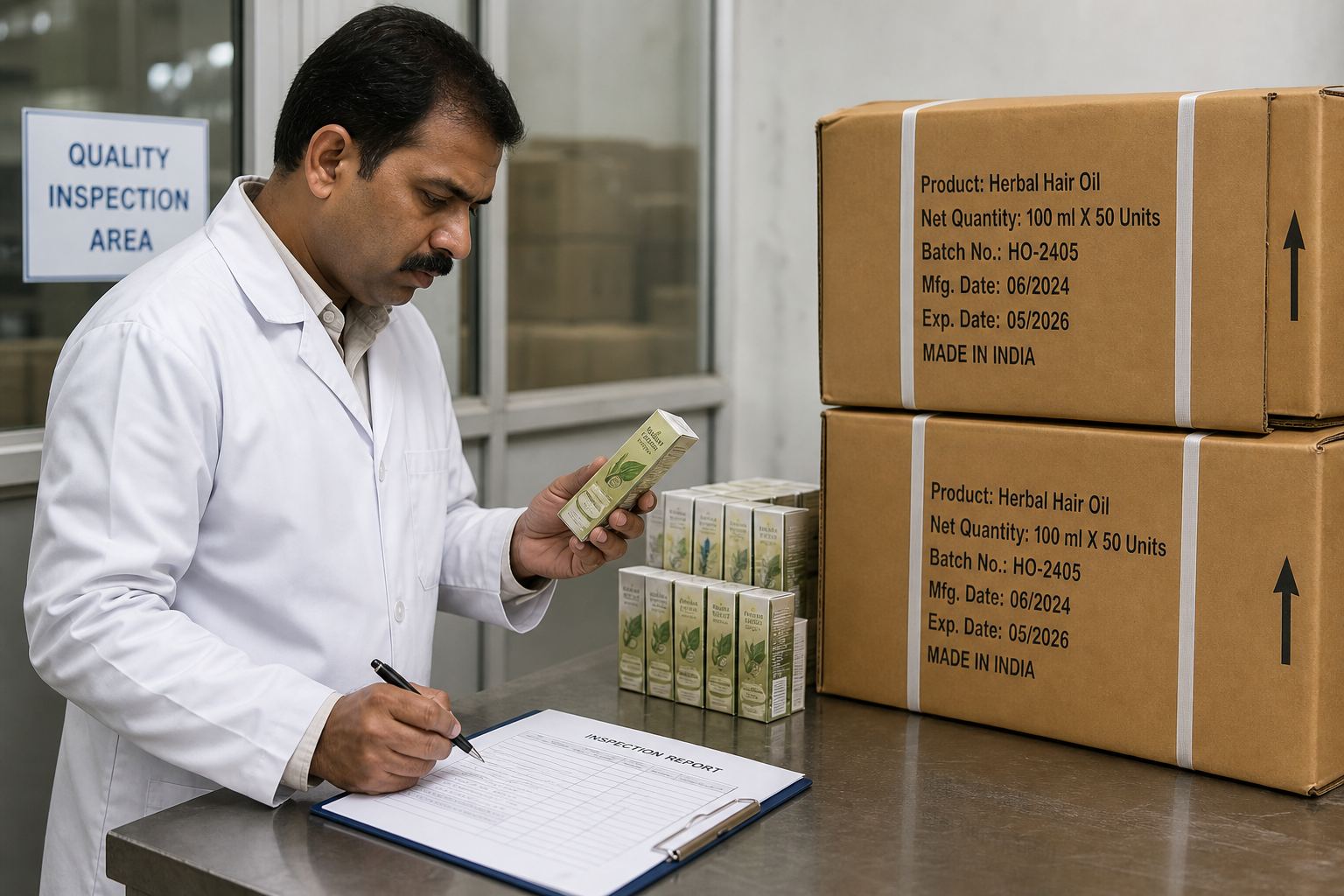
Common landed cost mistakes when importing from India
Mistake 1: Comparing FOB unit prices without ILCW-12
The lowest FOB quote is not the lowest landed cost. Suppliers with weaker packaging, farther inland locations, or incomplete export documentation may win on paper and cost more in freight, delays, or rework.
Mistake 2: Using outdated freight in long-lead orders
A freight rate valid for seven days is not a reliable input for a ninety-day production cycle unless you have a re-quote clause or buffer. Model freight with an explicit validity date and contingency.
Mistake 3: Guessing HS codes for duty estimates
Duty guesses distort pricing and create compliance exposure. Use broker or customs counsel for classification on new SKUs, and document the rationale in the worksheet. See the dedicated import duties and taxes guide rather than relying on supplier statements.
Mistake 4: Treating CIF as "all-in" landed cost
CIF includes freight and minimum insurance to the destination port—it does not include import duties, taxes, brokerage, drayage, or warehouse delivery. Buyers who treat CIF as landed cost discover the gap at customs.
Mistake 5: Ignoring non-zero inspection and compliance testing
Regulated categories (food contact, toys, electronics, textiles with fiber claims) carry testing costs that must be in ILCW-12 line 11. Omitting them produces artificially low landed cost per unit.
Mistake 6: Dividing by ordered quantity instead of sellable units
If you reject goods at PSI or incur breakage, landed cost per sellable unit rises. Use the quantity you can actually sell unless your model explicitly allocates scrap elsewhere.
Mistake 7: Confusing landed cost with total cost of ownership
Partner fees, inventory carrying cost, payment-term finance, and quality-failure risk belong in TCO. Use total cost of buying from India for investment decisions; use ILCW-12 for shipment-level pricing and quote comparison.
Mistake 8: Failing to reconcile after arrival
Without post-shipment reconciliation, the same mistakes repeat on every order. Track variance by line—especially freight, duty, and demurrage—to improve estimates.

Conclusion
Calculating landed cost for products imported from India is not a one-line markup on FOB price. It is a disciplined assembly of twelve cost categories through the India Landed Cost Worksheet (ILCW-12), normalized across suppliers and Incoterms, stress-tested for freight and duty sensitivity, and reconciled after arrival. Buyers who build ILCW-12 into every quote comparison protect margin, avoid Incoterm surprises, and separate classic landed cost from the broader total cost of ownership.
If you want India supplier quotes structured for clear landed-cost comparison before you commit, contact Altus Exports with your product details, destination market, target Incoterm, and volume. A documented worksheet beats a verbal "best price" every time.